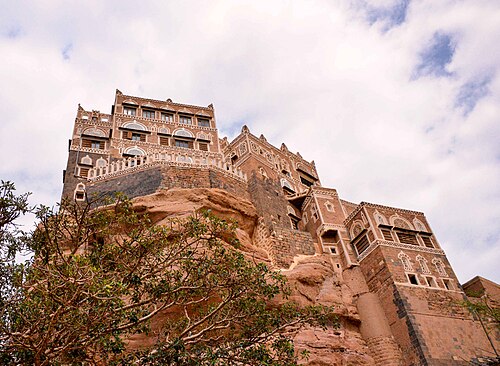
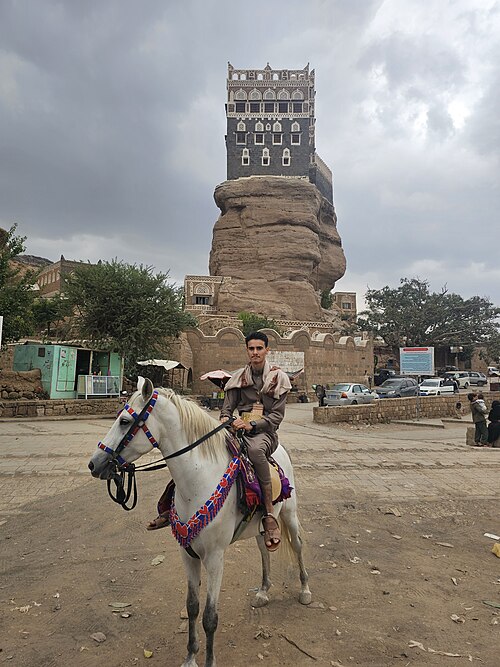
In the green valley of Wadi Dhahr, a short way from the ancient city of Sana’a, rises one of the most beautiful and photographed buildings in all Arabia, the Dar al-Hajar, the Rock Palace, a tall mansion of mud-brick and stone built upon a great pinnacle of rock that seems to grow from the stone itself. The palace, with its many storeys, its decorated windows, and its dramatic setting, is the symbol of Yemen, Dar al-Hajar the Rock Palace, the jewel of Wadi Dhahr, the icon of the Yemeni architecture.
The Dar al-Hajar is the most famous building of Yemen. Built as a summer residence in the early twentieth century upon an older rock base, the palace rises in several storeys from its pinnacle of rock, its form blending so perfectly with the stone that the building and the rock seem one, the palace the icon of the country, Dar al-Hajar the Rock Palace, the jewel of the valley, the symbol of the Yemeni building that appears on the postcards and the images of the land.
This article opens the Yemeni palace series, turning south from Saudi Arabia to the beautiful and troubled land of Yemen, beginning with the Dar al-Hajar, the Rock Palace of Wadi Dhahr, the mansion upon the pinnacle of rock, the icon of the Yemeni architecture near the ancient city of Sana’a, Dar al-Hajar the jewel of the valley, the symbol of Yemen.
- The Valley of Wadi Dhahr
- The Rock of the Palace
- Imam Yahya
- The Palace on the Pinnacle
- The Mud-Brick and Stone Tower
- The Many Storeys
- The Diwan and the Majlis
- The Decorated Windows
- The Qamariya and the Stained Glass
- The Cisterns and the Rooms
- A Symbol of Yemen
- From Palace to Museum
- Dar al-Hajar Today
- Watch on Film
- Visiting Today
- Palaces Nearby
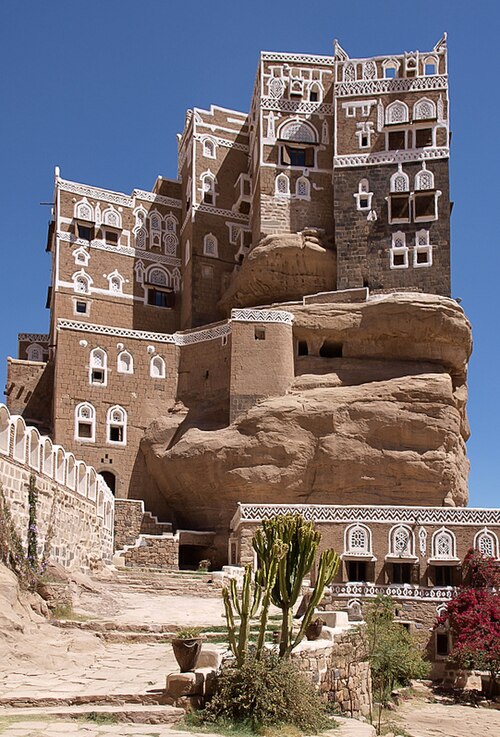
The Valley of Wadi Dhahr
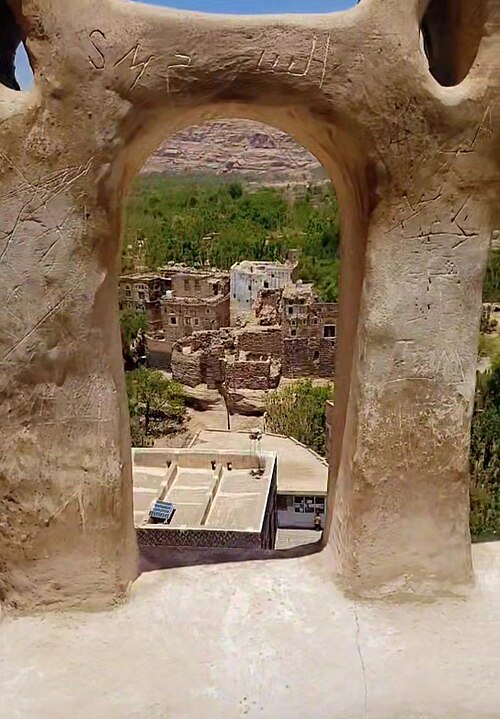
Dar al-Hajar stands in the valley of Wadi Dhahr. The Rock Palace rises in the green and fertile valley of Wadi Dhahr, a few kilometers northwest of Sana’a, a valley of gardens, orchards, and fields watered by the wadi, the valley the setting of the palace, Wadi Dhahr the green vale of the Rock Palace, the fertile valley the frame of the icon of Yemen near the ancient capital.
The valley is a green and fertile vale: Wadi Dhahr, with its gardens, its vineyards, its orchards, and its fields, a green and fertile valley in the highlands near Sana’a, the vale the retreat from the city, the valley the garden of the region, Wadi Dhahr the fertile vale, the green valley that frames the Dar al-Hajar and its pinnacle of rock.
The valley was a retreat from Sana’a: Wadi Dhahr, close to the capital, long a place of retreat, gardens, and summer residences for the people and the rulers of Sana’a, the valley the green escape, the vale the summer retreat, Wadi Dhahr the retreat from the city, the valley whose beauty drew the builders of the Dar al-Hajar near the ancient capital of Yemen.
The Rock of the Palace
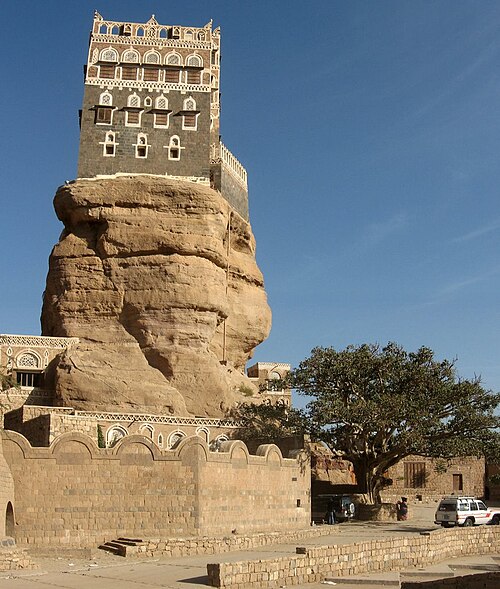
Dar al-Hajar is built upon a great rock. The palace rises on a tall pinnacle of rock that stands in the valley, the building raised upon the stone so that the palace and the rock seem to form a single whole, the rock the foundation and the drama of the palace, the pinnacle the base of the Dar al-Hajar, the great stone the setting that gives the Rock Palace its name and its fame.
The rock gives the palace its drama: the pinnacle of rock lifting the Dar al-Hajar above the valley, the building seeming to grow from the stone, the rock the source of the palace’s dramatic form, the pinnacle the base that gives the mansion its soaring presence, the rock the drama of the Dar al-Hajar, the great stone the foundation of the icon of Yemen.
The name means the House of Stone: Dar al-Hajar, the House of Stone or the Rock Palace, named for the great rock on which it stands, the name the description of the building and its base, the Rock Palace the house of the stone, the name the mark of the pinnacle, Dar al-Hajar the House of Stone, the palace whose name proclaims the rock that is its foundation in Wadi Dhahr.
Imam Yahya
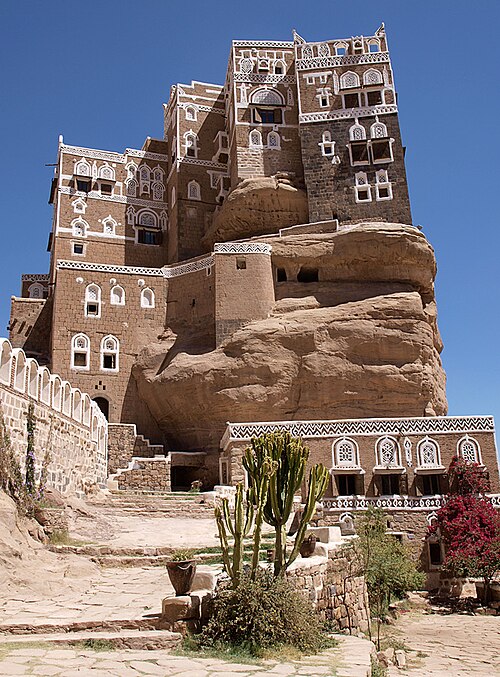
Dar al-Hajar is linked with Imam Yahya. The palace in its present form was built in the 1920s and 1930s as a summer residence for Imam Yahya Muhammad Hamid ed-Din, the ruler of Yemen in the early twentieth century, the imam the builder of the Rock Palace, Yahya the ruler whose summer seat was the Dar al-Hajar, the king-imam whose residence crowns the pinnacle of Wadi Dhahr near Sana’a.
Imam Yahya ruled Yemen in the early twentieth century: Yahya, the Zaydi imam and king of Yemen, ruling the mountainous country as it emerged from the Ottoman age into the twentieth century, the imam the ruler of the highland kingdom, Yahya the king-imam of Yemen, the ruler whose reign shaped the modern country and whose summer palace was the Dar al-Hajar.
The palace was his summer residence: the Dar al-Hajar built as the summer retreat of Imam Yahya, the palace the seat of the imam in the cool green valley of Wadi Dhahr away from the capital, the residence the summer seat of the ruler, the Rock Palace the retreat of Imam Yahya, the summer residence of the king-imam of Yemen upon the pinnacle of Wadi Dhahr.
The Palace on the Pinnacle
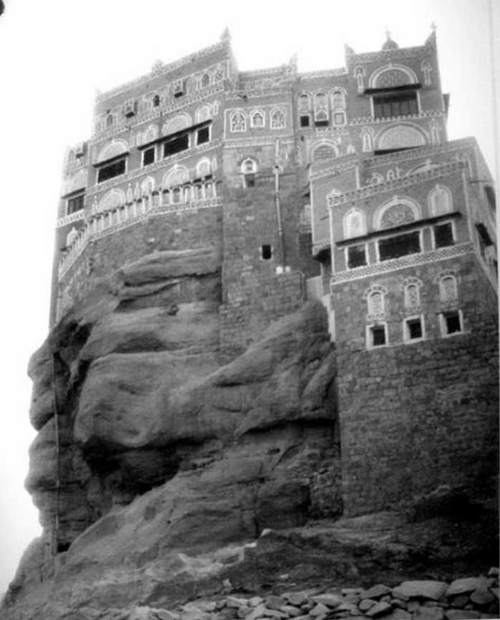
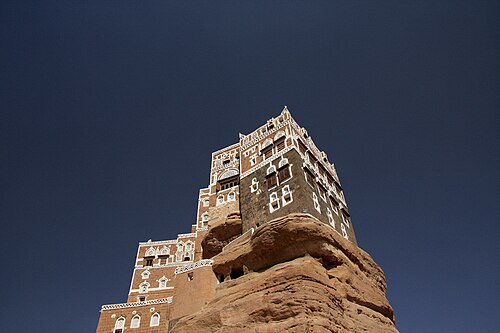
Dar al-Hajar crowns its pinnacle of rock. The palace rises in several storeys from the top of the rock, the building shaped to the pinnacle so that it seems a natural extension of the stone, the palace the crown of the rock, the Dar al-Hajar the mansion upon the pinnacle, the building the dramatic jewel that rises from the great stone in the valley of Wadi Dhahr.
The building is shaped to the rock: the Dar al-Hajar built to follow the form of the pinnacle, the storeys rising from the irregular top of the rock, the palace molded to the stone, the building the extension of the pinnacle, the Dar al-Hajar the palace shaped to the rock, the mansion that grows from the stone in the valley of Wadi Dhahr near Sana’a.
The palace and the rock are one: the Dar al-Hajar and its pinnacle forming a single dramatic whole, the building and the stone seeming inseparable, the palace the crown of the rock, the rock the base of the palace, the Dar al-Hajar the union of the building and the stone, the icon of Yemen where the mansion and the pinnacle are one in Wadi Dhahr.
The Mud-Brick and Stone Tower
Dar al-Hajar is built of mud-brick and stone. The palace is constructed in the traditional Yemeni manner, of stone in the lower parts and mud-brick above, with the white gypsum decoration around the windows, the building a tower-house of the Yemeni tradition, the Dar al-Hajar the mud-brick and stone mansion, the palace the showcase of the traditional building of Yemen upon its rock.
The building follows the Yemeni tradition: the Dar al-Hajar built in the manner of the Yemeni tower-house, the tall narrow building of stone and mud-brick with its decorated windows, the palace the expression of the traditional architecture, the building the showcase of the Yemeni craft, the Dar al-Hajar the tower-house tradition raised upon the pinnacle of Wadi Dhahr.
The white decoration adorns the walls: the Dar al-Hajar adorned with the white gypsum decoration around its windows and its details, the white against the earth-colored walls the signature of the Yemeni building, the decoration the ornament of the palace, the white gypsum the jewel of the facade, the decoration the mark of the Yemeni craft on the Dar al-Hajar of Wadi Dhahr.
The Many Storeys
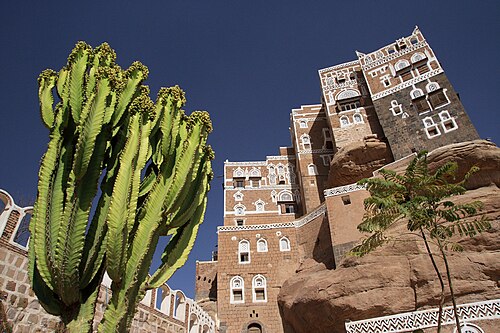
Dar al-Hajar rises in many storeys. The palace, like the tower-houses of Yemen, rises in five storeys from its rock, the floors stacked above one another with the rooms, the halls, and the apartments on the different levels, the storeys the structure of the tall palace, the Dar al-Hajar the many-storeyed mansion, the tower rising from the pinnacle in the tradition of the Yemeni building.
The floors held the different functions: the storeys of the Dar al-Hajar holding the different functions of the palace, the lower floors for the stores and the service, the middle and upper floors for the reception and the living, the storeys the vertical arrangement of the mansion, the floors the levels of the palace, the storeys the structure of the Dar al-Hajar in the Yemeni manner.
The vertical plan suited the rock: the many storeys of the Dar al-Hajar, rising from the narrow top of the pinnacle, the vertical plan the response to the small footprint of the rock, the tower the solution to the site, the storeys the way the palace grew upon the stone, the vertical arrangement the architecture of the Dar al-Hajar upon the pinnacle of Wadi Dhahr.
The Diwan and the Majlis
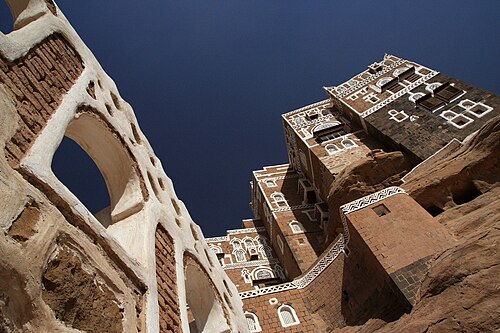
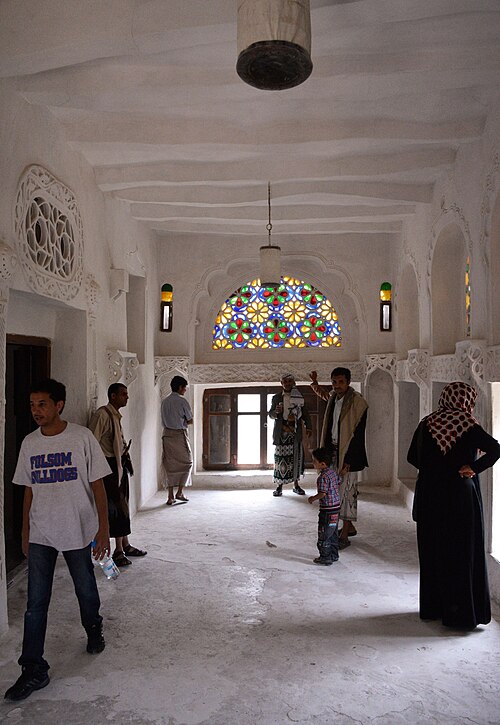
Dar al-Hajar holds the diwan and the majlis. The palace contains the diwan and the majlis, the reception and the sitting rooms where the imam received his guests and held his gatherings, the rooms placed on the upper floors with the views over the valley, the diwan the ceremonial heart of the palace, the majlis the gathering room, the reception spaces the jewels of the Dar al-Hajar.
The majlis was the gathering room: the majlis of the Dar al-Hajar the room where the imam and his guests gathered, sat, and talked, the room furnished in the Yemeni manner with the cushions around the walls, the majlis the social heart of the palace, the sitting room the setting of the gatherings, the majlis the gathering jewel of the Dar al-Hajar upon its rock.
The rooms command the views: the reception rooms of the Dar al-Hajar, placed on the upper floors, commanding the views over the valley of Wadi Dhahr, the rooms the vantages over the green vale, the windows the frames of the prospect, the reception spaces the rooms with the views, the diwan and the majlis the jewels with the prospect over the valley from the Dar al-Hajar.

The Decorated Windows
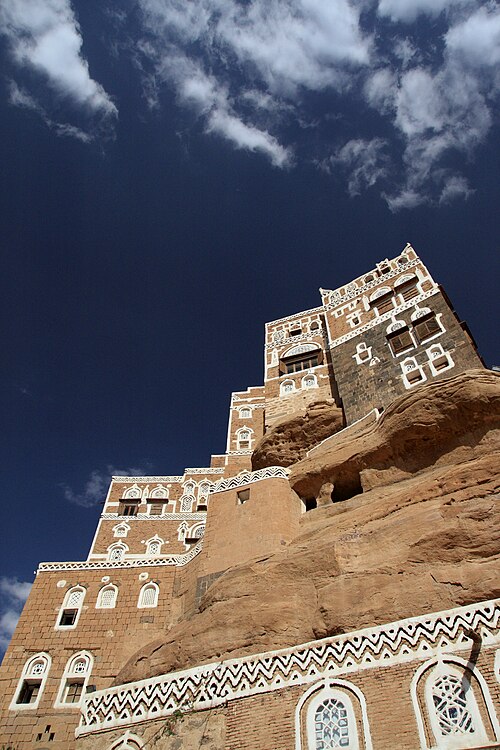
Dar al-Hajar is famous for its decorated windows. The palace, like the houses of Yemen, is adorned with windows framed in white gypsum decoration, the openings outlined and crowned with the intricate white ornament that is the glory of the Yemeni facade, the windows the jewels of the Dar al-Hajar, the white decoration the ornament of the palace, the windows the signature of the Yemeni building.
The white frames adorn the facade: the windows of the Dar al-Hajar framed in the white gypsum, the decoration outlining and crowning the openings, the white against the earth walls the beauty of the facade, the window frames the ornament of the palace, the white decoration the jewel of the Dar al-Hajar, the windows the glory of the Yemeni facade upon the rock.
The windows light the storeys: the decorated windows of the Dar al-Hajar admitting the light to the rooms of the many storeys, the openings the source of the light and the air, the windows the frames of the views, the decorated openings the jewels that light the palace, the windows the beauty and the function of the Dar al-Hajar in the valley of Wadi Dhahr.
The Qamariya and the Stained Glass
Dar al-Hajar holds the qamariya stained-glass windows. The palace is adorned with the qamariya, the fanlight windows of colored stained glass set in gypsum tracery that are the glory of the Yemeni interior, the colored light falling through the qamariya into the rooms, the stained glass the jewel of the Dar al-Hajar, the qamariya the colored crown of the windows, the stained glass the beauty of the Yemeni building.
The qamariya cast colored light: the qamariya of the Dar al-Hajar casting the colored light of their stained glass into the rooms, the fanlights the source of the jeweled light, the colored glass the beauty of the interior, the qamariya the crown of the windows, the stained glass the jewel that lights the rooms, the qamariya the colored glory of the Dar al-Hajar.
The qamariya are a Yemeni art: the qamariya, the stained-glass fanlights set in gypsum tracery, one of the glories of the Yemeni architecture, the art the signature of the Yemeni interior, the colored windows the jewel of the building, the qamariya the Yemeni craft of light and color, the stained glass the glory of the Dar al-Hajar and the houses of Yemen.
The Cisterns and the Rooms
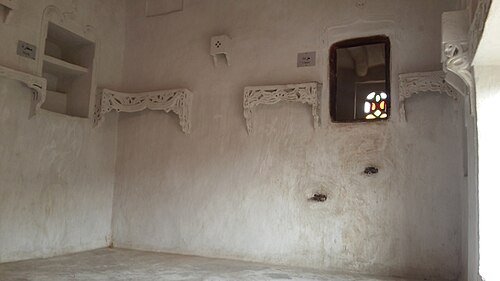
Dar al-Hajar holds cisterns and service rooms within the rock. The palace, built upon and into the rock, contains cisterns for the storage of water, cellars, and service rooms cut into or built upon the stone, the cisterns the water supply of the palace, the rooms within the rock the practical heart of the mansion, the cisterns and the service rooms the working world of the Dar al-Hajar upon its pinnacle.
The cisterns stored the water: the cisterns of the Dar al-Hajar storing the water for the palace, the reservoirs the supply that allowed the mansion to function on its rock, the cisterns the vital resource, the water stores the lifeline of the palace, the cisterns the practical heart of the Dar al-Hajar, the reservoirs the water supply of the Rock Palace of Wadi Dhahr.
The rock holds the lower rooms: the lower parts of the Dar al-Hajar, built into and upon the rock, holding the cellars, the cisterns, and the service rooms, the stone the foundation and the container of the practical spaces, the rock the base that holds the working rooms, the lower levels the practical world of the Dar al-Hajar within and upon the pinnacle of Wadi Dhahr.
A Symbol of Yemen
Dar al-Hajar is a symbol of Yemen. The Rock Palace, with its dramatic form and its beauty, has become the icon of the country, the image that appears on the postcards, the guidebooks, and the pictures of Yemen, the palace the symbol of the land, the Dar al-Hajar the icon of Yemen, the Rock Palace the image that represents the beauty and the architecture of the Yemeni land to the world.
The palace is the image of Yemen: the Dar al-Hajar, with its pinnacle and its storeys, the most recognized and photographed building of Yemen, the palace the face of the country, the Rock Palace the icon of the land, the image the symbol of Yemen, the Dar al-Hajar the building that represents the Yemeni architecture and beauty to the world.
The palace embodies the Yemeni building: the Dar al-Hajar, in its mud-brick and stone, its storeys, its decorated windows, and its qamariya, embodying the whole tradition of the Yemeni architecture, the palace the summary of the Yemeni building, the Rock Palace the icon of the craft, the Dar al-Hajar the symbol that embodies the architecture of Yemen upon its rock in Wadi Dhahr.
From Palace to Museum
Dar al-Hajar has become a museum. The Rock Palace, after the end of the imamate, was preserved and opened as a museum, the rooms, the diwan, the majlis, and the storeys shown to the visitor, the palace the museum of the Yemeni building and the life of the imams, the Dar al-Hajar the museum upon the rock, the palace the keeper of the memory of the imams and the showcase of the Yemeni architecture.
The museum shows the life of the imams: the museum in the Dar al-Hajar presenting the life and the residence of the imams, the rooms furnished and shown, the palace the window onto the world of the rulers, the museum the keeper of the memory, the Dar al-Hajar the museum of the imamate, the palace the showcase of the life of the imams of Yemen upon the rock.
The palace is a destination of visitors: the Dar al-Hajar, as a museum and an icon, a chief destination for the visitors to Yemen in the times when travel was possible, the palace the attraction of Wadi Dhahr, the Rock Palace the magnet of the valley, the Dar al-Hajar the destination of those who sought the beauty and the architecture of Yemen near Sana’a.
Dar al-Hajar Today
The Dar al-Hajar today stands as the icon of Yemen, the Rock Palace upon its pinnacle in the valley of Wadi Dhahr, the mud-brick and stone mansion of the many storeys, the decorated windows, and the qamariya, the summer residence of Imam Yahya, the Dar al-Hajar the symbol of the Yemeni architecture, the jewel of the valley, the enduring icon of the beautiful and troubled land of Yemen near Sana’a.
The palace endures as the symbol of the land: the Dar al-Hajar, through the trials of Yemen, standing as the enduring symbol and the icon of the country, the palace the image of the land, the Rock Palace the symbol of the Yemeni beauty and architecture, the Dar al-Hajar the enduring icon of Yemen, the jewel that represents the land upon its rock in Wadi Dhahr.
The Dar al-Hajar opens the Yemeni palace series, the Rock Palace of Wadi Dhahr, the icon of Yemen, the mud-brick and stone mansion upon the pinnacle, the summer residence of Imam Yahya, the palace of the decorated windows and the qamariya, the Dar al-Hajar the symbol of the Yemeni architecture, the jewel of the valley, the enduring icon of the land of Yemen near the ancient city of Sana’a.
Watch the Dar al-Hajar on Film
Visiting the Dar al-Hajar Today
The Dar al-Hajar stands in the valley of Wadi Dhahr, about fifteen kilometers northwest of Sana’a, the capital of Yemen, the Rock Palace rising on its pinnacle in the green vale; the palace, a museum, is admired for its dramatic setting, its storeys, its decorated windows, and its qamariya stained glass. Yemen has suffered years of war and a grave humanitarian crisis, and travel to the country is very dangerous and strongly restricted, so any visit depends entirely on the security situation, which must be very carefully checked; the Dar al-Hajar remains the enduring icon of the Yemeni heritage. You can find the palace on the map here: Dar al-Hajar on Google Maps.


