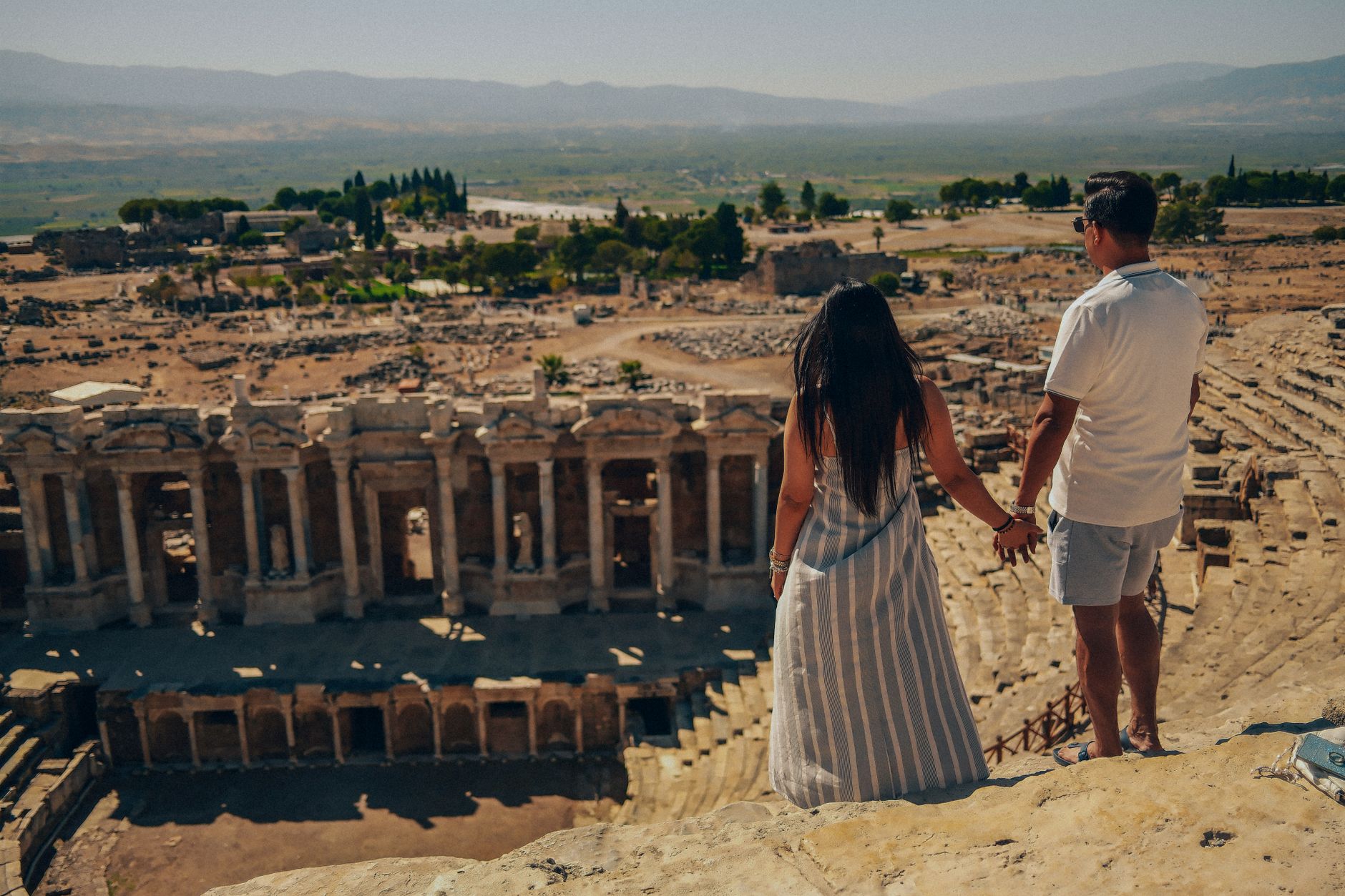
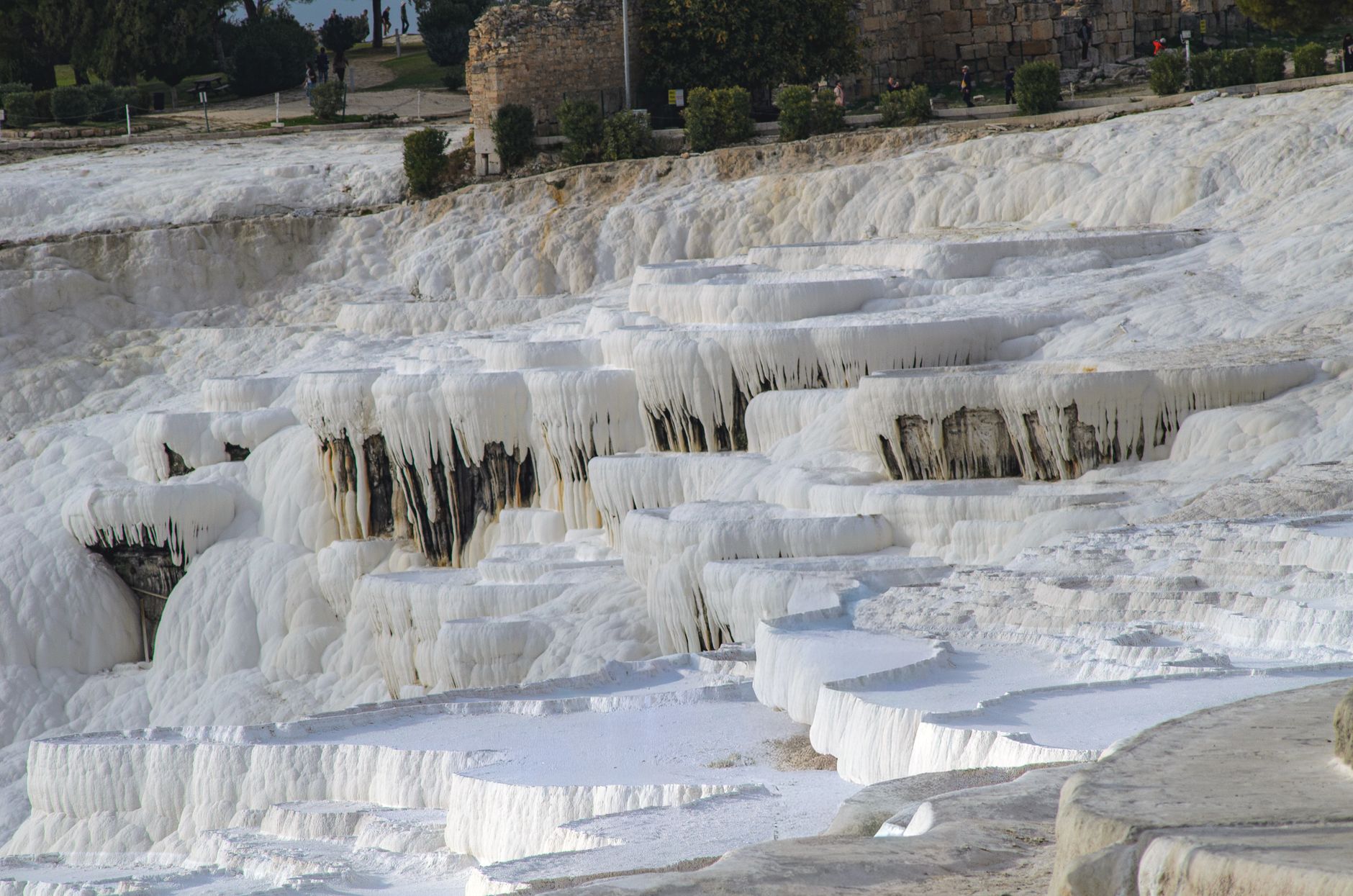

Denizli’s world-famous natural wonder, Pamukkale, is one of the most fascinating holiday destinations in Turkey with its white travertine terraces, healing thermal waters and the ancient city of Hierapolis right next to it. This unique formation, which takes its name from the “cotton castle”, is on the UNESCO World Heritage List with its cascading pools formed by calcium-rich thermal waters flowing for thousands of years.
Pamukkale, located in the inner part of the Aegean Region and offering a different experience than a sea holiday, is a must-see destination for both nature and history enthusiasts. In this guide, we have compiled for you the places to see in Pamukkale, cuisine, people, nature, prices and accommodation suggestions.
Places to See and Things Pamukkale is Famous for
The crown jewel of Pamukkale is, of course, its pure white travertine terraces; It is a unique experience to step into the warm thermal water in these cascading pools where you can walk barefoot. The Ancient City of Hierapolis, located right above, fascinates history lovers with its magnificent theatre, monumental tombs and large necropolis. The Ancient Pool (Cleopatra Pool), which contains ancient columns, offers the opportunity to swim in its healing waters.
Hierapolis Archaeological Museum exhibits artifacts unearthed from the region. The red thermal waters of nearby Karahayit and the ancient city of Laodicea should also be added to the travel list. Pamukkale is also famous for the pink-gold colors of the travertines at sunset. Hot air balloon tours in the evening are among the unforgettable experiences of the region, which have become popular in recent years and allow you to watch the travertines from a bird’s eye view.
Buildings from the early Christian period, such as the Martyrion of St. Philip in Hierapolis, also attract the attention of history enthusiasts.
Pamukkale Cuisine: What to Eat?
Pamukkale and Denizli regions offer the rich flavors of the inner Aegean cuisine. The most famous taste of the region is Denizli kebab and fried liver cooked on embers. In addition to meat dishes, tandoori, pancakes and local manti are also frequently preferred. Herbal dishes and olive oil dishes unique to the Aegean are included in the menus. For those who love dessert, Denizli’s famous höşmerim and halva should not be missed.
It is enjoyable to dine with a view at restaurants close to the travertines; Grapes, figs and handmade jams sold in local markets are ideal local products for gifts. Homemade jams, fresh cheese and village eggs offered by village pensions for breakfast provide a pleasant start to the day. Souvenirs themed around the region’s famous Denizli rooster are also among the local products frequently preferred by visitors.
People, Nature and Weather
The people of Pamukkale and the surrounding villages are hospitable and helpful, accustomed to tourism. A cosmopolitan atmosphere prevails in the region, with visitors from all over the world throughout the year. Naturally, Pamukkale is unique with its travertines and healing thermal springs, which are considered a geological miracle. The surroundings are green with fertile plains and vineyards.
The climate has continental influences, unlike the coastal one; Summers can be hot and dry, winters can be cold and sometimes snowy. Therefore, Pamukkale can be visited in four seasons; Spring and autumn are the most ideal periods. Strict cleaning rules are applied in the region to protect the travertines.
Visiting the travertines early in the morning or at sunset is an ideal choice to avoid the crowds and to best experience the peaceful atmosphere of the region.
Prices: Is Pamukkale Expensive or Cheap?
Pamukkale generally offers a more economical holiday opportunity compared to coastal destinations. Although prices in thermal hotels vary, hostels and family businesses within the village are quite affordable. Apart from the ruins museum entrance fee paid to enter the region, food, beverage and accommodation costs are reasonable.
High season is spring and summer; For a quieter and more affordable visit, weekdays and autumn may be preferred. Local restaurants and village hostels are smart ways to protect the budget. In general, Pamukkale is quite satisfactory in terms of price-performance considering the unique experience it offers. If early booking opportunities and tour packages are followed, serious savings can be achieved in transportation and accommodation costs.
Bad Aspects of Pamukkale and Things to Consider
The most frequently criticized aspect of Pamukkale is that the travertines are overcrowded during high season and especially when tour buses arrive; For a more peaceful visit, early morning or late evening hours are recommended. In order to protect the travertines, walking is prohibited in certain areas and walking barefoot is mandatory, which may be difficult for some visitors. Since the region is far from the sea, it is not suitable for those expecting a sea holiday.
In summer the noon sun is quite strong; A hat and sunscreen are a must. However, with the right timing and proper planning, these minor difficulties are easily overcome; Pamukkale turns into a pleasant and trouble-free trip.
Accommodation: Where to Stay in Pamukkale?
Pamukkale offers accommodation options for every budget, from thermal resort hotels to village hostels. Here are three different suggestions:
1. Karahayıt – Thermal Resort and 5 Star Hotels
Thermal resort hotels in the Karahayıt region are ideal for those who want to enjoy comfort and healing thermal water. These facilities are perfect for relaxation and health tourism with their thermal pools, spa and wellness centers, indoor and outdoor healing pools and rich open buffets. It is an ideal option for families and long stays.
2. Pamukkale Village – Boutique Hotel and Pension
Boutique hotels and hostels in Pamukkale village are a great choice for those who want to stay within walking distance of the travertines. These establishments, which stand out with their friendly atmosphere, outdoor pools and affordable prices, are ideal for both couples and independent travelers. The quiet atmosphere of the village offers a peaceful stay.
3. Pamukkale Center – Economical Pension and Family Businesses
Economical hostels and family businesses in the center and surrounding areas are ideal for travelers who want to save their budget. Clean, simple and comfortable, these accommodations are popular with backpackers and young people. Their biggest advantage is that they are close to the ruins and restaurants and most of them offer homemade breakfast. These hostels are a special pleasure for those who want to have an authentic village experience in touch with the local people.
Transportation and Practical Information
The closest airport to Pamukkale is Denizli Çardak Airport, approximately 65 kilometers away. It can be easily reached from the airport and Denizli city center by bus; There are regular minibus services from Denizli bus terminal to Pamukkale. Transportation within the region is provided by walking or short minibus rides. Since the Travertines, Hierapolis and the Ancient Pool are located in the same ruins, they can be visited with a single entrance.
It may be practical to rent a car for the surrounding Laodicea and Karahayit. Do not forget to carry comfortable clothes, a hat, sunscreen and spare towels (for those who will enter the thermal pool) during your visit.
With its snow-white travertines, healing thermal waters and the splendor of ancient Hierapolis, Pamukkale is a unique destination that offers a completely different nature and history experience beyond a sea holiday. Discover this natural wonder with your family or loved ones; Pamukkale will leave you with memories full of both peace and admiration. See you in a new beauty at the next stop of our Aegean Region guide series!
You May Like

Language Selection