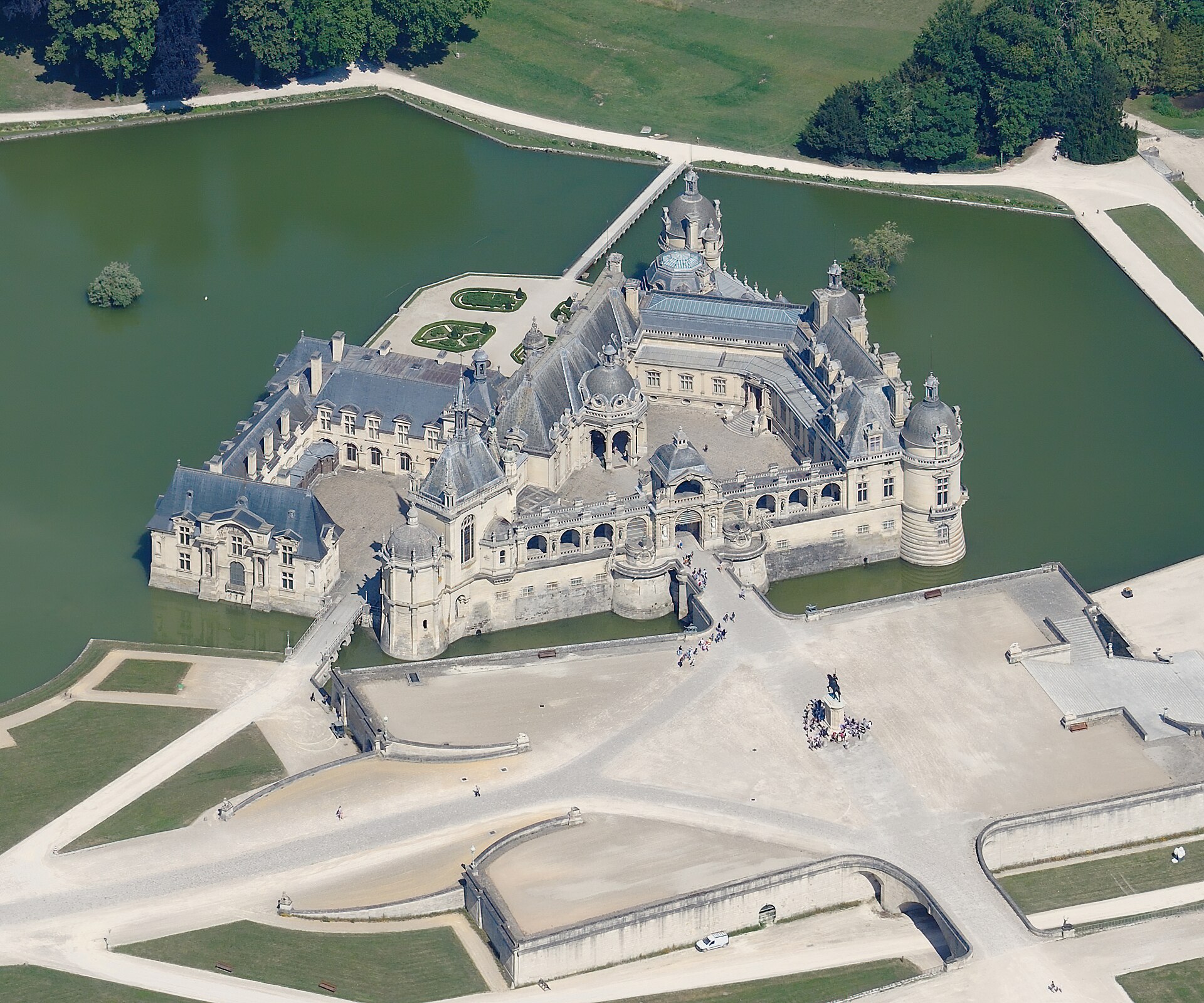
A little to the north of Paris, set amid forests and reflected in the still waters that surround it, stands one of the most romantic and treasure-filled palaces in all of France. The Château de Chantilly is a place of many delights, a graceful residence rising from its own lake, surrounded by some of the most beautiful gardens ever created, and filled with an art collection so rich that it rivals the greatest museums in the country.
Chantilly is a palace of princes, long associated with some of the most illustrious families of France, who made it a showcase of their wealth, their taste, and their power. Over the centuries it accumulated treasures of every kind, from magnificent gardens and monumental stables to paintings, manuscripts, and rare books of extraordinary value, becoming a kind of treasure house of French art and history.
Yet Chantilly is more than a collection of splendours. It is a place where the passions of its owners come vividly to life, from a prince so devoted to horses that he built them a palace of their own, to a duke who assembled one of the finest art collections in Europe and gave it, with everything else, to the nation. The château is a monument to these remarkable men and their extraordinary enthusiasms.
In the pages ahead you will explore this enchanting palace, from the princely families who shaped it and the great gardens that surround it, through the magnificent stables and the priceless art within, to the generous gift that preserved it for all. Chantilly is one of the hidden jewels of France, a palace of beauty, treasure, and passion that rewards every moment you spend discovering it.
In This Article
- A Palace of Princes
- A Renaissance Heart
- The Gardens of a Master
- A Palace Mirrored in Water
- A Palace for Horses
- The Duke Who Loved Art
- A Treasure House of Paintings
- The Priceless Library
- Destruction and Rebirth
- A Gift to the Nation
- A Name of Many Delights
- Forests, Racecourse, and Estate
- Discovering Chantilly Today
A Palace of Princes
Chantilly has always been a place of the great and powerful, its long history bound up with some of the most illustrious families in France. From its early origins, the estate passed through the hands of noble houses who made it their own, rebuilding and enriching the château and establishing it as one of the foremost aristocratic residences in the kingdom, a seat worthy of princes.
The families who owned Chantilly were among the highest in the land, figures of enormous wealth and influence whose fortunes were tied to the crown itself. They lavished attention on the château, transforming it over the generations into a place of magnificence that reflected their exalted status, and they made it a centre of power and display in the world of the French nobility.
Under these princely owners, Chantilly became far more than a mere residence; it was a statement of rank and ambition, a place where great families displayed their splendour and pursued their pleasures. The château and its estate grew into a vast and magnificent domain, one of the most prestigious in France, its name synonymous with the highest reaches of the aristocracy.
This long association with princely families gives Chantilly a character quite different from the royal palaces built to glorify kings. It is a palace of the great nobility, shaped by the tastes and passions of the illustrious houses who possessed it, and its history offers a fascinating window into the world of the French aristocracy at the height of its wealth and power.
The prestige of Chantilly was such that to hold it was to stand among the very first rank of the French nobility, and its owners guarded that prestige jealously. The estate was more than property; it was a symbol of a family’s greatness, passed down and fought over across generations, and its splendour was maintained as a matter of honour by those fortunate enough to possess it.
A Renaissance Heart
Long before the great collections and the grand rebuilding, Chantilly was shaped by the Renaissance, when a powerful nobleman of the sixteenth century transformed the medieval castle into an elegant residence in the new style. This early flowering gave Chantilly its first period of real magnificence and established the estate as a place of art and refinement worthy of its illustrious owners.
This Renaissance patron was one of the most important figures of his age, a great servant of the crown who brought to Chantilly the taste and ambition of the new era. Under his direction the estate was enriched with fine buildings and works of art, and he made Chantilly a centre of culture and power, laying the foundations for the splendour that later generations would build upon.
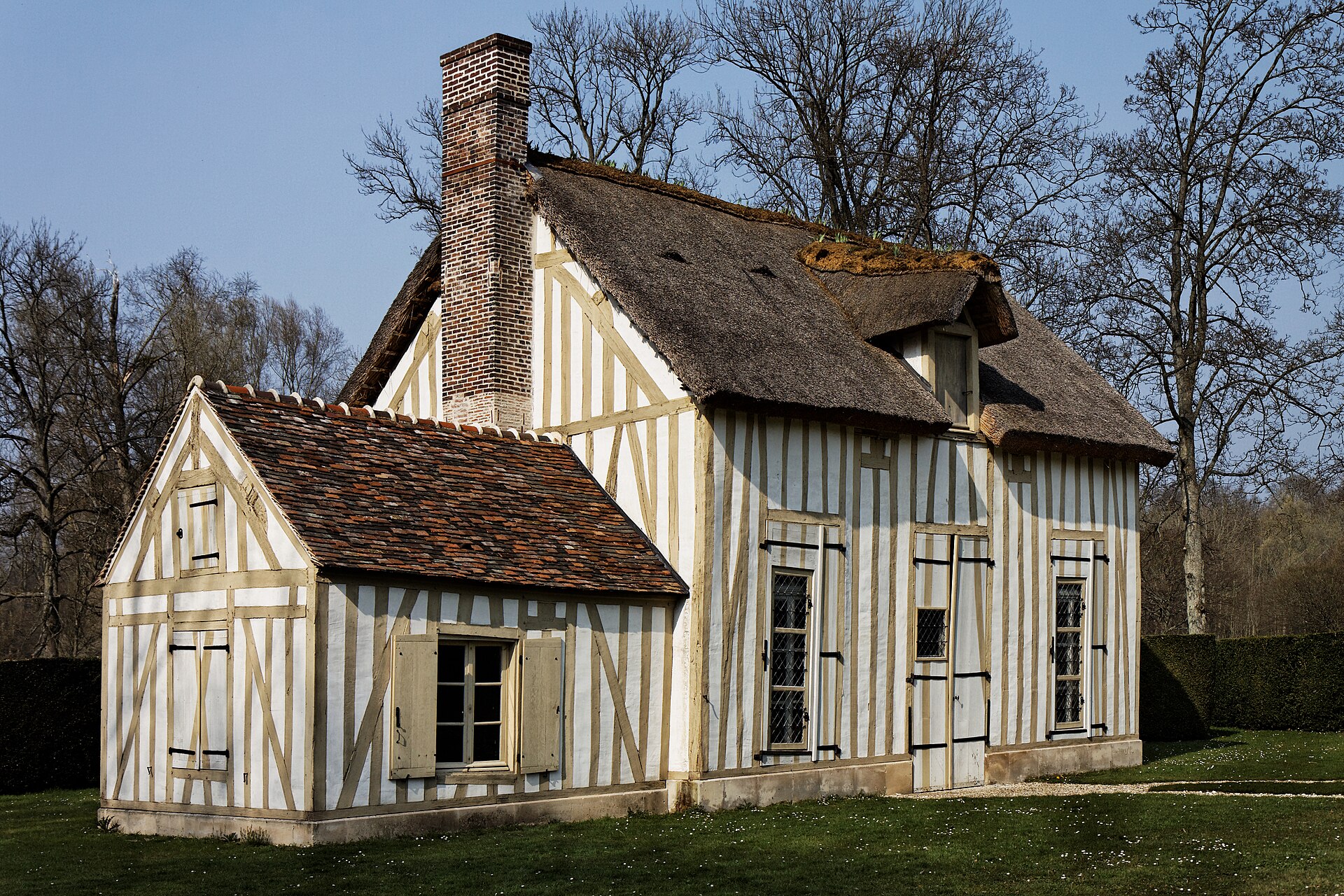
Something of this Renaissance heart survives at Chantilly to this day, for a portion of the older château came through the destruction of the Revolution and stands still beside the later rebuilding. This surviving fragment preserves a link to the estate’s earlier history, a reminder that Chantilly’s story reaches back long before the age of its great collectors.
The Renaissance chapter is an essential part of the long history of Chantilly, the moment when the estate first rose to real prominence as a place of art and cultivation. It set the pattern for what Chantilly would become, a palace shaped by owners of the highest rank and devoted to beauty and refinement, and its traces add depth to the rich accumulation of the château’s past.
The survival of a piece of this earlier château alongside the later reconstruction gives Chantilly an appealing layering, a visible reminder that the estate’s greatness was not the work of a single moment but the accumulation of centuries. In this it resembles the finest historic houses, whose fascination lies precisely in the way successive ages have left their marks side by side.
The Gardens of a Master
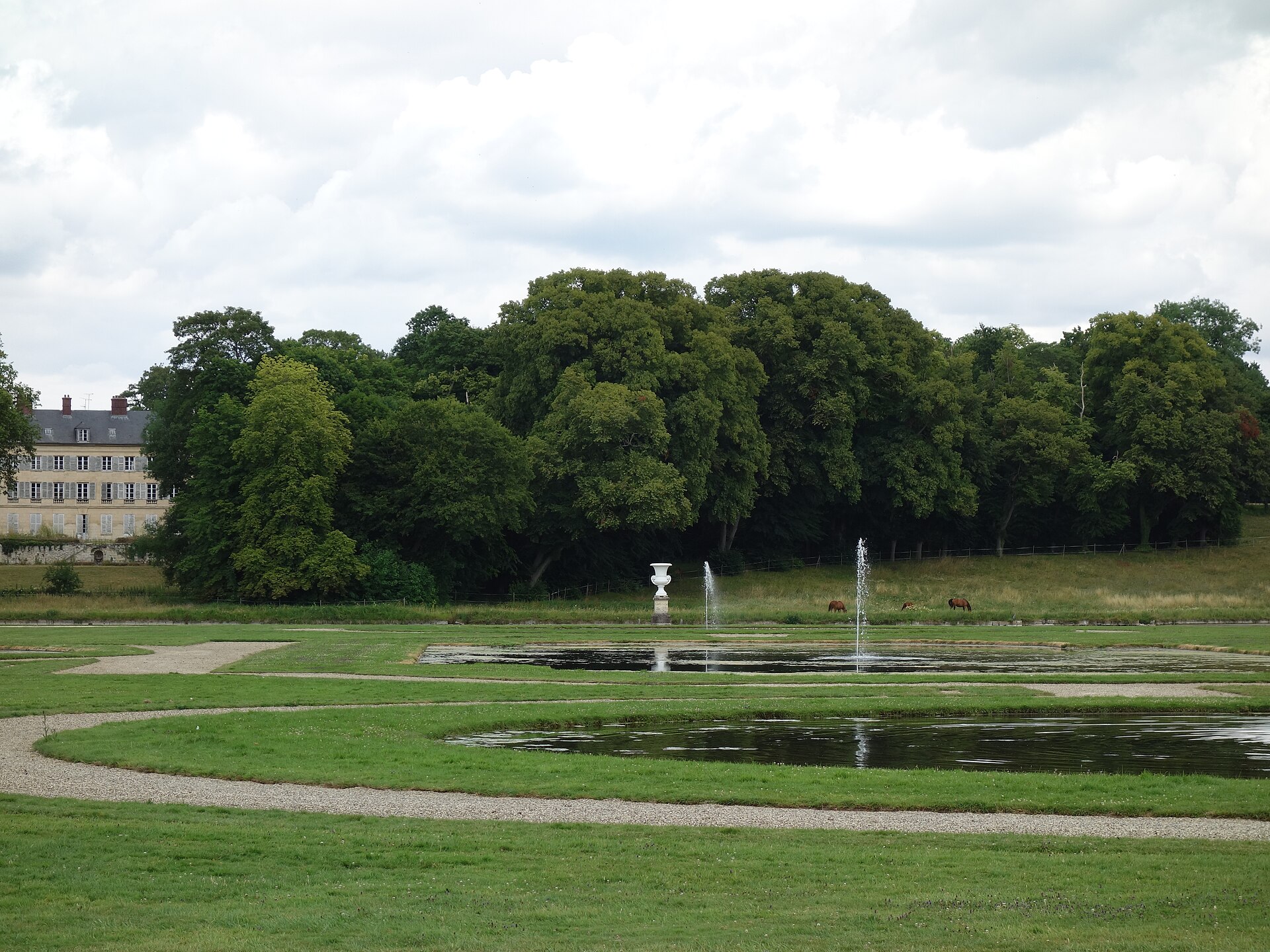
Among the greatest glories of Chantilly are its gardens, laid out by the supreme master of the formal French garden, whose work here ranks among his finest achievements. These magnificent gardens, with their long perspectives, ornamental waters, and perfect symmetry, transformed the setting of the château into a landscape of extraordinary beauty and grandeur.
The genius of the design lay in its use of water, for Chantilly’s gardens are famous above all for their great expanses of ornamental water that mirror the sky and the surrounding greenery. Broad canals and reflecting pools bring light and movement to the landscape, and the play of the still water against the ordered plantings creates an effect of serene magnificence unmatched among French gardens.
The master who designed these gardens is said to have regarded them among his proudest creations, and it is easy to see why. The scale and ambition of the design, the brilliant handling of water, and the harmony of the whole composition mark the gardens of Chantilly as one of the supreme achievements of the formal garden, a landscape that rivals the finest in France.
To walk these gardens is to experience the French formal style at its most magnificent, the ordered beauty of the parterres giving way to the shining expanses of water and the long avenues drawing the eye toward distant horizons. The gardens are not merely a setting for the château but a masterpiece in their own right, and they remain one of the great pleasures of a visit to Chantilly.
The gardens were designed to be experienced as a grand unfolding composition, each vista opening onto the next as the visitor moved through them. This theatrical quality, the sense of a landscape carefully staged for the eye, is the hallmark of the master who created them, and at Chantilly he found in the abundant water of the site the perfect medium for his art.
A Palace Mirrored in Water
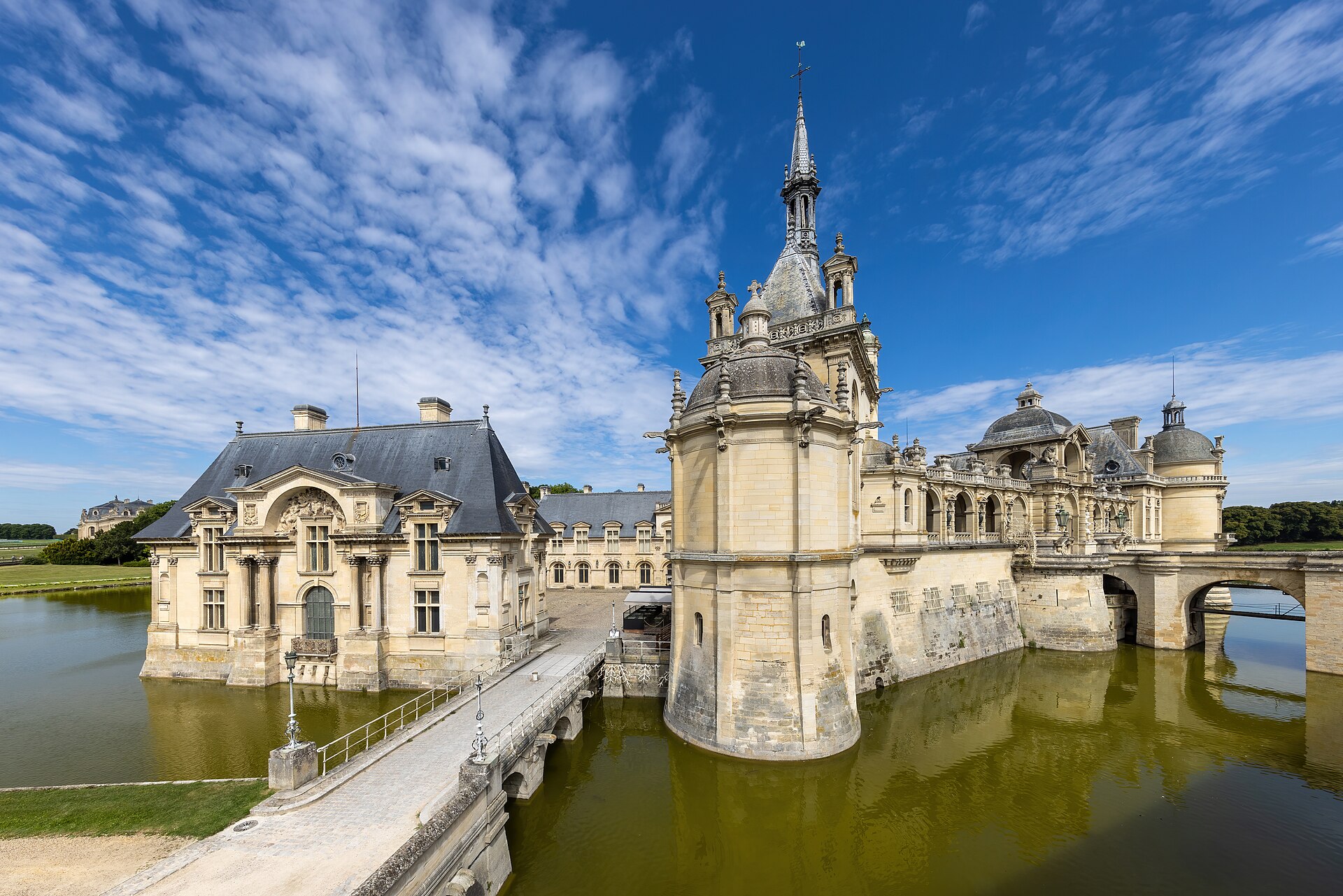
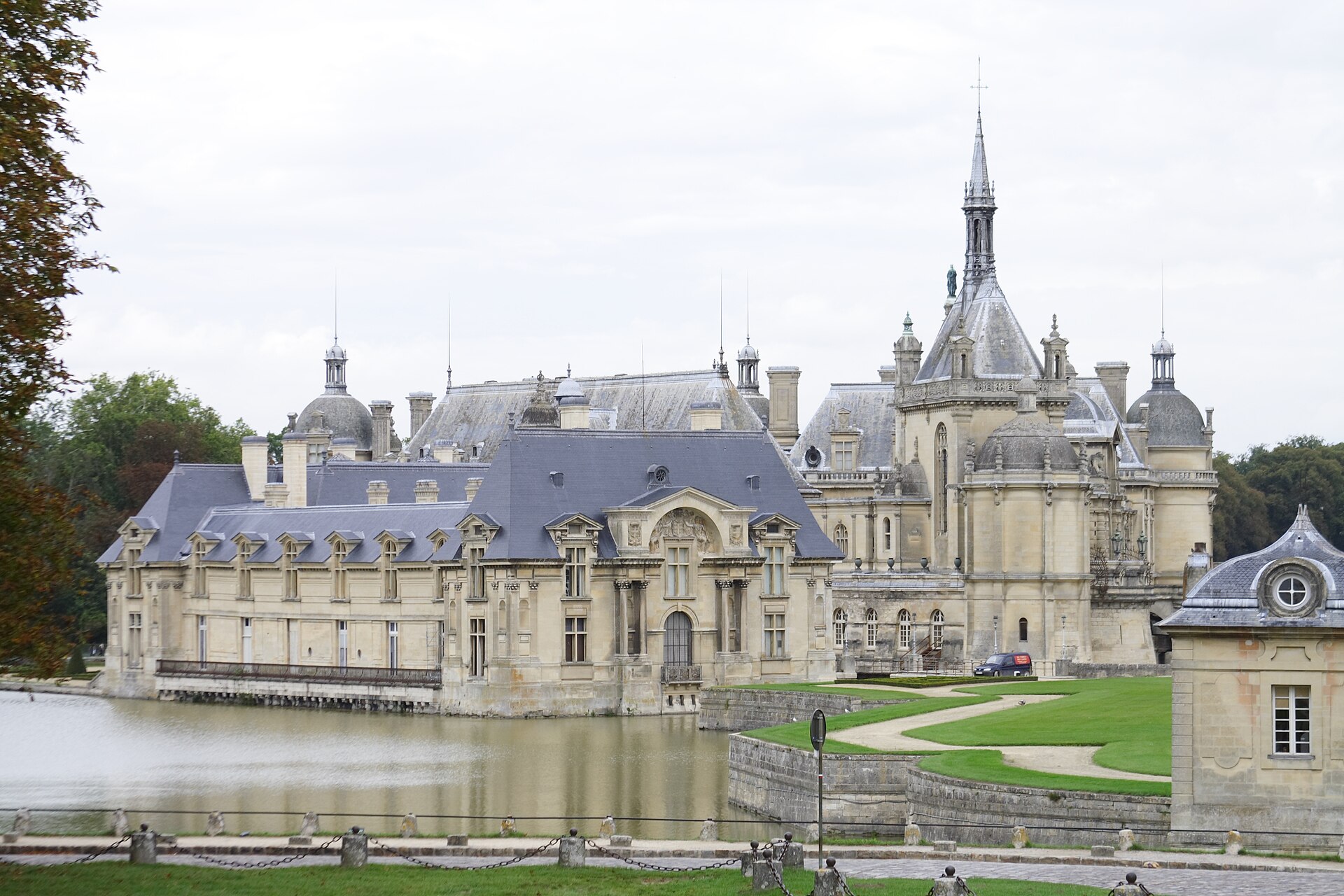
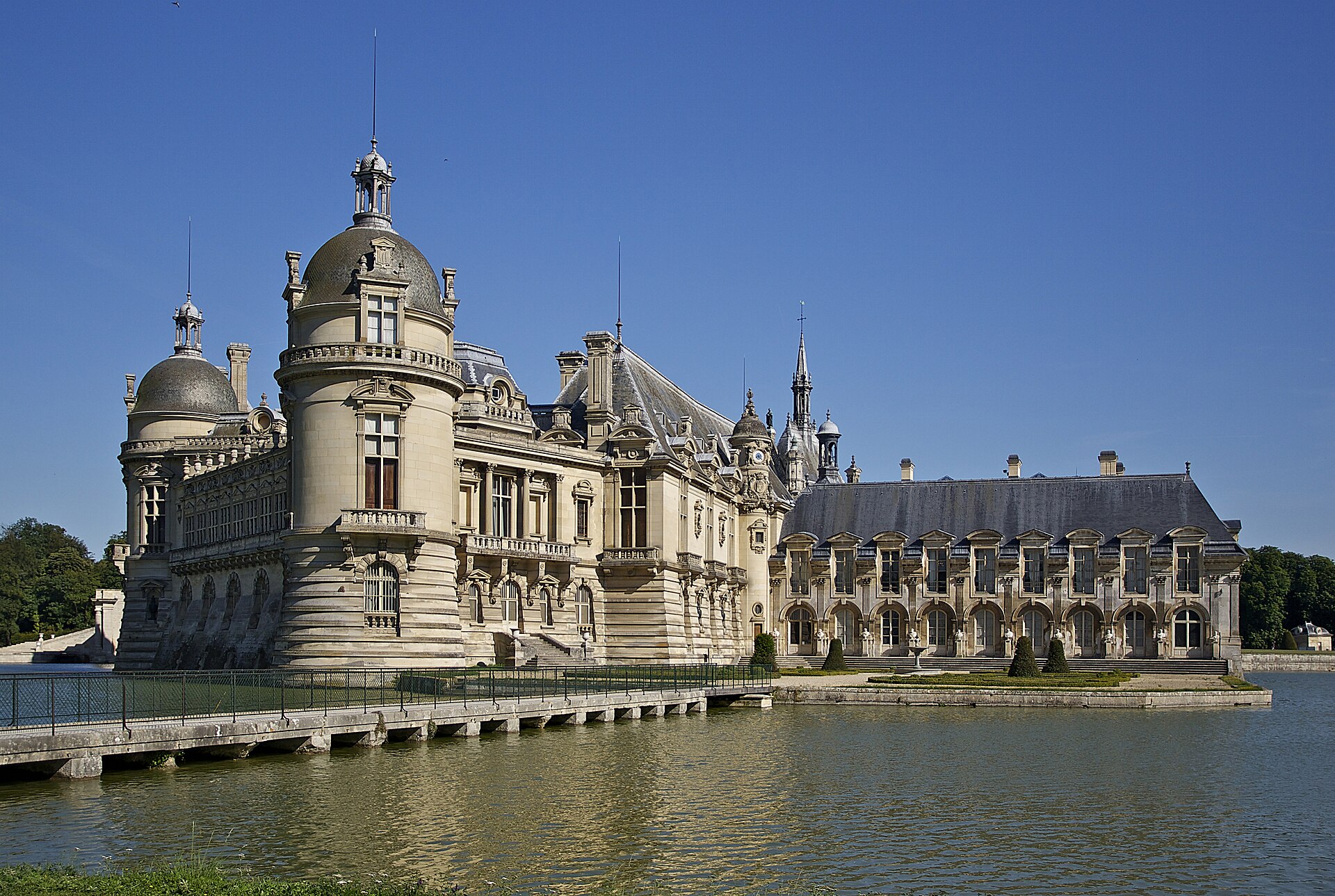
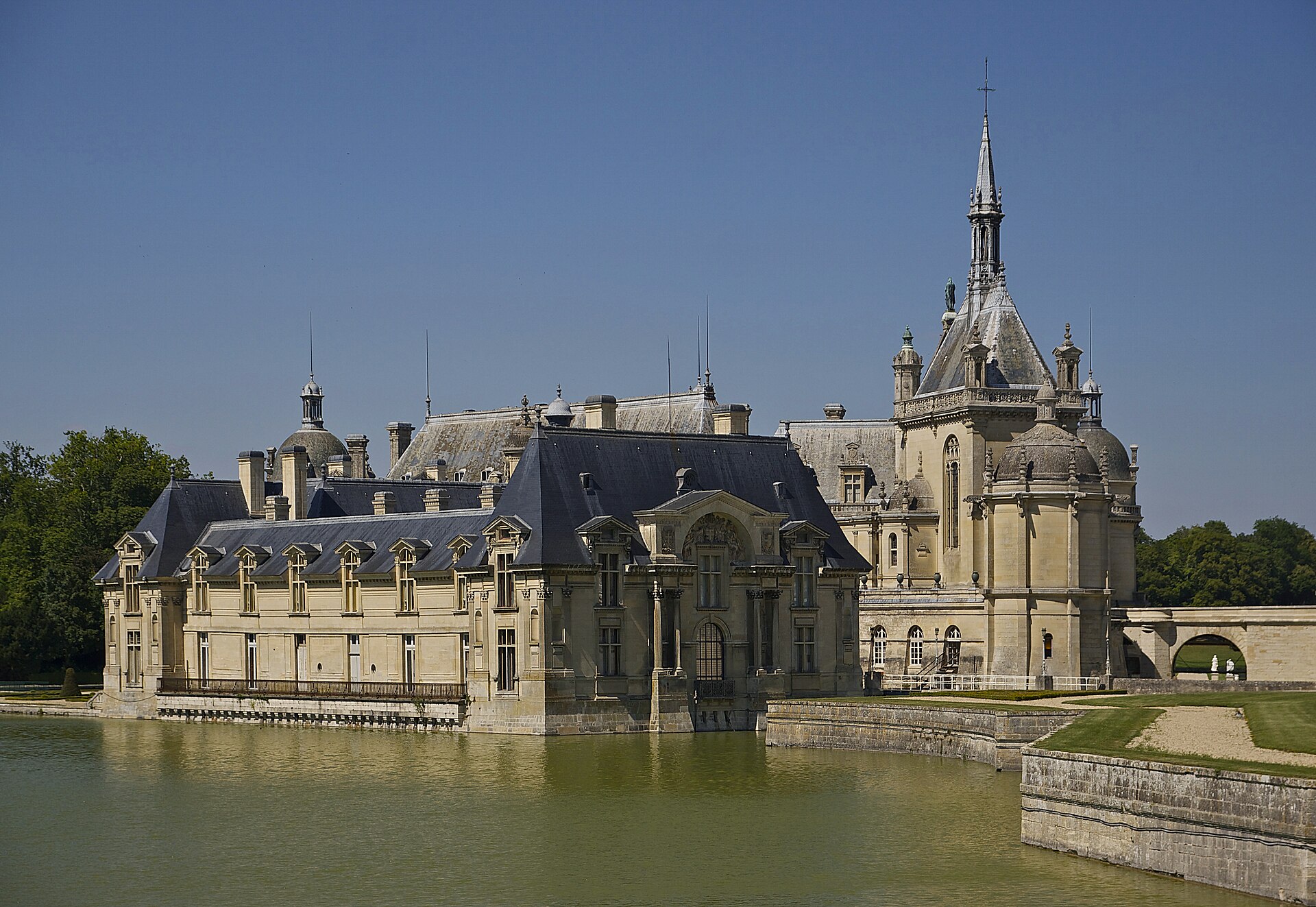
Water is central to the beauty of Chantilly, for the château rises from amid ornamental lakes and canals that surround and reflect it, giving the palace the appearance of floating upon the water. This intimate relationship with water is one of the defining features of Chantilly, lending it a magical, dreamlike quality that sets it apart among the palaces of France.
The waters that surround the château serve both beauty and defence, their origins reaching back to the moats that once protected the site. Over time these defensive waters were transformed into elements of ornament and delight, the practical barrier becoming a mirror in which the château could admire its own reflection, and a source of endless beauty in the changing light.
The reflections of the château in the surrounding water are among the most memorable sights of Chantilly, the palace doubled in the still surface below, its towers and facades shimmering in the water. In the soft light of morning or evening, the effect is especially enchanting, and it has made Chantilly one of the most photographed and admired of all French châteaux.
This union of architecture and water is essential to the character of Chantilly, a palace that seems to belong as much to its lakes as to the land. The water enhances the beauty of the château at every turn, framing it, reflecting it, and surrounding it with an atmosphere of tranquil splendour, and it is one of the qualities that makes Chantilly so utterly captivating.
The presence of so much water also shaped the daily life and pleasures of the estate, offering boating, reflection, and the play of light that changes with every hour. Chantilly without its water would be a different place entirely, and the lakes and canals are as essential to its beauty as the walls of the château itself, binding architecture and landscape into a single enchanting whole.
A Palace for Horses
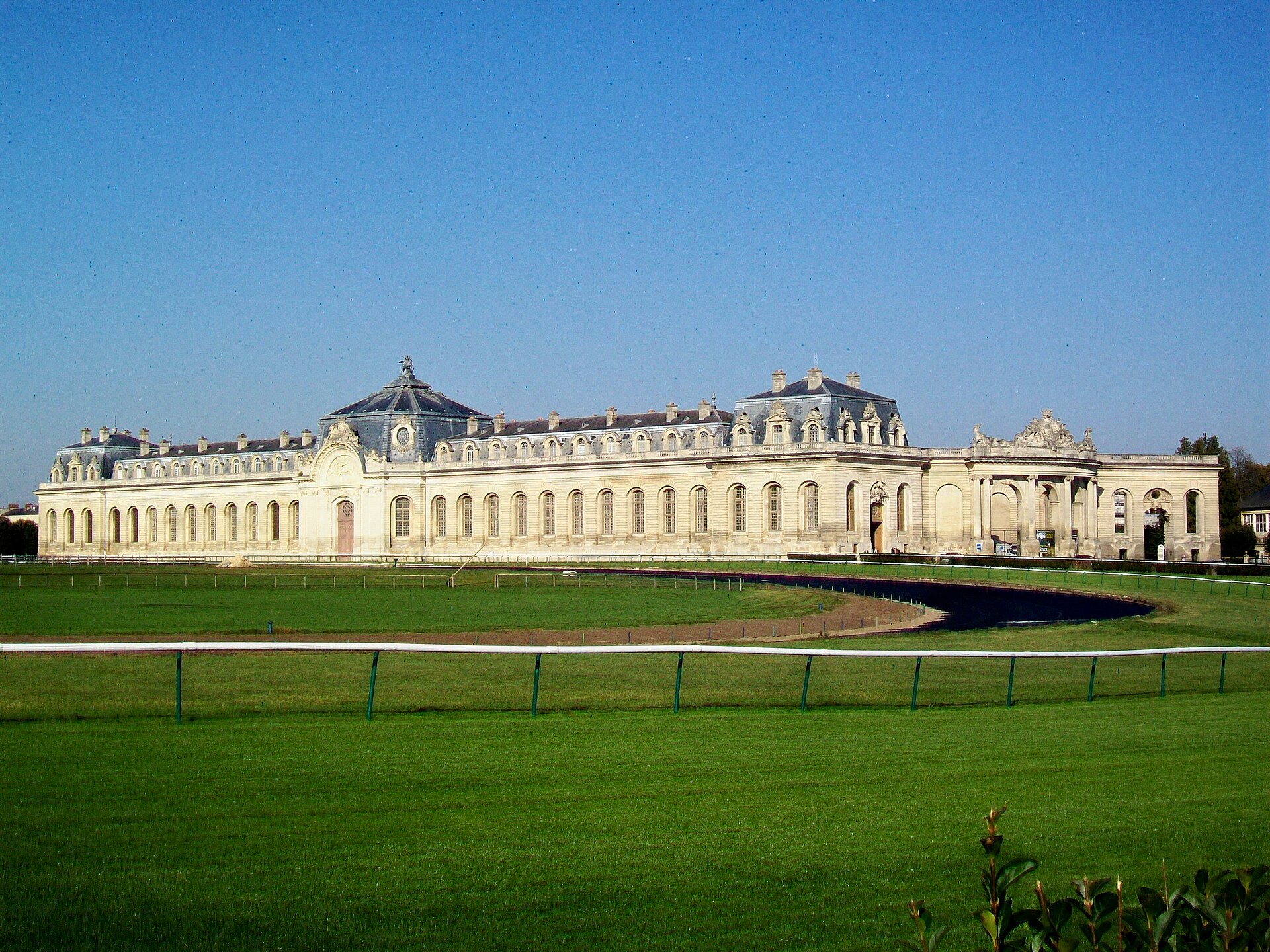
One of the most extraordinary features of Chantilly is not part of the château at all but a separate building of astonishing magnificence, the Great Stables, raised to house the horses of the estate on a scale of almost royal grandeur. These monumental stables are among the most remarkable buildings of their kind in the world, a palace for horses that rivals the château itself in splendour.
The origin of these stables lies in the passion of a prince who is said to have believed he would be reborn as a horse, and who therefore wished to provide his future self with lodgings of suitable magnificence. Whatever the truth of this famous story, the result was a building of extraordinary grandeur, designed to house horses and hounds in surroundings fit for the nobility.
The scale and beauty of the Great Stables reflect the central importance of the horse in the life of the aristocracy, for whom riding and hunting were among the greatest of pleasures. To devote such a magnificent building to horses was a striking expression of this passion, and the stables stand as a monument to the aristocratic love of the horse taken to its most spectacular extreme.
Today the Great Stables continue to celebrate the horse, housing a museum devoted to these animals and hosting displays of horsemanship that delight visitors. The building remains one of the highlights of Chantilly, a reminder of the extraordinary passions of its princely owners and a magnificent monument to the noble relationship between people and horses across the centuries.
Standing before the Great Stables, many visitors mistake them at first for the château itself, so palatial is their scale and so rich their architecture. That a building for horses should rival the residences of princes is one of the most telling expressions of the aristocratic world that created Chantilly, a world in which the horse held a place of honour few today can fully imagine.
The tradition of horsemanship celebrated here continues to draw visitors who come to admire displays of riding and to learn about the long history of the horse. In keeping this heritage alive, the Great Stables remain not a dead monument but a living celebration of an animal that shaped the culture and pleasures of the aristocracy for centuries.
The Duke Who Loved Art
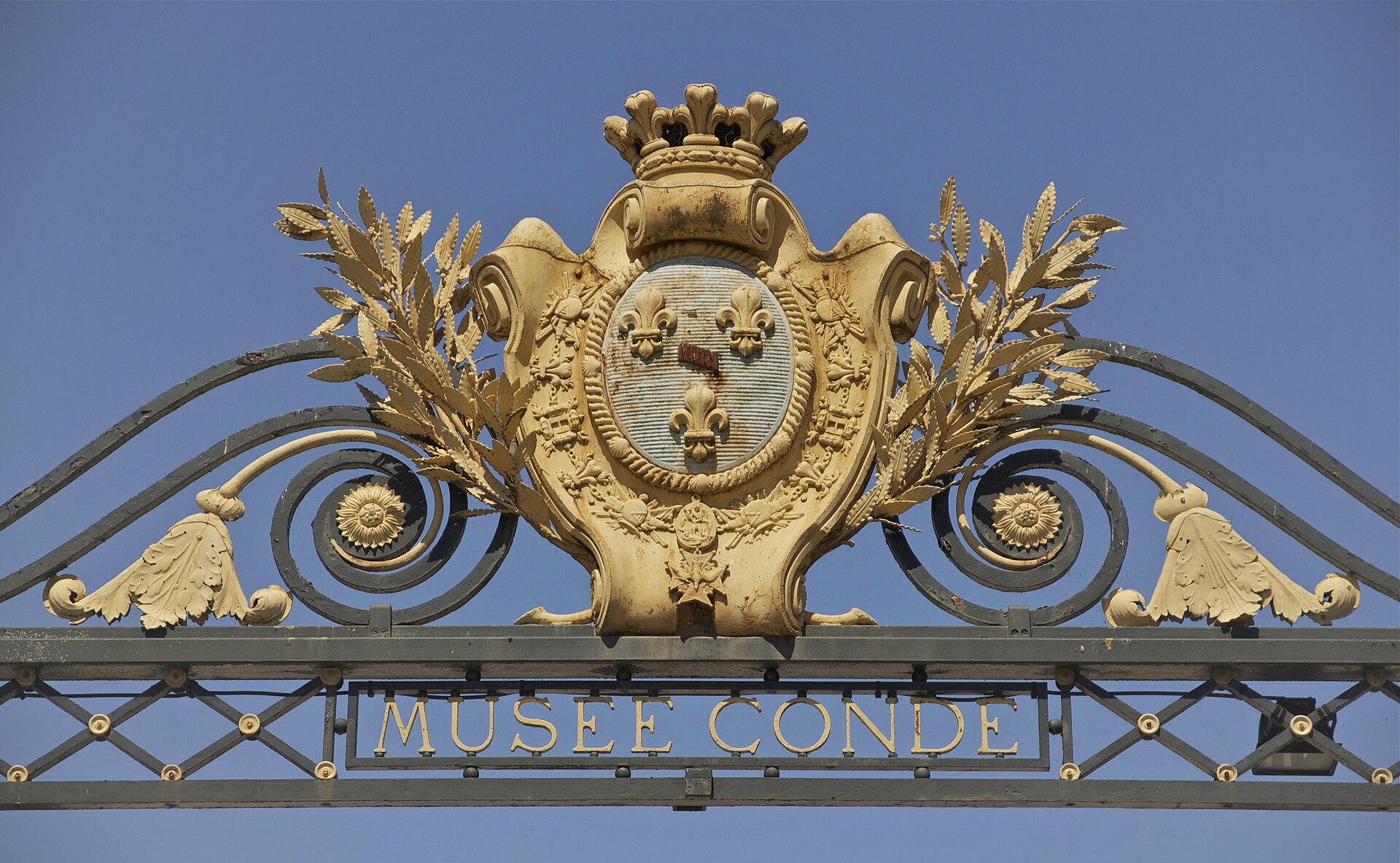
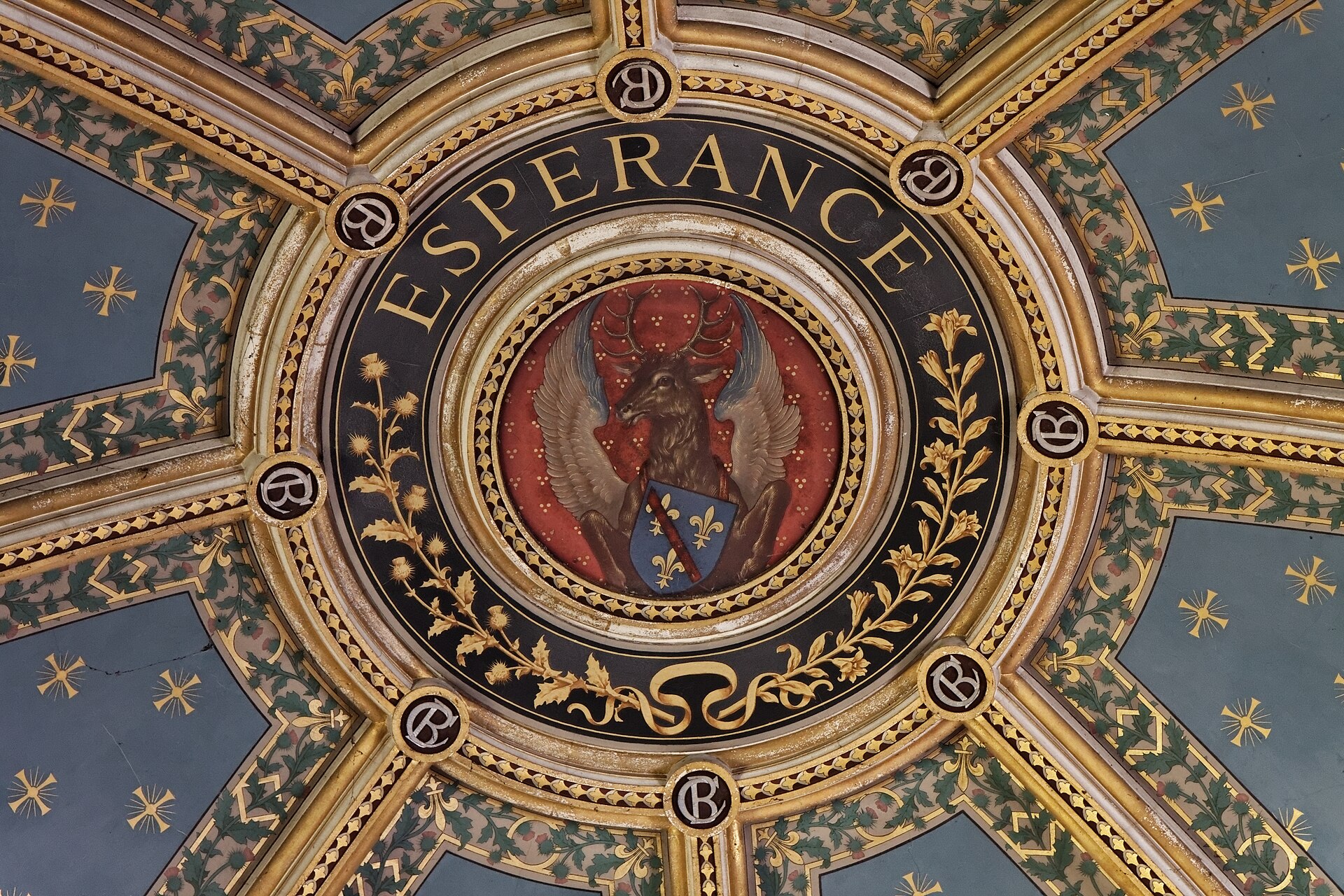
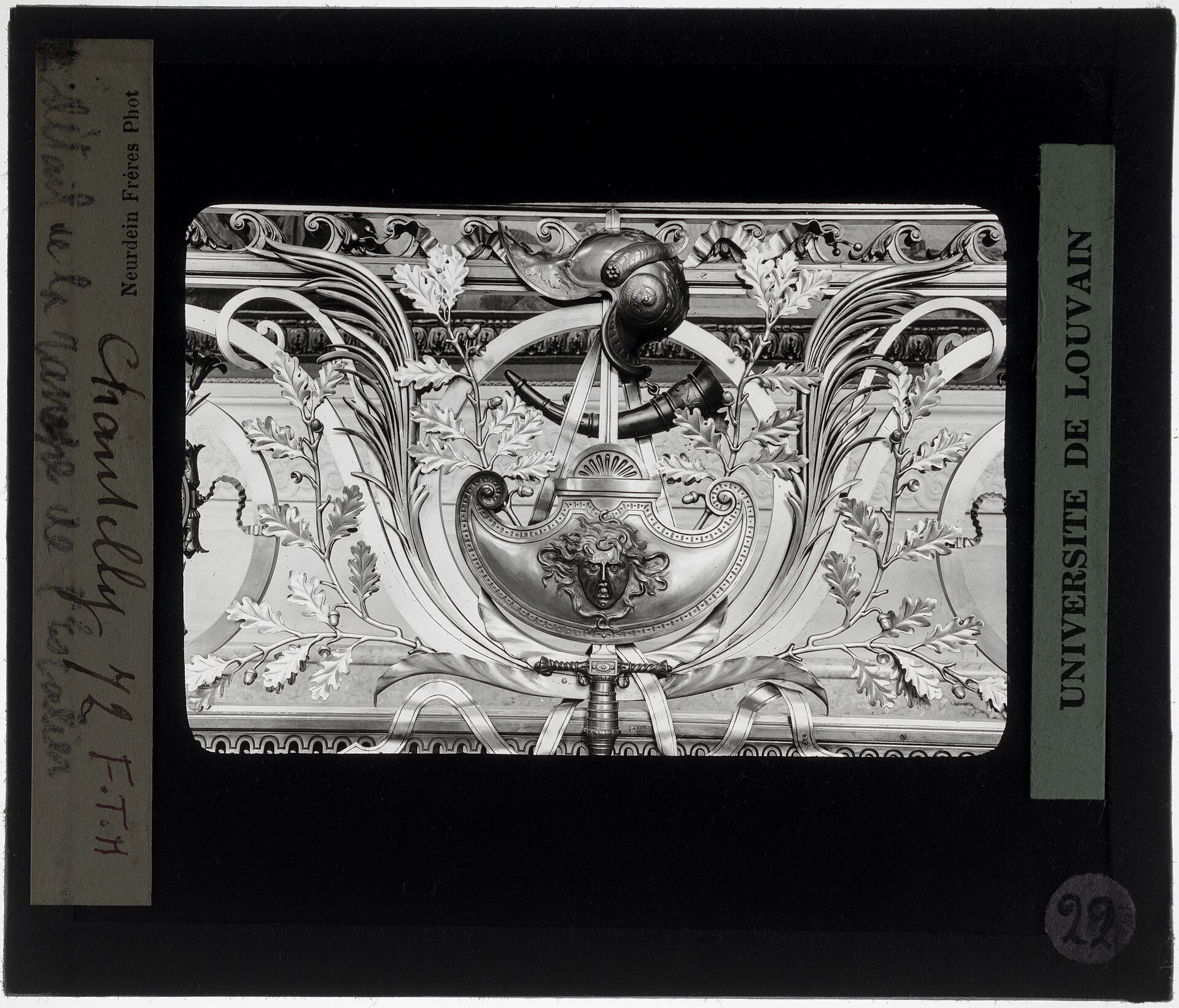
The Chantilly we know today owes much to one remarkable man, a prince of a great royal house who inherited the estate and devoted his life and fortune to restoring it and filling it with treasures. After the château had suffered grievously in the upheavals of revolution, he rebuilt it in magnificent style and transformed it into a home for one of the greatest art collections in France.
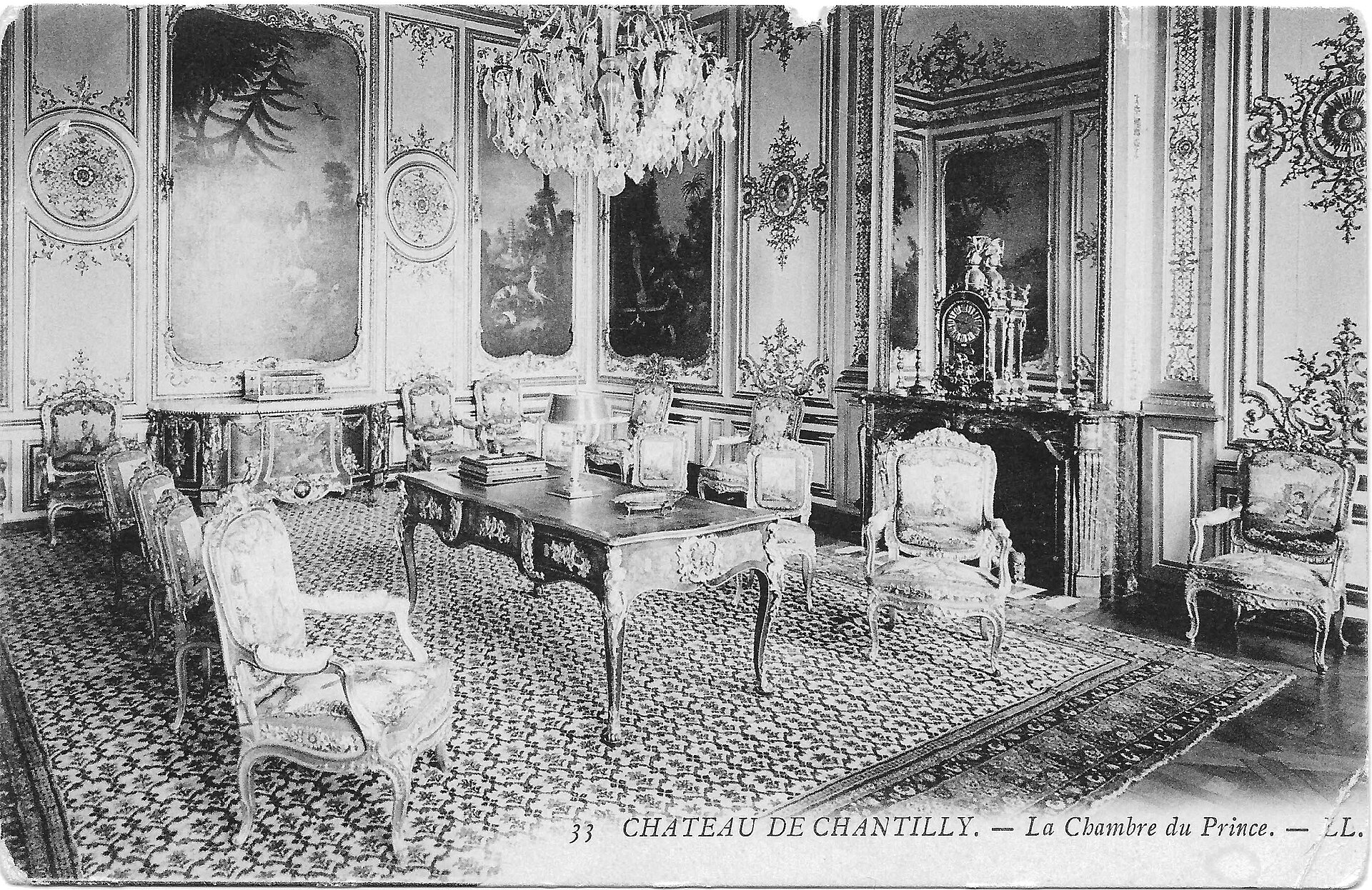
This duke was a passionate and discerning collector, and he assembled at Chantilly an extraordinary array of paintings, drawings, manuscripts, and rare books, gathered over a lifetime of devoted acquisition. His collection encompassed masterpieces of the highest quality, and he arranged them within the château to create a private museum of astonishing richness, rivalling the great public collections of the nation.
The duke’s dedication to art and learning was matched by his sense of the château as a whole, and he restored not only the building but the gardens and the estate, seeking to recover something of Chantilly’s former glory. His work saved the château from the neglect that had followed the Revolution and gave it new life as a treasure house of art, a living monument to his passion and his taste.
The transformation of Chantilly under this remarkable duke is one of the great achievements of collecting and restoration in the history of France. Through his devotion, a ruined and neglected estate became once more one of the most magnificent in the country, filled with treasures of incomparable value, and his vision shaped the château into the wonder that visitors admire today.
His achievement was all the more remarkable for the moment at which it came, long after the age of the great princely builders had passed. That a single individual, in a very different era, should have recreated so much of Chantilly’s former splendour and added treasures of his own is a testament to the power of private passion to shape the cultural heritage of a nation.
A Treasure House of Paintings
The art collection assembled at Chantilly is among the finest in France, so rich in masterpieces that it is often said to rank second only to the greatest of the nation’s museums in the quality of its old master paintings. Displayed within the restored château, this collection makes Chantilly not only a beautiful palace but one of the most important repositories of art in the country.
The paintings gathered here span the great ages of European art, including works by celebrated masters whose names are known throughout the world. The quality of the collection is extraordinary, the result of the discerning eye and deep pockets of the collector who assembled it, and it turns the galleries of Chantilly into a journey through the history of European painting at its highest level.
What makes the collection especially remarkable is the condition imposed upon its display, for its creator decreed that the arrangement of the works should never be altered. As a result, the paintings hang today much as he placed them, in a dense and personal arrangement quite different from the ordered displays of a modern museum, preserving the vision of the collector himself.
This unique manner of display gives the art of Chantilly a special character, offering the visitor not only great masterpieces but a glimpse into the mind and taste of the man who gathered them. The collection is a treasure of France, a body of art of the highest importance preserved in a setting of great beauty, and it is one of the chief glories of the château.
For the visitor accustomed to the vast, impersonal galleries of the greatest museums, the experience of Chantilly is a refreshing contrast. Here the works are gathered densely and personally, hung according to the vision of one man rather than the principles of modern display, and the result is an encounter with great art that feels intimate and human, closer to the spirit of a private collection than a public institution.
The Priceless Library
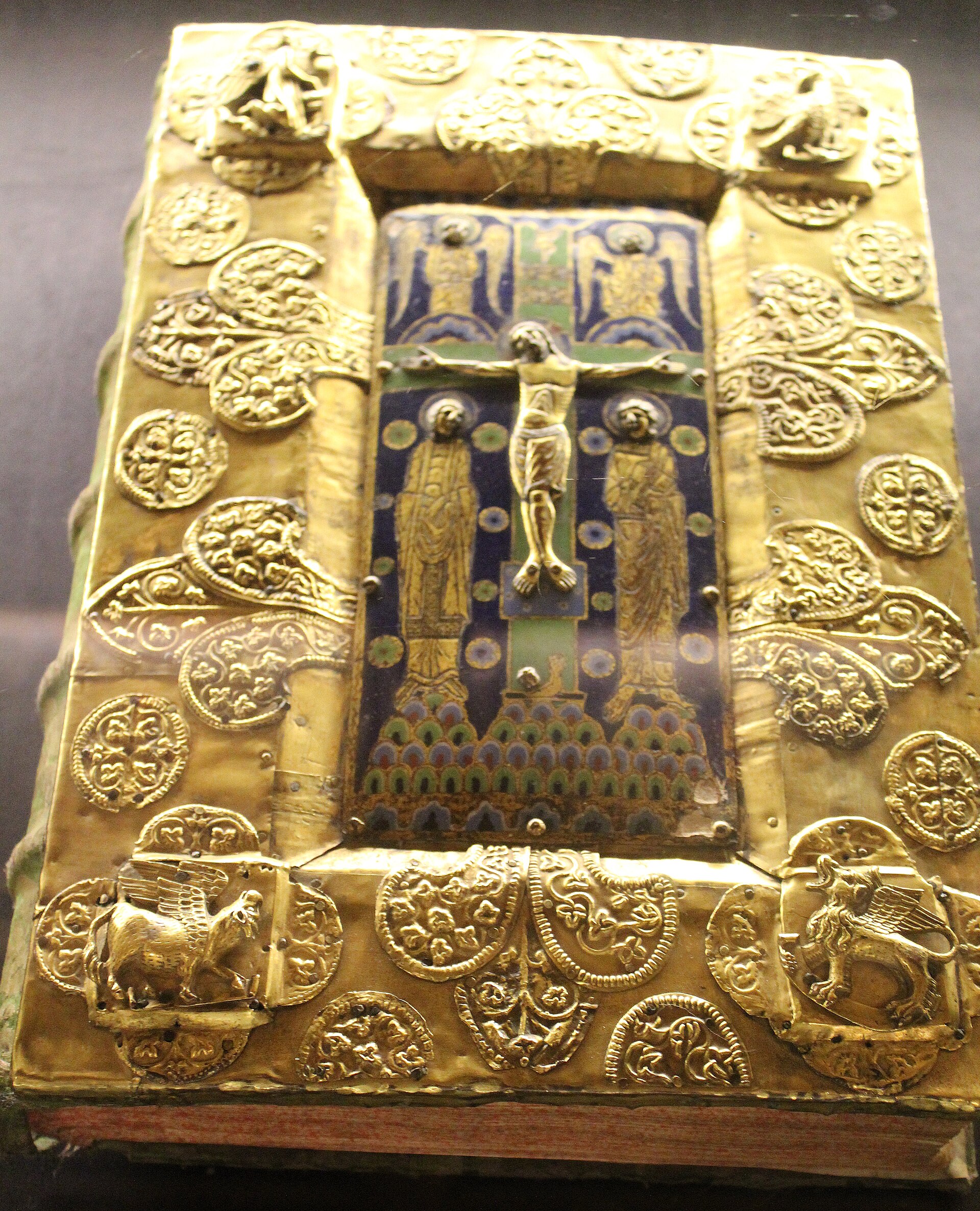
Among the greatest treasures of Chantilly is its library, a collection of books and manuscripts of extraordinary rarity and value assembled by the château’s great restorer. This magnificent library, housed in a beautiful room within the château, contains works of the highest importance, including illuminated manuscripts counted among the most precious in the world.
The jewel of the collection is a famous illuminated manuscript of medieval times, a book of hours renowned for the exquisite beauty of its paintings, which is considered one of the supreme masterpieces of manuscript illumination. To possess such a treasure is a mark of the extraordinary richness of the Chantilly library, and the manuscript is among the most celebrated books in existence.
Beyond this famous jewel, the library holds a wealth of rare books, manuscripts, and documents of great value, a collection assembled with the same passion and discernment that guided the gathering of the paintings. The library reflects the deep love of learning and beauty that animated the château’s great restorer, and it stands as one of the most important collections of its kind in France.
The preservation of this priceless library within the château is part of what makes Chantilly so remarkable, a palace that is also a treasure house of the written word. To know that such precious manuscripts are held within its walls adds another dimension to the wonder of Chantilly, a place where art, learning, and beauty come together in extraordinary abundance.
Treasures of this rarity are seldom found outside the greatest national libraries, and their presence at Chantilly underlines the exceptional character of the collection assembled here. To stand in the library, knowing what precious works it holds, is to feel the full weight of the château’s importance as a repository not only of art but of the written and painted heritage of civilisation.
Destruction and Rebirth
Like so many symbols of aristocratic France, Chantilly suffered grievously during the upheavals of revolution, when the great château was largely destroyed and its estate thrown into disorder. The magnificent residence of the princes was reduced to ruin, and for a time it seemed that one of the finest palaces in France might be lost forever, swept away with the old order it had embodied.
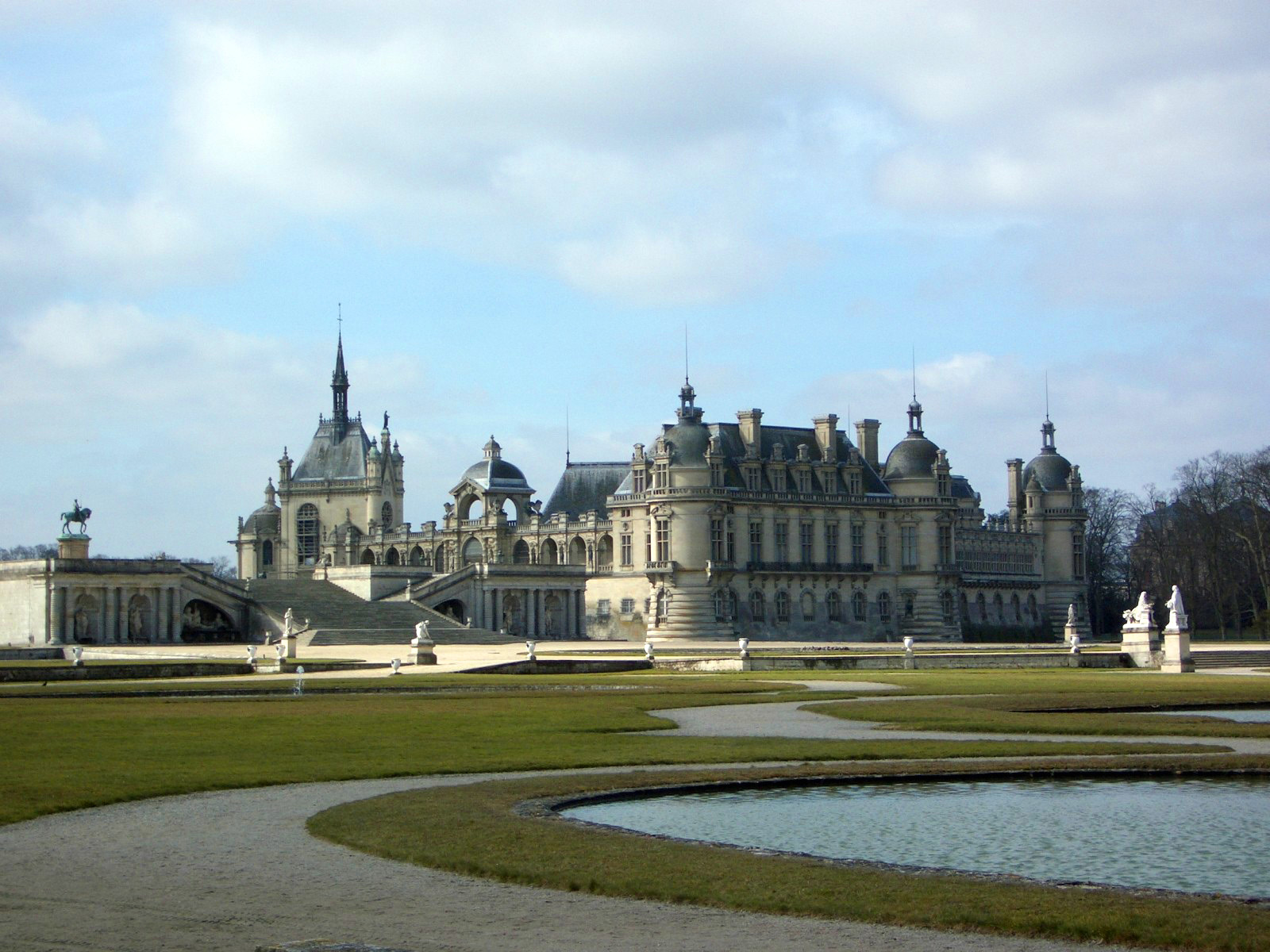
Yet Chantilly was not abandoned to its fate, for in a later age it found a saviour in the devoted duke who inherited the estate and resolved to restore it. Undertaking a great work of reconstruction, he raised the château anew in magnificent style, recovering the splendour that had been lost and giving the palace a second life more brilliant than many had thought possible.
The rebuilding of Chantilly was a labour of love and vision, an act of restoration that went far beyond mere reconstruction to create a palace worthy of the treasures it would hold. The duke spared no effort to make the new château a fitting home for his great collections, and the result was a building of real magnificence, risen from the ruins of the old.
This story of destruction and rebirth is central to the history of Chantilly, a reminder of the upheavals through which the great palaces of France have passed and of the devotion that saved this one from oblivion. That Chantilly stands today in such splendour is due to the vision of its great restorer, whose work ensured that the palace and its treasures would endure for future generations.
The contrast between the ruin of the Revolution and the splendour of the rebuilt château could hardly be greater, and it stands as a vivid emblem of the fortunes of France’s great houses across the turbulent modern age. That Chantilly rose again so magnificently is a story of resilience and devotion that gives the visitor’s wonder an added depth, knowing what the palace overcame to reach its present glory.
A Gift to the Nation
The final and perhaps greatest act in the story of Chantilly was the decision of its restorer to give the entire estate, with all its treasures, to the nation. Rather than allowing his magnificent collections to be dispersed after his death, he bequeathed the château, the art, the library, and the gardens to a great institution, on the condition that everything be preserved intact and opened to the public.
This extraordinary act of generosity ensured that the treasures of Chantilly would remain together and be preserved for all, a gift of incalculable value to the cultural heritage of France. The condition that nothing be moved or altered has kept the collections as their creator arranged them, preserving not only the treasures themselves but the vision that gathered and displayed them.
The gift transformed Chantilly from a private aristocratic residence into a public treasure, its splendours now belonging to the nation and open to all who wish to experience them. This generous bequest reflected the duke’s deep sense of the value of his collections and his desire that they should benefit the wider world, and it secured the future of the château and everything within it.
Because of this remarkable gift, visitors today can experience Chantilly much as its great restorer intended, the château, the art, the library, and the gardens preserved together as a single magnificent whole. The generosity that gave Chantilly to the nation is one of the noblest chapters in its history, and it is the reason this treasure house of France remains intact and accessible to all.
The condition attached to the gift, that nothing be altered, was itself an act of remarkable foresight, ensuring that future generations would encounter the collections not as a modern museum might rearrange them but as their creator conceived them. In this way the bequest preserved a whole vision, a personal act of taste and devotion, frozen for the benefit of all who come after.
A Name of Many Delights
The name of Chantilly is famous far beyond the château itself, attached to delights that have carried it around the world. Chantilly has lent its name to a celebrated preparation of sweetened whipped cream, a delicacy associated with the estate that has become known and enjoyed across the globe, spreading the fame of the château through the pleasures of the table.
The name is also associated with a form of exquisite lace, a delicate and beautiful craft that became renowned under the name of Chantilly. This fine lace, prized for its elegance, added to the reputation of the estate as a place of refinement and beauty, its name becoming a byword for craftsmanship and luxury in yet another field.
Chantilly is famous too for its connection to the world of horses and horse racing, the great stables and the surrounding estate long associated with the breeding and racing of fine horses. The name of Chantilly is known to lovers of the turf around the world, adding a sporting dimension to the many fields in which the estate has left its mark.
These varied associations, from cream to lace to horses, have spread the name of Chantilly far beyond those who have visited the château, making it one of the most widely known of all French estates. They reflect the richness and refinement of the world that the château embodied, and they add to the fascination of a place whose influence has reached into so many corners of life.
It is a curious and delightful fact that a single estate should have given its name to pleasures as varied as a dessert, a lace, and a tradition of racing. Few places have insinuated themselves so agreeably into the wider culture, and the familiarity of the name, even among those who have never seen the château, is a testament to the far-reaching influence of this remarkable estate.
Forests, Racecourse, and Estate
Chantilly is not only a château and its gardens but a vast estate, embracing great forests, a famous racecourse, and a landscape of exceptional beauty and variety. This broad domain, extending far beyond the palace itself, is an essential part of Chantilly, providing the setting in which the château sits and offering pleasures of its own to those who explore it.
The forests of Chantilly are magnificent, a great expanse of woodland that has long been associated with hunting and with the pleasures of the aristocratic life. These woods provide a beautiful natural setting for the estate and a place of recreation and escape, their ancient trees and winding paths inviting exploration and offering a green counterpoint to the formal splendour of the gardens.
The estate is also famous for its racecourse, one of the most celebrated in France, where the tradition of horse racing so closely associated with Chantilly is carried on. The races held here draw enthusiasts from far and wide, continuing the estate’s long connection with fine horses and adding to the many attractions that make Chantilly such a rich and varied destination.
Together the forests, the racecourse, and the wider estate complete the picture of Chantilly as a domain of extraordinary richness, offering far more than a beautiful palace alone. This great estate, with its varied landscapes and pleasures, is an integral part of what makes Chantilly so special, a place where architecture, art, nature, and sport come together in a single magnificent whole.
This breadth is part of what makes Chantilly so satisfying to visit, for it offers something for almost every taste, whether one comes for the paintings, the gardens, the horses, or simply the pleasure of the forest and the water. Few estates in France combine so many attractions in a single place, and the variety is a large part of the enduring appeal of Chantilly.
Discovering Chantilly Today
A visit to Chantilly is one of the great pleasures available to the traveller in France, and it offers a wealth of attractions to reward the curious visitor. The château, the gardens, the great stables, and the surrounding estate together provide an experience of extraordinary richness, and it is worth allowing plenty of time to explore all that Chantilly has to offer.
Inside the château, the visitor can admire the great art collection and the priceless library, experiencing one of the finest assemblages of paintings and manuscripts in France in a setting of real magnificence. The galleries, arranged as their creator intended, offer a journey through the history of European art, while the beautiful rooms of the château evoke the world of its princely owners.
Outside, the magnificent gardens invite exploration, their formal parterres, shining waters, and long avenues offering beauty at every turn. Beyond lie the great stables, with their celebration of the horse, and the wider estate with its forests and racecourse, so that a visit to Chantilly can encompass art, gardens, horses, and nature in a single rewarding day.
View the exact location on Google Maps
However you choose to experience it, Chantilly leaves an impression of beauty and abundance, a palace of treasures set amid gardens and water of exceptional loveliness. It is one of the hidden jewels of France, less famous than the greatest royal palaces yet rivalling them in the richness of its delights, and it rewards the traveller who seeks it out with one of the most memorable experiences the country has to offer.
Because Chantilly lies a little apart from the busiest tourist routes, it often feels less crowded than the most famous palaces, allowing a more relaxed and contemplative visit. There is a real pleasure in exploring its treasures and its grounds at an unhurried pace, and the sense of discovering a place not yet overrun adds to the charm of this remarkable estate.
Palaces Nearby
If Chantilly has drawn you into the palaces of France, two more great residences make natural companions:
You May Like
Sanssouci: The Vineyard Palace Where Frederick the Great Found Peace of Mind