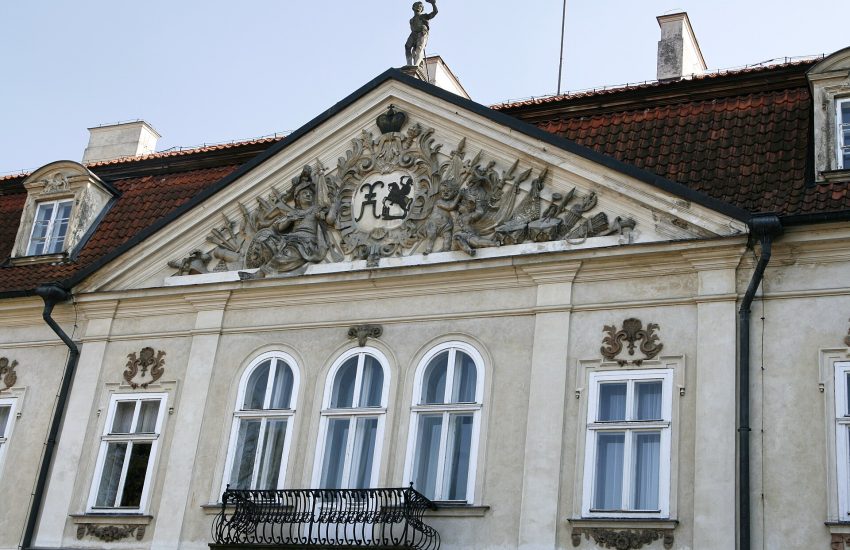
Just south of Poznan, where the Warta River winds through meadows and old oxbow lakes, stands one of the most beautiful aristocratic residences in western Poland. Rogalin Palace, the seat of the Raczynski family, combines late baroque grandeur with classical elegance, its central block embraced by curving galleries that reach out like open arms toward the visitor.
Rogalin is far more than a handsome building. It holds a celebrated gallery of Polish and European paintings, a library, carriages, a mausoleum chapel modelled on an ancient Roman temple, and a landscape famous throughout Poland for its ancient oaks, some of them many centuries old. The family that created it included statesmen, collectors and patrons, and its last owner served as president of Poland in exile.
In this article we will explore Rogalin from its eighteenth century beginnings to its role in modern Polish history, through its interiors, its gallery and its legendary oaks, and we will finish with practical tips for your visit.
In This Article
- A Palace Among the Oaks
- Kazimierz Raczynski Builds His Seat
- Curving Galleries and a Classical Front
- The Estate Buildings and Coach House
- The Raczynskis, Patrons and Patriots
- Inside the Palace
- A Library in the Spirit of Edward Raczynski
- The Raczynski Picture Gallery
- The Legendary Oaks of Rogalin
- Gardens, Meadows and the Warta Valley
- A Roman Temple in the Polish Countryside
- See Rogalin on Video
- Visiting Rogalin Today
A Palace Among the Oaks
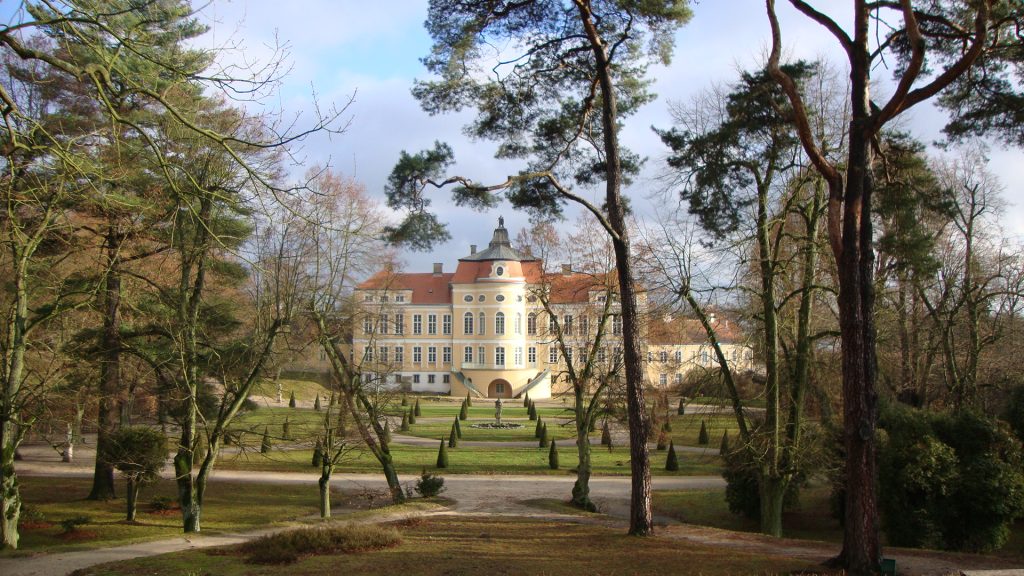
As you approach Rogalin, the palace appears across a wide courtyard, its pale facade crowned by a triangular pediment and flanked by two side wings connected to the main block by graceful curved galleries. The composition is balanced and welcoming, and it gives the palace an air of calm dignity.
Behind the palace lies a formal garden that leads toward a landscape park, and beyond that the meadows of the Warta valley, dotted with enormous oaks. The setting is one of the most romantic in Poland, a blend of architecture and nature that has inspired painters and poets for generations.
Rogalin is only about twenty kilometres from the centre of Poznan, making it an easy trip from the city. Yet it feels deeply rural, with its quiet village, its old trees and its gentle river landscape.
What makes Rogalin special is the way history, art and nature come together. You can spend the morning among paintings and period interiors, then walk among trees that were already old when the palace was built.
Many visitors arrive expecting only a palace and leave talking just as much about the oaks, the gallery and the river landscape. Rogalin has a way of surprising people with the variety of its attractions.
The village around the palace is small and quiet, with a few houses, a church and places to eat. It adds to the sense of stepping back into an older, slower world.
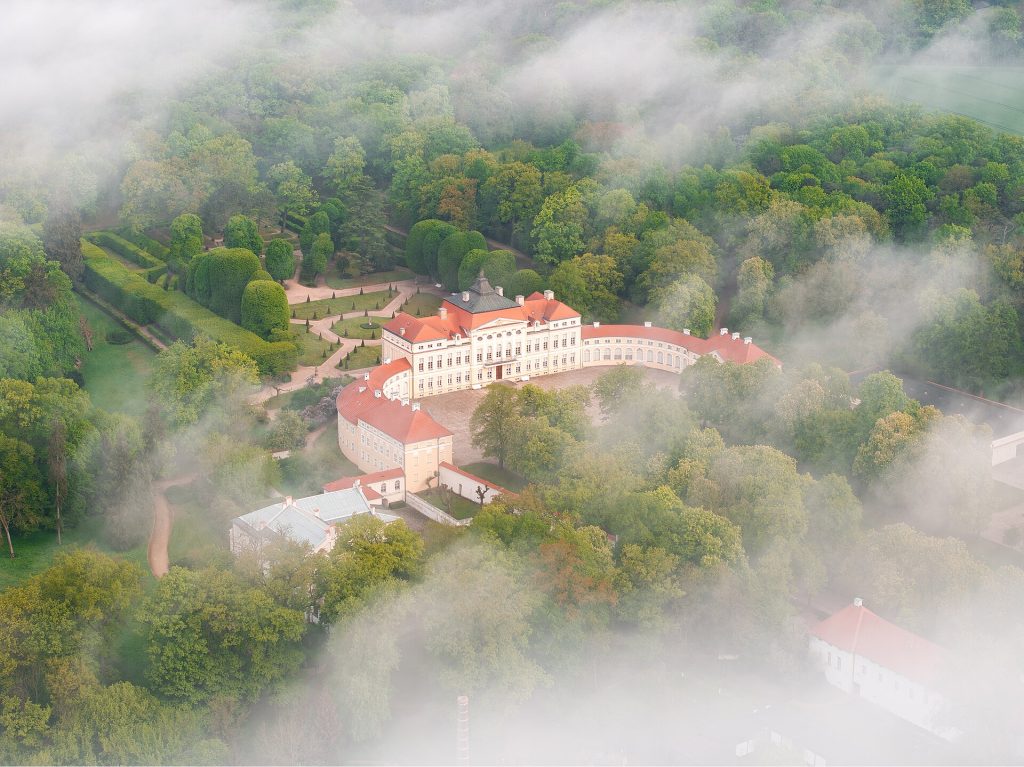
In the early morning, mist often rises from the Warta meadows and drifts around the palace, softening its outline and giving the whole scene a dreamlike quality. Photographers who come at dawn are rarely disappointed.
Kazimierz Raczynski Builds His Seat
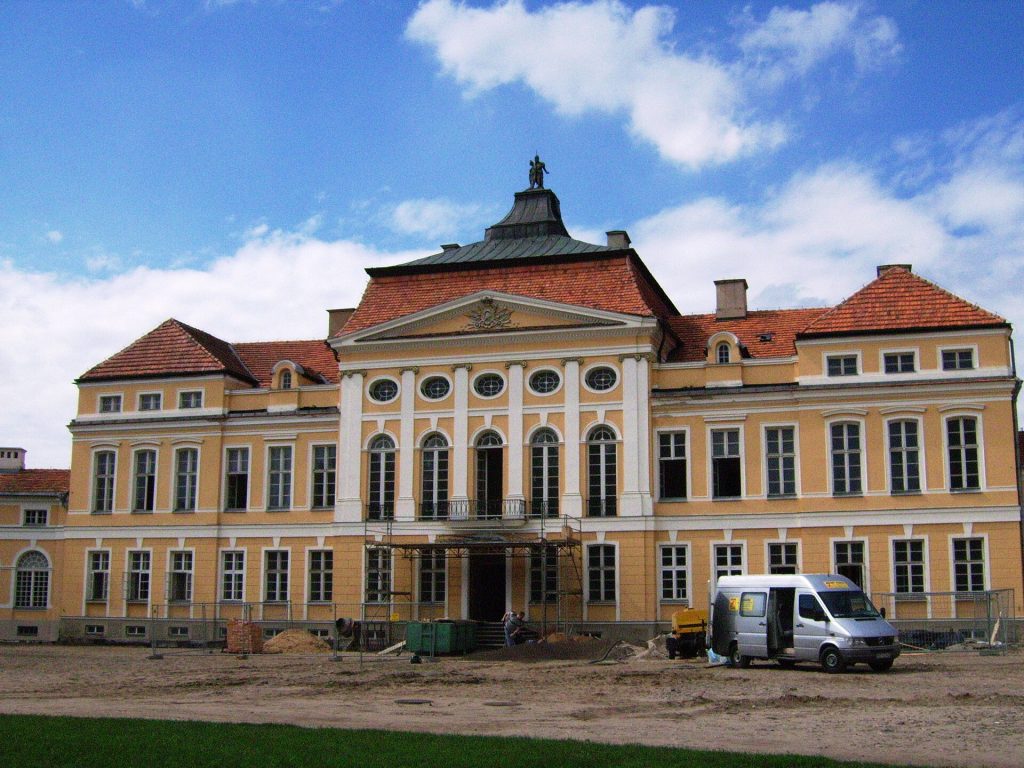
The palace was built in the 1770s for Kazimierz Raczynski, an ambitious nobleman who held high office in the Polish Lithuanian Commonwealth, including the post of Grand Marshal of the Crown. He wanted a residence that would match his rank, and he chose an estate near Poznan in the region of Greater Poland.
The design reflects the transition from late baroque to early classicism that was taking place across Europe at the time. The main block, with its pediment and orderly facade, shows classical influence, while the curved galleries and the overall composition still carry the theatrical spirit of the baroque.
Kazimierz lived in a turbulent era. The Commonwealth was weakened by internal divisions and foreign interference, and within a few decades it would be partitioned out of existence by its neighbours. Rogalin was built against this troubled background, as a statement of confidence and continuity.
Over the following generations, the Raczynski family remodelled and extended the palace, but the essential layout created in the eighteenth century has survived, giving Rogalin its harmonious appearance today.
Kazimierz was known as a capable administrator and a man of considerable ambition. His career took him to the highest levels of state service, and Rogalin was the visible expression of his success.
The work of building and decorating the palace continued for years, and the estate grew around it with farm buildings, gardens and avenues. By the end of the eighteenth century, Rogalin had become one of the leading country seats of Greater Poland.
His descendants inherited not only the estate but also a sense of responsibility toward the region and its people, which would shape the history of Rogalin for the next two centuries.
Some historians see Rogalin as one of the last great creations of the old Commonwealth nobility before the partitions brought that world to an end.
Curving Galleries and a Classical Front
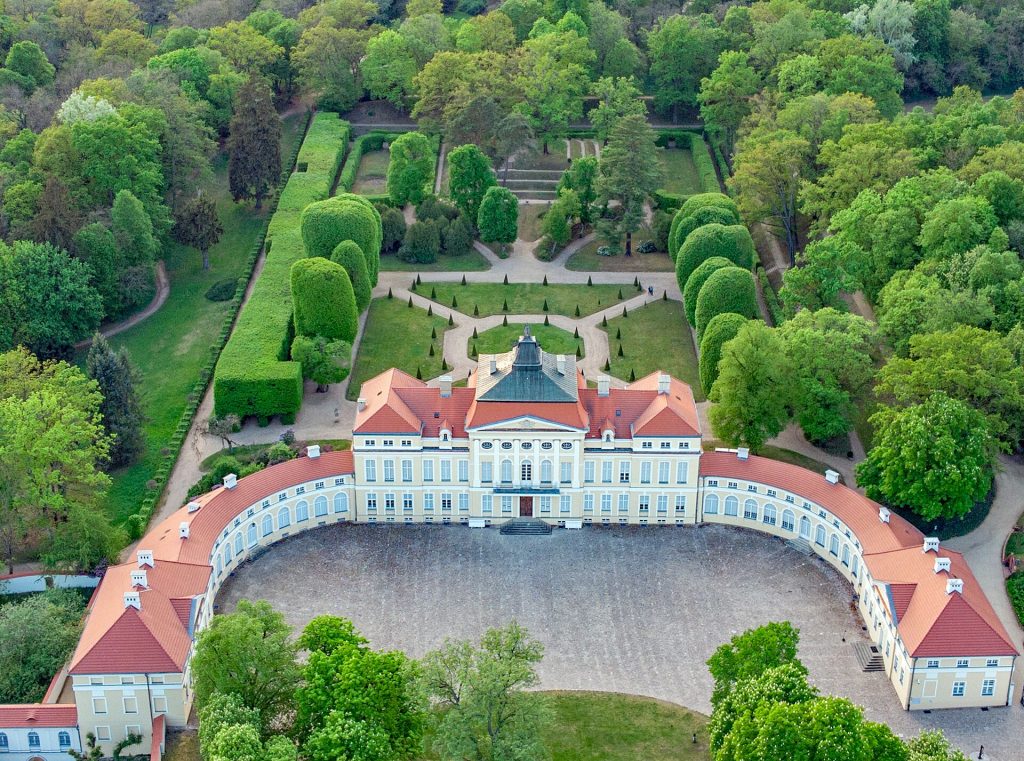
The most distinctive feature of Rogalin is its layout. The central palace is connected to two side pavilions by curved, single storey galleries, creating a horseshoe shaped court in front of the building. This arrangement, inspired by grand European palaces, gives the ensemble a sense of embrace and invites visitors into the heart of the estate.
The main facade is dignified and restrained, with a central pediment bearing the family coat of arms and evenly spaced windows on two floors. Its pale colour glows in sunlight and takes on softer tones in the mist that often rises from the river valley.
The garden front, facing the park, has its own elegance, opening onto terraces and lawns. From the garden you can appreciate the scale of the building and its relationship to the landscape beyond.
Around the courtyard stand various estate buildings, including stables and the coach house, which once supported the daily life of the household. Today some of them house exhibitions, adding to the richness of a visit.
Rogalin is often described as one of the finest examples of a Polish magnate residence from the late eighteenth century, and walking around it you can see why.
The curved galleries were not only decorative. They provided sheltered passages between the main house and the wings, allowing servants and family members to move around the estate in bad weather. Practical and beautiful at once, they are a perfect example of eighteenth century design.
Over time, later owners added classical touches to the interiors and facades, reflecting the growing popularity of neoclassicism. These changes blended smoothly with the original design, creating the harmonious appearance we see today.
Look closely at the pediment, where the family coat of arms is framed by classical ornament. It is the focal point of the entrance facade and a proud declaration of the Raczynski presence in the landscape.
Seen from above, the plan of the palace and its galleries resembles a horseshoe or a pair of arms, a shape that many historians link to ideas of welcome and hospitality in aristocratic architecture.
The Estate Buildings and Coach House
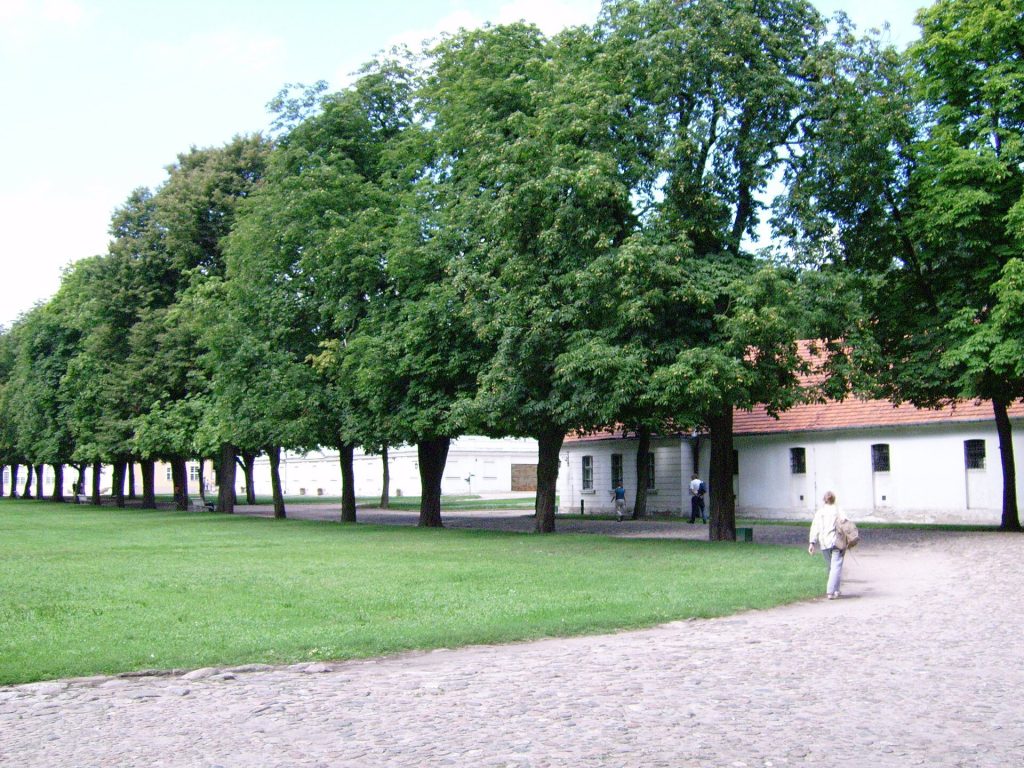
Around the main courtyard stand a series of estate buildings that once supported the life of the palace. There were stables, a coach house, workshops and quarters for staff, all arranged to serve the needs of a large aristocratic household.
The coach house now displays a collection of historic carriages, sleighs and harness. Elegant carriages for formal occasions sit alongside practical vehicles for everyday use, and together they give a vivid sense of travel in the days before motor cars.
For the Raczynskis, horses and carriages were essential, not only for getting around their estates but also for travelling to Poznan, Berlin, Warsaw and beyond. A fine carriage was also a symbol of status, much as a luxury car is today.
Children especially enjoy the coach house, and it makes a pleasant contrast to the palace interiors and the art gallery. Take a moment to imagine the courtyard filled with horses, grooms and arriving guests on a busy day a century ago.
The careful restoration of these buildings shows how the whole estate, not just the palace, has been treated as a precious historical ensemble.
Some of the outbuildings now host exhibitions, workshops and educational programmes, giving them new life while preserving their historic character.
Walking between these buildings, you can still sense the rhythm of daily life on a great country estate, where work and leisure, servants and masters, all had their place.
The carriages on display range from light, open vehicles for summer outings to heavy, enclosed coaches for long winter journeys, each designed for a particular purpose and season.
The Raczynskis, Patrons and Patriots
The Raczynski family played an important role in the history and culture of Greater Poland. In the nineteenth century, when the region was under Prussian rule, they supported Polish culture and learning. Edward Raczynski, one of the most notable members of the family, founded the Raczynski Library in Poznan, which became one of the most important Polish libraries of the period and is still active today.
Later generations continued this tradition of patronage. Collecting art, supporting scholars and preserving Polish heritage were seen not only as personal pleasures but as patriotic duties at a time when Poland had lost its independence.
The family coat of arms, displayed on the pediment of the palace, became a familiar symbol in the region, associated with generosity and public service.
In the twentieth century, the family produced one of its most remarkable figures, Edward Bernard Raczynski, a diplomat who served as Polish ambassador in London during the Second World War and later as president of Poland in exile. He lived to the age of 101, and his life spanned almost the entire turbulent century.
Before his death in 1993, he arranged for the palace and its collections to be entrusted to a foundation, ensuring that Rogalin would be preserved for the nation. He was buried in the family mausoleum at Rogalin, returning at last to the home of his ancestors.
Edward Raczynski, founder of the library in Poznan, was also a traveller and writer who published accounts of his journeys. His public spirit and generosity set an example that later generations of the family followed.
The family also faced great hardship. During the Second World War, the palace was occupied by German forces, and the collections were dispersed or damaged. After the war, the communist authorities took over the estate, and it was only decades later that the family heritage could be properly protected again.
Edward Bernard Raczynski was also a skilled writer whose memoirs offer a fascinating account of diplomacy and exile in the twentieth century. His dedication to Poland, even from afar, made him a respected figure across the political spectrum.
Throughout their history, the Raczynskis combined loyalty to their region with an outward looking, European outlook, and Rogalin reflects both sides of their identity.
Inside the Palace
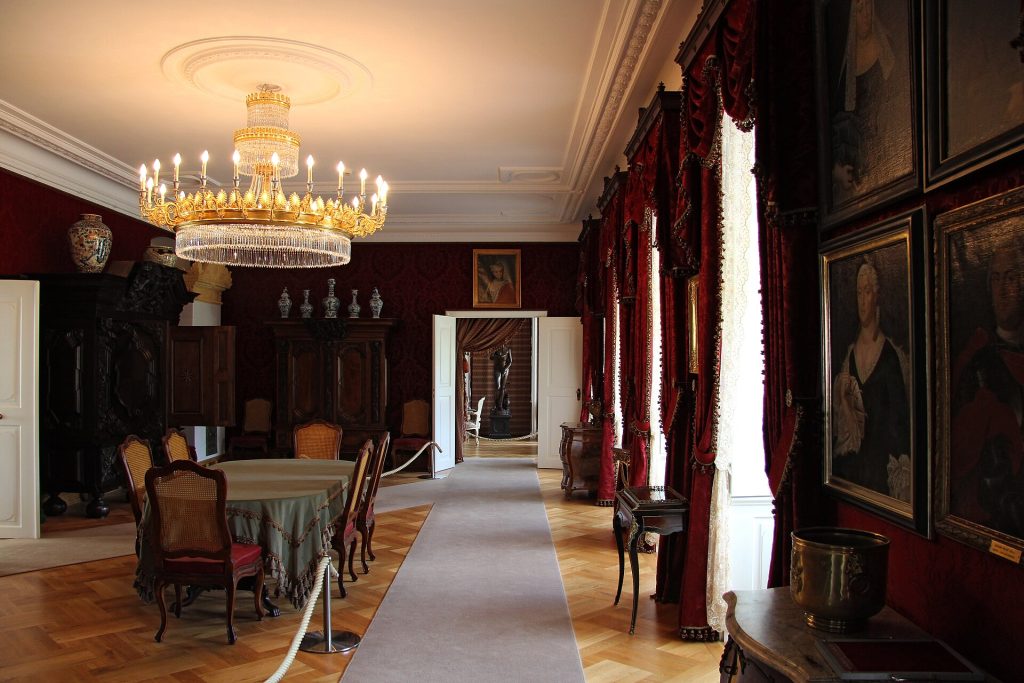
After years of careful restoration, the palace interiors reopened to visitors in the 2010s, and they now give a vivid picture of aristocratic life in Greater Poland. The rooms are furnished with period furniture, paintings, porcelain and personal objects, many of them belonging to the Raczynski family.
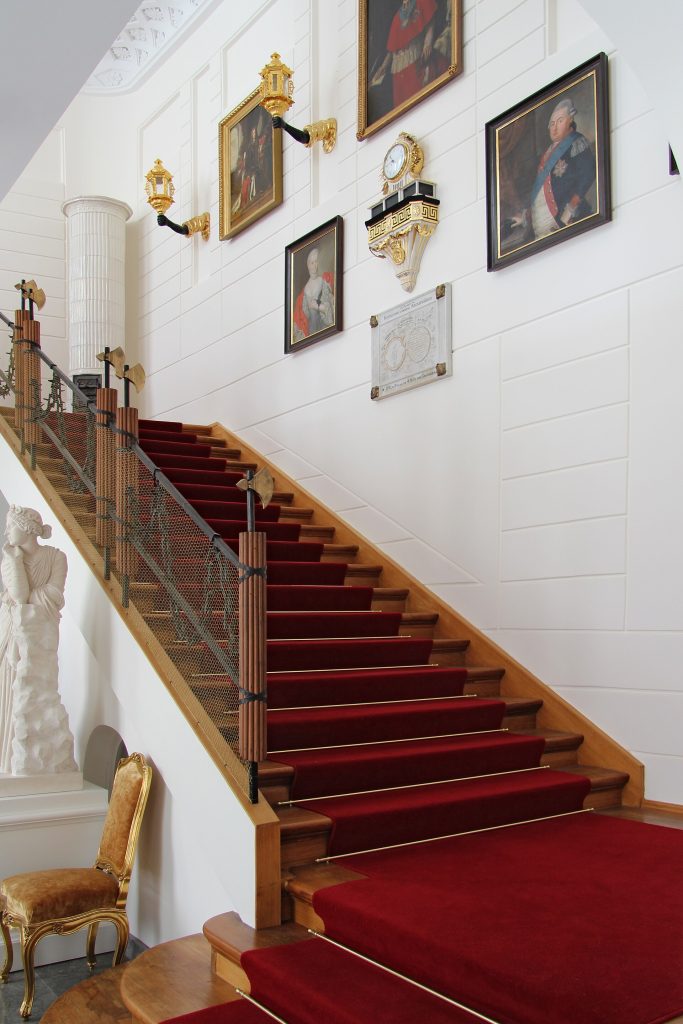
The staircase, with its elegant balustrade and lofty proportions, leads up to the main rooms on the first floor. Here you will find salons, dining rooms, private apartments and studies, each reflecting the tastes of different generations of the family.
Some rooms preserve the elegance of the late eighteenth century, while others show the comfortable style of the nineteenth and early twentieth centuries. Family portraits hang on the walls, connecting the visitor with the people who lived here.
The restoration has been carried out with great sensitivity, using historic photographs and documents to recreate the appearance of the rooms as closely as possible. The result is an interior that feels authentic and lived in rather than staged.
Take your time as you move through the rooms, noticing details such as the stoves, the floors, the textiles and the small personal items that bring the story of the family to life.
Among the rooms you will find spaces associated with particular family members, furnished with objects connected to their lives and interests. These personal touches help bring the long history of the Raczynskis to life.
The restoration also revealed original decorative details hidden under later layers, from painted ceilings to wall decorations, which have been carefully conserved and are now visible again.
Guides and information panels explain the stories behind many of the objects, and the museum staff are happy to answer questions about the family and the restoration work.
The furniture includes fine pieces made in Poland, Germany, France and England, reflecting the cosmopolitan tastes of the family. Some items were made for Rogalin, others brought from family homes elsewhere, and together they create a rich and varied interior.
Portraits play a special role, introducing you to generations of Raczynskis and their relatives. Their faces, painted by skilled artists of each era, help you follow the long family story as you move from room to room.
A Library in the Spirit of Edward Raczynski
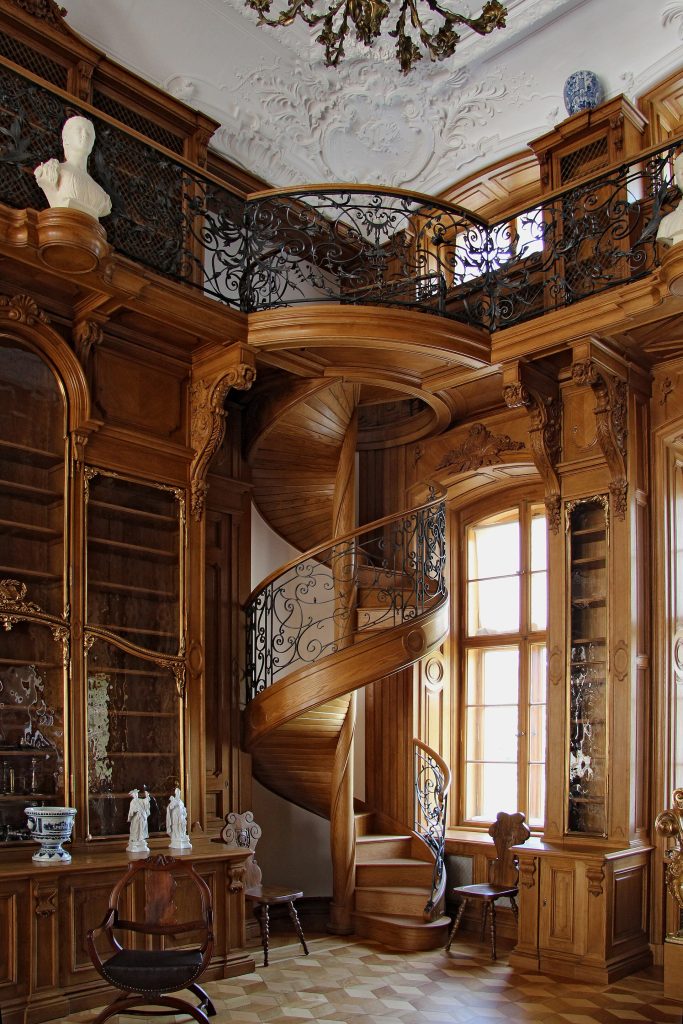
Books were central to the Raczynski tradition, and the palace library reflects this. Its shelves hold volumes collected over generations, covering history, literature, travel, science and the arts, in Polish and other European languages.
The library recalls the family commitment to learning that led Edward Raczynski to found his public library in Poznan in the early nineteenth century. For the Raczynskis, books were tools for preserving national identity and educating future generations.
The room itself is warm and inviting, with wooden bookcases, reading tables and comfortable chairs. It is easy to imagine members of the family spending long evenings here, reading, writing and discussing the events of the day.
For visitors with an interest in history, the library offers a quiet moment of reflection within the palace, and a reminder of the intellectual life that once filled these rooms.
Some of the books carry bookplates and notes from their former owners, little traces that connect today’s visitors with readers of centuries past.
The library also reflects the family’s international connections, with books acquired on travels across Europe and correspondence with scholars and writers in many countries.
The Raczynski Picture Gallery
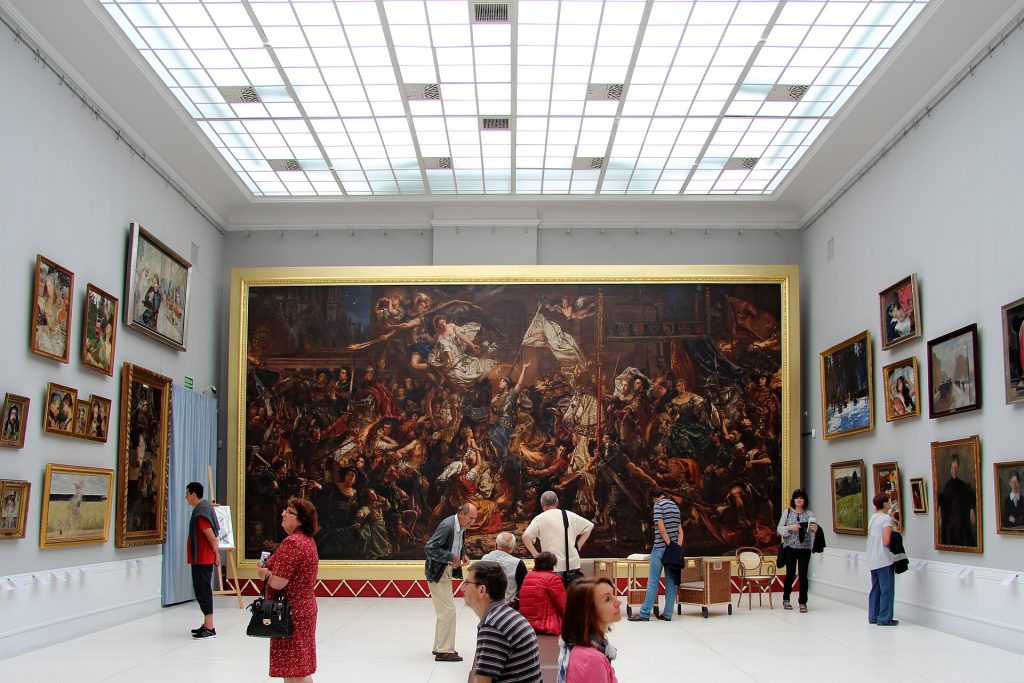
One of the great treasures of Rogalin is its picture gallery, created in the early twentieth century by Edward Aleksander Raczynski. A passionate collector, he gathered works by leading Polish painters of his time, as well as by European artists, and built a special gallery building to display them.
The collection includes paintings by masters such as Jan Matejko, whose monumental Joan of Arc is one of the highlights, as well as works by Jacek Malczewski, Olga Boznanska, Leon Wyczolkowski and other important artists of the period. European painters are also represented, making the collection one of the finest private art collections ever assembled in Poland.
The gallery was designed with high ceilings and good natural light, allowing the paintings to be seen at their best. Walking through it, you get a vivid overview of Polish painting at the turn of the twentieth century, a time of great creativity and national feeling.
During the Second World War the collection suffered losses and damage, but many works survived and were later restored. Today the gallery is once again one of the main attractions at Rogalin, and art lovers often travel here specifically to see it.
Allow plenty of time for the gallery. Some of the paintings are very large and full of detail, and they reward slow, attentive viewing.
Joan of Arc by Matejko is a vast canvas full of movement and colour, showing the heroine leading her troops into battle. It is one of the largest paintings in Polish art, and seeing it in the gallery built for it is an unforgettable experience.
The works of Jacek Malczewski, with their mysterious symbolism and rich colours, are another highlight. Malczewski was one of the leading figures of Polish art around 1900, and his paintings explore themes of national identity, death and the imagination.
Edward Aleksander Raczynski knew many of the artists personally, and he supported them through purchases and commissions. His gallery is therefore not only a collection but also a record of friendships and artistic life at the turn of the century.
The gallery building itself is a fine piece of early twentieth century architecture, designed specifically to show paintings at their best. Its large windows and carefully planned spaces were advanced for their time.
In recent years some works that had been lost or damaged have been restored and returned, and the collection continues to be studied and displayed with great care.
The collection also includes works by foreign artists who were admired in Poland at the time, which shows how closely Polish collectors followed artistic developments across Europe.
The Legendary Oaks of Rogalin
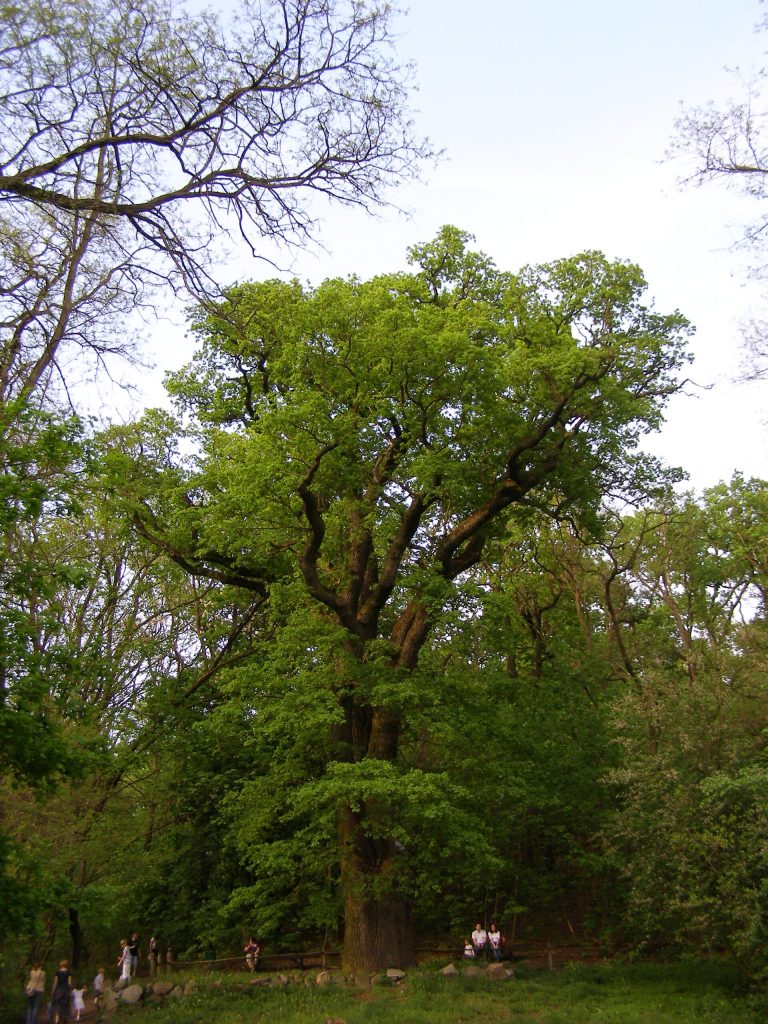
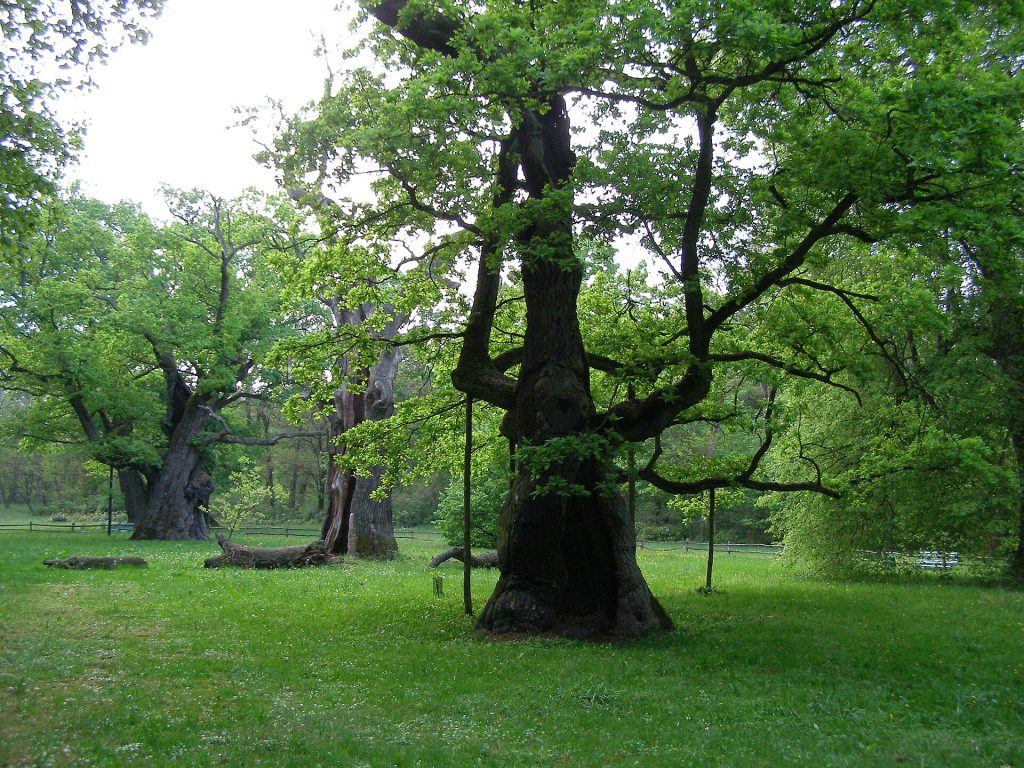
Rogalin is famous throughout Poland for its oaks. In the meadows along the Warta River stands one of the largest groups of ancient oaks in Europe, with hundreds of trees, many of them several centuries old. Their massive trunks and twisted branches give the landscape a primeval, almost mythical character.
The most celebrated trees are three oaks named Lech, Czech and Rus, after the legendary brothers who, according to tradition, founded the Polish, Czech and Russian nations. They are among the most famous trees in the country, and visitors come from far and wide to see them.
Other oaks have their own names and stories, including one named Edward after a member of the Raczynski family. Many of the trees are protected as natural monuments, and the area forms part of a landscape park.
Walking among the oaks is a moving experience. Some of the trees have stood here since medieval times, silent witnesses to wars, partitions and changes of regime. Their endurance has made them symbols of Polish resilience.
The best time to visit is in spring and autumn, when the light is soft and the meadows are green or golden. Even in winter, the bare, gnarled branches have a powerful, sculptural beauty.
The oaks have been the subject of scientific study, and foresters and ecologists work to protect them from disease and damage. Some of the oldest trees have died or lost large branches in recent decades, but efforts continue to preserve this unique natural heritage.
Painters and photographers have long been drawn to the Rogalin oaks, and you will see them in many works of Polish art. Their twisted forms seem to embody both strength and suffering, a fitting symbol for a nation with such a complex history.
A marked trail leads to the most famous trees, with information boards explaining their history and the ecology of the oak meadows. It takes only a short walk from the palace to reach them.
Local legends say the oaks were planted or protected by the earliest owners of the land, and over the centuries they became part of the identity of the village and the family. The Raczynskis cared for them as a precious inheritance.
Gardens, Meadows and the Warta Valley
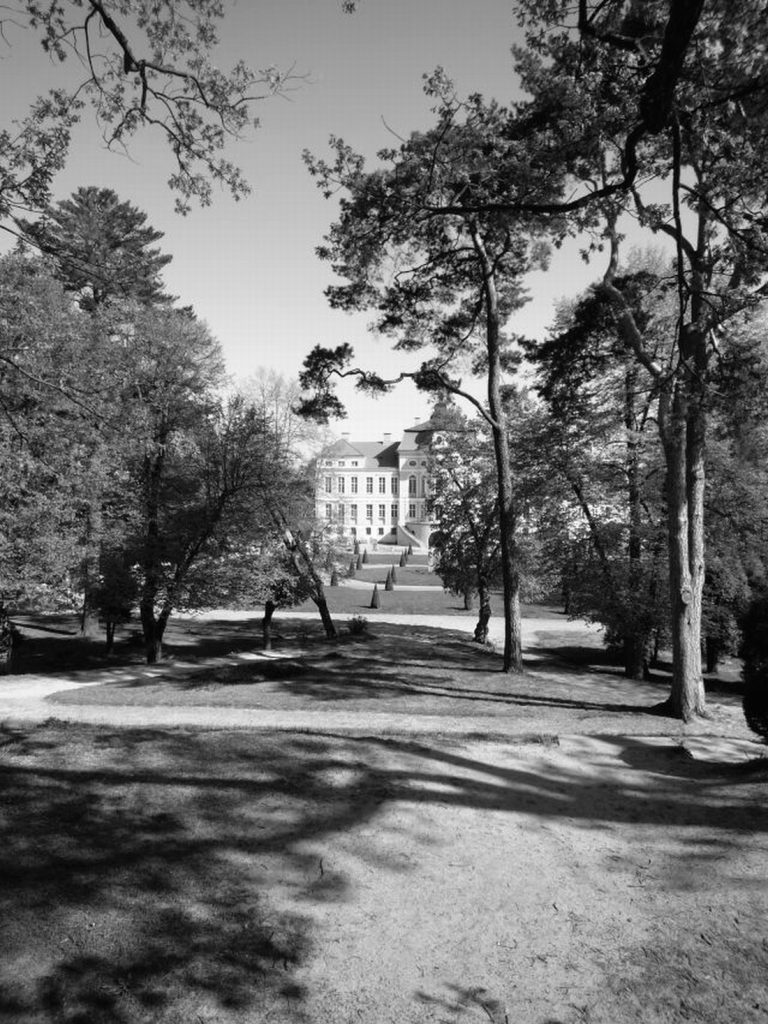
Behind the palace, a formal garden in the French style extends toward a raised mound, from which there are fine views back to the house. Beyond the garden, the landscape becomes more natural, opening into an English style park and the wide meadows of the Warta valley.
The oxbow lakes of the old river, the meadows and the scattered oaks create a landscape of great beauty and ecological value. Birds are abundant, and the area is popular with walkers, cyclists and nature lovers.
The design of the park reflects changing fashions over the centuries, from the formality of the eighteenth century to the romantic naturalism of the nineteenth. Together they form a harmonious whole that perfectly complements the palace.
If you have time, follow one of the walking trails through the park and along the river. It is the best way to appreciate the setting of Rogalin and to understand why the family loved this place so deeply.
From the mound at the end of the formal garden, you can look back toward the palace and out over the meadows, a view that captures the essence of Rogalin in a single glance.
Spring brings wildflowers and fresh green leaves, summer long golden evenings, and autumn a blaze of colour among the trees. Each season reveals a different side of this beautiful landscape.
The Warta oxbow lakes are particularly beautiful, their still water reflecting the trees and sky. They are home to many birds, and on quiet mornings you may see herons, ducks and other wildlife.
A Roman Temple in the Polish Countryside
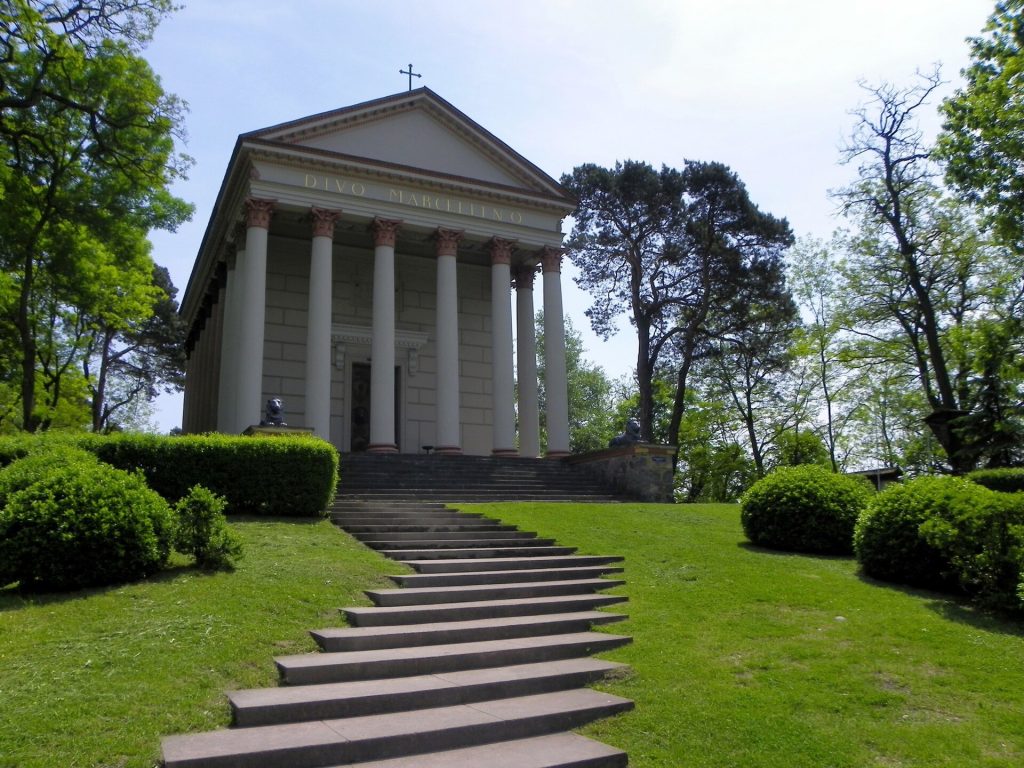
A short distance from the palace stands the Raczynski family mausoleum, a church built in the early nineteenth century in the form of a classical temple. It was modelled on the Maison Carree in Nimes, one of the best preserved Roman temples in the world, and its columns and pediment give it a striking appearance in the rural landscape.
The building serves both as a church and as the burial place of members of the Raczynski family. In its crypt rest generations of the family, including Edward Bernard Raczynski, the president in exile, who was buried here after his death in London in 1993.
The choice of a Roman temple reflects the classical education and tastes of the family, as well as a desire to express permanence and dignity. It is a beautiful example of how European ideals of antiquity were transplanted into the Polish countryside.
Visiting the mausoleum is a peaceful and moving experience, and it completes the story of the family whose palace, gallery and park you have just explored.
The interior of the mausoleum is simple and dignified, with classical details that echo the exterior. Light enters gently, creating a calm and contemplative atmosphere well suited to a place of remembrance.
The funeral of Edward Bernard Raczynski in 1994 was a moving national event, bringing together people who saw in him a symbol of continuity between pre war Poland and the free country that emerged after 1989.
The church is still used for worship, and visitors are welcome to step inside quietly when services are not taking place.
See Rogalin on Video
To get a feel for the palace and its setting before you visit, the video below takes you around Rogalin, from its courtyard and interiors to its gallery and park.
Watch for the curved galleries, the paintings in the gallery and the ancient oaks in the meadows.
The video also gives a sense of the scale of the gallery and the beauty of the park, both of which are hard to capture in still photographs.
If the video inspires you, the final section has practical tips for planning your visit.
Visiting Rogalin Today
Today Rogalin is managed by the National Museum in Poznan in cooperation with the Raczynski Foundation, established by Edward Bernard Raczynski to protect the palace and its collections. After a major restoration, the palace, gallery and coach house are open to visitors.
Rogalin lies about twenty kilometres south of Poznan and is easy to reach by car or by local bus. The coach house displays a collection of historic carriages, while the gallery and palace interiors can be visited with tickets. Opening times vary by season, so it is wise to check in advance.
Plan at least half a day to see the palace, the gallery, the coach house and the mausoleum, and to walk among the oaks. If you enjoy nature, consider combining your visit with a longer walk or bike ride in the Warta valley.
Rogalin also hosts concerts, exhibitions and events throughout the year, adding to its appeal. Whenever you come, it offers a rich and rewarding experience of art, history and landscape.
There is a cafe and a shop on the estate, and the surrounding village offers places to eat. Families will find plenty to enjoy, from the carriages and the oaks to the open spaces of the park.
If you are staying in Poznan, Rogalin pairs well with a visit to Kornik Castle, another famous aristocratic residence a short drive away, which together make an excellent day out in the Greater Poland countryside.
Whatever brings you to Rogalin, whether art, history or nature, you are likely to leave with a sense of having discovered one of the most complete and moving aristocratic estates in Poland.
View the location on Google Maps
Palaces Nearby
If Rogalin has inspired you, Poland is rich in aristocratic residences. Here are two more remarkable palaces well worth adding to your journey:
- Nieborow Palace – a baroque Radziwill residence near Lowicz, with a tiled staircase, rare globes and the famous head of Niobe.
- Kozlowka Palace – the Zamoyski palace near Lublin, crowded with a thousand paintings and crowned by a chapel modelled on Versailles.
You May Like
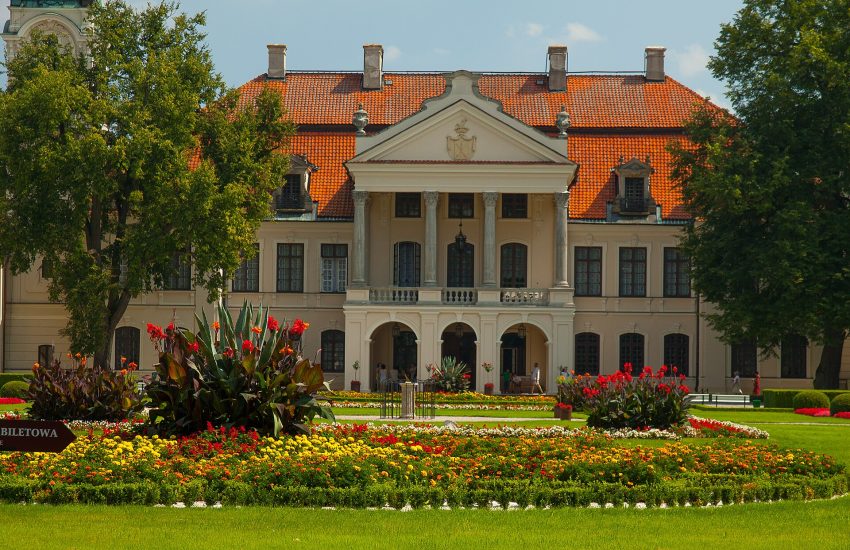
Kozlowka Palace and the Gilded World of the Zamoyski Family