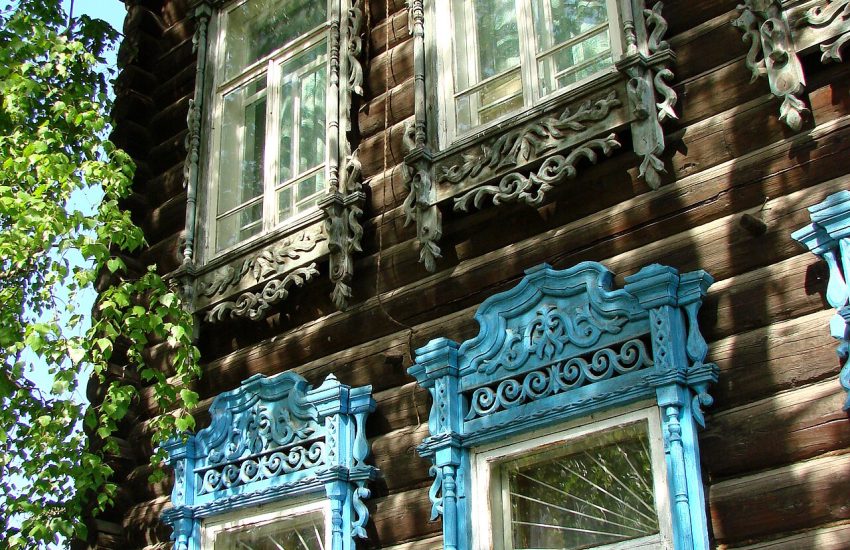
On the high left bank of the Yenisei, the river that cleaves Siberia in half, the city of Krasnoyarsk guards a modest log house that produced one of the giants of Russian art. The Surikov estate, a Cossack family homestead of weathered timber behind a plank fence, was the birthplace and boyhood home of Vasily Surikov, the painter whose vast historical canvases, the streltsy awaiting execution, Boyarina Morozova dragged to her martyrdom in the snow, Yermak’s conquest of Siberia, hang in the Tretyakov Gallery as the supreme visual record of the Russian past, and who drew his power, by his own insistent testimony, from exactly this house, this family, and this Siberian frontier blood.
The estate is not a palace in marble or even in carved pine; it is something rarer, the authentic homestead of the old Siberian Cossack gentry, the free frontier aristocracy that descended from Yermak’s conquering bands and held, for three centuries, a hereditary military and social standing on the Yenisei frontier unlike anything in European Russia. Surikov belonged to this caste and was proud of it to defiance, tracing his line to a Cossack who came with the conquest, and his art, drenched in the violence, color, and fatalism of old Russia, grew directly from the memories, customs, and faces of the frontier aristocracy whose house this is.
This guide tells the estate and its son: the Yenisei Cossacks and their frontier gentry, the Surikov family and their homestead, the boyhood that fed the paintings, the artist’s rise from the provincial town to the Academy and the Peredvizhniki, the great canvases and their Siberian roots, the house’s life as a museum, and the practical details of visiting the homestead that formed Russia’s greatest history painter.
- The Cossacks of the Yenisei
- The Frontier Gentry
- The Surikov Family
- The Homestead
- A Siberian Boyhood
- The Memory of Old Russia
- The Road to the Academy
- The Morning of the Execution
- Boyarina Morozova
- Yermak and the Siberian Blood
- The Painter’s Returns
- The Estate Museum
- Krasnoyarsk Today
- Watch the Surikov Estate on Film
- Visiting the Surikov Estate Today
- Palaces Nearby
The Cossacks of the Yenisei
Krasnoyarsk was founded in 1628 as a Cossack fort, the Krasny Yar, the beautiful bank, on the Yenisei, one of the stockades by which the conquest reached the great central Siberian river, its garrison the Yenisei Cossacks who held the frontier against the Kyrgyz and the steppe peoples through a century of raids and sieges, the fort’s early history a chronicle of frontier war, the town forged in the conquest’s hardest edge.
The Yenisei Cossacks were a distinct estate: descended from the servicemen of the conquest, holding land and privilege in return for hereditary military service, governing their own communities, and preserving, far more than European Russia’s peasantry, a tradition of personal freedom and martial pride, the frontier aristocracy of the Siberian interior, their standing hereditary, their self-image that of conquerors’ heirs, a social world with few parallels in the empire.
This Cossack Krasnoyarsk, not the later merchant and railway city, formed Surikov’s world: the old families with their conquest genealogies, their customs preserved from the seventeenth century, their memory of the frontier’s violence and color, the society into which the painter was born in 1848 and whose character, he maintained all his life, gave him everything, the blood of the conquest running, he liked to say, in his brush.
The Frontier Gentry
The Siberian Cossack gentry’s distinctiveness shaped the painter decisively. Unlike the serf-owning nobility of European Russia, these were free men whose status rested on service and lineage, not on owning other men, a frontier aristocracy closer in spirit to the old pre-Petrine Russia than to the Europeanized imperial nobility, preserving, in their customs, dress, speech, and faith, much that European Russia had shed, a living museum of the seventeenth century into which Surikov was born.
The gentry’s culture was martial, Orthodox, and deeply traditional, often touched by the Old Belief that had taken refuge in Siberia’s remoteness, its weddings, funerals, and festivals preserving old rites, its memory carrying the conquest and the frontier wars as living family history, the whole a repository of old-Russian character and custom that the painter would draw on as other artists drew on books and museums, his sources his own relatives and neighbors.
Surikov understood his inheritance precisely and valued it fiercely: the free Cossack blood, the conquest lineage, the preserved old Russia of his childhood, these he named repeatedly as the roots of his art, the Siberian frontier gentry’s world the soil from which the great canvases of old Russia’s tragedies grew, the painter a product and a chronicler of a social order the modern world was dissolving even as he painted it.
The Surikov Family
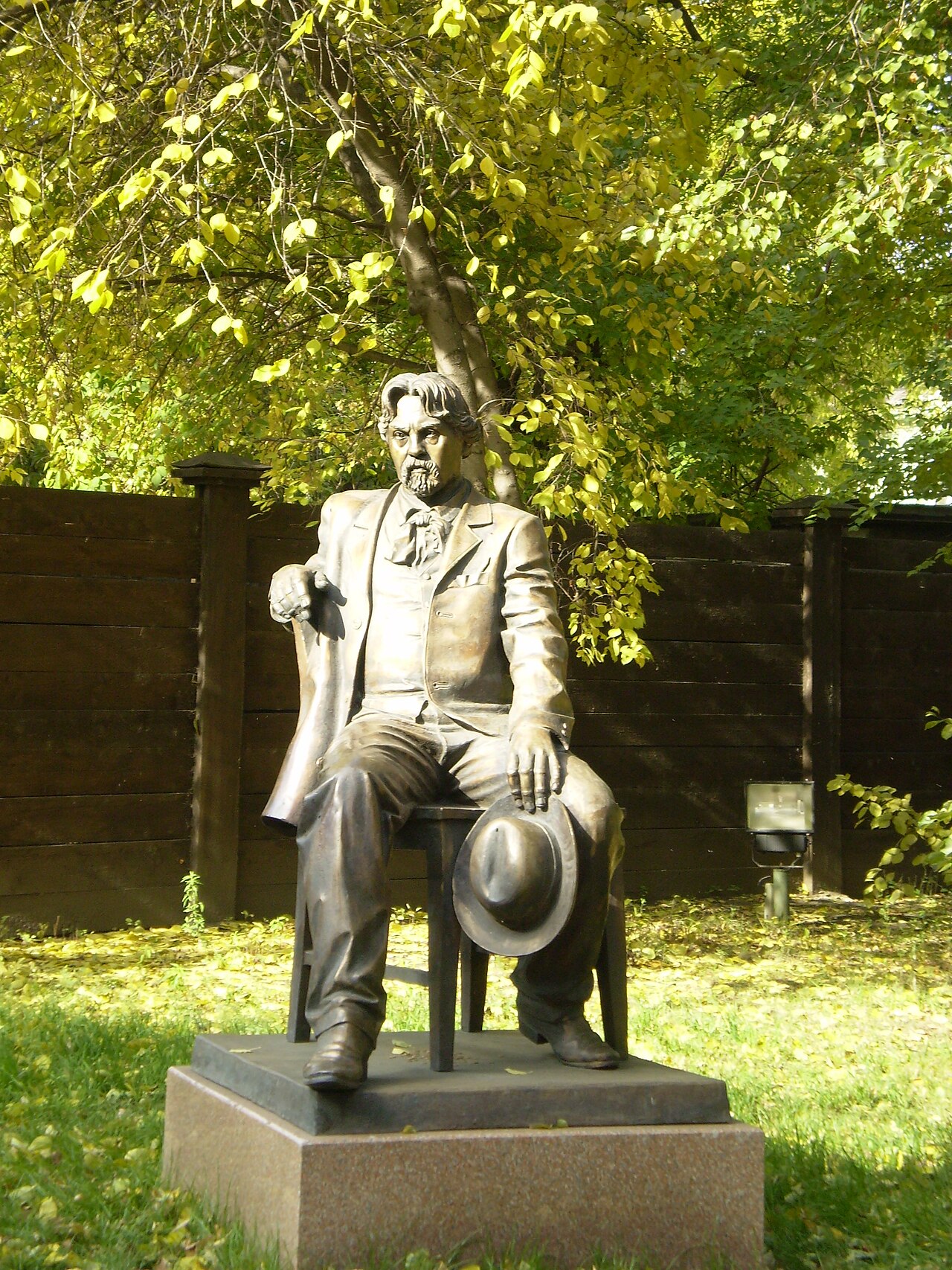
The Surikovs traced their line to the conquest: the painter held that his ancestors came to Siberia with Yermak himself, Don Cossacks who settled the Yenisei frontier, and whether in literal detail or family legend, the descent fixed the family’s identity as conquest aristocracy, their name among the old Krasnoyarsk Cossack families, their standing hereditary, their pride in the lineage central to their self-understanding and to the painter’s.
The painter’s father, a provincial official of the Cossack estate, died when Vasily was young, leaving the family in modest circumstances that would shape the artist’s hard road to his vocation, and his mother, a woman of strong character and old-Cossack custom, kept the household and its traditions, her world and her relatives the models, the painter acknowledged, for the faces and figures of his historical crowds, the family’s women carrying the old Russia his canvases would resurrect.
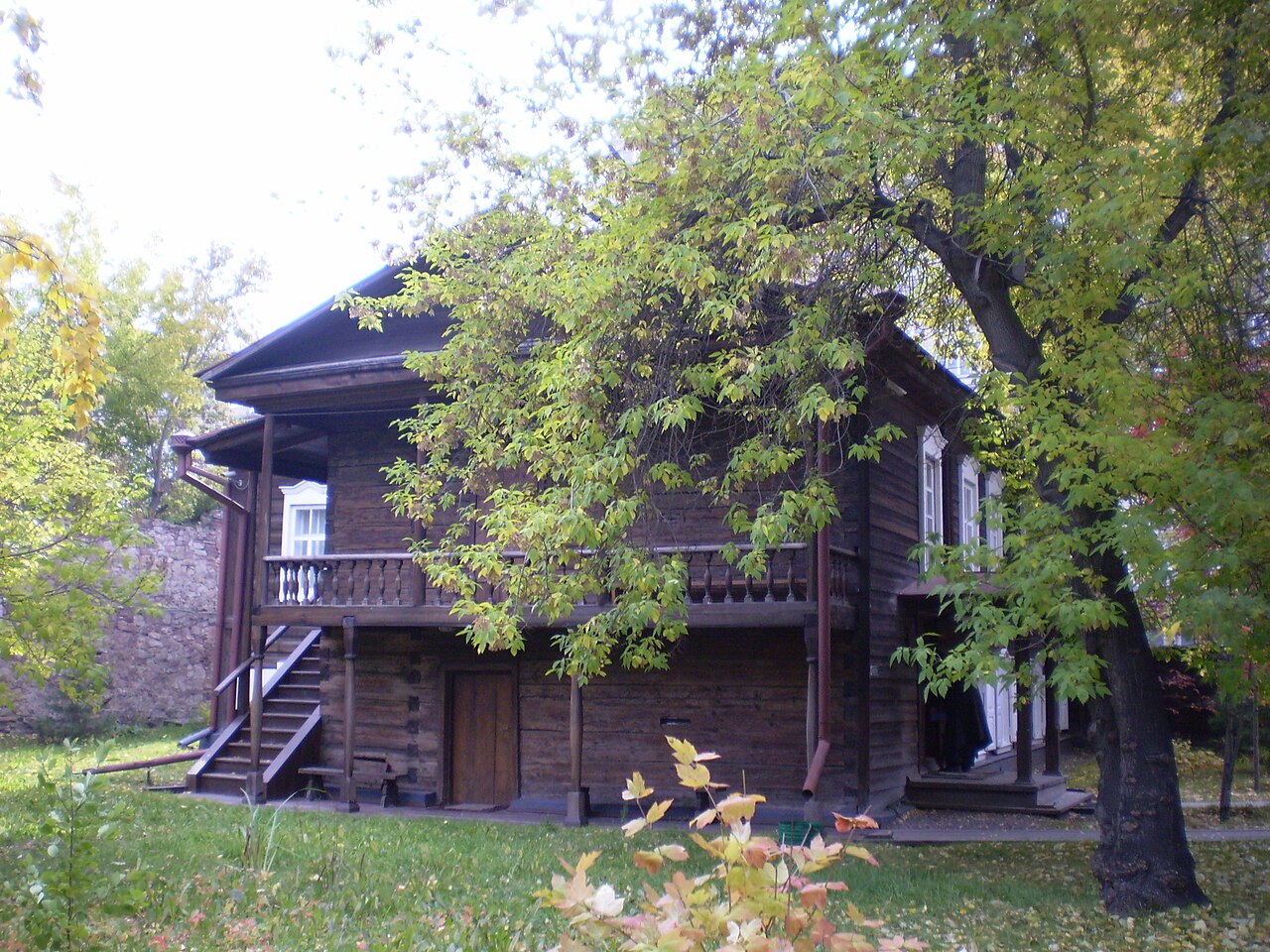
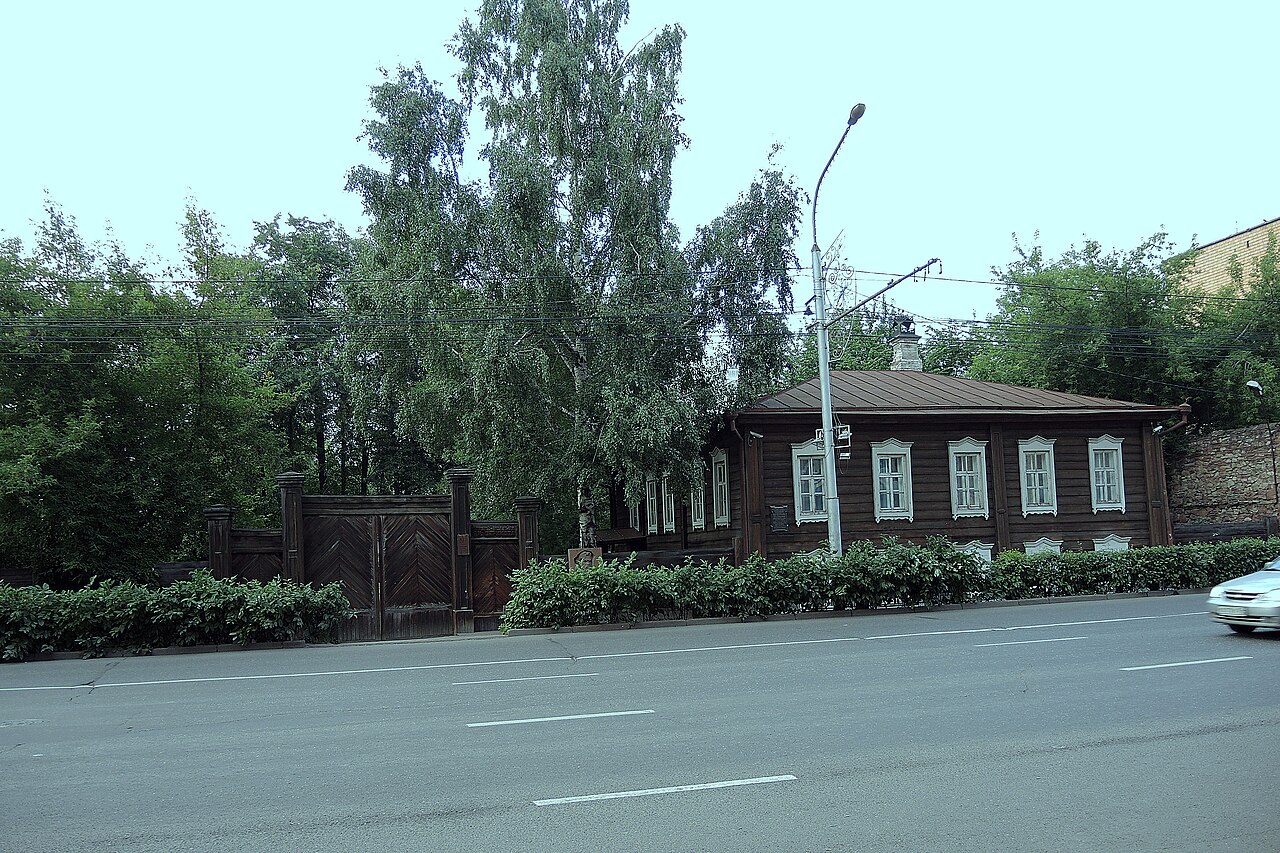
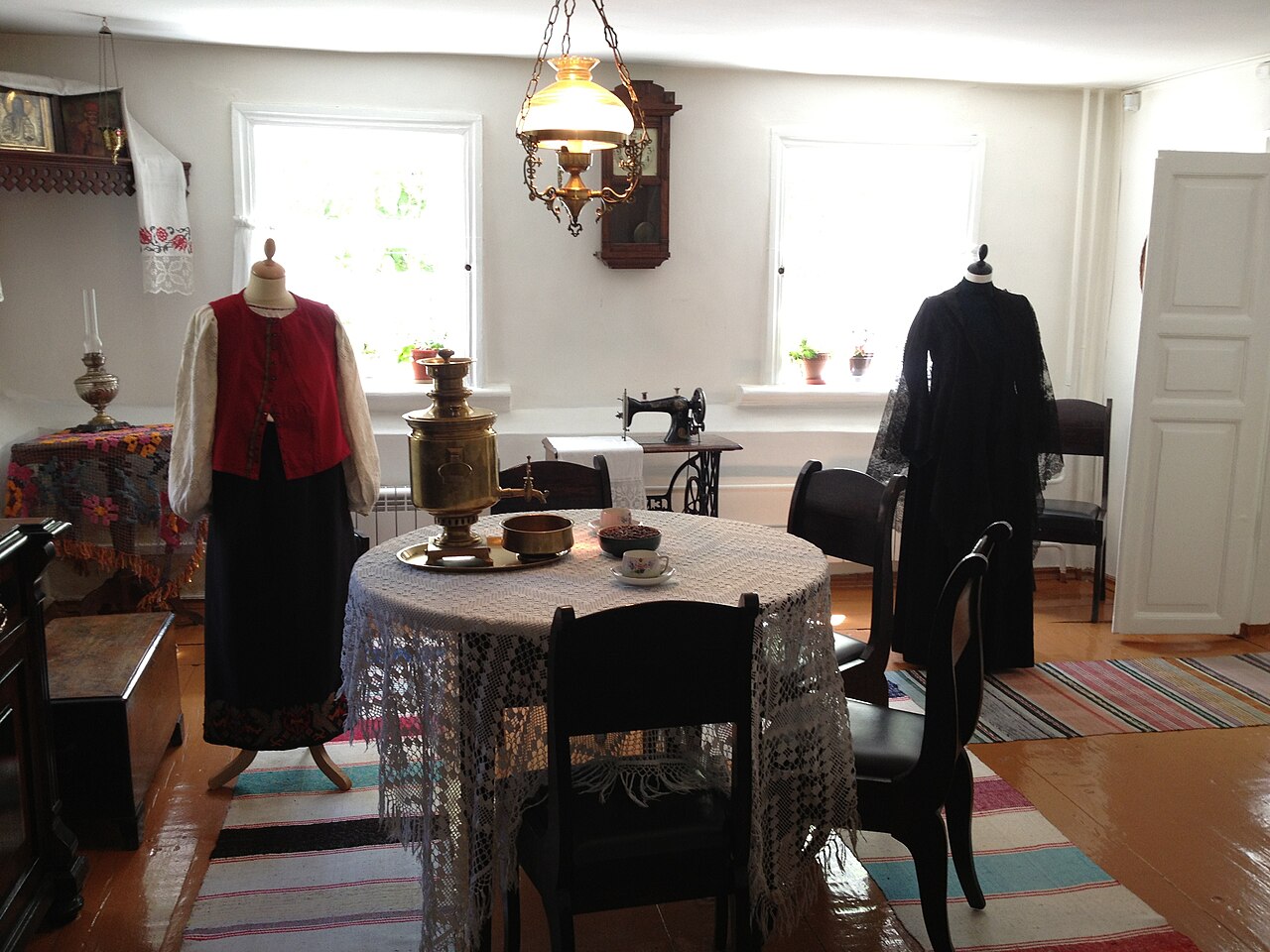
The family homestead, the house the museum preserves, was the Cossack family’s seat, built in the first half of the nineteenth century in the solid log manner of the Siberian gentry, two stories of timber with the outbuildings and the yard of a self-sufficient frontier household, the setting of the painter’s boyhood and the physical anchor of the family identity he carried to Moscow and never relinquished.
The Homestead
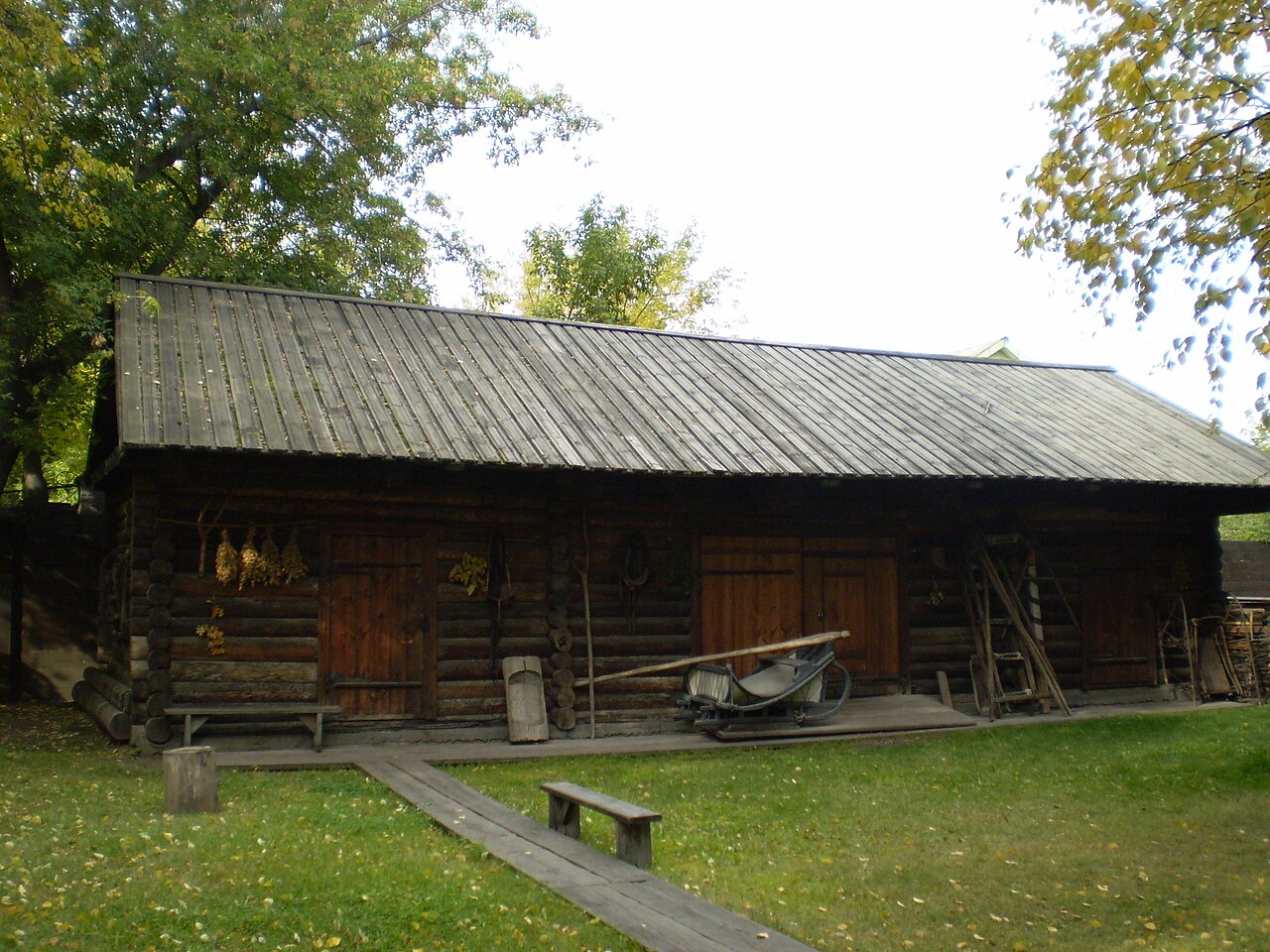
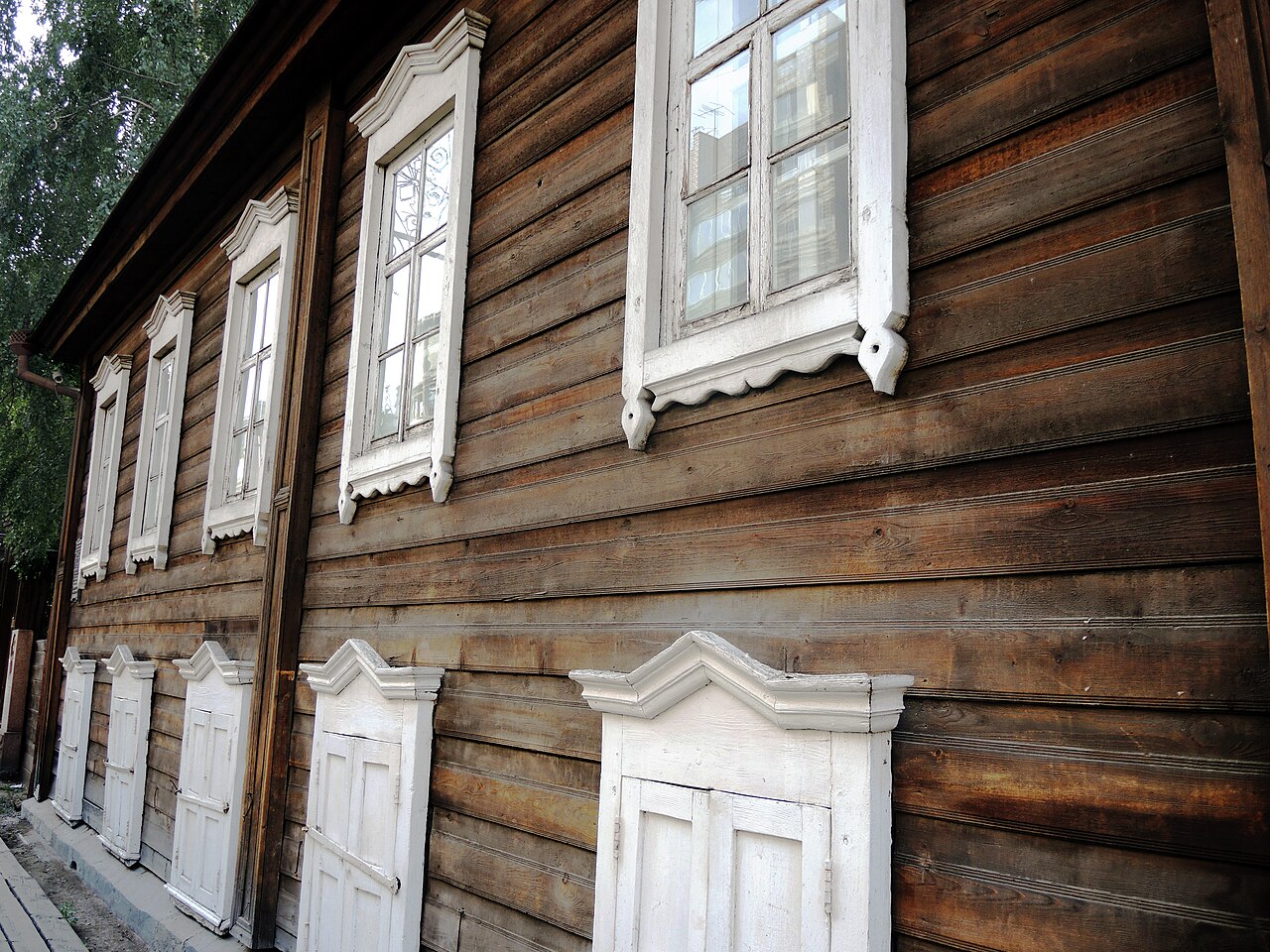
The house is the estate’s heart and its truth: a two-story log building of the 1830s, the lower floor stone or brick, the upper timber, in the manner of the prosperous Siberian Cossack family, its rooms low and warm against the Yenisei winter, its furnishings the solid domestic goods of the frontier gentry, preserved or reconstructed to the painter’s boyhood, the authentic environment of old Siberian family life.
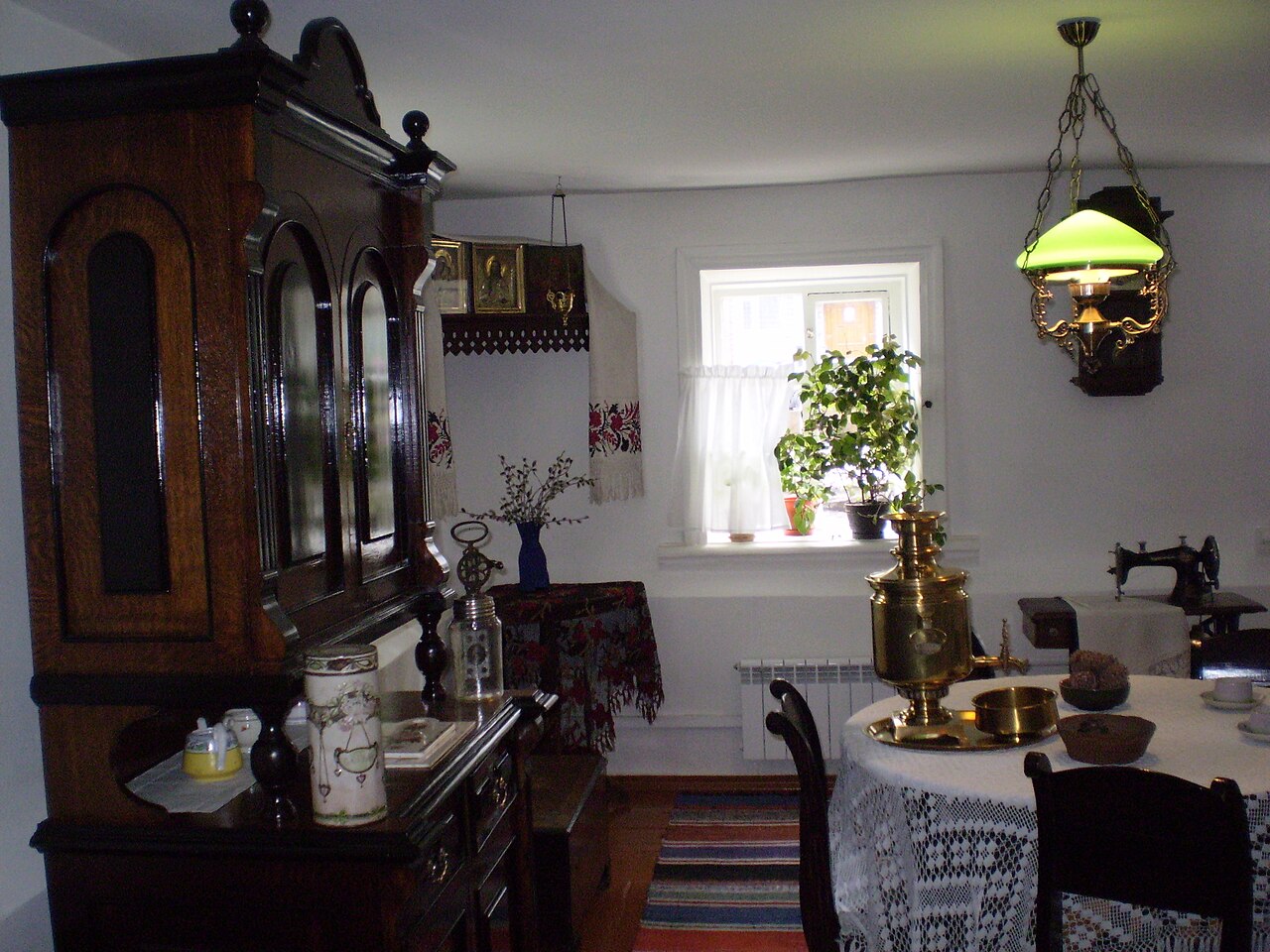
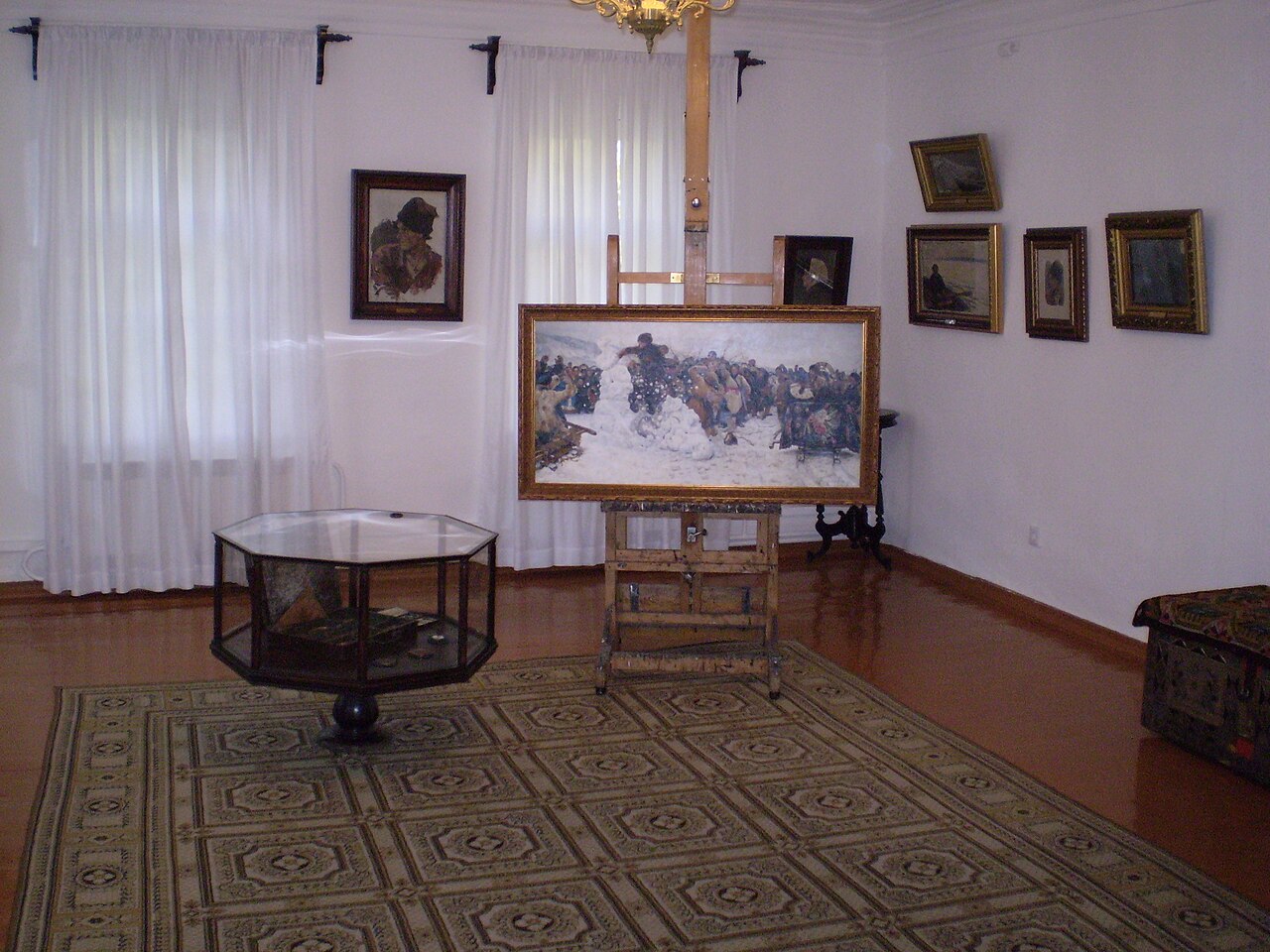
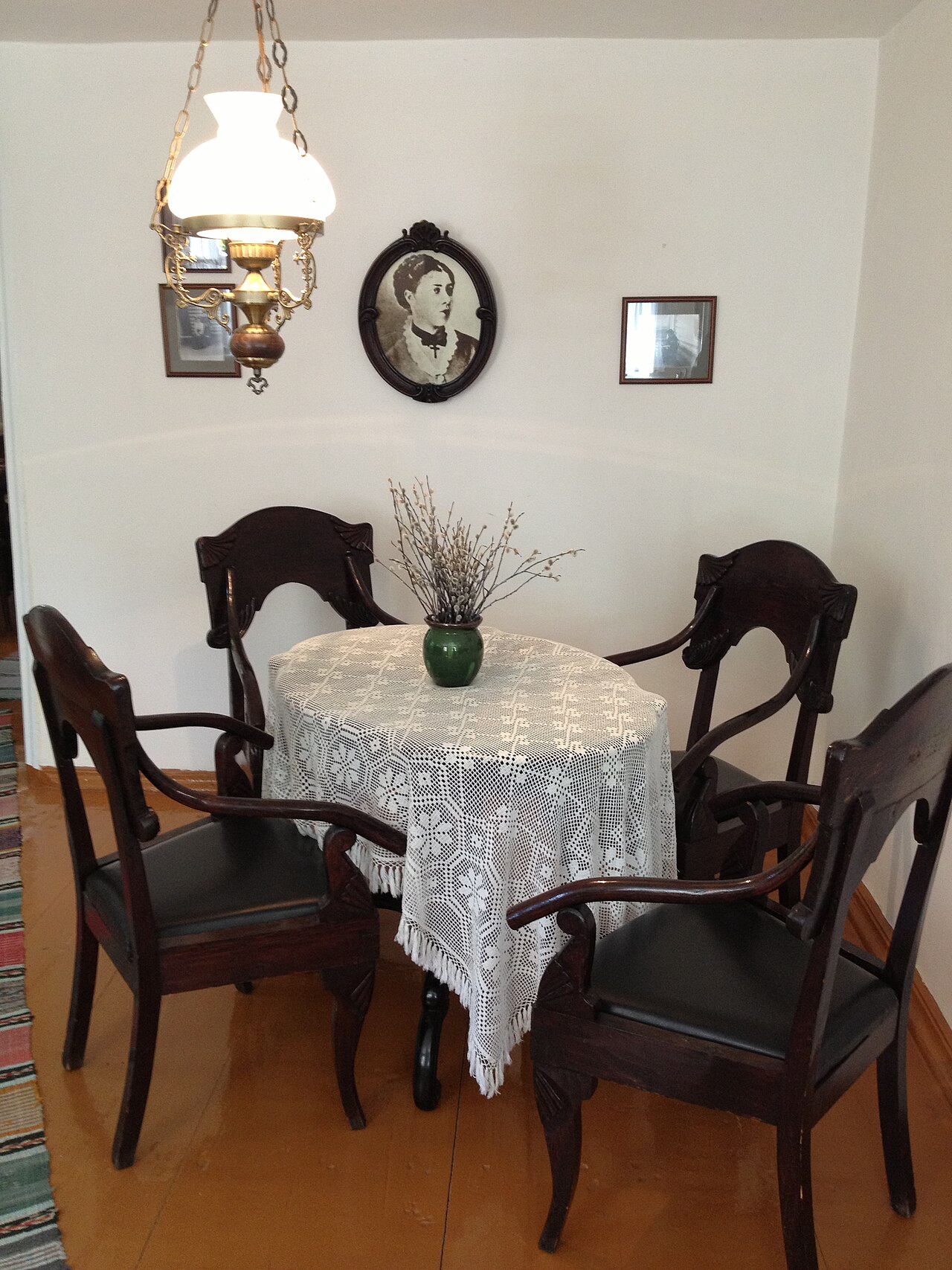
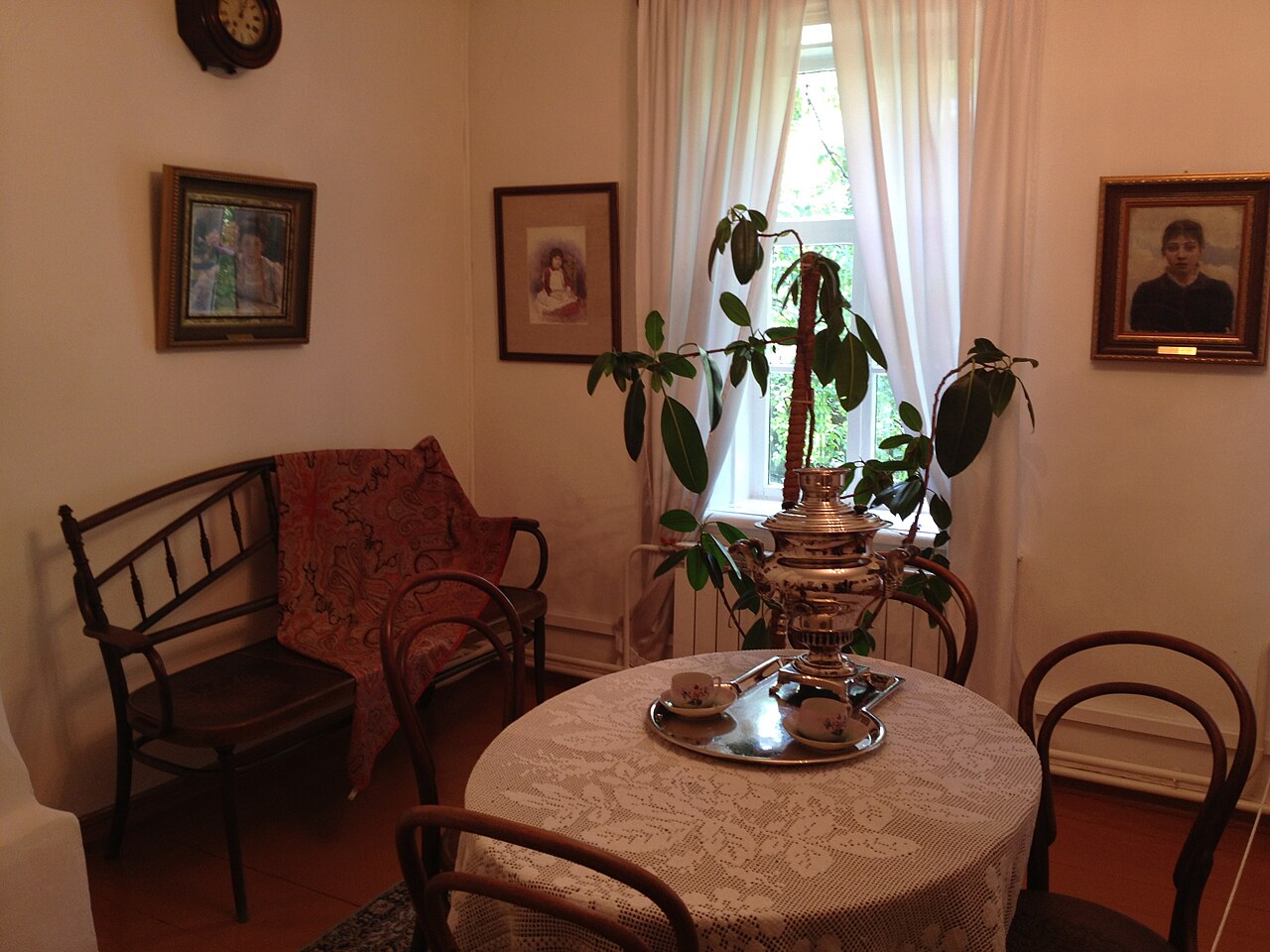
The interiors carry the family and the painter: the living rooms with their icons and old furniture, the mother’s domain, the boy’s early drawings and the family portraits, the objects of a Cossack household that doubled as the young artist’s first subjects and models, the house a document of how the frontier gentry lived and of how that life fed the imagination of its most famous son, the domestic and the artistic inseparable in its rooms.
The yard and outbuildings complete the homestead: the barns and the service structures of a self-sufficient household, the garden, the fence, the whole compound the self-contained world of a Siberian Cossack family, modest by palace standards but complete and authentic, the estate’s value precisely its ordinariness-made-extraordinary, the typical frontier homestead that happened to produce a genius, preserved as both a house-museum and a window on a vanished social world.
A Siberian Boyhood
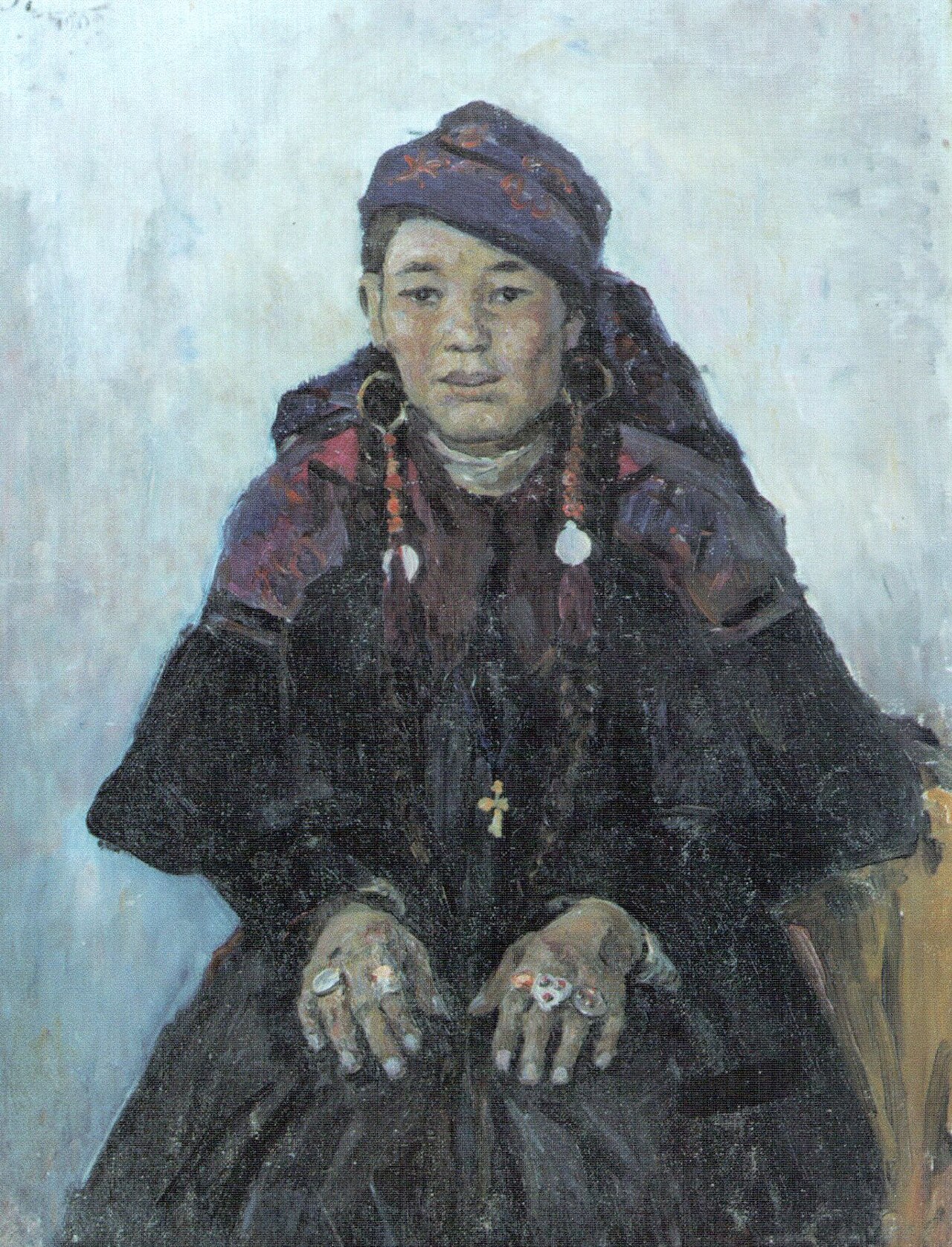
Surikov’s boyhood on the Yenisei frontier supplied his art its deepest materials. He grew up amid the old customs and the living memory of frontier violence, witnessing, by his own accounts, the harsh public world of a Cossack town, floggings and the rough frontier justice, the festivals and funerals of the old rites, the faces weathered by the Siberian life, impressions he stored and would draw on decades later for the crowds and the cruelty of his historical canvases.
The boy drew from the first, the family recognized his gift early, and the provincial town offered its first teachers, the local drawing master who gave the Cossack boy his grounding, the icon painters and the few cultivated residents who nurtured the talent, the frontier’s limited artistic resources stretched to form a prodigy whose ambitions soon outgrew what Krasnoyarsk could offer, the road to the capital’s Academy the only path to his vocation.
The Siberian childhood’s gift was not technique but vision: the painter would learn his craft in Petersburg, but his subjects, his sense of old Russia’s color and tragedy, his crowds of individualized faces, his feeling for the collision of power and the people, these he brought from the Yenisei, formed in the Cossack town, the boyhood the source of the art, as the painter never tired of telling his admiring contemporaries.
The Memory of Old Russia
Surikov’s great theme was old Russia’s tragic collisions, and his unique qualification was that he had, in a sense, lived in old Russia, the Siberian frontier preserving into his childhood the customs, faces, and moral world that European Russia had lost, so that where other historical painters reconstructed the past from research, Surikov remembered it, or remembered its living Siberian survival, and painted from a reservoir of authentic old-Russian impression no studio could supply.
The frontier’s preserved violence and fatalism, the Old Believers’ fierce faith, the Cossack hardness, the festivals and the executions, the whole intense, colorful, cruel texture of the old life, filled his memory and his canvases, the painter translating his Siberian experience into the historical subjects, Moscow’s seventeenth-century tragedies rendered with the authority of one who had seen their kind of world survive on the Yenisei, the past painted as living memory.
This rootedness gave Surikov his distinctive power among the Peredvizhniki, the Wanderers, the realist movement he joined: where their art was often social argument, his was the resurrection of the national past in its full tragic reality, the Siberian Cossack bringing to Russian history painting an authenticity of feeling that made his canvases not illustrations but revelations, the frontier gentry’s son the truest painter of the Russia his caste descended from.
The Road to the Academy
The painter’s rise was a frontier Cinderella story. Too poor to reach Petersburg, the young Surikov owed his chance to a Krasnoyarsk patron, the gold-industrialist and city head Pyotr Kuznetsov, who recognized the boy’s gift and financed his journey and his studies, the merchant philanthropy that built the Siberian cities funding, in this case, a genius, the gold money that raised Tomsk’s wooden palaces and Irkutsk’s opera sending a Cossack boy to the Imperial Academy of Arts.
At the Academy from 1869 Surikov trained in the rigorous classical discipline, excelling, winning the medals, absorbing the technique that would serve his vast compositions, but chafing against the academic subjects and finding his own path toward the national-historical themes that the realist movement was opening, the Siberian provincial becoming a master of the capital’s highest art while keeping, defiantly, his frontier identity and his own artistic vision.
His early independent success, the Moscow cathedral frescoes that freed him financially, let him settle to the great canvases, and from the later 1870s Surikov produced, in rapid succession, the masterpieces that made his name, the historical epics drawn from his Siberian reservoir and his deepening study of old Moscow, the Cossack boy from the Yenisei homestead taking his place among the first rank of Russian painters within a decade of leaving the frontier.
The Morning of the Execution
Surikov’s first great canvas, the Morning of the Streltsy Execution of 1881, announced his power. The vast painting shows the dawn on Red Square when Peter the Great’s defeated rebel musketeers, the streltsy, await execution amid the crowd of their weeping families, the tsar watching grimly on horseback, the whole a study not of the act but of the terrible human moment before it, the condemned men’s faces, the women’s grief, the collision of the new Russia and the old rendered as tragedy rather than politics.
The painting’s faces came from Surikov’s Siberia: the streltsy and their women modeled, the painter acknowledged, on the Cossacks and the frontier people of his memory and his searches through Moscow’s old quarters, the authentic old-Russian types that his frontier eye recognized and gathered, the canvas’s overwhelming reality of individualized humanity drawn from the painter’s reservoir of remembered and observed faces, the Siberian method applied to Moscow’s tragedy.
The streltsy painting established the Surikov formula that the estate explains: the great historical moment rendered through the crowd of faces, the tragedy felt rather than narrated, the old Russia resurrected in its human reality, the whole possible because the painter brought to it the authentic feeling for the old life that his Cossack frontier boyhood had given him, the homestead on the Yenisei visible, to the knowing eye, behind the Moscow square.
Boyarina Morozova
His supreme masterpiece, Boyarina Morozova of 1887, carried the method to its height. The enormous canvas shows the Old Believer noblewoman Feodosia Morozova, arrested for her defiance of the church reforms, dragged through the Moscow snow on a sledge, her hand raised in the two-fingered old sign of the cross, the crowd parting around her in a spectrum of response, mockery, pity, awe, terror, the whole a symphony of faces and a meditation on faith, martyrdom, and the people’s soul.
The painting’s roots run straight to the estate: Surikov’s own family and the Siberian Cossacks included Old Believers, the fierce preserved faith of the frontier his intimate knowledge, and the noblewoman’s defiant martyrdom, the two-fingered cross, the crowd’s charged response, drew on the painter’s lived understanding of the Old Belief’s passion that European Russia could only study, the Siberian frontier’s religious intensity the source of the canvas’s spiritual power.
The faces again came from the painter’s reservoir and his searches, the holy fool in the snow, the mocking priest, the grieving women, the beggar, each an individualized human presence, the crowd the true subject, and the whole the fullest demonstration of what the Yenisei homestead gave Russian art, the authentic old-Russian soul painted by a man whose frontier caste had kept it alive into his own century, the Tretyakov’s most overwhelming canvas grown from this log house.
Yermak and the Siberian Blood
Surikov closed the circle with Siberia itself. His Conquest of Siberia by Yermak of 1895 painted the founding event of his own family’s and his region’s existence, the Cossack ataman’s bands storming the Siberian khanate across the Irtysh, the clash of the conquerors and the khanate’s host rendered with the painter’s full power, the subject the very conquest from which the Surikovs traced their line, the artist painting his own origin myth.
The painting’s authority was personal and inherited: Surikov was depicting his ancestors’ deed, the conquest that made his frontier world, and he brought to it his Cossack blood’s understanding and his Siberian landscape’s truth, the canvas a conqueror’s descendant’s homage to the conquest, the Yenisei gentry’s son painting the founding of the Siberia that formed him, the work the most directly autobiographical of his epics for all its historical subject.
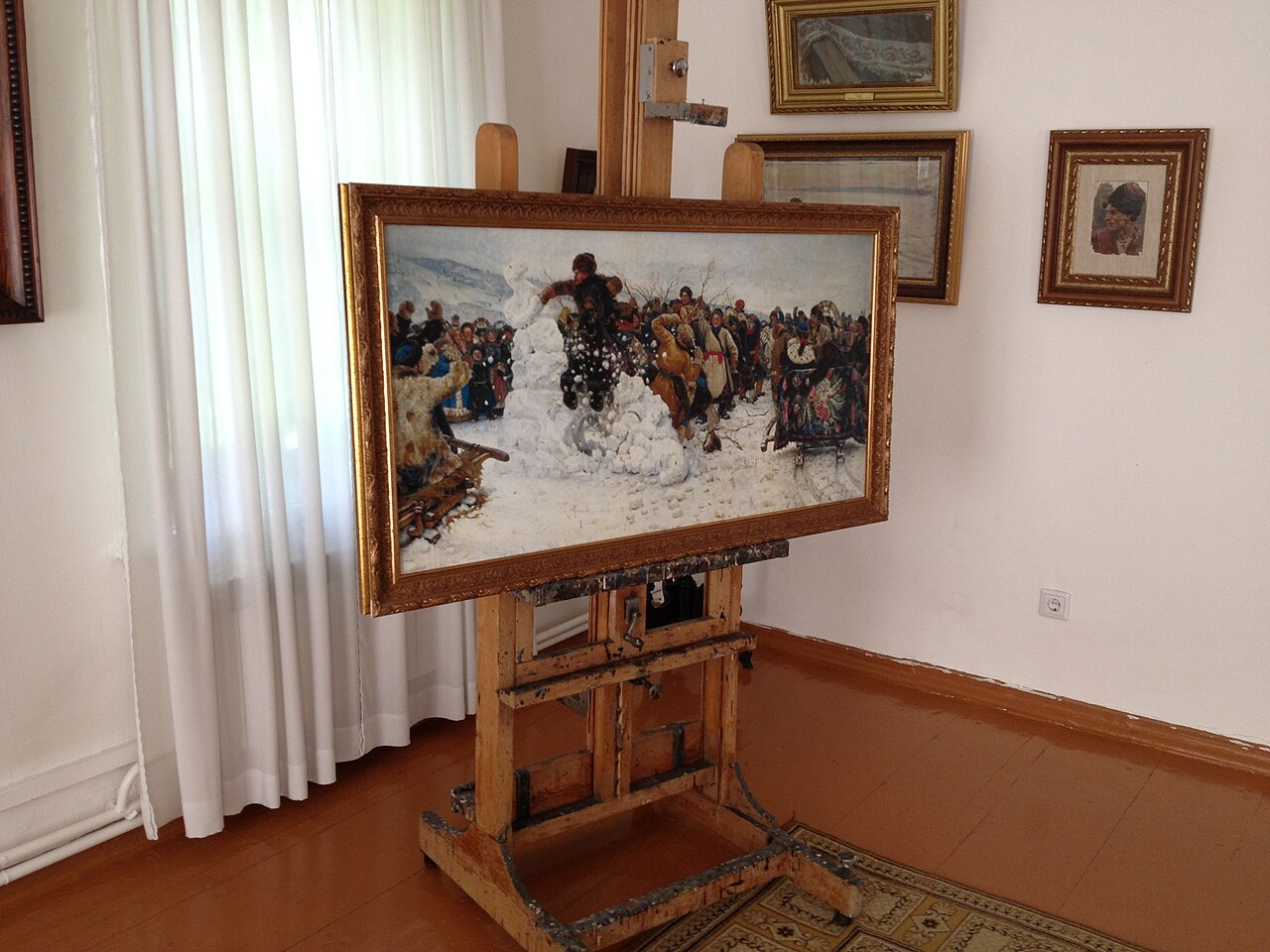
The Yermak canvas and the painter’s late Siberian subjects, the Cossack scenes, the Suvorov crossing, the taking of the snow town drawn from Siberian winter festival, show Surikov returning ever more explicitly to his frontier roots, the mature master mining the homestead’s world directly, the estate on the Yenisei not merely the painter’s starting point but the permanent source to which his art kept returning, the log house the key to the Tretyakov’s Surikov hall.
The Painter’s Returns
Surikov came home across his life. From Moscow and his Academy success he returned repeatedly to Krasnoyarsk and the homestead, to his mother and his Siberian family, the visits replenishing the reservoir, the painter sketching the faces, customs, and landscapes of the frontier for the canvases, the estate functioning as his lifelong studio of authentic old Russia, the returns the rhythm of his creative life, the homestead his source and his refuge.
The returns fed specific works: the Siberian visits supplying the faces and the winter scenes, the family and the Cossack world the models and the moods, the painter’s letters and his daughter’s memoir recording the homecomings and their harvest, the estate’s walls witnessing the master’s visits as they had the boy’s departure, the house the fixed point of a life that ranged from the Yenisei to Rome but always returned to the log rooms.
Surikov died in 1916, the last of the great Peredvizhniki historical painters, his place in Russian art secure and his debt to the frontier homestead acknowledged to the end, the estate on the Yenisei having given the national culture its supreme painter of the national past, the Cossack gentry’s house the cradle of the canvases that taught Russia to see its own history, a frontier homestead’s extraordinary gift to the empire’s art.
The Estate Museum
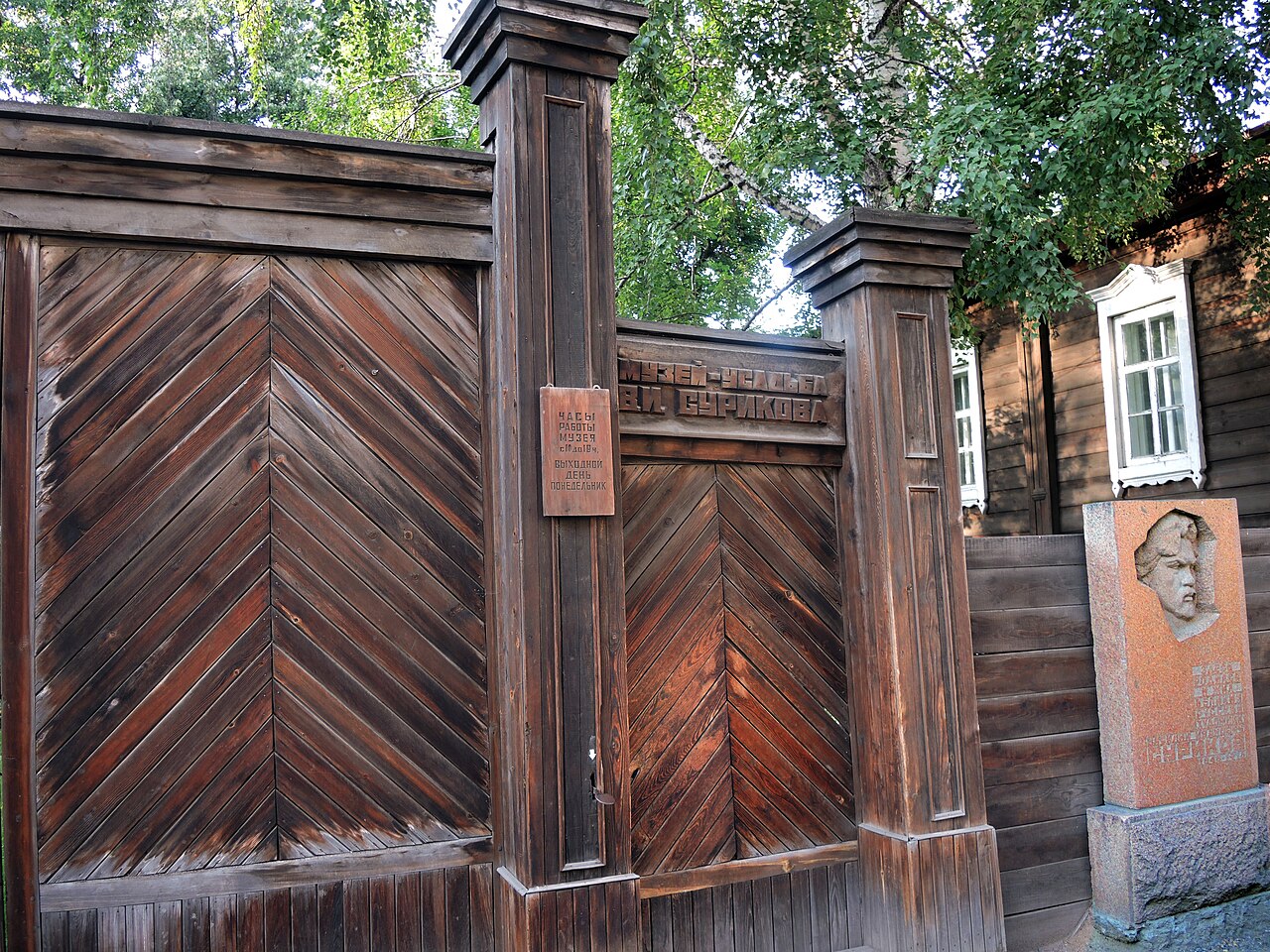
The homestead became a museum in 1948, on the centenary of the painter’s birth, the Surikov estate preserved as a house-museum of the artist and of the Siberian Cossack life that formed him, the rooms furnished to his boyhood, the family’s and the painter’s possessions displayed, the early works and the biographical material telling the story, the authentic homestead maintained as both a shrine to the master and a document of the frontier gentry’s world.
The museum’s value is double: it is one of Russia’s significant artist’s-house museums, the key to understanding Surikov, and it is a rare preserved example of the Siberian Cossack gentry’s domestic environment, the two purposes reinforcing one another, the visitor learning the painter through the house and the house through the painter, the estate interpreting the unique social world that produced the unique art.
The estate anchors Krasnoyarsk’s Surikov heritage: the city, proud of its greatest son, maintains the house-museum, the Surikov art museum with its collections, and the memory throughout the civic culture, the painter the city’s defining figure, the homestead the pilgrimage site for admirers of the Tretyakov’s historical hall, the log house on the Yenisei a required stop for anyone seeking the roots of Russian history painting’s supreme achievement.
Watch the Surikov Estate on Film
Visiting the Surikov Estate Today
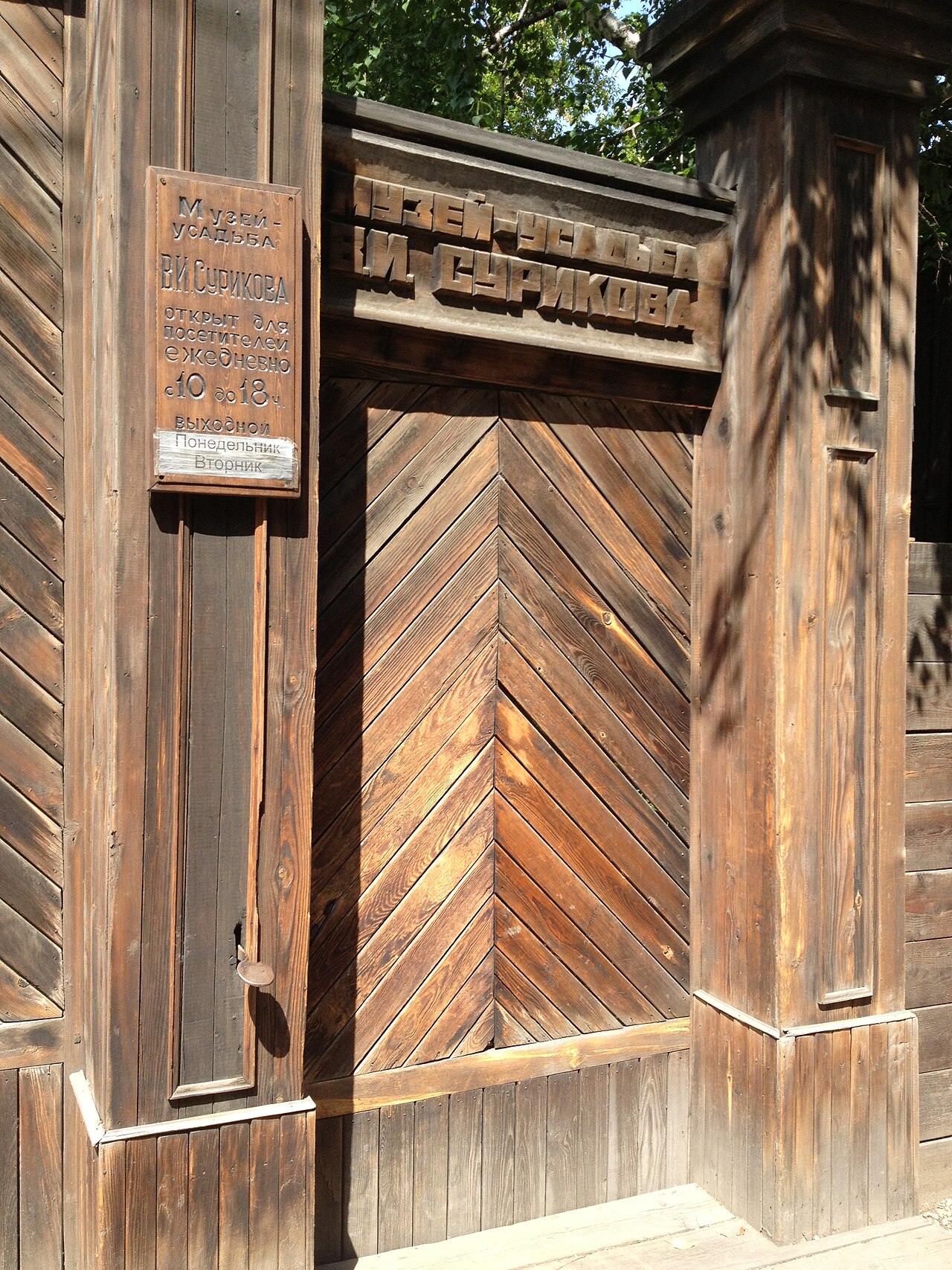
Krasnoyarsk lies on the Trans-Siberian main line, roughly midway across Siberia, a major rail junction and air hub with direct flights from Moscow and the Siberian cities; the Surikov estate-museum stands in the central historic area of the city, walkable or a short ride from the center. The house-museum opens daily except Mondays with modest tickets, its furnished rooms, the painter’s early works, and the biographical displays the main attraction, and guided tours available; the separate Surikov art museum in the city holds works and deepens the visit. Give the estate a couple of hours and Krasnoyarsk a day or more, the Yenisei embankment, the Stolby nature reserve’s famous rock pillars outside the city, and the historic quarter rewarding the stay; the city makes a natural Trans-Siberian stop. You can find the estate on the map here: Surikov Estate on Google Maps.
Palaces Nearby
You May Like
The Dadiani Palace and the Bonaparte Treasures of Zugdidi