
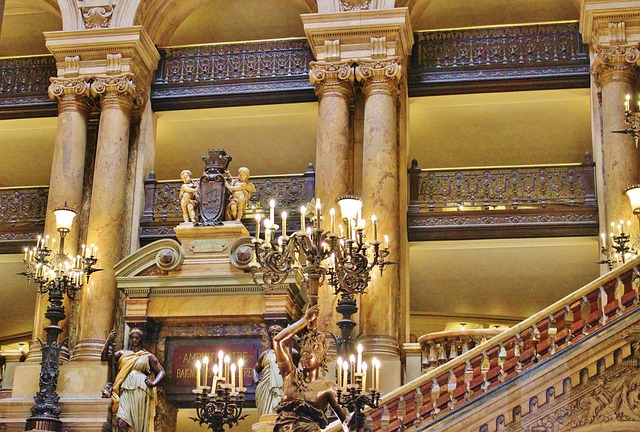
One of the most opulent buildings in Paris, the Palais Garnier is a breathtaking 19th-century opera house and a monument to extravagance. Even if you never see a performance, you can tour its dazzling interior — a riot of marble, gold, velvet, and sculpture that inspired The Phantom of the Opera. From its legendary grand staircase to a ceiling painted by Chagall, it’s a feast for the eyes and one of the city’s most glamorous sights.
A Monument to Grandeur
Completed in 1875 as the centerpiece of Baron Haussmann’s grand redesign of Paris, the opera house was designed by the architect Charles Garnier in a lavish style all his own. When the Empress asked what style it was, he reportedly replied simply, “Napoleon III.” The building was conceived as much as a social stage for high society as a place to see opera and ballet — a place to see and be seen.
The Grand Staircase and Foyer
The interior’s showstopper is the Grand Staircase, a sweeping double stairway of white marble beneath a soaring painted ceiling, designed for elegant audiences to make their grand entrance. Beyond it lies the Grand Foyer, a gilded hall of mirrors and chandeliers rivaling the Palace of Versailles, where opera-goers once mingled at intervals. Both are simply spectacular.

The Auditorium and Chagall Ceiling
The plush red-and-gold auditorium is dominated by an enormous crystal chandelier and, famously, a ceiling painted in 1964 by Marc Chagall. His colorful, dreamlike work — depicting scenes from famous operas and ballets — floats above the classical splendor in a striking and beloved contrast of old and new. The chandelier itself once inspired a dramatic scene in the Phantom story.
The Phantom and the Lake
The Palais Garnier is forever linked with The Phantom of the Opera, and the legend has roots in reality: there really is a water reservoir beneath the building, the “underground lake” that fired the novelist’s imagination. Look out for Box 5, traditionally reserved for the Phantom himself, as you explore.
Planning Your Visit
The opera house is right by the Opéra metro station. You can visit by self-guided or guided tour during the day (check times, as tours pause for rehearsals and matinées), or, best of all, by booking a ticket to an opera or ballet to experience it in its full glory. There’s an admission charge for daytime visits. It sits beside the grand department stores, making it easy to combine with shopping.
More Paris guides: explore the full Paris Travel Guides series.


