Long before Mexico City existed, and even before the Aztec Empire rose to dominate central Mexico, the highland valleys surrounding what is now the nation’s capital were already home to farming communities speaking a language unrelated to any other in the region. Their descendants, known today as the Otomi, remain one of Mexico’s largest Indigenous peoples, though their long history in the central highlands is often overshadowed in popular memory by the more famous Aztec and Maya civilizations that came to share, and at times dominate, the same landscape.
The Otomi never built one of Mesoamerica’s headline empires, but they were present at nearly every major turning point in central Mexican history, from the earliest urban centers of the region through the rise and fall of the Aztec state and into the Spanish conquest, in which Otomi soldiers fought on both sides of the conflict depending on their community’s particular alliances. Today, Otomi communities stretch across a wide swath of central Mexico, anchored by the semi-arid Mezquital Valley, where the maguey plant has shaped diet, economy, and daily life for centuries.
This article traces the Otomi story from its origins through the meaning of their name, their distinctive language, their central Mexican homeland, their old way of life, the way their society is organized, their religious world, their traditions, their crafts, their food, their festivals, their long history, and where the Otomi stand today.
- Origins
- Name
- Language
- Homeland
- Old way of life
- Society
- Religion
- Traditions
- Crafts
- Food
- Festivals
- History
- Today
Origins
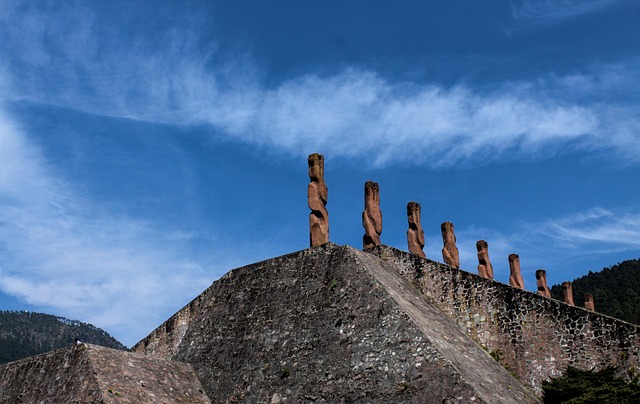
Otomi-speaking communities are generally considered among the oldest continuous populations of the central Mexican highlands, with some archaeologists and linguists proposing that Otomi or closely related Oto-Pamean-speaking groups were present in the Basin of Mexico and surrounding valleys well before the rise of Teotihuacan, the enormous ancient city whose ruins still stand northeast of modern Mexico City. Under this view, Otomi ancestors may have formed part of Teotihuacan’s original population, later joined and eventually demographically overshadowed by Nahuatl-speaking migrants moving into the same valleys.
Whatever the precise relationship to Teotihuacan, Otomi communities were clearly well established across the Basin of Mexico, the Toluca Valley, and the drier Mezquital region to the north by the time more centralized states began forming in the region during the postclassic period. Otomi rulers controlled or shared power in a number of important early city-states, including Xaltocan in the Basin of Mexico, which for a time was one of the more powerful polities in the region before falling under growing pressure from expanding Nahua-speaking neighbors.
As Nahuatl-speaking peoples, including the ancestors of the Aztec, expanded their political and demographic presence across central Mexico in the centuries before Spanish contact, many Otomi communities were pushed toward less agriculturally desirable land, including the semi-arid Mezquital Valley, while other Otomi towns remained embedded within increasingly Nahua-dominated political structures, sometimes as subordinate allies and sometimes as tribute-paying subjects.
This long history of proximity to, and entanglement with, more centralized and better documented neighbors has left the Otomi somewhat underrepresented in popular accounts of ancient Mexico compared to groups like the Aztec or Maya, even though Otomi communities were continuously present across a huge swath of central Mexican territory throughout the entire span of Mesoamerican civilization.
What Does Otomi Mean?
Like Mixtec and several other Mesoamerican peoples covered on this site, Otomi is not the name the people originally used for themselves but a term rooted in Nahuatl, adopted into Spanish and then into English. Its exact derivation is debated, with some scholars connecting it to a Nahuatl word associated with hunting, since Otomi communities were known to Nahua-speaking neighbors partly for their hunting skill, while other proposed origins tie the name to a legendary founding ancestor figure preserved in central Mexican oral tradition.
Otomi communities themselves generally use a self-designation usually rendered in Spanish and English sources as Hñähñu, Hñähño, or a similar variant depending on the local dialect, a term most commonly translated along the lines of those who speak the language, reflecting the same pattern seen among several other Indigenous peoples of Mexico where a language-centered self-name stands in contrast to an externally applied ethnic label.
Because Otomi communities are spread across several Mexican states with real dialect and cultural variation between regions, exactly how strongly individuals identify with the broader Otomi or Hñähñu label, as opposed to a more local town or regional identity, varies considerably, a pattern common among Indigenous peoples whose historic territory was never unified under a single centralized state of their own.
In contemporary Mexico, Otomi has become the standard term used in government documents, bilingual education programs, and national media, while Hñähñu and its regional variants remain the preferred term within many communities themselves, particularly in contexts where cultural and linguistic pride are most directly at stake.
Language
Otomi belongs to the Oto-Pamean branch of the Otomanguean language family, making it a distant relative of Mixtec and Zapotec within the same very old and internally diverse language family, though the specific Oto-Pamean branch diverged early enough that Otomi is not mutually intelligible with either of those languages. Like many Otomanguean languages, Otomi is tonal, and its complex sound system has historically made it one of the more challenging Indigenous languages of Mexico for outside linguists to fully document.
Several distinct Otomi language variants are spoken across different regions of central Mexico, including varieties in the Mezquital Valley of Hidalgo, the Toluca Valley and surrounding areas of the State of Mexico, and smaller Otomi-speaking communities in Puebla, Veracruz, Queretaro, Guanajuato, and Michoacan, with speakers of geographically distant variants sometimes unable to understand one another without difficulty.
Current estimates put the total number of Otomi speakers across all these regions somewhere in the range of two to three hundred thousand people, a number that has declined relative to the overall size of the Otomi-identifying population as younger generations increasingly grow up speaking primarily Spanish, particularly in communities close to Mexico City and other major urban centers.
Bilingual education programs, Otomi-language radio broadcasting, and a growing body of published Otomi-language material have expanded since the late twentieth century as part of a broader Mexican government and community effort to slow language loss, though UNESCO and independent linguists continue to classify several Otomi variants as vulnerable or definitely endangered.
Otomi-language music, poetry, and increasingly social media content produced by younger community members have added new spaces for the language to be used and heard beyond the home and the classroom, a development many linguists see as genuinely important for a language whose long-term survival depends on young speakers finding it relevant to their everyday, modern lives rather than treating it purely as a marker of the past.
Homeland
Otomi communities are spread more widely across central Mexico than most other Indigenous peoples of the country, with significant populations in the State of Mexico, Hidalgo, Queretaro, Puebla, Veracruz, Guanajuato, Tlaxcala, and smaller pockets in Michoacan, reflecting centuries of both original settlement and, in some periods, deliberate resettlement by colonial and later Mexican authorities.
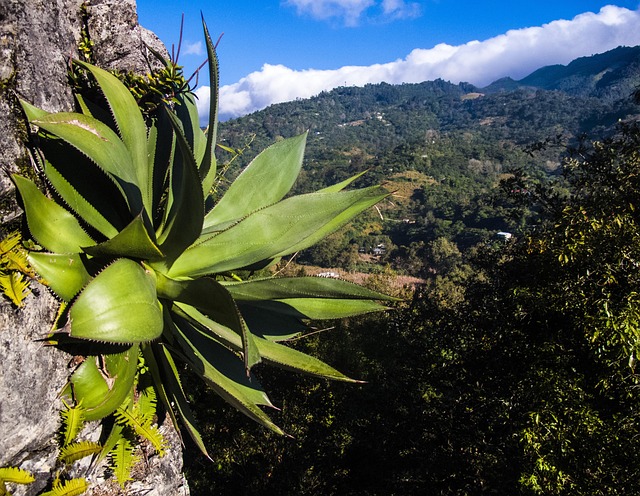
The Mezquital Valley in the state of Hidalgo holds special significance as the single largest concentration of Otomi speakers and as the region most strongly associated with Otomi identity in the Mexican popular imagination, despite being one of the country’s drier and more agriculturally challenging regions, a semi-arid landscape of mesquite scrub, cactus, and extensive maguey cultivation rather than the greener, more fertile land found in parts of the neighboring Toluca Valley.
The Toluca Valley, closer to Mexico City and generally more agriculturally productive, hosts another major concentration of Otomi communities and has historically been more directly integrated into central Mexican political and economic life, from its role in the Aztec tribute system through its continued importance in the modern State of Mexico’s economy and administration.
Proximity to Mexico City has been a double-edged reality for Otomi communities across several of these regions, providing access to labor markets, education, and infrastructure not always available in more remote parts of Indigenous Mexico, while also driving land pressure, environmental strain, and a steady pull of migration toward the capital that has reshaped many Otomi towns over the past several generations.
Old Way of Life
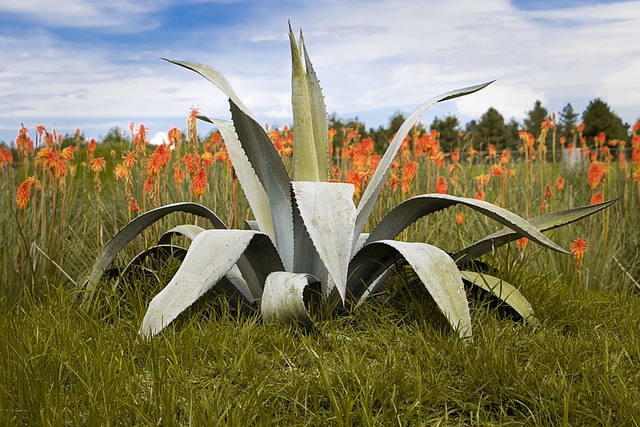
In the drier parts of Otomi territory, particularly the Mezquital Valley, the maguey plant has functioned as something close to a complete subsistence system in itself, providing sap fermented into the mildly alcoholic beverage pulque, fiber spun into rope, thread, and cloth, thorns once used as needles, and leaves used for construction and fuel, a remarkable degree of self-sufficiency drawn from a single hardy desert plant adapted to exactly the kind of poor, dry soil found across much of the region.
Maize, beans, and squash farming supplemented maguey-based subsistence wherever soil and water conditions allowed, with terracing and small-scale irrigation used in some areas to maximize the limited arable land available, while communities in wetter parts of Otomi territory, including sections of the Toluca Valley and the Sierra Otomi-Tepehua further east, practiced more conventional Mesoamerican mixed farming with somewhat greater agricultural reliability.
Hunting, particularly of small game and birds, held enough cultural importance historically that it is sometimes cited among the possible sources of the Nahuatl-derived name Otomi itself, and gathering wild plants, insects, and, in some regions, aquatic life from lakes and streams rounded out a subsistence strategy built around making productive use of a genuinely difficult, water-scarce environment.
Spinning and weaving maguey fiber into rope, nets, and coarse textiles was a widespread household craft historically practiced across Otomi communities, providing both everyday household goods and a tradeable commodity that connected even relatively remote Otomi towns to wider regional and, eventually, national markets.
Water scarcity has shaped Otomi settlement patterns and technology for centuries, and communities in the driest parts of the Mezquital Valley historically developed small check dams, hand-dug wells, and careful water-sharing arrangements between households and towns, practices that reflect generations of accumulated knowledge about managing an unpredictable and often meager water supply in a landscape where a single poor rainy season could threaten an entire community’s harvest.
Society

Pre-Columbian Otomi society was never unified under a single Otomi state, and instead took the form of numerous separate town-based polities, some independent, some allied with or subordinate to larger neighboring powers, a pattern that persisted through the era of Aztec expansion, when different Otomi towns ended up on different sides of the shifting political map, some paying Aztec tribute and others maintaining alliances that placed them in periodic conflict with Aztec interests.
This same lack of political centralization proved consequential during the Spanish conquest, when a number of Otomi communities, particularly those with a history of tension with the Aztec state, allied with Hernan Cortes against Tenochtitlan, providing soldiers and support that contributed materially to the Spanish victory, a decision that shaped how Otomi communities were treated, at least initially, under the resulting colonial order.
Colonial and later Mexican-era Otomi communities organized local governance around town councils and, in many areas, a version of the same cargo system found among Zapotec, Mixtec, and Purepecha communities, in which men take on a graduated set of civic and religious responsibilities over their lifetime, building status and authority through service rather than through inherited rank alone.
Extended family networks, compadrazgo godparent relationships, and mutual labor exchange customs continue to anchor social life in many Otomi towns today, and these same networks have proven adaptable enough to stretch across the considerable distances involved in labor migration to Mexico City and, for a growing number of families, to the United States, with hometown associations helping sustain ties and fund community projects from a distance.
Religion

Pre-Hispanic Otomi religious belief included deities associated with fire, the sun, and agricultural fertility, along with a strong tradition of ancestor and place-based reverence tied to particular mountains, springs, and other natural features considered to hold spiritual significance, broadly consistent with religious patterns found across much of ancient Mesoamerica even where specific deity names and myths differed between neighboring peoples.
Franciscan and Augustinian missionaries established an extensive presence across Otomi territory beginning in the sixteenth century, and the overwhelming majority of Otomi people today identify as Catholic, with religious life organized heavily around patron saint festivals, church-based cargo sponsorship, and home altars, patterns broadly shared with neighboring Indigenous peoples across central Mexico.
Older beliefs about the spiritual significance of specific places, along with folk healing practices sometimes involving ritual specialists consulted alongside or instead of a priest, persist in many Otomi communities beneath a predominantly Catholic surface, a layering of belief systems common throughout Indigenous Mexico rather than a distinctly Otomi phenomenon.
Protestant and evangelical Christian communities have grown in parts of Otomi territory over recent decades, a pattern especially notable in some Mezquital Valley towns, adding further religious diversity even as Catholic identity, expressed through the annual festival calendar, remains the dominant framework organizing most communities’ collective religious life.
Traditions
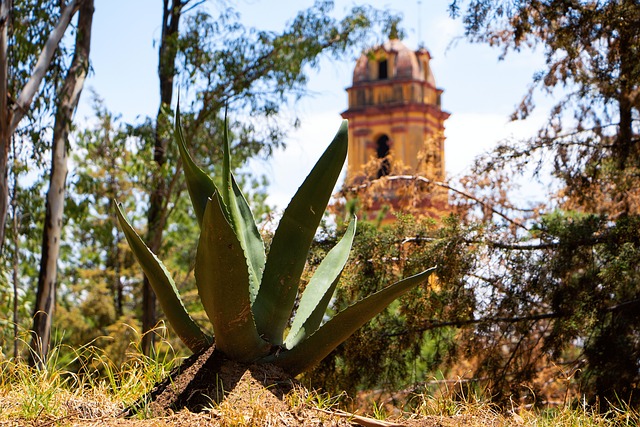
The maguey plant runs through Otomi tradition well beyond simple subsistence, carrying ritual and symbolic weight in community life, with the harvesting and processing of maguey sap into pulque historically accompanied by particular customs and, in some communities, small rituals of thanks tied to the plant’s central role in sustaining families through difficult, dry years.
Compadrazgo and godparent relationships extend well beyond baptism in Otomi communities, marking events such as a child’s first haircut, confirmation, and marriage with additional rounds of ritual kinship, gift exchange, and mutual obligation, widening the effective family network in ways that provide real practical support during hardship, migration, or major life events.
Marriage customs traditionally involved formal petitioning visits between families and several ceremonial steps spread across weeks, though, as in many Indigenous Mexican communities, these older courtship sequences have shortened considerably in recent decades, particularly among younger Otomi who increasingly meet partners at school or work rather than through arrangements made primarily within their home town.
Respect for community elders and for those who have completed cargo-system service remains a strong value across Otomi towns, and taking a turn sponsoring a festival or serving in an unpaid civic role continues to function, much as it does among neighboring Indigenous peoples, as an important marker of full, respected membership in one’s home community.
Crafts
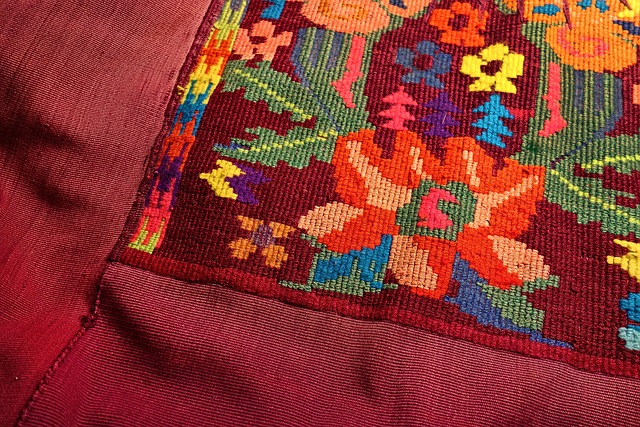
Otomi embroidery, particularly the brightly colored figurative style associated with the town of Tenango de Doria in Hidalgo, has become internationally recognized well beyond Mexico’s borders, featuring densely stitched animals, plants, and mythological figures rendered in bold, saturated thread colors against plain cotton cloth, a style that has been widely copied and commercialized, sometimes without any benefit flowing back to the Otomi communities whose artisans originated it.
Maguey fiber weaving and rope-making remain active household crafts in many Mezquital Valley communities, producing everyday goods for local use alongside items sold in regional markets, a direct continuation of the plant-based craft economy that has sustained Otomi households through generations of difficult growing conditions in the region’s semi-arid landscape.
Pottery, basketry, and, in some communities, wool textile weaving round out the broader Otomi craft repertoire, with specific techniques and design traditions varying considerably from one town or region to another, reflecting the same lack of centralized cultural unity that has long characterized Otomi political and social organization more broadly.
In recent decades, some Otomi communities and Mexican cultural organizations have worked to establish clearer recognition and, in a few cases, legal protection for Otomi-origin designs like Tenango embroidery, part of a broader and still evolving conversation in Mexico about protecting Indigenous artisans from having their traditional designs used commercially without consent or compensation.
Silverwork and small-scale jewelry making also have a presence in some Otomi communities, often produced by families who combine this trade with farming or migrant labor, and craft cooperatives formed over the past few decades have helped some Otomi artisans reach buyers in Mexico City and abroad directly, cutting out at least some of the middlemen who have historically captured much of the profit from Indigenous craft sales.
Food

Pulque, the mildly alcoholic beverage fermented from fresh maguey sap, has been central to Otomi diet and social life for centuries, historically valued not only for its taste and social role but for its nutritional contribution in a region where maguey often grew more reliably than many other crops, and pulque production and consumption remain closely associated with the Mezquital Valley in the broader Mexican imagination.
Escamoles, the edible larvae of certain ant species harvested from maguey roots, and chinicuiles, maguey worms found in the plant’s root system, are prized traditional delicacies in Otomi and neighboring central Mexican cuisine, historically an important source of protein in a semi-arid environment where reliable animal protein was not always easy to come by, and both are still served today, including in higher-end restaurants that market them as a distinctly Mexican delicacy.
Maize remains the staple foundation of everyday Otomi cooking, prepared as tortillas and a range of regional dishes, often paired with beans, nopal cactus paddles, chili, and, where available, meat, in combinations shaped heavily by whichever local ingredients a given community’s land could reliably provide.
As with other Indigenous peoples covered on this site, food traditions have traveled with Otomi migrants to Mexico City and beyond, and Otomi-run food stalls and home kitchens in migrant destinations continue to prepare dishes drawn from Mezquital Valley and Toluca Valley recipes, giving diaspora families a direct, daily connection back to their communities of origin.
Festivals
Nearly every Otomi town holds an annual festival honoring its patron saint, typically funded and organized through the community’s cargo system, with sponsorship rotating among households and featuring processions, fireworks, brass bands, and traditional dances, occasions that regularly draw home migrants living in Mexico City or further afield who plan visits specifically around their hometown celebration.
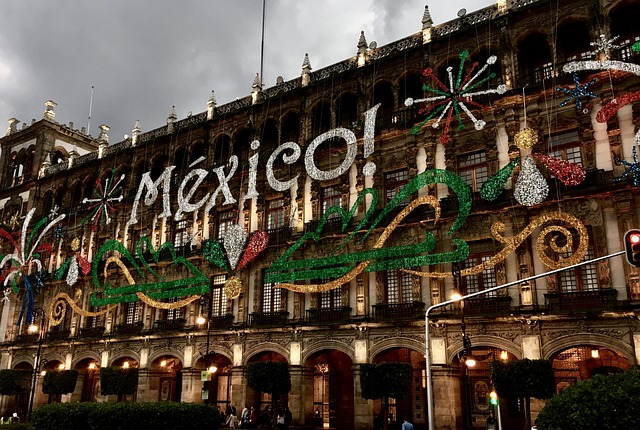
National Mexican holidays, including Independence Day celebrations each September and Day of the Dead observances in early November, are widely marked across Otomi communities alongside more locally specific festivals, with families building home altars and visiting cemeteries in a pattern shared broadly with neighboring Indigenous and mestizo communities across central Mexico.
Carnival celebrations before Lent, harvest-related observances tied to the agricultural calendar, and major life-cycle events such as baptisms, quinceaneras, and weddings round out the yearly festival calendar in most Otomi towns, with traditional dress, particularly embroidered garments in communities near Tenango de Doria, most visibly worn during precisely these kinds of community celebrations.
Regional cultural festivals dedicated specifically to Otomi crafts, language, and music have grown in number over recent decades, part of a broader effort by both community organizations and Mexican cultural institutions to raise the profile of Otomi heritage alongside the country’s more internationally famous Indigenous traditions.
Concheros dance, a ceremonial dance tradition performed by costumed dance troupes to the sound of stringed instruments made from armadillo shell, is practiced in some Otomi and neighboring central Mexican communities, blending Catholic devotional elements with movements and symbolism that dancers and scholars alike trace back to pre-Hispanic ritual practice, another example of the layered religious and cultural life found throughout the Otomi region.
History
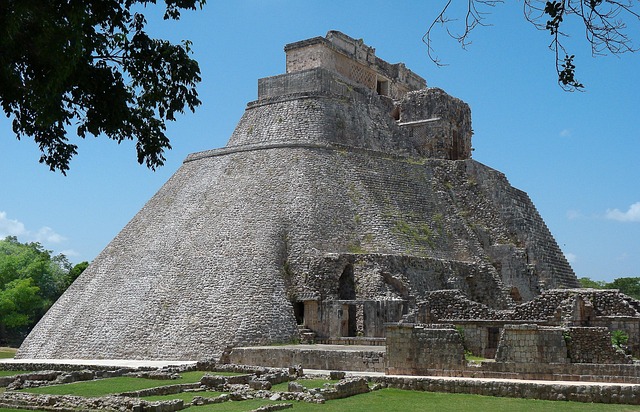
Otomi political fortunes across the pre-Columbian era were closely tied to the rise of more centralized neighboring powers, first in relation to Teotihuacan and later Toltec-era states, and then most consequentially to the expanding Aztec Triple Alliance, which by the fifteenth century had brought many Otomi towns, including the once-powerful city-state of Xaltocan, under various degrees of tribute obligation or direct political subordination.
When Hernan Cortes arrived in the Aztec capital of Tenochtitlan in 1519, several Otomi communities, particularly those from Tlaxcala’s Otomi-populated frontier districts and other areas with longstanding grievances against Aztec dominance, allied with the Spanish, providing troops that played a genuine role in the eventual fall of the Aztec state in 1521, a decision that shaped early Spanish colonial policy toward at least some Otomi towns.
Spanish colonization nonetheless brought profound disruption to Otomi communities regardless of their wartime alliances, including forced resettlement, new labor obligations, and the introduction of livestock and crops that reshaped land use across the region, with Franciscan missionaries establishing an extensive network of churches and schools across Otomi territory through the sixteenth and seventeenth centuries.
The nineteenth and twentieth centuries brought further upheaval, including land pressures during and after Mexican independence, disruptions tied to the Mexican Revolution, and, from the mid-twentieth century onward, major infrastructure projects in the Mezquital Valley, including large-scale irrigation using wastewater from Mexico City, which reshaped local agriculture while also raising serious, long-debated public health and environmental concerns that continue to affect the region today.
Otomi Life Today
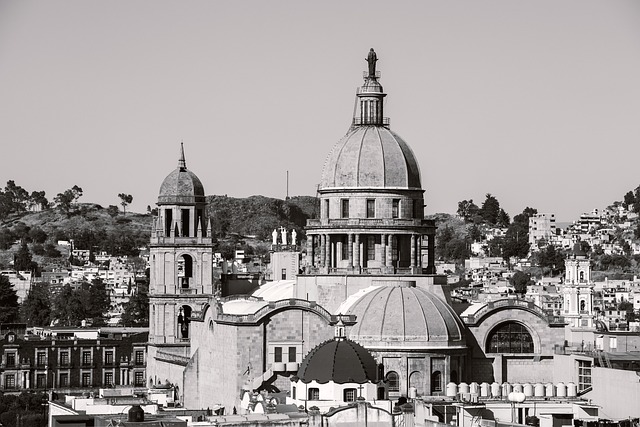
Otomi people today number in the several hundred thousands by most estimates, spread across the State of Mexico, Hidalgo, Queretaro, Puebla, Veracruz, Guanajuato, and smaller communities elsewhere, making the Otomi collectively one of Mexico’s largest Indigenous peoples even though they lack the single unifying regional identity that characterizes some other Indigenous groups covered on this site.
The Mezquital Valley remains one of the more economically challenged Indigenous regions of central Mexico, with land quality, water access, and, in some areas, contamination linked to decades of using treated and untreated Mexico City wastewater for irrigation continuing to raise concerns among public health researchers and community advocates, even as the same irrigation system has allowed expanded commercial farming in what was historically a very difficult growing environment.
Labor migration to Mexico City, other Mexican cities, and increasingly the United States has become a defining feature of Otomi economic life, with hometown associations, remittance flows, and return visits timed around patron saint festivals linking migrant Otomi communities back to their towns of origin in patterns very similar to those seen among Mixtec, Zapotec, and Purepecha migrants.
Otomi language and craft traditions, particularly Tenango embroidery, maintain a real public presence today, supported by bilingual education efforts, cultural festivals, and growing, if still incomplete, recognition of Indigenous artisans’ rights over their own traditional designs. From an ancient presence around Teotihuacan to embroidered figures now recognized on textiles sold internationally, the throughline in Otomi history remains a persistent, adaptable presence at the center of Mexican life, even when that presence has not always received the recognition it deserves.
Land and water issues connected to the Mezquital Valley’s long-running wastewater irrigation system remain an active subject of scientific study and community concern, with ongoing efforts by Mexican health and environmental authorities to better regulate contamination risks while preserving the agricultural productivity that the same irrigation system has made possible, an unresolved tension that continues to shape daily life for many Mezquital Valley families.
Nearby Peoples of Mexico
The Otomi share the central Mexican highlands with several other Indigenous nations profiled on this site, each with a distinct language and history of its own. Here are a few worth exploring next.




One thought on “Otomi: The Original Neighbors of the Aztec Capital”