In one of the deep recesses of the coast of Mandalya Bay, which separates Miletus and Halicarnassus, there are the ancient cities of Bargylia and Iasos, well known thanks to the notes of ancient writers and the important monuments that have survived to this day.
Although the systematic excavations of the Italian team in Iasos, which have been ongoing since 1961, have expanded our knowledge of this city, Bargylia was forgotten after a series of survey studies carried out in the mid-1800s. For this reason, it was decided to concentrate the research on the city on the one hand and the areas surrounding the city on the other hand.
Bargylia: This city with an orthogonal plan was equipped with thick walls surrounding two hills with important monuments during the Hellenistic period. The monuments in question are the temple-theater building group, the bouleuterion, the building known as the fountain and for which a reconstruction proposal has been prepared for the propylaeum, and the agora.
The survey revealed that there was intense construction in Bargylia in the Late Antique period. During this period, a new city wall was built to protect a palace and a religious complex consisting of three interconnected cult structures. Architectural and architectural decoration elements and some inscriptions, respectively, Hz. These three churches, dedicated to Jesus, Saints Peter and Paul and all the saints, were built in AD. It dates back to the first half of the 6th century.
The city, built at the end of a narrow and long indentation on the coast, has two ports, and the western port was probably reserved for smaller ships used for fishing or trade, as it was not very deep.
Although research in the area is still in its early stages, it reveals traces showing that the land has been used extensively.
Iasos: According to the information obtained from the excavations, this city dates back to B.C. It was established as a Greek colony at the beginning of the first millennium, in an area previously used by Cretan and Mycenaean traders, and was able to continue uninterrupted until at least the 14th century. Well-preserved structures and rich archaeological and ceramic findings testify to the continuity of the city and shed light on its history.
Surrounding areas: The longevity of the city is also confirmed, albeit in very general terms, by research conducted in the surrounding areas. Although it did not seem very hospitable and fertile at first, it was determined that these lands were used intensively and constituted an important source of income for the city, as can be understood from the building ruins, especially in the coastal area. Surface findings date the oldest structures in this area to the Archaic period (6th B.C.).
The ones built most recently date back to the 19th century. The periods that can be best observed in terms of the abundance of building ruins and the diversity of findings are the Hellenistic and Early Imperial periods, when Iasos was given the title and function of a customs port by Rome.
Roads extending from the valley passed through Chora, and along these roads there were isolated farm buildings or small settlements for agricultural purposes. These settlements were connected to each other by cemeteries, which sometimes became complete necropolis areas. These burial sites contained different types of graves, ranging from simple to more monumental ones, not only chronologically but also according to social status.
The protected areas in Zeytin Village and Alagün constitute a research subject in themselves. Two thermal structures and at least two Byzantine churches were found here.
On the hills with excellent visibility, city walls and structures known as Leleg structures, built with the polygonal wall technique of large and rough stones on an absidic plan, can be found.
These structures, named after the people who lived in this region before the arrival of the Greeks, seem to have been used for the control of various production activities in the area, ranging from felling trees to the use of marble deposits, in addition to their obvious military roles.
The detection of at least 5 marble beds, from which the famous Iasos marble was obtained and which were definitely used in the ancient period, shows that these were one of the main sources of income of the city and constitutes an extremely important source of interest today in terms of marble extraction techniques and how the work was organized technically (waste wells) and socially (settlements around the marble beds, tombs).
Additionally, two temples located in a high position were also found. A beautiful goddess statue was found in one of these, which has distinct local characteristics and is well preserved.
The areas and structures more directly connected to the city are the large necropolises on the shore opposite the peninsula, extending at least to the structure known as the Fish Market, and the aqueduct, parts of which can still be seen.
Usage during the Ottoman period can be easily observed in areas outside the city: the vaulted cisterns spread throughout the area are particularly interesting. These structures mark different routes over medium and long distances, from one side to Miletus and from the other to Bodrum.
Another sign that these lands were still in use in the 19th century and before the repopulation of the area in the last century are two Ottoman cemeteries with characteristic turbaned tombstones.
It can also be observed in its current ‘natural’ state that the soil has been used extensively throughout history. Although the lands around Iasos have been used intensively by humans in the past and today, there are still large areas where the vegetation preserves its interesting natural formations.
The evergreen rubber forest that once covered these areas has been completely destroyed by external influences and has been replaced by plant communities typical of the Mediterranean region, such as maquis, pine groves and steppes. These plant communities diversify and enrich the habitat’s offerings and contribute to the preservation of biodiversity.
Places to Visit
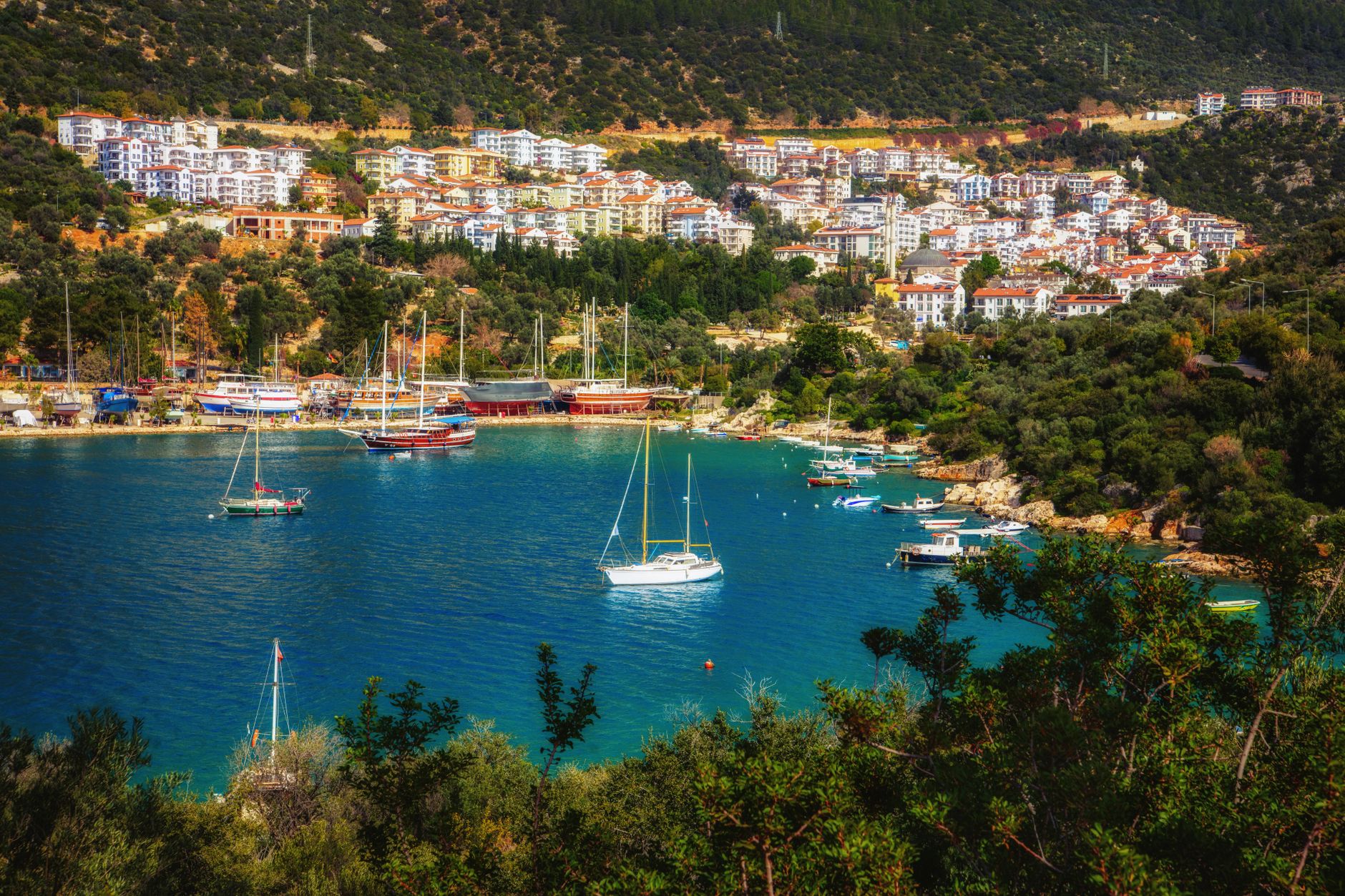
Boğaziçi Village, which is truly a place worth seeing and experiencing and located in Mandalya Bay, attracts the attention of the environment with its history, geography and delicious fish… The Bosphorus (Bargylia) in Milas, which is covered with water on three sides, was used as “Tuzla” during the time.
Evliya Çelebi, who visited here in the 17th century, talked about the taste of the salt produced in Tuzla and wrote that the salt here was consumed in Western Anatolia and also exported to France. Tuzla is abandoned today. But farmers who produce fish in seaside pools instead of salt cannot get enough of the Aegean king fish, sea bream and sea bass, on champagne-coloured evenings.
Since Boğaziçi, a village with 80 households, has no agricultural land, the villagers do fishing. Some keep it, some feed it and raise it, and some cook it and sell it. One can never get enough of the pleasure of eating at various restaurants on the beach, such as Yeni Albatros, Bargylia, Tan, Manolya, Lidya, Sahil, while watching the evening turn into champagne color in the face of the appetizing breeze blowing into the Mandalya Bay.
History Pegasus, the winged horse of the legendary hero Ballerofo, killed his hero friend Bargylos with his shotgun and named the city Bargylia in his memory. The oldest name of the city was Andanos in the Kar and Lelek language. Until recently it was called Varvil. That’s why the plain in front was called Varvil or Varvul plain. Since there were no regular excavations in Bargylia, landscaping could not be started.
All the structures of the ancient city are within a peninsula of 350 acres. While the city walls are made of very large block stones in quadrangular sections in the west of the peninsula, there is a theater suitable for the land structure on the northern slopes, and a Roman Era temple on Corinthian to the north of the summit. Right in front of it, on the southern slope of the Abidebi Altar theater hill, there is a music hall (Odeon), a Byzantine church, a Roman bath on the southwestern skirts, and the metropolis of the city.
As in many places, some sarcophagi and column heads broken open on the ground can be seen among the vegetation surrounding the area. The ruined and neglected ancient city is impatiently waiting for its turn to show itself to Güllük Airport and tourists coming from various places to the region, after the soil covering it has been removed by archaeologists.
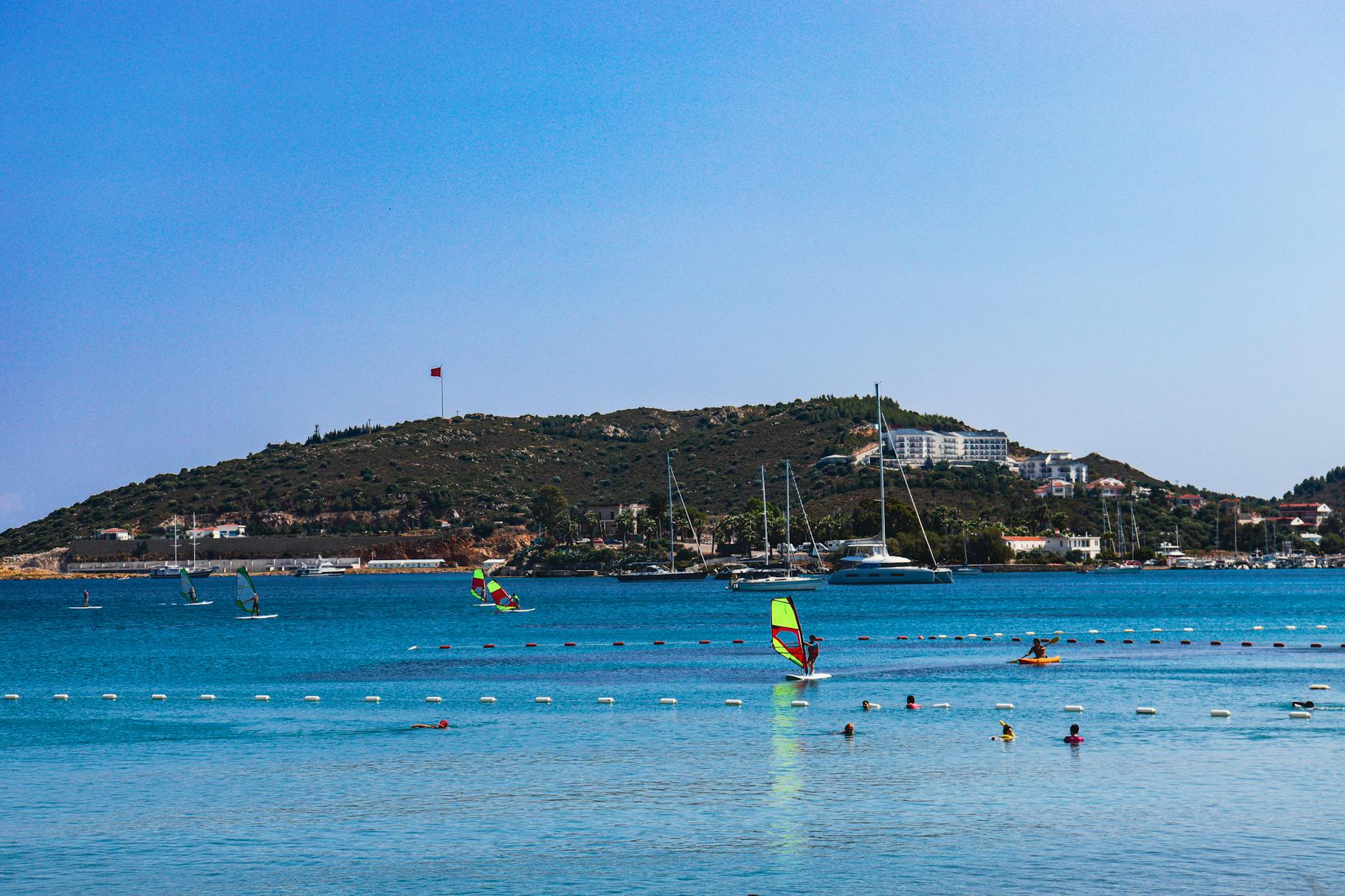
Where to visit? The most beautiful view of the bay can be seen from the hill opposite the Festival Mandalya Hotel, formerly known as Mandalya Hotel. To get here, you need to enter from Güllük and climb by following the asphalt. Or you can cross the street from Boğaziçi Village by boat and walk up this hill. In both cases, the structure of rocks and stones, bark-shaped, woody-looking rocks may interest you.
In the summer months, you can take a water hat with you and choose rubber shoes for your trip. If you’re wearing shorts, beware of Amadeus after shave scented prickly pyrene herbs. With the arrangement made on the coast of Boğaziçi Village, a small beach meets the needs of the visitors of the region. If you are interested in history, you can visit Bodrum Castle, theatre, Mausoleum, Milas and its villages on a day trip.
During your visit to Milas, you can see the famous houses with their chimneys, Gümüşkesen Tomb monument, Baltalı gate, aqueducts, mosques and inns, as well as 10 km from Milas. You can visit the ancient city of Labranda, famous for its must-taste water, and the coastal city of Iassos.
Those who wish can participate in daily tours that include Karaburun-Güllük-İassos by renting a boat from Boğaziçi Village. The tree that emerged from a grave on the Boğaziçi village road has become a wish tree for passers-by and those who seek help from the dead, with its interesting appearance. The branches of the tree, which were empty years ago, have now become unable to breathe with cloth, rags and nylon-like things tied to them for wishes.
You May Like
Touristic Places to Visit in Mudurnu