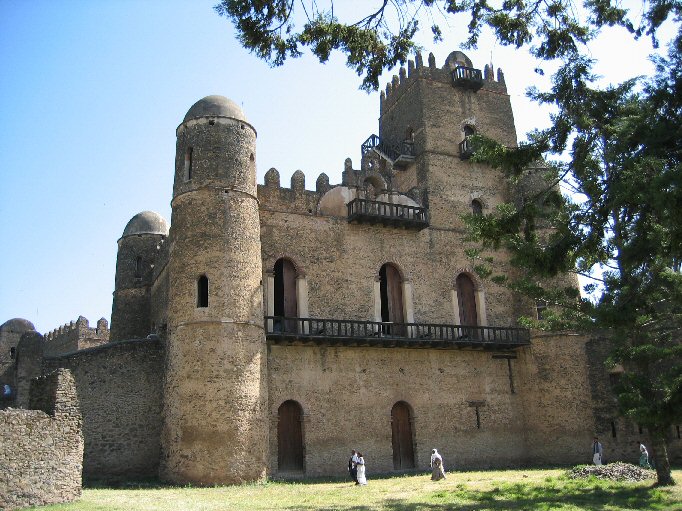
High on the plateau of northern Ethiopia, where the air is cool and the mountains stretch to the horizon, stands a cluster of stone castles that seem to have wandered out of a European fairy tale. Turreted, battlemented, and built of warm brown stone, they rise unexpectedly from the African highlands, and they have earned the city that holds them the nickname of the African Camelot. This is Fasil Ghebbi, the royal enclosure of Gondar, once the capital of the Ethiopian emperors.
Fasil Ghebbi is unlike almost any other royal complex in Africa. Built beginning in the seventeenth century, it is a walled compound containing a remarkable group of castles, palaces, churches, and other buildings, raised by a succession of emperors over more than a century. Its stone towers and crenellations give it an appearance that startles visitors expecting something quite different, a testament to the unique history and culture of highland Ethiopia.
For more than two centuries, Gondar was the permanent capital of the Ethiopian empire, a rare fixed center for a court that had long been mobile, moving from place to place across the highlands. In its royal enclosure the emperors built and ruled, and the city flourished as a center of power, religion, and culture, its castles rising as symbols of imperial authority in one of the oldest Christian kingdoms in the world.
In this article you will explore Fasil Ghebbi from the emperor who founded it to its remarkable castles and churches, through the unique blend of influences that shaped its architecture to its later history and its life today. Along the way you will discover why this cluster of stone castles on the Ethiopian plateau, so unexpected and so beautiful, stands as one of the great monuments of African history.
In This Article
- The African Camelot
- The Emperor Fasilides
- A Permanent Capital
- Castles on the Plateau
- The Castle of Fasilides
- The Castles of the Successors
- A Fusion of Influences
- Walls, Gates, and the Royal City
- The Bath of Fasilides and the Festival of Timkat
- The Church of the Angels
- Decline and Damage
- Recognition and Preservation
- Visiting Fasil Ghebbi Today
The African Camelot
Fasil Ghebbi, whose name means the royal enclosure, is a walled compound in the heart of the city of Gondar, containing a remarkable collection of castles, palaces, and other buildings. Enclosed by high stone walls with a number of gates, it formed the fortified heart of the imperial capital, a royal city within the larger city.
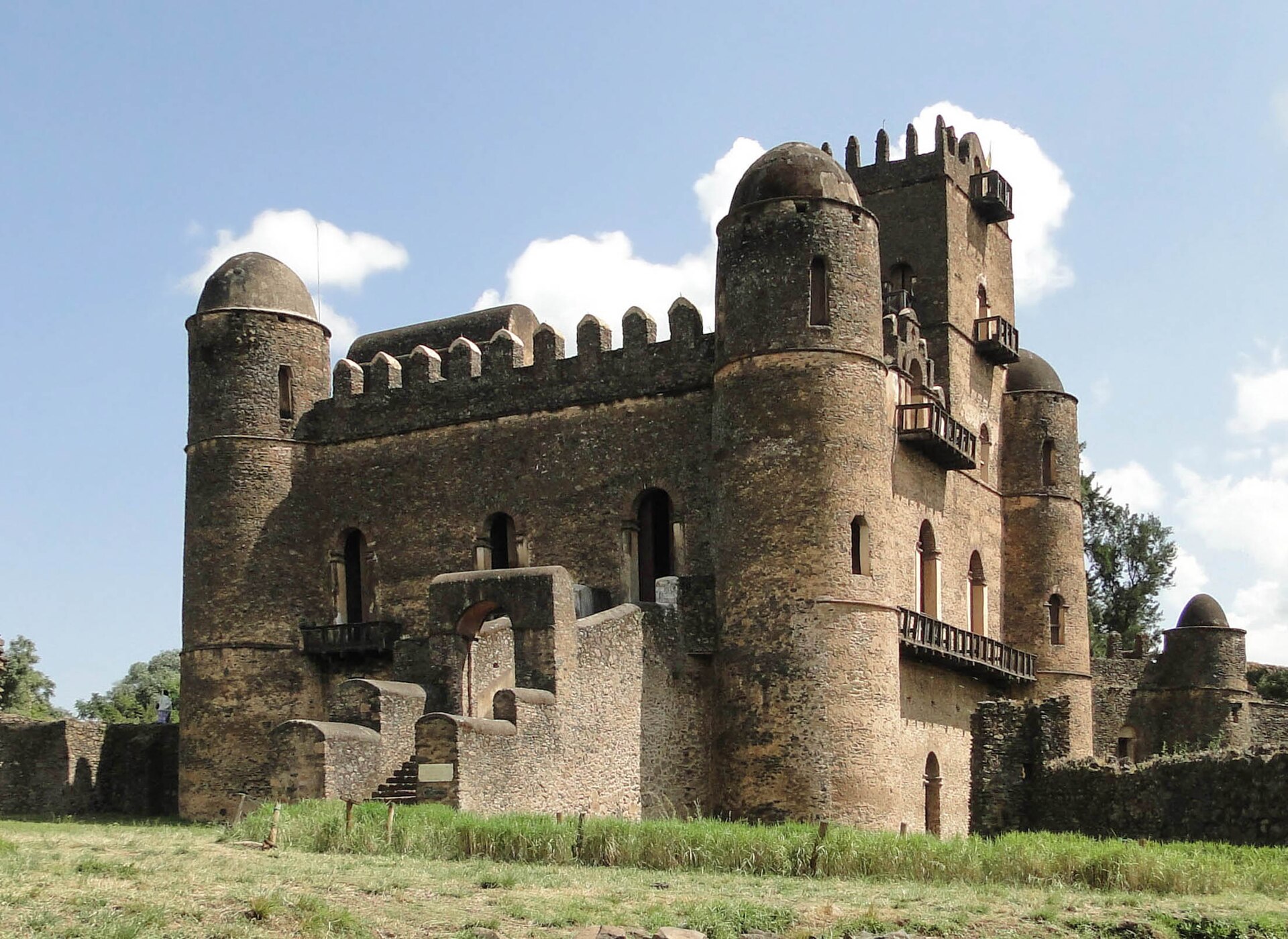
Within the walls stand several castles and palaces, built by different emperors over the course of more than a century, along with other structures such as halls, libraries, and service buildings. The effect is of a compound densely packed with stone buildings of striking and unusual character, a unique architectural ensemble unlike anything else in Africa.
The castles themselves, with their towers, battlements, and crenellations, are what give Fasil Ghebbi its extraordinary appearance and its nickname of the African Camelot. Built of stone in a style that fuses many influences, they seem to belong to a different world from the surrounding highlands, and their unexpected presence is one of the great surprises of Ethiopian travel.
For all its castle-like appearance, Fasil Ghebbi was above all a royal residence and the seat of imperial power. Within its walls the emperors of Ethiopia lived and ruled, held court and celebrated the great festivals of their ancient Christian faith, and the compound stands as a monument to the power and culture of the Gondarine period of Ethiopian history.
The surprise of the place is hard to overstate. Travelers who arrive expecting the mud-and-thatch architecture they may associate with parts of Africa find instead these towering stone castles, and the effect is genuinely startling. Fasil Ghebbi upends easy assumptions about the continent’s past, revealing a sophisticated tradition of monumental building in the highlands of Ethiopia.
The Emperor Fasilides
The royal enclosure takes its name from the Emperor Fasilides, who founded the city of Gondar and built the first and greatest of its castles in the seventeenth century. It was he who established Gondar as the permanent capital of the empire, ending the long tradition of a mobile court and giving Ethiopia a fixed royal city for the first time in centuries.
Fasilides was a significant ruler in Ethiopian history, and his decision to found a permanent capital marked an important turning point. Under his rule, Gondar was established and its first great buildings raised, laying the foundation for the flourishing of the city as a center of imperial power that would last for generations.
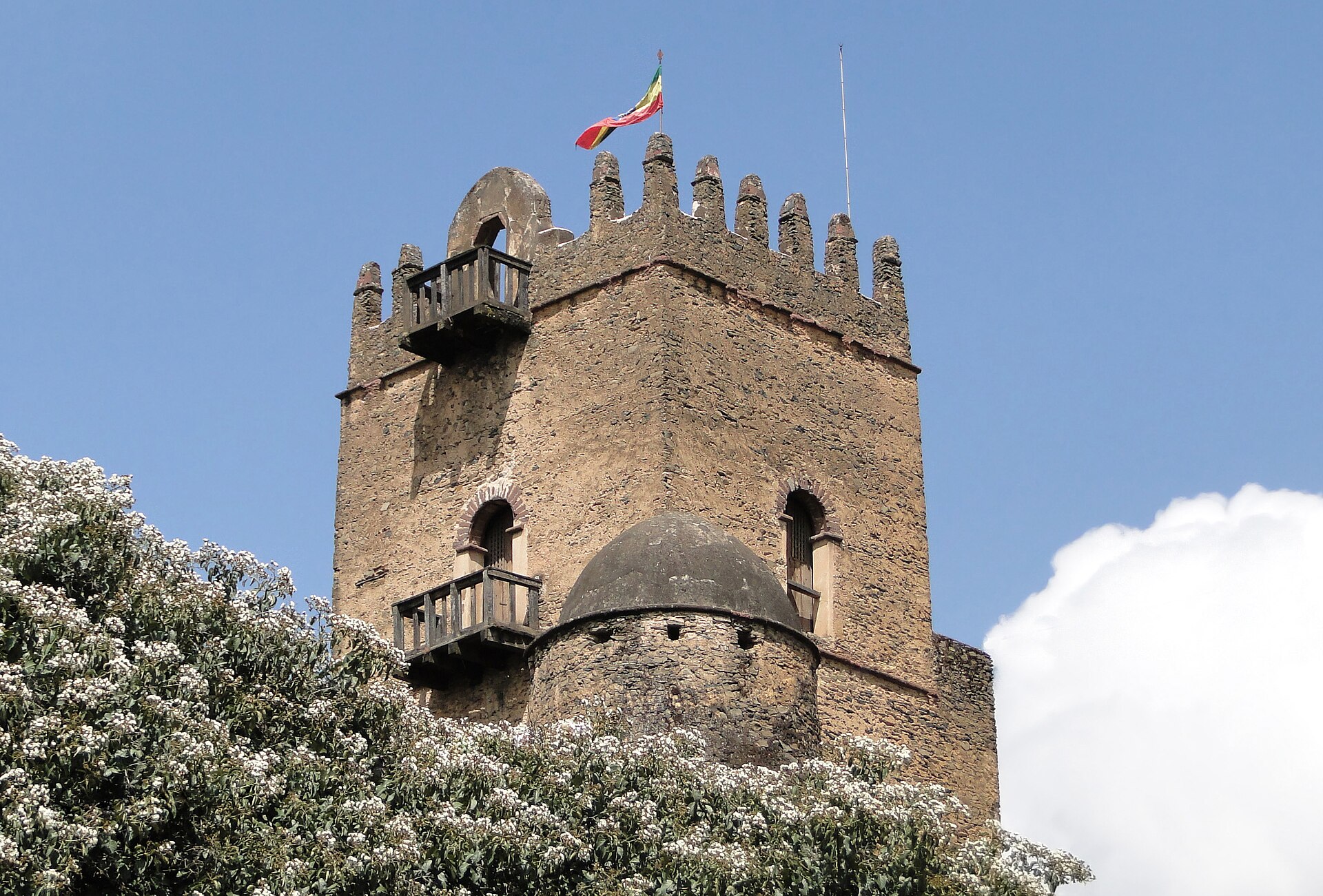
The castle that Fasilides built remains the centerpiece of the royal enclosure, the largest and most impressive of its buildings. It set the style for the castles that followed, and it stands as a monument to the emperor who conceived the new capital and began the extraordinary architectural achievement that Fasil Ghebbi represents.
Fasilides is remembered as the founder of Gondar and the initiator of a golden age in Ethiopian history. The city he established would become a great center of culture and religion, and the enclosure that bears his name would grow into one of the most remarkable royal complexes in Africa, a lasting testament to his vision and his reign.
The founding of a fixed capital was a bold break with deep tradition, for the mobile court had been a feature of Ethiopian kingship for a very long time. In choosing to settle and to build in stone, Fasilides was making a statement about the permanence and confidence of his rule, anchoring the empire to a single spot in a way his predecessors had not.
A Permanent Capital
For centuries before the founding of Gondar, the emperors of Ethiopia had ruled from a mobile court, moving from place to place across the highlands rather than governing from a fixed capital. The establishment of Gondar as a permanent capital was therefore a profound change, giving the empire a stable center for the first time in a very long while.
The choice of a permanent capital allowed for the building of grand and lasting structures, which a mobile court could never have created. Freed from the need to move, the emperors could invest in permanent buildings of stone, and the result was the remarkable series of castles and palaces that make up Fasil Ghebbi.
Gondar flourished as the capital, growing into a substantial city and a center of trade, religion, learning, and the arts. Its position and its status as the imperial seat drew people and wealth, and the city became one of the great centers of Ethiopian civilization during the period when it served as the capital of the empire.
The era when Gondar served as the capital is remembered as a distinctive and creative period in Ethiopian history, marked by achievements in architecture, painting, and religious life. The royal enclosure stands at the heart of this history, the physical center of a capital that shaped Ethiopian culture during one of its most flourishing ages.
The prosperity of Gondar attracted not only wealth but scholars, artists, and clergy, making it a magnet for the talents of the empire. In its churches and courts, traditions of painting, manuscript-making, and learning flourished, and the city became a crucible of Ethiopian culture whose influence long outlasted its years as the political capital.
Castles on the Plateau
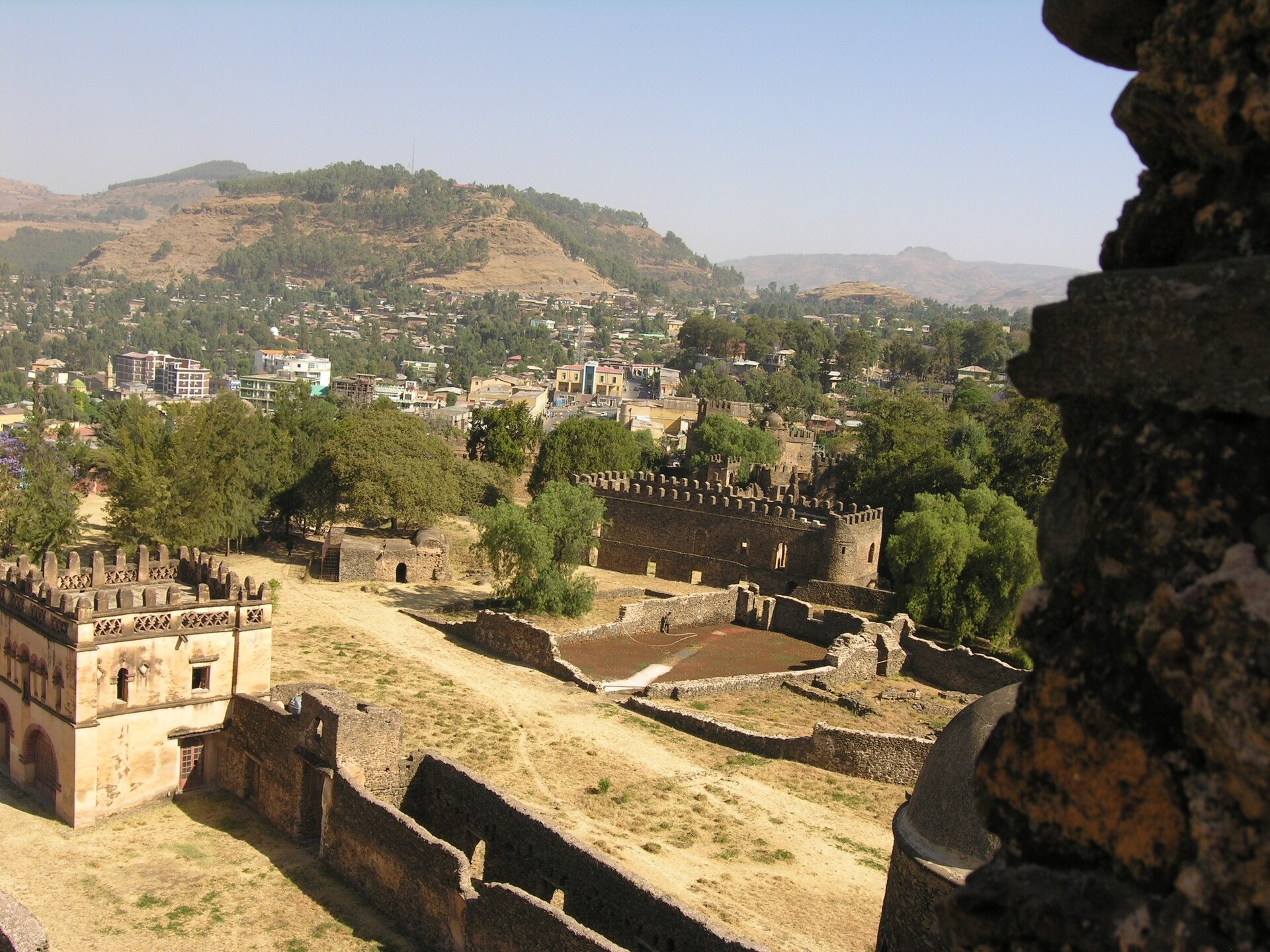
The castles of Fasil Ghebbi are what make it so extraordinary and so unexpected. With their towers, battlements, and crenellated walls, they resemble the castles of medieval Europe far more than anything one might expect to find in the highlands of Africa, and this startling appearance has given Gondar its famous nickname.

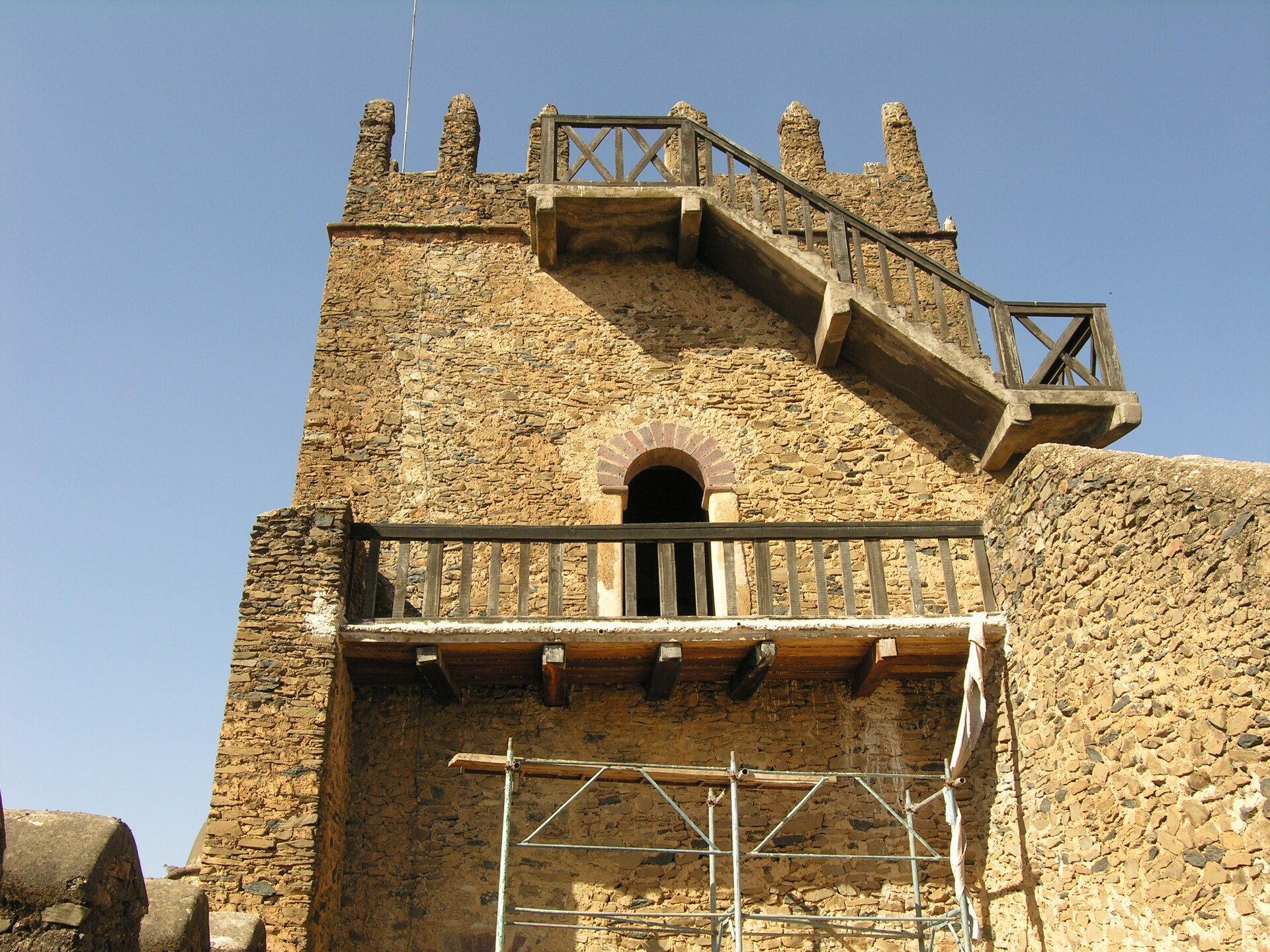
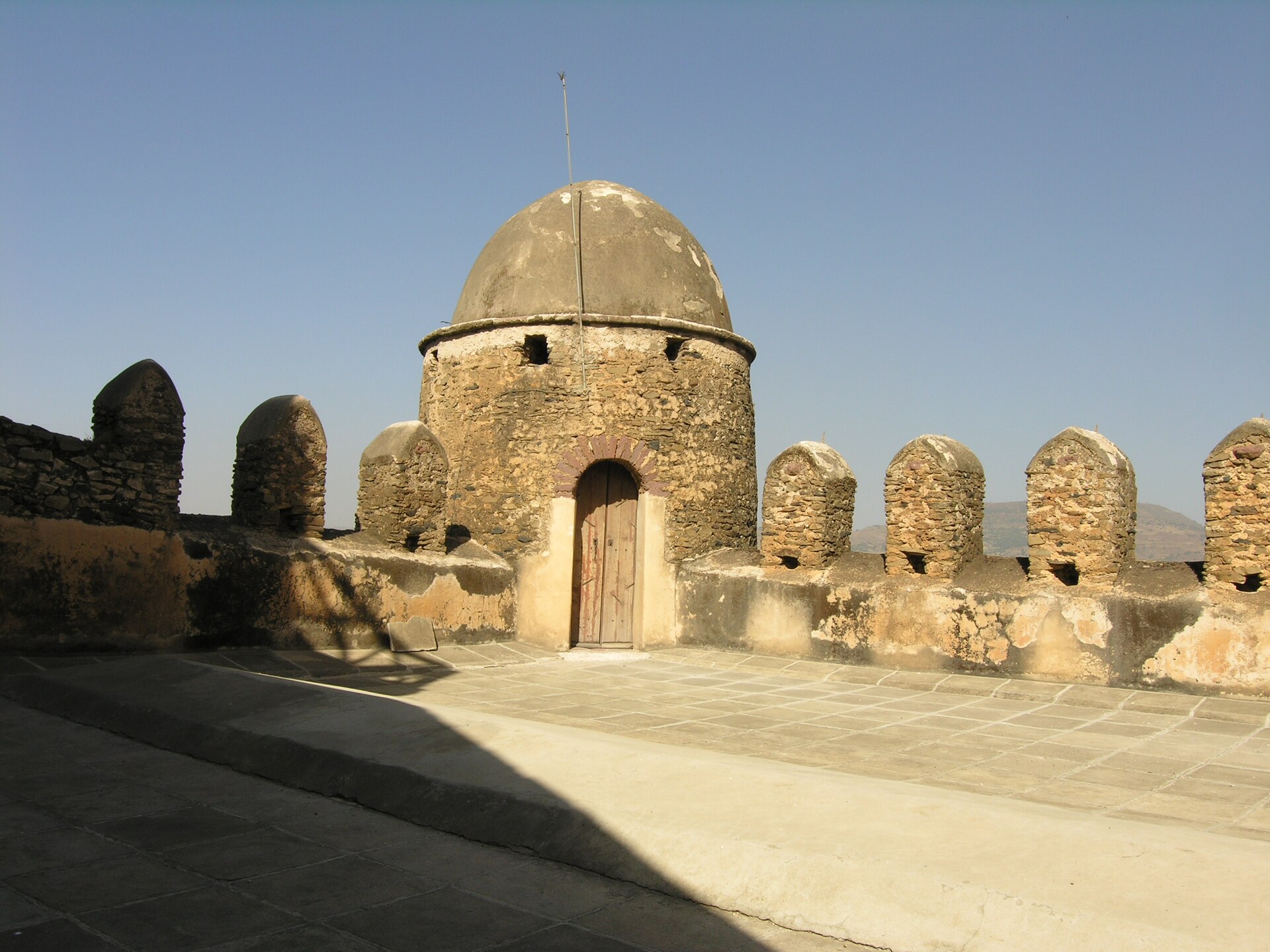
Built of stone, the castles rise several storeys high, with rounded towers, arched windows, and flat or domed roofs, creating silhouettes of great romance against the highland sky. Their scale and their fortified appearance express the power of the emperors who built them, while their unusual style reflects the many influences that shaped Ethiopian royal architecture.
The castles were not merely defensive structures but grand residences and centers of court life, their upper floors containing halls and chambers for the emperor and his court. Their combination of the fortress and the palace gives them a dual character, at once martial and majestic, suited to the rulers of a proud and ancient kingdom.
Seen together, rising within their walled enclosure on the plateau, the castles of Gondar form one of the most romantic and surprising sights in Africa. They stand as a reminder that the continent’s history is far richer and more varied than many imagine, and that highland Ethiopia produced a royal architecture of remarkable originality and beauty.
Part of the romance of these castles lies in how completely they belong to their setting despite their European echoes. Built of local stone, weathered by the highland climate, rising against the vast Ethiopian sky, they are unmistakably of their place. The resemblance to distant castles is real but partial, and the buildings remain, at heart, a wholly Ethiopian creation.
The Castle of Fasilides
The greatest of the castles is the one built by the founder, Fasilides, which stands as the centerpiece of the whole enclosure. The largest and most impressive of the buildings, it rises several storeys high, with towers at its corners and a commanding presence that dominates the royal compound.
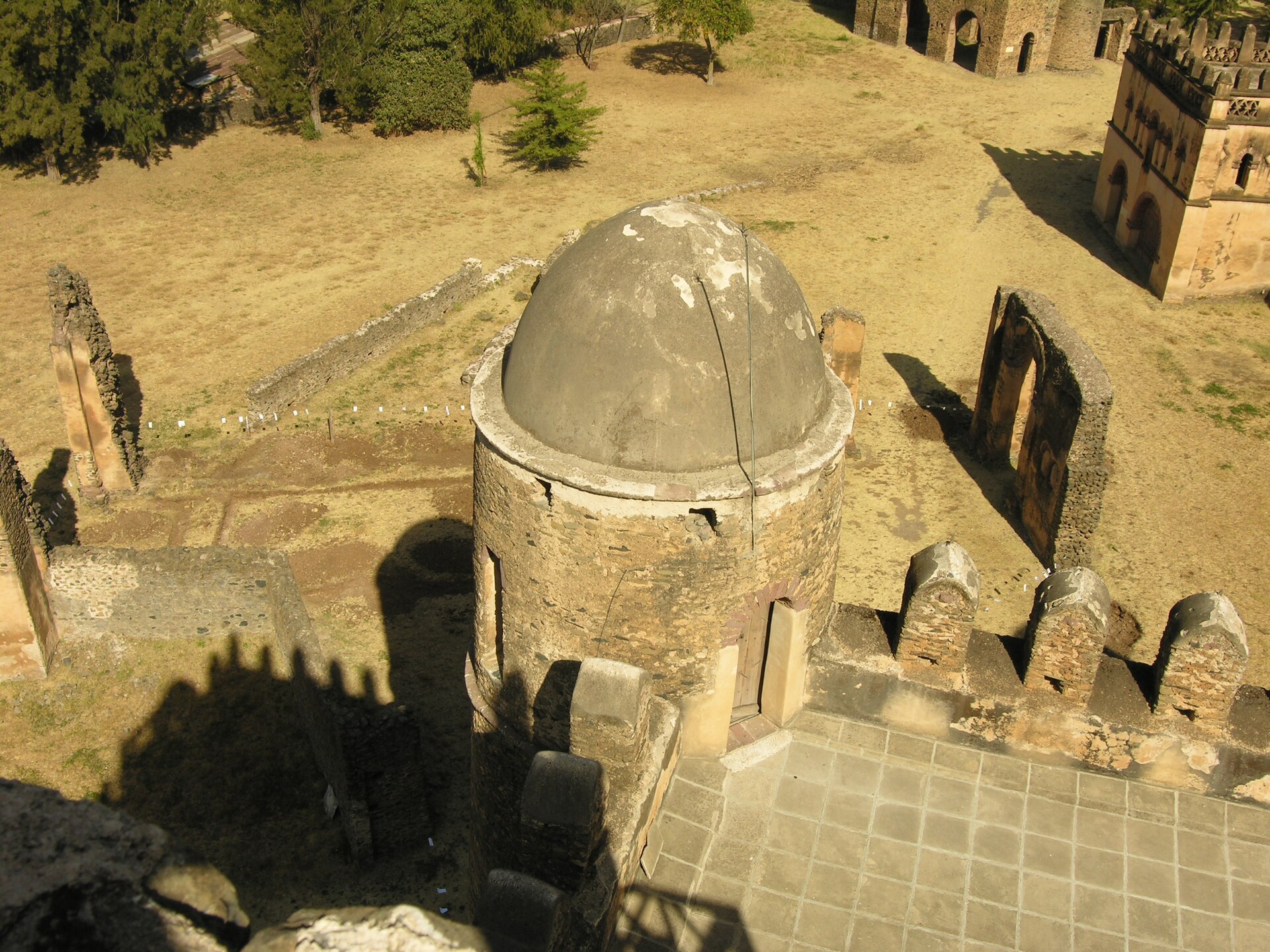
The castle was designed as both a residence and a symbol of imperial power. Its upper floors contained the halls and chambers where the emperor lived and held court, while its towers and battlements proclaimed his authority. From its heights, the emperor could look out over his capital and the surrounding highlands, master of all he surveyed.
The architecture of the castle blends a range of influences into a distinctive whole, combining local Ethiopian traditions with elements drawn from other cultures. This fusion gives the castle its unique character, neither wholly African nor European nor Asian, but a creative synthesis that is distinctively Gondarine and Ethiopian.
Standing before the castle of Fasilides today, one senses the ambition of the emperor who built it and the flourishing culture of the capital he founded. It remains the heart of Fasil Ghebbi, the building around which the whole enclosure grew, and one of the most impressive monuments of the Ethiopian empire.
The solidity of the castle’s construction is one reason it has survived so much. Built to last, of stone laid with real skill, it has withstood centuries of weather, neglect, and even war, and while time has left its marks, the essential structure endures. To stand within its walls is to feel the confidence of the age that raised it.
The Castles of the Successors
After Fasilides, later emperors continued to build within the royal enclosure, each adding new castles, palaces, and other structures. Over the course of more than a century, the compound grew into the dense collection of buildings that survives today, a record in stone of the successive reigns of the Gondarine emperors.

Each ruler who built within the enclosure added structures reflecting his own reign and ambitions, so that the compound became a kind of architectural chronicle of the dynasty. Palaces, halls, libraries, and other buildings joined the original castle, creating a complex of great richness and variety within the enclosing walls.
These later buildings show both continuity and change, maintaining the general style established by Fasilides while introducing variations and new elements. The result is an ensemble that is unified in character yet varied in detail, reflecting the individual contributions of the different emperors who shaped it over the generations.
The accumulation of buildings by successive emperors is part of what makes Fasil Ghebbi so remarkable. Rather than the work of a single reign, it is the creation of a whole dynasty, each ruler contributing to the growing royal city, so that the enclosure preserves the memory of the long line of emperors who ruled from Gondar.
Wandering among these buildings today, one can read the ambitions of a whole succession of rulers in the stones around you. Each emperor sought to leave his mark, and the compound became a kind of competition in permanence across the generations, every new castle and hall a bid for remembrance that has, in its way, succeeded.
A Fusion of Influences
The architecture of Fasil Ghebbi is a remarkable fusion of influences, drawing on the traditions of Ethiopia itself as well as elements from a range of other cultures with which the empire had contact. This synthesis produced a style found nowhere else, distinctively Gondarine, that gives the castles their unique character.
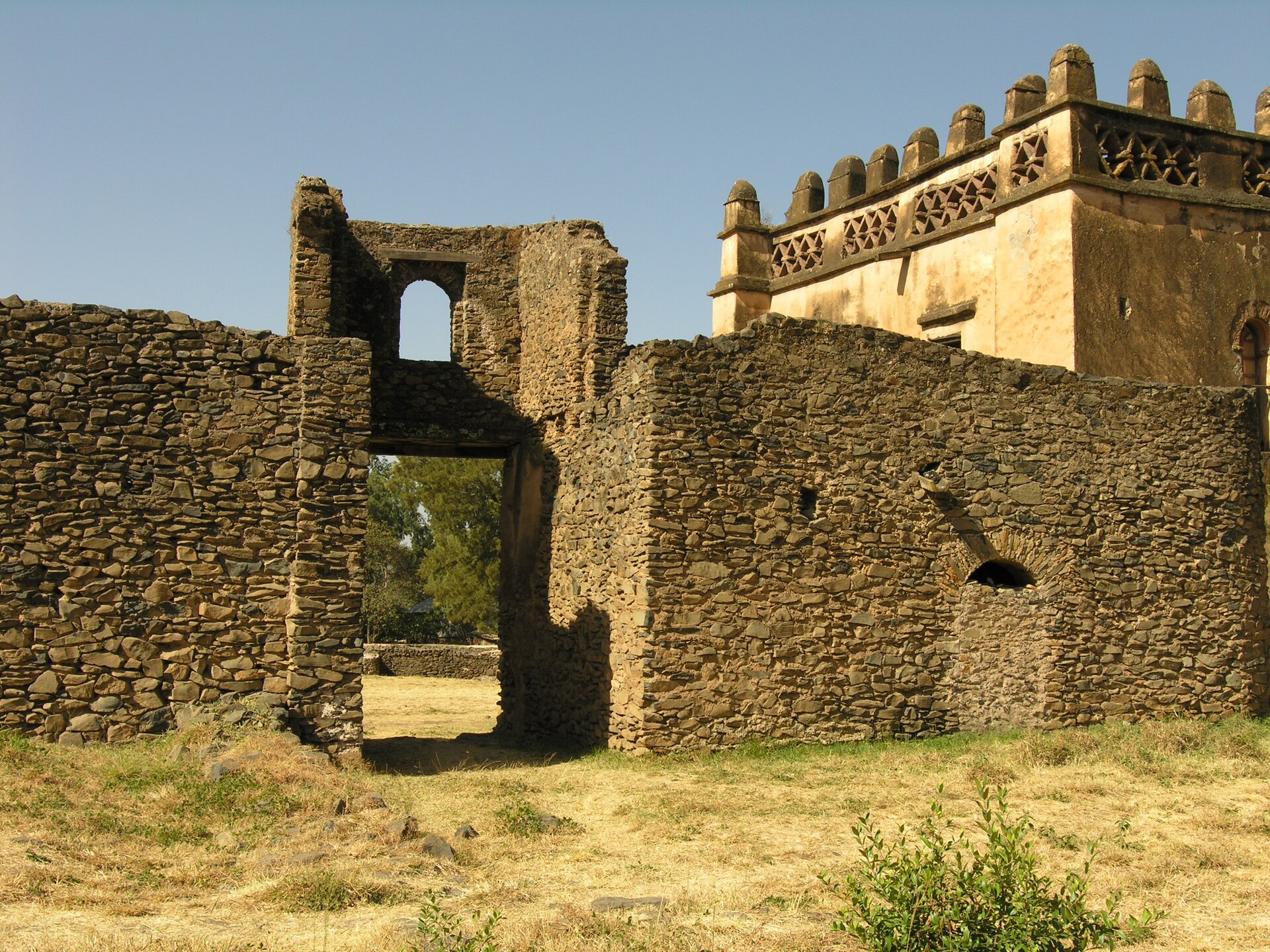
Local Ethiopian building traditions, with their ancient roots, formed the foundation of the style, but to these were added influences that reached Ethiopia through trade, religion, and contact with other lands. Elements associated with various foreign traditions appear in the buildings, blended with local forms into a coherent and original architecture.
This openness to outside influences reflected the character of Gondar as a cosmopolitan capital, connected through trade and religion to a wider world. The emperors and their builders drew on what they encountered, adapting and combining diverse elements to create buildings that expressed both their own traditions and their engagement with other cultures.
The result is one of the most distinctive architectural styles in Africa, a creative synthesis that produced the castles and palaces of Gondar. Neither imitation nor isolation, it represents the confident creativity of a flourishing culture, able to draw on many sources and forge from them something entirely its own, a fitting expression of the Gondarine golden age.
Scholars have long debated the precise sources of the Gondarine style, pointing to various threads of influence that may have reached the highlands. What matters most, however, is not the pedigree of each element but the confidence with which they were combined. The builders of Gondar took what they found useful and made of it something coherent, original, and entirely their own.
Walls, Gates, and the Royal City
The buildings of Fasil Ghebbi are contained within a great enclosing wall, pierced by a number of gates, which defined the boundary of the royal compound and separated it from the surrounding city. This wall enclosed the castles, palaces, and other structures within a single fortified precinct, the heart of the imperial capital.

The gates of the enclosure had their own names and functions, controlling access to the royal city and marking the thresholds between the world outside and the imperial domain within. Passing through them, one entered the exclusive realm of the emperor and his court, a space set apart from the ordinary life of the city.
Within the walls, the various buildings were arranged across the compound, creating a royal city with its own internal geography of castles, courtyards, and open spaces. This was the private and ceremonial world of the emperors, where the life of the court unfolded amid the grand buildings that proclaimed imperial power.
The walled enclosure gave Fasil Ghebbi its character as a royal city within a city, a fortified compound that concentrated the power and splendor of the empire within its bounds. The walls and gates remain, defining the historic precinct, and they help the visitor to grasp the compound as it once was, the exclusive heart of the Ethiopian capital.
The relationship between the enclosed royal city and the ordinary city around it shaped the life of Gondar. Within the walls lay the exclusive world of the court; beyond them spread the markets, churches, and homes of the wider population. The gates were the meeting points of these two worlds, controlling the flow between the imperial and the everyday.
The Bath of Fasilides and the Festival of Timkat
Beyond the main enclosure, the emperor Fasilides also built a structure that has become one of the most beloved sites of Gondar, a bath consisting of a large rectangular pool overlooked by a small building. Though not part of the main compound, it is closely associated with the royal city and its traditions.
The bath is famous above all for its role in the great religious festival celebrated in Ethiopia to mark the baptism of Christ. During this festival, the pool is filled with water, which is blessed, and worshippers immerse themselves in it in a joyful reenactment of baptism, in one of the most colorful and moving religious celebrations in the country.
This festival draws great crowds to Gondar and to the bath, and the site becomes the center of celebrations of extraordinary color and devotion. The ancient stone pool, surrounded by trees whose roots have grown around the walls, provides an unforgettable setting for the ceremonies, linking the royal heritage of Gondar to the living faith of Ethiopia.
The bath and its festival remind us that Gondar was not only a center of imperial power but a deeply religious capital, the seat of one of the oldest Christian traditions in the world. The continuing celebration of the festival at the emperor’s bath is a vivid example of how the heritage of Gondar remains alive in the religious life of Ethiopia today.
The image of worshippers immersing themselves in the blessed pool, surrounded by ancient stone and the great roots of old trees, is one of the most powerful in all of Ethiopian religious life. It binds the imperial past of Gondar to the living faith of the present, so that a structure built for an emperor centuries ago remains a vital center of devotion today.
The Church of the Angels
Gondar was a great center of religion as well as power, and among its treasures are its churches, the most famous of which is celebrated for its extraordinary painted decoration. This church, near the royal enclosure, is renowned throughout Ethiopia and beyond for the beauty of its interior.
The church is famous above all for its ceiling, which is covered with rows of painted angel faces, gazing down upon those who enter. This remarkable ceiling, with its many winged faces, is one of the most beloved images of Ethiopian religious art, and it has made the church one of the most visited sites in Gondar.
Beyond the ceiling, the walls of the church are also covered with paintings depicting religious scenes and figures, in the distinctive style of Ethiopian Christian art. Together these paintings create an interior of great richness and devotion, immersing the worshipper in a world of sacred imagery.
The church stands as a reminder of the deep religious culture of Gondar and of Ethiopia, whose Christian tradition is among the oldest in the world. Its beauty and its fame make it an essential part of any visit to the city, complementing the castles of the royal enclosure with the spiritual splendor of Ethiopian sacred art.
The rows of angel faces have become almost an emblem of Ethiopia itself, reproduced and admired far beyond the country’s borders. Yet nothing quite matches the experience of standing beneath them in the dim, painted interior of the church, surrounded on every side by sacred imagery and gazed down upon by the serene, wide-eyed faces of the angels.
Decline and Damage
The great age of Gondar as an imperial capital eventually came to an end, as the empire entered a period of decline and division. The power of the emperors waned, the capital lost its central importance, and the royal enclosure, once the vibrant heart of the empire, entered a long period of decline.
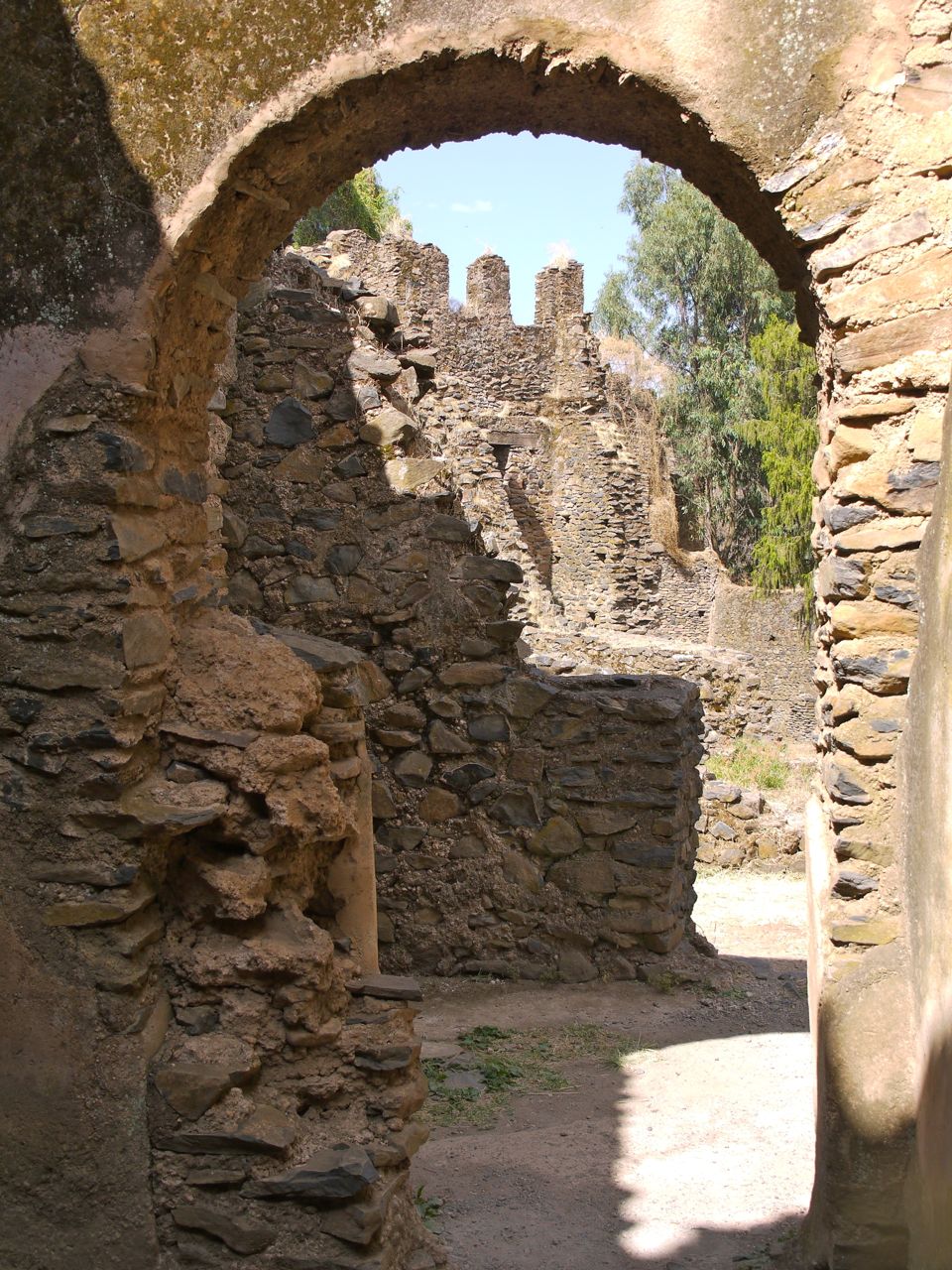
Over the following period, Gondar suffered from the troubles that afflicted Ethiopia, including internal conflicts and, later, foreign invasion. The city and its monuments were damaged in various episodes of war and upheaval, and the once magnificent royal enclosure fell into a state of neglect and partial ruin.
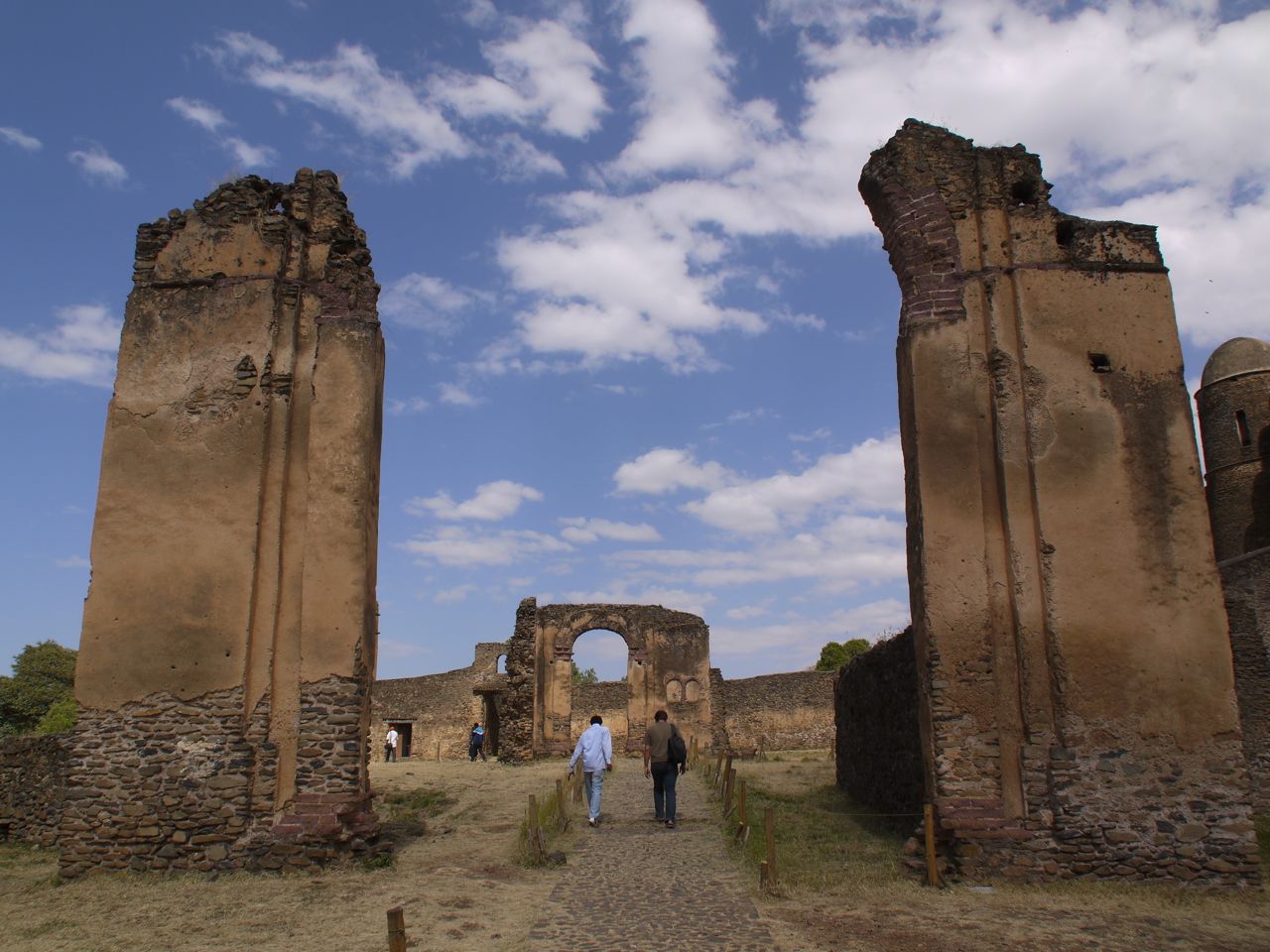
Among the damage suffered by the compound was destruction caused during the conflicts of the twentieth century, when the buildings were harmed by bombing and fighting. These later injuries added to the wear of centuries, leaving some of the great castles and palaces damaged, their former splendor diminished.
Despite this decline and damage, the essential structures of Fasil Ghebbi survived, and the compound remained one of the most important historic sites in Ethiopia. The endurance of the castles through centuries of neglect and conflict is a testament to their solid construction and to their significance in the history and identity of the nation.
There is a melancholy in the sight of the damaged castles, a reminder of how much has been lost as well as how much survives. Yet that same weathered, battle-scarred quality lends Fasil Ghebbi a powerful atmosphere, the sense of a place that has lived through great history, endured its blows, and remained standing to tell the tale.
Recognition and Preservation
In recognition of its outstanding importance, Fasil Ghebbi has been designated a site of world heritage, acknowledging its unique architectural and historical value. This recognition has helped to focus attention and resources on the preservation of the compound and its remarkable buildings.
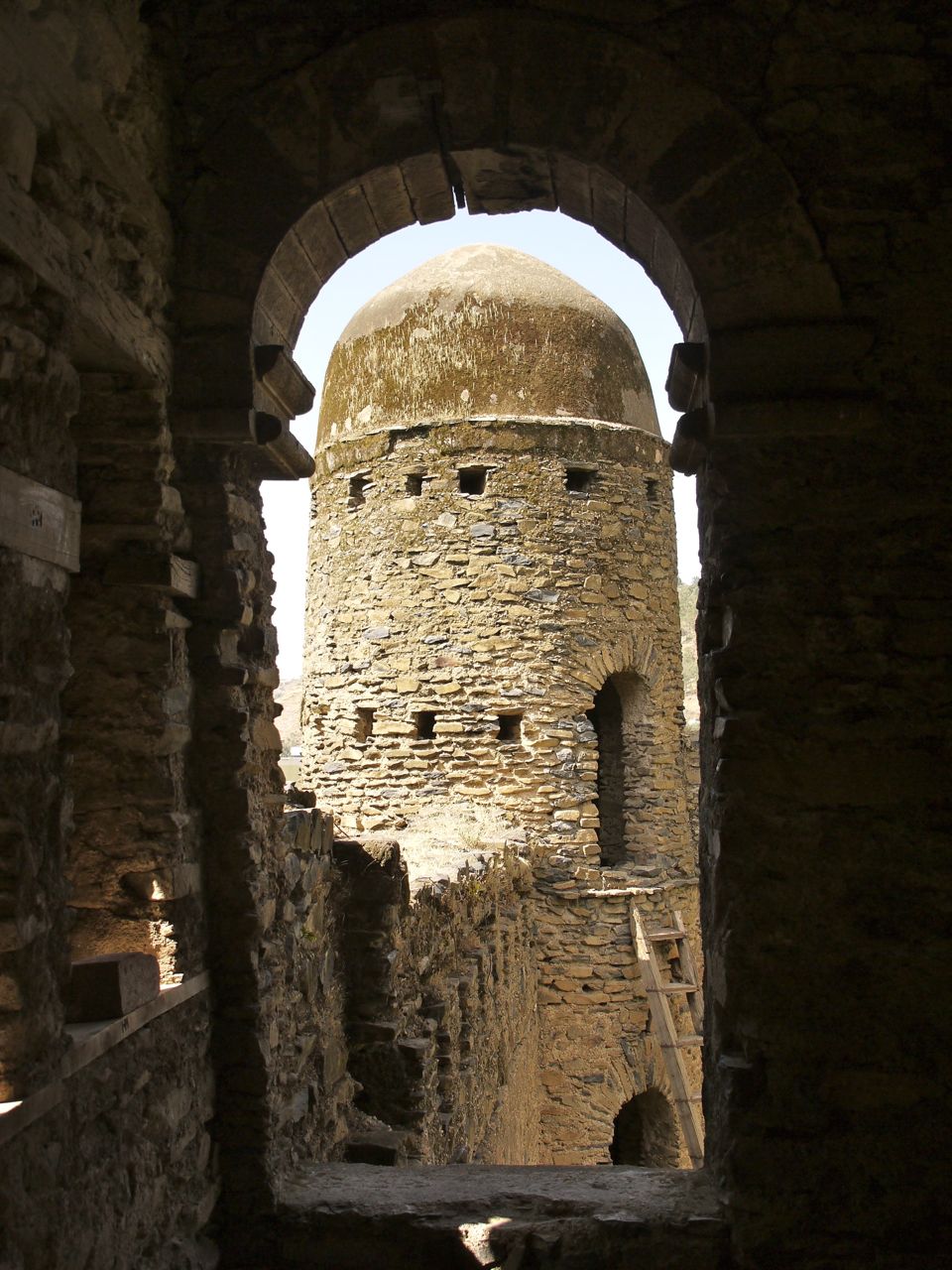
Efforts have been made to conserve and restore the castles and palaces of the royal enclosure, to repair the damage of centuries and to protect the site for the future. These efforts reflect the importance of Fasil Ghebbi both to Ethiopia and to the wider world, as a monument of exceptional significance.
The preservation of the compound is a matter of national pride for Ethiopia, for Gondar and its castles are a powerful symbol of the country’s rich history and its long tradition of statehood and civilization. The care of the site helps to keep alive the memory of the Gondarine golden age and its achievements.
Through recognition and preservation, Fasil Ghebbi has been secured as one of the great heritage sites of Africa. Its castles and palaces, churches and baths, stand as enduring monuments to the emperors who built them and to the flourishing culture of Gondar, preserved now for the admiration of visitors from around the world.
International recognition has also brought the site to the attention of the wider world, drawing visitors and scholars and helping to secure its future. For Ethiopia, this acknowledgment of Gondar’s importance affirms a history of statehood and civilization stretching back across the centuries, a source of justified national pride.
Visiting Fasil Ghebbi Today
Today Fasil Ghebbi is one of the most important attractions in Ethiopia, drawing visitors from around the world to explore its castles, palaces, and churches. Set in the city of Gondar on the northern plateau, it forms a key part of the historic route that draws travelers to the ancient sites of the country.
View the exact location on Google Maps
A visit leads through the walled enclosure, past the great castle of Fasilides and the other buildings raised by his successors, allowing the visitor to appreciate the remarkable architecture and the history it embodies. Nearby, the bath of Fasilides and the famous church of the angels complete the experience of the royal city.
Exploring the compound, a visitor senses both the grandeur of the Gondarine emperors and the passage of the centuries that have weathered their castles. The combination of impressive architecture, rich history, and dramatic highland setting makes Fasil Ghebbi one of the most rewarding destinations in Ethiopia.
Whether you come for the architecture, the history, the religious heritage, or the sheer surprise of finding such castles in the African highlands, Fasil Ghebbi offers an unforgettable experience. It is the royal city of Gondar, the African Camelot, a monument to one of the great periods of Ethiopian history and one of the most remarkable royal complexes in all of Africa.
The wider historic route of northern Ethiopia, of which Gondar forms a key part, links the city to other ancient sites of great importance, and many travelers experience Fasil Ghebbi as one stage in a longer journey through the country’s remarkable past. Seen in that context, the castles of Gondar take their place among the great monuments of one of the world’s oldest civilizations.
Palaces Nearby
Fasil Ghebbi is one of the great royal residences of Africa. To trace the varied splendor of the continent’s royal courts, these nearby palaces make natural companions to a visit here.
You May Like




2 thoughts on “Fasil Ghebbi: The African Camelot and the Castles of Gondar”