Hidden behind high walls in the old medina of Marrakech, away from the noise and color of the famous souks, lies one of the most beautiful buildings in Morocco. The Bahia Palace is a labyrinth of tranquil courtyards, fragrant gardens, and rooms so richly decorated that they seem to belong to a dream. Cedar ceilings glow with painted color, walls shimmer with intricate tilework, and carved plaster covers every surface with lacelike patterns. To step inside is to enter the world of Moroccan royal luxury at its most refined.
The Bahia Palace is not ancient by the standards of the great palaces of the world; it was built in the nineteenth century, at the height of the power of the grand viziers who governed Morocco in the name of its sultans. Yet in its beauty and its craftsmanship it gathers up centuries of Moroccan and Moorish artistic tradition, and it stands as one of the supreme achievements of the decorative arts for which Morocco is famous.
What makes the Bahia so enchanting is not grand scale or soaring height but the intimacy and richness of its spaces. It is a palace of courtyards and gardens, of cool rooms opening onto sunlit patios, of shaded corners and hidden apartments. The whole complex was designed for a life of comfort and pleasure, and even today, walking through its peaceful spaces, one senses the luxurious ease that its builders sought to create.
In this article you will explore the Bahia Palace from the powerful viziers who built it to its beautiful courtyards, gardens, and richly decorated rooms, through the Moroccan crafts that adorn it to its later history and its life today. Along the way you will discover why this palace of intimate luxury in the heart of Marrakech, named for a beloved wife, remains one of the treasures of Morocco.
In This Article
- A Palace of Courtyards and Gardens
- The Palace of the Beautiful
- The Grand Viziers of Morocco
- The Rise of a Powerful Vizier
- A Palace Without a Plan
- The Great Courtyards
- Gardens of Orange and Shade
- The Art of Zellij
- Painted Cedar Ceilings
- The Private Apartments
- The Craft of Carved Plaster
- A Palace Through Changing Times
- Visiting the Bahia Palace Today
A Palace of Courtyards and Gardens
The Bahia Palace sprawls across a large area in the old medina of Marrakech, a complex of rooms, courtyards, and gardens rather than a single grand building. Enclosed behind plain outer walls that give little hint of the splendor within, it unfolds as a sequence of beautiful spaces, each opening onto the next in a way that can feel like a delightful maze.
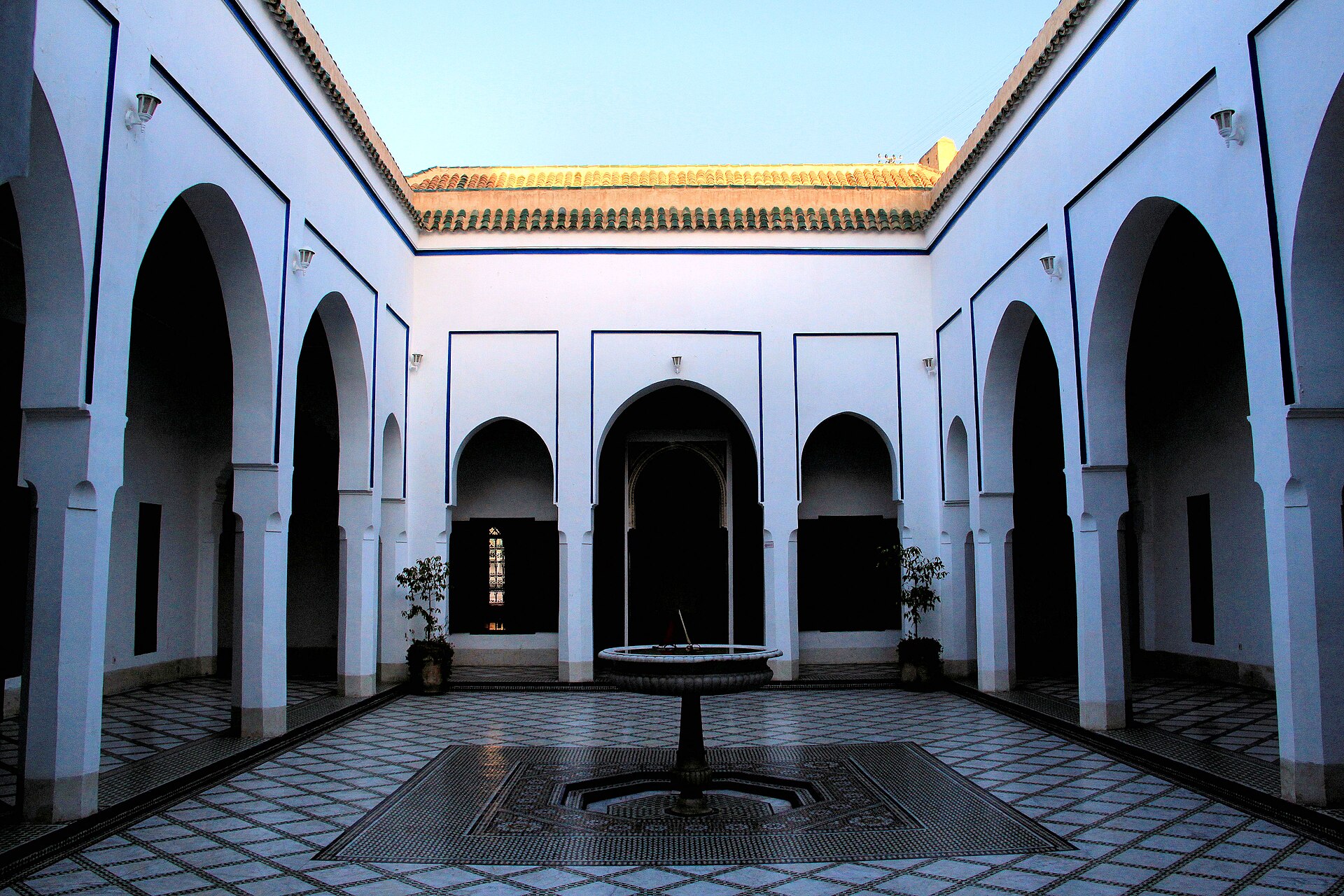
Rather than rising into the sky, the palace spreads horizontally, its rooms arranged around open courtyards and gardens that bring light, air, and greenery into the heart of the complex. This is architecture suited to a hot climate, turning inward to cool, shaded patios and gardens, away from the heat and dust of the city outside.
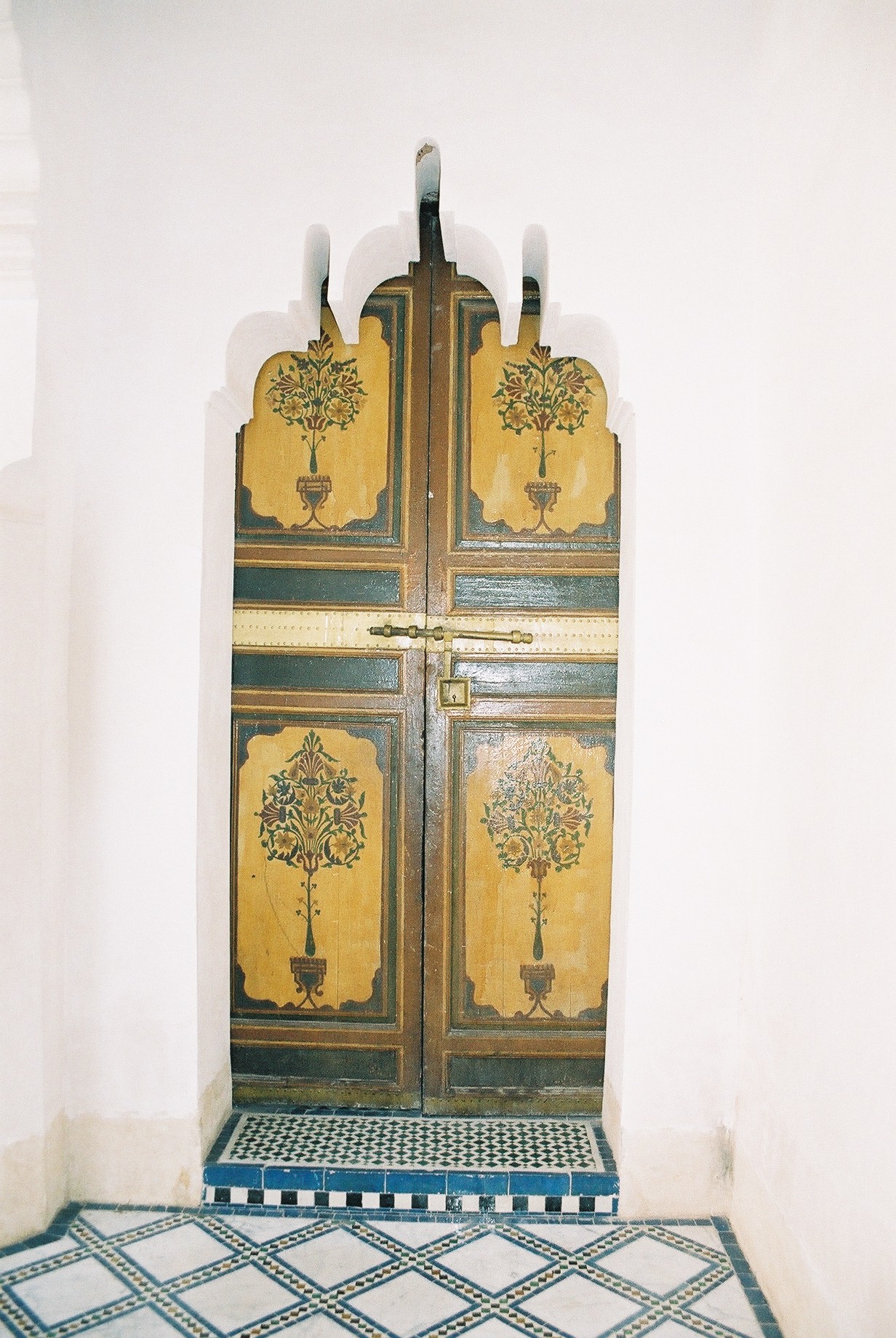
The palace is famous above all for the richness of its decoration. Within its relatively modest structures lie rooms of astonishing beauty, their walls covered in tilework and carved plaster, their ceilings of painted cedar, their floors of marble and tile. The contrast between the plain exterior and the dazzling interior is part of the magic of the place.
To wander through the Bahia is to move from courtyard to garden to richly decorated room and back again, discovering new marvels at every turn. The complex has no single grand axis or overwhelming centerpiece; instead its beauty lies in the accumulation of intimate, exquisite spaces, a palace designed for the pleasures of a luxurious and cultivated life.
There is a deliberate drama in the way the Bahia hides itself. From the street you see only plain, high walls, giving no sign of what lies within, and then you pass through a doorway and the whole shimmering world of the palace opens before you. This principle, of splendor turned inward and concealed from the public eye, lies at the very heart of the Moroccan idea of the house.
The Palace of the Beautiful
The name Bahia is often translated as the beautiful or the brilliant, and it is said to have been chosen in honor of a favorite wife of the palace’s builder. The name suits the palace perfectly, for beauty is its defining quality, and the idea that it was named for a beloved woman adds a note of romance to its story.
This dedication reflects something of the spirit in which the palace was created. It was built not as a fortress or a seat of grim power but as a place of beauty and pleasure, a luxurious residence for a great man and his family. The name captures this intention, marking the palace as a monument to beauty and to the good things of life.
The association with a favorite wife also hints at the domestic and intimate character of the palace. This was a home as much as a seat of power, a place where family life unfolded amid luxury, and the name reminds us that behind the grand history of viziers and sultans lay the personal world of a household and its loves.
In its very name, then, the Bahia Palace announces its character. It is a palace of beauty, created for pleasure and comfort, named in honor of a beloved. That spirit pervades the whole complex, from its tranquil gardens to its dazzling rooms, and it is part of what makes the Bahia so beloved by those who visit it today.
It is worth remembering how personal this palace ultimately was. For all the power and politics that surrounded its creation, it was named not for a battle or a dynasty but for a beloved woman, and that dedication colors the whole place. The Bahia is a monument to pleasure and affection as much as to power, and something of that tenderness lingers in its tranquil courtyards.
The Grand Viziers of Morocco
The Bahia Palace was built by the grand viziers who wielded enormous power in Morocco in the nineteenth century. These viziers, chief ministers to the sultans, effectively governed the kingdom, and their wealth and influence rivaled or exceeded that of the sultans themselves. The palace was an expression of that power and wealth.
The complex was begun by one powerful vizier and greatly expanded by his son, who rose to even greater heights. Over a period of years, the palace grew into the vast and luxurious complex that survives today, built and embellished by the finest craftsmen the viziers could command, and filled with every luxury.
The building of so magnificent a palace was a statement of the viziers’ status. In an age when the grand viziers effectively ruled Morocco, their residence needed to reflect their supreme position, and the Bahia, with its luxury and beauty, proclaimed the might of the men who governed the kingdom in the sultan’s name.
The history of the palace is thus bound up with the history of these powerful ministers, and with the political world of nineteenth-century Morocco in which they operated. The Bahia stands as a monument to their power and their taste, a reminder of an age when the grand viziers were among the most powerful men in the land.
The scale of the viziers’ wealth can be hard to grasp today. These were men who could command the finest craftsmen in the kingdom, acquire whole tracts of the medina for their building projects, and live in a luxury that rivaled the sultan’s own. The Bahia is the tangible measure of that wealth, every carved surface a reminder of the resources its builders could summon.
The Rise of a Powerful Vizier
The greatest builder of the Bahia Palace was a vizier who rose to become the effective ruler of Morocco, governing the kingdom during the reign of a young sultan and wielding power that few in the land could match. It was under his direction that the palace reached its full splendor, becoming a fitting seat for so mighty a figure.
This vizier came from a family that had risen to great influence, and he used his position to accumulate enormous wealth and to govern the kingdom with a firm hand. The Bahia Palace was his creation above all, the physical embodiment of his power and his taste, and he spared no expense in making it magnificent.
During the years of his greatest power, the vizier governed Morocco in the name of the young sultan, and the Bahia became a center of power in the kingdom. From its luxurious rooms, decisions affecting the whole country were made, and the palace stood at the heart of the political life of Morocco.
After the vizier’s death, however, his fortunes and those of his family changed dramatically, and the palace was reportedly stripped of many of its treasures. The dramatic rise and fall of the vizier is part of the story of the Bahia, a reminder of the precariousness of power, even for the mightiest, in the world of the Moroccan court.
His story has the shape of a cautionary tale, told and retold in Morocco. A man who rose to command a kingdom and built himself a palace of surpassing beauty saw his family lose everything almost as soon as he was gone. The Bahia, so full of life and luxury in his day, became for a time a silent monument to how swiftly fortune could turn in the world of the court.
A Palace Without a Plan
One of the distinctive features of the Bahia Palace is that it grew without an overall master plan, expanding piecemeal as its builders acquired more land and added new courtyards, gardens, and rooms. The result is a complex that can feel like a labyrinth, its spaces linked in ways that are not always obvious.
This organic growth gives the palace much of its charm and its sense of discovery. Rather than following a rigid, symmetrical plan, the Bahia unfolds as a series of surprises, with courtyards and gardens and rooms appearing in an irregular sequence that invites exploration and rewards the curious visitor at every turn.
The piecemeal expansion also means that the palace is somewhat inward-looking and mazelike, with rooms and courtyards arranged around one another in a complex pattern. Finding one’s way through the Bahia can be delightfully confusing, and part of the pleasure of a visit is simply wandering through its interconnected spaces.
This lack of a grand overall plan sets the Bahia apart from many of the world’s great palaces, which are often laid out with rigorous symmetry. Instead, the Bahia offers the more intimate pleasures of a complex that grew naturally over time, a palace whose beauty lies in its details and its succession of exquisite, interconnected spaces.
The absence of a master plan, far from being a flaw, is one of the palace’s charms. Because it grew by accretion, the Bahia has the quality of a small city rather than a single design, full of unexpected turns and hidden corners. Getting slightly lost within it is part of the experience, and every wrong turn tends to reveal another beautiful room or courtyard.
The Great Courtyards
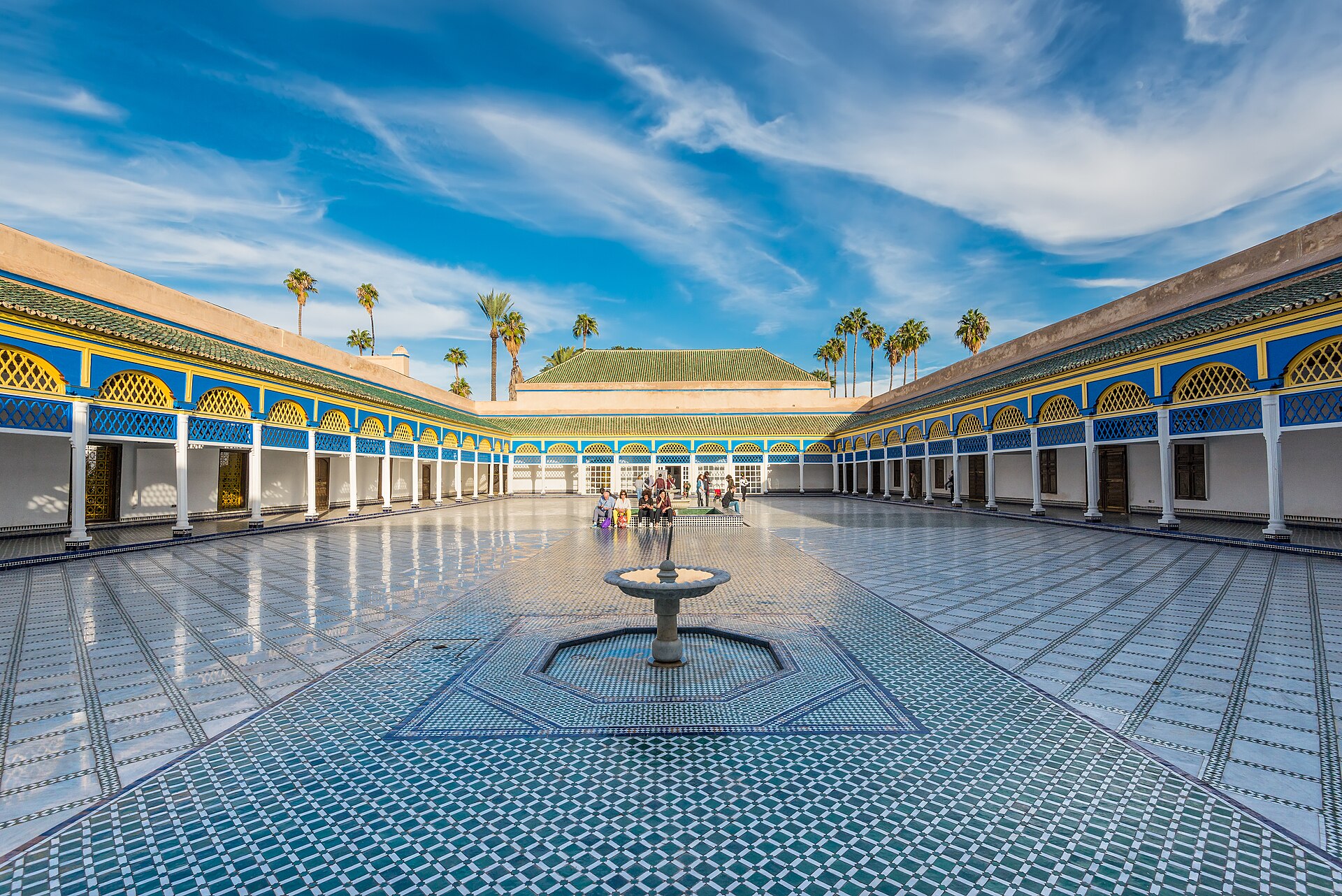
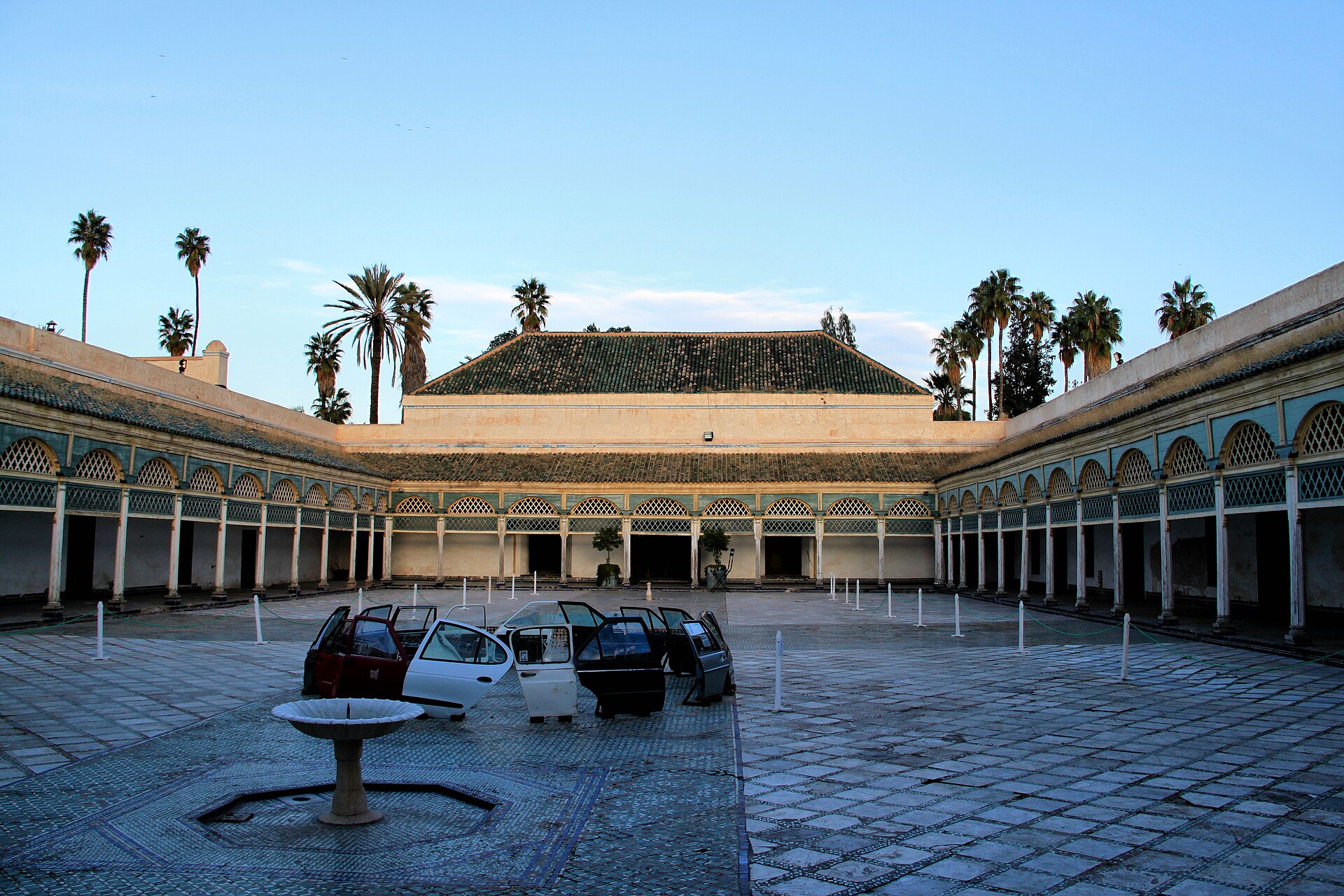
At the heart of the Bahia Palace lie its courtyards, open spaces that bring light and air into the complex and around which the various rooms are arranged. The largest of these is a great paved court, surrounded by rooms and galleries, a grand and tranquil space that forms one of the centerpieces of the palace.
The courtyards are floored with marble and tile and surrounded by richly decorated walls and doorways, so that even these open spaces are filled with beauty. They served as the settings for the life of the palace, cool and shaded retreats where the household could gather, and points of transition between the various parts of the complex.
In the Moroccan tradition, the courtyard is the heart of the house, and the Bahia takes this principle to a grand scale. Its courtyards are not mere empty spaces but carefully composed environments, their proportions, materials, and decoration all designed to create places of beauty and repose at the center of the palace.
Moving between the courtyards, a visitor experiences the rhythm of the palace, passing from cool shaded rooms into sunlit open spaces and back again. This interplay of light and shade, of enclosed and open, of built and planted, is central to the experience of the Bahia, and the courtyards are among its most beautiful and characteristic features.
The largest courtyard in particular impresses by its sheer serenity, a broad expanse of marble bounded by arcades and decorated rooms, open to the sky. Standing at its center, with the sound of the city muffled by the surrounding walls, you feel the calm that the builders sought, a stillness at the heart of the palace that the passing centuries have not disturbed.
Gardens of Orange and Shade
Among the most delightful spaces in the Bahia Palace are its gardens, planted courtyards filled with fragrant trees and greenery. In the Andalusian and Moroccan tradition, these garden courtyards brought the beauty and coolness of nature into the heart of the palace, offering shade, scent, and tranquility.
The gardens are planted with orange and other citrus trees, along with other greenery, filling the courtyards with foliage and, in season, with blossom and fruit. The scent of citrus and the sound of water, the play of light through leaves, all combined to create places of sensory delight, refuges from the heat of Marrakech.
These garden courtyards reflect a long tradition of Islamic garden design, in which the garden was seen as an earthly image of paradise. Enclosed, watered, and planted, the garden offered coolness and beauty, a place of repose and reflection, and the Bahia’s gardens continue this tradition in the heart of the palace.
For visitors today, the gardens are among the most beloved parts of the palace. Amid the richly decorated rooms and grand courtyards, these green and fragrant spaces offer a gentler beauty, a place to pause and breathe, and they embody the ideal of the palace as a place of pleasure and repose, a paradise hidden within the city.
Water plays a quiet but essential role in these gardens, as it does throughout Moroccan palace design. Channels, basins, and fountains cool the air and please the ear, and the sound of trickling water, mingled with the scent of orange blossom, transforms the garden courtyards into places of deep sensory pleasure, a balm against the heat of the surrounding city.
The Art of Zellij
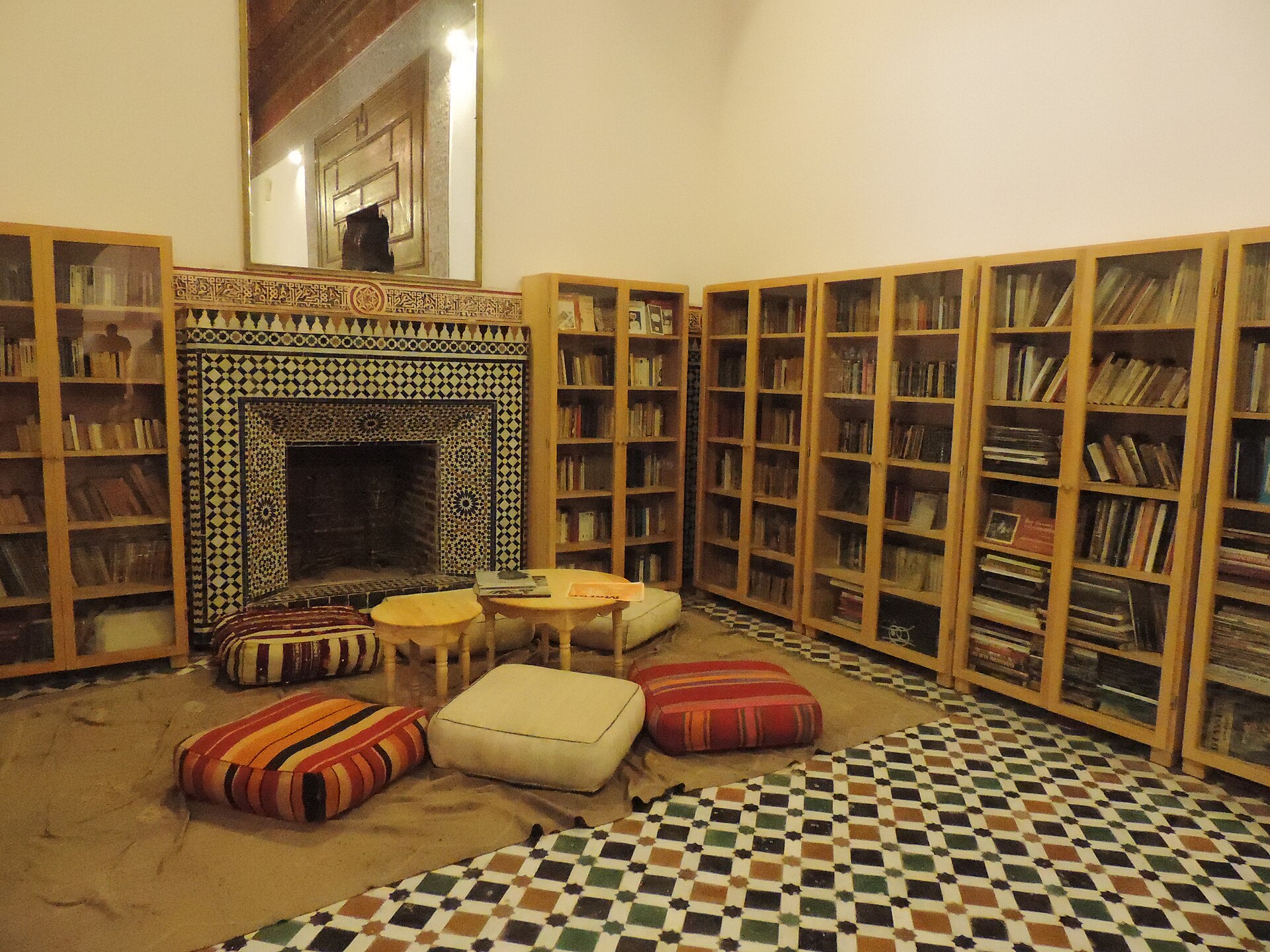
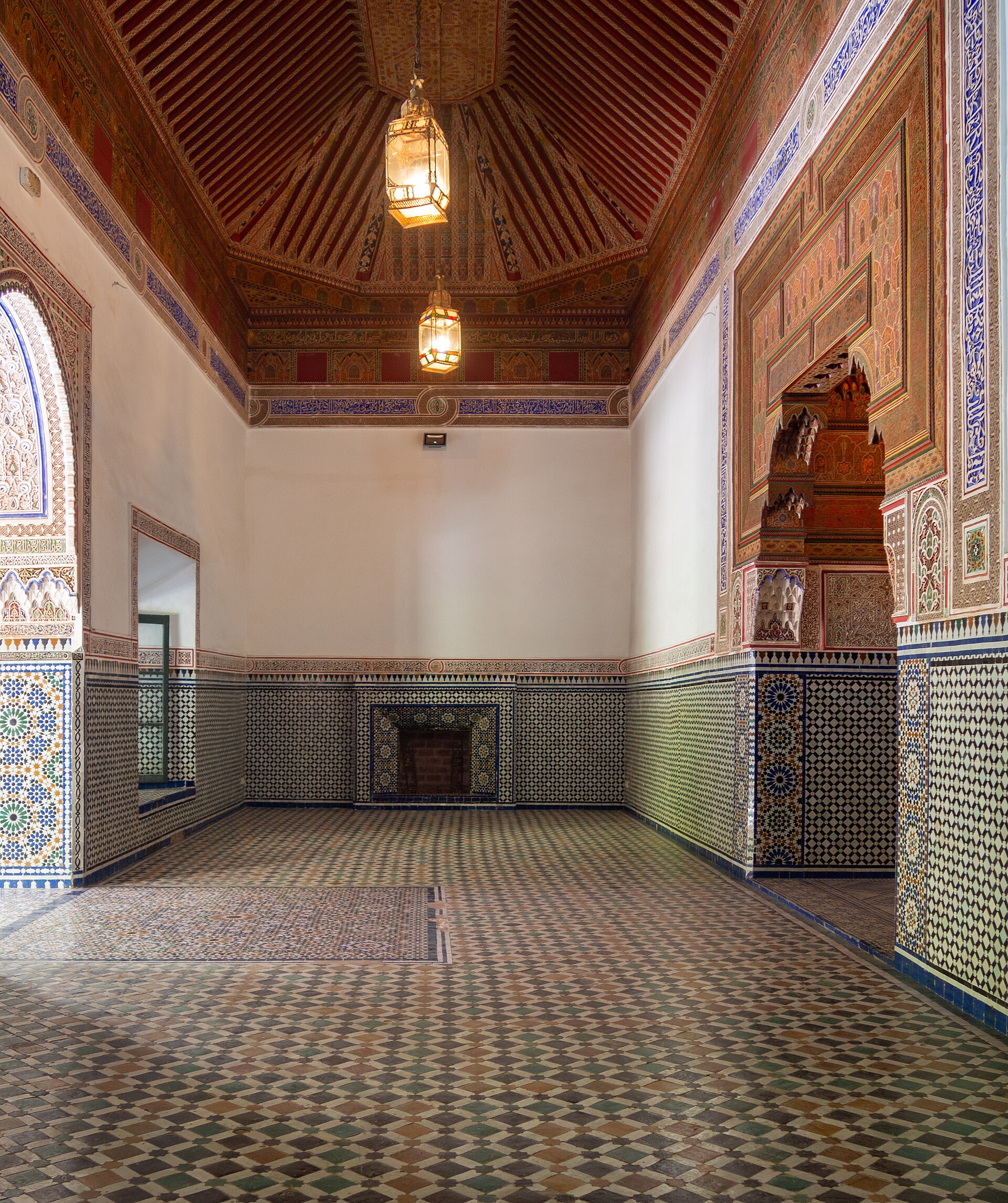
The walls of the Bahia Palace are famous for their tilework, the intricate geometric mosaics of colored tile known as zellij that are one of the glories of Moroccan art. Composed of countless small pieces of glazed tile, cut and assembled into complex geometric patterns, this tilework covers walls, floors, and fountains throughout the palace.
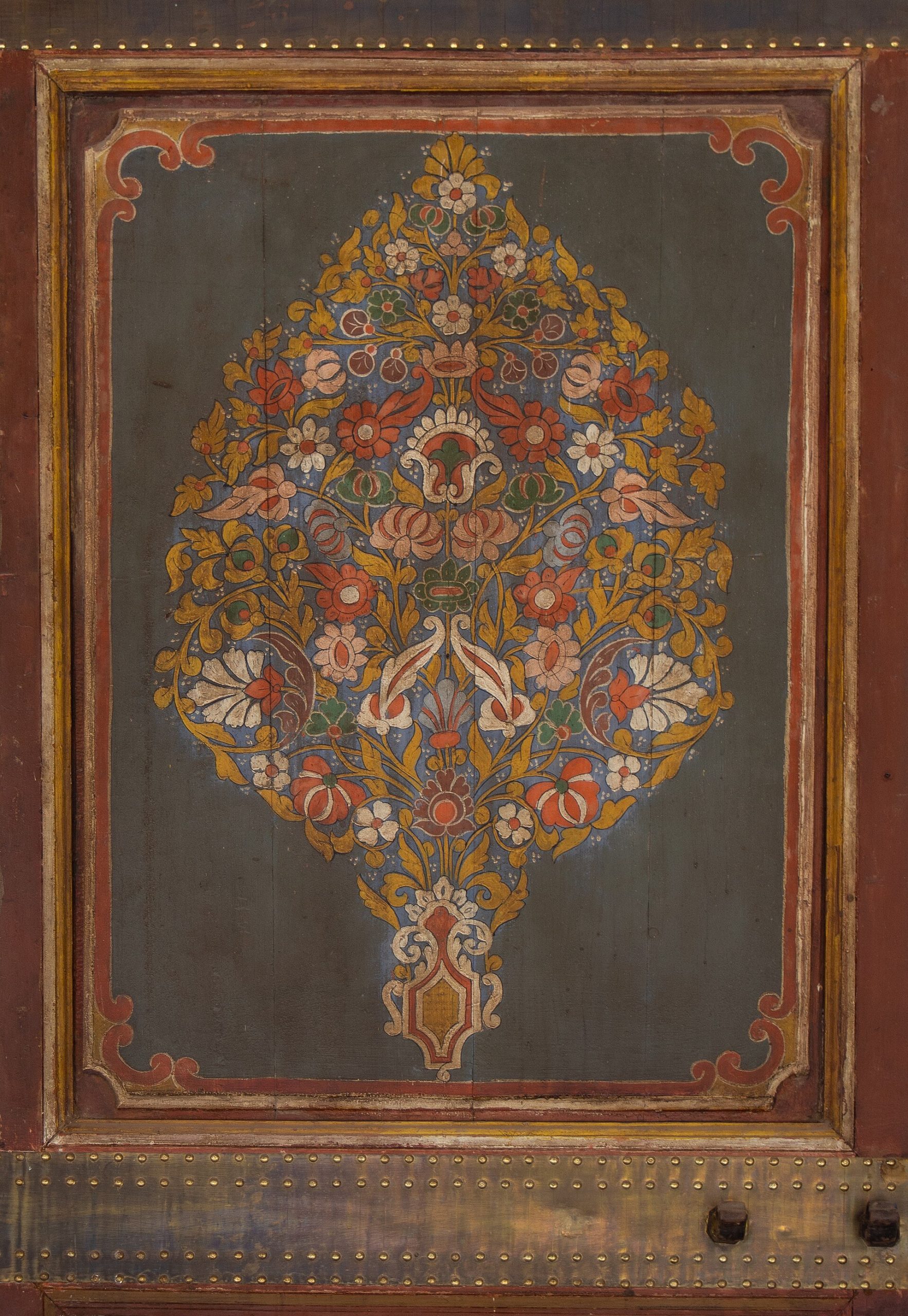
The creation of zellij is a highly skilled craft, requiring the careful cutting of each piece of tile and its precise placement to form the intricate patterns. The geometric designs, based on complex mathematical principles, create effects of great beauty and complexity, and their bright colors bring life and richness to the surfaces they adorn.
This form of decoration has deep roots in the art of Morocco and the wider Islamic world, in which geometric pattern, rather than figural representation, became a supreme means of artistic expression. The zellij of the Bahia represents this tradition at a high level, covering the palace in a dazzling array of geometric ornament.
The tilework is not merely decorative but expressive of a whole aesthetic and philosophical outlook, in which the endless variation of geometric pattern evoked the infinite and the divine. In the Bahia Palace, this art reaches great heights, and the shimmering tiled surfaces are among the most beautiful and characteristic features of the whole complex.
Standing close to a wall of zellij, you begin to grasp the astonishing labor it represents. Each tiny piece of tile was cut by hand and set in place to build the larger pattern, so that a single wall might contain many thousands of individual pieces. The patience and precision this demanded place zellij among the most impressive of all the crafts on display in the palace.
Painted Cedar Ceilings
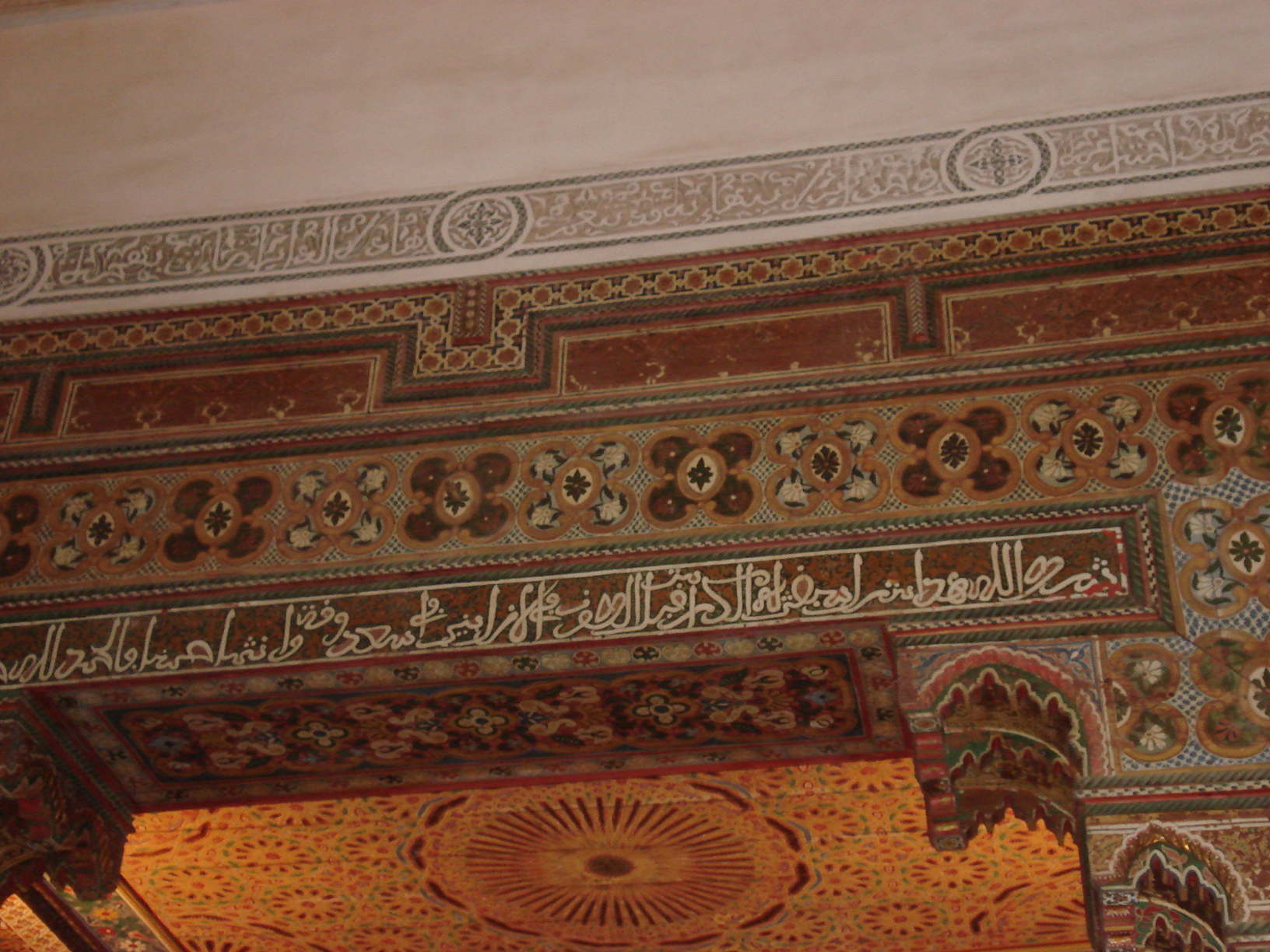
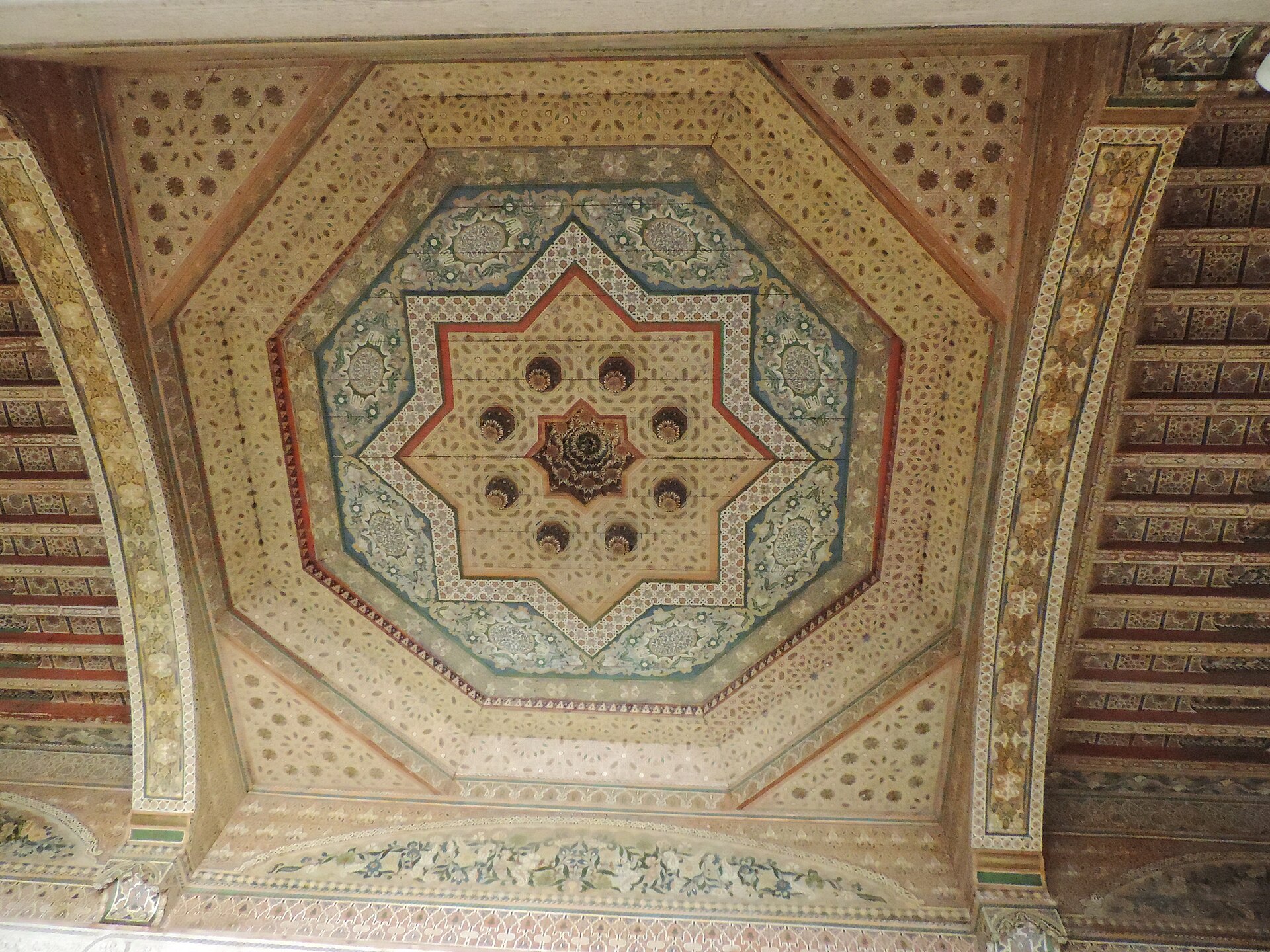
If the walls of the Bahia dazzle with tilework, its ceilings enchant with painted and carved wood. Throughout the palace, ceilings of cedar are covered with intricate painted decoration in rich colors, a form of ornament that transforms the spaces above into works of art as beautiful as the walls below.
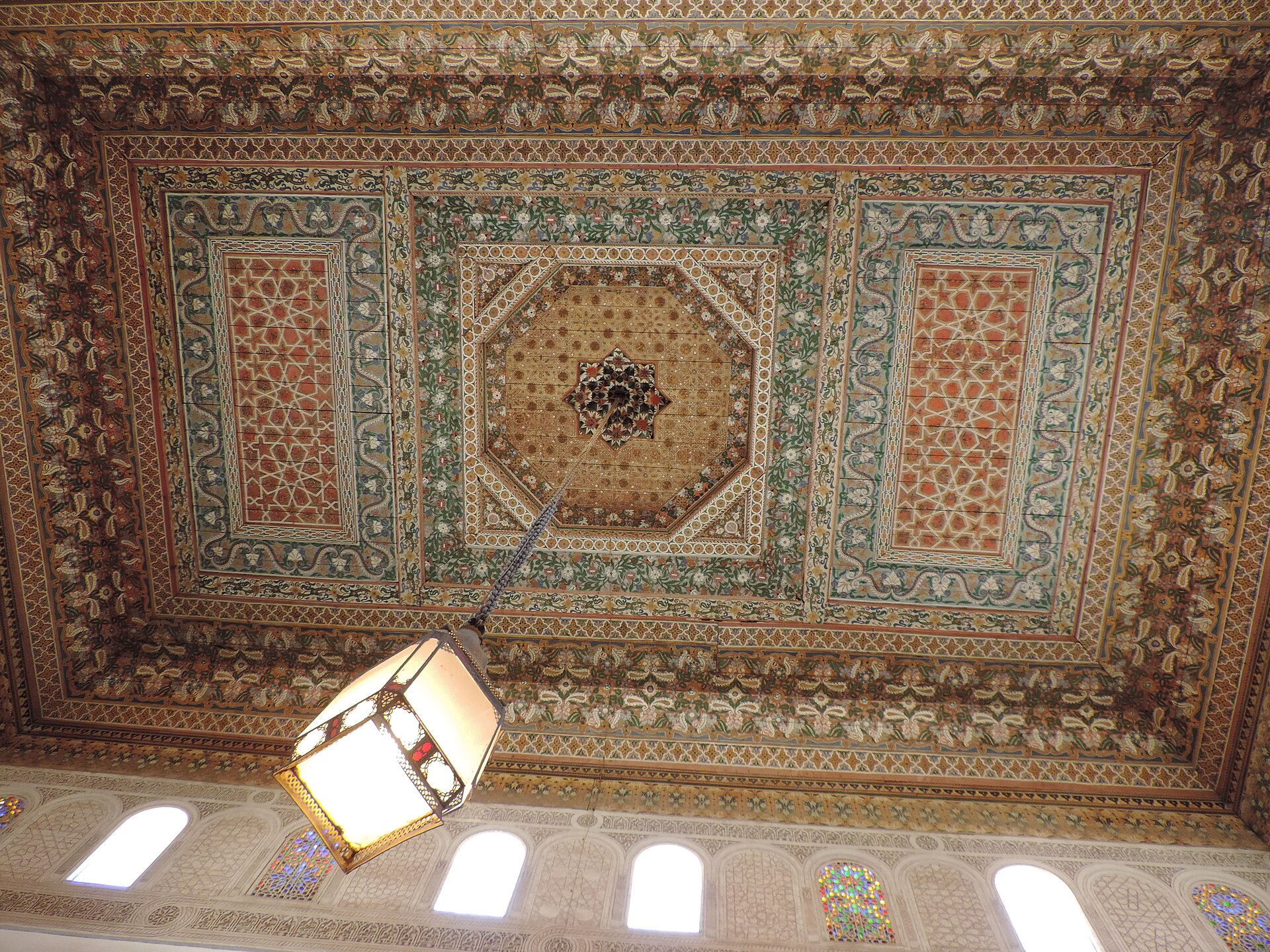
The painted decoration, applied to carved and assembled cedar, features intricate patterns of great richness and color, often geometric or floral in design. Cedar, prized for its fragrance and durability, was the favored wood for such work, and the ceilings of the Bahia showcase this craft at its finest.
Looking up in the rooms of the Bahia, a visitor sees ceilings glowing with color and pattern, their intricate designs rewarding careful attention. The combination of carving and painting creates effects of great depth and richness, and these ceilings are among the most beautiful features of the palace, easily overlooked by those who forget to look up.
The art of the painted ceiling is another of the traditional Moroccan crafts brought to a high level in the Bahia. Together with the tilework and the carved plaster, these ceilings complete the palace’s dazzling decorative scheme, wrapping each room in beauty from floor to ceiling and demonstrating the extraordinary skill of Moroccan craftsmen.
The fragrance of the cedar, still faintly present in some of the rooms, adds an unexpected dimension to the experience. These ceilings engage more than the eye, and to stand beneath one, taking in its color and pattern and catching the scent of the aromatic wood, is to appreciate how completely the palace was designed to delight every sense at once.
The Private Apartments
Like other great residences of the Islamic world, the Bahia Palace included private quarters for the household, the domestic heart of the complex where the family and the women of the household lived. These apartments, arranged around their own courtyards and gardens, formed a private world within the larger palace.
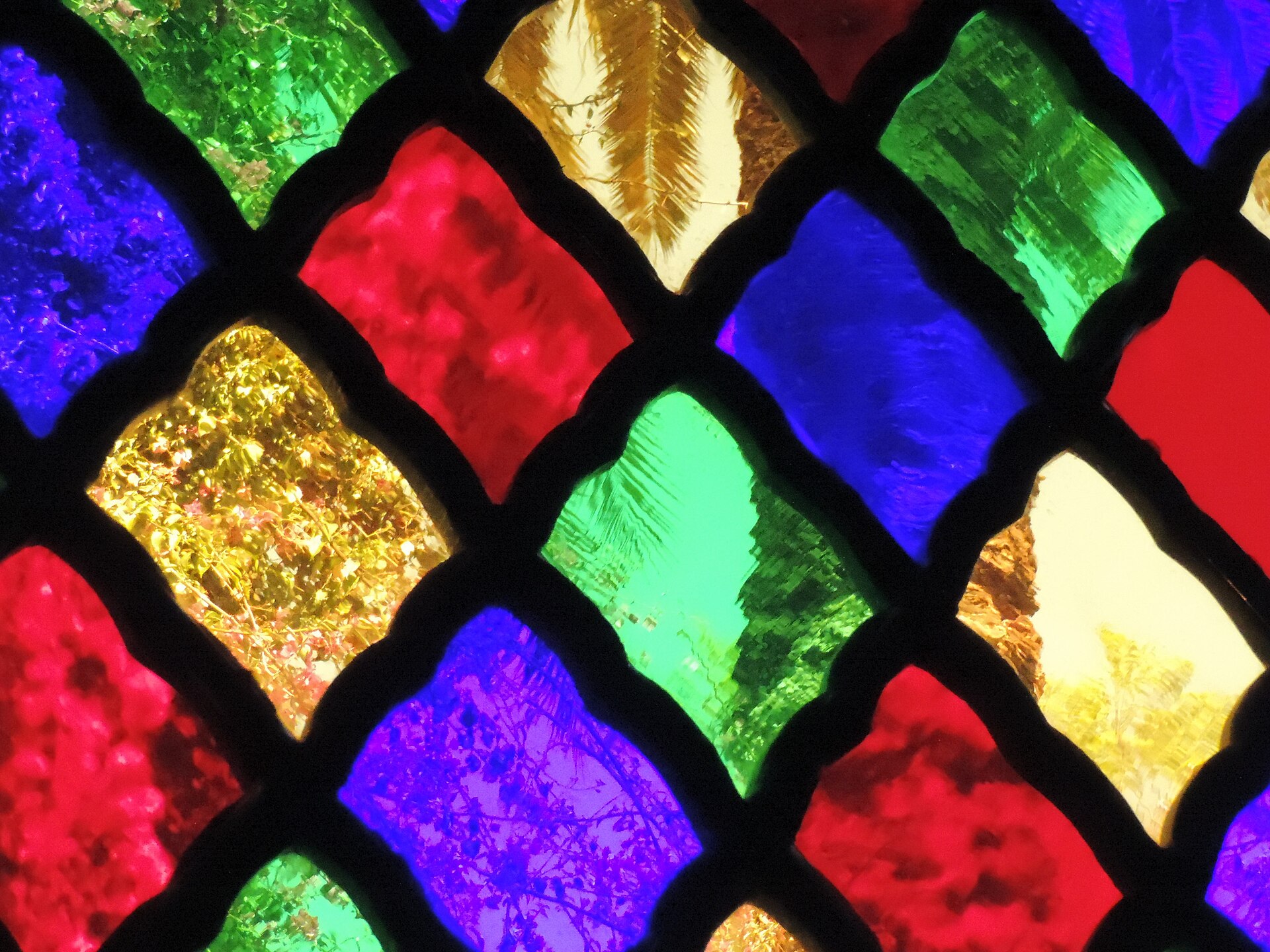
The private quarters were richly decorated, like the rest of the palace, with tilework, carved plaster, and painted ceilings, creating beautiful and comfortable spaces for daily life. Arranged around courtyards planted with greenery, they offered a life of luxury and seclusion for the family of the vizier and his household.
These apartments reflect the domestic dimension of the palace, reminding us that the Bahia was a home as well as a seat of power. Here the ordinary life of a great household unfolded, amid surroundings of extraordinary beauty, and the private quarters offer a glimpse into the intimate world behind the grand facade of power.
The arrangement of these private spaces around their own courtyards and gardens reflects the deep Moroccan concern for privacy and domestic tranquility. Secluded from the more public parts of the palace, they created a protected and luxurious world for the household, a private paradise within the larger paradise of the Bahia.
The seclusion of these quarters speaks of a whole way of life, in which the household turned inward to its own private world of courtyards and gardens. Far from the public rooms where power was displayed, this was the realm of family and domesticity, and its beauty reminds us that the Bahia was, before all else, a place where people lived and loved.
The Craft of Carved Plaster
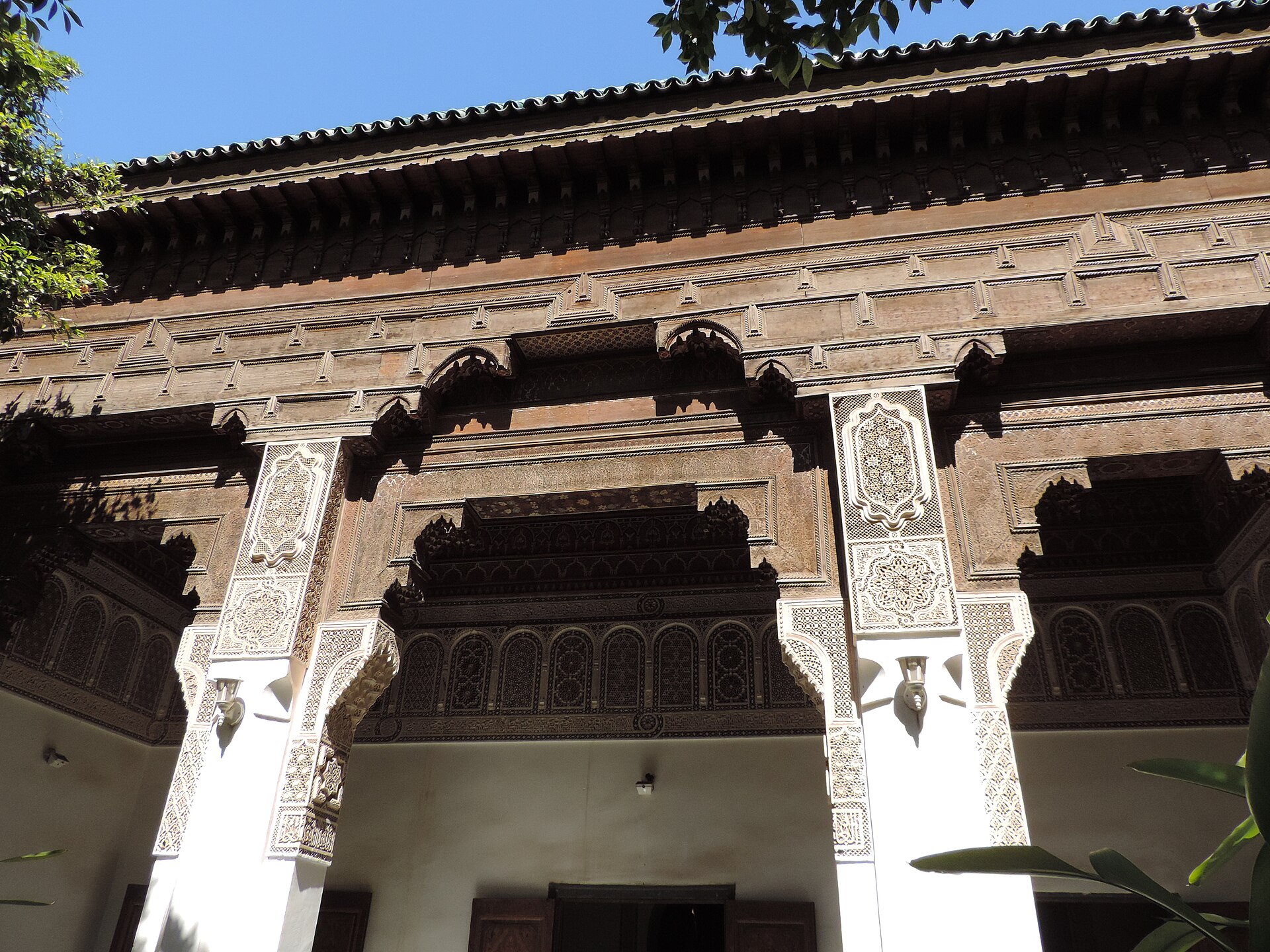
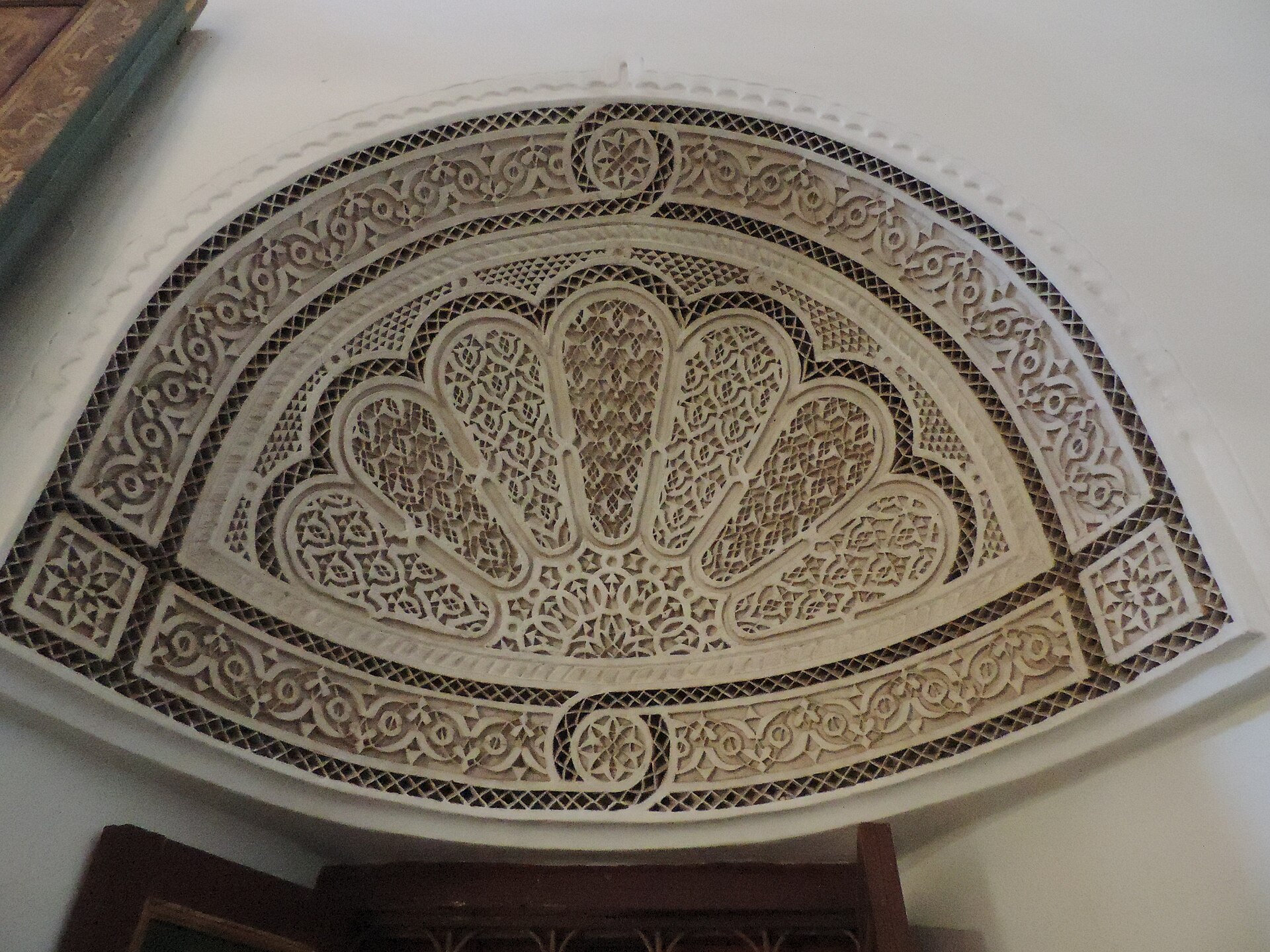
Alongside the tilework and the painted ceilings, the Bahia Palace is celebrated for its carved plaster, a form of decoration in which wet plaster is carved into intricate patterns of great delicacy. This carved stucco covers walls and arches throughout the palace, adding yet another layer of richness to its decoration.
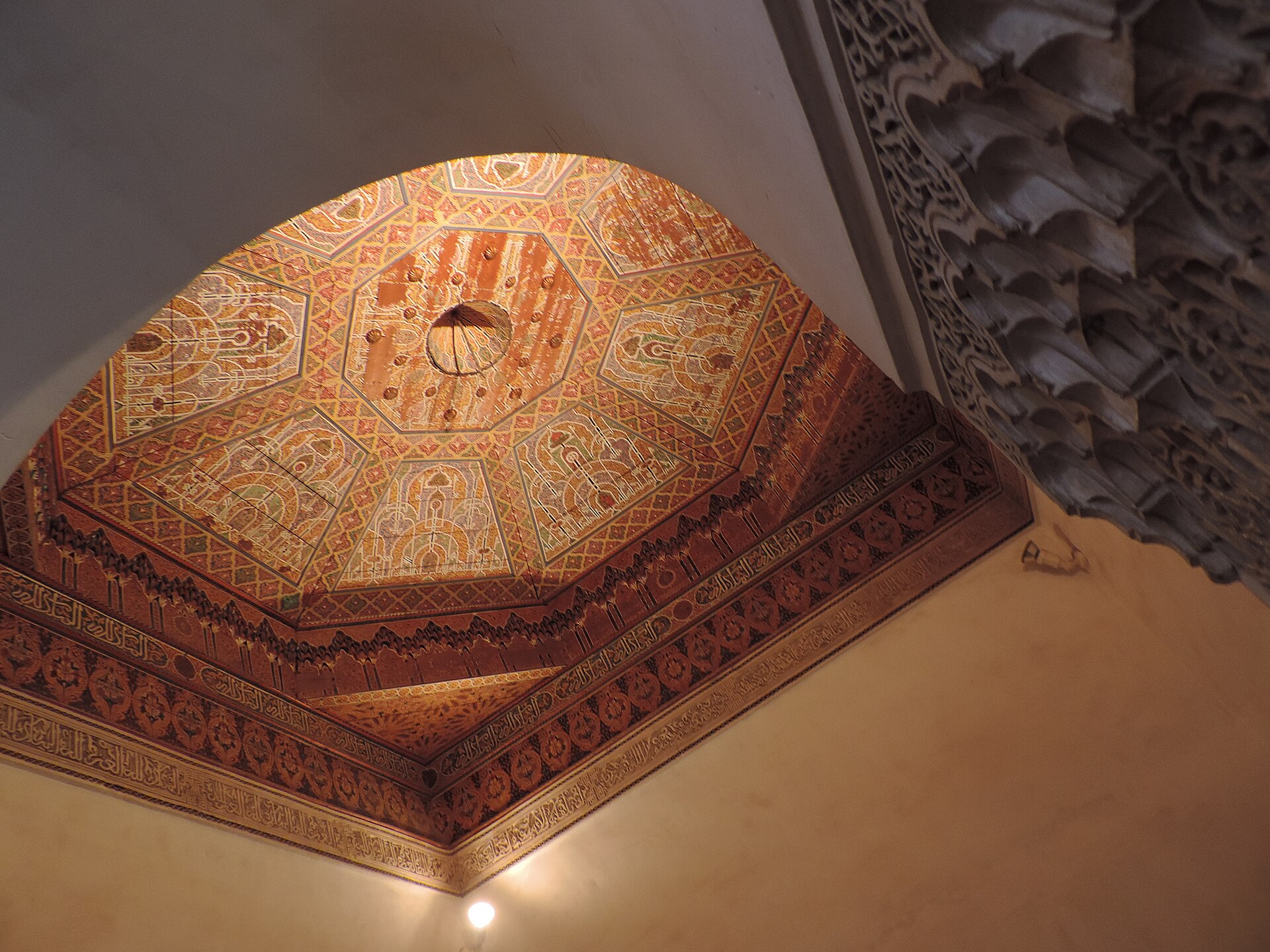
The carving of plaster is a demanding craft, requiring the artisan to cut intricate designs into the plaster before it hardens, creating effects of lacelike delicacy. The patterns, often geometric, floral, or based on flowing calligraphic forms, cover surfaces with a profusion of ornament that seems almost impossibly fine.
This craft, like zellij and painted wood, has deep roots in the artistic traditions of Morocco and the wider Moorish world, and it represents one of the supreme achievements of Islamic decorative art. In the Bahia, the carved plaster combines with the tilework and the painted ceilings to create surfaces of overwhelming richness.
Together, these three great crafts, tilework, painted wood, and carved plaster, define the decorative scheme of the Bahia Palace. Employing the finest artisans of Morocco, the builders of the palace created interiors of extraordinary beauty, and the palace stands as a showcase of the traditional crafts that are among the glories of Moroccan culture.
What unites all these crafts is a shared aesthetic that prizes pattern, repetition, and the covering of surfaces with intricate ornament rather than the depiction of figures. The effect is not one of individual images but of an all-enveloping richness, a beauty that surrounds and immerses the visitor, drawing the eye endlessly across surfaces that never quite come to rest.
A Palace Through Changing Times
After the death of the great vizier who built it, the Bahia Palace passed through a period of change. Its treasures were reportedly removed, and the palace itself came to be used for new purposes as the political world of Morocco was transformed by the coming of foreign control in the early twentieth century.
During the period of the French protectorate, the palace was used as a residence by the French authorities, who recognized its beauty and importance. This new use helped to preserve the palace, and it continued to be maintained as one of the great monuments of Marrakech through the changes of the twentieth century.
The history of the palace in this later period reflects the broader history of Morocco, as the kingdom passed through the era of foreign control and then regained its independence. Through all these changes, the Bahia survived, its beauty recognized and preserved, and it passed eventually into its role as a public monument.
Today the palace is a protected monument, part of the historic medina of Marrakech, itself recognized as a place of outstanding heritage. Preserved and open to the public, the Bahia continues to enchant visitors as it once enchanted the household of the vizier, a survivor of changing times that has kept its beauty intact.
The recognition of the wider medina of Marrakech as a place of outstanding heritage has helped ensure the palace’s protection, tying its fate to that of the historic city around it. The Bahia is thus preserved not in isolation but as part of a living historic quarter, one of the jewels of a medina that is itself among the treasures of the world.
Visiting the Bahia Palace Today
Today the Bahia Palace is one of the most popular attractions in Marrakech, drawing visitors from around the world to explore its courtyards, gardens, and richly decorated rooms. Set in the old medina, it offers a tranquil and beautiful escape from the bustle of the surrounding city and its famous markets.
View the exact location on Google Maps
A visit leads through the succession of courtyards, gardens, and rooms that make up the palace, allowing the visitor to admire the tilework, the painted ceilings, and the carved plaster that adorn it. The mazelike layout means that exploring the palace is an adventure of discovery, with new beauties revealed around every corner.
Because the palace is largely unfurnished, the focus of a visit is on the architecture and decoration themselves, on the beauty of the spaces and the richness of their ornament. This allows the visitor to appreciate the craftsmanship of the palace directly, and to imagine the luxurious life that once filled its rooms and courtyards.
Whether you come for the architecture, the decorative arts, the gardens, or simply the tranquility of its beautiful spaces, the Bahia Palace offers an unforgettable experience. It is one of the treasures of Marrakech and of Morocco, a palace of intimate luxury and dazzling craftsmanship, a hidden paradise in the heart of the old city.
A quiet tip is to visit early or late in the day, when the light slants low through the courtyards and the crowds are thinner. In that gentler light the tilework glows, the shadows deepen in the carved plaster, and the gardens fall silent, and it becomes possible to sense the tranquil, luxurious life for which the Bahia was created more than a century ago.
Palaces Nearby
The Bahia Palace is one of the great royal and princely residences of Africa. More palaces of the continent will join it here soon, to trace the varied splendor of Africa’s royal courts.
You May Like




One thought on “The Bahia Palace of Marrakech: A Vizier’s Dream of Moroccan Splendor”