In the heart of the old medina of Marrakesh, behind high walls that give no hint of the splendor within, lies one of the most beautiful palaces in Morocco. The Bahia Palace, built in the late nineteenth century, is a sprawling complex of courtyards, gardens, and lavishly decorated rooms that represents the very height of Moroccan craftsmanship, a place whose name, meaning brilliance or beauty, captures perfectly the impression it makes on all who enter.
The palace was built not by a sultan but by a grand vizier, a chief minister of enormous power and wealth who rose from humble origins to become effectively the ruler of Morocco. It was designed to be the greatest palace of its age, a residence that would proclaim the standing of its builder and showcase the finest achievements of the artisans of Marrakesh and Fez, and in this it succeeded magnificently.
To walk through the Bahia Palace is to move through a sequence of courtyards and rooms of ever-increasing beauty, where zellij tilework, carved stucco, painted cedar ceilings, and tranquil gardens combine to create an atmosphere of serene and sensuous luxury. It is a total expression of the Moroccan and wider Islamic tradition of the palace as an earthly paradise, a place designed for pleasure, repose, and the display of power.
Over the following pages you will explore the whole story of this remarkable place, from the powerful vizier who created it and the craftsmen who adorned it, through its courtyards, gardens, and decorated halls, to its later history and its life today as one of the great attractions of Marrakesh. Come and discover the palace of brilliance in the red city of Morocco.
In This Article
- The Grand Vizier Who Built It
- Creating the Palace of Brilliance
- Courtyards and Gardens
- The Art of Moroccan Craftsmanship
- The Decorated Rooms
- A Palace for a Great Household
- The Fall of the Vizier
- The Palace Under the Protectorate
- A Treasure of Marrakesh
- The Living Craft Tradition
- The Palace as Earthly Paradise
- See the Bahia Palace for Yourself
- Visiting the Bahia Palace Today
The Grand Vizier Who Built It
The Bahia Palace is inseparable from the extraordinary man who built it, a grand vizier who rose to become one of the most powerful figures in the history of modern Morocco. From relatively modest beginnings, he ascended through the ranks of the makhzen, the Moroccan government, to hold the highest office beneath the sultan himself, wielding immense authority over the affairs of the kingdom.

As grand vizier, he effectively governed Morocco during a critical period, serving successive sultans and accumulating wealth and power on a vast scale. His position at the summit of the state gave him the resources to build on a grand scale, and he resolved to create a palace that would reflect and proclaim his exalted standing in the most magnificent terms.
The building of the Bahia Palace was thus an expression of personal ambition and power, the statement of a self-made man who had reached the pinnacle of the state and wished to leave a monument worthy of his achievement. It was designed to be the finest palace of its time, surpassing the residences of others and rivaling even the palaces of the sultans.
The vizier’s rise and his palace together tell a story of the workings of power in nineteenth-century Morocco, a world in which a talented and ambitious minister could accumulate authority and wealth to rival his royal master, and could express that power in stone, tile, and carved cedar in one of the most beautiful buildings in the land.
The story of his ascent has something of the flavor of a legend, a reminder that in the fluid world of the Moroccan court, talent and ambition could carry a man from obscurity to the very summit of power. The palace he built was, in a sense, the material proof of that ascent, a statement in stone that its builder had arrived among the greatest of the land.
Creating the Palace of Brilliance
The construction of the Bahia Palace was a major undertaking that unfolded over a number of years in the later nineteenth century, as the vizier assembled the land, the craftsmen, and the resources to realize his ambitious vision. The palace was built and expanded in stages, growing into the sprawling complex that survives today.

To decorate his palace, the vizier gathered the finest craftsmen from across Morocco, above all from the great artistic centers of Marrakesh and Fez, masters of the traditional arts of zellij tilework, carved and painted stucco, and worked cedar wood. The result was a showcase of Moroccan craftsmanship at its highest level, an anthology of the decorative arts of the kingdom.
The palace was designed according to the principles of traditional Moroccan and Islamic architecture, organized around a series of courtyards and gardens, with rooms opening onto these open spaces to catch the air and the light. This arrangement, of an inward-looking palace turned toward its own courtyards, created a private world of beauty sealed off from the streets outside.
When it was complete, the Bahia Palace stood as the greatest residence of its age in Marrakesh, a fitting monument to the power and taste of its builder, and a treasure house of Moroccan decorative art that continues to astonish visitors more than a century later.
The organization of the work drew on the deep guild traditions of Moroccan craftsmanship, in which masters trained apprentices over many years in the specialized skills of tile-cutting, stucco-carving, and woodwork. To bring together so many masters of these arts in one project was itself a considerable achievement, and it produced a concentration of skill rarely equaled.
Courtyards and Gardens
The organizing principle of the Bahia Palace is the courtyard, and the complex is built around a sequence of these open spaces, each with its own character and beauty. The courtyards range from grand paved expanses to intimate planted gardens, and moving between them is one of the great pleasures of a visit to the palace.

The largest courtyard is a vast paved expanse surrounded by rooms and galleries, a grand ceremonial space at the heart of the palace. Elsewhere, smaller courtyards are laid out as gardens, planted with fragrant trees and shrubs, cooled by fountains, and offering shaded, tranquil retreats from the heat of the Marrakesh sun.
These garden courtyards embody the Islamic ideal of the garden as an earthly paradise, a place of greenery, water, and shade that offers respite and delight. The gentle sound of fountains, the scent of orange and other trees, and the play of light and shadow beneath the galleries create an atmosphere of serene beauty that is the very essence of the palace.
The interplay of built and open space, of shaded room and sunlit courtyard, of architecture and garden, gives the Bahia Palace its distinctive rhythm and its enchanting atmosphere, and it is in these courtyards, as much as in the decorated rooms, that the genius of the palace is most fully revealed.
The genius of this arrangement lies in its response to the climate of Marrakesh, where fierce summer heat makes shade and water precious. By turning the palace inward around cool, planted courtyards, the builders created a microclimate of comfort within the walls, so that the beauty of the palace was inseparable from its practical wisdom in the face of a demanding environment.
The Art of Moroccan Craftsmanship
The Bahia Palace is, above all, a monument to the traditional decorative arts of Morocco, and its rooms and courtyards display these arts at the very height of their development. Every surface is an occasion for beauty, worked by master craftsmen in the techniques handed down over centuries in the workshops of Marrakesh and Fez.

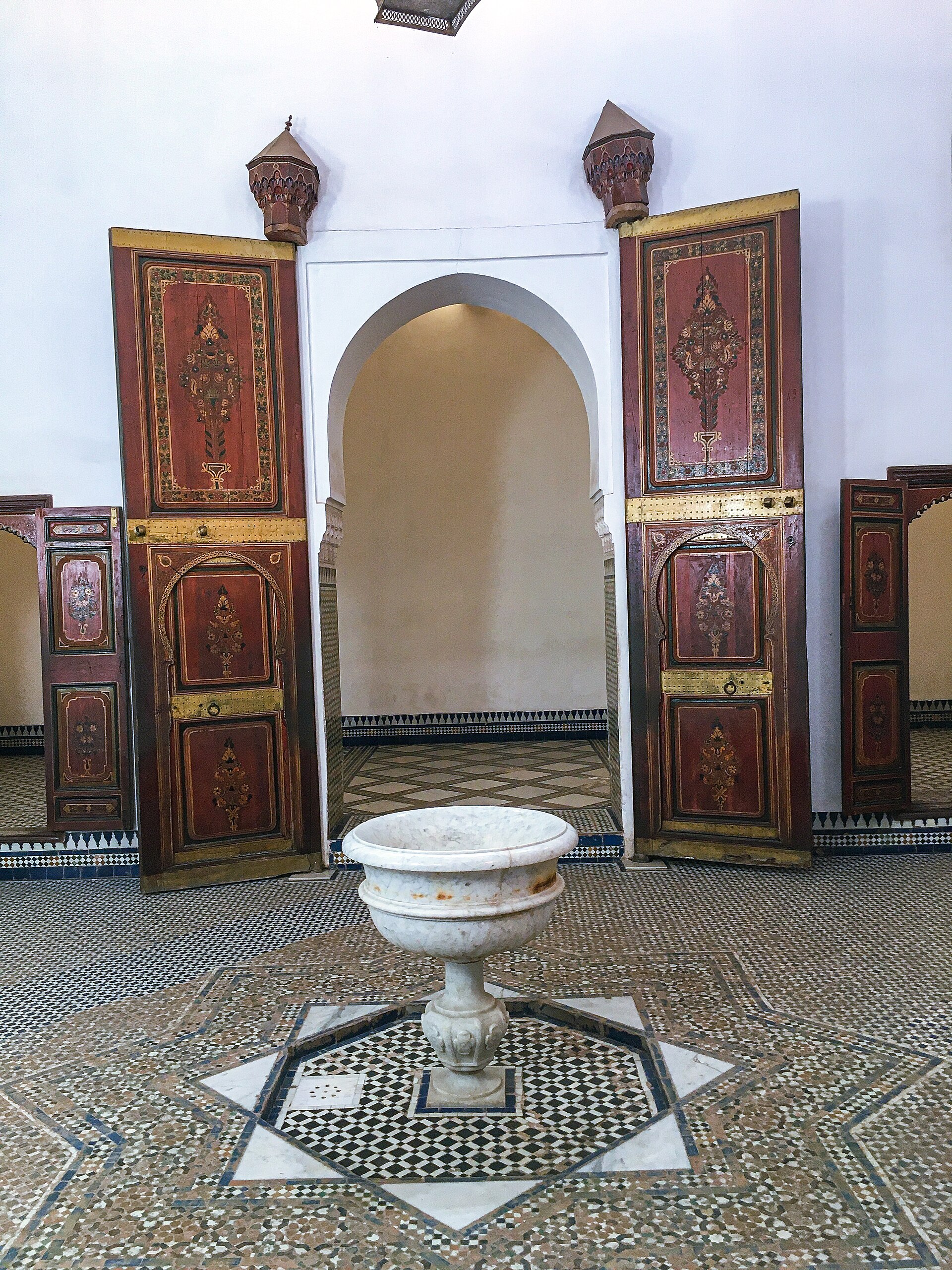
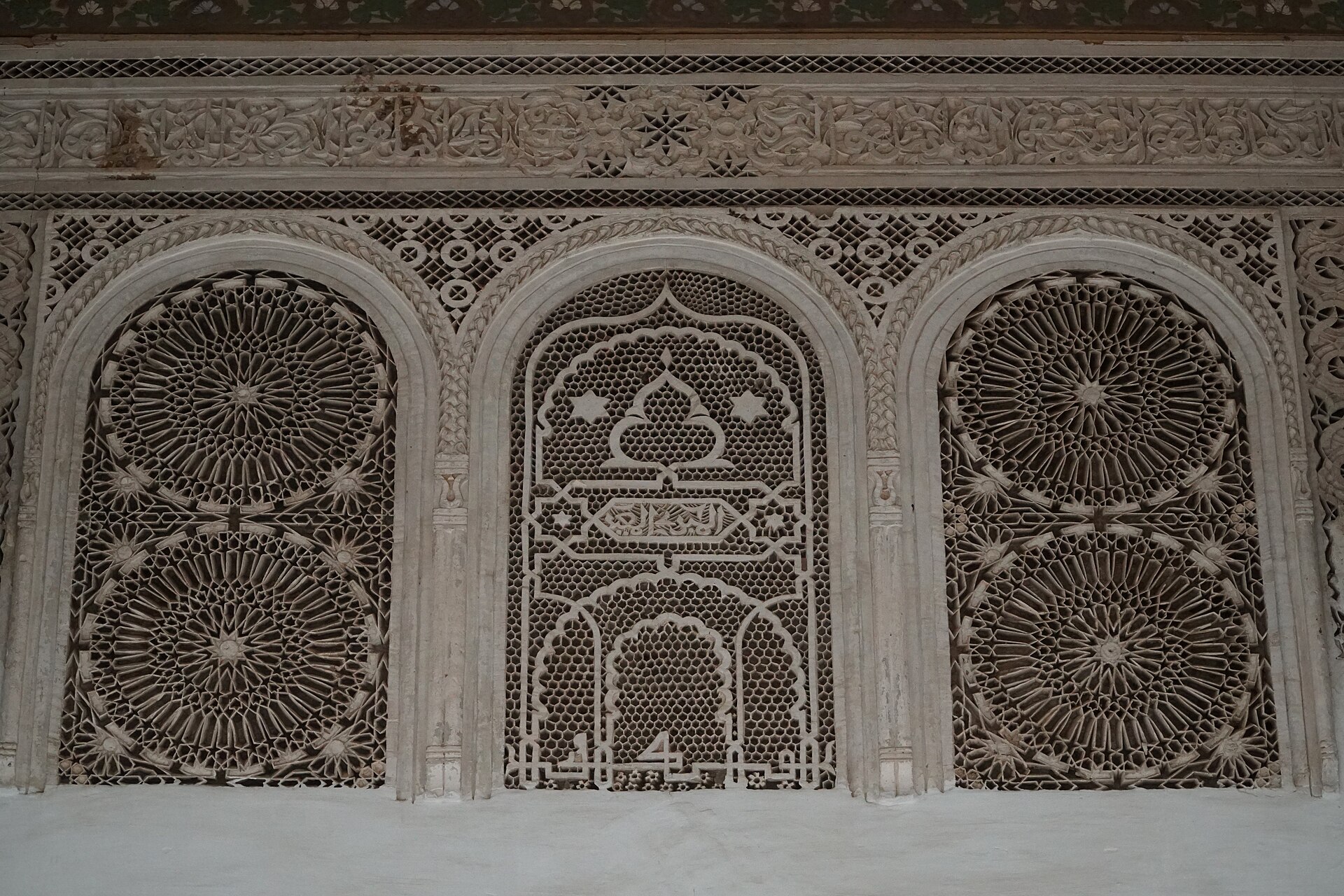
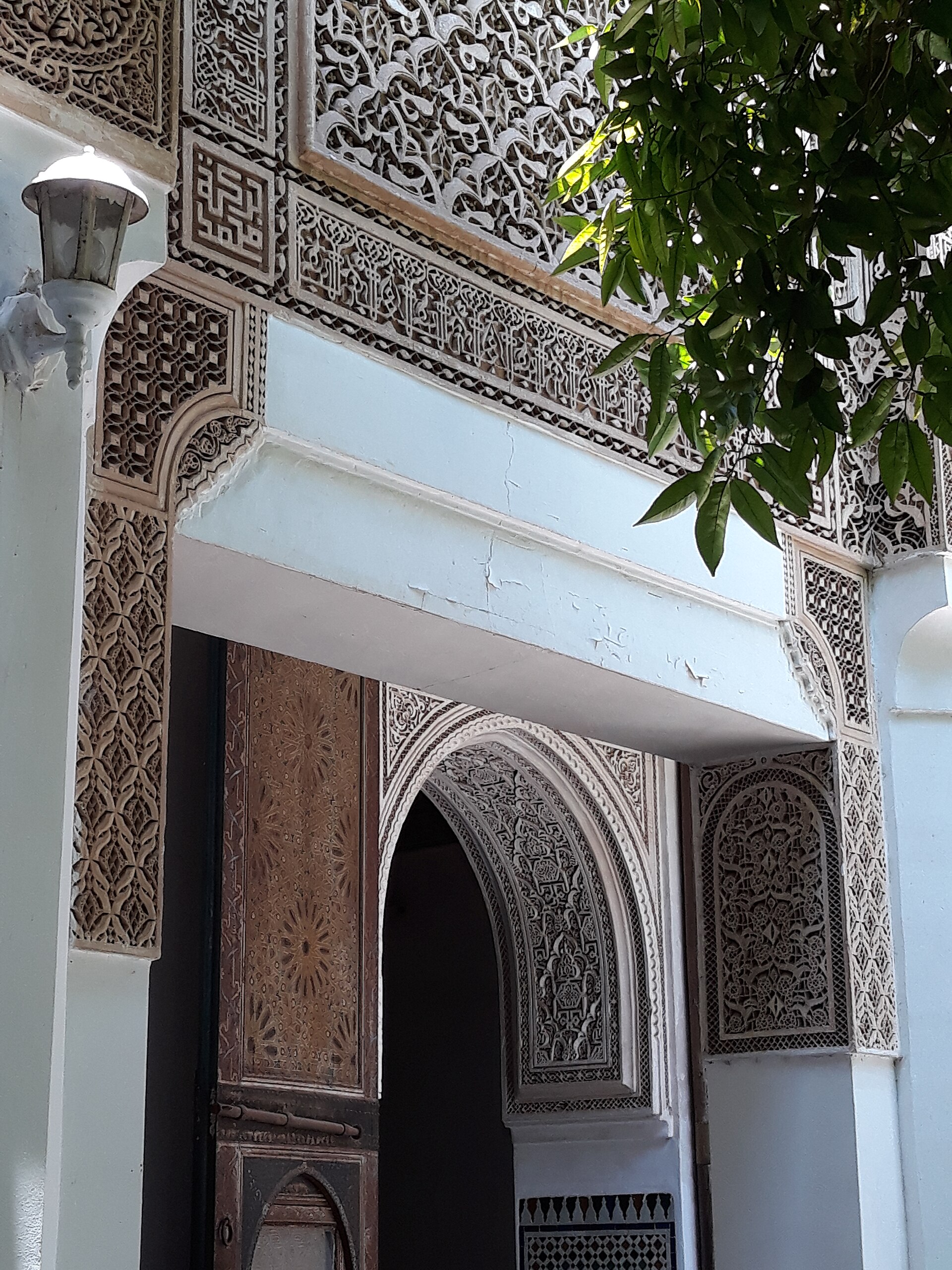
The lower walls are covered with zellij, the intricate mosaic tilework of geometric patterns for which Morocco is famous, assembled from countless individually cut pieces of glazed tile into dazzling compositions of color and form. Above the tilework, the walls are worked in carved stucco, cut into delicate patterns of arabesques, inscriptions, and geometric designs of astonishing intricacy.
Overhead, the ceilings are among the greatest glories of the palace, made of cedar wood carved and painted in rich colors and patterns. These painted wooden ceilings, some of them masterpieces of the woodworker’s and painter’s art, crown the rooms with a warmth and richness that complements the tile and stucco below, completing the total decorative scheme.
Together these three arts, zellij, carved stucco, and painted cedar, form the vocabulary of Moroccan palatial decoration, and at the Bahia Palace they are deployed with a mastery and on a scale that make the complex one of the supreme achievements of the tradition, a place where the visitor is surrounded on all sides by beauty.
What is remarkable about this decoration is that it is almost entirely non-figurative, relying on geometry, calligraphy, and stylized plant forms rather than images of living things, in keeping with the traditions of Islamic art. Within these self-imposed limits, the craftsmen achieved an endless inventiveness, proving that abstraction, far from being a constraint, could be a source of inexhaustible beauty.
Standing in one of these rooms and letting the eye travel from the geometric tilework below, up through the lace-like carved stucco, to the painted and gilded cedar of the ceiling, one begins to grasp the sheer labor and skill embodied in the palace, the thousands of hours of patient work by masters of three distinct arts, all brought into harmony in a single room.
The Decorated Rooms
Opening onto the courtyards and gardens are the rooms of the palace, a series of chambers of varying size and function, all richly decorated in the manner described. These rooms served the residential and ceremonial needs of the vizier and his large household, and each is a jewel of Moroccan interior design.

Among the most splendid rooms are those intended for receiving guests and for the private life of the vizier and his family, decorated with particular lavishness to reflect their importance. The finest ceilings, the most intricate stucco, and the richest tilework are concentrated in these spaces, creating interiors of overwhelming beauty.
The rooms open onto the courtyards through doors and windows that admit air and light and frame views of the gardens, so that inside and outside are intimately connected. This relationship between the decorated room and the planted courtyard is central to the experience of the palace, each enhancing the beauty of the other.
Moving from room to room and courtyard to courtyard, the visitor experiences a succession of beautiful spaces, each different yet all united by the same decorative language, so that the whole palace becomes a single continuous work of art, unfolding gradually as one explores its many parts.
The absence of much original furniture in many of the rooms today, far from diminishing the experience, allows the architecture and decoration to speak for themselves, so that the visitor can appreciate the pure beauty of the tile, stucco, and cedar without distraction. The empty rooms become, in effect, galleries for the display of Moroccan decorative art at its finest.
A Palace for a Great Household
The Bahia Palace was built to house not only the vizier himself but his large household, including his family and the many people who served and depended upon him. The scale of the complex reflects the size of this establishment, and its arrangement provided for the various members and functions of a great aristocratic household.

The palace included private quarters for the vizier’s family, and the arrangement of courtyards and rooms allowed for the separation of different parts of the household according to the customs of the time. The women of the household had their own quarters, and the layout of the palace reflected the social structure and the domestic customs of a great Moroccan family of the age.
The provision of gardens, fountains, and beautiful rooms throughout the complex, not only in the ceremonial areas but in the private quarters as well, ensured that the whole household could enjoy the beauty and comfort of the palace. This was a place designed for living as well as for display, a home as well as a monument.
Understanding the palace as the residence of a great household helps to make sense of its scale and its arrangement, and reminds us that behind its beauty lay the complex social world of a powerful family and its many dependents, whose life filled these courtyards and rooms in the days of the vizier’s glory.
The scale of such a household reminds us that a great palace was a small society in itself, with its own hierarchies, rhythms, and rituals. Behind the serene beauty of the courtyards lay the complex daily life of dozens or hundreds of people, from the vizier and his family to the many servants who kept this world of luxury running smoothly.
The Fall of the Vizier
The glory of the vizier and his palace did not long survive his death. Such was the power and wealth he had accumulated that, when he died, the sultan moved swiftly to seize his property, and the great fortune the vizier had amassed was confiscated by the crown. The palace and its contents passed out of the hands of the family that had built it.
The rapid stripping of the vizier’s wealth after his death was a dramatic reversal, a reminder of the precariousness of even the greatest power in a world where fortunes depended on the favor of the sultan. The man who had effectively ruled Morocco and built its finest palace saw his legacy dispersed almost as soon as he was gone.
The palace itself, however, endured, too magnificent to be destroyed, and it passed through various uses in the years that followed. During the period of the French protectorate over Morocco in the twentieth century, the palace was used by the French authorities, including as a residence for high officials, which helped to ensure its preservation.
Thus the palace outlived the fortunes of its builder, surviving the confiscation of his wealth and the changing political circumstances of Morocco to endure as a monument of beauty, its splendor undimmed even as the family that created it faded from power and memory.
The swiftness of the confiscation has become one of the famous cautionary tales of Moroccan history, a vivid illustration of how, in a system where all authority flowed ultimately from the sultan, even the mightiest minister held his wealth only on sufferance. The palace outlived its builder’s fortune, a beautiful monument to the impermanence of power.
The Palace Under the Protectorate
During the era of the French protectorate, which lasted for much of the first half of the twentieth century, the Bahia Palace took on new functions in the service of the colonial administration. Its magnificence made it a natural choice for the residence and offices of high French officials, and the palace was maintained and used by the authorities of the protectorate.

This use, whatever its political context, had the effect of preserving the palace and its decoration, ensuring that the complex was maintained rather than allowed to fall into ruin. The French appreciation of the palace’s beauty, and its use for prestigious purposes, helped to safeguard it through a period of great change in Morocco.
The palace also became known to a wider world during this period, admired by visitors and celebrated as one of the great examples of Moroccan architecture and decorative art. Its fame spread beyond Morocco, and it came to be recognized internationally as a masterpiece of its kind.
With the end of the protectorate and the restoration of Moroccan independence, the palace passed into the care of the Moroccan state, entering a new phase of its existence as a national monument and, increasingly, as one of the great attractions for visitors to Marrakesh.
It is one of the ironies of the palace’s history that its use by the colonial authorities, whatever we make of that period, played a part in preserving it for the Morocco that would emerge after independence. The beauty that had served a vizier and then a protectorate would, in time, belong to the Moroccan nation and to all who came to admire it.
A Treasure of Marrakesh
In the era of independent Morocco, the Bahia Palace has come to be recognized and cherished as one of the great treasures of Marrakesh and of the nation’s architectural heritage. The palace is preserved as a historic monument, its courtyards, gardens, and decorated rooms maintained for the appreciation of visitors from around the world.

The palace has become one of the most visited sites in Marrakesh, a highlight of any journey to the red city, drawing travelers who come to marvel at its beauty and to experience the atmosphere of a great Moroccan palace. Its fame as a masterpiece of Moroccan craftsmanship continues to grow.
The palace is also used on occasion for cultural and official purposes, and it remains connected to the royal and public life of Morocco, a living monument rather than a mere museum piece. Its beauty has made it a favored setting, and it has appeared in films and continues to inspire artists and designers.
The preservation and celebration of the Bahia Palace reflect the deep pride that Moroccans take in their artistic heritage, and the palace stands as a symbol of the achievements of Moroccan craftsmanship and of the rich cultural traditions of the kingdom, cherished at home and admired around the world.
The palace’s appearances in films and its use as a backdrop for cultural events have carried its beauty to audiences far beyond those who can visit in person, making it one of the most recognizable images of Moroccan architecture in the wider world, and a source of national pride for Moroccans everywhere.
The Living Craft Tradition
The Bahia Palace is not only a monument to the craftsmanship of the past but a spur to the living traditions of Moroccan art that continue to this day. The techniques displayed in the palace, the zellij tilework, the carved stucco, the painted cedar, are still practiced by craftsmen in Morocco, who maintain and pass on these ancient skills.
The palace serves as an inspiration and a standard for contemporary craftsmen, a supreme example of what the traditional arts can achieve, and its influence can be seen in the continuing production of Moroccan decorative art. The maintenance and restoration of the palace itself provide work for skilled artisans, helping to sustain the traditions.
This continuity of craft is one of the glories of Morocco, where the artistic traditions that adorned the palaces of the past remain alive and are applied to new buildings and objects. The Bahia Palace stands at the heart of this living tradition, both a monument to its history and a beacon for its future.
For the visitor, an awareness of this living tradition adds depth to the experience of the palace, for the beauty on display is not a dead relic but the expression of a continuing culture, one that still produces work of great beauty and that traces its lineage back to the masterpieces of the Bahia and the other great monuments of Morocco.
The souks of Marrakesh still hum with the workshops of craftsmen practicing these arts, and a visitor who has admired the Bahia Palace can, with a little searching, watch a tile-cutter or a wood-carver at work, and see the same skills that built the palace being exercised today. This unbroken living link between monument and workshop is one of the special pleasures of Morocco.
The Palace as Earthly Paradise
To understand the Bahia Palace fully is to understand the idea that lies behind it, the vision of the palace as an earthly paradise that runs through the whole Islamic and Moroccan architectural tradition. The garden courtyards, with their water, greenery, and shade, are conscious evocations of the gardens of paradise described in Islamic tradition, brought to earth in the heart of Marrakesh.
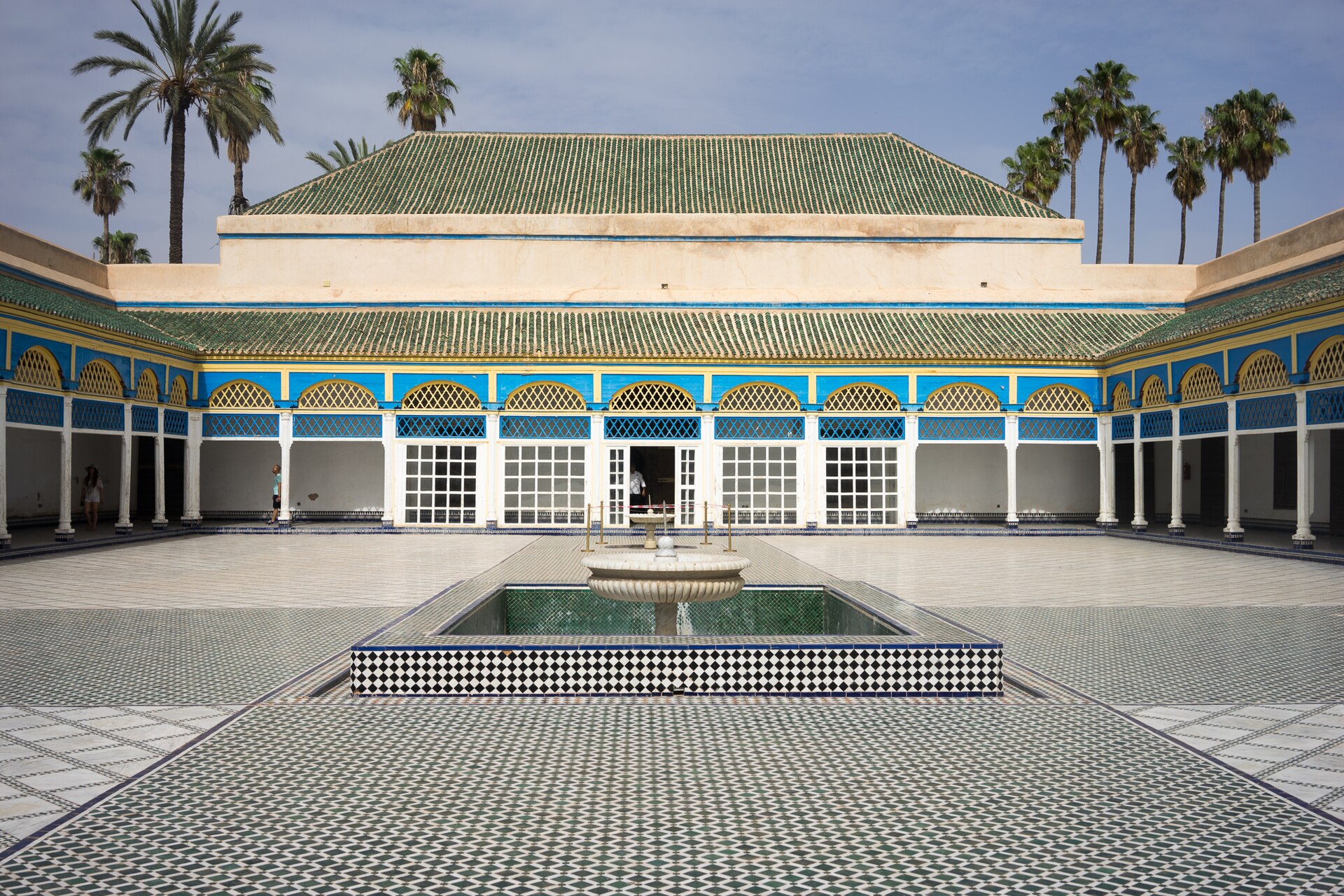
Every element of the palace contributes to this vision. The cooling fountains and channels of water, the fragrant plants, the shaded galleries, and the play of light filtered through screens all combine to create an environment that soothes the senses and lifts the spirit, a refuge from the heat, dust, and noise of the world outside the walls.
The rich decoration, too, serves this purpose, surrounding the inhabitant with beauty on every side and creating an atmosphere of harmony and repose. The geometric patterns of the tilework and stucco, endlessly repeating and interlocking, evoke the infinite order of creation, while the inscriptions and arabesques carry meanings that deepen the contemplative mood.
In this way the Bahia Palace is not merely a display of wealth and power but the expression of a whole philosophy of beauty and repose, a place designed to offer, to those fortunate enough to inhabit it, a foretaste of paradise on earth, and it is this deeper vision that gives the palace its enduring power to move and enchant.
This idea of the enclosed garden as a glimpse of paradise is one of the great gifts of Islamic civilization to the art of the palace, and the Bahia is among its most perfect expressions. In an age of noise and haste, its quiet courtyards still offer the visitor exactly what they offered the vizier, a moment of stillness and beauty set apart from the world.
See the Bahia Palace for Yourself
The beauty of the Bahia Palace, with its courtyards, gardens, and dazzling decoration, is best appreciated by seeing the complex for yourself, moving through its spaces and taking in the interplay of tile, stucco, cedar, and greenery. A video tour conveys the atmosphere of the palace in a way that words and still images cannot fully capture.
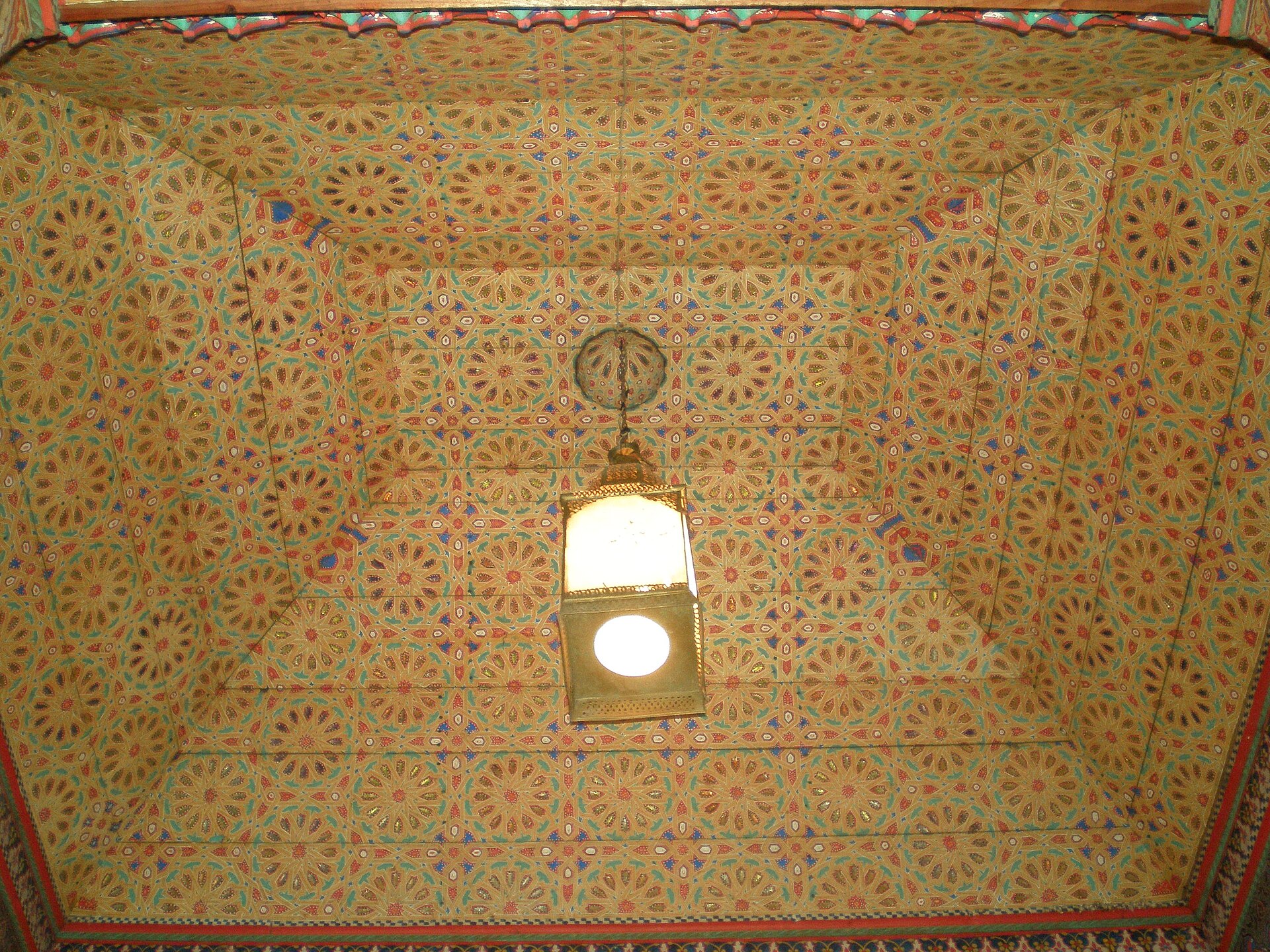
The short video below offers a tour of the palace, taking in its courtyards, its gardens, and its magnificent decorated rooms, and introducing the history of the vizier who built it. It is an ideal companion to everything you have read here, giving you a feel for the atmosphere of this remarkable palace before you visit in person.
As you watch, notice the extraordinary richness of the decoration and the serene beauty of the courtyards and gardens, and imagine the life of the great household that once filled these spaces. Then, when you visit Marrakesh, you will recognize the Bahia Palace not just as a pretty building but as a supreme expression of the Moroccan art of the palace.
Visiting the Bahia Palace Today
For the modern traveler, the Bahia Palace is one of the essential sights of Marrakesh, a highlight of any visit to the red city and a place of extraordinary beauty. Located in the old medina, the palace is easily reached on foot through the atmospheric streets of the historic city, and it rewards a leisurely visit.
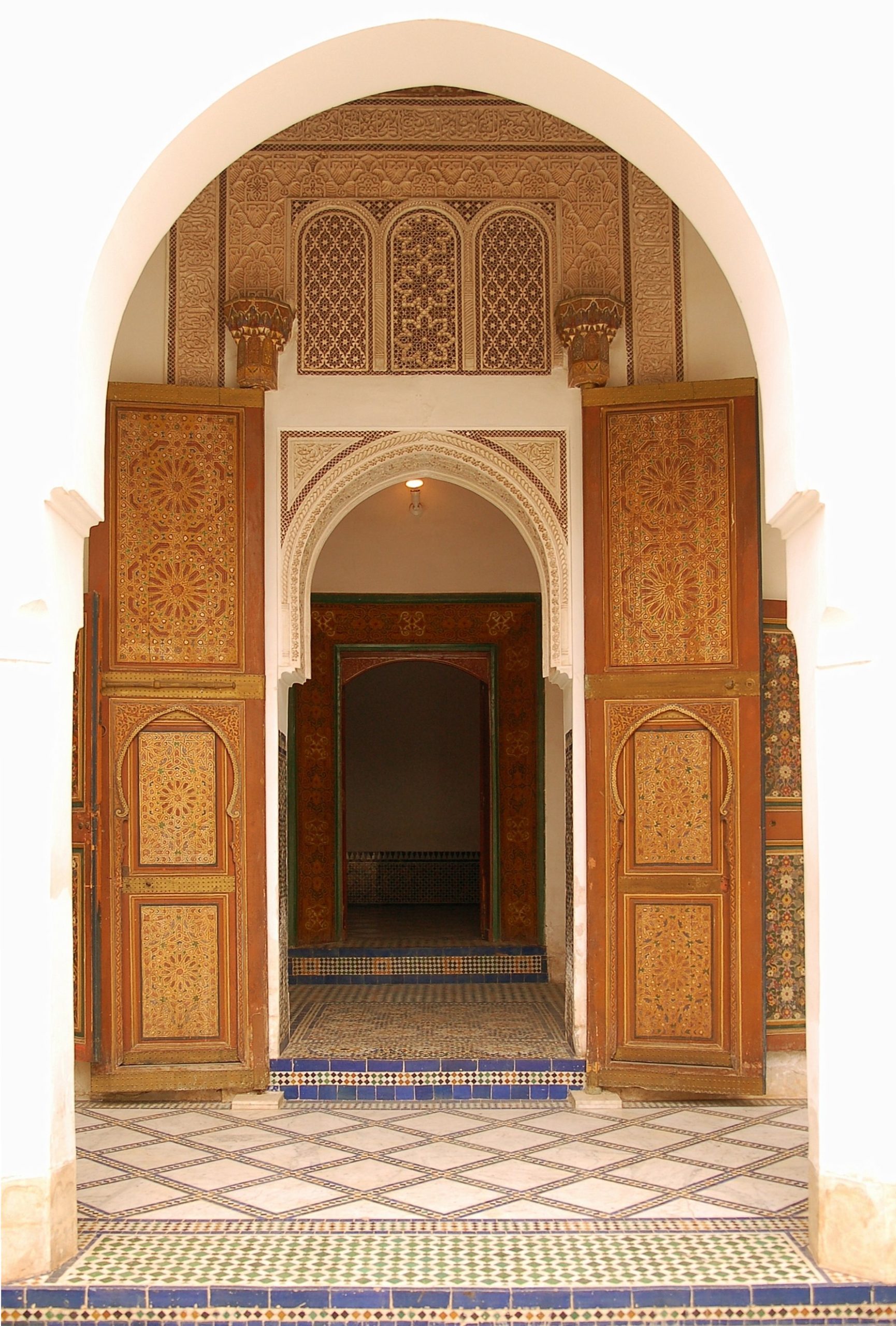
The palace is open to visitors, who can explore its courtyards, gardens, and decorated rooms at their own pace, admiring the zellij tilework, carved stucco, and painted cedar ceilings that make the complex so magnificent. The interplay of shaded rooms and sunlit gardens makes the visit a pleasure as well as a feast for the eyes.
The Bahia Palace lies within the medina of Marrakesh, close to other historic sites, and a visit can easily be combined with exploration of the surrounding old city, with its souks, mosques, and other monuments. As always, it is worth checking current opening arrangements, and arriving early or late in the day to avoid the busiest times and the strongest heat.
However you approach it, the Bahia Palace rewards the visitor who understands its story. This is not merely a beautiful old building but the monument of a powerful vizier, a supreme showcase of Moroccan craftsmanship, and a living treasure of the red city, a palace of brilliance that continues to enchant all who pass through its courtyards and gardens.
Palaces Nearby
If the palace of brilliance in Marrakesh has drawn you into the world of North African royal architecture, two more great residences of the region make natural companions to a visit here, each telling a different chapter of the story.
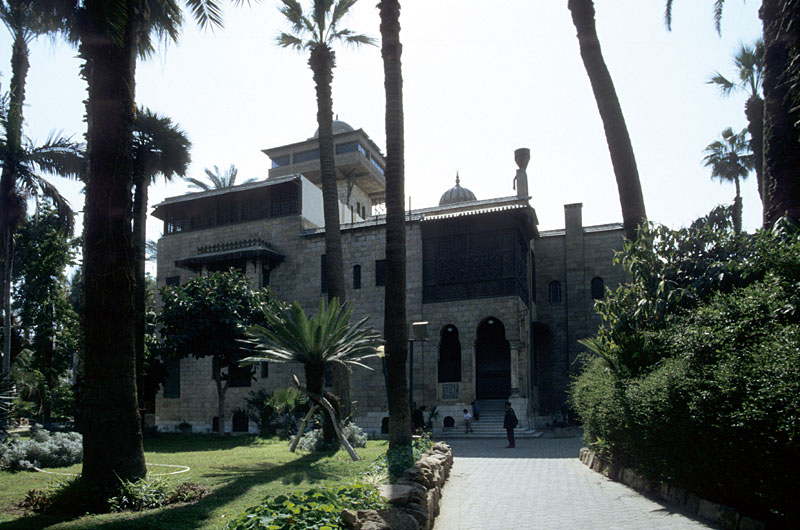
- The Manial Palace of Prince Muhammad Ali — the enchanting island estate of a royal artist, a living museum of Islamic art on the Nile in Cairo.
- Abdeen Palace in Cairo — the grand European-style seat of the modern Egyptian monarchy, at the heart of the nation’s history.
You May Like
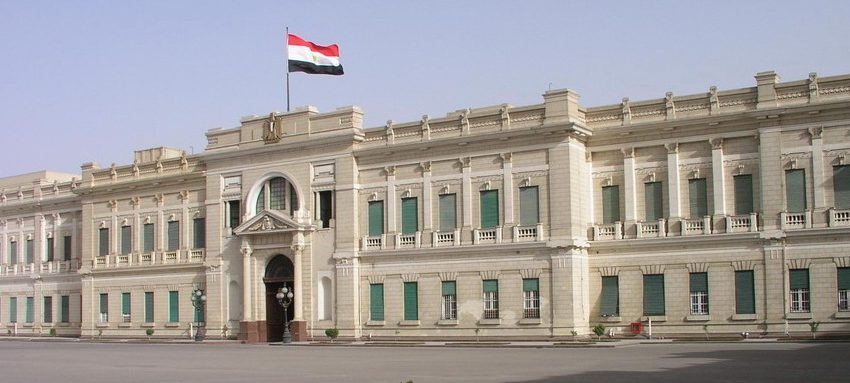
When Egypt’s Rulers Came Down from the Citadel to Abdeen