Deep in the gentle countryside of eastern Poland, north of the city of Lublin, a pale baroque palace stands at the end of a long avenue, framed by a gateway and a pair of elegant pavilions. Kozlowka is one of the best preserved aristocratic residences in Poland, and stepping inside feels like entering a time capsule from the years before the First World War, when a count and his wife filled every wall with paintings and every room with the treasures of a great family.
The palace was built in the eighteenth century, but its present character comes from Count Konstanty Zamoyski, who transformed it around 1900 into a lavish family seat and a kind of private museum. Today it houses the Zamoyski Museum, and its interiors are among the most atmospheric in the country. As a surprising bonus, the estate also holds a gallery of socialist realist art from the communist era.
In this article we will explore Kozlowka from its baroque beginnings to the Zamoyski golden age, through its staircase, salons, library and chapel, and we will finish with practical tips for your own visit.
In This Article
- A Baroque Palace in the Lublin Countryside
- Built for a Polish Magnate
- The Architecture of Jozef Fontana
- Count Konstanty Zamoyski and His Grand Vision
- A Staircase Lined with Art
- The Red Salon and a Thousand Paintings
- Dining in Aristocratic Style
- The Library of a Patriotic Family
- An Exotic Room and Other Curiosities
- Private Rooms of the Count and Countess
- A Chapel Inspired by Versailles
- Tour Kozlowka on Video
- Visiting Kozlowka Today
A Baroque Palace in the Lublin Countryside
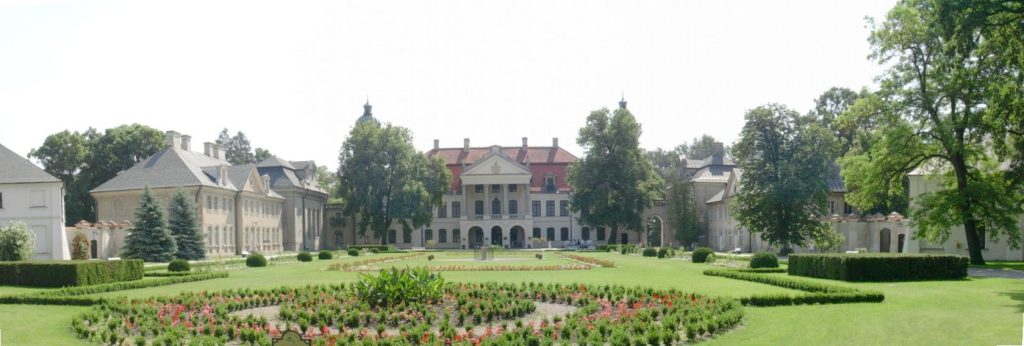
You arrive at Kozlowka through a grand gateway, beyond which a courtyard opens up, flanked by two side pavilions and leading to the main palace. The facade is pale and elegant, with balconies, decorative details and a central entrance that sets the tone for the grandeur within. The layout follows the classic pattern of a great noble residence in old Poland.
Around the palace lies a formal garden, with clipped hedges, flower beds and sculptures, and beyond it a quieter park. The estate is beautifully maintained, and on a sunny day the pale walls glow against the green of the trees and lawns.
Kozlowka is about thirty kilometres north of Lublin, in a peaceful rural area of villages and fields. It feels far from the bustle of the city, yet it is easy to reach for a day trip, and it has become one of the most popular historic sites in eastern Poland.
What makes Kozlowka unforgettable is the sense of completeness. The palace, its interiors, its chapel and its outbuildings have survived together, and the rooms are still filled with the furnishings and art that were there more than a century ago.
Arriving early, before the tour groups, you can enjoy the courtyard in near silence and imagine the carriages of the Zamoyski family and their guests rolling through the gate a century ago.
The gateway itself is worth a pause. Its arches and decorative details announce that you are entering a place of importance, and passing through it feels like stepping into another century. Beyond it, the symmetry of the courtyard and the palace draws your eye naturally toward the main entrance.
In spring the garden bursts into colour, while in winter the palace, dusted with snow, takes on a fairy tale quality that many photographers seek out. Every season offers a different mood.
Built for a Polish Magnate
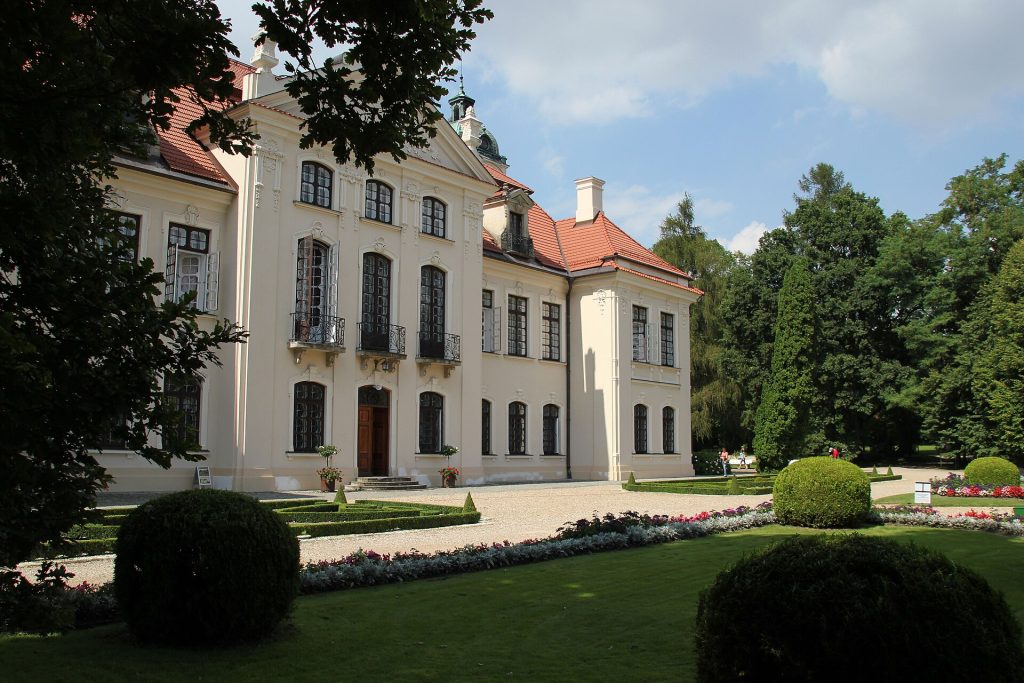
The palace was built between 1735 and 1742 for Michal Bielinski, a member of the Polish nobility who held important offices in the Commonwealth. Like many magnates of his time, he wanted a country residence that reflected his wealth and status, and he chose to build in the fashionable late baroque style.
The eighteenth century was a golden age of palace building in Poland. Great families competed to create elegant residences surrounded by gardens, and many of the finest country houses in the country date from this period. Kozlowka was one of them, a graceful building designed to impress guests and provide a comfortable setting for noble life.
After the Bielinski family, the estate passed to new owners, and in 1799 it was purchased by Aleksander Zamoyski, a member of one of the most powerful and respected families in Polish history. The Zamoyskis had founded the city of Zamosc in the sixteenth century, and their name was linked to statesmanship, learning and patriotism.
For most of the nineteenth century, Kozlowka remained a relatively modest country seat within the vast Zamoyski holdings. Its great transformation came at the end of the century, under a member of the family with a passion for art and a clear vision of how his home should look.
The original baroque layout, with the main block set back behind a courtyard, survived all later changes, and it still gives the palace its stately, welcoming character.
The Bielinskis were well connected at the royal court, and their palaces in Warsaw and the countryside were known for their elegance. Kozlowka was intended as a fitting rural seat for a family of their standing, a place to manage estates, host neighbours and enjoy the pleasures of country life.
Michal Bielinski did not enjoy his new palace for long, but his choice of site and architect gave Kozlowka a strong foundation on which later owners could build.
The Architecture of Jozef Fontana
The palace was designed by Jozef Fontana, a member of a family of architects of Italian origin who worked in Poland for several generations. The Fontanas were responsible for many churches, palaces and townhouses in the eighteenth century, and their style helped define the look of late baroque Poland.
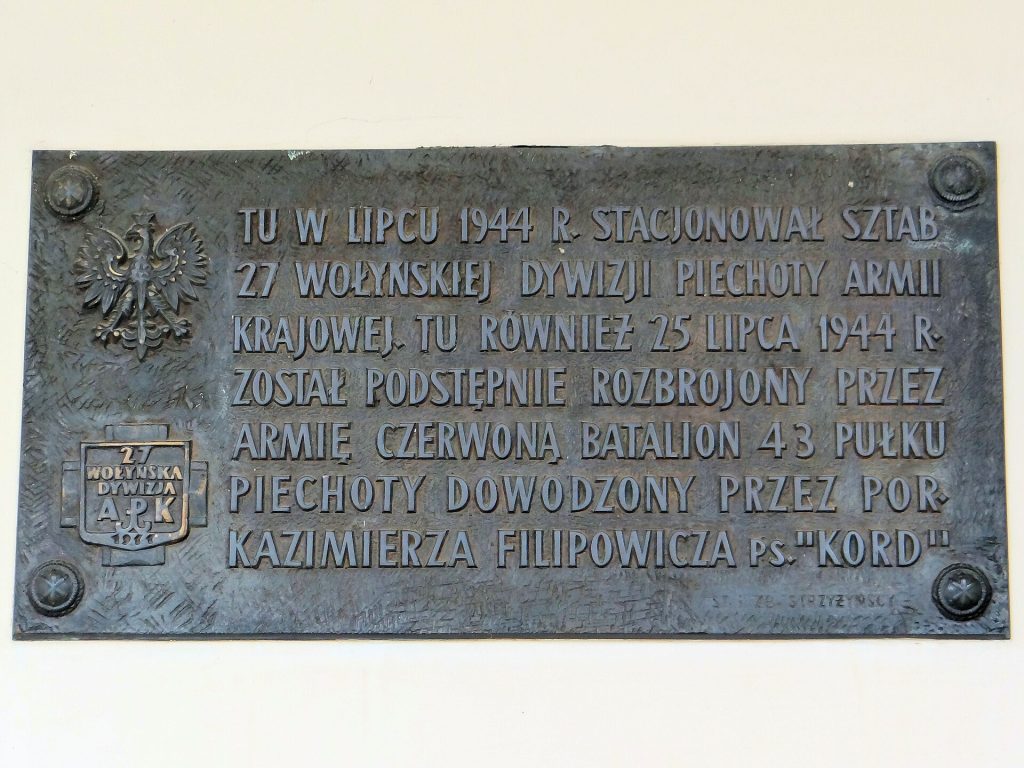
At Kozlowka, Fontana created a two storey main building with a central projection and a balanced, harmonious facade. Decorative details such as window surrounds, cornices and balconies add richness without overwhelming the overall design. The result is a building of quiet elegance rather than flamboyant display.
Later owners added to the original structure, including the side pavilions, the gateway and the chapel, but they respected the spirit of Fontana’s design. Walking around the palace, you can see how each addition was fitted into a coherent whole.
Look closely at the facade details, the carved and moulded ornaments around the windows and doors, the ironwork of the balconies and the proportions of the central section. They reward close attention and show the skill of the builders who worked here nearly three centuries ago.
The garden front is especially pleasing, with its balconies looking out over the parterres. It was from here that the family and their guests would have admired the view across the formal garden on summer evenings.
The Fontana family left a deep mark on Polish architecture, and buildings by its members can be found in Warsaw, Lublin and many smaller towns. Kozlowka is one of the most complete examples of their work in a country setting.
Inside, the original baroque plan placed the main rooms in a logical sequence on the upper floor, reached by the staircase from the entrance hall. This arrangement still guides the visitor route today.
Count Konstanty Zamoyski and His Grand Vision
The man who gave Kozlowka its present character was Count Konstanty Zamoyski, who inherited the estate in the second half of the nineteenth century. Between the 1890s and the First World War he carried out a major renovation, modernising the palace and filling it with art, furniture and decorative objects on a remarkable scale.
Konstanty wanted Kozlowka to be not only a comfortable home but also a lasting monument to his family. In 1903 he established a family entail, known in Polish as an ordynacja, which meant that the estate and its collections could not be divided or sold and would pass intact to future generations. It was a way of protecting the family heritage at a time when Poland had no state of its own.
To carry out his plans, Konstanty employed architects, decorators and craftsmen, and he bought paintings, furniture, porcelain and sculptures in great quantities. Many of the paintings were copies of famous works or portraits of ancestors and relatives, displayed in dense arrangements that covered entire walls.
He and his wife Aniela lived at Kozlowka in great style, and their tastes still dominate the interiors today. The rooms reflect the eclectic fashion of the late nineteenth century, combining elements of different historical styles in a rich and theatrical way.
Konstanty had no children, and after his death in 1923 the estate passed to relatives, who continued to live there until the Second World War swept the old world away.
His wife Aniela, born Potocka, came from another great aristocratic family, and she shared his love of beautiful things. Together they turned Kozlowka into one of the most richly furnished homes in the region, a place that impressed even visitors used to grand houses.
The renovations included modern conveniences such as improved heating and plumbing, which made the palace far more comfortable than it had been in earlier centuries. Konstanty was a man of his time, combining reverence for tradition with an appreciation of new technology.
The entail he created survived until the Second World War, keeping the estate and its collections together through the turbulent years of the First World War and the rebirth of independent Poland in 1918.
Konstanty was also active in public and charitable life, supporting churches, schools and local institutions. His vision for Kozlowka was part of a wider sense of duty toward his community and his nation.
A Staircase Lined with Art
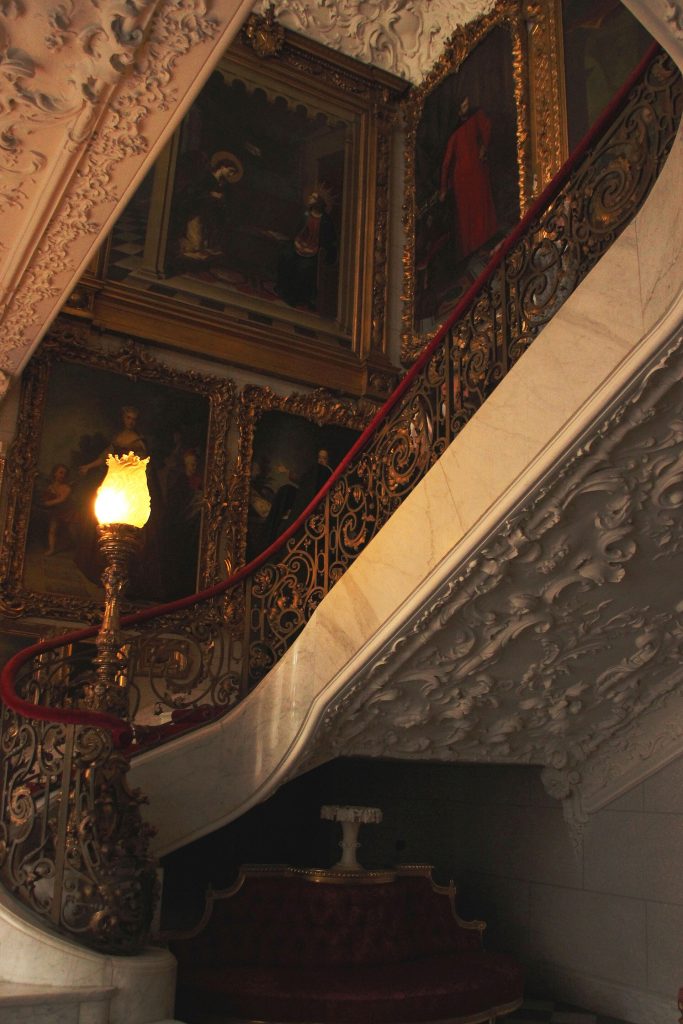
Your tour of the interior begins at the grand staircase, one of the most striking spaces in the palace. Its walls are hung with paintings from floor to ceiling, framed in gold and arranged in tight rows, so that climbing the stairs feels like ascending through a picture gallery.
This dense way of hanging paintings was popular in the nineteenth century, when collectors liked to show off as many works as possible. At Kozlowka it creates an overwhelming impression of richness, and it gives you a first taste of the abundance that awaits in the rooms above.
The staircase itself is finely crafted, with elegant balustrades and decorative details, and it was designed to impress guests as they made their way to the family rooms on the upper floor. Imagine arriving here in the evening, with lamps glowing and the gilded frames catching the light.
Many of the paintings on the staircase are portraits and copies of old masters, chosen as much for decorative effect as for their individual quality. Together they form a kind of visual tapestry that perfectly expresses the taste of Count Konstanty and his era.
Take a moment here to look up and around. It is one of the most photographed spaces in the palace, and it captures the spirit of Kozlowka better than any other single view.
Restoration work has kept the staircase in excellent condition, and the gilded frames still shine as brightly as they did when Count Konstanty first hung his collection here.
Notice how the paintings are arranged by size and shape to fill every available space. This careful composition required planning and skill, and it turns the staircase walls into a single, unified decorative scheme.
Some of the works depict religious subjects, others historical figures and landscapes. Together they express the values of the family: faith, patriotism, learning and a love of beauty.
The Red Salon and a Thousand Paintings
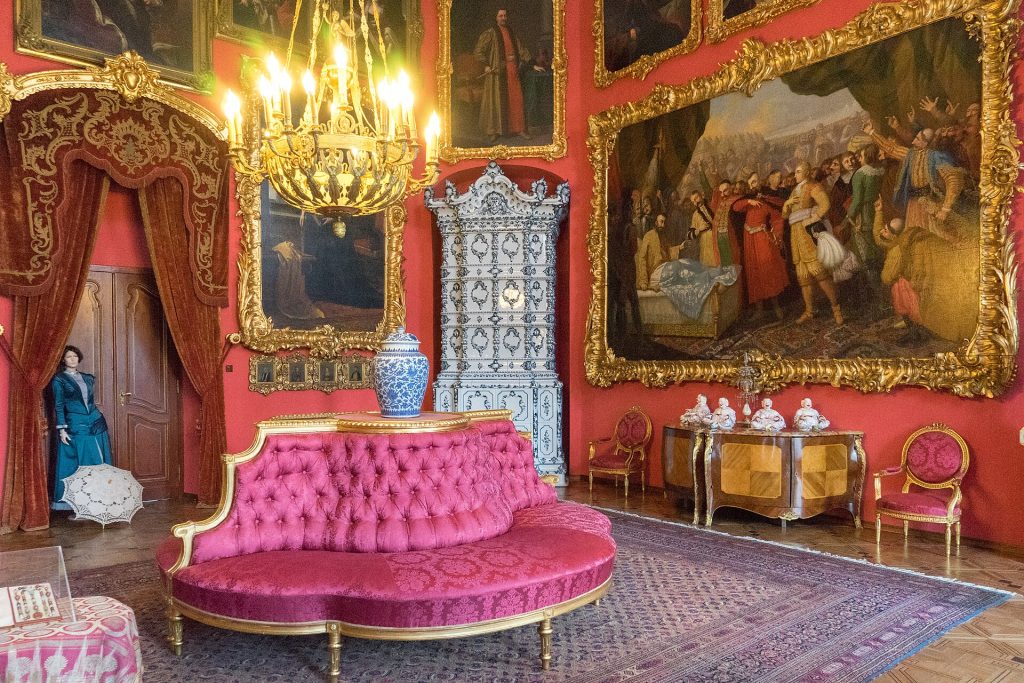
Kozlowka is famous for the sheer number of paintings in its interiors. The collection runs to around a thousand works, and they are everywhere: in the salons, the corridors, the bedrooms and the staircase. Few historic houses anywhere can match this density of art.
The Red Salon is one of the most impressive rooms. Its walls are covered in rich red fabric, and paintings in gilded frames are hung in rows from the dado to the cornice. Comfortable sofas, armchairs and small tables complete the scene, creating an atmosphere of warm, slightly overwhelming luxury.
The salon was a place for receiving guests, conversation and music, and its furnishings reflect the comfort and display that aristocratic families valued around 1900. Mirrors, chandeliers and porcelain add sparkle and colour to the room.
The paintings include portraits of members of the Zamoyski family and their relatives, as well as landscapes, historical scenes and copies of famous European works. Taken together, they tell the story of a family deeply rooted in Polish history and culture.
Do not try to look at every painting. Instead, let the overall effect wash over you, then pick a few that catch your eye and study them closely. It is a much more enjoyable way to experience such a rich interior.
Other salons in the palace have their own colours and moods, some lighter and more feminine, others darker and more formal. Moving between them, you gain a sense of how the house was used for different occasions and how carefully each room was furnished to suit its purpose.
Many of the frames are as interesting as the paintings themselves, with elaborate carved and gilded designs that reflect the craftsmanship of the period. Together, the paintings and frames create a dazzling effect that is unique to Kozlowka.
Dining in Aristocratic Style
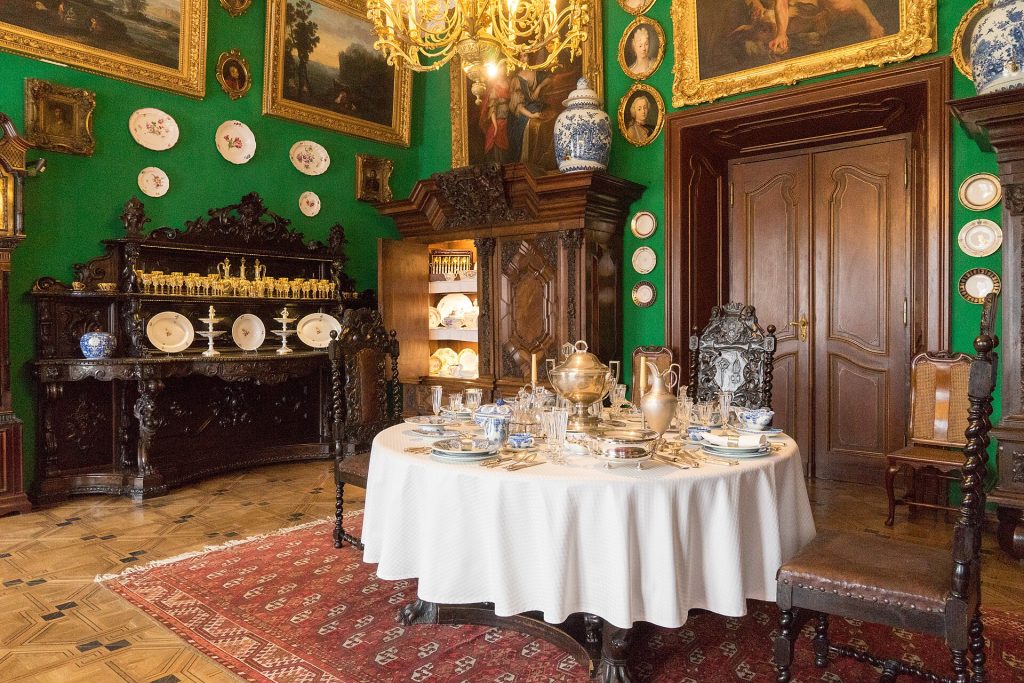
The dining room at Kozlowka gives a vivid impression of how the Zamoyskis entertained. A long table stands at its centre, surrounded by chairs and set with fine porcelain, glass and silver. Large sideboards along the walls display more tableware and decorative objects.
Formal dinners were an important part of aristocratic life, occasions for strengthening family ties, discussing politics and welcoming important guests. Meals could last for hours, with many courses served by a team of footmen, and the dining room was designed to make these occasions as impressive as possible.
The decoration of the room, with its wood panelling, paintings and lighting, creates a warm and stately atmosphere. Look out for the carved sideboard, a fine piece of furniture that combines practical storage with elaborate ornament.
Standing in this room, it is easy to imagine the clink of glasses, the murmur of conversation and the bustle of servants moving between the kitchen and the table, all under the watchful eyes of the ancestors in their portraits on the walls.
The kitchen and service areas that supported these dinners lay out of sight, but they were just as important to the life of the house, employing cooks, maids and footmen who kept the household running smoothly.
The porcelain on display includes pieces from well known European factories, as well as items made specially for the family. Some bear the Zamoyski coat of arms, a reminder that even the plates on the table were part of the family identity.
Visitors often remark on how lived in the dining room feels. It is not hard to imagine the family sitting down to a Sunday lunch, with children, relatives and guests gathered around the long table.
The lighting in the dining room, with its chandeliers and candelabra, was designed to make the table sparkle in the evening. Gas and later electric lighting were introduced during the renovations, but the effect of candlelight was still cherished on special occasions.
The Library of a Patriotic Family
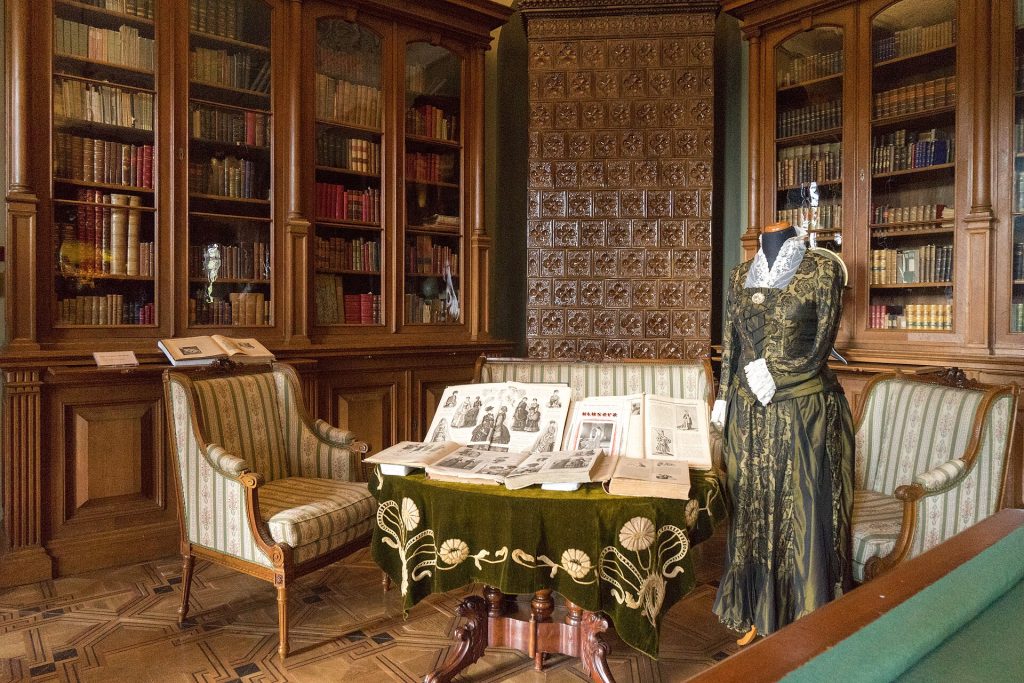
The library at Kozlowka reflects the intellectual and patriotic interests of the Zamoyski family. Its shelves hold books on history, literature, religion, science and agriculture, many in Polish, alongside works in French, German and other languages.
For families like the Zamoyskis, books were more than a pastime. During the nineteenth century, when Poland was partitioned and Polish culture faced pressure from the occupying powers, private libraries helped keep the national language and memory alive. Kozlowka was part of that quiet effort to preserve Polish identity.
The room is furnished with bookcases, desks and comfortable chairs, creating a calm and studious atmosphere. Portraits and busts add a sense of dignity, and the light from the windows falls gently across the rows of leather bound volumes.
It is easy to picture the count at his desk, managing the affairs of the estate, writing letters or reading the latest books and journals from Warsaw and abroad.
Book lovers will enjoy lingering here, and the library is a good reminder that great houses were not only places of display but also centres of learning, correspondence and reflection.
Among the books are works on estate management and agriculture, reflecting the practical side of aristocratic life. Running a large estate required knowledge of farming, forestry and finance, and the count took these responsibilities seriously.
Some of the volumes are rare editions, and the collection as a whole is an important source for historians studying the culture of the Polish aristocracy at the turn of the twentieth century.
An Exotic Room and Other Curiosities
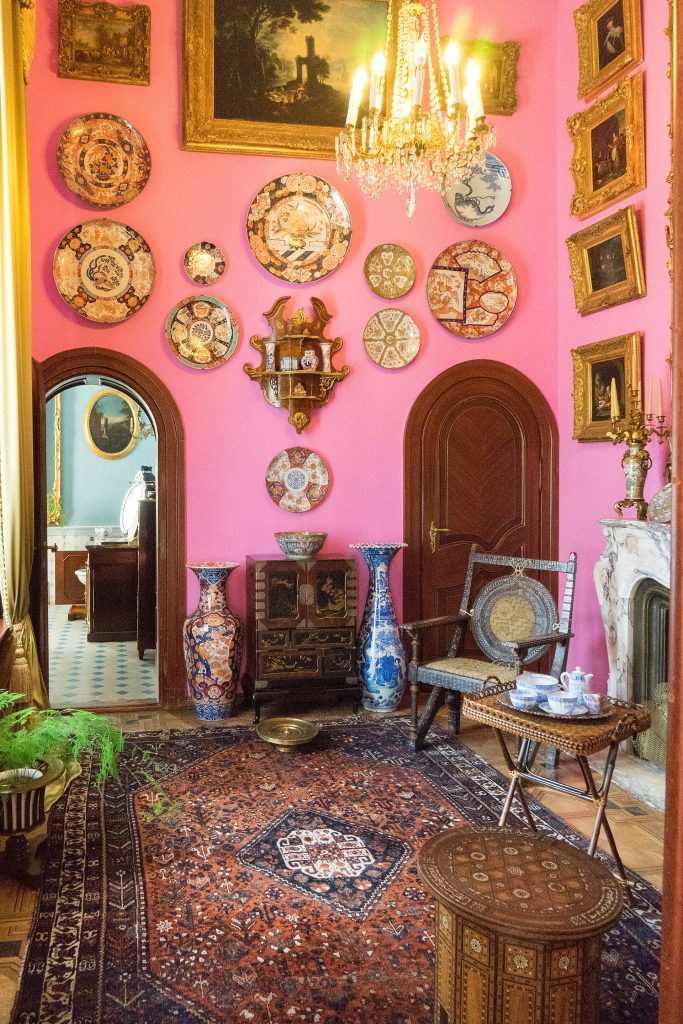
One of the more unusual spaces in the palace is the so called Exotic Room, decorated with objects and motifs inspired by distant lands. Around 1900, many European aristocrats were fascinated by the art and culture of Asia and the Middle East, and they liked to create rooms that evoked faraway places.
At Kozlowka this fascination is expressed through furniture, textiles, ceramics and decorative objects that bring a touch of the exotic to the Polish countryside. The effect is colourful and slightly theatrical, a reminder of the eclectic tastes of the period.
Throughout the palace you will also find clocks, vases, sculptures and other decorative arts collected by the family. Many were bought on travels or from dealers in Warsaw, Vienna and Paris, and they show how well connected the Zamoyskis were to the wider European world.
These rooms make Kozlowka feel less like a formal museum and more like a real home, full of the personal tastes and curiosities of the people who lived here.
Look out for the small details as well, from the inlaid boxes and painted fans to the carved figures and tapestries. Each one hints at the travels, gifts and purchases that slowly filled the palace over the decades.
Children in particular often enjoy this room, with its unusual objects and bright colours, which make a lively contrast to the more formal salons.
The fashion for exotic interiors spread widely in Europe after the great international exhibitions of the late nineteenth century, which introduced audiences to the arts of Japan, China, India and the Ottoman world.
Private Rooms of the Count and Countess
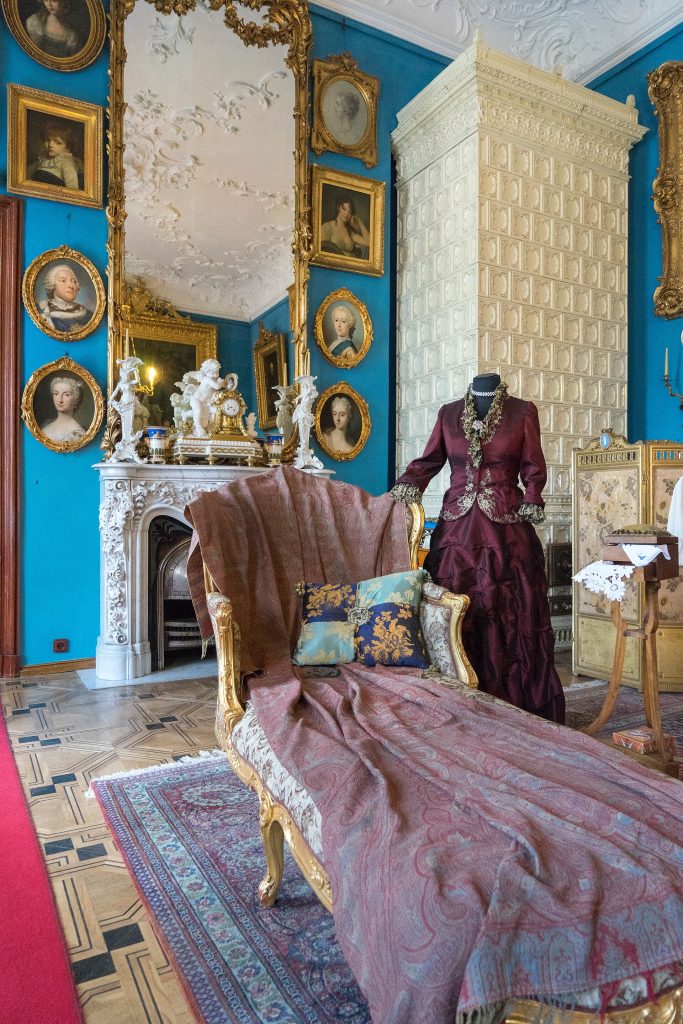
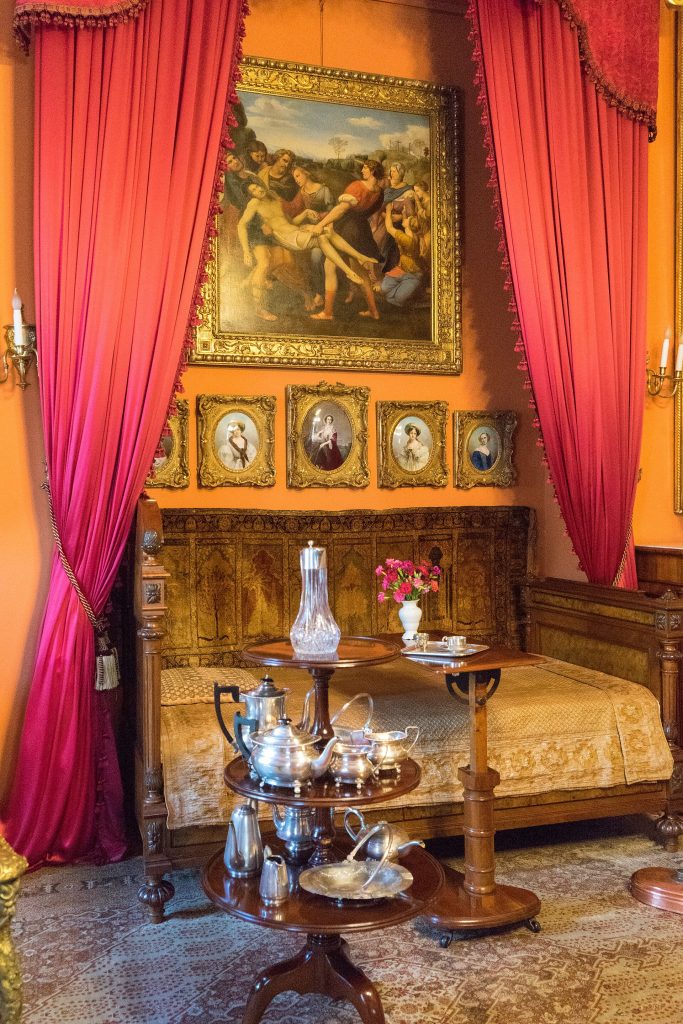
Beyond the public rooms lie the private apartments of Konstanty and Aniela Zamoyski. The bedroom of the countess is furnished with elegant furniture, soft fabrics and personal objects, creating a gentle and intimate atmosphere. The bedroom of the count is more sober, with darker wood and a more practical character.
These rooms give a rare glimpse into the private lives of an aristocratic couple around 1900. You can see where they slept, dressed, wrote letters and rested, and the objects on display, from washstands to family photographs, make the history of the house feel very personal.
Like the rest of the palace, the private rooms are filled with paintings, many of them family portraits and religious images. They reflect the deep Catholic faith of the Zamoyskis and their strong sense of family continuity.
Seeing these rooms, it becomes clear that Kozlowka was not simply a showpiece but a home, where real people lived with their joys, worries and daily routines.
The careful preservation of these interiors is one of the great achievements of the museum, which has kept the rooms as close as possible to their appearance in the time of the count.
In the countess’s rooms, look for the delicate furniture and decorative textiles that reflect the fashions of the time. The count’s rooms, with their heavier furniture and practical desks, show the working side of aristocratic life.
Family photographs displayed in these rooms are especially touching, showing the count, the countess and their relatives in everyday moments. They bridge the gap between the formal portraits on the walls and the real lives of the people who lived here.
A Chapel Inspired by Versailles
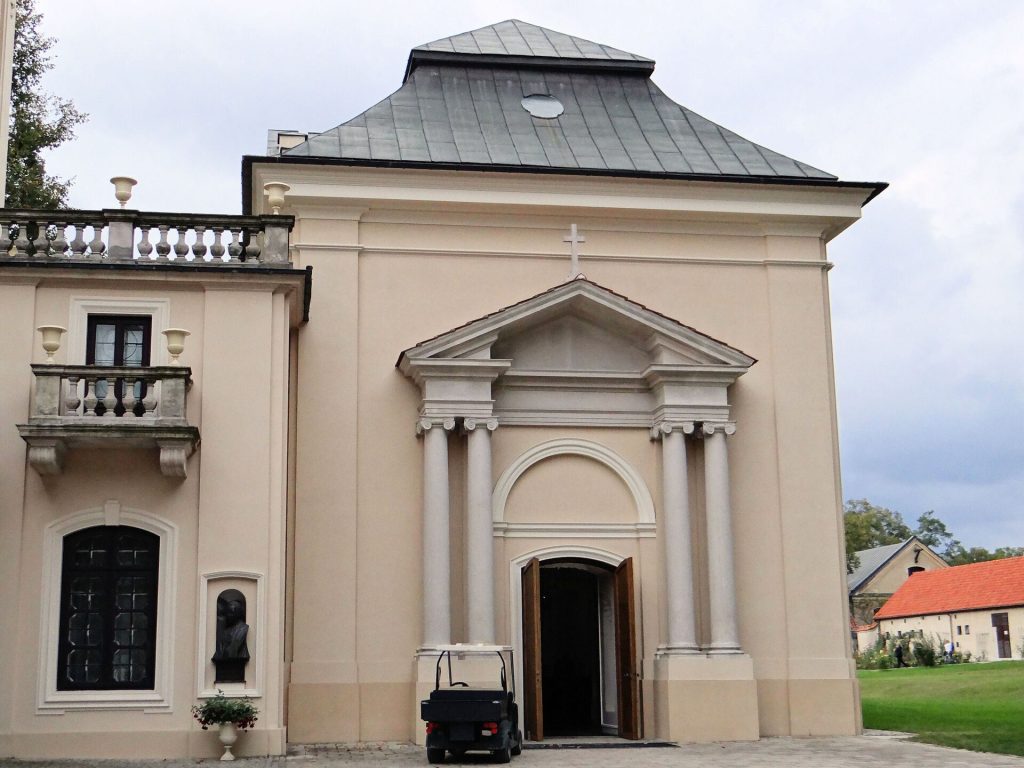
Next to the palace stands one of its most remarkable buildings, the chapel. Built in the early twentieth century on the initiative of Count Konstanty, it was modelled on the royal chapel at Versailles, scaled down to suit a country estate. Its tall, elegant form adds a striking vertical accent to the ensemble.
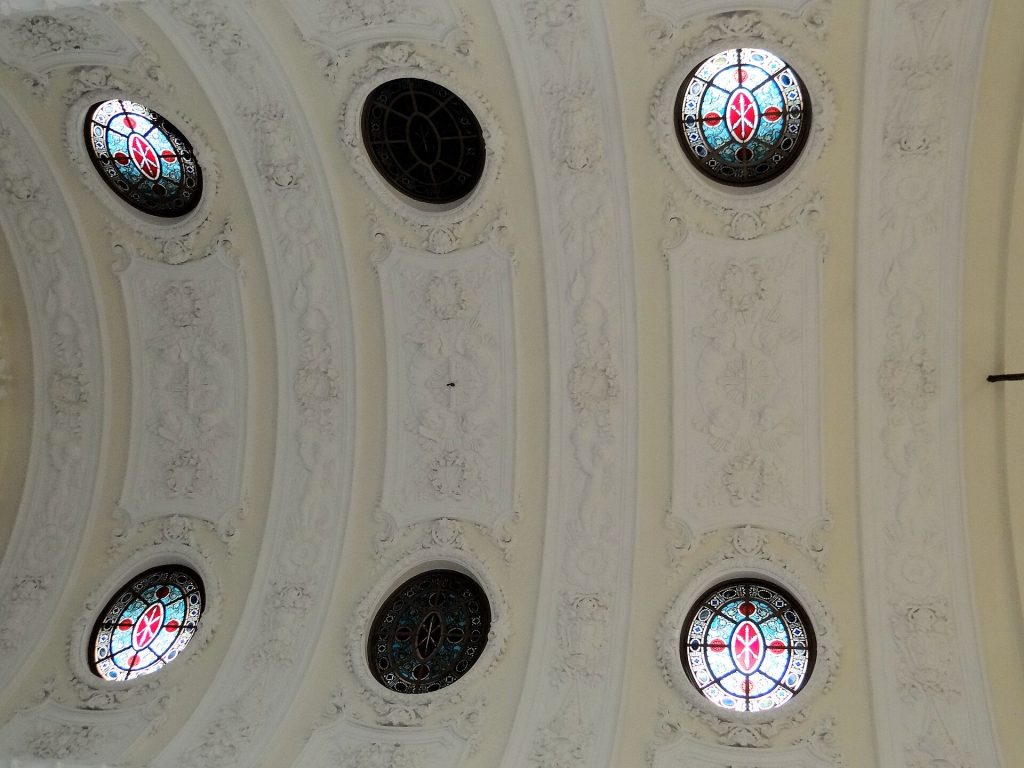
Inside, the chapel is bright and graceful, with white and gold decoration, columns and an upper gallery. Religious paintings and sculptures enrich the space, and the atmosphere is calm and uplifting.
The chapel also served as a place of family memory. Members of the Zamoyski family were commemorated here, and it remained an important part of the spiritual life of the estate.
Even if you are not usually drawn to religious architecture, the chapel is well worth a visit. Its combination of French inspiration and Polish devotion makes it a fascinating example of the cultural connections that shaped aristocratic Poland.
The chapel is sometimes used for concerts and special events, and its acoustics and elegant setting make it a beautiful place to hear music. Check the programme of the museum if you would like to experience it this way.
From outside, the chapel’s tall roof and graceful proportions make it one of the most photographed parts of the estate, especially when seen together with the palace in the soft light of late afternoon.
The chapel was consecrated shortly before the First World War, at the height of the Zamoyski transformation of the estate, and it remains one of the finest early twentieth century sacred buildings in the region.
Tour Kozlowka on Video
To prepare for your visit, or to relive it afterwards, the video below takes you through the palace and its grounds. You will see the gateway and courtyard, the art filled staircase, the salons and the chapel.
Pay attention to the density of paintings on the walls, which is one of the defining features of the palace and hard to imagine until you see it.
Watching the video before you go also helps you plan which parts of the estate you most want to see, especially if your time is limited.
If the video has inspired you, read on for practical tips on planning your trip.
Visiting Kozlowka Today
After the Second World War, the estate was taken over by the state, and the palace became a museum. Thanks to the efforts of curators and restorers, its interiors and collections were preserved, and today the Zamoyski Museum at Kozlowka is one of the most visited historic houses in eastern Poland.
One of the surprises of a visit is the Gallery of Socialist Realist Art, housed in a building on the estate. During the communist era, Kozlowka served as a storehouse for works of art in this official style, including paintings, sculptures and posters glorifying workers and political leaders. Today they are displayed as a fascinating record of a very different chapter in Polish history.
Kozlowka lies about thirty kilometres north of Lublin and is easy to reach by car. Public transport is more limited, so check connections in advance. The palace interiors are visited with a ticket, often in small groups, and other parts of the estate, such as the coach house with its historic carriages, have their own exhibitions.
Plan at least half a day to see the palace, the chapel, the socialist realist gallery and the gardens. Opening times vary by season, so it is wise to check before you travel. There is a cafe on site, and the park offers pleasant walks before or after your tour.
The coach house is a favourite with many visitors, displaying elegant carriages, sleighs and harness from the days when horses were the main means of travel. It brings to life the journeys the Zamoyskis and their guests made between Kozlowka, Lublin, Warsaw and beyond.
Kozlowka is also known for its events, from concerts and festivals to seasonal fairs, which add life to the estate throughout the year. Whenever you come, it offers a rich and surprising day out, combining aristocratic splendour with a fascinating glimpse of twentieth century history.
If you have more time, Lublin itself makes an excellent base, with a charming old town, a royal castle and a lively cultural scene. Combining the city and Kozlowka gives you a rewarding introduction to eastern Poland.
View the location on Google Maps
Palaces Nearby
If Kozlowka has fascinated you, Poland is rich in aristocratic residences. Here are two more remarkable palaces well worth adding to your journey:
- Nieborow Palace – a baroque Radziwill residence near Lowicz, with a tiled staircase, rare globes and the famous head of Niobe.
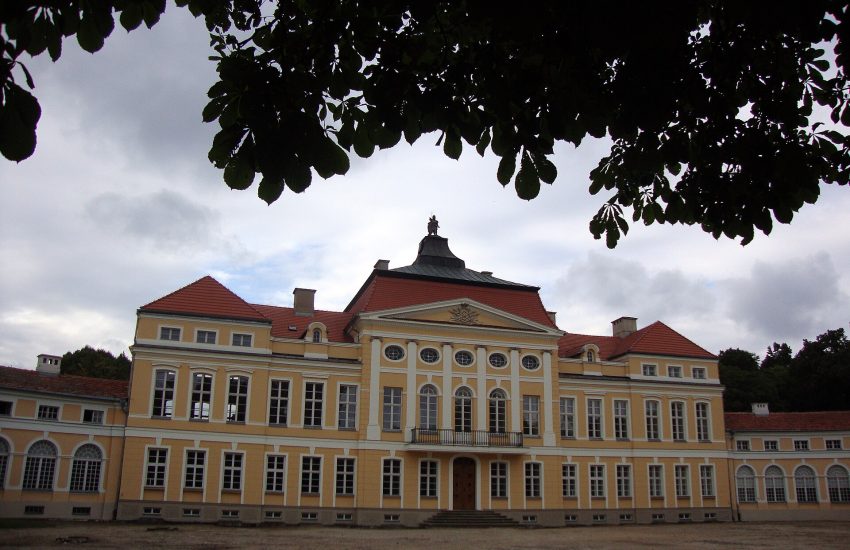
- Rogalin Palace – the Raczynski seat near Poznan, with a celebrated picture gallery and the legendary ancient oaks.
You May Like
Rogalin Palace and the Ancient Oaks of the Raczynski Family


One thought on “Kozlowka Palace and the Gilded World of the Zamoyski Family”