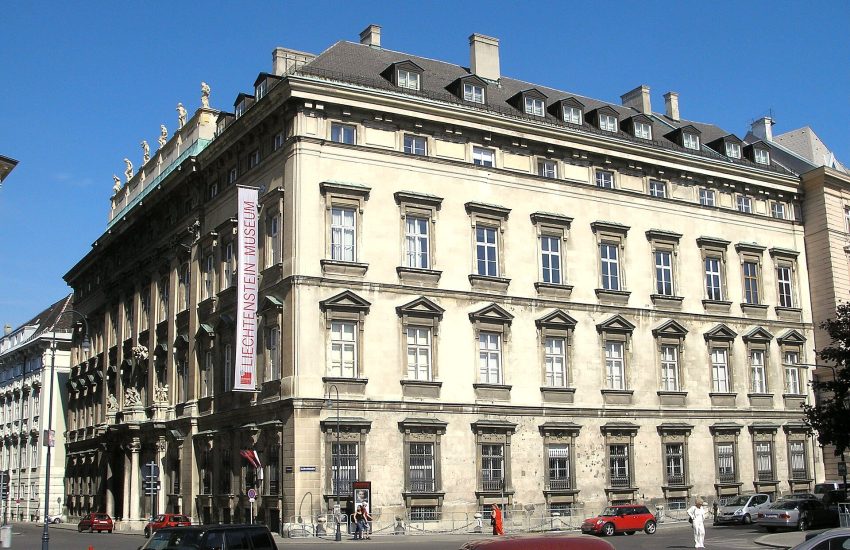
In the quiet Rossau quarter of Vienna, just north of the old city, stands a palace that many visitors to the Austrian capital never discover. Behind a stately facade and a peaceful park lies the Liechtenstein Garden Palace, the summer residence of the princes of Liechtenstein and home to one of the most spectacular baroque halls in the city, crowned by a vast ceiling fresco by Andrea Pozzo.
Built around 1700, when Vienna was emerging as the glittering capital of a triumphant Habsburg empire, the palace was designed to show the wealth and taste of one of the richest families in Europe. Today it houses part of the princely art collections, including masterpieces by Rubens, and it remains one of the hidden treasures of Viennese baroque.
In this article we will explore the Garden Palace from the prince who built it to its architects, its painted halls, its collections and its park, and we will finish with practical tips for planning a visit.
In This Article
- A Hidden Baroque Treasure in Vienna
- Prince Johann Adam Andreas and His Ambitions
- A Summer Retreat Outside the City Walls
- Martinelli, Rossi and the Design of a Palace
- A Dignified Facade and a Grand Approach
- Grand Staircases and the Road to the Piano Nobile
- The Hercules Hall, Largest of Its Kind in Vienna
- Andrea Pozzo and the Apotheosis of Hercules
- Treasures of the Princely Collections
- Rubens and the Golden Age of Flemish Painting
- The Liechtenstein Park
- See the Palace on Video
- Visiting the Liechtenstein Garden Palace
A Hidden Baroque Treasure in Vienna
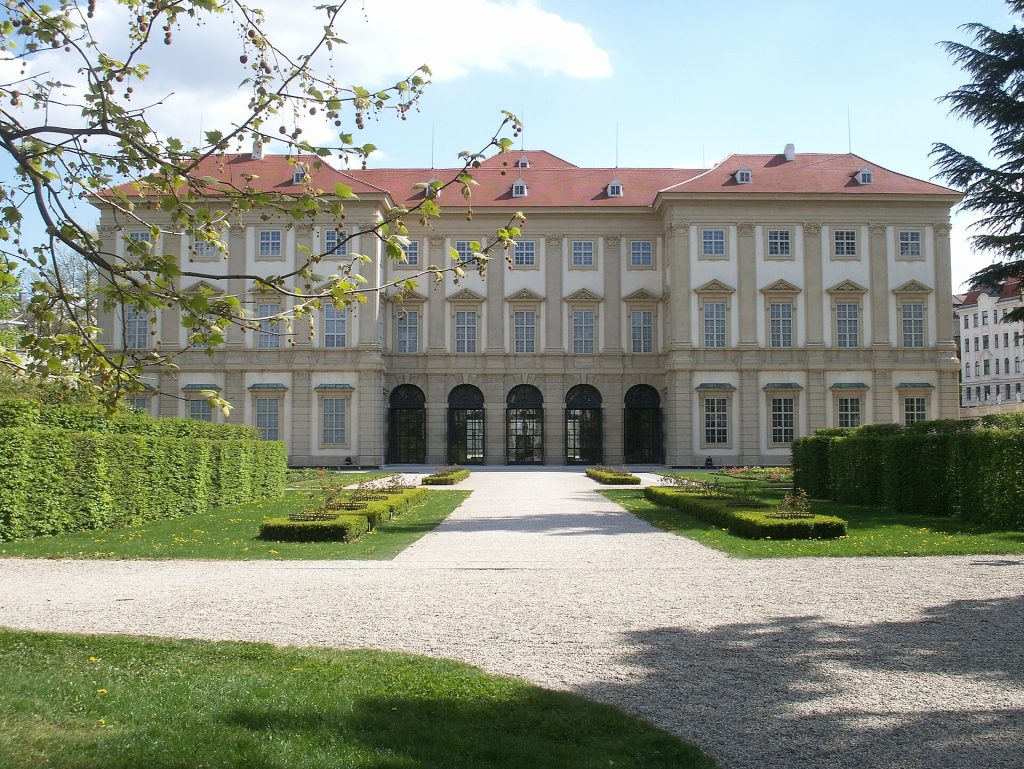
Most visitors to Vienna head straight for Schonbrunn, the Hofburg and the Belvedere, and the Liechtenstein Garden Palace remains surprisingly little known. Yet anyone who finds their way to the Ninth District is rewarded with one of the most elegant baroque ensembles in the city, set in a park that feels like a private oasis.
The palace is a broad, dignified building with a calm facade, rising behind a courtyard on the Furstengasse. On the other side, it looks out over a large garden, once a formal baroque layout and later reshaped as a landscape park, where Viennese residents now stroll, read and relax.
What makes the Garden Palace special is the contrast between its restrained exterior and the overwhelming splendour within. Step inside and you enter a world of marble, stucco, gilding and painted ceilings that rivals anything in the imperial residences.
Because access to the interiors is limited, a visit feels like being let into a private world, which in a sense is exactly what it is. The palace still belongs to the princely family, and the collections displayed here are their own.
The surrounding district, with its nineteenth century streets, cafes and university buildings, has a relaxed, residential feel, very different from the busy tourist centre just a few tram stops away.
The entrance on the Furstengasse is easy to miss if you are not looking for it, which adds to the sense of discovery. Once inside the courtyard, the noise of the street seems to fall away, and the palace reveals itself in all its quiet grandeur.
For lovers of baroque art and architecture, the Garden Palace is one of the most rewarding places in Vienna, offering a concentration of masterpieces in a setting that has changed remarkably little in three centuries.
The palace also gives its name to the surrounding area, and many Viennese know the park far better than the building itself, having spent countless afternoons on its lawns without ever seeing the treasures inside.
Prince Johann Adam Andreas and His Ambitions
The palace was built for Prince Johann Adam Andreas of Liechtenstein, known as Hans Adam the Rich. He was one of the wealthiest men of his age and an enthusiastic builder, collector and patron of the arts. Under his leadership the family fortunes reached new heights.
It was Johann Adam Andreas who purchased the lordships of Schellenberg and Vaduz, the territories that would later become the Principality of Liechtenstein. His aim was to secure a seat in the imperial diet, which required a territory held directly from the emperor. That purchase eventually gave the family a country of its own.
In Vienna he commissioned two great residences: a city palace in the Bankgasse, close to the imperial court, and a summer residence in the Rossau, then a semi rural area outside the city walls. The Garden Palace was intended for summer living, entertaining and the display of his growing art collection.
He took a close personal interest in the design and decoration, corresponding with architects and artists and making decisions on every detail. The palace reflects his taste and his determination to compete with the grandest princes of Europe.
His passion for collecting laid the foundations of the Liechtenstein Collections, which today count among the most important private art collections in the world.
Johann Adam Andreas was also a shrewd businessman who managed his estates efficiently and invested in agriculture, forestry and industry. His wealth allowed him to lend money to the emperor, which in turn increased his influence at court.
Contemporaries described him as cultivated, energetic and demanding, a patron who knew exactly what he wanted from his artists and was prepared to pay for the best. His correspondence with painters and architects survives and gives a vivid picture of how baroque palaces were created.
After his death in 1712, the palace passed to his successors, who continued to use it and to enlarge the collections. Each generation added its own works of art, and the palace became a kind of family museum long before public museums were common.
In the nineteenth century the princes opened their gallery to the public on certain days, making it one of the first art collections in Vienna that ordinary people could visit.
A Summer Retreat Outside the City Walls
Around 1700, Vienna was still enclosed by fortifications, and the land beyond the walls was dotted with gardens, villages and suburban residences. After the defeat of the Ottoman siege in 1683, the threat to the city receded, and nobles began to build summer palaces in these suburbs, where they could enjoy fresh air, gardens and space.
The Rossau, near the Danube canal, was an attractive location. The prince acquired land there and laid out a large garden around his new palace, creating a retreat where the family could escape the heat and crowds of the inner city during the summer months.
Garden palaces of this kind became a defining feature of baroque Vienna. The Belvedere of Prince Eugene and the Schwarzenberg Palace are other famous examples, and together they gave the city a ring of splendid residences set in green surroundings.
Today the Rossau is fully part of the city, but the palace and its park still preserve something of that original sense of retreat, an island of calm amid the urban bustle.
The name Rossau is believed to come from the horses that once grazed in the meadows along the river, a reminder of how rural the area was before the city expanded. Today it is hard to imagine, but in the prince’s time the palace stood among fields, gardens and scattered houses.
The prince also built a brewery and other buildings on the estate, and the area around the palace developed into a small settlement known as Lichtental, which still exists as a district name today.
The construction of the palace helped to shape the development of the whole area. Streets were laid out around it, and the presence of a great princely residence attracted other buildings and residents over time.
Walking from the palace toward the Danube canal, you can still trace some of the old routes that connected the estate with the river, once an important transport artery for goods and building materials.
The palace was also used as a venue for great festivities, with fireworks, music and illuminations in the garden on summer nights, events that drew the cream of Viennese society.
Martinelli, Rossi and the Design of a Palace
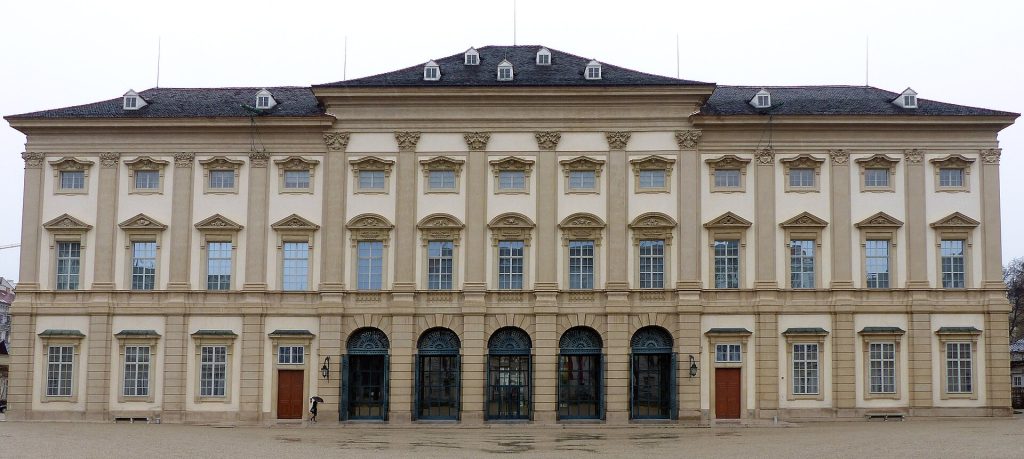
The design of the Garden Palace involved several architects. An early plan was produced by Domenico Egidio Rossi, but the building as we see it was largely the work of Domenico Martinelli, an Italian architect from Lucca who worked for many of the great families of central Europe, including at Valtice and Slavkov.
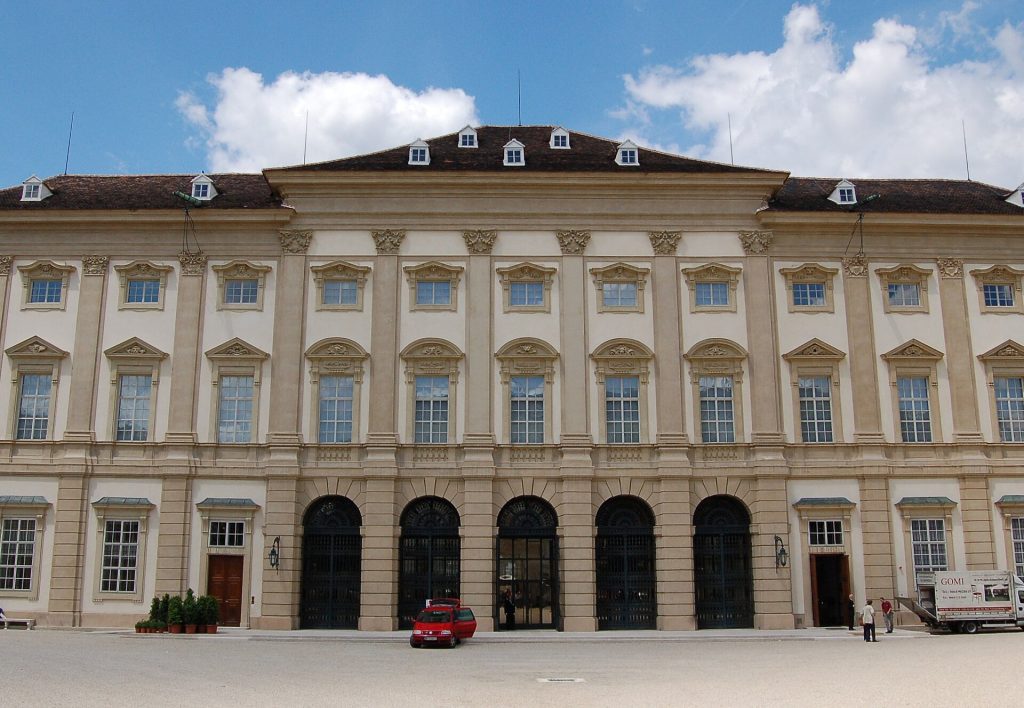
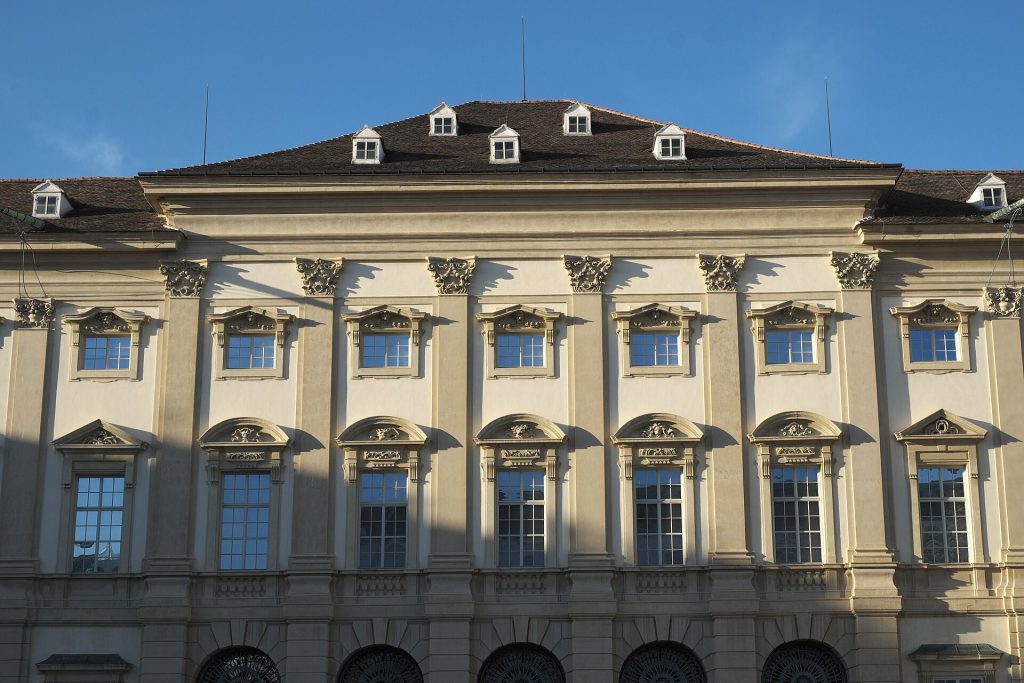
Martinelli created a building of classical clarity, with a central block of three storeys and side wings, a balanced facade and carefully proportioned windows. Its sober elegance reflects Roman models and contrasts with the more exuberant baroque of some other Viennese palaces.
The garden front, facing the park, is particularly handsome. A broad terrace and steps lead down to the lawns, and the facade is designed to be admired from a distance, framing views across the garden.
Work began in the 1690s and the building was largely complete by around 1711. The interiors, however, took longer, as the prince brought in leading painters and decorators to create a sequence of magnificent rooms.
Martinelli’s work at the Garden Palace was influential, helping to introduce Italian classical ideas into Viennese architecture at a crucial moment in the city’s development.
Martinelli also designed the city palace of the Liechtensteins in the Bankgasse, so the two great Viennese residences of the family share a common architectural language. Comparing them reveals how the same architect adapted his style to an urban setting and a suburban one.
The building was conceived not only as a residence but also as a gallery for the prince’s art collection, and its rooms were planned with the display of paintings in mind, an unusual and forward looking idea for the time.
Some details of the original plans were altered during construction, as the prince changed his mind or new artists joined the project. This was common in baroque building, where patrons and architects often adapted their ideas as work progressed.
A Dignified Facade and a Grand Approach
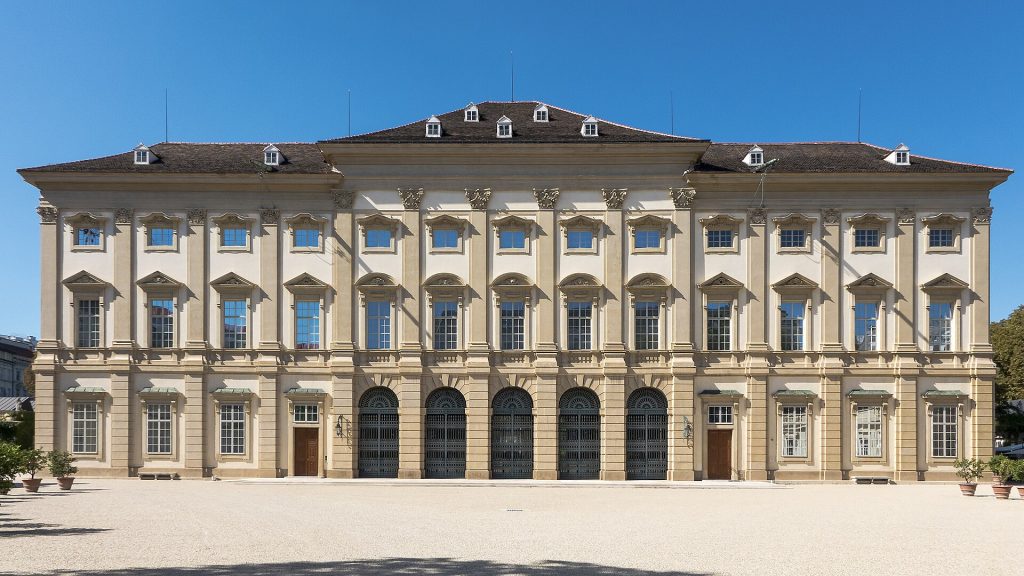
From the Furstengasse, you approach the palace through a gateway into a forecourt, with the main building rising ahead. The facade is calm and orderly, relying on proportion rather than heavy ornament, and it gives an impression of quiet confidence.
Sculptural details, carved frames and the crest of the princely family add accents to the architecture, while the large windows hint at the bright interiors within. The whole composition is designed to lead the visitor naturally toward the entrance and the grand staircases.
On the opposite side, the facade facing the garden is more open, with views across the park. In summer the palace and its gardens were used as a single space for entertainment, with guests moving freely between the halls and the terraces.
It is worth walking around the building to appreciate its scale and harmony. From the far end of the park, the palace appears as a broad, pale mass framed by trees, a classic image of the Viennese garden palace.
The palace was once complemented by a separate belvedere building at the far end of the garden, designed as a pavilion for entertainment and views. It was later replaced, but its memory survives in old engravings and plans that show the garden in its baroque glory.
The forecourt also once included stables and service buildings, some of which survive in altered form along the edges of the site.
In the late eighteenth and nineteenth centuries, the palace underwent some changes, including the redesign of the garden and adaptations of the interiors to new tastes, but its essential baroque character was carefully preserved.
Look for the princely coat of arms above the main entrance, a proud reminder of the family who still owns the palace after more than three hundred years.
Grand Staircases and the Road to the Piano Nobile
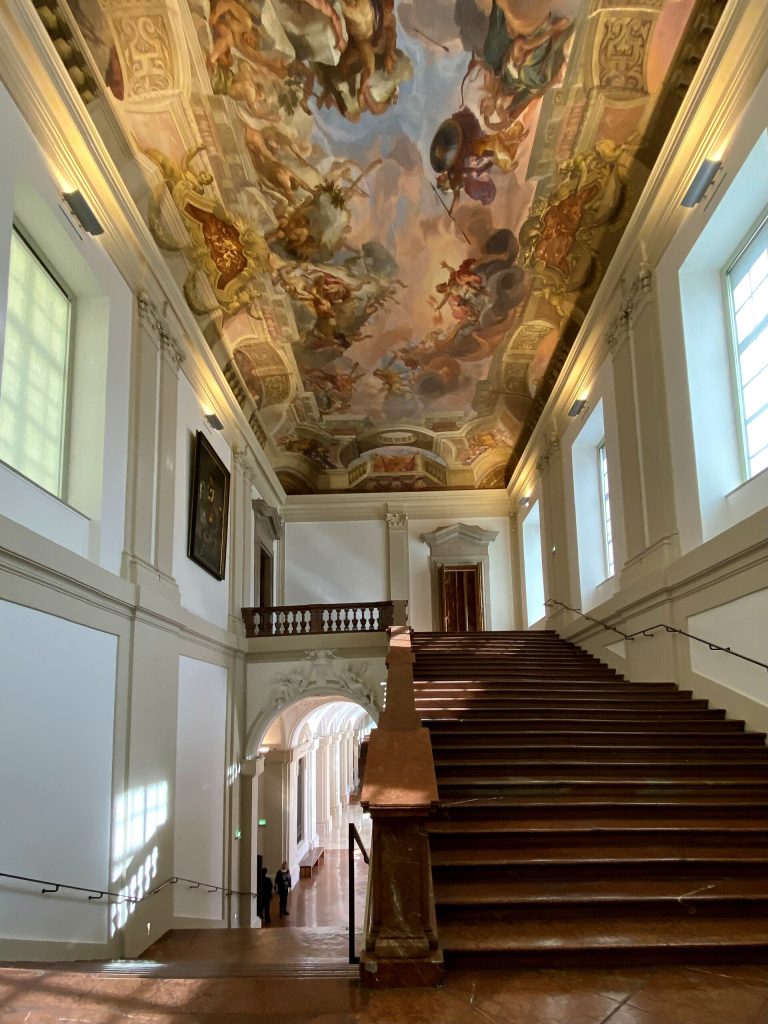
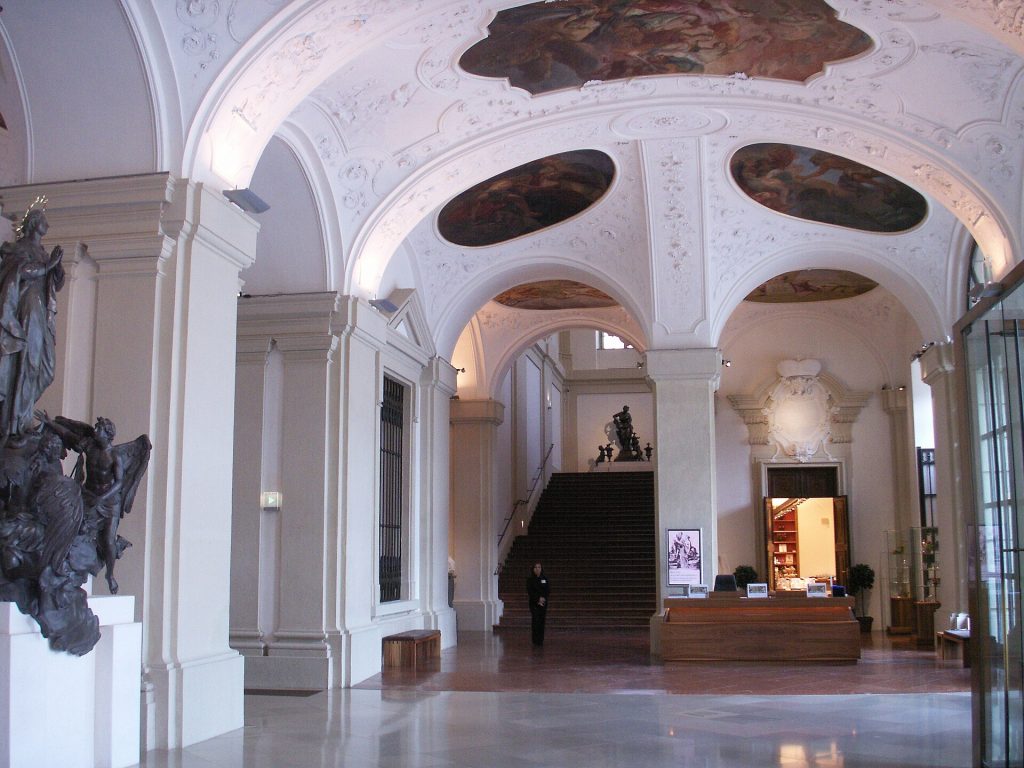
Inside, two magnificent staircases lead from the ground floor to the main floor, the piano nobile. They are among the finest baroque staircases in Vienna, with marble steps, elegant balustrades and painted ceilings that create a sense of ascent toward something extraordinary.
The ceilings of the staircases were painted by leading artists of the time, including Johann Michael Rottmayr, with allegorical and mythological scenes that celebrate the virtues and glory of the house of Liechtenstein.
Climbing these stairs was part of the ceremonial experience of visiting the prince. Guests would rise from the entrance hall into a realm of colour and light, their eyes drawn upward by the paintings, before arriving at the doors of the great hall.
Even today, the effect is powerful. Take your time on the stairs, look up at the frescoes and notice how the architecture and painting work together to create a feeling of movement and anticipation.
Rottmayr was one of the leading Austrian painters of the baroque period, and his work can also be seen in churches and palaces across Austria, including Melk Abbey and the Karlskirche. His frescoes at the Garden Palace are among his finest secular works.
The staircases also served a practical purpose, allowing separate routes for different groups of visitors and members of the household, an important consideration in a residence where rank and ceremony governed every movement.
Notice the fine ironwork and stone carving along the balustrades, which add texture and detail to the grand architectural spaces.
The Hercules Hall, Largest of Its Kind in Vienna
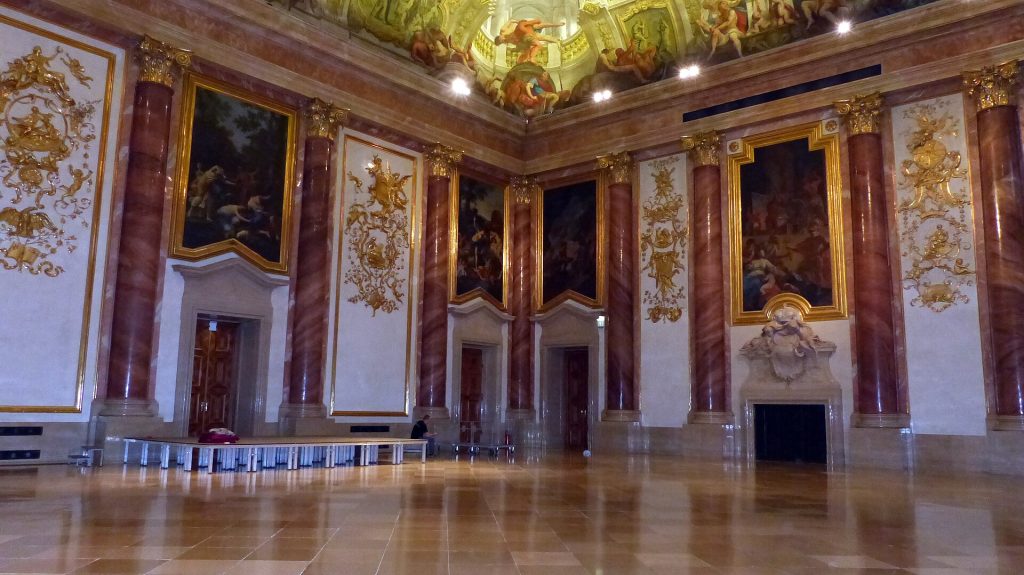
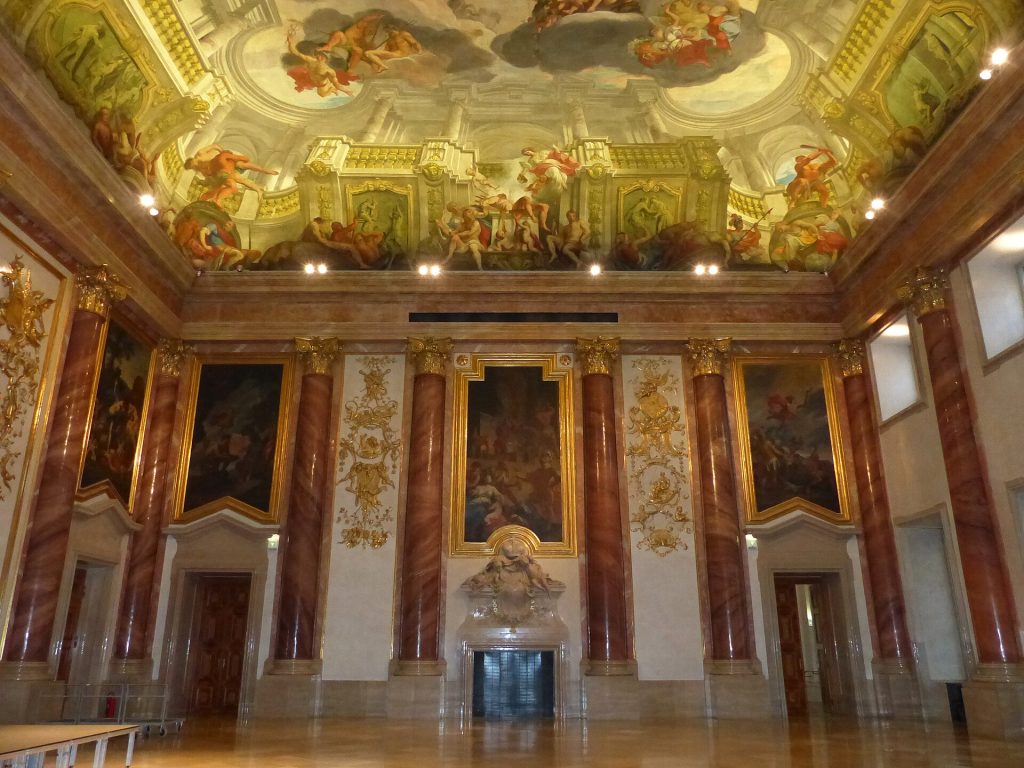
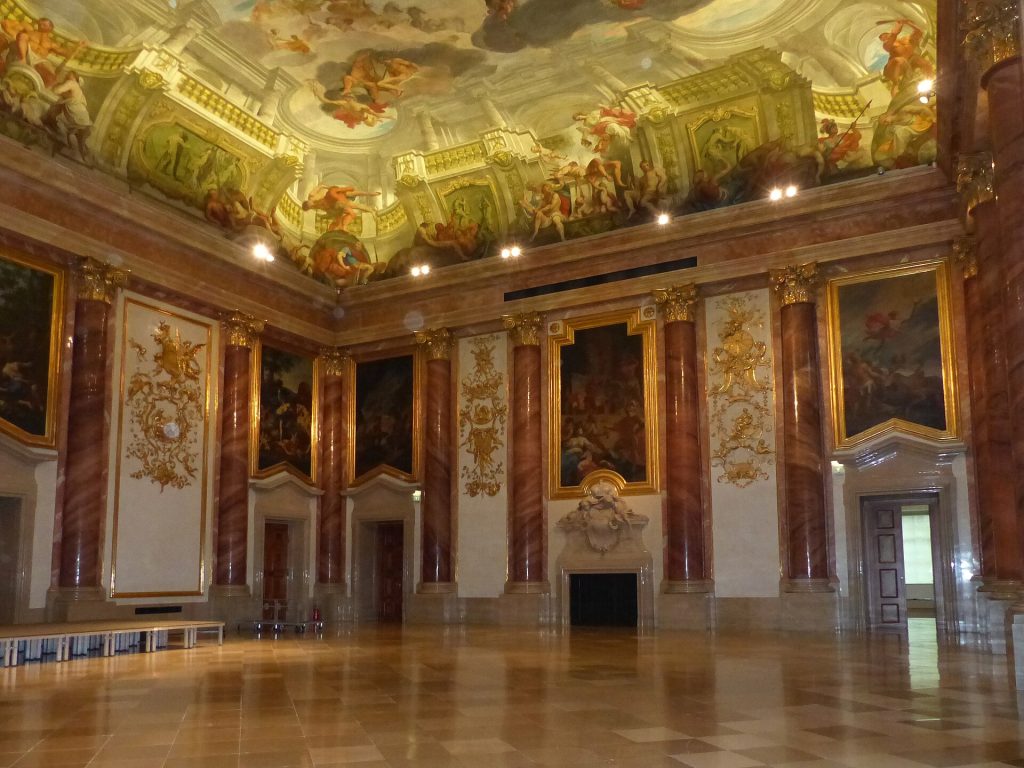
At the heart of the palace lies the Hercules Hall, the largest secular baroque hall in Vienna. It occupies the centre of the main floor and rises through two storeys, its walls lined with marble and stucco and its windows looking out over both the courtyard and the garden.
The hall was designed for receptions, banquets and concerts on a princely scale. With its gleaming floor, crystal chandeliers and towering windows, it creates an atmosphere of overwhelming splendour, and it is still used today for concerts and special events.
The architecture of the hall is grand but balanced, with pilasters, cornices and decorative frames creating a rhythm around the walls. Everything leads the eye upward toward the ceiling, where the true masterpiece awaits.
Standing in the middle of the hall, you can easily imagine the music, candlelight and elegant guests of the baroque era, when the princes of Liechtenstein entertained the aristocracy of Vienna here.
The marble used in the hall came from various sources, and its colours were chosen to create a harmonious effect with the gilded details and the painted ceiling. The result is a space where every element contributes to the overall impression.
Acoustically the hall is excellent, which is why it remains a sought after venue for chamber music and orchestral concerts. Hearing baroque music here is an experience that brings the room fully to life.
The hall also contains fine sculptures and decorative vases, and the doors are framed with elaborate carved surrounds that continue the theme of princely magnificence.
During the twentieth century the hall lost some of its furnishings, but careful restoration in the early 2000s brought back much of its original splendour, including the brilliance of the ceiling fresco.
Andrea Pozzo and the Apotheosis of Hercules
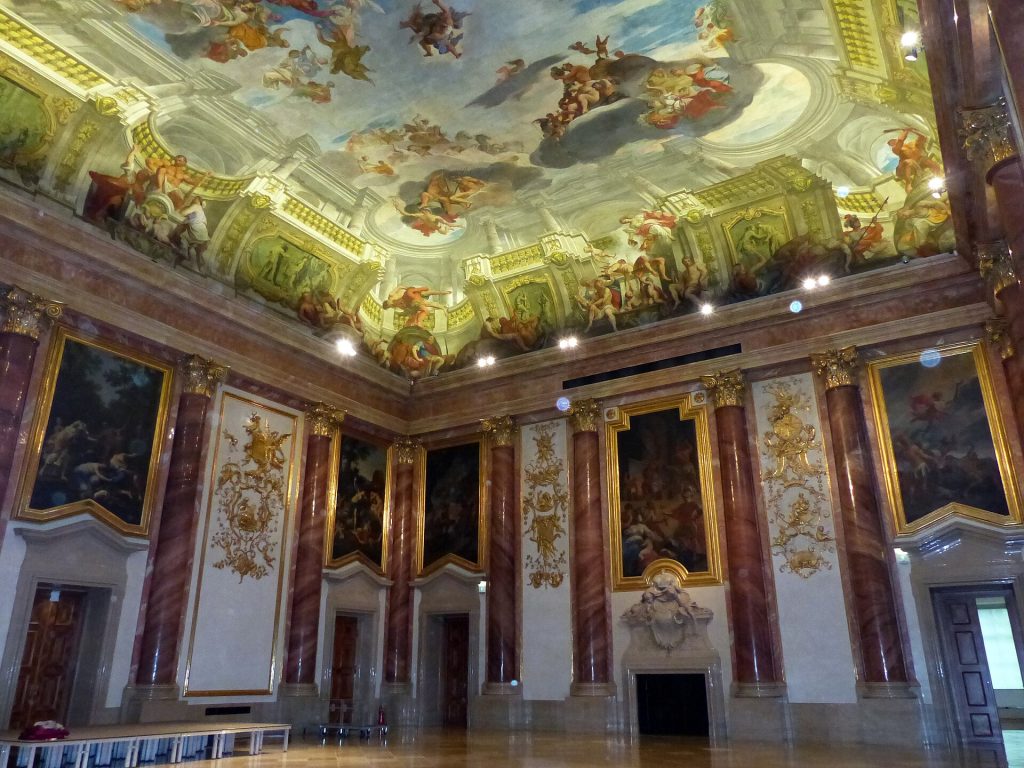
The ceiling of the Hercules Hall was painted by Andrea Pozzo, a Jesuit brother and one of the greatest masters of illusionistic ceiling painting. Pozzo had already created famous ceilings in Rome, most notably in the church of Sant Ignazio, before being invited to Vienna.
At the Garden Palace he painted the story of Hercules, culminating in the hero’s apotheosis, his elevation to the company of the gods. The scene unfolds across the enormous ceiling, with painted architecture appearing to open the room to the sky and figures floating in clouds of light and colour.
The choice of Hercules was deliberate. The hero symbolised strength, virtue and triumph over adversity, qualities that the prince wished to associate with himself and his family. The fresco is both a work of art and a statement of princely ideals.
Pozzo’s ceiling is one of the great achievements of baroque painting north of the Alps. Its illusion of depth is astonishing, and it is worth lying back mentally, if not physically, to let the painted heavens draw you in.
Other rooms in the palace were decorated by painters such as Marcantonio Franceschini and Antonio Bellucci, whose works add further richness to the interiors.
Pozzo was also a theorist who wrote an influential treatise on perspective for painters and architects. His understanding of geometry allowed him to create illusions so convincing that viewers can find it hard to tell where the real architecture ends and the painted one begins.
The best place to view the ceiling is from the centre of the hall, where the perspective was designed to work most effectively. From there, the painted columns and balconies seem to rise vertically into the sky.
Restorers who cleaned the fresco found that Pozzo had worked with remarkable speed and confidence, painting large areas in a short time while maintaining the precision of his perspective.
Treasures of the Princely Collections
The Liechtenstein Collections are among the most important private art collections in the world, built up over more than four centuries. Part of the collection is displayed at the Garden Palace, in rooms that recreate the atmosphere of a princely gallery.
The collection includes paintings by Italian, Flemish and Dutch masters, sculpture, furniture, porcelain and decorative arts. Among the most famous objects is the Golden Carriage, a spectacular gilded coach made in Paris in the eighteenth century for a Liechtenstein prince serving as ambassador.
The displays combine works of art with period furniture and decoration, so you experience the collection much as it would have been seen in the past, as part of a living princely residence rather than a neutral museum space.
Highlights also include fine bronze sculptures, pietra dura tables and rare objects that reflect the wide interests of generations of princely collectors.
The Golden Carriage is a dazzling object, covered in gilded carvings and painted panels, designed to impress the French court when it carried the prince through the streets of Paris. It is one of the finest surviving baroque carriages in the world.
Over the centuries, parts of the collection have been moved between Vienna and Vaduz, especially during the upheavals of the twentieth century. Today the family displays selected works in Vienna again, allowing visitors to enjoy them in their historic setting.
Other highlights include works by Raphael, Cranach, Frans Hals and Canaletto, as well as Biedermeier paintings that show Viennese life in the early nineteenth century. The range is astonishing for a private collection.
The family continues to acquire works today, so the collection is not frozen in the past but remains a living, growing ensemble of art.
Rooms are arranged to tell the story of collecting itself, showing how the princes acquired, displayed and cared for their treasures over the centuries.
Rubens and the Golden Age of Flemish Painting
One of the crown jewels of the collection is its group of paintings by Peter Paul Rubens. The Liechtensteins acquired major works by the great Flemish master, including a famous cycle depicting the story of the Roman consul Decius Mus, designed as cartoons for tapestries.
The Decius Mus cycle tells the story of a Roman hero who sacrificed himself to secure victory for his people. The large canvases are full of drama, movement and colour, showing Rubens at the height of his powers.
Other works by Rubens and his circle, including portraits and religious scenes, can also be seen, as well as paintings by Anthony van Dyck and other leading Flemish artists. Together they make the Garden Palace one of the best places anywhere to appreciate Flemish baroque painting.
Seeing these paintings in a baroque palace, rather than in a modern museum, gives them a special resonance, reminding you that they were made for exactly this kind of setting.
Rubens painted the Decius Mus cycle in the 1610s, and the large canvases were intended as models for weavers who would turn them into tapestries. They show his mastery of composition and his ability to tell a story with energy and emotion.
The collection also contains intimate works by Rubens, including a much loved portrait of his young daughter Clara Serena, which shows a tender, private side of the artist quite different from his grand historical scenes.
Van Dyck, who worked in Rubens’s studio as a young man before becoming a famous portraitist in his own right, is represented by elegant portraits that show his refined style and his skill at capturing character.
The Liechtenstein Park
Behind the palace lies the Liechtenstein Park, one of the loveliest green spaces in central Vienna. Originally laid out as a formal baroque garden with parterres, fountains and statues, it was later transformed into an English style landscape park with lawns, groups of trees and winding paths.
Today the park is open to the public and is a favourite with local residents, who come to walk, jog, read or simply sit in the shade. On summer evenings it is a peaceful refuge from the heat of the city.
Recent restoration work has recreated some features of the original baroque garden near the palace, including parterres and decorative elements, while preserving the landscape character of the wider park.
From the far side of the park, you get the best view of the garden facade of the palace, framed by trees and lawns, a scene that captures the elegance of baroque Vienna.
The park contains old trees of impressive size, some planted in the nineteenth century, and their shade makes it a welcome retreat on hot days. In spring, flowering trees and fresh green lawns make it especially beautiful.
Small architectural features, statues and benches are scattered around the park, inviting you to slow down and enjoy the views. It is easy to spend an hour here simply wandering and relaxing.
The park has also hosted outdoor events and festivals, and its large lawns are perfect for picnics on sunny weekends. It is a place where Viennese of all ages come together.
The restored parterres near the palace give an idea of how the garden looked in the baroque era, with geometric beds, clipped hedges and gravel paths creating a formal setting for the building.
See the Palace on Video
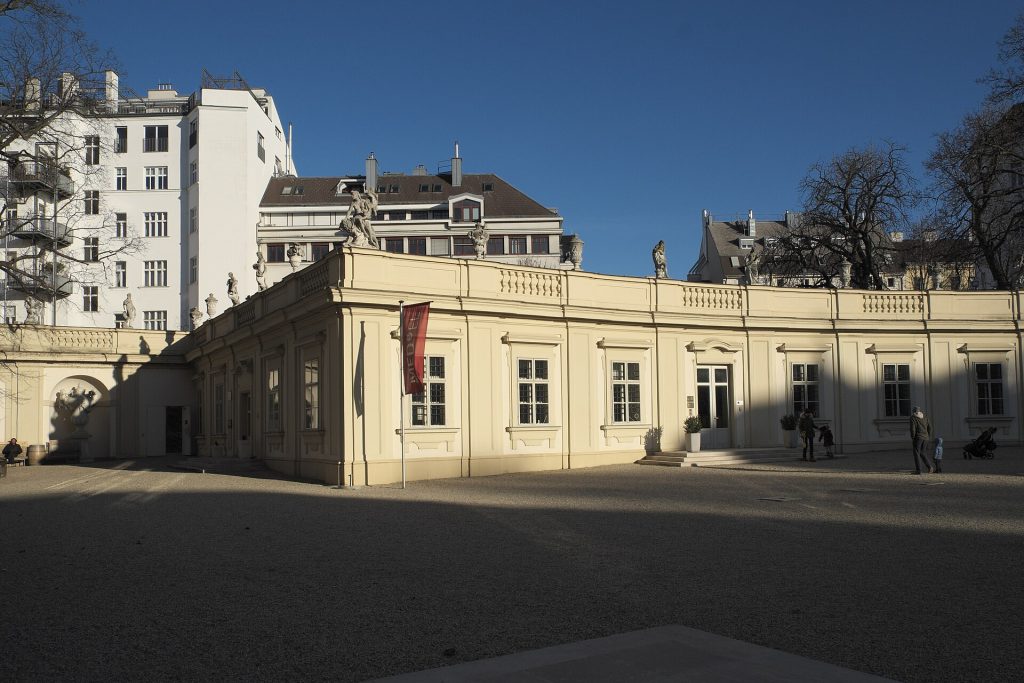
To get a sense of the palace and its setting, the video below offers a look at the building and its surroundings. It is a good way to preview the architecture and the park before your visit.
Watch for the broad facades, the garden front and the peaceful atmosphere of the park.
The video also shows the surrounding park and district, helping you understand how the palace fits into the everyday life of modern Vienna.
If the video inspires you, the final section has practical tips on visiting.
Visiting the Liechtenstein Garden Palace
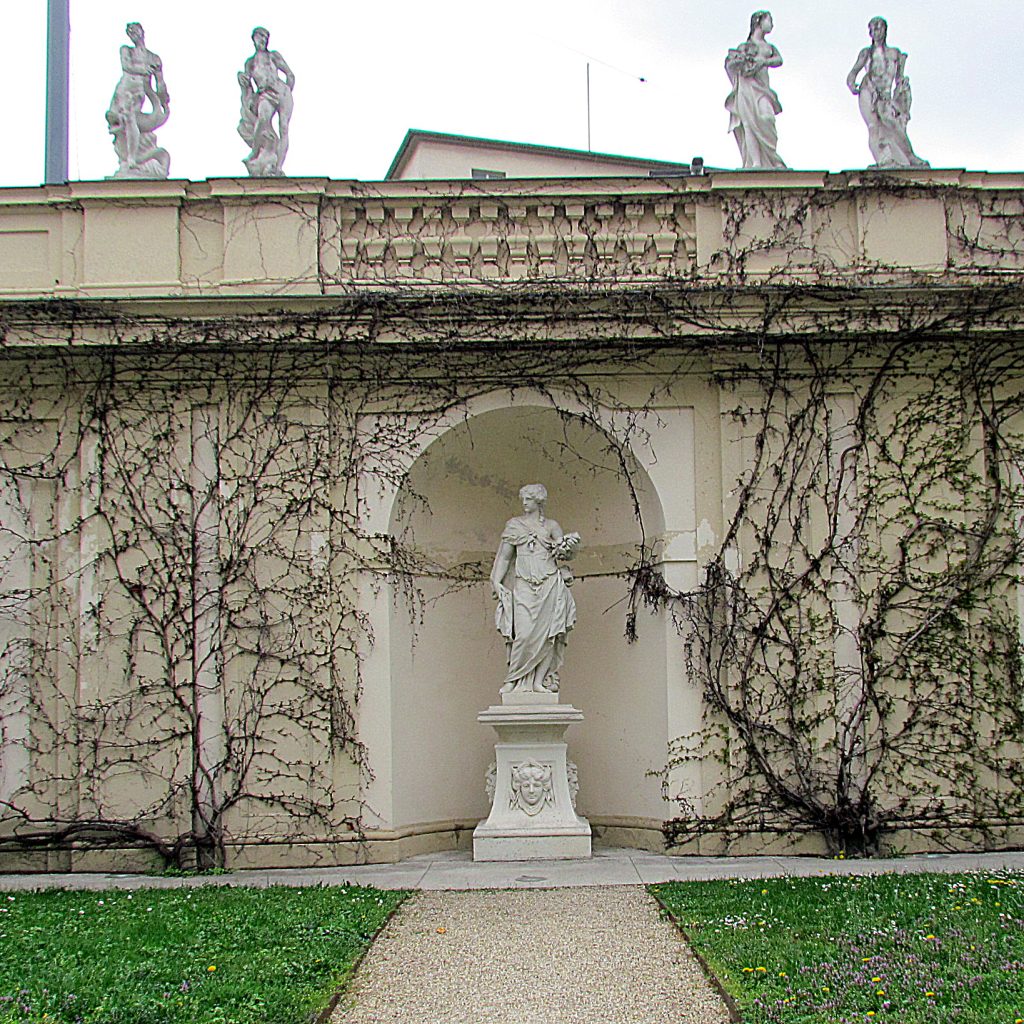
The Garden Palace is located in the Ninth District of Vienna, on the Furstengasse, and is easy to reach by tram or underground from the city centre. The park is open to the public, while the interiors can be visited on guided tours organised by the Liechtenstein Collections, usually by appointment.
Because tours run on a limited schedule and often in small groups, it is wise to book well in advance. Tours typically include the staircases, the Hercules Hall and the main rooms of the collection, and they are led by knowledgeable guides.
The Hercules Hall is also used for concerts and events, which offer another way to experience the palace. Keep an eye on the event calendar if you would like to hear music beneath Pozzo’s ceiling.
Plan to combine your visit with a walk in the park and a stroll through the surrounding district, with its cafes and nineteenth century streets. It is a rewarding way to discover a quieter side of Vienna, away from the busiest tourist sights.
If you are interested in the Liechtenstein story, consider combining your visit with the City Palace in the Bankgasse, the other great Viennese residence of the family, as well as Valtice and Lednice in Moravia, where the princes had their main country seats for centuries.
Whenever you come, the Garden Palace offers a rare and rewarding glimpse into the world of one of the great princely families of Europe, and into the golden age of Viennese baroque.
There are plenty of cafes and restaurants in the surrounding streets, perfect for a coffee and a slice of cake before or after your tour, in true Viennese style.
Allow around two hours for the guided tour and a further hour to enjoy the park, so you can experience both the indoor splendour and the outdoor calm of this remarkable place.
View the location on Google Maps
Palaces Nearby
If the Garden Palace has captivated you, the world of the Habsburg and Liechtenstein nobility holds more remarkable residences. Here are two more well worth adding to your journey:
- Valtice Chateau – the baroque Moravian seat of the Liechtenstein princes, heart of a UNESCO listed landscape.
- Liechtenstein City Palace – the first high baroque palace of Vienna, famous for its neo rococo ballroom and Thonet floors.
You May Like
Pillnitz Palace and the Chinese Summer Dreams of Saxony