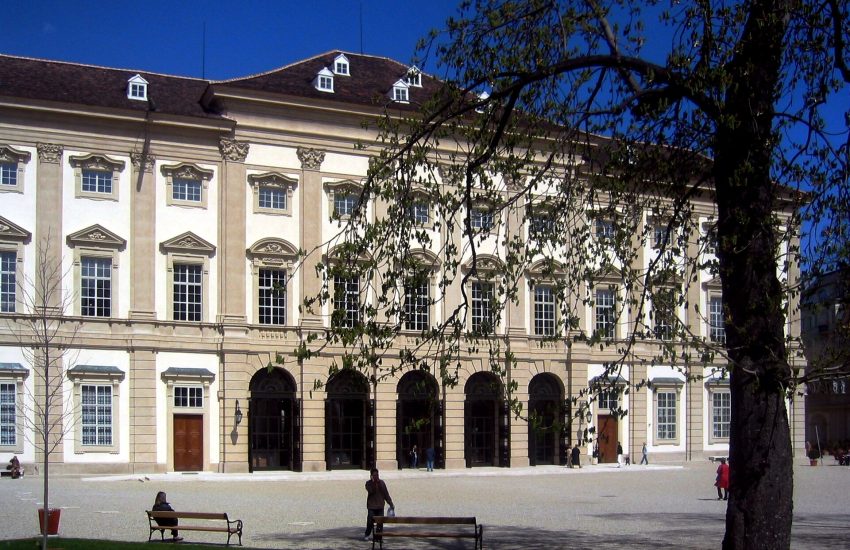
Hidden in the narrow streets of Vienna’s old town, just a few steps from the Hofburg and the Burgtheater, stands a palace that marks a turning point in the history of the city. The Liechtenstein City Palace on the Bankgasse was the first great high baroque palace built in Vienna, a bold statement of wealth and taste by one of the richest princely families in Europe.
Behind its long facade and its sculpted portals lie grand staircases, a glittering ballroom and some of the finest neo rococo interiors in the world, created in the nineteenth century with the help of the furniture maker Michael Thonet. After a long restoration, the palace now shines again as a showcase of princely culture.
In this article we will explore the City Palace from its baroque beginnings to its nineteenth century transformation, through its portals, staircases and state rooms, and we will finish with tips for experiencing it yourself.
In This Article
- A Princely Palace in the Old Town
- From Kaunitz to Liechtenstein
- Zuccalli, Martinelli and the First High Baroque Palace
- A Facade That Changed Vienna
- A Palace for the Social Season
- The Minoritenplatz Front
- Sculpted Portals and the Princely Arms
- Through the Side Entrance and Courtyard
- Neo Rococo Splendour and Michael Thonet
- The Glittering Ballroom
- The Grand Staircase
- Explore the City Palace on Video
- Visiting the Liechtenstein City Palace
A Princely Palace in the Old Town
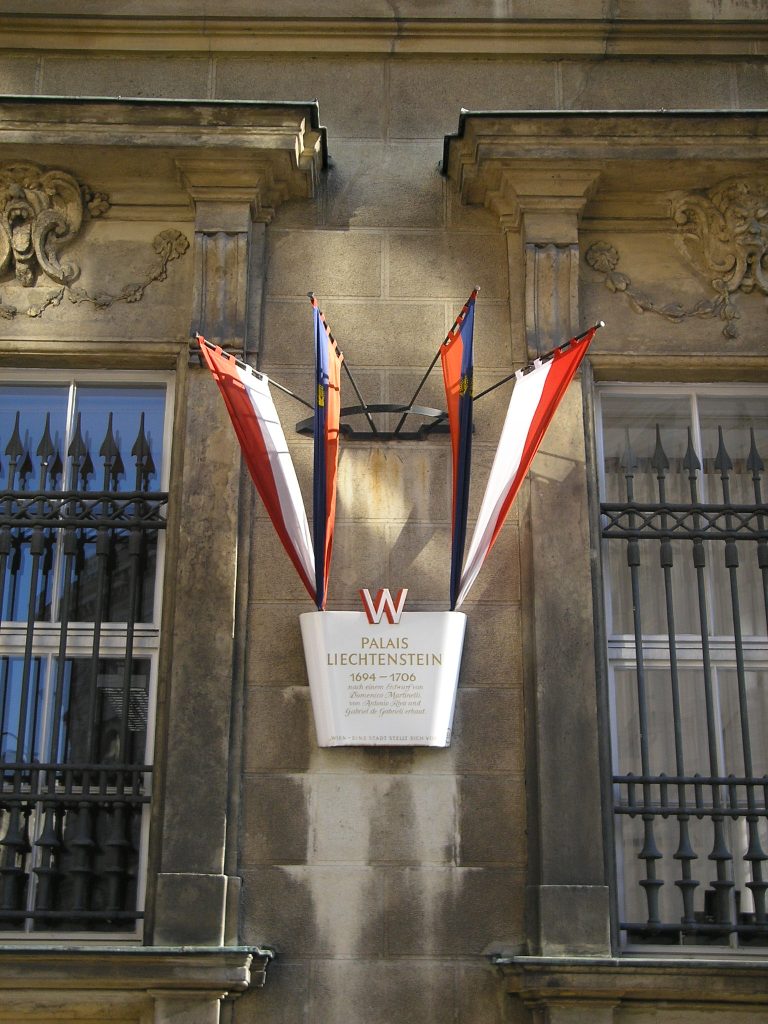
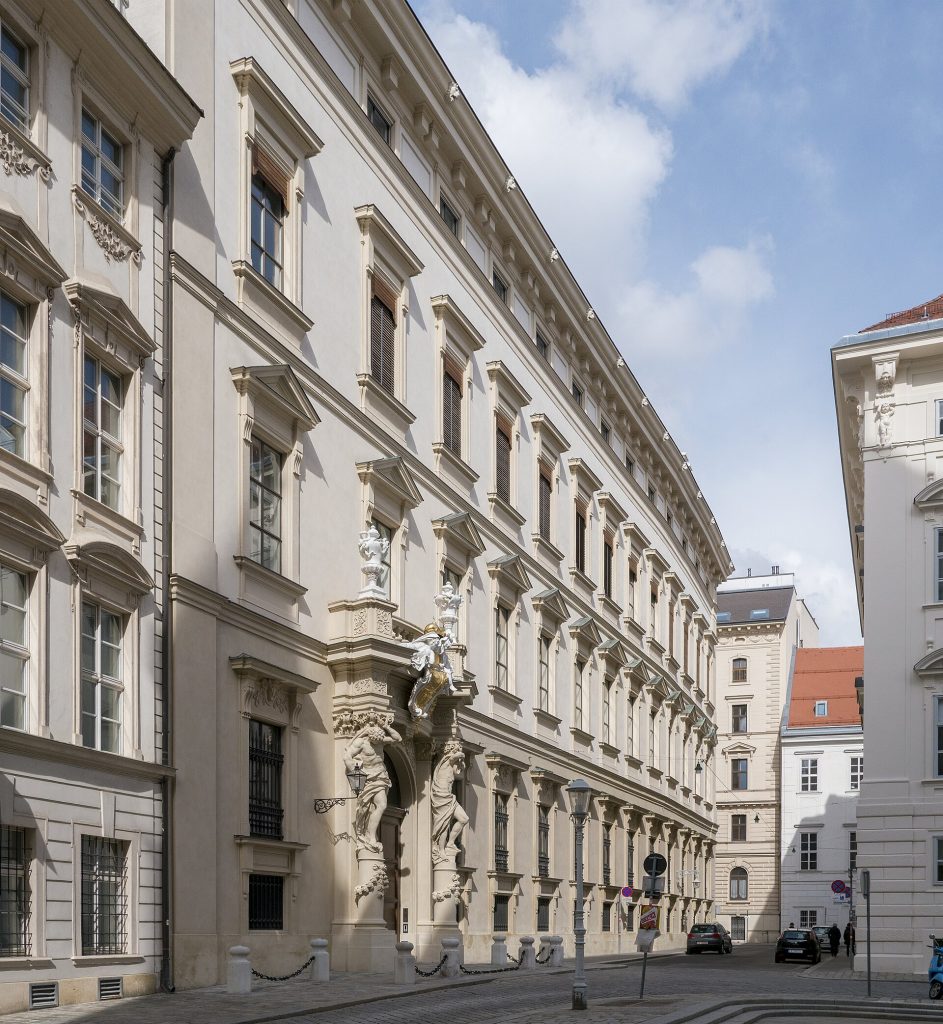
Walking along the Bankgasse, you suddenly find yourself beside a long, stately facade that seems almost too grand for the narrow street. This is the Liechtenstein City Palace, and it occupies an entire block between the Bankgasse and the Minoritenplatz, in one of the most historic corners of the city.
The surrounding area is full of aristocratic palaces, government buildings and churches, a reminder that this was where the nobility lived close to the imperial court. Yet even in such company, the Liechtenstein palace stands out for its size and its sculpted portals.
Unlike the Garden Palace in the Rossau, which was a summer retreat, the City Palace was the family’s winter residence and their stage for social and political life in the capital. Here they received ministers, ambassadors and members of the imperial family.
What makes the palace special today is the combination of baroque architecture and lavish nineteenth century interiors, a pairing that offers a rare insight into two very different eras of aristocratic life.
Because the palace is privately owned and opens mainly for tours and events, visiting it feels like a privilege, a chance to step behind one of the most impressive facades in Vienna.
The palace sits within easy walking distance of many of Vienna’s most famous sights, yet the Bankgasse itself is surprisingly calm. Office workers, students and residents pass by, often without a glance at the facade, which only adds to the feeling of discovering a secret.
Many visitors first notice the palace while walking from the Hofburg toward the Rathaus or the university. Once you know it is there, it is impossible to miss the scale of the building and the quality of its sculpture.
The palace has survived wars, revolutions and changes of regime, and its endurance is part of its appeal. It has witnessed the history of Vienna from the age of the baroque emperors to the present day.
Inside, the contrast between the baroque architecture and the nineteenth century decoration creates a fascinating dialogue between two eras, both devoted to luxury, ceremony and display.
For anyone interested in the history of Vienna, the palace offers a key to understanding how the city’s aristocratic culture developed over three centuries.
From Kaunitz to Liechtenstein
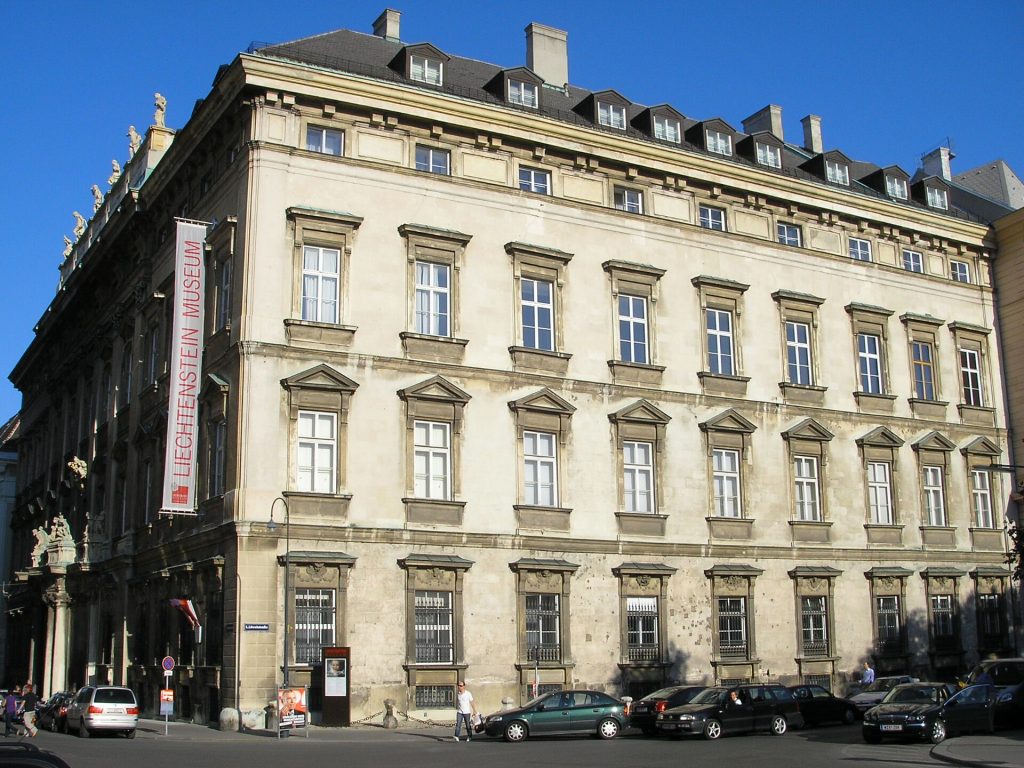
The story of the palace begins in the early 1690s, when Count Dominik Andreas von Kaunitz started building a residence on this site. The project was ambitious, but before it could be completed, the land and the unfinished building were acquired in 1694 by Prince Johann Adam Andreas of Liechtenstein.
The prince, known as Hans Adam the Rich, was one of the wealthiest men in Europe and a passionate builder. He saw the opportunity to create a palace that would establish his family at the heart of Viennese society, close to the imperial court.
He commissioned leading architects to complete and transform the building, and by around 1705 the palace was finished, setting a new standard for aristocratic architecture in the city.
At the same time the prince was building his Garden Palace in the Rossau, and the two residences together demonstrated the power and ambition of the house of Liechtenstein at the dawn of the eighteenth century.
Count Kaunitz belonged to an influential Moravian noble family, and his decision to sell the unfinished building may have been driven by financial pressures. For the Liechtensteins, it was an ideal opportunity to secure a prime location in the city centre.
The purchase also reflected the close relationship between the Liechtensteins and the imperial court. Living near the Hofburg was essential for anyone who wanted to play a role in the politics of the Habsburg monarchy.
Hans Adam the Rich was known for his business sense and his love of art in equal measure, and he oversaw the construction with the same attention to detail that he brought to managing his estates.
His heirs continued to use and improve the palace, and it remained the main Viennese residence of the reigning princes for generations.
The palace remained in Liechtenstein hands through all the upheavals of the following centuries, an unusual continuity in a city where many aristocratic palaces changed owners or were sold to the state.
Zuccalli, Martinelli and the First High Baroque Palace
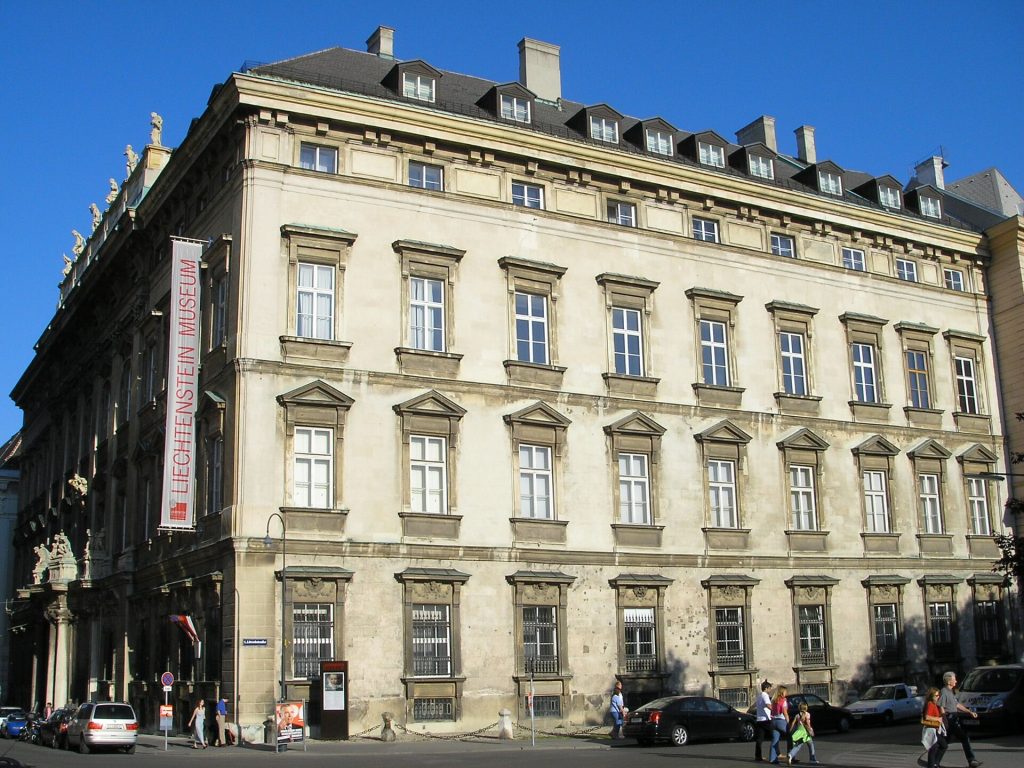
The design of the City Palace involved several architects. Enrico Zuccalli, court architect in Munich, contributed to the early plans, and Domenico Martinelli, the Italian architect who also worked on the Garden Palace and on Valtice, played a major role in completing the building.
Their work introduced the grand Roman high baroque style to Vienna. Until then, aristocratic houses in the city had been relatively modest, but the Liechtenstein palace, with its monumental facade and grand interior spaces, showed what a princely residence could be.
Gabriel de Gabrieli and other builders also contributed during construction, and the result was a palace that impressed contemporaries and influenced many later buildings in Vienna.
Historians often describe it as the first high baroque palace in the city, a landmark that opened the way for the great wave of palace building that followed after the end of the Ottoman threat.
Martinelli brought with him the experience of working in Rome, where he had studied the great palaces of the papal families. His knowledge of Roman models shaped the proportions and the dignified character of the Liechtenstein facades.
Zuccalli, for his part, had designed important buildings for the Bavarian court, and his involvement shows how the Liechtensteins sought the best talent from across Europe for their projects.
The palace influenced later architects such as Johann Bernhard Fischer von Erlach and Johann Lukas von Hildebrandt, who designed many of the great baroque buildings of Vienna in the following decades.
Its plan, with wings arranged around a courtyard and state rooms on the main floor, became a model for aristocratic palaces throughout the city.
The collaboration of several architects means that the palace combines different influences, yet the overall result is remarkably unified, a testament to the clear vision of its patron.
A Facade That Changed Vienna
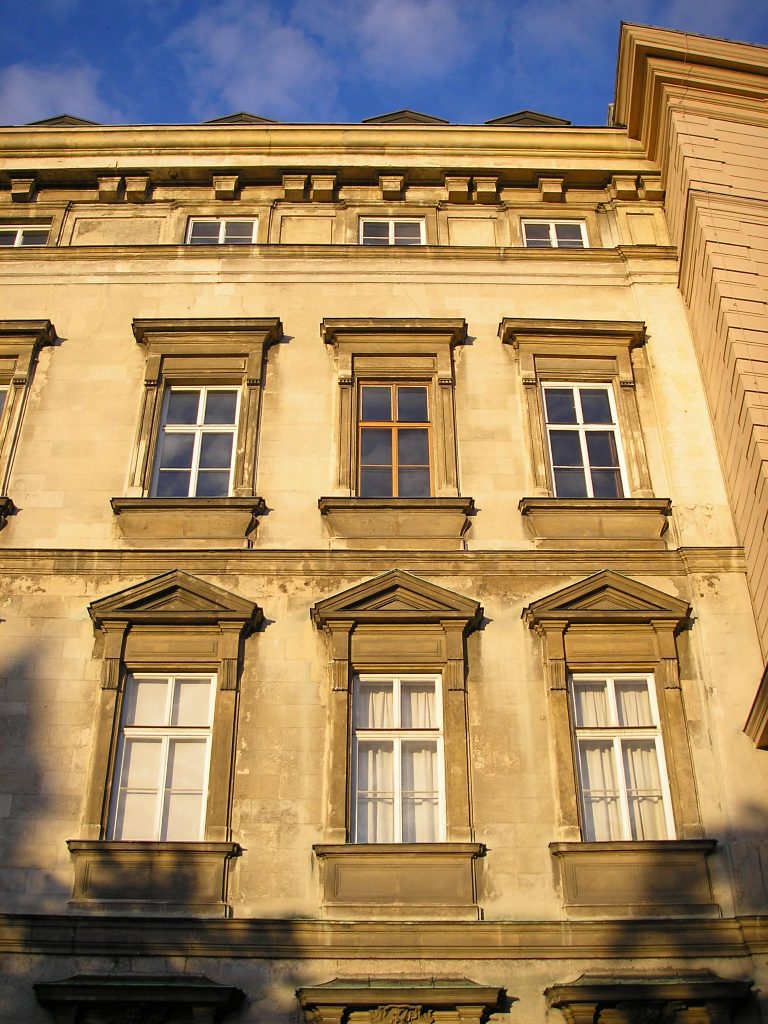
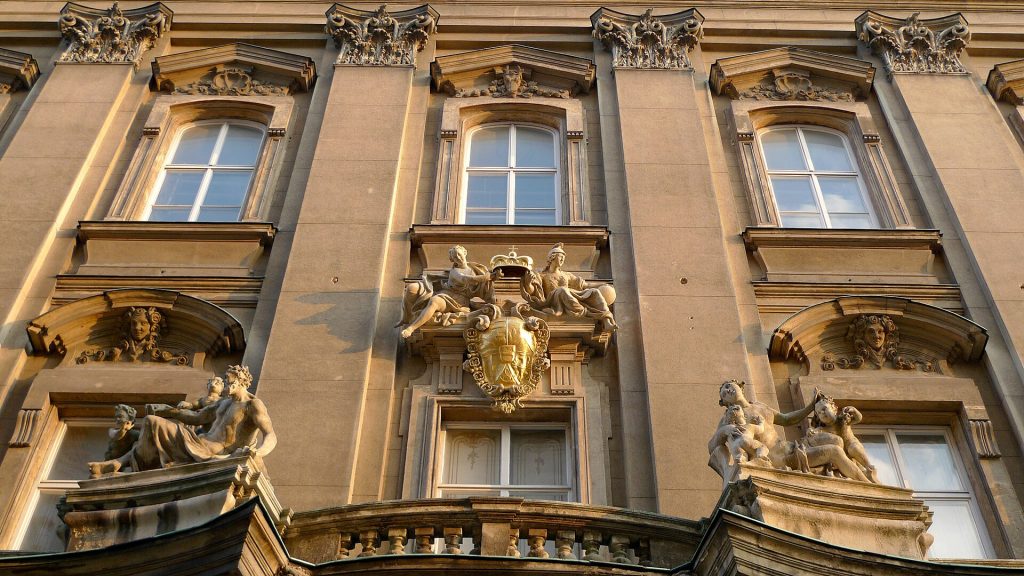
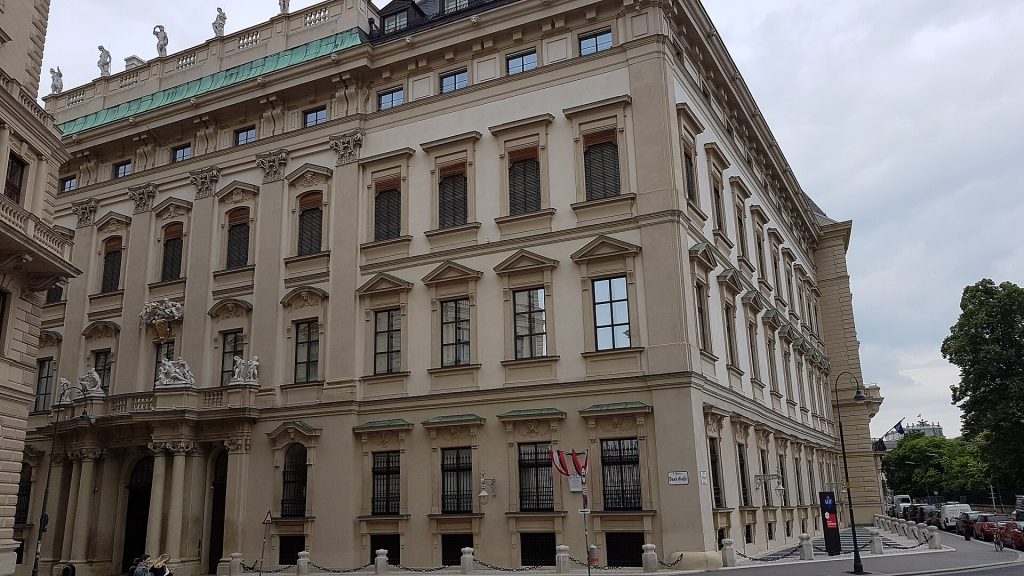
The long facade on the Bankgasse is the palace’s public face. It is divided into sections by pilasters and window frames, creating a rhythm that runs the length of the street. The proportions are noble and balanced, and the overall effect is one of dignified power.
Look closely at the window surrounds and the cornices, which are richly detailed yet restrained. The architects avoided excessive ornament, relying on scale and proportion to impress, an approach that reflects Roman models.
The facade had to work in a narrow street, where viewers could not step back to admire it from a distance. The designers solved this by emphasising vertical elements and placing the most important decoration at the portals, where it could be seen up close.
Walking past the palace today, you can still feel the impact it must have had on Viennese society around 1700, when such grandeur in a private residence was something new.
Over the centuries the facade was carefully maintained and restored, and today its pale colour and crisp details look much as they did when the palace was first completed.
The windows on the upper floors are larger and more richly framed, signalling the location of the state rooms behind them, while the lower floors, used for offices and services, are treated more simply.
At street level, the solid base of the building gives it a sense of stability, while the upper floors appear lighter thanks to their larger windows and decorative frames.
A Palace for the Social Season
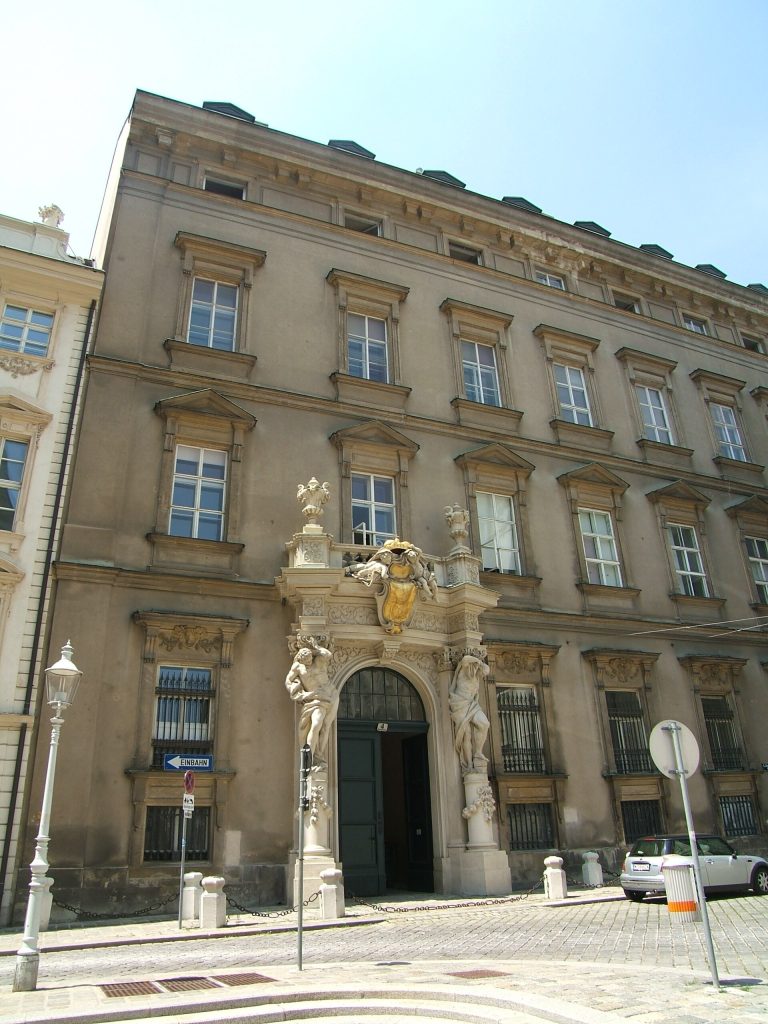
In aristocratic Vienna, the winter months were the social season, when nobles left their country estates and gathered in the capital for balls, receptions, concerts and political life. The City Palace was the Liechtenstein family’s base during these months.
Its location near the Hofburg made it ideal for attending court ceremonies and meeting ministers and diplomats. The family also used it to host their own glittering events, which were among the highlights of the Viennese calendar.
Life in the palace followed the rhythm of the season, with busy days of visits and business and long evenings of entertainment. Servants, musicians and cooks worked tirelessly to keep everything running smoothly.
Seeing the palace today, it is easy to imagine carriages arriving at its portals, guests in elaborate costumes climbing the stairs and the sound of music drifting into the narrow street.
The Liechtensteins also used the palace for family celebrations, such as weddings and baptisms, which brought together relatives from across the many branches of the princely house.
Political meetings took place here too, and the palace witnessed many discussions that shaped the policy of the Habsburg monarchy over the centuries.
The palace also played a role in the cultural life of the city, hosting musicians, artists and writers who were part of the Viennese scene in different periods.
During the nineteenth century, when the Ringstrasse was being built and Vienna was transforming into a modern metropolis, the palace remained a symbol of the old aristocratic world in the inner city.
The family’s guest lists read like a who’s who of European nobility, and invitations to their balls were among the most coveted in the city.
The Minoritenplatz Front
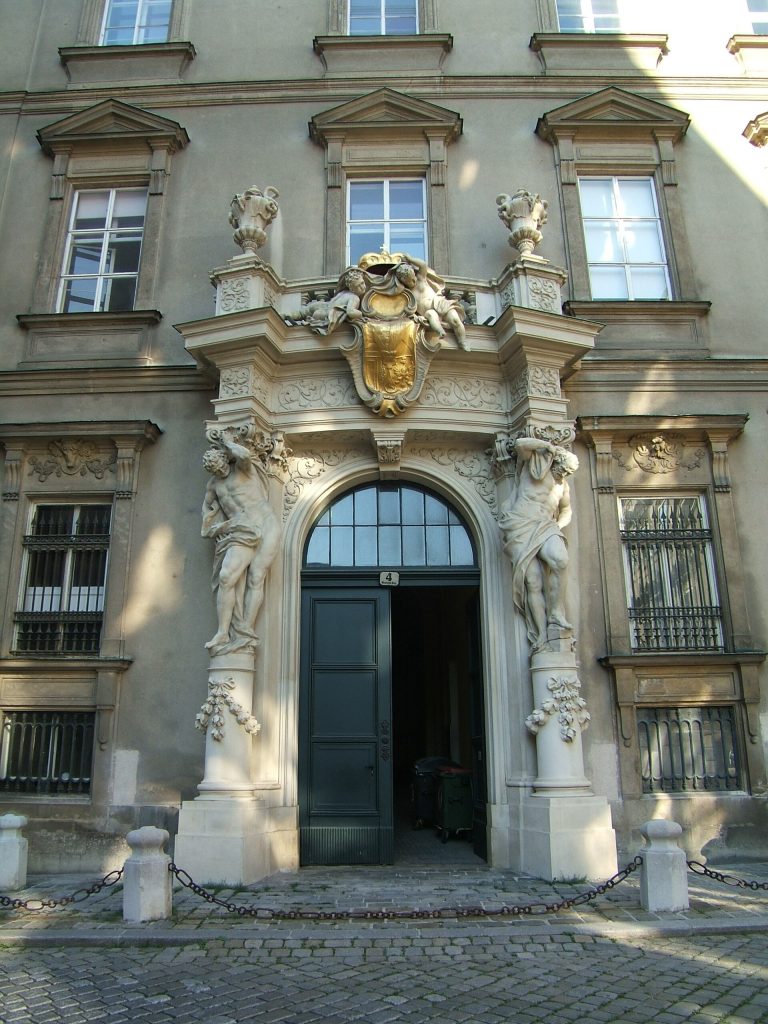
The other side of the palace faces the Minoritenplatz, a quiet square dominated by the Gothic Minorite Church. Here the palace presents a second facade, with its own portal and a different character from the narrow Bankgasse front.
The square allows more space to appreciate the architecture, and from here you can see the scale of the building and how it fills an entire city block. It is one of the best places to photograph the palace.
The Minoritenplatz is surrounded by government buildings and other palaces, many of them now housing ministries, and it gives a strong sense of the historic heart of Habsburg Vienna.
Take a moment to stand in the square and look at the palace beside the old church. The contrast between medieval Gothic and Roman baroque captures the layered history of the city in a single view.
The Minorite Church, with its distinctive truncated tower, is one of the oldest churches in Vienna, and its presence beside the palace adds depth to the historical atmosphere of the square.
In the evening, when the lights come on and the square grows quiet, the palace facade takes on a soft glow that makes it especially beautiful.
Several ministries and official buildings around the square give it a formal atmosphere during the day, but at weekends it becomes a peaceful place to admire the architecture.
Sculpted Portals and the Princely Arms
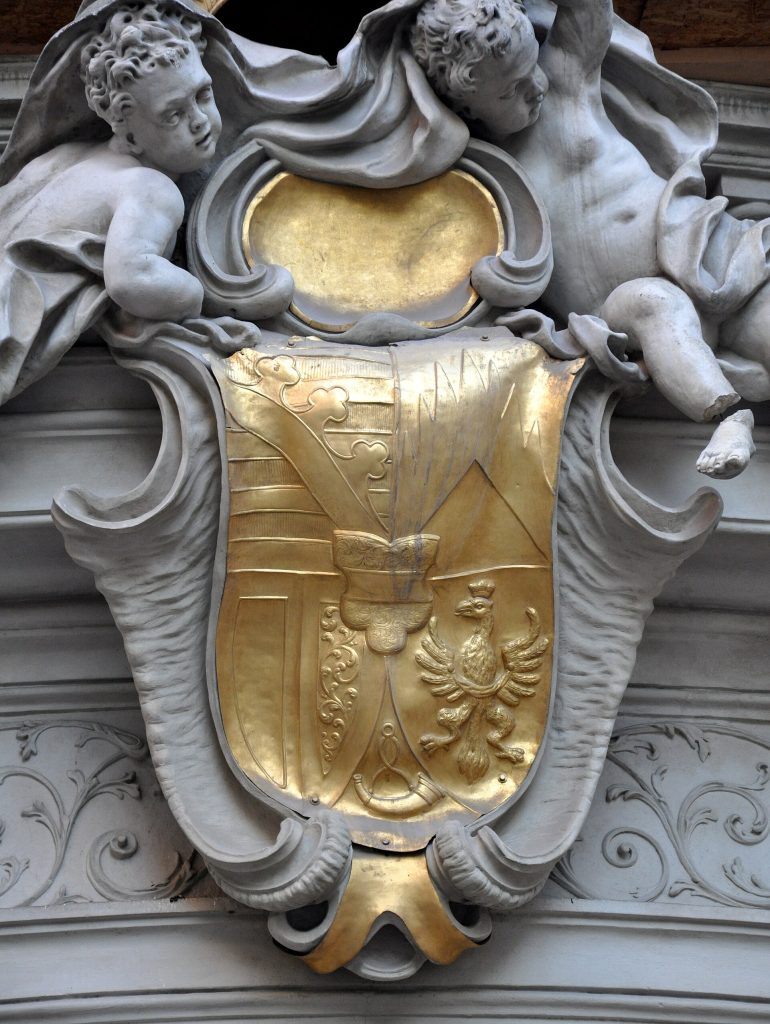
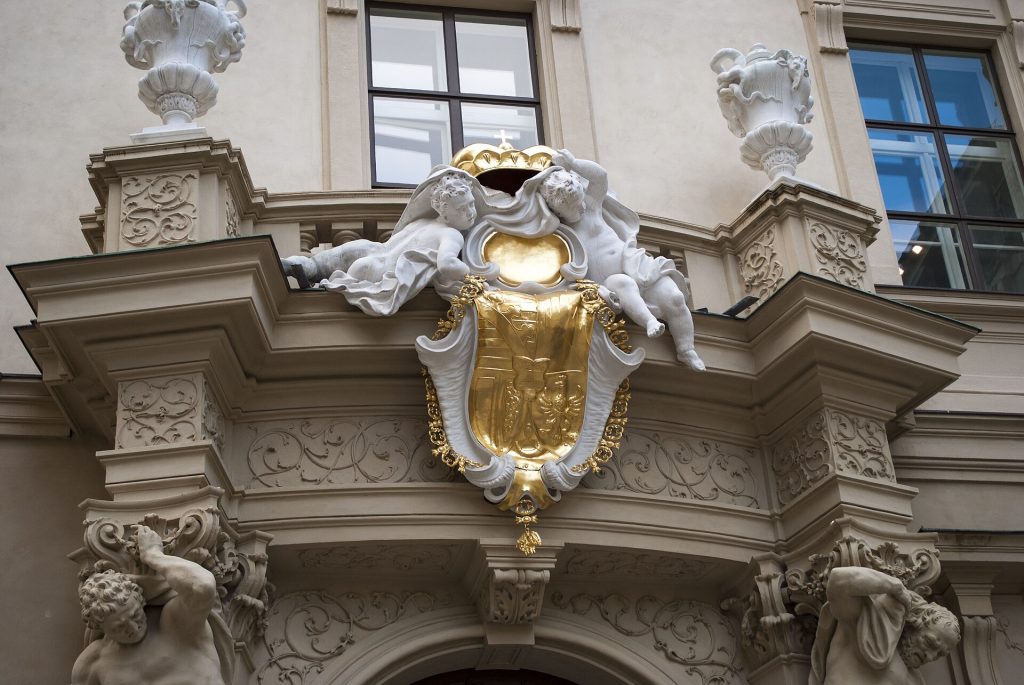
The portals are the most richly decorated parts of the exterior. Framed by columns and crowned with sculpture, they announce the importance of the family and invite visitors into the palace. The sculptor Giovanni Giuliani, who worked extensively for the Liechtensteins, contributed to the decoration.
Above the portals, the coat of arms of the princely house is displayed, surrounded by ornament and supported by sculpted figures. It was a clear statement of identity in a city where heraldry mattered greatly.
The portals were designed to accommodate carriages, which would drive through into the inner courtyard. Their scale reflects the practical needs of a great household as well as the desire to impress.
Look closely at the sculpted details, the figures, garlands and trophies, which show the quality of the craftsmanship that went into every part of the palace.
Giuliani was one of the most gifted sculptors working in Vienna around 1700, and his work for the Liechtensteins includes sculpture for the Garden Palace and other family properties. His figures combine strength and grace in a way that is typical of the high baroque.
The portals have been carefully restored, and the stone now shows its original colour and detail, allowing visitors to appreciate the full quality of the carving.
The size of the portals also reflected social status, as only the grandest families could afford entrances wide enough for the elaborate coaches that were symbols of rank in baroque Vienna.
Passing beneath these portals, visitors would have felt the transition from the public street into the private world of the prince, a sensation that remains powerful today.
The sculpted figures and trophies above the doorways celebrate military victory and princely virtue, themes that were central to the self image of the Liechtenstein family.
Through the Side Entrance and Courtyard
Beyond the portals lies an inner courtyard, around which the wings of the palace are arranged. This was the working heart of the building, where carriages arrived, servants hurried about their tasks and supplies were delivered.
Side entrances led to different parts of the palace, separating the routes of family, guests and staff. This careful planning was typical of great baroque residences, where hierarchy and ceremony governed every movement.
The courtyard also gave light and air to the inner rooms, an important consideration in a densely built city centre.
Today the courtyard and entrances have been carefully restored, and they give visitors a sense of the scale and organisation of a princely household in the heart of Vienna.
Some of the ground floor rooms once housed the administration of the princely estates, with officials managing the vast Liechtenstein properties across Austria, Moravia and Bohemia from here.
The stables and coach houses that once surrounded the courtyard were essential to the life of the palace, as carriages were the only means of transport through the city streets.
Today some of the former service rooms have been converted for use during events, combining historic architecture with modern facilities.
The restoration revealed original details hidden under later alterations, which helped restorers recreate the appearance of the palace as it was in its prime.
Walking through the courtyard, notice how the facades facing inward are simpler than those on the street, a typical feature of baroque palaces where display was directed toward the public view.
Neo Rococo Splendour and Michael Thonet
In the 1830s and 1840s, Prince Alois II of Liechtenstein decided to transform the interiors of the City Palace in the fashionable second rococo style. He commissioned the English architect Peter Hubert Desvignes to redesign the state rooms, creating a sequence of dazzling interiors full of gilding, mirrors, silk and carved ornament.
A key figure in this transformation was Michael Thonet, a young cabinetmaker from the Rhineland who would later become world famous for his bentwood chairs. At the City Palace he created elaborate parquet floors and furniture, and the prince’s patronage helped launch his career in Vienna.
The neo rococo rooms of the palace are among the finest of their kind anywhere. They combine eighteenth century inspiration with nineteenth century craftsmanship and comfort, creating spaces of extraordinary richness and elegance.
Walking through these rooms, you can see how the princes adapted their baroque palace to the tastes of a new era, while preserving its grandeur and sense of occasion.
Thonet would go on to revolutionise furniture design with his technique of bending wood into elegant curves, and his famous Number 14 chair became one of the best selling chairs in history. His work at the Liechtenstein palace was an early milestone in that remarkable career.
The parquet floors he created for the palace are works of art in their own right, with intricate patterns of different woods fitted together with astonishing precision. Even today they are admired as some of the finest floors of their kind.
The furniture includes chairs, sofas, tables and cabinets in gilded and carved wood, upholstered in rich fabrics. Many pieces were designed specifically for the palace and its rooms.
Prince Alois II was a cultivated man who loved music and the arts, and his transformation of the palace reflects his personal taste as well as the fashions of the Biedermeier and early Victorian era.
The rooms include salons in different colours, each with its own mood, from warm reds to soft greens and golds, creating a sequence that unfolds like a series of jewel boxes.
Mirrors placed opposite windows multiply the light and make the rooms seem even larger, while gilded ornament catches every reflection.
The Glittering Ballroom
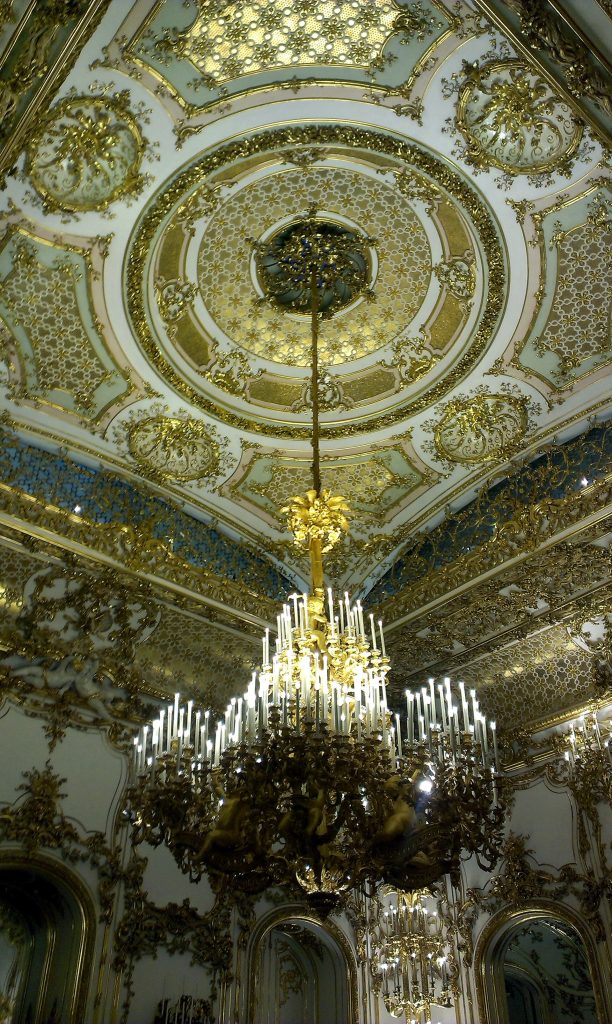
The highlight of the state rooms is the ballroom, a vast and brilliant space designed for the great social events of the season. Its walls are decorated with gilded ornament and mirrors, its ceilings with elaborate stucco, and its chandeliers fill the room with sparkling light.
Here the Liechtensteins hosted balls that were among the most celebrated in Vienna, attended by members of the imperial family, diplomats and the cream of society. Waltzes and polkas echoed under the glittering ceiling as guests danced late into the night.
The parquet floor, a masterpiece of inlaid woodwork, was designed to withstand the energetic dancing of the Viennese ball season while looking beautiful under the candlelight.
Today the ballroom is once again used for concerts, receptions and special events, and seeing it in use is a wonderful way to experience the atmosphere of nineteenth century Vienna.
The ballroom also served as a stage for concerts, and its acoustics made it ideal for chamber music and small orchestral performances. Composers and musicians of the Viennese scene performed here for the princely family and their guests.
Standing in the middle of the room and looking at the reflections in the mirrors, it is easy to imagine the swirl of silk gowns and uniforms as couples danced through the night.
During the restoration, specialists recreated damaged elements of the gilding and the silk wall coverings, using traditional techniques to ensure that the room looks as it did when the princes held their famous balls.
Ball invitations were carefully printed and delivered weeks in advance, and the preparations involved dozens of servants, florists, musicians and caterers working for days to create the perfect evening.
The Grand Staircase
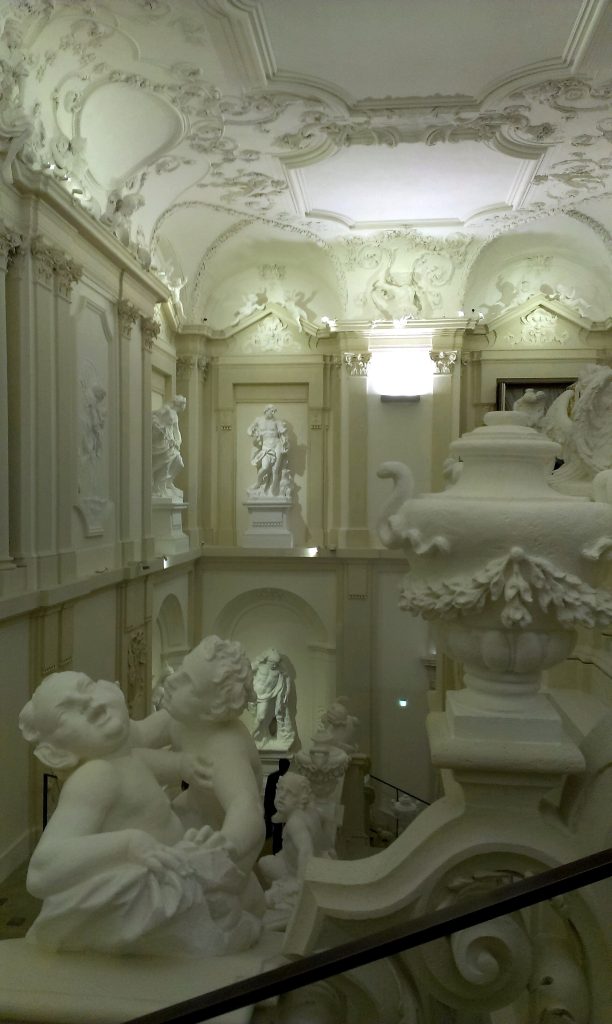
The grand staircase is one of the great baroque spaces of the palace. Broad flights of steps rise beneath a richly decorated ceiling, with statues, balustrades and stucco creating a sense of ceremony and ascent.
The staircase was designed to impress guests as they made their way to the state rooms. Its proportions are generous, and the light falling from the windows and the lanterns adds to the drama.
Details such as carved balustrades, sculpted figures and painted decoration reward close attention, showing the care that went into every part of the palace.
Climbing these stairs, you follow in the footsteps of emperors, princes and diplomats who came here over the centuries, and you can feel the weight of history in every step.
Statues on the staircase represent figures from mythology and allegory, chosen to express the virtues and ambitions of the princely family. They add life and movement to the architecture.
The staircase also provided a dramatic setting for the arrival of important guests, who would be greeted at the top by members of the family and led into the state rooms.
Lanterns and chandeliers once lit the stairs during evening events, creating a warm glow that made the arrival of guests even more magical.
Restorers took special care with the stone and stucco of the staircase, cleaning centuries of dirt to reveal the fine detail and original colours.
Explore the City Palace on Video
For a closer look at the palace, the video below takes you through its rooms and staircases, showing the splendour of the baroque and neo rococo interiors.
Watch for the ballroom, the gilded salons and the inlaid floors, which are among the treasures of the palace.
Seeing the interiors in motion helps convey the sense of space and light that photographs struggle to capture, especially in the ballroom and on the staircase.
If the video has inspired you, the final section explains how to experience the palace yourself.
Visiting the Liechtenstein City Palace
After a major restoration lasting several years, the City Palace reopened in the 2010s as a showcase for the princely collections and a venue for events. Its interiors were restored with great care, bringing back the brilliance of the gilding, the colours of the silks and the shine of the parquet floors.
The palace is located on the Bankgasse in the First District, a short walk from the Hofburg, the Burgtheater and the Volksgarten. It is easy to reach by underground or tram, and it makes a natural addition to a walk through the historic centre.
Access to the interiors is mainly through guided tours organised by the Liechtenstein Collections, often by appointment, and through concerts and private events. It is wise to check the current offer and book in advance.
If you are interested in the Liechtenstein story, combine the City Palace with the Garden Palace in the Rossau, the other great Viennese residence of the family, and with their Moravian seat at Valtice, which together tell the remarkable history of this princely house.
There are plenty of famous coffee houses nearby, including some of the most traditional in Vienna, where you can enjoy a melange and a slice of cake before or after your visit.
Whenever you come, the City Palace offers a unique glimpse into the private world of one of Europe’s great princely families, right in the heart of the imperial capital.
For the full Liechtenstein experience, you might also visit Vaduz in the principality itself, where the family still lives in its hilltop castle above the Rhine valley.
Allow plenty of time to explore the surrounding streets too, where you will find other aristocratic palaces, quiet courtyards and historic churches that make the First District such a fascinating place to wander.
View the location on Google Maps
Palaces Nearby
If the City Palace has fascinated you, the Liechtenstein princes left more remarkable residences. Here are two more well worth adding to your journey:
- Liechtenstein Garden Palace – the summer residence of the princes in Vienna, crowned by the Hercules Hall and its ceiling by Andrea Pozzo.
- Valtice Chateau – the baroque Moravian seat of the Liechtenstein princes, heart of a UNESCO listed landscape.
You May Like
Pillnitz Palace and the Chinese Summer Dreams of Saxony