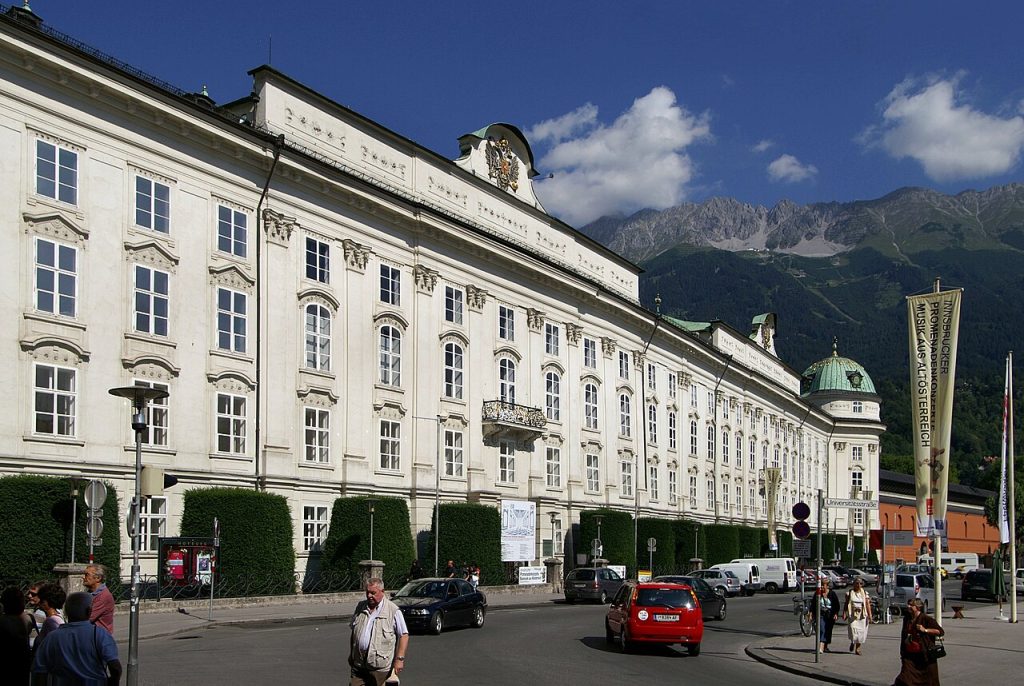
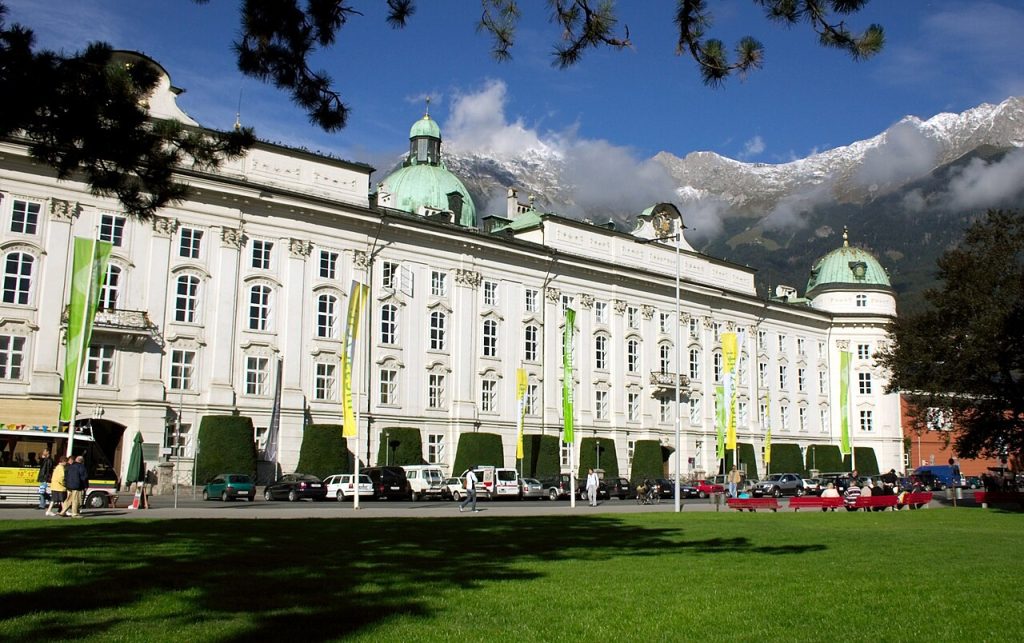
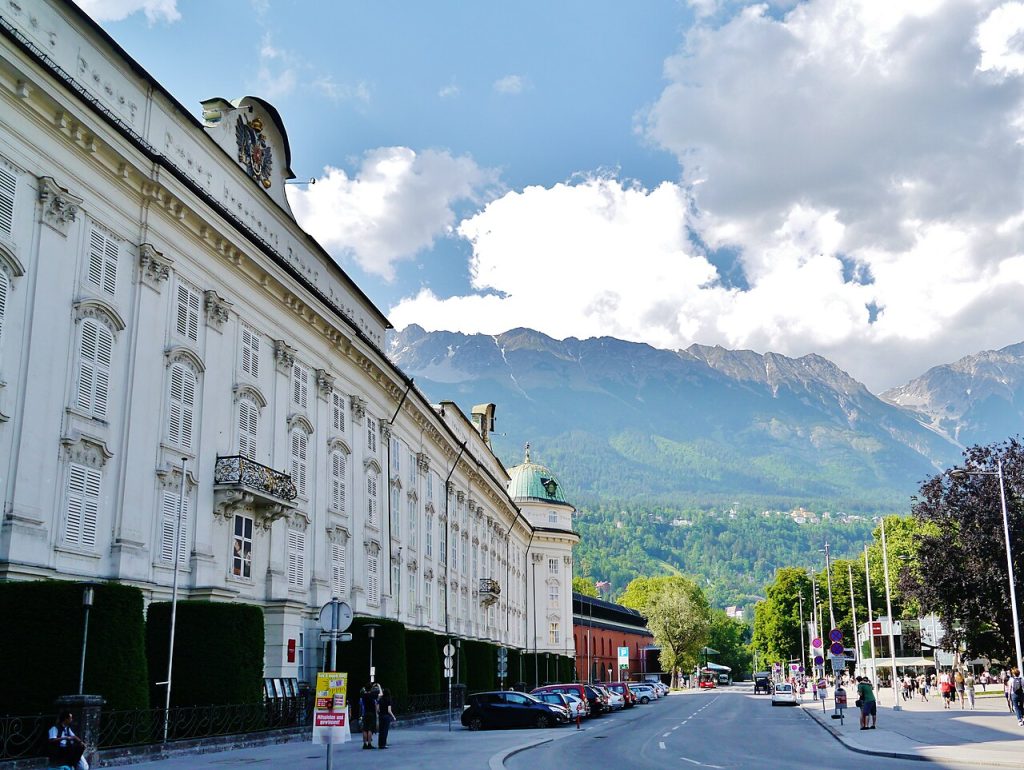
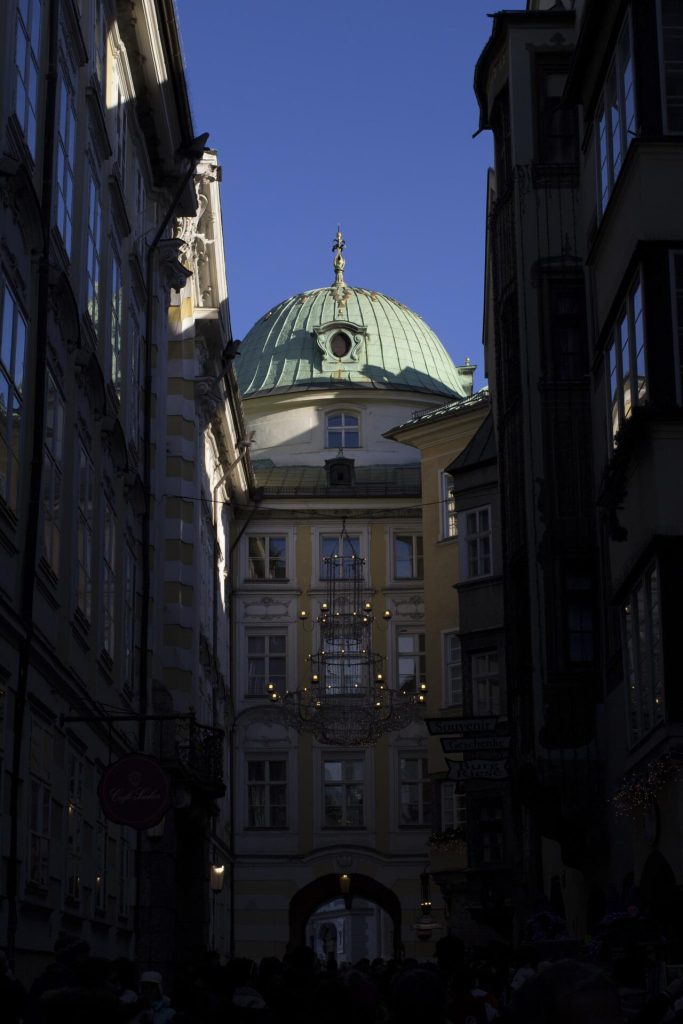
Now, stop in the square outside and look up past the roofline. Behind the white and yellow facade of an imperial palace stand the Nordkette mountains, two thousand metres of rock directly above the city centre.
That juxtaposition is Innsbruck. A Habsburg capital, with court architecture, a cathedral and an imperial palace, set in a valley so narrow that the Alps begin at the end of the street.
The Hofburg here is one of the three most important Habsburg palaces, after Vienna and Schonbrunn, and it holds a bronze army guarding a tomb that was never used.
- Tyrol and Its Strategic Valley
- Maximilian I and the Last Knight
- The Golden Roof
- A Court in the Mountains
- The Black Men of the Hofkirche
- An Empty Tomb
- Maria Theresa Rebuilds
- The Giants’ Hall
- A Wedding and a Death
- Andreas Hofer and the Tyrolean Rebellion
- The Palace Today
- Innsbruck Around It
- Visiting the Hofburg
Tyrol and Its Strategic Valley
The Inn valley is the main route through the Alps between Germany and Italy, and whoever controlled it controlled the traffic. Tyrol’s wealth came from that position, plus silver mining at Schwaz, which in the fifteenth century was among the richest in Europe.
The Habsburgs acquired Tyrol in 1363 and treated it as a separate territory with its own administration and strong local privileges.
Tyroleans have always been conscious of those privileges, and the region’s history of rebellion follows from them.
Maximilian I and the Last Knight
Maximilian I, Holy Roman Emperor from 1493, made Innsbruck a favourite residence. He hunted in the mountains, held tournaments, financed his wars from Tyrolean silver, and ran much of the empire from here.
He was called the last knight for his enthusiasm for jousting and chivalric display, at a moment when gunpowder was making all of it obsolete.
His marriage to Mary of Burgundy brought the Netherlands into the family, and his grandson Charles V inherited an empire on which the sun did not set.

The Golden Roof
A short walk from the Hofburg stands the Goldenes Dachl, the golden roof, a balcony added in 1500 with two and a half thousand gilded copper tiles, built so that Maximilian could watch events in the square below.
It is the symbol of the city and the single most photographed object in Tyrol.
The reliefs below it show Maximilian with his two wives, and the whole structure is a piece of political theatre in gold.
A Court in the Mountains
The palace itself began as a medieval complex, extended by Archduke Sigismund in the 1460s and by Maximilian, with halls, chapels, stables and gardens, growing into a sprawling court centre.
Tyrol remained a separate Habsburg line for long periods, with its own archdukes resident here, which is why the palace kept developing rather than fading into provincial status.
Archduke Ferdinand II, in the sixteenth century, built Ambras Castle on the hill outside the city to hold his collections, and it is now one of the great museums of the Renaissance.
The Black Men of the Hofkirche
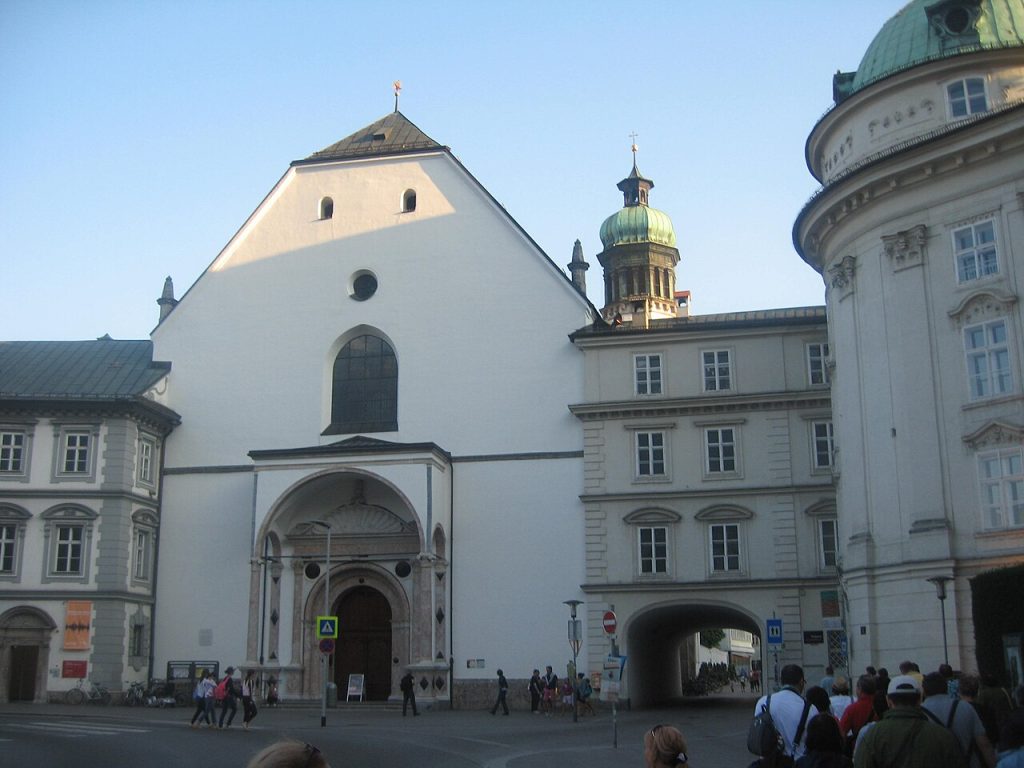
Next to the palace stands the Hofkirche, built in the 1550s, and inside it stands the most extraordinary funerary monument in central Europe: twenty-eight larger-than-life bronze figures surrounding a cenotaph.
They represent Maximilian’s ancestors, relatives and heroes, real and legendary, including King Arthur and Theodoric the Great, cast over decades by foundries across the empire.
Locals call them the Schwarze Mander, the black men. Standing among them is an unsettling experience, and the Arthur figure, designed by Durer, is one of the finest bronzes of the Renaissance.
An Empty Tomb
Maximilian is not buried there. The project was never completed in his lifetime, costs ran out of control, and he was eventually buried at Wiener Neustadt, over four hundred kilometres away.
The cenotaph is empty. Twenty-eight bronze mourners stand around a tomb that holds nobody.
It is a very sixteenth-century outcome: an emperor planned the grandest monument in Europe, and the money ran out before the body arrived.
Maria Theresa Rebuilds
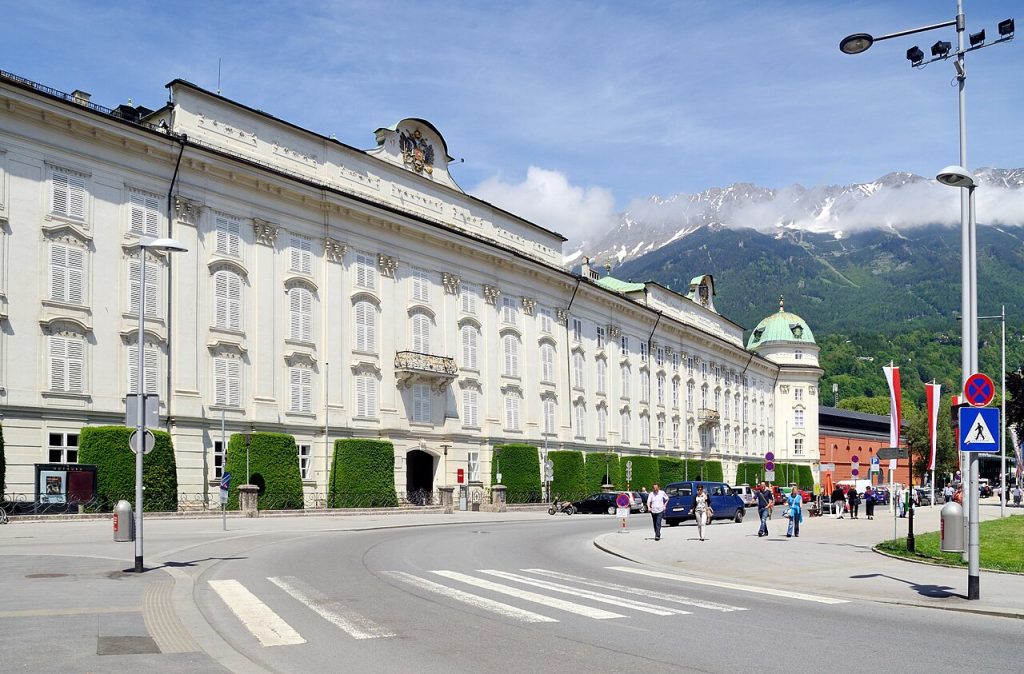
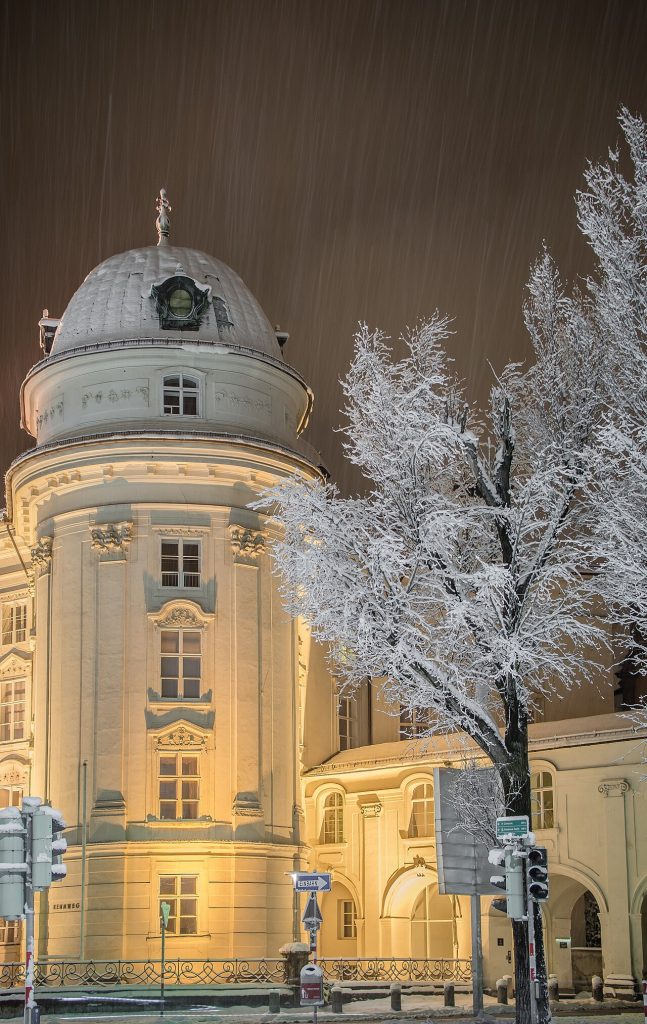
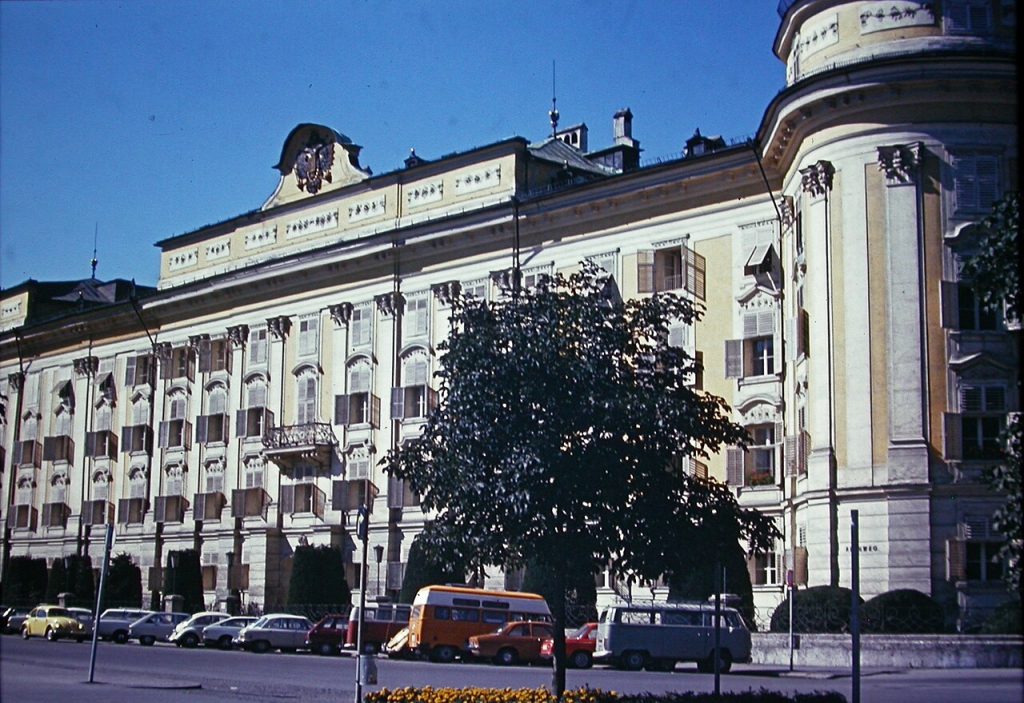
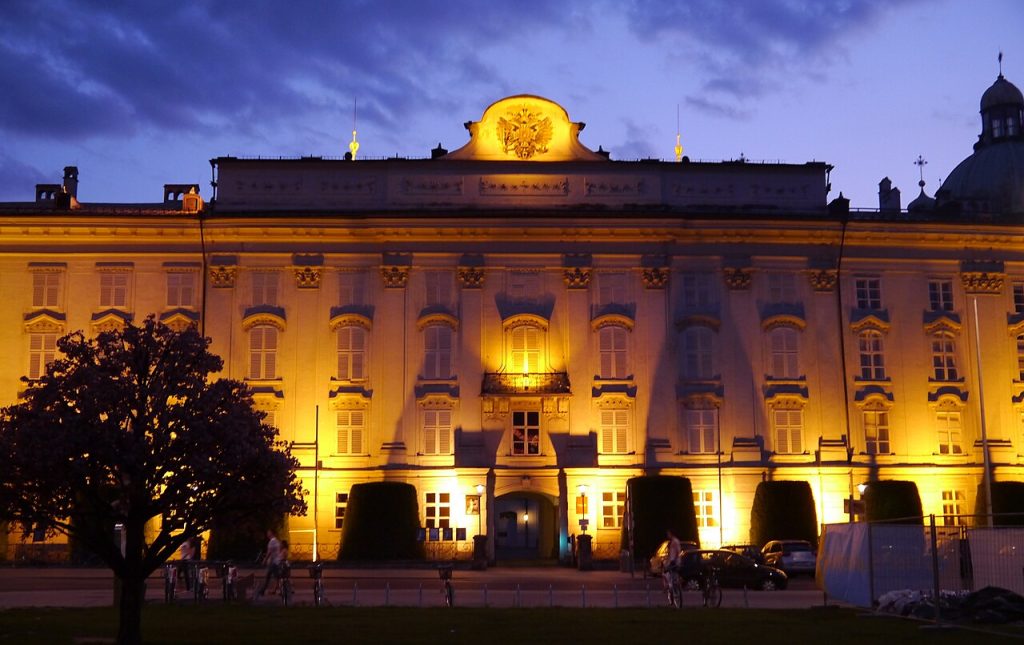
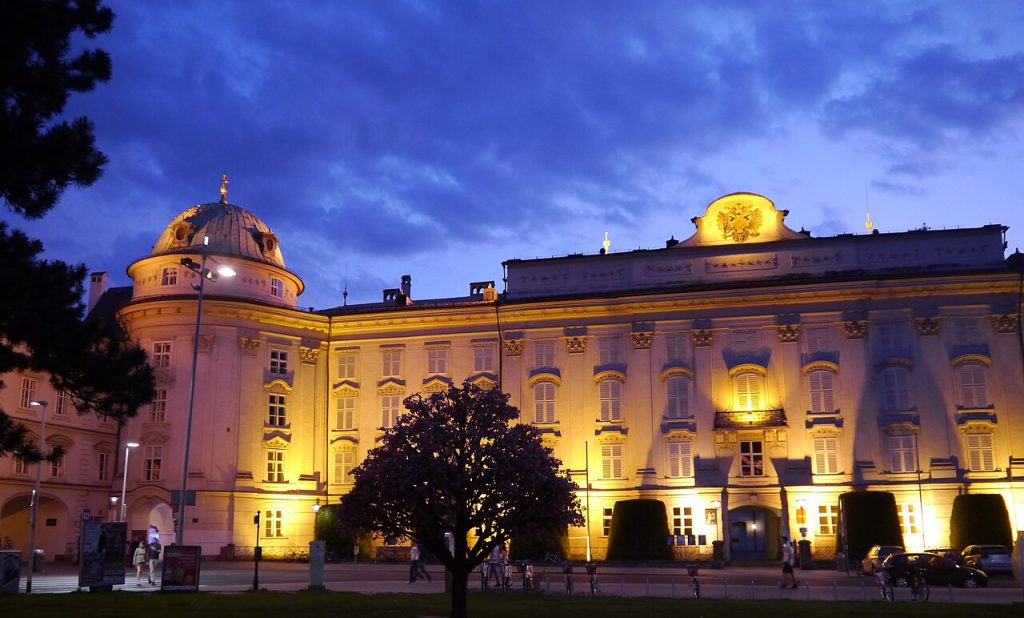
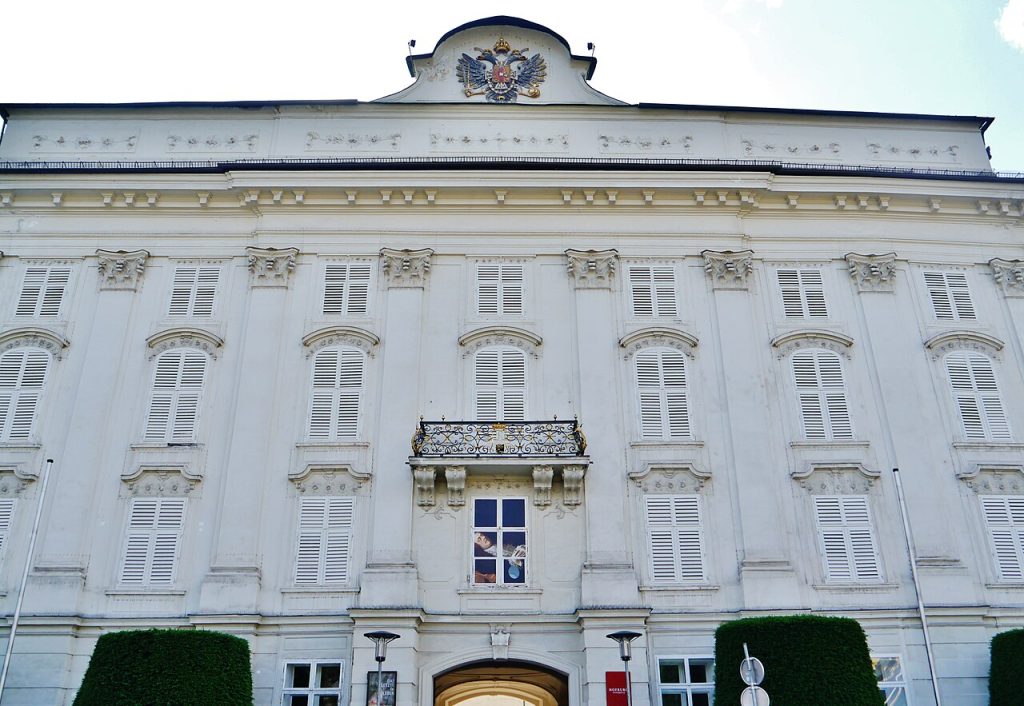
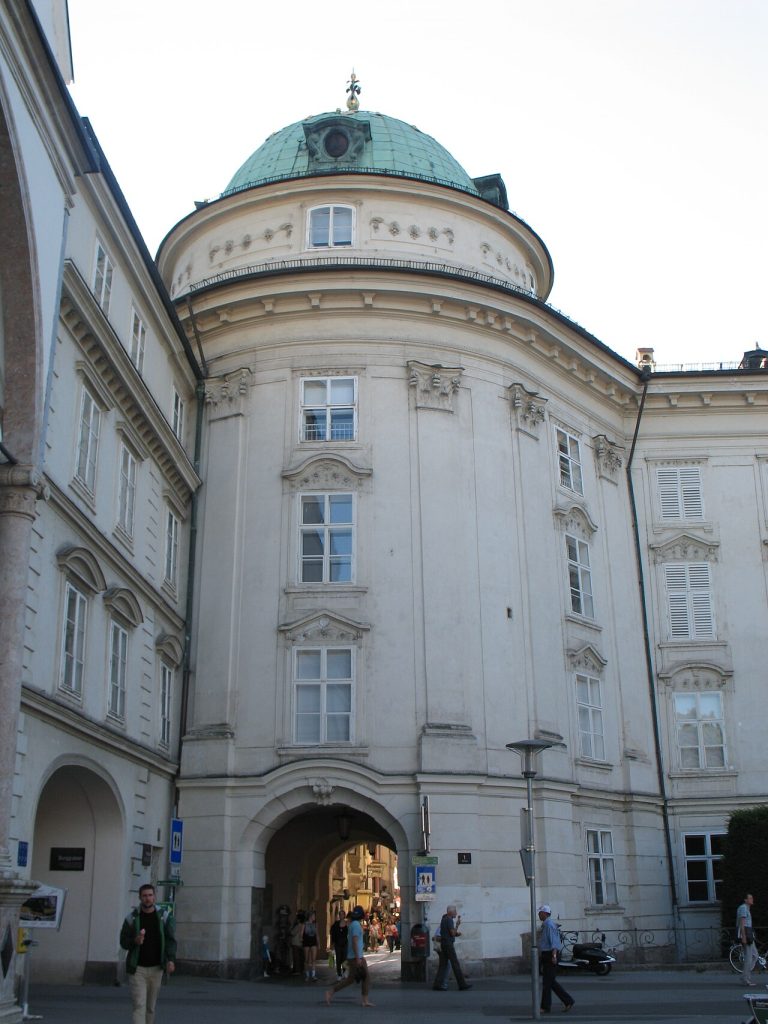
Between 1754 and 1773 Maria Theresa rebuilt the Hofburg in late baroque and rococo style, giving it the facade and the state rooms visitors see today.
The work was directed by Johann Martin Gumpp and Constantin Johann Walter, following Viennese models, and the result transplants Schonbrunn’s manner into an Alpine setting.
The white and yellow exterior, the mansard roofs and the regular windows all date from this campaign.
The Giants’ Hall
The centrepiece is the Riesensaal, the Giants’ Hall, thirty-one metres long, with a ceiling fresco by Franz Anton Maulbertsch and portraits of Maria Theresa’s enormous family around the walls.
The name comes from earlier frescoes of Hercules that the room replaced. The present decoration is dynastic: sixteen children, their marriages, and the alliances they secured.
It is one of the finest rococo interiors in Austria and the reason to buy a ticket.
A Wedding and a Death
In 1765 Maria Theresa came to Innsbruck for the wedding of her son Leopold to Maria Luisa of Spain. During the celebrations her husband, Emperor Francis Stephen, died suddenly of a stroke in the palace.
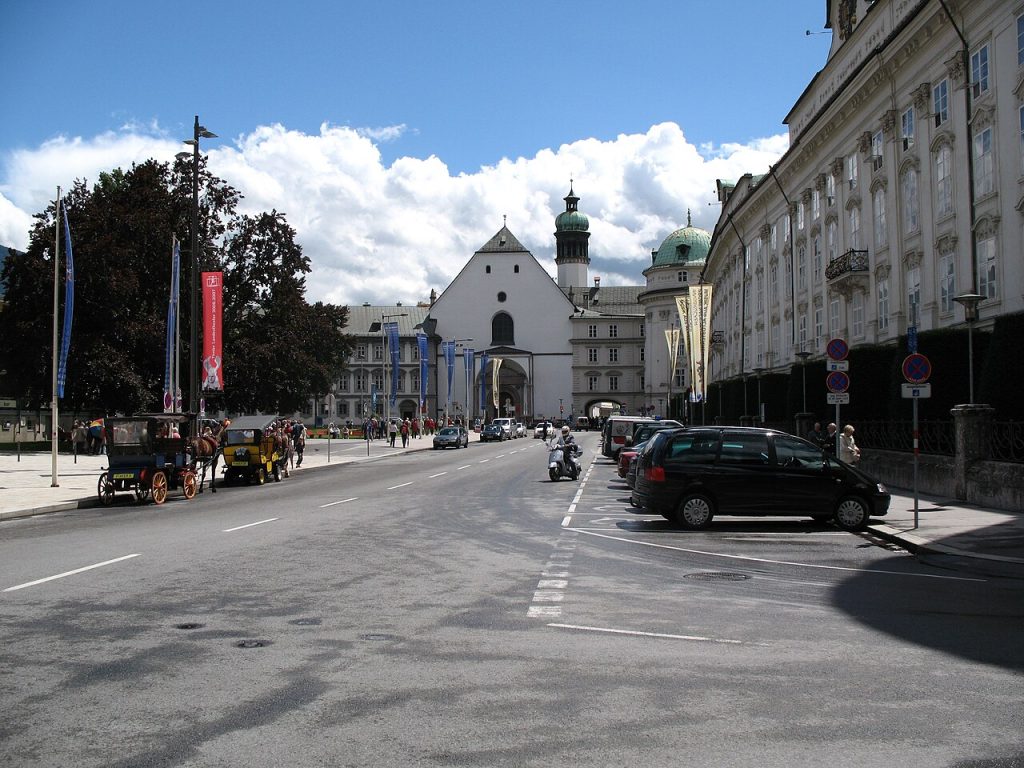
She wore mourning for the remaining fifteen years of her life, converted the room where he died into a chapel, and commissioned the Triumphal Arch at the end of Maria-Theresien-Strasse, which carries wedding symbols on one side and mourning symbols on the other.
Walk down and look at both faces of that arch. Few monuments in Europe carry a personal story so directly.
Andreas Hofer and the Tyrolean Rebellion
In 1809, during the Napoleonic wars, Tyrol was handed to Bavaria and rose in revolt under Andreas Hofer, an innkeeper from the Passeier valley who defeated regular armies three times at Bergisel above the city.
The rebellion was eventually crushed, Hofer was captured and shot at Mantua in 1810, and he became the central figure of Tyrolean identity.
The Bergisel hill above Innsbruck holds his monument, a panorama painting of the battle, and the ski jump designed by Zaha Hadid, which is an unusual combination of attractions in one place.
The Palace Today
The Hofburg is managed as a state museum, with the Maria Theresa state rooms, the furniture collection, exhibitions on the Habsburgs in Tyrol, and spaces used for official events.
Audio guides are good, and the route is compact enough to see properly in an hour and a half.
Combined tickets covering the Hofburg, the Hofkirche and the Tyrolean Folk Art Museum next door are the best value in the city.
Innsbruck Around It
The old town is small and walkable, the Inn river runs through it with its famous row of coloured houses, and the funicular from the centre reaches two thousand metres in twenty minutes.
Ambras Castle on the hill holds the Chamber of Art and Curiosities of Archduke Ferdinand II, one of the oldest museums in the world and genuinely extraordinary.
Innsbruck has hosted two Winter Olympics and the city’s modern architecture, including Hadid’s funicular stations, sits unusually well beside the baroque.
Visiting the Hofburg
Do the Hofburg and the Hofkirche together; they are a minute apart and belong to the same story. Give the bronze figures proper time, because photographs do not convey their scale.
Then take the funicular up the Nordkette, look down at the city, and find the Hofburg’s roofs from above.
That view, a baroque palace with an Alpine wall behind it, is what makes Innsbruck different from every other Habsburg city.
Watch the Palace on Film
Visiting the Hofburg in Innsbruck Today
The Hofburg stands in the old town of Innsbruck, a few minutes on foot from the Golden Roof and about fifteen minutes from the main railway station.
It opens daily with ticketed entry, with combined tickets available for the Hofkirche and the Tyrolean Folk Art Museum next door; audio guides are included in several languages.
Allow two hours for palace and Hofkirche, and keep the afternoon for Ambras Castle or the Nordkette funicular. Find it here: https://www.google.com/maps?q=47.2692,11.3947
Palaces Nearby
You May Like
Mirabell Palace and the Garden Behind the Song