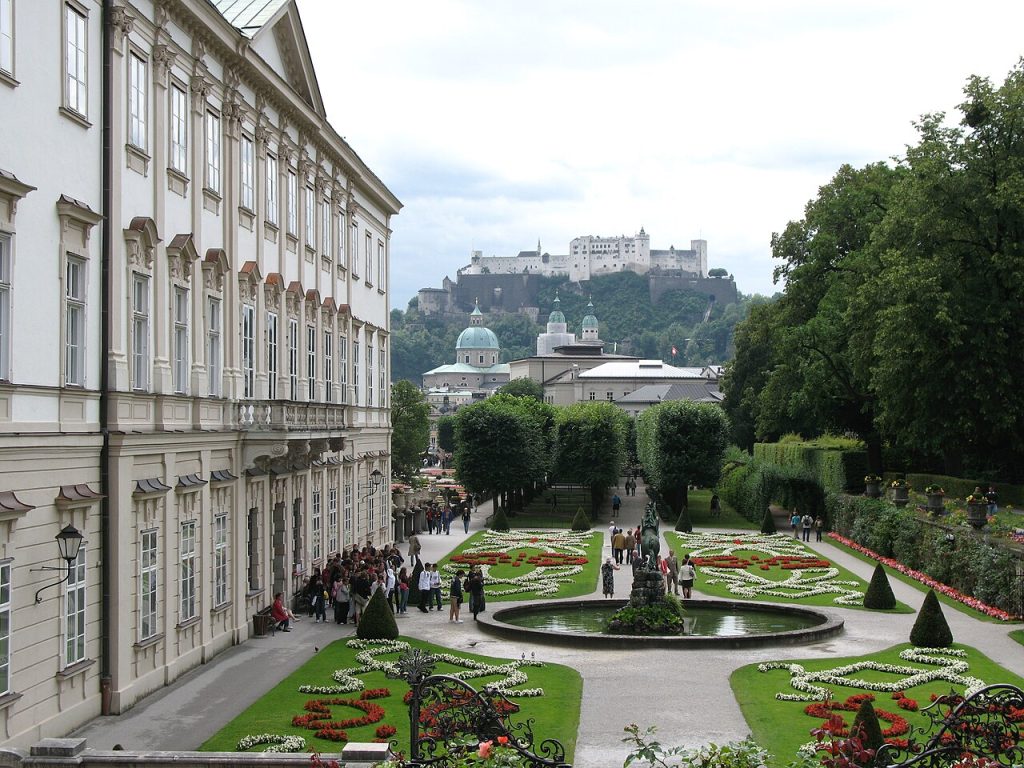
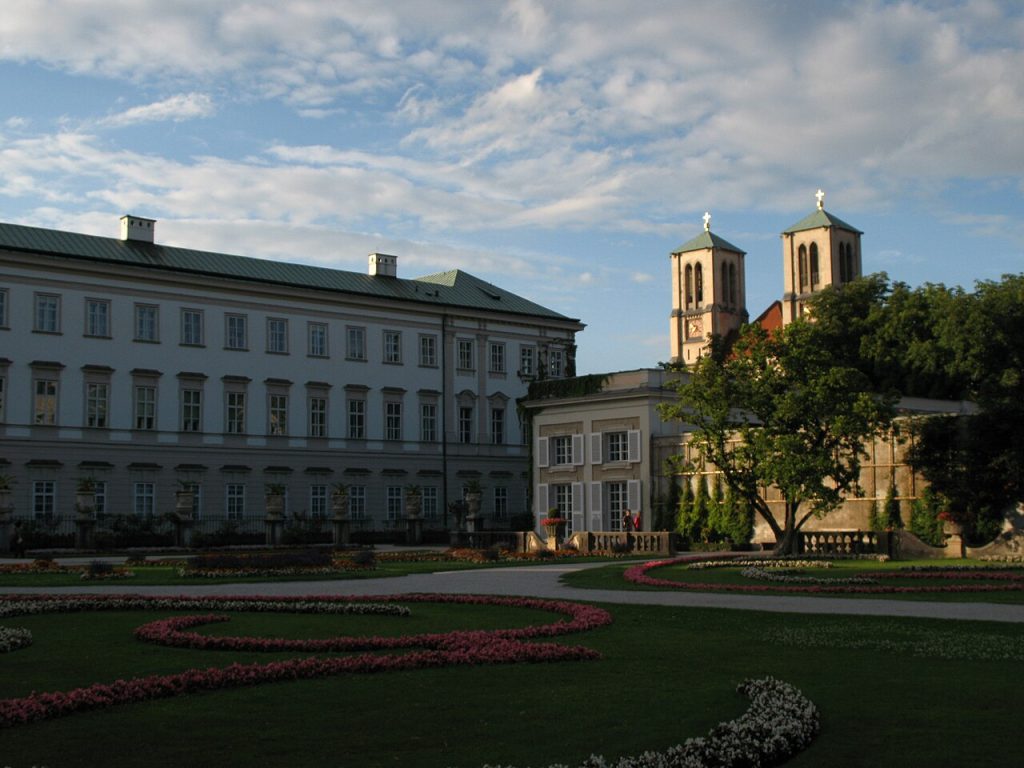
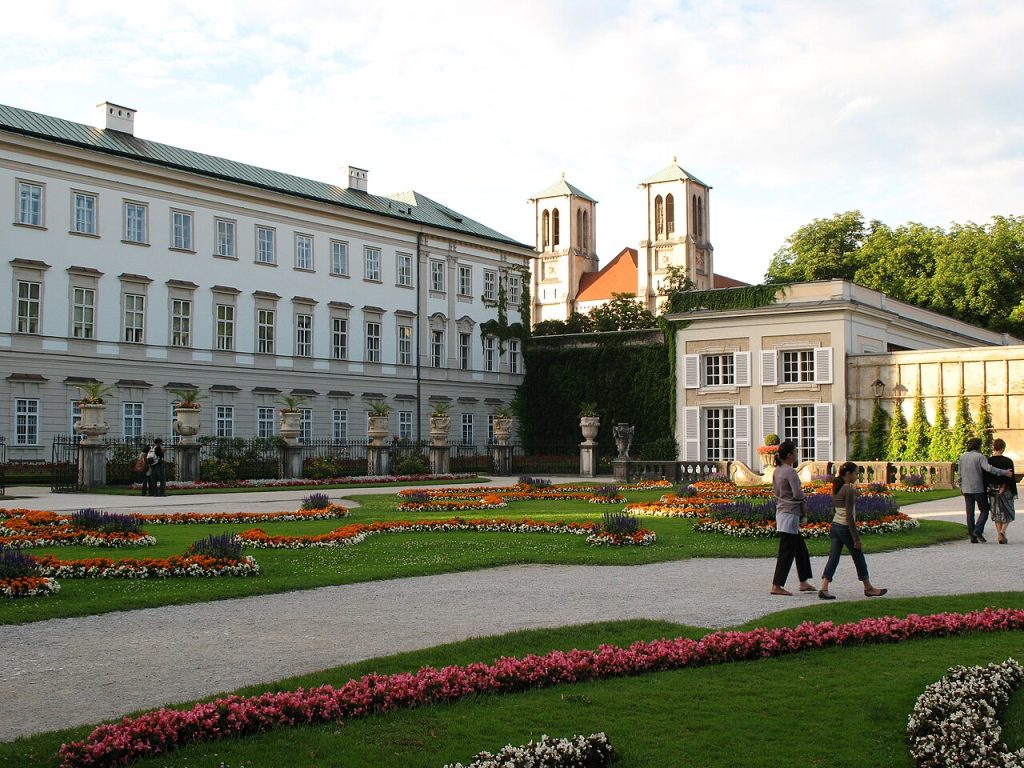
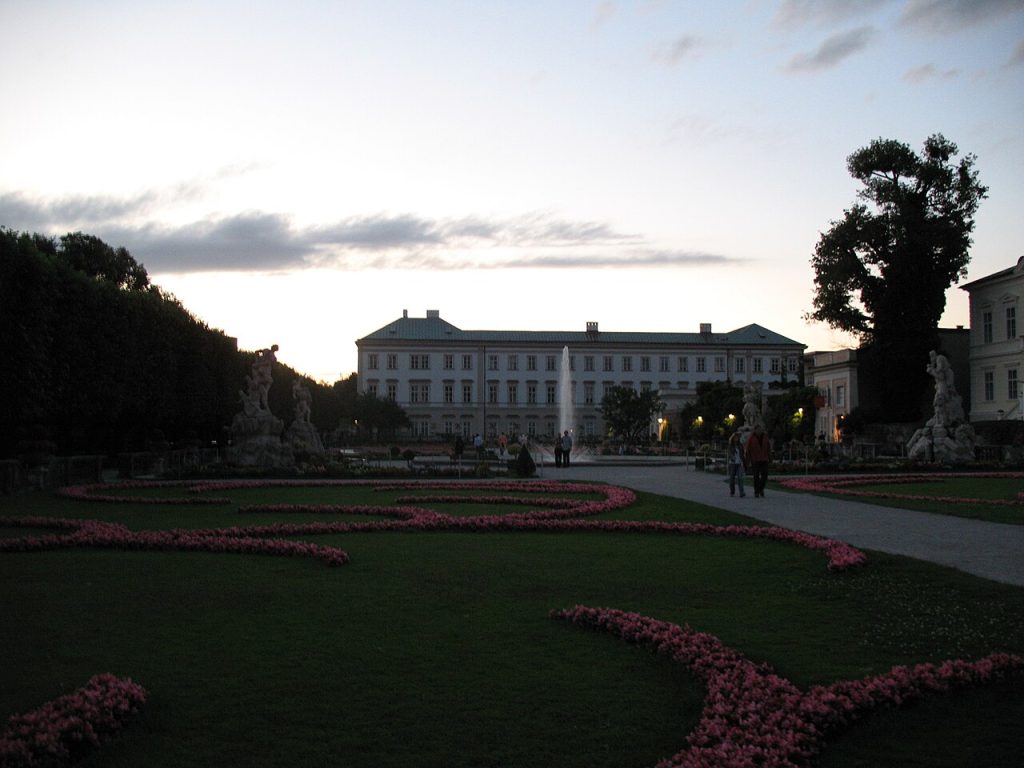
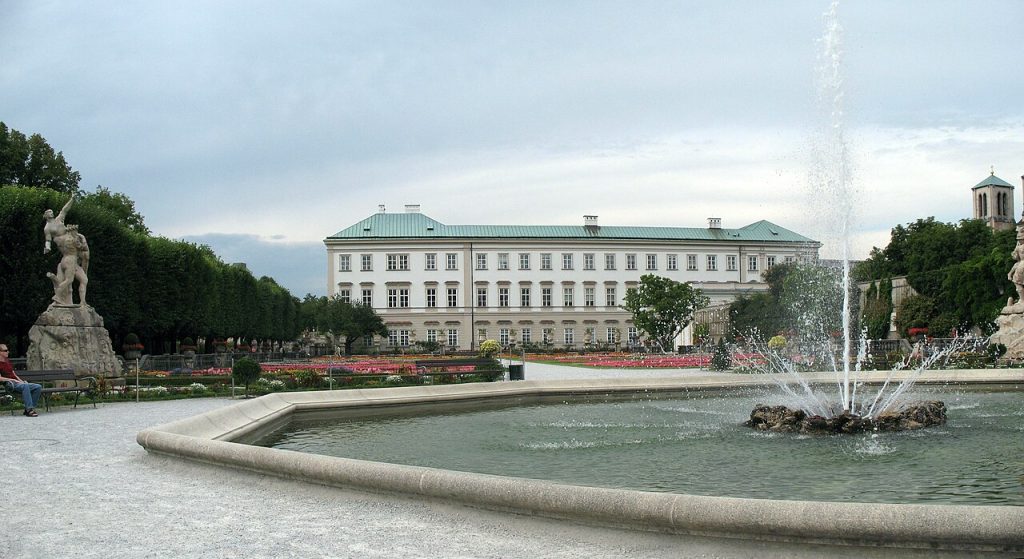
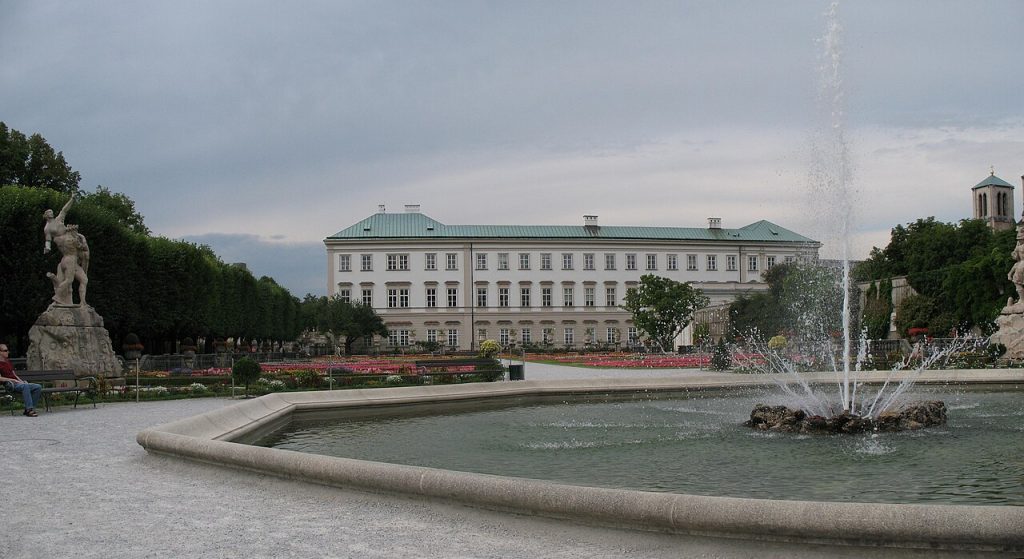
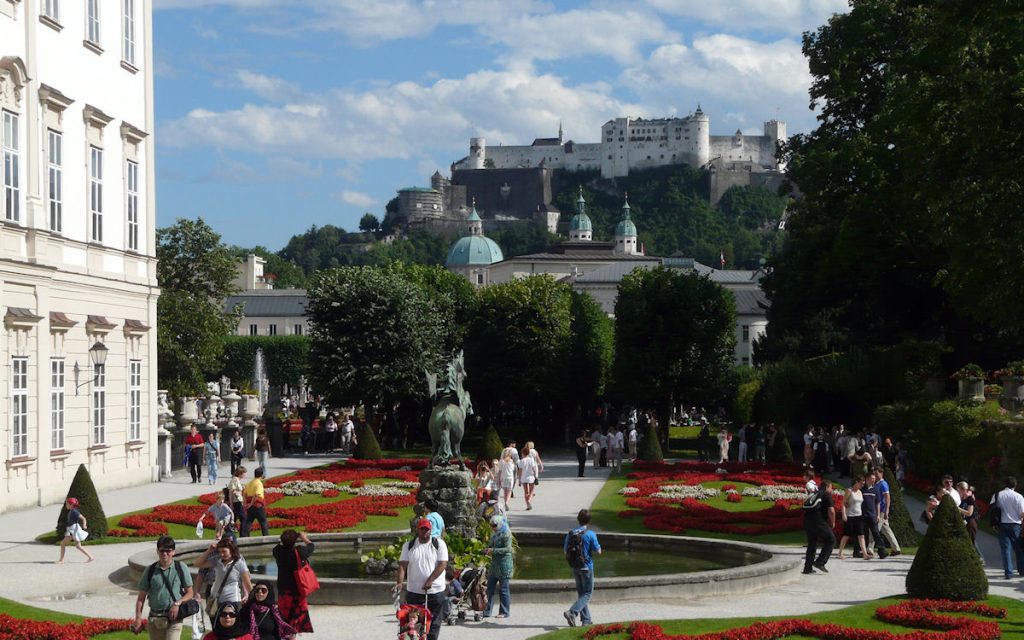
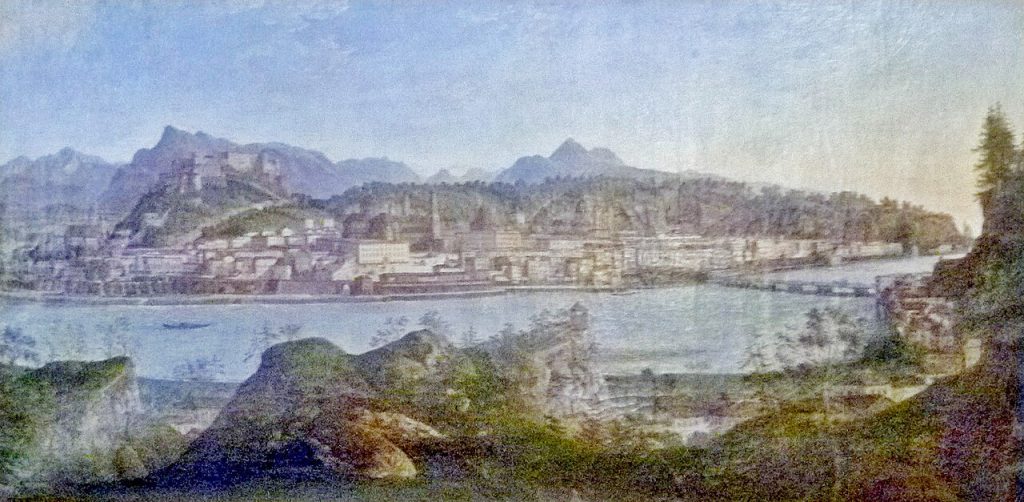
Now, stop at the top of the garden steps and look south. The parterres run away from you, the Pegasus fountain is on your right, and beyond the hedges the towers of the old town rise toward the fortress on its rock. It is the most photographed view in Salzburg.
Most visitors know it from The Sound of Music, filmed here in 1964, and arrive humming. Almost none know why the palace exists, and the real story is considerably stranger than the film.
It was built by a prince-archbishop for the woman he lived with openly and the children they had together, in a city he ruled as both bishop and sovereign.
- A City Ruled by Archbishops
- Wolf Dietrich von Raitenau
- Salome Alt and Altenau
- The Archbishop’s Fall
- Rebuilt and Renamed
- Hildebrandt’s Baroque Palace
- The Fire of 1818
- The Marble Hall
- The Garden and Its Statues
- The Dwarf Garden
- Mozart Played Here
- The Sound of Music
- Visiting Mirabell
A City Ruled by Archbishops
Salzburg was an ecclesiastical principality for roughly a thousand years, until 1803. Its prince-archbishops were simultaneously religious leaders and sovereign rulers with armies, mints, courts and foreign policies.
The wealth came from salt, mined in the mountains and shipped down the Salzach, which is where both the river and the city take their names.
That combination of money and sovereignty produced the baroque city centre, which is a UNESCO World Heritage site.
Wolf Dietrich von Raitenau
Wolf Dietrich von Raitenau became prince-archbishop in 1587 at the age of twenty-eight. Educated in Rome, ambitious and modernising, he set about rebuilding Salzburg as an Italian baroque city.
He demolished a large part of the medieval town, laid out new squares, began the cathedral’s reconstruction and brought Italian architects north.
He also lived openly with a woman and fathered at least fifteen children with her, which was not unheard of among Renaissance churchmen but was unusual in its openness.
Salome Alt and Altenau
Salome Alt was the daughter of a Salzburg merchant. In 1606 Wolf Dietrich built a palace for her and their children on the right bank of the river, outside the city walls, and called it Altenau after her.
They lived there as a family. Contemporary accounts describe her position as effectively that of a consort, acknowledged by the court and the city.
This is the building we now call Mirabell, and the fact that it began as a home for an archbishop’s unofficial family is quietly left out of most tours.
The Archbishop’s Fall
Wolf Dietrich’s reign ended badly. A dispute with Bavaria over the salt trade escalated into armed conflict, Bavarian troops occupied Salzburg in 1611, and he was deposed.
His own nephew and successor imprisoned him in the fortress of Hohensalzburg, where he died in 1617 after five years of captivity in the castle that dominates the view from his own garden.
Salome Alt and her children were expelled from the city. She died in Wels in 1633.
Rebuilt and Renamed
His successor Markus Sittikus renamed the palace Mirabell, from the Italian for beautiful view, erasing the association with Salome Alt.
The building was enlarged and the gardens developed through the seventeenth century, and the palace became a regular residence of the archbishops.
Renaming it was a deliberate act of forgetting, and it worked. Most visitors have never heard of Altenau.
Hildebrandt’s Baroque Palace
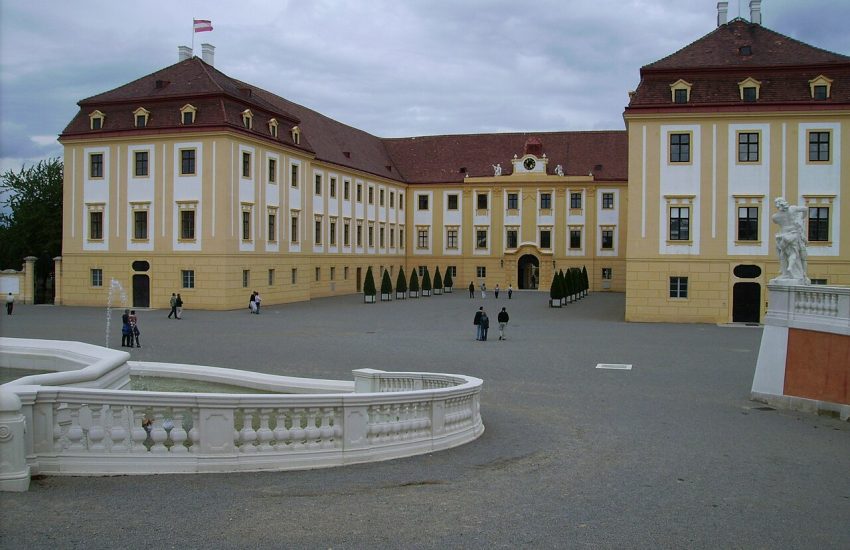
Between 1721 and 1727 Johann Lukas von Hildebrandt, whom we met at Schloss Hof and the Belvedere, rebuilt Mirabell in full baroque style for Archbishop Franz Anton von Harrach.
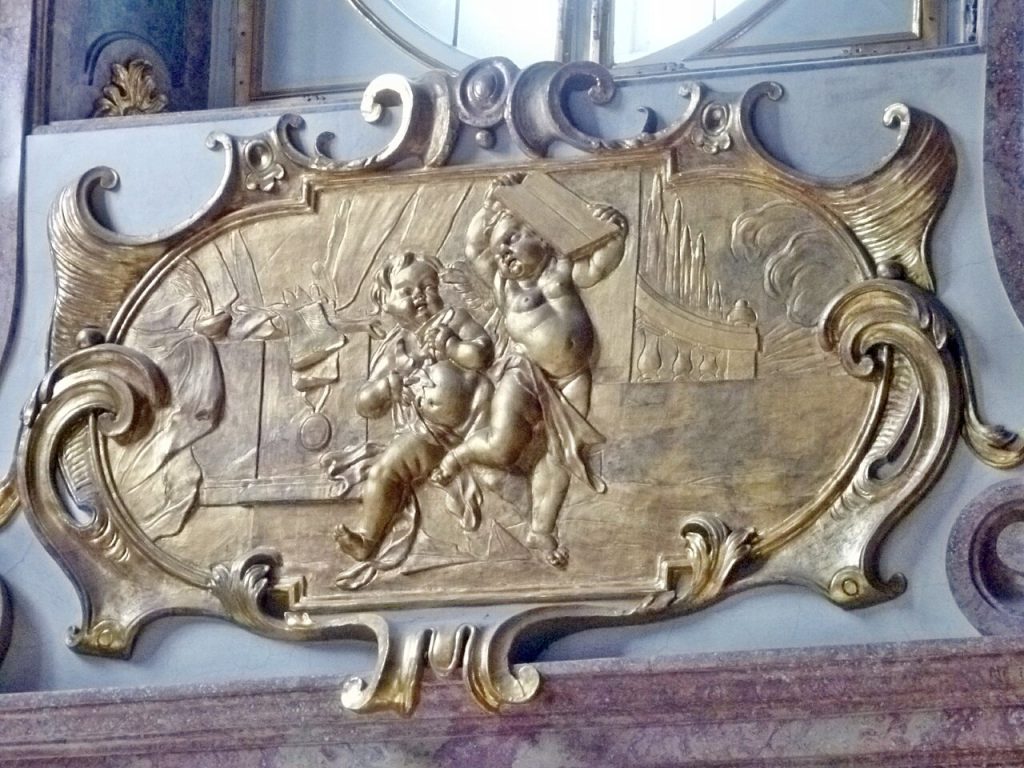
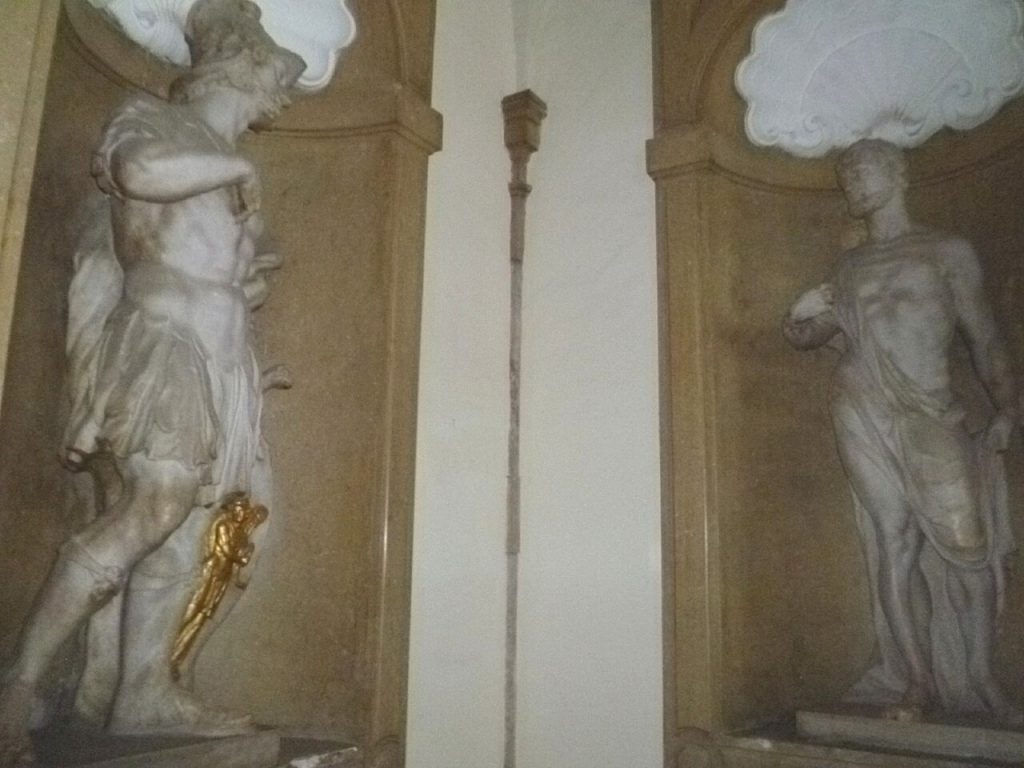
He created the grand staircase with its marble putti by Georg Raphael Donner, the marble hall and the garden facade, and he gave the palace its present proportions.
The staircase is the best surviving piece of his work here and is worth going in for even if you see nothing else.
The Fire of 1818
In 1818 a fire destroyed much of the palace and a large part of the surrounding district. Reconstruction followed in a plainer neoclassical style, which is why the exterior today looks more restrained than the staircase inside suggests.
The fire destroyed frescoes, interiors and the baroque roofline. Only parts of Hildebrandt’s work, including the staircase and the marble hall, came through.
Salzburg had by then lost its independence, absorbed into Austria in 1816, and there was no sovereign court to pay for lavish rebuilding.
The Marble Hall
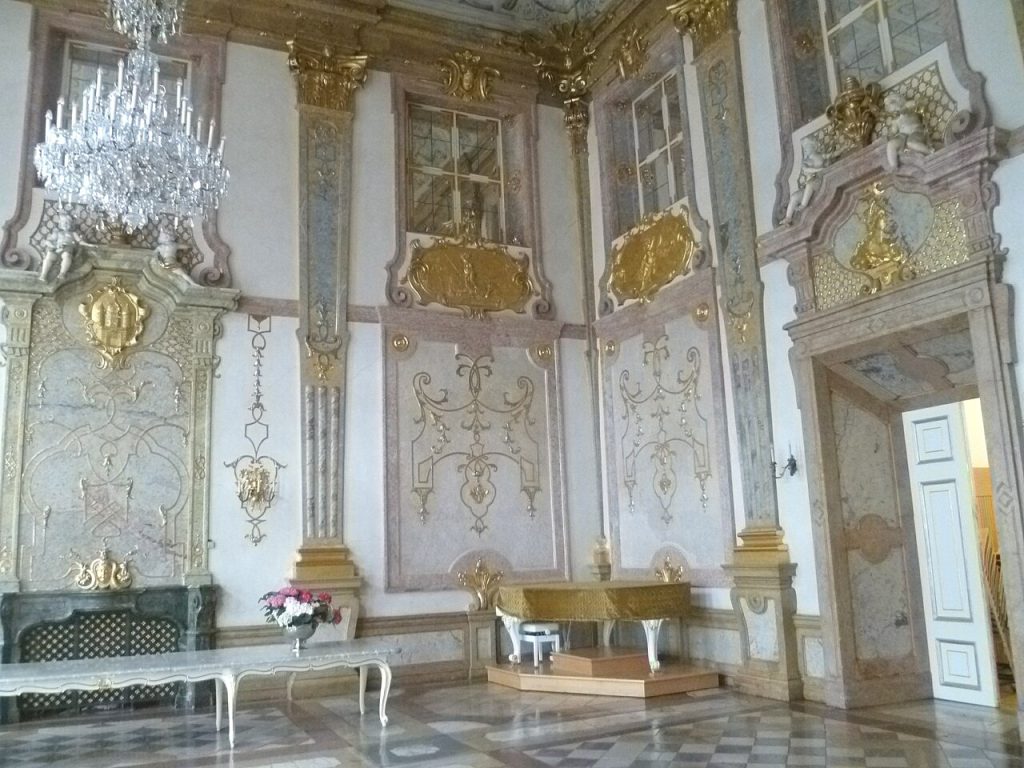
The Marble Hall is the ceremonial room of the palace, used in the archbishops’ time for receptions and now as one of the most popular wedding venues in Austria and a concert hall.
Chamber concerts are held there several times a week, and hearing Mozart in a room where he performed as a child is the obvious thing to do in Salzburg.
The acoustics are excellent and the room seats only a couple of hundred people.
The Garden and Its Statues
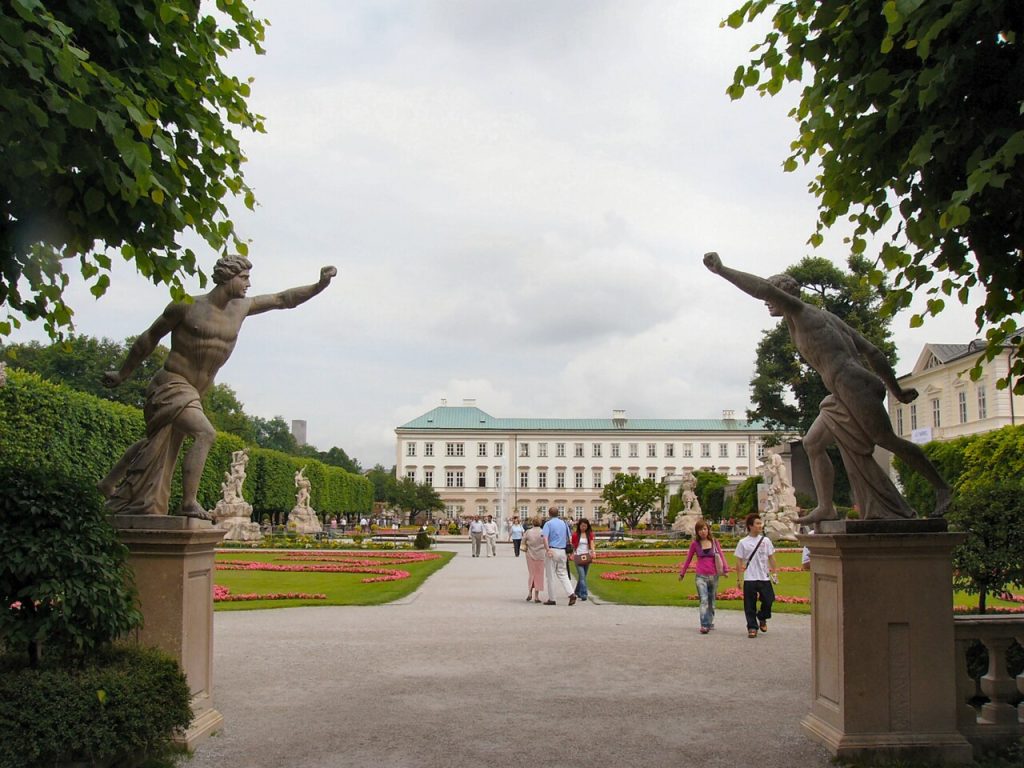
The garden was redesigned in 1690 by Johann Bernhard Fischer von Erlach, Austria’s greatest baroque architect, and laid out on a geometric plan aligned deliberately on the cathedral and the fortress.
That alignment is the reason the view works so well. Stand on the axis and the hedges frame the old town precisely.
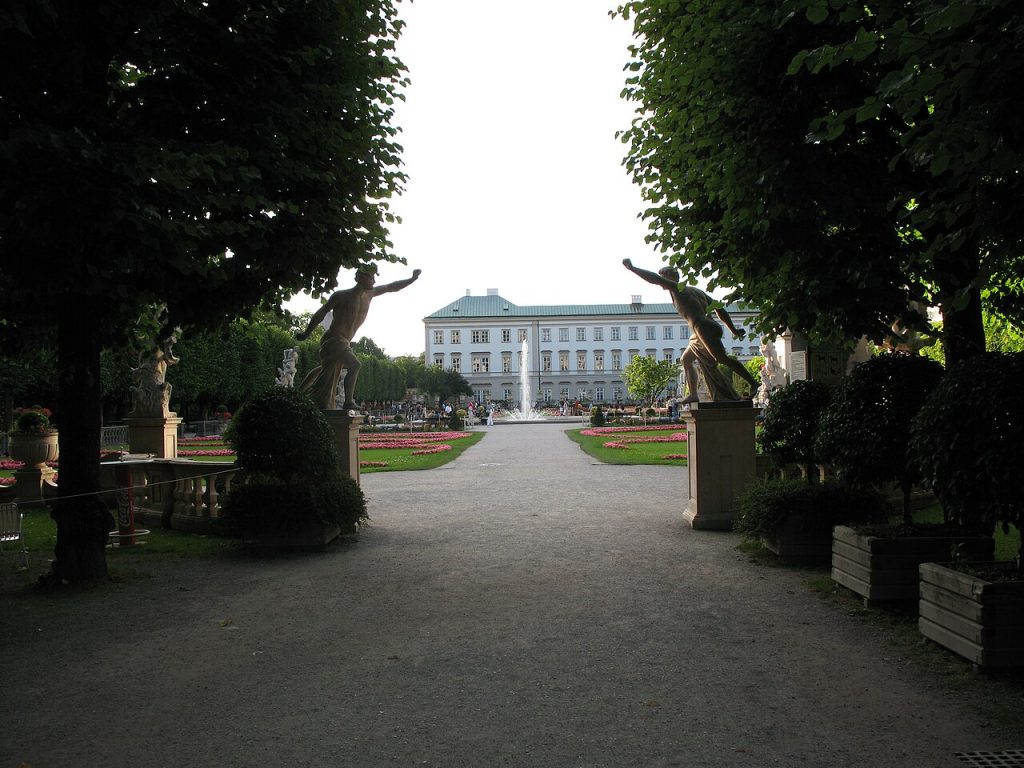
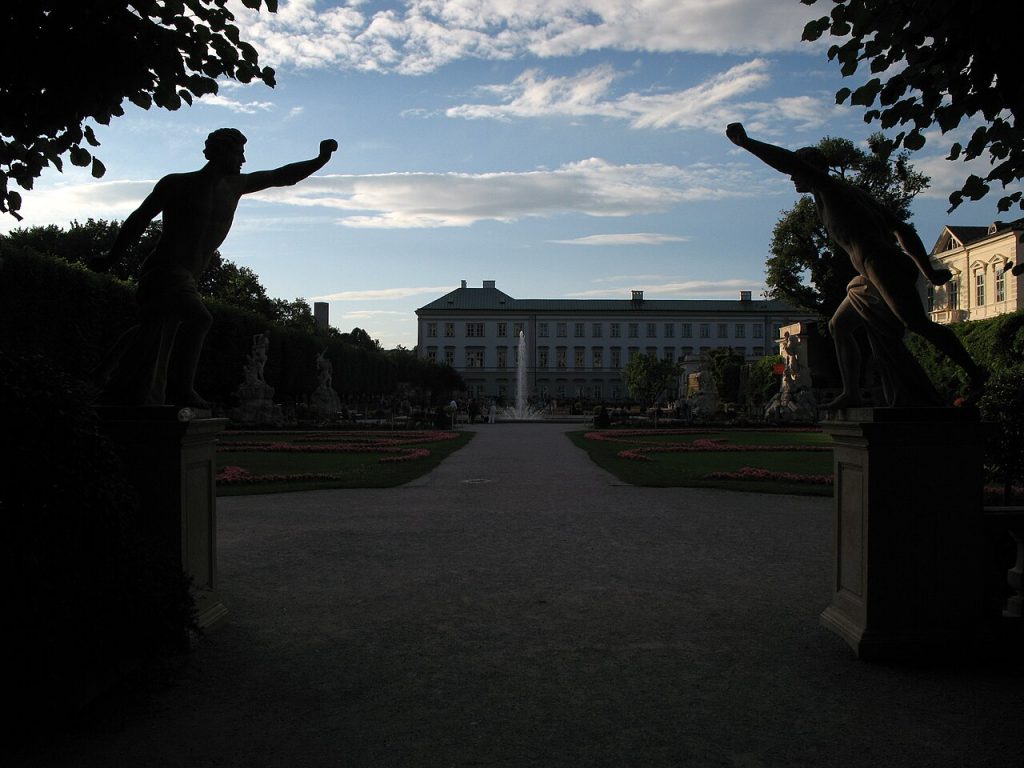
The sculpture includes four groups representing the elements, the Pegasus fountain of 1661, and the orange bastion with its theatre of hedges.
The Dwarf Garden
At the western edge stands the Zwergelgarten, the dwarf garden, with marble figures of dwarfs carved in the early eighteenth century, based on real people at the archbishop’s court.
They were removed in the nineteenth century as being in poor taste and later recovered and reinstalled. Several are lost.
They are the oldest dwarf garden in Europe and a reminder that baroque court culture included the display of people as curiosities, which is not comfortable to think about.
Mozart Played Here
The Mozart family lived a few minutes away, and the young Wolfgang and his sister Nannerl performed in the Marble Hall for the archbishop’s court.
Mozart’s relationship with Salzburg’s rulers was difficult, and he left for Vienna in 1781 after a famous quarrel with Archbishop Colloredo that ended with a kick from a court official.
The city that could not keep him now lives substantially on his name.
The Sound of Music
In 1964 the gardens were used for the Do-Re-Mi sequence: the Pegasus fountain, the steps, the gnome, the hedge tunnel. Every one of those locations is identifiable and visited daily by people counting steps.
Salzburgers have a complicated relationship with the film. Many have never seen it, the historical liberties irritate them, and the local view of the Trapp family story differs from the Hollywood version.
The tourism is nonetheless enormous, and the gardens cope with it remarkably well, because they were designed to hold crowds.
Visiting Mirabell
The gardens are free and open daily; the palace is Salzburg’s city hall, so the offices are not public, but the staircase and Marble Hall can be seen at set times and during concerts.
Go early in the morning for the view without crowds, with the light on the fortress. By ten the tour groups arrive.
Then walk down to the river, cross to the old town and climb to the fortress, from where you can look back and see the whole axis the garden was built along.
Watch the Palace on Film
Visiting Mirabell Palace Today
Mirabell stands on the right bank of the Salzach in central Salzburg, five minutes from the main station and ten from the old town across the Makartsteg bridge.
The gardens open daily from dawn to dusk, free of charge. The palace serves as the city hall; the baroque staircase and Marble Hall are accessible at limited times and for concerts, which are held most evenings.
Allow an hour for the gardens, more if you book a concert. Find it here: https://www.google.com/maps?q=47.8058,13.0425
Palaces Nearby
You May Like
Schloss Hof and the Terraced Garden of Prince Eugene