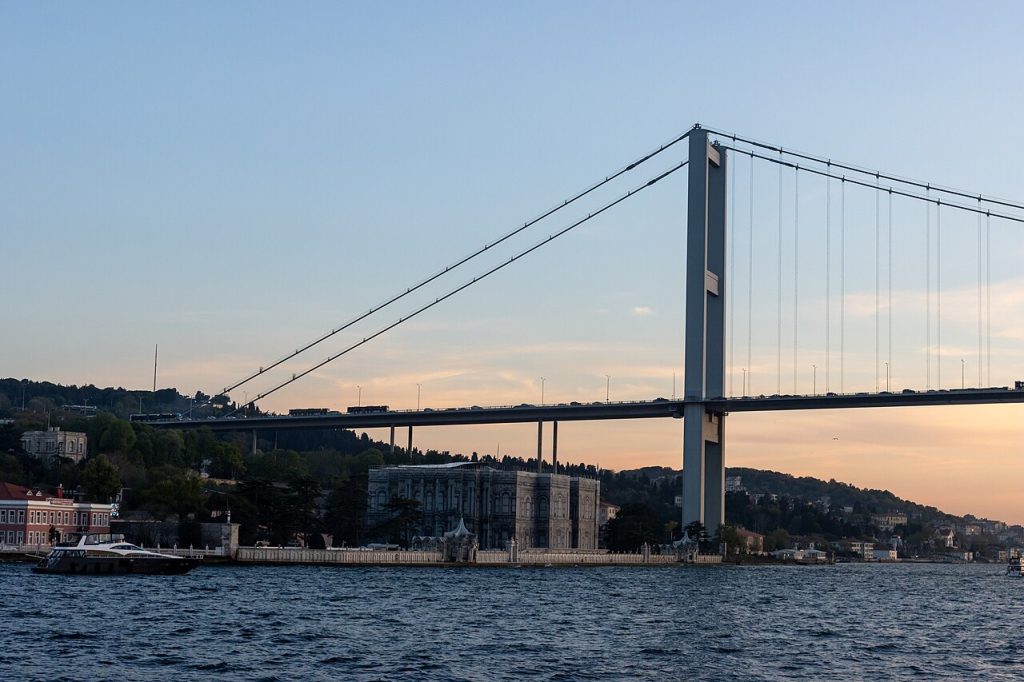
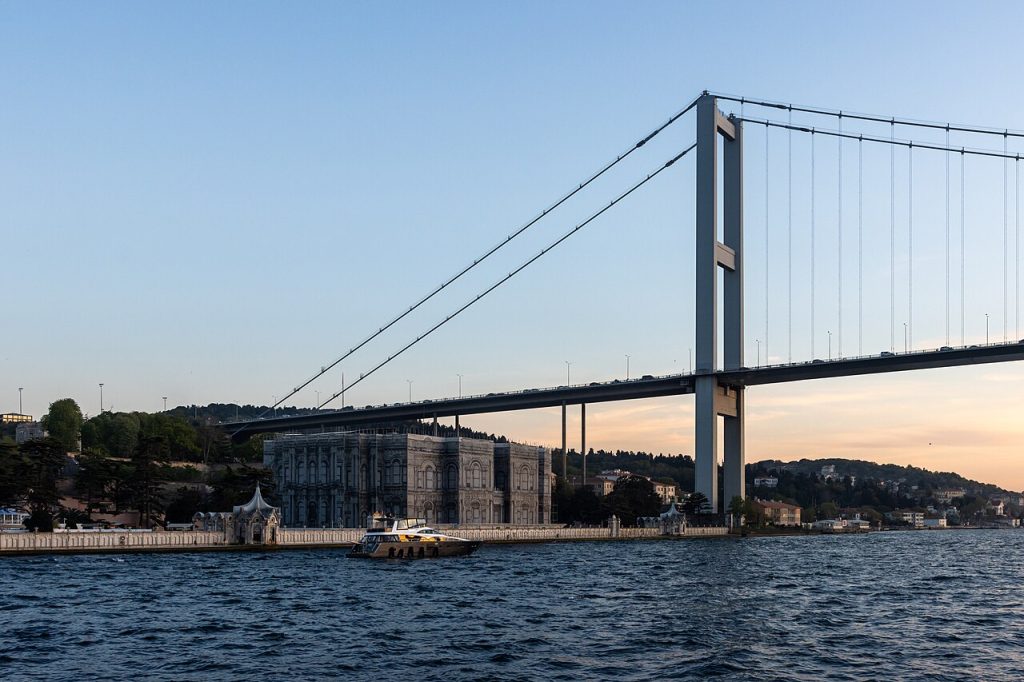
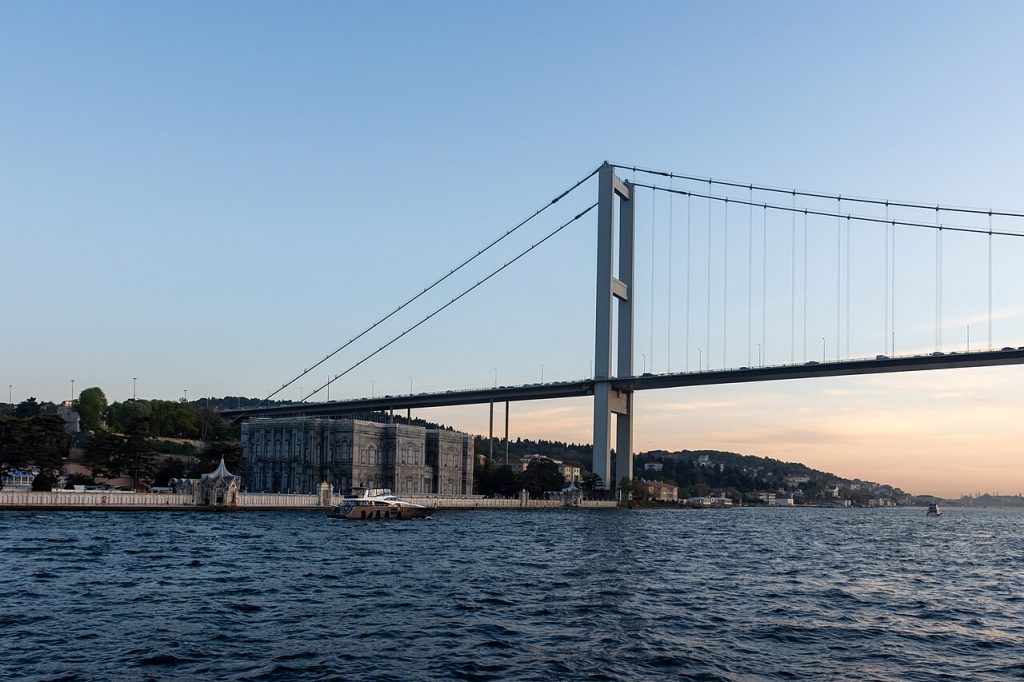
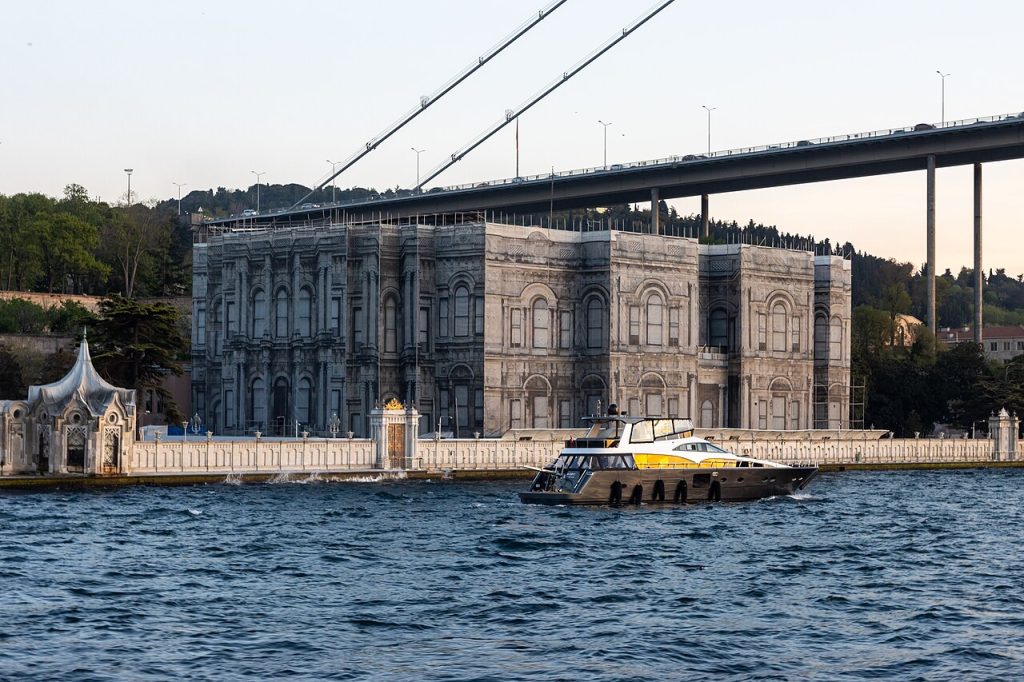
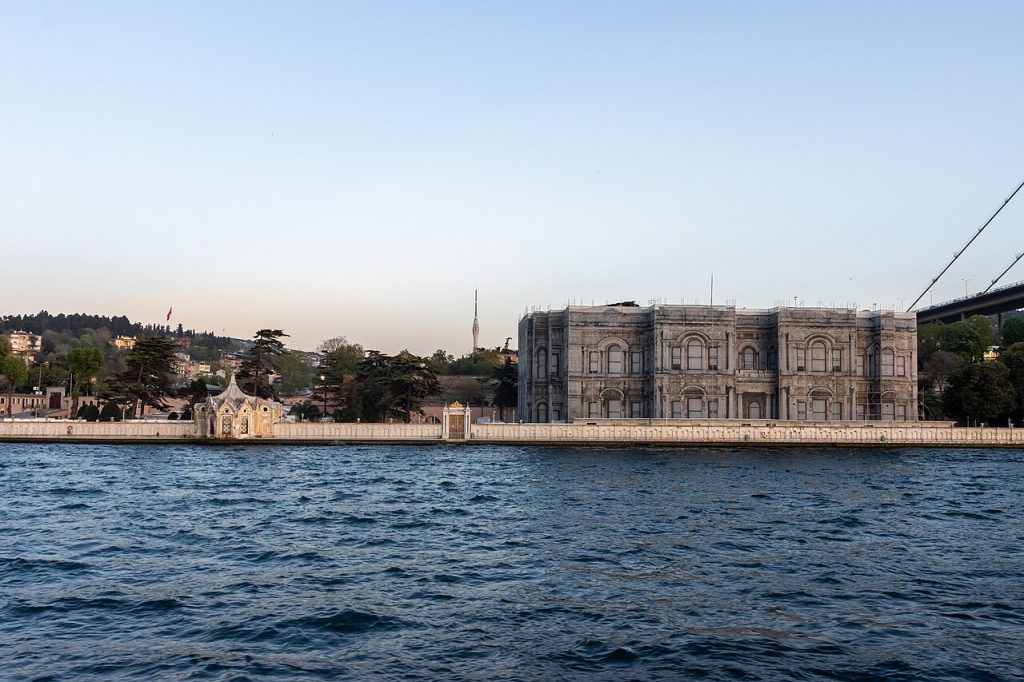
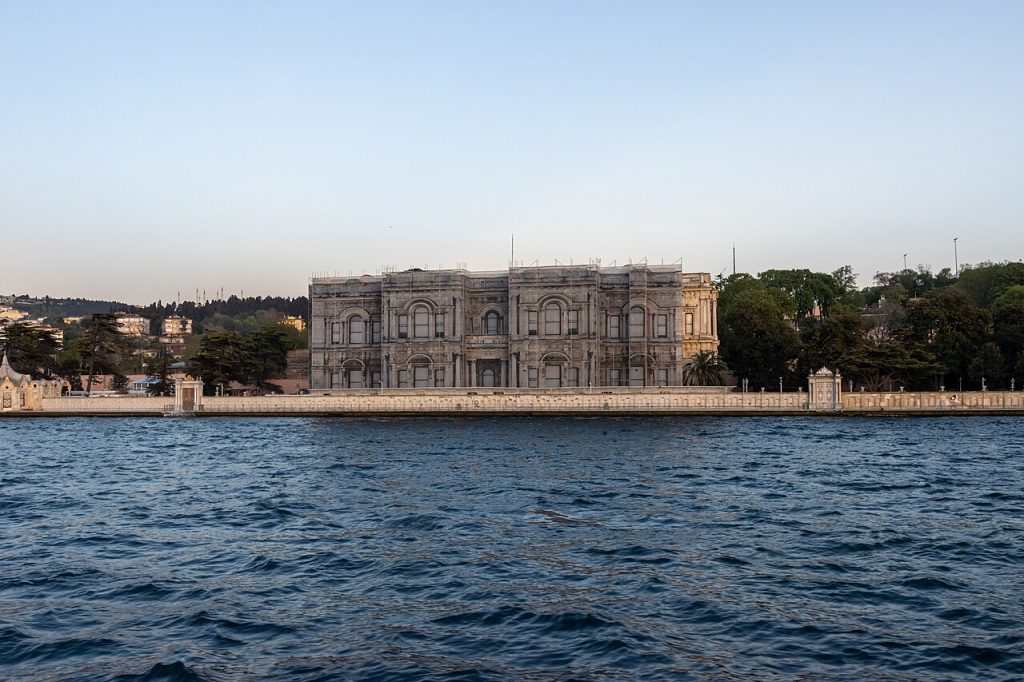
Now, stop on the marble terrace by the water, under the bridge, and look across to Europe. Beylerbeyi sits on the Asian shore with the first Bosphorus bridge passing almost directly overhead, and the contrast between the two structures is the most Istanbul thing imaginable.
This was the summer palace, used for a few months a year and for state guests. Empress Eugenie of France stayed here, the Shah of Iran, the Emperor of Austria, the King of Serbia and the Duke of Windsor.
It is smaller than Dolmabahce, easier to take in, and considerably more pleasant on a hot day, because it was built for exactly that.
- The Asian Shore
- The Wooden Palace Before It
- Abdulaziz Builds in Stone
- A Compact Summer Plan
- The Pool Hall
- Egyptian Reed Mats and Bohemian Glass
- Empress Eugenie’s Visit
- The Guest List
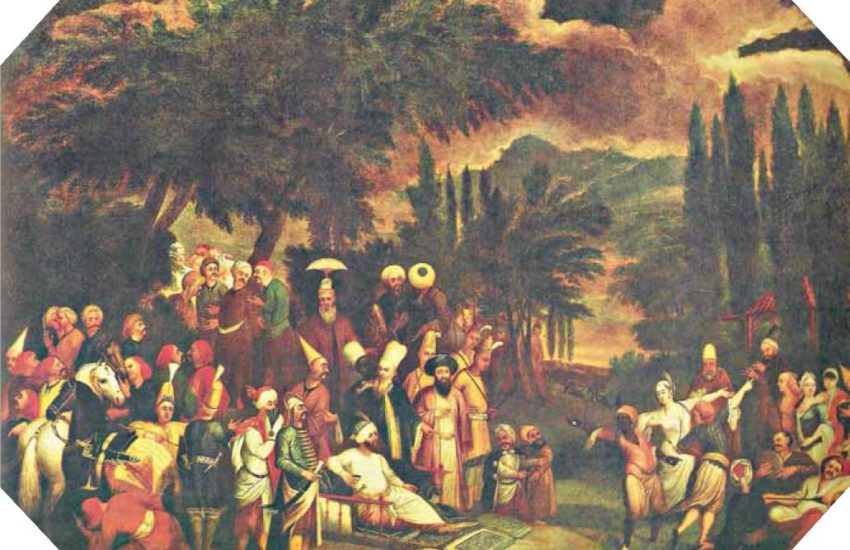
- Abdulhamid’s Last Years
- Terraces, Kiosks and the Sea Pavilions
- The Bridge Overhead
- The Palace as Museum
- Visiting Beylerbeyi
The Asian Shore
The Asian side of the Bosphorus was traditionally the quieter one: gardens, villages, summer houses, and the great wooden yali mansions of the court elite lining the water.
Beylerbeyi means lord of lords, a provincial governor’s title, and the area took its name from a sixteenth-century governor’s estate here.
Sultans had summer residences along this shore for centuries before the present palace.
The Wooden Palace Before It
Mahmud II built a wooden palace on this site in the 1830s, and it burned, like the others. The decision to replace it with stone followed the same logic as at Dolmabahce and Ciragan.
Fire shaped Ottoman architectural history more than any style. Istanbul was a city of timber, and the nineteenth-century shift to masonry palaces was a response to repeated catastrophe.
Nothing of the wooden palace survives above ground.
Abdulaziz Builds in Stone
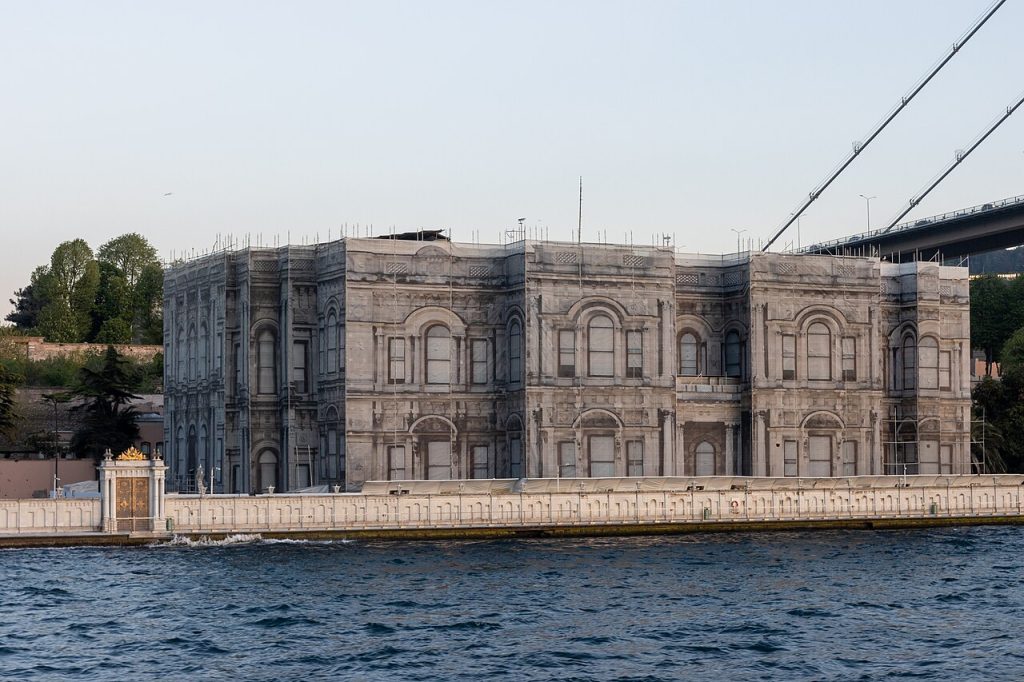
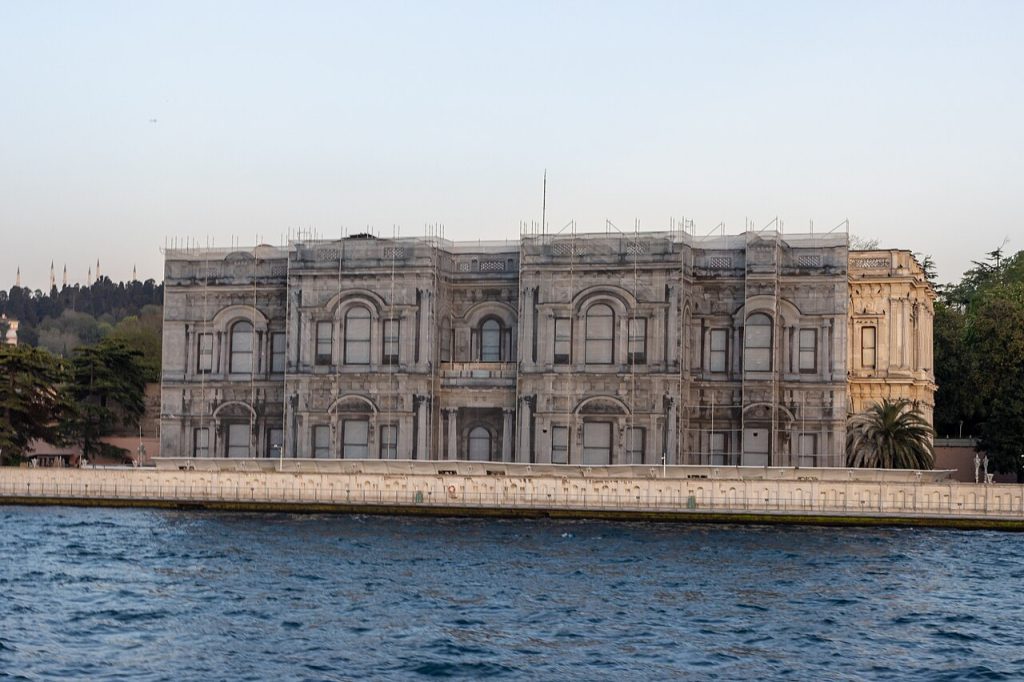
Abdulaziz built the present palace between 1861 and 1865, with Sarkis Balyan as architect, in the same marble and neoclassical manner as Ciragan but on a smaller scale.
It was a summer residence and a state guest house rather than a seat of government, so the plan is simpler: six halls, twenty-six rooms, selamlik and harem, gardens on the hill behind.
Construction took four years, which by Ottoman palace standards was quick and cheap.
A Compact Summer Plan
The palace has three storeys including a basement, with the main floor opening to terraces on the water. Rooms are arranged around central halls, and the ceilings are high enough to move air.
Every important room faces the Bosphorus. That orientation is the design: the building exists to frame the water.
Because it is compact, Beylerbeyi is the easiest Ottoman palace to understand on one visit.
The Pool Hall
At the centre of the selamlik stands a hall with a marble pool and fountain, open to the height of the building, which cooled the air and provided the sound of water throughout the ground floor.
It is a direct descendant of the courtyard fountains of older Ottoman and Islamic architecture, translated into a European palace plan.
On a July afternoon you can feel why it was built.
Egyptian Reed Mats and Bohemian Glass
The floors were covered with reed mats from Egypt, laid under carpets, to absorb damp from the water. The chandeliers are Bohemian crystal, the clocks French, the vases Chinese and Japanese.
The furniture includes pieces made by the sultan’s own carpenters and others imported from Paris, and several ceiling paintings show ships, which Abdulaziz liked above all subjects.
The mixture is typical of late Ottoman taste: global sourcing, local adaptation.
Empress Eugenie’s Visit
In 1869, on her way to open the Suez Canal, Empress Eugenie of France stayed at Beylerbeyi as the sultan’s guest. She was reportedly so taken with the palace that she had a copy of a window made for her own residence.
The visit also produced a famous story about the sultan’s mother slapping her for taking the sultan’s arm, which circulates widely and rests on thin evidence.
What is documented is the scale of the hospitality: the empire spent enormous sums on such visits as diplomacy.
The Guest List
Nasir al-Din Shah of Iran stayed here, as did Emperor Franz Joseph of Austria, King Nicholas of Montenegro, the Shah of Afghanistan and, in the twentieth century, the Duke and Duchess of Windsor.
A state guest house of this quality was a diplomatic instrument. It said that the empire could receive anybody at European standards.
The guest book of the palace is effectively a map of late nineteenth-century diplomacy.
Abdulhamid’s Last Years
After his deposition in 1909 and three years in Salonika, Abdulhamid II was brought back to Istanbul in 1912 as the Balkan War approached, and housed at Beylerbeyi under guard.
He lived here for six years, doing carpentry, reading and following the news of the war that was destroying his empire, and died in February 1918, nine months before the armistice.
The room where he died is part of the tour, and the palace’s two most famous residents, the empress and the deposed sultan, could hardly be more different.
Terraces, Kiosks and the Sea Pavilions
The gardens rise behind the palace in terraces, with a tiled pool, a yellow kiosk, a marble kiosk and stables, all connected by paths through magnolias and plane trees.
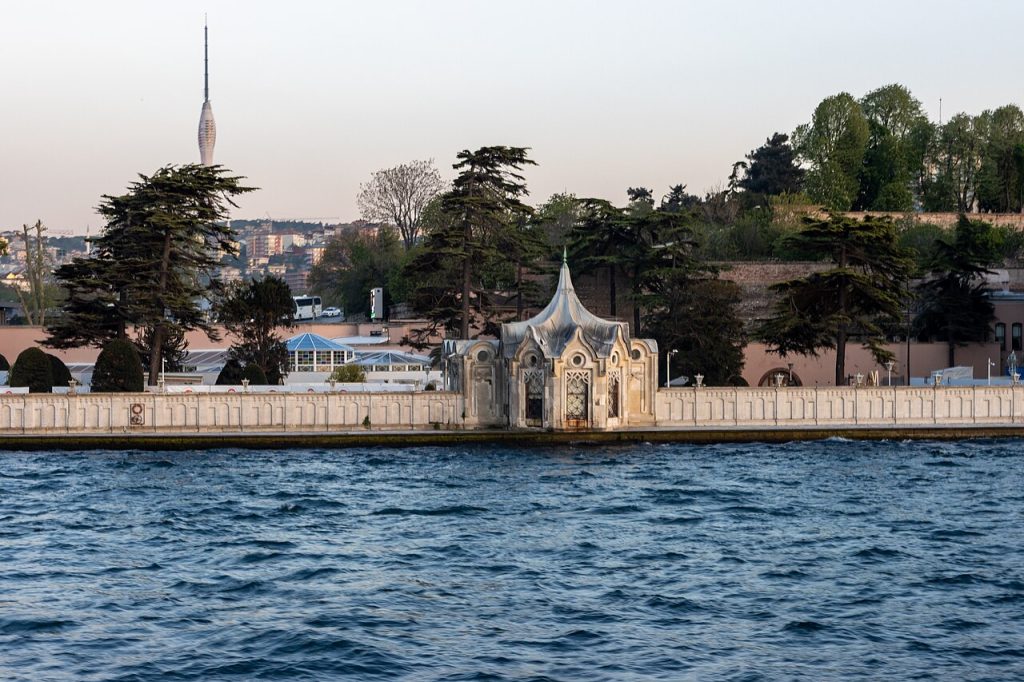
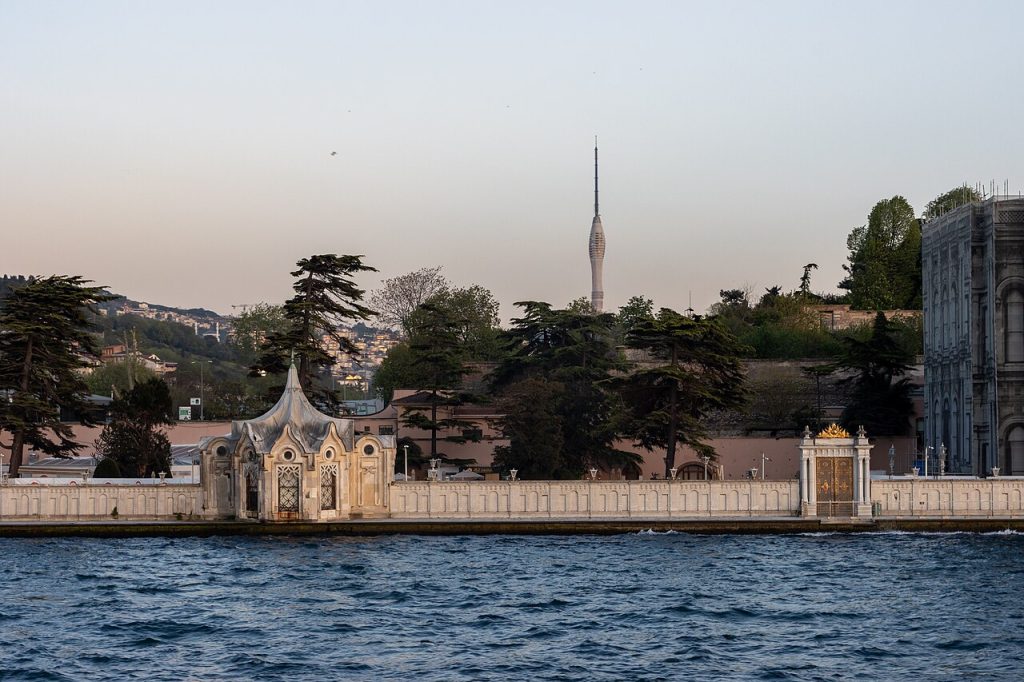
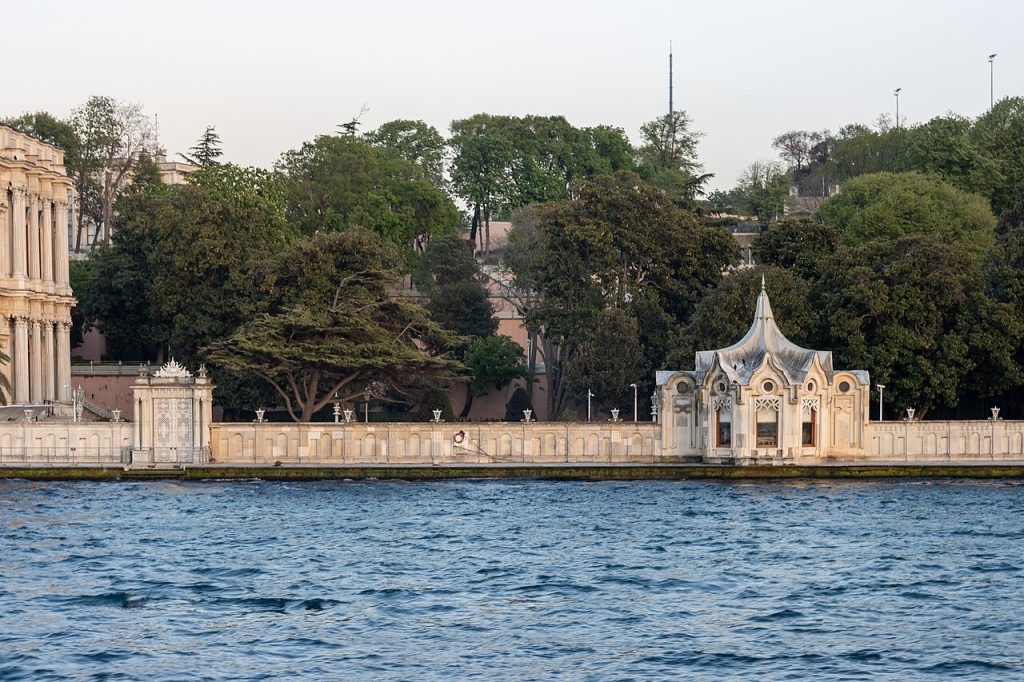
On the water stand two small sea pavilions, one for each wing, where the family sat to watch the Bosphorus traffic.
The terraces are the best part of a visit in spring, and the stables hold a collection of carriages.
The Bridge Overhead
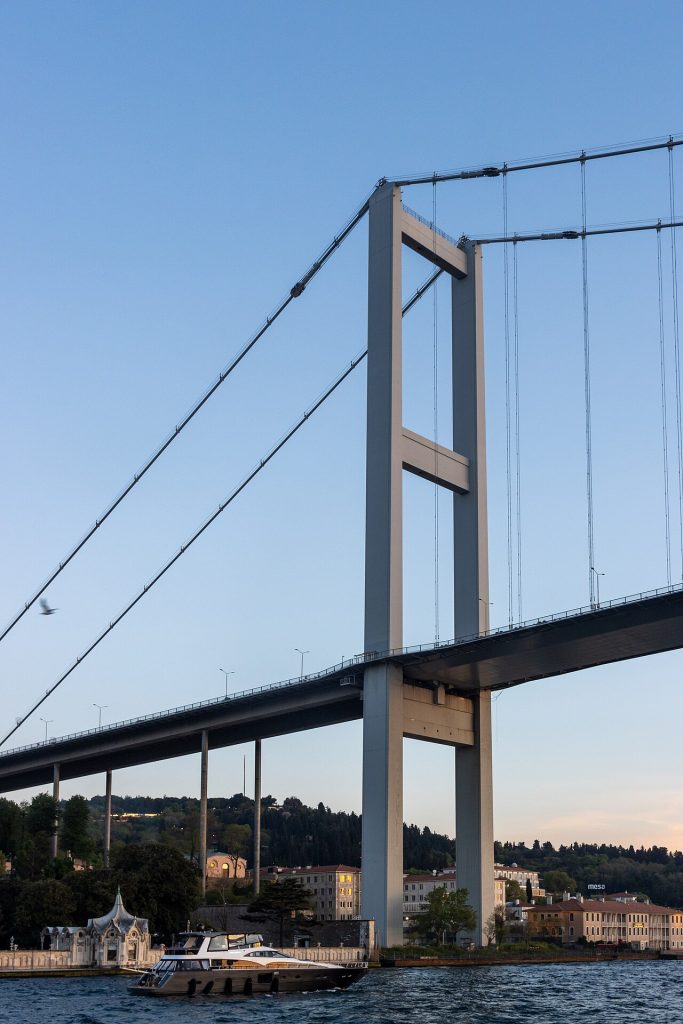
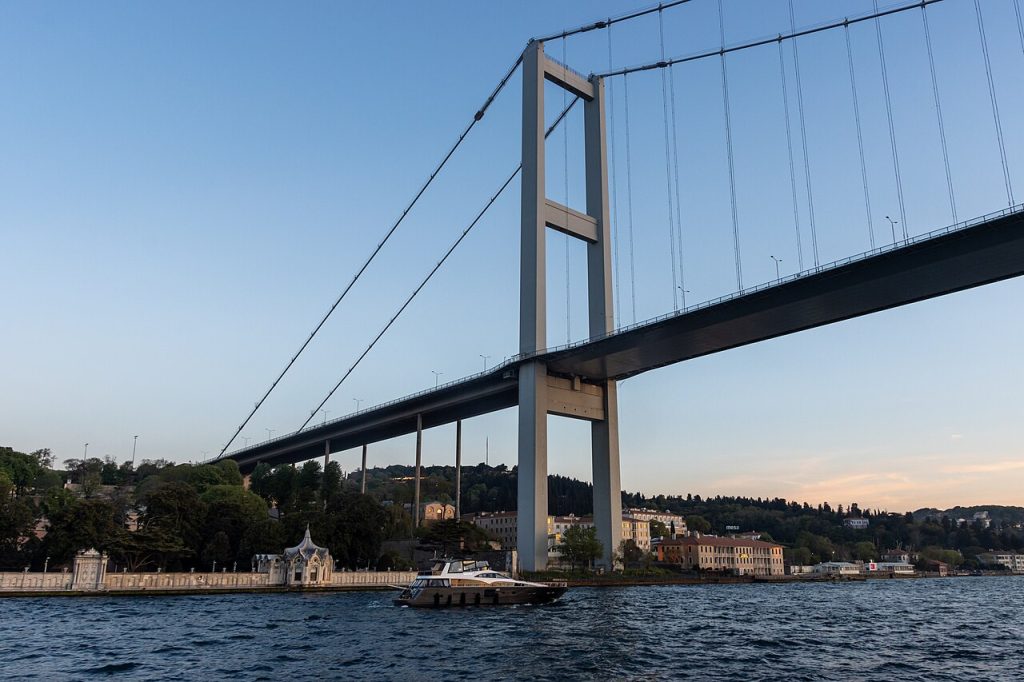
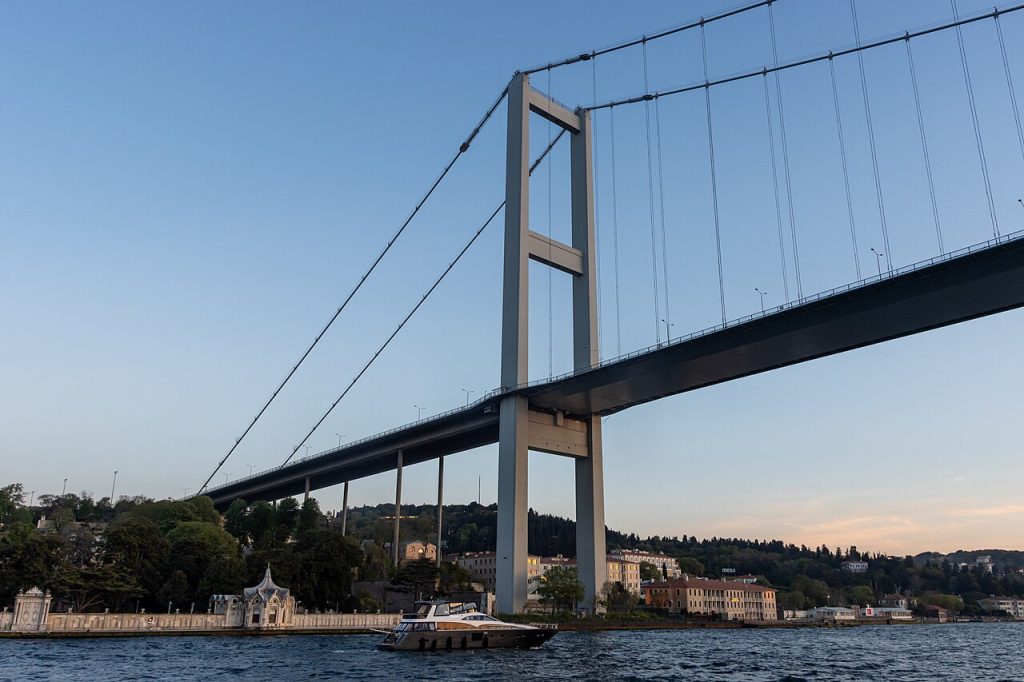
The first Bosphorus bridge, opened in 1973, passes directly above the palace grounds. Its towers stand close enough that the structure dominates every photograph taken from the garden.
Conservationists objected at the time and the argument has never fully died, but the juxtaposition has itself become iconic: an 1860s marble palace under a 1970s suspension bridge.
At night, with the bridge lit, the view from the water is one of the city’s set pieces.
The Palace as Museum
Beylerbeyi opened as a museum under the national palaces directorate and is shown by guided tour. It is less crowded than Dolmabahce and the tours are shorter.
Restoration work has continued in recent years on the interiors, the terraces and the sea pavilions.
Because it is on the Asian side, many visitors skip it, which is precisely why it is worth going.
Visiting Beylerbeyi
Take a ferry to Uskudar and a bus or taxi north along the shore, or cross by ferry from Besiktas. Combine it with Kucuksu Pavilion further north and the Anadolu Hisari fortress.
Best in late spring, when the gardens are in flower and the terrace is comfortable.
Sit on the marble by the water for a few minutes before you leave. That is what the building was for.
Watch the Palace on Film
Visiting Beylerbeyi Palace Today
Beylerbeyi stands on the Asian shore just north of the first Bosphorus bridge, reachable by bus or taxi from Uskudar in fifteen minutes or by ferry and a short walk.
The palace opens daily except Mondays, with guided tours and ticketed entry; the gardens, kiosks and carriage collection are included. It is quieter than the European-side palaces.
Allow two hours and combine it with Kucuksu Pavilion up the shore. Find it here: https://www.google.com/maps?q=41.0428,29.0383
Palaces Nearby
You May Like
Yildiz Palace and the Suspicious Years of Abdulhamid