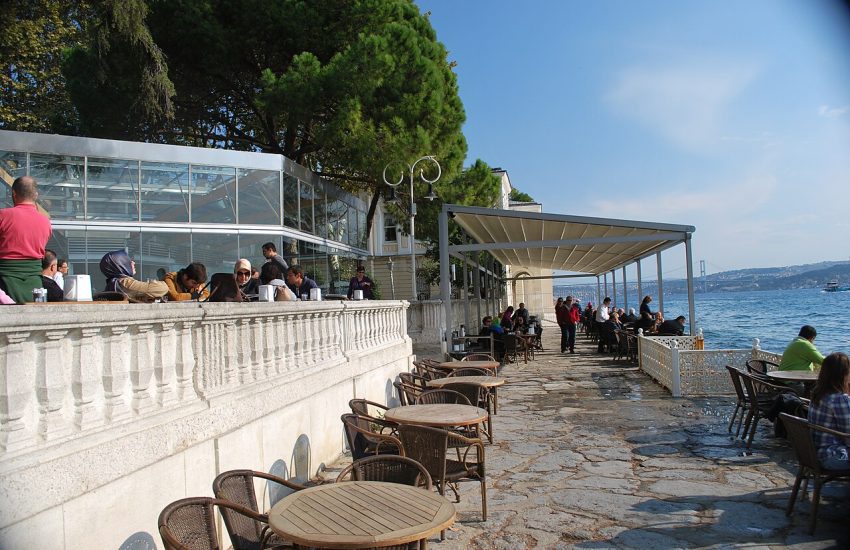
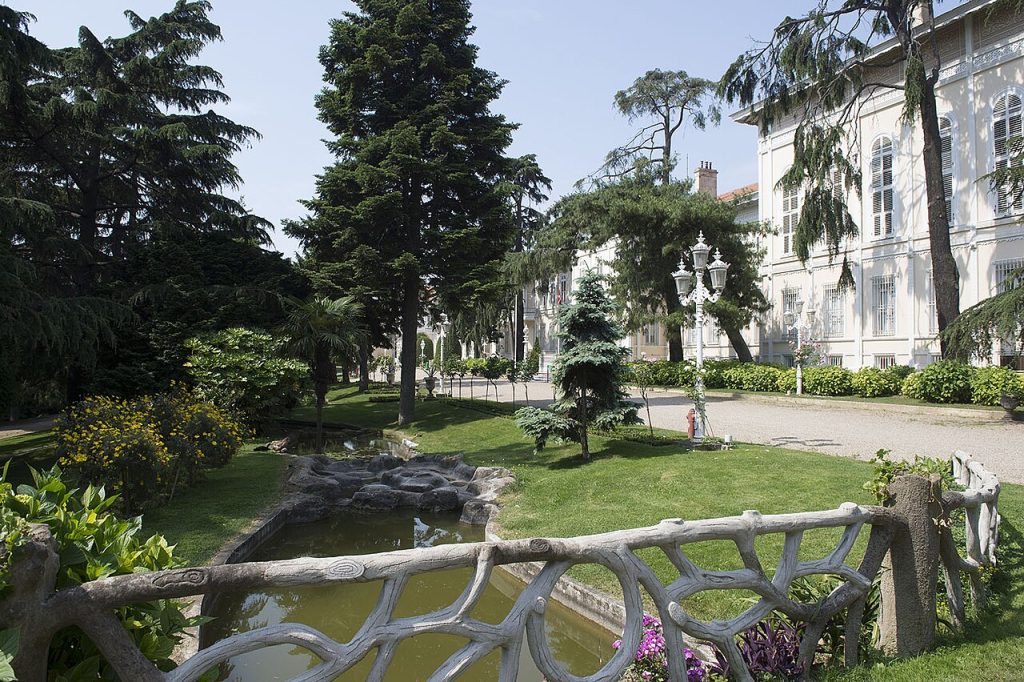
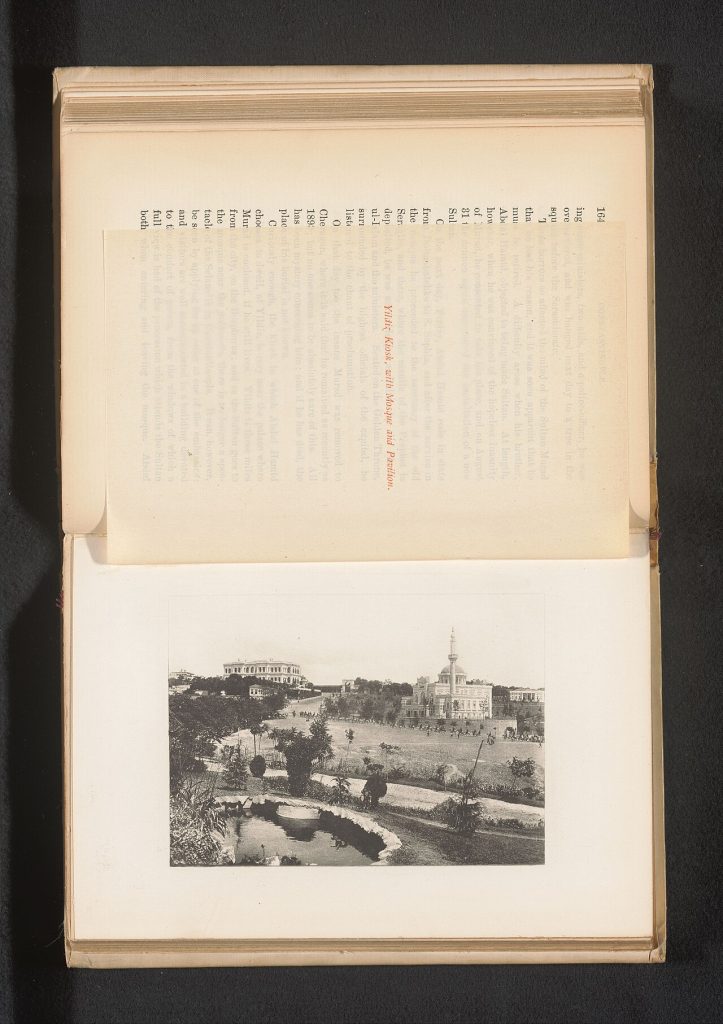
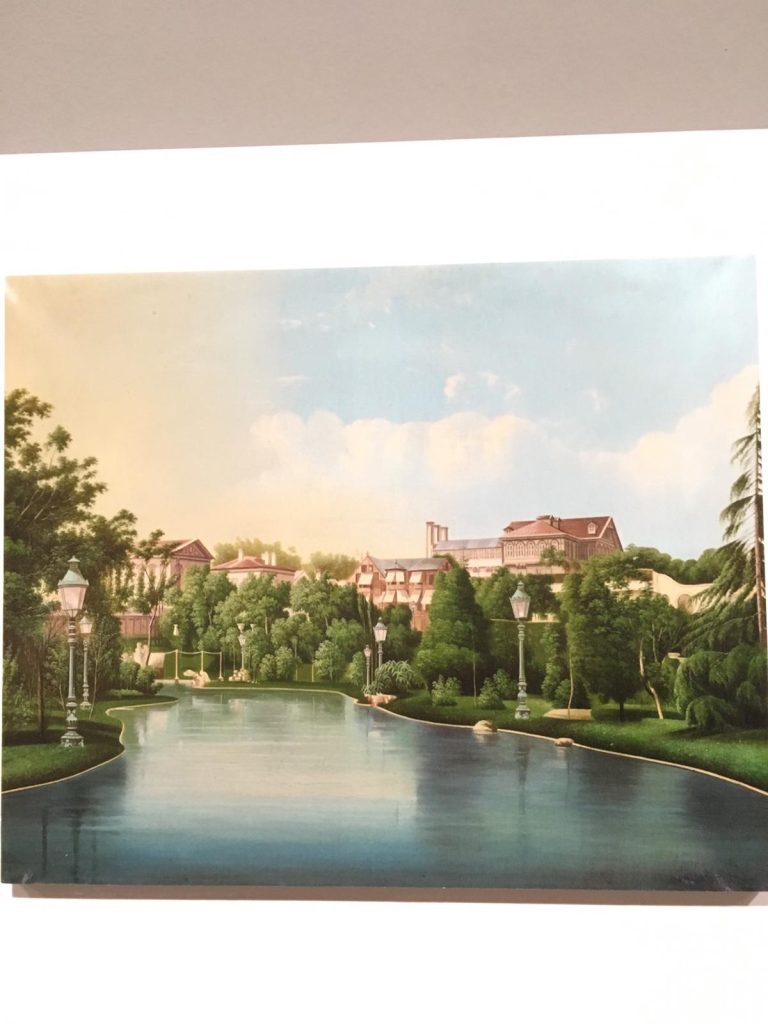
Now, stop among the trees in Yildiz Park and notice that you cannot see a palace. There are paths, ponds, cedars and, scattered through the woods, separate buildings: a chalet, a kiosk, a theatre, a workshop, a mosque.
That is Yildiz. Not one palace but a walled compound of pavilions in a forest on a hill, built by a sultan who did not trust anyone and did not want to live in a building that could be approached from the sea.
From 1877 to 1909, Abdulhamid II ruled an empire from here, personally, through a telegraph network and an enormous system of informers, almost never leaving the walls.
- The Hill Above the Bosphorus
- Abdulhamid II
- Why He Moved Uphill
- A Compound, Not a Palace
- The Chalet Kiosk
- Receiving the Kaiser
- The Carpenter Sultan
- Ruling by Telegraph
- The Reports
- Deposition and Exile
- What Happened to the Buildings
- Yildiz Park Today
- Visiting Yildiz
The Hill Above the Bosphorus
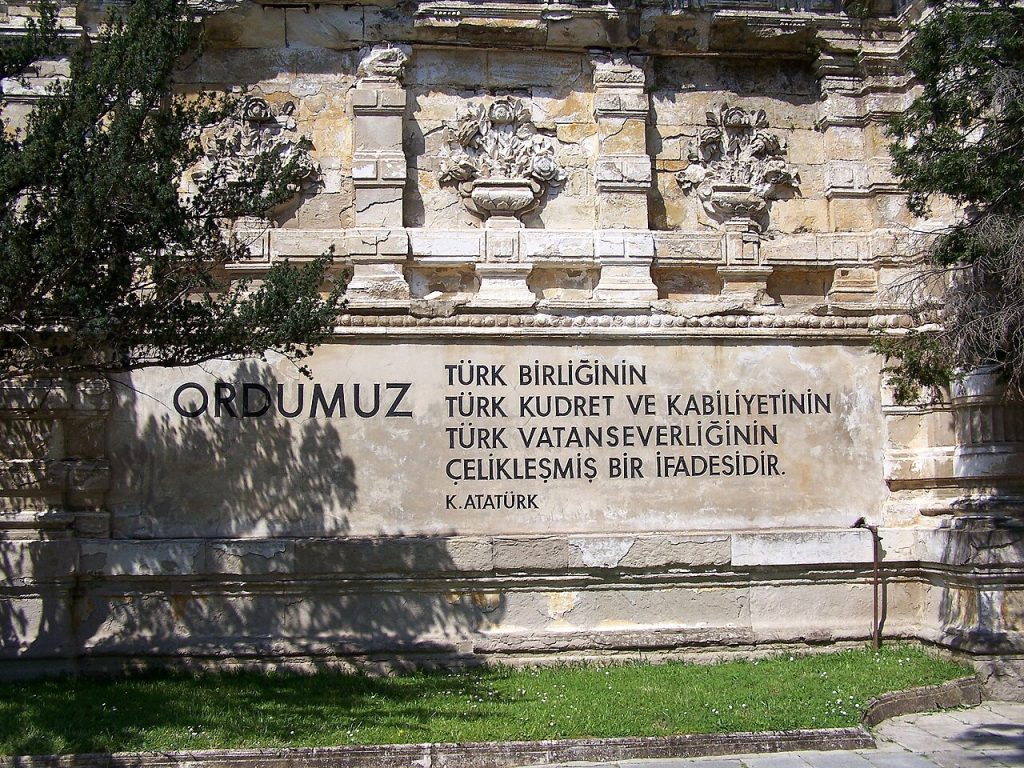
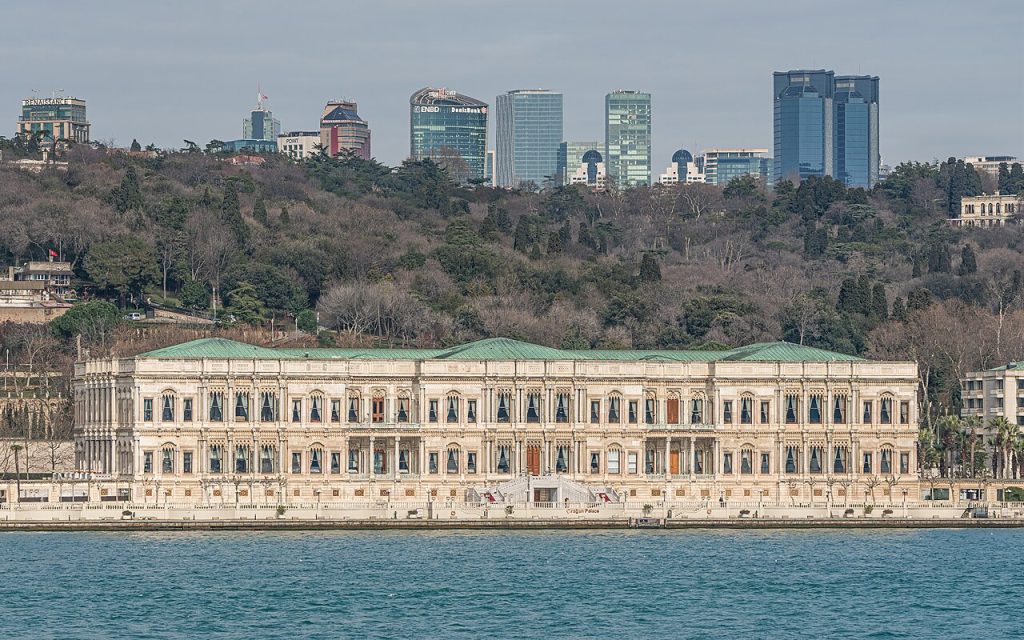
The hill behind Ciragan had been imperial garden land since the sixteenth century, with scattered pavilions built by successive sultans for the view and the air.
The name Yildiz means star, from a pavilion built by Selim III for his mother in the 1790s.
Abdulhamid inherited a loose collection of buildings and turned it into a walled government complex covering around half a square kilometre.
Abdulhamid II
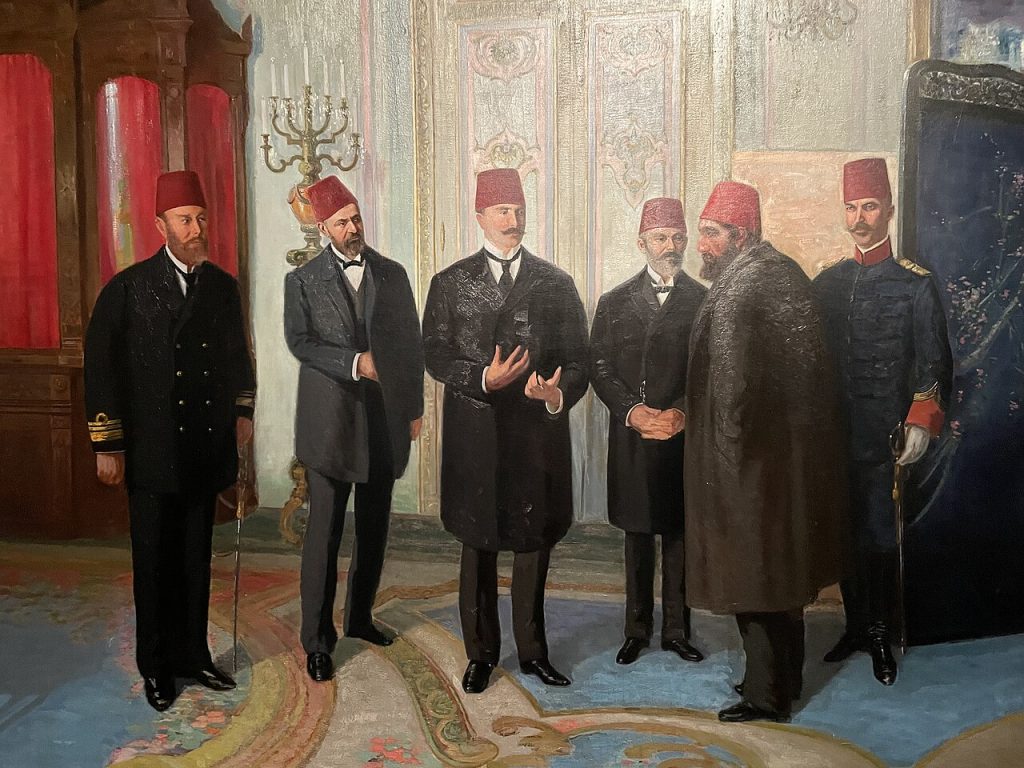
Abdulhamid II came to the throne in 1876, the third sultan of that year, promising a constitution. He granted it, convened a parliament, and suspended both within two years, using the Russian war as justification.
He then ruled personally for three decades: modernising education, railways, the bureaucracy and the telegraph system, while building a police state and suppressing dissent.
He remains one of the most divisive figures in Turkish history, admired and condemned in roughly equal measure, including for the Armenian massacres of the 1890s during his reign.
Why He Moved Uphill
His uncle had been deposed and died; his brother had been deposed and imprisoned; an attempt had been made on Ciragan in 1878. He concluded that a waterfront palace was indefensible.
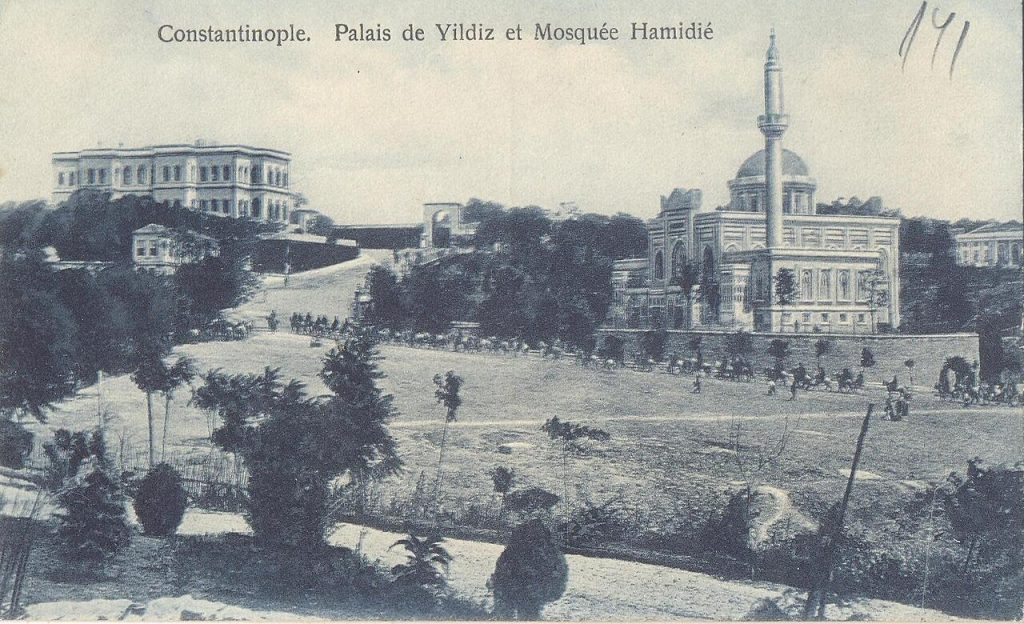
Yildiz sat on high ground, behind walls, approached through gates, surrounded by his own guard regiments, with the sea at a distance.
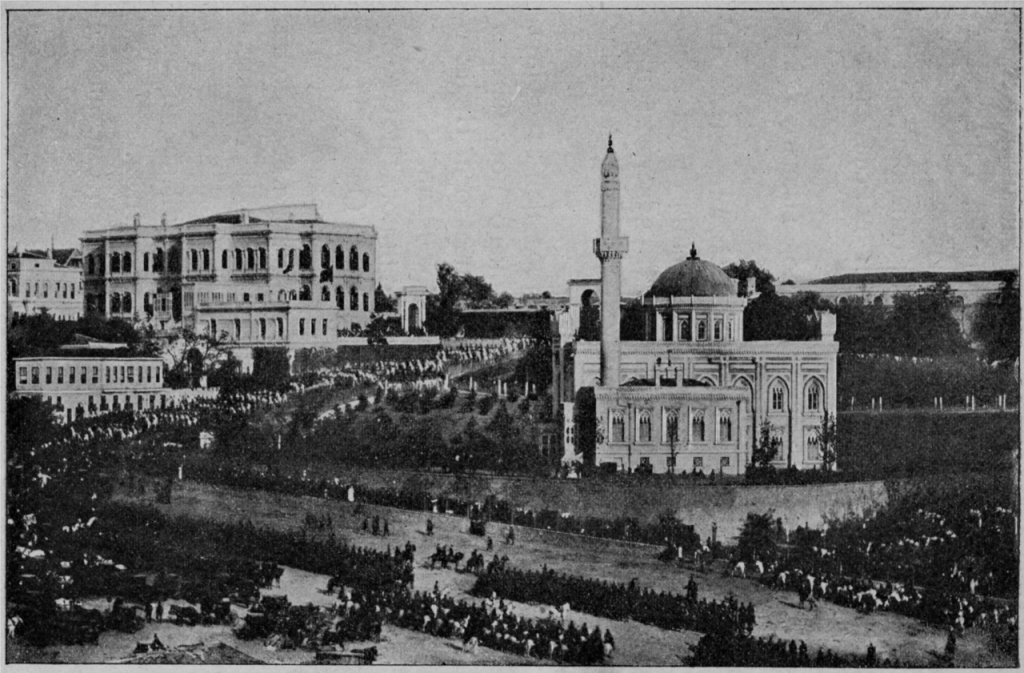
He also bombed-proofed his routine: he rarely appeared in public except for Friday prayers at the mosque he built at the compound gate, and even that was heavily guarded.
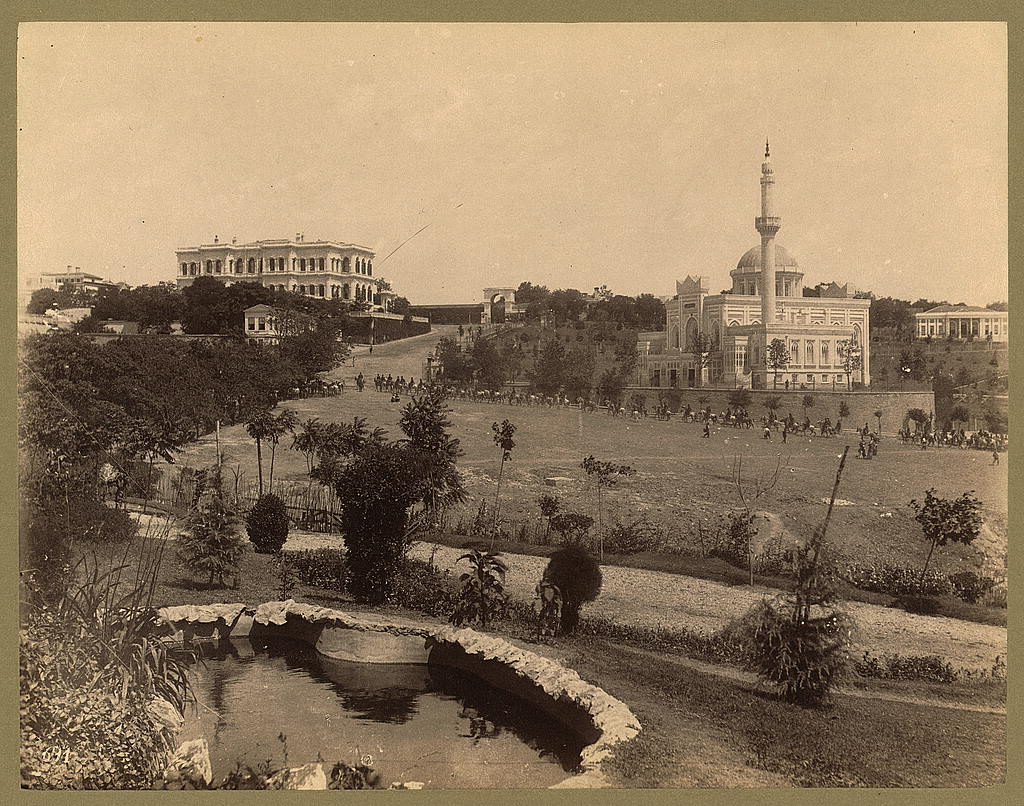
A Compound, Not a Palace
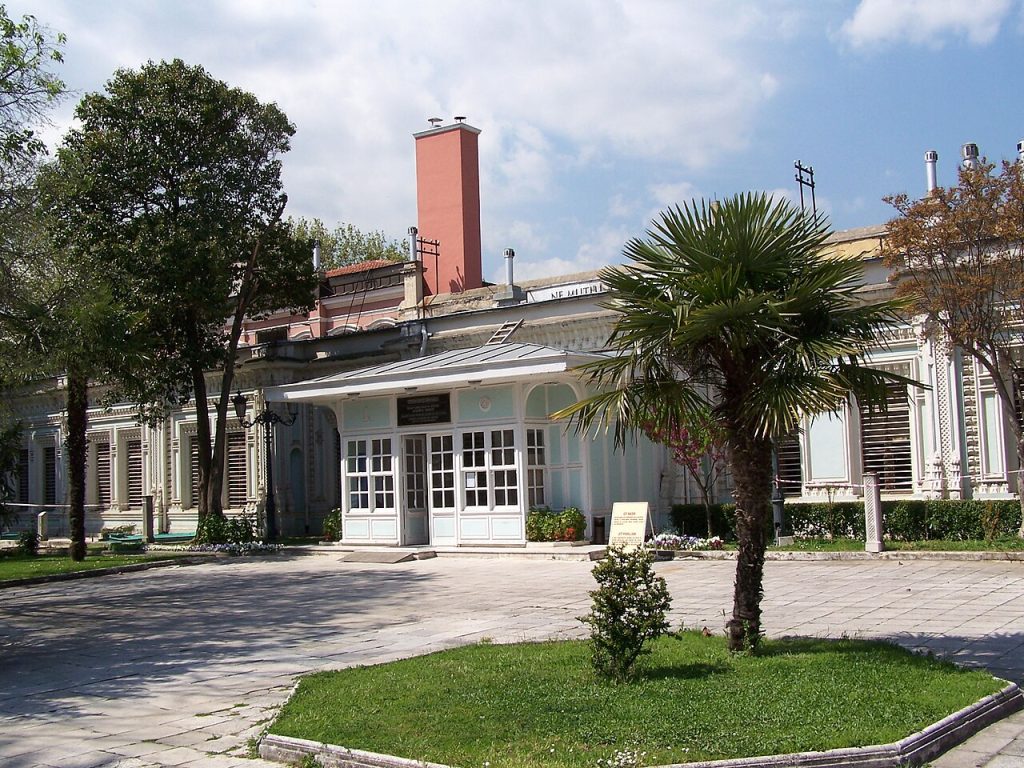
Inside the walls were the sultan’s residence, offices, a theatre, a library, workshops, a porcelain factory, barracks, stables, greenhouses, a mosque, guest pavilions and gardens laid out by a German landscape architect.
Several thousand people lived and worked inside. It functioned as a small, self-sufficient city, which was the intention.
Buildings were added as needed rather than planned as a whole, which is why the complex feels scattered today.
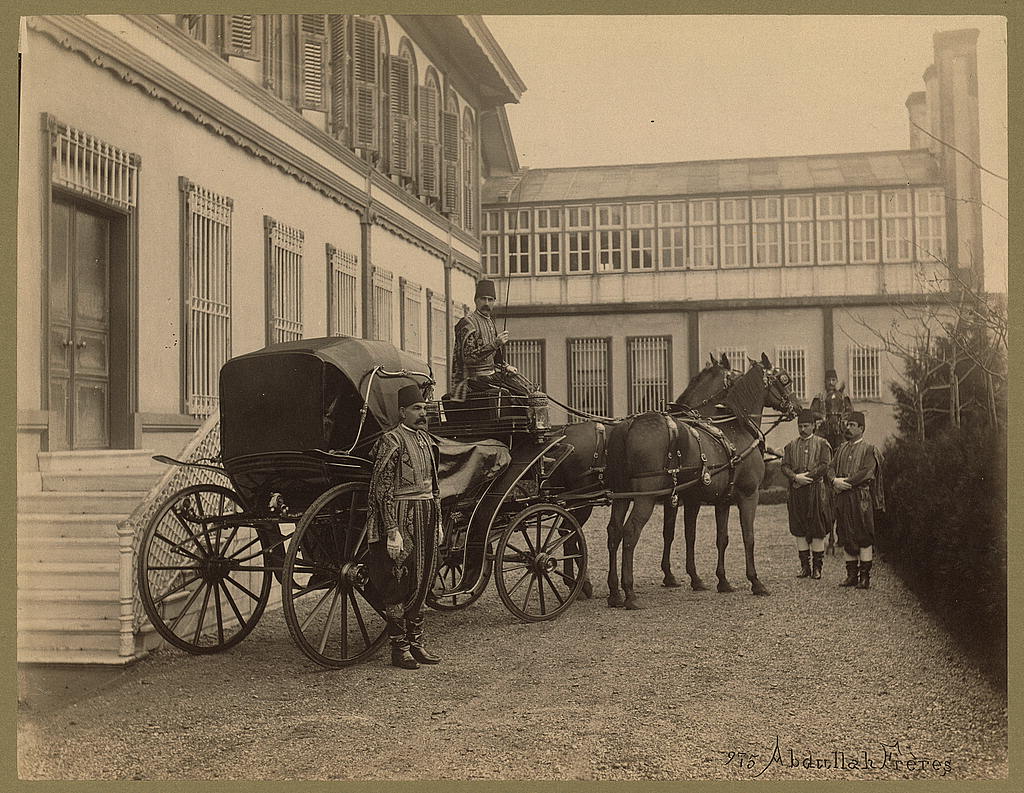
The Chalet Kiosk
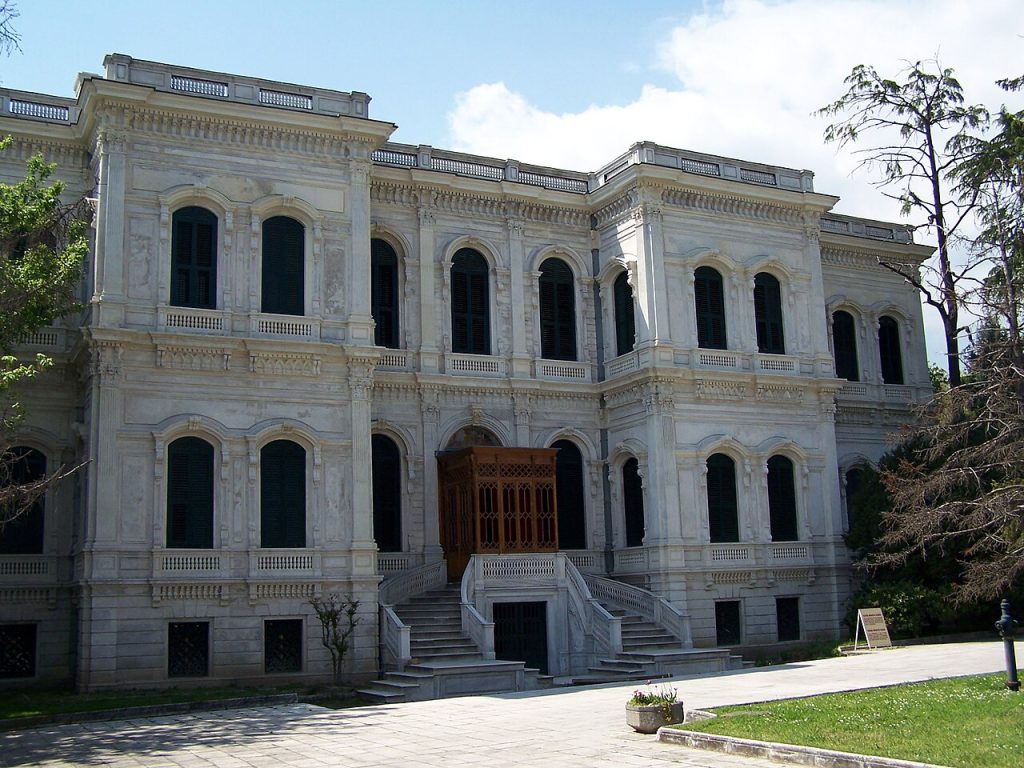
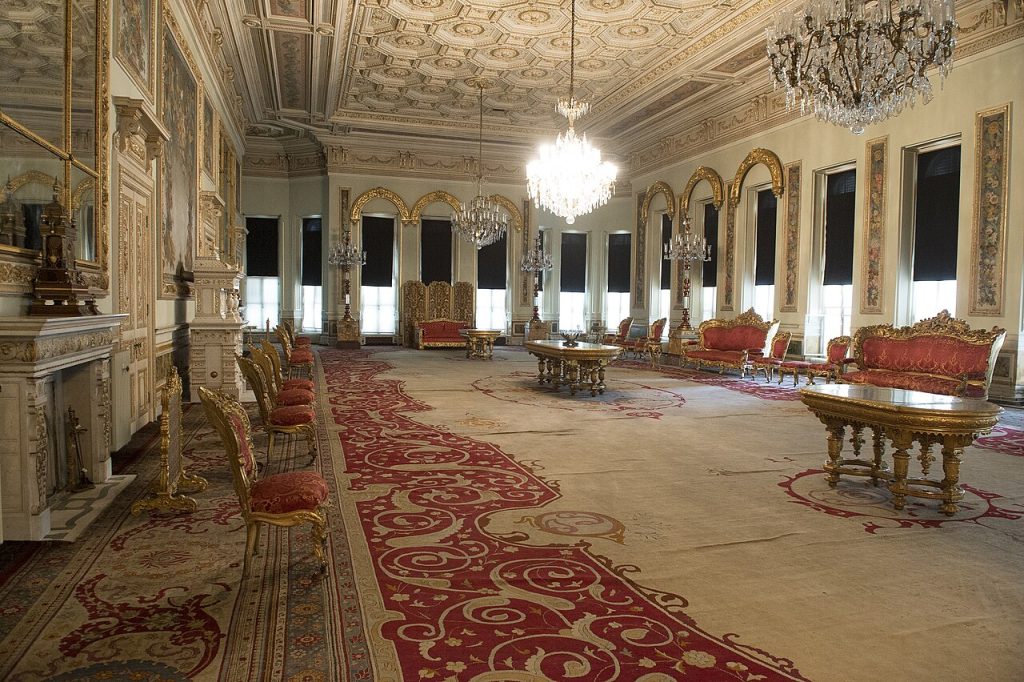
The Chalet Kiosk, built in stages from 1880, is the main surviving residence: a large wooden and masonry building in Swiss chalet style, with over sixty rooms, mother-of-pearl inlay and a ceremonial hall carpeted with a single enormous Hereke carpet.
It is the best place to see how Abdulhamid actually lived: dark panelling, heavy furniture, European fittings, and relatively modest private rooms.
The ceremonial hall was built specifically for one visit, which is the next part of the story.
Receiving the Kaiser
Kaiser Wilhelm II visited Istanbul in 1889 and again in 1898, and the German alliance became central to late Ottoman policy, producing the Baghdad railway, German military advisers and eventually the alliance of 1914.
The Chalet’s grandest wing was built for those visits, and the scale of the ceremonial hall reflects how important the relationship was considered.
That alliance took the empire into the First World War and ended it.
The Carpenter Sultan
Abdulhamid was an accomplished carpenter who made furniture with his own hands in a workshop inside the compound. Pieces he made survive in the collections.
He also founded the Yildiz porcelain factory in 1894, which produced tableware and decorative pieces for the court and still operates today, producing in the historic buildings.
The combination is characteristic: a ruler of enormous suspicion who spent his evenings doing joinery.
Ruling by Telegraph
The telegraph was the technology that made Abdulhamid’s system possible. Lines ran from Yildiz across the empire, and he received and sent messages constantly, bypassing ministers and provincial governors.
He expanded the network enormously, partly for control and partly for genuine administrative modernisation. The same lines that carried his orders later carried the Young Turk revolution.
In 1908 the army in Macedonia telegraphed its ultimatum, and the constitution was restored within days.
The Reports
The other half of the system was the jurnal, the informer’s report. Thousands of people across the empire were paid to report on conversations, publications and suspicions, and the reports came to Yildiz.
Censorship was severe: words like revolution, liberty and even the names of certain plays were struck out of newspapers. Writers went into exile in Paris, Geneva and Cairo and published there.
After 1908 the reports were burned in bonfires in the compound, which is why relatively few survive.
Deposition and Exile
In April 1909, after a counter-revolutionary mutiny in Istanbul, the Action Army marched from Salonika, took the city and deposed Abdulhamid. He was sent to Salonika under guard, then brought back to Beylerbeyi Palace, where he died in 1918.
Yildiz was looted during the takeover, and part of the contents and the imperial library were dispersed or moved.
His brother Mehmed V became a constitutional figurehead, and real power passed to the Committee of Union and Progress.
What Happened to the Buildings
In the republic the compound was divided. Parts became a military academy, parts a university campus, parts a museum, parts a municipal park. The porcelain factory kept working.
That fragmentation is why visiting Yildiz today feels confusing: different buildings have different owners, opening hours and tickets, and some are closed for restoration at any given time.
Recent restoration campaigns have reopened the Chalet and several pavilions.
Yildiz Park Today
The park is the part most people see: a steep wooded hillside above Ciragan, with mature trees, ponds, two restored kiosks serving as cafes and views over the Bosphorus.
It is one of the best places in Istanbul for a quiet hour, especially on a weekday morning, and in autumn the colour is remarkable.
Enter from the Ciragan shore road and walk up, or from Besiktas, and allow for a climb.
Visiting Yildiz
Check what is open before going, because the situation changes. The Chalet Kiosk, the city museum pavilions and the porcelain factory have separate arrangements.
Combine the visit with Ciragan below and the Ortakoy waterfront, and finish with a ferry from Besiktas.
Walk slowly through the trees and remember that for thirty-three years an empire of three continents was administered from a wooden house in this wood.
Watch the Palace on Film
Visiting Yildiz Palace Today
Yildiz stands on the hill above Ciragan between Besiktas and Ortakoy, reachable on foot from either, with park entrances on the shore road and from Barbaros Boulevard.
Yildiz Park is open daily and free. The Chalet Kiosk and other pavilions open on museum schedules with separate tickets, and some buildings belong to the university or the army and are closed; check before travelling.
Allow two to three hours for park and pavilions together. Find it here: https://www.google.com/maps?q=41.0486,29.0122
Palaces Nearby
You May Like
Ciragan Palace and the Sultan Who Died Inside It