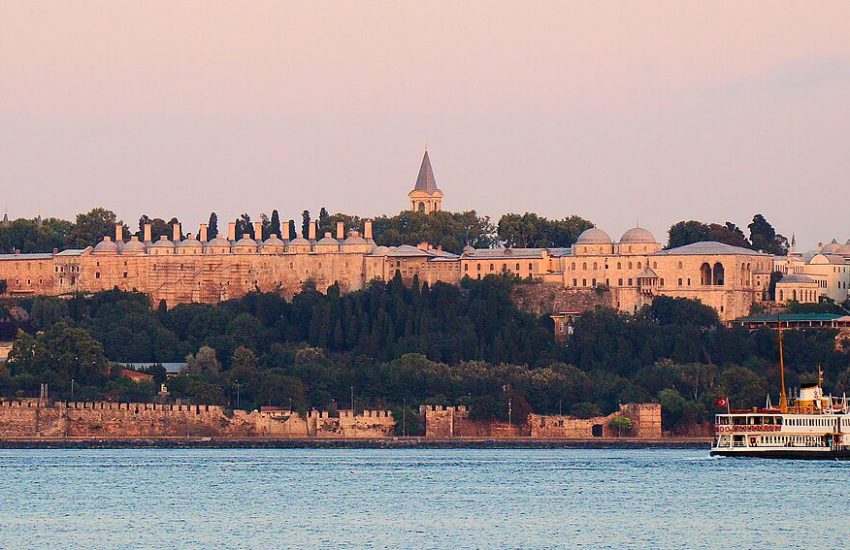
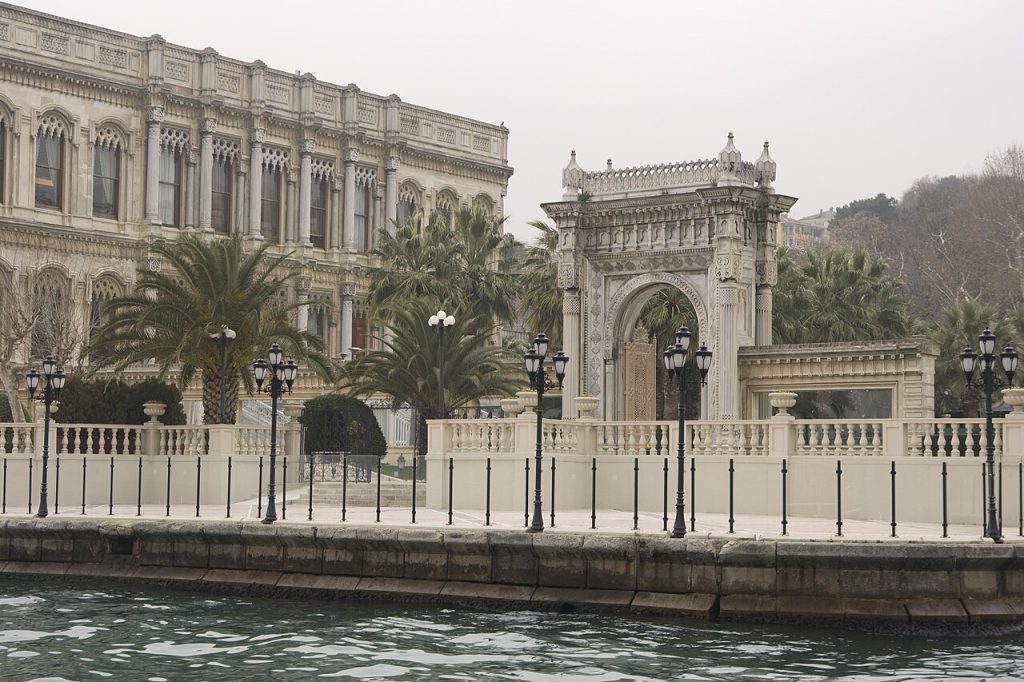
Now, stop on the shore road and look at the marble wall facing the water. Behind those windows a sultan of the Ottoman Empire lived under guard for twenty-eight years, deposed by his own ministers after ninety-three days on the throne, and he died there without seeing the city again.
Ciragan is the saddest palace on the Bosphorus. It was built at enormous cost, used for barely a decade, turned into a prison for one man, briefly housed a parliament, burned to a shell in 1910 and stood roofless for eight decades.
Today it is a luxury hotel, and the historic building holds ballrooms and suites. That outcome is better than the alternative, which was demolition.
- The Earlier Wooden Palaces
- Abdulaziz Builds in Marble
- Nigogayos Balyan’s Design
- The Deposition of 1876
- Murad V and Ninety-Three Days
- Twenty-Eight Years Under Guard
- The Plot to Free Him
- The Parliament of 1909
- The Fire of 1910
- Eighty Years as a Shell
- The Hotel
- What You Can See
- Visiting Ciragan
The Earlier Wooden Palaces
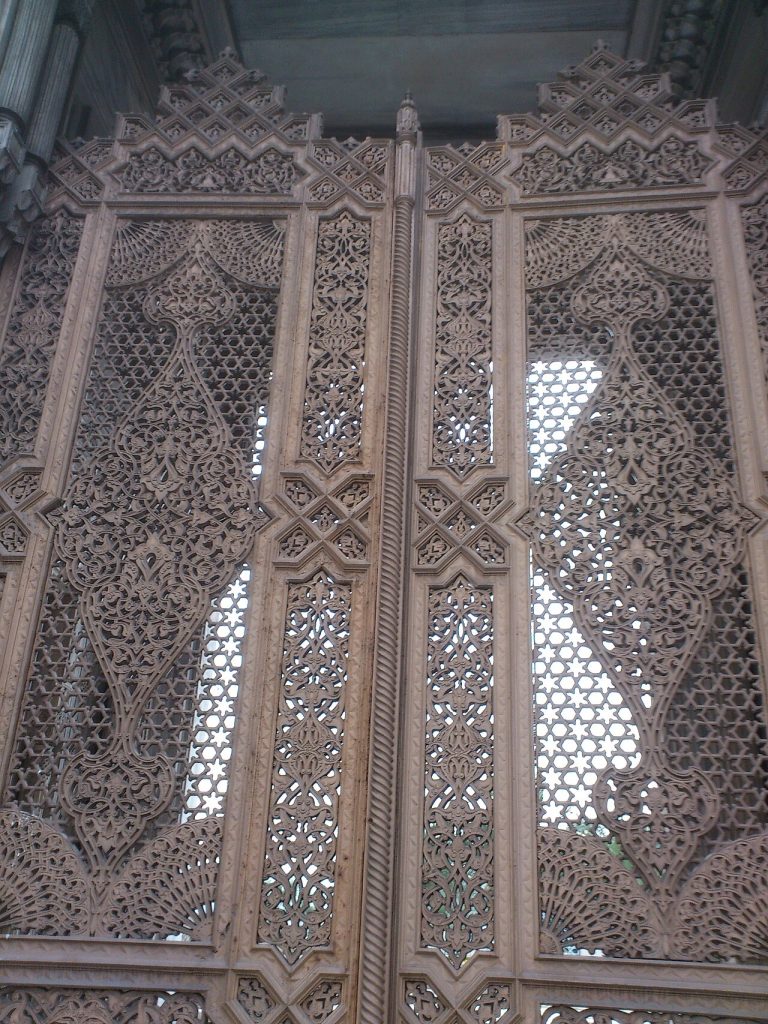
The shore here held imperial gardens and wooden pavilions from the seventeenth century. The name Ciragan comes from the Persian for torch, after the lamp-lit entertainments of the Tulip Era in the early eighteenth century.
Those festivities, with tulips and candles tied to the shells of tortoises wandering the gardens, are the most frequently repeated image of that period, and they took place on this stretch of shore.
The wooden palaces burned, as all of them did, and the site was cleared for something permanent.
Abdulaziz Builds in Marble
Sultan Abdulaziz, who came to the throne in 1861, built the present palace between 1863 and 1871, within a decade of Dolmabahce’s completion a kilometre away.
He was a large, energetic man who loved ships, wrestling and building, and whose reign saw the first Ottoman sovereign visit to western Europe, in 1867, to the Paris Exposition and then to London and Vienna.
He came back determined to build, and the empire paid for it with more loans.
Nigogayos Balyan’s Design
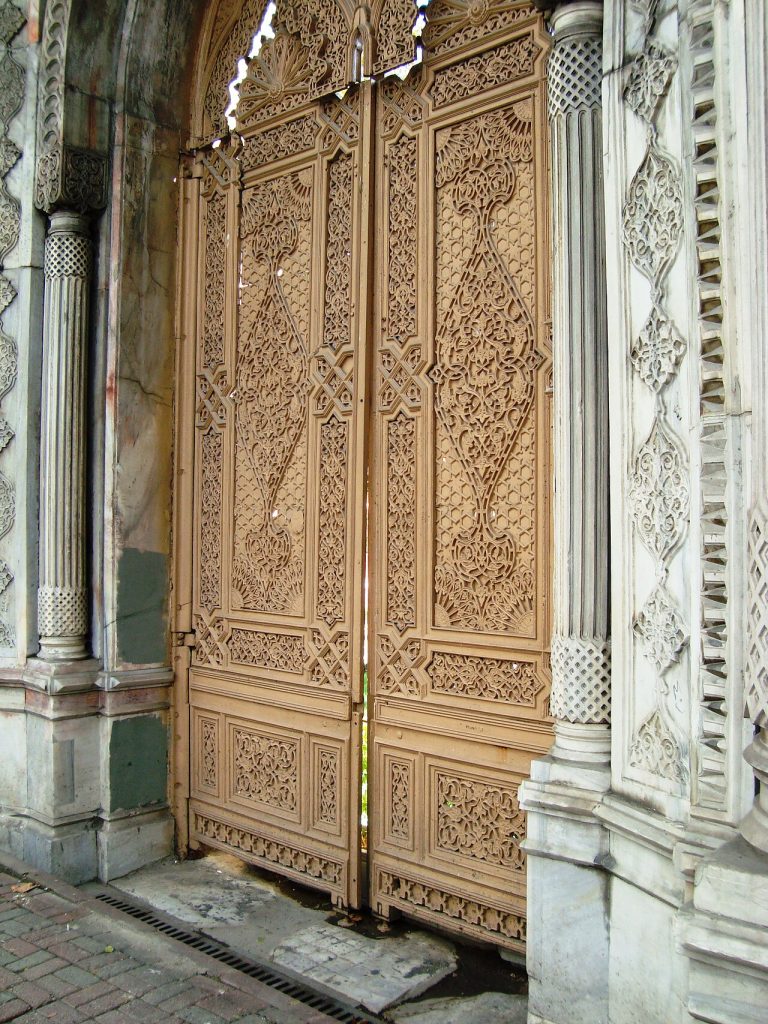
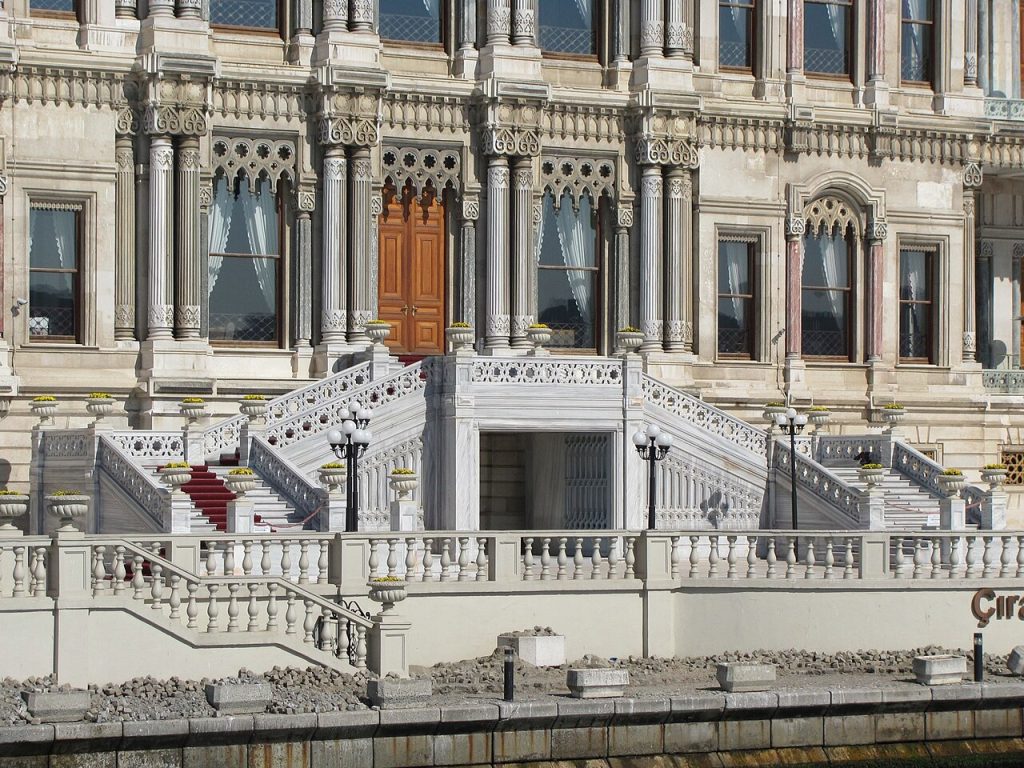
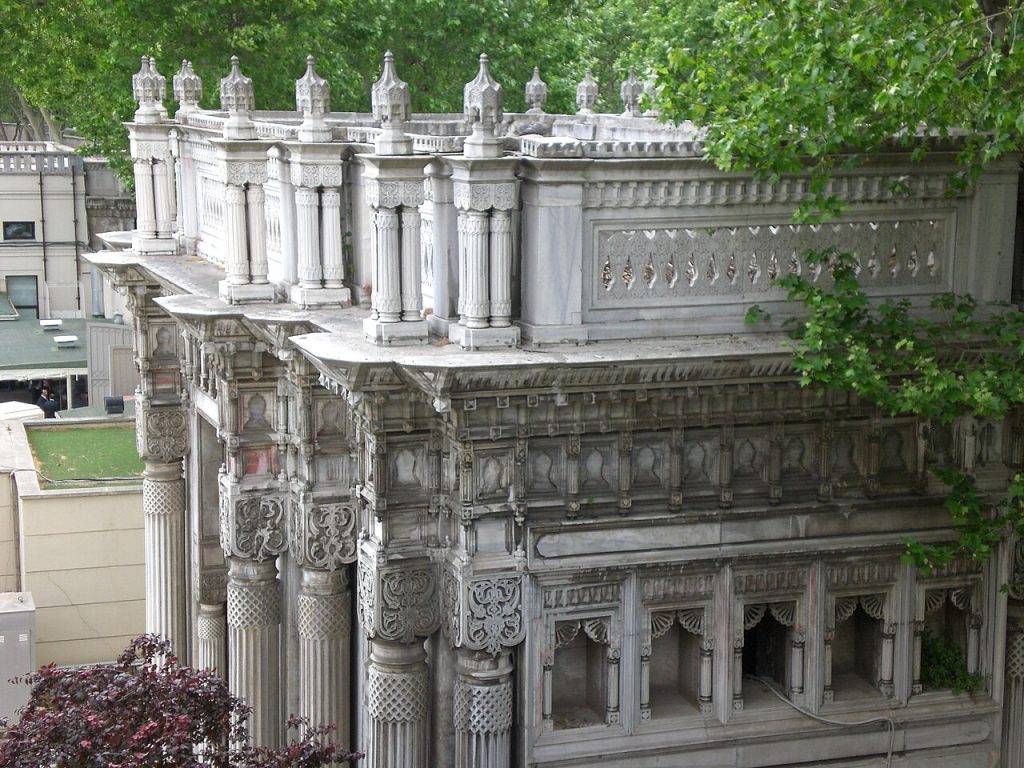
The architect was Nigogayos Balyan, with work continued by his brother Sarkis after his death. The design mixes neoclassical structure with Moorish and Ottoman decorative detail, a fashion of the 1860s often called orientalist revival.
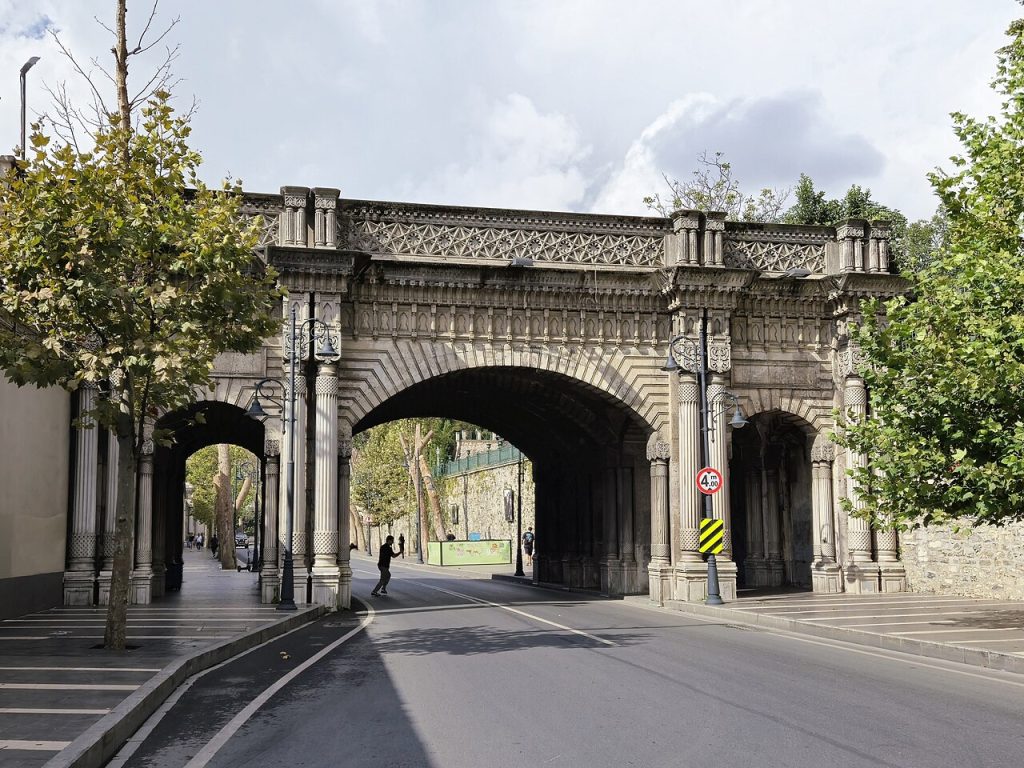
The exterior is marble, the interiors were of mahogany and mother of pearl, and a marble bridge connected the palace to Yildiz park on the hill behind.
It was the most expensive building the empire had yet produced, and the sultan who built it used it for about five years.
The Deposition of 1876
In May 1876, with the empire bankrupt, revolts in the Balkans and pressure from reformist ministers, Abdulaziz was deposed in a palace coup organised by Midhat Pasha and others.
He was moved to Feriye, next door, and died days later with his wrists cut. The official verdict was suicide; many contemporaries believed otherwise, and a trial years later convicted several men of his murder on evidence that was itself contested.
The empire had three sultans within three months that year.
Murad V and Ninety-Three Days
His nephew Murad V succeeded him. Murad was liberal, French-speaking, a composer of some talent, and close to the reformers who had brought him to power.
He was also, by the time he took the throne, in serious mental distress, aggravated by his uncle’s death, by a shooting at a cabinet meeting and by alcohol withdrawal. Within weeks he was unable to perform the ceremonies of office.
After ninety-three days he was declared unfit and deposed in favour of his brother Abdulhamid II, who promised a constitution.
Twenty-Eight Years Under Guard
Murad was moved to Ciragan with his family and household and kept there until his death in 1904. Twenty-eight years in a palace with the Bosphorus outside the windows and guards at every gate.
He recovered substantially within a few years, by most accounts, and continued to compose music. He was never released, because a recovered deposed sultan is a danger to the sultan who replaced him.
His daughters and household lived with him. Children were born and grew up inside the compound.
The Plot to Free Him
In 1878 Ali Suavi, a journalist and reformer, led a group of several hundred Balkan refugees in an attempt to storm Ciragan, free Murad and restore him to the throne.
They got inside. The local police chief arrived with a detachment, Ali Suavi was killed in the fighting, and the attempt collapsed within an hour.
Abdulhamid’s response was to increase surveillance everywhere, and the episode is often cited as a reason for the extraordinary spy network of his later reign.
The Parliament of 1909
After the Young Turk revolution of 1908 restored the constitution, the Ottoman parliament needed a home, and in 1909 it moved into the restored Ciragan Palace.
For a few months the building housed the chamber of deputies and the senate of a constitutional empire, with deputies from Salonika to Baghdad.
It was the most hopeful use the building ever had, and it lasted less than a year.
The Fire of 1910
On 19 January 1910 fire broke out, probably from a faulty heating installation, and destroyed the palace in hours. The parliamentary library and archives burned with it.
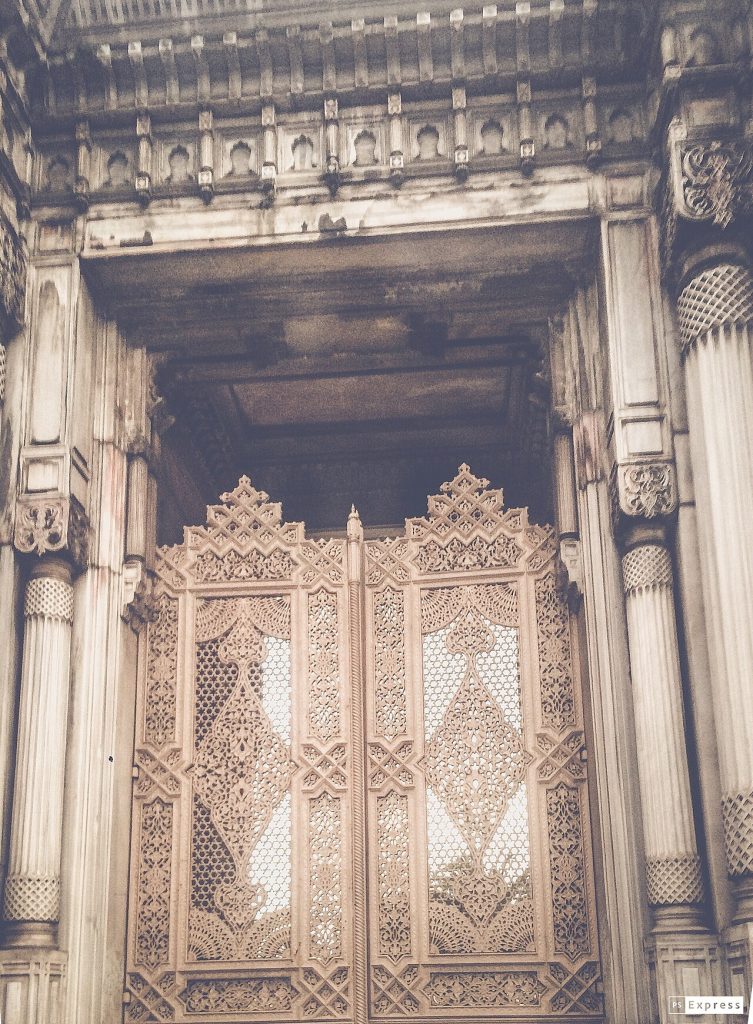
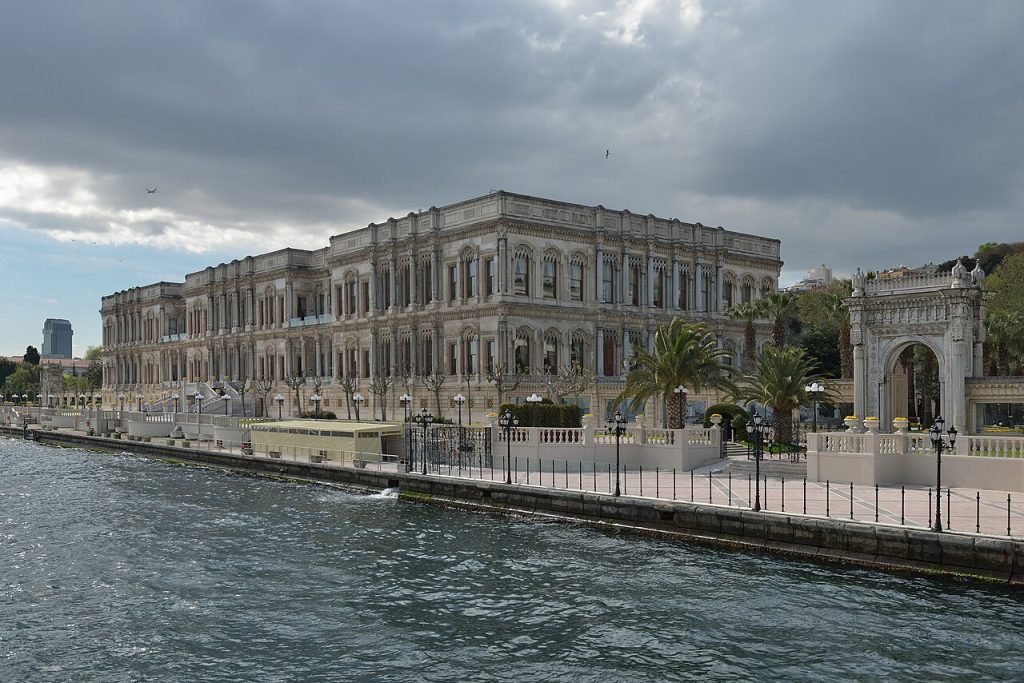
Only the marble shell survived: outer walls, window frames, the gate. Everything wooden inside was gone.
The empire had five years of peace left and no money for rebuilding. Parliament moved elsewhere and the ruin stayed.
Eighty Years as a Shell
For most of the twentieth century Ciragan stood empty on one of the most valuable waterfronts in Europe. The grounds were used as a football stadium for a period, and the shell slowly weathered.
Photographs from the 1960s and 1970s show grass growing inside the walls and washing lines in the gardens.
Proposals came and went. The building was too prominent to demolish and too expensive to restore.
The Hotel
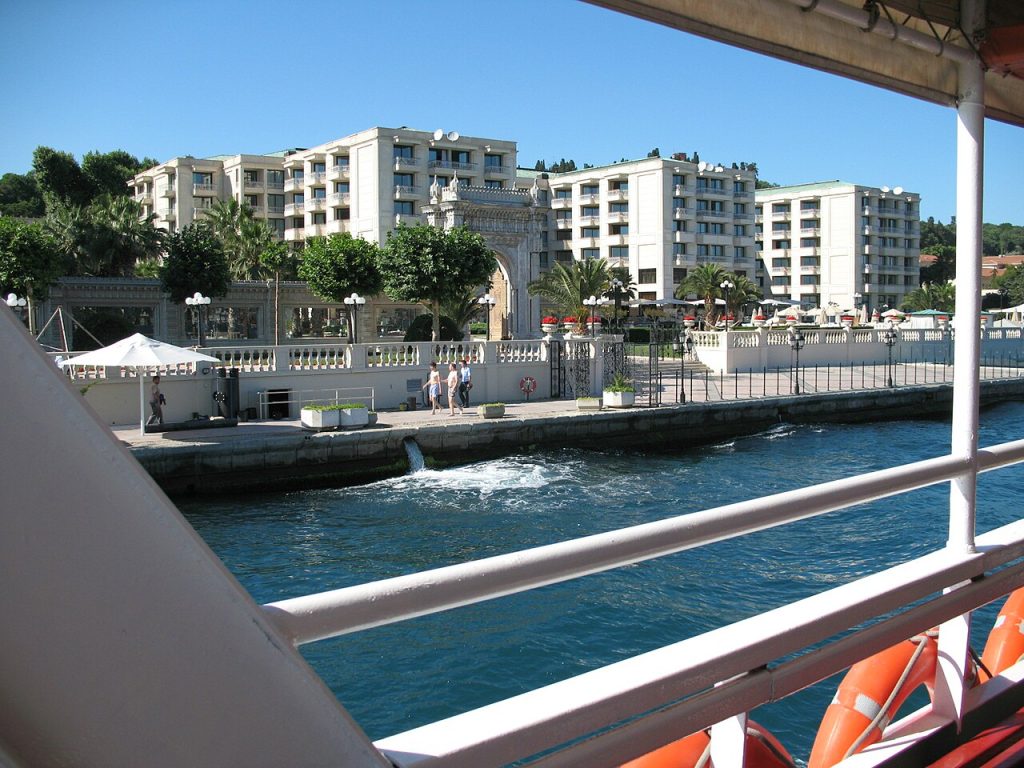
In the late 1980s a Japanese and Turkish investment restored the shell and built a modern hotel block beside it, opening in 1991 as the Ciragan Palace Kempinski.
The historic building holds ballrooms, restaurants and a small number of suites; the bulk of the rooms are in the new wing. The gardens, the pool on the waterfront and the terraces are part of the hotel.
Heritage purists objected. The practical counterargument is that the building now has a roof, a maintenance budget and a future.
What You Can See
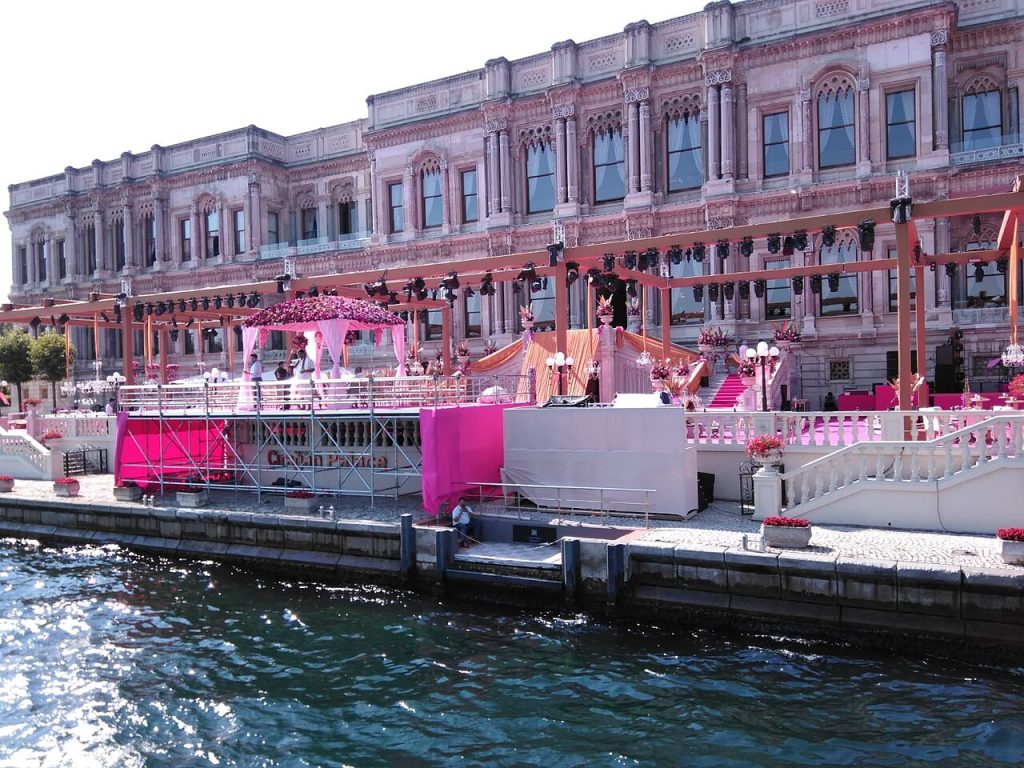
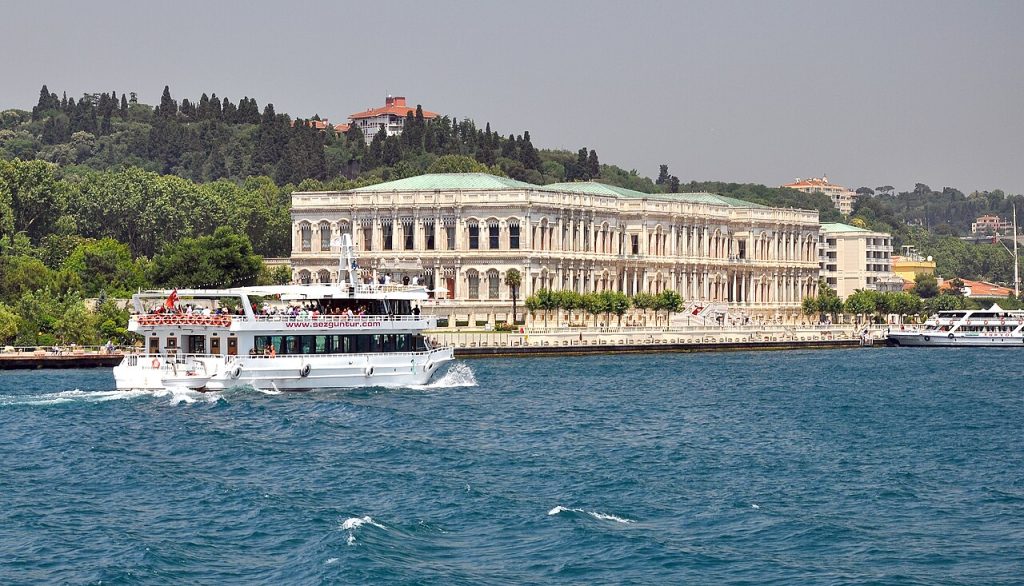
You cannot tour Ciragan as a museum. It is private property. What you can do is walk the shore road past the facade, look at it from a Bosphorus ferry, or go in as a paying guest for tea, a drink or a meal on the terrace.
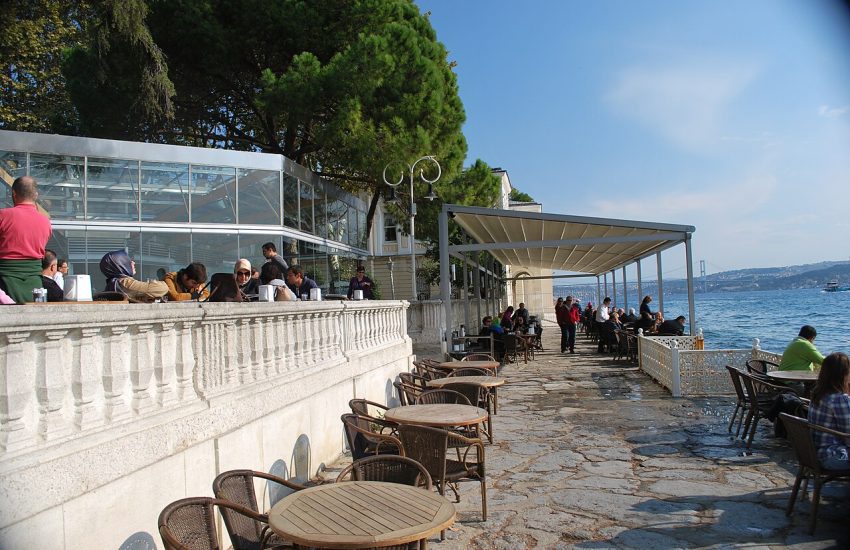
The terrace view, with the water a few metres away and the Asian shore opposite, is one of the great places to sit in Istanbul, and it is not cheap.
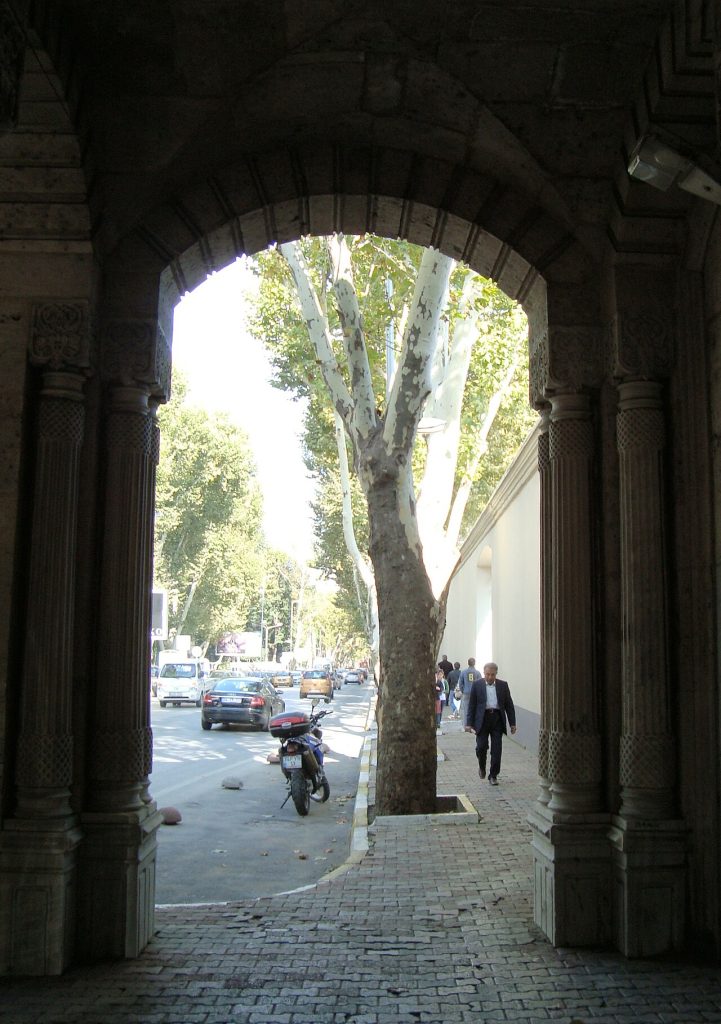
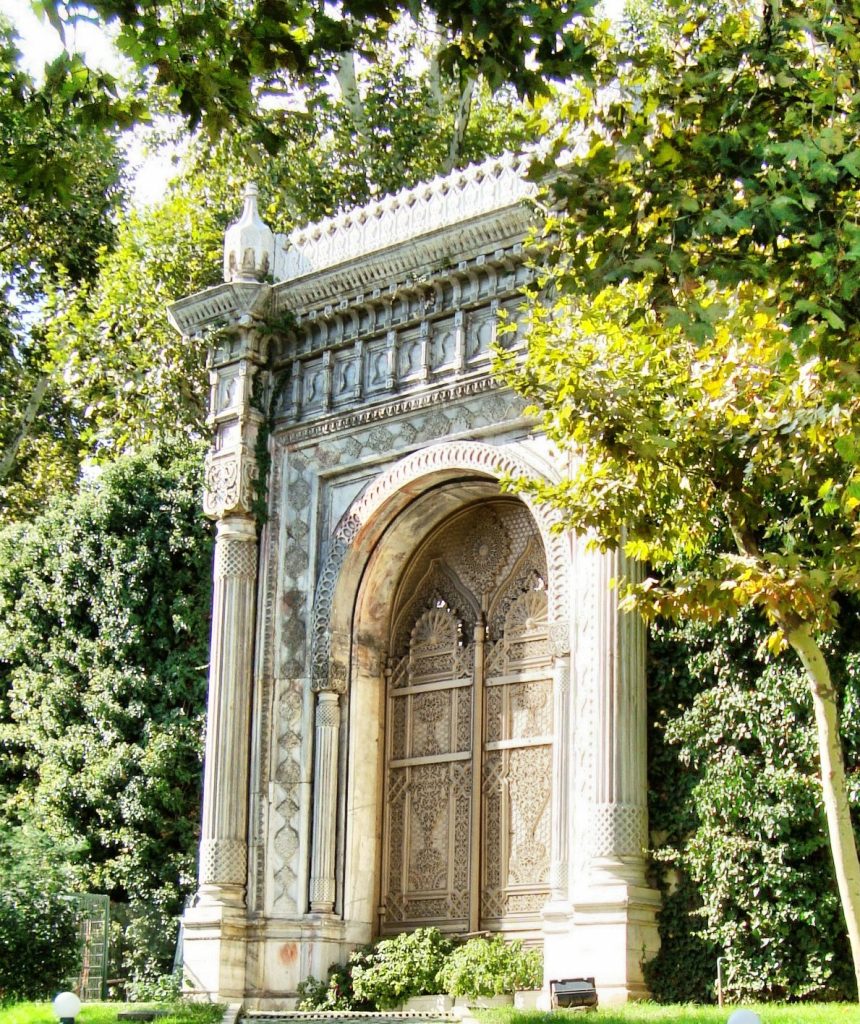
The marble gate on the shore road is the best-preserved original element visible from outside.
Visiting Ciragan
Combine it with Dolmabahce, fifteen minutes’ walk south, and with Yildiz Park on the hill behind, which connects to the palace’s own history through Abdulhamid II.
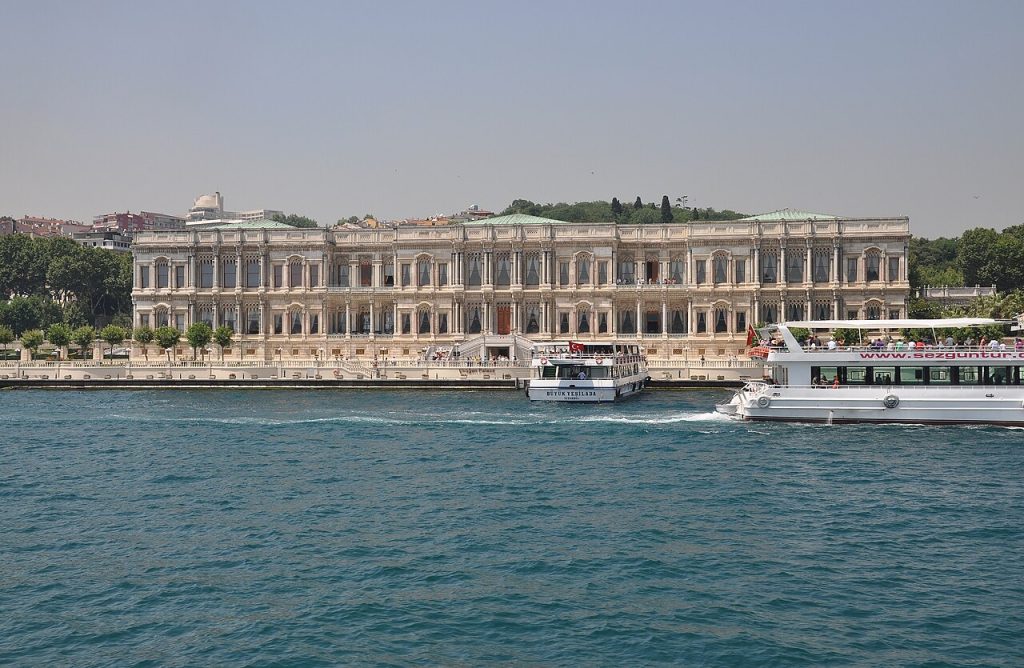
Take a Bosphorus ferry at least once and watch the facade from the water, which is how all three of these palaces were designed to be seen.
And think, as you pass, about a man who spent twenty-eight years looking out at that view and never crossed the gate.
Watch the Palace on Film
Visiting Ciragan Palace Today
Ciragan stands on the European shore between Besiktas and Ortakoy, about fifteen minutes on foot from Dolmabahce and a short bus ride from Kabatas.
The building is a private hotel and is not open as a museum; non-residents can visit the restaurants, terrace and gardens as paying guests, usually with a reservation. The exterior and the shore road are freely accessible.
Combine it with Dolmabahce and Yildiz Park for a half-day along this stretch of shore. Find it here: https://www.google.com/maps?q=41.0431,29.0111
Palaces Nearby
You May Like
Dolmabahce Palace and the Last Ottoman Century