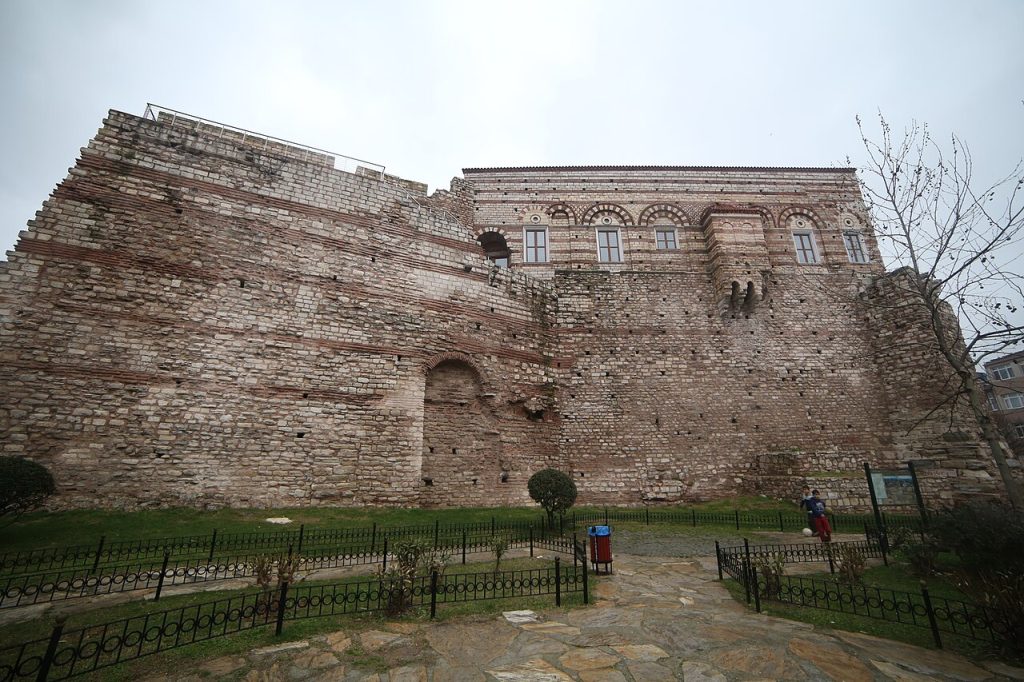
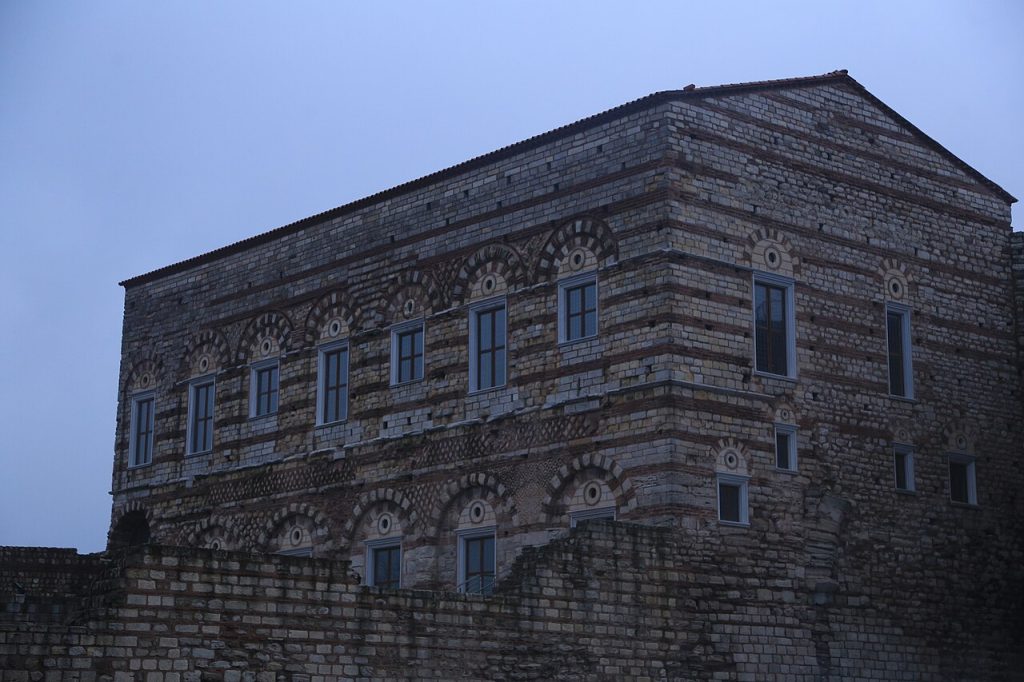
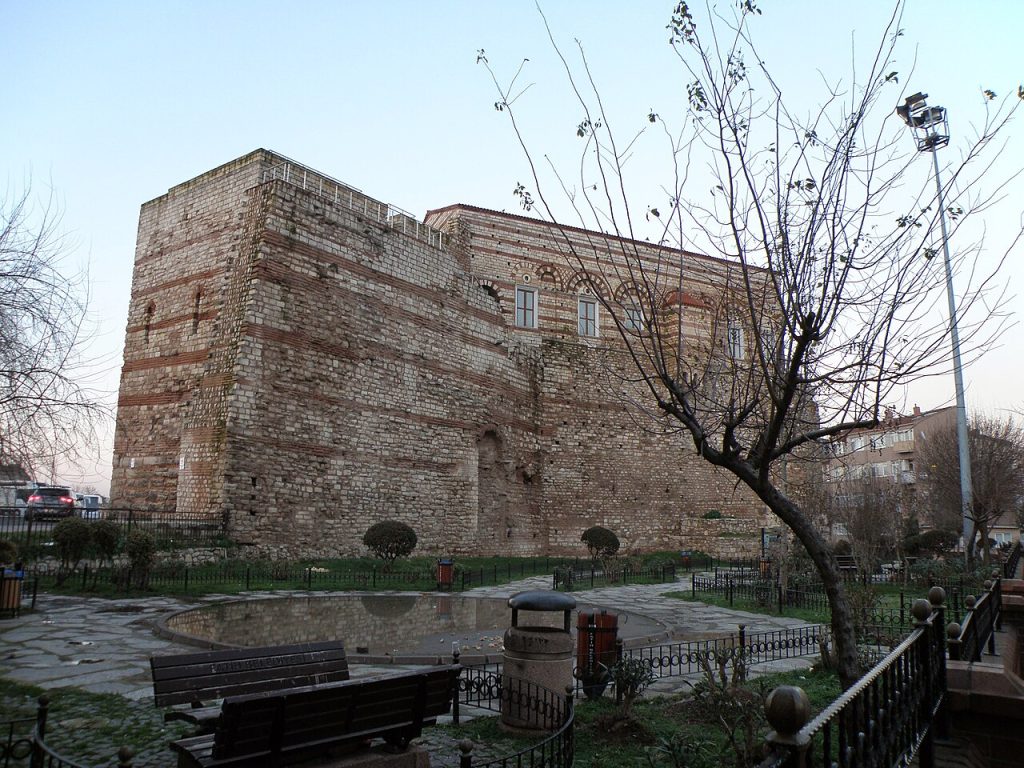
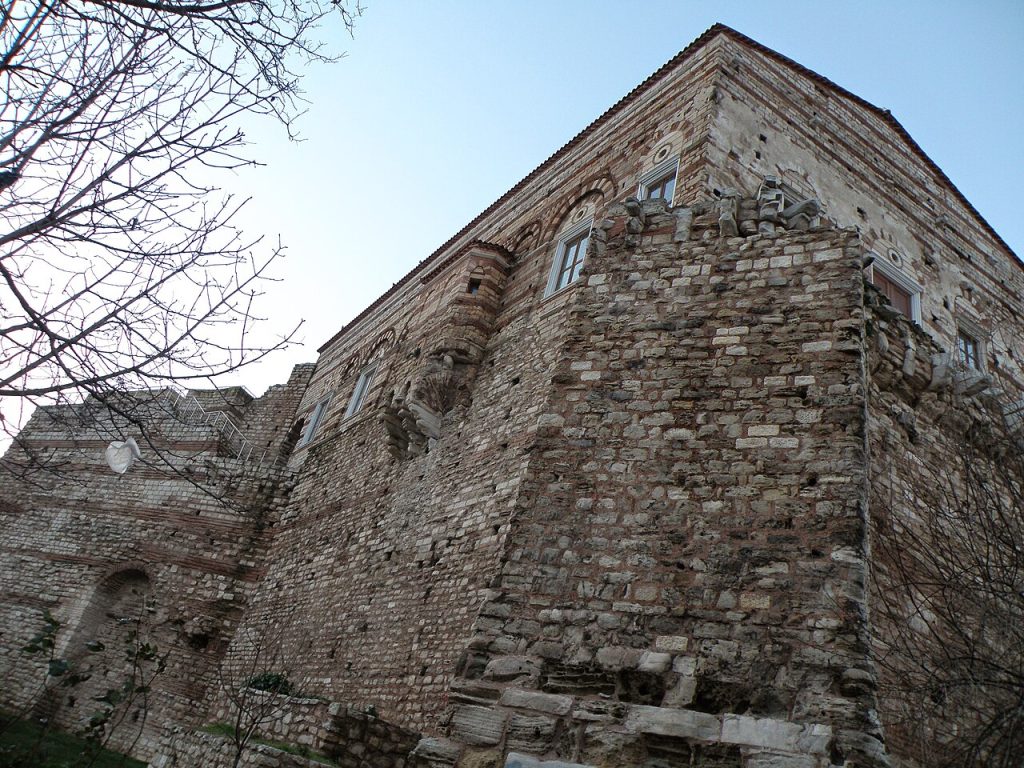
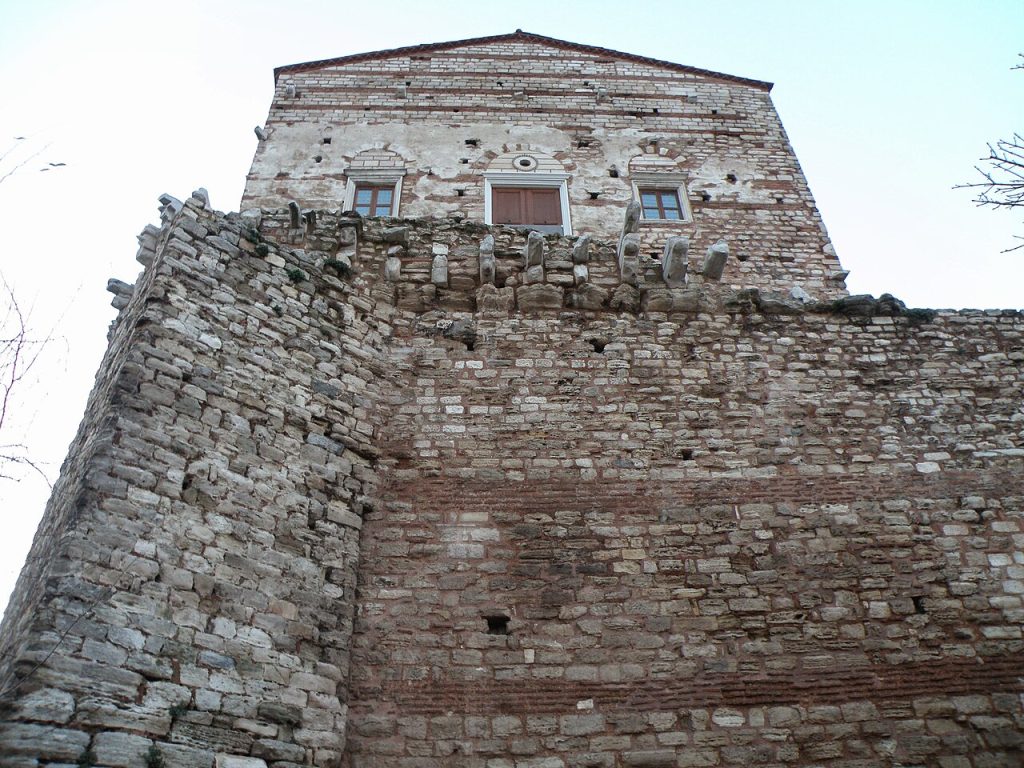
Now, stop beneath the facade and look at the patterns in the brick. Red brick and white stone laid in geometric bands, three storeys of arcades, and above them nothing but sky through empty windows. This is the only Byzantine palace in Istanbul that still stands to its full height.
Everything else from the Byzantine court is foundations, cisterns and fragments. The Great Palace by the Hippodrome is mostly archaeology. Blachernae, the imperial residence of the last centuries, is this one building and some substructures.
It survived because it was built into the city walls and because, for five hundred years, somebody always found a use for it.
- The Blachernae Quarter
- Palace of the Porphyrogenitus
- Dating the Building
- Brick, Stone and Pattern
- Built Into the Land Walls
- After the Conquest
- The Menagerie
- The Tile Factory
- Poorhouse, Bottle Works, Ruin
- The Controversial Restoration
- A Museum of Tiles
- Walking the Land Walls
- Visiting Tekfur
The Blachernae Quarter
From the eleventh century the Byzantine emperors abandoned the Great Palace near the Hippodrome and moved to Blachernae, at the northwestern corner of the city where the land walls meet the Golden Horn.
It was closer to the walls, easier to defend, and next to the shrine of the Virgin of Blachernae, the city’s most important protective sanctuary.
The palace complex there was extensive, and this building was part of it.
Palace of the Porphyrogenitus
Its Greek name, the Palace of the Porphyrogenitus, refers to Constantine Palaiologos, a son of Michael VIII, born in the purple, meaning born to a reigning emperor.
The Turkish name Tekfur Sarayi means palace of the Christian lord, tekfur being the Ottoman term for a Byzantine or Armenian ruler.
Both names survive in use, and the building appears under either in guidebooks.
Dating the Building
Most scholars date it to the late thirteenth or early fourteenth century, in the Palaiologan period, after the Byzantines recovered the city from the Latin crusaders in 1261.
That was a period of cultural revival and political decline: superb art and architecture produced by a state that was losing territory steadily.
Within 150 years of this building’s completion, the empire was gone.
Brick, Stone and Pattern
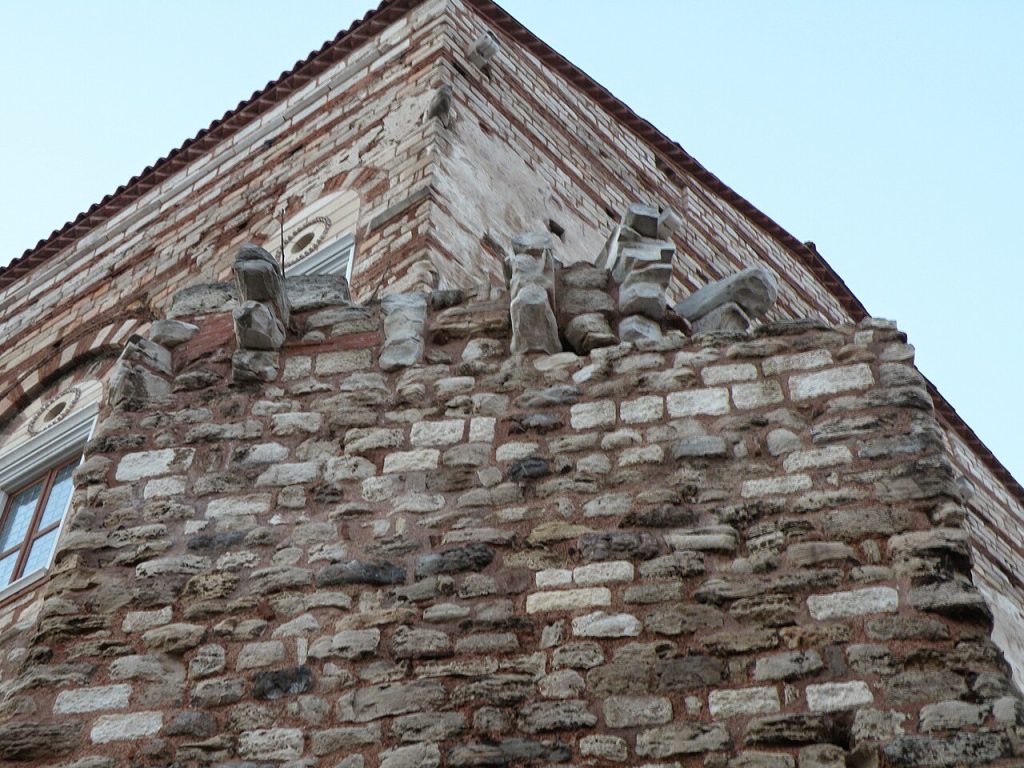
The facade uses alternating courses of brick and stone to make geometric patterns, a technique characteristic of late Byzantine building and visible across the Balkans and Anatolia.
The ground floor is an open arcade, the first floor a gallery, the second a hall with large windows. Floors and roof are gone, so you see the interior as a hollow shell with the sky above.
The quality of the masonry is high, and the patterns are laid with real care.
Built Into the Land Walls
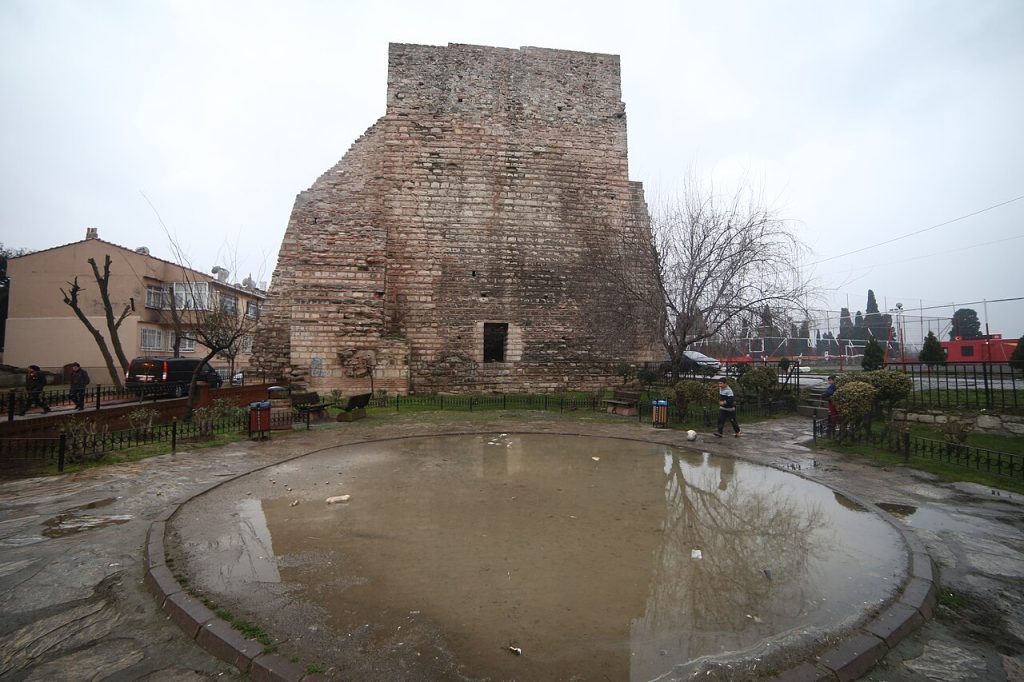
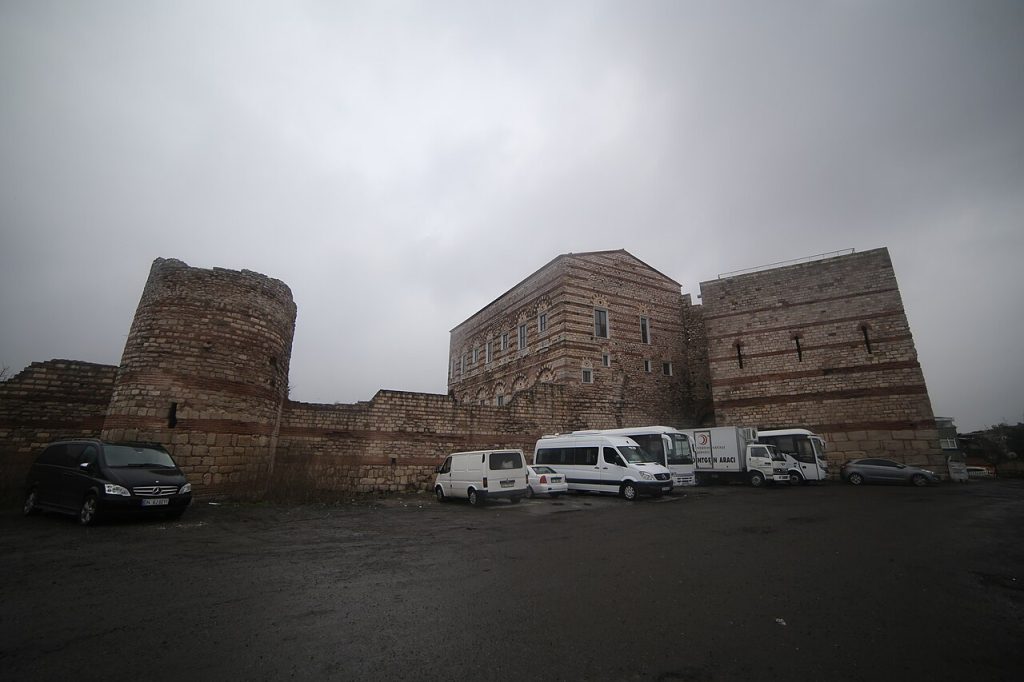
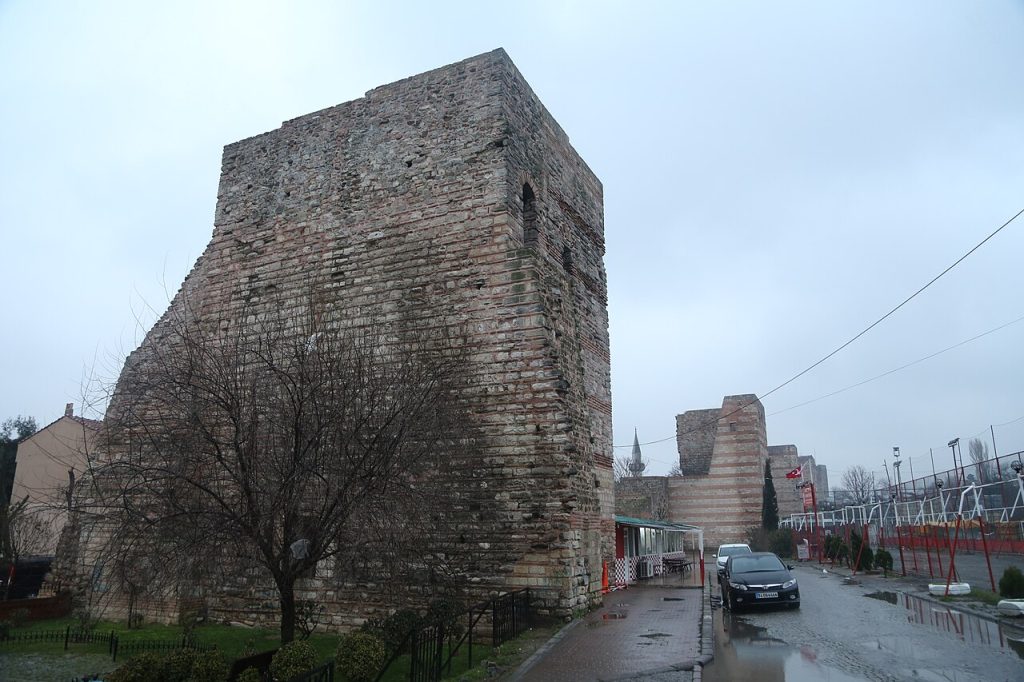
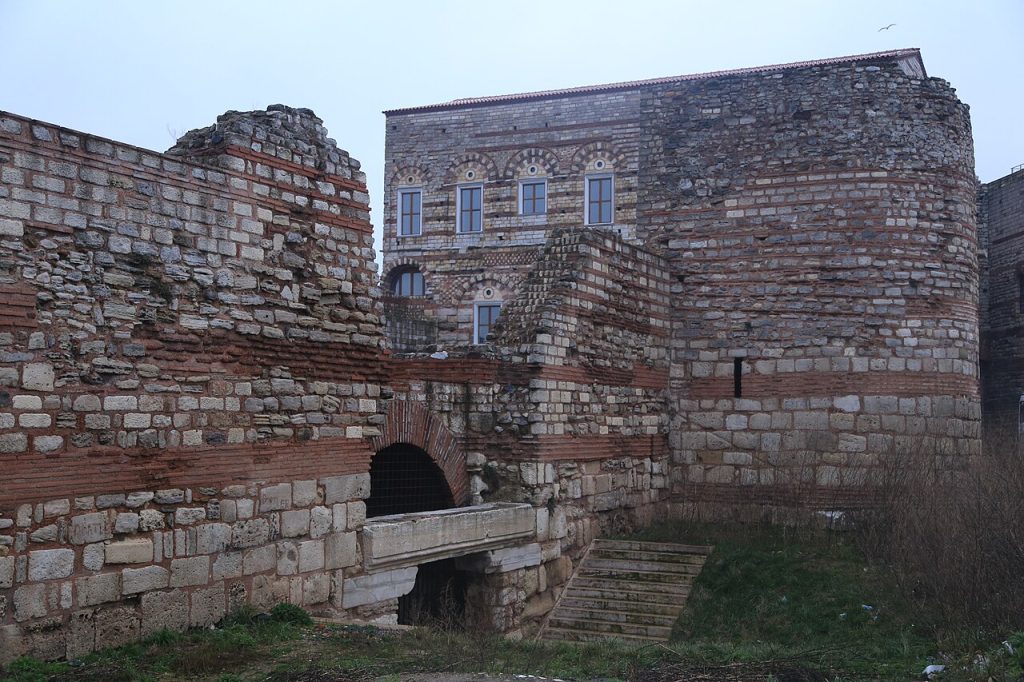
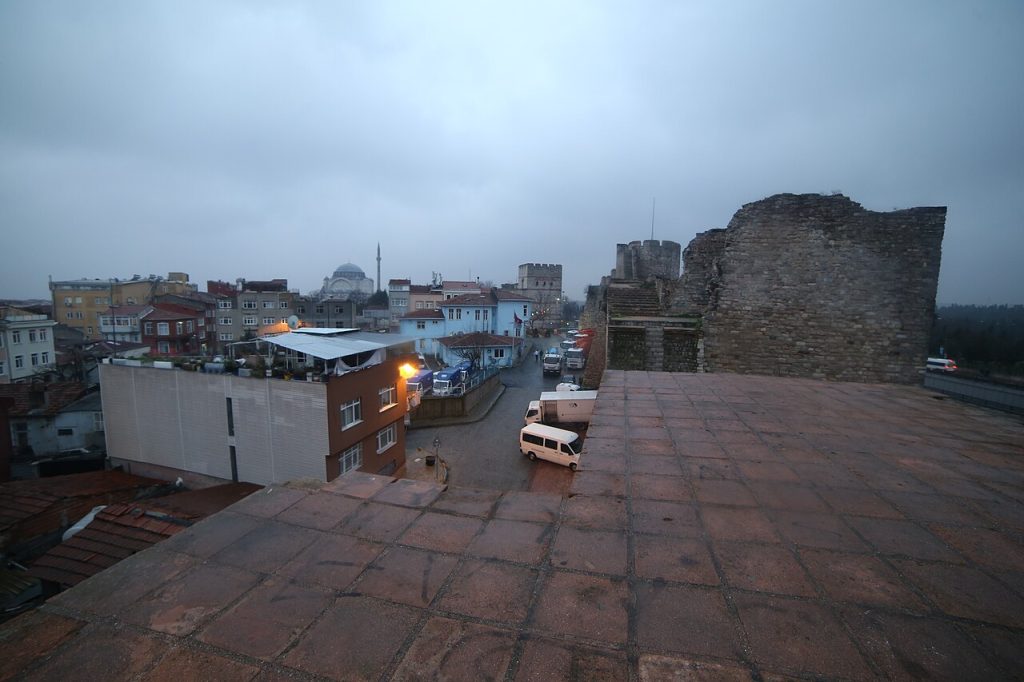
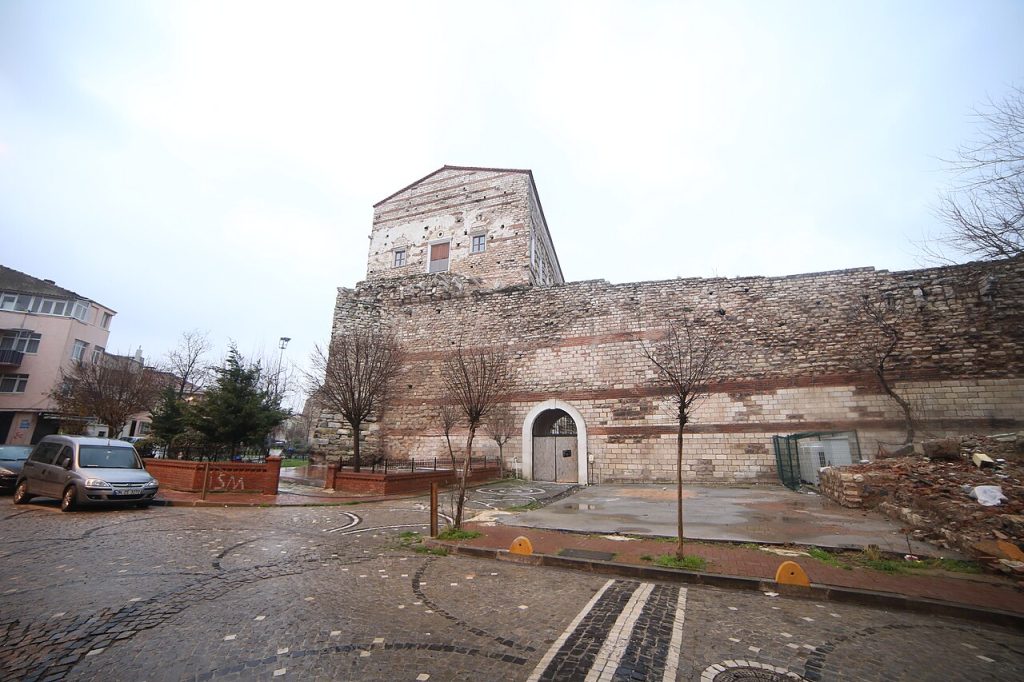
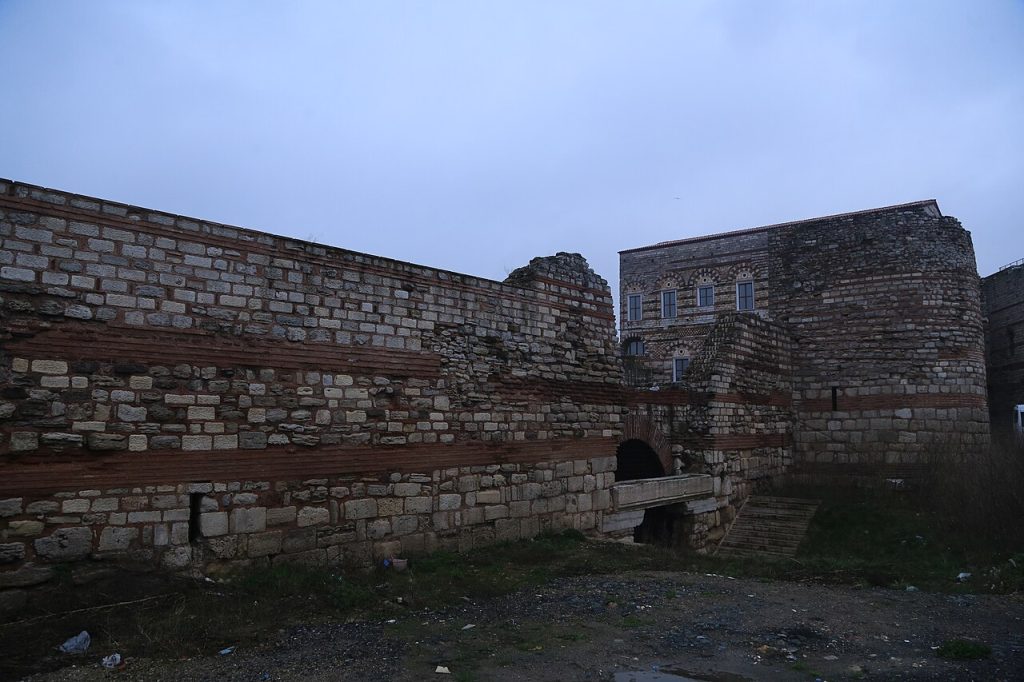
The building sits directly in the line of the Theodosian land walls, which defended Constantinople from the fifth century until 1453 and remain one of the great fortifications of the ancient world.
Its position is strange: a palace in a defensive wall, with windows facing outward over the moat.
That combination of comfort and defence explains both why it was built and why it survived.
After the Conquest
When Mehmed II took the city in 1453, the final Byzantine defence was concentrated at this corner of the walls, and the emperor Constantine XI died in the fighting nearby.
The palace was already damaged by the siege and by the preceding decades of poverty, when Byzantine emperors pawned the crown jewels and the imperial banquets were served on pewter.
The Ottomans found a roofless shell in a defensive wall and used it as they needed.
The Menagerie
In the sixteenth and seventeenth centuries the building housed part of the imperial menagerie. European travellers record elephants, lions and other animals kept in and around it.
Menageries were standard equipment for early modern rulers, and the Ottoman collection was fed by gifts from across Africa and Asia.
It is a strange afterlife for an imperial residence, and the animals are mentioned in several seventeenth-century accounts.
The Tile Factory
In 1719 a tile workshop was established here, bringing craftsmen from Iznik and Kutahya in an attempt to revive the Ottoman ceramic industry, which had declined badly since its sixteenth-century peak.
Tekfur tiles were produced for about thirty years and are recognisable, with a distinctive palette and slightly coarser execution than classical Iznik ware.
They appear in mosques and palaces across Istanbul, and the museum in the building now displays examples.
Poorhouse, Bottle Works, Ruin
After the tile works closed the building served as a poorhouse for the city’s Jewish community, then as a bottle factory in the nineteenth century, and finally as nothing at all.
By the twentieth century it was an empty shell among vegetable gardens in a poor district, with children playing inside it.
Photographs from the 1950s show it standing alone above the walls with weeds growing from the cornices.
The Controversial Restoration
Restoration work in the 2000s and 2010s roofed the building, inserted floors, added glass and steel, and converted it into a museum, opening in 2019.
Conservationists objected strongly. A Byzantine ruin whose value lay partly in being a ruin acquired a new roof and new interiors based on limited evidence.
Defenders argue that an unroofed masonry shell in a seismic city with freezing winters would not have survived another century.
A Museum of Tiles
The museum inside covers the building’s own history and displays Tekfur and Iznik ceramics, with reconstructions of the kilns and explanations of production.
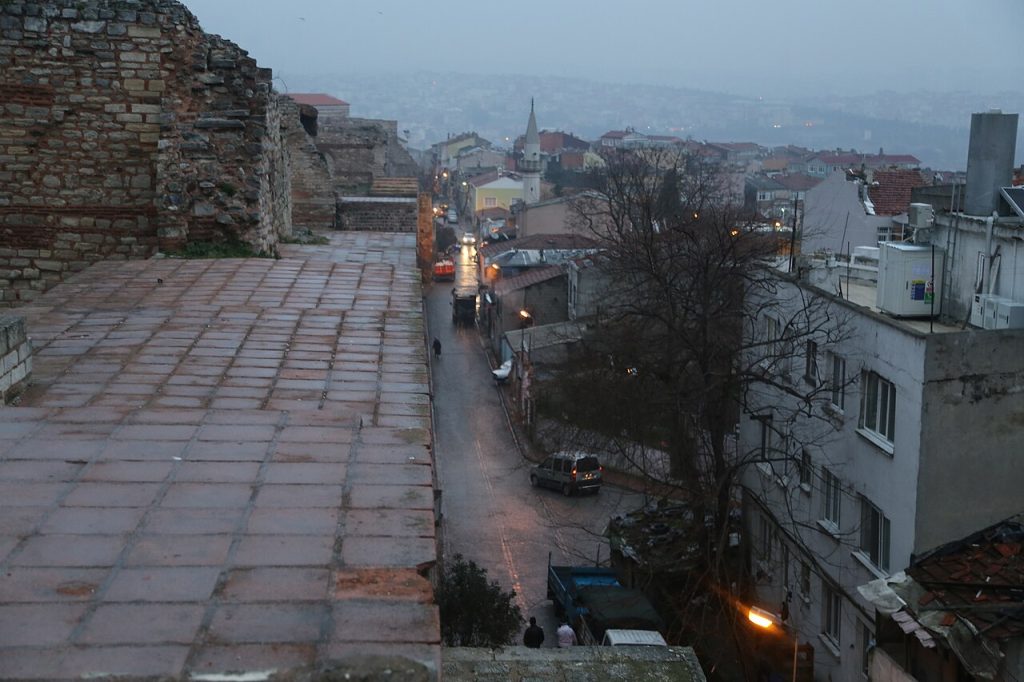
From the upper floor there are views along the land walls and over the Golden Horn.
It is small and can be seen in forty minutes.
Walking the Land Walls
The land walls run six and a half kilometres from the Sea of Marmara to the Golden Horn, and the stretch near Tekfur is among the best preserved.
Nearby stand the Chora church with its mosaics, now a mosque and museum, the Mihrimah Sultan mosque by Sinan at Edirnekapi, and the Byzantine cisterns of the district.
Walking a section of the walls is the best way to understand the scale of what defended this city for a thousand years.
Visiting Tekfur
Take a bus or taxi to Edirnekapi, visit Chora first, then walk north along the walls to Tekfur. The district is residential and ordinary, which makes the monuments more striking.
Allow half a day for the whole area including Chora and the Mihrimah mosque.
Stand in the empty hall at the top and look out through the windows at a view that emperors watched armies approach through.
Watch the Palace on Film
Visiting Tekfur Palace Today
Tekfur Palace stands in the land walls near Edirnekapi in the Ayvansaray district, reachable by bus from Eminonu or by tram and a walk from Topkapi gate.
The museum opens most days with ticketed entry; the walls and surrounding streets are freely accessible, though parts of the walls are unrestored and uneven.
Allow an hour here and half a day with Chora and the land walls. Find it here: https://www.google.com/maps?q=41.0342,28.9397
Palaces Nearby
You May Like
Khedive Palace and the Art Nouveau Hill Above the Bosphorus