Where the Volga unravels into its delta a hundred kilometers from the Caspian, a white fortress rises from the flat river country on the one hill available: the Astrakhan Kremlin, southern anchor of Russia’s Volga conquests, built from the dismantled bricks of a Golden Horde capital, besieged by Ottoman armies and Persian threats, seized by Stenka Razin’s rebels in the bloodiest episode of the Volga’s seventeenth century, and crowned by a cathedral so beautiful that Peter the Great, no sentimentalist, ordered its builders’ names remembered.
Astrakhan was the second khanate to fall to Ivan the Terrible, in 1556, four years after Kazan, and its fortress completed Russia’s mastery of the river from source to sea: through its gates passed the Caspian trade of Persia and India, whose merchants kept their own courts in the city, the empire’s caviar wealth, and every southern expedition from Peter’s Persian campaign onward. The Kremlin’s white walls enclose that whole frontier story, part fortress, part cathedral close, part customs house of Eurasia.
This guide follows the delta’s history through its citadel: the Horde cities whose bricks built the walls, the khanate and its quiet fall, the master builders of the white fortress, the Time of Troubles’ strange Astrakhan pretenders, Razin’s capture of the city and the reckoning after, the great cathedral and its tower, Peter’s visit and the imperial port’s golden age, and the practical details of visiting Russia’s southernmost great kremlin.
- The Delta Crossroads
- Cities of the Horde
- The Khanate of Astrakhan
- The Conquest of 1556
- A Fortress of Borrowed Bricks
- The Ottoman Siege of 1569
- Pretenders in the Delta
- Razin Takes Astrakhan
- The Assumption Cathedral
- Peter the Great in Astrakhan
- The Caspian Port’s Golden Age
- Walls, Towers and Gates
- The Kremlin Today
- Watch the Astrakhan Kremlin on Film
- Visiting the Astrakhan Kremlin Today
- Palaces Nearby
The Delta Crossroads
The lower Volga is one of Eurasia’s oldest addresses: the river’s delta, teeming with fish and birds, commands the portage world between the Caspian, the steppe roads to China, and the river route north into the forests, and powers have kept a city hereabouts for over a millennium. The Khazar capital Itil, where the khagans ruled a Jewish-led steppe empire in the ninth century, lay in this delta; archaeologists still argue over which mound holds it.
Every ruler of the river understood the same geography: whoever held the delta taxed the Caspian trade, silk, silver, horses, slaves, and later the fisheries whose sturgeon made the word caviar synonymous with the city. Astrakhan’s merchants’ courts, Persian, Armenian, Indian, Khivan, would function into the nineteenth century as the empire’s southern bazaar, the delta playing Venice to the Caspian’s Mediterranean.
The site’s one drawback wrote its military history: the country is flat water-land, and the single defensible hill, Zayachy or Hare hill on the Volga’s left bank, has therefore carried in turn the Horde-era town, the khanate’s successor city across the river, and finally the Russian fortress whose white walls still hold the rise, the delta’s whole political history stacked on one modest elevation.
Cities of the Horde
The Golden Horde made the lower Volga its metropolitan province: the khans’ capitals, Sarai Batu and Sarai Berke, rose east of the modern city as some of the fourteenth-century world’s largest towns, brick-built, plumbed, and cosmopolitan, with the first Astrakhan, Hajji-Tarkhan on the right bank, flourishing as their Caspian port, visited and described by Ibn Battuta in 1333 among the era’s travelers.
The Horde’s civil wars and Timur’s devastating campaign of 1395, which burned Hajji-Tarkhan and the Sarais, broke the system; the river cities never recovered their scale, and their ruins became the region’s quarry. This is the delta’s architectural inheritance: when Moscow later needed brick for its fortress, the dead capitals supplied it, Horde masonry migrating downstream into Orthodox walls, history recycled by barge.
The ruins’ memory shaped claims for centuries: the khans of Astrakhan styled themselves the Horde’s heirs on the strength of the Sarai succession, and Moscow’s tsars, conquering, added the same titles to their own, tsar of Astrakhan entering the imperial style permanently. The delta’s past was always a usable one; the Kremlin’s bricks are its most literal citation.
The Khanate of Astrakhan
The khanate of Astrakhan, the smallest and last of the Horde’s successor states, crystallized in the 1460s around Hajji-Tarkhan under a branch of the Horde’s ruling line: a trading state more than a military one, living on transit dues and fisheries, its cavalry modest, its politics squeezed between the Crimean khans, the Nogai hordes, and, after 1552, a Moscow suddenly arrived on the middle Volga.
Kazan’s fall decided Astrakhan’s: the delta was the river’s mouth, and Ivan the Terrible moved within two years, installing a client khan in 1554 by expedition, and, when the client wavered toward Crimea, annexing outright in 1556, the khanate ending with hardly a battle, its last khan fleeing, the delta’s peoples, Nogai and Tatar, swearing to the tsar. Two khanates in four years: the Volga had become, suddenly and permanently, a Russian river.
The Russians moved the city itself: the old right-bank site lay open to Crimean raids, and in 1558 the voevoda Cheremisinov founded the new Astrakhan on Hare hill across the water, the date the modern city counts as its birth. The khanate’s fall completed the chain of conquest whose anniversary cathedrals and legends fill Kazan; Astrakhan’s own monuments would be the fortress and the trade it guarded.
The Conquest of 1556
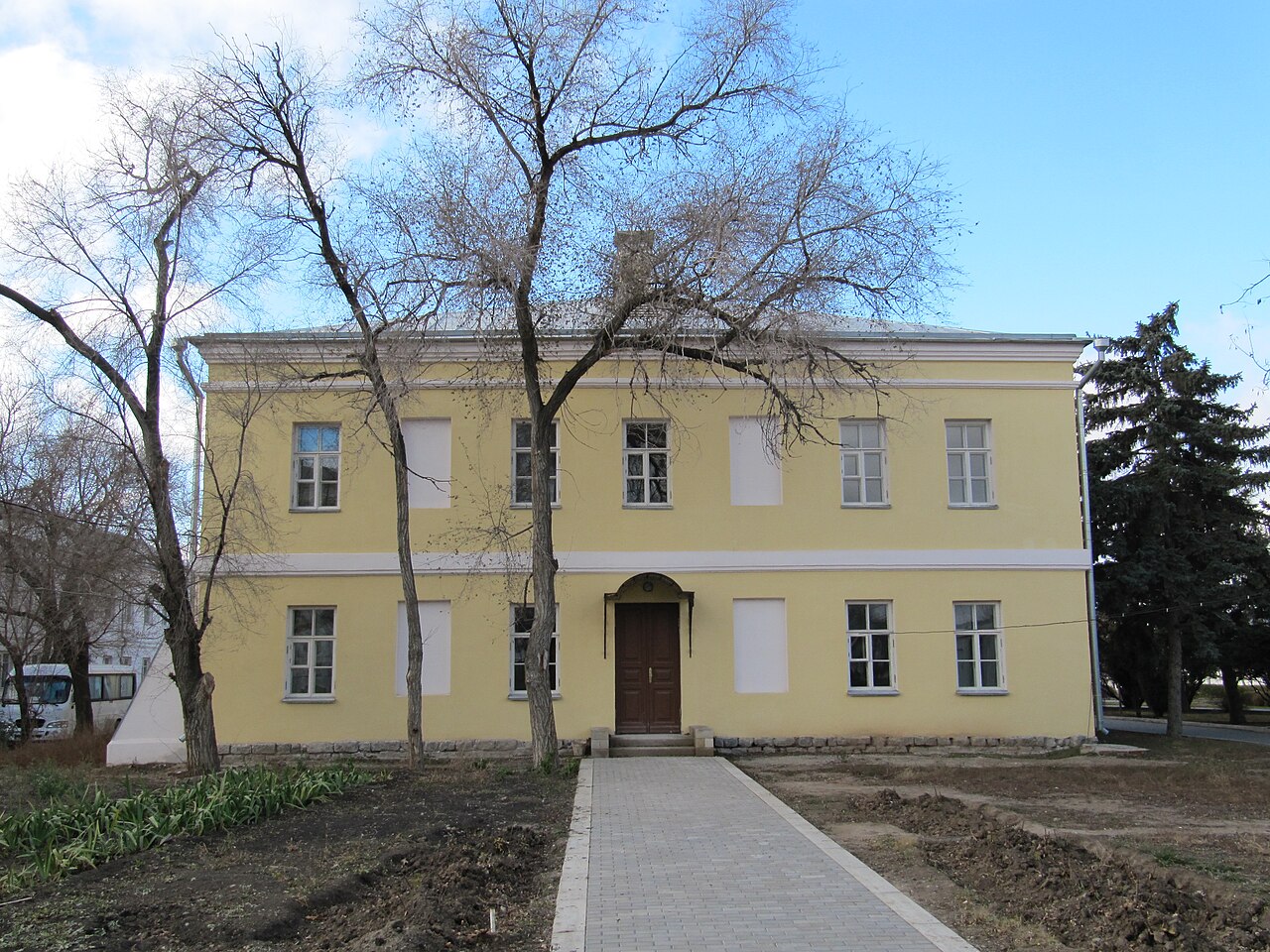
The 1556 annexation was imperial strategy at its most economical: a flotilla of streltsy and Cossacks under Ivan Cheremisinov descended the river, found the khan fled and the city abandoned, and took possession of the delta without a storm, the Volga’s mouth secured by appearing in force at the right season. The contrast with Kazan’s blood could not be greater, and the delta’s memory of Russian arrival is correspondingly different, administrative rather than catastrophic.
Consolidation was the real campaign: years of steppe politics followed, Nogai hordes managed by subsidy and marriage, Crimean and Ottoman counterclaims parried, the new fortress raised and garrisoned at the empire’s then farthest edge, months from Moscow by river. The first wooden kremlin went up with the city’s move in 1558; the stone one would wait for the southern threat to prove itself.
The conquest’s prize paid immediately: the Caspian trade shifted into Russian customs houses, Persian silk and Indian goods moving north through Astrakhan to the Moscow fairs, and the fisheries began their long service as the treasury’s southern bounty. The city’s merchant courts filled with Asia’s traders under the tsar’s protection, the frontier fortress doubling from birth as the empire’s southern counting house.
A Fortress of Borrowed Bricks
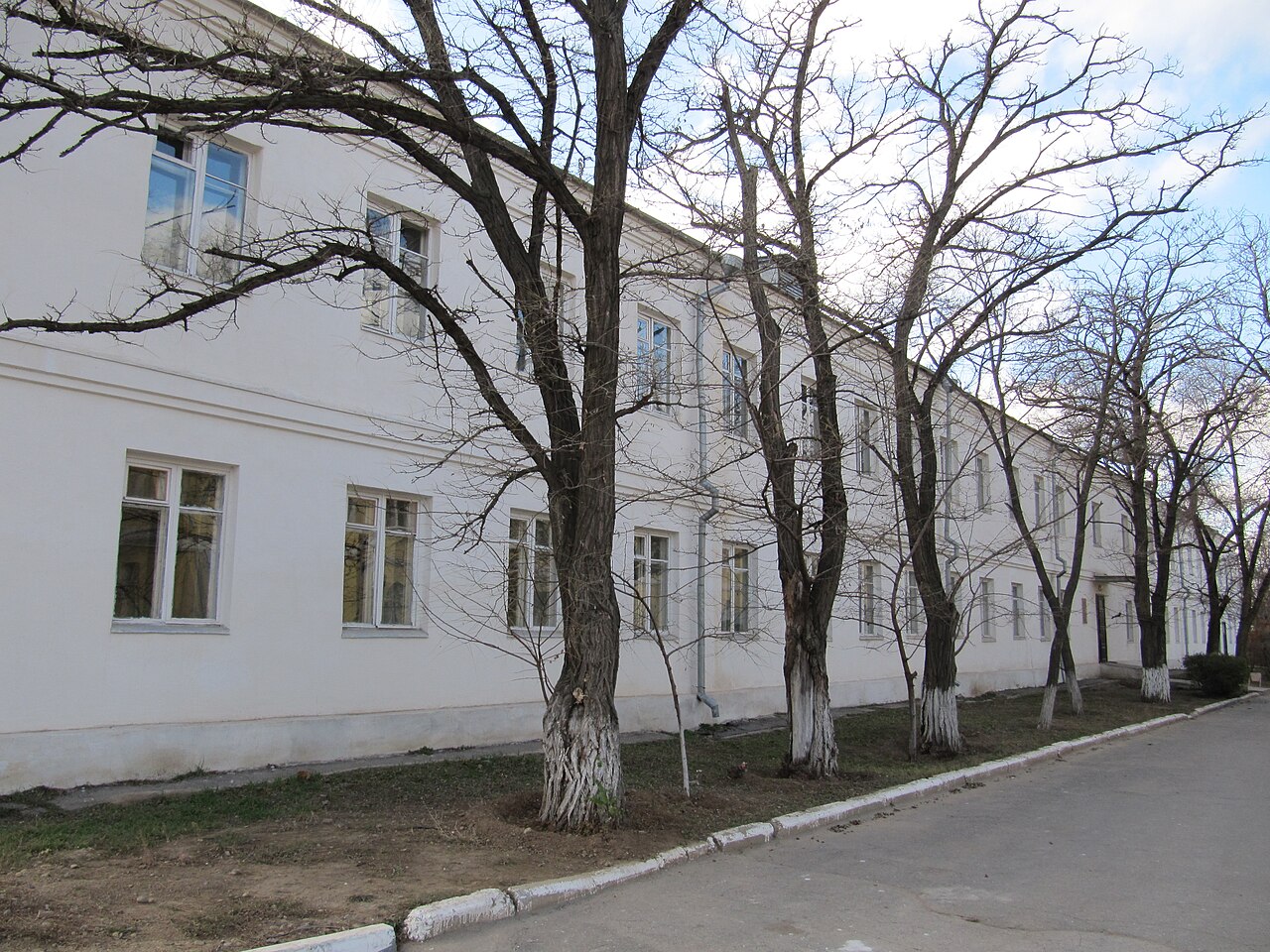
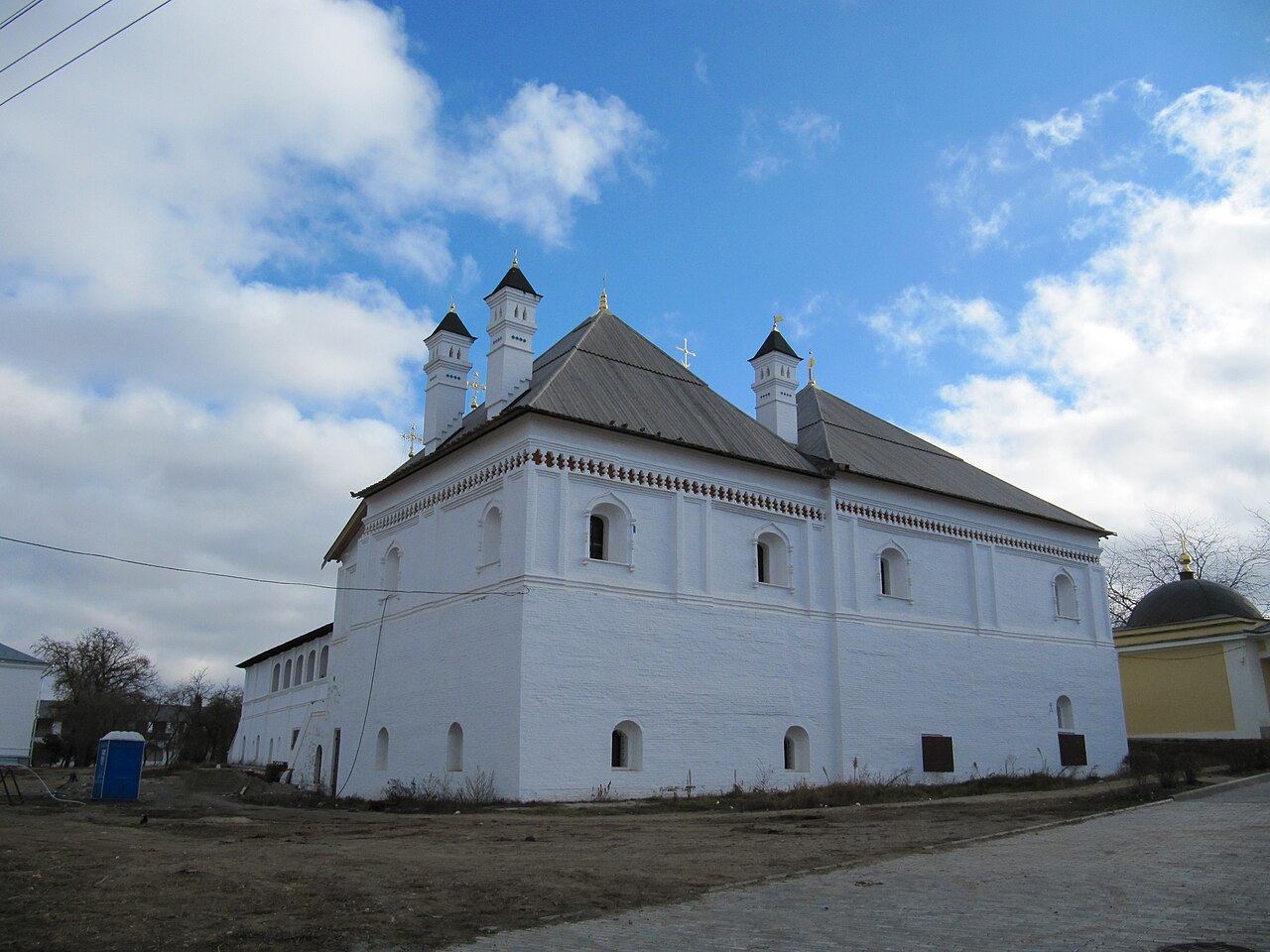
The stone Kremlin rose from 1582 to 1589, Moscow’s answer to the Ottoman scare of the previous decade: master builders Mikhail Velyaminov and Grigory Ovtsyn, with the Moscow master Dey Gubasty, raised on Hare hill a triangle of walls adapted to the site, three to five meters thick, up to eight high, with eight towers, artillery tiers, and the river lapping the western face, among the strongest fortresses of the Muscovite state and its southernmost.
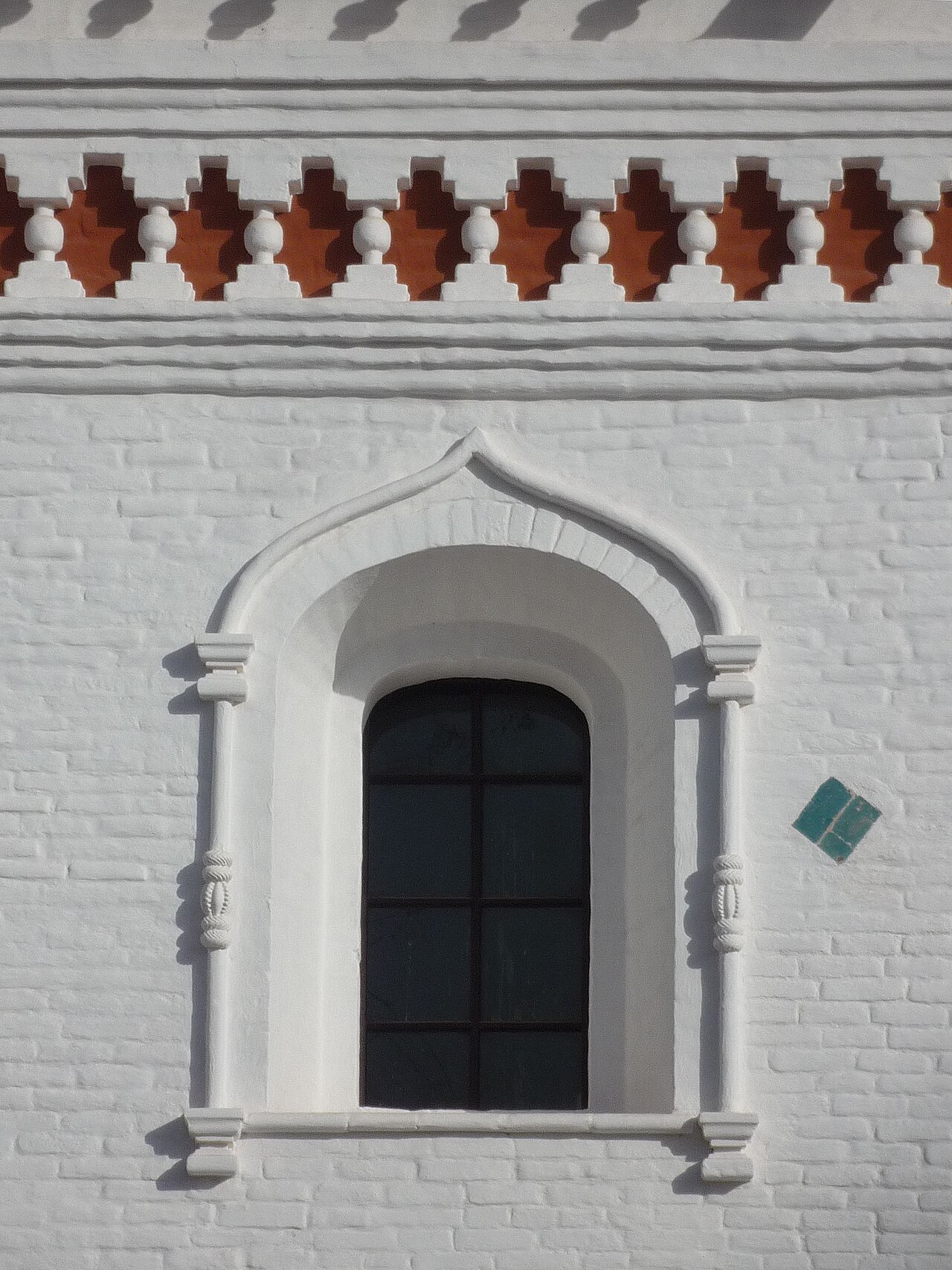
The material is the famous part: the builders dismantled the Horde ruins upriver, Sarai’s dead palaces traveling by barge to become the white-plastered walls, a recycling so thorough that the Kremlin is, in fabric, the last building of the Golden Horde. Restorers still find the Horde bricks’ marks; the walls’ lower courses are a masonry archive of the steppe empire’s cities.
The fortress worked as deterrent for a century and a half: no enemy ever took it by assault, its guns commanding the river passage and the steppe approaches, its garrison the anchor of every southern policy. The military engineers of later reigns kept it current until the frontier moved to the Caucasus and the walls could retire into monument, intact, unslighted, the empire’s best-preserved southern citadel.
The Ottoman Siege of 1569
The fortress’s reason arrived before its stones: in 1569 the Ottoman empire, at its Suleimanic height, launched the Astrakhan expedition, a Turkish-Crimean army of tens of thousands with a project to dig a Volga-Don canal, carry the fleet into the Caspian, and take the delta, rolling Moscow’s conquests back and linking Istanbul with Central Asia. It was the first Ottoman-Russian war, fought at the empire’s absolute edge.
The campaign broke on the steppe’s logistics: the canal diggings were abandoned, the siege of Astrakhan’s wooden fortress failed against the garrison and relief forces, and the retreat across the waterless Kuban steppe destroyed much of the army, with the fleet wrecked by storm; Istanbul did not try again. The episode, little known in the West, fixed the delta as Russian in the century’s power map, and taught Moscow to build the stone walls that followed.
The siege’s legacy framed Astrakhan’s next three centuries as the Caspian’s contested gate: Persian wars, Khivan embassies, the Caucasus lines, every southern crisis ran its couriers through the Kremlin’s gates, and the fortress’s chapels filled with the campaign icons of wars whose fronts lay far beyond the horizon, the delta serving as the empire’s southern vestibule.
Pretenders in the Delta
The Time of Troubles reached the delta in carnival-grotesque form: Astrakhan became the pretenders’ refuge, backing False Dmitrys and sprouting its own, the era’s sources recording a crop of invented tsareviches, Augustus, Lavrenty, and others, names conjured from nothing, raised by Volga Cossack bands from the delta’s taverns to brief, lethal celebrity. The fortress changed allegiance with the river’s anarchy while Moscow burned far north.
The episode’s queen was Marina Mniszech, the Polish adventuress crowned tsaritsa by the first False Dmitry: her flight after the Moscow catastrophes ended in the delta’s orbit, she and the ataman Zarutsky holding Astrakhan in 1613 to 1614 against the new Romanov government, plotting a Volga state with Persian backing, until the city rose, the fugitives were run down on the Yaik, and Marina died in a Russian prison, the Troubles’ southern epilogue played out under the Kremlin’s walls.
The delta’s lesson from the Troubles was the empire’s: distance breeds sovereignty’s doubles. Astrakhan’s governors thereafter watched the river’s floating world, Cossack, schismatic, fugitive, with standing suspicion, and the next century would justify them twice over, first with Razin, then with the delta’s stubborn sympathy for every Volga rising to Pugachev.

Razin Takes Astrakhan
In June 1670 the Volga’s great rebellion arrived at the walls: Stenka Razin, the Don ataman whose Caspian piracies had already made him the river’s legend, stormed Astrakhan with his Cossack host and the city’s own poor opening the ways; the governor Prozorovsky was thrown from a tower, the fortress’s defenders massacred, and the Volga’s strongest citadel became the rebel republic’s capital, ruled by krug assembly on the squares where the tsar’s writ had run.
Razin’s Astrakhan lasted a year and a half, outliving the ataman himself, he was broken at Simbirsk, betrayed on the Don, and quartered in Moscow in 1671, while the city held out under his lieutenants until the winter of 1671 to 1672, the rebellion’s last fortress. The reckoning was the era’s standard arithmetic, executions by the hundred, and the metropolitan Joseph, martyred by the rebels from his own cathedral, entered the church’s calendar, the Kremlin keeping his memory.
The rising fixed Razin in the river’s folklore as Russia’s Robin Hood, the songs about the ataman and the Persian princess drowned in the Volga belonging to every boatman’s repertoire since, and Astrakhan’s year of the krug stands in the city’s history as its wildest chapter: the fortress of borrowed bricks, built against khans and sultans, taken in the end by the river’s own children.
The Assumption Cathedral
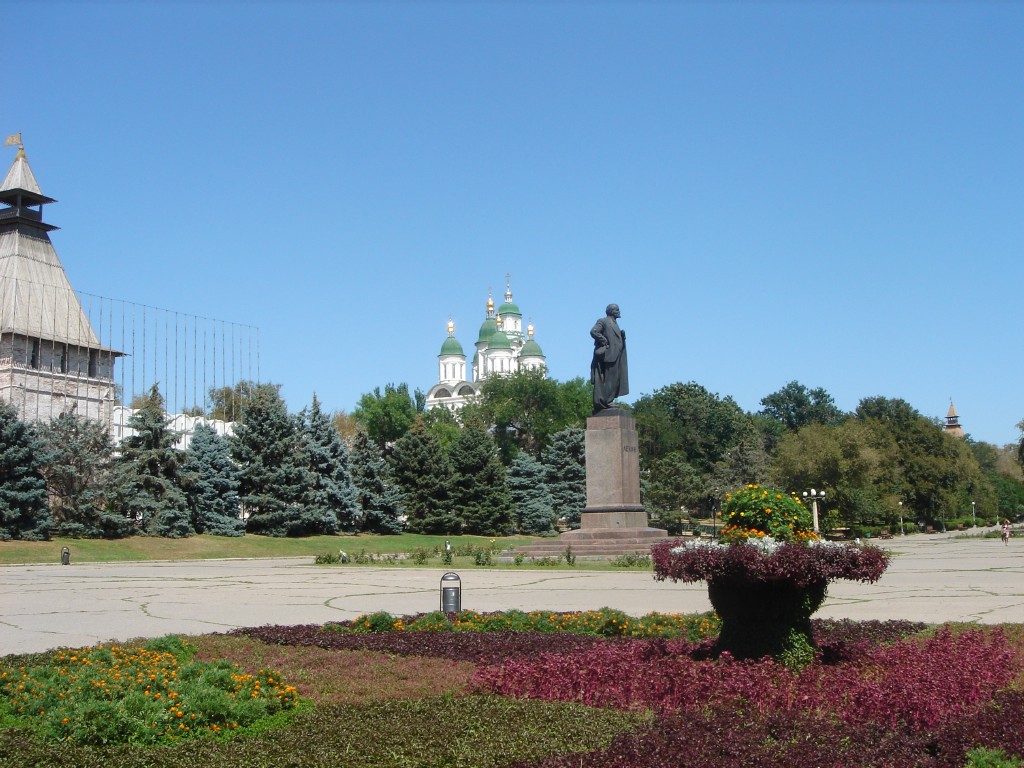
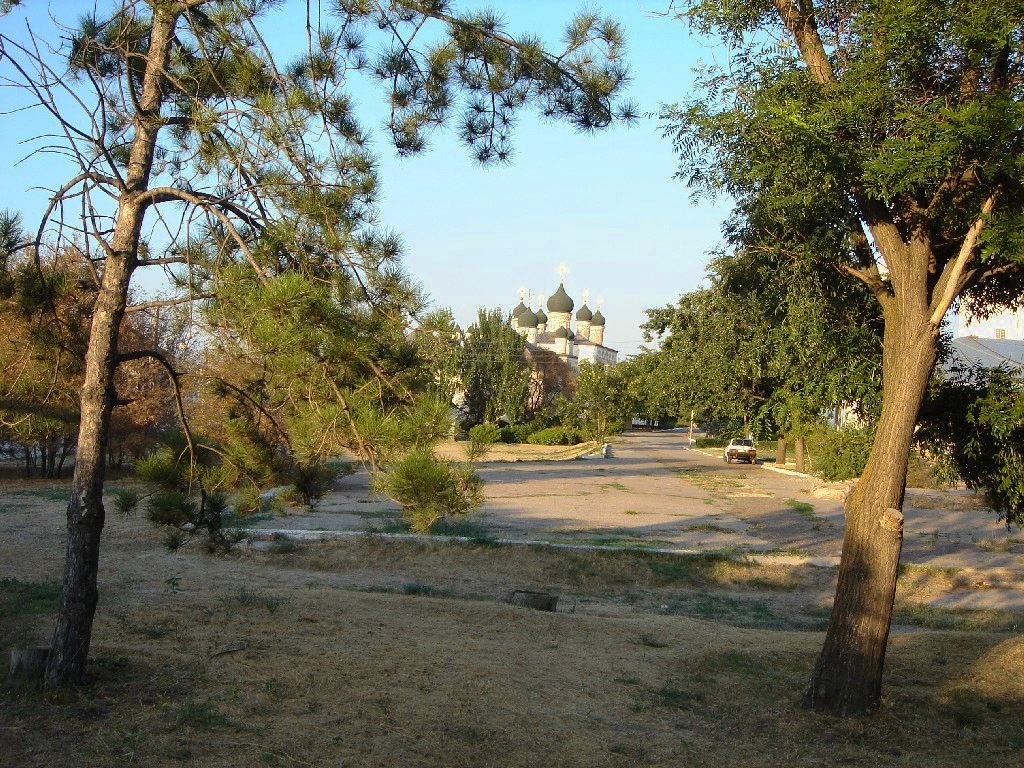
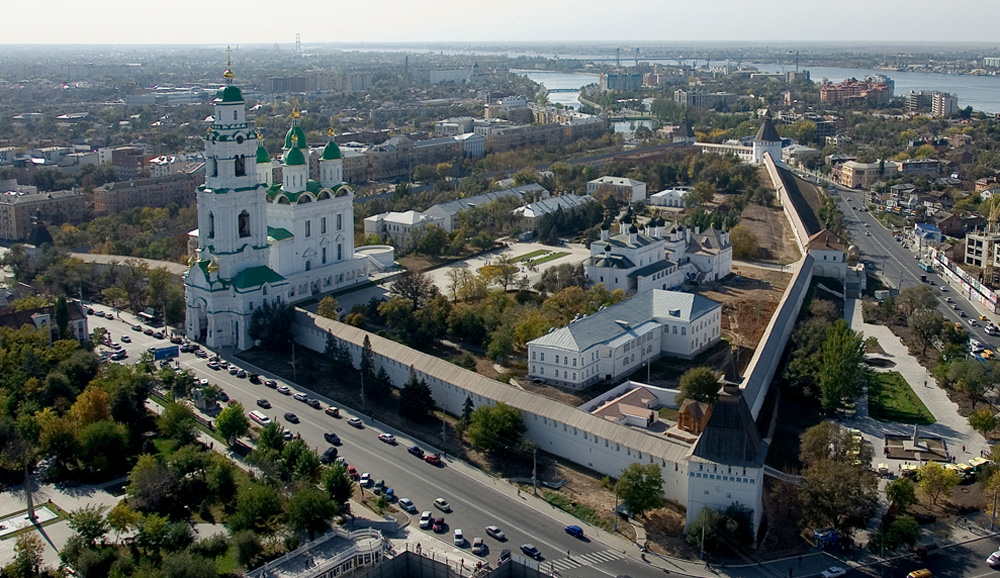
The Kremlin’s crown rose from the rebellion’s aftermath: the Assumption Cathedral, built 1699 to 1710 by the serf architect Dorofei Myakishev with the city’s master masons, a soaring five-domed cube on a high arcaded undercroft, ringed by an open gallery, with the lower church serving winter worship and the bishops’ burials, and the great Lobnoye Mesto platform before it, the only such execution-and-proclamation round outside Moscow, joined to the cathedral in one ensemble.
Peter the Great, seeing it in 1722, pronounced, by the cherished account, that in all his realm there was no more beautiful cathedral, and ordered the builders honored; architectural history has agreed, ranking the Assumption among the final masterpieces of the old Russian manner on the eve of Peter’s own European turn, its galleried silhouette gathering the whole Volga tradition at the river’s end.
The cathedral’s fate ran the usual twentieth-century course, closure, warehouse decades, the iconostasis lost, and the usual resurrection since the 1990s, returned to worship, regilded, its lower church’s necropolis restored, including the graves of Georgian kings, Vakhtang VI among them, who died in Astrakhan exile, the delta’s cathedral keeping Caucasus history too. It stands today as the Kremlin’s reason, visible down the delta’s river reaches, the white fortress’s golden answer.
Peter the Great in Astrakhan
Peter’s 1722 sojourn was the delta’s imperial summer: the emperor based his Persian campaign on Astrakhan, arriving with fleet and court, lodging by the Kremlin, inspecting everything from the fisheries to the vineyards he ordered expanded, and sailing south to take Derbent, the Caspian’s west coast briefly joining the empire; the campaign’s headquarters weeks left the city a harvest of Petrine sites and stories, the emperor’s measurements, rages, and plans retold along the embankments since.
The visit rebalanced the delta’s purpose: Peter founded the Caspian flotilla, made Astrakhan a governorate’s capital and the southern fleet’s base, and projected the canal schemes and trade routes, Persia, India, that his successors would pursue by fits for a century; the port’s golden age flowed from his orders, the Kremlin’s military role thenceforth sharing the hill with the admiralty’s and the customs’.
The emperor’s shadow completes the Kremlin’s dynastic set: the fortress of Ivan’s conquest, the cathedral Peter crowned with praise, and between them the delta’s long service as the empire’s southern door, the three centuries’ arc that the walls still narrate to anyone walking them from the river gate to the cathedral square.
The Caspian Port’s Golden Age
Imperial Astrakhan grew rich at the Kremlin’s feet: the Caspian trade’s monopoly port, the caviar and fish capital whose sturgeon trains supplied Europe’s tables, the empire’s most Asian city with its Persian and Indian courts, Armenian cathedral, and thirty tongues on the bazaars, the governor ruling from the Kremlin over a province that touched three worlds; travelers from Dumas to Chekhov’s contemporaries collected the city’s color, the white fortress above the melon barges.
The Kremlin itself settled into garrison-and-cathedral routine, its walls maintained, its towers renamed by use, powder, water, prison, its squares hosting the proclamations, musters, and executions of a frontier capital, Pugachev’s echoes included, while the city’s merchant quarters spread east and the river trimmed the western walls’ bank, the fortress’s profile entering every Volga panorama of the age.
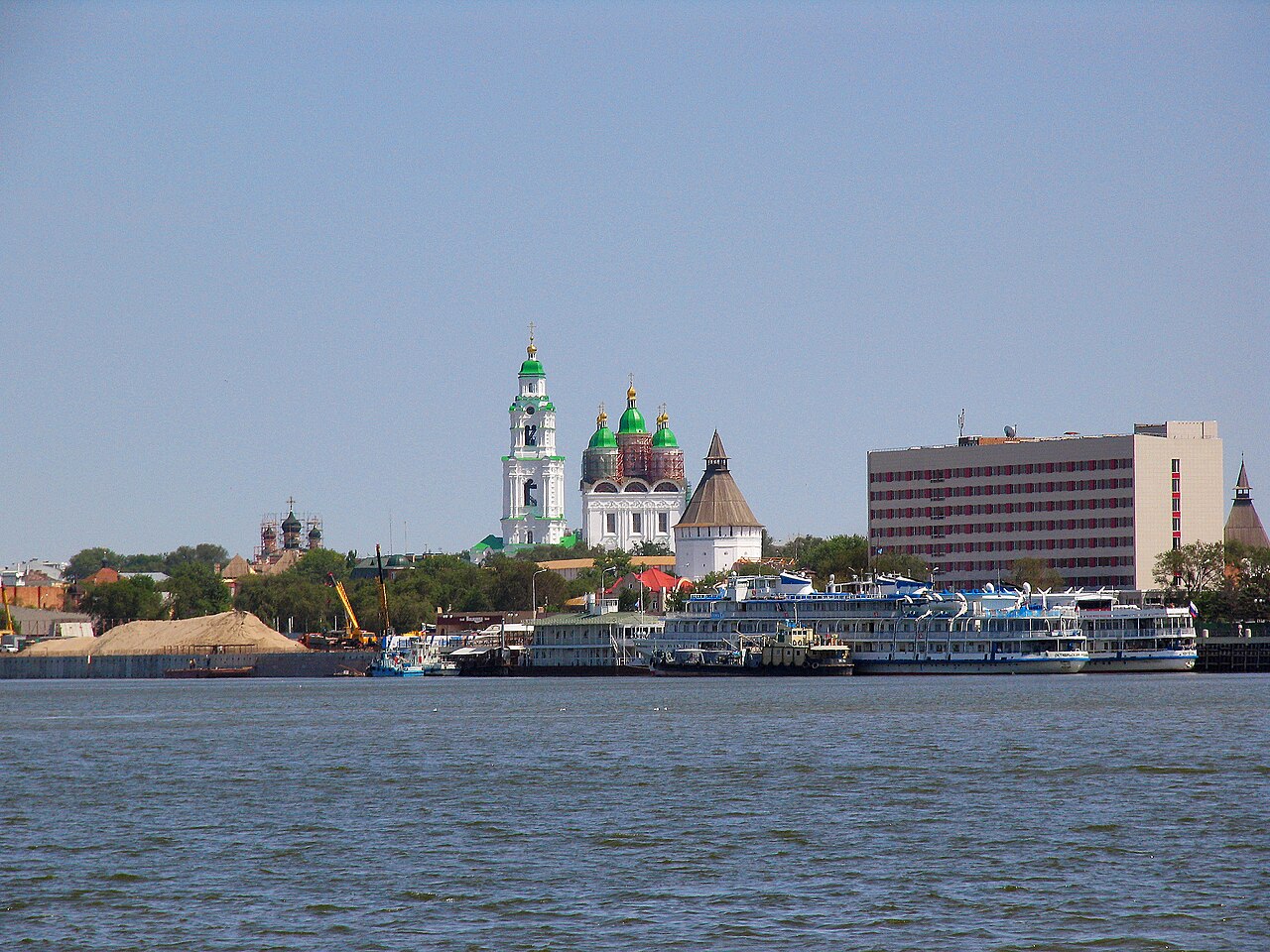
The last imperial century added the ensemble’s final landmarks, the Cyril chapel’s rebuilding, the gate church of St Nicholas restored over the river entrance, and the great bell tower, the fourth on the spot, raised in 1910 over the Prechistenskie gates, eighty meters of eclectic confidence that promptly leaned, the delta’s soft ground asserting itself, and still leans, slightly and famously, over the city’s main square today.
Walls, Towers and Gates
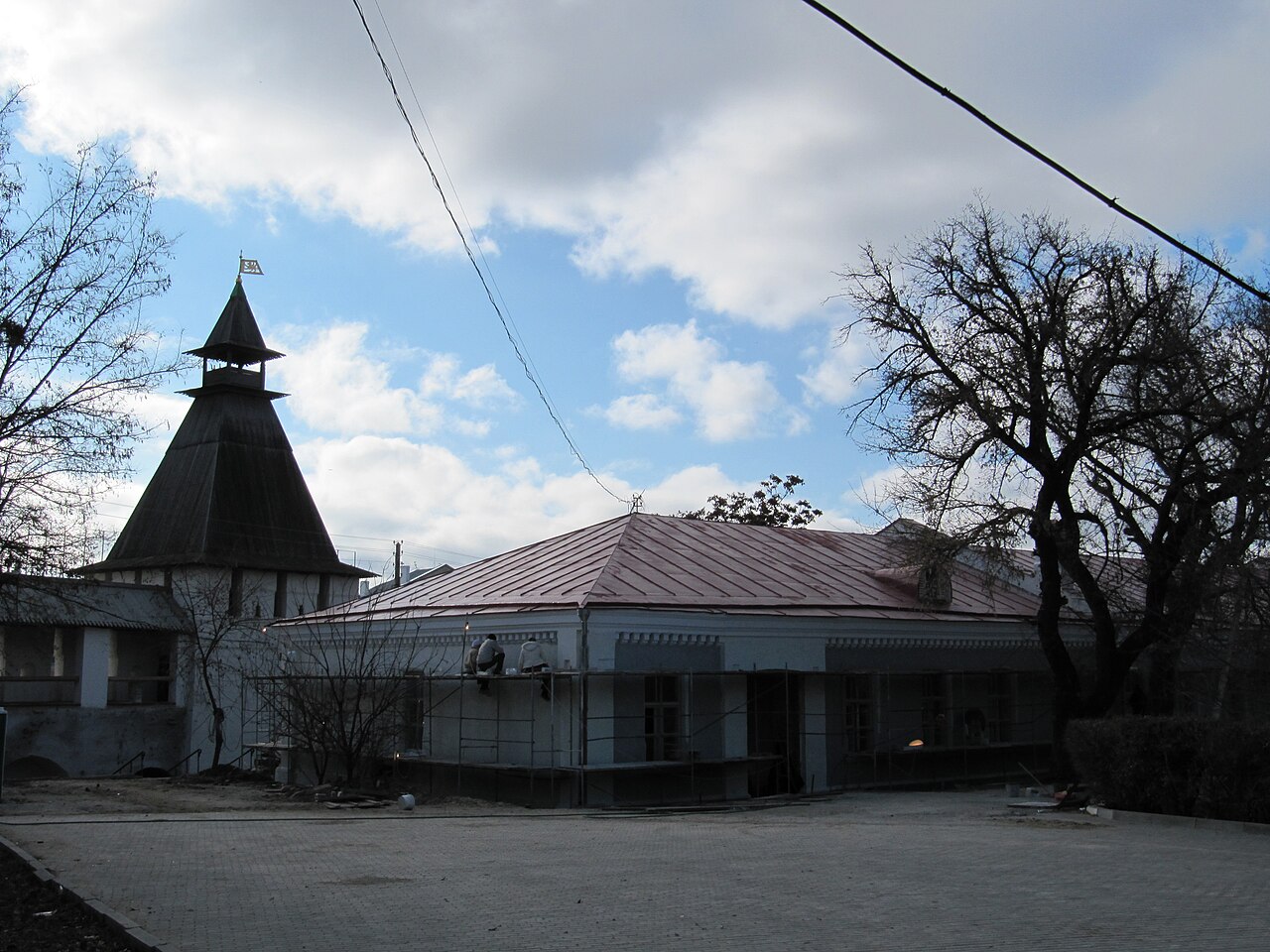
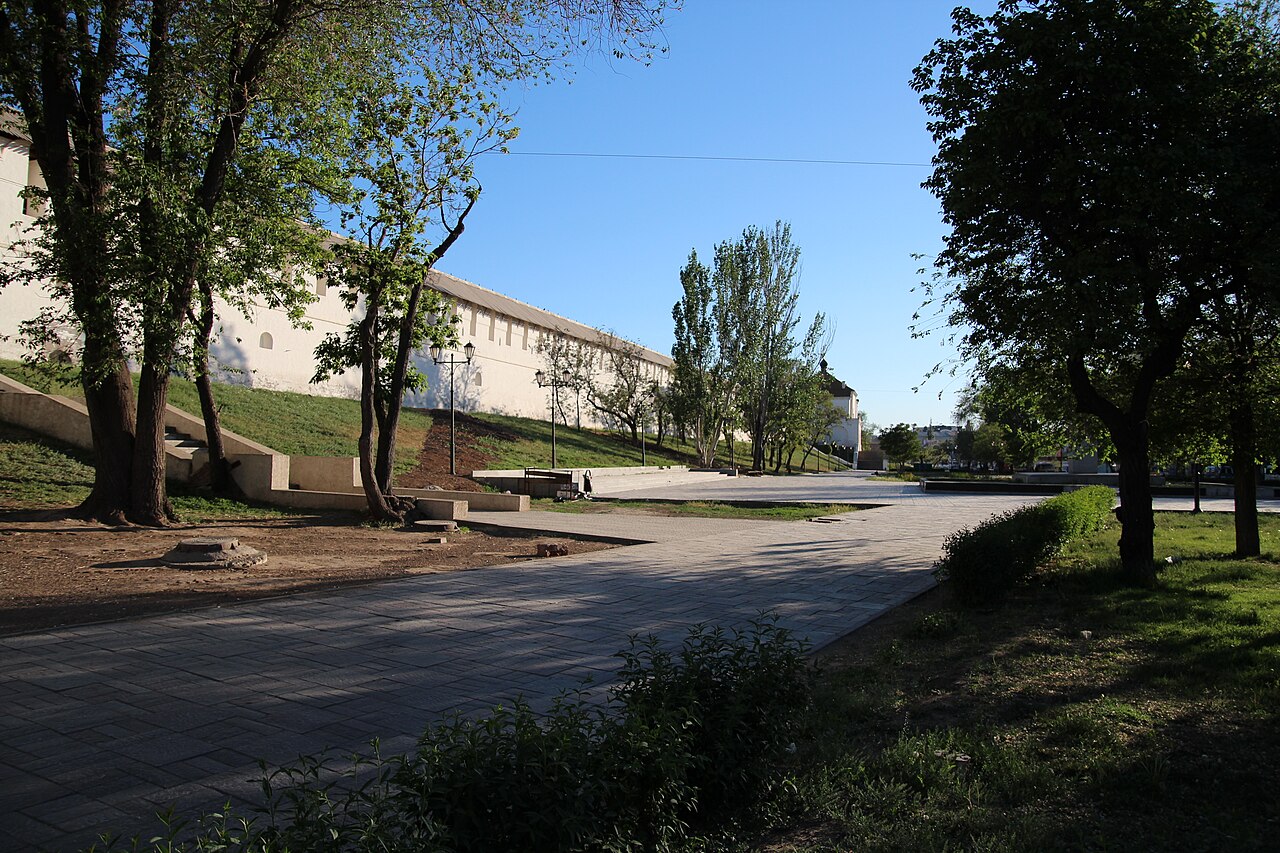
The fortress’s circuit survives almost complete: seven towers today, three of them gate towers, along walls whose wartime tiers and musket galleries are walkable on the restored stretches, with the Crimean tower, the ensemble’s sixteenth-century veteran, holding its original brick, and the Red Gates commanding the river face where the Volga once ran directly below, the water since withdrawn behind embankments and gardens.
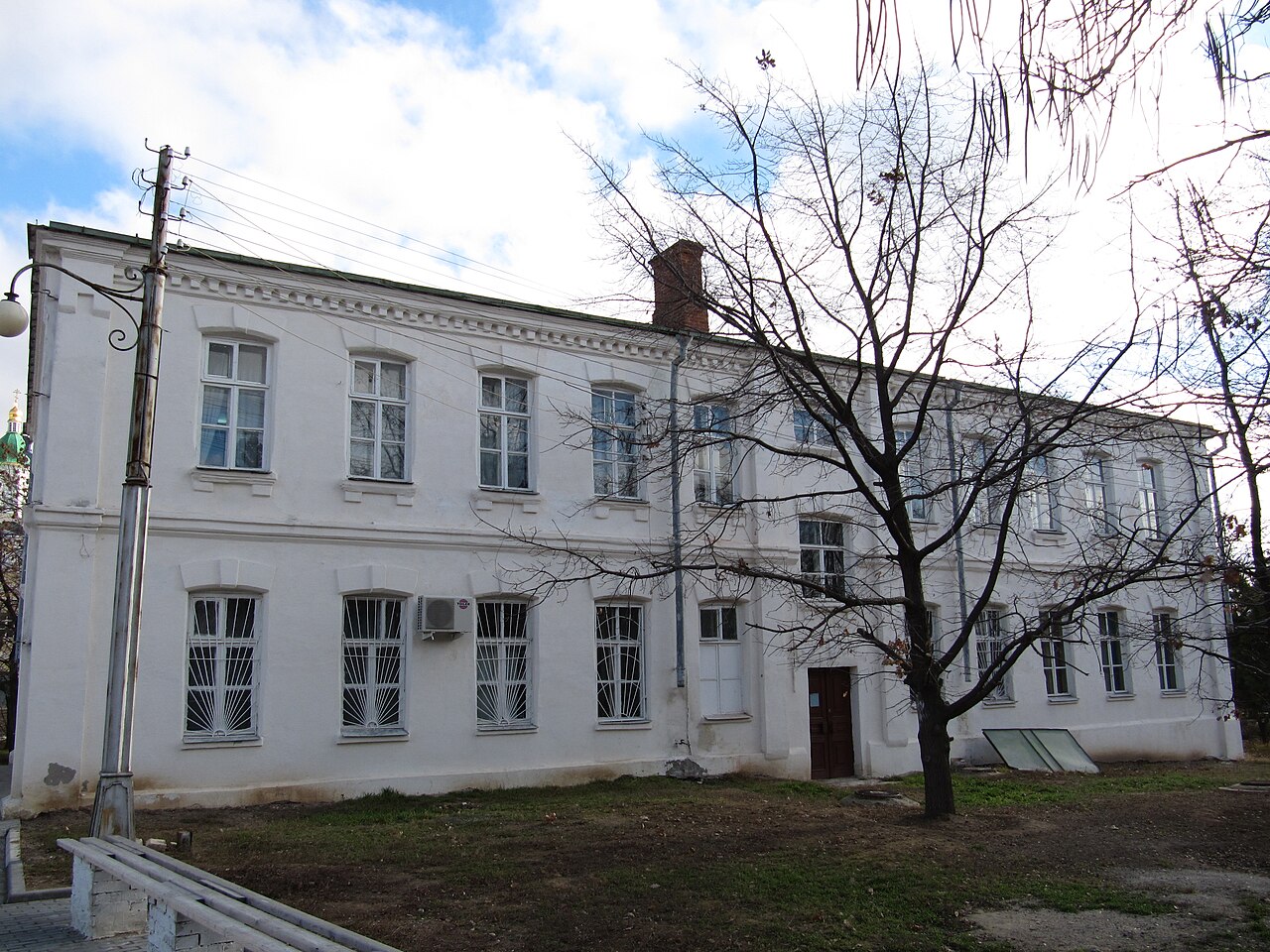
The interior preserves the garrison town: the Trinity cathedral complex of the fortress’s monastery, refectory chambers of the sixteen hundreds, the guardhouse of Catherine’s era, the arsenal, and the Cyril chapel over the city’s founding holy man’s grave, the buildings now housing the combined museum’s exhibitions, weapons, the fortress’s models, the Horde bricks’ archaeology, and the tower displays on the sieges and the Razin year.
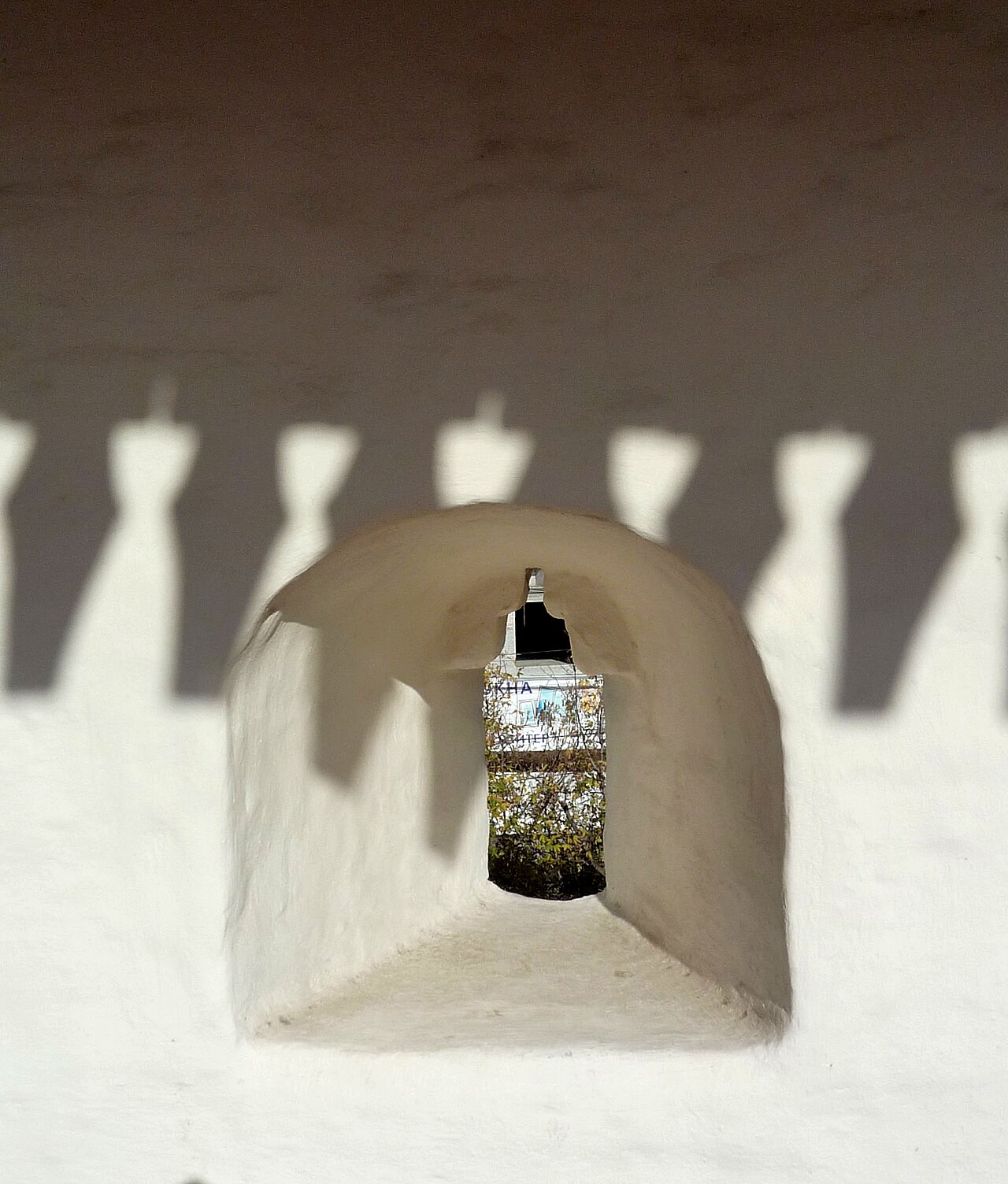
Restoration has run in campaigns since the Soviet jubilees, the latest completing for the city’s recent anniversaries, walls replastered white, the towers’ tents reshingled, the cathedral square repaved, and the ensemble, a federal monument on UNESCO’s tentative list, stands now in the best condition of its modern history, the delta’s one hill wearing its citadel as the city’s crown and favorite promenade.
The Kremlin Today
The modern Kremlin is Astrakhan’s civic heart: the museum-reserve’s exhibitions fill the historic buildings, the cathedral and Trinity churches serve their congregations, the squares host the city’s festivals, from the spring fish festivals to military band evenings under the walls, and the gardens along the moat’s line give the delta’s families their evening circuit, the fortress reconciled with the city it was built to overawe.
The visitor’s route assembles the delta’s whole story in two hours: Horde bricks in the wall’s base, the conquest’s layout, Razin’s squares, Peter’s cathedral praise, the leaning tower’s imperial finale, with the river panorama from the western walls placing the fortress in its geography, the Volga’s last reach spreading toward the Caspian horizon beyond the port cranes.
Beyond the gates the city completes the picture: the merchant quarters’ wooden lace and Art Nouveau, the Tatar and Persian mosque districts, the fish markets’ sturgeon memory, and the delta itself downstream, the lotus fields and bird waters of the reserve, Europe’s largest river delta closing the Volga’s four-thousand-kilometer argument, with the white Kremlin as its final punctuation mark.
Watch the Astrakhan Kremlin on Film
Visiting the Astrakhan Kremlin Today
The Astrakhan Kremlin stands in the center of Astrakhan, the Volga delta’s capital, reached by direct flights from Moscow in two and a half hours or by the classic river cruises in season; the fortress is a short walk or ride from the railway station and the central embankment. The grounds open daily and free through the Prechistenskie and Nikolskie gates; the museum exhibitions in the towers, guardhouse, and refectory chambers sell modest tickets with a combined option, typically closing Mondays, and the Assumption Cathedral welcomes visitors outside services. Allow two to three hours for walls and museums, then the embankment and merchant quarters; in summer add a delta excursion to the lotus fields, booked from the river stations, for the landscape the fortress was built to command. You can find the Kremlin on the map here: Astrakhan Kremlin on Google Maps.
Palaces Nearby
You May Like
The Atamans’ Palace of Novocherkassk and the Don Cossacks