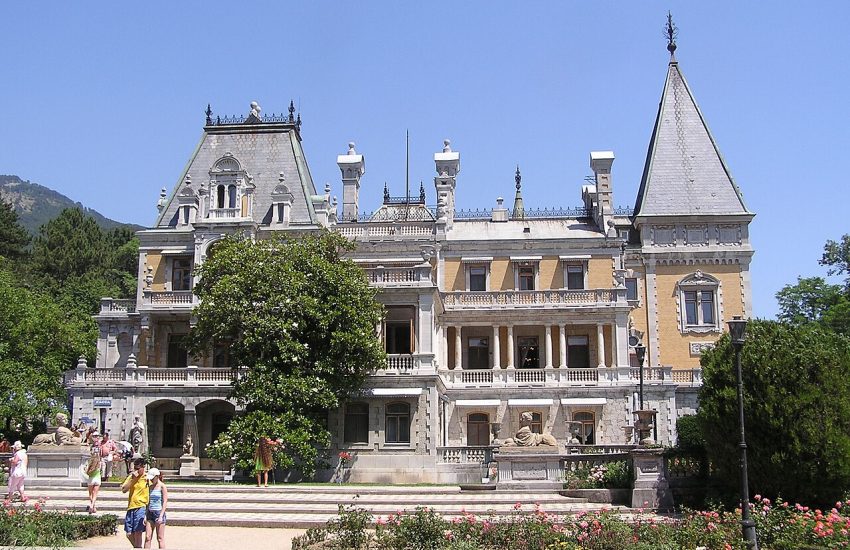
On the sunniest stretch of Crimea’s southern shore, between Alupka’s Moorish towers and the cliff-hung church of Foros, a palace of gray mountain stone hides in a park of cypress and wisteria. The Yusupov Palace at Koreiz belonged to the richest family in Russia, a dynasty whose fortune outweighed the tsar’s and whose last heir, Felix Yusupov, earned history’s attention one December night in 1916 by killing Rasputin. Less than thirty years later, the same palace housed Joseph Stalin and the Soviet delegation during the Yalta Conference, making its terraces briefly the most consequential garden on earth.
The palace’s double biography, playground of a doomed aristocracy, then fortress of the century’s hardest politics, is written into its fabric: Roman-style loggias and laughing marble satyrs from the Yusupov years stand over bomb-proof cellars dug for 1945, and the park’s four hundred species of trees shade both honeymoon paths and the walk where Stalin and Churchill tested each other between sessions. No building in Crimea compresses the century’s turn more tightly.
This guide follows the whole story: Koreiz before the Yusupovs and the formidable princess who first built here, the family’s impossible wealth and its curse-haunted name, the palace Krasnov rebuilt in silver-gray stone, Felix and Irina’s imperial wedding gifts and the Rasputin shadow, the exodus of 1919, the NKVD decades, the Yalta Conference’s inner workings, and the practical details of visiting a house that is still, fittingly, half secret.
- The Golden Shore of Miskhor
- The Princess of the Night Gardens
- The Richest Family in Russia
- The Yusupov Curse
- Krasnov’s Gray Palace
- Terraces of Gods and Satyrs
- Felix, the Last Yusupov
- An Imperial Wedding
- The Rasputin Shadow
- Exodus from the Shore
- The Palace of the Security Men
- Stalin’s House at the Yalta Conference
- The Estate Today
- Watch the Yusupov Palace on Film
- Visiting the Yusupov Palace Today
- Palaces Nearby
The Golden Shore of Miskhor
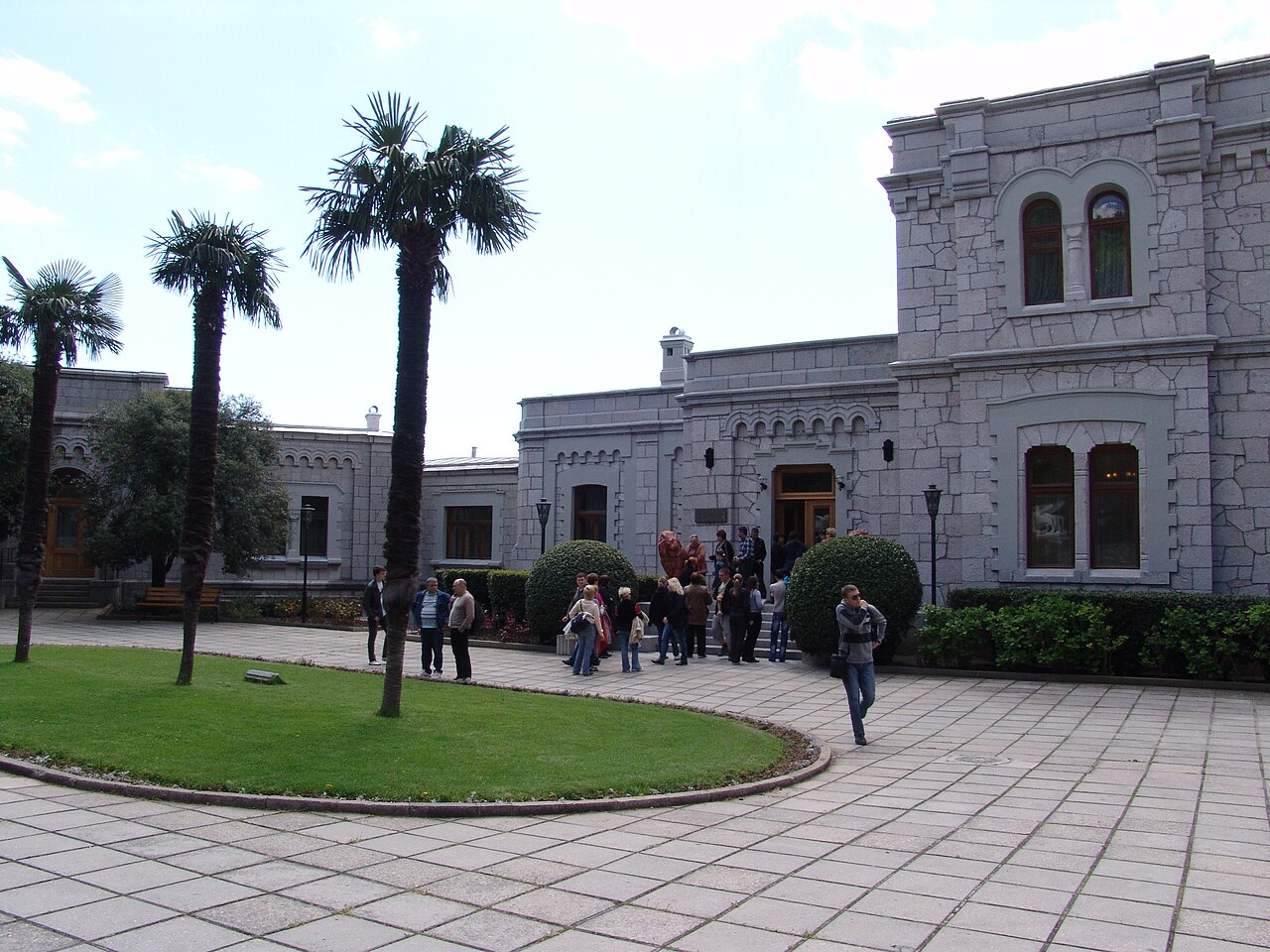
The Koreiz-Miskhor shore is the southern coast’s privileged center: the mountains stand tallest here, the frosts almost never descend, and the sea-facing amphitheater catches sun through the longest season in the former empire. Greek Koreiz appears in medieval sources; after 1783 the shore entered the new Russian aristocracy’s imagination as the empire’s own Italy, and by the 1820s its estates were the most coveted ground in Crimea.
The neighborhood wrote the palace’s context: Alupka’s Vorontsov fantasia rose just west, the imperial Livadia east, and between them the Miskhor strip filled with grand-ducal and magnate villas, the Dulber palace of Grand Duke Peter, the Kichkine and Charax estates, until the shore read like the court calendar in stone. Koreiz, at the strip’s heart, was its social summit by the century’s end.
Below the parks, Miskhor’s waterfront grew the coast’s emblems: the bronze mermaid offshore and the fountain girl on the beach, folk-legend statues every Soviet honeymooner photographed. The shore’s double life, closed palaces above, public paradise below, began in the Yusupov era and never ended; today’s visitor walks the same boundary, sanatorium gates alternating with park paths all along the golden kilometer.
The Princess of the Night Gardens
The estate’s founding spirit was Princess Anna Golitsyna, one of the Alexander I era’s formidable mystics, who settled at Koreiz in 1824 when the coast was still wild shore and Tatar villages. Widowed, severe, and the center of a circle of religious enthusiasts, she built the first manor here, planted the park’s oldest trees, and ruled the young riviera’s society with a drill-sergeant’s hand, the coast’s first great chatelaine.
Legend remembers her habits more than her theology: she planted, locals said, by moonlight, rode the shore in a Cossack’s burka, and summoned neighbors to prayers no one dared skip. Her circle drew the coast’s early eccentrics and exiles, including the famous mystic baroness Krudener, who died at Koreiz; the princess buried her by the sea and marked the estate with chapels and crosses.
Golitsyna’s Koreiz passed through heirs and sales as the coast gentrified, but her bones of the estate, the terraced park, the springs, the vineyard slopes, structured everything after. When the Yusupovs bought Koreiz in 1880, they acquired not wilderness but a seasoned garden with half a century’s growth, which is why their palace could stand, from its first year, in mature cypress shade.
The Richest Family in Russia
The Yusupovs’ wealth was the empire’s standing hyperbole. Descended from Nogai khans, Khan Yusuf of the sixteenth century gave the name, the family converted under Peter’s predecessors and compounded fortunes for three centuries: by 1900 they held dozens of estates across the empire, mines, mills, and oil shares, palaces in both capitals including the Moika house with its private theater, and an art collection, Rembrandts included, that museums envied. Contemporary estimates made them richer than the imperial family in personal property.
Crimea fit the family’s style of magnificence-as-habit: besides Koreiz they held neighboring estates until their shore holdings read like a district map. Zinaida Yusupova, the last princess, the era’s most celebrated beauty and hostess, made Koreiz the autumn capital of the coast’s season, her guest books filling with grand dukes, ambassadors, and artists; Serov’s portraits of her fixed the family’s image for posterity, luminous and faintly elegiac.
The fortune’s management occupied an office of hundreds; its spending occupied legend. Yet the family’s letters show the strain beneath: Zinaida’s political anxieties, her husband’s stolid soldiering, and the weight of a name whose every generation, the family believed, paid for its splendor in blood, which brings the story to the curse.
The Yusupov Curse
The family told the curse story themselves, which is half its power. When Khan Yusuf’s descendants abandoned Islam for Orthodoxy in the seventeenth century, a Nogai sorceress, the tale runs, doomed the line: in every generation, of all children born, only one would live past twenty-six. The genealogy obliged with grim consistency, and the family’s letters treat the pattern as fact; whatever statisticians might say, the Yusupovs lived under it.
The last generation paid the tale’s full price. Zinaida’s elder son Nikolai, brilliant and restless, died in 1908 at twenty-five, shot in a duel over a married woman, on the Krestovsky island in Petersburg; his mother never fully recovered, and Felix, the younger son, became sole heir to the name, the fortune, and the arithmetic of the legend, a weight his memoirs circle obsessively.
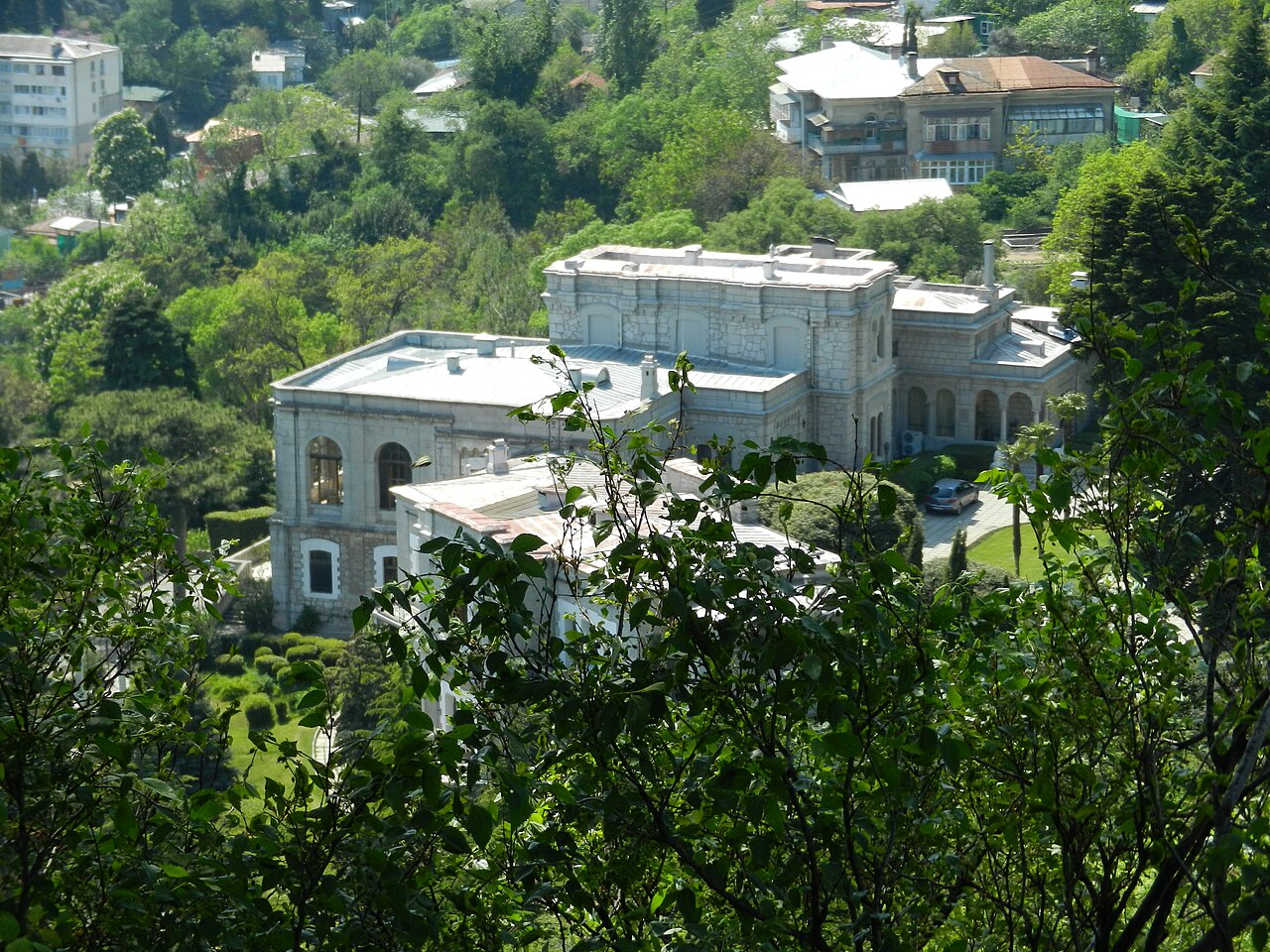
Koreiz absorbed the mourning years: Zinaida withdrew to the coast, and the palace’s rebuilding, completed the year after Nikolai’s death, carried the family’s grief into stone, its gray austerity, guests noted, standing apart from the shore’s white holiday manner. The curse is not museum material, but it explains the house: the richest family in Russia built, at the empire’s sunniest address, a palace the color of resignation.
Krasnov’s Gray Palace
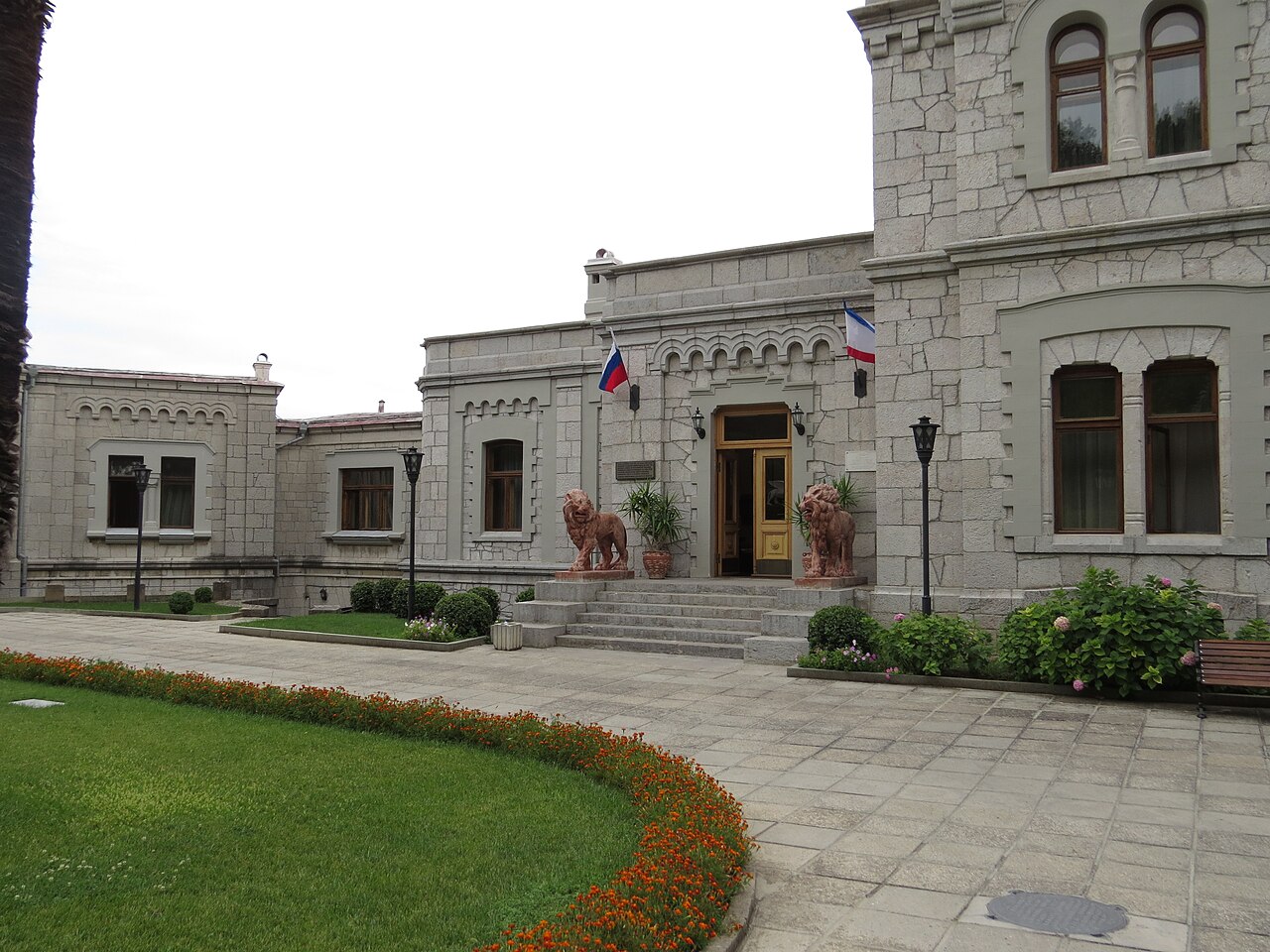
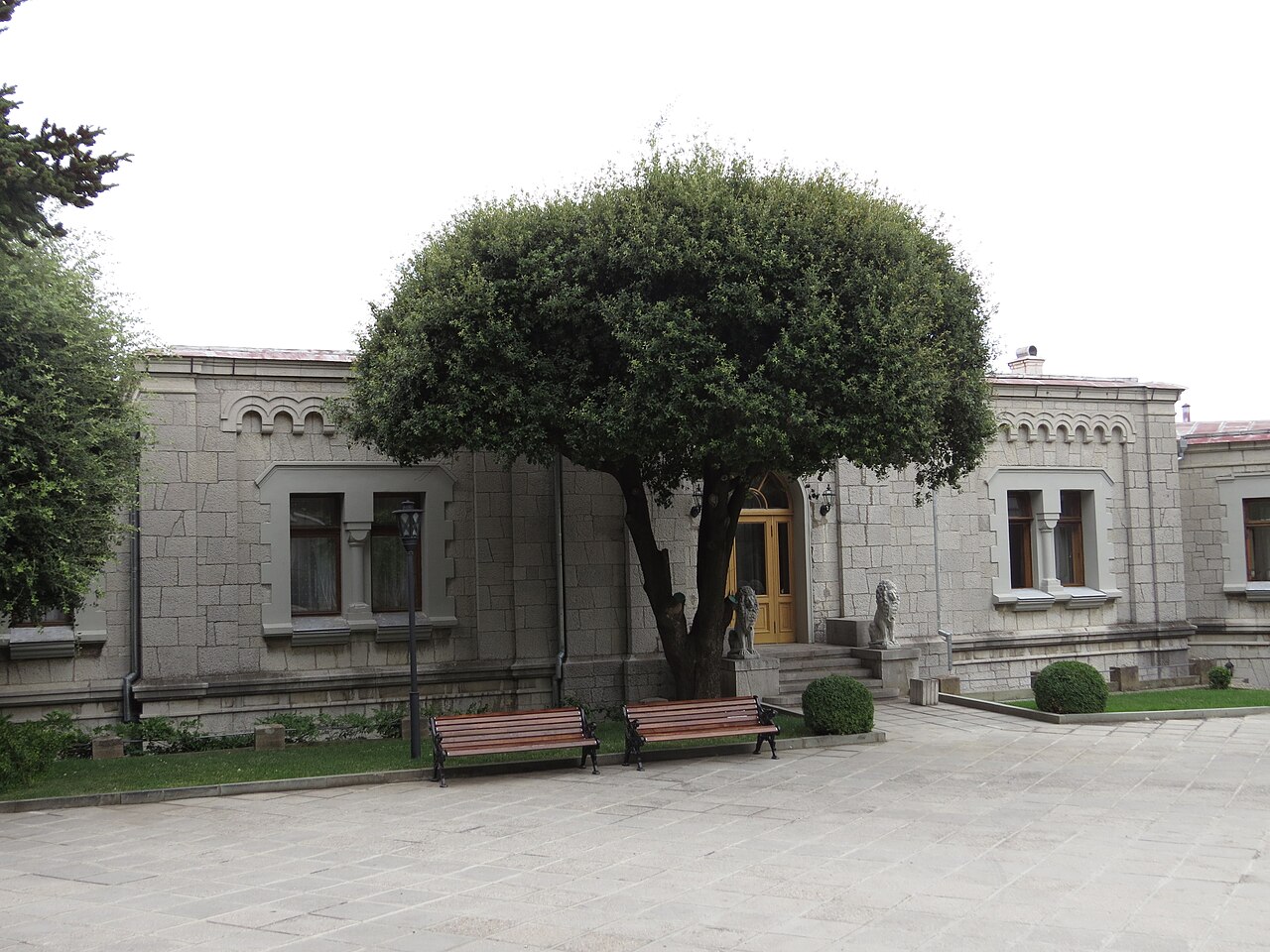
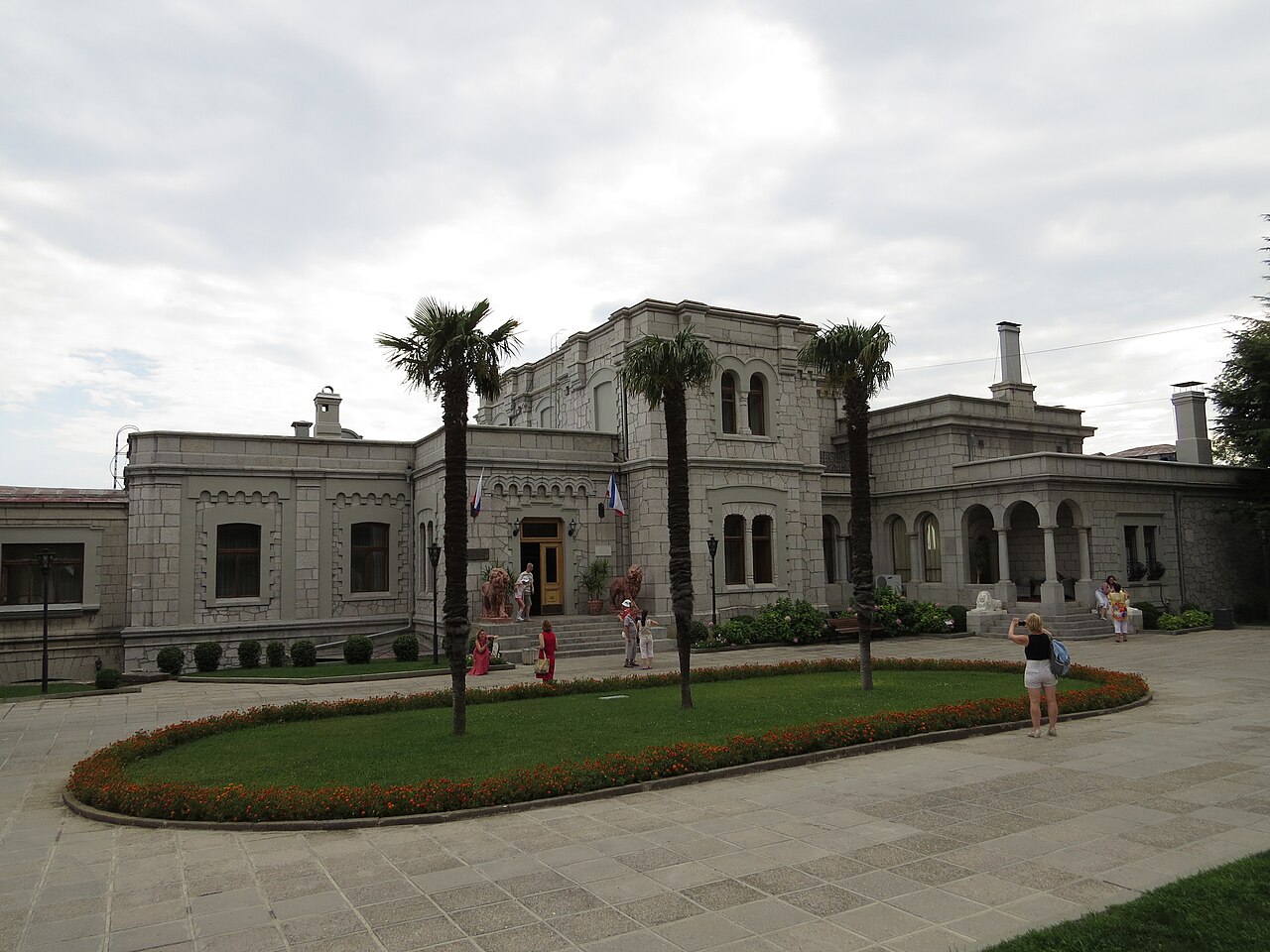
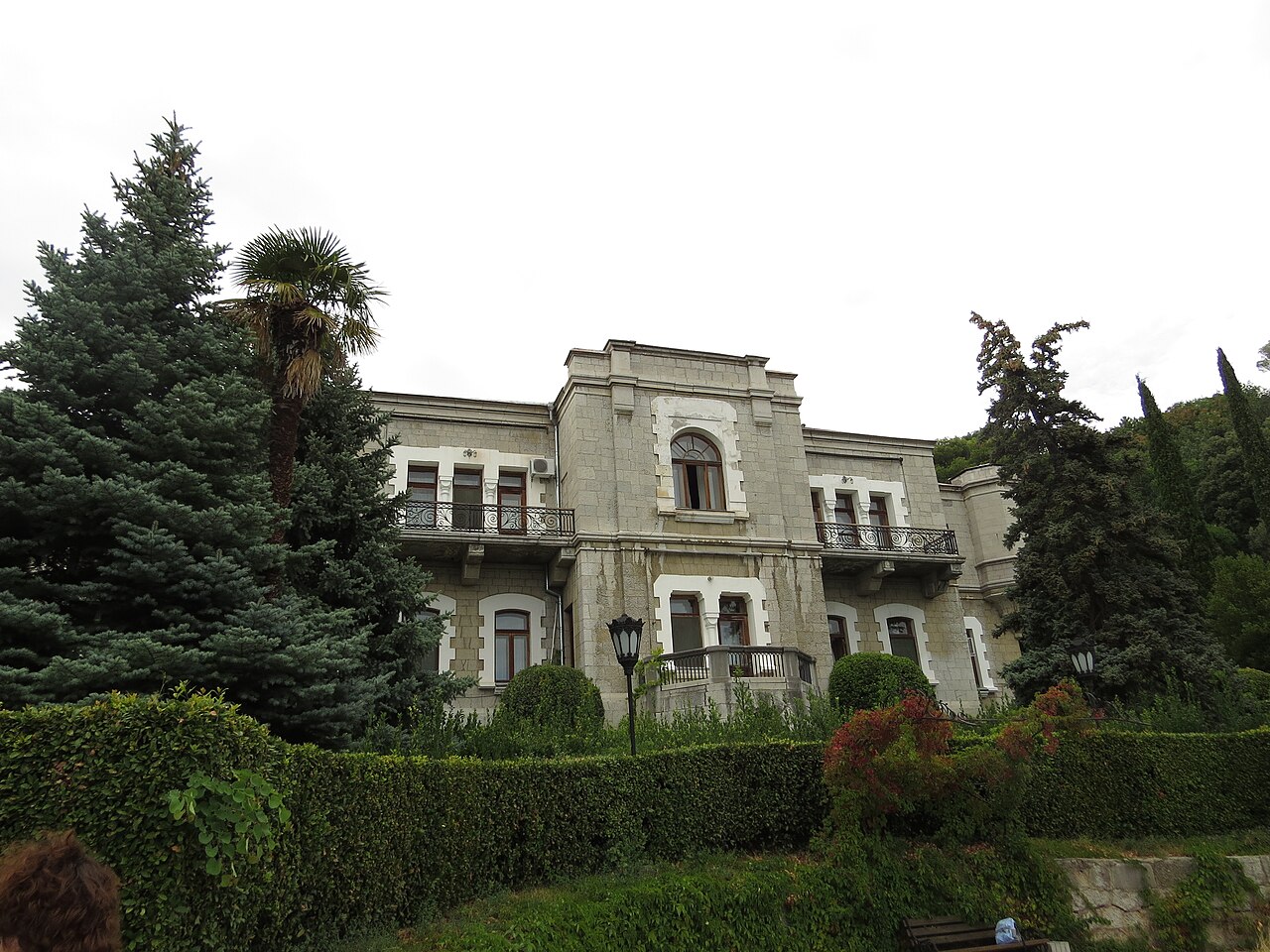
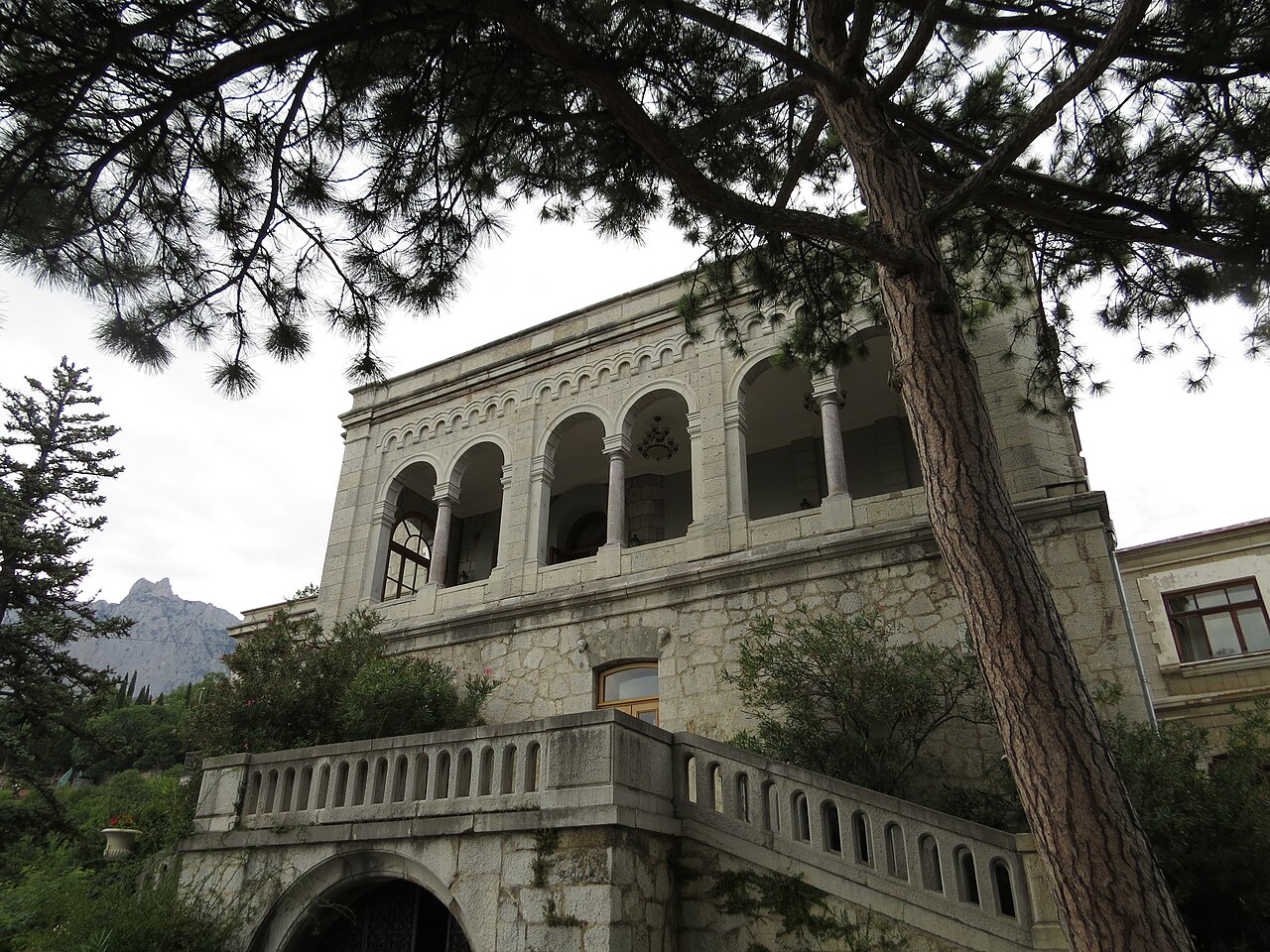
The palace’s maker was Nikolai Krasnov, Yalta’s city architect and the coast’s defining builder, who would raise Livadia’s white palace for the tsar two years later. For the Yusupovs, from 1904 to 1909, he rebuilt Golitsyna’s old manor into a residence in the modernized Italian Renaissance manner: asymmetric volumes stepping with the slope, round-arched loggias and windows, walls of local gray dolomite left honest, roofs of Mediterranean tile.
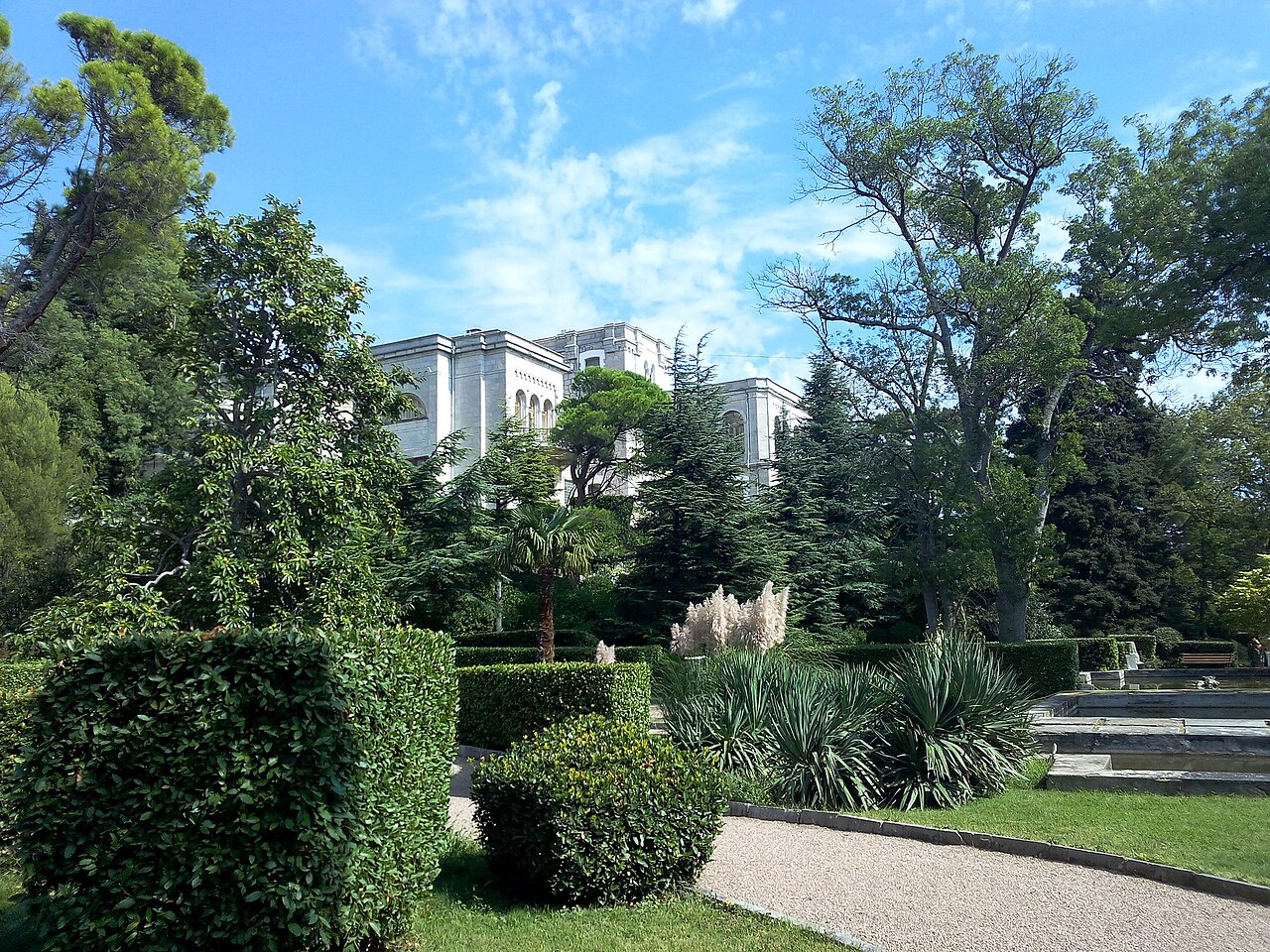
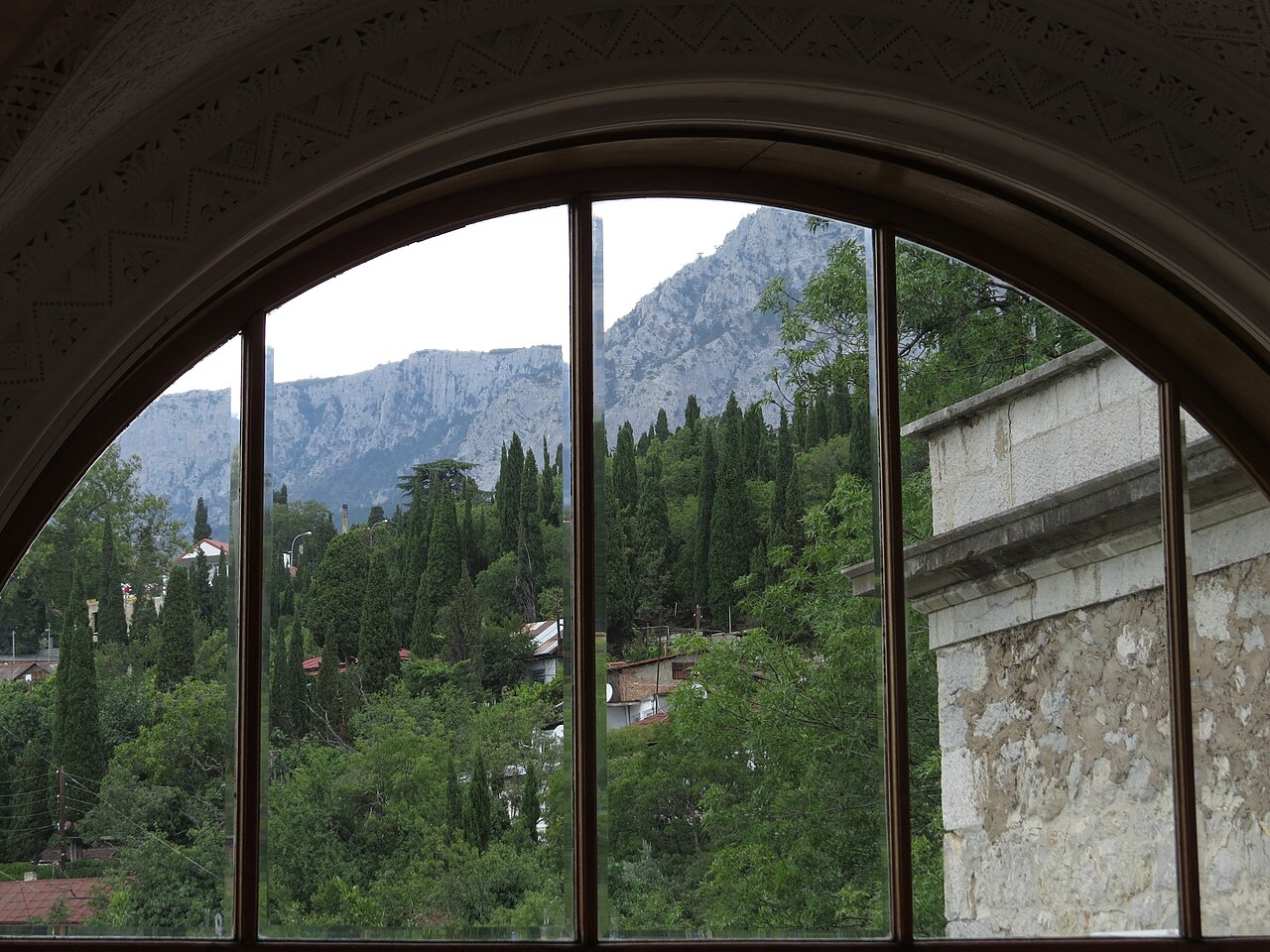
Krasnov’s genius was always the site: the palace turns its rooms and terraces to frame Ai-Petri’s crag one way and the open sea the other, with the park’s descending levels composed from the windows outward. Vine-hung pergolas, fountain courts, and the long terrace walks tie house to garden so closely that the architecture reads, from below, as the park’s own outcrop.
Inside he built comfort over show, electric light, lifts, bathrooms by the dozen, modest ceiling heights, in a finish of oak, marble, and restraint; the Yusupovs kept their Rembrandts in Petersburg. The result was the coast’s most livable great house, which is exactly why, of all the shore’s palaces, the twentieth century’s hardest practical men would later choose this one for working residences: Krasnov had built them, unknowingly, the perfect headquarters.
Terraces of Gods and Satyrs
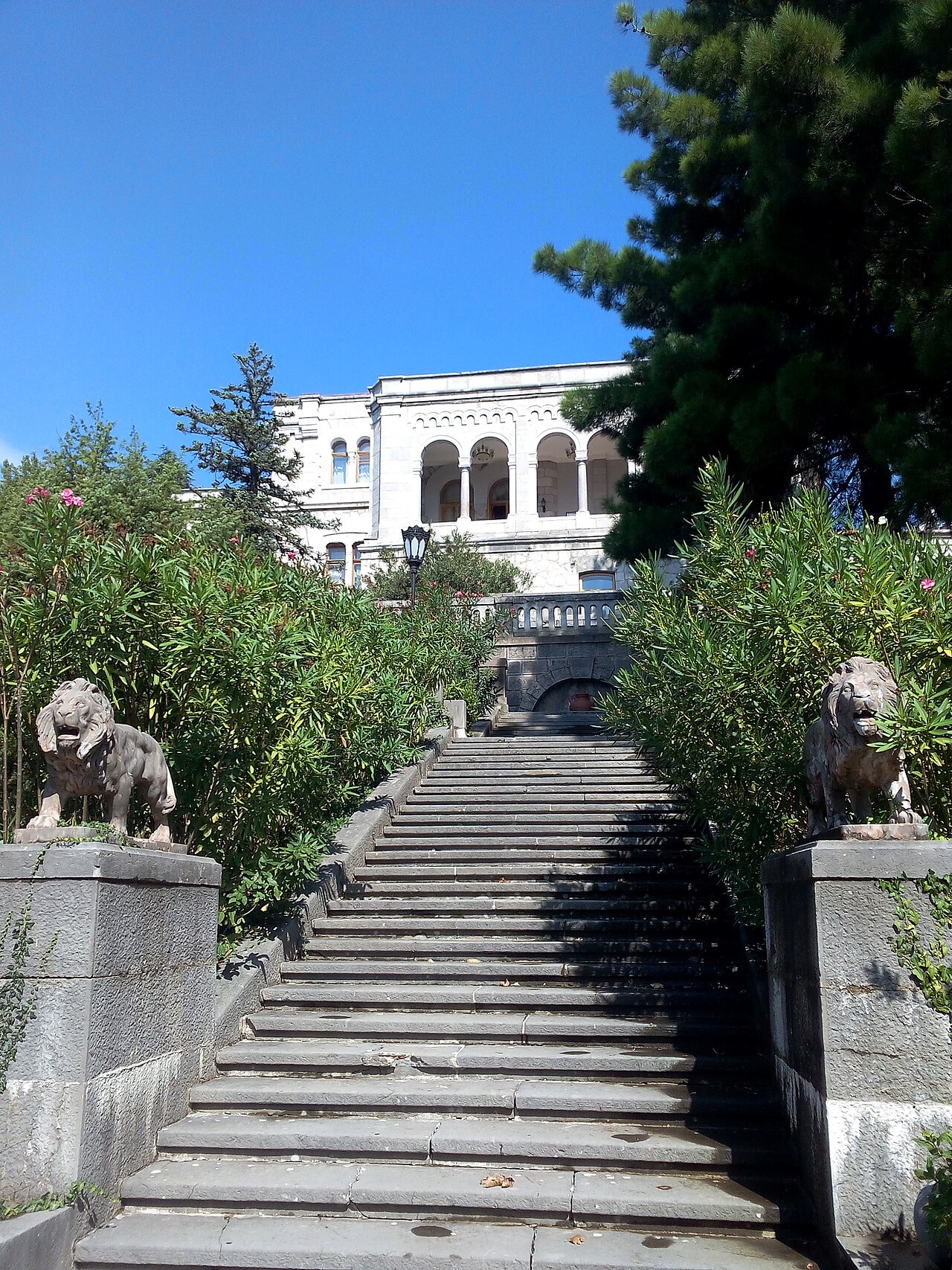
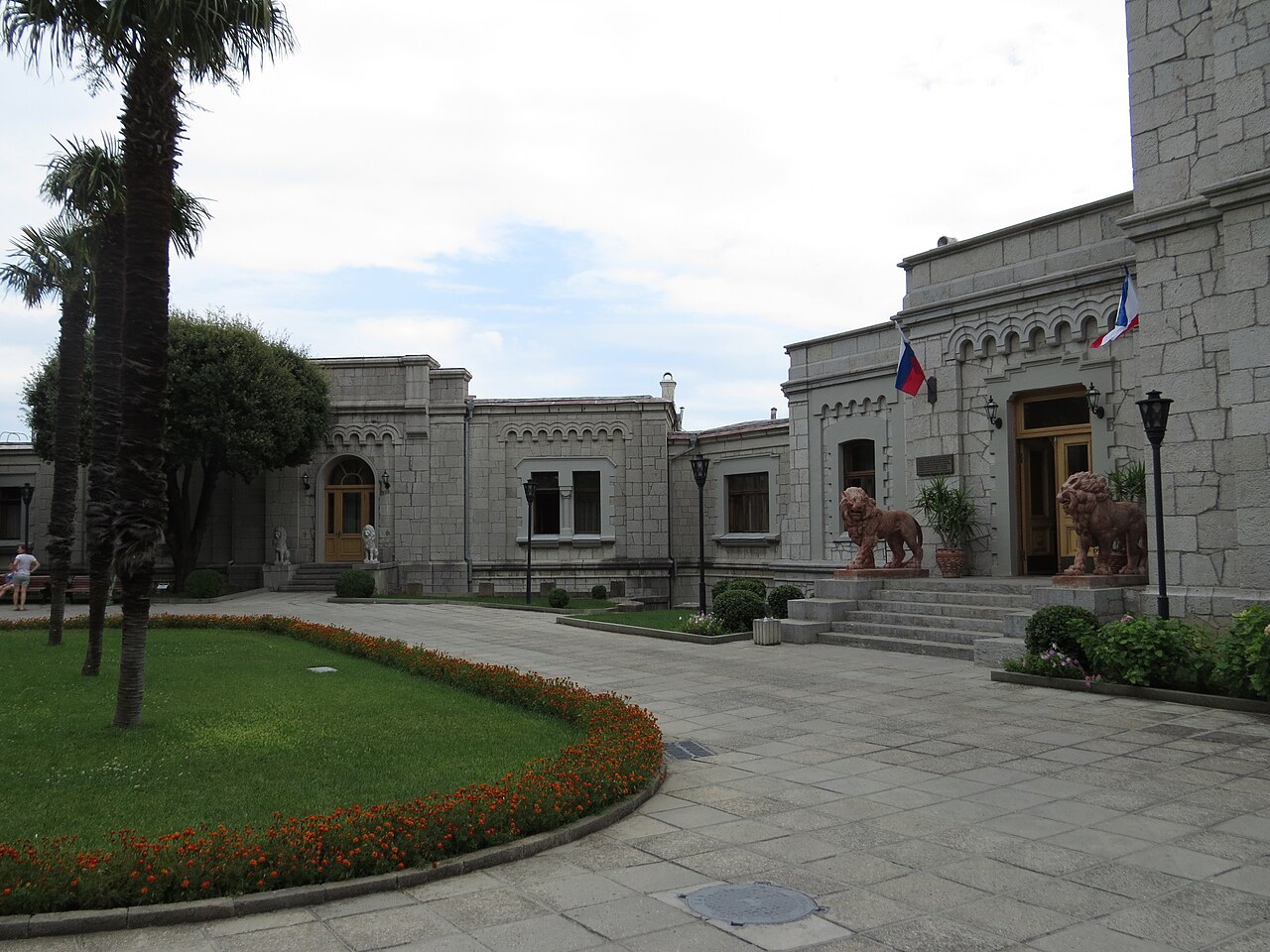
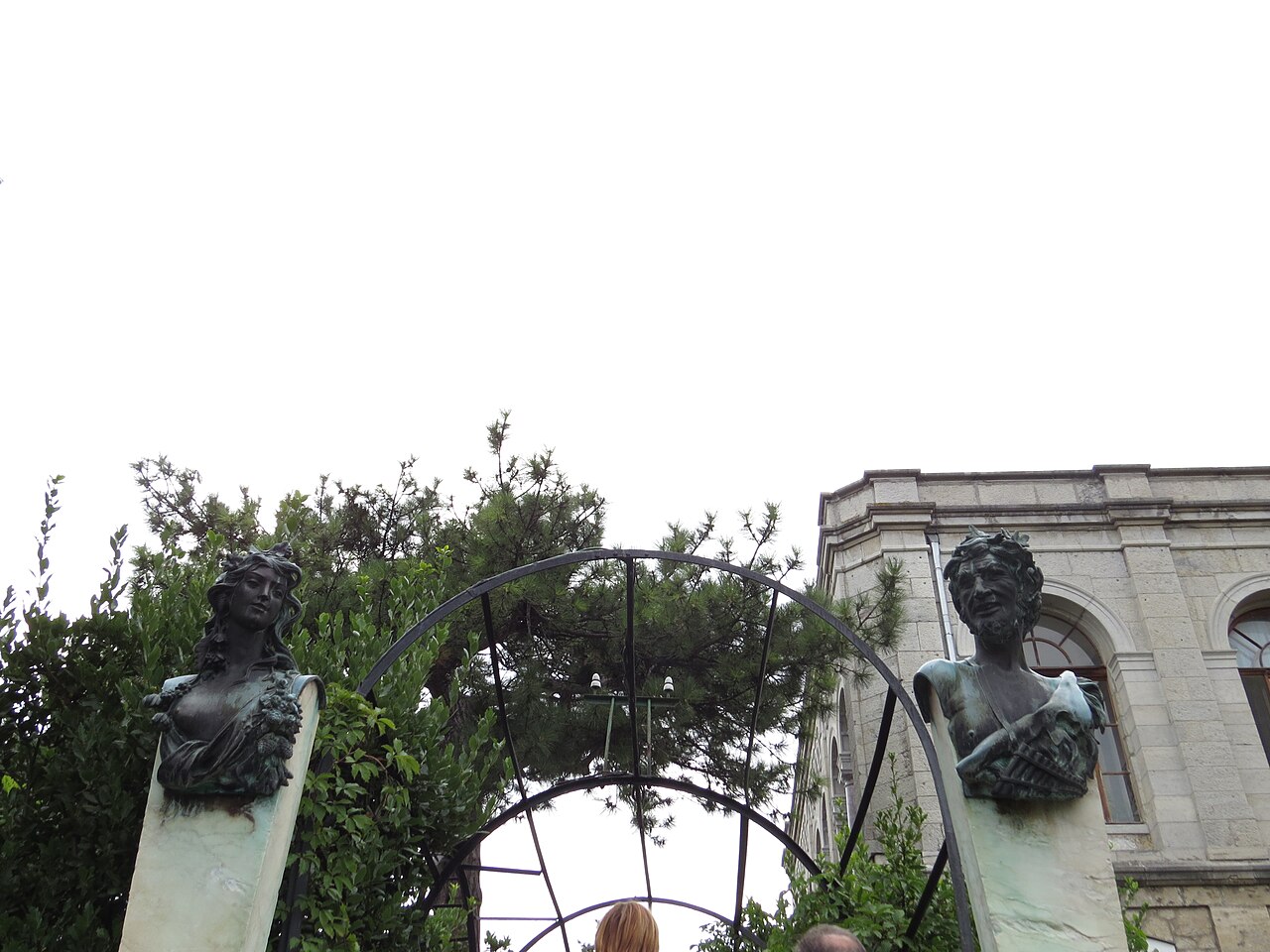
The palace’s signature population arrived with it: the marble and terracotta company of antique gods, nymphs, lions, and above all satyrs that Krasnov and his patrons set along the terraces, stairs, and fountain basins. Venetian and local workshops supplied them; the family’s taste, classical learning worn lightly, arranged them as a garden comedy, Olympus at leisure among the wisteria.
The laughing satyr by the entrance stair became the estate’s mascot and remains its most photographed resident; generations of guests, imperial, Soviet, and touristic, have rubbed his marble grin. Guides inventory the surviving troupe, around two hundred pieces, and tell the attached stories, which gods watched which negotiations in 1945 being the modern favorites.
The sculpture garden gives Koreiz its particular mood among the coast’s palaces: Alupka awes, Livadia moves, Massandra enchants, Koreiz smiles, grayly. The family that lived under a curse decorated, deliberately, for laughter, and the choice outlived them; whatever the house’s tenants since, the terraces have kept the Yusupovs’ joke running for a century.
Felix, the Last Yusupov
Felix Yusupov, born 1887, was the ancien regime’s most decorative heir: Oxford-educated, androgynously beautiful, a celebrated transvestite prankster in his youth, collector, dandy, and, by his own account, a seeker who nursed plague patients incognito; his memoirs, unreliable and irresistible, made his self-portrait permanent. Koreiz was his childhood’s summer kingdom, and its pages in his books glow, the tutors, the sea, his mother’s guests, the Tatar festivals.
With Nikolai’s death Felix became the fortune’s future, and his course changed: he married, in 1914, the emperor’s niece Irina, the match binding the Yusupov wealth to the dynasty itself, and settled toward the role of grandee. The war years found him organizing hospitals in the family palaces while studying, with characteristic theatricality, the officer’s trade.
History hinged him on one night: 17 December 1916, the Moika palace in Petrograd, where Felix, with the Grand Duke Dmitry and the politician Purishkevich, murdered Grigory Rasputin in the cellar he had decorated for the occasion. The killing, poison, shots, the Neva ice, made Felix forever the man who killed Rasputin, exile’s most marketable identity; Koreiz, where the family gathered as the empire fell, became the stage of the story’s last Russian act.
An Imperial Wedding
Felix’s marriage to Princess Irina Alexandrovna, daughter of the tsar’s sister Xenia and granddaughter of Alexander III, was the last great dynastic wedding of imperial Russia, February 1914 in the Anichkov palace chapel, the emperor himself among the witnesses, the bride in the famous lace veil of Marie Antoinette, the couple’s combined rank and fortune without precedent or successor.
Koreiz framed the romance: the young pair’s courtship ran through the coast’s seasons, and the palace received them as its future masters, with the estate’s folklore keeping their walks and the pergola where, the staff maintained, the proposal was accepted. Their only child, Irina the younger, spent her first summers on these terraces, the fourth and last Yusupov generation at Koreiz.
The wedding’s aftermath tied the house into the dynasty’s final knot: through Irina the palace’s guestbook joined the imperial family’s intimate circuit, and when catastrophe came, it was to Koreiz and the neighboring estates that the emperor’s mother, sisters, and their households retreated in 1917 to 1918, the shore between Ai-Todor and Koreiz becoming the Romanovs’ gilded holding pen under revolutionary guard, with the Yusupovs’ gray palace at its center.
The Rasputin Shadow
The Rasputin murder followed the family to Crimea. Felix, banished by the emperor to a family estate for the killing, reached the coast as the monarchy entered its last winter; society’s celebration of the murderer, and the empress’s hatred, divided the shore’s drawing rooms, and the palace at Koreiz held its breath between them. Within weeks the abdication made the point moot; the shadow, however, never lifted from the name.
Exile fixed the association: Felix’s memoirs and the 1932 Hollywood film, which the couple famously sued over Irina’s portrayal, winning the damages that pioneered the modern film disclaimer, made Rasputin the family’s global brand, to Felix’s alternating profit and despair. Koreiz appears in the literature as the lost paradise against which the Moika cellar stands as the lost soul.
The palace trades carefully on the connection today: exhibitions note it, guides answer the inevitable questions, and the house declines, correctly, to become a murder museum, the crime happened fifteen hundred kilometers away. But visitors feel the link’s logic: the same family theatricality that staged the coast’s finest hospitality staged the century’s most theatrical assassination; the terraces and the cellar are one sensibility’s two stages.
Exodus from the Shore
Revolution gathered the dynasty’s survivors on this coast: the dowager empress Maria Feodorovna at Ai-Todor and Dulber, the grand dukes under house arrest, the Yusupovs at Koreiz, eighteen months of guarded limbo while Russia burned elsewhere, the shore’s palaces becoming genteel prisons patrolled by rival soviets, with one Sevastopol commissar’s protection, the family believed, repeatedly saving their lives.
The end came in April 1919, with the Red advance: the British dreadnought HMS Marlborough, sent by George V for his aunt, took the empress, the Yusupovs, and dozens of Romanovs and retainers from Koreiz’s own shore, the evacuation point lying below the palace. Survivors’ memoirs preserve the scene, the empress insisting the ship also carry the wounded White officers, the shore receding, Felix filming it all with his camera.
The family carried out jewels and two Rembrandts, sold across exile’s decades; Koreiz they never saw again. Felix and Irina’s Paris exile, the couture house Irfe, the lawsuits, the undimmed style on dwindling means, lasted until 1967 and 1970; their granddaughter’s line continues. The palace, emptied of its people in an afternoon, began its second career within months, under managers of a very different school.
The Palace of the Security Men
Nationalized Koreiz went, almost immediately and permanently, to the security services: from 1920s rest-house of the Cheka-OGPU-NKVD to the KGB’s southern residence, the gray palace spent the Soviet century inside the fence of the organs, Dzerzhinsky himself among its early guests, the coast’s grandest address reserved for the state’s least photographed profession.
The tenancy preserved superbly: fabric maintained to secret-service standards, park patrolled into perfection, no tourist wear, and an archive of silence, the palace’s Soviet decades are documented mainly by their one spectacular exception, 1945. Local memory supplies the rest, the sanatorium staff dynasties, the numbered cars on the coast road, the lights burning over the satyrs during the leadership’s southern seasons.
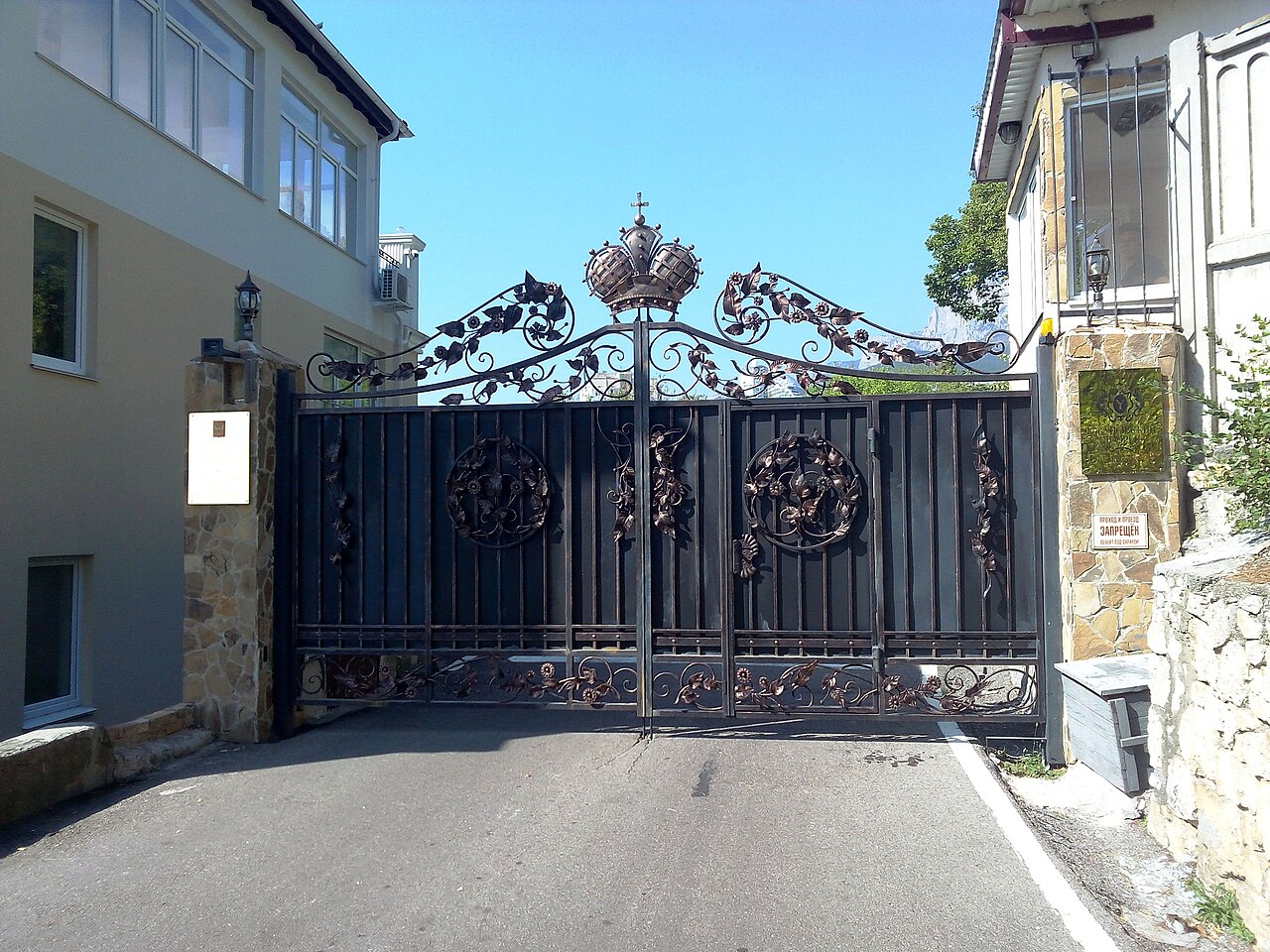
The continuity outlived the union: the estate remained a state residence under independent Ukraine, hosting CIS summits in the 1990s, and returned to Russian official hands after 2014, with public access expanding and contracting by the political season. The visitor’s slight thrill at the gatehouse is thus historically literate: this house has been checking documents for a hundred years.
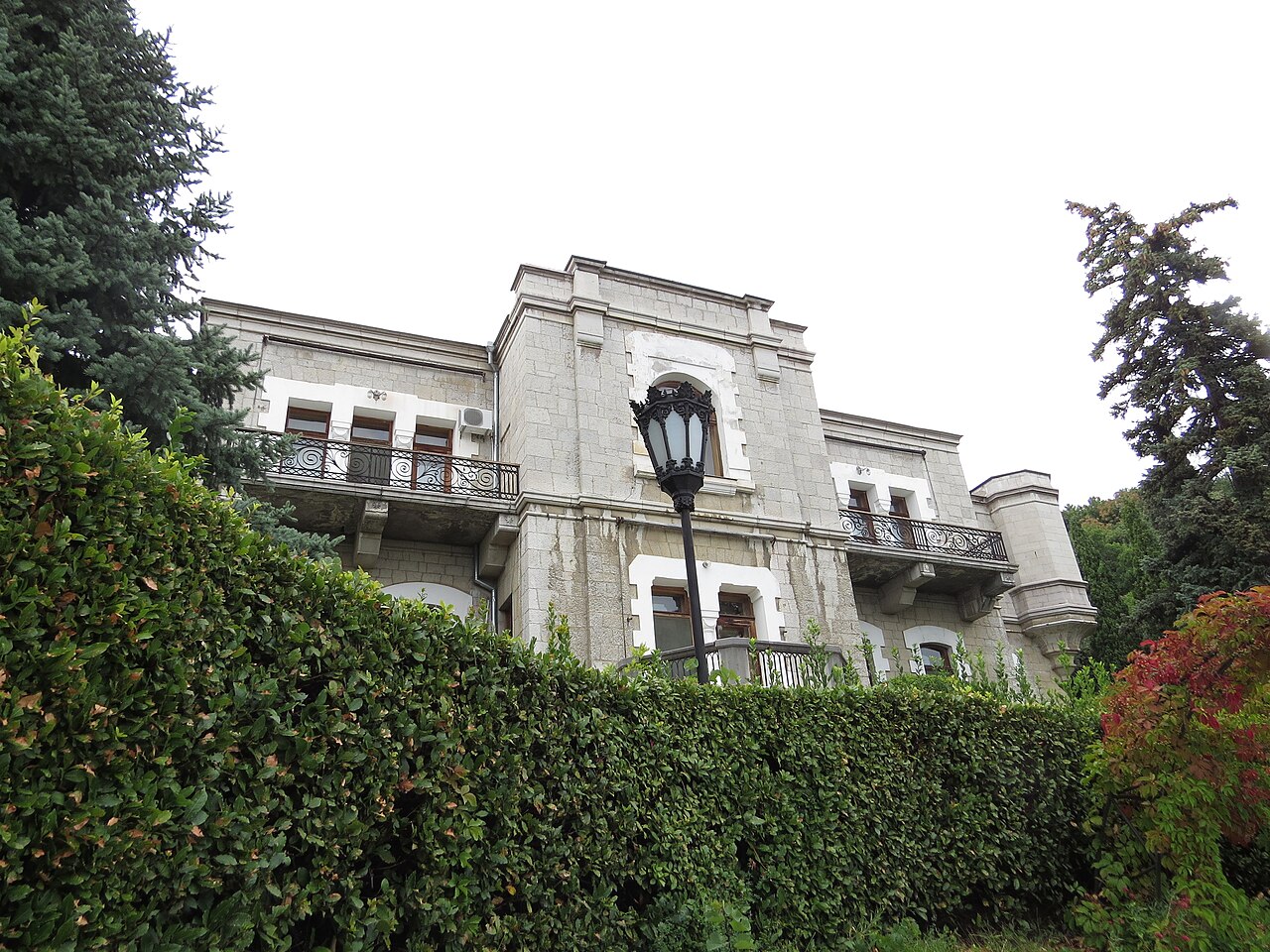
Stalin’s House at the Yalta Conference
February 1945 made Koreiz a world-historical address: for the Yalta Conference the Soviet delegation, Stalin, Molotov, the general staff, took the Yusupov palace, between Churchill’s quarters at Alupka and the conference table at Livadia, the three palaces of the dead aristocracy hosting the division of the living world. Koreiz, the middle house, became the summit’s engine room.
The palace worked around the clock: Stalin received Churchill and Roosevelt here between plenary sessions, the pool-turned-map-room tracked the fronts, bomb shelters dug into the mountain, still shown, guarded against the Luftwaffe’s remnants, and the estate’s kitchens staged the Soviet banquets whose toasts the Western memoirs recorded with awe. Decisions sketched on these terraces, on Poland, on the Far East, drew borders that held for half a century.
The month fixed the palace’s museum identity: the conference rooms, Stalin’s study and bedroom, the shelters, and the garden walks of the Big Three anchor today’s tours, photographs placing each negotiation under its tree. The Yusupovs’ satyrs watched it all, which every guide notes at the same spot; history has few better jokes about itself than Olympus grinning over the twentieth century’s hardest table.
The Estate Today
Koreiz today balances its natures: still a state residence, periodically closed for official use, and increasingly a museum, with guided tours covering the Yusupov floors, the 1945 rooms, the shelters, and the sculpture terraces, the park’s four-hundred-species collection, and the wine cellar founded under the princes. Access runs by arrangement and season, which keeps visits feeling, not unpleasantly, like clearances.
The house rewards the effort precisely because mass tourism passed it by: original Krasnov interiors, the family’s remaining pieces, and the park’s century of professional care present the coast’s best-preserved great estate, with the satyrs, the emperor’s-niece romance, and the conference month layered in one walk. Scholars add a fourth layer, the building’s unmatched run as a mirror of Russian power, khan’s descendants to politburo to present.
Below the gates, Miskhor’s public shore keeps the counterpoint: the mermaid offshore, the sanatorium crowds, the path to the Ai-Petri cable car, the coast’s democratic holiday running where the empire’s richest garden ends. The visitor finishing on the lower terrace, sea ahead and gray walls behind, holds the whole southern coast’s story in one view, which is what the best palaces are for.
Watch the Yusupov Palace on Film
Visiting the Yusupov Palace Today
The Yusupov Palace stands in Koreiz township above the Miskhor shore, twenty minutes west of Yalta by the coast road: buses and marshrutkas toward Alupka stop at Koreiz, and the Ai-Petri cable car’s lower station lies nearby for combining mountain and palace. As a working state residence the palace admits visitors on guided tours only, typically booked through Yalta tour agencies or at the gate by season, with passports sometimes requested and closures during official events, so confirm availability a day ahead. The tour covers the main floors, Stalin-era rooms, shelters, park, and cellar; pair it with Alupka’s Vorontsov palace westward or Livadia eastward to complete the Yalta Conference triangle in one coastal day. You can find the palace on the map here: Yusupov Palace on Google Maps.
Palaces Nearby
You May Like
The Governor’s Palace of the Kazan Kremlin