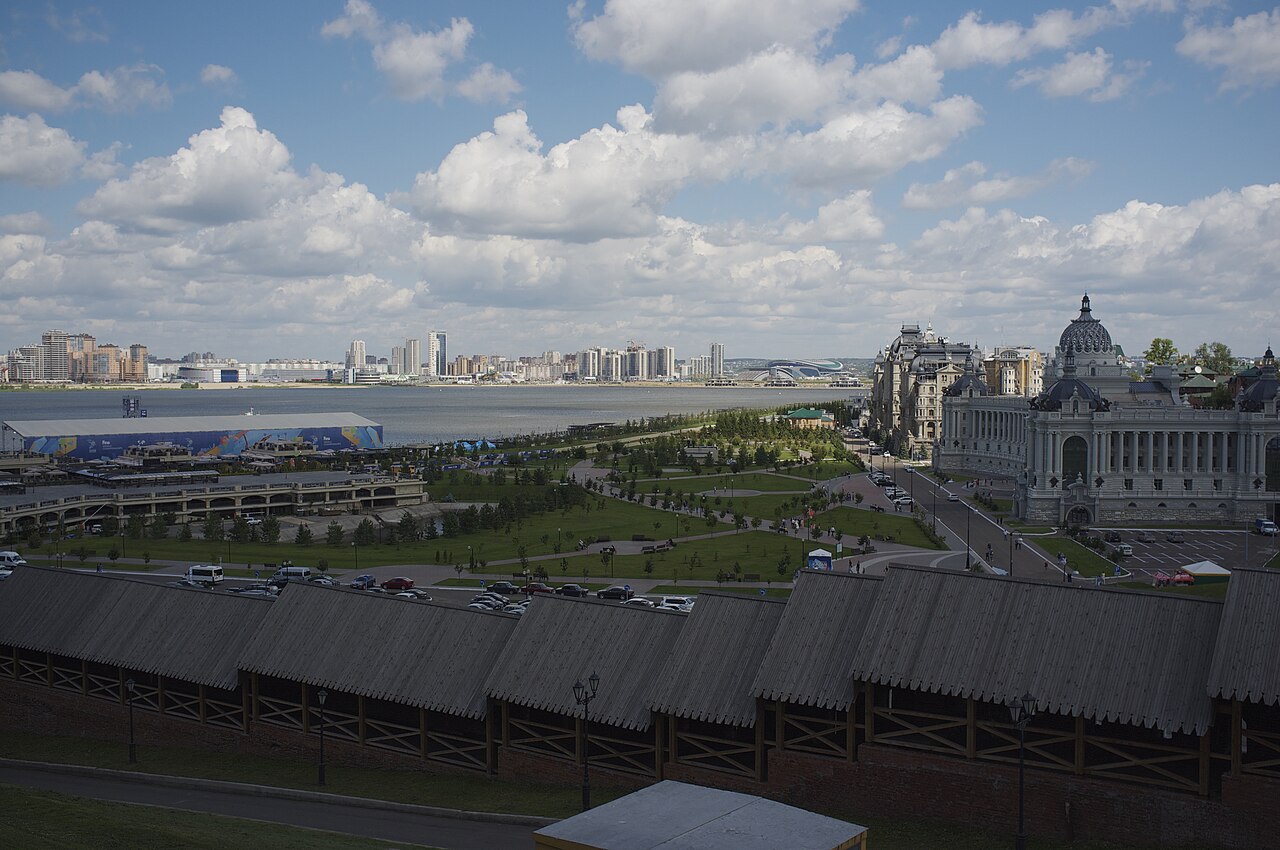
Where the Kazanka river meets the Volga, a white fortress rides its hill like a ship: the Kazan Kremlin, the only Tatar citadel in the world preserved within its walls, where a leaning brick tower wrapped in legend stands beside Russia’s most spectacular modern mosque, and where, at the hill’s highest point, the Governor’s Palace occupies the very ground of the Kazan khans’ vanished court. The palace is today the residence of Tatarstan’s head of state, which makes the hilltop one of the rare places on earth where the same spot has housed a country’s rulers, under three different civilizations, for the better part of a thousand years.
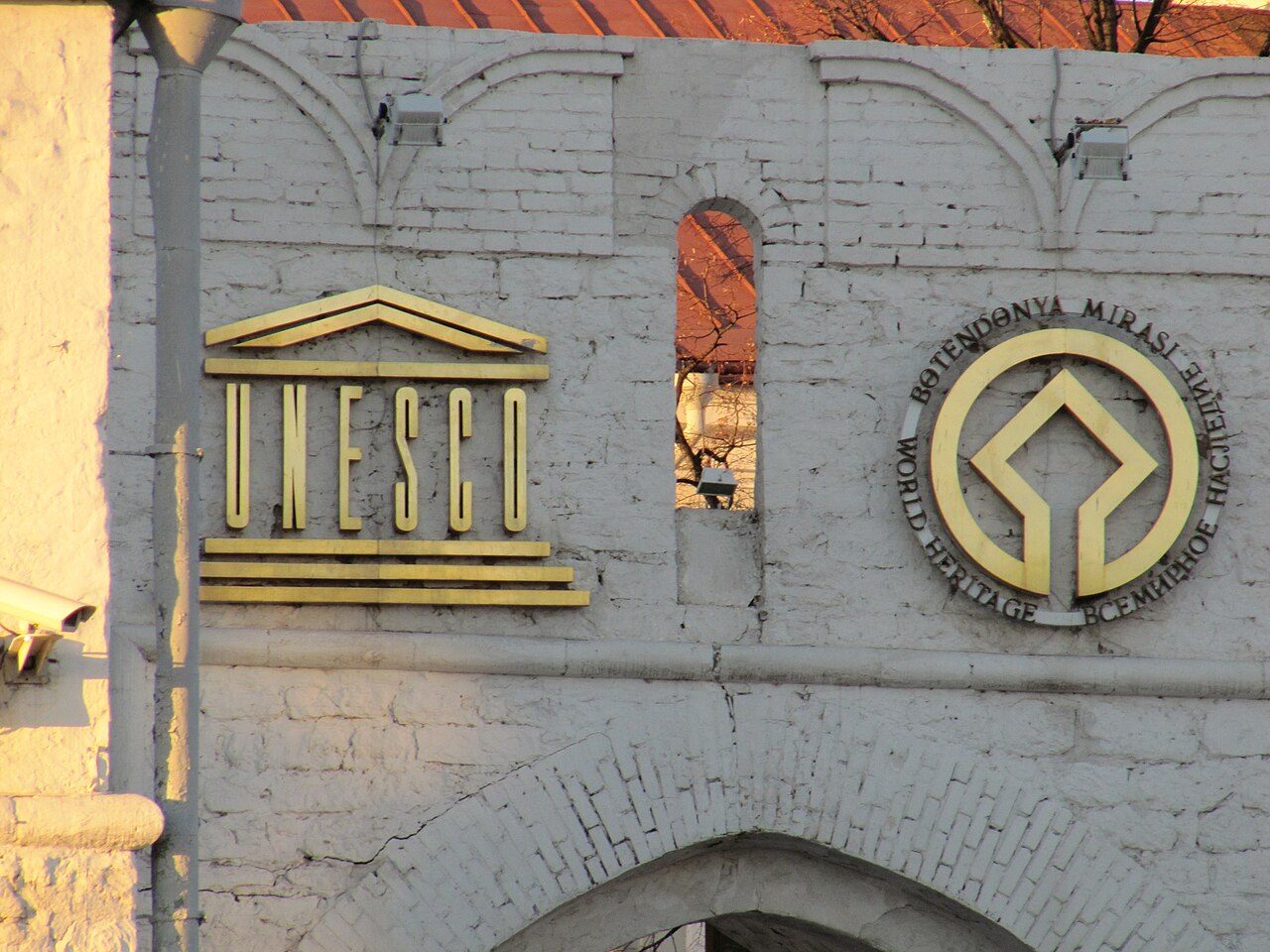
The Kazan Kremlin’s story is the Volga’s own: the Bulgar and Golden Horde centuries, the khanate born from the Horde’s wreck, the terrible siege of 1552 when Ivan the Terrible took the city and changed Russia’s nature forever, the imperial rebuilding with its cathedrals and the palace by the Grand Kremlin Palace’s own architect, and the modern revival that returned the mosque to the fortress and UNESCO’s seal to the walls.
This guide climbs the hill in order: the khans’ Kazan and its fall, the legends of Queen Soyembika and her tower, Thon’s Governor’s Palace on the khans’ foundations, the Annunciation Cathedral and the Kul Sharif mosque facing each other across the citadel, the fortress’s imperial and Soviet centuries, and the practical details of visiting the capital of Tatarstan’s World Heritage heart.
- From Bulgar Traders to the Horde
- The Khanate of Kazan
- The Siege of 1552
- Queen Soyembika’s Story
- The Leaning Tower
- Building the White Fortress
- The Annunciation Cathedral
- Thon’s Governor’s Palace
- The Palace Church and the Khans’ Court
- Imperial Kazan on the Hill
- Soviet Fortress, Tatar Capital
- The Return of Kul Sharif
- The Presidents’ Hill Today
- Watch the Kazan Kremlin on Film
- Visiting the Kazan Kremlin Today
- Palaces Nearby
From Bulgar Traders to the Horde
Kazan’s hill entered history as a northern outpost of Volga Bulgaria, the Muslim trading state that had ruled the river’s middle reaches since accepting Islam in 922, a generation before Kievan Rus chose Christianity. Archaeology in the Kremlin has pushed the settlement’s origins back toward the year 1000, a dating the city celebrated with its controversial millennium in 2005, and the oldest finds, a Czech coin, Bulgar walls, speak of a crossroads from the start.
The Mongol storm of the 1230s broke Bulgaria and folded the Volga into the Golden Horde, and Kazan grew as the Horde’s northern emporium, its hill fortified in stone by the fourteenth century. When the Horde itself decayed, the Volga’s wealth waited for an heir; it arrived in 1438, by most accounts, when Ulugh Muhammad, a dispossessed khan of the Horde’s ruling line, seized Kazan and made it a throne.
The new khanate inherited three worlds at once: Bulgar Islam and commerce, Horde statecraft and legitimacy, and the fur-bearing north’s tribute network. Its capital’s fortress, the Kerman, crowned the hill where the Kremlin now stands, with the khans’ palace, stone mosques, and mausoleums at the summit, the lost city whose foundations sleep, excavated and reburied, beneath the present palace’s lawns.
The Khanate of Kazan
For a century the khanate was Moscow’s equal and obsession. The two states’ wars and alliances alternated with dynastic intrigue, Moscow backing candidate khans, Crimea backing rivals, because Kazan commanded the Volga road to the Caspian and the east’s trade; the city’s great fair drew merchants from Persia and Muscovy alike, and its slave markets, stocked by raids into Russian lands, supplied the misery that Russian chronicles never forgot nor exaggerated less.
Within its walls the capital flourished: the khans’ court kept chanceries in Tatar and diplomatic correspondence across Eurasia, stone mosques and madrasas crowned the hill, among them the eight-minaret mosque tradition names for the scholar Kul Sharif, and poets wrote in the Volga Turki that Tatar literature counts as its classical tongue. The khanate’s society, Muslim Tatars ruling a mosaic of Chuvash, Mari, Udmurt, and Mordvin tributaries, prefigured the multiethnic Volga that Russia would inherit.
The end approached through the 1540s as Moscow’s new tsar, Ivan IV, tired of the seesaw: two failed campaigns taught him method, and in 1551 his engineers built the fortress of Sviyazhsk on an island upstream in four weeks, from timbers prefabricated near Uglich and floated down the Volga, a base from which the final blow could be organized. The khanate’s factions, pro-Moscow and pro-Crimea, tore at each other while the tsar’s army gathered; the last khan, young Yadegar Muhammad, came to the throne of a city already besieged by geography.
The Siege of 1552
In August 1552 Ivan the Terrible closed on Kazan with perhaps a hundred and fifty thousand men and the age’s best siege train. The defense was ferocious: sorties from the gates, cavalry raids on the Russian rear from the forests, and the walls’ guns answering the tsar’s batteries for six weeks, while Russian engineers, led by the Englishman-trained Ivan Vyrodkov, drove mines under the walls and raised a mobile siege tower above them.
The mines decided it. On 2 October 1552, after a final demand for surrender was refused, powder charges brought down stretches of wall by the Arsk and Nogai gates, and the storm poured in; the defenders fought through the streets to the khan’s palace and the mosque on the hill, where the scholar Kul Sharif, tradition holds, died fighting with his students. By evening the city was the tsar’s, its male defenders largely slaughtered, the khan a captive, the mosques fired.
The fall of Kazan is one of history’s hinge dates. It was Moscow’s first conquest of a foreign, non-Christian state, the step that turned a Russian tsardom into a Eurasian empire; Astrakhan followed in 1556, Siberia within a generation, and the double-headed eagle acquired its eastern meaning. For the Tatars it is the national catastrophe remembered each October; for the fortress on the hill it meant rebirth in another image, white, Orthodox, and imperial.
Queen Soyembika’s Story
The khanate’s fall has a heroine, and she was real. Soyembika, a Nogai princess married into Kazan’s throne three times over by the era’s brutal dynastic arithmetic, ruled the khanate as regent for her small son Utyamish from 1549 to 1551, the only woman to govern Kazan, organizing its defense diplomacy while Moscow’s pressure closed. In 1551 the pro-Moscow faction surrendered her and the boy to the tsar as the price of truce; mother and son went north to gilded captivity, Utyamish to baptism and an early grave, Soyembika to a forced remarriage and historical silence.
Legend refused the archive’s ending. In the folk telling, Ivan the Terrible demanded the beautiful queen’s hand; she set the condition of a tower built in seven days, and when the seven-tiered tower stood on the seventh evening, she climbed it, looked once over her city, and threw herself from the summit rather than belong to the conqueror. The tale is history’s reverse, the tower is later, the marriage demand invented, and it is truer than the facts in the way that matters: it preserves the catastrophe’s grief in one image.
Soyembika became the Volga’s shared heroine, Tatar laments, Russian romantic poems, operas and ballets, and her name attached itself permanently to the fortress’s strangest building, the leaning tower by the Governor’s Palace, so that the khans’ site keeps, against all the rebuilding, a woman’s name at its heart. Modern Kazan has returned her to honor deliberately; the queen who lost everything now titles the skyline.
The Leaning Tower
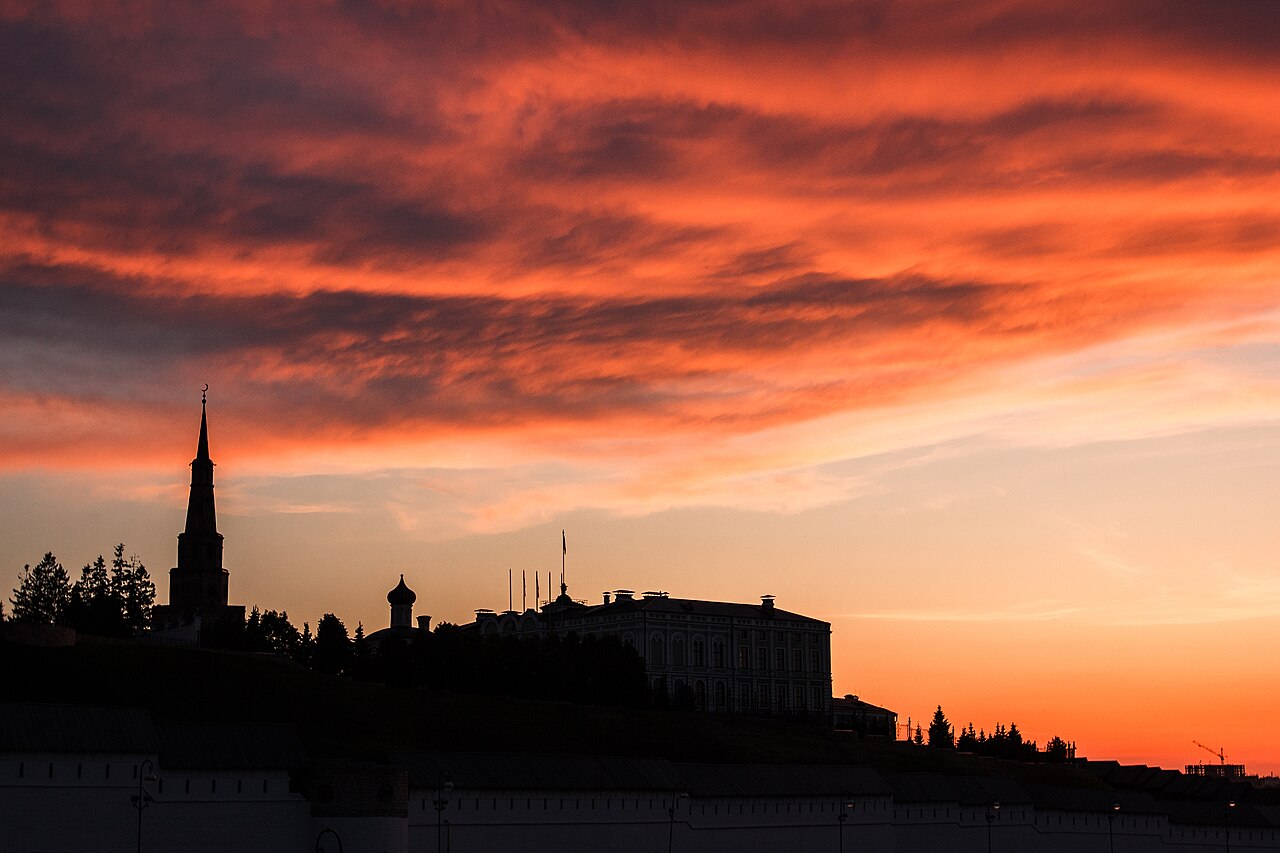
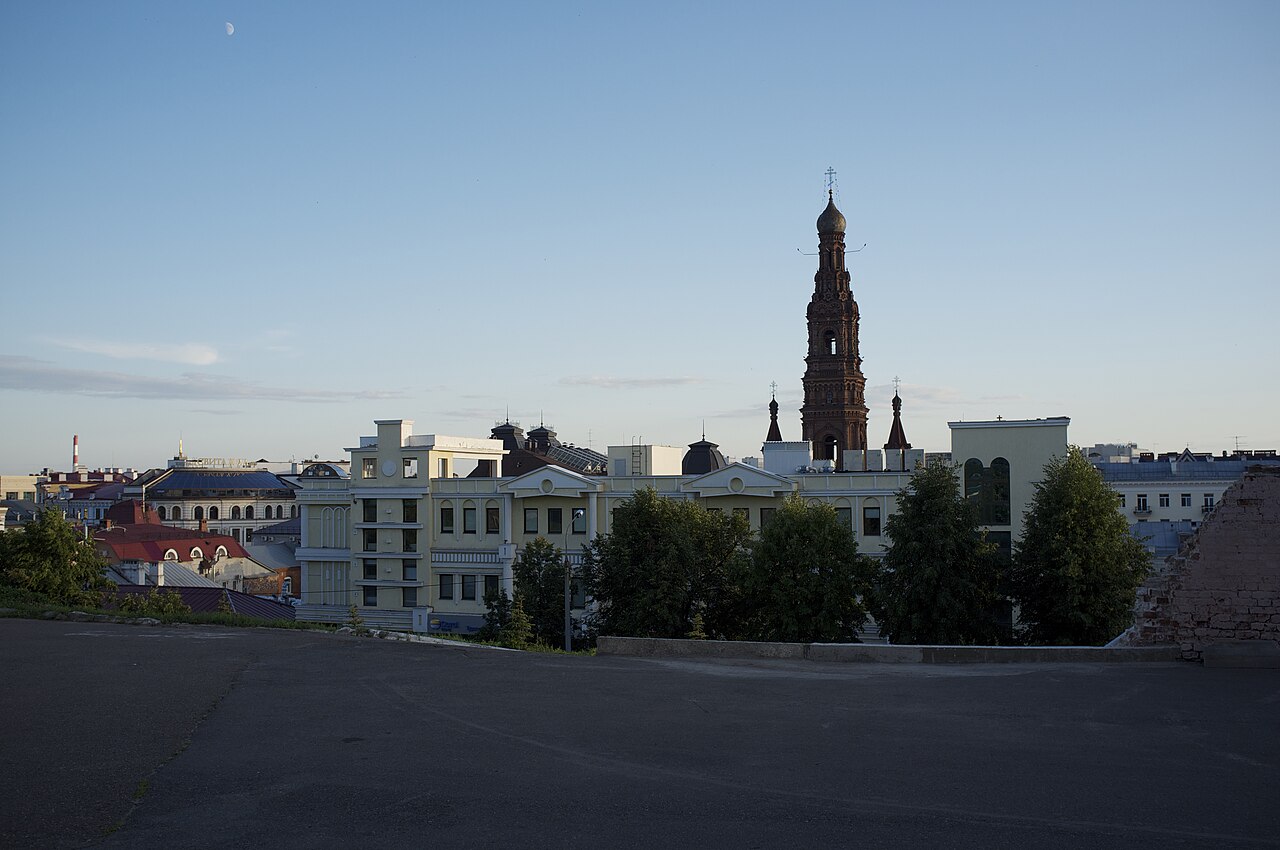
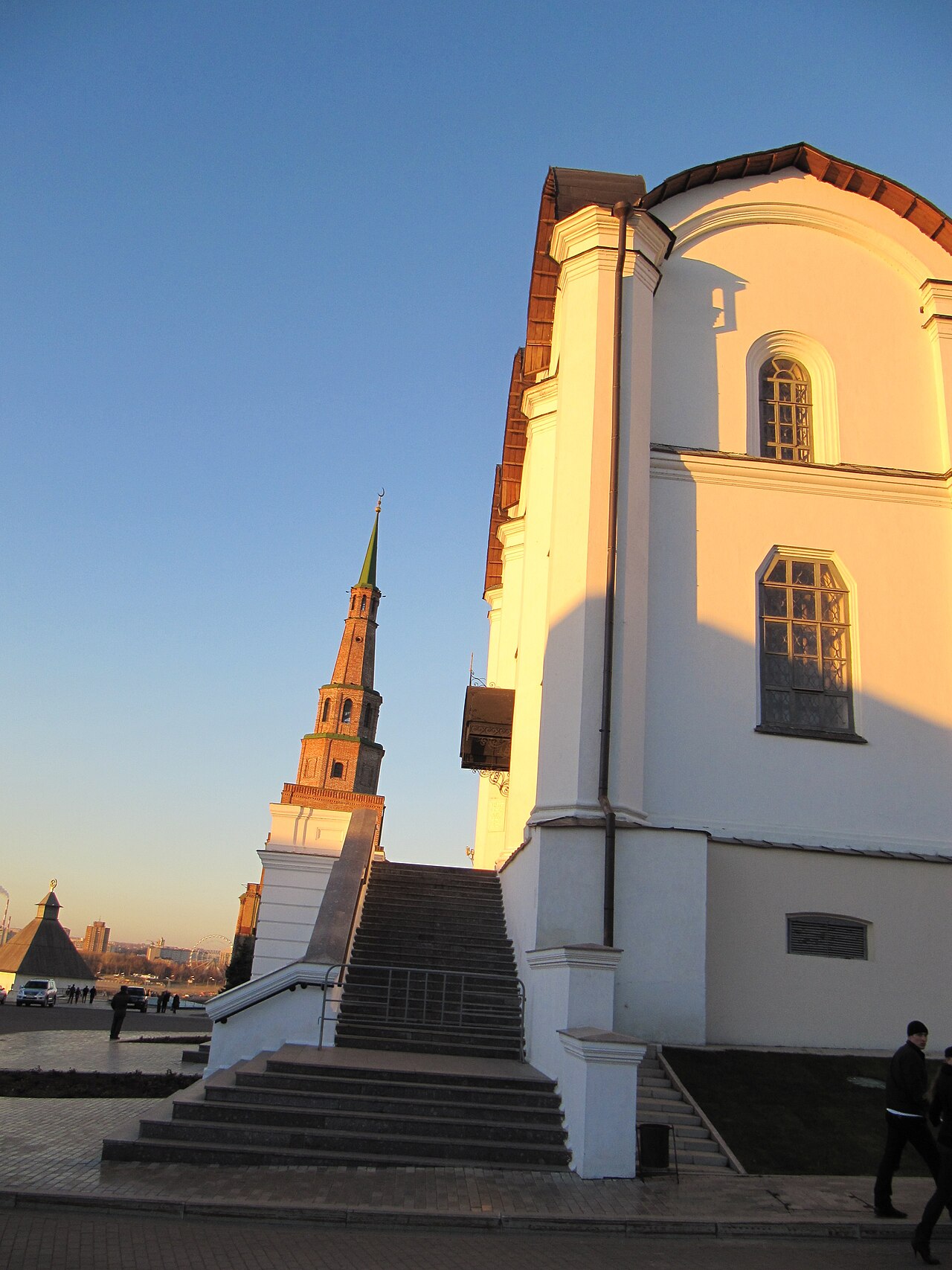
The Soyembika Tower is Kazan’s emblem and enigma: seven diminishing tiers of dark brick, fifty-eight meters tall, standing beside the Governor’s Palace on the citadel’s crown, and leaning, nearly two meters out of true at the spire, a tilt acquired from the khans’ cultural layer compressing beneath its foundations and arrested by engineers in the twentieth century with a steel corset at its base.
Its birth date is a genuine scholarly quarrel: no document records the building, and arguments run from a surviving khanate watchtower, the romantic minority view, through Ivan’s military engineers in the 1550s, to the prevailing dating around the turn of the eighteenth century as the gate tower of the governor’s compound, its form cousin to Moscow’s Kazan Station tower, which borrowed it back. The tower keeps its counsel; the void in the archives is itself a relic of how thoroughly the conquest erased the hill’s Tatar records.
Function it had plenty: gate to the palace court, watchtower over the rivers’ junction, and, in the imperial centuries, the fortress’s recognized silhouette on every engraving. Today the gilded crescent restored to its spire in 1993 marks it as the Tatar monument of the ensemble, the leaning counterweight to the cathedral’s gold, and the spot below it is where every Kazan visit’s photographs are taken, the queen’s tower holding its impossible angle over the presidents’ lawn.
Building the White Fortress
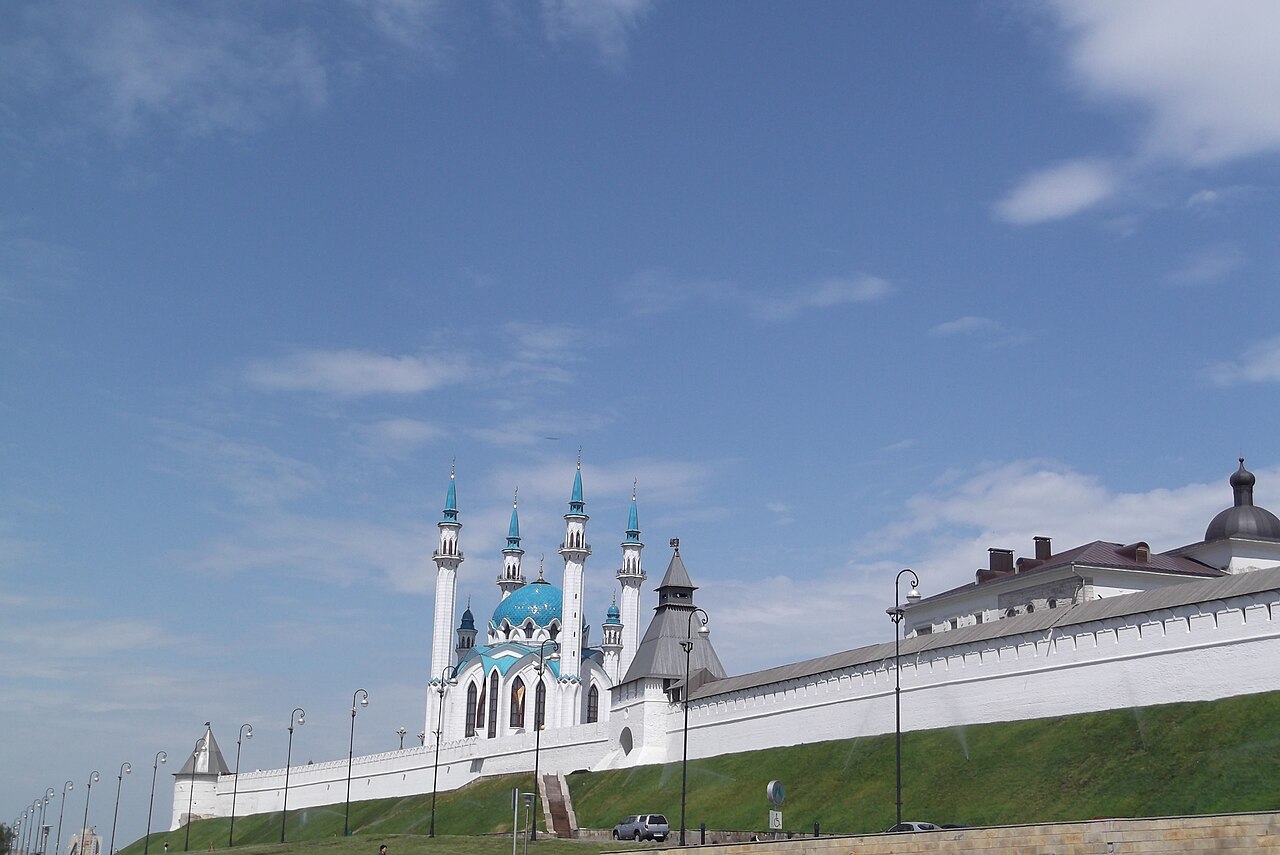
The conquered hill was refortified almost at once, and by masters whose work Russia still walks on: in 1556 Ivan sent the Pskov builders Postnik Yakovlev, named in the chronicles as a maker of St Basil’s on Red Square, and Ivan Shiryai to raise Kazan’s new kremlin. They built in white limestone where the khans had mixed stone and oak, tracing the old perimeter wider, with thirteen towers, of which eight survive, and the Spasskaya gate tower facing the town as the fortress’s face.
The Pskov masters’ walls, thickened and heightened in brick across the seventeenth and eighteenth centuries, enclose a citadel of eight and a half hectares that has never since been taken by storm, though it was tried: the fortress held through the peasant wars, most dramatically in July 1774, when Pugachev’s rebel army burned Kazan around it and battered the gates while the garrison and refugees held out until relief, the last time the white walls fought for their lives.
Within the walls the conquerors built their statement: cathedrals and monasteries on the mosque sites, the bishop’s and commanders’ courts on the khans’, administrative chanceries for the new Volga province, erasure as architecture, the standard grammar of conquest everywhere. Yet the hill kept its memory in names, legends, and layers, and the modern ensemble’s UNESCO citation honors exactly that: a fortress where the erasure and the survival are both legible.
The Annunciation Cathedral
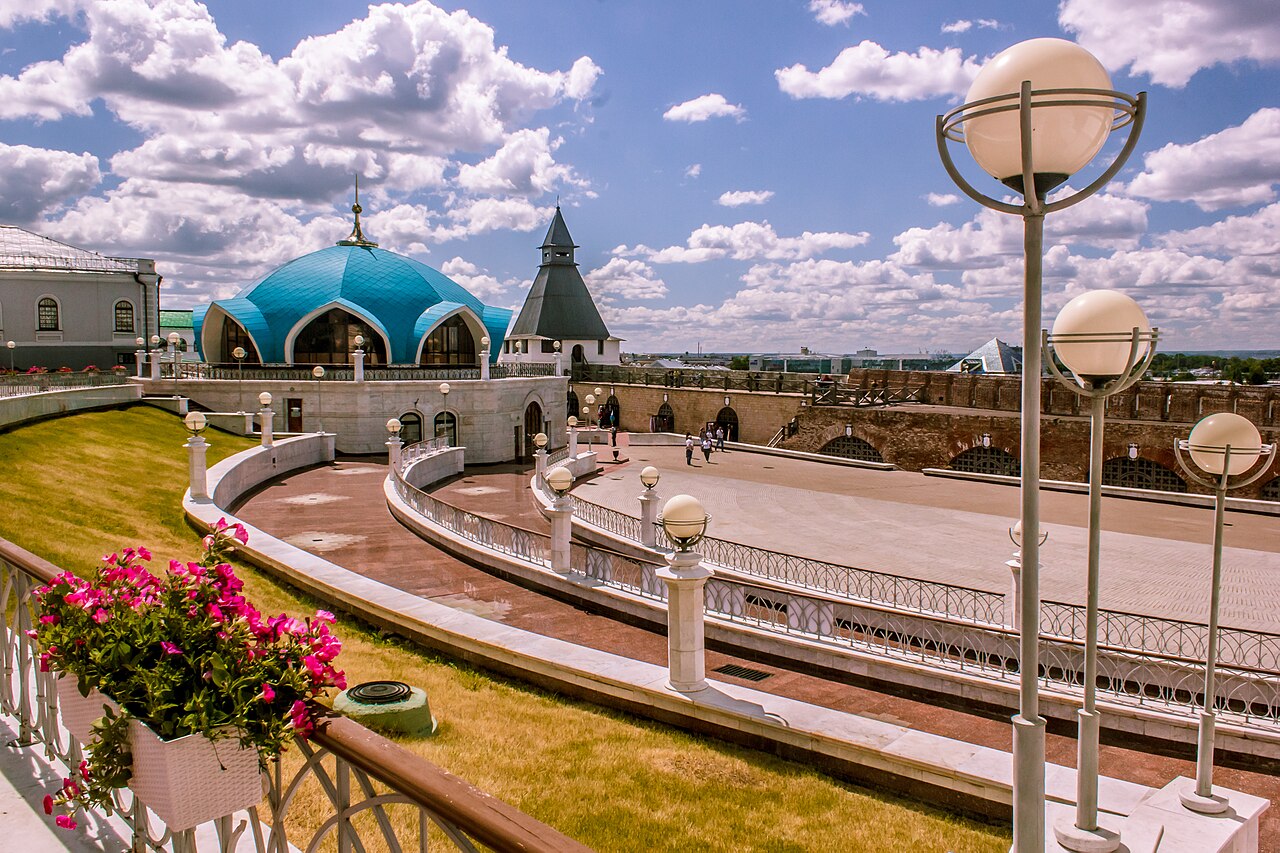
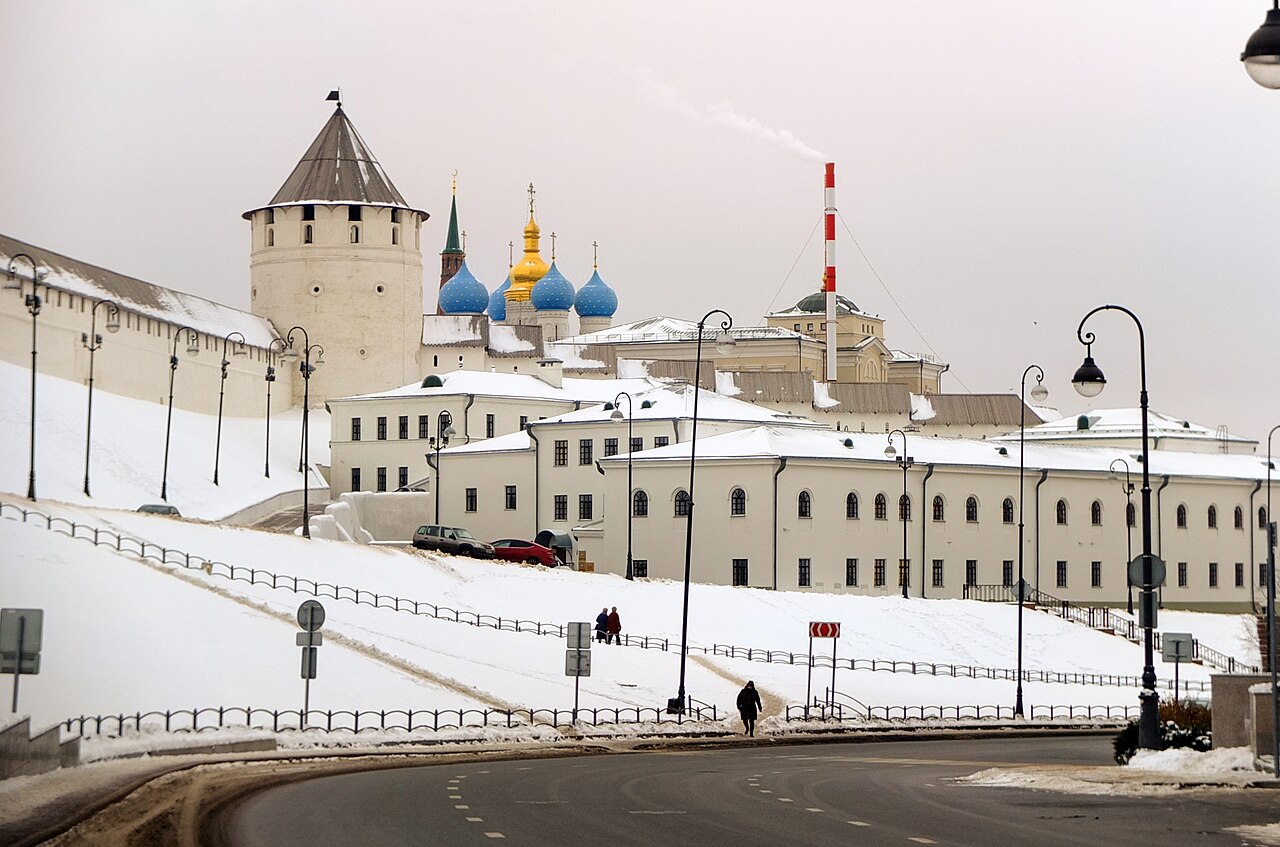
The fortress’s senior building is the Annunciation Cathedral, founded by the same Pskov masters in 1556 to 1562 as the conquest’s votive church and the Volga’s first great Orthodox cathedral: five domes over white stone, Pskov’s arcaded apses meeting Moscow’s cross-domed plan, with a helmeted central cupola now sky-blue and gold-starred, the whole enlarged through four centuries into the ensemble’s gentle giant.
Its history held the empire’s visits and the region’s conversions, its sacristy the famous Kazan icons; here served Kazan’s bishops from Gury, the first, whose cell and relics remain, through the centuries when the see ran missionary Christianity across the Volga’s peoples. Soviet power closed and gutted the cathedral in the 1920s, its bell tower, where a nineteen-ton bell had hung, demolished; the building survived as an archive.
Restoration returned it to worship and splendor in 2005 for the millennium, frescoes cleaned, iconostasis rebuilt, and the cathedral now shares the citadel’s skyline on equal terms with the new mosque, the pairing that defines modern Kazan’s self-presentation: the conquest’s church and the conquered’s answer standing in one walled garden, both full on their festivals, a coexistence the hill took four and a half centuries to compose.
Thon’s Governor’s Palace
The Governor’s Palace crowns the citadel’s northern height, exactly where the khans’ palace stood and the medieval sources place the court’s mosques and mausoleums, a succession the nineteenth century chose consciously: when Nicholas I ordered a new governor’s residence after his 1836 visit, the project went to Konstantin Thon, architect of Moscow’s Grand Kremlin Palace, and the Kazan building, raised 1845 to 1848 under the local architect’s supervision, is the Moscow palace’s Volga sibling in miniature.
Thon composed in his imperial Russo-Byzantine manner: two stories of ochre and white, paired arched windows under carved frames, a central porch under the double eagle, with the state rooms, white hall, reception suites, on the upper floor and the governor’s household below, the whole linked by a gallery to the adjacent palace church. Before it spread the parade court with the Soyembika Tower as its gate, old enigma serving new order.
The palace housed the Kazan governors, the tsar’s viceroys over the middle Volga, until 1917, receiving the dynasty’s visits, Alexander II as heir had lodged on the hill with his tutor the poet Zhukovsky, and running an administration that governed more subjects than most European kingdoms. Its rooms’ imperial century ended in the revolution’s chaos, when the fortress changed hands in the civil war’s Volga campaigns, Lenin’s own brotherless family history and Kazan university’s radical tradition supplying the era’s local ironies.
The Palace Church and the Khans’ Court
Beside the palace stands the Palace Church, a seventeenth-to-eighteenth-century building on older foundations, linked to the residence by Thon’s gallery, which served the governors as house church and the fortress as a parish; deconsecrated under the Soviets and long a museum store, it now houses exhibitions, its interior a quiet documentation point for the hill’s deepest layer, because beneath and around it archaeology found the khanate’s court.
The excavations of the 1970s through 2000s, which underpinned the UNESCO listing and the millennium dating, uncovered along the palace terrace the remains of the khans’ complex: foundations read as the palace and its mosque, and mausoleums whose burials included, by forensic argument, khans of the fifteenth century, reburied now with Muslim rites in a marked crypt by the Soyembika Tower, the conquered dynasty returned to its hill after four hundred years in the ground as evidence.
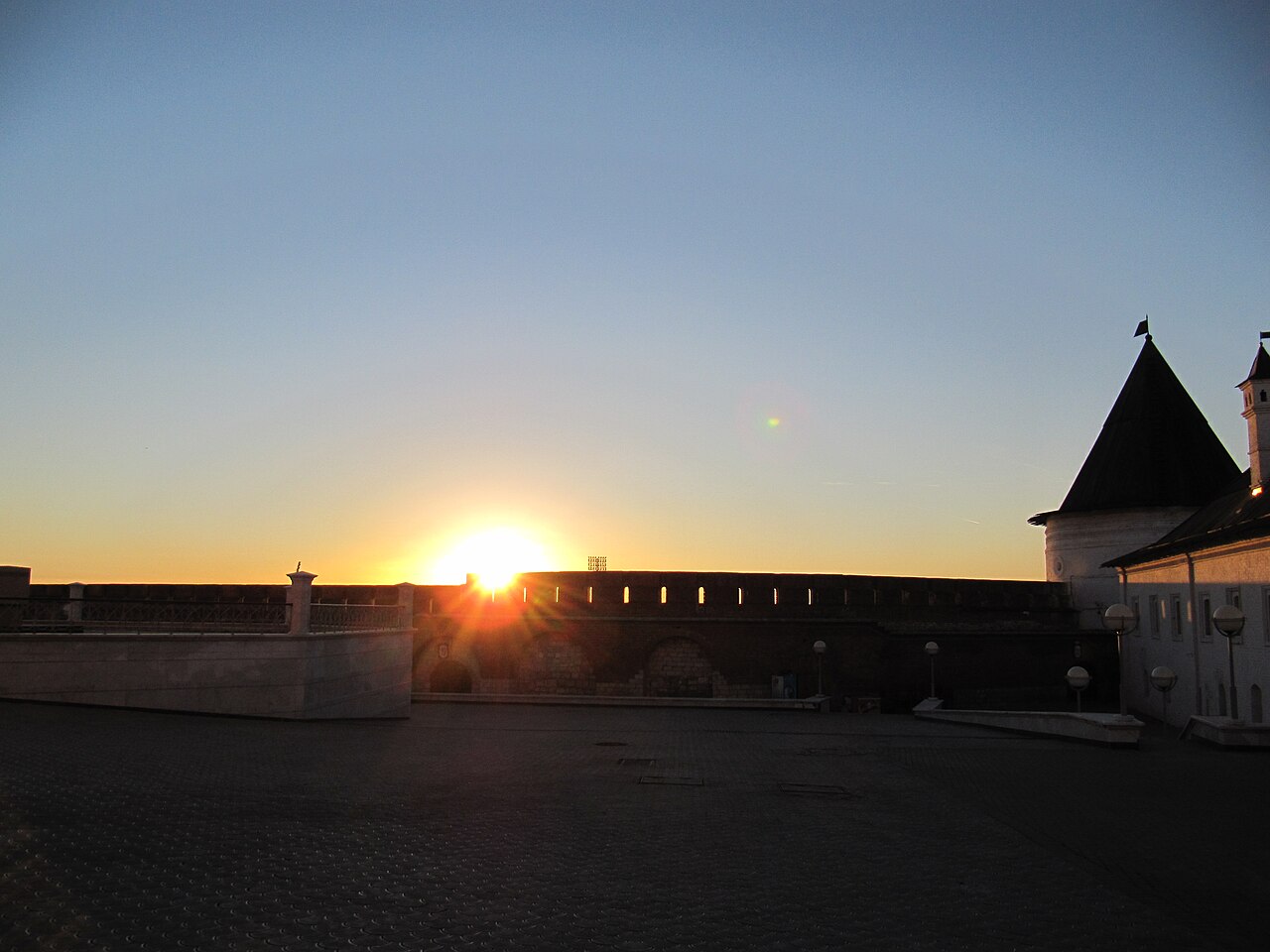
The ensemble thus achieves, at its crown, an honesty rare in victorious fortresses: the governor’s residence, the leaning tower, the church, and the khans’ marked graves stand in one courtyard, succession displayed rather than smoothed over. The spot repays slow attention; most visitors photograph the tower and pass, and the courtyard’s layered quiet belongs to those who stay the extra ten minutes.
Imperial Kazan on the Hill
Through the empire’s centuries the fortress ran the Volga: the governors’ chancelleries, the garrison, the cadet corps in the former bishops’ buildings, the public offices built along the citadel’s spine, while the university city below grew into the east’s intellectual capital, Lobachevsky’s geometry, Tolstoy’s and Lenin’s student years, the Tatar enlightenment’s printing houses, Kazan’s double culture maturing under the hill’s shadow.
The fortress’s imperial visitors marked its calendar: Catherine the Great arrived by Volga galley in 1767, charmed the city, famously allowed the building of stone mosques again, the Marcani mosque below the hill dates from her permission, and took away the little carriage Kazan still displays; Pushkin came in 1833 hunting Pugachev materials; emperors reviewed, inspected, and lodged on the hill down to the last reign.
The century’s end brought the rails and the river steamers, Kazan’s merchant boom, and the hill’s quiet aging into administrative routine, photographs of 1900 showing the ensemble essentially as the empire would leave it: white walls, cathedral gold, the leaning tower over the governor’s ochre palace, a provincial Acropolis unaware that the province was about to become, twice over, a capital.
Soviet Fortress, Tatar Capital
Revolution and civil war washed over the hill, Kazan taken and retaken in 1918 with the state gold reserve famously passing through the city, and the settlement that followed changed the fortress’s meaning: in 1920 Lenin signed the Tatar autonomous republic into being, and the Kazan Kremlin became the seat of Tatarstan’s government, the khans’ hill returning, under red flags, to Tatar administrative life, with the Governor’s Palace housing the republic’s presidium.
The Soviet decades subtracted and preserved in the usual proportions: churches closed, the cathedral’s bell tower and the fortress’s monastery lost, museums and offices filling the rest, while listed-monument status from 1950s onward kept the walls and towers under restoration rather than neglect; the leaning tower got its structural rescue, and the ensemble entered the 1990s shabby but whole.
The union’s end made the hill a stage again: Tatarstan’s sovereignty politics of the early 1990s ran their rallies and treaties in the Kremlin’s shadow, the republic’s distinctive federation treaty of 1994 was argued over the Governor’s Palace’s tables, and the decision that defined the ensemble’s future was taken in 1995, to return a great mosque to the fortress, four and a half centuries after the last one burned.
The Return of Kul Sharif
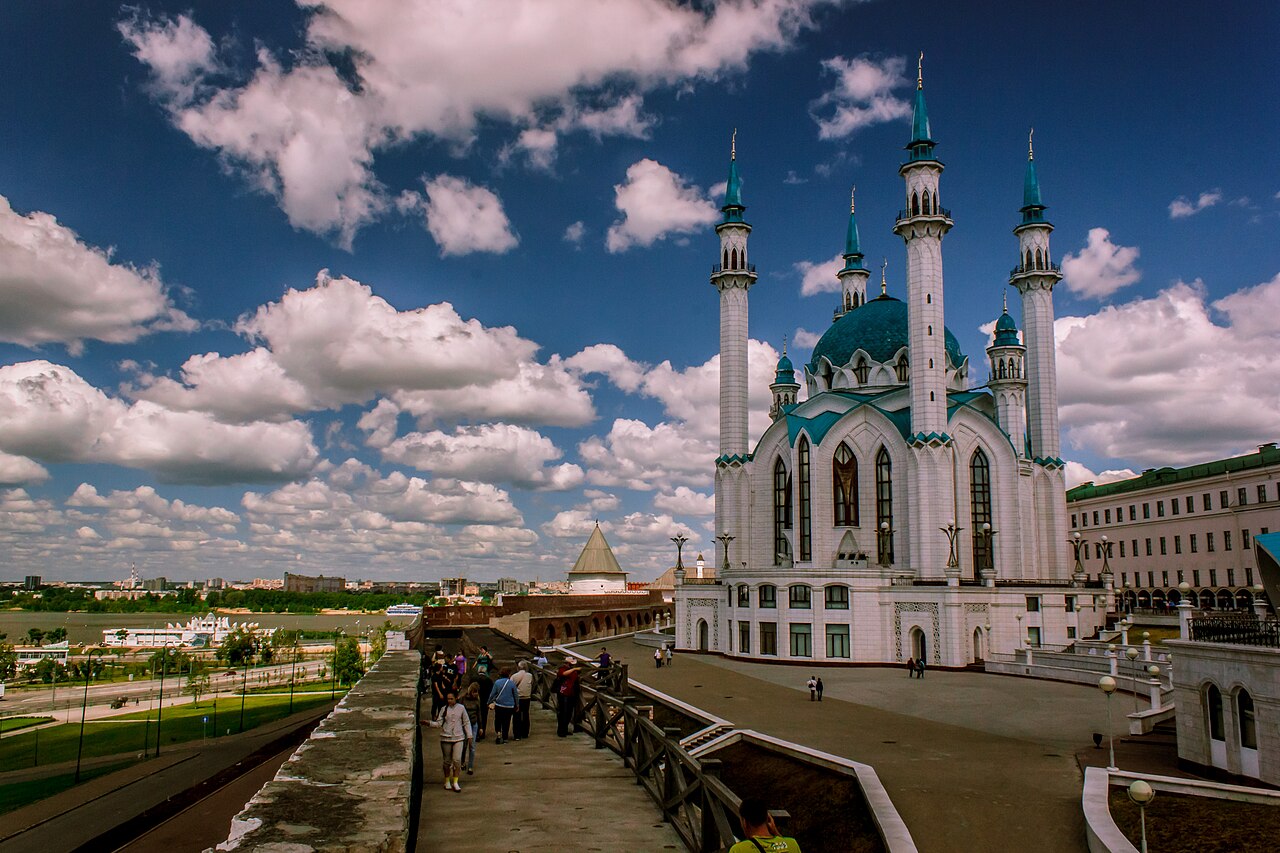
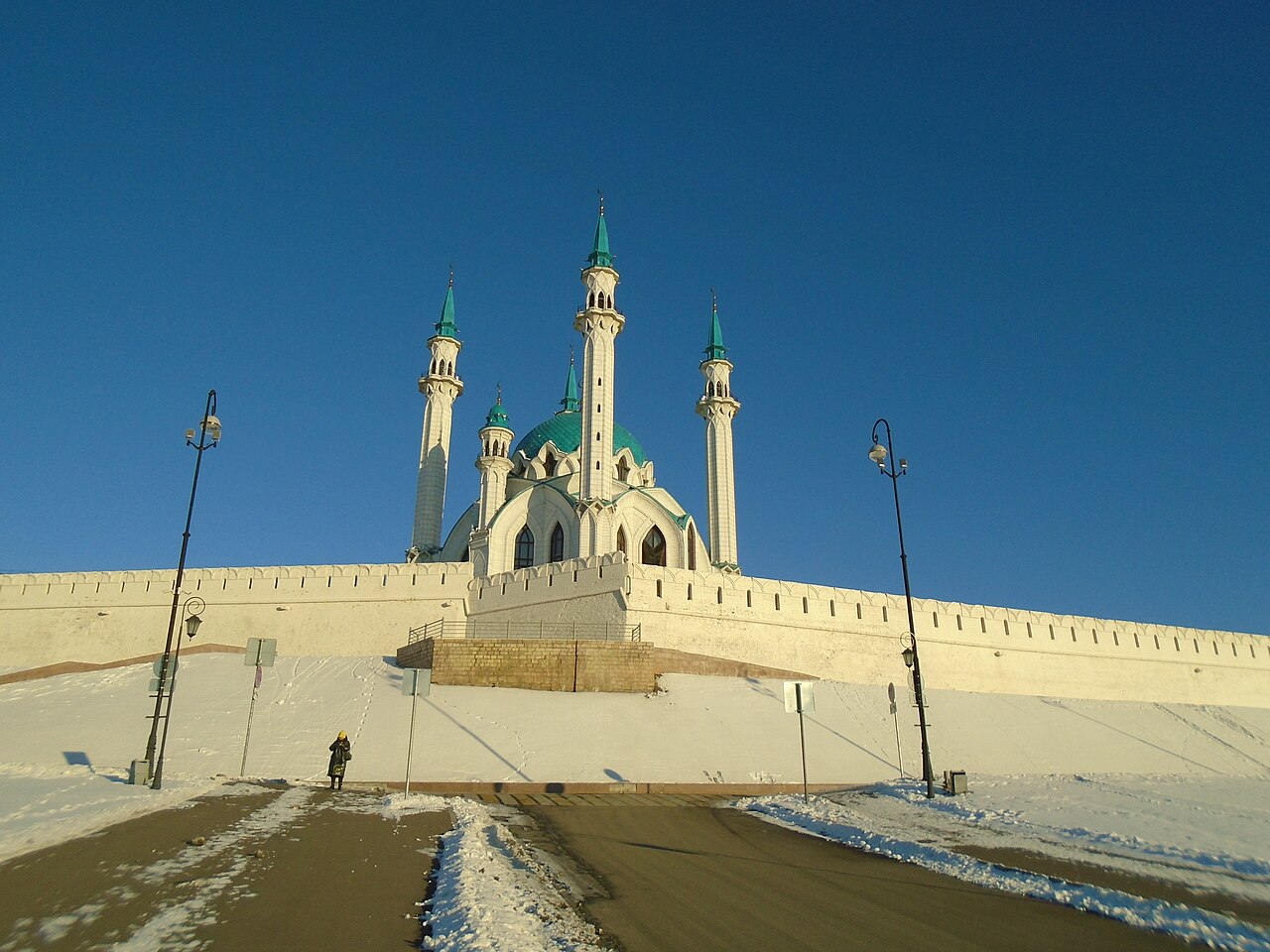
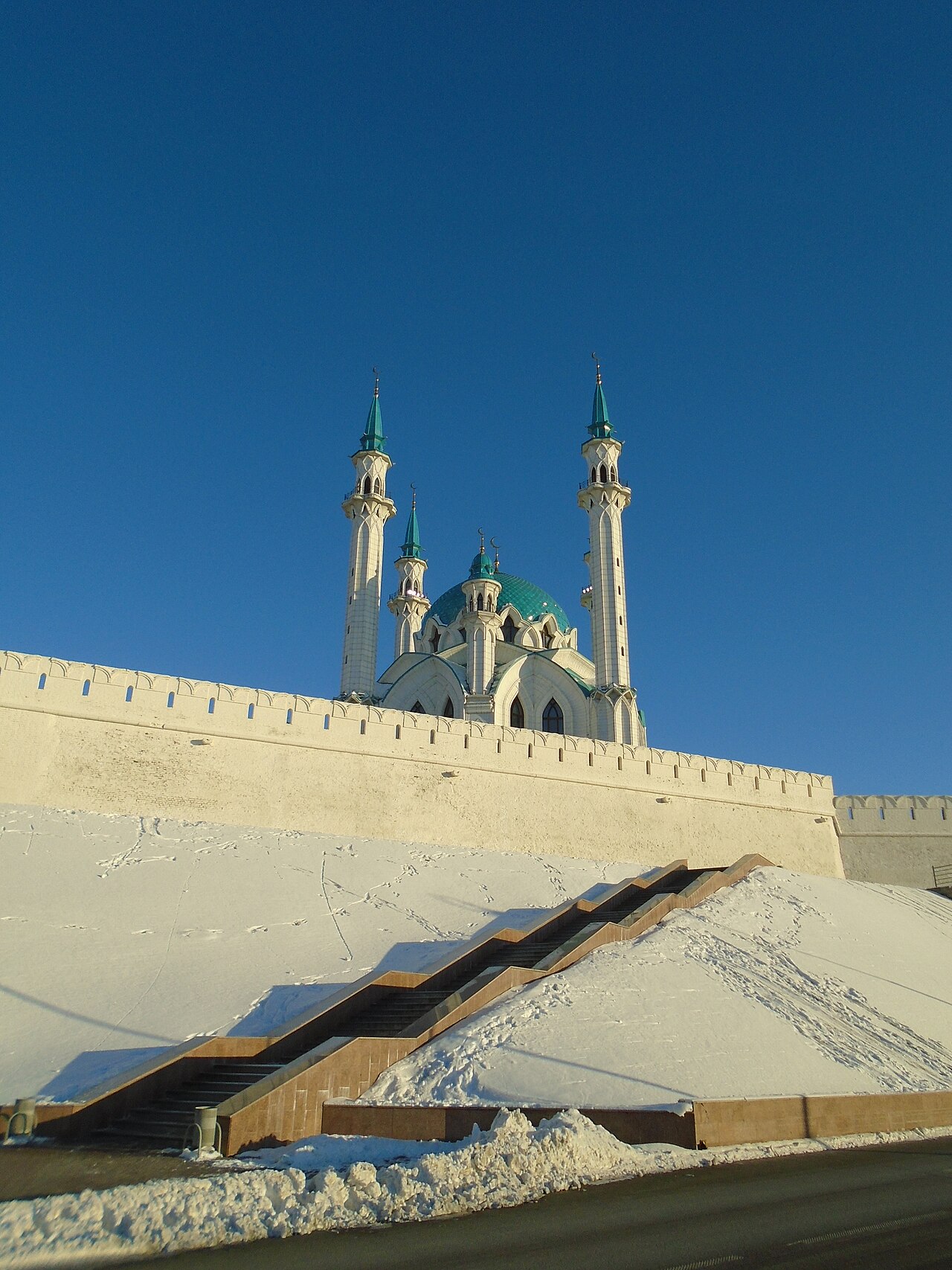
The Kul Sharif mosque, built 1996 to 2005 and opened for the millennium, is the modern ensemble’s statement: four principal minarets of fifty-eight meters, the Soyembika Tower’s height exactly, around a dome of turquoise and white, the whole in granite and marble with glass walls lifting light into a prayer hall for fifteen hundred, its name honoring the scholar who died defending the old mosque in 1552, its site chosen within the citadel as the reply to the cathedral’s five domes.
Funding came as a national subscription, tens of thousands of donors recorded in the mosque’s books, and the building carries, beside worship, a museum of Islam on the Volga, so the fortress now teaches its whole story under both its domes. Architectural opinion argues about the mosque as it argues about every reply to history; the city’s opinion was settled by the first Ramadan crowds.
The ensemble’s 2000 UNESCO listing, confirmed as the mosque rose, recognized precisely this completed dialogue: a citadel holding the continuous record of Horde fortress, khanate capital, imperial conquest, and modern reconciliation, the only such sequence surviving anywhere. Evening light does the argument’s summary: cathedral gold and mosque turquoise answering each other over the white walls, with the dark tower leaning between them.
The Presidents’ Hill Today
The Governor’s Palace serves today as the official residence of the head, long titled president, of the Republic of Tatarstan, flag flying over Thon’s porch, honor guard at the court, the khans’ site housing its third sovereignty; the working residence closes the palace’s interiors to casual visits, with the courtyard, tower, church exhibitions, and the khans’ mausoleum crypt viewable, and the ensemble around them fully public.
The fortress earns its keep as Tatarstan’s front parlor: state guests walk the Spasskaya-to-palace route, the republic’s ceremonies fill the cathedral square, and the museums, Hermitage-Kazan’s exhibition center, the natural history and Islam museums, the artillery court, keep the citadel busy year-round, with the city’s million-plus and its tourism boom flowing through the gates in numbers the governors never imagined.
For the visitor the hill’s lesson assembles itself on the northern belvedere behind the palace, where the Kazanka’s junction with the Volga spreads below: every power that held this view, Bulgar, Horde, khanate, empire, union, republic, chose the same hundred meters of hill for its house, and the present palace is simply the latest sentence in the Volga’s longest-running paragraph about power and place.
Watch the Kazan Kremlin on Film
Visiting the Kazan Kremlin Today
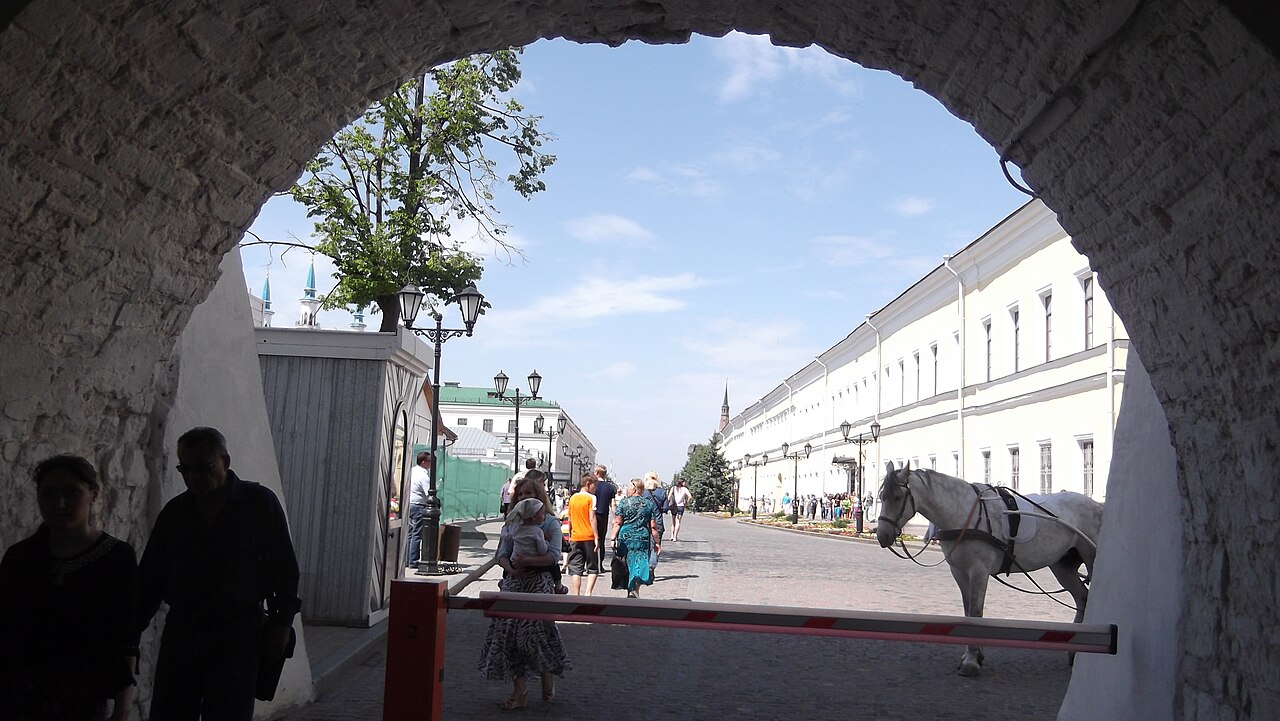
The Kazan Kremlin crowns central Kazan, the capital of Tatarstan on the Volga, with the Kremlevskaya metro station at its gates, the railway station a short walk below, and direct flights and trains linking Kazan with Moscow overnight. The fortress grounds are open daily and free, entered through the Spasskaya or Taynitskaya towers; the Kul Sharif mosque, Annunciation Cathedral, and the museums keep individual hours with modest tickets, and the Governor’s Palace itself, as Tatarstan’s working residence, is viewed from its courtyard rather than entered. Allow half a day for the citadel and its views, adding the Bauman street promenade and the old Tatar quarter below for the city’s full double portrait; evening illumination makes a second, shorter visit worthwhile. You can find the palace on the map here: Kazan Kremlin on Google Maps.
Palaces Nearby
You May Like
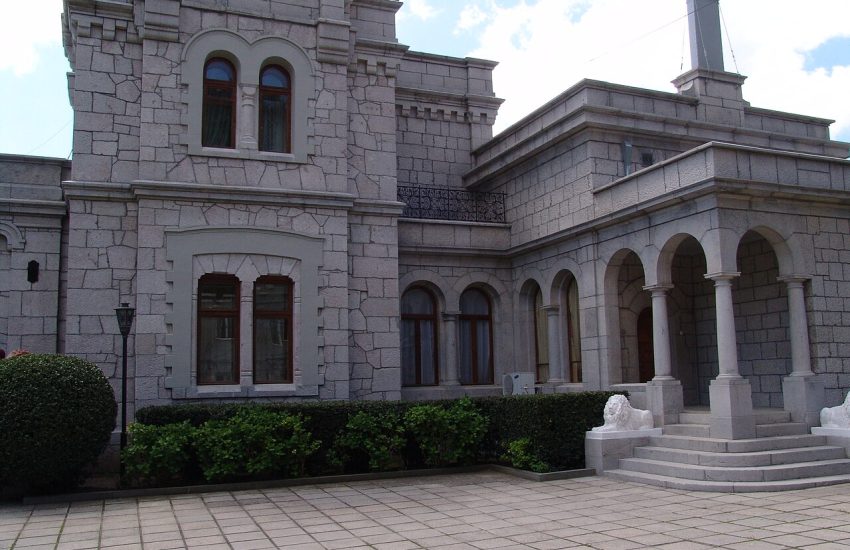
The Yusupov Palace at Koreiz and the Secrets of the Black Sea Coast