On the low shore of Lake Nero, two hundred kilometers northeast of Moscow, stands what may be the most photogenic fortress in Russia: a walled city of silver-scaled domes, tent-roofed towers, and arcaded galleries rising straight from the reeds, so perfectly the image of old Muscovy that when Soviet filmmakers needed Ivan the Terrible’s Moscow for the beloved comedy Ivan Vasilievich Changes Profession, they came here. The Rostov Kremlin is not, strictly, a kremlin at all: it never defended anything, and that is the best part of its story.
The ensemble was built in one generation, the 1670s and 1680s, by one extraordinary man: Jonah Sysoevich, metropolitan of Rostov, a peasant’s son risen to the church’s highest circle, who poured his vast see’s wealth into a residence that was really an argument, a vision of the heavenly city made in brick on the lake shore, raised at exactly the moment history was leaving both Rostov and the old Russia it stood for behind.
This guide tells the whole story of the metropolitan’s dream: ancient Rostov the Great and its place among Russia’s oldest cities, Jonah’s rise and his patron Nikon’s fall, the fortress that is a palace that is a sermon, the famous bells of Rostov that composers traveled to hear, the near-death of the ensemble in the age of neglect and the tornado of 1953, the film that made its towers immortal, and the practical details of a visit to the Golden Ring’s crown jewel.
- Rostov the Great
- The Richest See in Russia
- Jonah Sysoevich’s Rise
- The Shadow of Patriarch Nikon
- Building the Dream
- Walls That Never Fought
- Inside the Metropolitan’s Court
- The Gate Churches and Their Frescoes
- The Bells of Rostov
- Decline and Rescue
- The Tornado of 1953
- Ivan Vasilievich’s Kremlin
- The Lake and the Town
- Watch the Rostov Kremlin on Film
- Visiting the Rostov Kremlin Today
- Palaces Nearby
Rostov the Great
Rostov carries the epithet Veliky, the Great, by right of age: the chronicle mentions it under the year 862, in the very first entry of Russian recorded history, which makes the town on Lake Nero older than Moscow by three centuries and one of the handful of founding places of the Russian state. Through the Kievan age Rostov was a capital, seat of princes and of one of the oldest bishoprics in the land, the church’s base for converting the whole northeast.
The town’s greatness was already memory by the later Middle Ages: Moscow absorbed the principality in the fifteenth century, and Rostov kept only its sanctity, the relics of its sainted bishops, Leonty the missionary martyr among them, drawing pilgrims, and its see’s enormous landed wealth. The pattern, political decline with spiritual splendor, defined everything the visitor sees: Rostov built its masterpiece precisely because it had nothing left to be except holy.
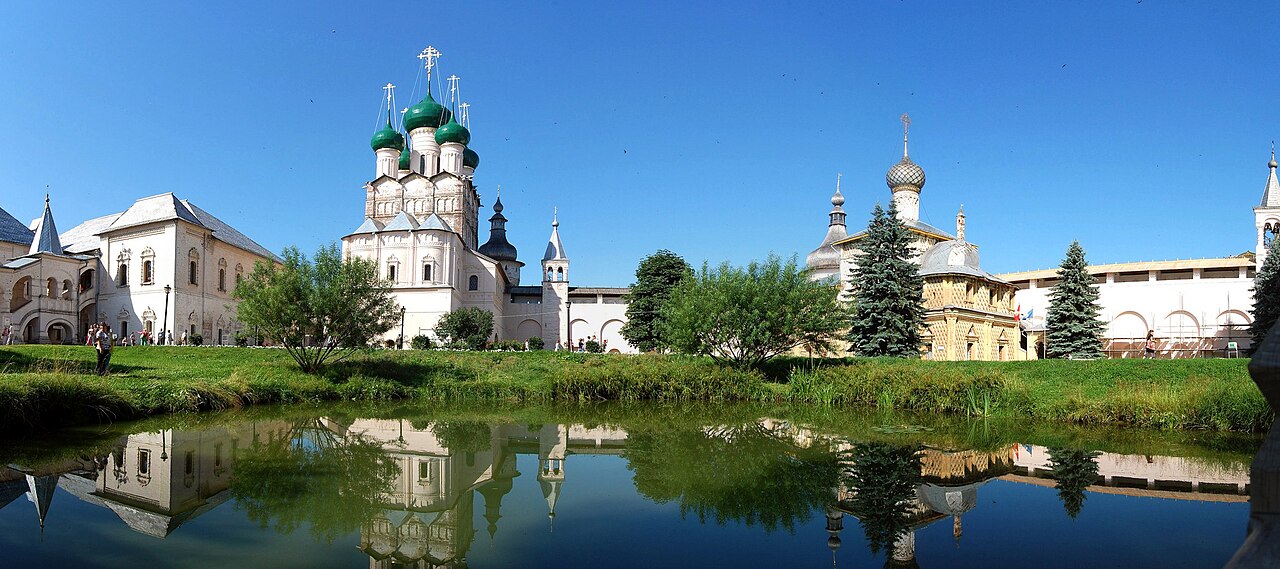
The town’s layout still tells the old story: the earthen ramparts of the seventeenth century ring a grid of low wooden and merchant streets, the lake spreads shallow and enormous to the horizon, and over everything stand the Kremlin’s domes and the separate, older Assumption Cathedral, the fifth church on a site where Rostov has prayed for a thousand years. Nowhere in Russia does deep time lie closer to the surface.
The Richest See in Russia
The Rostov metropolitanate of the seventeenth century was an ecclesiastical principality: tens of thousands of peasant households on church lands, salt works and fisheries, courts and chancelleries of its own, its metropolitan ranking among the first hierarchs of the Russian church. The see’s revenues rivaled great monasteries like the Trinity Lavra, and its cathedral treasury held centuries of princely gifts.
That wealth had a duty attached: the metropolitan’s court was expected to display the church’s majesty, hospitality to pilgrims and tsars alike, and the seventeenth century’s taste ran to magnificence as theology, beauty as the argument for truth. A hierarch of ambition had both the means and the mandate to build; what Rostov’s would build depended on the man.
The century also supplied the anxiety: the church’s crisis decades, the schism tearing the faithful from the official church over Nikon’s reforms, state power pressing on church independence, made visible splendor a weapon in an argument about authority. The Rostov ensemble is incomprehensible without that background hum: it is confidence built against doubt, the old faith’s architecture at its most assured exactly when assurance was cracking.
Jonah Sysoevich’s Rise
Jonah Sysoevich was born around 1607, son of a rural priest, by some accounts of a peasant, in the Rostov lands, and climbed the church’s one open ladder: monastic tonsure, abbacies at local monasteries, and in 1652 the metropolitan’s throne of Rostov, elevated by the new patriarch Nikon, whose favor Jonah enjoyed and whose fate would shape his own. Contemporaries describe energy, administrative gift, and a builder’s passion that bordered on mania.
For a moment Jonah touched the church’s summit: when Nikon abandoned the patriarchal throne in 1658 in his great quarrel with the tsar, Jonah served as keeper of the patriarchate, running the Russian church, until he blundered, in 1664, receiving the returning Nikon’s blessing in Moscow in uncertainty over who was the lawful patriarch, Jonah was reprimanded by the tsar’s council and sent back to his see, his capital career closed.
Historians bless the blunder: banished from church politics, Jonah turned his force and his see’s fortune entirely to building, and for the next quarter century, until his death in 1690, Rostov was the workshop of his vision, the metropolitan’s court rising on the lake, churches across the see’s towns, and the bells he loved cast heavier and heavier. The failed church politician became old Russia’s last great builder-patron.
The Shadow of Patriarch Nikon
The Rostov ensemble’s deep model was Nikon’s idea of the church militant in brick: the patriarch had built his New Jerusalem monastery as a literal image of the holy city, asserting the priesthood’s glory against the tsardom’s, and his protege Jonah carried the program north. The metropolitan’s court at Rostov is a hierarch’s residence built like a city of God, walls and towers framing churches rather than cannon, paradise laid out to plan.
The quarrel behind it had broken Russia: Nikon’s liturgical reforms, the corrected books and the three-finger sign of the cross, split off the Old Believers in the 1650s and 1660s, millions eventually, persecuted for centuries, while Nikon himself fell in 1666, deposed by a church council the tsar steered. The official church emerged doctrinally victorious and politically diminished, the state’s hand ever heavier, Peter’s abolition of the patriarchate one generation away.
Jonah’s Rostov answers that whole storm with serenity: frescoes of the heavenly liturgy, gate churches like entrances to paradise, the lake as the ensemble’s mirror. Art historians read the court as the old Russian church’s conscious summation, built in the knowledge, perhaps, that the world it expressed was passing, which is exactly the quality, confidence edged with elegy, that strikes every attentive visitor on the lake wall at sunset.
Building the Dream
Construction ran through the 1670s and 1680s at a tempo only a hierarch with full coffers could sustain: local masters, the names of Pyotr Dosaev and his brothers survive among the builders, raised the two-hectare court’s walls, eleven towers, five churches, and the residential and service blocks in roughly two decades, with Jonah, the account books show, inspecting mortar and ordering frescoes like a clerk of works in a white cowl.
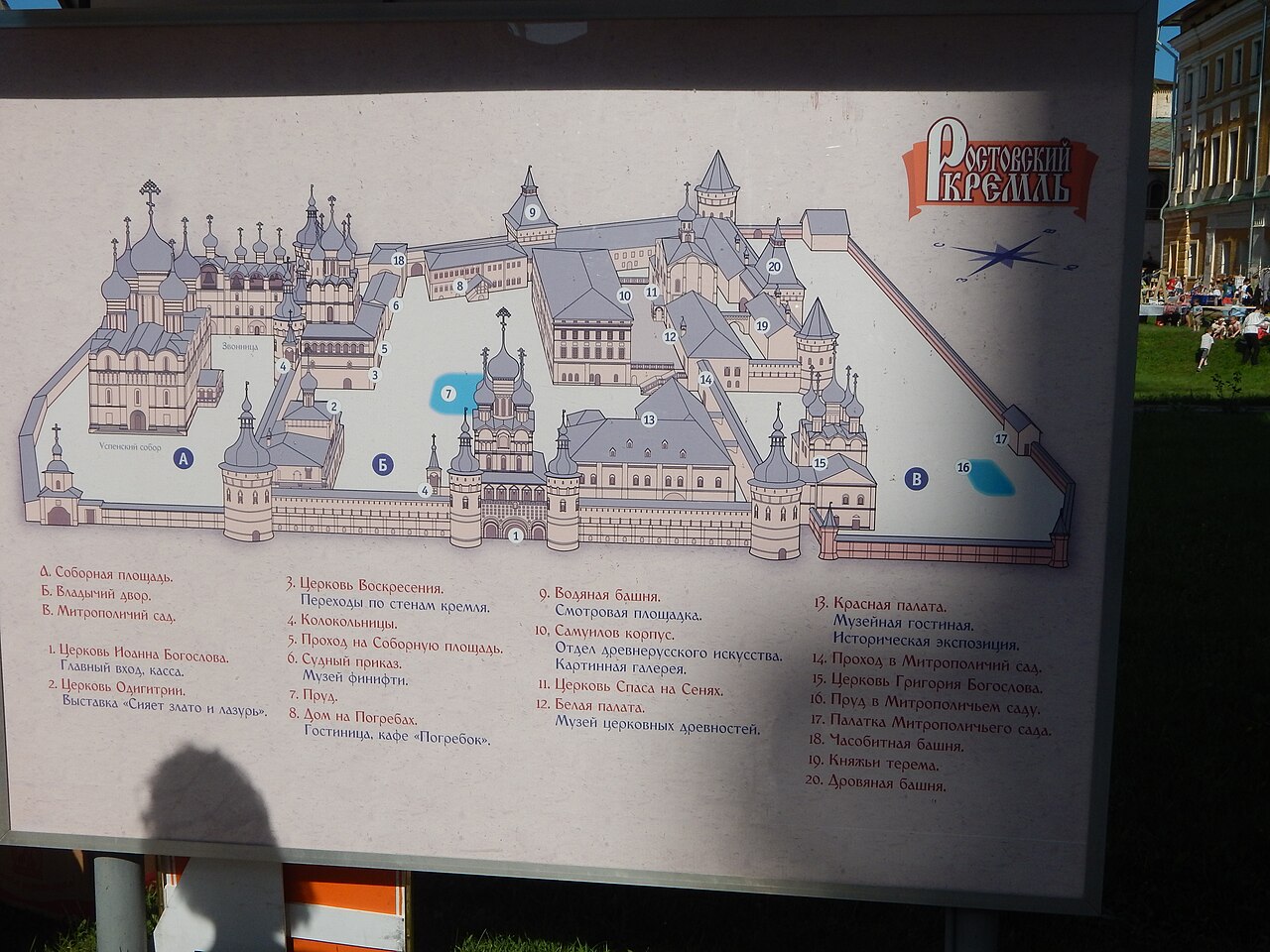
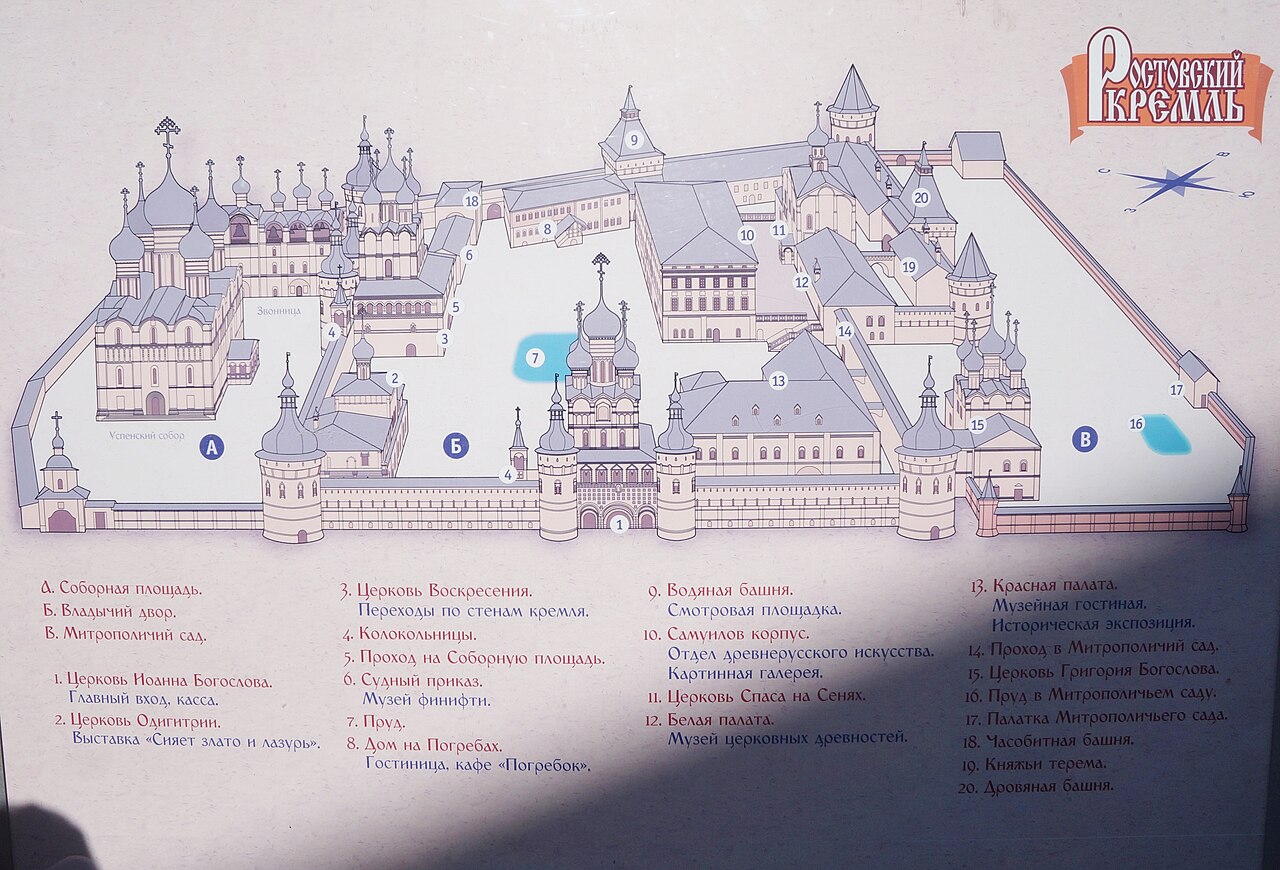
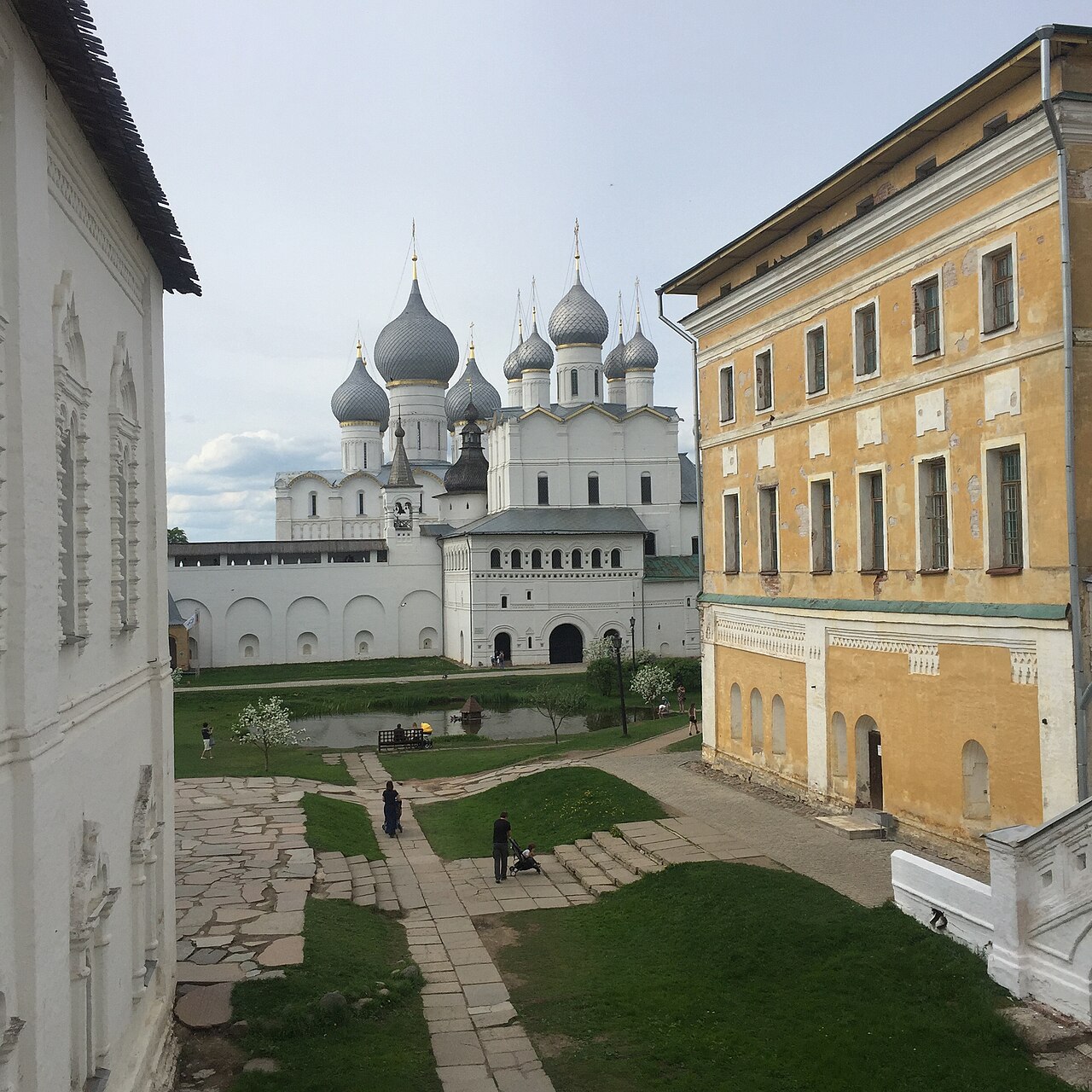
The plan is a theology diagram: the court centers not on a palace but on a pond and garden, paradise’s image, with the metropolitan’s residence, the Samuilov block, to one side, the great Belaya and Otdatochnaya chambers for hospitality, and the churches set over the gates and in the corners so that worship literally surrounds. The adjoining older cathedral square, with the Assumption Cathedral and its belfry, was tied into the composition by the splendid northern gate church of the Resurrection.
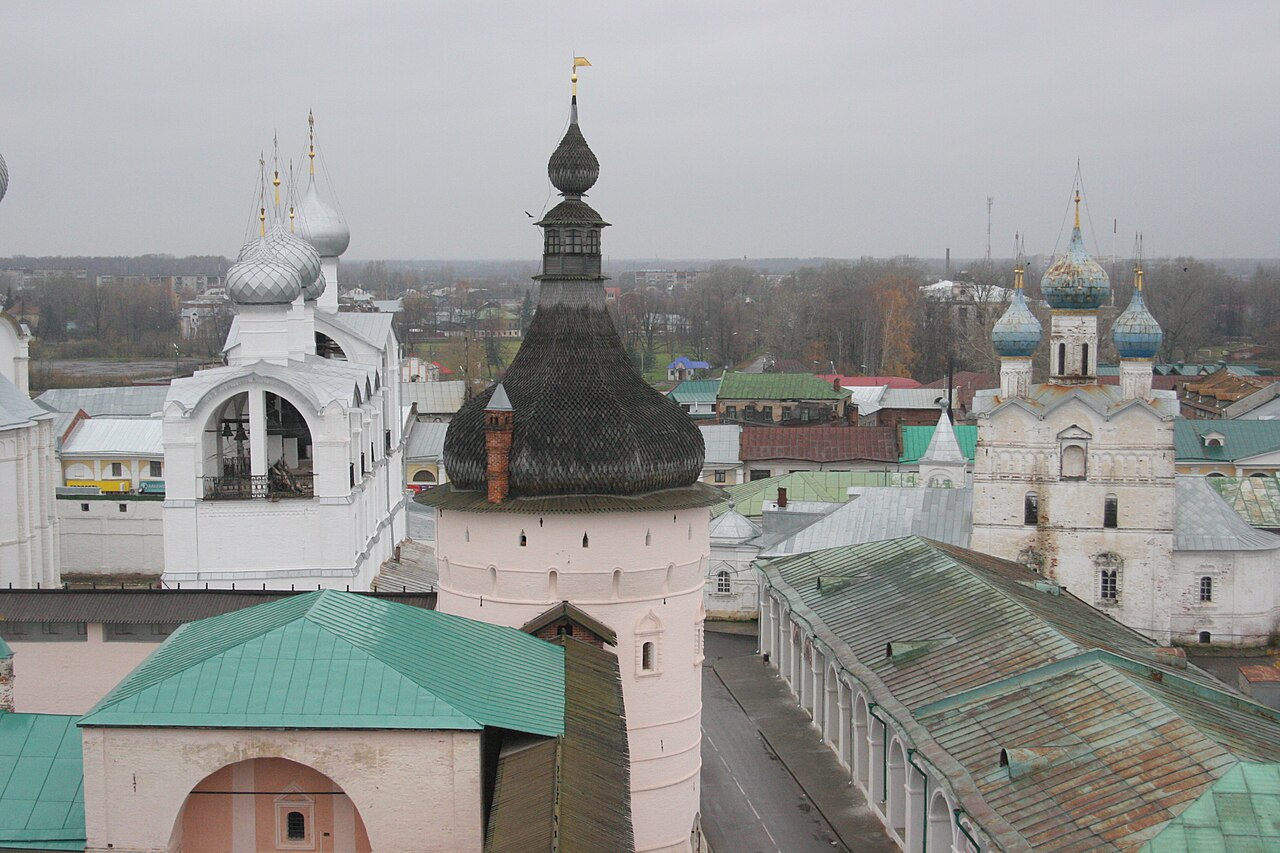
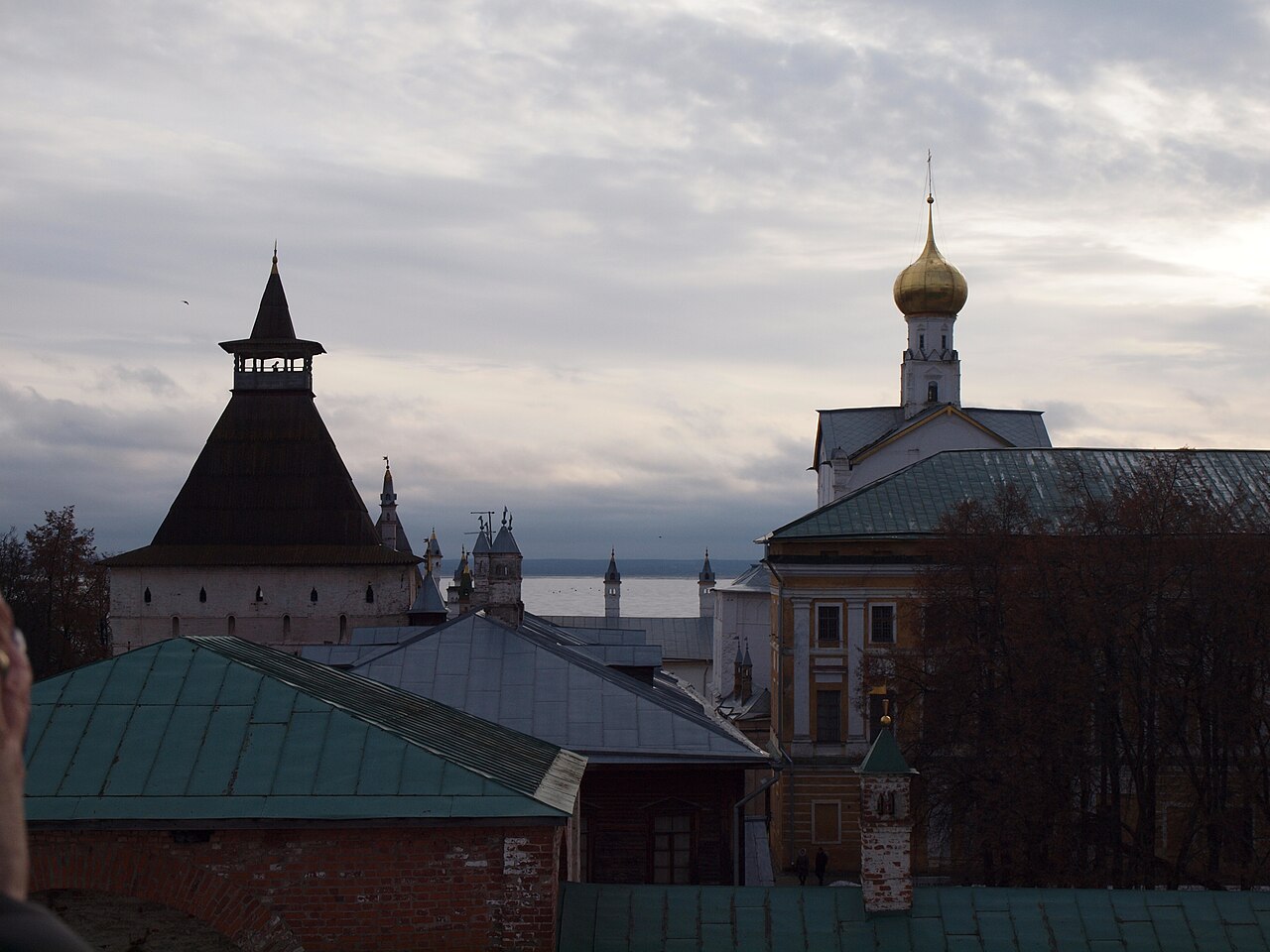
Everything was built for effect from the lake and the pilgrim roads: the silhouette’s rhythm of tents and domes, the walls’ arcading, the galleries linking churches at first-floor level so the metropolitan could process under cover around his whole paradise. It is scenography in brick, the Russian seventeenth century’s genius for the picturesque given its fullest, final performance.
Walls That Never Fought
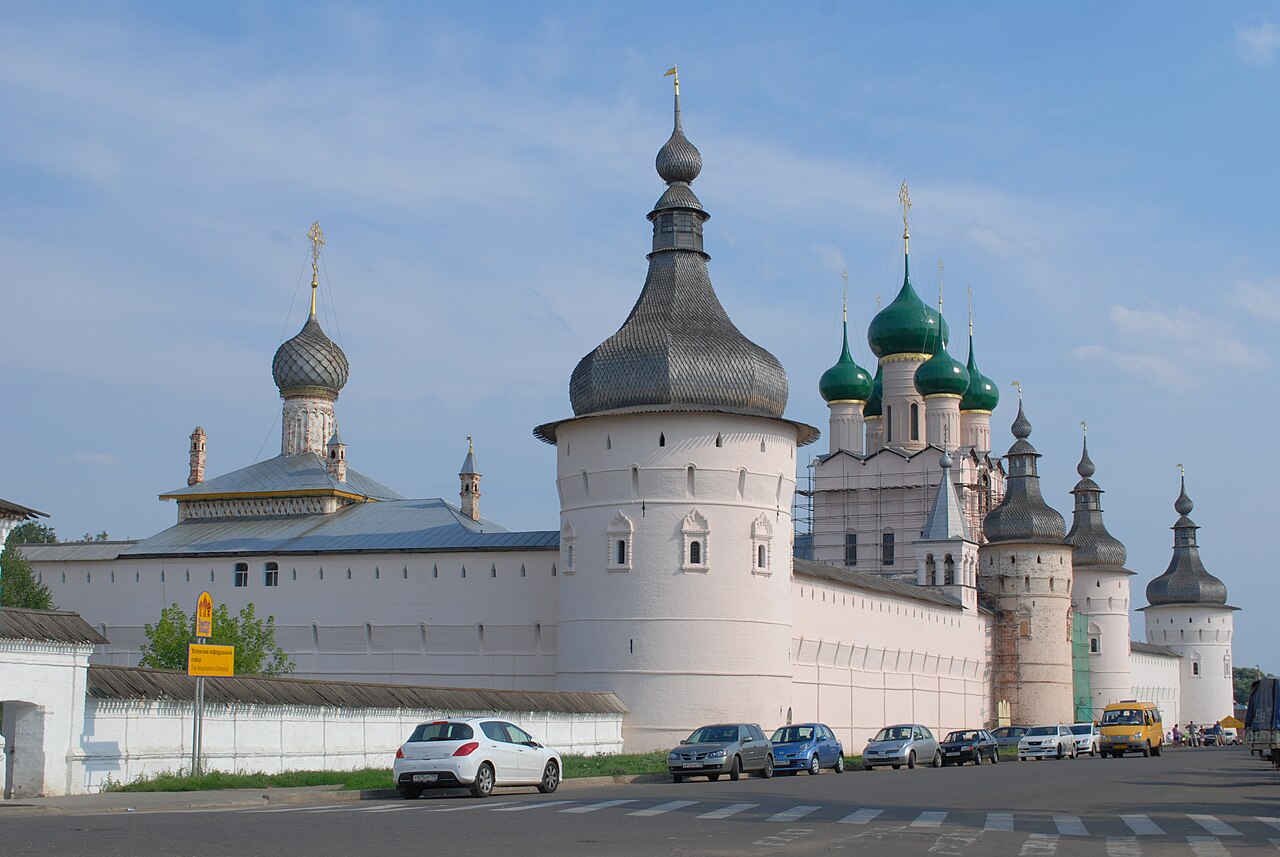
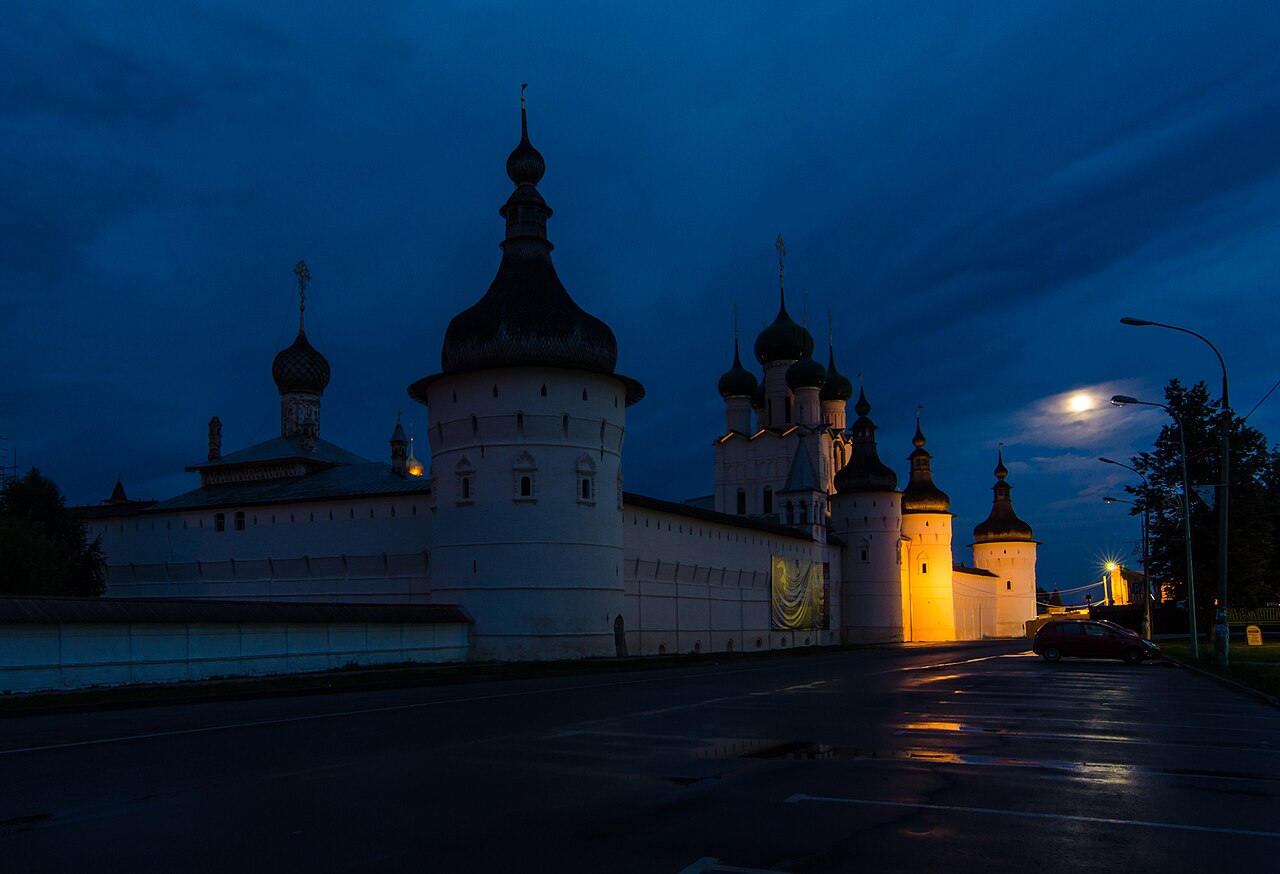
The fortress apparatus is complete and completely theatrical: walls up to twelve meters, towers with musket slits, machicolations over the gates, and none of it ever meant for war, the loopholes are decorative, the walls’ galleries built for processions, and Rostov in the 1670s lay deep in a pacified heartland. Jonah built the image of the fortress-faith, Moscow’s and the monasteries’ silhouette quoted as symbol.
The choice has a poignancy the guides enjoy: Russia’s real seventeenth-century fortresses, Smolensk, the border monasteries, earned their walls in blood, while the prettiest kremlin of them all played at defense on a quiet lake. Yet symbol outlasted function: the fighting fortresses were slighted or rebuilt, and Rostov’s stage-set walls survive almost untouched, the best place in Russia to walk a complete seventeenth-century circuit precisely because nobody ever shot at it.
The towers’ tents and the walls’ white-and-silver palette against the lake gave Russian culture one of its standard images of old Rus, reproduced on lacquer boxes, book covers, and postage stamps for three centuries. The dream fortress became the nation’s memory of itself, which, since that was more or less Jonah’s intention, must be counted among architecture’s most complete successes.
Inside the Metropolitan’s Court
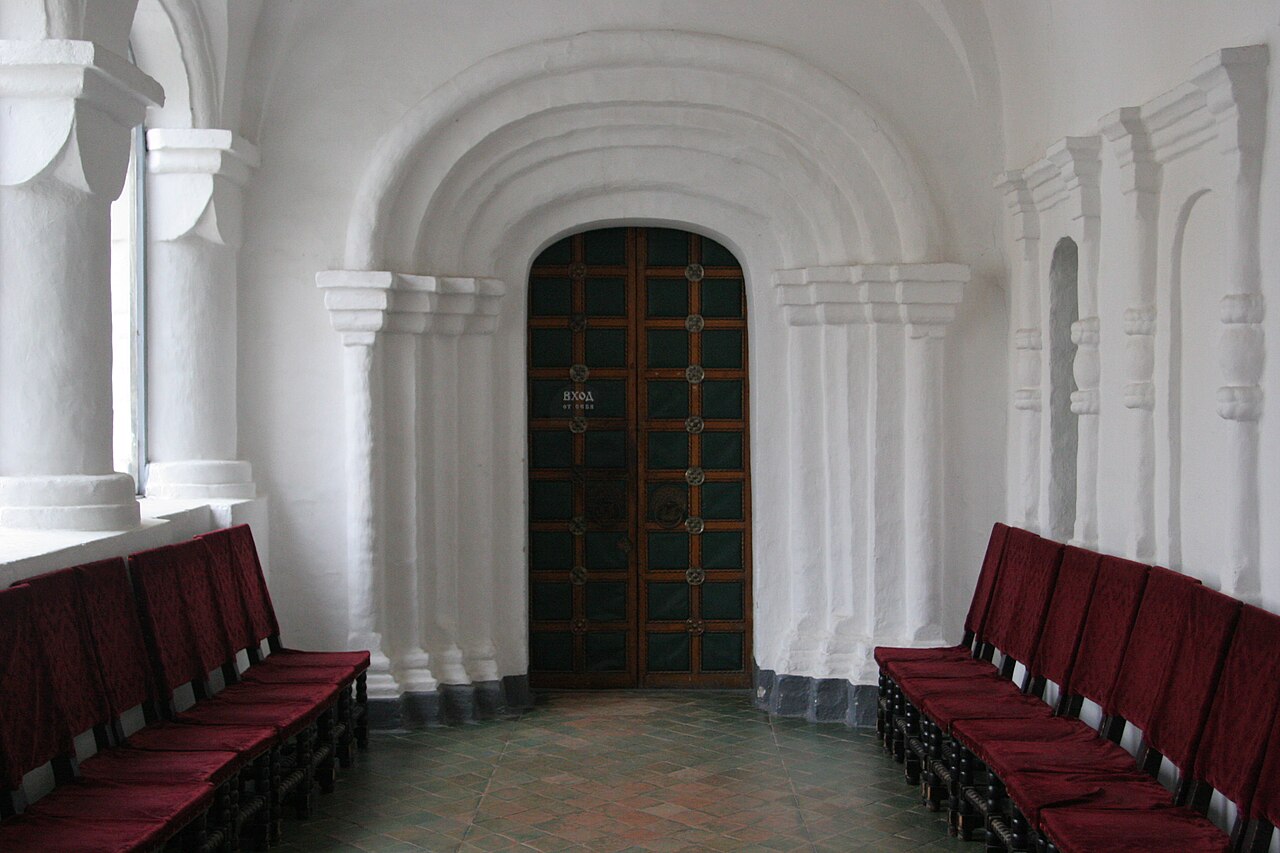
The court’s buildings held a working ecclesiastical capital: the Samuilov residence block with the metropolitan’s cells and the see’s chancellery, the White Chamber, a vaulted single-pillar hall in the lineage of Moscow’s Palace of Facets where the hierarch feasted pilgrim-tsars and church councils, the household church of the Savior on the Stores above the provision cellars, Jonah’s private masterpiece with its golden frescoed sanctuary, and the economy of kitchens, brewhouses, and stores that fed a court of hundreds.
The chambers today house the Rostov museum’s collections, among the oldest provincial museums in Russia, founded 1883: the famous Rostov finift enamels, a craft the church’s workshops bred and the town still practices, icons of the Rostov school, the see’s treasury pieces, and the archaeology of the thousand-year town, so that the court’s interiors deliver the region’s whole material history under Jonah’s vaults.
The White Chamber’s dining hall deserves its pause: here the museum’s founders staged their first displays, and here, by the old account, the metropolitan served fish from the lake under frescoes of wise feasting, hospitality as liturgy. The room’s single central pillar carrying four vaults is the old Russian hall formula at its most satisfying, Moscow’s Facets without the gold, honest brick doing the work.
The Gate Churches and Their Frescoes
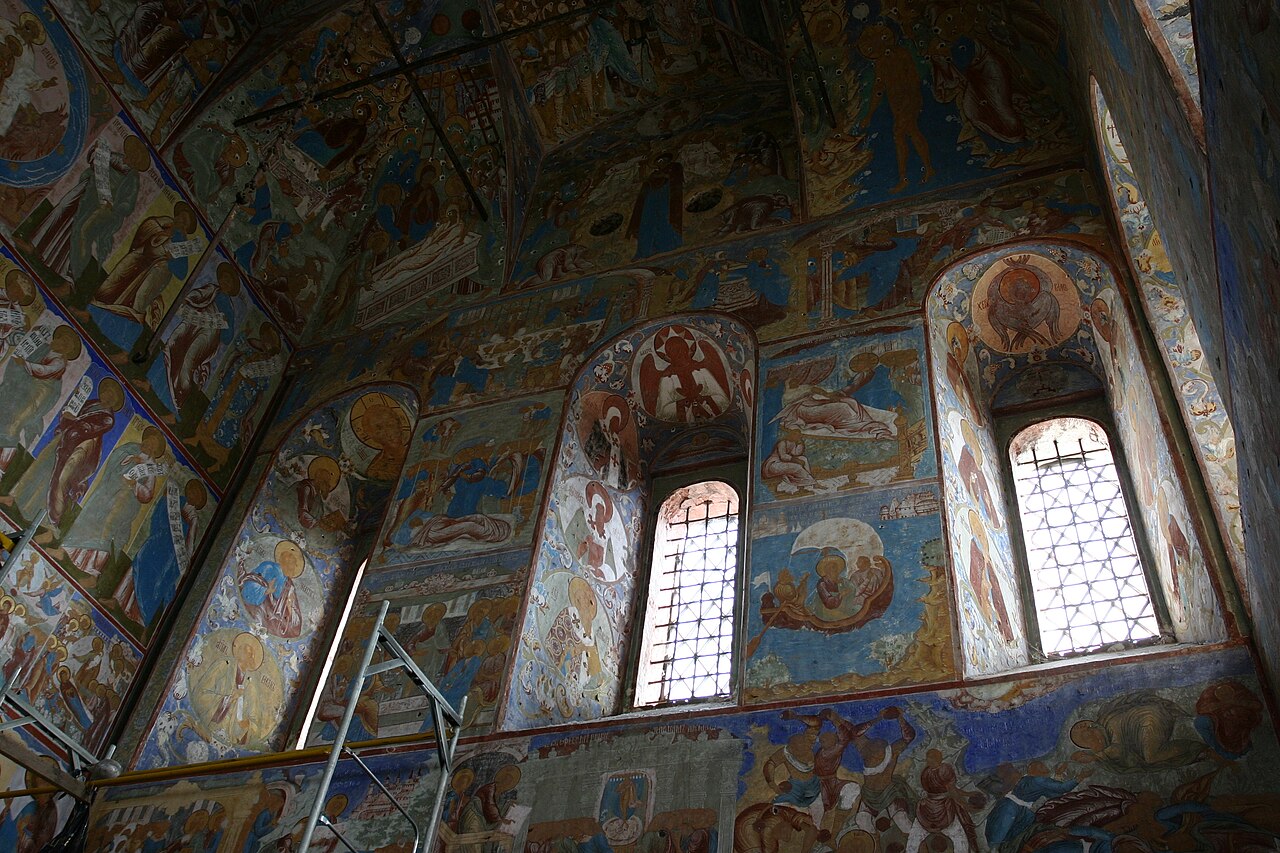
The ensemble’s glory is its churches over the gates, the Resurrection church on the north toward the cathedral and the St John the Theologian church on the west toward Moscow, each flanked by paired round towers, each a complete fresco cycle executed within a few years of building by Yaroslavl and Kostroma masters, the last great school of old Russian wall painting working at full power.
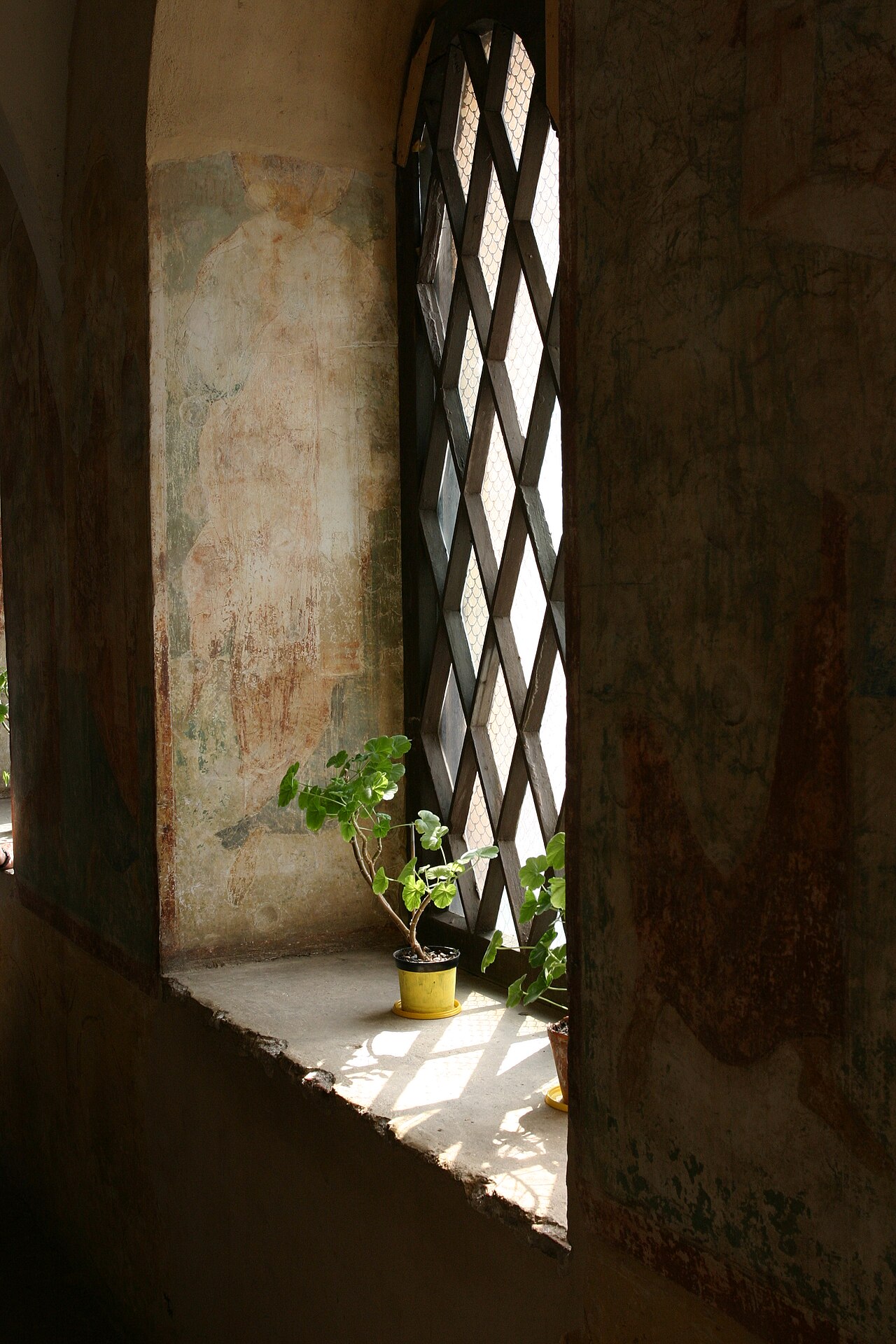
The interiors are the point: no iconostasis screens of the usual kind but stone altar walls painted as continuations of the cycles, so each church reads as one unbroken painted space, the Resurrection’s passion cycle and the Theologian’s apostolic scenes flowing floor to vault, with the arcaded galleries carrying the painting out toward the light. Specialists rank these cycles with Yaroslavl’s best; the casual visitor simply stands in them.
The corner church of Gregory the Theologian and the Savior on the Stores complete the set, the latter’s sanctuary, raised on a golden-ground solea behind a stone arcade, the most theatrical sacred interior of the Russian seventeenth century, built for a single celebrant’s liturgy watched by the metropolitan’s court, worship as the court’s own opera.
The Bells of Rostov
Beside the cathedral stands the ensemble’s voice: the great belfry of the 1680s, a long arcaded gallery carrying fifteen bells, cast to Jonah’s orders in a deliberate musical scale, with the giant Sysoi, named for the metropolitan’s father, at two thousand poods, around thirty-two tonnes, sounding the deep C that carries across the lake. Jonah wrote with a builder’s glee that on his courtyard he had cast a great bell for the wonder of all.
The Rostov chimes, zvony, became Russian music’s touchstone: named historic peals, the Ionin, the Egoryevsky, were transcribed in the nineteenth century, Berlioz heard the bells on his Russian tour, Mussorgsky’s and Rimsky-Korsakov’s bell-writing descends from them, and the belfry’s full voice, all fifteen in the great peal, counts among the country’s protected soundscapes, recorded and studied like a performing ensemble, which it is.
The bells’ survival is its own miracle: the 1920s bell-smashing campaigns melted most of Russia’s great bells, but Rostov’s, by museum status, local stubbornness, and, legend adds, Lunacharsky’s intervention, hung on, one of only two complete historic great peals left in the land. Hearing Sysoi struck, the sound arriving in the chest before the ears, remains the single most physical experience Russian heritage offers.
Decline and Rescue
The dream outlived its purpose within a century: Catherine the Great’s secularization of church lands in 1764 stripped the see’s wealth, and in 1787 the metropolitans moved to Yaroslavl altogether, leaving the court abandoned, churches unserved, chambers rented for warehouses, the fabric sliding toward ruin through the early nineteenth century, with proposals heard to dismantle the walls for brick.
The rescue came from the town itself, a landmark of Russian heritage history: Rostov’s merchants, led by the likes of Titov and Shlyakov, raised funds from the 1860s to restore the court, and in 1883 opened in the White Chamber the Museum of Church Antiquities, among the first such in the provinces, the townsmen buying their own history back from decay, with the emperor’s patronage following the merchants’ initiative rather than leading it.
The museum era professionalized across the twentieth century, restoration campaigns in the 1920s, the 1950s, and continuously since, and the ensemble entered the modern heritage lists at the top: a federal monument, the Golden Ring tourist route’s anchor since the route was invented in the 1960s, and a standing candidate for UNESCO, its paperwork, locals grumble affectionately, moving at properly medieval speed.
The Tornado of 1953
The ensemble’s worst modern hour struck from the sky: on 24 August 1953 a tornado, freakish for the region, crossed Lake Nero and hit Rostov, tearing the domes and tents from the Kremlin’s churches and towers in minutes, stripping Sysoi’s belfry roof, and leaving the dream city decapitated under the rain, photographs of the aftermath showing bare drums and twisted iron where three centuries of silhouette had stood.
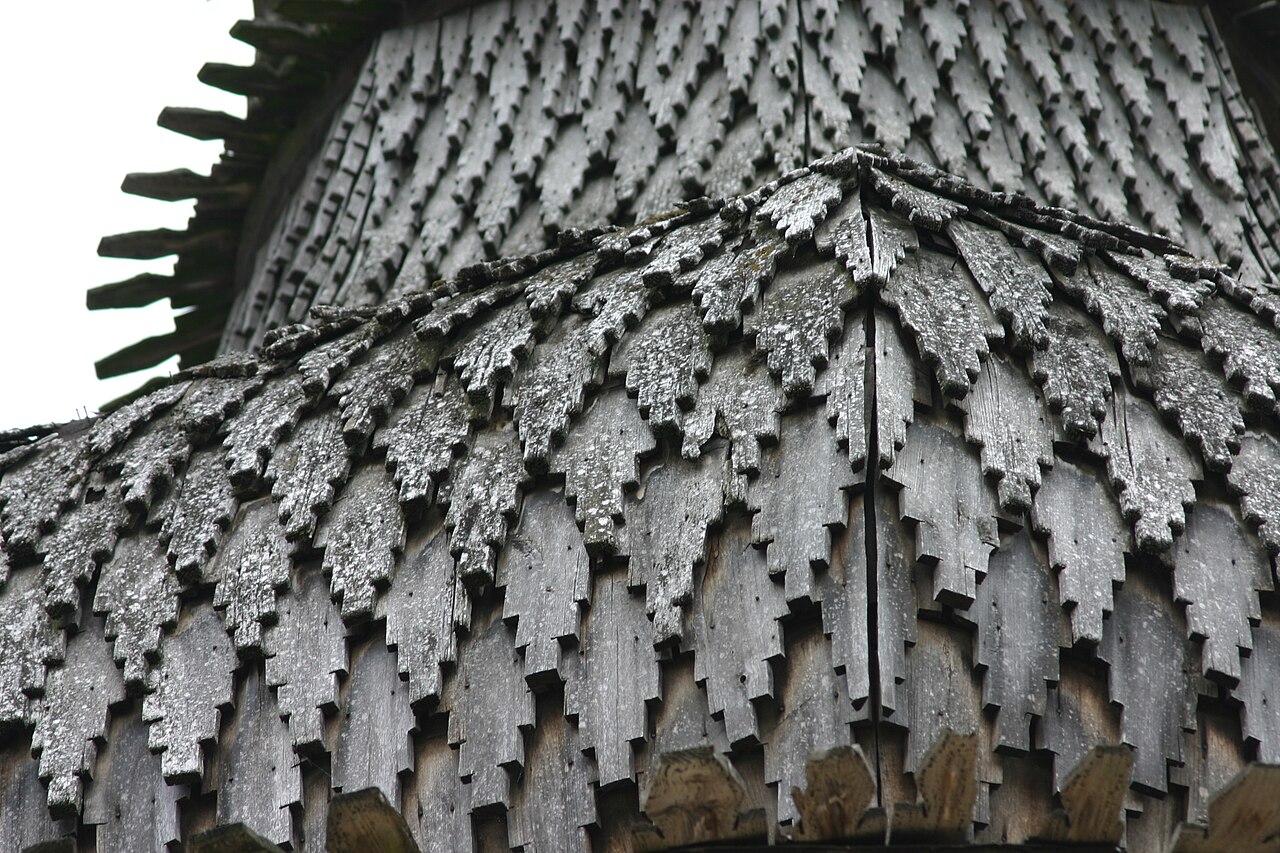
The disaster became restoration’s opportunity: the state-led rebuilding of the 1950s, under the restorer Vladimir Banige, returned the roofs not to their pre-storm nineteenth-century sheet iron but to the researched seventeenth-century forms, the silvery aspen-shingle lemekh scales and original dome profiles, so the tornado, perversely, gave the ensemble back its authentic skyline, the one the postcards now show.
The episode entered local lore as the dream’s trial by whirlwind, with the expected embroidery, the bells, it is said, hummed in the funnel’s passage, and gave Rostov’s restorers a tradition of their own: the Banige school’s lemekh workshops still maintain the scales, re-silvering the domes shingle by shingle, craft continuity running unbroken from catastrophe.
Ivan Vasilievich’s Kremlin
In 1973 the ensemble conquered its widest public: Leonid Gaidai filmed the time-travel comedy Ivan Vasilievich Changes Profession, Soviet cinema’s most rewatched film, using the Rostov court as Ivan the Terrible’s Moscow Kremlin, its galleries, walls, and staircases hosting the chase scenes every Russian can replay from memory, the tsar’s double bolting along Jonah’s processional walks while the real Moscow Kremlin, naturally, was unavailable for comedy.
The film fixed the ensemble in the national affection twice over: as the stand-in for old Moscow it looks more like old Moscow than Moscow does, and the museum long leaned into the role, costumed photo points on the galleries, the walls’ walk sold partly as the chase’s route, cinema tourism folded into church archaeology without apparent strain.
Rostov’s screen career continues, historical dramas and fairy-tale films busing in regularly, because the court solves cinema’s old Russia problem in one location: complete walls, no wires, every angle pre-composed by a seventeenth-century scenographer who thought in pictures. Jonah, builder of effects, has posthumously become Russian film’s most employed production designer.
The Lake and the Town
Lake Nero completes the ensemble: a shallow glacial bowl thirteen kilometers long, fringed with reeds and monasteries, the Spaso-Yakovlevsky’s classical domes to the west and the Avraamiev’s ancient towers east, with boat trips in season giving the one essential view, the Kremlin’s full silhouette doubled in the water, the picture Jonah composed for arriving pilgrims now sold by the boatload.
The town keeps its scale: merchant streets of two-story stucco and wood, the arcaded trading rows still trading, the finift enamel factory and museum continuing the see’s old craft, and the garden plots running down to the lake, onion beds against fortress walls, Rostov’s famous vegetable gardening, the lake’s silt made the town Russia’s onion capital, supplying the comedy of scale every visitor photographs.
The deeper reward is the pace: Rostov the Great has perhaps thirty thousand people and a thousand years, and the proportion tells. An overnight stay, after the day buses leave, gives the court’s sunset bells and the lake’s dawn mist to a handful of walkers, the metropolitan’s dream briefly private again, which is the Golden Ring’s best-kept and worst-kept secret at once.
Watch the Rostov Kremlin on Film
Visiting the Rostov Kremlin Today
Rostov Veliky lies 200 kilometers northeast of Moscow on the Yaroslavl road and railway: express trains from Moscow’s Yaroslavsky station reach Rostov in under three hours, with Yaroslavl 50 kilometers further for combining Golden Ring towns. The Kremlin museum opens daily, grounds till evening, with tickets per exhibition or combined, the wall walk and gate churches seasonal, and the bell concerts announced on the museum’s site; the frescoed churches close in hard frost and rain to protect the painting. Allow a full day with the lake boat trip and the Spaso-Yakovlevsky monastery, and stay overnight if you can for the empty-court hours; the finift museum and trading rows fill the remaining time. You can find the Kremlin on the map here: Rostov Kremlin on Google Maps.
Palaces Nearby
You May Like
The Astrakhan Kremlin and the Palace Gate of the Volga Delta