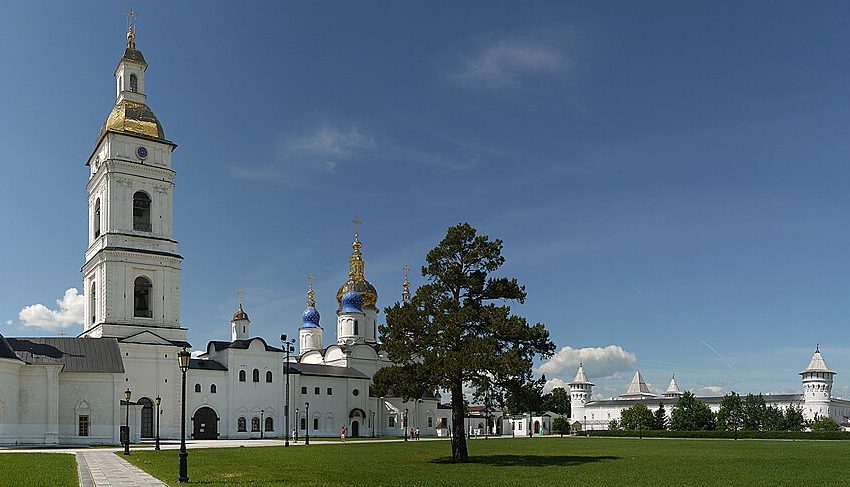
On the flat steppe where the Om river joins the Irtysh, halfway between the Urals and Baikal, the city of Omsk keeps a secret worthy of a far grander reputation: for eighteen months in 1918 and 1919 this provincial fortress town was the capital of all Russia, the seat of Admiral Kolchak’s anti-Bolshevik government, where the empire’s gold reserve was stacked in bank vaults and foreign ambassadors presented credentials to a dictatorship fighting for the nation’s soul. At the center of that drama, as it had stood at the center of Siberia’s administration for a century, was the Governor-General’s Palace, the solid classical residence from which western Siberia and the Steppe were ruled.
Omsk earned its weight by inheritance and by geography. In the 1820s the governing institutions of western Siberia migrated here from the older capital of Tobolsk, drawn by the steppe frontier’s military gravity, and the Governor-General’s Palace became the headquarters of a borderland command that reached toward Kazakhstan and Central Asia. Dostoevsky served his hard-labor years in the city’s fortress and set his prison memoir here; the great steppe expeditions staged from its offices; and in the civil war the palace-city briefly held the fate of Russia in its hands before the front collapsed and Kolchak’s train fled east toward Irkutsk and the ice.
This guide tells the steppe capital through its palace: Omsk’s founding as a fortress on the Kazakh frontier, the transfer of Siberia’s government and the palace’s building, Dostoevsky’s prison years, the steppe governors-general and their Central Asian reach, the Kolchak capital and the gold reserve, the palace’s life as the Vrubel art museum, and the practical details of visiting the city that was, for a year and a half, the capital of a country.
- The Fortress on the Frontier
- The Capital Moves to Omsk
- The Governor-General’s Palace
- Dostoevsky in the Dead House
- Rulers of the Steppe
- The Reach into Central Asia
- The Railway and the Boom
- Capital of Russia
- Kolchak’s Government
- The Imperial Gold Reserve
- The Fall of Omsk
- The Palace Becomes a Museum
- The Steppe City Today
- Watch the Omsk Palace on Film
- Visiting the Omsk Palace Today
- Palaces Nearby
The Fortress on the Frontier
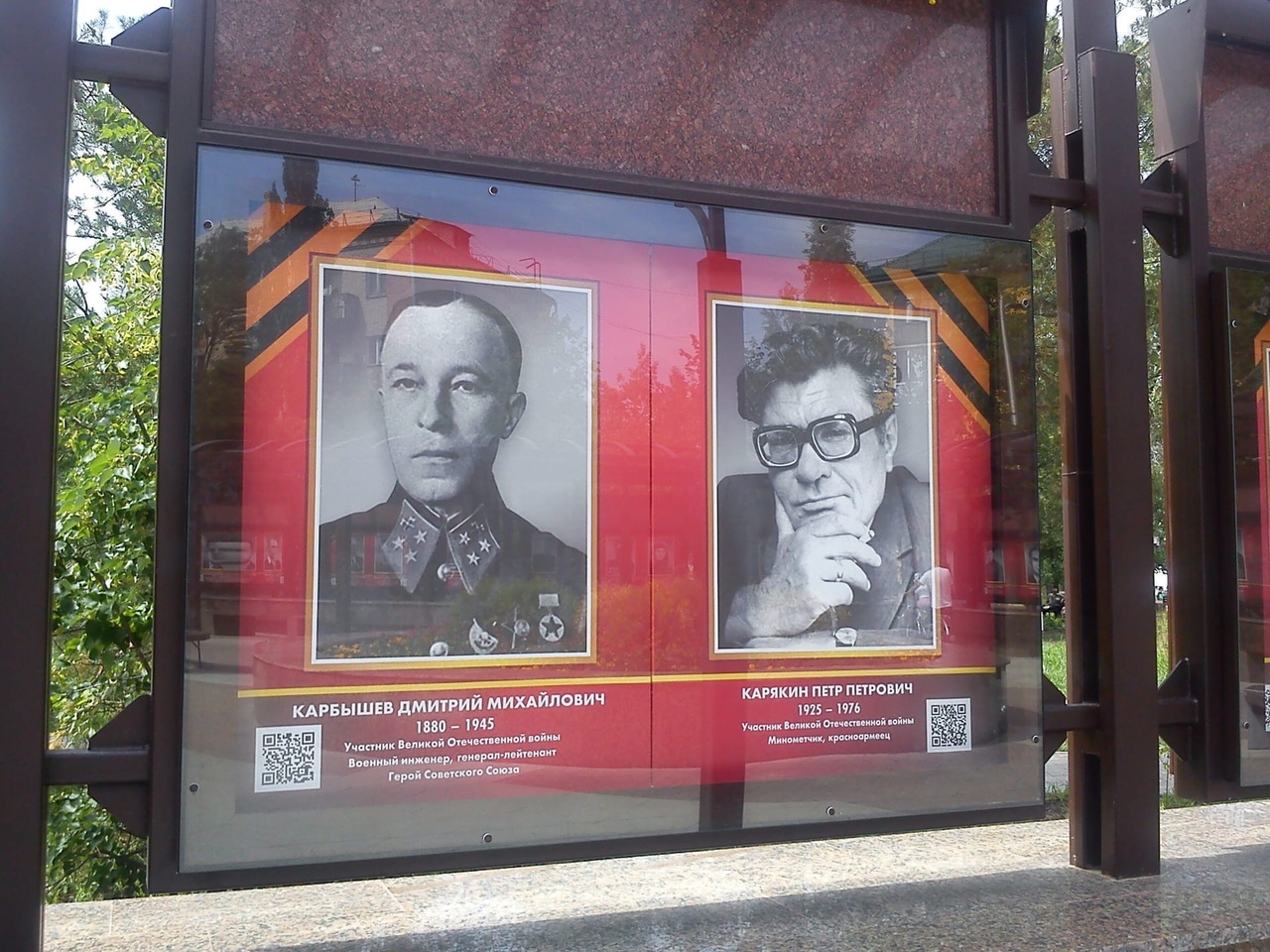
Omsk was born military in 1716, when a detachment under Ivan Bukholts, sent by Peter the Great up the Irtysh to seek the fabled gold of Yarkand, fell back from the steppe nomads and dug in at the Om’s mouth, raising the fort that gave the city its name. The first Omsk fortress anchored the Irtysh defensive line, the chain of forts and Cossack posts that marked Russia’s advancing frontier against the Kazakh hordes and the Dzungar power beyond.
The second fortress, begun in 1768, built the city’s stone bones: the brick Tobolsk and Tara gates, the garrison church of St Nicholas that became the Cossacks’ cathedral and kept the banner of Yermak himself, the parade grounds and barracks of a frontier army town, the whole a working military capital of the steppe line, its culture boots and bugles rather than furs and icons, Siberia’s hard southern edge.
The fortress’s position made it a hinge: behind it the settled Siberian provinces, before it the steppe and the Central Asian khanates that the nineteenth century would absorb, and through it the Cossack hosts, the Siberian and later the steppe commands, whose horsemen patrolled a frontier longer than Europe, Omsk the brain of a borderland that would carry Russia to the gates of Afghanistan.
The Capital Moves to Omsk
The administrative earthquake came in the 1820s. Speransky’s great reform of Siberian government in 1822 divided the territory into western and eastern halves, Irkutsk keeping the east, and the west’s capital gravitating from old river-bound Tobolsk toward the steppe frontier’s command center, the transfer confirmed by stages until Omsk held the governor-generalship of Western Siberia outright, the fortress town promoted over the historic capital by the logic of the moving frontier.
The promotion rankled Tobolsk and delighted Omsk, which set about looking the part: the civil town spreading beyond the fortress walls, the administrative buildings, the cadet corps that would train the steppe’s officers and, in time, famous names, the churches and the merchant rows, a frontier garrison maturing into a governing city, its skyline military-classical where Tobolsk’s was baroque-ecclesiastical, the two Siberian capitals’ architecture arguing their characters.
By mid-century Omsk ruled a domain of continental scale from the Urals toward the Altai and down the steppe toward the Syr Darya, the governor-general’s writ running over Cossacks, Kazakhs, settlers, and exiles, the Governor-General’s Palace the room where that writ was signed, the steppe’s capital established for the century of expansion ahead.
The Governor-General’s Palace
The Governor-General’s Palace rose in the 1860s as the seat’s dignified core: a two-story classical building of restrained ornament and solid proportion, the administrative manner of imperial Russia’s provinces at their most assured, with the governor-general’s apartments, the chancellery, and the reception halls where the steppe’s dignitaries, Kazakh sultans among them, were received under the double eagle, the frontier’s government housed to its standing.
The palace’s interiors staged the borderland’s protocol: the audience halls for the hosts’ atamans and the steppe’s notables, the map rooms where the Central Asian campaigns were planned, the ballrooms of a garrison society whose officers, the memoirs agree, danced as hard as they drilled, the building the social and administrative pivot of a city whose life ran on rank, regiment, and the long steppe horizon.
Across its century the palace received the empire’s travelers to the east: the explorers bound for the steppe and the mountains, the scientists of the geographical society’s west Siberian branch, the inspecting grand dukes, the whole apparatus of ruling and exploring a frontier passing through its doors, the building accumulating the administrative memory that its museum future would, fittingly, keep.
Dostoevsky in the Dead House
Omsk holds a central place in Russian literature by way of its prison. Fyodor Dostoevsky, condemned in 1849 for his part in the Petrashevsky circle, served four years of hard labor in the Omsk fortress stockade from 1850, the experience that broke and remade him, and that he transmuted into Notes from the Dead House, the book that brought the Russian penal world into literature and reshaped the writer’s whole vision of suffering and the people.
The fortress prison’s conditions, the shackles worn even at labor, the mixed company of the empire’s convicts, the bathhouse and hospital scenes that fill the memoir, marked the city into the writer’s imagination permanently, Omsk the place where, by his own account, his convictions were reforged, the gentle fortress town carrying, beneath its parade-ground order, Russian literature’s most famous prison.
The city keeps the inheritance with pride and tact: the Dostoevsky literary museum, the writer’s monument by the fortress, the preserved fragments of the stockade’s ground, and the university that bears his name, Omsk claiming, justly, a formative chapter of the national canon, the Dead House’s author among the fortress capital’s defining residents, his hard years its deepest cultural credential.
Rulers of the Steppe
The governors-general of Western Siberia and the Steppe ran one of the empire’s most consequential frontiers: the administration of the Kazakh steppe’s incorporation, the management of the Cossack hosts, the settlement of the peasant migrants whom the later century poured east, and the diplomacy and war with the Central Asian khanates, the palace’s occupants soldiers and administrators in equal measure, their decisions drawing the map of Russian Central Asia.
The steppe’s own notables threaded the palace’s history: the Kazakh sultans and the hereditary aristocracy whose accommodation and resistance shaped the frontier, the scholar Chokan Valikhanov, the brilliant Kazakh officer and geographer trained in Omsk’s cadet corps and moving in its official society, the first great figure of Kazakh enlightenment formed in the steppe capital, his statue and memory the city’s bridge to its southern neighbor’s history.
The palace governed, too, the great migrations: the Stolypin era’s resettlement of millions of peasants onto the steppe’s black earth, administered from Omsk, transforming the frontier into a granary and the city into the hub of a continental farm belt, the governor’s chancellery processing the human tide whose grain the Trans-Siberian would carry to the world.
The Reach into Central Asia
From Omsk’s offices the empire organized its southern conquests: the mid-century campaigns that took the Kazakh steppe to Russian administration and reached toward the khanates of Khiva, Bukhara, and Kokand, the fortified lines advancing south, the Siberian Cossacks’ regiments riding the frontier, the steppe capital functioning as a rear base and command node for the Great Game’s eastern theater, where Russia and Britain’s empires felt toward one another across the deserts.
The city’s institutions matched the ambition: the cadet corps supplying the officers, the geographical society’s branch mapping the routes, the garrison and arsenal supporting the columns, the whole apparatus of a frontier empire’s forward capital, Omsk’s dusty parade grounds the staging point for expeditions that would plant Russian flags from the Aral to the Pamirs.
The reach shaped the city’s cosmopolitan edge: Kazakh, Tatar, and Central Asian traders in its markets, the steppe’s mosques among its churches, the frontier’s mixed society filling the garrison town, Omsk facing south toward Asia as Tobolsk faced north toward the furs, the two Siberian capitals’ orientations as different as their founding centuries.
The Railway and the Boom
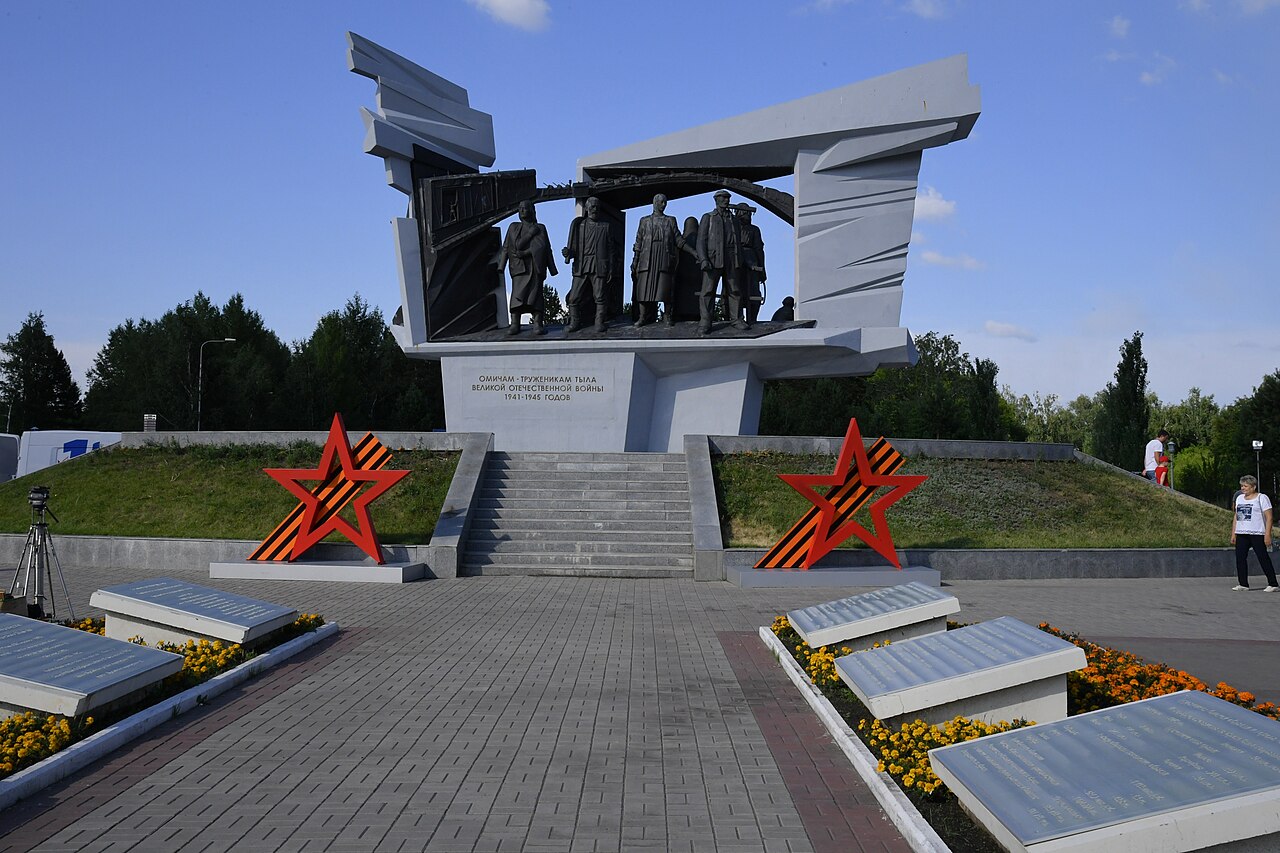
The Trans-Siberian railway, reaching Omsk in 1894 and 1895, transformed the garrison capital into a boomtown: the line crossing the Irtysh here made Omsk the junction of the steppe’s grain belt and the continental trunk, the butter, wheat, and wool of the newly settled black earth pouring through its new station toward European and world markets, the city’s population and commerce multiplying in two decades.
The boom built a second Omsk: the commercial architecture of the 1900s and 1910s, the merchant palaces and the trading company offices, the Lyubinsky Prospekt’s brick and stucco elegance, the city styling itself, with the frontier’s usual ambition, as a coming metropolis, the railway’s wealth raising a civic center worthy of the capital it was and more than the garrison it had been.
The grain economy’s scale made Omsk matter beyond administration: the Danish and British butter buyers, the cooperative creameries of the steppe, the elevators and the exchanges, Siberia’s agricultural revolution hubbed in the steppe capital, the economic weight that would, when the empire fell, make Omsk a natural seat for a government needing Siberia’s resources and the railway’s spine.
Capital of Russia
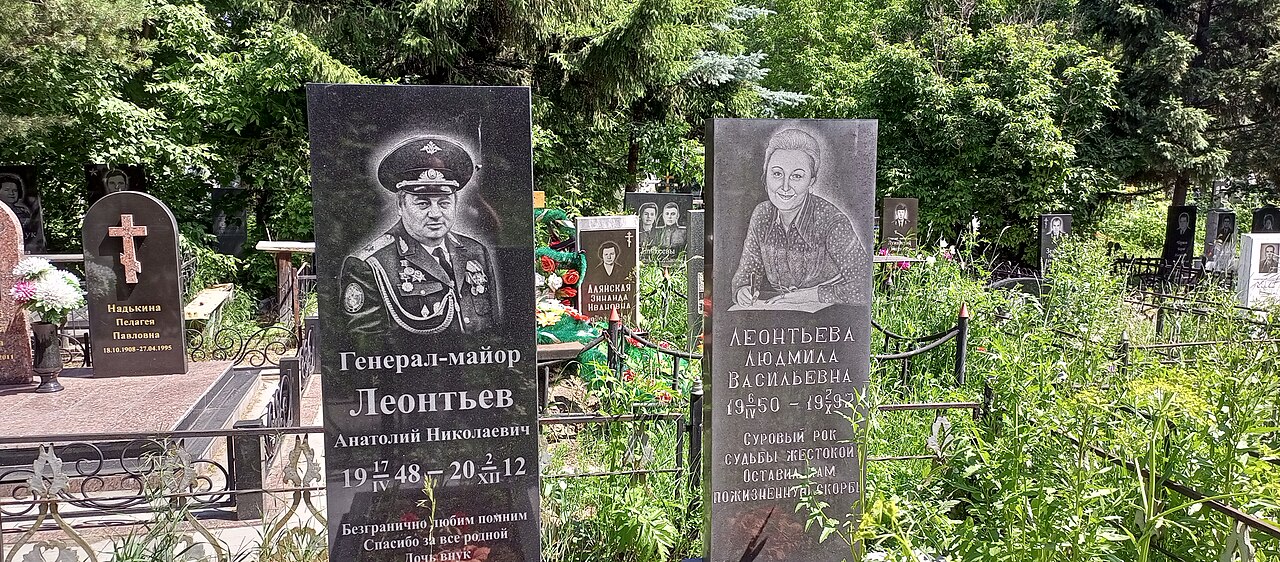
The civil war gave Omsk its astonishing year and a half. As the anti-Bolshevik movement gathered in Siberia through 1918, the steppe capital, safe behind its distances, central on the railway, and rich in grain, became the seat of successive anti-Bolshevik governments, culminating in November 1918 when a coup installed Admiral Alexander Kolchak as Supreme Ruler, and Omsk became the official capital of the Russian state that the White movement claimed to embody, recognized, with caution, by the Allied powers.
For a year the provincial city played national capital: the ministries installed in its buildings, the Supreme Ruler’s administration in the old governmental quarter, the foreign military missions, British, French, American, Japanese, and the Czechoslovak Legion whose bayonets held the railway, the diplomatic and military weight of a nation’s cause concentrated on the Irtysh, Omsk’s hotels and offices crowded with the old Russia’s refugees and the new war’s deciders.
The city swelled and strained: the population doubling with refugees, officials, and soldiers, typhus riding the overcrowded trains, the administration struggling to govern Siberia and fight a front simultaneously, the capital’s glamour and squalor mixed, the memoirs record, in equal and desperate measure, the steppe town bearing a weight it had never been built for, and would not bear long.
Kolchak’s Government
Alexander Kolchak was an improbable dictator: a polar explorer and distinguished naval commander, austere, honest, and politically unschooled, elevated to Supreme Ruler by officers who wanted a figurehead with authority and found a man with scruples, his government in Omsk attempting to reconstitute a national administration, an army, and a legitimacy from the fragments the revolution had left, against Bolsheviks ahead and allies, atamans, and intriguers behind.
The regime’s record stays bitterly contested: its armies won a spring offensive in 1919 that reached toward the Volga and raised Allied hopes, then broke under counterattack, supply failure, and the peasant risings that its own harsh rear policies provoked, the Omsk government’s authority corroding through the summer and autumn as the front rolled back toward the capital it could not defend.
Kolchak himself, working from the governmental buildings and his train, embodied the movement’s tragedy: personally incorruptible and strategically overwhelmed, carrying a cause too divided to unite and too compromised by its own violence to win the people, the Supreme Ruler of Omsk a figure historians still weigh, his capital’s year and a half the White movement’s fullest and most doomed experiment in government.
The Imperial Gold Reserve
Omsk held, for a season, Russia’s treasure. A large part of the imperial gold reserve, seized by anti-Bolshevik forces at Kazan in 1918 and shipped east, came to rest in the Omsk State Bank’s vaults under Kolchak’s government, hundreds of millions in gold backing the regime’s currency and credit, the nation’s bullion stacked in the steppe capital, the physical stake of the civil war’s eastern campaign gathered in one building.
The gold’s fate became an epic of its own: loaded onto trains as Omsk fell, carried east through the retreat’s chaos along the Trans-Siberian, fought over, partly spent on arms and partly lost or stolen, the remainder handed with Kolchak to the authorities at Irkutsk and returned, diminished, to the state, the reserve’s wartime odyssey, and the enduring legends of gold vanished along the line or sunk in Baikal, Siberia’s treasure-hunt mythology to this day.
The treasure’s presence measured Omsk’s brief centrality: for a year the steppe capital was where Russia’s money physically was, the regime’s solvency and the war’s logistics riding on the vaults by the Irtysh, the gold’s departure east with the retreating government marking, as clearly as any battle, the capital’s and the cause’s collapse.
The Fall of Omsk
The end came in November 1919. The Red Army’s advance, the White front’s disintegration, and the railway’s breakdown left the capital indefensible, and Omsk was abandoned without a fight on 14 November, the government, the army’s remnants, the refugees, and the gold streaming east along the single Trans-Siberian track into the retreat that typhus, cold, and the Czech Legion’s self-interest would turn into one of the century’s grimmest exoduses.
The fall ended the steppe capital’s national chapter: the Bolsheviks took the city, Kolchak’s train crawled toward the betrayal and the ice at Irkutsk, and Omsk reverted from capital of Russia to Soviet provincial center, its eighteen months of nationhood closing in the smoke of a retreat, the most extraordinary interval in any Siberian city’s history ending as abruptly as it had begun.
The Soviet decades rewrote the city around industry: Omsk became a major manufacturing and, in the Second World War, a great evacuation-industry and defense center, its population multiplying, its civil-war capital years officially minimized, the oil refineries and aircraft plants of a Soviet metropolis growing over the garrison and grain town, the Kolchak capital surviving in buildings and memory beneath the industrial city.
The Palace Becomes a Museum
The Governor-General’s Palace found its lasting peace in art: it became the core of the Omsk Regional Museum of Fine Arts, named for Mikhail Vrubel, the great symbolist painter born in Omsk in 1856 while his father served in the garrison, the palace’s administrative halls filled with the picture collections, Russian and Western, that make the Vrubel museum one of Siberia’s premier galleries, the frontier’s command post turned custodian of beauty.
The museum’s holdings reward the visit: Russian painting from the icons through the Peredvizhniki and the Silver Age, Vrubel’s own work and the collection built around his name, decorative arts and the regional history that the building itself embodies, the palace’s architecture, restored, serving as the grandest exhibit, its civil-war and imperial pasts narrated among the canvases.
The palace’s survival as the Vrubel museum gave the civil-war capital a dignified keeper of its memory: the building where Russia was governed for eighteen months standing as the city’s art museum, its history, from frontier fortress through steppe capital to national seat, preserved and told, the Governor-General’s Palace among the most layered addresses in Siberia, its quiet galleries holding one of the empire’s strangest chapters.
Watch the Omsk Palace on Film
Visiting the Omsk Palace Today
Omsk lies on the Trans-Siberian main line, roughly a day west of Novosibirsk and two east of the Urals, with its own airport linking Moscow and the Siberian cities; the former Governor-General’s Palace, now the Vrubel Fine Arts Museum, stands in the central historic quarter near the Irtysh embankment, walkable with the fortress gates, the Dostoevsky sites, and the Lyubinsky Prospekt. The museum opens daily except Mondays with standard gallery tickets, its collections and the building’s restored halls the main draw; the old fortress, the Cossack cathedral, the Dostoevsky museum, and the Tara and Tobolsk gates complete a day’s historic walking. Omsk suits a stop on a Trans-Siberian journey or a short stay for the civil-war and literary trail; summer opens the embankments, and the city’s steppe winters are long and cold. You can find the palace on the map here: Omsk Governor-General’s Palace on Google Maps.
Palaces Nearby
You May Like
Ishak Pasha Palace and the Fortress Above Dogubayazit