On the banks of the Wadi Hanifa, on the edge of modern Riyadh, lie the mud-brick ruins of At-Turaif, the royal quarter of old Diriyah, the capital of the first Saudi state and the cradle of the House of Saud. At the heart of At-Turaif stood the Salwa Palace, the great residence of the imams of the Al Saud, a vast complex of mud-brick halls, courts, and towers, At-Turaif the cradle of the Saudi state, the Salwa Palace the seat of the first dynasty, the ruins the origin of the kingdom.
At-Turaif is the birthplace of the Saudi state. Here, in the eighteenth century, the Al Saud ruled the first Saudi state from the Salwa Palace, a power that united much of Arabia before it was destroyed by the Ottoman and Egyptian forces in 1818, the quarter the cradle of the dynasty, At-Turaif the seat of the first Saudi state, the Salwa Palace the residence of the imams, the ruins the sacred origin of the House of Saud.
This article continues the Saudi Arabian palace series, turning to At-Turaif and the Salwa Palace of Diriyah, the royal quarter and the great residence of the first Saudi state, the cradle of the House of Saud on the Wadi Hanifa, At-Turaif the birthplace of the kingdom, the Salwa Palace the seat of the imams, the mud-brick ruins the origin of the Saudi state and a treasure of the world heritage.
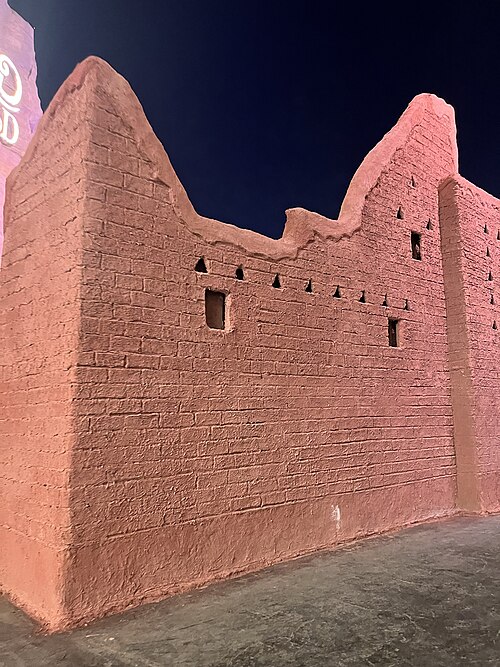
- The Cradle of the Saudi State
- Diriyah on the Wadi Hanifa
- The First Saudi State
- The Al Saud and the Imams
- The Salwa Palace
- The Najdi Architecture
- The Mud-Brick Quarter
- The Mosques and the Baths
- The Alliance of 1744
- The Reform Movement
- The Siege of 1818
- A World Heritage Site
- At-Turaif Today
- Watch on Film
- Visiting Today
- Palaces Nearby
The Cradle of the Saudi State
At-Turaif is the cradle of the Saudi state. The royal quarter of old Diriyah was the seat of the first Saudi state, the power founded by the Al Saud in the eighteenth century, the quarter the birthplace of the dynasty, At-Turaif the cradle of the House of Saud, the seat of the first state the origin of the kingdom, the quarter the sacred beginning of the Saudi power in central Arabia.
The House of Saud rose here: the Al Saud, the family that would found three Saudi states and the modern kingdom, rising to power at Diriyah and ruling from At-Turaif, the quarter the origin of the dynasty, the Al Saud the house whose cradle was At-Turaif, the family the rulers whose power began in the royal quarter of old Diriyah on the Wadi Hanifa.
The quarter is the sacred origin of the kingdom: At-Turaif, as the cradle of the first Saudi state, the sacred origin of the modern Kingdom of Saudi Arabia, the quarter the birthplace of the dynasty and the nation, At-Turaif the origin of the kingdom, the seat of the first state the cradle of the Saudi power, the ruins the sacred beginning of the House of Saud and the modern kingdom.
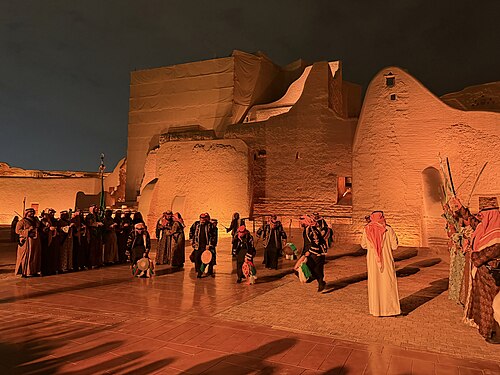
Diriyah on the Wadi Hanifa
Diriyah stands on the Wadi Hanifa. The old town of Diriyah grew along the Wadi Hanifa, the great valley that runs through the region of Riyadh, the wadi bringing the water and the life that allowed the oasis town to flourish, Diriyah the town of the wadi, the settlement on the green valley, the oasis the setting of At-Turaif and the Salwa Palace in the heart of the Najd.
The wadi brought water and life: the Wadi Hanifa, with its seasonal water and its palm groves, giving Diriyah the water and the fertility that made the town a center of the Najd, the wadi the lifeline of the settlement, the valley the green heart of the oasis, the Wadi Hanifa the source of the life of Diriyah and the royal quarter of At-Turaif.
Diriyah was a center of the Najd: the old town of Diriyah, on the Wadi Hanifa, a center of trade, agriculture, and power in the central Arabian region of the Najd, the town the hub of the oasis, Diriyah the center of the region, the settlement the heart of the Najd, the oasis town the seat of the Al Saud and the cradle of the first Saudi state at At-Turaif.
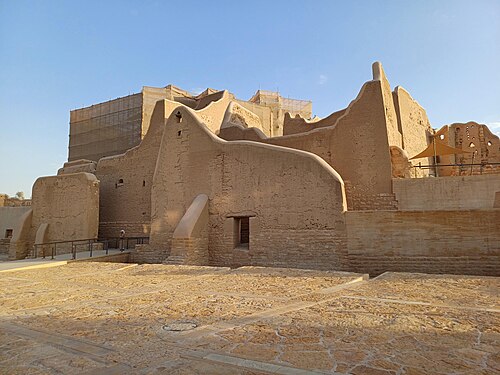
The First Saudi State
At-Turaif was the capital of the first Saudi state. The first Saudi state, founded in 1744, ruled from Diriyah and At-Turaif a power that grew to control much of the Arabian Peninsula, the state the first of the three Saudi realms, At-Turaif the capital of the first state, the Salwa Palace the seat of the imams, the quarter the heart of the power that united much of Arabia in the eighteenth and early nineteenth centuries.
The state grew to control much of Arabia: the first Saudi state, from its capital at Diriyah, extending its power across the Najd, the Hijaz, and much of the peninsula, the state the great power of eighteenth-century Arabia, At-Turaif the capital of the expanding realm, the Salwa Palace the seat of the imams who ruled the first Saudi state from the Wadi Hanifa.
The state was the first of three Saudi realms: the first Saudi state the earliest of the three realms of the House of Saud, followed by the second state and the modern kingdom, the first state the origin of the Saudi power, At-Turaif the capital of the first realm, the Salwa Palace the seat of the first Saudi state, the cradle of the dynasty that would found the modern kingdom.
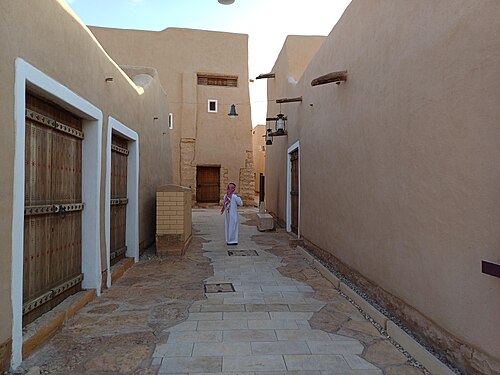
The Al Saud and the Imams
At-Turaif was ruled by the imams of the Al Saud. The first Saudi state was ruled by the imams of the House of Saud, from Muhammad ibn Saud, the founder, through his successors, the imams the rulers of the first state, the Al Saud the dynasty of At-Turaif, the imams the leaders whose seat was the Salwa Palace, the rulers of the first Saudi state on the Wadi Hanifa.
Muhammad ibn Saud founded the state: Muhammad ibn Saud, the ruler of Diriyah, the founder of the first Saudi state in 1744, the imam whose alliance and leadership began the Saudi power, the founder of the dynasty, Muhammad ibn Saud the first imam, the ruler whose seat was At-Turaif, the founder of the first Saudi state at Diriyah.
The imams ruled from the Salwa Palace: the imams of the Al Saud ruling the first Saudi state from the Salwa Palace of At-Turaif, the palace the seat of the dynasty, the imams the leaders whose residence was the great mud-brick complex, the Salwa Palace the seat of the imams, the residence the heart of the rule of the first Saudi state at Diriyah on the Wadi Hanifa.
The Salwa Palace
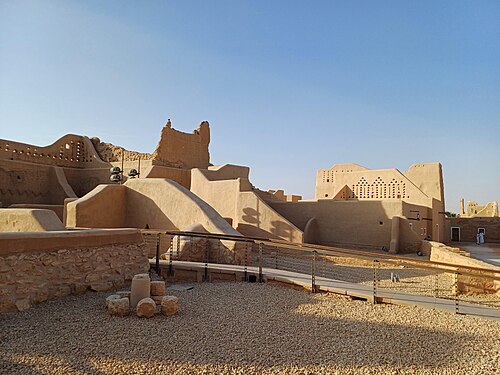
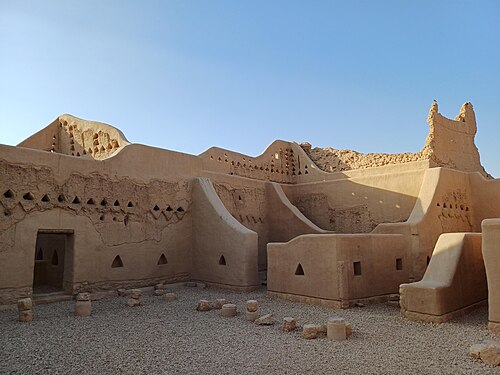
The Salwa Palace was the seat of the imams. At the heart of At-Turaif stood the Salwa Palace, the great residence of the imams of the Al Saud, a vast complex of mud-brick halls, courts, towers, and apartments rising in several storeys above the quarter, the palace the seat of the first Saudi state, the Salwa Palace the residence of the imams, the mud-brick jewel of At-Turaif on the Wadi Hanifa.
The palace was a vast complex: the Salwa Palace a great ensemble of buildings, halls, courts, and towers, the residence of the imams and the seat of the government, the palace a mud-brick complex of several storeys, the Salwa Palace the vast residence of the first Saudi state, the great complex the seat of the imams, the mud-brick palace the heart of At-Turaif.
The palace rose above the quarter: the Salwa Palace rising in its mud-brick storeys above the quarter of At-Turaif, the residence the dominant building of the royal quarter, the palace the crown of the cradle, the Salwa Palace the towering seat of the imams, the great residence the heart of At-Turaif, the mud-brick palace the dominant monument of the first Saudi state at Diriyah.
The Najdi Architecture
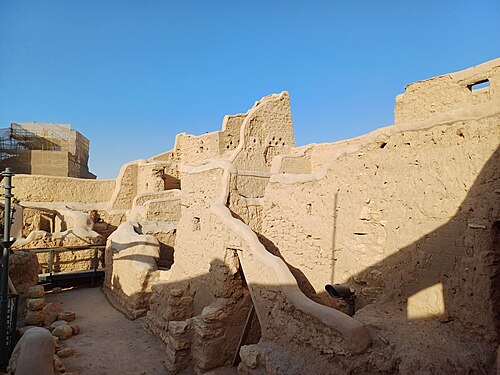
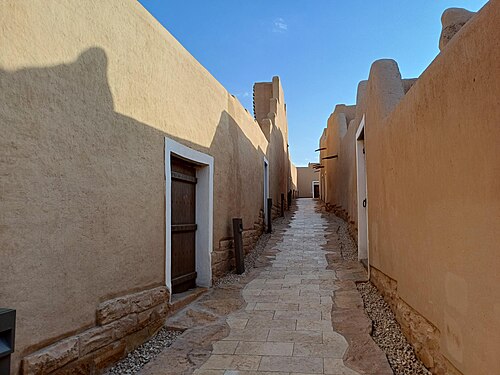
At-Turaif is a masterpiece of Najdi architecture. The quarter and the Salwa Palace are built in the distinctive mud-brick architecture of the Najd, with its thick walls, its triangular openings, its decorated parapets, and its geometric ornament, the quarter the showcase of the central Arabian building, At-Turaif the jewel of the Najdi architecture, the mud-brick quarter the masterpiece of the traditional building of central Arabia.
The Najdi style is distinctive and beautiful: the mud-brick architecture of At-Turaif, with its geometric decoration, its triangular ventilation openings, its crenellated parapets, and its sculptural forms, a distinctive and beautiful style, the Najdi architecture the jewel of the quarter, the mud-brick building the showcase of the central Arabian craft, the style the glory of At-Turaif.
The architecture suited the desert: the Najdi mud-brick architecture of At-Turaif, with its thick insulating walls and its ventilation, suited to the heat and the climate of central Arabia, the building the climate-wise tradition of the Najd, the architecture the wisdom of the desert builders, the Najdi style the jewel of At-Turaif, the mud-brick building the tradition of the central Arabian oasis towns.
The Mud-Brick Quarter
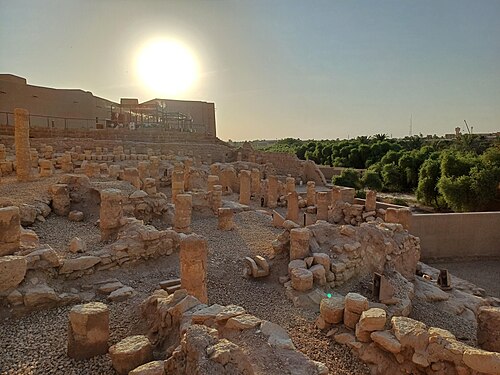
At-Turaif is a quarter of mud-brick buildings. Besides the Salwa Palace, the royal quarter contained the residences of the ruling family, the mosques, the baths, the guest houses, and the other buildings of the seat of the first Saudi state, the quarter a mud-brick town of the dynasty, At-Turaif the royal quarter of Diriyah, the ensemble of buildings the seat of the first Saudi state on the Wadi Hanifa.
The quarter held the residences of the family: At-Turaif containing the houses of the princes and the leading members of the Al Saud, the quarter the residential heart of the dynasty, the buildings the homes of the ruling family, the quarter the seat of the Al Saud, At-Turaif the residential quarter of the first Saudi state, the mud-brick town of the dynasty at Diriyah.
The quarter was a self-contained royal town: At-Turaif, with its palace, its residences, its mosques, its baths, and its buildings, a self-contained royal quarter, the town the seat of the first Saudi state, the quarter the complete world of the dynasty, At-Turaif the royal town of the Al Saud, the mud-brick quarter the self-contained seat of the first Saudi state on the Wadi Hanifa.
The Mosques and the Baths
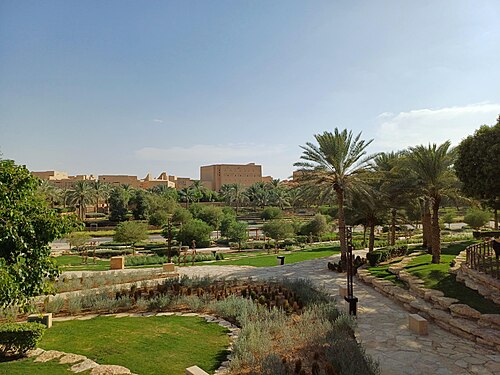
At-Turaif holds mosques and baths. The royal quarter contained mosques for the worship of the ruling family and the people, and baths for the life of the quarter, the mosques the religious heart of At-Turaif, the baths the amenities of the royal town, the mosques and the baths the communal buildings of the quarter, the religious and the social heart of the first Saudi state at Diriyah.
The mosques were the religious heart: the mosques of At-Turaif the places of worship of the Al Saud and the people of Diriyah, the mosques the religious center of the quarter, the places of worship the sacred buildings of the royal town, the mosques the spiritual heart of At-Turaif, the religious buildings the center of the faith of the first Saudi state on the Wadi Hanifa.
The baths served the life of the quarter: the baths of At-Turaif the amenities of the royal town, the hammams the places of the cleansing and the social life, the baths the communal buildings of the quarter, the hammams the amenities of the dynasty, the baths the social heart of At-Turaif, the communal buildings the life of the royal quarter of the first Saudi state at Diriyah.
The Alliance of 1744
At-Turaif saw the alliance of 1744. In 1744, at Diriyah, the ruler Muhammad ibn Saud formed an alliance with the religious scholar and reformer Muhammad ibn Abd al-Wahhab, a pact that joined the political power of the Al Saud with a movement of religious reform, the alliance the founding event of the first Saudi state, At-Turaif the setting of the historic pact, the quarter the cradle of the alliance that founded the Saudi power.
The pact joined the ruler and the reformer: the alliance of 1744 joining Muhammad ibn Saud, the ruler of Diriyah, with Muhammad ibn Abd al-Wahhab, the religious reformer, the pact uniting the political and the religious leadership, the alliance the foundation of the first Saudi state, the agreement the union of the power and the movement, the pact the founding event at At-Turaif.
The alliance founded the Saudi power: the pact of 1744 the foundation of the first Saudi state and the beginning of the alliance between the House of Saud and the religious establishment that would endure through the Saudi states, the alliance the founding of the dynasty’s power, the pact the origin of the Saudi state, At-Turaif the cradle of the alliance that founded the Saudi power in Arabia.
The Reform Movement
At-Turaif was the center of a religious reform movement. The alliance of 1744 joined the Al Saud with the religious movement of Muhammad ibn Abd al-Wahhab, a call for the reform and the purification of the religious practice, the movement spreading from Diriyah across Arabia with the Saudi power, At-Turaif the center of the movement, the quarter the heart of the religious reform that accompanied the rise of the first Saudi state.
The movement spread with the Saudi state: the religious reform movement, allied with the Al Saud, spreading across the Arabian Peninsula as the first Saudi state expanded, the movement the religious dimension of the Saudi power, the reform the accompaniment of the conquest, the movement the force that spread from Diriyah with the state, At-Turaif the center of the reform that reshaped the religious life of Arabia.
The alliance shaped the character of the state: the union of the Al Saud and the religious movement giving the first Saudi state its distinctive character, the alliance the foundation of the Saudi identity, the movement the religious character of the state, the pact the shaper of the dynasty, At-Turaif the cradle of the alliance that defined the character of the Saudi states and the modern kingdom.
The Siege of 1818
Diriyah was destroyed in the siege of 1818. The first Saudi state, grown too powerful for the Ottoman empire to tolerate, was attacked by an Ottoman-Egyptian army under Ibrahim Pasha, the son of Muhammad Ali of Egypt, who besieged Diriyah and took it in 1818, the town destroyed and At-Turaif reduced to ruins, the siege the end of the first Saudi state, the fall the destruction of the cradle of the dynasty.
Ibrahim Pasha besieged and took the town: the Ottoman-Egyptian army under Ibrahim Pasha besieging Diriyah for months before taking it in 1818, the town falling to the superior force, the siege the end of the first Saudi state, Ibrahim Pasha the conqueror of Diriyah, the fall the destruction of At-Turaif, the siege the catastrophe that ended the first Saudi realm.
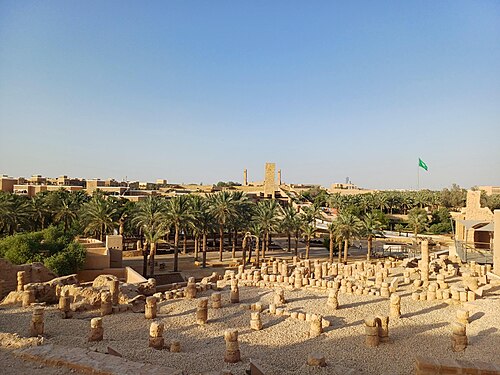
The town was left in ruins: Diriyah, after its capture, deliberately destroyed by the victors, the Salwa Palace and the quarter of At-Turaif reduced to ruins and abandoned, the town left as a field of mud-brick ruins, the destruction the end of the first Saudi state, At-Turaif the ruined cradle, the quarter the abandoned seat of the fallen first Saudi state on the Wadi Hanifa.
A World Heritage Site
At-Turaif is a World Heritage Site. The royal quarter of old Diriyah, with its Salwa Palace and its mud-brick buildings, was inscribed on the UNESCO World Heritage List in 2010, recognized as the cradle of the Saudi state and a masterpiece of the Najdi architecture, At-Turaif the World Heritage jewel of Saudi Arabia, the quarter the honored monument of the founding, the ruins the treasure of the national and the world heritage.
The inscription recognized the cradle of the state: the UNESCO listing of At-Turaif honoring the royal quarter as the cradle of the first Saudi state and a masterpiece of the Najdi mud-brick architecture, the inscription the recognition of the significance, At-Turaif the World Heritage monument, the quarter the honored cradle of the Saudi state, the ruins the treasure recognized by the world.
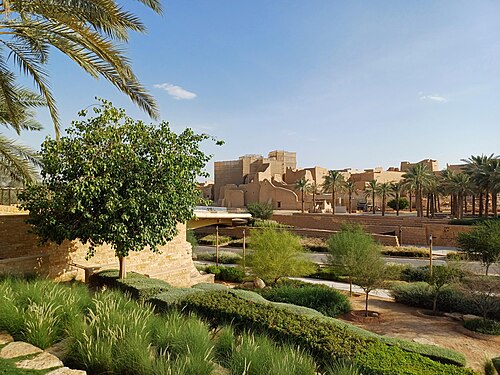
At-Turaif is being restored as a national treasure: the royal quarter and the Salwa Palace, as part of the great Diriyah development, being restored and presented as the cradle of the kingdom and a jewel of the heritage, At-Turaif the restored treasure of the founding, the quarter the national monument, the Salwa Palace the recovered seat of the first Saudi state, the jewel of the heritage of Saudi Arabia.
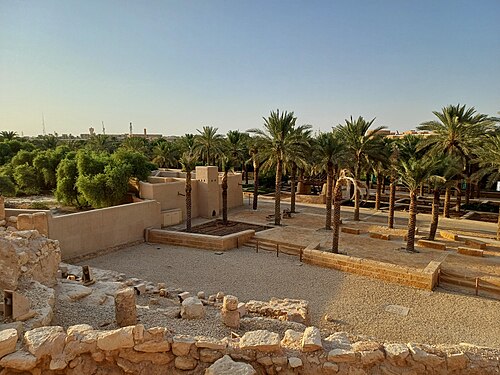
At-Turaif Today
At-Turaif today stands as the cradle of the Saudi state, the royal quarter of old Diriyah, the seat of the first Saudi state, the Salwa Palace the residence of the imams of the Al Saud, the mud-brick masterpiece of the Najdi architecture on the Wadi Hanifa, At-Turaif the World Heritage treasure, the quarter the birthplace of the House of Saud, the restored jewel of the founding of the kingdom of Saudi Arabia.
The quarter endures as the birthplace of the kingdom: At-Turaif, restored as part of the great Diriyah project, standing as the cradle of the Saudi state and a jewel of the heritage, the quarter the birthplace of the dynasty, the Salwa Palace the seat of the first state, At-Turaif the enduring cradle of the House of Saud, the restored treasure of the founding of Saudi Arabia on the Wadi Hanifa.
At-Turaif continues the Saudi Arabian palace series, the royal quarter of old Diriyah, the cradle of the first Saudi state, the Salwa Palace the seat of the imams of the Al Saud, the mud-brick masterpiece of the Najdi architecture, At-Turaif the World Heritage treasure, the birthplace of the House of Saud, the restored jewel of the founding of the kingdom of Saudi Arabia on the Wadi Hanifa.
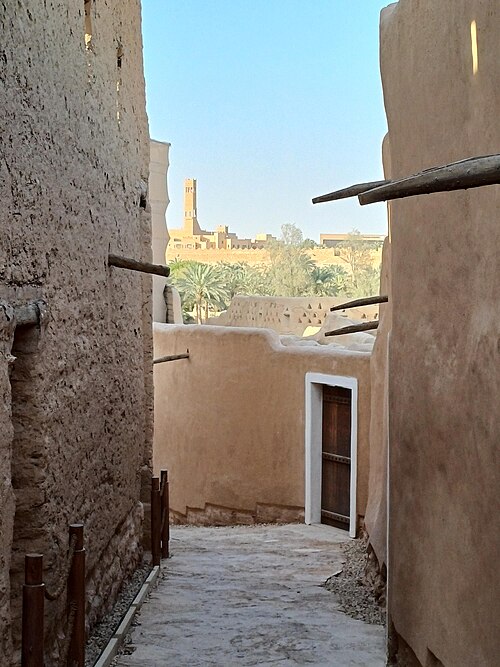
Watch At-Turaif and Diriyah on Film
Visiting At-Turaif Today
At-Turaif stands in old Diriyah, on the Wadi Hanifa on the northwestern edge of Riyadh, the capital of Saudi Arabia, about twenty kilometers from the city center; the royal quarter, with the Salwa Palace and its mud-brick buildings, is being restored and presented as part of the great Diriyah development, visited for its Najdi architecture, the ruins of the first Saudi state, and the museums of the founding. Travel in Saudi Arabia has become far more accessible to visitors in recent years, and Diriyah is a major heritage destination; current conditions and opening arrangements should be checked before any visit. You can find the quarter on the map here: At-Turaif, Diriyah on Google Maps.


