Just north of the old walled town of Riyadh, King Abdulaziz, the founder of Saudi Arabia, built in the 1930s his great palace of Al-Murabba, the first royal residence raised outside the old city, a vast square of mud-brick that became the seat of the king and the government of the new kingdom. The palace, with its courtyards, its galleries, and its diwan, is the monument of the reign of the founder, Al-Murabba the palace of King Abdulaziz, the seat of the kingdom in its first great age.
The Murabba Palace marks the birth of modern Riyadh. Built when the old walled town could no longer hold the growing capital, the palace was the first great building of the new Riyadh, the residence from which the founder ruled the united kingdom, the center of the government, Al-Murabba the palace of the founding age, the seat of King Abdulaziz, the monument that marks the passage of Riyadh from the old oasis town to the modern capital.
This article continues the Saudi Arabian palace series, turning to the Murabba Palace of Riyadh, the great mud-brick residence of King Abdulaziz, the founder of Saudi Arabia, the first royal palace of the new city, the seat of the king and the government of the kingdom, Al-Murabba the palace of the founding age, the monument of the reign of the founder in the capital of the kingdom.
- The New Riyadh
- King Abdulaziz
- The Building of Al-Murabba
- The Square Palace
- The Mud-Brick Construction
- The Courtyard and the Galleries
- The Diwan of the King
- The Royal Apartments
- The First Car and the Lift
- The Seat of Government
- The King Abdulaziz Historical Center
- From Palace to Museum
- The Murabba Palace Today
- Watch on Film
- Visiting Today
- Palaces Nearby
The New Riyadh
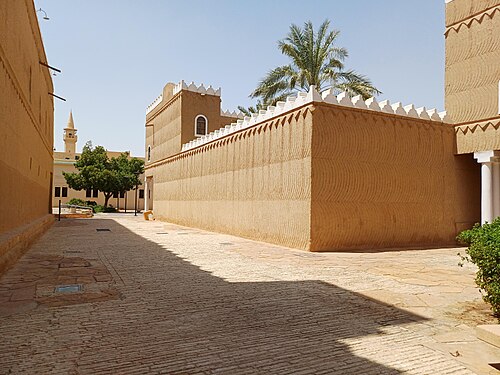
Al-Murabba marked the birth of the new Riyadh. By the 1930s the old walled town of Riyadh could no longer hold the growing population and the needs of the capital of the new kingdom, and King Abdulaziz built the palace of Al-Murabba beyond the walls, the first great building of the new city, the palace the beginning of the expansion of Riyadh, Al-Murabba the mark of the passage from the old town to the modern capital.
The old town had grown too small: the walled Riyadh of the oasis age too small for the capital of the united kingdom, the city needing to grow beyond its walls, the old town the cradle outgrown, the walled settlement the origin surpassed, the old Riyadh the town that the new capital outgrew, the city whose expansion began with the palace of Al-Murabba beyond the walls.
The palace led the expansion: Al-Murabba, built about a kilometer north of the old town, drawing the growth of Riyadh outward, the palace the pioneer of the new city, the residence the first great building of the expansion, Al-Murabba the leader of the growth, the palace the mark of the new Riyadh, the residence whose building began the transformation of the capital of Saudi Arabia.
King Abdulaziz
Al-Murabba was the palace of King Abdulaziz. Abdulaziz ibn Saud, the founder and first king of Saudi Arabia, who had taken Riyadh in 1902 and united the peninsula by 1932, built Al-Murabba as his royal residence and the seat of his government, the king the builder of the palace, Abdulaziz the founder whose seat was Al-Murabba, the ruler whose reign the palace embodies in the capital of the kingdom.
The king was the founder of the kingdom: Abdulaziz the ruler who united the Arabian Peninsula and founded the Kingdom of Saudi Arabia in 1932, the king the architect of the nation, the founder whose reign shaped the modern state, Abdulaziz the great king, the ruler whose palace of Al-Murabba was the seat of the founding age, the founder of Saudi Arabia.
The palace embodies his reign: Al-Murabba the monument of the reign of King Abdulaziz, the residence from which the founder ruled the united kingdom, the palace the seat of the first great age of Saudi Arabia, Al-Murabba the embodiment of the reign, the residence the monument of the founder, the palace the seat of King Abdulaziz in the capital of the kingdom.
The Building of Al-Murabba
Al-Murabba was built in the 1930s. The palace was built around 1936 to 1938, in the first years after the founding of the kingdom, as the royal residence and the seat of the government of King Abdulaziz, the palace a work of the founding age, Al-Murabba the residence built in the 1930s, the seat raised in the first years of the kingdom, the palace of the founder in the new Riyadh.
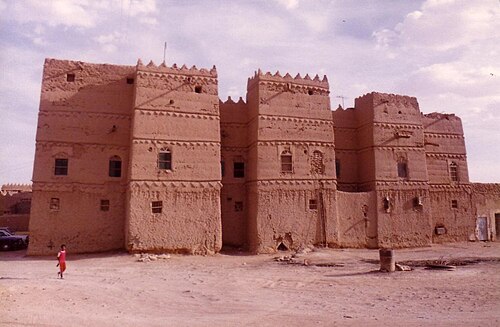
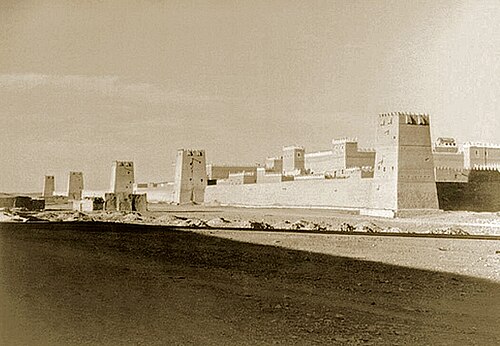
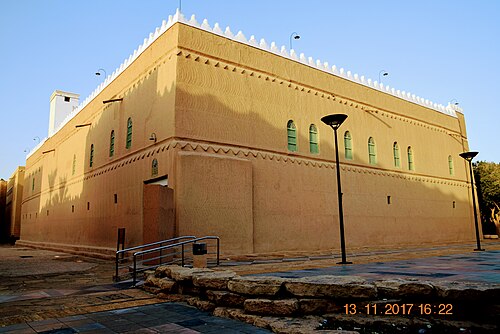
The palace was built of mud-brick: Al-Murabba built in the traditional mud-brick of the Najd, the great square of clay walls and towers raised by the builders of the central Arabian tradition, the palace a mud-brick masterpiece, Al-Murabba the clay residence of the king, the seat built in the traditional material, the palace the mud-brick jewel of the new Riyadh.
The name means the square: Al-Murabba, meaning the square, named for the square plan of the great palace, the name the description of the form, the palace the square residence, Al-Murabba the square palace of the king, the name the mark of the plan, the residence whose name proclaims its square form in the new Riyadh of King Abdulaziz.
The Square Palace
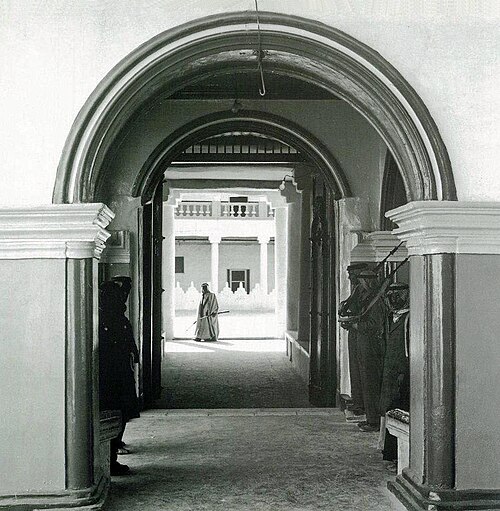
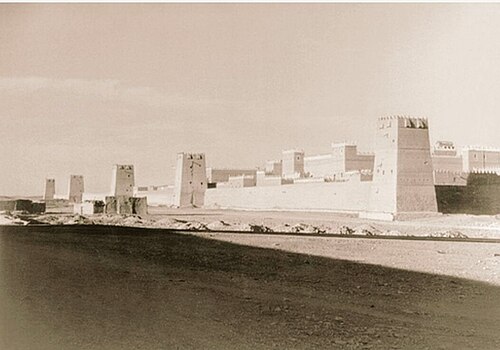
Al-Murabba is a great square palace. The residence is built as a vast square, each side a range of mud-brick buildings around a central courtyard, with towers at the corners, the square the form of the palace, Al-Murabba the square residence, the great square the plan of the king’s palace, the residence the square block of mud-brick in the new Riyadh of the founder.
The square plan ordered the palace: the square form of Al-Murabba, with its four ranges around the court, ordering the great residence, the square the organizing plan, the four sides the structure of the palace, the square the form of Al-Murabba, the great block the plan of the king’s residence, the square the order of the palace of the new Riyadh.
The towers marked the corners: the towers at the corners of Al-Murabba the mark of the square palace, the bastions the features of the mud-brick residence, the towers the ornament and the defense of the square, the corner towers the signature of Al-Murabba, the bastions the features of the great square, the towers the mark of the palace of King Abdulaziz in the new Riyadh.
The Mud-Brick Construction
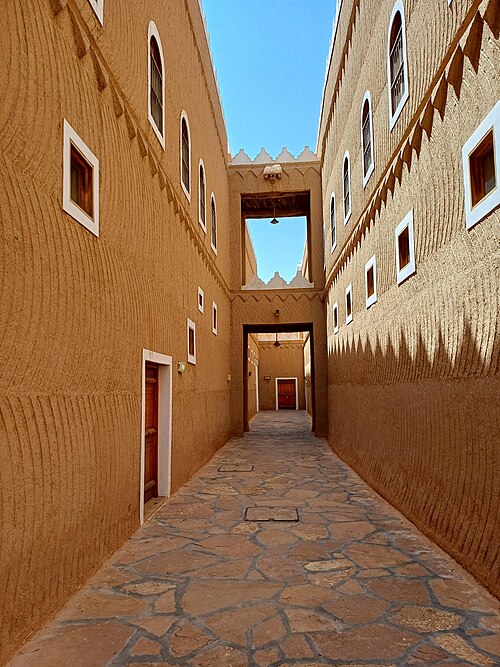
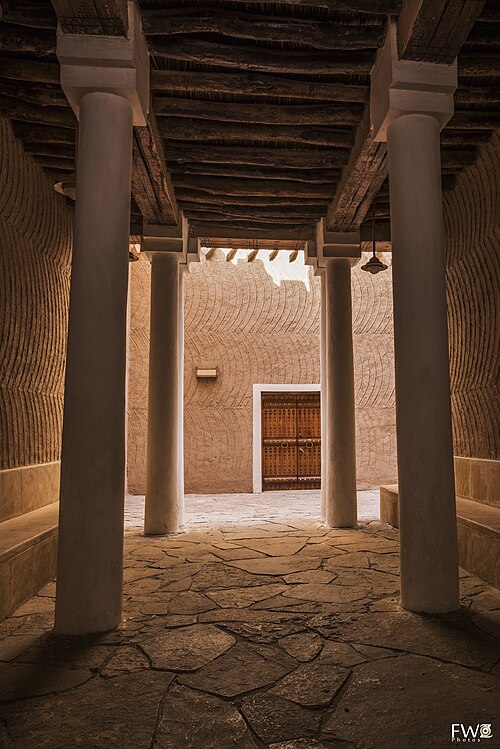
Al-Murabba is built of mud-brick. The palace, like the old Masmak and the traditional buildings of the Najd, is constructed of the sun-dried mud-brick and clay of central Arabia, the mud walls thick and insulating, the palace a monument of the traditional building, Al-Murabba the mud-brick residence of the king, the seat the showcase of the Najdi construction in the age of the founding of the kingdom.
The mud-brick continued the Najdi tradition: Al-Murabba built in the traditional material even as the kingdom entered the modern age, the palace the bridge between the old building and the new era, the mud-brick the continuation of the central Arabian tradition, the clay the material of the king’s palace, Al-Murabba the mud-brick residence that carried the Najdi tradition into the age of the kingdom.
The construction suited the climate: the mud-brick of Al-Murabba, thick and insulating, suited to the heat and the cold of the Najd, the material the climate-wise building of central Arabia, the mud walls the response to the desert, the clay the wisdom of the Najdi builders, Al-Murabba the climate-wise mud-brick palace of the king in the new Riyadh.
The Courtyard and the Galleries
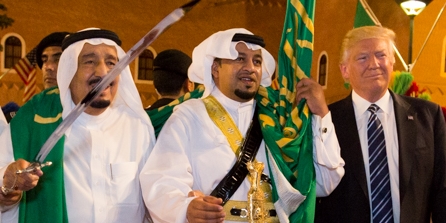
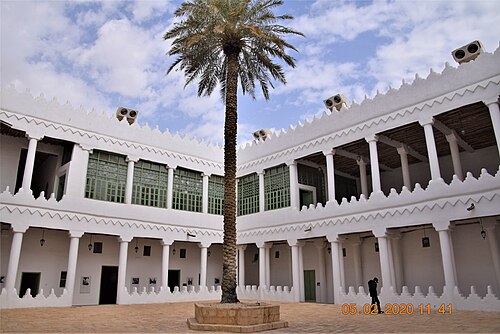
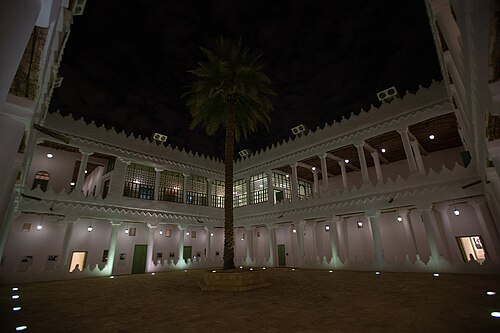
Al-Murabba is built around a courtyard with galleries. The palace encloses a central courtyard, surrounded by galleries and arcades on two storeys, the rooms opening onto the court through the shaded galleries, the courtyard the open heart of the palace, the galleries the shaded ways around the court, the courtyard and the galleries the heart of Al-Murabba, the court the focus of the king’s residence.
The galleries shaded the court: the galleries and arcades of Al-Murabba, running around the courtyard on two levels, giving shade and passage around the court, the galleries the shaded ways of the palace, the arcades the response to the heat, the galleries the cool passages of the residence, the arcades the jewels of the court, the galleries the shaded heart of Al-Murabba in the new Riyadh.
The courtyard was the heart of the palace: the central courtyard of Al-Murabba the open heart of the king’s residence, the court the center of the life of the palace, the courtyard the focus of the arrangement, the open court the heart of Al-Murabba, the central court the setting of the palace’s life, the courtyard the heart of the residence of King Abdulaziz in Riyadh.
The Diwan of the King
Al-Murabba holds the diwan of the king. The palace contains the great diwan, the reception and council hall where King Abdulaziz received his guests, his subjects, and the envoys, held his majlis, and conducted the business of the kingdom, the diwan the ceremonial heart of the palace, the reception hall the seat of the government, the diwan the jewel of Al-Murabba, the hall of the king in Riyadh.
The majlis was the heart of the government: the majlis of King Abdulaziz, held in the diwan of Al-Murabba, the gathering where the king received his people, heard their petitions, and ruled the kingdom in the traditional way, the majlis the heart of the governance, the diwan the setting of the king’s council, the majlis the jewel of the palace, the gathering the heart of the rule of Al-Murabba.
The diwan was the seat of the king’s audience: the diwan of Al-Murabba the hall where the king gave audience, received the delegations of the tribes and the regions, and held the ceremony of the state, the diwan the ceremonial heart of the palace, the reception hall the setting of the majesty, the diwan the jewel of Al-Murabba, the audience hall of King Abdulaziz in Riyadh.
The Royal Apartments
Al-Murabba holds the royal apartments. The palace contains the private apartments of the king and the royal family, the living quarters, the rooms of the household, and the private spaces of the residence, the apartments the private world of the palace, the royal rooms the domestic heart of Al-Murabba, the apartments the private jewels of the residence of King Abdulaziz in Riyadh.
The apartments were the private world of the king: the royal apartments of Al-Murabba the private quarters of King Abdulaziz and his family, the rooms the domestic heart of the palace, the apartments the private spaces of the king, the quarters the home of the royal family, the apartments the private world of Al-Murabba, the rooms the domestic heart of the palace of the founder.
The palace was both a home and a seat of state: Al-Murabba combining the private apartments of the king and his family with the public diwan and the offices of the government, the palace both a home and a seat of state, the residence the union of the private and the public, Al-Murabba the home and the government house of King Abdulaziz, the palace of the founder in Riyadh.
The First Car and the Lift
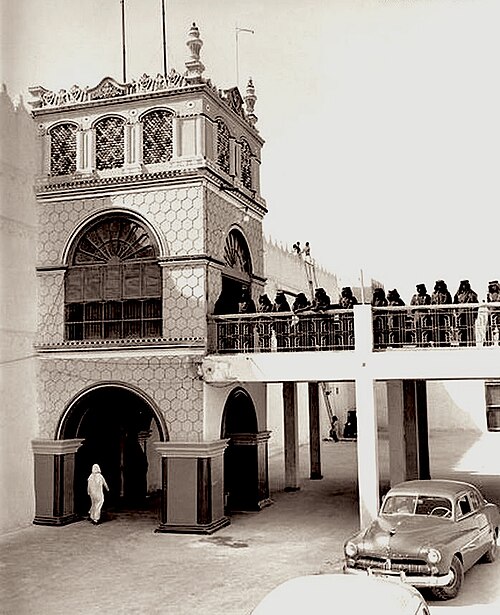
Al-Murabba saw the coming of the modern age. The palace of King Abdulaziz, built in the traditional mud-brick, was also the setting of the arrival of the modern world in Arabia, the king’s famous cars, the first automobiles of the kingdom, kept at the palace, and an elevator, a rare marvel, installed for the aging king, the palace the meeting of the old and the new in the age of the founding.
The king’s cars were a marvel of the age: the automobiles of King Abdulaziz, among the first in Arabia, kept at Al-Murabba, the cars the sign of the coming of the modern age, the automobiles the marvel of the kingdom, the vehicles the symbol of the new era, the cars the mark of the modern world arriving at the palace of the founder in Riyadh.
An elevator was installed for the king: an elevator, a rare and modern marvel, installed at Al-Murabba for the aging King Abdulaziz, the lift the sign of the modern age in the mud-brick palace, the elevator the marvel of the new technology, the lift the meeting of the old building and the new world, the elevator the symbol of the modern age at Al-Murabba in Riyadh.
The Seat of Government
Al-Murabba was the seat of the government. The palace was not only the residence of King Abdulaziz but the center of the government of the kingdom, the offices, the council, and the administration housed in the great square, the palace the seat of the state, Al-Murabba the government house of the founder, the residence the center of the rule of the kingdom in its first great age in Riyadh.
The administration was housed in the palace: the offices and the council of the government of King Abdulaziz housed in Al-Murabba, the palace the center of the administration, the residence the seat of the state, the government house the heart of the rule, Al-Murabba the seat of the administration, the palace the center of the government of the kingdom in the age of the founder.
The palace was the heart of the kingdom: Al-Murabba, as the residence of the king and the seat of the government, the heart of the kingdom in the age of King Abdulaziz, the palace the center of the state, the residence the heart of the rule, Al-Murabba the heart of the kingdom, the palace the center of the government and the reign of the founder of Saudi Arabia.
The King Abdulaziz Historical Center
Al-Murabba is the heart of the King Abdulaziz Historical Center. The palace stands today within the King Abdulaziz Historical Center, a great complex in Riyadh that includes the National Museum, the restored palace, gardens, and cultural institutions, the center the showcase of the history of the kingdom, Al-Murabba the historic heart of the complex, the palace the jewel of the center of the national history in the capital.
The center presents the history of the kingdom: the King Abdulaziz Historical Center, with its National Museum and its restored Murabba Palace, presenting the history of Arabia and the founding of Saudi Arabia, the center the showcase of the national story, Al-Murabba the historic jewel of the complex, the palace the heart of the center of the history of the kingdom in Riyadh.
The palace is the historic jewel of the center: Al-Murabba, restored within the historical center, the historic heart of the complex, the palace the monument of the founding age amid the modern institutions, the residence the jewel of the center, Al-Murabba the historic heart of the King Abdulaziz Historical Center, the palace of the founder in the capital of the kingdom.
From Palace to Museum
Al-Murabba has become a museum. The palace, restored, has become a museum presenting the life and the reign of King Abdulaziz, the furnishings, the diwan, the apartments, and the story of the founding displayed in the restored residence, the museum the keeper of the memory of the founder, Al-Murabba the museum of the reign, the palace the setting for the story of the founding age in Riyadh.
The museum presents the reign of the founder: the museum in Al-Murabba telling the story of King Abdulaziz, his reign, his court, and the founding of the kingdom, the palace the setting of the national memory, the museum the keeper of the story of the founder, Al-Murabba the museum of the reign, the palace the treasure of the history of the founding of Saudi Arabia in Riyadh.
The restoration preserved the palace: Al-Murabba, carefully restored, preserved as a monument of the founding age and a jewel of the historic Riyadh, the restoration the recovery of the palace, the museum the new life of the residence, Al-Murabba the restored jewel of the founder’s reign, the palace the preserved treasure of the history of the kingdom in the capital.
The Murabba Palace Today
The Murabba Palace today stands as the monument of the reign of King Abdulaziz, the great mud-brick residence of the founder of Saudi Arabia, the first royal palace of the new Riyadh, the seat of the king and the government, the palace of the square plan, the galleries, the diwan, and the royal apartments, Al-Murabba the historic heart of the King Abdulaziz Historical Center, the enduring monument of the founding age in the capital.
The palace endures as a monument of the founding: Al-Murabba, restored and honored, standing as the monument of the reign of the founder, the palace the jewel of the historic Riyadh, the residence the seat of the founding age, Al-Murabba the enduring monument of King Abdulaziz, the palace the treasure of the history of the kingdom, the residence the symbol of the founding in the capital of Saudi Arabia.
The Murabba Palace continues the Saudi Arabian palace series, the great mud-brick residence of King Abdulaziz, the founder of the kingdom, the first royal palace of the new Riyadh, the seat of the king and the government, Al-Murabba the historic heart of the King Abdulaziz Historical Center, the enduring monument of the founding age, the palace of the founder in the capital of Saudi Arabia.
Watch the Murabba Palace on Film
Visiting the Murabba Palace Today
The Murabba Palace stands within the King Abdulaziz Historical Center in the center of Riyadh, the capital of Saudi Arabia, about a kilometer north of the old Masmak and the historic quarter, near the National Museum; the restored mud-brick palace is visited for its square plan, its courtyard and galleries, the diwan of King Abdulaziz, the royal apartments, and the exhibits on the founder and the founding of the kingdom. Travel in Saudi Arabia has become far more accessible to visitors in recent years; current conditions should still be checked before any visit. You can find the palace on the map here: Murabba Palace on Google Maps.


