Some castles overwhelm you with size, and some seduce you with setting. Cesky Krumlov belongs firmly to the second kind. It does not sprawl across a mountain or crown a capital city. Instead it curls along a rocky spur inside a tight loop of the Vltava river, deep in the forests of southern Bohemia, its towers and painted walls reflected in the slow green water below. The whole thing looks less like a fortress than like a stage set for a fairy tale that someone forgot to take down.
And yet behind the storybook charm lies one of the most complete and best-preserved castle complexes in all of Central Europe, second in size within the Czech lands only to Prague Castle itself. It is a place of dynasties and intrigue, of Renaissance splendour and Baroque theatre, of powerful noble families who ruled this corner of Bohemia almost like private kings for centuries. UNESCO put the whole town and its castle on the World Heritage list, and once you have walked its lanes you understand exactly why.
So come south with me, away from the crowds of Prague, into the quiet hills where the river bends back on itself and a small town wraps around a great castle. We will climb its painted tower, cross its impossible bridge, step inside a theatre where time seems to have stopped, and meet the families who made this remote spur one of the loveliest places in Europe.
In This Article
- A Castle Wrapped in a River’s Arm
- The Lords of the Rose Who Built It
- Courtyards That Trick the Eye
- Climbing the Painted Tower
- The Bridge That Floats on Air
- A Theatre Frozen in the Eighteenth Century
- The Whole Complex Seen From Above
- Terraced Gardens and a Summer Pavilion
- The Bears in the Moat
- The Town Beneath the Walls
- Life on the Green River
- The Later Lords and the Long Sleep
- The Castle After Dark
A Castle Wrapped in a River’s Arm
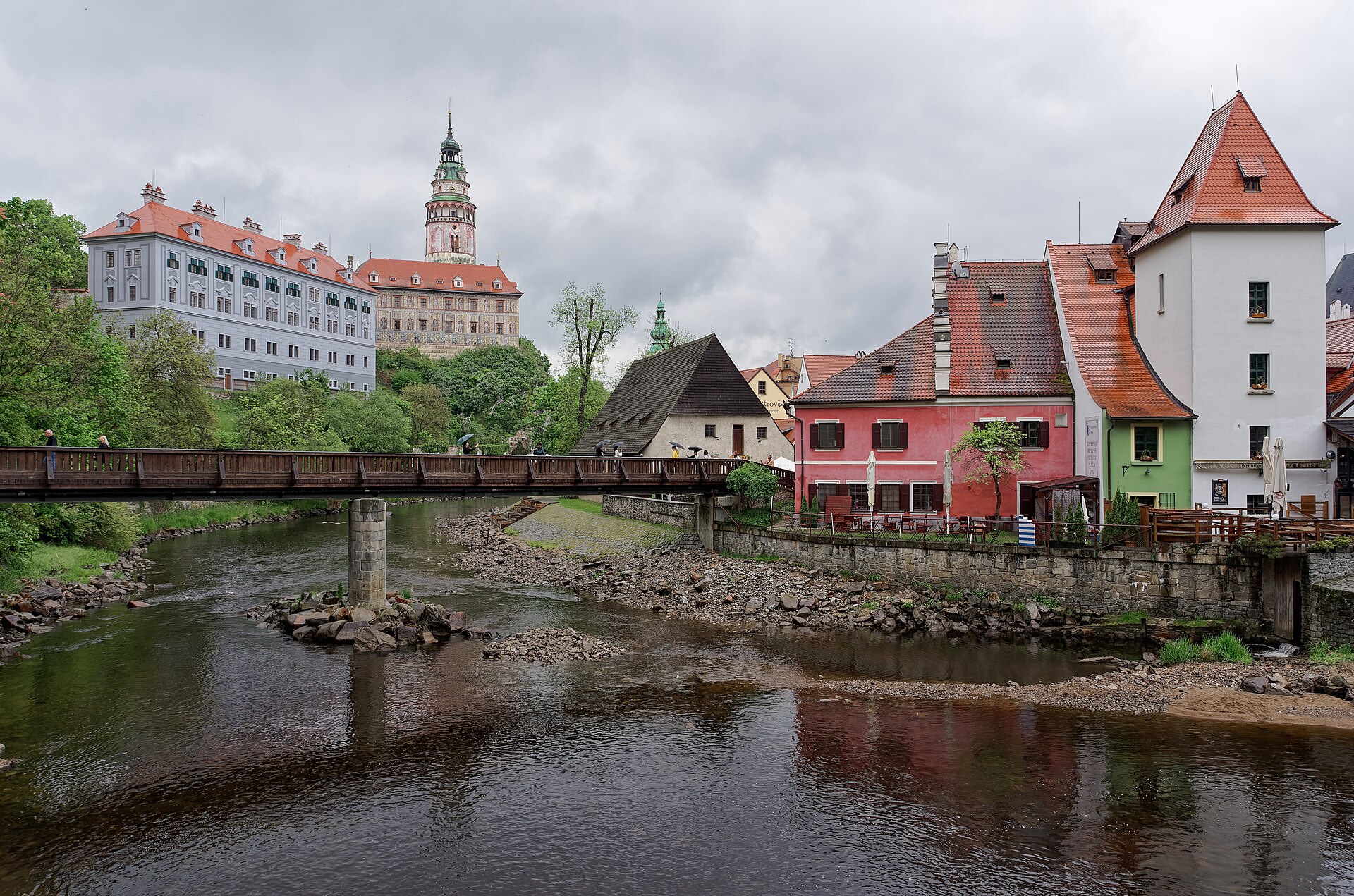
The first thing to understand about Cesky Krumlov is its geography, because the whole place is a gift of the river. The Vltava, the same river that flows north through Prague, here makes a dramatic double loop, an almost complete S-bend that nearly ties itself in a knot. On the higher, rockier bank rose the castle; in the tight coils of the river below spread the town. Water on three sides made the site easy to defend and impossible to forget.
The name itself comes from this landscape. Krumlov is thought to derive from the German Krumme Aue, meaning something like crooked meadow or crooked water-side, a plain description of the way the river bends back on itself. Cesky simply means Bohemian, distinguishing it from another Krumlov in Moravia. So the town’s very name is really just an old observation about the shape of the river, repeated for eight hundred years.
Because the river hemmed the town in so tightly, Cesky Krumlov never had room to sprawl and modernise in the way larger cities did. It could not burst its banks with ring roads and factories. Instead it stayed small, dense and medieval, its houses packed shoulder to shoulder along winding lanes, and that accidental preservation is exactly why it feels so magical today. The river that once defended the town ended up protecting its beauty.
Stand on any of the bridges and look up, and the composition arranges itself perfectly: the water in the foreground, the red roofs climbing the slope, and above them all the great painted tower of the castle catching the light. If you want to find this exact spot on a map before you go, here are the coordinates for the loop in the river.
The Lords of the Rose Who Built It
The castle was founded in the thirteenth century by the Vitkovci, or Witigonen, a powerful Bohemian noble clan who carved out a domain in the southern forests. But it was one branch of this family, the Lords of Rozmberk, known in English as the Rosenbergs, who would make Cesky Krumlov famous. Their heraldic emblem was a five-petalled red rose, and for three hundred years that rose bloomed over the whole of southern Bohemia.
The Rosenbergs were not ordinary nobles. At the height of their power they were the mightiest aristocratic house in the kingdom, wealthier and grander than many minor royals, and they governed their lands almost as sovereign princes. Cesky Krumlov was their principal seat, the center of their court, and they poured their enormous wealth into transforming a Gothic border fortress into a residence fit for their ambitions. Much of what you see today began as an expression of Rosenberg pride.
Under the greatest of them, in the sixteenth century, the castle blossomed in the Renaissance style then sweeping in from Italy. Italian architects and craftsmen were brought north, and they reshaped the old stronghold with elegant courtyards, painted facades and that most distinctive feature of all, the great round tower decorated with colourful trompe-l’oeil painting that makes it look far more ornate than its actual stonework.
The last of the Rosenbergs died in 1611 without a direct heir, ending three centuries of the red rose, and the estate eventually passed by sale and inheritance to other great families. But the shape they gave Cesky Krumlov, the fusion of Gothic bones and Renaissance skin, survived every later owner, and it is still the essential character of the castle you walk through now.
The Rosenbergs also understood the power of ceremony and display. They maintained a glittering court here, held tournaments and feasts, patronised artists and scholars, and cultivated a reputation for magnificence that spread far beyond Bohemia. To be received at Cesky Krumlov in the sixteenth century was to be admitted to one of the most cultured aristocratic households in Central Europe, and the family spent lavishly to keep it that way.
Courtyards That Trick the Eye
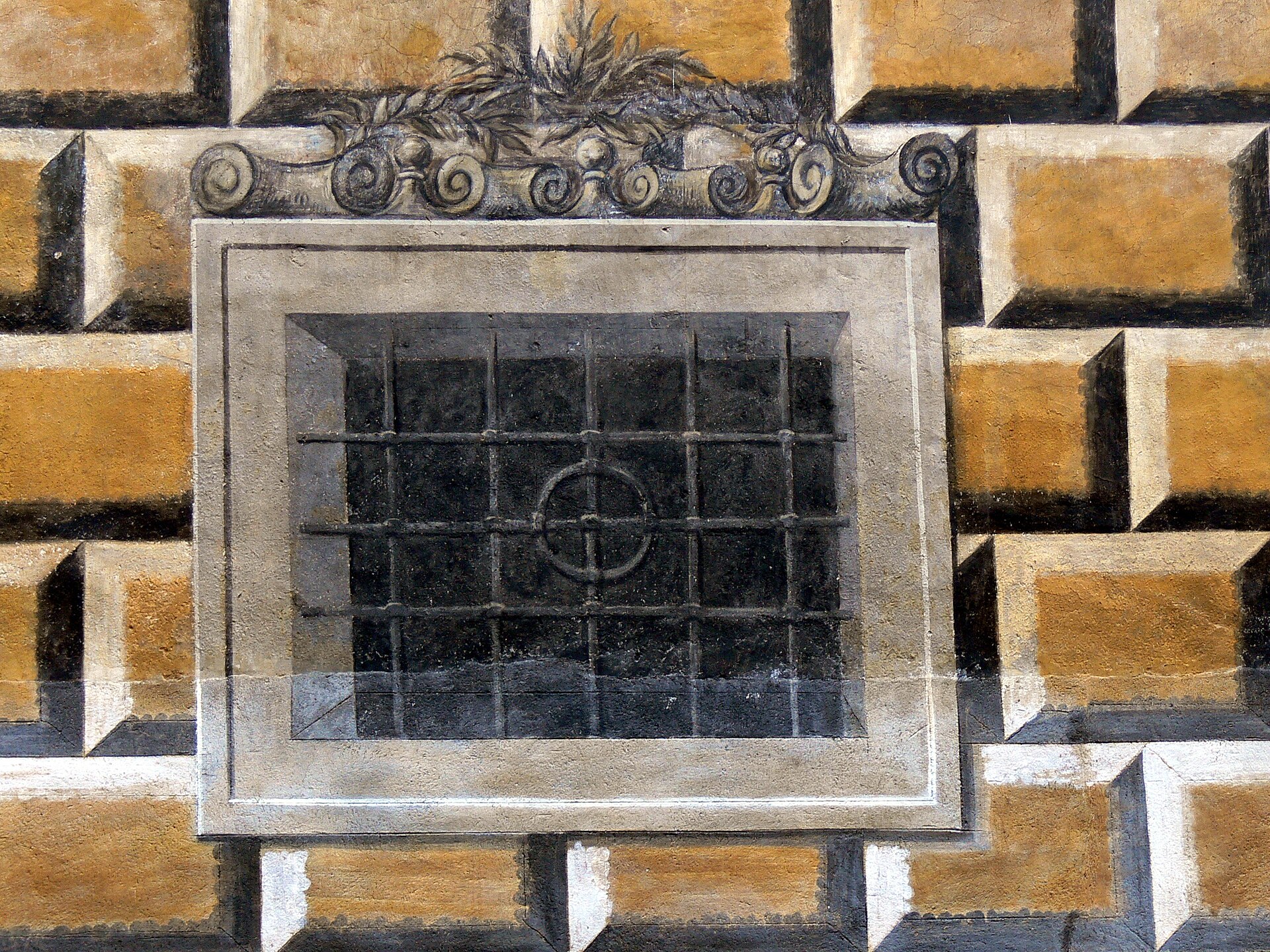
Walk up into the heart of the castle and you pass through a sequence of courtyards, and here you meet one of Cesky Krumlov’s great delights, the art of the painted illusion. The walls are covered in sgraffito and fresco, a technique where the surface is decorated to look like something it is not, so that flat plaster becomes rusticated stone blocks, painted columns frame real windows, and imaginary statues stand in painted niches.
This was a very Renaissance kind of magic, a way of achieving the grandeur of carved stone at a fraction of the cost and effort. The Rosenbergs and their successors clearly loved it, because the courtyards are a riot of it, every surface alive with trompe-l’oeil detail. Stand in the middle and turn slowly around, and you realise that a great deal of the architectural richness surrounding you is quite literally painted on, a beautiful and cheerful deception.
The effect is not just decorative, it tells you something about how these nobles wanted to be seen. Painted splendour was still splendour. It announced taste, wealth and cultural sophistication, a connection to the fashionable courts of Italy, and it turned a working castle into a stage for aristocratic display. The courtyards were where the household gathered and where guests were impressed, and every painted column was part of the performance.
Restorers have worked hard to recover this painted decoration, much of which had faded or been covered over the centuries, and today the courtyards glow again much as they would have in the castle’s Renaissance heyday. It is worth lingering here, letting your eye be fooled and then catching the trick, before you climb deeper into the complex.
If you look closely, you can often see where the real architecture ends and the painted illusion begins, a shift in texture, a shadow that falls the wrong way, and catching these little seams is part of the fun. The painters were not trying to deceive you forever, only to delight you, and there is a playful, almost theatrical honesty in decoration that shows off its own cleverness.
Climbing the Painted Tower
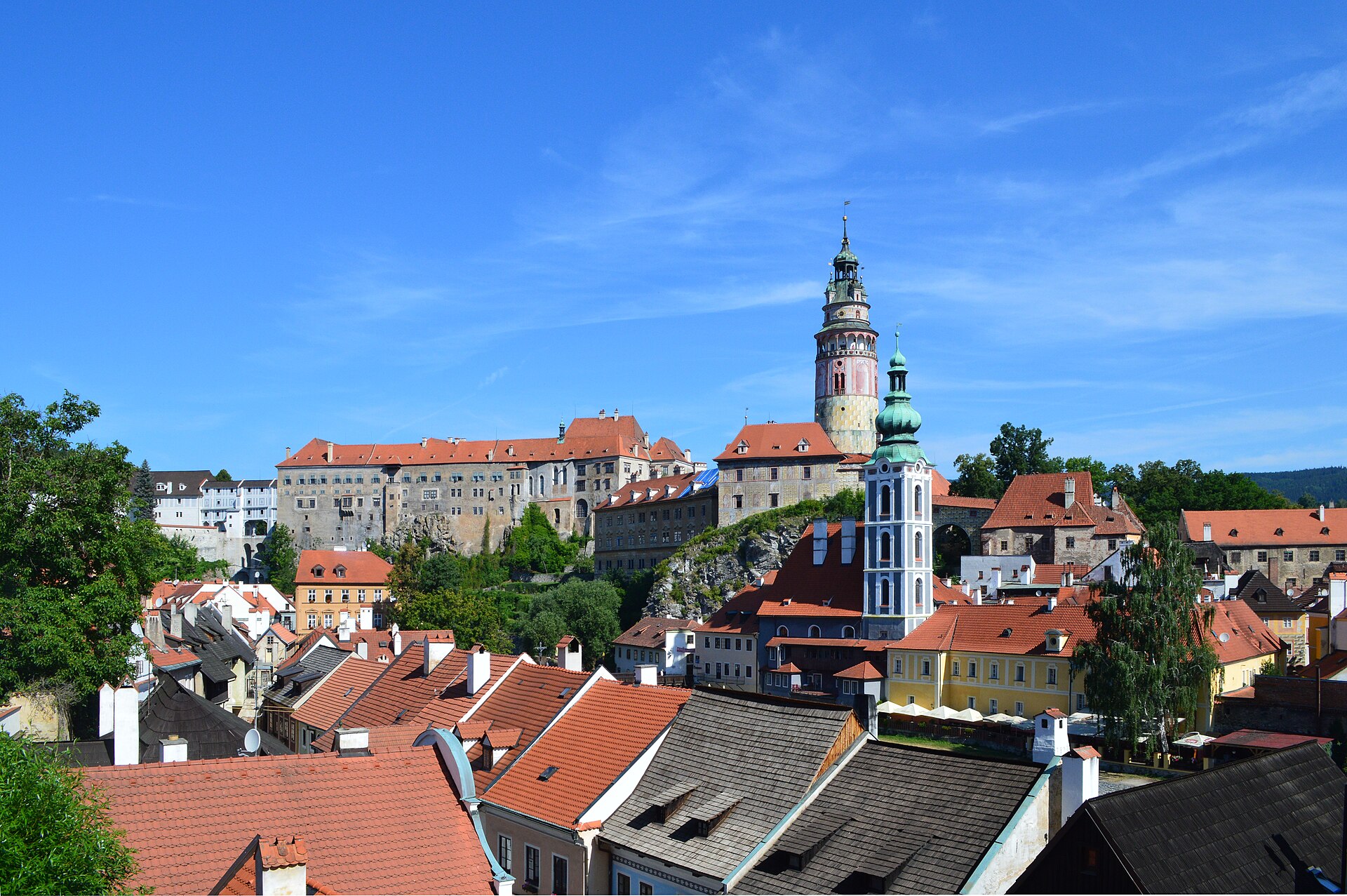
If there is one image that says Cesky Krumlov, it is the castle tower, a tall round tower with a gallery near the top and a pointed roof, its whole surface painted in bands of ochre, red and green with mock stonework and delicate ornament. It rises above everything else in the town, visible from almost every street and bridge, and climbing it is one of the essential things to do here.
The tower began as part of the medieval fortifications, a solid defensive structure, but in the sixteenth century it was raised, given its elegant arcaded gallery, and covered in the colourful Renaissance painting that transformed it from a grim military lookout into a joyful landmark. It is a perfect symbol of what happened to the whole castle, a Gothic fist wrapped in a Renaissance glove.
The climb up the narrow internal stair is worth every step. From the gallery you get one of the finest views in Bohemia, the terracotta roofs of the old town packed into the river loop directly below, the green Vltava threading between them, and beyond, the wooded hills of southern Bohemia rolling away to the horizon. On a clear day the whole enchanting geography of the place lays itself out beneath you.
There is something wonderful about a tower that was built to watch for enemies now being climbed by visitors simply to admire the beauty of the place. The threat it once guarded against is long gone, but the view it commands is as strategic as ever, only now the thing worth surveying is not an approaching army but the loveliness of the town it protects.
The Bridge That Floats on Air
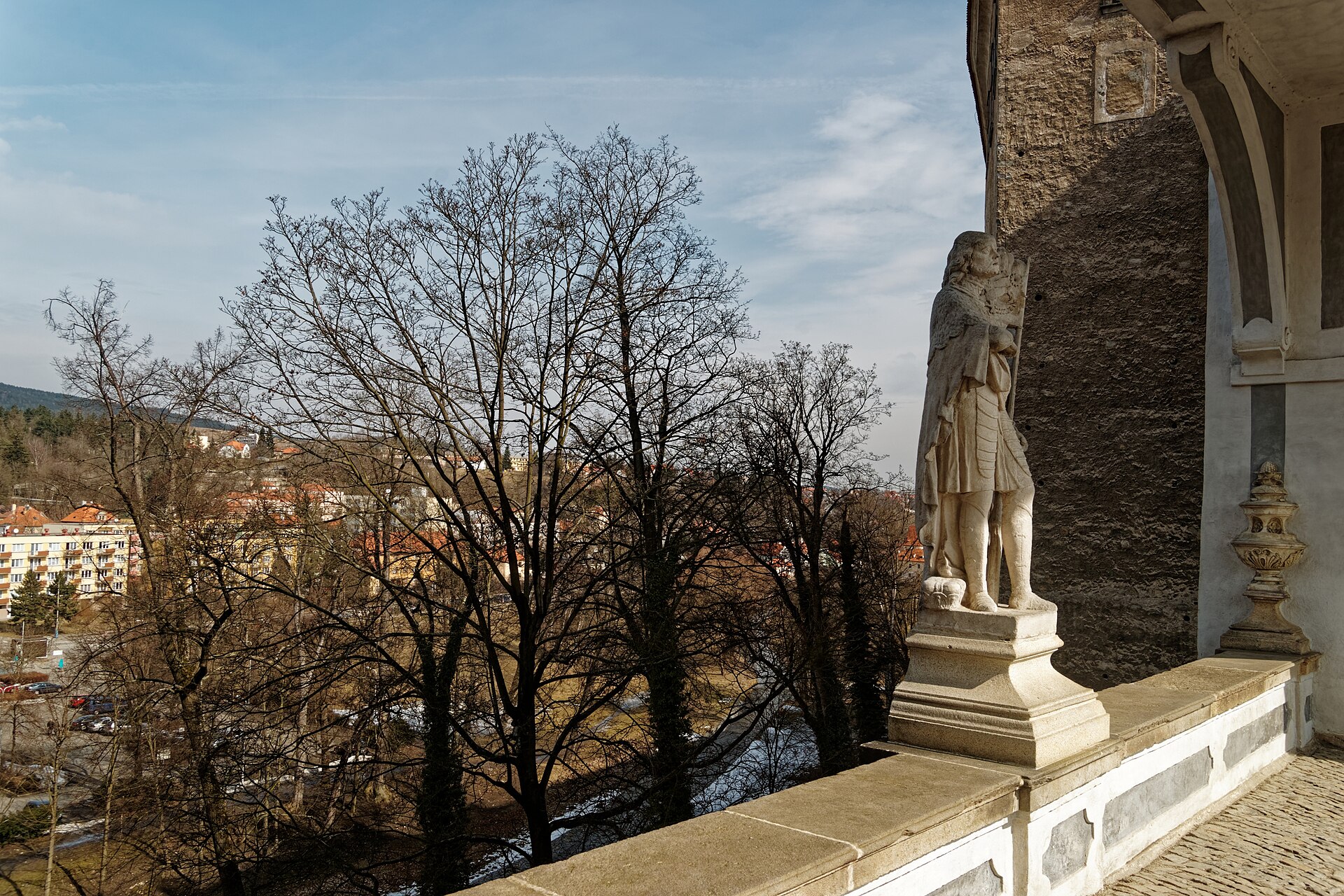
Of all the castle’s surprises, the strangest and most spectacular is the Cloak Bridge, the Plastovy most, a tall multi-storey bridge that leaps across a deep natural ravine to connect the upper castle with the theatre and gardens beyond. It stands on enormous stone piers, rising in tiers like a fragment of a Roman aqueduct dropped into a Bohemian forest, and crossing it feels genuinely vertiginous.
The name, cloak bridge, is thought to come from the way it seems to wrap around and connect the different parts of the castle, drawing them together like a cloak. It was built in its present grand form in the eighteenth century, replacing earlier wooden walkways, and it solved a very practical problem, how to move the court between the residential castle and the theatre and gardens on the far side of the gorge without descending all the way to the bottom and climbing back up.
But it is far more than a practical crossing. The bridge has covered corridors on its upper levels, so that nobles could pass in comfort and privacy high above the ravine, and it is one of the great theatrical gestures of the whole complex, a piece of pure architectural drama. Look up at it from the valley floor and it seems almost impossibly tall and slender, a stone ladder into the sky.
Crossing it today, you walk where princes and their guests once walked on their way to the theatre, suspended between the two halves of the castle with the treetops far below. Few bridges anywhere manage to be so useful and so astonishing at the same time, and it remains one of the most memorable moments of any visit to Cesky Krumlov.
Engineers still admire the boldness of the design, which had to carry not just foot traffic but the weight of covered galleries across a wide and deep natural gorge. That it has stood for some three centuries, and still carries visitors safely today, is a quiet testament to the skill of the Baroque builders who raised it on their towering stone piers.
A Theatre Frozen in the Eighteenth Century
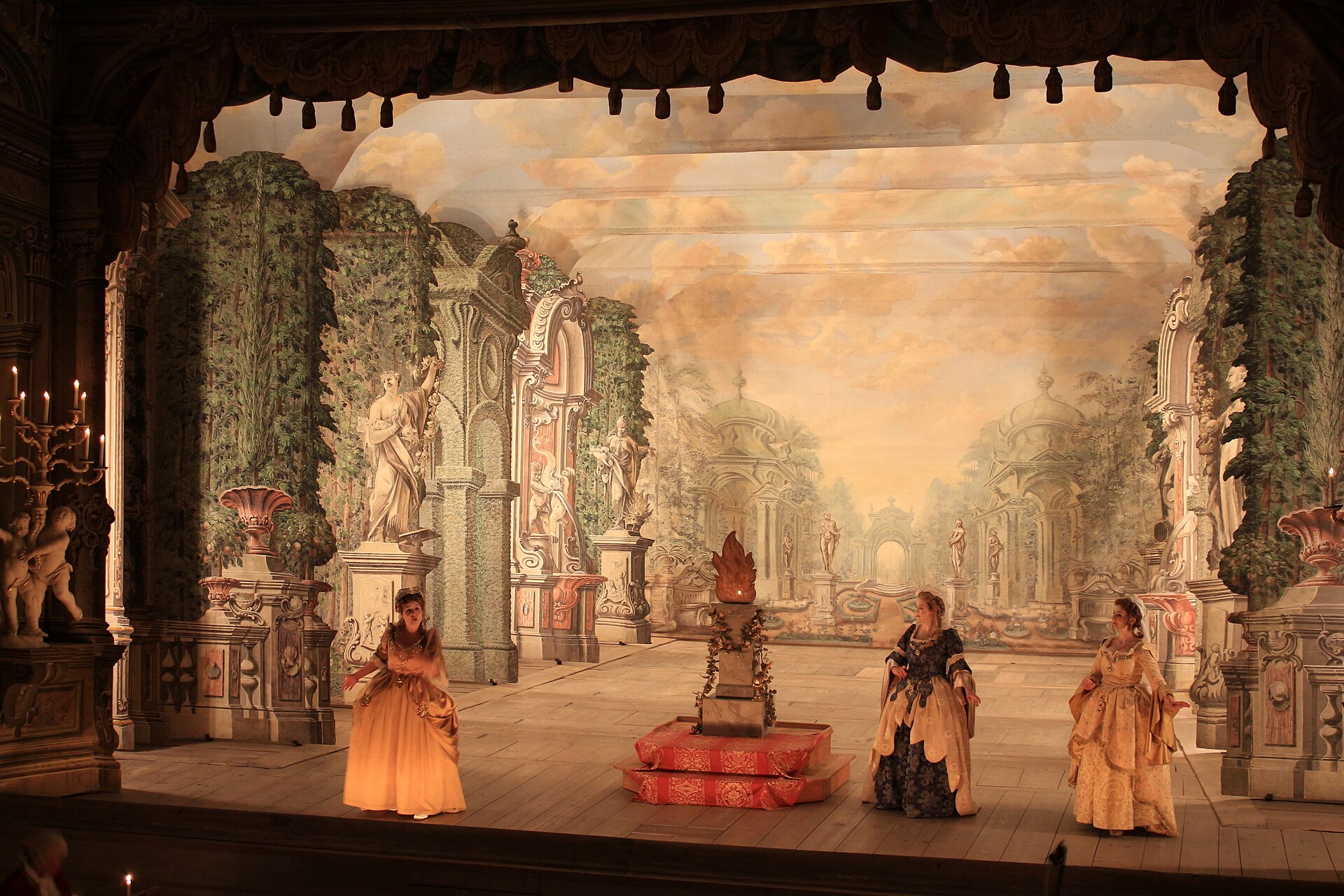
Across the Cloak Bridge lies what may be the castle’s most precious treasure, and it is one almost nobody expects: the Baroque theatre. Built and furnished in the eighteenth century, it is one of the very few Baroque theatres anywhere in the world to survive complete, with its original auditorium, stage, painted scenery, elaborate machinery, costumes, props and lighting equipment all preserved together in one place.
To step inside is to walk into the 1760s. The wooden stage machinery still works, a marvel of ropes, wheels and hand-turned drums that could change an entire painted set in seconds, conjure clouds, raise and lower actors, and produce thunder and wind. Rows of painted flats slide in grooves to transform a palace into a forest into a stormy sea, all powered by human muscle backstage, exactly as they were two and a half centuries ago.
The reason this survived when almost every other Baroque theatre in Europe was rebuilt or destroyed is precisely Cesky Krumlov’s remoteness and the continuity of its noble owners. Later families simply preserved it rather than modernising it, and so a complete slice of eighteenth-century theatrical life came down to us intact. It is so fragile and so important that performances are strictly limited to protect it.
Standing in that little auditorium, surrounded by painted gods and cherubs, with the ingenious machinery hidden just out of sight, you feel the presence of a vanished world of courtly entertainment more vividly than in almost any museum. This is not a reconstruction of the Baroque theatre. It is the Baroque theatre, still holding its breath after two hundred and fifty years.
Performances that do take place here use only candlelight and the original machinery, and audiences are kept small, so attending one is a rare privilege rather than a casual night out. Even standing in the empty auditorium during a daytime tour, though, you can feel exactly how the space was meant to work, every sightline and painted surface designed to pull the eye toward the stage and its illusions.
The Whole Complex Seen From Above
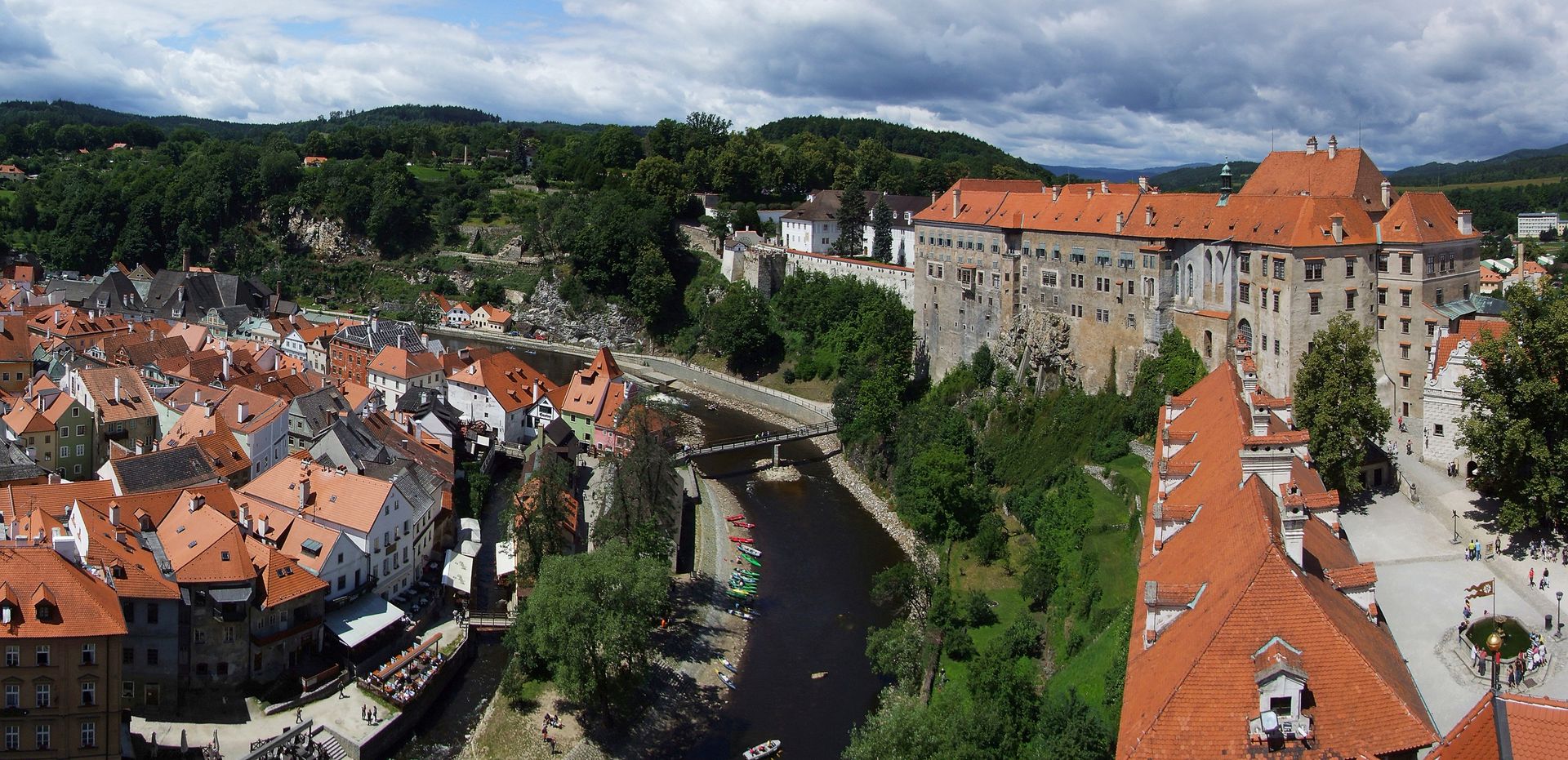
It is easy, wandering the lanes and courtyards, to lose track of just how big Cesky Krumlov’s castle really is. Seen from above, the truth becomes clear: this is an enormous complex of some forty buildings and palaces arranged around five courtyards, sprawling along the ridge for hundreds of meters, second in size among all Czech castles only to the great fortress in Prague. It is a small town in its own right, perched above the actual town below.
The complex grew by accretion over seven centuries, each owner adding wings, halls, chapels, stables and gardens according to the fashion and needs of their age, and yet the whole holds together with remarkable harmony. Gothic cores wear Renaissance and Baroque skins, and the different courtyards flow into one another up the slope, so that walking through the castle is like walking through a compressed history of European architecture.
That the entire ensemble, castle and town together, has survived so completely is genuinely rare. Wars, fires and modernisation flattened or transformed most comparable places, but Cesky Krumlov slipped through the centuries almost unscathed, too remote to be strategically vital and too beloved to be torn down. In 1992 UNESCO recognised this by inscribing the whole historic centre on its World Heritage list.
To really grasp the setting, it helps to see it in motion, the river looping around the rock, the tower standing over the roofs, the castle stretching along its ridge. This short walk through the town and up to the castle captures what no single photograph can, the way the whole place fits together like a model village that happens to be entirely real.
Terraced Gardens and a Summer Pavilion
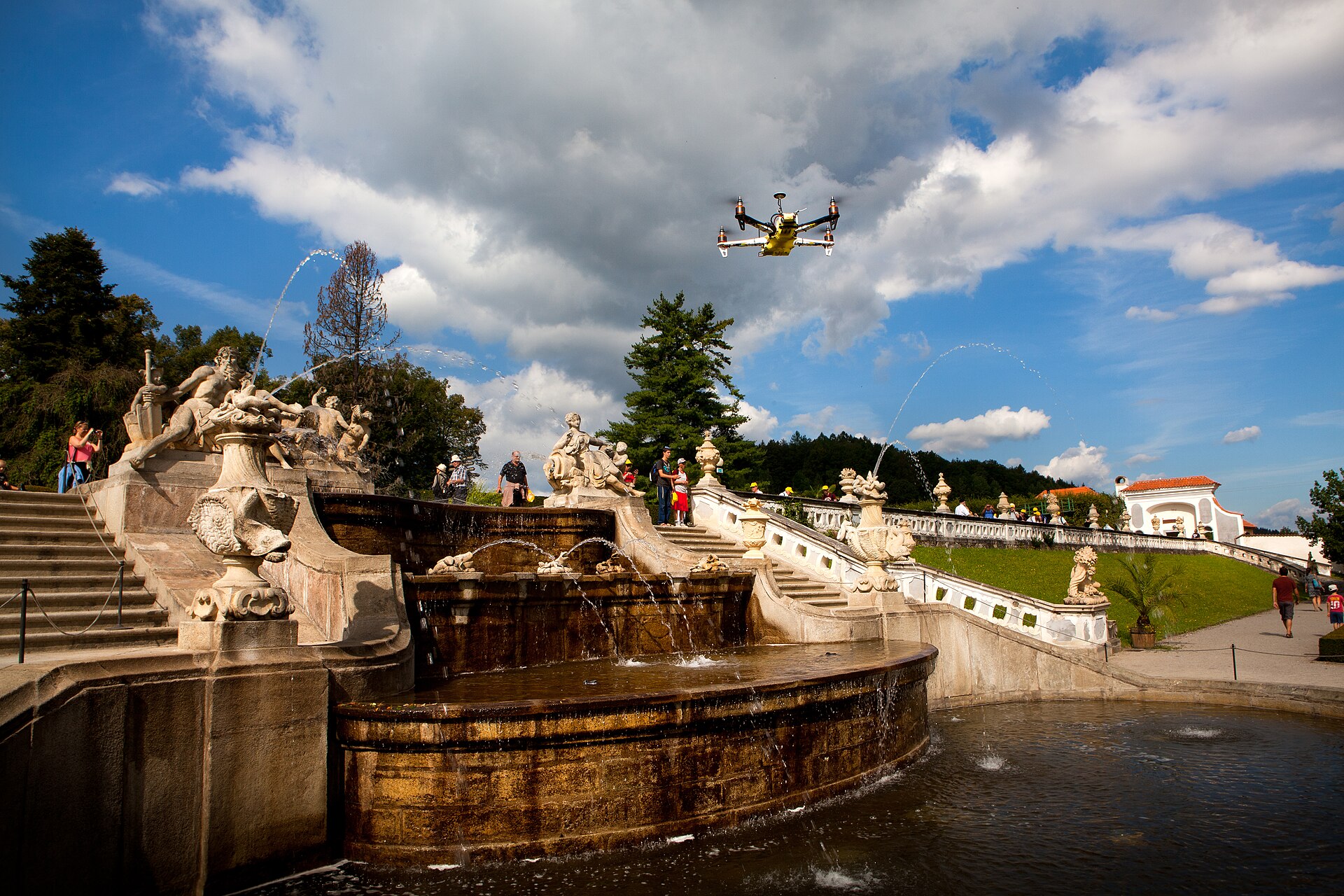
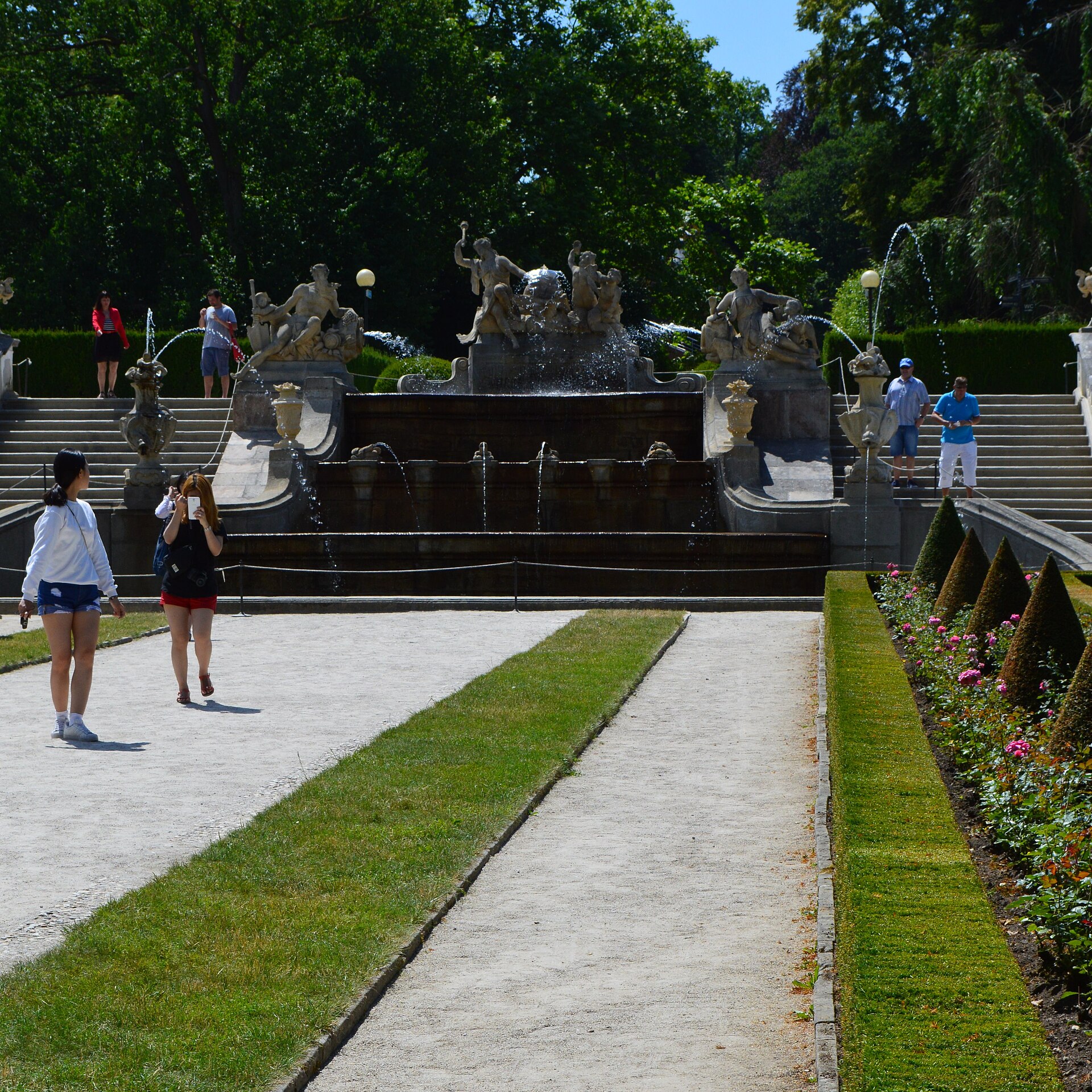
Beyond the theatre the castle opens out into its gardens, a long terraced park laid out in the formal Baroque taste and stretching for several hundred meters along the ridge. After the density of the courtyards and lanes, the gardens feel like a great exhalation, all open lawns, clipped hedges, gravel walks and the sound of water from an ornate cascade fountain at their heart.
The gardens were developed over the seventeenth and eighteenth centuries as the pleasure grounds of the castle’s noble owners, a place for strolling, entertaining and displaying the refined taste expected of a great house. At the upper end stands the Bellaria, an elegant summer pavilion built for exactly the kind of leisured amusement these spaces were meant to host, a place to take the air, listen to music, and admire the view.
It is in these gardens that Cesky Krumlov’s famous revolving auditorium sits, a modern open-air theatre with a rotating audience seating area that turns to face different natural backdrops among the trees. It is a controversial addition, loved by audiences and frowned on by heritage purists, but it continues the castle’s very old association with theatre and spectacle in a surprising new form.
Walking the gardens on a summer evening, with the fountain playing and the light going golden over the hills, you understand that this castle was never only about power and defence. It was also about pleasure, about the good life of a wealthy aristocracy who wanted beauty and leisure as well as strength, and the gardens are where that softer ambition still lingers most sweetly.
The Bears in the Moat
Here is one of Cesky Krumlov’s most unexpected and endearing traditions. In the dry moat that separates the first and second courtyards, the castle keeps live bears, and it has done so, on and off, for centuries. Crossing the bridge into the castle, visitors lean over the parapet to look down into the moat, hoping to catch sight of the resident bears ambling about below.
The tradition is tied to a piece of Rosenberg family mythology. The Lords of Rozmberk liked to claim a grand connection to the ancient and powerful Italian house of Orsini, whose name derives from the Latin and Italian words for bear. To dress up their lineage with this borrowed Italian glamour, the Rosenbergs adopted the bear as a family symbol and began keeping the animals at their castles, and Cesky Krumlov’s bears descend, in spirit at least, from that vanity.
So the bears are not just a charming zoo attraction, they are a living heraldic joke, a four-legged footnote to a noble family’s social climbing. The Rosenbergs wanted the world to believe they were cousins to Italian princes, and five hundred years later their pretension survives as a beloved castle tradition, the bears fed and cared for and cooed over by generations of delighted children.
The bears are looked after under modern welfare standards today, with proper dens and care, and they remain one of the small human details that make Cesky Krumlov so lovable. A castle can impress you with towers and theatres, but it is the bears in the moat, a whim of aristocratic pride turned into centuries of tradition, that people so often remember most fondly.
Generations of these bears have been given names and become genuine local celebrities, their births and antics followed with affection by the townspeople. At Christmas the moat is even decorated for them, a small seasonal ritual that shows how completely these animals have become part of the identity and emotional life of the town.
The Town Beneath the Walls
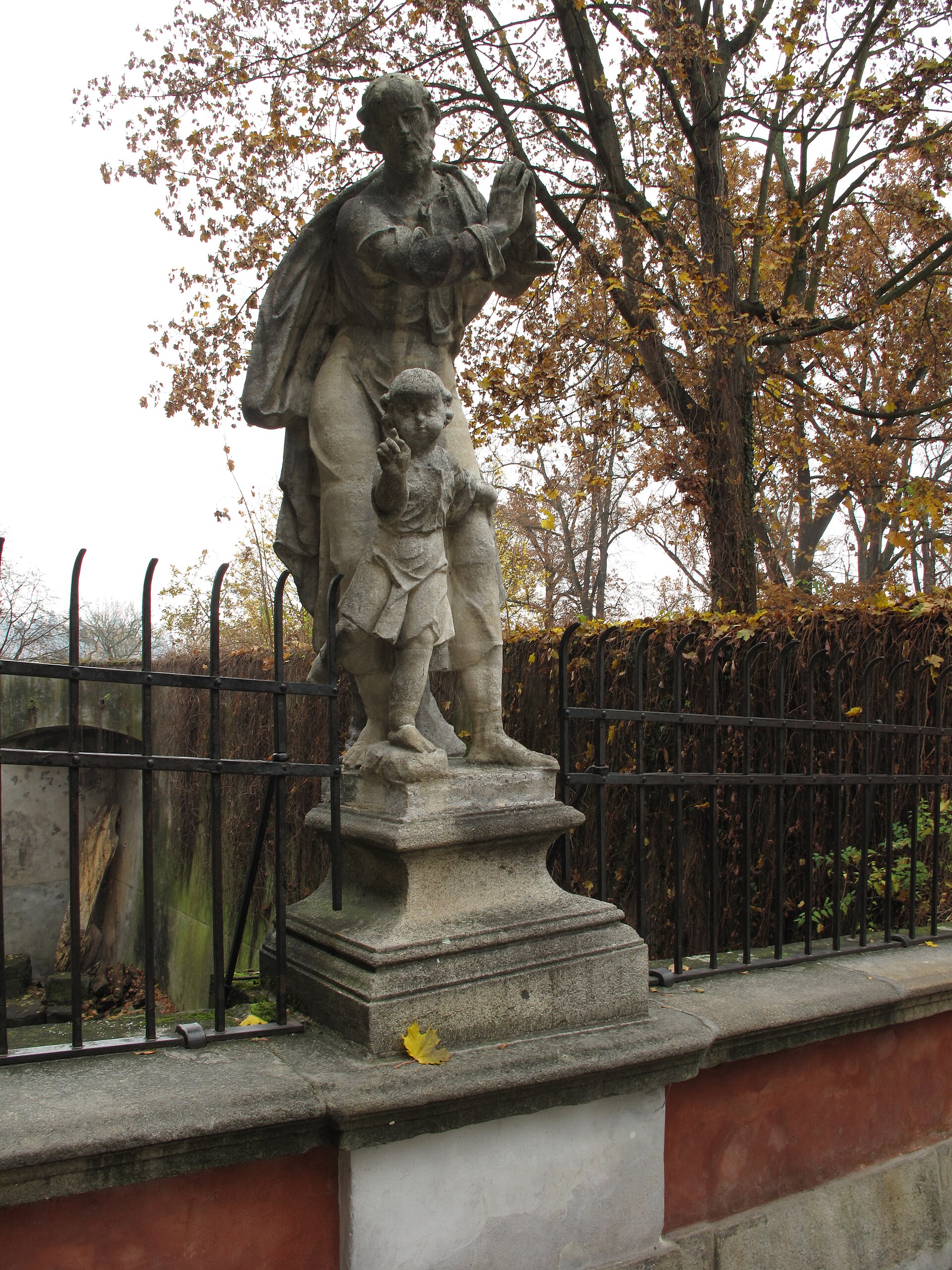
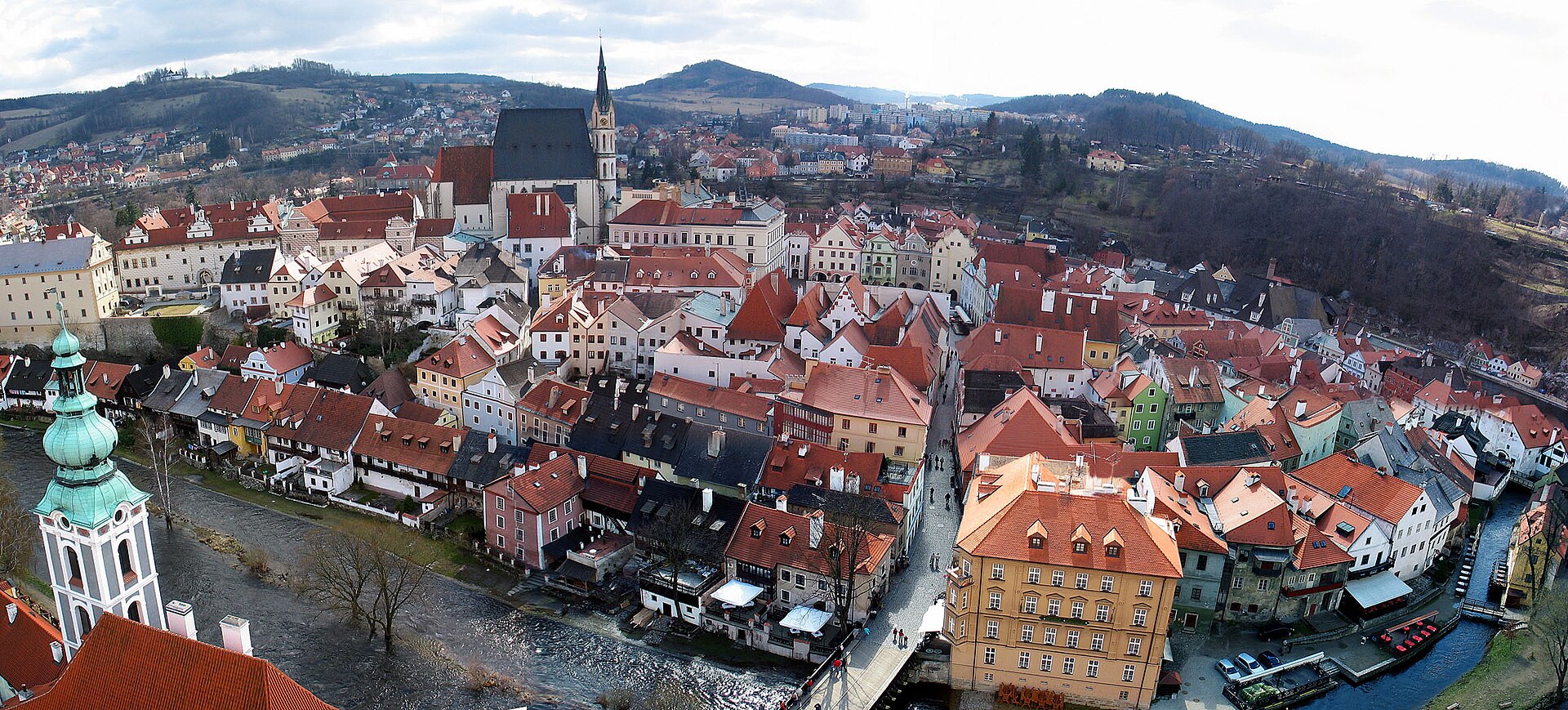
A castle is nothing without the community that grew up in its shadow, and Cesky Krumlov’s old town is as perfectly preserved as the fortress above it. Directly below the castle lies the district of Latran, the quarter that housed the servants, craftsmen and tradespeople who served the great house, and across the river loop spreads the main town square and the parish church of St. Vitus, echoing its far grander namesake in Prague.
The town and castle grew up together as two halves of a single organism. The nobles on the ridge needed brewers, bakers, blacksmiths, tailors and merchants, and these clustered in the streets below, their livelihoods bound up with the fortunes of the family above. When the Rosenbergs prospered, so did the town, and the handsome burgher houses lining the lanes, many with Renaissance and Baroque facades, are the visible fruit of that shared prosperity.
Because the river loop physically prevented expansion, the medieval and Renaissance townscape was preserved almost intact, a tangle of cobbled lanes, archways, little squares and steep steps that has barely changed in shape for centuries. Walking it today, you move through a genuine historic town, not a reconstruction, where the buildings have simply been lived in continuously rather than swept away and replaced.
This intimate relationship between castle and town is part of what UNESCO recognised, because the two cannot really be separated. The castle explains the town and the town completes the castle, and together they form one of the most complete pictures we have of what a small European seat of power actually looked and felt like in its heyday.
Life on the Green River
The Vltava does not just frame Cesky Krumlov, it flows right through it, and life here has always been lived along the water. For centuries the river was a working artery, carrying timber floated down from the southern forests, driving mills, and supplying the fish that filled the ponds and tables of the region. Southern Bohemia is famous for its carp ponds, and the river and its tributaries were the veins of that watery economy.
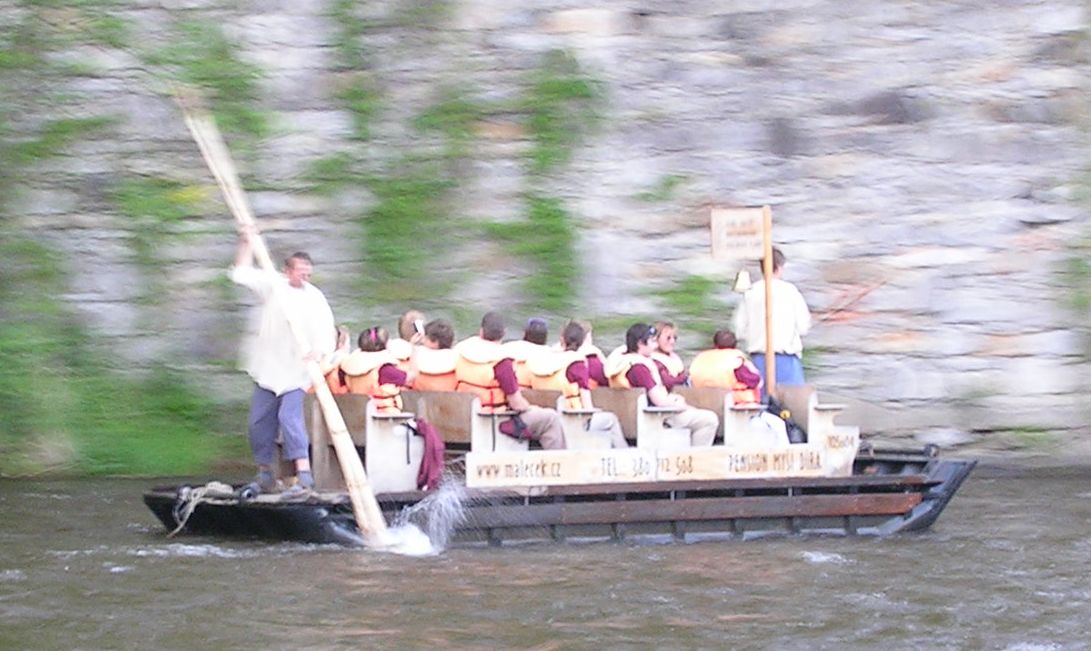
Today the Vltava at Cesky Krumlov is above all a place of pleasure. In the warmer months the river fills with canoes, kayaks and rafts as visitors and locals paddle the gentle stretches, drifting under the bridges and past the castle in one of the most scenic short river trips imaginable. There is even a small weir in the town center that paddlers shoot with much splashing and laughter.
This tradition of taking to the water gives Cesky Krumlov a relaxed, outdoorsy summer atmosphere that balances the historical gravity of the castle. You can spend the morning among Baroque theatres and painted towers and the afternoon floating down a green river through the forest, and the two experiences belong to the same place. Few historic towns integrate their landscape so completely.
The river also gives you the best possible vantage on the town. Drifting slowly along the loop, you see the castle and the roofs from constantly shifting angles, framed by trees and reflected in the water, and you understand better than from any street just how cleverly the whole settlement was fitted into the arms of the Vltava. To know Cesky Krumlov properly, you really should see it from the river.
The Later Lords and the Long Sleep
After the last Rosenberg died in 1611, Cesky Krumlov passed first to the Habsburg emperors and then, in 1622, to the Eggenberg family, and finally in 1719 to the Schwarzenbergs, one of the greatest aristocratic houses of Central Europe, who held it until the twentieth century. Each of these families left their mark, and it was largely the Eggenbergs and Schwarzenbergs who gave the castle its Baroque theatre, its grand bridge and much of its later splendour.
The Schwarzenbergs in particular were fabulously wealthy and cultured, with estates scattered across Bohemia and Austria, and for them Cesky Krumlov was one residence among many rather than their sole seat. This turned out to be the castle’s salvation. Because it was never their only home, it was never subjected to the kind of drastic modernisation that ambitious owners often inflict, and so its older fabric, including that irreplaceable theatre, was simply maintained rather than swept away.
In this sense the castle’s later history is a story of benign neglect, of a place gently preserved because it was loved but not constantly rebuilt. The town below entered a long quiet period too, bypassed by industry and railways, and it drifted through the nineteenth and much of the twentieth century as a sleepy provincial backwater, its beauty intact precisely because history had passed it by.
That long sleep ended after 1989, when the fall of communism opened Czechoslovakia to the world and Cesky Krumlov was rediscovered as one of Europe’s great hidden jewels. The Schwarzenberg estates had been confiscated by the state, and the castle is now a national monument, carefully restored and opened to the millions who now come to marvel at the town that time so kindly forgot.
It is worth remembering how close this all came to being lost. In the upheavals of the twentieth century, with war, occupation and the confiscations of the communist era, many great houses were emptied, damaged or left to rot. That Cesky Krumlov came through with its interiors, its theatre and its townscape essentially whole is a piece of good fortune the world is only now learning fully to appreciate.
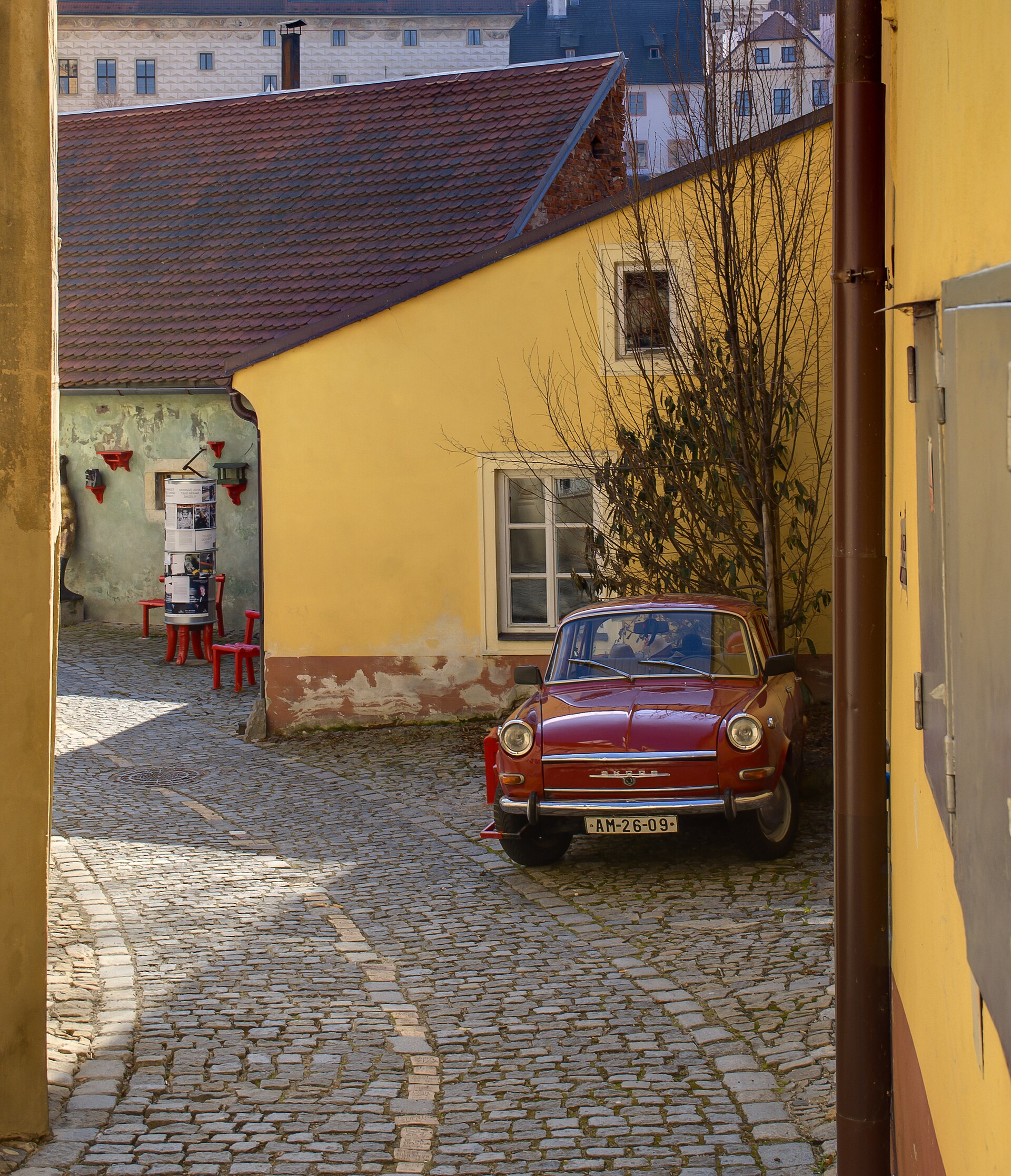
The Castle After Dark
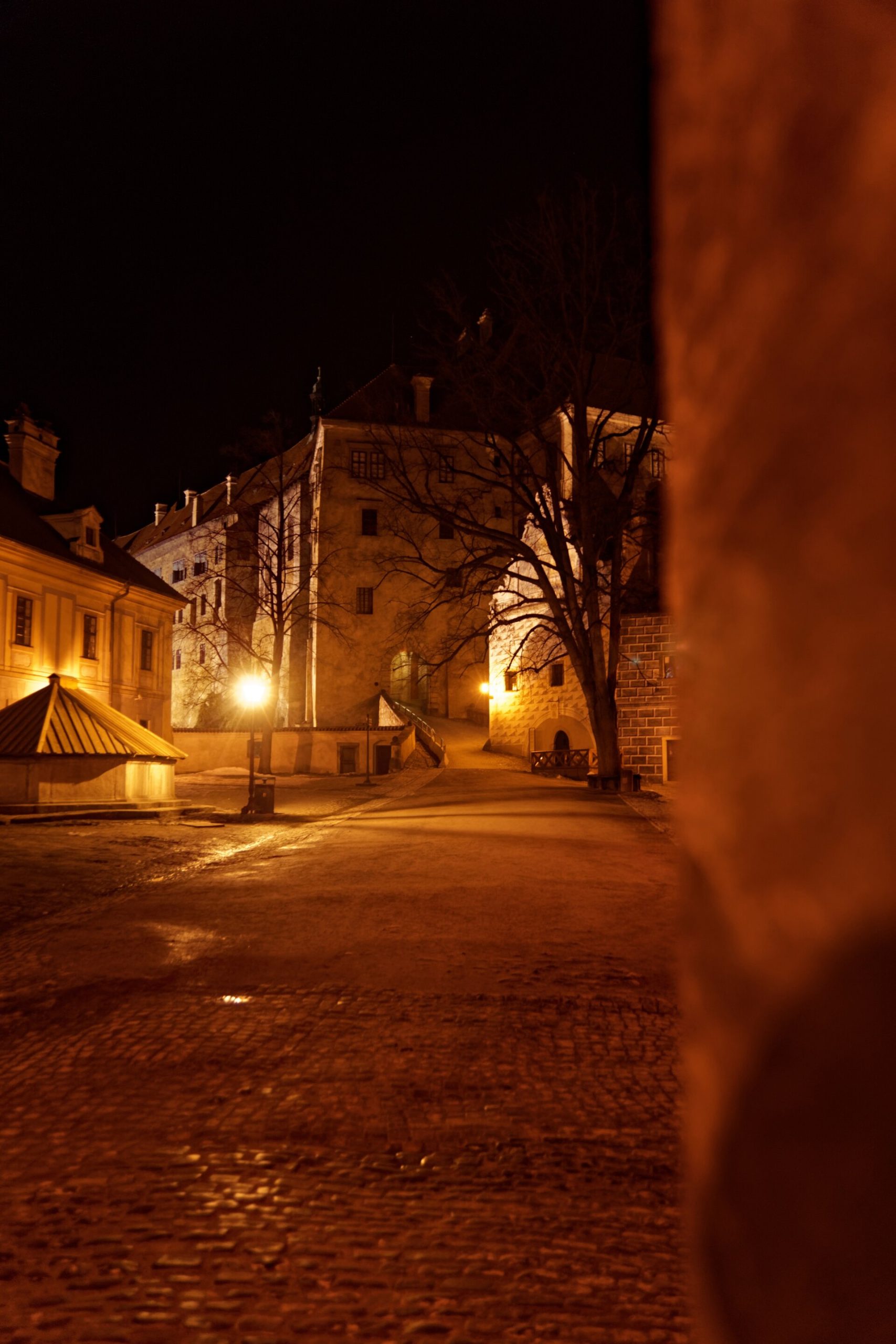
For all the crowds that fill it by day, Cesky Krumlov reveals its deepest magic after dark. When the day-trippers have boarded their buses back to Prague and the lanes empty out, the town settles into a profound quiet, and the castle, floodlit against the night sky, seems to step back into its own past. The painted tower glows above the roofs, its reflection wavering in the black river below.
This is the hour to walk the cobbled streets slowly, when the archways throw deep shadows and your footsteps are the only sound, and the whole place feels less like a tourist attraction and more like the living stage set it has always been. The absence of modern intrusions, no neon, no traffic, no glass towers, means that at night the illusion of stepping into an earlier century becomes very nearly complete.
Staying overnight in Cesky Krumlov, rather than rushing through on a day trip from Prague, is the single best piece of advice anyone can give you about the place. The town belongs to its overnight guests in the early morning and late evening, in the soft light before and after the crowds, and those quiet hours in the shadow of the illuminated castle are what people remember for the rest of their lives.
There is a lesson in that glowing tower at midnight. Cesky Krumlov survived not because it was powerful or important, but because it was beautiful and out of the way, and beauty, given enough luck and quiet, can outlast power entirely. The castle that the Lords of the Rose built to display their might now enchants the world simply by being lovely, which may be the finest fate any fortress could hope for.
Castles Nearby
- Prague Castle: A Thousand Years of Bohemian Power Above the Vltava
- Karlstejn Castle: The Sacred Treasure-House of Emperor Charles IV
Why This Little Town Keeps Its Hold on You
Cesky Krumlov does not try to overwhelm you. It has no imperial pretensions, no claim to have shaped the fate of nations. What it offers instead is something rarer and, in its way, more moving: an almost perfectly preserved little world, a castle and a town grown together in the arms of a river, where five centuries of beauty have come down to us very nearly intact.
That is why it lingers in the memory long after grander places have faded. You remember the painted tower catching the morning light, the impossible height of the Cloak Bridge, the breathless little theatre holding its Baroque breath, the bears in the moat, the green river looping around it all. It is a place assembled from small enchantments, and together they add up to one of the most complete and lovable historic towns in Europe.
So give it more than a hurried afternoon. Stay the night, climb the tower, cross the bridge, drift the river, and let the crowds ebb away in the evening until the town is nearly yours. Do that, and you will understand why so many travellers count this small castle in the southern Bohemian forest among the most beautiful places they have ever been.
You May Like
Hohensalzburg Fortress: The Great White Stronghold That Never Fell


One thought on “Cesky Krumlov Castle: The Fairy-Tale Fortress in the River’s Loop”