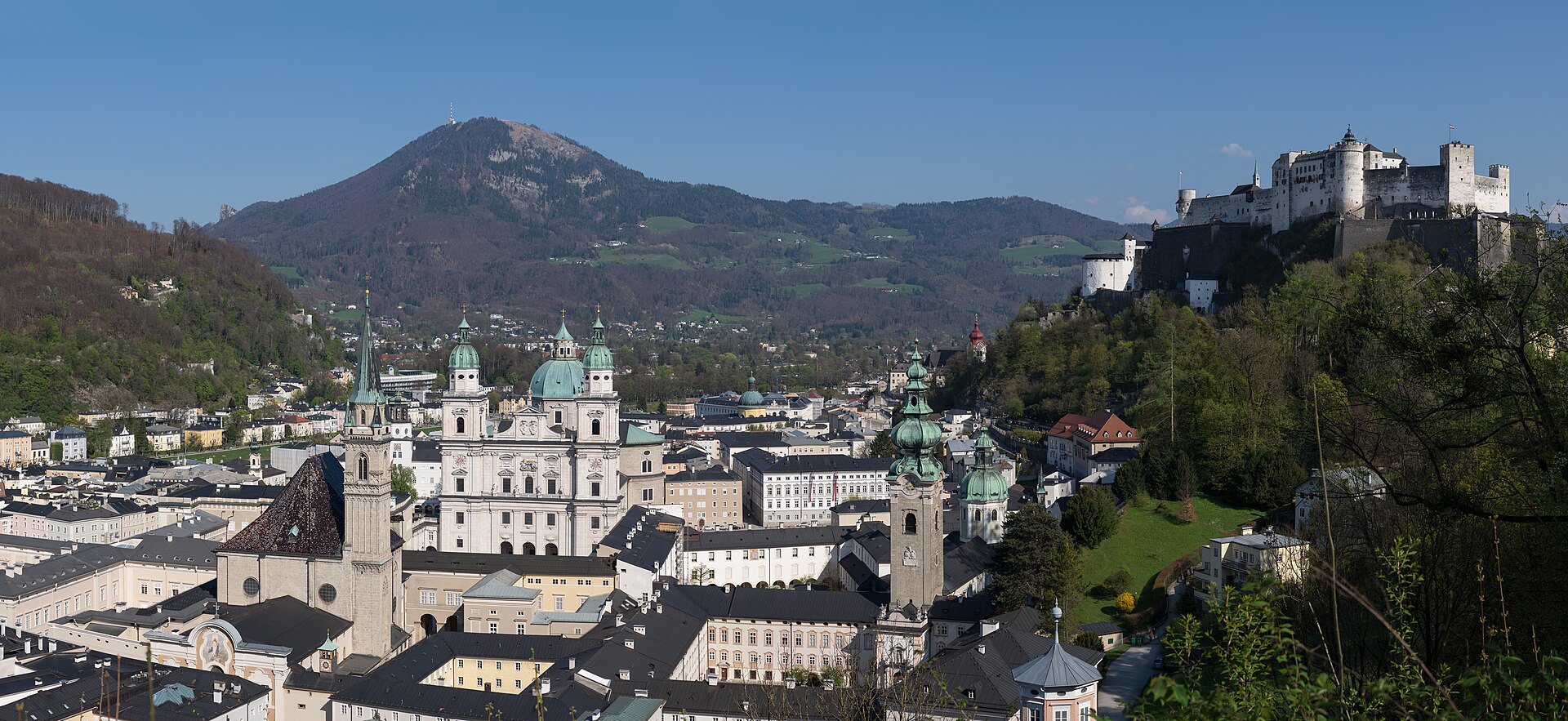
Fly into Salzburg, or simply round a corner in its old town, and one thing dominates everything: a vast white fortress riding the crest of a green hill, floating above the baroque domes and the river like a battleship run aground in the sky. This is Hohensalzburg, and it is not just any castle. It is one of the largest fully preserved medieval fortresses anywhere in Europe, a thousand years old and, remarkably, never once taken by an enemy in all that time.
Most great fortresses carry the scars of siege and capture. Hohensalzburg does not, and that single fact shapes everything about it. Because it was never stormed, never sacked, never battered into rubble and rebuilt from scratch, it has come down to us extraordinarily complete, its walls and towers and painted state rooms preserved in a way that few fortresses of its age can match. To walk it is to walk a medieval stronghold that time treated with unusual kindness.
It was built and expanded, over the centuries, not by kings or dukes but by the prince-archbishops of Salzburg, churchmen who ruled this small Alpine state as sovereign lords, and it was as much a statement of their power as a refuge in times of danger. Come up the hill with me, by the old funicular or on foot, and let us explore the white fortress that watches over Mozart’s city, and discover how it earned its perfect, unbroken record.
In This Article
- A Thousand Years Without a Conqueror
- Born of a Quarrel Between Pope and Emperor
- The Prince-Archbishops and Their Lion
- The Golden Rooms at the Top
- Inside the Prince’s Chambers
- The Oldest Railway of Its Kind in the World
- White Gold and the City Below
- The Full Sweep of the Stronghold
- The View From the Watchtowers
- Water, Stores and the Secret of Surviving a Siege
- Through the Gates and Up the Bastions
- The Chapel and the Bellowing Bull
- A Fortress for a Peaceful Age
A Thousand Years Without a Conqueror
The single most astonishing fact about Hohensalzburg is what did not happen to it. Founded in 1077 and expanded for centuries afterward, it stands today as one of the largest and best-preserved medieval fortresses in all of Europe, and in nearly a thousand years of turbulent history it was never captured by a hostile force. Armies threatened it, rebellions besieged it, but its walls were never broken, and that unbroken record is the key to understanding the place.
You feel that invincibility the moment you stand beneath the ramparts. The walls are colossal, thick pale ribbons of stone following the contours of the hill, punctuated by bastions and towers, and there is a heavy, settled confidence to them. This was never a delicate residence that happened to have defences. It was a serious military stronghold first and foremost, built to be impregnable and, as history proved, succeeding completely.
The fortress sits on a hill called the Festungsberg, a rocky spur of the larger Mönchsberg that rises steeply above the old town of Salzburg. Nature did much of the defensive work, giving the builders a commanding height with sheer approaches, and they exploited it fully, so that any attacker faced a long, exposed climb into the teeth of the walls before they could even begin an assault. Few ever thought it worth trying.
That combination of natural strength and unbroken history has left us something precious: a medieval fortress essentially intact, not a romantic ruin or a heavily rebuilt reconstruction but the real thing, walls and towers and interiors carried down the centuries. If you want to find it on a map before your visit, here are the coordinates for the hilltop above Salzburg.
Compare this with almost any famous castle you can name, and the difference is stark. Most were stormed at least once, many repeatedly, their stones scattered and their halls burned before being patched back together. Hohensalzburg’s serene, unbroken survival is not luck alone but the reward of a site and a design so formidable that attackers, again and again, decided the prize was not worth the price.
Born of a Quarrel Between Pope and Emperor
The fortress was born out of one of the great conflicts of the Middle Ages, the Investiture Controversy, the bitter struggle between the papacy and the Holy Roman Emperor over who had the right to appoint bishops. In 1077, Archbishop Gebhard of Salzburg, a firm supporter of the Pope against Emperor Henry IV, found himself in dangerous times, and he began fortifying the hill above his city to protect himself and his allies.
Gebhard’s original fortress was fairly modest, the hard defensive core from which everything else would grow. But the timing tells you why it existed: this was an age when a churchman could be a political and even military player, when a bishop might need a castle as urgently as any warlord, and when the line between spiritual and temporal power ran right through places like Salzburg. The fortress was, from its first stone, an instrument of a prince who happened to wear a mitre.
Over the following centuries, successive archbishops extended and strengthened the fortress, adding walls, towers, residential quarters and storerooms, each generation building on the work of the last. What began as an emergency refuge slowly became a permanent seat, a treasury, an arsenal and a symbol, and the courtyards you walk through today preserve the accumulated ambitions of all those churchmen who ruled from the hill.
It is worth pausing on how unusual this ownership was. Most European fortresses belonged to secular lords, kings, dukes and counts. Hohensalzburg belonged to the church, to a line of prince-archbishops who governed Salzburg as an independent ecclesiastical state for centuries, and that clerical ownership gives the whole place its distinctive character, at once a fortress and the stronghold of a holy prince.
The Prince-Archbishops and Their Lion
To understand Hohensalzburg you have to understand the men who ruled from it, the prince-archbishops of Salzburg. These were not humble parish priests but among the most powerful figures in the German-speaking world, spiritual leaders and territorial sovereigns rolled into one, who governed a wealthy independent state, minted their own coins, commanded their own soldiers, and answered to almost no one but the Pope and, loosely, the Emperor.
Their wealth came in large part from a single glittering resource, salt, mined in the mountains nearby, so valuable in the medieval world that it was called white gold. The very name Salzburg means salt castle or salt fortress, and the trade in salt filled the archbishops’ treasuries and paid for the fortress, the cathedral, and the baroque splendour that still makes Salzburg one of the loveliest cities in Europe. Hohensalzburg was, in a real sense, built on salt.
The greatest builder among them was Archbishop Leonhard von Keutschach, who ruled around the turn of the sixteenth century and transformed the fortress from a grim military strongpoint into a residence of real magnificence. His personal emblem, a turnip, appears carved throughout the fortress, a slightly comic badge for so powerful a man, and legend has it he adopted it after an uncle supposedly threw a turnip at him to remind him of his humble roots.
Under Keutschach and his successors, the fortress became a stage for princely display as well as defence, its state rooms decorated with rich carving and painting, its towers raised and its comforts improved. The archbishops wanted a home worthy of their status, and they got one, so that today Hohensalzburg shows two faces at once, the iron fist of the fortress and the velvet glove of the prince’s palace within.
Their independence was real and jealously guarded. The archbishopric of Salzburg was an ecclesiastical principality of the Holy Roman Empire, and its rulers sat among the empire’s princes, negotiating, feuding and allying as any secular ruler would. The fortress on the hill was the ultimate guarantee of that independence, the hard fact of power behind the mitre and crozier.
The Golden Rooms at the Top
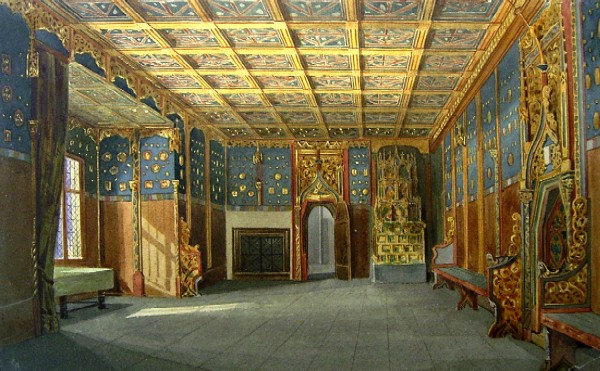
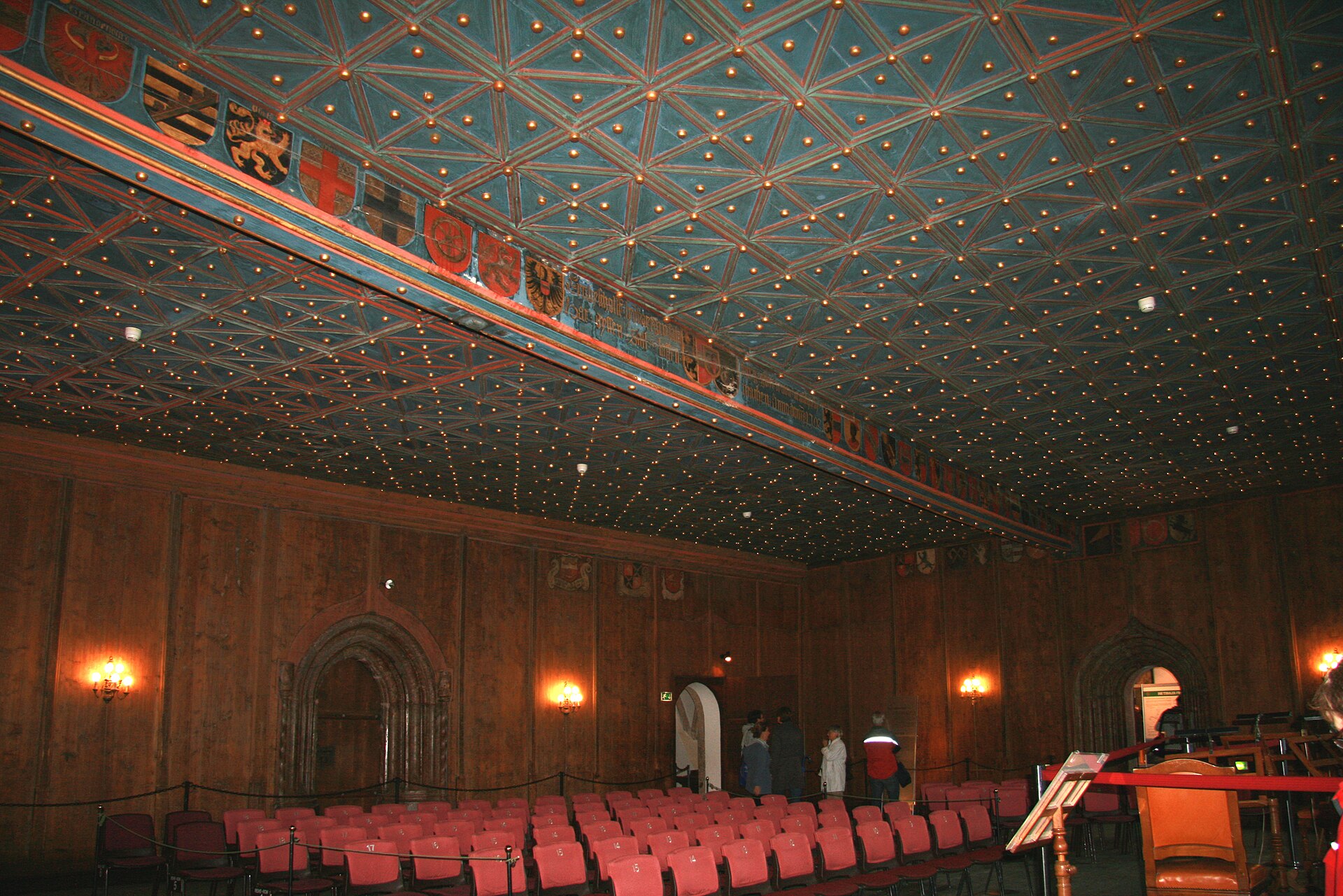
Deep inside the fortress, at the summit of everything, lie the state rooms that are Hohensalzburg’s greatest treasure: the Golden Hall and the Golden Chamber, created for Archbishop Leonhard von Keutschach around 1500. After the raw strength of the walls and courtyards, stepping into these rooms is a shock of colour and craft, some of the finest late Gothic secular interiors surviving anywhere in Europe.
The Golden Hall takes its name from the gilded knobs studding its rich blue coffered ceiling, said to evoke a starry sky, supported by graceful marble columns. It was here that the archbishop held his grandest ceremonies and feasts, and the room still glows with the intention behind it, to impress upon every visitor that the man who ruled from this hilltop was no mere soldier but a prince of taste, wealth and refinement.
The décor is astonishingly intact, which again comes back to the fortress never being sacked. Where invading armies would have stripped and burned such rooms, Hohensalzburg’s survived, so that the gilding, the carved beams, the painted ornament and the intricate ironwork have come down to us largely as Keutschach’s craftsmen left them. Few places let you stand so directly inside the aesthetic world of around 1500.
These rooms are the perfect answer to anyone who thinks of a fortress as merely brutal and functional. Hohensalzburg was both a war machine and a jewel box, and the contrast between its massive outer walls and these delicate golden interiors is exactly the point. The prince-archbishops wanted to be safe, but they also wanted to live beautifully, and at the very heart of their impregnable rock they achieved both.
Historians regard these interiors as among the most important surviving examples of Gothic secular decoration in the German-speaking lands, precisely because so little of their kind survives elsewhere. War, fire and changing fashion destroyed most comparable rooms across Europe, which makes Keutschach’s golden chambers not just beautiful but genuinely rare survivals of a vanished decorative world.
Inside the Prince’s Chambers
Beyond the great ceremonial hall lie the more intimate Prince’s Chambers, the private living quarters of the archbishop, and these are in their own way even more moving than the golden state room. Here the scale drops from the grand to the human, and you get a sense of the daily life of the man at the top of the fortress, surrounded by fine woodwork and warmed against the Alpine cold.
The rooms are lined with intricately carved and inlaid wooden panelling, and their most striking feature is a magnificent late Gothic tiled stove, a towering ceramic construction glazed in rich colours, which could heat the chambers without filling them with smoke. In a stone fortress high on a windswept hill, such a stove was not a luxury but a necessity, and this one is a genuine masterpiece of the tile-maker’s craft, still standing after five centuries.
Everywhere in these chambers you see the same fusion of comfort and status. The panelling is not merely practical insulation but a display of wealth and taste, the ironwork on the doors is both secure and beautiful, and the whole ensemble was designed to tell visitors, even in the ruler’s private quarters, that they stood in the home of a great prince. Nothing here was accidental or purely functional.
To move from these rooms out onto the ramparts is to feel the fortress’s double nature in your own body, the warm carved intimacy of the prince’s world giving way instantly to the cold stone and vast views of the soldier’s world outside. Hohensalzburg holds both of these together, the hearth and the battlement, in a way that makes its history feel unusually close and real.

The Oldest Railway of Its Kind in the World
Climbing a fortress on a steep hill poses an obvious problem: how do you get all the food, wine, building materials and heavy goods up to the top? Hohensalzburg’s answer is a genuine marvel of engineering history, the Reisszug, a small funicular railway that hauls freight up the hillside and is widely regarded as one of the oldest operational railways of any kind in the entire world.
The Reisszug dates back to around 1500, to the era of Archbishop Leonhard von Keutschach, and although its cars, ropes and rails have naturally been replaced many times over the centuries, the line itself and its wooden tunnel have run in essentially the same form for more than five hundred years. Originally it was powered by human or animal muscle, later by other means, hauling loads up the gradient that would otherwise have to be carried by hand.
There is something wonderful about the humility of this record. The Reisszug is not a grand monument or a famous invention, just a practical little goods lift built to solve the everyday problem of supplying a hilltop fortress, and yet by simply continuing to do its job, year after year, century after century, it became one of the oldest working railways on earth. It is still used to bring supplies up to the fortress today.
Most visitors now ride a modern passenger funicular up to Hohensalzburg, a quick and scenic climb from the old town, but spare a thought for the ancient Reisszug quietly working alongside it. In a fortress full of grand statements, this modest freight line is a reminder that history is also made of small, useful things that simply refuse to stop working.
Engineers and railway historians make pilgrimages to see it for exactly this reason, because in the long story of rail transport, this modest goods hoist on an Austrian hillside is one of the earliest chapters still being written. It quietly predates the age of steam and steel by centuries, a working ancestor of every railway that followed.
White Gold and the City Below
The fortress and its city are inseparable, and both were made by the same thing: salt. The River Salzach, which curves through Salzburg beneath the fortress, takes its name from the salt barges that once floated along it, and the whole region grew rich on the mining and trade of this precious mineral. In the medieval and early modern world, salt preserved food and was worth its weight in influence, and Salzburg sat astride the trade.
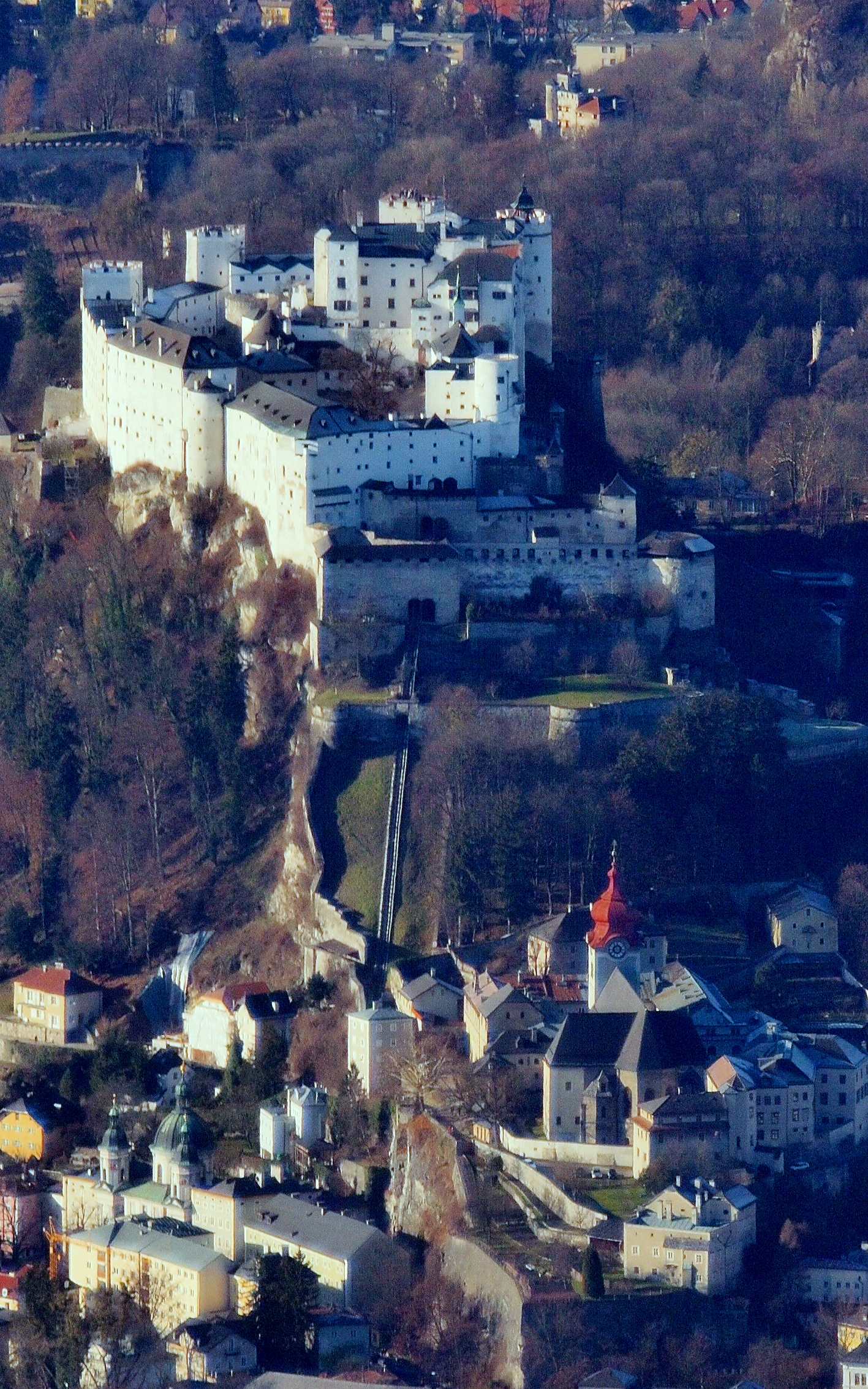
That wealth is written all over the landscape below the fortress. The archbishops used their salt riches to build not just Hohensalzburg but the magnificent baroque city at its feet, with its grand cathedral, its palaces, its churches and squares, until Salzburg became one of the most beautiful small cities in Europe, a jewel of domes and towers cupped between the mountains and the river.
Looking down from the ramparts, or up from the far bank of the Salzach, you see the two halves of the archbishops’ achievement in a single view: the stern white fortress on its hill, expressing their power and security, and the elegant baroque city below, expressing their wealth and culture. One protected the other, and both were paid for by the same white gold from the mountains.
Salzburg would later become world-famous for another reason entirely, as the birthplace of Mozart, and today the city is as celebrated for music as for salt. But the fortress on the hill predates all of that, the oldest and most commanding presence in the whole scene, the fixed rock around which the beautiful city grew, and it remains the first thing every visitor sees and the last thing they forget.
The Full Sweep of the Stronghold
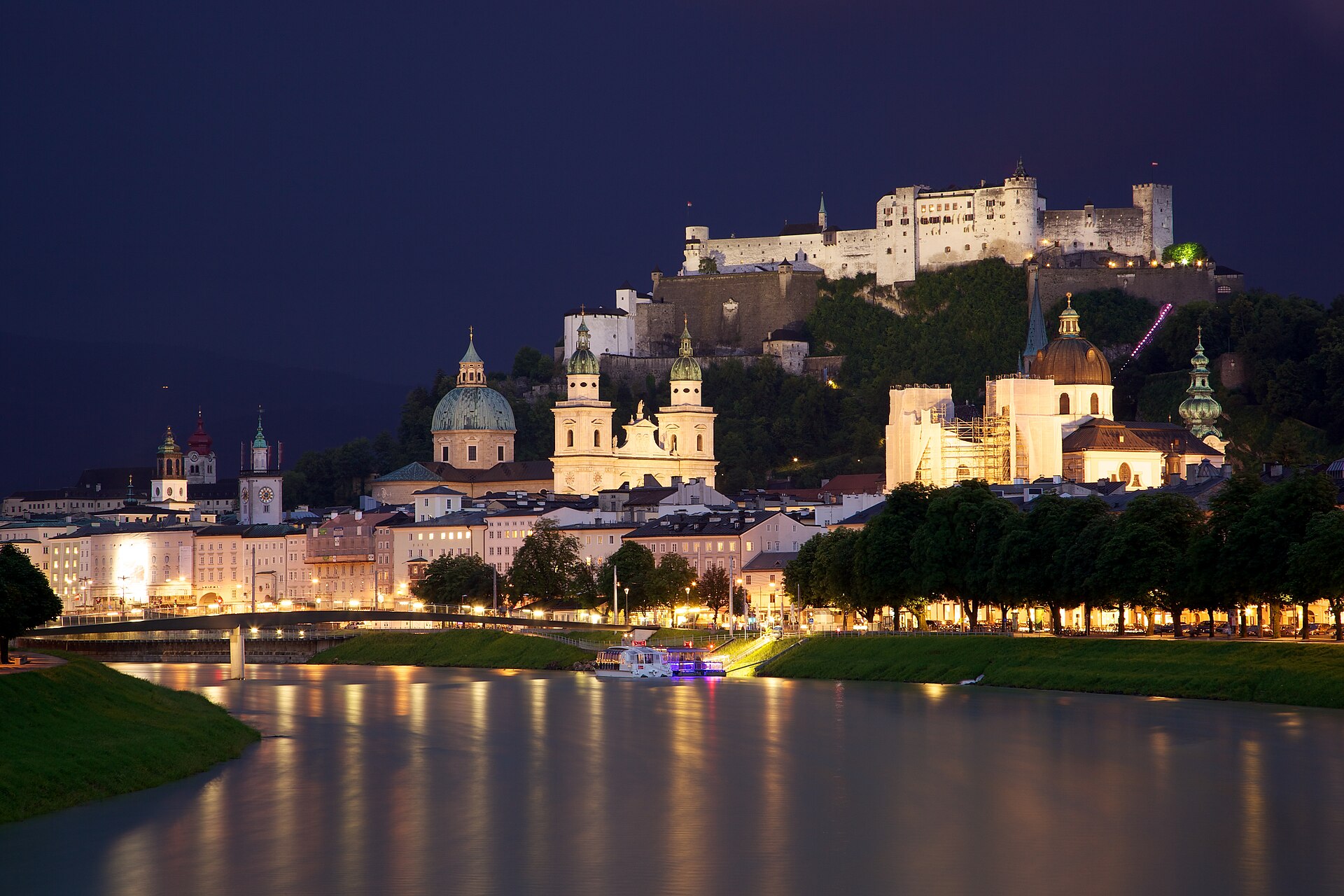
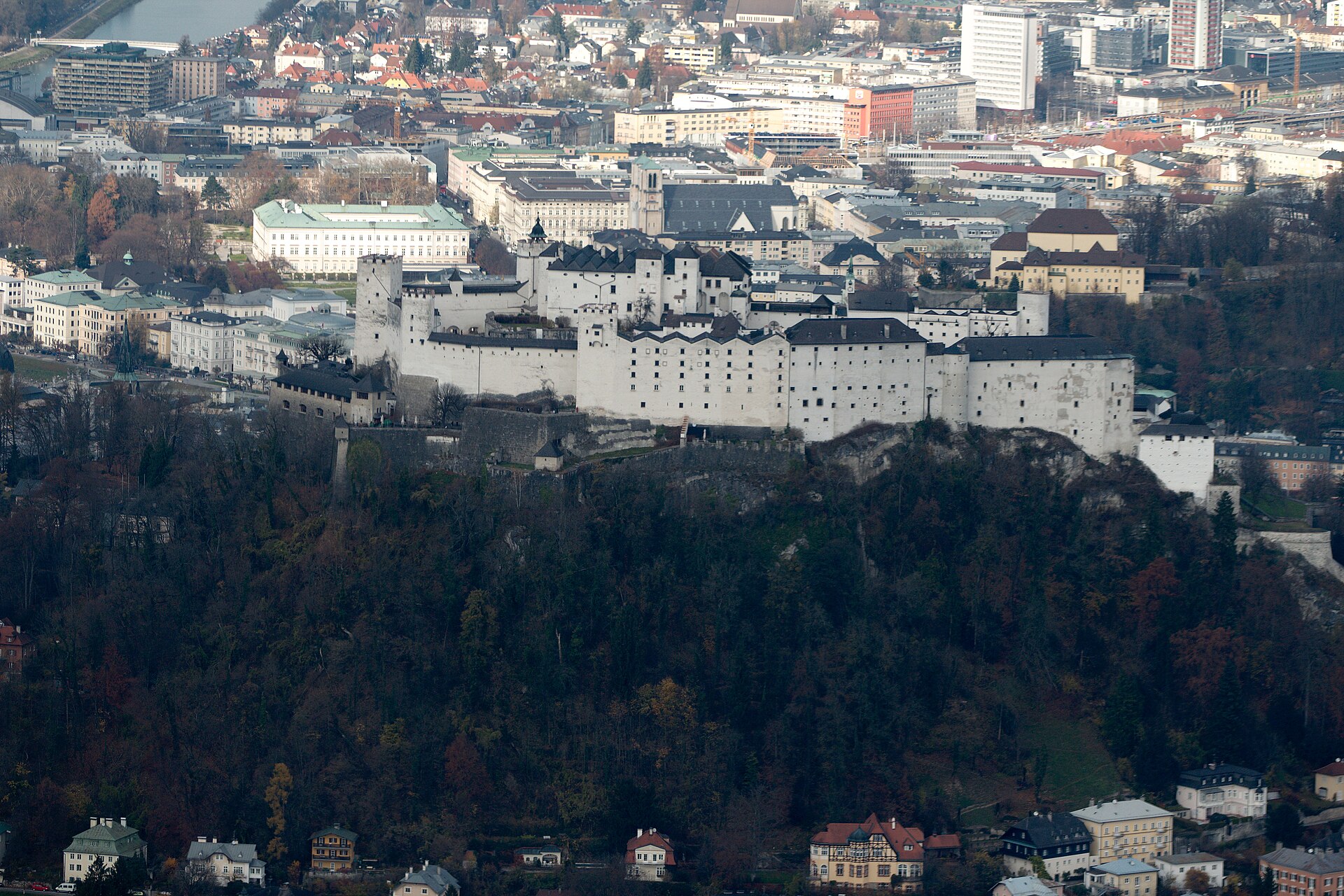
Seen from the air, or from a neighbouring height, Hohensalzburg reveals its true scale, and it is genuinely vast. This is no compact keep but a sprawling complex stretching along the crest of the Festungsberg, a dense assembly of courtyards, halls, chapels, towers, arsenals, cisterns and bastions, all wrapped in successive rings of wall. It is essentially a fortified town in its own right, perched above the city it once protected.
The layout tells the story of its growth. The oldest and highest part, the tightly packed core with the state rooms, was the last refuge, the strongest and most defensible heart. Around and below it spread later additions, outer wards and gun bastions added as the nature of warfare changed and cannon replaced the crossbow, so that the fortress evolved to meet each new age’s threats without ever being tested to destruction.
Because it grew over so many centuries and was never levelled, Hohensalzburg is a living textbook of European military architecture, from high medieval curtain walls to the angled bastions of the gunpowder age. You can read the changing science of defence in its very stones, each generation of builders responding to new weapons, all preserved together because no enemy ever forced a rebuild.
To take in the whole sweep of it properly, it helps to see it in motion, climbing through the gates and courtyards toward the summit. This walking tour follows that ascent through the fortress, and it captures the sheer size and complexity of the place far better than any single view from below can manage.
It is this completeness across so many periods that makes military historians value Hohensalzburg so highly. Other fortresses may show one age brilliantly, but few show the whole arc, medieval to early modern, in one continuous, unbroken fabric that you can walk through in an afternoon.
The View From the Watchtowers
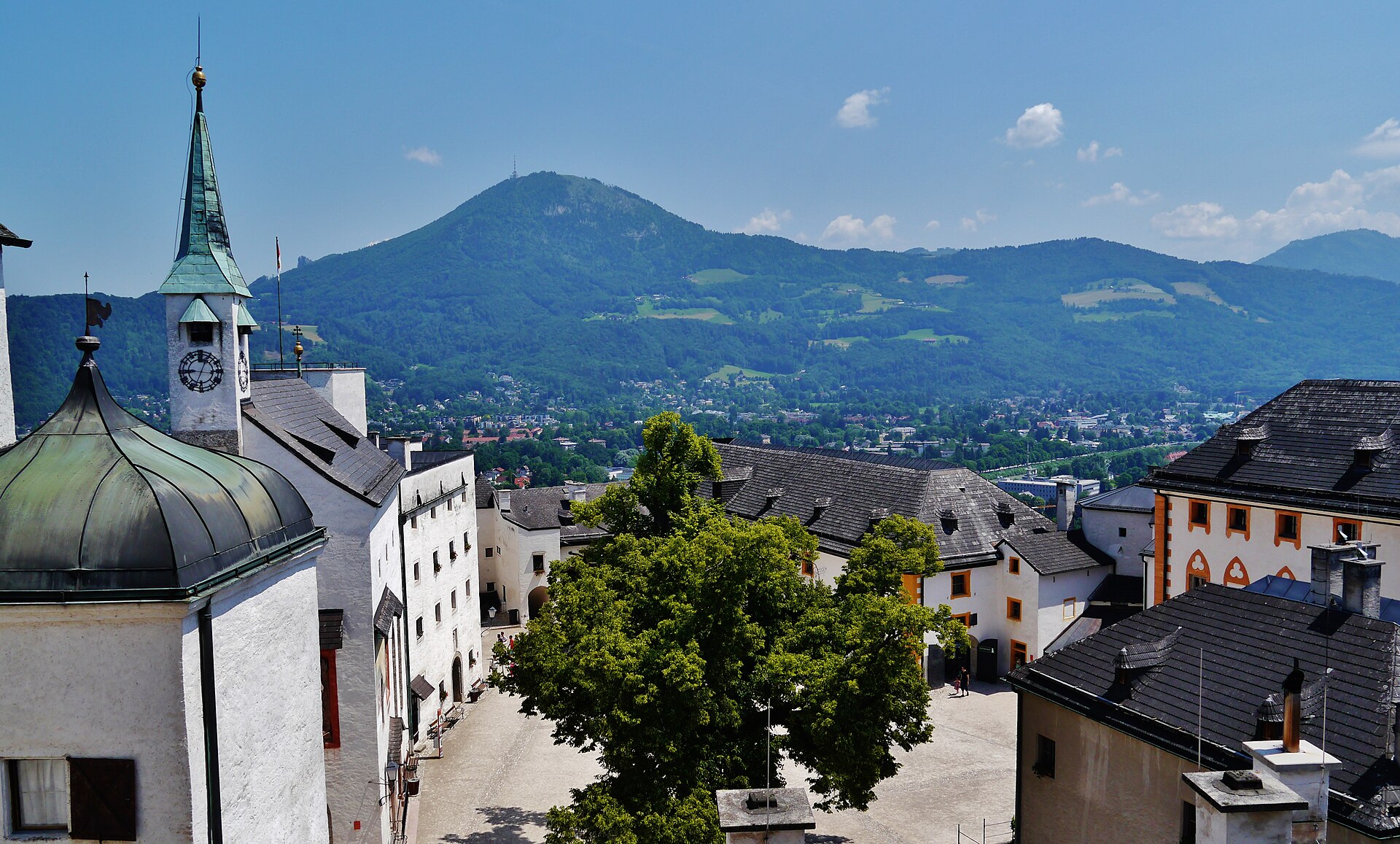
Part of the pleasure of any great fortress is climbing its towers, and Hohensalzburg rewards the effort magnificently. From the high vantage points along the ramparts and from towers such as the Reckturm, the view opens out in every direction: the baroque city directly below, the silver thread of the Salzach, the rolling foothills, and beyond them the jagged wall of the Alps marching along the horizon.
These towers were not built for views, of course, but for war. From these heights, watchmen could see any threat approaching across the plain or up the valley long before it arrived, and defenders could rain fire down on anyone foolish enough to assault the slopes. The same commanding position that now gives tourists their photographs once gave the fortress its deadly strategic advantage.
The panorama also explains, in an instant, why the fortress was placed exactly here. Whoever held this hill controlled the city, the river crossing and the trade routes through the mountains, and could not be easily surprised from any direction. The site was chosen with a soldier’s eye, and standing in the towers you see the landscape as those medieval strategists saw it, as a field to be watched and dominated.
On a clear day, with the Alpine peaks sharp against the sky and the city glowing below, the view from Hohensalzburg is one of the finest in Austria, and it turns a visit into something more than a history lesson. You come for the fortress and its story, but you stay on the ramparts for the sheer beauty of the world spread out beneath you.

Water, Stores and the Secret of Surviving a Siege
A fortress is only as strong as its ability to outlast a siege, and here Hohensalzburg’s builders were especially clever. High on a dry hill, the great weakness of any hilltop stronghold is water, and so the fortress was equipped with deep cisterns to collect and store rainwater, along with a well, ensuring that the garrison could never be simply thirsted into surrender. This attention to water supply is a large part of why the fortress never fell.
Alongside water came food and munitions. The complex contained extensive storerooms, granaries and arsenals, capable of holding enough provisions and weapons to sustain the defenders through a long blockade. A well-stocked Hohensalzburg could shrug off a siege that would have starved a lesser castle in weeks, and any attacker had to reckon with the grim prospect of waiting out a garrison that simply would not run short.
This logistical strength was tested most seriously in 1525, during the great German Peasants’ War, when rebellious miners, farmers and townsfolk rose against the archbishop and besieged the fortress for months. The defenders, secure behind their walls and sitting on their stores of water and food, held out until the rebellion collapsed, and once again Hohensalzburg’s record remained intact. It was, ironically, one of the fortress’s rare moments of real danger.
Standing by the old cistern in the courtyard, it is easy to overlook such practical things in favour of golden halls and grand views, but this is where the fortress’s invincibility really lived. Not in the thickness of the walls alone, but in the patient foresight that stored away water and grain against the day of need, so that time itself became the defenders’ most reliable weapon.
The 1525 siege left its mark on the fortress in another way too, prompting further strengthening of its defences afterward, as the shaken archbishops made doubly sure their refuge could never be threatened again. In this way even the rare moments of danger ended up making Hohensalzburg stronger rather than weaker.
Through the Gates and Up the Bastions
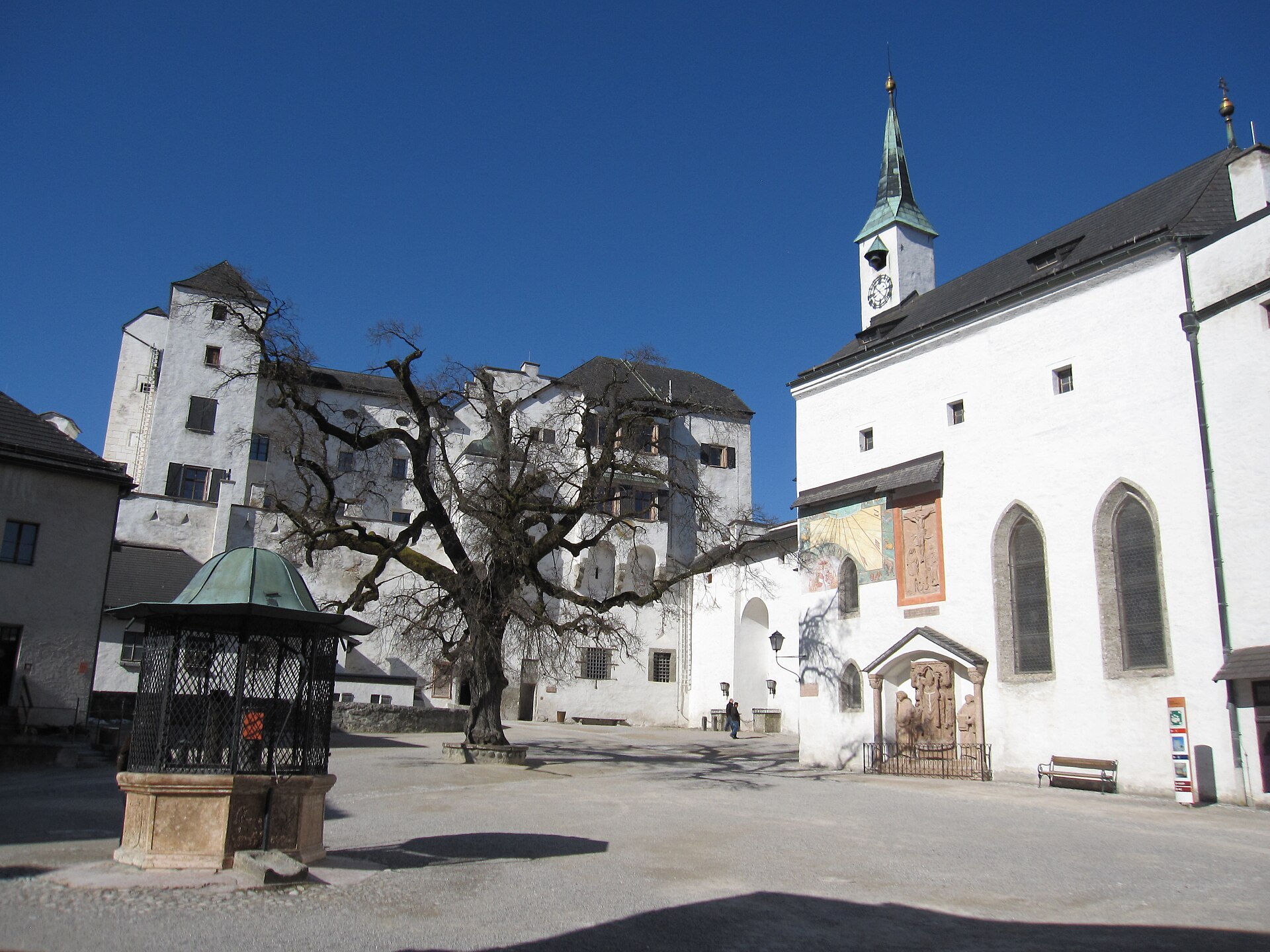
Approaching the fortress on foot, you pass through a sequence of gates and defended passages, and this is where you appreciate just how carefully the whole ascent was designed to break an attack. There is no single wall to storm but a layered system, gate after gate, each one a chokepoint where a handful of defenders could hold off many attackers, forcing any assault to grind slowly upward under fire the whole way.
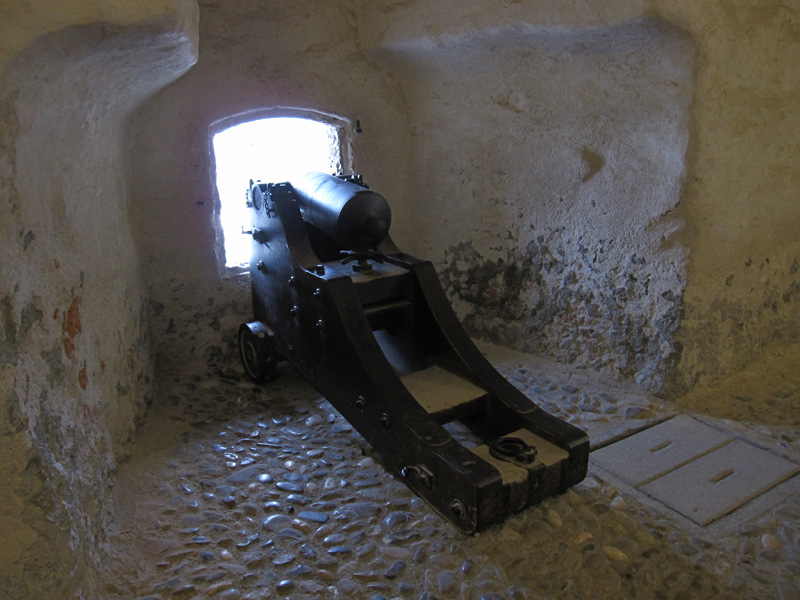
As gunpowder transformed warfare from the sixteenth century onward, the fortress adapted, and the archbishops added angled bastions and gun positions designed for the age of cannon. These lower, thicker, cleverly shaped defences could absorb artillery fire and give the defenders’ own guns sweeping fields of fire across the approaches, keeping Hohensalzburg formidable even as the weapons ranged against it grew more powerful.
This willingness to modernise is part of why the fortress stayed relevant and unconquered for so long. A castle that stood still would eventually have been outclassed by new weapons, but Hohensalzburg kept pace, its medieval walls reinforced and supplemented by early modern fortification, so that at every stage it remained a serious military proposition rather than an obsolete relic waiting to be overrun.
Walking up through these defences today, in perfect safety, you can still read the deadly logic in every turn and gateway. The path funnels you exactly where the defenders wanted attackers to go, always climbing, always exposed, always covered by walls above, and by the time you reach the top you understand in your legs and lungs why so few ever seriously tried to take this place by force.
The Chapel and the Bellowing Bull
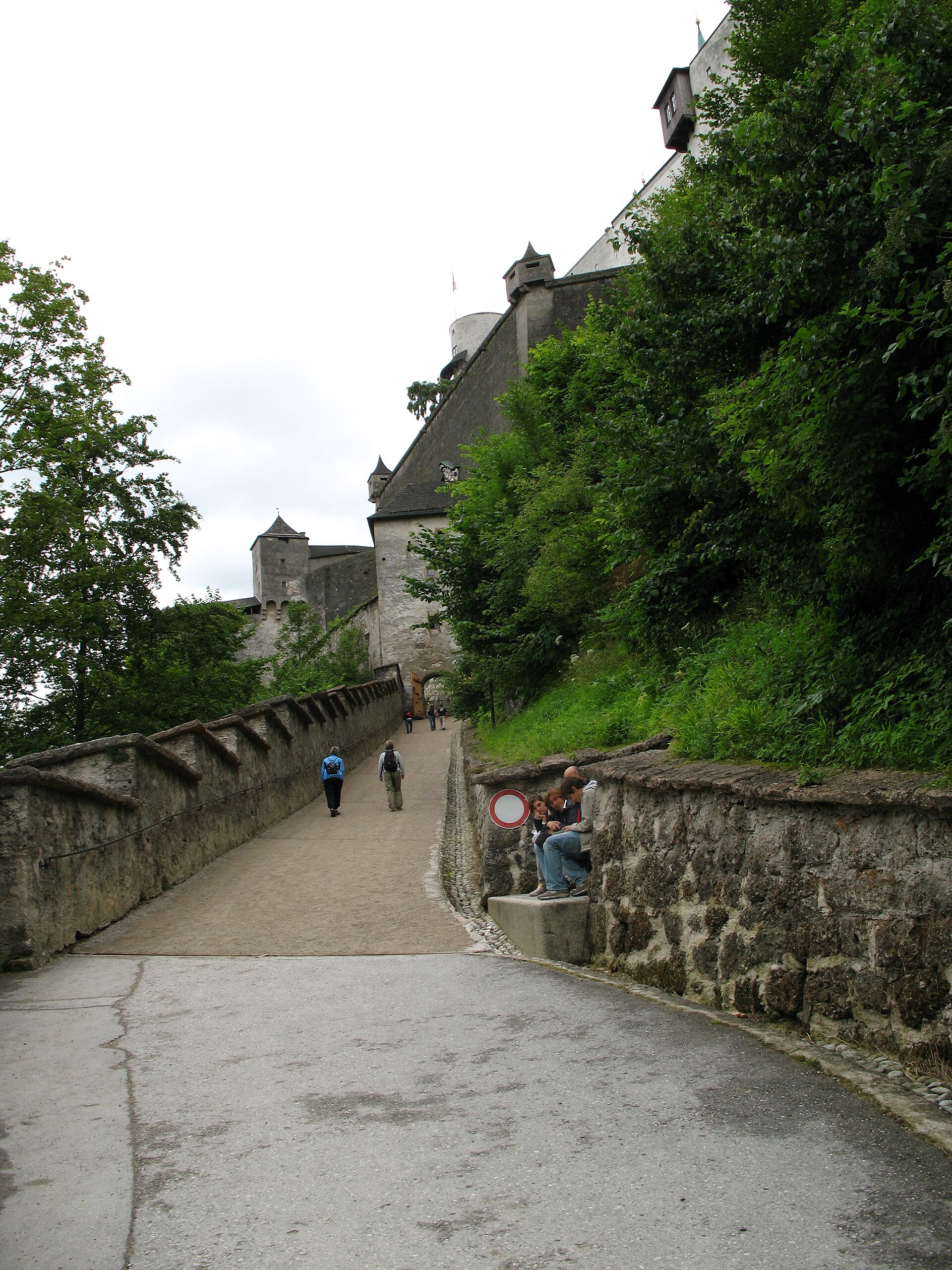
Even a fortress needs a place to pray, and Hohensalzburg has St. George’s Chapel, a late Gothic chapel within the walls that served the spiritual needs of the archbishop’s household and garrison. Its red marble reliefs and fine detailing are a reminder, if the golden halls had not already made the point, that this was a stronghold ruled by churchmen, where devotion and defence stood side by side.
But the fortress’s most famous piece of music-making is not the chapel organ, it is the extraordinary mechanical organ mounted high on the walls, an instrument built in the era of Archbishop Keutschach around 1500 and known affectionately as the Salzburg Bull, the Salzburger Stier. Its deep, bellowing tones could be heard across the whole city below, and it was originally used to sound the hours and signal to the townspeople.
There is a lovely story attached to the name. The organ’s powerful, somewhat rough sound was likened to the bellowing of a bull, and for centuries its notes rolled out over Salzburg, marking time and occasion, a voice of the fortress speaking to the city at its feet. Even today it is played, its ancient pipes still sounding out over the rooftops, connecting modern Salzburg to the age of the prince-archbishops.
These two things together, the quiet chapel and the roaring mechanical bull, capture something essential about Hohensalzburg. It was a place of prayer and a place of power, of intimate devotion and public spectacle, and the same archbishops who knelt in St. George’s Chapel also made sure their fortress could literally bellow across the city, announcing to everyone who ruled from the hill.
The organ was even given a musical partner across the city, so that the Bull and another instrument would answer one another over the rooftops, turning the whole of Salzburg into a kind of open-air concert hall in the age of the archbishops. It is one of those charming details that show how these rulers thought about their city as a stage for beauty as well as power.
A Fortress for a Peaceful Age
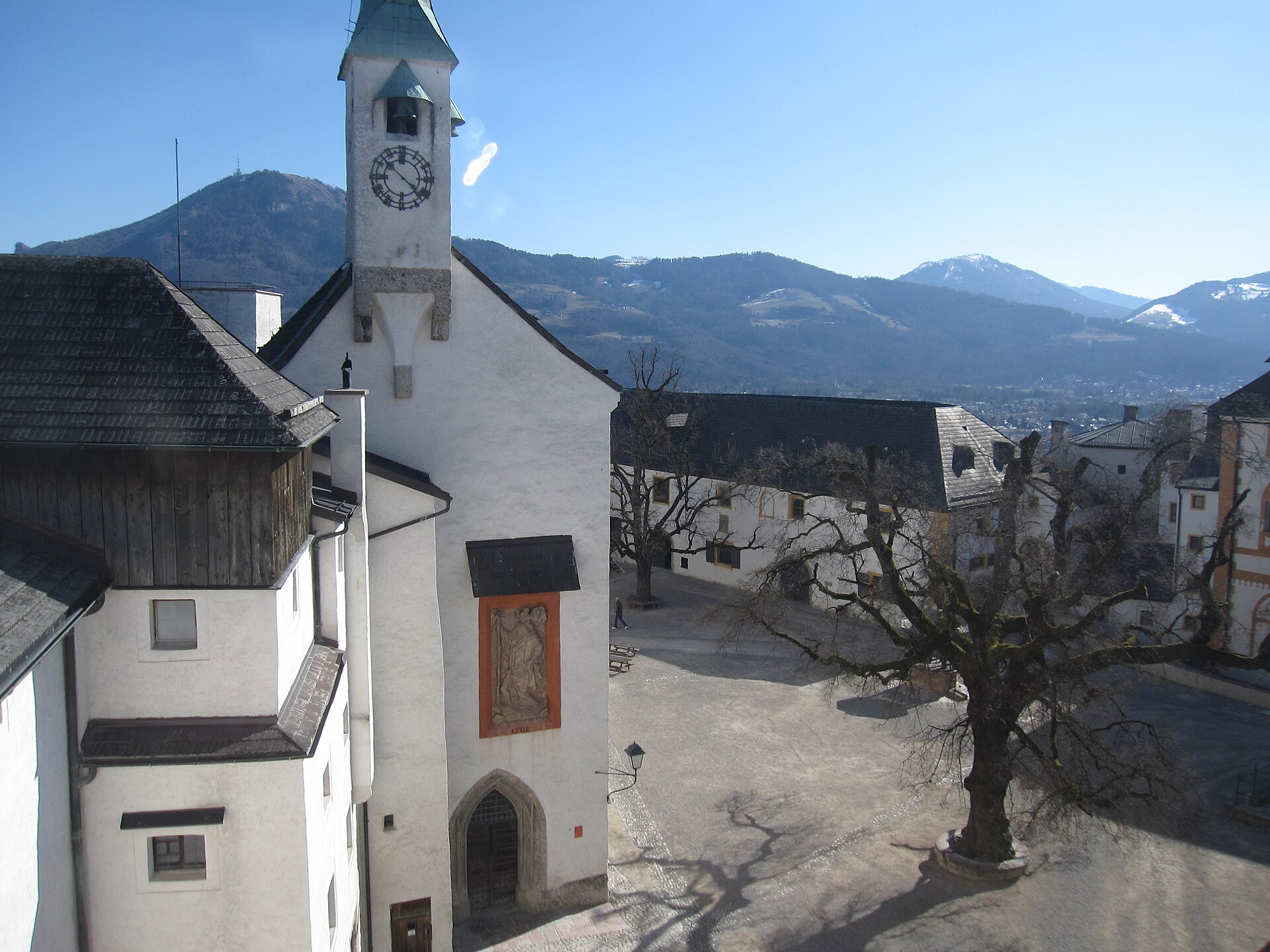
The age of the prince-archbishops ended in the early nineteenth century, when Salzburg lost its independence and was eventually absorbed into Austria, and the fortress passed out of the hands of the churchmen who had built it. For a time it served more mundane purposes, as a barracks and even a prison, its golden halls a world away from the soldiers and captives housed within its walls.
But Hohensalzburg was too magnificent and too important to be left to decay, and from the later nineteenth and twentieth centuries onward it was increasingly cared for as a monument and opened to visitors. The building of the passenger funicular made the summit easily accessible, and the fortress became what it remains today, one of the most visited landmarks in Austria and the crowning symbol of the city of Salzburg.
Today the fortress hosts museums, concerts and events, and its courtyards and ramparts fill each year with visitors from around the world who come to walk its walls, admire its golden rooms, and drink in the incomparable views. The Salzburg Festival, one of the great events of the musical calendar, unfolds in the city below, and the illuminated fortress presides over it all like a benevolent guardian.
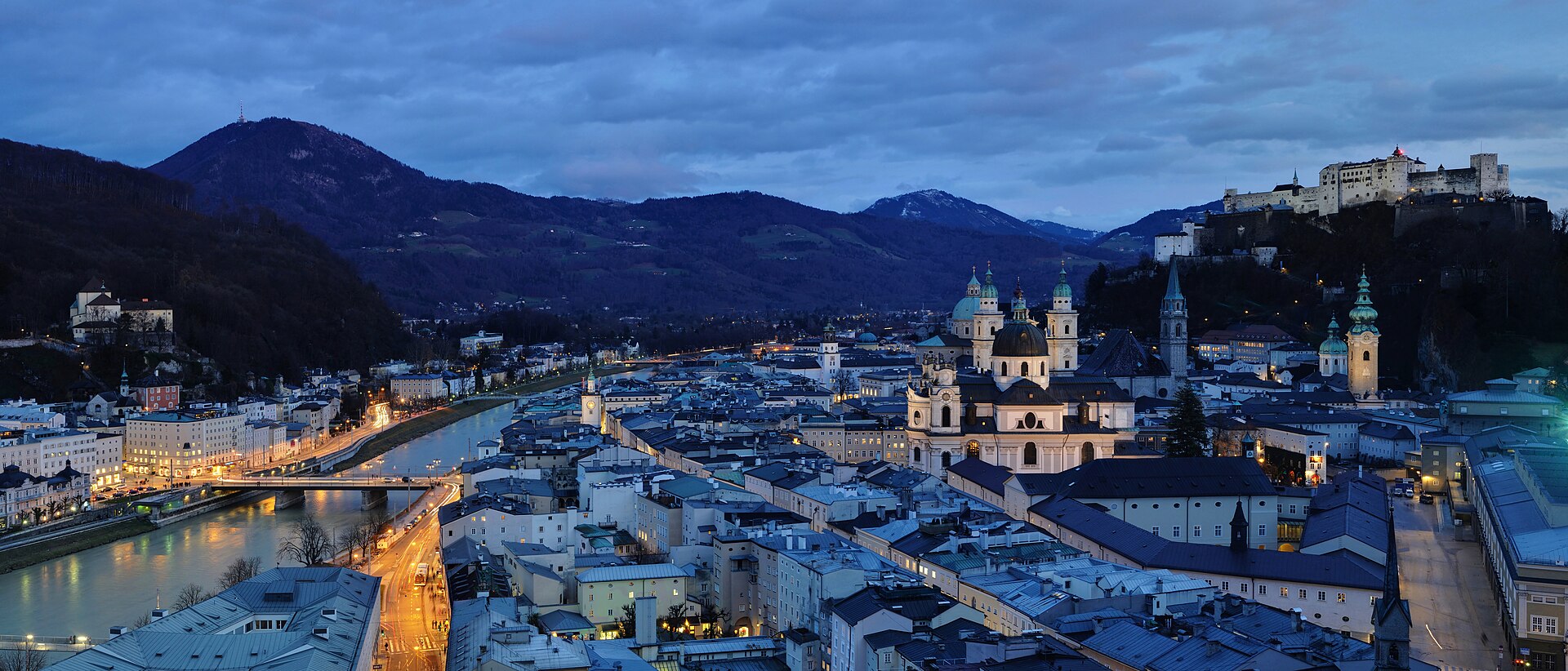
At night, floodlit against the dark hill, Hohensalzburg looks much as it must have looked to travellers for centuries, a great white fortress hanging in the sky above the river. It no longer needs to repel armies or shelter frightened archbishops, but it still does what it has always done best, dominating the scene, commanding the eye, and reminding everyone who sees it that this hill has been the anchor of Salzburg for a thousand years.
Castles Nearby
- Cesky Krumlov Castle: The Fairy-Tale Fortress in the River’s Loop
- Prague Castle: A Thousand Years of Bohemian Power Above the Vltava
Why the White Fortress Never Fell
There is a particular satisfaction in a fortress that actually did its job. So many of the great castles of Europe are romantic ruins, their walls thrown down by the very sieges they were built to withstand. Hohensalzburg is the triumphant exception, a stronghold that was never taken, never sacked, never forced to be rebuilt, and that has therefore come down to us whole, from its massive walls to its shimmering golden halls.
That completeness is its gift to us. Walking Hohensalzburg, you are not imagining a lost medieval world from fragments, you are moving through it, from the prince’s carved chambers to the watchtowers to the ancient freight railway still creaking up the hillside. Few places let you touch the Middle Ages and the Renaissance so directly, and fewer still do it while offering one of the loveliest views in all of Austria.
So when you find yourself in Salzburg, drawn by Mozart and baroque churches and the memory of a famous film, lift your eyes to the white fortress on the hill and give it a day of its own. Climb it, walk its walls, stand in its golden rooms, and let it tell you its improbable thousand-year story of a stronghold that simply never fell.
You May Like
Mafra, the Palace a King Built From a Vow


One thought on “Hohensalzburg Fortress: The Great White Stronghold That Never Fell”