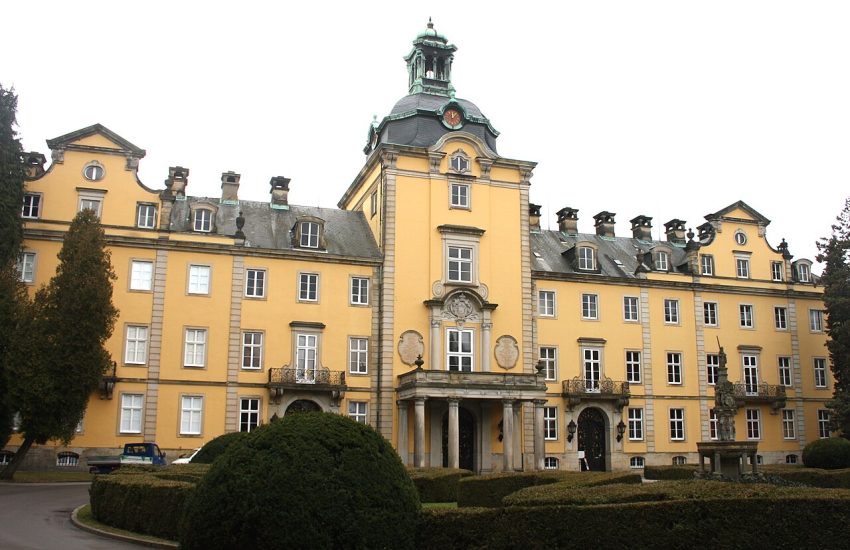
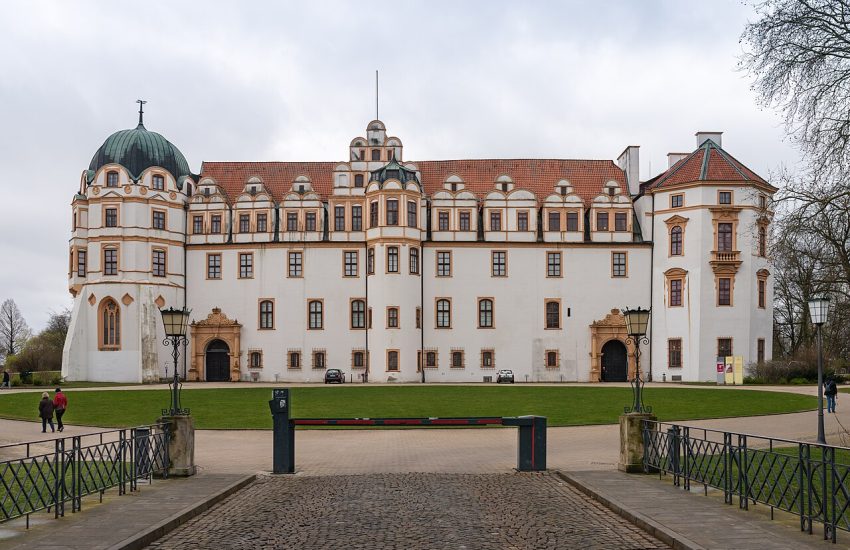
In the historic town of Wolfenbuttel, near Brunswick in Lower Saxony, stands one of the largest palaces in northern Germany. Wolfenbuttel Palace was the residence of the dukes of Brunswick Wolfenbuttel for more than three centuries, and its long baroque facade hides a surprising secret: it is made largely of timber, painted to look like stone.
Across the square stands the famous Herzog August Library, one of the most important libraries in the world for early modern books, where the writer Gotthold Ephraim Lessing once served as librarian. Together, palace and library make Wolfenbuttel a fascinating destination for lovers of history and culture.
In this article we will explore Wolfenbuttel Palace from the dukes who lived there to its timber facade, its tower, its state apartments and its neighbour the library, and we will finish with practical tips for your visit.
In This Article
- A Ducal Palace in a Half Timbered Town
- The Dukes of Brunswick Wolfenbuttel
- A Timber Facade Disguised as Stone
- The Palace Square
- The Entrance and the Tower
- The Inner Courtyard
- The Palace Museum and State Apartments
- The Palace Through the Year
- Portals and Sculpture
- The Herzog August Library
- Wolfenbuttel From Above
- Wolfenbuttel Palace on Video
- Visiting Wolfenbuttel Palace Today
A Ducal Palace in a Half Timbered Town
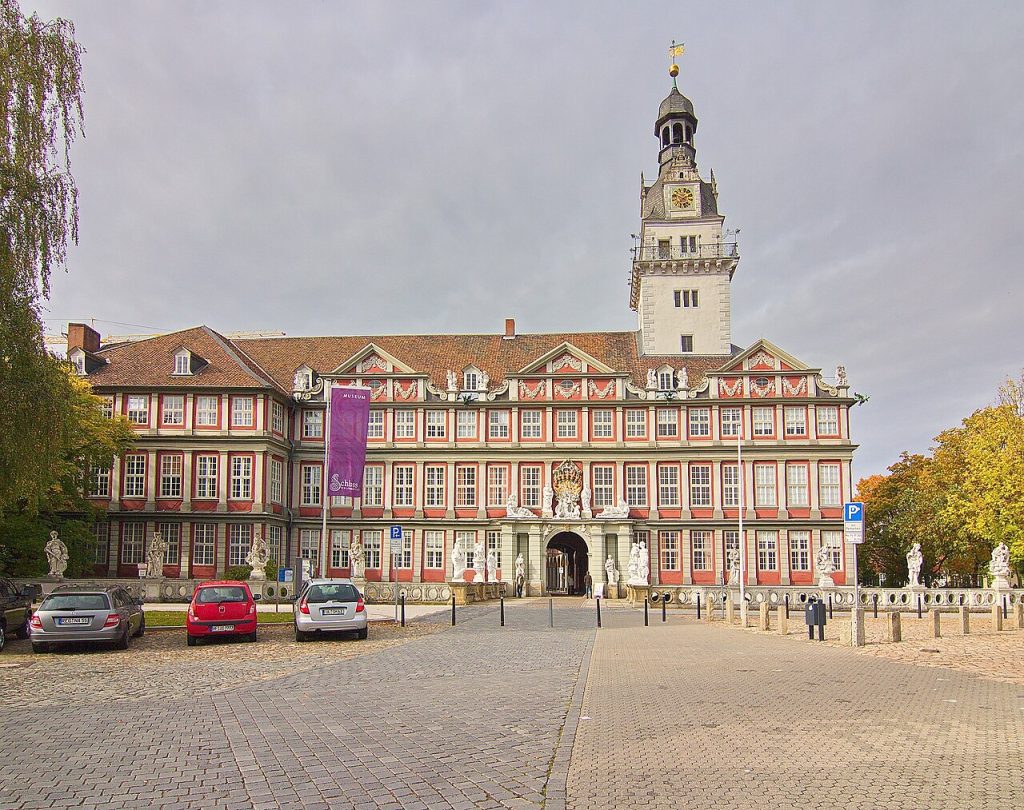
Wolfenbuttel is a charming town with hundreds of half timbered houses, canals and historic squares. At its heart stands the palace, a long building with a striking tower rising above the roofs.
The palace facade faces a broad square, with the library and other historic buildings around it, creating one of the most attractive urban ensembles in northern Germany.
What makes Wolfenbuttel special is the combination of ducal splendour, a unique timber facade and a world famous library.
The Dukes of Brunswick Wolfenbuttel
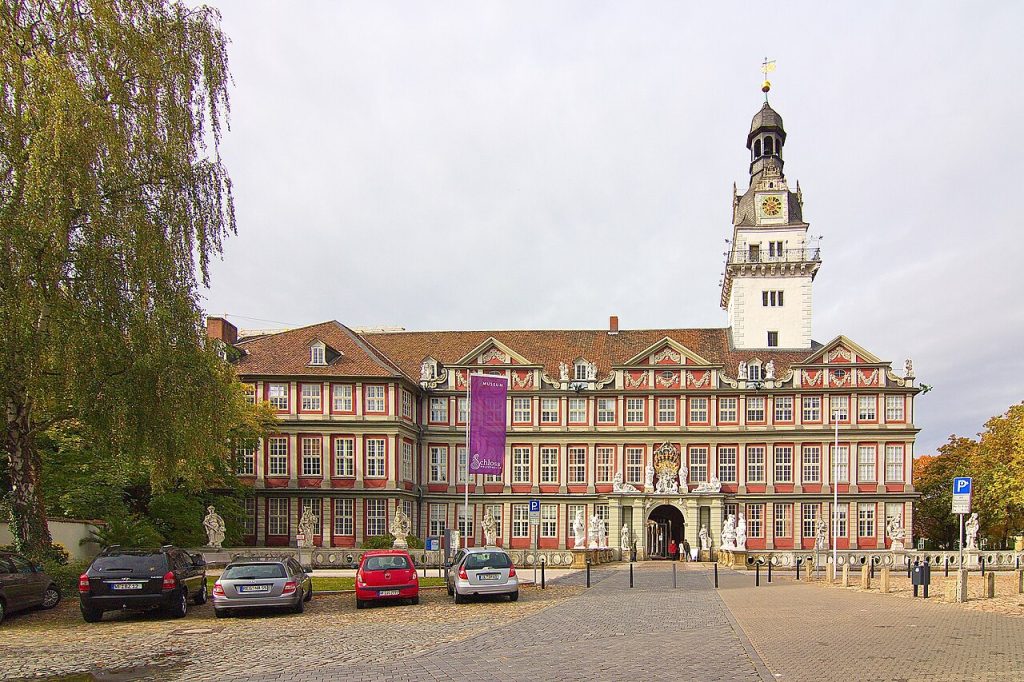
From the fifteenth century until 1753, Wolfenbuttel was the residence of the dukes of Brunswick Wolfenbuttel, a branch of the Guelph dynasty.
The dukes made their town an important cultural centre, supporting art, music, theatre and learning.
In 1753 the court moved to Brunswick, and the palace gradually lost its role as a residence, serving later as a school and a museum.
A Timber Facade Disguised as Stone
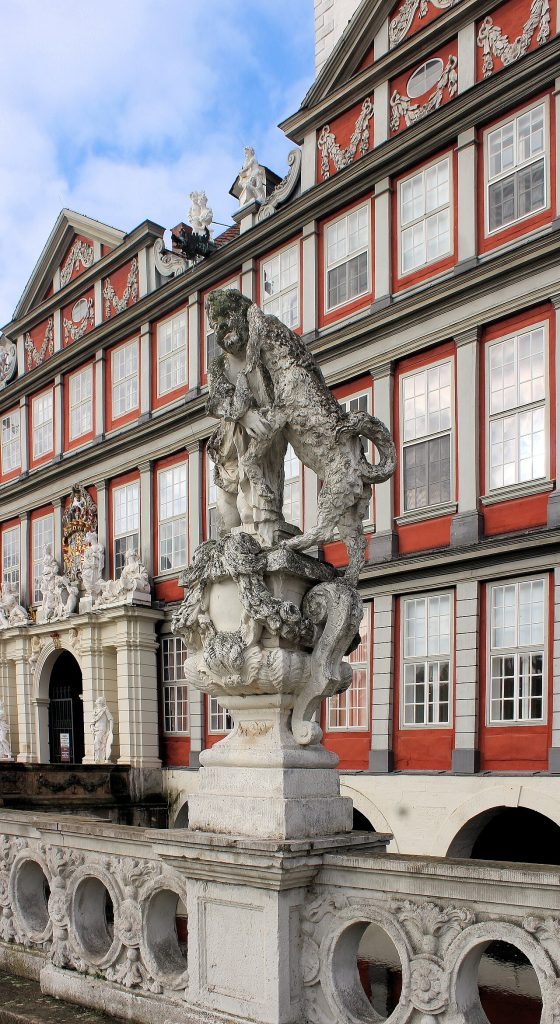
In the early eighteenth century, Duke Anton Ulrich commissioned the architect Hermann Korb to give the old palace a modern baroque facade. Because stone was expensive, Korb built the new facade largely of timber and plaster, painted to imitate stone.
The result is a long, elegant facade with pilasters, windows and ornament that looks like a stone palace from a distance.
Only on closer inspection can you see that much of it is made of wood, a clever and economical solution that reflects the ingenuity of the builders.
The Palace Square

In front of the palace lies a broad square, laid out as a place for ceremonies, parades and markets.
Around the square stand the library, the arsenal and other historic buildings, creating a dignified ensemble that reflects the ducal past.
Today the square is a pleasant open space and a starting point for exploring the town.
The Entrance and the Tower

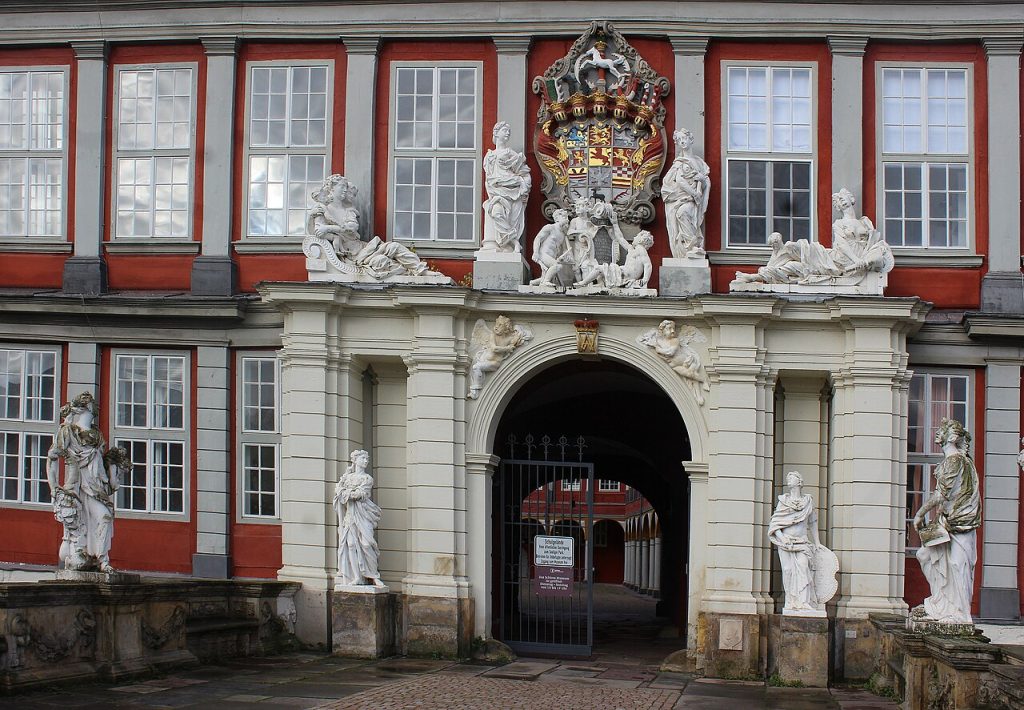
The main entrance of the palace leads through a portal into the inner courtyard, the oldest part of the building.
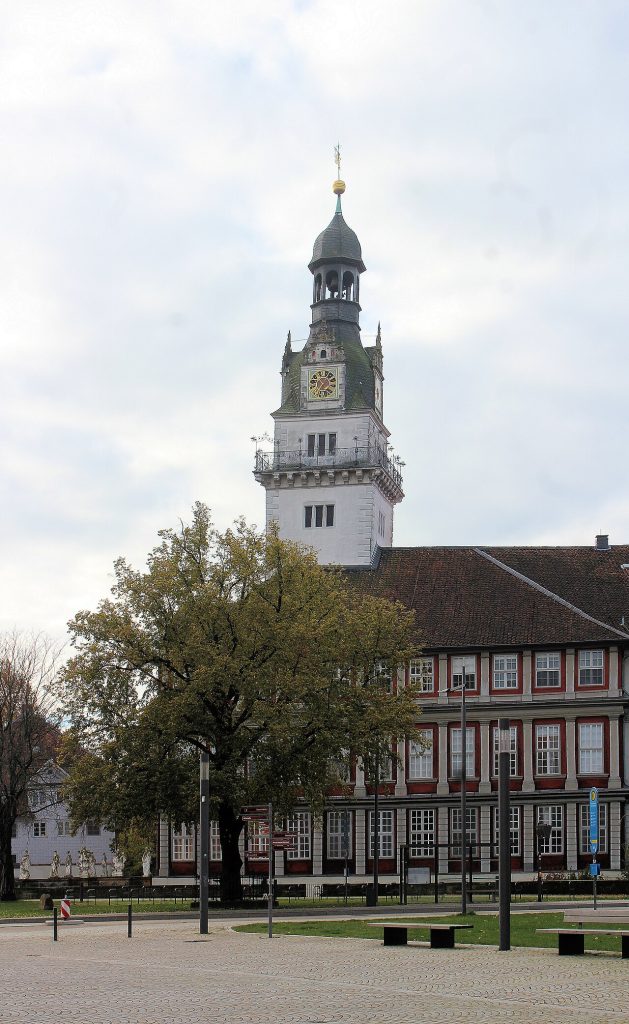
Above the palace rises the Hausmannsturm, a tall tower dating from the sixteenth century, which has become the symbol of Wolfenbuttel.
Its distinctive Renaissance top can be seen from all over the town.
The Inner Courtyard

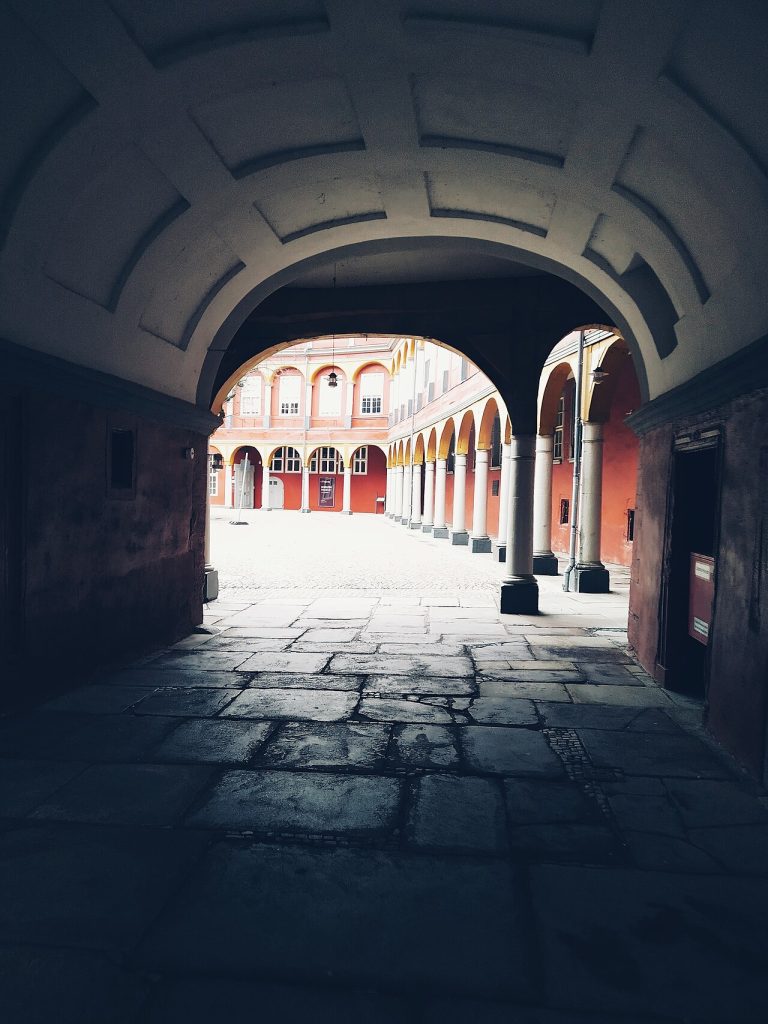
Inside the palace lies a courtyard surrounded by wings from different building periods, from the Renaissance to the baroque.
Arcades and staircases connect the different parts of the palace, and the courtyard gives a sense of the long history of the building.
Today it is used for events, concerts and the summer theatre festival.
The Palace Museum and State Apartments
The Museum Wolfenbuttel Palace presents the restored state apartments of the dukes, with furniture, paintings, porcelain and decorative arts from the baroque period.
The apartments include audience rooms, bedrooms and cabinets, decorated with stucco and fine textiles, giving a vivid impression of court life.
Exhibitions also tell the story of the dukes and their role in German history and culture.
The Palace Through the Year

The palace is beautiful in every season, from spring, when the trees around the square come into leaf, to winter, when the tower and facades stand out against a pale sky.
In summer, open air events and festivals bring life to the courtyard and the square.
In autumn, the golden light makes the painted facade glow warmly.
Portals and Sculpture

The portals of the palace are decorated with sculpture, heraldry and allegorical figures that celebrate the dukes and their virtues.
These details, carved in stone or modelled in plaster, add richness to the long facades.
Looking closely, you can find coats of arms, crowns and symbols of the Guelph dynasty.
The Herzog August Library
Opposite the palace stands the Herzog August Library, founded by Duke August the Younger in the seventeenth century. At the time it was one of the largest libraries in Europe.
The library holds precious manuscripts, early printed books and the famous Gospels of Henry the Lion, one of the most valuable medieval manuscripts in the world.
The writer and philosopher Gotthold Ephraim Lessing worked here as librarian from 1770 until his death, and his house stands nearby.
Wolfenbuttel From Above
From the air, the palace reveals its size and layout, with wings around a courtyard and the tower rising at one corner.
The square, the library and the old town with its canals spread out around it, showing how the palace shaped the town.
The palace was once surrounded by fortifications, and traces of moats and bastions can still be seen in the town plan.
Wolfenbuttel Palace on Video
For a look at where the dukes lived, the video below presents Wolfenbuttel Palace and its museum.
Watch for the state apartments and the facade.
If the video inspires you, read on for practical tips.
Visiting Wolfenbuttel Palace Today

The Museum Wolfenbuttel Palace is open throughout the year, except on Mondays, and the state apartments can be visited individually or on guided tours.
Wolfenbuttel lies about twelve kilometres south of Brunswick and is easy to reach by train.
Plan to combine your visit with the Herzog August Library, the Lessing House and a walk through the half timbered old town.
Wolfenbuttel pairs well with Celle and Herrenhausen for a journey through the Guelph heritage of Lower Saxony.
View the location on Google Maps
Palaces Nearby
If you have enjoyed this palace, northern Germany holds more remarkable residences. Here are two more well worth adding to your journey:
- Celle Palace – the residence of the dukes of Brunswick Luneburg, home of the oldest baroque theatre in Germany.
- Herrenhausen Palace – the palace and Great Garden of the electors of Hanover.
You May Like