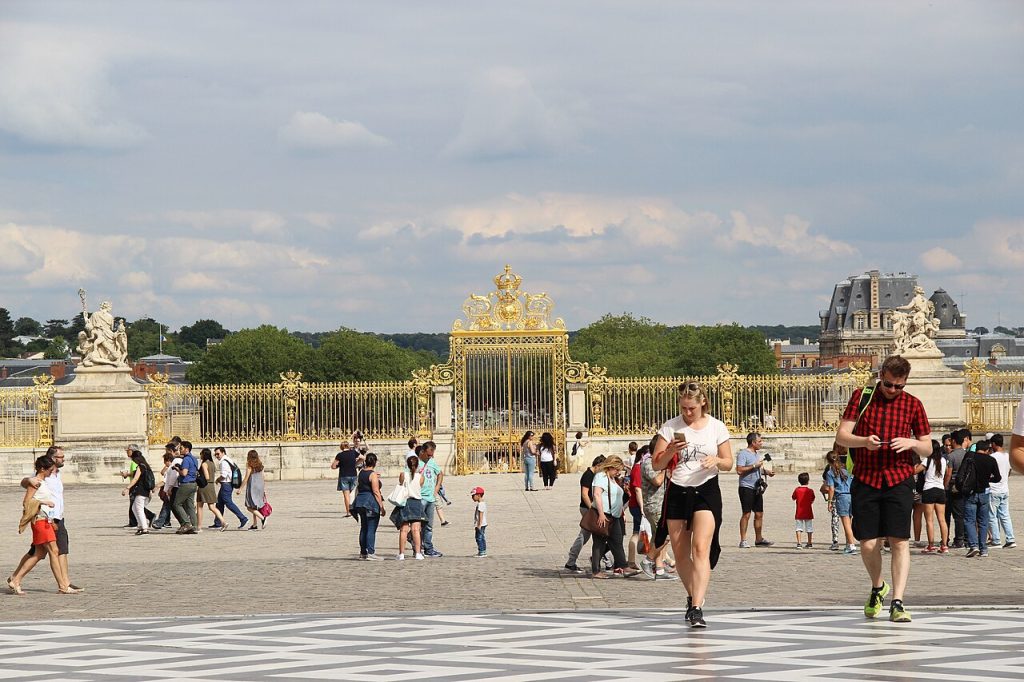
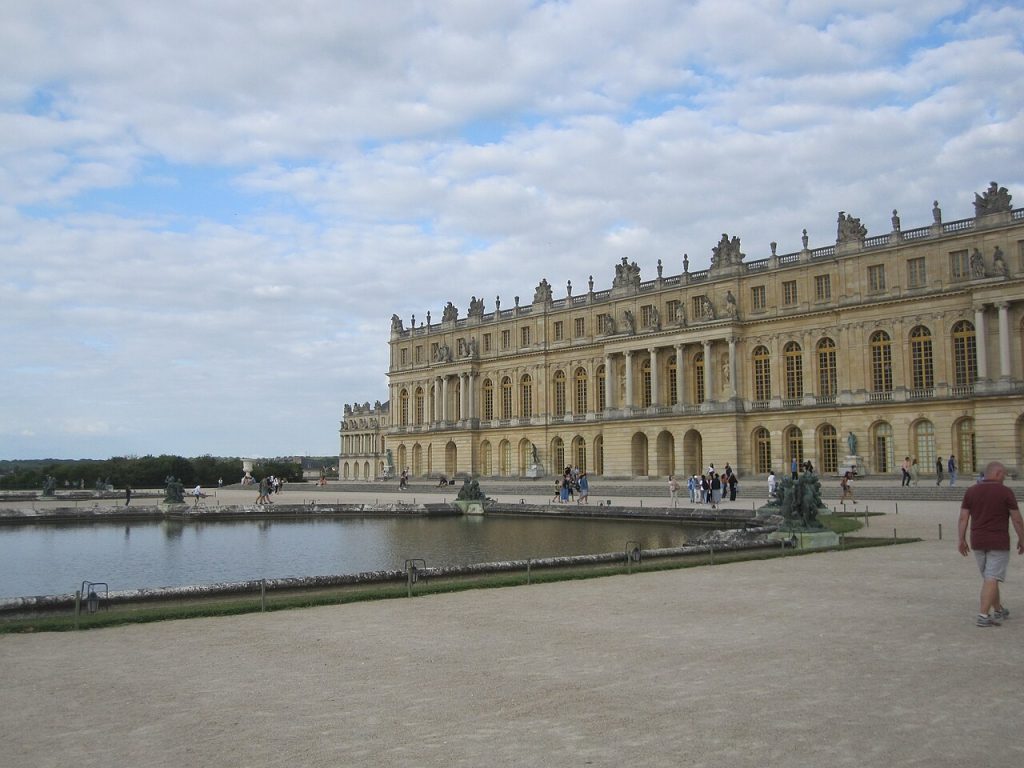
Twenty kilometres south-west of Paris, at the end of three avenues that converge on a vast paved courtyard, a palace of cream stone and pink brick spreads four hundred metres along a terrace above gardens that run to the horizon, with a thousand fountains, a cross-shaped canal, groves, parterres and, hidden in the park, two smaller palaces and a make-believe village. It is the Palace of Versailles, built by Louis XIV between 1661 and 1710 around his father’s hunting lodge, the seat of the French monarchy and government from 1682 until the Revolution dragged the king out of it in October 1789, the model for every palace in Europe for a century and a half and, with eight million visitors a year, the most visited château in the world. It is the eighth and last palace of this series’s French chapter, and the one that the other seven, and most of the others in Europe, were measuring themselves against.
Versailles was built for a reason beyond glory. Louis XIV, who had fled Paris as a boy during the Fronde and had been shown at Vaux-le-Vicomte what his subjects could build, moved the court and the government to a place of his own making and bound his nobility to it with the most elaborate system of etiquette ever devised: who could sit, who could stand, who could hand the king his shirt at the lever and his candle at the coucher, who could enter which room at which hour, in a choreography so precise and so prized that the great families of France fought for the right to watch the king eat and forgot how to fight him. The palace is the machine of that system, and its rooms were designed for the ceremonies they housed.
Walk with me from the Marble Court through the Grand Apartments to the Hall of Mirrors, into the king’s bedchamber at the centre of everything, down the garden to the canal and out to the Trianons and the Queen’s Hamlet, with Louis XIV, his etiquette and his successors in order. The contents are below.
In This Article
- Louis XIII’s Lodge and the Marble Court
- 1661 to 1682: Le Vau, Le Brun and the Envelope
- The Grand Apartments and the Planets
- The Hall of Mirrors
- The King’s Bedchamber and the Lever
- Etiquette as a Weapon
- Le Nôtre’s Gardens and the Thousand Fountains
- The Chapel, the Opera and Louis XV
- The Grand and the Petit Trianon
- Marie Antoinette’s Hamlet
- October 1789: The Women Who Came for the King
- Louis-Philippe’s Museum and the Treaty of 1919
- Eight Million Visitors and the Restoration
- Versailles on Video
- Visiting Versailles Today
- Palaces Nearby
Louis XIII’s Lodge and the Marble Court
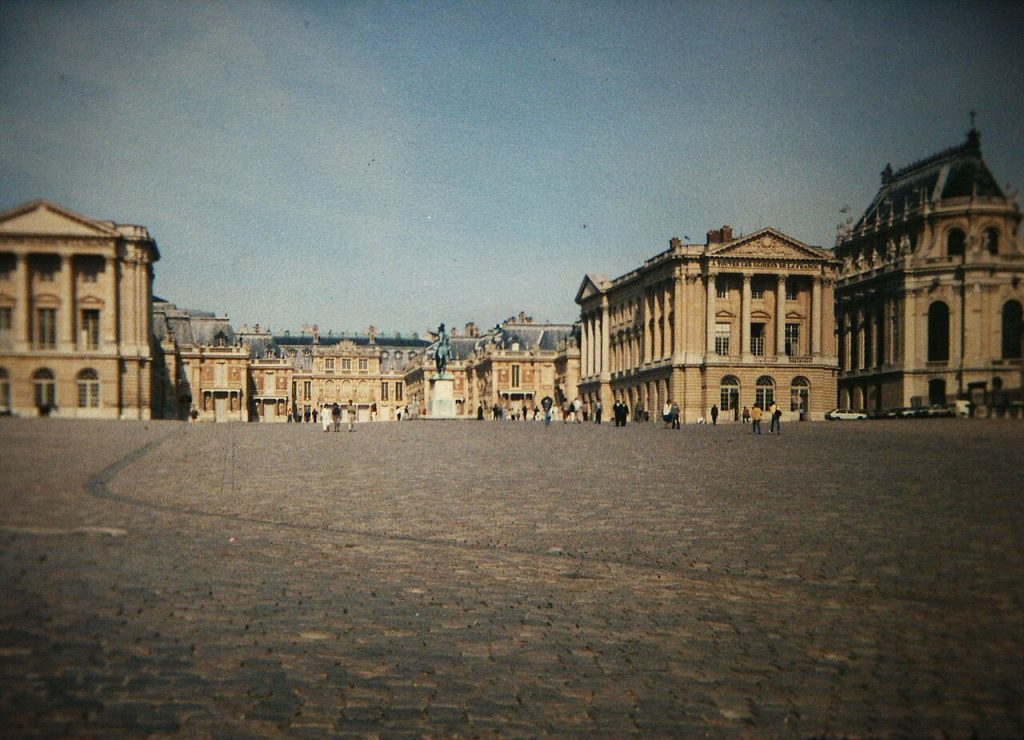
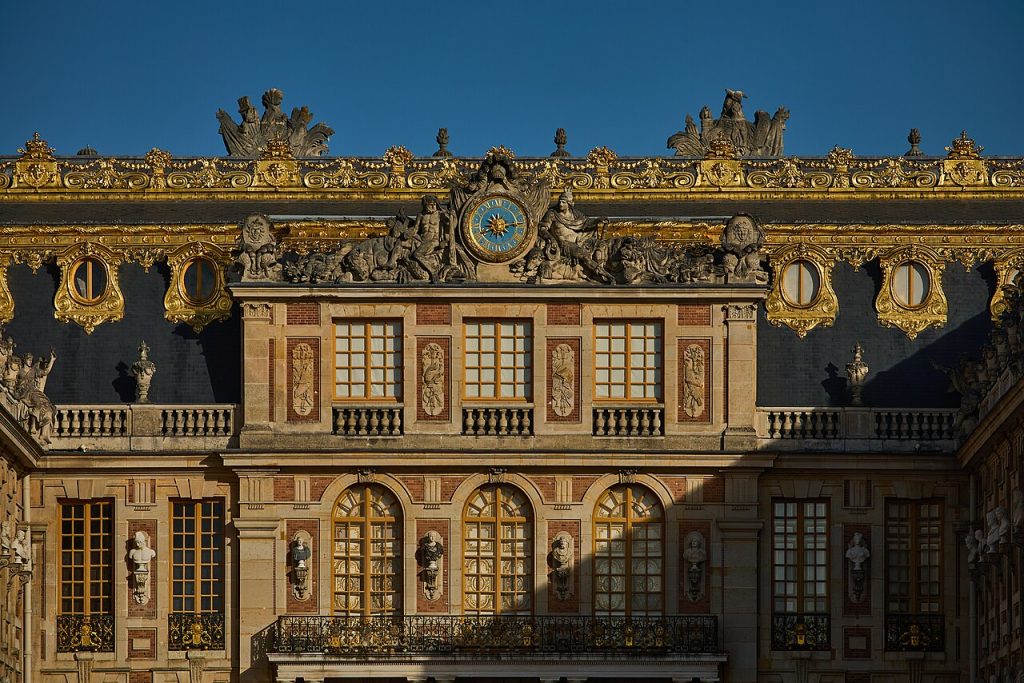
In 1623 Louis XIII built a small hunting lodge of brick and stone on a hill in the marshy forest of Versailles, where the game was good and the court was far away, and in 1631 Philibert Le Roy rebuilt it as a modest château of three wings around a courtyard, the building that still forms the centre of the palace. Louis XIV, who hunted there as a young man and kept his mistress Louise de La Vallière there, loved the place for its privacy and his father’s memory and refused all his life to pull the lodge down; it survives as the inner core of the palace, its brick facades, slate roofs and gilded balconies surrounding the Marble Court, the small paved courtyard at the end of the long approach, and the king’s bedchamber is in its centre, where his father’s had been.
Now, stop here in the Marble Court and look at the brick and stone around you. This is the hunting box, and the half-kilometre of palace behind you was wrapped around it.
1661 to 1682: Le Vau, Le Brun and the Envelope
Louis XIV began at Versailles in 1661, the year of Fouquet’s fall, with the team he took from Vaux: Louis Le Vau, who in 1668 wrapped the old lodge on the garden side in a new stone envelope of Italianate design with a flat roof, a terrace and a colonnaded first floor; Charles Le Brun, who decorated the new apartments; and André Le Nôtre, who laid out the gardens. In 1678 the king’s second architect, Jules Hardouin-Mansart, filled in Le Vau’s terrace with the Hall of Mirrors, added the two vast wings to north and south that make the garden front four hundred metres long, built the Orangery, the Grand Trianon, the stables and the ministers’ wings, and in 1682 the king moved the court and the government to Versailles permanently; work continued with the chapel until 1710, five years before his death, with as many as thirty-six thousand workmen on the site.
The palace was never finished and never cheap; its cost, over fifty years, is estimated at about two years of the state’s revenue, which was less than the wars.
The Grand Apartments and the Planets

The King’s Grand Apartment on the first floor of the north side is a row of seven state rooms, each named for a planet and its god and painted on the ceiling by Le Brun’s pupils with that god’s deeds as allegories of the king’s: the Salon of Abundance, of Venus, of Diana, where the king played billiards, of Mars, the guardroom, of Mercury, the state bedchamber where Louis XIV lay in state in 1715, and of Apollo, the throne room under a ceiling of the sun god in his chariot. Three evenings a week the king held the appartement here, with music, cards, billiards and refreshments, and any properly dressed person could come. The Salon of Hercules at the end, added by Louis XV, has the largest ceiling painting in France, by Lemoyne, who killed himself the day after finishing it.
The Queen’s Grand Apartment on the south side mirrors the king’s, and the two meet at the Hall of Mirrors on the garden front.
The Hall of Mirrors
The Galerie des Glaces, the Hall of Mirrors, built by Hardouin-Mansart between 1678 and 1684 on the site of Le Vau’s terrace, is seventy-three metres long and twelve wide, with seventeen windows onto the gardens facing seventeen arches filled with three hundred and fifty-seven mirrors, made in France by workers lured from Venice at a time when mirrors of that size were the most expensive luxury in Europe, and a vaulted ceiling by Le Brun of thirty paintings of Louis XIV’s reign from his assumption of power in 1661 to the Dutch War, the first royal ceiling in France to show the king himself rather than a god. Lit by three thousand candles in silver and crystal chandeliers, with silver furniture that was melted down in 1689 to pay for a war, the hall was the court’s passage between the king’s and queen’s apartments and the setting of the great balls and receptions, the Siamese and Persian embassies, the proclamation of the German Empire in 1871 and the signing of the Treaty of Versailles in 1919.
Now, stop here in the middle of the hall and look from the windows to the mirrors. The gardens come inside, the candles double, and the room was designed to make the court see itself in the king’s glory.
The King’s Bedchamber and the Lever
In 1701 Louis XIV moved his bedchamber to the exact centre of the palace, the room in the old lodge that faces east onto the Marble Court and the rising sun, behind a gilded balustrade under a relief of France watching over the sleeping king, and here every day of the last fourteen years of his life began and ended in public. At the lever at eight the first valet woke him, the first physician and surgeon examined him, the princes and great officers entered in order to watch him shaved and dressed, with the right to hand him his shirt the highest honour of the day, and at the coucher the same company watched him undress, with the candle held by whichever courtier the king named, a favour fought over by dukes. Louis XIV died in this bed on 1 September 1715 of gangrene, after seventy-two years as king, and Louis XV and Louis XVI slept in it and were woken in it for the rest of the monarchy.
The bedchamber is the altar of Versailles, and the whole palace is arranged to bring the court to it twice a day.
Etiquette as a Weapon
Etiquette at Versailles was not manners but power. Louis XIV, who had seen the nobles rebel in his childhood, required them to live at court, where ten thousand people slept in the palace’s attics and closets, and governed them with a code of precedence in which every right, to sit on a tabouret in the queen’s presence, to pass through a door before another duke, to ride in the king’s carriage, to be addressed as Monseigneur, to hold the candle, was granted or withheld by the king and could be lost by a word. The courtiers competed for these favours and for the king’s glance, spent their fortunes on dress, gambling and lodging to stay near him and asked for pensions to pay for it, becoming dependants of the crown instead of rivals; the Duc de Saint-Simon, who hated it, recorded it all in forty volumes of memoirs. The system outlived the king who made it and became, under Louis XVI, an empty ritual that kept the court from seeing the country.
Now, stop here in the Oeil-de-Boeuf antechamber outside the bedchamber, where the courtiers waited every morning for the door to open, and imagine fifty dukes watching for a nod.
Le Nôtre’s Gardens and the Thousand Fountains

Le Nôtre laid out the gardens over forty years, from 1661 to his death in 1700, over eight hundred hectares: the Water Parterre on the terrace with its two basins and bronzes, the Latona fountain on the slope below, the Royal Avenue of lawn running down to the Apollo fountain where the sun god rises from the water in his chariot, the Grand Canal beyond, 1,670 metres long and cross-shaped, where the king kept gondolas sent by Venice and a fleet of model ships, and on both sides of the axis the groves, the bosquets, fifteen outdoor rooms hidden in the trees with fountains, colonnades, a ballroom, a labyrinth and a theatre of water. The fountains, over two thousand jets in fifty basins, were fed by a water system that was never adequate, with the Machine de Marly lifting water from the Seine, and fountaineers whistled to one another to turn them on as the king approached and off as he passed; today they play on weekends to music.
Now, stop here on the terrace and look down the axis to the canal and the horizon. This is the view of Vaux multiplied by twenty, by the same gardener for the same king, who wrote the guidebook to his own gardens himself.
The Chapel, the Opera and Louis XV
The Royal Chapel, the fifth chapel of the palace, was begun by Hardouin-Mansart in 1699 and finished by Robert de Cotte in 1710, a tall Gothic-proportioned nave with a Corinthian colonnade on the royal gallery, a painted vault of the Trinity and the Resurrection and an organ on which Couperin played; the king attended mass in the gallery every morning, with the court below facing him rather than the altar. Louis XV, who inherited at five in 1715 and reigned for fifty-nine years, built the Opera in the north wing, a wooden oval theatre painted to look like marble that seats seven hundred and was opened in 1770 for the wedding of the Dauphin, the future Louis XVI, to Marie Antoinette of Austria, and he made the private apartments behind the state rooms, where he lived with his mistresses Pompadour and Du Barry, into the most refined rooms of the eighteenth century.
Louis XV also died at Versailles, of smallpox in 1774, in the bedchamber his great-grandfather had made, with the court fleeing the infection.
The Grand and the Petit Trianon
Even the king who invented the court needed to escape it. At the end of the canal’s north arm Louis XIV built in 1687 the Grand Trianon, a single-storey palace of pink Languedoc marble by Hardouin-Mansart with an open colonnade, where he dined with Madame de Maintenon and his family without etiquette; Napoleon restored and lived in it, and de Gaulle used it for state guests. Nearby Louis XV built for Madame de Pompadour, from 1762 to 1768, the Petit Trianon by Ange-Jacques Gabriel, a cube of perfect neoclassical proportions that is the most admired small building in France, which Louis XVI gave in 1774 to his nineteen-year-old queen Marie Antoinette, who made it her private domain where no one entered without her invitation, not even the king.
The Trianons are the court’s negation, built by its masters, and the Petit Trianon is the hinge of the monarchy’s last act.
Marie Antoinette’s Hamlet
Marie Antoinette rebuilt the Petit Trianon’s garden in the English style with a grotto, a temple of love and a belvedere, and in 1783 had Richard Mique build at its edge the Queen’s Hamlet, twelve thatched cottages around an artificial lake, a mill, a dairy, a dovecote, a boudoir and a farm with real cows and sheep run by a real farmer, where she and her friends dressed in muslin and straw hats played at country life while the court, excluded, resented her. The hamlet was a fashion of the age, from Rousseau and the English garden, but at Versailles it was read as the Austrian queen spending the nation’s money to escape the nation’s king, and the libels about it fed the hatred that brought her to the guillotine in 1793. It was restored in the 1930s with Rockefeller money and again in 2018.
Now, stop here by the lake and look at the thatched roofs with their built-in cracks and the farmhouse made to look old when new. It is the prettiest place at Versailles and the most dangerous idea the monarchy ever had.
October 1789: The Women Who Came for the King
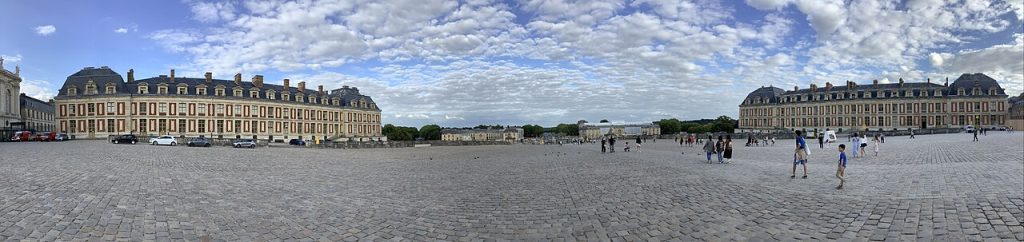
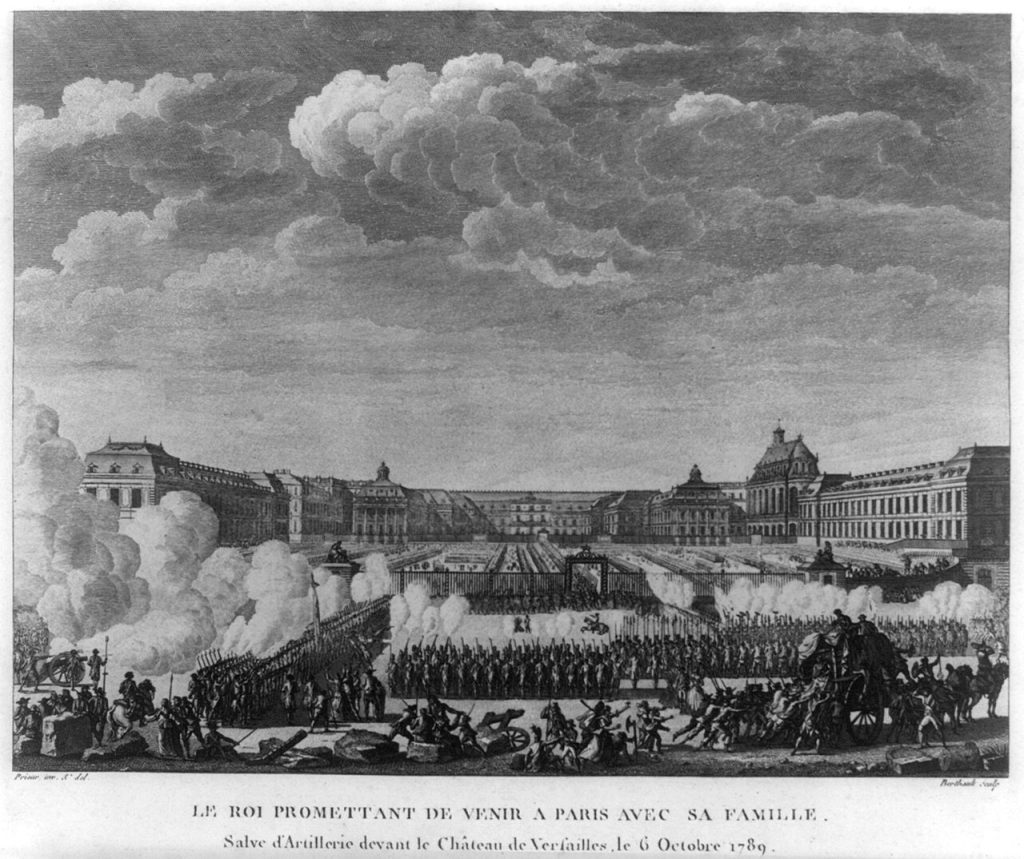
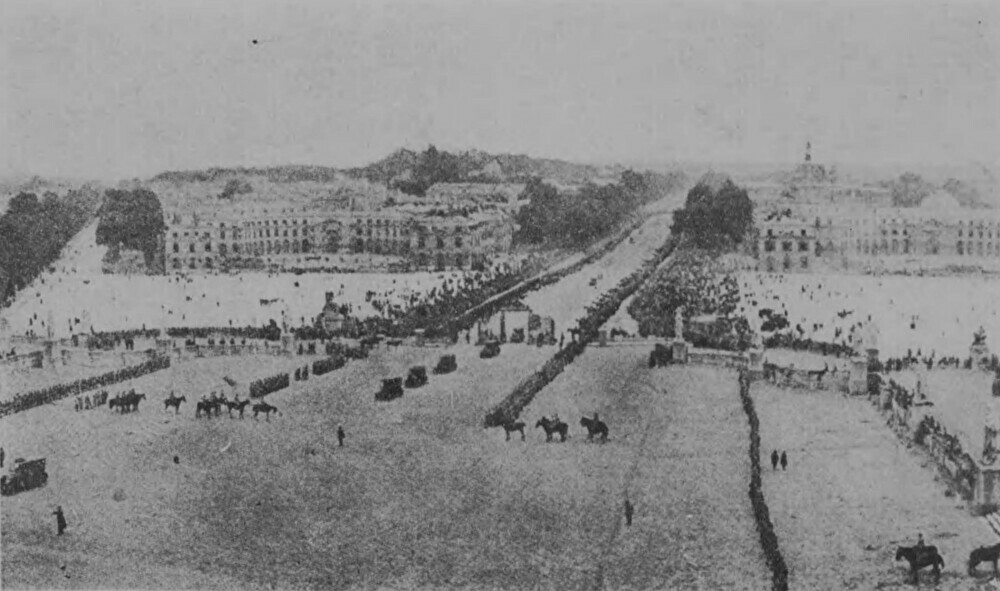
On 5 October 1789, three months after the fall of the Bastille, with bread scarce in Paris, some seven thousand market women marched the twenty kilometres to Versailles in the rain, invaded the National Assembly, which met in the town, and camped before the palace, followed by the National Guard under Lafayette; at dawn on the 6th a crowd broke into the palace through an unguarded gate, killed two bodyguards and reached the queen’s apartments, from which Marie Antoinette fled barefoot by a hidden door to the king’s bedchamber. Lafayette persuaded the king to appear on the balcony of the Marble Court, and the queen to appear beside him, and that afternoon the royal family was taken to Paris in a procession with the guards’ heads on pikes, never to return. Versailles, emptied of court and furniture, which the Revolution sold in seventeen thousand lots, was never again a royal residence.
The balcony of the king’s bedchamber over the Marble Court is where the monarchy of Versailles ended, a hundred and seven years after it began.
Louis-Philippe’s Museum and the Treaty of 1919
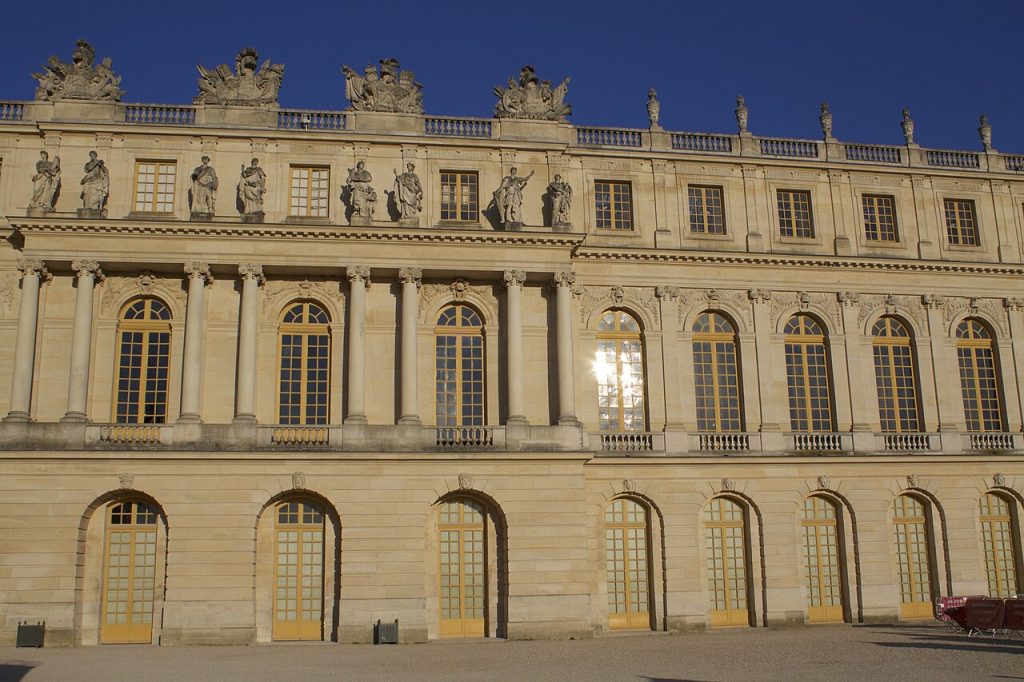
Napoleon considered living at Versailles and did not; Louis XVIII and Charles X restored and did not inhabit it; and in 1833 Louis-Philippe, the citizen king, saved it from demolition by making it a museum dedicated To All the Glories of France, gutting the princes’ apartments in the south wing for the Gallery of Battles, a hundred-and-twenty-metre hall of thirty-three paintings of French victories from Tolbiac to Wagram, and opening it in 1837. The palace was the headquarters of the Prussian army in 1870 and the place where Bismarck’s German Empire was proclaimed in the Hall of Mirrors in January 1871, the Third Republic’s parliament met in it until 1879, and on 28 June 1919, in the same hall, chosen for the symmetry, the Allies made Germany sign the Treaty of Versailles that ended the First World War and, many said, prepared the second.
From 1887 the curator Pierre de Nolhac began the long work of turning Louis-Philippe’s museum back into Louis XIV’s palace, buying back the furniture and restoring the rooms, which continues.
Eight Million Visitors and the Restoration
Versailles today is a public establishment that receives eight million visitors a year, more than any other château in the world, with the Louvre and the Eiffel Tower as its only rivals in France, and runs a continuous programme of restoration: the Hall of Mirrors in 2007, the gilded Royal Gate, destroyed in the Revolution, rebuilt in 2008, the Royal Opera in 2009, the Latona fountain in 2015, the Queen’s Hamlet in 2018, the king’s bedchamber and the chapel roof in the 2020s, and the replanting of the gardens after the storm of 1999 that felled ten thousand trees. The palace hosts contemporary art exhibitions, state dinners for presidents and kings, the Olympic equestrian events of 2024 and, every June, a masked ball in the Orangery; it has eight hundred hectares of park, two thousand three hundred rooms and sixty thousand works of art.
Now, stop here on the terrace at closing time, when the crowds have gone and the fountains fall silent, and look at the garden front turning gold in the west. Louis XIV designed the palace to face the sunset over the canal, and for ten minutes a day it belongs to one person again.
Versailles on Video
Visiting Versailles Today
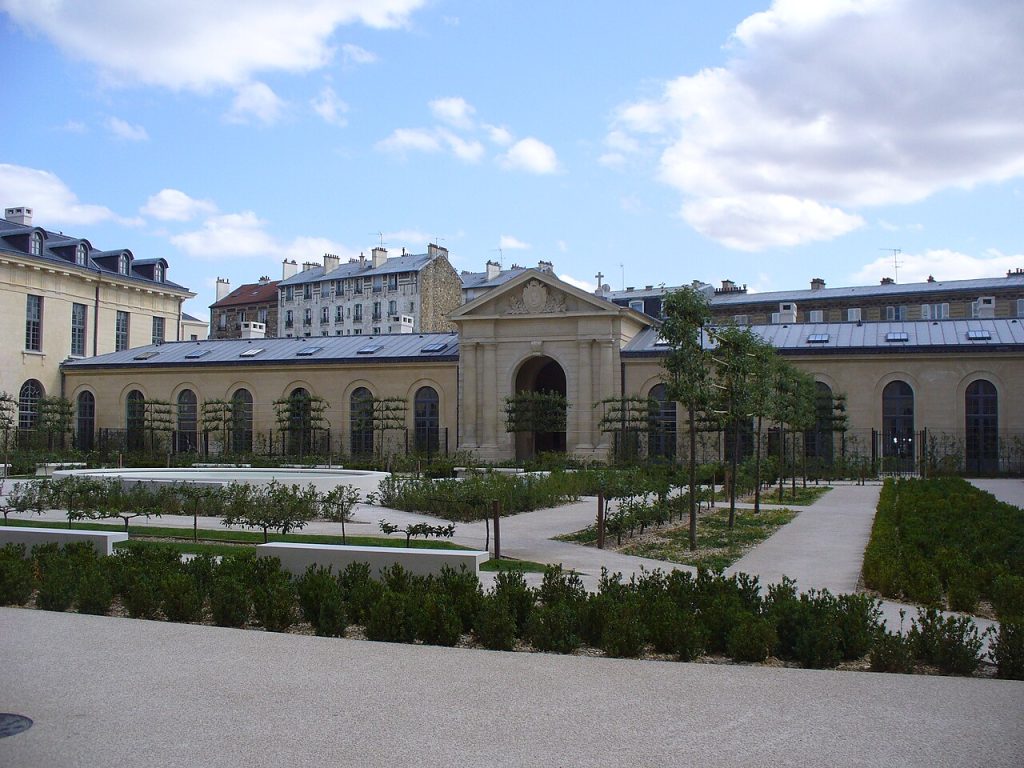
The Palace of Versailles is open daily except Monday, with the Passport ticket covering the palace, the gardens, the Trianon estate and the Hamlet, and the Musical Fountains and Musical Gardens on weekends and some weekdays from April to October, when the fountains play; timed tickets must be booked online, and the palace is least crowded on weekday mornings and after three in the afternoon. Allow a full day: three hours for the palace with the audio guide, two hours for the gardens, which are free on non-fountain days, and three hours for the Trianons and the Hamlet, reached on foot in half an hour or by the little train, hired bikes or golf carts. The Gallery of Coaches in the Great Stables is free, and the Royal Opera is visited on guided tours.
Versailles is twenty kilometres south-west of Paris, forty minutes by RER C from the Left Bank to Versailles Château Rive Gauche, or by train from Montparnasse to Versailles Chantiers or from Saint-Lazare to Versailles Rive Droite; Malmaison is twenty minutes north by car and Fontainebleau an hour south. Here is the exact spot: Palace of Versailles on Google Maps.
Palaces Nearby
You May Like
Malmaison and the Garden of the Empress Josephine