In this article
- A speaker for an audience of one
- From the Walkman to wires that vanished
- How a tiny driver turns electricity into music
- Bluetooth: sending sound through the air
- The clever trick of true wireless earbuds
- How noise cancellation silences the world
- What is crammed inside an earbud
- Codecs, latency, and what affects sound quality
- Getting the best from your earbuds
- Where personal audio is heading
Somewhere along the way, the tangle of wires that defined personal listening for decades simply disappeared. Where we once fought with knotted cords pulled from pockets, we now pop a pair of tiny buds into our ears and they connect to our phones as if by magic. Wireless earbuds have become one of the most ubiquitous gadgets of the era, dangling from the ears of commuters, runners, and office workers everywhere, and they pack an astonishing amount of technology into something small enough to lose down the back of a sofa.
For something we treat so casually, a modern wireless earbud is a marvel of miniaturisation, cramming a speaker, a radio, microphones, a battery, sensors, and a tiny computer into a shell that weighs a few grams. This article opens up that little device: how a speaker turns electrical signals into the sensation of sound, how Bluetooth carries music invisibly through the air, the genuinely tricky engineering behind a pair of earbuds with no wire between them, how noise cancellation can erase the roar of a plane, and what actually determines whether your music sounds good.

A speaker for an audience of one
At its core, a headphone or earbud is simply a very small loudspeaker placed right next to your ear. The fundamental job is the same as the giant speakers at a concert: to take an electrical signal representing sound and convert it into actual vibrations in the air that your ears can detect. The only real difference is scale. Because the speaker sits millimetres from your eardrum, it can be tiny and use almost no power while still sounding loud and full to you alone.
This intimacy is the whole point of personal audio. A headphone delivers sound to one person without disturbing anyone else, creating a private bubble of music, podcast, or call in the middle of a crowded train or a shared office. Everything clever about modern earbuds—the wireless connection, the noise cancellation, the sensors—is built on top of that simple, century-old idea of a miniature speaker playing just for you. Understanding the little speaker inside is the foundation for understanding everything else.
From the Walkman to wires that vanished
Personal listening as a cultural phenomenon really began with the portable cassette player, most famously the Sony Walkman, which arrived at the end of the 1970s. For the first time, people could carry their own choice of music with them and listen privately through lightweight headphones while walking down the street. It was a genuine revolution in how people related to music, turning listening from a shared, stationary activity into a personal, mobile one.
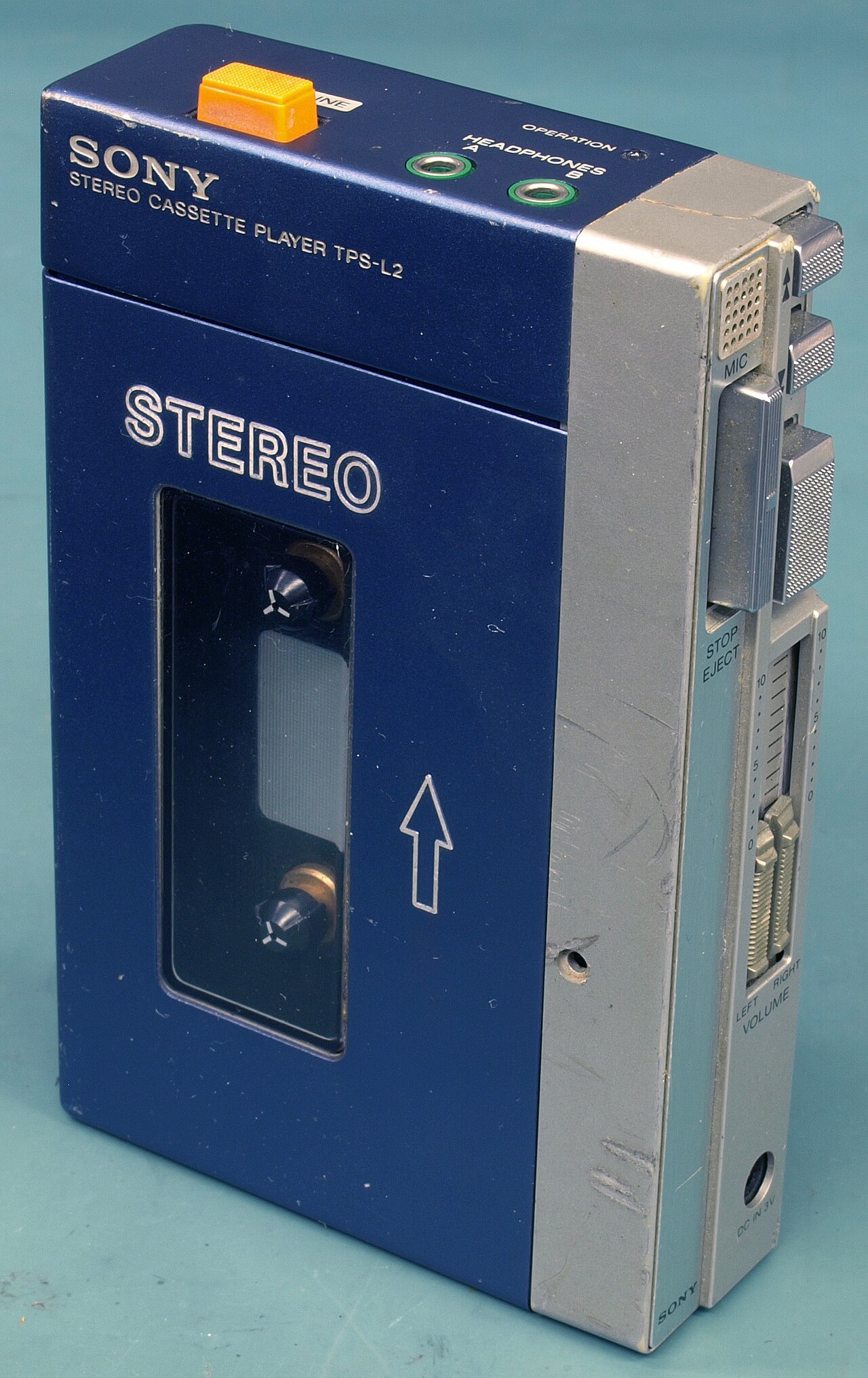
The decades that followed brought portable CD players and then the digital music players that held entire libraries in a pocket, but through all of it the headphones stayed stubbornly wired. The cord was simply accepted as part of the deal, despite forever tangling and snagging. The wireless era crept in gradually as Bluetooth matured, first with bulky wireless headsets and then, around the latter half of the 2010s, with the arrival of genuinely tiny true wireless earbuds—two separate buds with no wire between them at all. The removal of the headphone socket from many phones accelerated the shift, and within a few years the wire that had defined personal audio for forty years had largely vanished.
How a tiny driver turns electricity into music
The component that actually produces sound is called the driver, and most earbuds use a type known as a dynamic driver that works on a beautifully simple principle. Sound is nothing more than vibrations travelling through the air—rapid pressure waves that your eardrum picks up. To create sound, the earbud needs to push the air back and forth in exactly the right pattern, and it does this by vibrating a small flexible membrane called a diaphragm.

The trick for moving that diaphragm relies on electromagnetism. Attached to the diaphragm is a tiny coil of wire sitting within the field of a small permanent magnet. When the electrical signal of your music—a rapidly varying current—flows through this coil, it turns the coil into an electromagnet whose magnetic field constantly changes, pushing and pulling against the fixed magnet. This makes the coil, and the attached diaphragm, vibrate in perfect step with the electrical signal. The vibrating diaphragm pushes the air, and those air vibrations are the sound you hear. In essence, the wiggle of an electrical current is faithfully translated into the wiggle of the air, and your brain interprets that as music. It is the same principle in a three-gram earbud and a stadium speaker.
Bluetooth: sending sound through the air
What makes a wireless earbud wireless is Bluetooth, a short-range radio technology designed for connecting devices over a distance of a few metres. Just like Wi-Fi, it sends data as radio waves, but it is built to use very little power, which is essential for a device running off a battery the size of a lentil. When you pair your earbuds with your phone, you are establishing a private radio link between them.
Music, of course, is digital data on your phone—a stream of numbers. Bluetooth takes that data, compresses it to fit through the limited bandwidth of the radio link, and transmits it to the earbuds, which decompress it and feed it to their drivers. This compression is necessary because raw, full-quality audio is too much data to send reliably over a low-power radio link, and it is one of the main reasons wireless audio has historically been viewed as slightly inferior to a wired connection, though the gap has narrowed dramatically. Bluetooth also carries the signal the other way—your voice from the earbud’s microphone back to the phone during a call—and even small control signals, like a tap to pause.
The clever trick of true wireless earbuds
A single wireless headset is straightforward: the phone talks to one device. But true wireless earbuds pose a genuinely tricky problem. You have two completely separate earbuds, with no wire between them, and both need to receive the audio in perfect synchronisation—if the left and right were even slightly out of step, the stereo image would fall apart and the effect would be deeply unpleasant.

Engineers have solved this in clever ways. In many designs, the phone connects to one primary earbud, which then relays the audio to the secondary one, while sophisticated timing keeps both perfectly aligned; newer approaches let the phone transmit to both buds at once. Either way, the two tiny devices must coordinate constantly and invisibly. The charging case is the other half of the system, and it does more than store the buds—it contains a larger battery that recharges them several times over between trips to a wall socket, which is why the buds themselves can get away with such minuscule batteries. The case is effectively a portable power reserve that the featherweight earbuds dock into whenever they are not in your ears.
How noise cancellation silences the world
One of the most impressive features in modern earbuds and headphones is active noise cancellation, which can dramatically quieten the steady roar of an aeroplane cabin or a train. It sounds like magic, but it rests on a neat piece of physics about how sound waves interact. When two sound waves meet, they add together; if one wave’s peaks line up with another wave’s troughs, they cancel each other out, producing silence. This is called destructive interference.

Noise-cancelling headphones exploit this directly. Tiny microphones on the outside of the earbud listen to the ambient noise around you. A small processor inside analyses that noise and, in real time, generates a sound wave that is its exact opposite—an “anti-noise” whose peaks fall precisely where the noise’s troughs are. When this anti-noise is played through the driver alongside your music, it cancels out much of the incoming din, leaving you in relative quiet. It works best on constant, droning sounds like engine hum, which are predictable and easy to model, and less well on sudden, irregular noises like a voice or a slammed door. The reverse feature, often called transparency mode, simply uses those same external microphones to pipe the outside sound in, letting you hear the world without removing the buds.
What is crammed inside an earbud
Considering its size, the amount of technology inside a single earbud is genuinely remarkable. There is the driver that makes the sound, a rechargeable battery, a Bluetooth radio chip, and a small processor to handle the audio, the wireless connection, and the noise cancellation. There are usually several microphones—some for picking up your voice on calls, others facing outward for noise cancellation.
On top of that, modern earbuds bristle with sensors. Many include a sensor that detects when the bud is in your ear, automatically pausing the music when you take it out and resuming when you put it back—a small touch that feels almost intelligent. Touch-sensitive surfaces let you control playback with a tap or a swipe, and some include motion sensors for gestures or fitness features. All of this is packed around the contours of an object shaped to sit comfortably in an ear and weighing only a few grams, a feat of miniaturisation that rivals the smartphone itself in its density of engineering.
Codecs, latency, and what affects sound quality
Because Bluetooth has to compress audio, the method used for that compression—known as a codec—has a real effect on sound quality. Different codecs strike different balances between how much they compress the audio and how good it sounds, and both your phone and your earbuds must support the same one to use it. Better codecs preserve more detail, which is why two pairs of earbuds with similar drivers can sound noticeably different depending on the wireless technology they use.
Another factor, especially for video and gaming, is latency—the tiny delay between the sound being sent and the earbud playing it. If the delay is too large, you notice the audio lagging behind a video, with lips moving out of sync with speech. Low-latency modes minimise this. It is also worth remembering that the single biggest influence on how earbuds sound is often the simplest: the fit. An earbud that does not seal properly in your ear canal leaks sound and loses bass, which is why the right size of ear tip matters more than many expensive features. Good sound starts with a good seal.
Getting the best from your earbuds
A few practical things make a real difference. Finding the ear tip that seals well—most earbuds come with several sizes—transforms both the sound quality and the effectiveness of noise cancellation, since both depend on a snug fit. Keeping the buds and especially the charging contacts clean matters too, as earwax and grime build up and can muffle the sound or stop the buds charging properly in the case.
Battery care is worth a thought, since the tiny cells in earbuds wear out faster than larger batteries and are usually impossible to replace, effectively setting the lifespan of the whole device. Avoiding leaving them to bake in a hot car and not always draining them completely helps them last. And keeping the firmware updated, through the manufacturer’s phone app, can genuinely improve connection stability, sound, and features over time. For such small, sealed devices, a little care goes a long way toward delaying the day they end up in a drawer.
Where personal audio is heading
Wireless earbuds keep getting smaller, smarter, and longer-lasting, with better sound, more effective noise cancellation, and improved wireless technology narrowing the old gap with wired audio. The Bluetooth standard itself continues to evolve, promising higher quality, lower power use, and clever new abilities like broadcasting audio to many listeners at once.
Perhaps the most interesting direction is the transformation of earbuds into general-purpose devices worn all day, blurring into the world of health and computing. Some already track heart rate, and the idea of “hearables” that monitor aspects of your health, translate languages in real time, or act as the audio interface for a voice assistant is rapidly taking shape. The humble headphone, which began as a way to listen to a cassette in private, is quietly becoming a permanent, intelligent fixture in the ear—a tiny computer that happens to play music. For all that sophistication, though, its heart remains that simple vibrating diaphragm, faithfully turning a wiggle of electricity into the sensation of sound, just for you.