In this article
- A computer that lives on your wrist
- From telling time to telling you about yourself
- What is packed into something so small
- How it reads your heartbeat through your skin
- Counting steps and sensing movement
- Blood oxygen, sleep, and the other measurements
- Why it needs your phone, and when it does not
- How accurate is any of it, really?
- Getting the most from a smartwatch
- Where wearables are heading
The wristwatch spent more than a century doing one job, and doing it beautifully: telling the time. Then, in the space of a few years, it quietly transformed into something its makers of old could scarcely have imagined—a tiny computer strapped to the body that counts your steps, reads your heartbeat, tracks your sleep, nudges you to stand up, and relays messages from your phone, all while still, almost as an afterthought, telling the time. The smartwatch has become one of the most personal pieces of technology we own, in constant contact with our skin all day and often all night.
What makes it genuinely interesting is not the screen or the apps but the sensors: the way a small device pressed against your wrist can peer into your body and measure things that once required a clinic. This article looks at how a smartwatch works, from the surprisingly long history of wrist-worn gadgets to the clever optics that let it sense your pulse through your skin, the motion sensors that count your steps, what all those health readings actually mean, and how much you should trust the numbers it shows you.
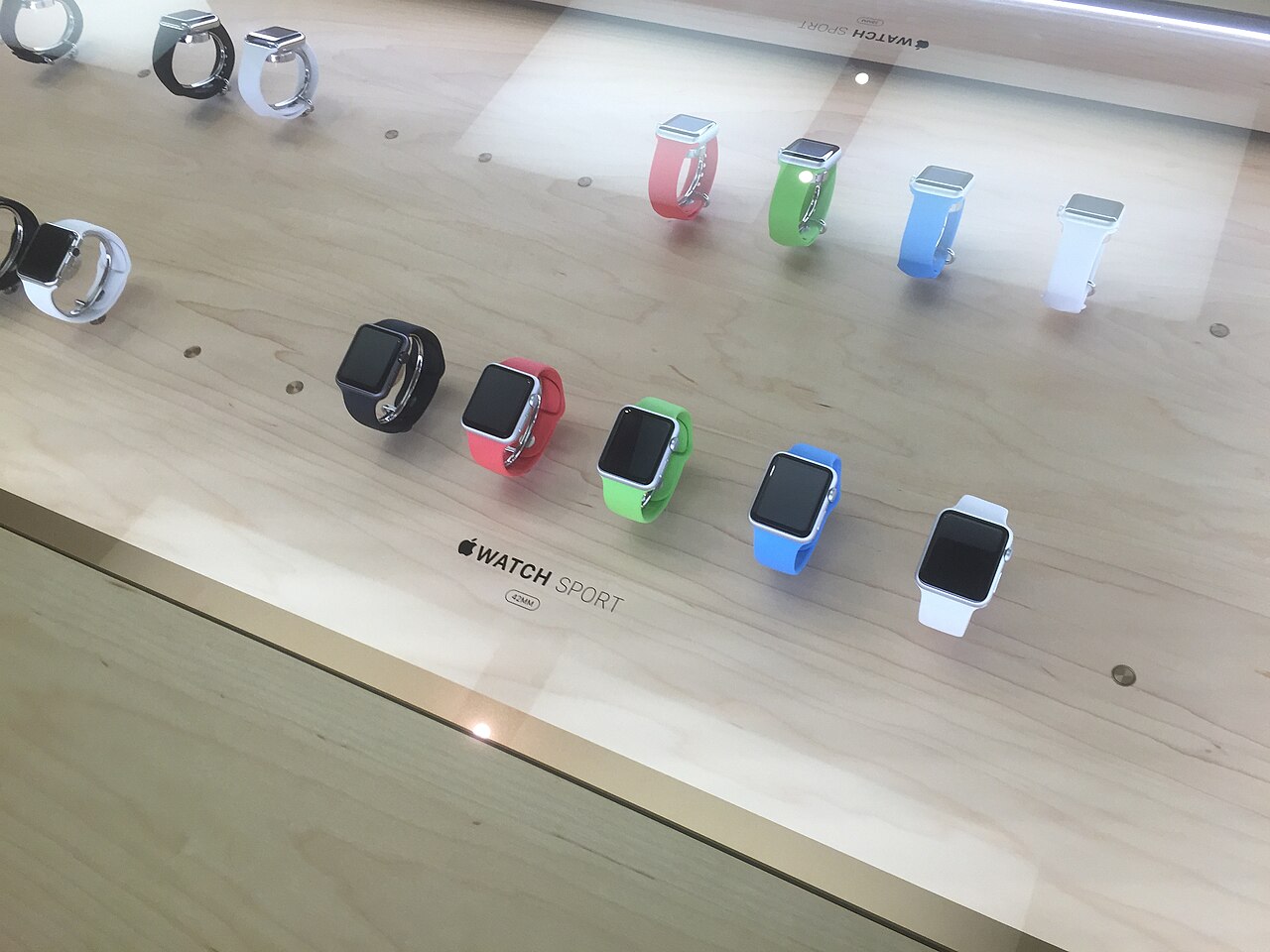
A computer that lives on your wrist
At its heart, a smartwatch is a very small computer, built on the same principles as a phone but shrunk to fit a wrist and wrapped around a tiny screen. It has a processor, memory, storage, a battery, and wireless radios, and it runs an operating system that can launch apps and show notifications. In that sense it is simply the relentless miniaturisation of computing taken to its logical next step: after the desktop, the laptop, and the phone, the computer has migrated onto the body itself.
But the smartwatch is more than a phone for your wrist, because its position on the body gives it a unique power. Worn snugly against the skin for hours on end, it can do something no phone in a pocket can: continuously sense the body it is attached to. This is the real reason the smartwatch caught on. Reading notifications on your wrist is convenient, but it is the health and fitness sensing—the heart rate, the step count, the sleep tracking—that gives the device a genuine purpose distinct from the phone it usually accompanies.
From telling time to telling you about yourself
The idea of a watch that does more than tell time is older than many people realise. Pocket watches, the elegant mechanical marvels of earlier centuries, were already feats of intricate engineering, packing hundreds of tiny moving parts into a case to track time with remarkable precision—the original wearable technology, in a sense.

The first electronic wrist gadgets arrived in the late twentieth century. Digital watches gave way to novelties like the calculator watch of the 1980s, a beloved if fiddly gadget that crammed a tiny keypad onto the wrist—a clear ancestor of the idea that a watch could compute. Later came watches that could store phone numbers or sync simple data with a computer. But these were curiosities with limited use.

The modern smartwatch really took shape in the 2010s, riding on the same wave of miniaturised, low-power components that made smartphones possible. Fitness-tracking wristbands came first, focusing narrowly on counting steps and monitoring activity, and proved there was real appetite for wearing a sensor all day. Full smartwatches followed, combining that health sensing with the apps, notifications, and connectivity of a miniature phone. Within a few years the category exploded, and the watch completed its journey from a purely mechanical timekeeper to a connected health computer.

What is packed into something so small
The degree of miniaturisation in a smartwatch is staggering even compared to a phone. Inside a case a few centimetres across sits a complete computer: a low-power processor, memory and storage, and the radios for Bluetooth, Wi-Fi, and often a cellular connection and satellite positioning. There is a bright, sharp display—usually an OLED, since its ability to switch off black pixels saves precious battery—and a touch-sensitive layer to control it.
Then there is the battery, which is the central constraint of the whole device. There is simply very little room on a wrist for a battery, so everything else must be brutally efficient to make the watch last even a day or two between charges. This is why smartwatch processors are so frugal and why the screen often dims or sleeps. Packed around all this are the sensors that define the device, clustered mostly on the underside where the watch meets the skin. It is this dense bundle of sensors, more than anything else, that turns a small wrist computer into a window onto the body.
How it reads your heartbeat through your skin
The most impressive trick a smartwatch performs is measuring your heart rate continuously, without any chest strap or clinical equipment, just by sitting against your wrist. The technique it uses is called photoplethysmography, an intimidating word for an elegant idea based on light and blood. If you turn a smartwatch over, you will often see small green lights glowing on the back—those are the heart of the system.

Here is how it works. Blood absorbs light, and green light in particular. The watch shines its green LEDs into your skin and uses a tiny light sensor to measure how much light bounces back. With every heartbeat, a surge of blood pulses through the vessels in your wrist, momentarily absorbing slightly more light; between beats, with less blood present, more light reflects back. The sensor detects this rhythmic flicker in reflected light—brighter, darker, brighter, darker—and the watch counts those pulses to calculate your heart rate. It is a beautifully indirect measurement: the watch never touches your blood, it simply watches the shadow your pulsing blood casts in reflected light, beat by beat, all day long.
Counting steps and sensing movement
The other foundational sensor is the accelerometer, the same kind of tiny motion-sensing chip found in phones, which measures acceleration and movement. This is how a watch counts your steps. As you walk, your wrist swings in a characteristic, repetitive pattern, and the accelerometer detects this rhythmic motion. Software analyses the pattern of movement, recognises the signature bounce of walking or running, and tallies it as steps.
Most watches pair the accelerometer with a gyroscope, which senses rotation, giving a fuller picture of how the wrist is moving in three dimensions. Together these motion sensors do far more than count steps. They distinguish walking from running from cycling, detect when you have been sitting still too long, recognise specific exercises, and in some watches can even detect a hard fall—sensing the sharp, distinctive jolt of an impact followed by stillness, and offering to call for help. It is all inference from the pattern of movement, the watch reading the language of your wrist’s motion to deduce what your body is doing.
Blood oxygen, sleep, and the other measurements
Modern watches extend the same basic sensing approaches to measure more. Blood oxygen monitoring uses a variation of the light technique behind heart rate: by shining light of different colours—typically red and infrared—and comparing how each is absorbed, the watch can estimate the proportion of oxygen carried in your blood, since oxygen-rich and oxygen-poor blood absorb these colours differently. Some watches can even take a rough electrical reading of the heart’s rhythm, an electrocardiogram, when you touch the case to complete a circuit across your body.
Sleep tracking, one of the most popular features, is really a clever combination of the sensors already described rather than a single dedicated one. By watching your movement through the night with the accelerometer and your heart rate with the optical sensor, the watch infers when you fall asleep, how restless you are, and makes an educated guess at the stages of your sleep. It is important to understand that this is estimation, not direct measurement—the watch cannot truly see your brain’s sleep stages the way a laboratory can—but by combining several signals it produces a useful approximation of your night.
Why it needs your phone, and when it does not
For much of its history the smartwatch has been a companion device, tethered to a phone over Bluetooth and relying on it for heavy lifting—the phone does the real internet work, and the watch acts as a convenient second screen and sensor on your wrist. This is why many features stop working if your phone is far away, and why the watch and phone are usually made to work best within the same brand’s ecosystem.

Increasingly, though, watches are gaining independence. Models with their own cellular connection can make calls, stream music, and receive messages with no phone present at all, which is particularly valuable for runners and swimmers who want to leave the phone behind. Built-in satellite positioning lets a sport watch map your route on a run without help. The trend is toward the watch standing more on its own—though the tiny battery remains the great limiter, since doing more independent work drains it faster, and the tension between capability and battery life shapes nearly every design decision.
How accurate is any of it, really?
This is the question worth asking before reading too much into the numbers. A wrist-worn device is doing genuinely impressive things, but it is working under difficult conditions and using indirect methods, so its readings are good estimates rather than medical-grade measurements. Heart rate during steady activity tends to be quite accurate, but it can struggle during rapid, jerky movements or if the watch is worn loosely, since the optical sensor needs good contact and a still-ish wrist to read the pulse cleanly.
Step counts are reliable enough for tracking trends but can be fooled—waving your arms can add phantom steps, while pushing a trolley with a still wrist can miss real ones. Sleep stages and blood oxygen readings should be treated as rough guides rather than precise truth. The honest way to think about a smartwatch is as a tool for spotting patterns and trends in your own body over time—noticing that your resting heart rate is creeping up, or that you are moving less than usual—rather than as a clinical instrument. Used that way, its imperfect numbers become genuinely useful; treated as gospel, they can mislead.
Getting the most from a smartwatch
A few simple things improve both the accuracy and the usefulness of a smartwatch. The most important is fit: the optical heart-rate sensor needs the watch worn reasonably snugly and a little above the wrist bone, because a loose watch lets in stray light and bounces around, ruining the readings. Many people wear their watch too loose and then wonder why the heart rate looks erratic.
Beyond fit, it pays to be selective with notifications, since a watch that buzzes at every email quickly becomes an annoyance rather than a help; pruning what is allowed to reach your wrist makes it far more pleasant to live with. Managing the battery—turning off features you do not use, and getting into a charging routine, such as while showering—keeps it from dying at inconvenient moments. And it is worth remembering that the health data is most valuable viewed as long-term trends in the companion app rather than obsessing over any single reading, which keeps the device a helpful background presence rather than a source of anxiety.
Where wearables are heading
The clear direction for smartwatches is deeper into health. Each generation adds sensors and abilities that edge closer to genuine medical monitoring—more accurate heart tracking, temperature sensing, and the long-pursued holy grail of non-invasive blood sugar measurement, which would transform life for people managing diabetes if it can ever be made reliable from the wrist. As the sensors improve, the line between consumer gadget and medical device keeps blurring, raising real questions about accuracy, privacy, and how much of our most intimate data we want a company to hold.
The other frontier is the battery and the form. Better efficiency and new display technologies promise watches that last longer between charges, and the wearable idea is spreading to rings, patches, and other devices that sense the body in less obtrusive ways. Whatever shape it takes, the underlying story is the same: computing and sensing have moved onto the body itself, quietly gathering a continuous record of how we move, rest, and live. The humble watch, which once only marked the passing minutes, now spends all day quietly listening to the body that wears it—and still, when you glance down, tells you the time.