In this article
- Catching light in a box
- From silver and chemicals to silicon
- The sensor: millions of light buckets
- How a sensor sees in colour
- The lens: focusing the light
- Aperture, shutter, and ISO: the exposure triangle
- Why megapixels matter less than you think
- From raw light to finished photo
- Taking better photos with any camera
- Where photography is heading
We take more photographs in a single day now than humanity took in the entire nineteenth century. The camera, once a rare and cumbersome instrument operated by specialists, has become something nearly every person carries everywhere, firing off snapshots by the trillion. And yet the fundamental thing a camera does has not changed since the very first one: it captures light. Everything else—the film, the silicon, the lenses, the clever software—is just increasingly sophisticated ways of catching and recording the light bouncing off the world in front of it.
Understanding how a camera works means understanding how light is gathered, focused, and turned into a lasting image. This article traces that process from the chemical photography of the past to the digital sensors of today, explaining how a chip covered in microscopic light-collectors can record a scene, how it manages to see in colour, what a lens actually does, and the handful of controls that every photographer—and every phone, automatically—juggles to make a good exposure. By the end, the magic of freezing a moment in an image should feel a lot more like understandable physics.
Catching light in a box
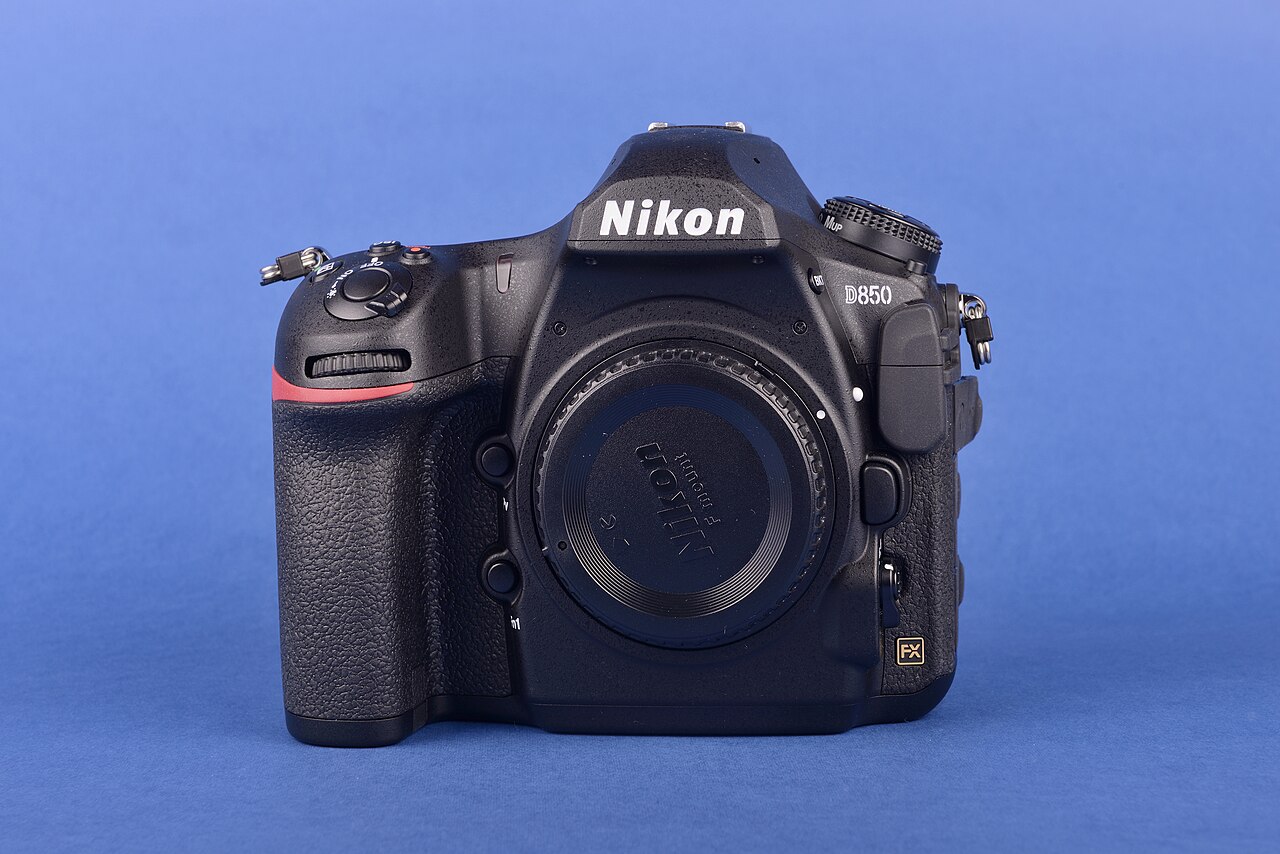
At its absolute core, a camera is a light-tight box with a small hole that lets light in and a surface at the back to catch it. This is not a metaphor—it is literally how the earliest cameras worked, and the principle is ancient. If you let light from a scene pass through a tiny hole into a dark room, it projects an upside-down image of that scene onto the opposite wall. This phenomenon, known for centuries, is the seed from which all photography grew. The challenge was never projecting the image; it was finding a way to record and keep it.
Every camera since has been a refinement of that idea: a way of controlling the light coming in and a way of permanently capturing the image it forms. A lens replaced the simple hole to gather more light and focus it sharply. A light-sensitive surface—first chemical, now electronic—replaced the wall to record the image. And mechanisms were added to control exactly how much light gets in and for how long. But strip all that away and a camera remains what it always was: a box that catches light and remembers what it saw.
From silver and chemicals to silicon
For roughly a century and a half, photography was chemistry. The light-sensitive surface was a film or plate coated with compounds—typically containing silver—that changed when struck by light. Where bright light hit, the chemicals reacted strongly; where the scene was dark, they barely changed. After exposure, the film was bathed in further chemicals to develop and fix the image, making it permanent. The whole process was a delicate dance of light and reactive compounds, and it produced the photographs that documented the modern world.

Early cameras were large wooden boxes, and taking a photograph was a deliberate, skilled act—exposures could take a long time, film was expensive, and you could not see the result until it was developed, often days later. Over the decades cameras shrank and grew more automatic, and roll film made photography accessible to ordinary families. But the fundamental limitation remained: every photo consumed a piece of physical, chemically treated film that had to be processed.
The digital revolution swept all of this away with astonishing speed around the turn of the millennium. Instead of chemicals on film, digital cameras use an electronic sensor that converts light directly into electrical signals and, ultimately, into a file of numbers. Suddenly photographs were free to take, instantly viewable, and infinitely copyable. Film, like the icebox and the dial-up modem, retreated into a niche almost overnight, and the camera was reborn as a digital device—one that would soon fold into the phone in everyone’s pocket.
The sensor: millions of light buckets
The heart of every digital camera is the image sensor, a chip that does the job film once did. Its surface is covered with millions of microscopic light-sensitive cells, often called photosites, arranged in a precise grid. The simplest way to picture them is as a vast array of tiny buckets, each one collecting the light that falls on it during the exposure.

When you take a photo, light pours onto the sensor, and each photosite catches the photons landing on its little patch. A photosite that receives a lot of light—from a bright part of the scene—accumulates a strong electrical charge; one in shadow accumulates little. After the exposure, the camera reads the charge from every photosite and converts it into a number representing how much light that point received. Lay all those millions of numbers out in their grid, and you have a map of the brightness of the scene—the raw beginnings of a digital image. Each photosite ultimately becomes one pixel of the final photo. It is a beautifully direct translation: light into electrical charge into numbers into a picture.
How a sensor sees in colour
There is a catch, though, and it is a clever one. An image sensor, by itself, is colour-blind. Each photosite can only measure the amount of light it receives, not its colour—it counts photons but cannot tell red ones from blue ones. So a bare sensor would only ever produce a black-and-white image. To capture colour, camera engineers use an ingenious trick.

Over the grid of photosites they lay a matching grid of tiny colour filters, most commonly in a pattern called the Bayer array. Each filter is red, green, or blue, so each individual photosite now sees only one colour of light—a red-filtered photosite measures only the red light, and so on. Because the human eye is most sensitive to green, the pattern uses twice as many green filters as red or blue. The result is a mosaic where each pixel knows only one of the three primary colours. The camera’s processor then performs a clever piece of mathematics called demosaicing, examining each pixel’s neighbours to estimate the two colours it is missing and reconstruct a full-colour value for every point. From a patchwork of single-colour readings, a complete colour image is intelligently rebuilt.
The lens: focusing the light
A sensor on its own, with light hitting it from all directions, would record only a featureless blur. The job of focusing that light into a sharp image belongs to the lens, which is far more than a single piece of glass. A camera lens is an assembly of several precisely shaped glass elements that work together to bend incoming light rays and bring them to a sharp focus on the sensor.

By moving these elements slightly, the camera adjusts focus, ensuring that the subject at a particular distance is rendered crisply while nearer or farther things may blur. The lens also determines how much of the scene fits in the frame: a wide-angle lens takes in a broad view, while a telephoto lens magnifies a distant subject, like a telescope. The quality of the glass and the precision of the design have an enormous effect on the final image—a superb sensor behind a poor lens will still produce a poor photo, because the lens governs the sharpness, contrast, and character of the light before it ever reaches the sensor. In photography, the lens often matters as much as, or more than, the camera body behind it.
Aperture, shutter, and ISO: the exposure triangle
Getting a good photograph means letting in the right amount of light—too little and the image is dark and muddy, too much and it is blown out and white. Cameras control this with three interlinked settings that photographers call the exposure triangle, and understanding them demystifies most of what a camera is doing.

The first is aperture, an adjustable opening inside the lens, formed by overlapping blades, that controls how wide the hole letting in light is. A wide aperture floods the sensor with light and also produces that pleasing blurred background, while a narrow one lets in less light but keeps more of the scene in focus. The second is shutter speed, which sets how long the sensor is exposed to light—a fast shutter freezes motion crisply but lets in little light, while a slow one gathers more light but can blur anything moving. The third is ISO, which adjusts how sensitive the sensor is made to light; raising it brightens a dark scene but introduces graininess, called noise. These three trade off against one another constantly: change one and you must adjust another to keep the exposure balanced. When you point a phone and it simply takes a good photo, it is automatically juggling exactly these three controls for you in an instant.
Why megapixels matter less than you think
For years, cameras were sold almost entirely on their megapixel count—the number of millions of pixels in the image—as though more were always better. It is one of the most misleading numbers in all of technology. Megapixels tell you the resolution, how finely the image is divided, which matters for printing very large or cropping in heavily. But beyond a fairly modest number, more megapixels add little to how good a photo actually looks.
What matters far more is the physical size of the sensor and of each individual photosite. A larger sensor, with bigger light-collecting buckets, gathers more light, producing cleaner images with less noise, better performance in the dark, and a more pleasing rendering of tone—which is precisely why a professional camera with a big sensor and a mere twenty-odd megapixels can comprehensively outperform a phone or cheap camera boasting a far higher number. Cramming ever more tiny photosites onto a small sensor can even hurt, since each bucket becomes smaller and catches less light. The number on the box is real, but it is one of the least important measures of how good your photographs will be.
From raw light to finished photo
The journey from light hitting the sensor to a finished image involves a great deal of computation, and increasingly this is where the real magic happens. The raw readings from the sensor are just a grid of brightness numbers under a colour mosaic—a long way from a pleasing photograph. The camera’s processor reconstructs the colour, adjusts the brightness and contrast, balances the colours so that white objects look white under different lighting, sharpens the detail, reduces noise, and compresses the result into a manageable file.
In phones especially, this processing has become so powerful that it now defines the photograph as much as the hardware does. Rather than capturing a single frame, a modern phone camera grabs a rapid burst of images and merges them, combining the best parts of each to reduce noise, recover detail in both bright and dark areas, and produce a clean, vivid result from a tiny sensor. This computational photography is the reason phone photos have improved so dramatically despite their physically small sensors—the limitations of the hardware are increasingly overcome by clever software. The camera no longer just records light; it interprets it.
Taking better photos with any camera
Good photographs depend far more on the person than the equipment, and a few principles improve pictures taken on any device. Light is everything—the single biggest factor in a photo’s quality is usually the light falling on the subject. Soft, even light, such as near a window or outdoors on an overcast day, is flattering, while harsh midday sun creates unflattering shadows and a small camera struggles most in the dark, so giving it more light to work with helps enormously.
Composition matters just as much as light. Thinking about what fills the frame, getting closer to the subject, keeping horizons level, and placing the subject thoughtfully rather than dead centre transforms ordinary snapshots. Holding the camera steady, or bracing it against something, avoids the blur that ruins so many shots, especially in low light. And on a phone, a little restraint with the digital zoom—which simply crops and enlarges, throwing away quality—in favour of moving closer keeps images sharp. None of this requires expensive gear; it requires paying attention to light and framing, which is what photography has always really been about.
Where photography is heading
The clear trajectory of photography is that software is eating the camera. The biggest leaps now come not from better sensors or lenses but from cleverer processing—artificial intelligence that can sharpen, brighten, recompose, and even add or remove elements from an image. Phones already blur backgrounds, brighten night scenes into near-daylight, and recognise faces and scenes to optimise each shot automatically. This raises genuine and growing questions about what a photograph even is, when so much of it is constructed by algorithms rather than purely captured by a lens.
The hardware keeps advancing too, with sensors that gather light more efficiently and phone makers stacking multiple cameras to mimic the flexibility of interchangeable lenses. Yet for all the computation layered on top, the foundation remains the same simple act that began in a darkened room centuries ago: light from the world passing through an opening to be caught and remembered. Whether recorded in silver on film or in charge on silicon, a photograph is still, at its heart, a fragment of light frozen in time—and that is what has made the camera one of the most beloved machines we have ever built.