In this article
- A spare tank of electricity in your bag
- A very short history of storing electricity
- The lithium-ion cell: where the energy lives
- What is actually inside a power bank
- Making sense of mAh and the missing charge
- Fast charging, volts, and watts explained
- USB-C and the cable that took over
- How wireless charging works
- Safety, care, and making batteries last
- Where portable power is heading
The power bank is the unglamorous hero of modern mobile life. It is the thing we toss into a bag before a long day, the small brick that rescues a dying phone on a train or at a festival, the quiet insurance against the dreaded sight of a battery icon turning red. In a world utterly dependent on devices that all run out of charge, the portable battery has become a near-essential companion, and yet it is one of those gadgets we use constantly while understanding almost nothing about it.
Behind its plain plastic shell sits a genuinely interesting bundle of chemistry and electronics: a rechargeable battery storing a surprising amount of energy, and a small circuit cleverly managing how that energy goes in and comes out. This article opens up the power bank and, with it, the whole business of portable power—how a battery stores electricity in the first place, why the capacity printed on the side never seems to match what you actually get, what fast charging really means, how charging without any cable at all is possible, and how to treat your batteries so they last.
A spare tank of electricity in your bag
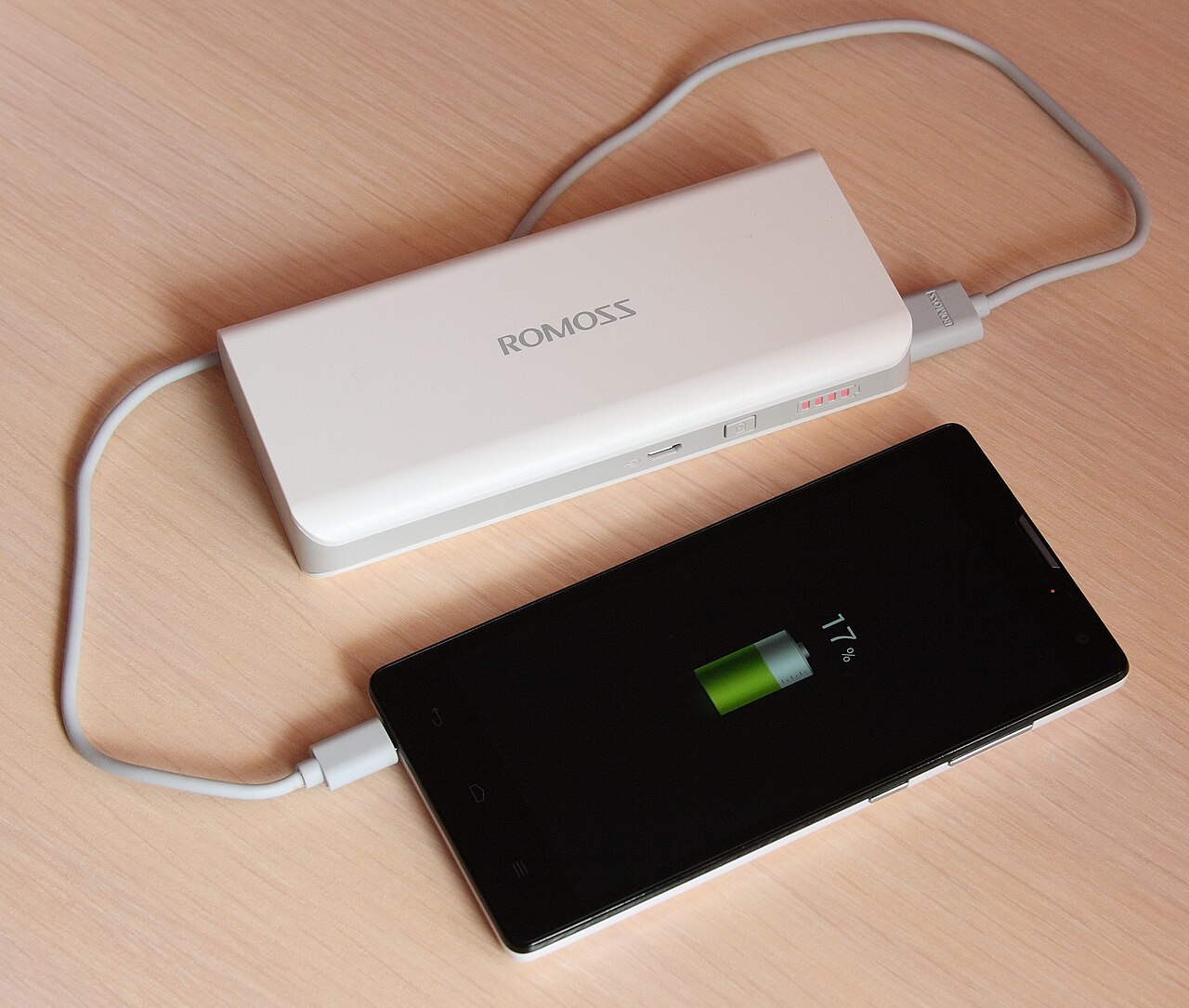
The simplest way to think of a power bank is as a spare fuel tank, but for electricity instead of petrol. You fill it up by plugging it into the wall when you have power to spare, and it holds that energy until your phone or other device runs low, at which point you transfer the stored energy across to refuel the device. It is a reservoir of electricity that you can carry with you, decoupling your devices from the wall socket for a while longer.
This matters because every portable device faces the same fundamental tension. We want our gadgets to be small, light, and powerful, but all that capability is hungry for energy, and the battery that powers them can only hold so much. The power bank is a pragmatic answer to that tension: rather than building an impractically huge battery into every device, you carry a separate, swappable reserve and top up whenever needed. It is, in essence, the same lithium-ion technology that powers your phone, simply repackaged as a standalone tank you can plug into anything.
A very short history of storing electricity
Storing electricity has been a challenge since the dawn of the electrical age. Early batteries were non-rechargeable—dry cells that produced power through a one-way chemical reaction until they were exhausted and thrown away. These powered torches, radios, and countless gadgets for generations, and they still fill the battery aisle today, but once spent they were simply rubbish.

The real enabler of portable electronics was the rechargeable battery, which could be drained and refilled hundreds of times by running its chemical reaction backwards with an input of electricity. Various rechargeable chemistries came and went over the decades, each with drawbacks—some were heavy, some held little energy, some suffered from a “memory effect” that degraded them if not fully drained. The breakthrough that made modern mobile life possible was the lithium-ion battery, which arrived commercially in the 1990s and offered far more energy for its weight than anything before it. It is the reason a phone, a laptop, and a power bank can all be slim and light, and it is worth understanding on its own terms.
The lithium-ion cell: where the energy lives
The heart of a power bank—and of nearly every modern gadget—is one or more lithium-ion cells. A battery cell stores energy chemically and releases it as electricity on demand, and the lithium-ion variety does this exceptionally well. Inside, it has two electrodes separated by a substance that lithium ions can move through, and the whole operation comes down to shuffling those tiny lithium ions back and forth.
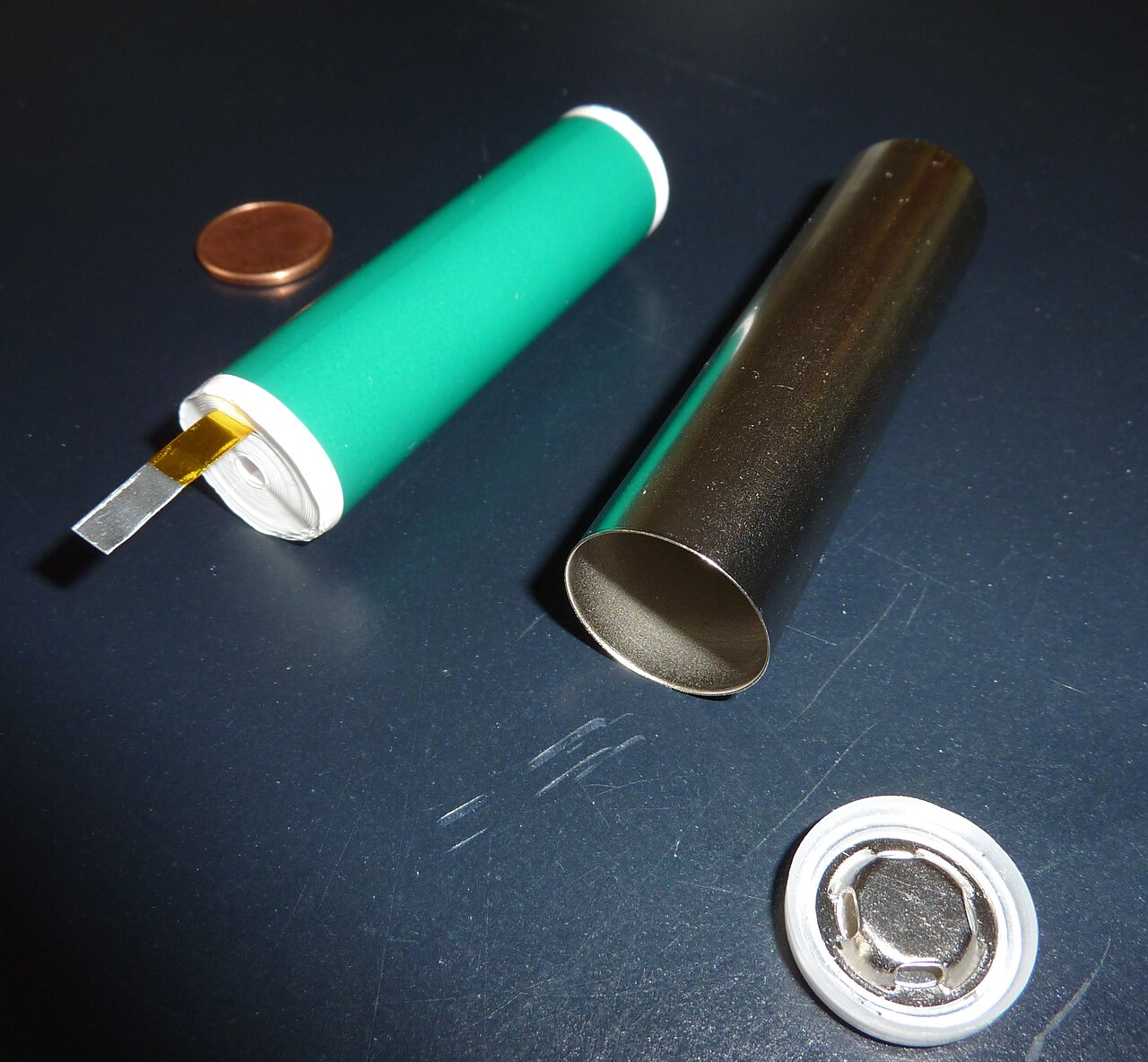
When the battery is powering something, lithium ions flow from one electrode to the other, and this movement drives a current of electrons through the device—the electricity that does the work. When you recharge the battery, you push electricity in the opposite direction, forcing the ions back to where they started, ready to flow again. Nothing is consumed or thrown away in this process, which is why the cell can be cycled hundreds of times. Lithium is used because it is extremely light and eager to give up electrons, packing a lot of energy into very little weight. The same kind of cell, in different shapes and sizes, sits inside your phone, your laptop, your earbuds, and the power bank meant to recharge them all.
What is actually inside a power bank
Open a power bank and you find two main things: the battery cells that store the energy, and a small circuit board that manages everything. The cells take up most of the space and weight—often one or more cylindrical or flat lithium-ion cells wired together. But the circuit board is what turns a raw battery into a safe, useful device, and it is doing more than you might expect.

This controller handles several jobs at once. It manages charging the internal cells safely when you plug the bank into the wall, stopping at the right point to avoid overcharging. It converts the battery’s voltage to the right level to charge your devices, since the cell’s natural voltage is not what a phone expects over USB. It monitors temperature and current to prevent dangerous overheating or short circuits, and it tracks the remaining charge to drive those little indicator lights. A bare battery would be both useless and unsafe to plug a phone into directly; the unsung electronics are what make the power bank a genuinely usable and safe gadget.
Making sense of mAh and the missing charge
Power banks are sold on their capacity, almost always given in milliamp-hours, or mAh—a number like 10,000 or 20,000 splashed across the front. Broadly, a bigger number means more stored energy and more recharges of your device. It is tempting to do simple arithmetic: if your phone has a 5,000mAh battery and your power bank is 10,000mAh, surely it should charge the phone twice. In practice, it never quite does, and the reason puzzles a lot of people.
The shortfall comes from two things. First, the mAh figure is usually quoted at the battery’s internal voltage, which is lower than the voltage at which power is delivered over USB, and converting between the two loses some apparent capacity in the maths. Second, no energy transfer is perfectly efficient—the conversion process and the charging itself generate a little heat, and that lost energy is gone. The upshot is that a real-world power bank typically delivers only around two-thirds of its rated capacity to your devices. A 10,000mAh bank might give a 5,000mAh phone roughly one and a bit full charges, not two. This is not a defect or a swindle; it is the unavoidable physics of moving energy from one battery to another, and knowing it saves a lot of confusion.
Fast charging, volts, and watts explained
Charging speed has become a headline feature, with banks and phones boasting fast-charging abilities, and a couple of simple ideas make sense of the jargon. The rate at which energy moves is power, measured in watts, and watts are simply the voltage multiplied by the current. To push energy in faster, you can raise the voltage, raise the current, or both—and that is exactly what fast-charging systems do.
Ordinary charging plods along at a modest wattage, while fast-charging negotiates higher voltages and currents to pour energy in far more quickly, refilling a phone in a fraction of the time. The catch is that both the charger and the device must agree to do it—they actually communicate to settle on a safe, supported speed, which is why a fast charger does nothing extra for a phone that cannot accept it, and vice versa. Pushing energy in fast also generates heat and stresses the battery, so the electronics carefully manage the process, often charging quickly at first and then easing off as the battery fills. It is a constant balancing act between speed and the long-term health of the cell.
USB-C and the cable that took over
For years, charging was a mess of incompatible connectors, but the world has largely converged on one: USB-C, the small, oval, reversible plug now found on most new devices. Its rise has been a quiet blessing, replacing a drawer full of different cables with a single standard that works in either orientation—no more fumbling to plug it in the right way up.

USB-C is more than just a connector shape, though; it is capable of carrying much more power than the old standards, enough to fast-charge not just phones but tablets and even laptops through the same humble cable. It can also move data and video, making it a genuinely universal port. This convergence is why a modern power bank with USB-C can charge almost anything you own, and why regulators in some regions have pushed to make it the common standard—cutting waste and ending the tyranny of the proprietary charger. Not all USB-C cables are equal, however, since they vary in how much power and data they can handle, which is why a cheap cable sometimes charges slowly or not at all.
How wireless charging works
Charging a phone by simply setting it on a pad, with no cable at all, seems almost magical, but it relies on a principle discovered nearly two centuries ago: electromagnetic induction. When an electric current flows through a coil of wire, it creates a magnetic field, and a changing magnetic field passing through another nearby coil induces a current in it. Wireless charging is essentially two coils—one in the charging pad, one in the phone—passing energy between them through this invisible magnetic link.

The pad runs an alternating current through its coil, generating a fluctuating magnetic field; the coil in the phone, resting just above it, picks up that field and turns it back into a current to charge the battery. This is why the phone must sit closely and be aligned with the pad—the effect weakens rapidly with distance and misalignment. It is undeniably convenient, but it comes at a cost: some energy is lost as heat in the transfer, so wireless charging is generally slower and less efficient than a cable. It trades a little speed and efficiency for the simple pleasure of never plugging in, and the same induction principle even lets some phones wirelessly share a little charge with each other.
Safety, care, and making batteries last
Lithium-ion batteries pack a lot of energy into a small space, and that energy demands respect. Mistreated—crushed, punctured, severely overheated, or badly made—a lithium cell can fail dramatically, which is why quality matters and why airlines insist power banks travel in the cabin rather than the hold. The good news is that the management electronics in any reputable power bank guard against the common dangers, and sticking to well-made products from trustworthy sources avoids most risk.
To make any lithium battery last, a few habits help, because these cells age both with use and simply with time. They are happiest kept somewhere in the middle of their charge rather than constantly run flat or held at full for long periods, and they dislike heat above almost anything—leaving a power bank or phone baking in a hot car genuinely shortens its life. Every battery has a limited number of charge cycles before it noticeably weakens, so a power bank, like a phone, will hold less as the years pass. Treating it gently—avoiding extremes of temperature and not leaving it fully drained for months—simply delays that inevitable decline.
Where portable power is heading
Battery technology is the great bottleneck of modern electronics, improving far more slowly than the chips it powers, so progress in portable power tends to come in small steps rather than leaps. Researchers are working hard on new chemistries—such as solid-state batteries that replace the liquid inside with a solid, promising more energy, faster charging, and greater safety—though these remain mostly on the horizon rather than in your bag just yet.
In the meantime, the improvements are incremental and welcome: power banks are growing more energy-dense, charging faster, and standardising around USB-C so a single bank and cable can revive almost any device. Some now include their own built-in cables or solar panels for topping up off-grid. The deeper hope is that batteries built into our devices improve enough that we need the spare tank less often—but until energy storage takes a genuine leap forward, the humble power bank will keep earning its place in millions of bags, a quiet reservoir of electricity standing between us and a dead screen. It is a simple idea executed with real cleverness, and on the day your phone hits one percent far from a socket, it is hard to think of a more welcome piece of technology.