On the floodplain of the Niger River in Mali stand the mounds of a city that rewrote the history of Africa, the oldest known urban center south of the Sahara, built by indigenous West Africans centuries before Islam or the famous gold trade, and possibly ruled by no king at all. This is the story of Jenné-jeno.
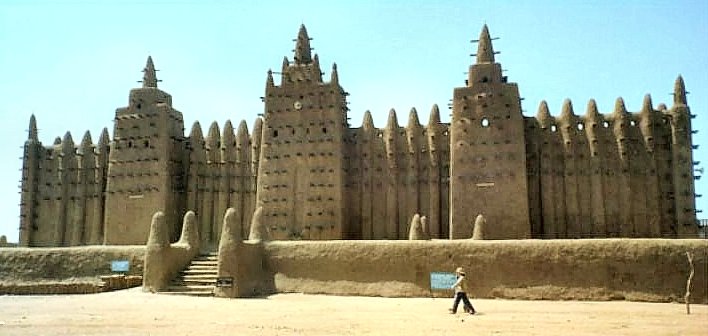
Table of Contents
- Sub-Saharan Africa’s oldest known city
- A city that seems to have had no king
- A city of clustered mounds
- A hub of the Niger’s trade
- Ironworkers, potters, and artisans
- The famous terracotta figures of the Niger
- The abandonment of the old city
- Rediscovering an indigenous African urbanism
- Jenné-jeno’s place in world history
- The inland delta that made the city possible
- African rice and the farmers of the delta
- Everyday life in the ancient city
- The spiritual world of Jenné-jeno
- Connecting the forest, the desert, and the sea
- A different model of the city
- The mounds of Jenné-jeno today
- Nearby in Africa’s ancient story
- Closing thoughts
Sub-Saharan Africa’s oldest known city
On the floodplain of the Niger River in Mali, near the famous medieval town of Djenné, lie the mounds of Jenné-jeno, the oldest known city in sub-Saharan Africa. Founded around 250 BCE and growing over the following centuries into a substantial urban center, Jenné-jeno overturned long-held assumptions that cities and complex societies had come to West Africa only through outside contact with North Africa or the Islamic world. Instead, it revealed an indigenous African urban tradition that had arisen entirely on its own, deep in the interior of the continent.
The discovery of Jenné-jeno’s antiquity was a landmark in African archaeology, demonstrating that West Africans had built and sustained a thriving city centuries before the arrival of Islam or trans-Saharan trade in the forms once assumed necessary to spark urban life. It stands as powerful evidence of African initiative and ingenuity, a home-grown city on the Niger whose story compels a rethinking of the origins of urbanism in Africa and restores to West Africa its rightful place in the deep history of the world’s oldest settlements.
A city that seems to have had no king
One of the most intriguing features of Jenné-jeno is that, unlike so many early cities elsewhere in the world, it shows little sign of having been ruled by kings or a centralized elite, at least in its earlier phases. There are no palaces, no royal tombs, and no monuments glorifying individual rulers. Instead, the archaeological evidence suggests a city organized in a more decentralized way, perhaps as a collection of specialized occupational groups and communities living and working together without a dominant central authority imposing order from above.
This possibility has made Jenné-jeno a subject of great interest to scholars studying the many different paths by which human societies have built cities. It suggests that urbanism did not require kingship or centralized hierarchy, and that large numbers of people could come together in a functioning city organized around trade, craft specialization, and cooperation among distinct groups. In this respect Jenné-jeno echoes the puzzle of settlements like Çatalhöyük, offering another example of a city that achieved scale and complexity through means other than the top-down rule familiar from the ancient states of Mesopotamia or Egypt.
A city of clustered mounds
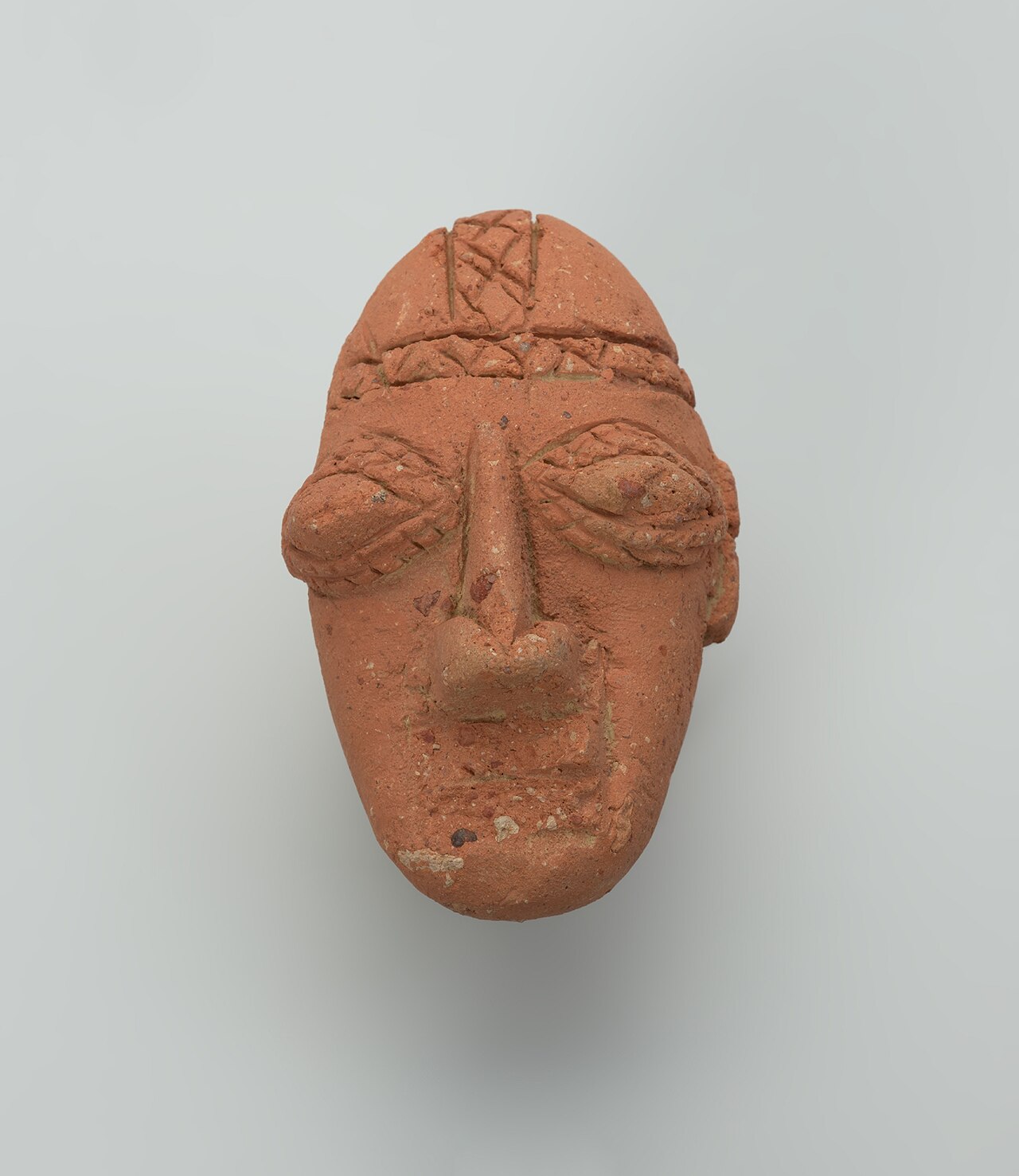
Jenné-jeno was not a single compact settlement but part of a remarkable cluster of mounds and sites spread across the surrounding floodplain, together forming a larger urban complex of interconnected communities. The main mound itself covers a substantial area and rose over the centuries as generations built and rebuilt their homes of mudbrick, but around it lay dozens of satellite settlements, suggesting a distinctive form of urbanism composed of many linked communities rather than one centralized city.
This clustered pattern of settlement has fascinated archaeologists, who see in it a distinctively African model of urban organization, in which different groups, perhaps specialized in different crafts or occupations, lived in their own communities while participating together in the economic and social life of the wider city. The dense network of mounds along this stretch of the Niger testifies to a large and thriving population, and to a form of city-building that achieved complexity through the coordination of many communities rather than through their absorption into a single dominant center.
A hub of the Niger’s trade
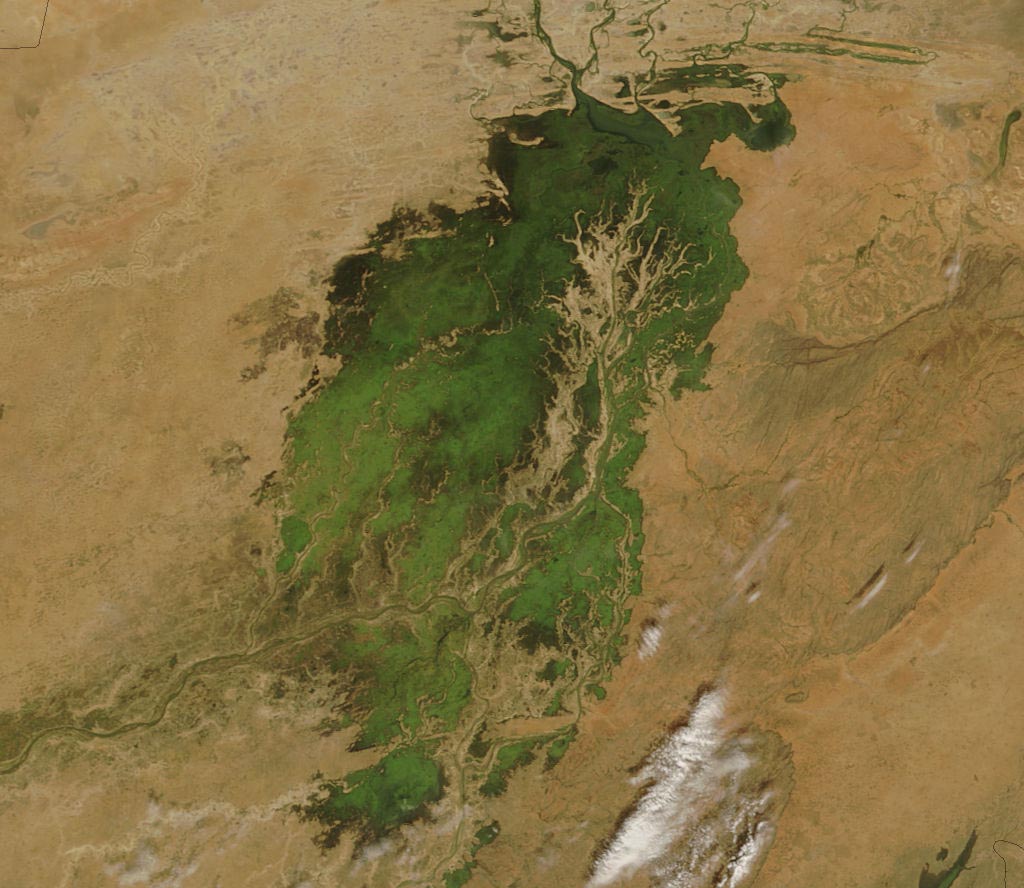
Jenné-jeno owed much of its prosperity to its strategic location on the inland Niger Delta, a vast seasonally flooded region of great agricultural and ecological richness, and to its position within trade networks that moved goods across West Africa and beyond. The city was a center for the exchange of the products of different environments, with the fish and rice of the floodplain traded for the goods of the drier lands around, and it participated in longer-distance trade that eventually connected it to the trans-Saharan routes linking West Africa to the Mediterranean world.
Iron and copper reached Jenné-jeno from distant sources, and later gold from the West African goldfields would flow through the region on its way north across the Sahara, making the inland Niger Delta one of the great commercial crossroads of Africa. The wealth generated by this trade helped sustain the city’s growth and supported its craftspeople and its dense population. Jenné-jeno thus stands as an early expression of the commercial vitality that would make the Niger region famous, a precursor to the great trading cities and empires that would later flourish in West Africa.
Ironworkers, potters, and artisans
The people of Jenné-jeno were skilled craftspeople, above all ironworkers whose furnaces and slag heaps testify to a thriving metallurgical industry that supplied tools and weapons to the city and the surrounding region. The mastery of ironworking was of enormous importance, providing the implements that made intensive farming and other crafts possible, and the ironworkers of Jenné-jeno were among the specialists whose skills underpinned the city’s economy and drew people together into its clustered communities.
Alongside the ironworkers, the city was home to potters who produced abundant and varied ceramics, as well as workers in other materials, reflecting a society with a developed division of labor and considerable craft specialization. The rich archaeological deposits of the mounds have yielded quantities of pottery, terracotta figurines, and other artifacts that document the material culture and artistic traditions of the city over the many centuries of its occupation. These crafts were not merely practical but expressive, and the terracotta art of the region in particular reflects a sophisticated aesthetic tradition rooted in the ancient city on the Niger.
The famous terracotta figures of the Niger
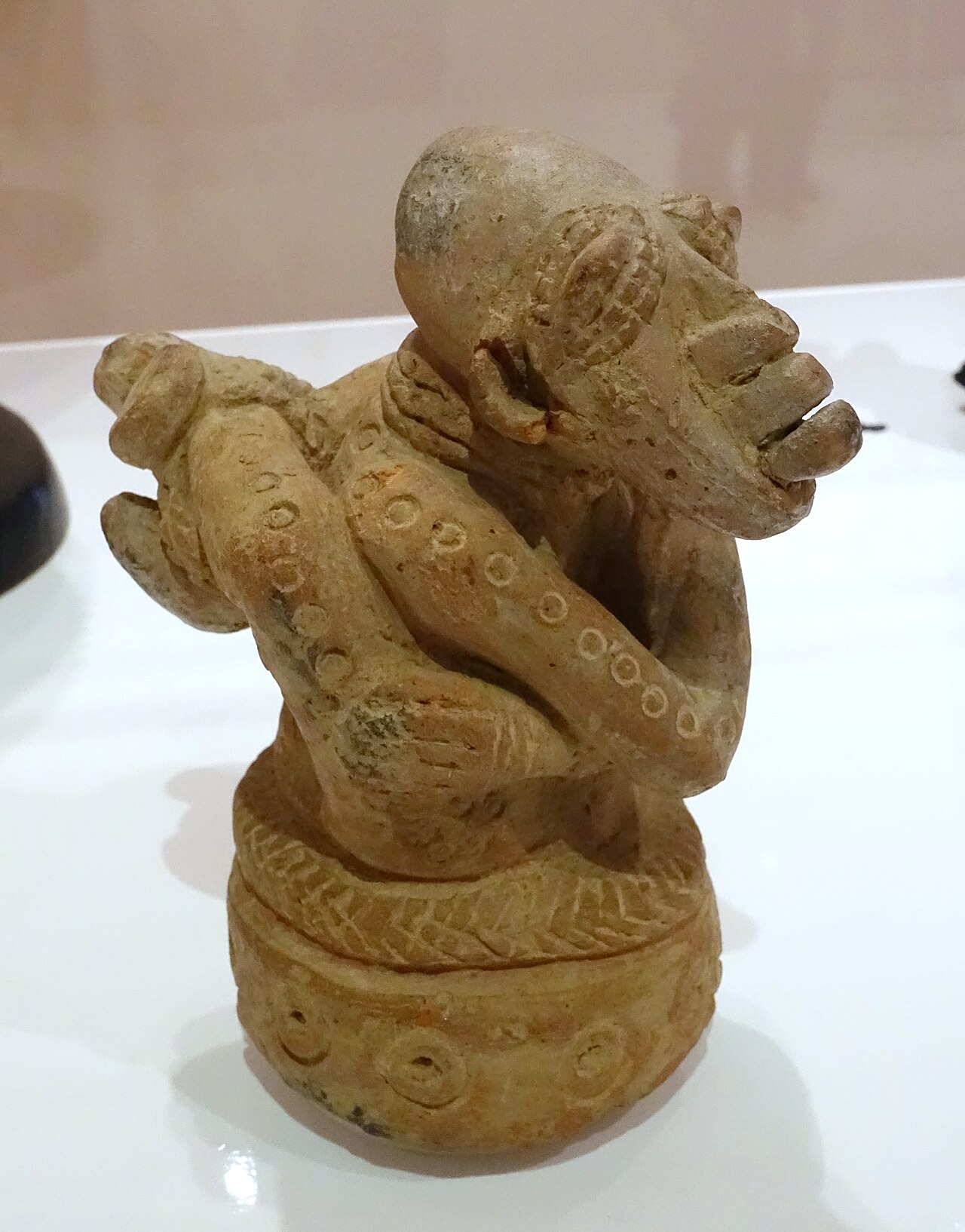
The region around Jenné-jeno became renowned for a remarkable tradition of terracotta sculpture, producing expressive figures of humans and animals that rank among the most striking achievements of ancient West African art. These statuettes, depicting figures in a variety of poses and often richly detailed, reveal a sophisticated sculptural tradition and offer tantalizing glimpses into the beliefs, rituals, and daily life of the people who made them, even though much about their precise meaning and use remains uncertain.
Tragically, the fame of these terracottas led to widespread looting of sites in the region, as the demand of the international art market drove the destruction of archaeological contexts and the loss of irreplaceable information about the past. This plundering has been a serious blow to the study of Jenné-jeno and related sites, underscoring the vulnerability of Africa’s archaeological heritage to the illicit trade in antiquities. The surviving terracottas, properly excavated and documented, nonetheless testify to the artistic sophistication of the ancient Niger civilization and form a precious part of Africa’s cultural heritage.
The abandonment of the old city
After more than a thousand years of occupation, Jenné-jeno was gradually abandoned, its population declining and eventually shifting to the nearby site of the present-day town of Djenné by around 1400 CE. The reasons for this abandonment are not fully understood but may have included environmental changes, shifts in trade routes, and the spread of Islam, which reshaped the religious and social landscape of the region and may have made the old city, with its indigenous traditions, less central to the new order that was emerging.
The move from Jenné-jeno to Djenné marked a transition rather than an ending, for the region remained a vital center of trade, learning, and culture, and Djenné would become one of the great cities of the West African Sahel, famed for its magnificent mudbrick mosque and its role in the trans-Saharan trade and Islamic scholarship. The ancient city thus passed its legacy to its successor, and the long tradition of urban life on this stretch of the Niger continued, even as the mounds of Jenné-jeno themselves fell silent and were slowly reclaimed by the floodplain.
Rediscovering an indigenous African urbanism
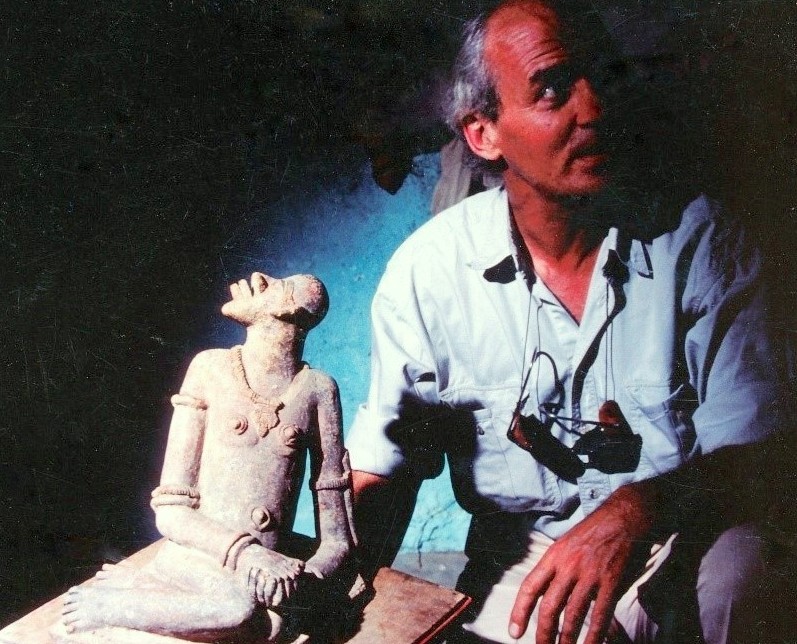
The recognition of Jenné-jeno’s true antiquity and significance came through archaeological excavations in the latter part of the twentieth century, which established that the city had been founded centuries before the arrival of Islam or the trans-Saharan gold trade in their fullest forms. This discovery was revolutionary, for it demonstrated that urbanism in West Africa was an indigenous development, not something imported from outside, and it forced a fundamental reassessment of the history of cities and civilization on the continent.
The excavations revealed the deep stratigraphy of the mounds, the long sequence of occupation, and the evidence of trade, craft, and settlement that painted a picture of a thriving indigenous city. This work has been central to the broader effort to write African history on its own terms, recognizing the achievements of African peoples rather than attributing them to outside influence. Jenné-jeno has become a touchstone in this endeavor, a site whose story affirms the creativity and initiative of West Africans in building one of the world’s early cities.
Jenné-jeno’s place in world history
The importance of Jenné-jeno lies in what it reveals about the deep roots of urban life in West Africa and about the diversity of paths humanity has taken toward building cities. As the oldest known city in sub-Saharan Africa, and one that may have flourished without kings or centralized rule, it enriches and complicates our understanding of how and why cities arise, offering a distinctively African example alongside the more familiar stories of Mesopotamia, the Indus, and Mesoamerica. Its clustered mounds, its ironworkers and potters, and its position on the great trade routes of the Niger all testify to an indigenous urban tradition of great antiquity and sophistication.
In the wider story of the world’s oldest settlements, Jenné-jeno supplies a vital chapter that was long overlooked, restoring West Africa to its rightful place in the global history of urbanism. It stands as a monument to African creativity and as a rebuke to any notion that civilization was the achievement of only a few favored regions of the world. The ancient city on the Niger reminds us that the human impulse to gather, to trade, and to build cities took root across the whole of the inhabited world, and that Africa was among the great cradles of urban life.
The inland delta that made the city possible
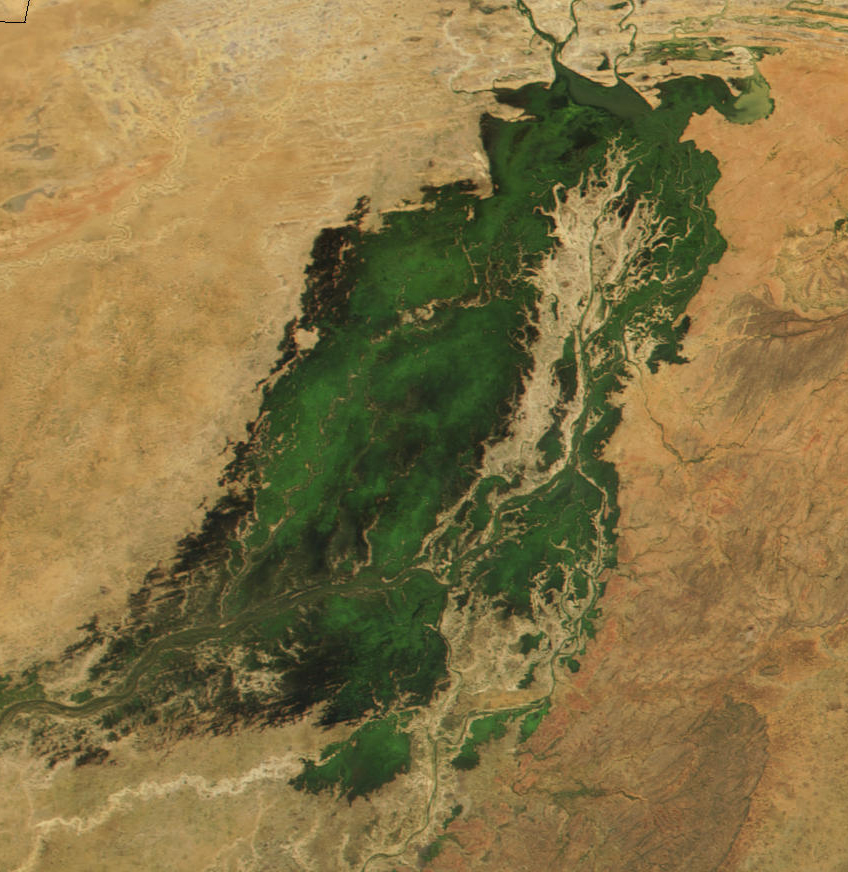
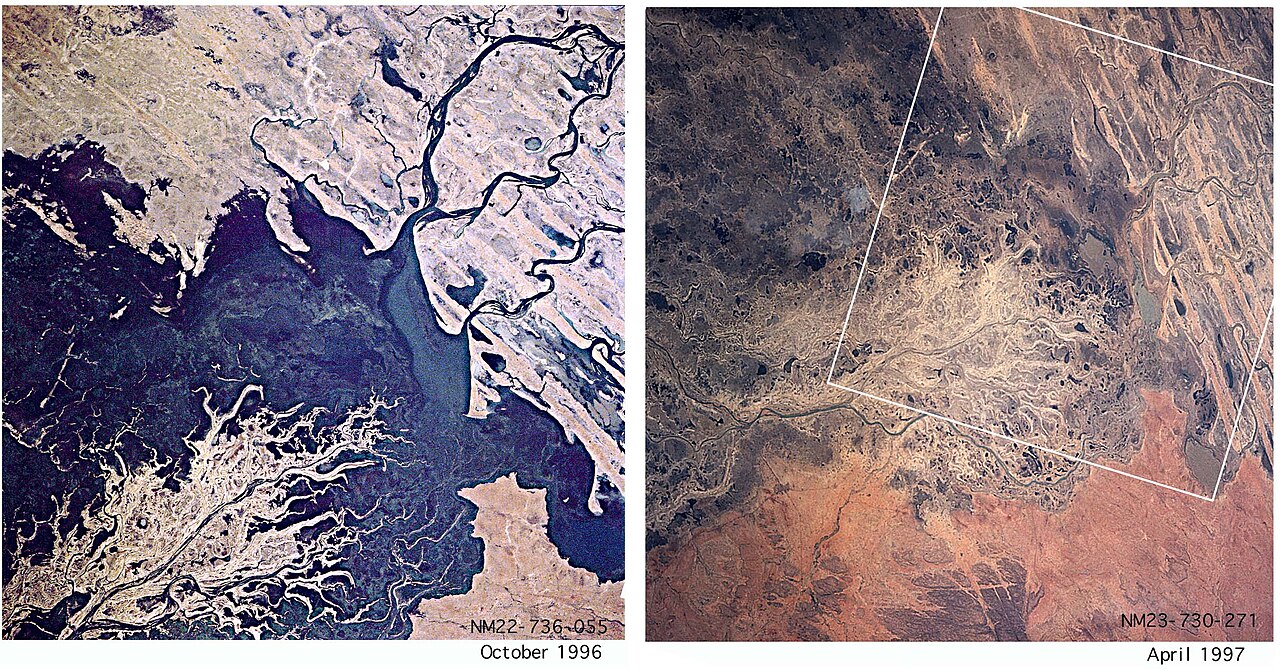
The rise of Jenné-jeno cannot be understood apart from the extraordinary environment of the inland Niger Delta, a vast region where the Niger River spreads out into a network of channels, lakes, and seasonally flooded plains before continuing its journey toward the sea. This great wetland, renewed each year by the flooding of the river, was one of the richest environments in West Africa, capable of supporting dense populations through a combination of farming, fishing, and herding that exploited the different resources of the changing seasons.
It was this abundance that provided the foundation for urban life, generating the food surplus necessary to sustain a large, settled population and to support the craftspeople and traders who made the city thrive. The people of Jenné-jeno cultivated African rice, a crop domesticated in West Africa and well suited to the flooded conditions of the delta, alongside other crops, and they drew great quantities of fish from the river and its channels. As at so many of the world’s first cities, from the Nile to the Tigris and Euphrates, it was the bounty of a great river and its floodplain that made the ancient city on the Niger possible.
African rice and the farmers of the delta
Central to the sustenance of Jenné-jeno was African rice, a distinct species domesticated independently in West Africa long before the arrival of Asian rice, and perfectly adapted to the seasonally flooded environment of the inland Niger Delta. The cultivation of this indigenous crop, along with millet, sorghum, and other African domesticates, formed the agricultural basis of the city and represents an important and often overlooked chapter in the global history of farming, demonstrating that West Africa was one of the world’s independent centers of plant domestication.
The farmers who grew this rice worked in harmony with the rhythms of the Niger’s flood, planting and harvesting according to the rise and fall of the waters that shaped their world. Their labor, together with that of the fishers and herders of the delta, produced the surplus that fed the city and freed its ironworkers, potters, and traders to pursue their specialized crafts. In the story of Jenné-jeno, the achievements of these African farmers deserve to be remembered alongside the monuments and trade goods, for it was their mastery of the delta’s agriculture that ultimately made the ancient city possible.
Everyday life in the ancient city
Life in Jenné-jeno unfolded in dense neighborhoods of round mudbrick houses, where families lived, worked, and pursued the many activities of a busy urban community. The rich archaeological deposits of the mounds preserve the accumulated debris of this daily life, layer upon layer of pottery, food remains, tools, and the traces of countless ordinary routines built up over more than a thousand years of continuous occupation. From these deposits archaeologists have reconstructed a vivid picture of a thriving city full of the sounds and smells of cooking, crafting, and trade.
The people of the city ate the fish and rice of the delta, worked iron and clay, traded with distant regions, and maintained their own religious and social traditions. Their houses were built and rebuilt over the generations, gradually raising the mounds on which the city stood, and their burials, sometimes placed within large ceramic urns, reveal something of their beliefs about death. Through the patient excavation of these accumulated layers, the everyday world of Jenné-jeno’s inhabitants has been brought back to life, giving a human face to sub-Saharan Africa’s oldest city.
The spiritual world of Jenné-jeno
The religious life of Jenné-jeno, glimpsed through its terracotta figures, its burials, and its material remains, reflected indigenous West African traditions rather than the world religions that would later spread across the region. Terracotta statuettes, some found in contexts suggesting ritual use, may have represented ancestors, spirits, or deities, and the practice of burying the dead in large ceramic urns points to particular beliefs about death and the afterlife. Serpents and other symbolic imagery associated with the region hint at a rich spiritual world bound up with the river, the land, and the forces that governed them.
These indigenous beliefs formed part of the distinctive identity of the ancient city, an identity that would gradually change with the spread of Islam in later centuries. The decline of Jenné-jeno and the shift to the nearby town of Djenné coincided with this religious transformation, as Islam took root and reshaped the culture of the region. Yet the spiritual traditions of the ancient city, however incompletely we understand them, were a vital part of its life, and their traces in the terracottas and burials offer precious insight into the inner world of West Africa’s oldest urban community.
Connecting the forest, the desert, and the sea
Jenné-jeno stood at a crossroads where the products of vastly different environments met and were exchanged, linking the tropical forests to the south, the deserts to the north, and the wider trading world beyond. Goods that could not be obtained locally, including stone, metal, and other materials, were brought to the city from distant sources, while the products of the delta flowed outward in return. This position at the meeting point of ecological and economic zones was central to the city’s prosperity and to its role as a regional hub.
Over time, these connections drew Jenné-jeno into the great trans-Saharan trade that would come to define West African commerce, the exchange of gold, salt, and other goods across the desert to North Africa and the Mediterranean world. The city’s location on the Niger made it a natural node in this expanding network, and its wealth grew accordingly. In this respect Jenné-jeno was a forerunner of the great trading cities and empires that would later flourish in West Africa, an early expression of the commercial dynamism that would make the region one of the wealthiest in the medieval world.
A different model of the city
Jenné-jeno holds a special place among the world’s oldest settlements because it appears to embody a model of urbanism strikingly different from those of the ancient Near East and other early centers. Where the first cities of Mesopotamia grew up around temples and palaces under the rule of kings and priests, and where hierarchy and centralized power seem to have been the norm, Jenné-jeno suggests the possibility of a city built through the cooperation of many communities and specialized groups, without a dominant central authority imposing order from above.
This apparent absence of kingship, together with the clustered pattern of settlement, has led scholars to regard Jenné-jeno as an example of what has been called heterarchy, a form of social organization in which power and function are distributed among many groups rather than concentrated at the top. Whether or not this interpretation holds in every detail, Jenné-jeno challenges the assumption that cities must be the product of centralized states, and it takes its place alongside sites like Çatalhöyük in demonstrating the remarkable diversity of ways in which human beings have come together to build urban life.
The mounds of Jenné-jeno today
Today Jenné-jeno, together with the nearby town of Djenné with its famous Great Mosque, forms part of a UNESCO World Heritage Site recognizing the outstanding cultural significance of this stretch of the Niger. The ancient mounds, though far less visually dramatic than the towering mudbrick mosque of the living town, hold immense importance as the archaeological record of sub-Saharan Africa’s oldest known city, and their protection is vital to preserving the deep history of West African urbanism.
The site faces serious challenges, above all from the looting that has devastated the region’s archaeological heritage in the pursuit of terracotta figures for the illicit art market, as well as from the pressures of modern development and environmental change. Efforts to protect Jenné-jeno and to combat the looting are part of the broader struggle to safeguard Africa’s cultural heritage for future generations. As awareness of the site’s importance grows, Jenné-jeno stands as a symbol both of the achievements of ancient West Africa and of the urgent need to preserve the fragile traces of the human past that survive in the mounds beside the Niger.
Nearby in Africa’s ancient story
To place this site within its wider region, these related articles trace nearby chapters of the ancient story:
- The African capital that rivaled the pharaohs: Kerma
- Long Before Stonehenge: the story of Nabta Playa
- Nubian Pyramids: Sudan’s ancient tombs
Closing thoughts
Jenné-jeno endures as proof that the roots of the city run deep and wide across the human world, into the heart of West Africa as surely as into the valleys of Mesopotamia. In its silent mounds beside the Niger lies the memory of an indigenous African urbanism, an ancient city built by African hands, that reshapes how we understand the origins of civilization itself.
You May Like
Norse Explorers Reached Canada 500 Years Before Columbus