In the deep, forested gorges of the eastern Himalaya, where the Yarlung Tsangpo river bends and plunges toward the plains of the south, lives one of the very smallest of China’s recognised peoples: the Lhoba, also written Luoba. A Tibeto-Burman forest people of the far southeast of Tibet, closely kin to the Adi and Mishmi across the border, they are famed for their life of the hunt, their bearskin and cane hats, and their mastery of bamboo and cane.
This account follows the Lhoba from their origins in the Himalayan gorges through their unwritten languages, their homeland in southeastern Tibet, their old ways of hunting and the forest, their society, their animist beliefs, traditions, crafts, food, and the festivals of their year, to the life they lead today as one of the smallest and most remote of the recognised peoples of modern China.
Contents
- Origins of the Lhoba People of the Eastern Himalaya
- What the Name Lhoba Means
- Unwritten Tongues of the Forest Valleys
- A Homeland in the Gorges of Southeastern Tibet
- Old Ways of Hunting and the Forest
- Clan and Village Among the Lhoba
- Spirits, Shamans and the Beliefs of the Lhoba
- Bearskin Hats, Dance and Living Lhoba Traditions
- Cane, Bamboo and the Handwork of the Lhoba
- Millet, Game and the Lhoba Table
- The Festivals of the Lhoba Year
- A People of a Remote and Contested Frontier
- The Lhoba in the Present Day
Origins of the Lhoba People of the Eastern Himalaya

In the deep, forested gorges of the eastern Himalaya, where the great river Yarlung Tsangpo bends and plunges toward the plains of the south, lives one of the very smallest of China’s recognised peoples: the Lhoba, also written Luoba. Numbering only a few thousand within China, they dwell in the remote valleys of the far southeast of Tibet, an ancient forest people at the edge of the Tibetan world.
The Lhoba are a Tibeto-Burman people, part of the wider family of hill communities that settled the southern slopes of the Himalaya and the valleys that drain them. Their name in fact covers several related groups, and they are closely tied to the peoples known across the border as the Adi and the Mishmi, with whom they share much of their language, culture, and way of life.
For countless generations the Lhoba lived in near-total isolation in their forested valleys, cut off by mountains and by the fierce gorges of the great river. Far from the centres of Tibetan power above them and from the plains below, they developed a self-reliant forest life, drawing nearly everything they needed from the woods, the rivers, and the small fields hewn from the slopes.
Their origin is thus that of a deeply rooted forest people of the eastern Himalaya, long settled in one of the most remote and inaccessible corners of the region. Small in number and hidden in their gorges, the Lhoba grew into one of the most distinctive and least-known of the peoples of the Tibetan borderland.
What makes the Lhoba stand out even among the small peoples of the Himalaya is the depth of their isolation. For most of their history theirs was a world almost entirely closed to outsiders, hemmed in by some of the most forbidding country in all of Asia, so that a way of life shaped by the forest and the hunt survived here long after it had faded elsewhere.
What the Name Lhoba Means

The name Lhoba comes from Tibetan and means, in essence, the people of the south, marking them as the dwellers of the southern lands below the Tibetan plateau. It was a name given from the outside, by the Tibetans above them, for the forest peoples of the lower, warmer valleys.
As with several of China’s peoples, the name Lhoba is really an umbrella covering more than one group. Under it are gathered distinct communities, tied by kinship and shared culture but each with its own name for itself, who together make up the Lhoba nationality. What unites them is their place in the southern forests and their common Tibeto-Burman heritage.
The name also marks them off from their Tibetan neighbours above and from the many other hill peoples around them in this crowded corner of the Himalaya. Amid Tibetans, Monba, and the peoples across the border, the Lhoba hold to a distinct identity anchored in their own valleys, speech, and customs.
To be Lhoba is thus to belong to the southern forest world on the rim of Tibet, a people named for the very country they inhabit, where the high plateau falls away into deep, wooded, and rain-soaked valleys.
Unwritten Tongues of the Forest Valleys

The Lhoba speak Tibeto-Burman languages, part of the great family that stretches across the Himalaya, and their tongues are closely related to those of the Adi and Mishmi peoples across the border. Because the Lhoba are made up of several groups, more than one such language is spoken among them.
These were, above all, unwritten languages, their knowledge, history, and lore carried by memory and by voice across the generations. In the isolated valleys of the Lhoba, the spoken word was the vessel of all learning, held in the songs, stories, and ritual speech of the community and passed from elder to youth by ear alone.
Because they lived so close to the Tibetan world, many Lhoba became familiar with the Tibetan language, especially where trade and religion brought contact with their northern neighbours. Yet their own tongues remained the intimate medium of daily life in the villages, distinct and enduring in their remote homeland.
As with small, unwritten mountain languages everywhere, the survival of Lhoba speech rests on its continued use in the home and village. Tied to the wider world of the eastern Himalaya in speech as in blood, the Lhoba keep their distinct tongues as one of the clearest marks of who they are.
A Homeland in the Gorges of Southeastern Tibet

The homeland of the Lhoba lies in the far southeast of Tibet, in the deep valleys where the Yarlung Tsangpo river carves its way through the Himalaya toward the plains of the south. This is a land of steep, forested gorges, rushing rivers, and heavy monsoon rains, utterly different from the dry, high plateau of central Tibet.
Here the mountains fall in a tangle of ridges and ravines clothed in dense subtropical and temperate forest, watered by the monsoon that pushes up from the south. The lower valleys are green, humid, and rich in life, and it was in these forested folds of the land that the Lhoba made their homes, close to the timber, game, and wild plants on which they depended.
The Lhoba homeland straddles a remote and, in modern times, contested frontier, and the same or closely related peoples are found across the border to the south. The gorges that shelter the Lhoba also cut them off, making theirs one of the most isolated and inaccessible corners of the whole Himalayan region.
This world of forest, gorge, and river shaped every part of Lhoba life. Rich in timber and rain, difficult to enter, and far from any centre of power, the Lhoba homeland fostered a hardy, self-reliant forest people wholly at home in its demanding and beautiful country.
The heavy monsoon that reaches these southern gorges sets the Lhoba country apart from the rest of Tibet as sharply as anything could. Where the plateau above is bare and dry, the Lhoba valleys are dripping, green, and thickly wooded, a land of waterfalls, leeches, and towering trees, and this lushness gave the people a forest livelihood utterly unlike that of the herders of the high steppe.
Old Ways of Hunting and the Forest

The old life of the Lhoba was built above all on hunting and the forest, supplemented by small farming. In the dense woods of their valleys they hunted game with bows, and with skill and knowledge honed over generations, and the hunt was central to their livelihood, their prestige, and their ritual life.
Farming added to the hunt. On patches cleared and burned from the forest, the Lhoba grew millet, maize, and other crops in a shifting cultivation that let worn plots return to woodland while new ones were opened. The steep, forested land kept fields small and scattered, so that no household could live by farming alone.
The forest gave much of the rest, furnishing wild plants, timber, and above all the bamboo and cane that were worked into houses, tools, containers, and the bridges that spanned the gorges. Living amid such rich woodland, the Lhoba became deeply skilled in its use, and the forest was as much a part of their economy as any field.
Tools and weapons were simple and mostly homemade, with the long knife, the bow, and the carrying basket among the essentials of a Lhoba household. Life in this old pattern was frugal, hardy, and finely tuned to the forest, in which hunting, gathering, and shifting farming together sustained the scattered valley communities.
Success in the hunt carried honour as well as food, and a skilled hunter held a respected place in the community. The knowledge of the forest, of the ways of game, of the seasons, and of the paths through the gorges, was among the most valued things a person could possess, handed down with care from the experienced to the young.
Clan and Village Among the Lhoba

Lhoba society was built on the clan, the family, and the village, in the manner of the eastern Himalayan hill peoples. Kinship bound people together, and the village community, tied by blood, shared labour, and common custom, formed the basic unit of life in the remote and scattered valleys.
Cooperation was essential in forest country, where hunting large game, clearing fields, and building houses called for many hands. Neighbours and kin worked and hunted in company, sharing the risks and the rewards, and the village stood as a web of mutual help that saw families through the hardships of a demanding land.
In earlier times Lhoba society had its own divisions and customs of rank and obligation, and leadership rested on the respect of the community, on elders, and on those skilled in the hunt and in the ways of custom. Authority came from trust and tradition rather than from any distant state, for the Lhoba governed their own affairs in their isolated valleys.
Hospitality, the honouring of elders, and the customs of a forest people governed social life, from the welcoming of guests to the marking of births, marriages, and deaths. In these gatherings and observances the Lhoba renewed the bonds of kin and village that held their scattered communities together.
Spirits, Shamans and the Beliefs of the Lhoba

The traditional religion of the Lhoba was rooted in animism and the veneration of spirits. The forest, the mountains, the rivers, and the weather were understood as filled with unseen powers that could help or harm, and much of religious life was concerned with keeping right relations with these spirits through ritual, offering, and observance.
Illness, misfortune, and failure in the hunt or harvest were often read as signs that some spirit had been offended or that unseen forces were at work, and to deal with them the Lhoba turned to shamans and ritual specialists who knew how to address the spirit world. Through their rites, offerings were made and the balance between the human and unseen worlds was restored.
Belief and ritual were woven into every part of life, from the hunt and the clearing of fields to the passages of birth, marriage, and death. The spirits of the forest and of the ancestors were honoured and appealed to, and the observances tied to them expressed a religion deeply bound to the land, its creatures, and its cycles.
This animist faith, with its shamans and its reverence for the spirits of the natural world, was as old as the Lhoba presence in their valleys and central to their sense of who they were. Where contact with the Tibetan world was closer, Buddhist influence also reached some Lhoba, yet the deep reflex of their belief remained tied to the forest and its unseen powers.
Bearskin Hats, Dance and Living Lhoba Traditions

The traditions of the Lhoba grew from their forest life and their animist faith. Among the most striking is their distinctive dress, above all the hats worn by the men, made of bearskin or woven cane and bamboo, which, together with the long knife at the belt, mark the Lhoba at a glance as a people of the hunt and the forest.
Song, dance, and storytelling run through Lhoba life, carrying the beliefs, history, and feeling of the people. Performed at gatherings and celebrations, these arts were the means by which custom and memory passed from one generation to the next in a society that held its heritage in voice and performance rather than in writing.
Customs surrounding the great moments of life, birth, marriage, and death, followed forms shaped by the forest world and the animist faith, with their offerings, rituals, and gatherings of kin. Hospitality and reciprocity ran through these observances, binding the community at every threshold.
These traditions are most alive at the celebrations of the community and the passages of life. In the bearskin hat, the long knife, the woven dress, the dance, and the song, the Lhoba keep alive a heritage that binds their forest home, their faith, and their sense of themselves as one people.
Cane, Bamboo and the Handwork of the Lhoba

Lhoba craft grew straight out of the forest, and the people are especially skilled in the working of cane and bamboo. From these abundant materials they wove baskets, mats, containers, and carrying frames, and built the ropeways and cane bridges that spanned the gorges of their homeland, knitting together a land cut by deep ravines.
The building of houses drew on the same forest skills, with dwellings raised of bamboo, wood, and thatch, suited to the wet, warm valleys and the steep terrain. The Lhoba house, like so much of their material world, was a work of practical craft shaped from the timber and cane close at hand.
Weaving gave the Lhoba their cloth and clothing, worked on simple looms, and the making of the distinctive hats, garments, and ornaments that marked the people was a valued skill. Alongside these, the forging or trading of the long knives and the making of bows, traps, and hunting gear furnished the tools of the forest life.
In the woven basket, the cane bridge, the bamboo house, and the bearskin hat, Lhoba craft expressed a people wholly at home in their forested world. Drawing nearly everything they needed from the woods around them, they turned the gifts of the forest into the tools, vessels, and structures of daily life.
Millet, Game and the Lhoba Table

The food of the Lhoba reflected their forest and farming life. Grains such as millet and maize, grown on the cleared slopes, formed the base of the diet, eaten as porridges, breads, and cakes, alongside the root crops and vegetables of the small hillside fields.
The hunt and the forest gave much of the rest. Game from the woods provided meat, prized at feasts and bound up with ritual and prestige, while the forest yielded wild plants, roots, fruits, and other gifts that varied with the seasons. In the warm valleys, fruits and produce of the kind grown across the region added to the table.
Fermented drinks made from grain had their place in celebration and hospitality, as among the neighbouring peoples, and the sharing of food and drink was central to every gathering. A deep knowledge of what the forest offered through the year was among the most valuable things a Lhoba household could hold.
Meals, like so much of Lhoba life, were bound up with community and the forest. The sharing of the hunt, the produce of the fields, and the gifts of the woods at gatherings and celebrations made the table one more expression of the bonds that held the scattered Lhoba together.
The Festivals of the Lhoba Year

The festivals of the Lhoba were tied to the cycle of farming and the hunt and to their animist faith. The turning of the agricultural year, the sowing and the harvest, and the rituals meant to secure good crops, success in the hunt, and the favour of the spirits gave the community its great occasions of gathering and celebration.
At these festivals the people came together for ritual, feasting, singing, and dancing, and the customs of the community were displayed in full, the distinctive dress, the songs, the dances, and the sharing of food and drink. They were at once acts of worship, addressing the spirits, and social gatherings that bound the scattered valleys together.
The rites surrounding the hunt and the harvest were especially important, marking the moments on which the survival and fortune of the community most depended. Through offering and ceremony, the Lhoba sought the goodwill of the forest spirits and gave thanks for what the woods and fields had yielded.
Through these festivals the Lhoba renewed their faith, their traditions, and their bonds. In gathering for the great rites of the farming and hunting year, each community affirmed both its beliefs and its identity, and the festivals stood as among the clearest expressions of who the Lhoba were.
A People of a Remote and Contested Frontier
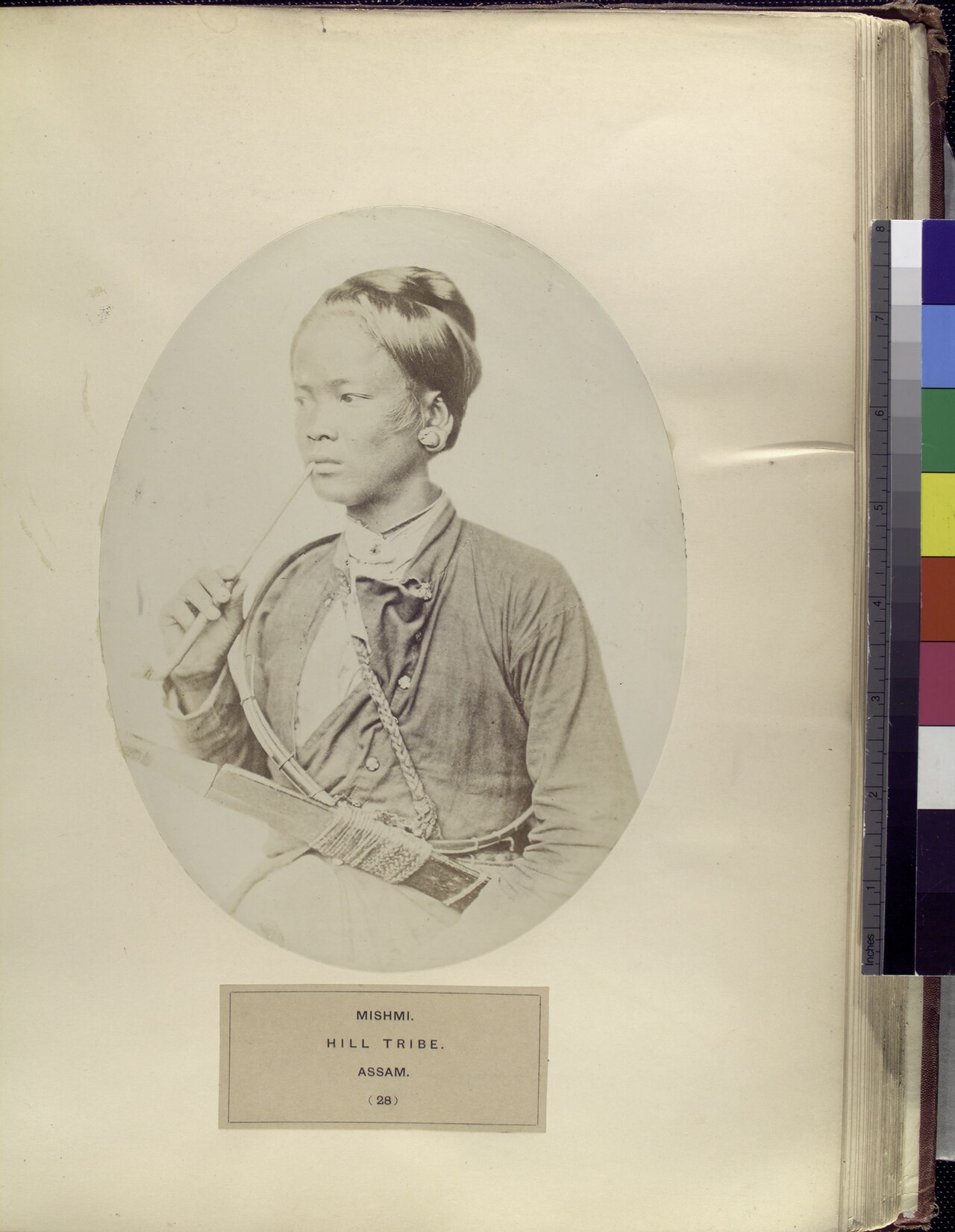
The history of the Lhoba is that of a tiny people on a remote and, in modern times, contested mountain frontier. For long ages they lived in their forested gorges on the southern edge of the Tibetan world, deeply isolated and largely left to themselves in one of the least accessible corners of the Himalaya.
Their contact with the Tibetan world above them brought some trade and influence, and the Lhoba were at times tied into the wider order of the region, yet the sheer difficulty of their country kept them, for the most part, to their own valleys and affairs. Their world was one of forest, hunt, and clan, far from the currents of larger powers.
In the modern era, the drawing of borders across the eastern Himalaya cut through the Lhoba world, leaving the people divided between different states while sharing one heritage with kin across the frontier. Recognised in China as one of the official nationalities, the Lhoba became part of the modern country while remaining among its smallest and most remote peoples.
Through these changes the Lhoba have held to their identity as a forest people of the eastern Himalaya. Their history is not one of great states or wide movements but of a small community enduring in a demanding and hidden land, keeping their customs and beliefs through every shift of the wider world around them.
The Lhoba in the Present Day

Today the Lhoba remain one of the very smallest of China’s recognised peoples, living in the remote valleys of the far southeast of Tibet. Recognised as one of the nationalities, they take part in the life of the modern country while continuing much of their traditional forest existence in their isolated homeland.
Roads and modern services have begun to reach even these far gorges, easing the old isolation and bringing profound change to Lhoba life. Air links and roads into the Nyingchi region have opened a country once almost sealed off, and younger Lhoba have new opportunities in education and work beyond the forest.
With this change comes the task of keeping the culture alive. The Lhoba languages, the distinctive dress and crafts, the animist beliefs and shamans, and the festivals of the forest and the hunt are cherished and, where they can be, sustained against the pressures of a fast-changing, modern world.
For the Lhoba, the present is a matter of holding on to a distinctive forest heritage while living as one of the peoples of modern China. Among the smallest and most remote of the country’s nationalities, they preserve a remarkable and ancient culture in the deep gorges on the southern rim of the Tibetan world.
Because the Lhoba are so few, numbering only a few thousand, the pressures on their heritage are especially sharp, and much depends on deliberate effort to record and sustain their languages, crafts, and customs. Yet the very remoteness that long kept them hidden has also helped preserve a culture of rare and ancient character into the present day.
Related Peoples of the Region
- Hezhen of the Three Rivers and Their Clothing Made of Fish Skin
- Derung of the Dulong Valley, a Hidden Mountain People of Yunnan
- Jing People of the Beibu Gulf, China’s Vietnamese Coast Dwellers
- Russians of China, an Orthodox People on the Northern Frontier
- Tatars of China
- Uzbeks of China
- Monba People
- Gaoshan People, the Austronesian Highlanders of Taiwan
More Peoples of the World
- Zulu of the Green Hills and Their Kingdom Forged by Shaka
- Xhosa of the Eastern Cape and Their Clicking Tongue and Rite of Manhood
- Basotho of the Mountain Kingdom and the Nation Moshoeshoe Forged
- Shona of the Zimbabwe Plateau and Their Cities of Stone
- Ndebele of the Highveld and Their Painted Homes
- Tswana of the Kalahari Plateau and the Kgotla
- Swazi of Eswatini and the Kingdom of the Two Rulers
You May Like
The Damara, an Ancient People of Namibia


One thought on “Lhoba People of the Eastern Himalaya, Forest Hunters of the Tibetan Gorges”