Across the tropical lowlands of the Yucatan Peninsula and the volcanic highlands of Guatemala live the Maya, one of the great civilizations of the ancient world and, just as importantly, a living people numbering in the millions today. Best known outside the region for towering stone pyramids and a sophisticated writing system, the Maya never disappeared, as popular imagination sometimes suggests. Roughly six to seven million Maya people live across southern Mexico, Guatemala, Belize, Honduras, and El Salvador, speaking some thirty related languages and maintaining traditions that stretch back thousands of years.
Maya civilization was never a single unified empire in the way Rome or the Inca state was, but rather a shared culture and language family expressed through dozens of independent city-states that rose, fell, warred, and traded with one another over roughly three thousand years. Cities such as Tikal, Palenque, and Chichen Itza built monumental architecture, developed one of the only fully developed writing systems in the pre-Columbian Americas, and tracked astronomical cycles with a precision that still impresses modern researchers. Spanish conquest in the sixteenth century ended Maya political independence but not Maya society, which adapted, resisted, and persisted through five centuries of colonial and national rule.
This article traces that long story from ancient origins through the present, covering where the Maya came from, what the name means and how Maya people describe themselves, the structure of the Maya language family, the geography of the Maya world, the old way of life in the classic period, the structure of Maya society, religious belief across time, traditions and social customs, craftsmanship, food, festivals, colonial and modern history, and the millions of Maya people living today.
What This Article Covers
- Origins: A Civilization Built Over Three Thousand Years
- Name: Maya, Not a Single Word for a Single People
- Language: A Family of Thirty Living Tongues
- Homeland: From Rainforest Lowlands to Volcanic Highlands
- Old Way of Life: Farmers, Astronomers, and City Builders
- Society: Kings, Priests, and Commoners
- Religion: Gods, Ancestors, and a Sacred Calendar
- Traditions: Community, Cofradías, and the Cost of Belonging
- Crafts: Weaving, Carving, and a Living Art Tradition
- Food: Corn as the Foundation of Everything
- Festivals: Where Maya and Catholic Calendars Meet
- History: Conquest, Rebellion, and Survival
- Today: Millions of Maya People, Ancient and Modern at Once
A Civilization Built Over Three Thousand Years

Maya civilization did not appear suddenly but developed gradually from small farming villages that took root in southern Mexico and Central America as early as 2000 BCE, part of a broader Mesoamerican tradition that also produced the Olmec, Zapotec, and later the Aztec. By around 750 BCE, communities in the Yucatan and Guatemalan highlands were already building ceremonial platforms and practicing settled agriculture, laying groundwork for the monumental cities that would rise centuries later.
Scholars divide Maya history into broad periods, with the Preclassic running roughly from 2000 BCE to 250 CE, the Classic period from 250 to 900 CE marking the civilization’s political and artistic height, and the Postclassic continuing until Spanish contact in the 1500s. During the Classic period, cities such as Tikal, Calakmul, Copan, and Palenque grew into powerful, competing states, each ruled by a dynasty of kings who left behind inscribed monuments recording wars, marriages, and religious ceremonies in remarkable detail.
A dramatic political collapse struck the southern lowland cities around 800 to 900 CE, with many great centers abandoned within a few generations, likely driven by a combination of prolonged drought, overpopulation, warfare between rival states, and environmental strain on agricultural land. This collapse did not end Maya civilization, however; population and political power simply shifted northward into the Yucatan, where cities like Chichen Itza and later Mayapan flourished for centuries afterward.
By the time Spanish forces arrived in the early sixteenth century, the Maya world consisted of numerous independent kingdoms rather than one empire, a political fragmentation that actually slowed conquest considerably, since Spanish forces had to subdue dozens of separate polities rather than topple a single capital. The last independent Maya kingdom, Nojpetén in the Peten lowlands, did not fall to Spanish forces until 1697, over a century and a half after the conquest of the Aztec Empire.
Maya, Not a Single Word for a Single People

The term Maya is a modern scholarly and popular umbrella label covering dozens of distinct but related peoples, each historically identified by their own ethnic and linguistic name rather than any single shared term. Groups such as the Yucatec, K’iche’, Kaqchikel, Mam, and Tzotzil each maintain distinct languages, dress, and local identity, and a K’iche’ speaker in the Guatemalan highlands may feel as much cultural distance from a Yucatec speaker in Mexico as a Norwegian might feel from a Greek, despite both being labeled Maya by outsiders.
The word itself likely derives from Mayapan, a powerful postclassic city in the Yucatan whose name Spanish chroniclers extended to describe the wider region and its people, a naming pattern similar to how Europeans once labeled all Chinese dynasties simply ‘Chinese’ regardless of internal complexity. Some linguists connect the root to an older word for the region around Merida, though the exact etymology remains debated among specialists.
Most Maya people today identify first by their specific ethnic and linguistic group, such as Q’eqchi’, Tzeltal, or Mopan, reserving the broader term Maya for contexts involving pan-indigenous political organizing, international recognition, or conversations with outsiders unfamiliar with the finer distinctions. This layered identity mirrors patterns seen among other large indigenous language families, where a broad umbrella term serves practical purposes without erasing much older, more specific community identities underneath.
Indigenous political movements since the late twentieth century, particularly in Guatemala following its long civil war, have increasingly embraced a pan-Maya identity as a tool for building political solidarity and international visibility, even while continuing to celebrate and protect the specific languages and customs of individual Maya peoples. This has produced a somewhat unusual situation where a once purely academic label has become a genuine, actively chosen political and cultural identity for many communities.
A Family of Thirty Living Tongues
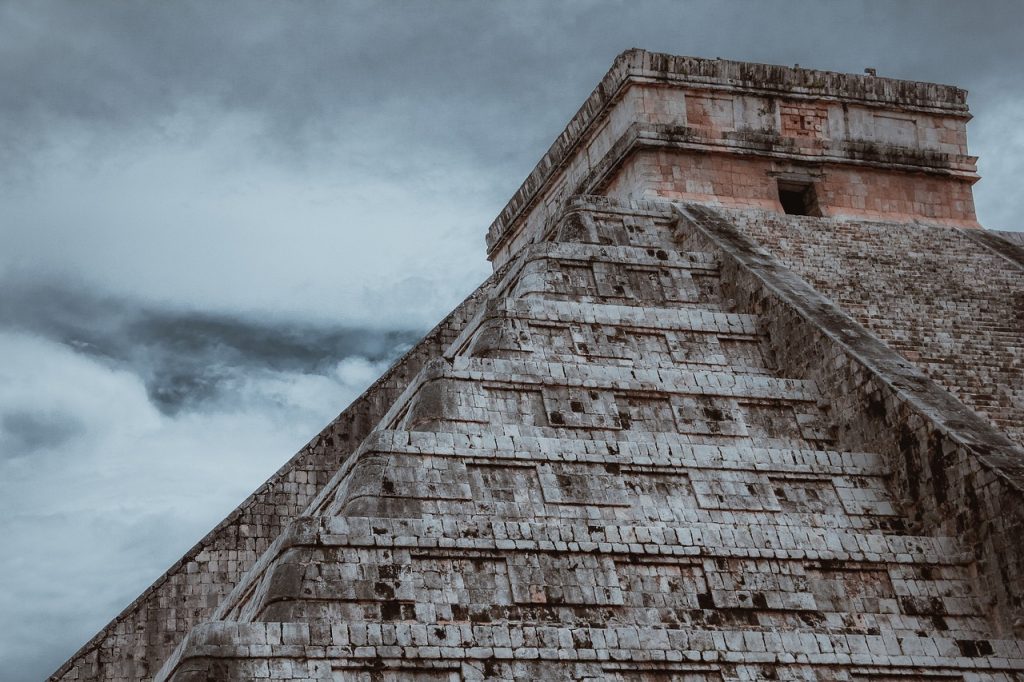
Maya languages form one of the best-documented indigenous language families in the Americas, comprising around thirty distinct living languages spoken by roughly six million people across Mexico, Guatemala, Belize, and neighboring countries. Yucatec Maya, K’iche’, Q’eqchi’, and Kaqchikel each count hundreds of thousands to over a million speakers, while other languages within the family survive with only a few thousand speakers or fewer, facing genuine risk of decline.
Classic Maya, the language recorded in the hieroglyphic inscriptions of the ancient cities, has been substantially deciphered since major breakthroughs in the mid-to-late twentieth century, revealing detailed dynastic histories, war records, and religious texts once assumed to contain only calendar and astronomical data. This decipherment ranks among the great achievements of modern linguistics and archaeology, transforming Maya cities from mute ruins into societies with named kings, recorded battles, and personal histories.
Maya writing used a combination of logographic signs representing whole words and syllabic signs representing sounds, arranged in blocks read in a fixed order, a system sophisticated enough to record connected prose narrative rather than simple tallies or labels. Spanish colonial authorities destroyed the vast majority of Maya bark-paper books, called codices, in a deliberate campaign against what missionaries viewed as idolatrous texts, leaving only four confirmed pre-conquest codices known to survive today.
Bilingual education programs have expanded in Guatemala and Mexico since the 1990s, and Guatemala’s constitution recognizes indigenous languages as part of national heritage, though implementation varies widely and Spanish still dominates higher education, government, and media. Radio stations, published literature, and a growing body of Maya-language education material have helped several of the larger Maya languages remain vigorous, even as some smaller languages within the family are spoken by dwindling numbers of elderly speakers.
From Rainforest Lowlands to Volcanic Highlands

The Maya world spans a remarkably varied geography, from the humid tropical lowlands of the Yucatan Peninsula and the Peten rainforest of northern Guatemala to the cooler volcanic highlands of central and western Guatemala and neighboring Chiapas in Mexico. This range of environments, from limestone plains poorly suited to surface rivers to fertile volcanic soil at higher elevation, shaped very different regional adaptations even among peoples who shared a common cultural and linguistic heritage.
Lowland Maya cities faced a persistent engineering challenge, since the porous limestone bedrock of the Yucatan allows little surface water to collect, forcing ancient communities to build reservoirs called aguadas and rely on natural sinkholes known as cenotes, some of which also held deep religious significance as portals to the underworld. Highland communities, by contrast, benefited from more reliable streams and rainfall but faced steeper terrain and periodic volcanic activity that could just as easily destroy a harvest as enrich the soil that produced it.
Modern Maya populations remain concentrated in this same broad territory, with the Yucatan states of Mexico, highland and lowland Guatemala, and parts of Belize and Honduras holding the largest communities. Guatemala alone counts Maya people as a substantial share of its national population, concentrated especially in the western highlands around Lake Atitlan and in departments such as Quiche and Huehuetenango, where Spanish remains a second language for many rural residents.
Migration has extended the Maya homeland well beyond its traditional borders in recent decades, with significant Maya communities now established in cities across the United States, particularly in states such as California, Florida, and North Carolina, often maintaining active ties to home villages through remittances, return visits, and continued use of Maya languages within diaspora communities. This dispersal has created new, transnational forms of Maya community life that coexist with the older, land-based identity rooted in specific highland or lowland towns.
Farmers, Astronomers, and City Builders
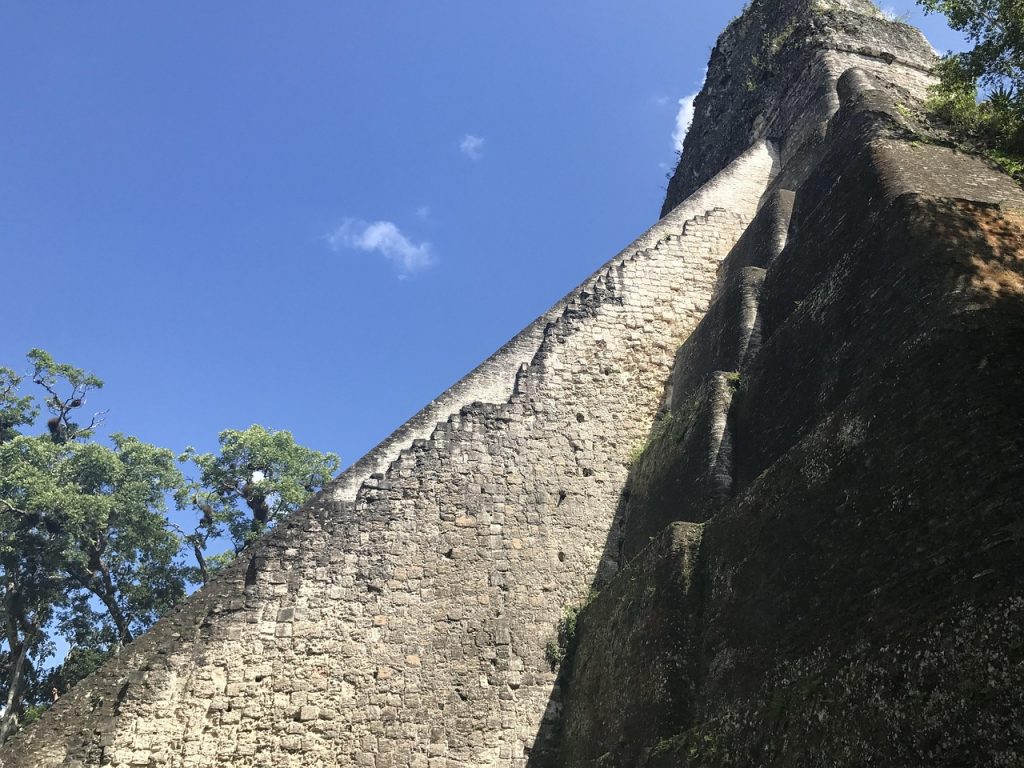
Classic period Maya life centered on maize farming using a slash-and-burn technique suited to tropical forest soil, supplemented in some regions by raised fields and terracing that allowed more intensive cultivation near dense urban centers. Cities such as Tikal supported tens of thousands of residents at their height, a population density that required careful water management, extensive trade networks, and agricultural planning coordinated by the ruling elite.
Maya astronomers tracked the movements of the sun, moon, and Venus with extraordinary precision using only naked-eye observation, producing calendrical calculations accurate enough to predict eclipses and align major buildings with solstice and equinox sunrises. This knowledge served practical agricultural purposes but also carried deep religious meaning, since kings justified their rule partly through claimed ability to interpret and control the cosmic and agricultural cycles their observations tracked.
Warfare between rival city-states was frequent and often recorded in carved monuments celebrating royal victories, capturing enemy nobles for ritual purposes rather than simply eliminating rival populations. Trade networks, by contrast, connected the Maya world to distant regions, moving jade, obsidian, cacao, feathers, and salt across hundreds of miles, evidence of an economy considerably more interconnected than the image of isolated jungle city-states might suggest.
Daily life for most people, who were farmers rather than nobility, revolved around a household compound, a nearby maize field, and participation in periodic labor and tribute obligations to local lords. Ballgames played in stone courts found at nearly every major Maya site combined athletic competition with religious ritual, sometimes ending in human sacrifice of captured players, a practice tied to Maya beliefs about cosmic renewal and the ongoing struggle between order and chaos.
Kings, Priests, and Commoners

Classic Maya society was organized as a steep hierarchy topped by a divine king, known in several dynasties by the title k’uhul ajaw, meaning holy lord, who claimed descent from gods and served as the essential link between the human and supernatural worlds. Beneath the king sat a class of nobles who served as regional governors, military commanders, and high priests, followed by skilled artisans, merchants, and finally the farming majority who supported the entire system through labor and tribute.
Religious and political authority were deeply intertwined, since Maya kings performed public bloodletting rituals, piercing their own tongues or genitals to offer blood to the gods, believed necessary to maintain cosmic order and ensure agricultural fertility. These rituals, recorded in vivid stone carvings, reveal a political system in which legitimacy rested as much on demonstrated religious devotion and cosmic responsibility as on military power or inherited bloodline.
Highland communities in the postclassic and colonial periods, and in many places into the present, organized local governance through a civil-religious hierarchy known as the cargo system, in which men progressed through a series of unpaid civic and religious offices over their lifetime, gaining status and respect in the community in exchange for years of service and considerable personal expense. This system, still active in modified form in parts of highland Guatemala and Chiapas, functions as both local government and a mechanism for redistributing wealth through sponsored festivals and ceremonies.
Family and community obligation remain central organizing principles in Maya society today, with extended kinship networks providing labor, financial support, and social identity in ways that parallel, while also differing in detail from, the ayllu systems found among Andean peoples such as the Quechua. Land, particularly communally held land in highland villages, continues to carry significance well beyond its economic value, tying families to specific places and ancestral obligations that predate any national border.
Gods, Ancestors, and a Sacred Calendar

Ancient Maya religion recognized a large pantheon of gods associated with natural forces, including rain, maize, the sun, and death, along with a strong belief in a layered cosmos consisting of an underworld called Xibalba, the earthly plane, and multiple heavens, all connected by a central world tree. Ancestors held religious importance as well, with royal tombs placed beneath temple pyramids so that deceased kings remained physically and spiritually present at the heart of city life.
The 260-day sacred calendar, known as the Tzolk’in, ran alongside a 365-day solar calendar called the Haab’, together producing a 52-year cycle used for both practical agricultural timing and religious divination, a system of remarkable mathematical elegance still used in modified form by some highland Maya day-keepers today. Ritual specialists interpreted this calendar to determine favorable days for planting, marriage, or important ceremonies, a role that survives among contemporary aj q’ij, or Maya spiritual guides, particularly in Guatemala.
Spanish missionaries introduced Catholicism forcibly after conquest, often destroying temples and sacred texts, yet Maya religious practice did not vanish so much as merge with Catholic forms, producing syncretic traditions in which saints absorbed the roles of older deities and Catholic feast days lined up with the agricultural calendar Maya communities had followed for centuries. Sacred sites such as caves, mountains, and cenotes retain religious significance in many communities, treated as places where offerings can still reach ancestral and divine forces.
A revival of traditional Maya spirituality has gained visible strength since the late twentieth century, particularly in Guatemala, where practitioners openly perform ceremonies at ancient archaeological sites and highland shrines, sometimes in direct dialogue with, rather than opposition to, ongoing Catholic or evangelical practice within the same families. This religious layering, built up over five centuries, reflects the same adaptive resilience that has characterized Maya society since long before the Spanish ever arrived.
Community, Cofradías, and the Cost of Belonging

Highland Maya communities historically organized much of their social and religious life around cofradías, Catholic religious brotherhoods introduced during the colonial period that took on distinctly Maya characteristics over time, managing saint’s day festivals, caring for church images, and requiring members to serve terms of unpaid service similar to the older cargo system. Serving as a cofradía officer brought prestige but also significant financial cost, since members were expected to fund feasts, fireworks, and ceremonies out of their own resources.
Compadrazgo, a godparent relationship formed at baptism, confirmation, or marriage, creates lasting bonds of mutual obligation between families, often used strategically to build alliances between households of different economic standing or to strengthen ties between neighboring communities. These relationships carry real social weight, with compadres expected to offer support during hardship and to attend one another’s major family occasions throughout life.
Traditional dress, particularly the huipil, a woven blouse worn by women, continues to signal specific community identity in much of highland Guatemala, with weaving patterns and colors varying distinctly from one town to the next, allowing a knowledgeable observer to identify a woman’s home community simply by the garment she wears. Men’s traditional dress has declined more sharply than women’s across most regions, a pattern noted by anthropologists studying gender and cultural preservation in Maya communities.
Respect for elders, communal labor obligations for public projects, and marriage practices that often still involve formal petitions between families remain widespread in rural Maya communities, even as urban migration and evangelical conversion have altered or replaced some older customs in specific towns. Local variation remains the rule rather than the exception, with neighboring villages sometimes maintaining noticeably different versions of what outsiders might assume is a single, uniform Maya tradition.
Weaving, Carving, and a Living Art Tradition

Textile weaving stands as perhaps the most visible and economically significant Maya craft today, carried out primarily by women using backstrap looms that have changed little in basic design since pre-conquest times. Weavers produce huipiles, skirts, and sashes using cotton and, increasingly, synthetic thread, incorporating patterns that can encode community identity, marital status, or religious symbolism, with some especially elaborate garments requiring months of work.
Ancient Maya artisans also excelled in stone carving, producing the intricately detailed stelae and lintels that record dynastic history, alongside sophisticated jade work prized above gold in Maya society for its color and symbolic association with maize, water, and life itself. Jade masks and ornaments found in royal tombs, such as the famous burial of King Pakal at Palenque, demonstrate a level of lapidary skill that took specialists years to master using only stone tools and abrasive sand.
Pottery production, both ancient and modern, ranges from utilitarian cooking vessels to elaborately painted ceremonial pieces, with Classic period polychrome pottery often depicting court scenes, mythological narratives, and hieroglyphic texts that have proven valuable to modern scholars piecing together Maya history. Contemporary potters in towns such as Chinautla in Guatemala continue traditions passed down through generations of women, adapting ancient techniques to serve both local use and a growing market for indigenous crafts.
Woodcarving, basketry, and the production of ceremonial masks used in traditional dances round out a craft economy that has increasingly found customers among tourists and international buyers, providing important income for highland families while also raising questions familiar to many indigenous communities about fair compensation and the risk of designs being copied without benefit returning to their originators. Cooperatives owned and run by Maya weavers have emerged in several regions specifically to address this imbalance.
Corn as the Foundation of Everything

Maize holds a place in Maya culture that goes well beyond nutrition, appearing in creation stories as the very substance from which humans were formed according to the Popol Vuh, the sacred K’iche’ narrative recorded after conquest but rooted in far older oral tradition. Corn is processed through nixtamalization, an ancient technique of cooking kernels with lime or ash that unlocks otherwise inaccessible nutrients, a chemical innovation Mesoamerican peoples developed centuries before Europeans understood its nutritional value.
Tortillas, tamales, and a thick corn drink called atole or pozol form the backbone of daily meals across the Maya region, prepared today much as they have been for centuries, though usually with the help of a hand mill or motorized grinder rather than the traditional stone metate and mano still used in more remote or ceremonial contexts. Beans and squash, grown alongside corn in a companion planting system sometimes called the milpa, round out a nutritionally complementary trio that has sustained Mesoamerican populations for thousands of years.
Cacao held special ceremonial and economic importance in the ancient Maya world, consumed as a bitter, spiced drink reserved largely for elites and used as a form of currency in some periods, a stark contrast to its modern global identity as sweetened chocolate. Contemporary Maya communities in cacao-growing regions still prepare traditional cacao drinks for ceremonial occasions, maintaining a direct culinary link to practices recorded in Classic period pottery inscriptions.
Regional cuisine varies considerably across the Maya world, with lowland communities favoring dishes built around local ingredients such as achiote and citrus, while highland Guatemalan cooking often incorporates more chile and a wider variety of vegetables suited to cooler growing conditions. This culinary diversity mirrors the broader pattern of Maya identity itself, unified by shared staples and deep historical roots but expressed differently from one community to the next.
Where Maya and Catholic Calendars Meet

Festival life across the Maya highlands centers heavily on the cofradía system and the celebration of patron saint days, when entire towns turn out for processions, fireworks, marimba music, and masked traditional dances that often reenact historical or mythological encounters between Maya ancestors and Spanish conquerors. These performances, passed down within specific families who guard the rights to particular dance roles, can run for hours across several consecutive days.
Holy Week, or Semana Santa, brings some of the most elaborate public displays in the region, particularly in Guatemala, where communities construct alfombras, intricate carpets made of dyed sawdust, flower petals, and pine needles, laid out on streets only to be walked over and destroyed by religious processions hours later, a deliberate meditation on impermanence embraced by Catholic and Maya spiritual sensibility alike.
The Day of the Dead and its related highland observances draw on both Catholic All Saints traditions and older Maya beliefs about ongoing relationships between the living and their ancestors, with families cleaning and decorating graves, preparing favorite foods of the deceased, and in some Guatemalan towns flying enormous handmade kites believed to help communicate with departed spirits. These festivals blend solemnity and celebration in a way that can surprise visitors expecting a purely somber occasion.
Indigenous day-keepers in Guatemala continue to mark the 260-day Tzolk’in calendar with ceremonies at highland shrines and archaeological sites, a practice that has grown more visible and more openly practiced since the end of Guatemala’s civil war in 1996, part of a broader resurgence of public Maya spiritual and cultural expression after decades in which such practices carried real personal risk.
Conquest, Rebellion, and Survival

Spanish conquest of the Maya world proceeded unevenly and violently over more than a century and a half, beginning with Francisco de Montejo’s campaigns in the Yucatan during the 1520s and continuing through Pedro de Alvarado’s brutal conquest of the Guatemalan highlands, where warfare, forced labor, and introduced disease devastated the population. Unlike the sudden collapse of the Aztec and Inca empires, Maya political fragmentation meant conquest dragged on for generations, with the last independent kingdom holding out in the Peten jungle until 1697.
Colonial rule imposed forced labor systems, tribute obligations, and aggressive religious conversion, yet Maya communities repeatedly resisted, including the prolonged and partially successful Caste War of Yucatan beginning in 1847, in which Maya rebels drove colonial and Mexican authorities from large portions of the peninsula for decades, maintaining an independent Maya state at Chan Santa Cruz until 1901. This conflict remains one of the longest sustained indigenous uprisings in the history of the Americas.
Guatemala’s twentieth century brought some of the most severe suffering in modern Maya history, particularly during the civil war from 1960 to 1996, when the military government carried out a scorched-earth counterinsurgency campaign in the 1980s that killed an estimated two hundred thousand people, the overwhelming majority of them Maya civilians, in what a later United Nations-backed truth commission characterized as acts of genocide against specific Maya communities.
The 1996 Guatemalan peace accords formally ended the conflict and included specific commitments to indigenous rights, bilingual education, and cultural recognition, commitments that have been implemented unevenly in the decades since. Truth and reconciliation efforts, along with the 1992 Nobel Peace Prize awarded to Rigoberta Menchú, a K’iche’ Maya activist, brought unprecedented international attention to Maya history and ongoing struggles for land and rights.
Millions of Maya People, Ancient and Modern at Once
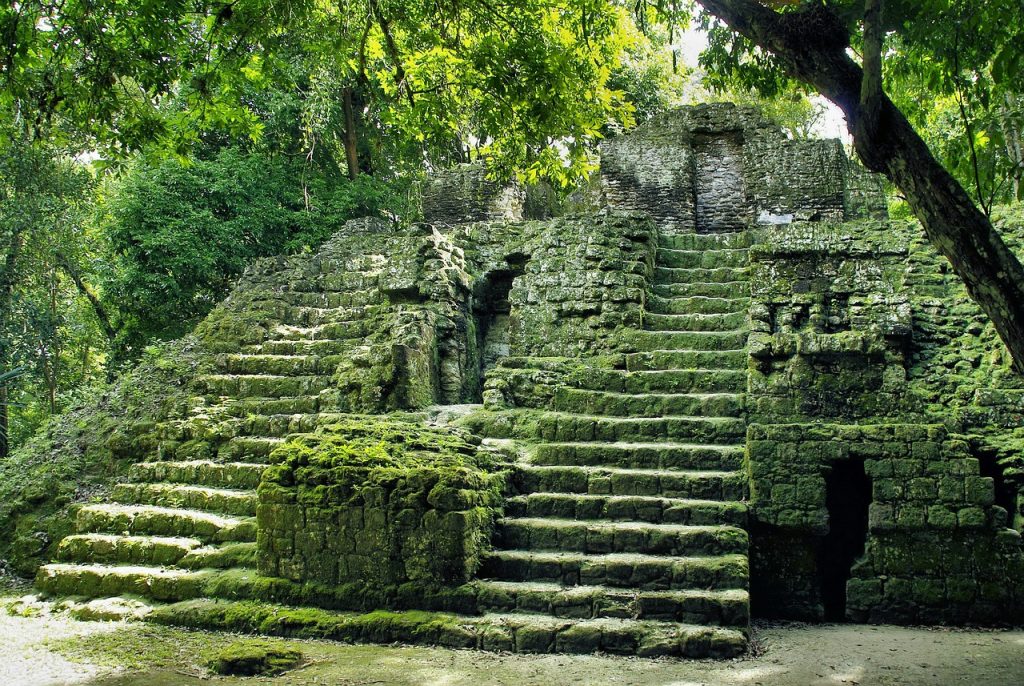
Roughly six to seven million Maya people live today across Mexico, Guatemala, Belize, Honduras, and El Salvador, with Guatemala alone counting Maya communities as a substantial portion, sometimes cited around forty percent, of its total national population. Far from confined to archaeological sites and museum displays, Maya language and identity remain central to daily life in thousands of towns and villages, and increasingly in cities as well, as migration reshapes where Maya people live and work.
Political organizing has expanded significantly since the 1990s, with Maya activists, intellectuals, and organizations pushing for bilingual education, land rights, and formal recognition of indigenous legal customs within national court systems. Figures such as Rigoberta Menchú brought global visibility to these efforts, and Guatemala has seen a growing number of Maya professionals, academics, and elected officials, even as poverty and discrimination continue to affect Maya communities disproportionately compared to the national average.
Contemporary Maya artists, musicians, and writers work in both traditional and thoroughly modern forms, producing Maya-language literature, hip-hop, and film alongside handwoven textiles and traditional ceremony, refusing the notion that indigenous identity requires choosing between past and present. Universities in Guatemala and Mexico now offer programs in Maya languages and culture, staffed increasingly by Maya scholars studying their own heritage rather than outside researchers alone.
Challenges remain serious, including land pressure, climate change affecting highland agriculture, and continued migration driven by economic necessity, yet Maya communities have proven, across three thousand years of recorded history, a remarkable capacity to adapt without disappearing. That same resilience characterizes another indigenous nation of the Americas whose ancestors also built cities, tracked the stars, and endured conquest only to remain a living presence today, the Lakota of the North American Great Plains.
Other Indigenous Nations Still Thriving Today
This piece on the Maya continues a broader look at indigenous peoples of the Americas who remain very much alive in the present day. Earlier entries in that same exploration include:
You May Like
The Zaza, a Mountain People of Eastern Anatolia


19 thoughts on “The People Who Never Vanished, the Story of the Maya”