High in the mountains of South America, in villages where potato terraces climb toward the clouds and in cities where market vendors still call out prices in the language of their grandparents, live the Quechua, the largest indigenous nation in the Americas. Estimates put their numbers at eight to ten million people spread across Peru, Bolivia, Ecuador, Colombia, Chile, and Argentina, the direct linguistic and cultural heirs of the Inca Empire that once ruled the length of the Andes. Far from a vanished civilization, the Quechua are a living, growing population whose language is spoken today from remote highland hamlets to the streets of Lima and New York.
Quechua identity is less a single unified nationality than a family of closely related peoples bound together by language, agricultural tradition, and a shared inheritance from Tawantinsuyu, the Inca name for their empire. Some communities trace their ancestry to imperial nobility, others to peoples the Inca conquered and absorbed, and still others to colonial-era mixing that produced new, layered identities. What unites them is Runasimi, the Quechua language, and a set of values built around reciprocity, community labor, and a deep relationship with the mountains, the sun, and the earth known as Pachamama.
The chapters below trace that story from its ancient roots to daily life today, covering origins, the meaning of the Quechua name, the structure of the Runasimi language, the high-altitude homeland that shaped Andean civilization, the old way of life before and during Inca rule, the structure of Quechua society, religious belief old and new, traditions and social customs, craftsmanship in textiles and metal, food grown at extreme altitude, festivals that mark the yearly calendar, the turbulent history since Spanish conquest, and the Quechua nation as it stands today.
What This Article Covers
- Origins: Andean Roots Older Than the Inca
- Name: Quechua, Runa, and the Meaning of Runasimi
- Language: Runasimi, a Family Still Spoken by Millions
- Homeland: Life Along the Spine of South America
- Old Way of Life: Terraces, Herds, and the Ayllu
- Society: Reciprocity, Kinship, and the Ayllu System
- Religion: Pachamama, the Sun, and a Layered Faith
- Traditions: Weddings, Reciprocity, and Rites of the Land
- Crafts: Textiles Woven With Meaning
- Food: Potatoes, Corn, and the Gifts of Verticality
- Festivals: Inti Raymi and a Calendar Built Around the Sun
- History: From Tawantinsuyu to the Andean Republics
- Today: A Living Nation Across Five Countries
Andean Roots Older Than the Inca

Long before the Inca built their empire, the central Andes were home to sophisticated societies stretching back thousands of years, including the Chavín, Wari, and Tiwanaku cultures, whose irrigation systems, road networks, and religious centers laid groundwork the Inca would later inherit and expand. The Quechua people, in the broadest sense, descend from this long chain of highland civilizations rather than from any single ancestral group, since the Inca state absorbed dozens of distinct ethnic groups and imposed its language on many of them over the course of the fifteenth century.
Genetic and archaeological research points to human presence in the Andean highlands dating back over ten thousand years, with communities gradually domesticating potatoes, quinoa, and camelids such as llamas and alpacas in an environment few other agricultural societies could have mastered. That deep adaptation to altitude, cold, and thin air produced not just a set of farming techniques but a whole worldview organized around verticality, the idea that a single community could work several distinct climate zones on one mountainside within a day’s walk.
When the Inca expanded outward from Cusco in the 1400s, they did not erase these older identities so much as layer their own administration and language on top of them, resettling entire populations and rewarding loyal groups with land and privilege. This is why modern Quechua communities can differ sharply in dress, custom, and even dialect from one valley to the next, despite sharing a common tongue, a patchwork born of imperial policy rather than uniform ancestry.
Spanish conquest in the 1530s ended Inca political rule but did not erase the underlying population or its culture, since colonial administrators found it convenient to govern through Quechua as a lingua franca. That decision, made for reasons of administrative efficiency rather than respect, is a large part of why Quechua identity and language survived into the present at a scale most conquered pre-Columbian peoples did not.
Quechua, Runa, and the Meaning of Runasimi

The word Quechua is itself a Spanish adaptation of a term whose original meaning is debated, possibly derived from a region name or from a word describing temperate valley zones favorable to agriculture. Spanish chroniclers applied it broadly to the language and its speakers, and over centuries the label stuck, even though many communities never used it to describe themselves before colonization.
Speakers of the language have historically preferred other terms for self-identification. Runa, meaning person or human being in the language itself, is widely used, and the language is called Runasimi, literally the mouth or speech of the people. This distinction matters: Runa carries a sense of full personhood and belonging to a moral community, not merely an ethnic label imposed from outside.
Regional and community identities often carry more everyday weight than the pan-ethnic term Quechua. People commonly identify first with their village, valley, or province, such as Cusqueño, Ayacuchano, or Cañari, before reaching for the broader linguistic category, similar to how a Bavarian might identify locally before calling themselves German. Quechua as an overarching identity has grown stronger in recent decades alongside indigenous political movements that found strategic value in a shared, unified label.
This layered naming reflects a broader pattern in indigenous Andean self-understanding, one where language, not bloodline or a single point of origin, functions as the primary marker of belonging. A person who learns Runasimi and lives within its cultural framework is, in an important sense, absorbed into the Runa world, a fluidity that has allowed the identity to persist and even grow despite centuries of pressure toward assimilation.
Runasimi, a Family Still Spoken by Millions

Quechua is not a single language but a family of related languages and dialects, some of which are not mutually intelligible, spoken across a vast swath of the Andes. Linguists divide the family into two major branches, generally labeled Quechua I and Quechua II, reflecting an ancient split that likely predates the Inca Empire by well over a thousand years, meaning the language’s spread across the Andes owes as much to earlier trade and migration as to imperial conquest.
The Inca state adopted a form of Quechua as an administrative language, spreading it into regions where it had not previously been spoken, including parts of what is now Ecuador and northern Argentina. Spanish colonial missionaries later relied on Quechua as a tool for religious conversion, producing dictionaries, grammars, and translated catechisms that ironically helped standardize and preserve the language even as colonial policy undermined the society that spoke it.
Quechua has no native alphabet of its own; the Inca kept records instead through khipu, knotted cords whose full informational range scholars are still working to decode. Written Quechua today uses a Latin-based alphabet developed and refined over the twentieth century, though spelling conventions still vary between countries and even between regions within the same country, a source of ongoing debate among educators and linguists.
Roughly eight to ten million people speak some form of Quechua today, making it by far the most widely spoken indigenous language family in the Americas. Peru recognizes it as an official language alongside Spanish, Bolivia and Ecuador grant it similar status, and bilingual education programs have expanded steadily since the 1990s, though many rural schools still lack materials or trained teachers to deliver instruction fully in the language.
Life Along the Spine of South America

Quechua communities are concentrated along the Andes mountain range, the longest continental mountain chain in the world, stretching from Colombia in the north through Ecuador, Peru, and Bolivia into Chile and Argentina in the south. Elevation defines nearly everything about life here, with communities living anywhere from temperate valleys around 2,000 meters to high puna grasslands above 4,000 meters, where oxygen is thin and nighttime frost is common even near the equator.
This vertical landscape produces what anthropologists call a system of ecological complementarity, in which a single extended family or community controls plots at several different altitudes, growing maize and vegetables lower down while herding llamas and alpacas and cultivating frost-resistant potatoes higher up. Rather than specializing in one zone, households historically spread risk across many microclimates, a strategy that made highland life sustainable in a region where any single elevation band could fail in a bad year.
Cities such as Cusco, once the Inca capital, and Cochabamba in Bolivia sit at the heart of Quechua-speaking regions, but the vast majority of traditional communities remain rural, organized around agricultural villages connected by roads that in some places still follow routes engineered by Inca road builders five centuries ago. Terracing systems built into steep hillsides, some of them still in active use, testify to an engineering tradition that turned marginal, sloped land into productive farmland.
Modern life has added new layers to this geography. Mining, large-scale agriculture, and urban migration have redrawn the map of where Quechua speakers live and work, with sizable communities now established in Lima, Buenos Aires, and even cities in the United States and Europe. Despite this dispersal, the high Andes remain the symbolic and demographic heartland, the landscape most closely tied to Quechua identity in art, memory, and daily practice.
Terraces, Herds, and the Ayllu

Before mechanization reached the Andes, daily life revolved around a punishing but carefully managed agricultural calendar. Families worked terraced fields with foot plows called chaki taklla, rotated crops to preserve thin mountain soil, and timed planting to seasonal rains that could vary sharply from valley to valley. Herds of llamas provided wool, meat, and transport, carrying goods along mountain paths where wheeled vehicles were useless, while alpacas supplied the finer wool prized for clothing.
Labor was rarely an individual matter. Communities relied on collective work parties, known in many areas as minka or ayni, where households traded labor for labor, helping each other with harvests, house building, or irrigation canal maintenance on the understanding that the favor would be returned in kind. This reciprocal system was not simply an economic convenience but a moral framework, one that discouraged permanent debt or exploitation between neighbors.
Housing traditionally consisted of stone or adobe structures with thatched or tiled roofs, built to withstand cold nights and occasional earthquakes, clustered into hamlets surrounded by fields and pasture. Storage structures called qollqa, refined during Inca times into a sophisticated state granary system, allowed communities and empires alike to bank surplus harvests against future famine or as tribute to political authorities.
Trade between altitude zones was constant, with highland herding communities exchanging wool, meat, and dried potatoes for maize, coca, and fruit grown at lower elevations, sometimes through direct family ties to relatives who had settled a different climate zone generations earlier. This exchange network functioned as an economic safety valve, letting communities weather local crop failures by drawing on relationships anchored in family rather than markets.
Reciprocity, Kinship, and the Ayllu System

The ayllu, a kinship-based community organized around shared land, ancestry, and mutual obligation, has long served as the basic building block of Quechua society, predating the Inca and surviving, in modified form, into the present day. Membership in an ayllu came with rights to farmland and pasture but also responsibilities, including labor contributions to communal projects such as irrigation canals, footbridges, and terrace maintenance that no single household could manage alone.
Inca rule layered a state bureaucracy on top of these local structures, dividing conquered territory into administrative units and demanding labor tribute known as the mita, under which communities sent workers to build roads, temples, and terraces for the state in exchange for access to state granaries during hardship. Spanish colonial rule inherited and badly distorted this system, turning the mita into a form of forced labor, particularly brutal in the silver mines of Potosí, that devastated highland populations for generations.
Gender roles in traditional Quechua society were often organized around complementarity rather than strict hierarchy, with men and women performing distinct but interdependent tasks in farming, herding, and household management, and women frequently controlling textile production and its considerable economic value. Andean cosmology reflected this balance through paired concepts, such as the sun and moon or the earth and sky, understood as complementary forces rather than opposites ranked against one another.
Modern Quechua communities continue to organize significant work through communal labor systems, even as wage labor, migration, and national legal structures have reshaped rural economies. Community assemblies still make decisions about shared resources such as irrigation water in many highland villages, a direct continuation of governance patterns that predate the arrival of any European institution.
Pachamama, the Sun, and a Layered Faith

Traditional Quechua religion centered on Inti, the sun god closely associated with Inca royal authority, and Pachamama, the earth mother goddess who remains a living presence in Andean spiritual life today. Mountains themselves were, and in many communities still are, regarded as powerful beings called Apus, capable of protecting or punishing the people who live on their slopes, and offerings are still made to specific peaks before undertaking journeys, harvests, or building projects.
Spanish missionaries introduced Catholicism aggressively after conquest, often building churches directly atop demolished Inca temples as a deliberate statement of religious replacement. Rather than eliminating older beliefs, this process produced a durable syncretism in which Catholic saints absorbed attributes of earlier Andean deities, and Christian festivals were mapped onto the pre-existing agricultural and solar calendar, a fusion still visible in nearly every Quechua religious celebration today.
Ritual specialists known as paqos continue to perform ceremonies invoking Pachamama and the Apus, using coca leaves as a primary medium of communication with the spirit world, reading their patterns to divine outcomes or blessing important undertakings with a despacho, a ceremonial bundle of offerings burned or buried as a gift to the earth. These practices exist alongside, rather than in opposition to, regular Catholic worship for many Quechua families, who see no contradiction in attending Mass and also making an offering to the mountain.
Evangelical Protestant missions have made significant inroads in Andean communities over the past several decades, adding a third strand to an already layered religious landscape and, in some cases, creating tension with families who view older ritual practices as incompatible with newer forms of Christian belief. Even so, reverence for Pachamama remains widespread enough that it appears in Bolivia’s constitution and in Peruvian environmental activism, evidence that this belief system has moved well beyond folklore into contemporary law and politics.
Weddings, Reciprocity, and Rites of the Land

Quechua social life is structured around reciprocity, expressed through ceremonies that mark major life transitions and reinforce community bonds. A first haircutting ceremony for young children, called rutuchi, involves relatives cutting small locks of hair and offering gifts or money, formally welcoming the child into the wider network of kin who will support them through life. Godparent relationships, or compadrazgo, blended from Catholic tradition and older Andean kinship ideas, create lasting bonds of mutual obligation between families.
Courtship and marriage traditions in many communities include a trial period of cohabitation known as sirvinacuy, allowing a couple to test compatibility before a formal wedding, a practice that predates Christian marriage norms and persists in some rural areas despite periodic disapproval from church authorities. Wedding celebrations themselves can stretch over several days, involving elaborate gift exchange between families and communal feasting that reinforces alliances well beyond the couple themselves.
House-building and roofing ceremonies, known as wasichakuy, bring entire communities together to raise a new home in a single coordinated effort, followed by a celebration where the new owners provide food and drink in exchange for the labor received, a direct expression of the ayni principle applied to something as concrete as construction. Similar collective ceremonies mark canal cleaning, planting, and harvest, each treated as both practical work and occasion for celebration.
Respect for elders and ancestors runs through many of these traditions, with community leadership roles, such as the varayoc staff-bearing authorities found in some villages, rotating among respected adults who take on ceremonial and administrative responsibility for a fixed term. This blending of civic duty, spiritual authority, and communal celebration reflects an approach to social organization that treats governance and ritual as inseparable rather than as separate domains of life.
Textiles Woven With Meaning

Textile production stands among the most technically sophisticated and symbolically rich Quechua crafts, with weaving traditions that predate the Inca by well over a thousand years and remain vigorously alive today. Women typically learn backstrap loom weaving from childhood, producing cloth from alpaca, llama, and sheep wool dyed with natural pigments drawn from plants, insects, and minerals found across different altitude zones.
Patterns woven into textiles are rarely purely decorative; many encode information about a weaver’s home community, marital status, or social position, functioning as a visual language readable to those trained to interpret it. Certain garments, such as the finely woven cumbi cloth once reserved for Inca royalty and religious offerings, carried enormous symbolic and economic value, and fine textiles were used historically as currency, tribute, and diplomatic gifts.
Metalwork also has deep roots in the region, with pre-Inca and Inca goldsmiths and silversmiths producing ceremonial objects, jewelry, and ritual items of considerable technical sophistication, some of which were melted down by Spanish colonizers purely for bullion value, an enormous and permanent loss to the historical record. Surviving techniques and styles have been partially reconstructed by contemporary Andean silversmiths working from colonial-era pieces and archaeological finds.
Pottery, basketry, and wood carving round out a broad craft tradition that continues to adapt to new markets, with cooperatives in Cusco and other tourist centers now producing textiles and crafts both for local ceremonial use and for sale to visitors. This commercial dimension has provided crucial income for many families while also raising ongoing questions within communities about how to protect traditional designs from being copied or commercialized without benefit flowing back to their originators.
Potatoes, Corn, and the Gifts of Verticality

Quechua cuisine grew out of the many altitude zones the Andes offer, and it remains one of the most inventive food cultures in the Americas. Farmers domesticated hundreds of potato varieties long before contact with Europe, along with quinoa, oca, and maize, and they still plant these staples using ancient techniques suited to steep, cold terrain. A dish called chuño, made by freeze-drying potatoes in the mountain air and sun, allowed communities to store food for years, a form of insurance against drought or frost that modern refrigeration has never fully replaced in rural households.
Meals today mix the old and the new. Soups thickened with corn or barley, roasted guinea pig known as cuy, and toasted corn kernels called cancha appear alongside rice and pasta introduced more recently. Coca leaves, chewed or brewed as tea, remain central to daily life at altitude, easing hunger and the effects of thin air, and they carry ceremonial weight far beyond their nutritional role. Markets in Andean towns still sell food by barter in some areas, a quiet holdover from an economy that never fully converted to cash.
Cooking methods reflect the landscape as much as the ingredients do. The pachamanca, an earth oven built from heated stones layered with meat, potatoes, and herbs, turns a hillside into a kitchen for feast days and family gatherings. Corn is fermented into chicha, a mildly alcoholic drink poured out for Pachamama before anyone else takes a sip, a small daily ritual that folds spirituality into something as ordinary as a meal.
Nutrition anthropologists have taken a growing interest in Andean staples, since quinoa and native potatoes offer protein and mineral profiles well suited to harsh climates. That international attention has brought new markets for Quechua farmers, though it has also raised prices for foods that were once cheap dietary staples at home, a tension many communities are still learning to manage.
Inti Raymi and a Calendar Built Around the Sun

The Quechua festival calendar follows the agricultural and solar cycle inherited from Inca times, layered with Catholic feast days introduced during colonial rule. The most famous is Inti Raymi, the Festival of the Sun, revived in Cusco each June with processions, music, and a reenactment of Inca ceremony held at the fortress of Sacsayhuamán. What began in the twentieth century as a cultural recovery project has grown into one of South America’s largest indigenous festivals, drawing visitors from around the world while still functioning as a genuine expression of Quechua identity.
Village festivals tend to be smaller but no less intense. Patron saint days blend Catholic liturgy with older practices such as animal-shaped offerings, ritual dances, and processions carrying images through fields to bless the coming harvest. Costumed dance troupes, some representing historical figures like Spanish overseers or wild mountain spirits, perform choreography passed down within families, often for hours at a stretch, accompanied by brass bands and firecrackers.
Music runs through every celebration. The quena, a notched flute, and the charango, a small stringed instrument traditionally built from an armadillo shell, produce the melodies most associated with Andean sound worldwide. Panpipes known as zampoñas are often played in pairs, with two musicians alternating notes to complete a single melodic line, a technique that mirrors the Quechua emphasis on reciprocity and shared effort.
Carnival season brings water fights, flower offerings, and courtship dances in many communities, while August is widely regarded as a month favorable to Pachamama, when families make offerings of food, drink, and coca leaves buried in the earth. These calendars are not static traditions frozen in time; new festivals continue to emerge, and older ones are adapted each year by the communities that keep them.
From Tawantinsuyu to the Andean Republics

Quechua history did not begin with the Inca, but it was the Inca state, Tawantinsuyu, that spread the language across a territory stretching from present-day Colombia to Chile. Spanish forces under Francisco Pizarro captured the Inca capital in 1533, and within decades disease, warfare, and forced labor systems such as the mita had devastated the population. Colonial administrators used Quechua as an administrative and missionary language even as they dismantled Inca political structures, an irony that helped the language survive even as Inca sovereignty collapsed.
The eighteenth century brought open rebellion. Túpac Amaru II, a Quechua-speaking descendant of Inca nobility, led a major uprising against Spanish colonial rule in 1780 that was ultimately crushed, but which left a lasting symbol of indigenous resistance still invoked in Andean politics today. Independence in the nineteenth century transferred power to Spanish-descended and mestizo elites, and Quechua communities largely remained on the margins of the new republics, subject to land seizure and exclusion from formal citizenship in practice if not always in law.
The twentieth century brought land reform, migration to cities, and, in Peru, a brutal internal conflict during the 1980s and 1990s between the state and Shining Path insurgents that killed tens of thousands, a disproportionate number of them Quechua-speaking villagers caught between both sides. Truth commission findings later confirmed what many communities already knew, that the war had fallen hardest on people the state had long ignored.
Bolivia’s 2009 constitution, shaped in part by an Aymara president, recognized the country as a plurinational state and gave Quechua and other indigenous languages new official standing. Peru and Ecuador have moved more slowly, but bilingual education programs and indigenous political movements have expanded steadily since the 1990s, changing the terms on which Quechua communities engage with national government.
A Living Nation Across Five Countries
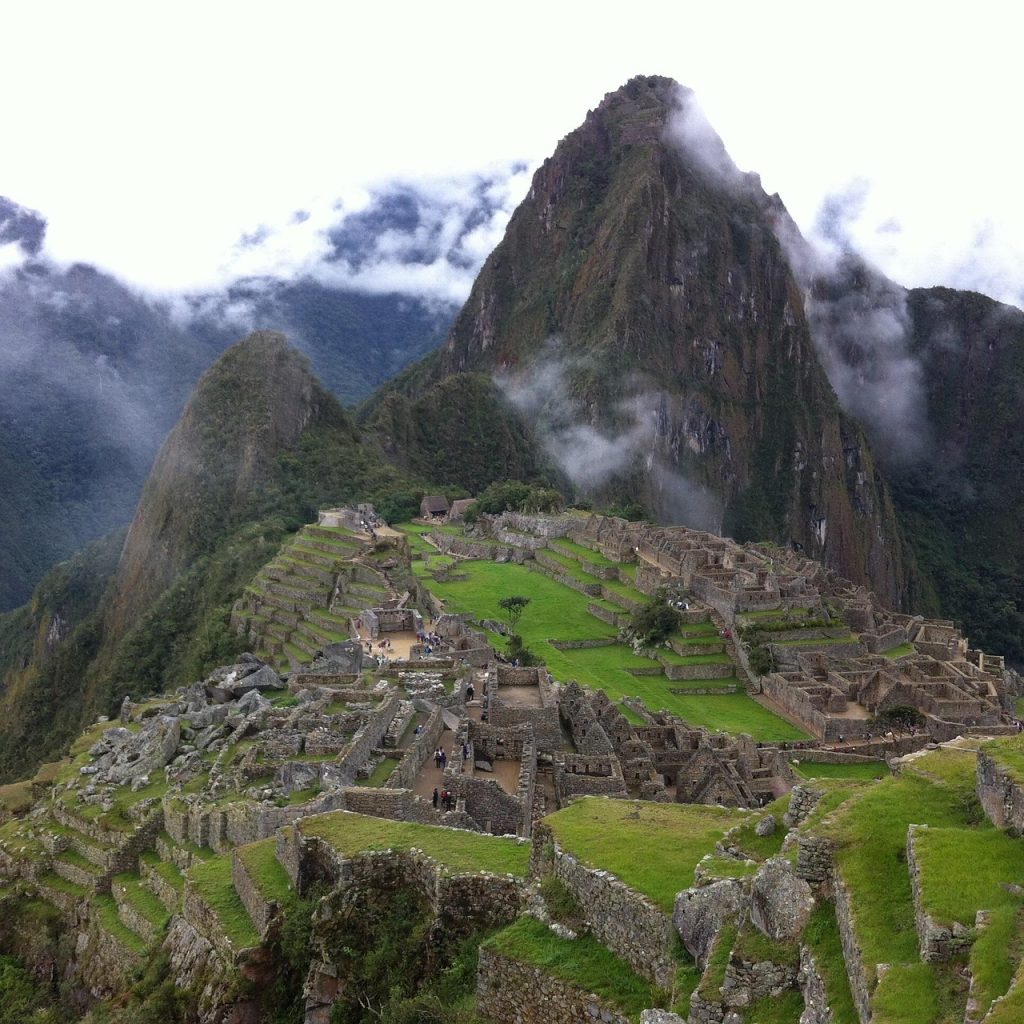
Quechua speakers today number roughly eight to ten million people spread across Peru, Bolivia, Ecuador, Colombia, Chile, and Argentina, making them the largest indigenous language group in the Americas by most counts. Millions still live in the highland communities their ancestors farmed, growing potatoes and herding llamas and alpacas much as earlier generations did, while millions more have moved to cities such as Lima, La Paz, and Cusco, carrying language and custom into urban neighborhoods that barely existed a century ago.
Political representation has grown alongside this demographic shift. Quechua and other indigenous organizations have pushed successfully for bilingual education, land rights, and recognition of communal governance structures, and Quechua-language media, radio stations, and even pop and hip-hop artists now reach audiences that previous generations could not have imagined. Peru officially recognizes Quechua as a co-official language, though implementation in schools and courts remains uneven outside the highlands.
Challenges remain substantial. Climate change is shifting the growing seasons and water availability that highland agriculture depends on, glacial retreat threatens irrigation systems, and younger generations in cities sometimes shift toward Spanish, prompting concern about long-term language transmission. Community organizations, universities, and native-language broadcasters have responded with growing efforts to document and teach Quechua, treating the language less as a relic than as a living tool still being adapted for smartphones, classrooms, and social media.
Quechua endurance offers a useful comparison to another indigenous nation reshaped by conquest and still very much alive today, the Maya of Mesoamerica, whose city-states once rivaled anything built in the Andes and whose descendants number in the millions across a different mountain and jungle landscape entirely.
More Peoples Worth Meeting
This look at the Quechua is part of an ongoing look at indigenous nations of the Americas who are very much still here. Readers curious about other communities covered so far can start here:



3 thoughts on “The People Who Never Left the Mountains, the Story of the Quechua”