For much of the twentieth century, textbooks and encyclopedias described the Taino as an extinct people, a civilization wiped out entirely within decades of Columbus’s arrival in the Caribbean in 1492. That story, repeated for generations, turns out to be substantially wrong, and the growing correction of it represents one of the more remarkable Indigenous identity revivals anywhere in the Americas.
Before European contact, the Taino were the dominant Indigenous people across most of the Caribbean, including what is now Puerto Rico, Cuba, Hispaniola, Jamaica, and parts of the Bahamas, organized into sophisticated chiefdoms with sizable populations, extensive trade networks, and a rich spiritual and artistic tradition centered on caves, ancestor worship, and elaborate ceremonial ball courts.
This is the story of the Taino: their origins in the islands of the Caribbean, what their name means, the words their language left behind in modern English and Spanish, the island homeland that shaped them, their old way of farming and fishing life, their chiefdom society, their beliefs centered on caves and spirits, their crafts, their food, their festivals, the catastrophic history of conquest and disease, and the surprising, ongoing story of Taino identity today.
- Origins Across the Caribbean Islands
- What “Taino” Means
- Words the Taino Gave the World
- An Island World of Sea and Mountain
- The Old Life of Farming and Fishing
- Caciques and Chiefdom Society
- Caves, Zemis, and the Spirit World
- Ball Courts and Ceremony
- Craft, Carving, and Canoe
- Cassava and the Foods of the Islands
- Areito and Community Gathering
- Conquest, Disease, and a Declared Extinction
- The Taino Today
Origins Across the Caribbean Islands

The Taino descended from Arawak-speaking peoples who migrated northward through the Caribbean island chain from South America over the course of many centuries, gradually settling and developing distinct island societies across what are now Puerto Rico, the Dominican Republic, Haiti, Cuba, Jamaica, and parts of the Bahamas.
By the time of European contact, this migration had produced a recognizably shared Taino culture spanning multiple islands, though with meaningful regional variation, including related but distinct groups sometimes identified separately by scholars, such as the Classic Taino of Hispaniola and Puerto Rico and the somewhat different Western Taino of Cuba and Jamaica.
Archaeological evidence, including ceremonial ball courts, elaborate pottery, and stone carvings, indicates the Taino had developed sophisticated, populous societies well before Columbus arrived, with population estimates for Hispaniola alone at the time of contact ranging from the hundreds of thousands into the low millions, depending on the historical source consulted.
This deep pre-Columbian history, largely overshadowed in popular memory by the dramatic and tragic story of conquest, represented centuries of independent Caribbean cultural development connecting the islands to broader South American Arawakan heritage while producing something genuinely distinct in its own island context.
Some researchers have argued that population figures for pre-contact Hispaniola remain genuinely uncertain, with estimates ranging widely across different studies, but even the most conservative figures describe a society of hundreds of thousands of people organized into complex, functioning political structures well before any European ever set foot in the Caribbean.
What “Taino” Means

“Taino” is generally understood to mean “good” or “noble,” believed to have been used by Indigenous Caribbean people speaking with early Spanish arrivals to distinguish themselves from the Carib peoples of the eastern Caribbean, who Spanish sources of the era, not always reliably, described as hostile.
The Taino themselves used more specific terms for their own islands and communities, including Boriken for what is now Puerto Rico and Kiskeya or Ayiti for Hispaniola, terms that survive today in modern place names, most notably Haiti, which derives directly from the Taino Ayiti.
Historical and linguistic scholarship on Taino identity terminology remains an active field, with some researchers preferring more specific regional or chiefdom-based terms over the broad umbrella label “Taino,” which, similar to “Diaguita” or “Atacameno” discussed elsewhere, was substantially shaped and standardized by outside observers rather than representing a single term Indigenous communities uniformly used for themselves.
Regardless of its precise historical origin and application, “Taino” today functions as a widely recognized and embraced ethnic and cultural identity, actively claimed by descendant communities and cultural organizations across Puerto Rico, the wider Caribbean, and the Caribbean diaspora in the United States.
Words the Taino Gave the World

The Taino language, part of the Arawakan family, is no longer spoken as a living first language, but it left an unusually large and lasting mark on English and Spanish vocabulary, a linguistic legacy few other extinct Indigenous languages in the Americas can claim at comparable scale.
Hurricane, derived from the Taino storm spirit Juracan, canoe, hammock, barbecue, tobacco, and maize all trace their origins to Taino vocabulary, words so thoroughly absorbed into everyday English that most speakers have no idea of their Indigenous Caribbean origin.
This linguistic legacy persisted even as fluent spoken use of the Taino language itself declined sharply following colonization, preserved instead through vocabulary absorbed into the colonizing languages themselves, a distinctive and unusual pathway for linguistic survival compared to most other Indigenous languages profiled elsewhere on this site.
Contemporary Taino cultural and linguistic revival efforts have worked to reconstruct additional vocabulary from historical Spanish colonial records, place names, and comparison with related surviving Arawakan languages, aiming to recover more of the language than the handful of globally famous loanwords most people already unknowingly use.
Additional Taino-derived words extend beyond the most famous examples, including guava, papaya, and iguana, each entering European languages through early Spanish contact and subsequently spreading into English and other languages as the plants, animals, and objects they named became familiar around the world.
An Island World of Sea and Mountain

Taino territory spanned a wide arc of Caribbean islands, from the mountainous interior of Hispaniola and Puerto Rico to the flatter terrain of the Bahamas, encompassing tropical rainforest, coastal mangrove, and fertile river valleys that supported substantial agricultural populations.
This island geography shaped a way of life deeply oriented toward both the sea and inland farming, with coastal Taino communities specializing in fishing and maritime trade while inland communities focused more heavily on agriculture, connected through extensive canoe-based trade and communication networks.
Frequent hurricanes, a natural feature of Caribbean geography that gave English its very word for the phenomenon as noted earlier, required Taino communities to develop resilient building practices and food storage strategies capable of withstanding regular seasonal storm damage.
The relative fertility and mild climate of the Greater Antilles supported population densities significantly higher than many other Indigenous regions in the Americas, a factor that made the region especially attractive to early Spanish colonization and, tragically, especially vulnerable to the demographic catastrophe that followed.
ok 1-4The Old Life of Farming and Fishing

Taino agriculture centered on the conuco, a raised earthen mound planting system used to grow cassava, sweet potato, beans, and squash, an effective method for managing tropical soil fertility and drainage that allowed sustained cultivation on the same land over many growing seasons.
Cassava, processed to remove naturally occurring toxins and baked into casabe flatbread, formed the staple carbohydrate of the Taino diet, a food tradition, as noted earlier, that survives essentially unchanged in parts of the Caribbean today.
Fishing using nets, traps, and hook-and-line methods supplied significant protein, supplemented by hunting small game including the hutia, a large rodent native to the Caribbean, and gathering shellfish and other coastal resources available across the islands’ extensive coastlines.
Taino watercraft, particularly large dugout canoes capable of carrying dozens of people, enabled both long-distance fishing and extensive inter-island trade and communication, connecting communities across considerable stretches of open water well before European ships arrived in the region.
Caciques and Chiefdom Society

Taino society was organized into cacicazgos, or chiefdoms, each governed by a cacique, a hereditary leader whose authority extended over multiple villages and who held significant political, economic, and ceremonial responsibility, including redistribution of agricultural surplus and organization of communal labor projects.
Social status below the cacique included nitainos, a noble or elite class who assisted in governance and often served as village sub-chiefs, and naborias, commoners who performed the bulk of agricultural and other labor supporting the broader chiefdom economy.
Bohios, round thatched-roof houses, and larger rectangular caney structures reserved for caciques and important community functions, made up the built environment of Taino villages, typically arranged around a central plaza used for ceremony, sport, and community gathering.
At the time of European contact, the island of Hispaniola alone was divided among five major cacicazgos, each ruled by a paramount cacique commanding substantial territory and population, illustrating a level of political organization considerably more centralized than many other Indigenous societies encountered by early Spanish explorers in the wider Caribbean and adjacent mainland.
Colonial-era Spanish chroniclers, including Bartolome de las Casas, documented aspects of Taino society, belief, and treatment under colonization in considerable detail, and while their accounts carry the biases of their time and position, they remain among the most important surviving sources historians rely on to reconstruct Taino life prior to and during the earliest years of conquest.
Caves, Zemis, and the Spirit World
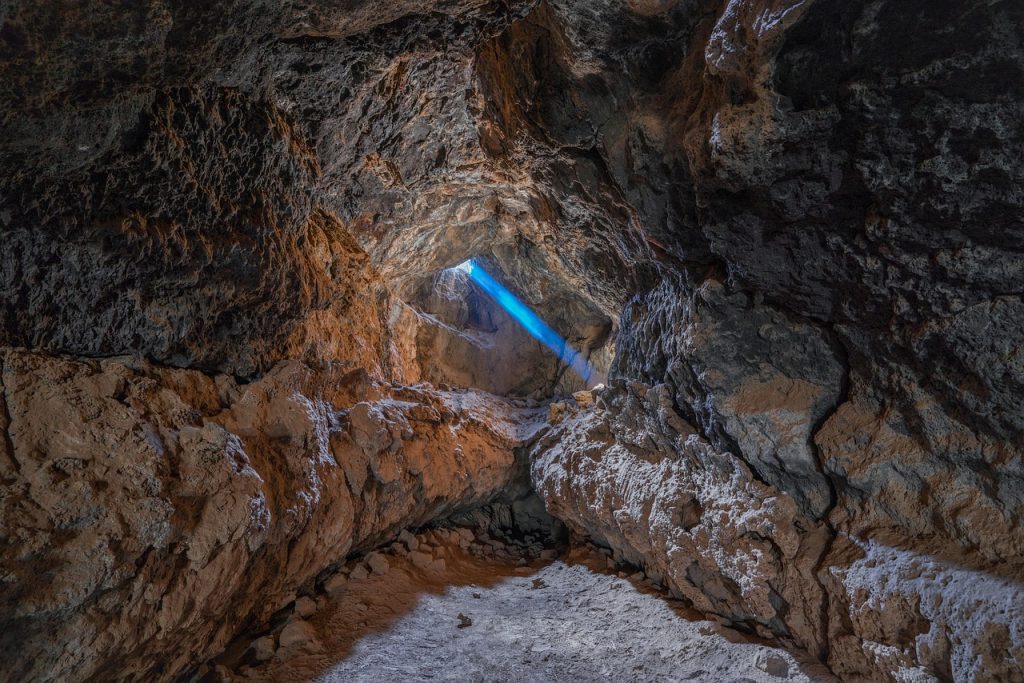
Taino cosmology held that human beings originally emerged from a sacred cave called Cacibajagua on the island of Hispaniola, a creation narrative that gave caves lasting spiritual significance across Taino territory as places of origin, ancestral presence, and ritual importance.
Zemis, carved representations of deities and ancestral spirits made from wood, stone, bone, or shell, served as the central objects of Taino religious practice, believed to house spiritual power and consulted for guidance on matters ranging from agriculture to warfare through ritual specialists called behiques.
Behiques functioned similarly to the shamans and spiritual specialists described among other Indigenous nations covered on this site, conducting healing rituals, communicating with zemis and ancestral spirits, and often ingesting cohoba, a psychoactive snuff, to achieve the altered states of consciousness considered necessary for genuine spiritual communication.
Ancestor veneration ran throughout Taino religious practice, with deceased caciques and other significant figures sometimes represented through zemis or honored through specific ritual practice, reflecting a worldview in which the boundary between living community and ancestral spirit presence was considered permeable rather than absolute.
Cohoba ceremonies, involving the inhalation of psychoactive snuff through carved ceremonial tubes, were often conducted by caciques themselves in addition to behiques, reflecting the close overlap between political and spiritual authority that characterized much of Taino chiefdom governance described earlier in this section.
ok 5-7Ball Courts and Ceremony

Batey, both the name of a ceremonial ball game and the stone-lined courts built to play it, held major social and ritual significance in Taino communities, with games sometimes used to settle disputes between villages or chiefdoms as an alternative to more costly armed conflict.
These ball courts, found across archaeological sites in Puerto Rico, the Dominican Republic, and other former Taino territory, were often aligned with astronomical features and surrounded by carved stone markers, suggesting the game carried cosmological as well as social and recreational significance.
The rubber ball used in batey, made from a plant resin unfamiliar to early Spanish observers, was itself a notable technological innovation predating European contact and later influenced the broader European adoption and adaptation of rubber technology following contact with the Americas.
Beyond the ball game, seasonal and life-cycle ceremonies involving music, dance, and elaborate body decoration marked significant community occasions, reflecting a ceremonial life that integrated athletic competition, religious practice, and social diplomacy into shared public ritual space.
Craft, Carving, and Canoe

Taino artisans produced sophisticated pottery, distinguished by the elaborate incised and painted decoration found across the region’s archaeological record, alongside carved wooden and stone objects, including the zemis described earlier and decorative items used in both daily life and ceremony.
Stone and shell carving produced tools, ornaments, and ceremonial items including duhos, ornately carved ceremonial seats reserved for caciques and used during important political and religious gatherings, symbols of authority comparable in social function to a throne in other world cultures.
Canoe construction represented one of the Taino’s most impressive practical crafts, with large dugout vessels capable of carrying up to dozens of passengers built from single large tree trunks using controlled fire and careful hand tools, a technology that enabled the extensive inter-island trade and communication described earlier.
Cotton weaving and basketry rounded out the practical craft tradition, producing hammocks, another Taino contribution to global vocabulary and material culture, along with woven items used for storage, carrying, and processing agricultural goods across Taino households.
ok 8-9Cassava and the Foods of the Islands

Casabe, the flatbread made from processed cassava described earlier, formed the everyday staple of the Taino diet, durable enough to be stored for extended periods, a practical advantage in a region regularly disrupted by hurricane damage to standing crops.
Seafood, including fish, shellfish, and sea turtle, supplied much of the Taino diet’s protein, prepared through grilling, often over a wooden frame structure the Spanish observed and adapted into their own word and practice of barbacoa, another lasting Taino contribution to global food vocabulary and technique.
Fruits including guava, pineapple, and various palm fruits native to the Caribbean supplemented the diet, gathered from both cultivated and wild sources, while maize, though less central than cassava, was also grown and consumed across various Taino communities.
Peppers, used to season food, and a fermented cassava-based beverage consumed at ceremonial and social gatherings rounded out a Taino culinary tradition that, much like its vocabulary, left a lasting mark on Caribbean and broader Latin American cuisine that persists today.
Areito and Community Gathering

The areito, a combined ceremony of song, dance, and oral historical narrative, served as the primary Taino vehicle for transmitting history, genealogy, and cultural values across generations, performed at significant community gatherings and led by specially trained performers and community elders.
These gatherings often accompanied major life events, seasonal agricultural markers, and diplomatic occasions between different villages or chiefdoms, functioning much like similar communal gatherings described among other Indigenous nations profiled on this site, as combined social, political, and cultural events.
Music using maracas, drums, and wind instruments accompanied areito performances, with specific songs and dances associated with particular historical events, caciques, or ceremonial occasions, forming a substantial oral repertoire that, unfortunately, was almost entirely lost following colonization and population collapse.
Contemporary Taino cultural revival organizations have worked to reconstruct elements of areito tradition from historical Spanish colonial accounts, incorporating them into modern cultural festivals and educational events aimed at reconnecting community members with practices largely severed by five centuries of disruption.
ok 10-11 fixedConquest, Disease, and a Declared Extinction

Christopher Columbus’s arrival in the Caribbean in 1492 initiated a catastrophic period for the Taino, beginning with the establishment of Spanish colonial settlements on Hispaniola and rapidly expanding forced labor demands under the encomienda system that extracted gold and agricultural labor from Taino communities under brutal conditions.
Introduced European diseases, including smallpox and influenza, to which Taino populations had no prior immunity, caused mortality on a scale that dwarfed even the violence of conquest itself, with some historical estimates suggesting Hispaniola’s Indigenous population collapsed by more than ninety percent within just a few decades of contact.
Forced labor, violence, and social disruption compounded this demographic catastrophe, and by the mid-sixteenth century, Spanish colonial administrators and later generations of historians widely described the Taino as extinct, a conclusion drawn from the collapse of distinct, officially recognized Taino political and social structures rather than the complete disappearance of Taino biological descendants.
This declaration of extinction, repeated in textbooks and general historical accounts for centuries afterward, overlooked significant intermarriage between surviving Taino individuals, African populations brought to the Caribbean through the slave trade, and Spanish settlers, producing mixed-heritage Caribbean populations who, in many cases, continued practicing elements of Taino tradition, language, and identity in modified, often unacknowledged form.
The Taino Today

Genetic studies conducted in recent decades have found significant Taino ancestry among modern populations in Puerto Rico, the Dominican Republic, and Cuba, providing scientific confirmation of what many Caribbean families had maintained through oral tradition despite official historical narratives of complete Taino extinction.
A significant Taino cultural revival movement has grown particularly strong in Puerto Rico since the late twentieth century, with individuals and organizations actively researching, reconstructing, and publicly claiming Taino heritage, identity, and cultural practice, sometimes controversially challenged by academics who question the continuity of specific traditions being revived.
This revival includes efforts to relearn and use surviving Taino vocabulary, recreate traditional crafts and agricultural methods, and secure greater public recognition and respect for Taino heritage within Puerto Rican and broader Caribbean national identity, alongside advocacy for the protection of archaeological sites threatened by development.
The story of the Taino stands as a powerful caution against declaring any people extinct too quickly: a civilization once confidently written off entirely by history has reemerged, through genetics, genealogy, and determined cultural reclamation, as a living identity claimed by hundreds of thousands of people across the Caribbean and its diaspora today, a reminder that Indigenous nations across the Americas, whatever official histories may have once claimed, continue writing their own next chapter.
More Peoples of the Americas
The Taino join a growing collection of Indigenous nations covered here, each with a story of endurance and adaptation worth knowing. Continue exploring:
- The People Who Emerged Into This World, the Story of the Navajo
- The People Who Never Left the Mountains, the Story of the Quechua
- The People Who Never Vanished, the Story of the Maya
- The People of the Seven Council Fires, the Story of the Lakota
- The People of the Land Who Were Never Conquered, the Story of the Mapuche
- The People of Ice and Sea, the Story of the Inuit
- The Islands of the People, the Story of the Haida
- The Four Directions People, the Story of the Cree
- The Principal People, the Story of the Cherokee
- The People of the Timeless Speech, the Story of the Aymara
- The People Whose Language Became a Nation, the Story of the Guarani
- The People of the Big Feet, the Story of the Tehuelche
- The People Rediscovered by Their Own Nation, the Story of the Diaguita
- The People of the Driest Desert, the Story of the Likan Antai
- The People the Empire Never Conquered, the Story of the Wayuu
- The People Who Won Their Own Islands, the Story of the Guna
- The People of the Deep Forest, the Story of the Yanomami
You May Like
The Damara, an Ancient People of Namibia