Across the vast boreal forest and subarctic lowlands stretching from Quebec to Alberta live the Cree, the largest First Nations group in Canada by population and one of the most geographically widespread indigenous peoples anywhere in North America. Numbering well over three hundred thousand people today, the Cree occupy a homeland so large that it spans multiple provinces, several distinct dialects, and environments ranging from dense forest to open plains, making generalizing about a single Cree way of life somewhat misleading despite a shared language family and historical origin.
Cree history reflects this geographic breadth directly, since forest-dwelling Cree bands who hunted moose and traveled by canoe and snowshoe developed a way of life quite different from Plains Cree bands who, after acquiring horses, adopted a mounted buffalo-hunting economy more similar to that of the Lakota further south. The fur trade with European companies, particularly the Hudson’s Bay Company, drew nearly all Cree communities into a shared, centuries-long economic and political relationship that profoundly shaped Cree history regardless of regional lifestyle differences.
This article traces Cree history and culture from ancient origins through the present, covering where the Cree came from, the meaning of the name, the structure of the Cree language, the vast homeland stretching across central Canada, the old forest and plains ways of life, the structure of Cree society, spiritual belief and its animal relationships, social traditions, craftsmanship, food, festivals and gatherings, the long history of the fur trade and treaty relations, and the Cree nation as it exists today.
What This Article Covers
- Origins: An Ancient Presence Across the Boreal Forest
- Name: Cree and the Many Names for Nehiyawak
- Language: Nehiyawewin and Its Many Dialects
- Homeland: From Quebec to the Plains of Alberta
- Old Way of Life: Forest Hunters and Plains Riders
- Society: Bands, Kinship, and Seasonal Movement
- Religion: The Great Spirit and a World of Animal Relations
- Traditions: Sharing, Naming, and the Round Dance
- Crafts: Beadwork, Birchbark, and Hide Work
- Food: Moose, Fish, and the Bannock Adaptation
- Festivals: Powwows and Modern Cree Gatherings
- History: The Fur Trade and a Century of Treaties
- Today: One of Canada’s Largest Indigenous Nations
An Ancient Presence Across the Boreal Forest
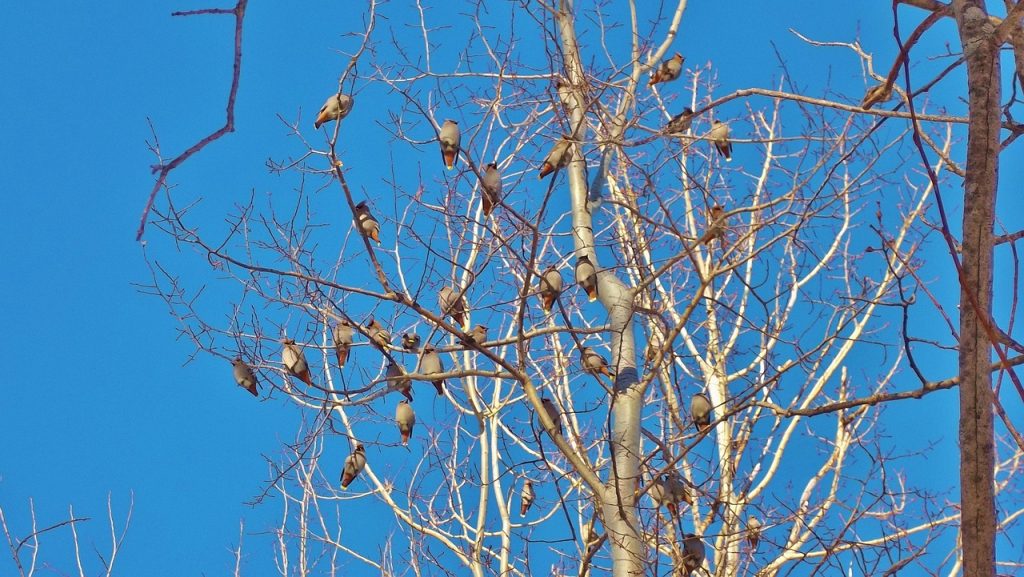
Cree ancestors have occupied the boreal forest and subarctic regions of what is now central Canada for thousands of years, with archaeological evidence pointing to long, continuous habitation adapted to a demanding environment of short summers, long winters, and vast stretches of forest, lake, and muskeg poorly suited to agriculture but rich in fish, waterfowl, and game animals such as moose and caribou.
Linguistic and archaeological evidence connects the Cree to the broader Algonquian language family, one of the largest indigenous language families in North America, suggesting a shared ancient origin with peoples spread from the Atlantic coast to the Rocky Mountains, though the specific Cree branch developed its own distinct identity and territory over a very long span of time within the central Canadian subarctic and forest region specifically.
A significant westward expansion occurred following sustained contact with European fur traders beginning in the seventeenth century, as some Cree bands moved onto the northern Plains, acquired horses, and adopted a way of life built around bison hunting, becoming known as the Plains Cree, distinct from the Woodland and Swampy Cree bands who remained in the forest and lowland regions further east and north, a divergence that produced meaningfully different regional Cree cultures sharing a common linguistic and historical root.
This expansion was driven partly by the fur trade itself, since Cree bands positioned advantageously along early trade routes gained access to European goods, including firearms, that shifted regional balances of power among indigenous nations across a wide swath of central Canada, allowing Cree influence and territory to expand considerably during the seventeenth and eighteenth centuries.
Cree and the Many Names for Nehiyawak

The word Cree entered English through French traders, who used a shortened version of Kristineaux or a similar French rendering of a name applied to a specific band near James Bay, which English and French speakers then extended to cover all related peoples across an enormous territory, a naming pattern in which one local group’s name became the umbrella term for a much larger and more diverse population, similar to patterns seen among other indigenous nations discussed elsewhere in this series.
Cree people themselves generally use Nehiyawak, sometimes rendered Nehiyaw in the singular, meaning roughly the four-directions people or exact-speaking people depending on interpretation, alongside regional and dialect-specific names such as Néhinaw, Ininiwak, or Nēhilaw used by particular Cree communities to describe themselves with more local specificity than the broad, externally derived term Cree provides.
Regional divisions carry their own names reflecting environment and lifestyle, including Plains Cree, who adopted the mounted bison-hunting economy of the northern Plains, Woodland or Western Woods Cree, who remained primarily forest hunters, Swampy Cree, associated with the lowlands around Hudson and James Bay, and Moose Cree and East Cree communities in Ontario and Quebec, each maintaining distinct dialects and local traditions beneath the broader shared Cree and Nehiyawak identity.
This layered naming, encompassing a broad shared identity alongside strong specific regional and community names, mirrors patterns found among other geographically dispersed indigenous nations discussed in this series and reflects the genuine scale and diversity of the Cree world, which spans a larger territory than many entire countries.
Nehiyawewin and Its Many Dialects

Nehiyawewin, the Cree language, belongs to the Algonquian language family and exists as a dialect continuum stretching from Alberta to Quebec and Labrador, with considerable variation between regional dialects such as Plains Cree, Woods Cree, Swampy Cree, Moose Cree, and East Cree, some of which differ enough in vocabulary and pronunciation that speakers from opposite ends of the range may find one another difficult to understand without effort.
Cree remains, by most measures, one of the healthiest indigenous languages in Canada in terms of raw speaker numbers, with well over one hundred thousand people reporting some ability to speak it, a relatively strong position compared to many other indigenous languages in North America, though still representing a decline from near-universal fluency within living memory and prompting active revitalization work across Cree communities.
Cree syllabics, a writing system developed in the nineteenth century by a missionary working closely with Cree speakers, represent syllables through distinct symbols rather than individual letters, a system that spread to and influenced writing systems for several other indigenous languages, including Inuktitut, discussed earlier in this series, making Cree syllabics one of the more historically influential indigenous writing systems developed in Canada.
Cree-language immersion schools, university programs, and media, including radio and television programming through indigenous broadcasters, have expanded significantly in recent decades, and Cree remains actively used in many communities across its enormous range, giving language advocates a genuinely stronger starting position for revitalization work than exists for many smaller indigenous languages elsewhere in the Americas.
From Quebec to the Plains of Alberta
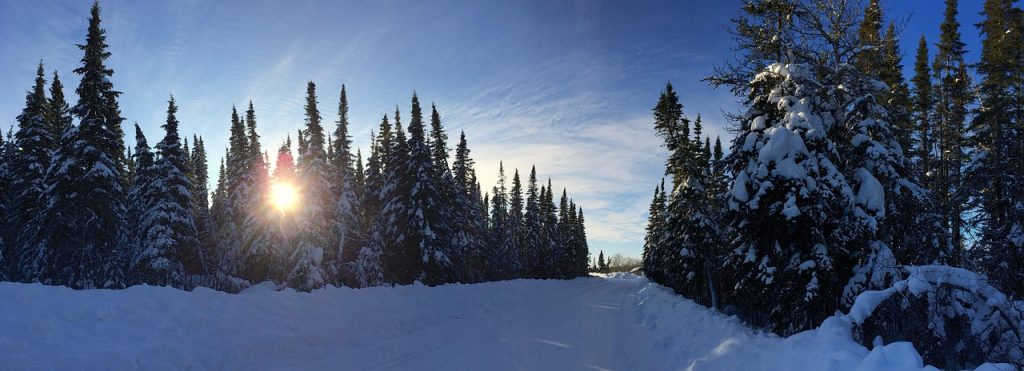
Cree traditional territory spans an extraordinary range, from the eastern boreal forest and James Bay lowlands of Quebec and Ontario, through the forested subarctic of Manitoba and Saskatchewan, to the open plains of southern Saskatchewan and Alberta, making Cree homeland one of the largest single indigenous territories in North America both in raw area and in environmental diversity.
The James Bay region in particular holds special significance for Cree communities in Quebec and Ontario, a landscape of forest, muskeg, and countless lakes and rivers that supported a hunting, fishing, and trapping economy for many centuries and that became the center of a major and closely watched land rights and environmental conflict during the massive James Bay hydroelectric development beginning in the 1970s, discussed further in the history section.
Plains Cree territory, by contrast, consists of open grassland far better suited to the mounted bison-hunting economy that Plains Cree bands adopted after the introduction of the horse, a landscape and lifestyle sharing more in common with neighboring Plains nations such as the Blackfoot and the more southern Lakota than with forest-dwelling Cree relatives to the east.
Modern Cree communities remain spread across this same vast range, organized into numerous distinct First Nations bands and, in Quebec, through the Cree Nation Government, a significant regional indigenous government established through landmark land claim agreements that will be discussed later in this article, reflecting the practical governance challenges of a nation whose population and territory span such an unusually large geographic area.
Forest Hunters and Plains Riders

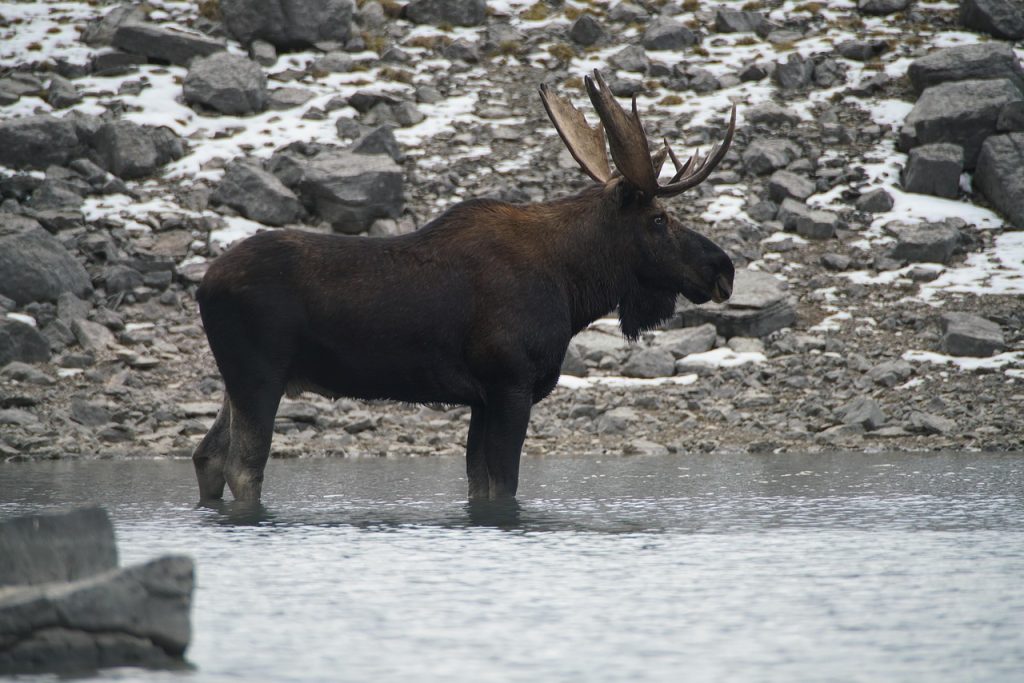
Woodland and Swampy Cree bands traditionally organized life around moose, caribou, and small game hunting supplemented by fishing and waterfowl hunting, moving seasonally across a hunting territory typically associated with a specific extended family group, using snowshoes for winter travel across deep forest snow and birchbark canoes for summer travel along the countless rivers and lakes that made up their transportation network.
Plains Cree bands, following westward migration and the adoption of the horse during the eighteenth century, developed a way of life organized around communal bison hunts remarkably similar in broad outline to that of the Lakota and other Plains nations discussed earlier in this series, living in tipis, following seasonal bison migration, and organizing warrior societies that provided social structure and status alongside the hunting economy itself.
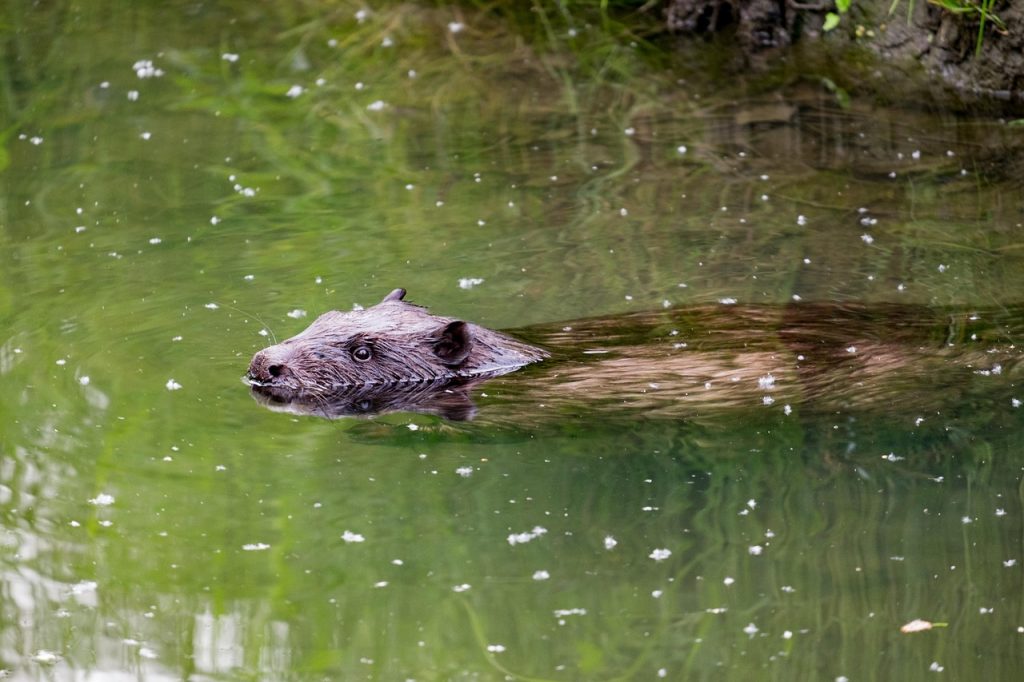
Fur trapping, particularly of beaver, became central to Cree economic life across nearly all regional groups following sustained contact with European traders from the seventeenth century onward, integrating Cree hunting knowledge and territory into a transatlantic commercial network centered on European demand for beaver pelts used in felt hat production, a trade relationship that reshaped Cree economic patterns for well over two centuries.
Housing varied by region and season, including conical bark or hide-covered lodges among forest Cree bands, tipis among Plains Cree, and more substantial semi-permanent structures at favored fishing or trading locations used repeatedly across many years, reflecting the same underlying pattern of adapting shelter to specific seasonal and environmental needs found among most northern hunting societies discussed throughout this series.
Bands, Kinship, and Seasonal Movement

Cree social organization traditionally centered on small, flexible hunting bands composed of related extended families, typically led by a respected hunter or elder whose authority rested on demonstrated skill, generosity, and good judgment rather than any formal hereditary position, a leadership model well suited to a subsistence economy requiring frequent seasonal movement and quick, practical decision-making.
Kinship networks extended well beyond the immediate hunting band through marriage, adoption, and trading partnerships with both neighboring Cree bands and other indigenous nations, creating a broad web of mutual obligation and information sharing that helped Cree communities manage the very real risks of a subsistence economy dependent on unpredictable game populations across an enormous and environmentally varied territory.
Plains Cree bands developed somewhat more elaborate seasonal political structures than their forest relatives, including large summer camps for communal bison hunts organized under recognized band councils and warrior societies responsible for maintaining order and enforcing hunting discipline, a structure that, while distinct in specific detail, served social functions broadly comparable to warrior societies found among other Plains nations such as the Lakota.
Sharing of food and resources, particularly following a successful large-animal hunt, functioned as both practical necessity and moral obligation across Cree communities regardless of regional lifestyle, a value that remains actively emphasized in contemporary Cree communities as central to cultural identity and mutual support, especially in remote northern communities where store-bought food remains expensive and traditional hunting continues to matter for food security.
The Great Spirit and a World of Animal Relations
Traditional Cree spirituality centers on a comprehensive worldview in which the natural world is thoroughly alive with spiritual significance, including a concept sometimes translated as the Great Spirit or Manitou, alongside specific animal spirits and helper beings that individuals might encounter through dreams, vision quests, or direct experience while hunting, reflecting a close, reciprocal relationship between Cree communities and the animals they depended on for survival.
Respectful treatment of hunted animals, including specific ritual practices surrounding the disposal of bones and the treatment of an animal’s remains, was considered essential to maintaining good relations with animal spirits and ensuring continued hunting success, a belief system that placed real moral and practical weight on how hunters conducted themselves rather than treating hunting as a purely mechanical or commercial activity.
The trickster figure Wisakedjak, appearing across Cree and related Algonquian oral tradition under various related names, plays a role broadly similar to Raven among the Haida or Coyote among various other North American indigenous traditions, a morally ambiguous culture hero whose stories combine humor, mischief, and genuine lessons about proper behavior and the origin of features of the natural world.
Christian missionary activity, particularly through Anglican and Catholic missions established alongside fur trade posts from the eighteenth century onward, achieved substantial conversion across most Cree communities over time, and today most Cree people identify as Christian while many also maintain respect for traditional spiritual practices, sweat lodge ceremonies, and animal-based teachings as an active part of contemporary cultural and spiritual life.
Sharing, Naming, and the Round Dance
Naming ceremonies hold particular significance in Cree tradition, often performed by a respected elder who may receive a name through dream or spiritual guidance to bestow on a child, a practice believed to connect the child to specific spiritual protection or guidance throughout their life, distinct from but conceptually related to naming practices found among other indigenous peoples discussed elsewhere in this series.
The round dance, a communal social dance performed in a circle to the accompaniment of hand drums and singing, traditionally held in winter as a way to bring communities together during the coldest, darkest months, has experienced significant revival in recent decades and gained particular national attention in Canada when round dances were used as a form of peaceful public protest and cultural assertion during the Idle No More movement beginning in 2012.
Respect for elders, generosity in sharing food and resources, and careful attention to proper relationships between generations and between people and the land remain widely emphasized values across Cree communities, transmitted through storytelling, direct instruction on the land, and increasingly through formal school and community programs specifically designed to reinforce cultural knowledge that colonial policy actively worked to disrupt.
Marriage customs historically often involved arrangements between families and, in some communities, a period of service or gift-giving by a prospective husband to his intended wife’s family, practices that have largely given way to more individually chosen marriage patterns today while community and family involvement in major life events remains an actively maintained value across most Cree communities.
Beadwork, Birchbark, and Hide Work
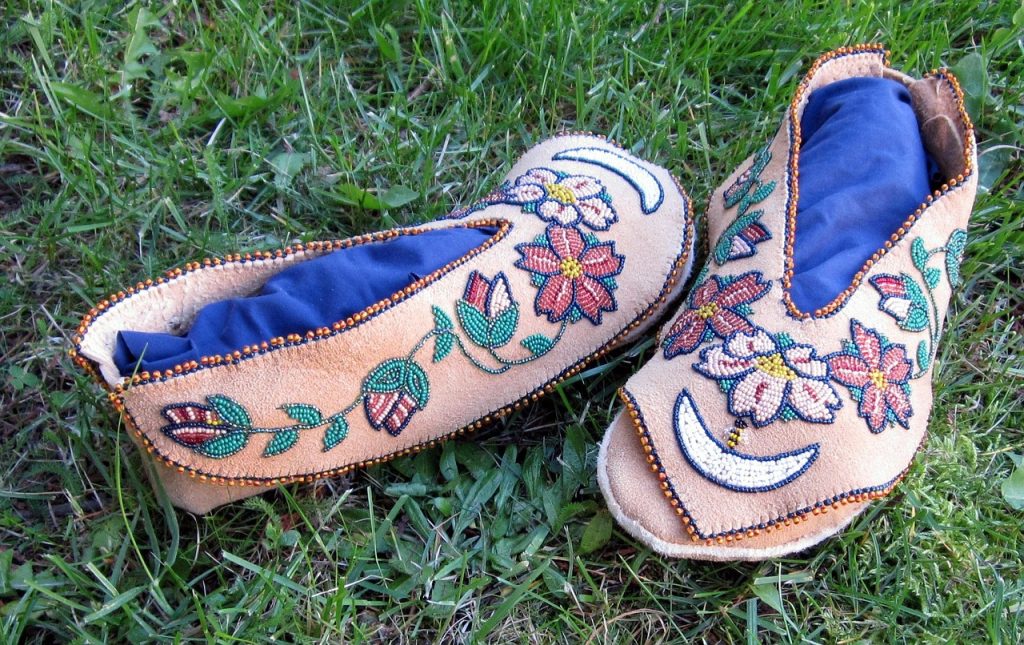
Beadwork stands among the most widely practiced and recognized Cree art forms today, developed extensively after glass beads became available through the fur trade and applied to clothing, moccasins, bags, and ceremonial items in floral and geometric patterns that can carry specific regional or family stylistic significance recognizable to those familiar with Cree and related Plains and Woodland beadwork traditions.
Birchbark craft, including canoes, baskets, and decorative boxes, represents one of the oldest Cree material art forms, using bark harvested carefully to preserve the tree, folded and stitched with spruce root into precise, watertight forms, a technical skill requiring considerable knowledge of when and how to harvest bark of suitable quality and flexibility.
Hide tanning and sewing, historically essential survival skills performed primarily by women, produced clothing, moccasins, and shelter coverings from moose, caribou, and bison hide depending on regional resources, a demanding, multi-step process involving scraping, softening, and smoking hide to produce durable, weather-appropriate material still practiced by skilled tanners in many Cree communities today.
Contemporary Cree artists work across traditional and modern media, including beadwork, painting, and increasingly film and digital media, with Cree filmmakers and writers gaining growing national recognition in Canada for work that addresses both traditional culture and the lived contemporary experience of Cree communities navigating both reserve and urban life.
Moose, Fish, and the Bannock Adaptation
Moose historically provided the single most important food source for many Woodland and Swampy Cree communities, supplemented by caribou where available, fish from the countless lakes and rivers across Cree territory, and waterfowl harvested during seasonal migrations, a diet that, like other northern hunting societies discussed in this series, relied overwhelmingly on animal protein and fat given the limited potential for plant agriculture across most of the Cree homeland.
Plains Cree bands relied heavily on bison in a manner closely paralleling other Plains nations, preserving meat through drying and combining it with fat and berries to produce pemmican, a dense, storable food that provided reliable nutrition through winter months and served as an important trade good exchanged with other nations and, later, with European fur trade posts.
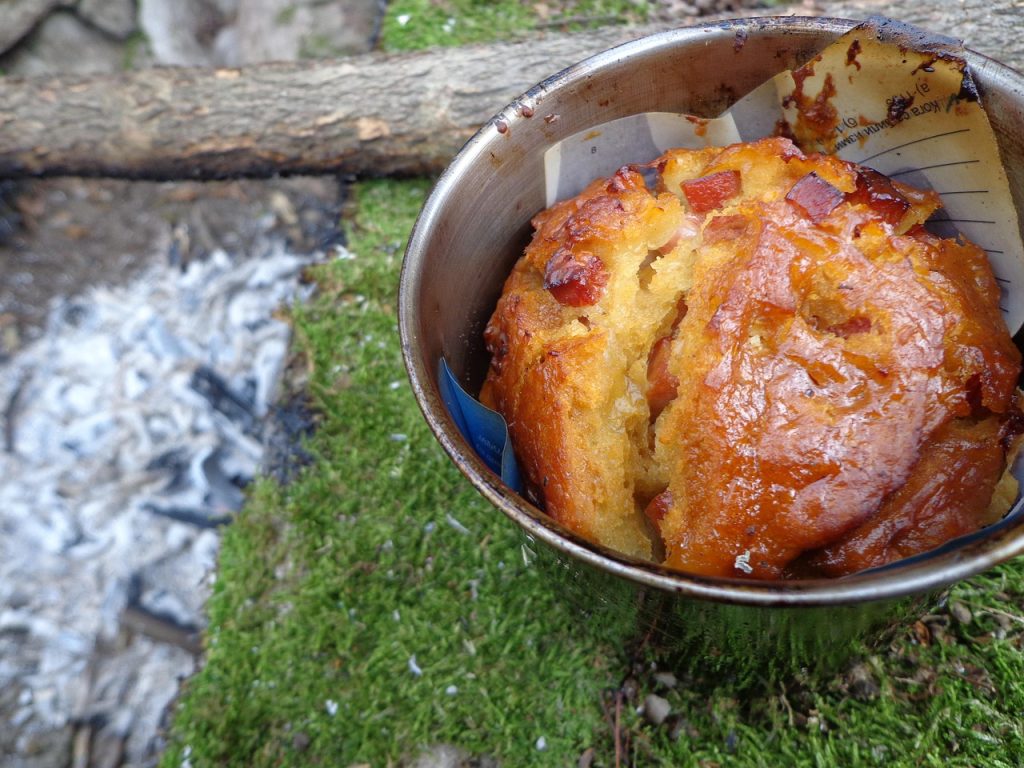
Bannock, a simple flour-based bread introduced through contact with European and Scottish traders, was adopted enthusiastically across nearly all Cree communities and remains a beloved staple today, prepared by frying or baking and served alongside traditional foods such as moose meat, fish, and berries, representing one of the clearest examples of a colonial-era introduced food becoming a genuinely and affectionately claimed part of indigenous culinary identity.
Wild rice, harvested from lakes in parts of Cree territory, along with blueberries, cranberries, and other wild berries gathered in season, rounded out the traditional diet, and contemporary food sovereignty initiatives across Cree communities have worked to support continued hunting, fishing, and gathering alongside store-bought food, addressing both cultural continuity and the serious public health challenges linked to processed food in many remote northern communities.
Powwows and Modern Cree Gatherings
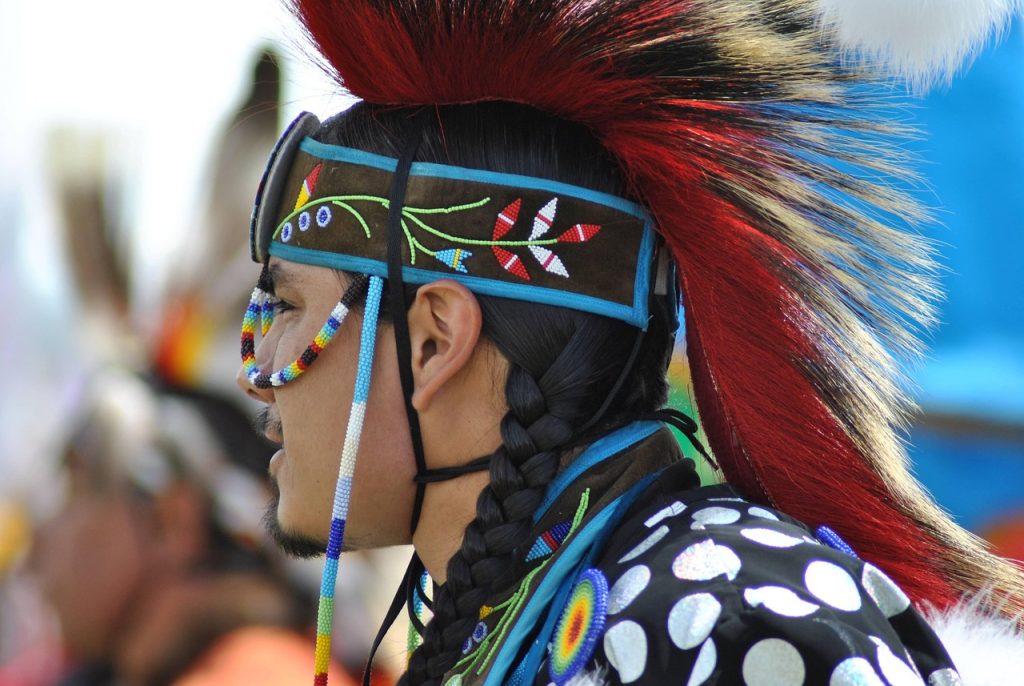
Powwows, adopted and adapted from Plains cultural practice, have become widely celebrated events across Cree communities today, featuring dance competitions, drum groups, and elaborate regalia in gatherings that draw participants from across Cree territory and from other First Nations, functioning as both cultural celebration and an important occasion for renewing family and community connections across a very large and dispersed population.
Round dances, discussed earlier as a traditional winter social gathering, continue to be held across Cree communities, often organized around specific occasions such as a memorial, a celebration, or simply a community’s desire to gather during the long winter months, and have taken on additional significance as a form of public cultural and political expression since the Idle No More movement brought them wider national attention.
Treaty days, marking the anniversary of specific historic treaties between Cree bands and the Canadian government, remain observed in many communities with a combination of ceremony, feasting, and community gathering, an occasion that carries genuine political weight given the ongoing legal and economic significance of treaty rights discussed further in the following section.
Goose and moose hunting camps, particularly significant in James Bay Cree communities, continue to function as important seasonal community gatherings that combine practical subsistence activity with cultural transmission, as elders teach younger community members hunting and land-based skills during extended time spent together on the land away from permanent settlements.
The Fur Trade and a Century of Treaties
The fur trade, beginning with early French contact in the seventeenth century and expanding dramatically after the English Hudson’s Bay Company established trading posts across Cree territory beginning in 1670, drew nearly every Cree community into a sustained commercial relationship with European traders that lasted well over two centuries, reshaping Cree economic patterns, territory, and, through European goods including firearms, regional power balances among indigenous nations across a wide area of central Canada.
This relationship carried serious costs alongside its economic dimension, including introduced diseases that caused significant Cree population decline, competitive pressure and conflict with other indigenous nations drawn into the same trade network, and, over time, growing dependency on European trade goods that altered traditional subsistence patterns even before formal Canadian government policy directly intervened in Cree life.
The Numbered Treaties, negotiated between various Cree bands and the Canadian government primarily during the 1870s, ceded large portions of Cree territory in exchange for reserved lands, annual payments, and certain rights including hunting and fishing access, agreements that Cree communities have long argued were not fully honored by subsequent Canadian government policy and that remain the subject of ongoing legal and political negotiation today.
The James Bay and Northern Quebec Agreement of 1975, signed in response to a massive hydroelectric development project that threatened to flood significant Cree territory without consultation, stands as one of the most significant modern land claim agreements in Canadian history, establishing the Cree Nation Government and setting an important precedent for indigenous consultation and self-governance rights that has influenced subsequent land claim negotiations across Canada.
One of Canada’s Largest Indigenous Nations
Well over three hundred thousand people identify as Cree today, making them the largest First Nations group in Canada by most counts, spread across more than one hundred distinct bands and communities from Quebec to Alberta, with significant populations living both on reserve lands and in major Canadian cities such as Winnipeg, Edmonton, and Montreal, reflecting broader patterns of indigenous urbanization seen across Canada in recent decades.
The Cree Nation Government in Quebec, established through the 1975 James Bay agreement and strengthened through subsequent negotiations, exercises significant self-governing authority over education, health, and local government matters affecting Quebec Cree communities, representing one of the more advanced indigenous self-governance arrangements in Canada and a model frequently referenced in other indigenous land claim negotiations.
Cree political and cultural organizations remain active across the country on issues including treaty rights enforcement, language revitalization, and resource development consultation, particularly regarding mining, forestry, and hydroelectric projects that continue to affect Cree traditional territory, with Cree leaders playing a prominent role in national Canadian indigenous rights movements including Idle No More.
Language vitality, a strong and growing presence in Canadian film, literature, and media, and continued practice of hunting, fishing, and land-based education alongside participation in the broader Canadian economy all point to a nation successfully carrying an ancient culture into a thoroughly modern context, a pattern of adaptation without disappearance shared by another large indigenous nation much further south, one whose own history of resistance and forced removal shaped a very different but equally determined story of survival, the Cherokee.
More Nations Explored So Far
The Cree take their place alongside other indigenous peoples of the Americas covered in this ongoing look at nations still very much present today:
- The People Who Emerged Into This World, the Story of the Navajo
- The People Who Never Left the Mountains, the Story of the Quechua
- The People Who Never Vanished, the Story of the Maya
- The People of the Seven Council Fires, the Story of the Lakota
- The People of the Land Who Were Never Conquered, the Story of the Mapuche
- The People of Ice and Sea, the Story of the Inuit
- The Islands of the People, the Story of the Haida
You May Like
The Damara, an Ancient People of Namibia