On the northernmost tip of South America, where Colombia and Venezuela meet the Caribbean Sea, a vast desert peninsula called La Guajira stretches out under relentless sun and near-constant wind. It is one of the most inhospitable landscapes on the continent, and it belongs, in a very real and continuing sense, to the Wayuu, the largest Indigenous nation in both Colombia and Venezuela.
Unlike many Indigenous nations in the Americas who were conquered, displaced, or absorbed into colonial administration, the Wayuu successfully resisted full Spanish control for centuries, protected by their own fierce independence, skilled horsemanship gained after adopting European horses, and a homeland so harsh that colonizers found it more trouble than it was worth to fully subdue.
This is the story of the Wayuu: their origins on the Guajira peninsula, what their name means, their still widely spoken language, the extreme desert homeland that shaped them, their old way of herding and trading life, their distinctive clan-based society, their beliefs, their crafts and famous woven bags, their food, their festivals, the history of resistance that defined them, and where the Wayuu stand today.
- Origins on the Guajira Peninsula
- What “Wayuu” Means
- Wayuunaiki, a Language Still Spoken by Many
- The Desert That Meets the Sea
- The Old Life of Herding and Trade
- Clans, Kinship, and Matrilineal Society
- Belief, Dreams, and the World of Spirits
- The Chinchorro and Life’s Passages
- The Wayuu Mochila and Other Crafts
- Food of Goat, Corn, and Sea
- Festivals and the Vallenato Connection
- A History of Resistance
- The Wayuu Today
Origins on the Guajira Peninsula
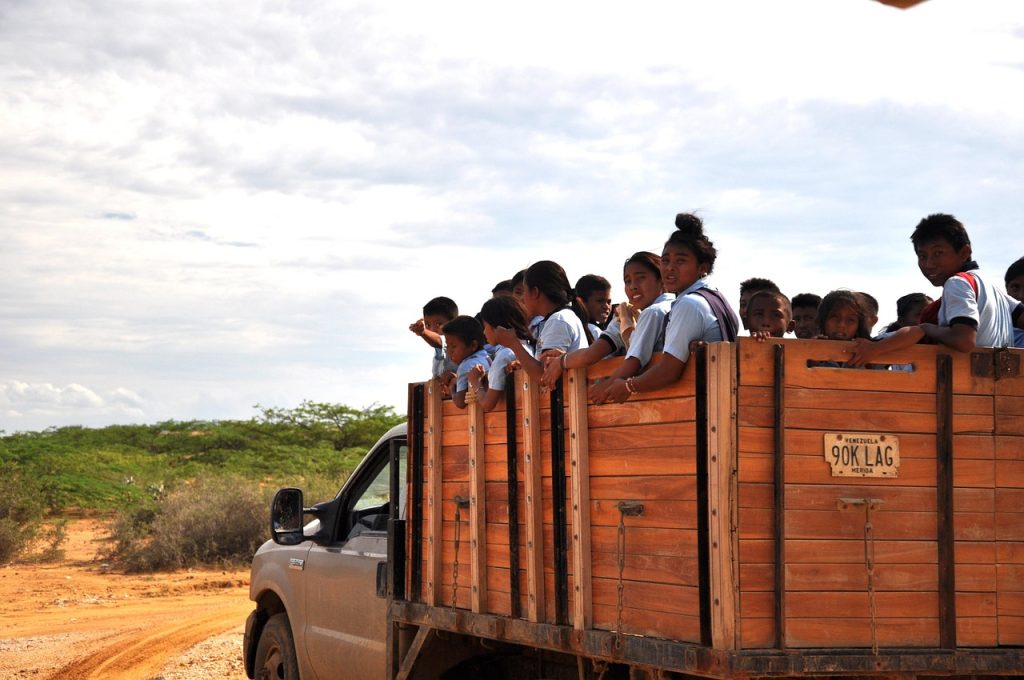
The Wayuu are believed to have inhabited the Guajira Peninsula for at least several centuries before European contact, part of the broader Arawak-speaking family of peoples whose languages and communities spread widely across the Caribbean and northern South America long before Columbus arrived in the region.
Unlike neighboring groups further inland who built more centralized political structures, the Wayuu historically organized around dispersed, independent clan settlements adapted to the peninsula’s scarce water and grazing resources, a pattern of decentralized autonomy that would later prove crucial to their resistance against Spanish colonization.
Spanish explorers arriving in the sixteenth century found a population already well established in the region’s demanding desert and semi-desert terrain, subsisting through a combination of fishing along the coast, herding, and small-scale agriculture wherever seasonal water allowed cultivation.
The arrival of European livestock, particularly horses and goats introduced through early contact and trade, transformed Wayuu economy and mobility within a few generations, setting the stage for a period of active, often successful resistance to colonial control that distinguishes Wayuu history from many other Indigenous nations in the region.
Genetic and linguistic evidence connects the Wayuu to the broader Arawakan migration that carried related peoples and languages across a huge stretch of territory spanning the Caribbean islands, the Orinoco basin, and parts of the Amazon, making Wayuunaiki a distant linguistic relative of languages once spoken as far away as the Greater Antilles.
What “Wayuu” Means

“Wayuu” translates roughly to “person” or “people” in the Wayuu’s own language, a common pattern among Indigenous nations worldwide whose self-designation simply asserts basic humanity and belonging rather than referencing any specific external characteristic or geographic feature.
Early Spanish colonizers and later historical accounts sometimes used the term “Guajiro,” derived from the peninsula’s name, to refer to the Wayuu, a label that persists in some regional usage today, particularly in Venezuela, though “Wayuu” remains the preferred and internationally recognized term.
The distinction between insider and outsider naming carries real weight in Wayuu communities, where “Wayuu” specifically denotes belonging to the ethnic group and its clan system, while “alijuna,” meaning outsider or non-Wayuu, marks a clear, actively maintained boundary between community members and others.
This insider and outsider framework remains culturally significant today, shaping everything from land rights discussions to how tourism and outside business interests are perceived and negotiated within Wayuu territory on both sides of the Colombia-Venezuela border.
Wayuunaiki, a Language Still Spoken by Many

Wayuunaiki, the Wayuu language, belongs to the Arawakan language family and remains remarkably vital today, spoken by several hundred thousand people, making it one of the most widely spoken Indigenous languages in both Colombia and Venezuela relative to the size of the ethnic group.
Unlike many Indigenous languages in the Americas facing steep generational decline, Wayuunaiki continues to be transmitted as a first language within many Wayuu families and communities, taught in bilingual schools across La Guajira and used actively in daily community life, radio broadcasting, and increasingly in written and digital media.
This relative linguistic strength is often attributed to the Wayuu’s historical geographic isolation and successful resistance to full colonial and later national assimilation pressure, allowing community structures, including language transmission through matrilineal clan networks, to remain largely intact compared to more thoroughly disrupted Indigenous nations elsewhere.
Spanish fluency has become increasingly common alongside Wayuunaiki, particularly among younger, more urbanized Wayuu, producing a bilingual reality similar to patterns seen in Paraguay with Guarani, though on a smaller demographic scale and without the same degree of adoption by the broader non-Indigenous population.
The Desert That Meets the Sea

The Guajira Peninsula presents one of South America’s most extreme environments, an arid desert landscape receiving minimal rainfall, punctuated by scrubland, cactus, and, toward its northern tip at Punta Gallinas, dramatic sand dunes that plunge directly into the turquoise waters of the Caribbean Sea.
Water scarcity has shaped nearly every aspect of Wayuu life, historically requiring careful management of seasonal wells, rainwater collection, and, in modern times, ongoing negotiation with Colombian and Venezuelan authorities over water infrastructure investment in a region both governments have historically underserved.
Despite its harshness, the peninsula supports goat herding, some drought-resistant agriculture, fishing along its extensive coastline, and the salt flats near Manaure, one of the region’s most economically significant natural resources, long central to Wayuu trade and, more recently, industrial-scale extraction.
The peninsula’s position straddling the Colombia-Venezuela border has also shaped Wayuu geopolitics distinctly, with many Wayuu families maintaining kinship and economic ties across a national boundary that, from a Wayuu cultural perspective, cuts through rather than defines their unified traditional territory.
ok 1-4The Old Life of Herding and Trade

Goat herding, adopted following early European contact, became the backbone of traditional Wayuu economy, with herds representing both practical sustenance and a central measure of family wealth and social standing, a role goats continue to hold in Wayuu communities today.
Fishing along the extensive Guajira coastline supplemented herding, with specific clans historically associated with particular coastal or inland territories and the resource specializations that came with them, creating an economic network of exchange between different Wayuu communities across the peninsula.
Salt extraction at Manaure, one of the most productive natural salt flats in the Caribbean region, provided an important trade good long before industrial-scale extraction began, with Wayuu families historically controlling and managing salt harvesting as a valuable, tradeable resource.
Horse adoption following Spanish contact gave Wayuu communities significantly increased mobility and, notably, military capability, contributing directly to their ability to resist colonial military campaigns far more successfully than many other Indigenous nations facing similar Spanish expansion elsewhere in the Americas.
Contraband trade also played a significant historical role in Wayuu economic life, with the peninsula’s remote coastline and limited colonial oversight making it a natural corridor for smuggling goods between European trading powers, a legacy of relative economic independence that some scholars connect to the Wayuu’s broader pattern of operating somewhat outside formal state control.
Clans, Kinship, and Matrilineal Society

Wayuu society is organized around clans, called eiruku, each associated with a specific animal or object and traced through matrilineal descent, meaning clan membership and inheritance pass through the mother’s line rather than the father’s, a structure that shapes marriage rules, land rights, and social obligation.
Clan identity determines who a person can and cannot marry, since marriage within one’s own clan is traditionally forbidden, requiring individuals to seek partners from different clans and creating a web of alliance and obligation that spans the entire peninsula rather than remaining confined to a single local community.
Conflict resolution within Wayuu society traditionally relies on a formal system involving palabreros, respected mediators who negotiate compensation and reconciliation between families or clans in cases of serious dispute, including violent conflict, functioning as an alternative to national legal systems that many Wayuu communities have historically distrusted or existed largely outside of.
This palabrero system remains active today and has even received UNESCO recognition as an important piece of intangible cultural heritage, reflecting sustained international interest in Wayuu conflict resolution as a functioning alternative to conventional legal and judicial processes.
Bride price negotiations, traditionally involving goats, and sometimes today additional forms of wealth, remain part of Wayuu marriage custom in many communities, handled through formal discussion between families that echoes the same negotiated, relationship-centered approach seen in the palabrero conflict resolution system described earlier.
Belief, Dreams, and the World of Spirits

Traditional Wayuu cosmology includes a rich array of spirits and supernatural beings associated with specific places, animals, and natural phenomena, alongside a strong cultural emphasis on the significance of dreams as genuine communication from the spirit world requiring careful interpretation and, at times, ritual response.
Maleiwa, often described as a creator figure in Wayuu tradition, is credited with shaping the world and establishing the clan system, while Pulowi and Juya, spirits associated with drought and rain respectively, reflect the deep practical importance of water and weather in Wayuu religious thought.
Piache, traditional healers and spiritual specialists, hold significant respected roles within Wayuu communities, treating illness through a combination of herbal knowledge and ritual practice that addresses both physical symptoms and their perceived spiritual causes.
Catholicism arrived through Spanish missionary contact but achieved less thorough penetration into Wayuu belief than in many other Indigenous communities in the Americas, with many Wayuu maintaining traditional spiritual practice as the dominant framework rather than a blended or subordinate one, reflecting the broader pattern of successful cultural preservation among the Wayuu.
ok 5-7The Chinchorro and Life’s Passages

The chinchorro, a finely woven hammock, holds deep cultural significance in Wayuu life, used for everyday rest but also playing a central ceremonial role in major life passages, including a young woman’s coming-of-age seclusion period and, notably, funeral practices involving a two-stage burial process.
Wayuu funerary custom traditionally involves an initial burial followed years later by exhumation and a second, more elaborate ceremony in which the deceased’s bones are cleaned and reburied in a family or clan burial ground, a practice reflecting the importance of maintaining proper, ongoing relationships with ancestors.
A young Wayuu woman’s first menstruation traditionally triggers a period of seclusion, during which she receives instruction from female relatives in weaving, household management, and cultural knowledge considered essential to Wayuu womanhood, emerging from this period with new social status and often ceremonial weaving skill.
These life-passage traditions, while adapted in various ways to modern circumstances including formal schooling and urban migration, remain actively practiced in many Wayuu communities today, treated as essential cultural touchstones rather than optional historical curiosities.
The Wayuu Mochila and Other Crafts

The Wayuu mochila, a colorfully patterned woven bag, has become internationally recognized as one of Latin America’s most distinctive textile crafts, produced primarily by Wayuu women using a crochet technique that can take weeks to complete for a single, intricately patterned bag.
Specific mochila patterns and color combinations can carry meaning tied to the weaver’s clan, personal style, or even particular life experiences, transforming what might appear to outside buyers as simply decorative craft into a genuinely personal and cultural form of expression.
Beyond mochilas, Wayuu women also weave chinchorros, sashes, and other textiles, skills traditionally taught during the coming-of-age seclusion period described earlier, ensuring that weaving knowledge passes formally and deliberately from one generation of women to the next.
The international popularity of Wayuu mochilas has created both economic opportunity and ongoing concern about fair compensation, with community cooperatives and fair-trade initiatives working to ensure that profits from this global demand return meaningfully to the Wayuu women actually producing the bags rather than primarily to outside intermediaries.
Contemporary Wayuu artists and designers have also begun adapting mochila-inspired patterns into fashion and home decor collaborations with international brands, a development that has brought new income opportunities alongside renewed debate over cultural appropriation and fair attribution when traditional Wayuu design elements are used commercially outside the community.
ok 8-9Food of Goat, Corn, and Sea

Goat meat forms the centerpiece of much traditional Wayuu cuisine, prepared in stews and roasted dishes for both everyday meals and special occasions, reflecting the animal’s central economic and cultural role described earlier as the primary measure of Wayuu family wealth.
Corn, prepared in various forms including a fermented beverage called chirrinche in some communities, along with beans and other drought-tolerant crops grown wherever seasonal water permits, rounds out the agricultural component of the traditional diet in this otherwise challenging growing environment.
Coastal Wayuu communities incorporate fish and shellfish significantly into their diet, taking advantage of the peninsula’s extensive Caribbean coastline, while iguana meat, historically an important protein source in inland desert areas, remains consumed in some communities today, though decreasingly common.
Friche, a preparation of goat meat cooked in its own rendered fat, stands out as a distinctly Wayuu culinary specialty, showcasing a practical, resourceful approach to food preparation well suited to a desert environment where nothing edible could be wasted.
Festivals and the Vallenato Connection
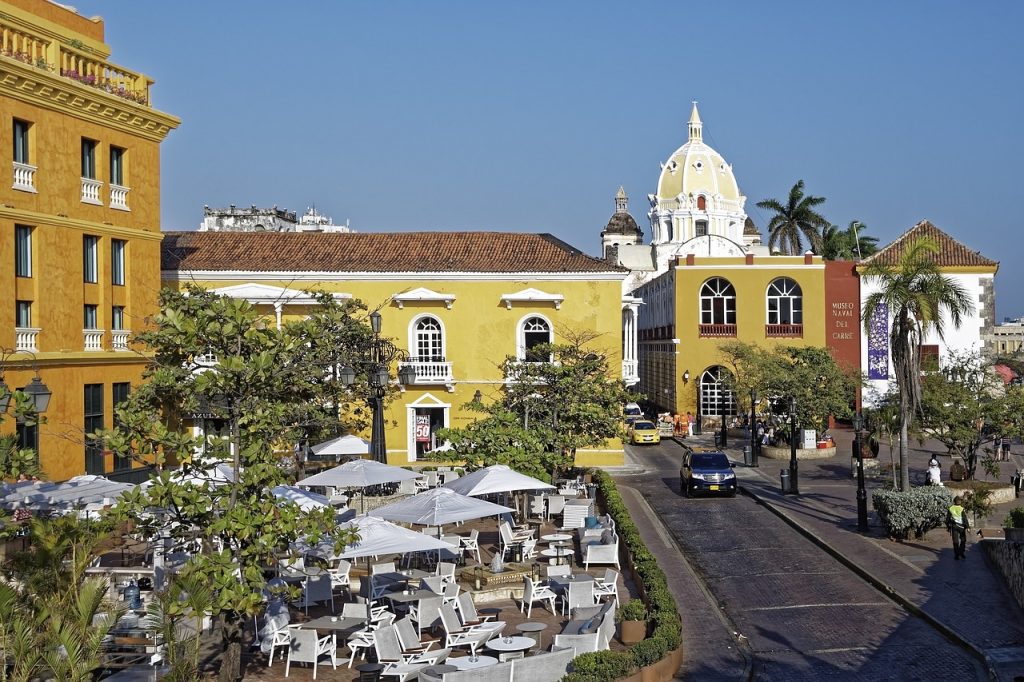
The Wayuu Festival of the Cultural Wind, held annually in Uribia, Colombia, celebrates Wayuu heritage through traditional dance, craft displays, and competitions, including a notably significant Miss Wayuu pageant that emphasizes cultural knowledge and traditional skill rather than conventional beauty standards alone.
Yonna, a traditional Wayuu dance performed at celebrations and important social gatherings, involves distinctive movement and rhythm accompanied by traditional instruments, serving both as entertainment and as a marker of cultural continuity actively performed and taught to younger generations.
Wayuu musical influence extends notably into vallenato, one of Colombia’s most significant popular music genres, with some musicologists tracing elements of the genre’s accordion-driven rhythm and storytelling tradition partly to Wayuu and broader Caribbean coastal cultural influence.
Modern Wayuu festivals increasingly serve a dual purpose, celebrating cultural heritage for community members while also functioning as a platform for political advocacy around water access, land rights, and government investment in chronically underserved Guajira communities.
ok 10-11A History of Resistance

The Wayuu are notable among Indigenous nations in the Americas for never having been fully conquered by Spanish colonial forces, successfully resisting numerous military campaigns throughout the colonial period through a combination of desert terrain familiarity, decentralized clan organization that denied invaders a single center of power to capture, and eventually mounted warfare enabled by adopted European horses.
Colonial authorities eventually settled for an uneasy coexistence, establishing limited trade relationships and occasional missionary contact while never achieving the kind of direct administrative control exercised over more centralized or accessible Indigenous populations elsewhere in the Spanish empire.
Following independence, both Colombia and Venezuela largely continued this pattern of limited state presence in Guajira, with the Wayuu maintaining substantial cultural and political autonomy well into the twentieth century, even as national governments periodically attempted to extend greater administrative and economic control over the region.
The discovery and exploitation of the Guajira’s coal reserves and other resources in more recent decades has introduced new pressures and conflicts, with Wayuu communities navigating negotiations over land, water, and resource royalties with national governments and multinational companies in ways their ancestors never had to confront.
The Wayuu Today

Today more than eight hundred thousand Wayuu live across Colombia and Venezuela, making them by far the largest Indigenous nation in both countries, with communities maintaining significant cultural, linguistic, and social continuity despite the pressures of modern national integration and economic development.
Severe droughts in recent decades have created serious humanitarian challenges in La Guajira, including child malnutrition, drawing national and international attention to chronic underinvestment in water infrastructure for Wayuu communities, an issue that continues to drive activism and policy debate in both Colombia and Venezuela.
Recent water infrastructure projects, including desalination initiatives and new wells funded through both government programs and international aid, have attempted to address chronic Guajira drought conditions, though implementation has often been slow and unevenly distributed, leaving many rural Wayuu communities still dependent on unreliable seasonal water sources.
Venezuela’s economic and political crisis in recent years has also significantly affected Wayuu communities straddling the border, with increased cross-border movement and economic hardship testing traditional kinship networks that have historically treated the national boundary as far less significant than Wayuu clan and family ties.
Wayuu political representation has grown gradually within both Colombian and Venezuelan national institutions, with Wayuu leaders serving in regional and national government roles and advocating specifically for policies addressing water access, bilingual education funding, and protection of ancestral land from unregulated mining and infrastructure development.
Despite these serious challenges, Wayuu cultural identity remains remarkably robust, visible in the continued widespread use of Wayuunaiki, the global popularity of the mochila, the active practice of clan-based conflict resolution, and a level of self-determined political and cultural continuity that few Indigenous nations in the Americas have managed to sustain so thoroughly across five centuries of colonial and national pressure. Moving south along the Caribbean coast into Panama, the story of the Guna people offers another remarkable example of Indigenous self-governance and cultural persistence.
More Nations of the Americas
The Wayuu join a growing collection of Indigenous nations profiled here, each with a distinct history worth exploring in its own right. Read more:
- The People Who Emerged Into This World, the Story of the Navajo
- The People Who Never Left the Mountains, the Story of the Quechua
- The People Who Never Vanished, the Story of the Maya
- The People of the Seven Council Fires, the Story of the Lakota
- The People of the Land Who Were Never Conquered, the Story of the Mapuche
- The People of Ice and Sea, the Story of the Inuit
- The Islands of the People, the Story of the Haida
- The Four Directions People, the Story of the Cree
- The Principal People, the Story of the Cherokee
- The People of the Timeless Speech, the Story of the Aymara
- The People Whose Language Became a Nation, the Story of the Guarani
- The People of the Big Feet, the Story of the Tehuelche
- The People Rediscovered by Their Own Nation, the Story of the Diaguita
- The People of the Driest Desert, the Story of the Likan Antai
You May Like
The Damara, an Ancient People of Namibia


One thought on “Wayuu: The Desert People an Empire Could Never Conquer”