Off the northern Pacific coast of British Columbia, where dense temperate rainforest meets some of the richest fishing waters on earth, live the Haida, a nation renowned for towering cedar totem poles, oceangoing canoes, and one of the most sophisticated art traditions to develop anywhere among the indigenous peoples of North America. Centered on the archipelago of Haida Gwaii, with additional communities in southern Alaska, the Haida built a wealthy, complex society without agriculture, drawing instead on the extraordinary abundance of the Pacific coast itself.
Haida civilization stands out among Pacific Northwest Coast peoples for its early and sustained artistic achievement, a complex hereditary class system, and a maritime culture built around cedar and the sea that allowed for large permanent villages and considerable accumulated wealth long before European contact. Nineteenth-century smallpox epidemics reduced the Haida population catastrophically, yet the nation not only survived but has led one of the most celebrated indigenous cultural and artistic revivals in North America over the past several decades.
What follows traces Haida history and culture from ancient origins through the present, covering where the Haida came from, the meaning of the name, the Haida language, the island homeland of Haida Gwaii, the old cedar-and-canoe way of life, the structure of Haida society and its hereditary system, spiritual belief and crest animals, social traditions including the potlatch, craftsmanship in wood and argillite, food from the sea, festivals and modern gatherings, the history of contact and epidemic, and the Haida nation as it exists today.
What This Article Covers
- Origins: An Ancient Island Civilization
- Name: Haida and the Meaning of Haida Gwaii
- Language: Xaad Kil, a Language Unlike Any Other
- Homeland: Haida Gwaii and the Edge of the Pacific
- Old Way of Life: Cedar, Canoes, and the Sea’s Abundance
- Society: Clans, Crests, and a Hereditary Class System
- Religion: Raven, Eagle, and the World of Crest Animals
- Traditions: The Potlatch and the Weight of Obligation
- Crafts: Totem Poles, Argillite, and Formline Art
- Food: Salmon, Halibut, and the Riches of the Sea
- Festivals: Canoe Journeys and the Modern Potlatch
- History: Epidemic, Missionaries, and Cultural Suppression
- Today: A Nation Leading Its Own Cultural Revival
An Ancient Island Civilization
Archaeological evidence places human presence on Haida Gwaii back at least ten thousand years, among the earliest confirmed dates for human habitation anywhere on the Pacific coast of North America, with early inhabitants adapting quickly to a marine-rich environment that would come to define Haida civilization for millennia afterward. Rising sea levels following the last ice age reshaped the islands considerably over this long span, and some of the earliest coastal sites now lie submerged offshore.
Unlike agricultural civilizations elsewhere in the Americas, Haida society developed remarkable social and material complexity without ever adopting farming, relying instead on the extraordinary productivity of Pacific salmon runs, halibut banks, shellfish beds, and marine mammal populations to support large, permanent villages, accumulated material wealth, and a leisure class capable of sustaining highly skilled artistic specialists, a combination anthropologists consider unusual among hunter-gatherer and fishing societies worldwide.
Oral tradition traces Haida ancestry to Raven, the central figure in Haida cosmology, credited with bringing light to the world and, in some versions, discovering the first humans hidden inside a clamshell on a beach, a story that ties Haida identity directly to the specific island landscape of Haida Gwaii rather than to any distant place of origin. This deep, place-based origin narrative reflects the Haida’s long, continuous occupation of the same island territory.
By the time of sustained European contact in the late eighteenth century, Haida Gwaii supported numerous large, permanent villages housing a population estimated at ten thousand or more, organized into a sophisticated hereditary society capable of building oceangoing canoes, monumental architecture, and an artistic tradition that would soon draw serious attention, and considerable exploitation, from European and American traders.
Haida and the Meaning of Haida Gwaii
Haida is generally understood to derive from an expression in the Haida language meaning simply the people, a self-designation common among many indigenous nations across the Americas and one that reflects a straightforward, confident sense of identity rooted in the islands themselves rather than any relationship to outside groups. The islands the Haida call home were long labeled the Queen Charlotte Islands on Canadian maps, a colonial name honoring a British queen with no connection to the islands’ actual history.
That colonial name was formally replaced in 2010, when the Canadian province of British Columbia and the Haida Nation reached an agreement restoring the name Haida Gwaii, meaning islands of the people, to official use, a symbolically significant moment in a broader process of Haida political and cultural reassertion that has unfolded steadily since the late twentieth century.
Haida society traditionally divided into two moieties, or halves, called Raven and Eagle, with every Haida person belonging to one or the other through matrilineal descent, a division that structured marriage, since individuals were required to marry someone from the opposite moiety, as well as ceremonial responsibility and social obligation throughout traditional Haida life. This binary division, while it may sound simple, in practice organized an enormously complex web of specific family and clan identities beneath it.
Beneath the Raven and Eagle moieties, specific matrilineal lineages and clans carried their own names, crests, and histories, often tied to particular villages or territories, meaning a Haida person’s full identity traditionally involved several layered levels, moiety, clan, and specific lineage, each carrying distinct rights, responsibilities, and artistic crest privileges recognized throughout Haida Gwaii and neighboring Northwest Coast nations.
Xaad Kil, a Language Unlike Any Other
Haida, known to its speakers as Xaad Kil or similar regional variants, is a language isolate, meaning it has no confirmed relationship to any other known language family, a linguistic status shared with only a handful of languages worldwide and one that makes Haida of exceptional interest to linguists studying the deep history of human language in the Americas. Some researchers have proposed distant connections to other language families, but none has achieved wide scholarly acceptance.
The language traditionally existed in two main dialects, corresponding to villages in Haida Gwaii and those in southern Alaska, close enough for mutual understanding but distinct in vocabulary and pronunciation, a divide that reflects the historical settlement of some Haida communities on Prince of Wales Island in Alaska, likely within the past few centuries before sustained European contact.
Haida suffered severe decline over the twentieth century due to residential schooling and government assimilation policy in both Canada and the United States, which actively punished children for speaking their native language, reducing fluent first-language speakers to a small number of elders by the early twenty-first century, a crisis that prompted the Haida Nation to declare a formal language emergency and commit substantial resources to revitalization.
Language nest programs, immersion schools, and dedicated Haida-language apps and dictionaries have expanded significantly in recent years, part of a broader, well-organized Haida effort to ensure the language survives beyond its remaining elderly fluent speakers, an effort treated with particular urgency precisely because Haida, as a language isolate, has no close relative anywhere in the world that could preserve any trace of it if it were lost entirely.
Haida Gwaii and the Edge of the Pacific

Haida Gwaii, an archipelago of more than one hundred and fifty islands lying off the northern coast of British Columbia, separated from the mainland by the often treacherous waters of Hecate Strait, forms the historic and continuing heart of Haida territory, with additional Haida communities established in southern Alaska on Prince of Wales Island, likely settled through migration a few centuries before European contact.
The islands’ temperate rainforest climate, among the wettest in North America, supports towering old-growth cedar and spruce forest that provided the essential raw material for Haida canoes, houses, and the monumental carved poles for which the nation is internationally known, while the surrounding waters, rich with salmon, halibut, herring, and marine mammals, supplied the food surplus that allowed such an elaborate material culture to develop in the first place.
Isolation from the mainland, combined with abundant local resources, allowed Haida society to develop with a distinctive independence and confidence reflected in oral history describing successful Haida raiding expeditions against neighboring mainland peoples, a martial reputation that, alongside their artistic achievement, made the Haida one of the most well known and, at times, feared nations along the entire Northwest Coast prior to European contact.
Modern Haida Gwaii remains sparsely populated, with roughly half its residents identifying as Haida, and the islands have become a significant site of indigenous-led conservation, most notably through the Haida Nation’s central role in establishing Gwaii Haanas National Park Reserve, jointly managed by Canada and the Haida Nation in an arrangement widely regarded as a model for indigenous co-governance of protected land.
Cedar, Canoes, and the Sea’s Abundance
Traditional Haida subsistence drew overwhelmingly on the sea, with salmon, halibut, herring roe, shellfish, and sea mammals providing a reliable and abundant food supply that required no agriculture to sustain large, permanent villages, an unusual combination that allowed Haida society to achieve a level of population density and material wealth more commonly associated with farming civilizations elsewhere in the world.
The western red cedar tree supplied nearly every material need beyond food, with its wood carved into massive dugout canoes capable of ocean travel and warfare, split into planks for large plank houses, and carved into the monumental poles for which Haida art is best known, while its bark was woven into clothing, mats, baskets, and rope, making the cedar tree quite reasonably described as central to Haida material civilization in the way buffalo were to Plains hunting cultures.
Haida oceangoing canoes, carved from single massive cedar logs and capable of carrying dozens of people along with substantial cargo, made the Haida formidable seafarers and traders, known to travel considerable distances along the coast for trade, diplomacy, and, on occasion, raiding expeditions against neighboring nations, a maritime reach that distinguished the Haida from more geographically limited neighboring peoples.
Villages consisted of large cedar plank houses, each home to an extended family group under a hereditary house chief, arranged along the shoreline facing the water, with carved house poles and freestanding poles marking family crests and important histories directly in front of the residence, creating a visually striking and information-dense village landscape that communicated lineage and status to any visitor arriving by canoe.
Clans, Crests, and a Hereditary Class System
Haida society organized around a strict hereditary class structure unusual among indigenous North American peoples for its rigidity, dividing the population into nobility, commoners, and, historically, slaves typically obtained through raiding or trade, a stratification maintained and publicly reinforced through wealth, ceremony, and the elaborate potlatch system discussed further below.
Descent followed matrilineal lines, meaning children belonged to their mother’s clan and moiety rather than their father’s, and hereditary leadership positions, including house chief and clan chief roles, passed through this maternal line, typically to a sister’s son rather than a man’s own biological children, a succession pattern that could seem counterintuitive to outside observers accustomed to patrilineal inheritance but which functioned smoothly and predictably within Haida kinship logic.
Each of the numerous specific clans beneath the broader Raven and Eagle moiety divisions held recognized rights to particular crests, meaning stylized images of animals or supernatural beings that could be displayed on totem poles, house fronts, clothing, and ceremonial regalia, with unauthorized use of another clan’s crest treated as a serious social offense roughly comparable to using someone else’s coat of arms without permission in European heraldic tradition.
Wealth, generosity, and the ability to host lavish potlatch ceremonies determined practical social status and influence at least as much as birth alone, meaning a chief’s actual authority depended significantly on demonstrated ability to accumulate and then redistribute resources on a grand scale, a dynamic that gave Haida hereditary leadership a meritocratic, performance-based dimension alongside its formally inherited structure.
Raven, Eagle, and the World of Crest Animals

Haida spiritual belief populated the world with powerful supernatural beings, most famously Raven, a trickster and culture hero credited with bringing light into the world, releasing humanity from a clamshell, and shaping much of the physical and social world through a combination of cunning, greed, and occasional genuine benevolence, a morally complicated figure quite unlike the straightforwardly virtuous creator deities found in many other religious traditions.
Crest animals, including the raven, eagle, killer whale, bear, and beaver among others, carried deep spiritual and genealogical significance beyond simple decoration, understood as ancestral beings connected to specific clan origin stories and displayed prominently on totem poles, houses, and ceremonial objects as a visible, permanent record of a family’s supernatural lineage and rightful status.
Shamans, who could be men or women, mediated between the human and spirit worlds, performing healing ceremonies and interpreting encounters with supernatural beings believed to inhabit the forest, sea, and sky surrounding Haida villages, a role broadly comparable in social function, though distinct in specific practice, to religious specialists found among other indigenous peoples across the Americas.
Christian missionaries achieved substantial, though not total, conversion of Haida communities beginning in the nineteenth century, a process that coincided with and was partly accelerated by the catastrophic population collapse discussed in the history section below, and today most Haida people identify with Christian denominations while many also maintain respect for traditional crest and origin stories as an important part of cultural, if not strictly religious, identity.
The Potlatch and the Weight of Obligation
The potlatch, a large ceremonial feast at which a hosting family publicly distributes substantial gifts to witnesses in exchange for their formal recognition of a claim, such as a new chief’s succession, a marriage, or a totem pole raising, stood at the absolute center of traditional Haida social and legal life, functioning simultaneously as celebration, historical record, and a binding form of public witness in a society that kept no written records.
Guests attending a potlatch served an essential legal function by witnessing and thereby validating whatever claim or transition the host family was publicly announcing, meaning the size and generosity of a potlatch directly reflected, and helped secure, the legitimacy of the claim being made, a system that made lavish and repeated potlatching genuinely necessary for maintaining hereditary status rather than merely a cultural preference.
Canadian and later American authorities banned the potlatch outright from the 1880s until the mid-twentieth century, viewing it as wasteful and an obstacle to assimilation, a ban enforced at times through arrest and confiscation of ceremonial regalia, forcing potlatch ceremonies underground for decades and inflicting lasting damage on the social and legal system the potlatch had traditionally supported.
Potlatching resumed openly after the ban’s repeal in 1951, and the ceremony remains actively practiced across Haida and other Northwest Coast communities today, adapted to contemporary circumstances while retaining its core function of publicly marking major life events and reinforcing the mutual obligations that bind Haida families and clans together.
Totem Poles, Argillite, and Formline Art
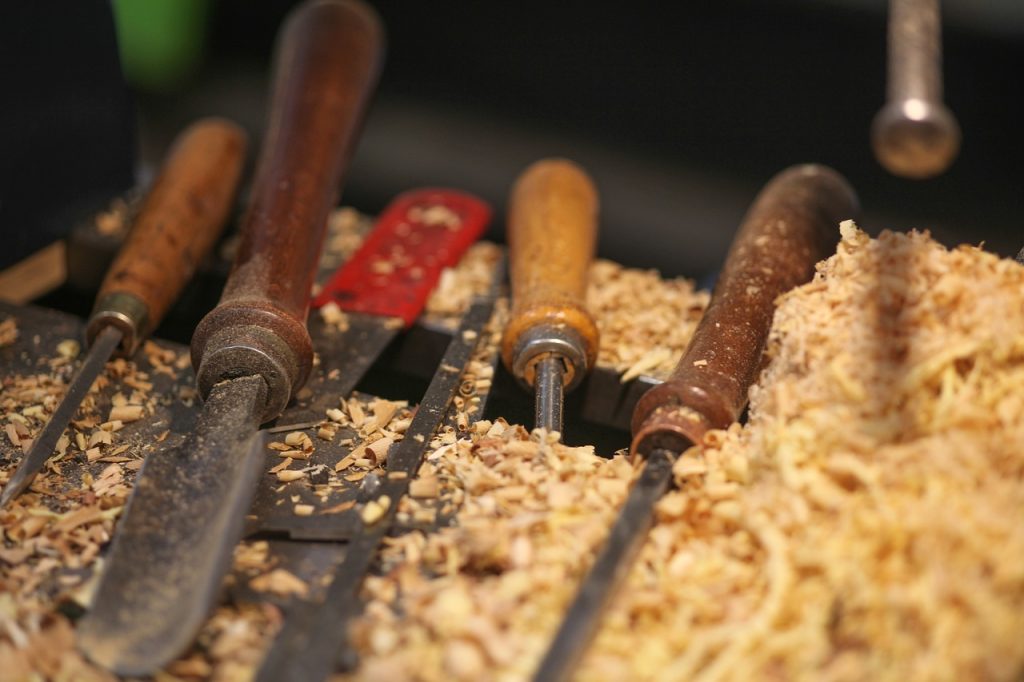
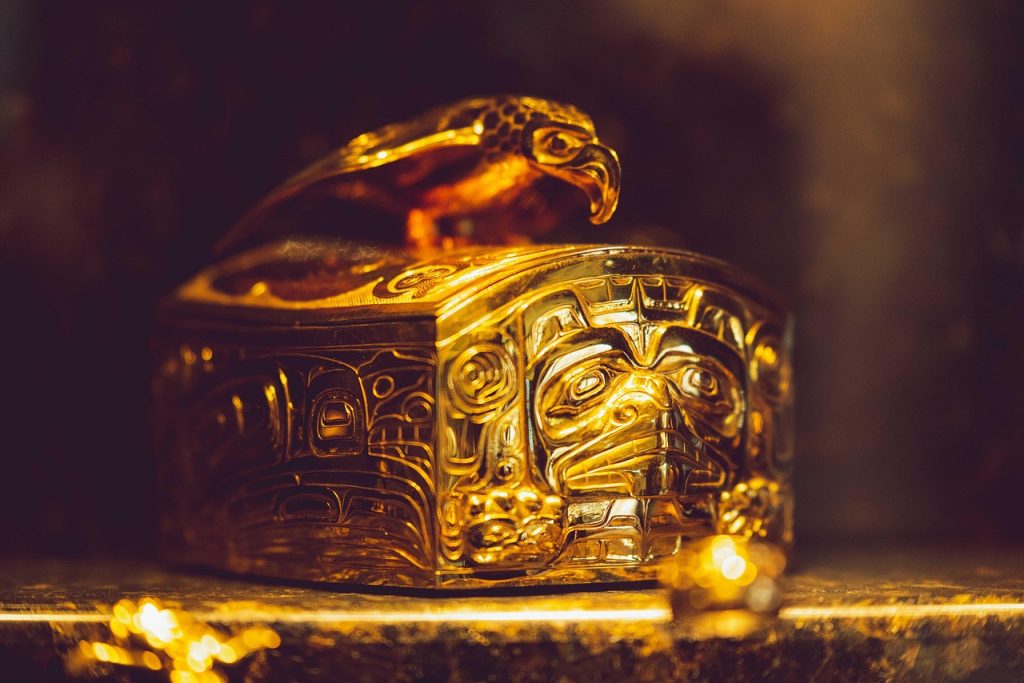
Haida artists developed formline design, a highly structured visual language using continuous flowing lines, ovoids, and specific compositional rules to depict crest animals and mythological beings in a style now recognized internationally as one of the great artistic traditions of North America, influential well beyond Haida Gwaii among other Northwest Coast nations who share related, though visually distinct, artistic conventions.
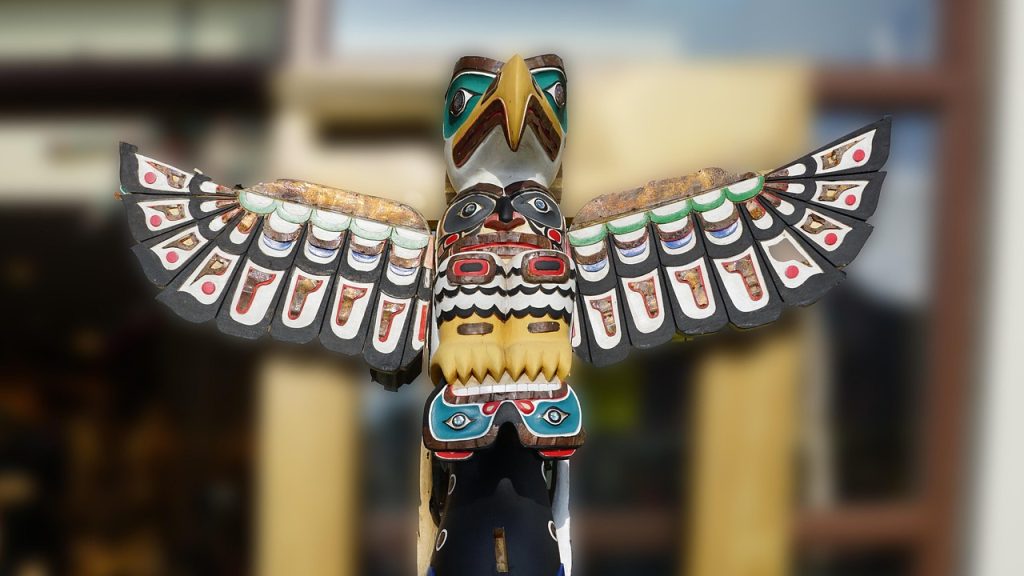
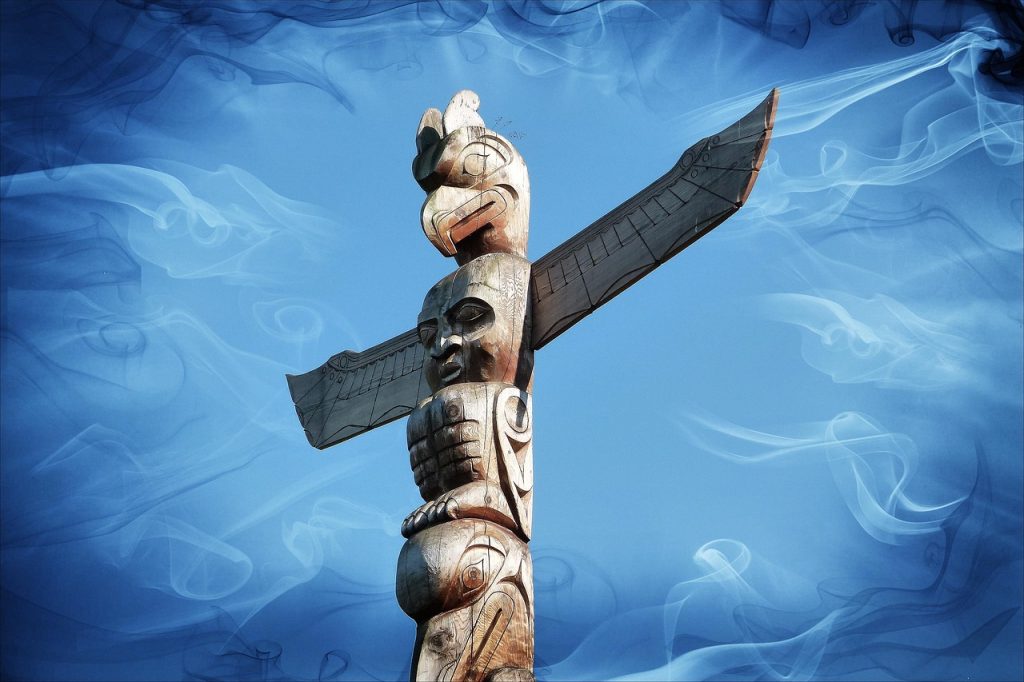
Totem poles, carved from single cedar logs and raised to commemorate a chief, record a family’s crests and history, or mark significant events, represent perhaps the most visually iconic Haida art form internationally, though it bears noting that poles served a specific genealogical and legal function within Haida society rather than functioning as religious idols, a common but inaccurate assumption among early European observers.
Argillite, a soft black stone found only at a single quarry site on Haida Gwaii and traditionally reserved for Haida carvers alone, gave rise to a distinctive sculptural tradition beginning in the early nineteenth century, initially producing pipes and decorative items for sale to European and American traders and evolving into a respected fine art form still actively practiced by Haida carvers today.
Contemporary Haida artists, including internationally recognized figures who have helped drive broader recognition of Northwest Coast art in major museums and galleries, continue to work in traditional media such as cedar, argillite, and silver while also exploring new materials and formats, treating formline design as a living visual language capable of expressing contemporary as well as traditional subject matter.
Salmon, Halibut, and the Riches of the Sea

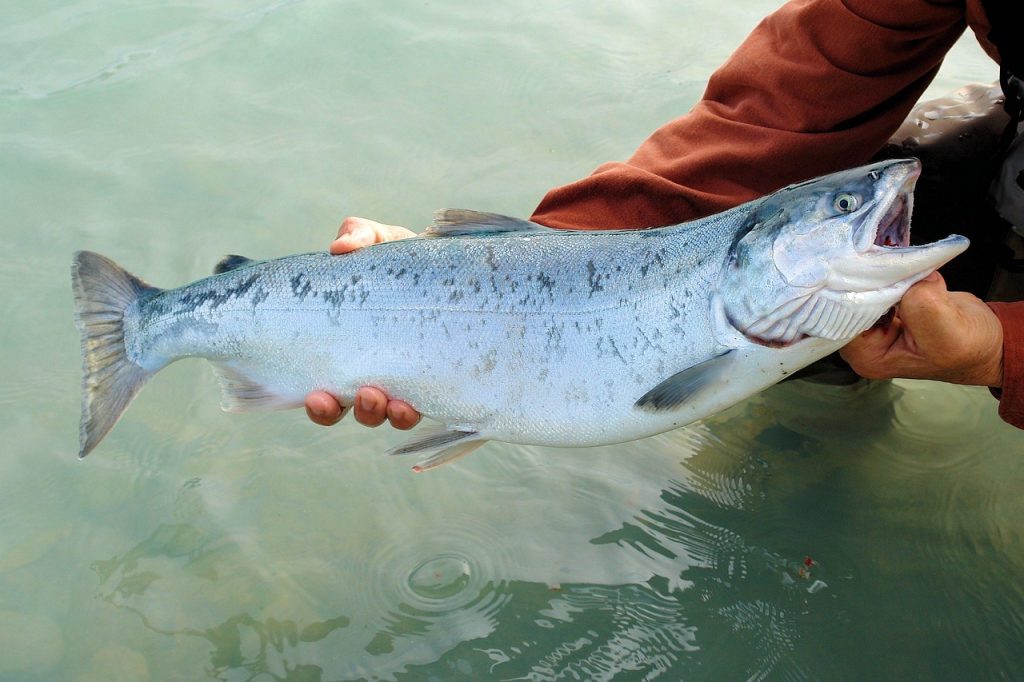
Salmon formed the single most important food source in the traditional Haida diet, harvested during seasonal runs and preserved through smoking and drying in quantities sufficient to last through the winter months, a preservation technology that, alongside similarly reliable halibut and herring harvests, freed Haida communities from the need to develop agriculture despite otherwise having settled, permanent villages.
Halibut, caught using specially designed wooden hooks crafted to be strong enough to hold a large fish while light enough to float back to the surface if a line broke, represented a significant food source and also a notable technical and artistic achievement, since halibut hooks were often carved with crest designs, treating a purely practical fishing tool as an opportunity for meaningful artistic expression.
Herring roe, gathered each spring when herring spawned in massive numbers along the coast, often collected on submerged hemlock branches placed specifically to attract the spawning fish, provided both an important seasonal food and a significant trade item exchanged with neighboring nations, some of whom lacked reliable access to herring spawning grounds of their own.
Shellfish, seaweed, sea mammal meat and oil, and a variety of wild berries and roots rounded out the traditional Haida diet, while eulachon oil, obtained through trade with mainland peoples who had access to the small, oil-rich fish, served as a prized condiment and trade good, sometimes called Grease Trail commerce for the overland routes used to move it inland to trading partners.
Canoe Journeys and the Modern Potlatch
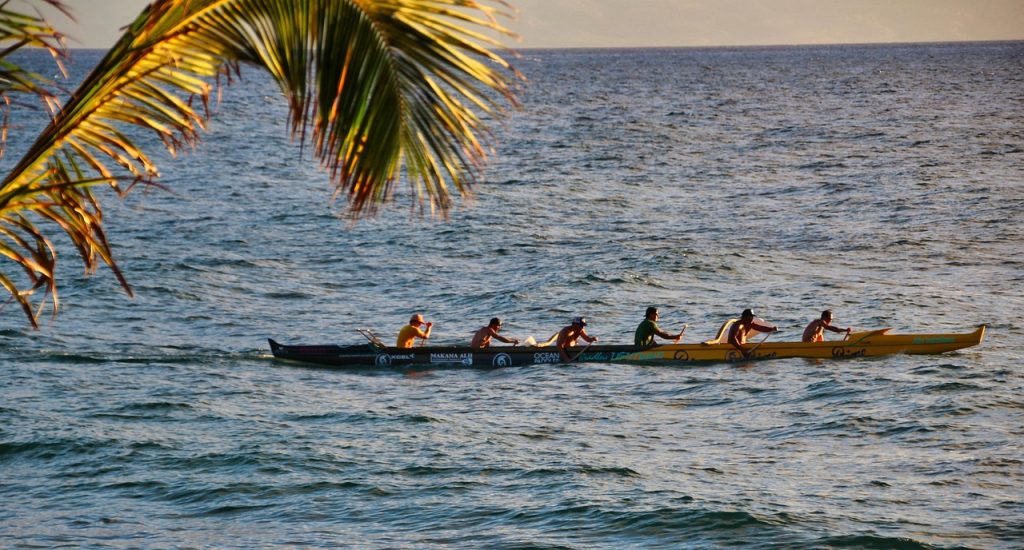
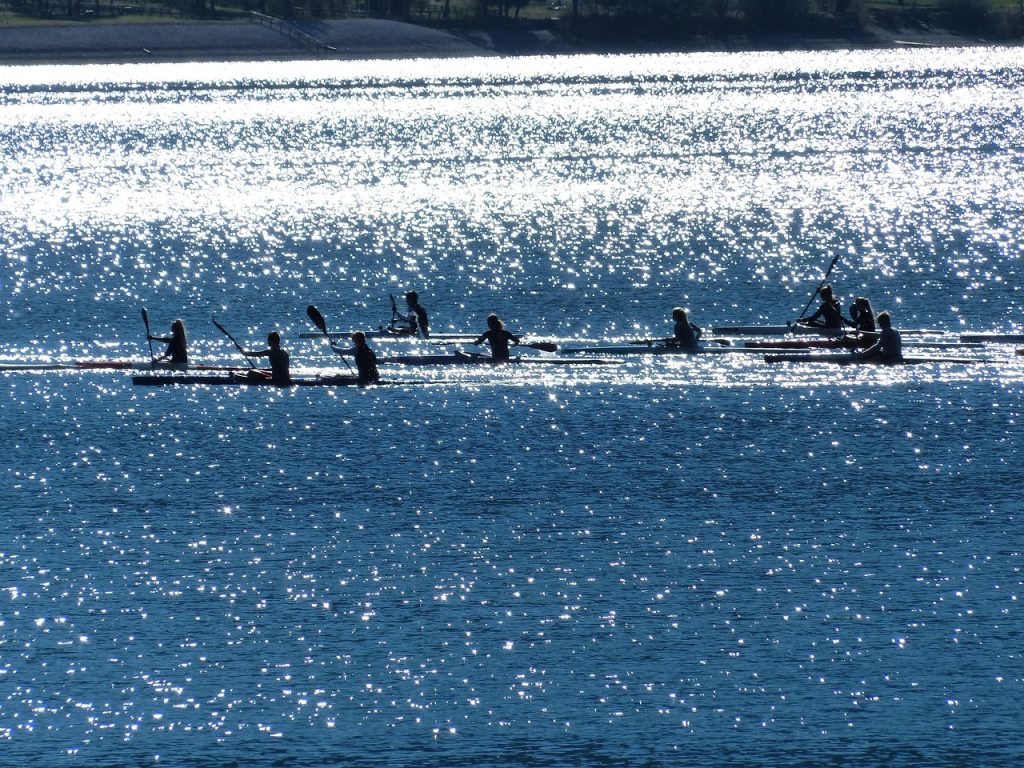
The Tribal Canoe Journeys, a large annual gathering that brings together Northwest Coast nations, including the Haida, for multi-week canoe voyages culminating in a shared celebration hosted by a different nation each year, has grown since its revival in the late twentieth century into one of the most significant cultural events on the coast, deliberately reviving the long-distance canoe travel that once connected Haida villages to neighboring peoples up and down the coastline.
Totem pole raisings remain significant community events today, drawing large crowds for the accompanying potlatch feast and ceremony, and several notable poles have been raised in recent decades to mark historic reconciliation events, repatriation of ancestral remains, or the establishment of new protected areas such as Gwaii Haanas, treating the ancient tradition as a living practice fully capable of marking contemporary milestones.
Modern potlatches continue to mark chieftainship successions, memorials, and other major family events, now often incorporating both traditional feasting and gift-giving alongside contemporary elements, and Haida families frequently travel considerable distances to attend potlatches hosted by relatives, treating the obligation to witness and participate as seriously as earlier generations did.
Cultural festivals celebrating Haida art, language, and history have expanded significantly in recent decades, often organized in partnership with museums and cultural institutions eager to showcase contemporary Haida artistic achievement, providing both income and public visibility for Haida artists working in traditional and contemporary media alike.
Epidemic, Missionaries, and Cultural Suppression
European and American contact, beginning with maritime fur traders in the late eighteenth century seeking sea otter pelts, brought both new wealth through trade and, far more consequentially, introduced diseases against which Haida communities had no immunity, culminating in a series of devastating smallpox epidemics during the nineteenth century that reduced the Haida population from an estimated ten thousand or more to fewer than six hundred people by the 1880s, one of the most catastrophic population collapses documented among any indigenous nation in North America.
This demographic catastrophe forced the survivors to abandon numerous ancestral villages, consolidating into just two remaining communities on Haida Gwaii by the late nineteenth century, a concentration that, combined with the arrival of Christian missionaries who actively discouraged traditional practice, placed enormous pressure on the continuity of Haida language, ceremony, and social structure within a single generation.
Canadian government policy through the residential school system removed Haida children from their families for education explicitly designed to erase indigenous language and culture, while the simultaneous legal ban on the potlatch, discussed earlier, attacked the core social and legal institution of Haida society directly, together representing a sustained, multi-front assault on Haida cultural continuity spanning several generations.
Despite this combination of demographic catastrophe and deliberate cultural suppression, Haida communities preserved sufficient knowledge, through hidden practice, oral memory, and surviving elders, to support the vigorous cultural revival that began in the mid-twentieth century, a resilience made all the more remarkable given how close Haida culture came to being permanently and irreversibly disrupted during the smallpox era.
A Nation Leading Its Own Cultural Revival
Roughly five thousand people identify as Haida today, split between communities on Haida Gwaii, elsewhere in British Columbia, and in southern Alaska, a population that has grown steadily since its nineteenth-century low point even as it remains far smaller than the estimated pre-contact population, a demographic reality that continues to shape Haida priorities around land, language, and cultural transmission.
The Haida Nation has pursued an unusually assertive and successful approach to self-governance in recent decades, including a 2009 protocol agreement with British Columbia recognizing Haida title to Haida Gwaii, the joint management arrangement governing Gwaii Haanas National Park Reserve, and the formal 2010 restoration of the name Haida Gwaii itself, together representing one of the more advanced examples of indigenous political recognition achieved anywhere in Canada.
Haida artists have played an outsized role in the broader renaissance of Northwest Coast indigenous art since the mid-twentieth century, with major carvers and designers achieving international recognition and Haida formline design becoming, for many people worldwide, the most recognizable visual signature of indigenous Pacific Northwest culture as a whole, a level of visibility relatively few indigenous art traditions in the Americas have achieved.
Language revitalization, repatriation of ancestral remains and cultural objects from museums around the world, and continued environmental stewardship of Haida Gwaii’s old-growth forest and marine ecosystems remain active priorities, reflecting a broader pattern shared with other indigenous nations across the hemisphere, of a people determined to shape their own future on their own terms rather than simply preserving the past, a determination that connects naturally to another nation further south whose own resistance and cultural continuity define its story just as strongly, the Cherokee.
Other Nations in This Look at Indigenous America
The Haida join a wider exploration of indigenous peoples of the Americas covered so far, each still very much part of the present:
- The People Who Emerged Into This World, the Story of the Navajo
- The People Who Never Left the Mountains, the Story of the Quechua
- The People Who Never Vanished, the Story of the Maya
- The People of the Seven Council Fires, the Story of the Lakota
- The People of the Land Who Were Never Conquered, the Story of the Mapuche
- The People of Ice and Sea, the Story of the Inuit


5 thoughts on “The Islands of the People, the Story of the Haida”