High on the roof of South America, where the air is thin and the light is sharp enough to cut, a people has lived for longer than the Inca empire that once tried to rule them. The Aymara call this place their own: a windswept plateau stretched between Bolivia, Peru, Chile, and a sliver of Argentina, sitting at an altitude where visitors gasp for breath and the Aymara simply go about their day.
Long before the Spanish arrived, and even before the Inca extended their reach across the Andes, Aymara-speaking kingdoms were already farming terraced hillsides, herding llamas and alpacas, and building stone towers to honor their dead. They outlasted the Inca conquest, adapted under Spanish colonial rule, and today number more than two million people across the region, making them one of the largest and most visible Indigenous nations in the Americas.
This is the story of the Aymara: where they came from, what their name means, how their language survives, the harsh and beautiful homeland that shaped them, the old ways of highland life, how their society and beliefs took form, their crafts and food and festivals, the turbulent history that tested them, and the place they hold in Bolivia and Peru today.
- Origins on the Roof of the World
- What “Aymara” Means
- A Language Older Than the Inca
- The Altiplano, Home Between Sky and Salt
- The Old Rhythm of Herding and Farming
- Family, Community, and Ayllu
- Mountains, Spirits, and Pachamama
- Festivals, Cloth, and Everyday Ritual
- Weaving and Craft of the Highlands
- Potatoes, Quinoa, and the Food of Altitude
- Carnival and the Calendar of Celebration
- From Tiwanaku to Bolivia
- The Aymara Today
Origins on the Roof of the World

The Aymara trace their roots to the shores of Lake Titicaca and the high plateau surrounding it, a region archaeologists now connect to Tiwanaku, one of the oldest urban civilizations in South America. Tiwanaku rose more than a thousand years before the Inca empire existed, building monumental stone gateways, irrigated raised fields, and a trade network that stretched across the Andes.
When Tiwanaku collapsed around the twelfth century, its people did not vanish. Instead they reorganized into a patchwork of independent Aymara-speaking kingdoms scattered across the altiplano, each centered on a fortified hilltop and ruled by local lords. These kingdoms, with names like Lupaqa and Qulla, controlled llama caravans, terraced farmland, and access to different ecological zones stretching from the high plateau down into warmer valleys.
It was this patchwork of kingdoms that the Inca encountered and eventually absorbed in the fifteenth century, though absorption did not mean erasure. Aymara nobility often retained local authority under Inca rule, and Aymara language and customs persisted underneath the Quechua-speaking administration imposed from Cusco.
When the Spanish arrived in the sixteenth century, they found an Aymara population still very much intact, organized, and rooted in the land. That resilience through empire after empire is part of what defines Aymara identity today: a people who have been governed by outsiders for centuries without ever fully surrendering their own sense of who they are.
Archaeologists continue to uncover new details about Tiwanaku’s reach, including evidence that its raised-field farming technique, known as suka kollus, could produce yields rivaling modern industrial agriculture while also buffering crops against the frost that regularly threatens altiplano harvests. Some contemporary Aymara farming cooperatives have revived versions of these ancient raised fields, finding that centuries-old engineering still outperforms some modern methods in this specific environment.
What “Aymara” Means
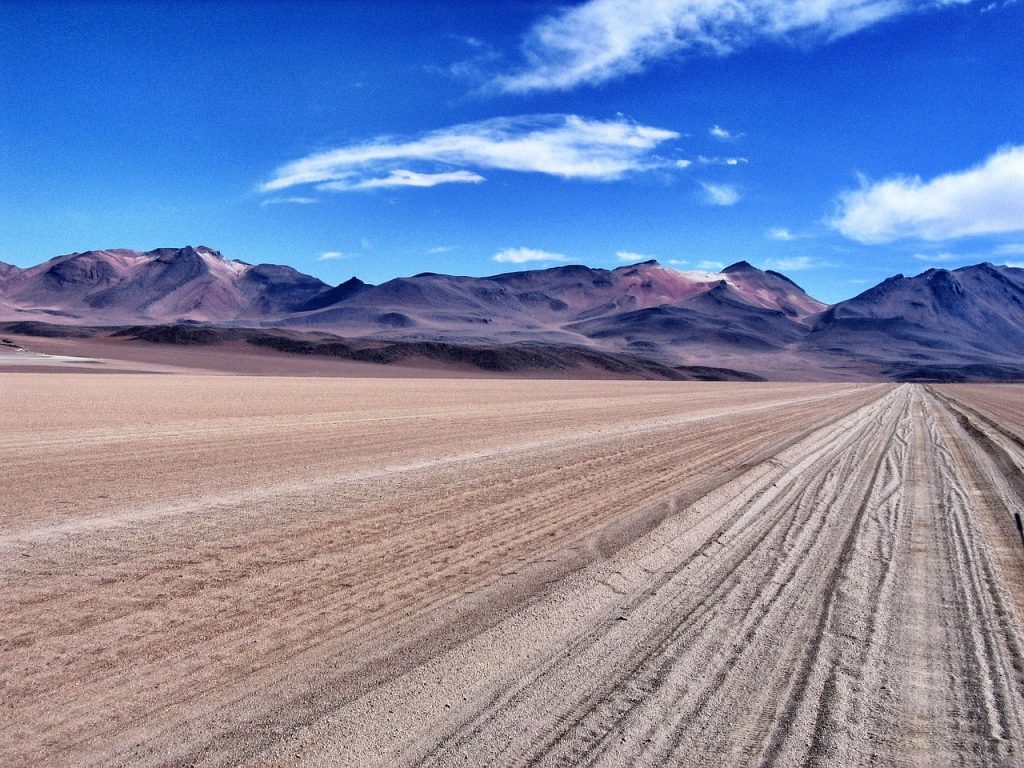
The origin of the name “Aymara” is debated among linguists and historians. One theory traces it to a small ethnic group near Cusco called the “Aymara” or “Aymaraes,” whose name the Spanish may have mistakenly applied to the broader highland population they encountered further south and west.
Another theory suggests the word derives from “jaya mara aru,” roughly translating to “ancient language people” or “timeless speech,” a phrase some Aymara speakers themselves use to describe their tongue’s deep roots. Whether or not this is the literal etymology, the sentiment captures something true: Aymara is widely regarded as one of the oldest continuously spoken languages in South America.
The Aymara people themselves have historically used other terms for self-identification tied to specific regions or kingdoms, such as Qulla or Pacajes, names that still surface in place names and regional identities across Bolivia today. “Aymara” became the umbrella term used by outsiders and eventually adopted more broadly.
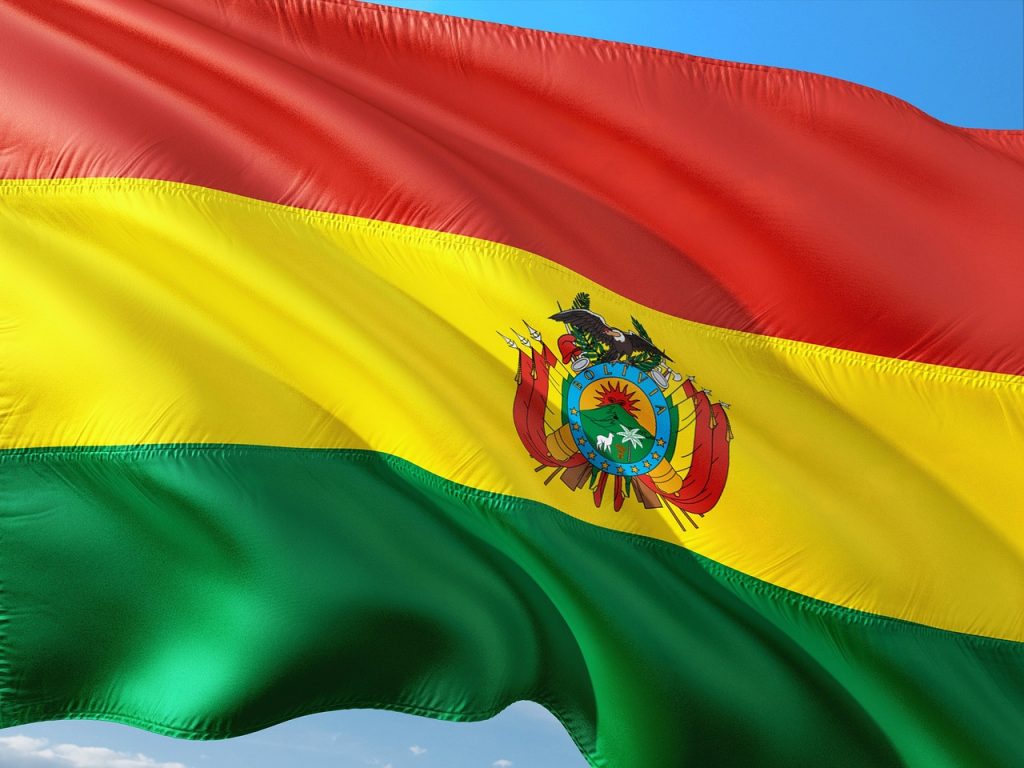
Regardless of its precise origin, the name now carries pride rather than ambiguity. It identifies a nation with its own language, its own calendar, its own flag colors, and a clear sense of continuity stretching back through Tiwanaku to the earliest highland civilizations.
A Language Older Than the Inca
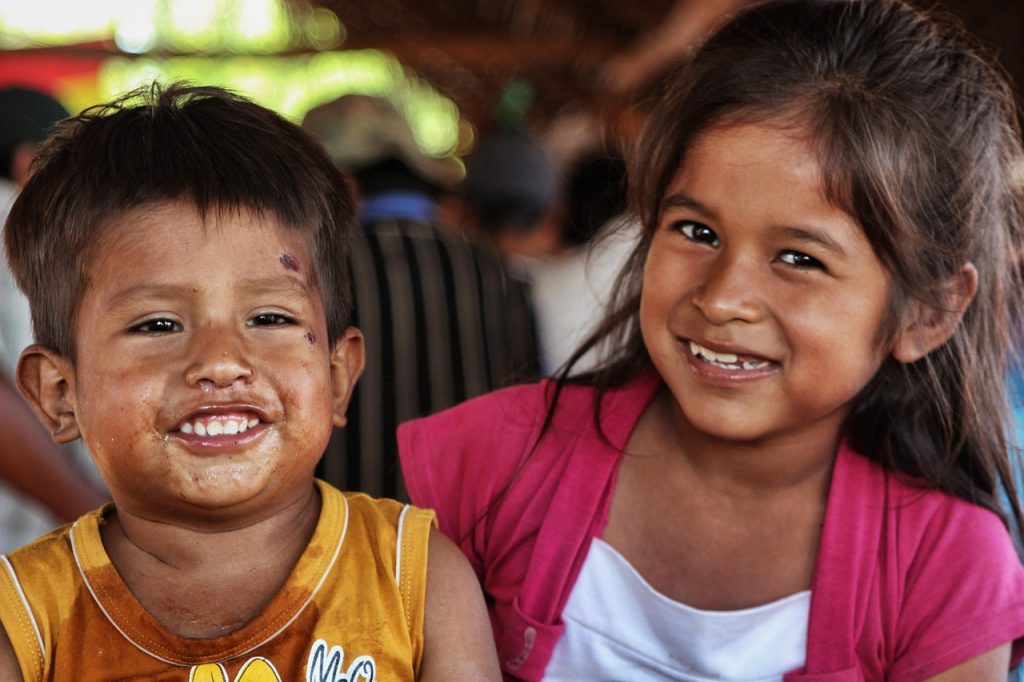
Aymara is spoken by more than two million people today, primarily in Bolivia and Peru, with smaller communities in northern Chile and Argentina. It belongs to its own language family, Aymaran, distinct from Quechua despite centuries of contact and mutual borrowing between the two.
Linguists have long puzzled over Aymara’s structure, particularly its unusually clear and logical way of encoding time. In Aymara, the past is spoken of as being in front of the speaker, visible and known, while the future is spoken of as behind, unseen and unknowable. This spatial metaphor for time, opposite to the one used in English and Spanish, has fascinated cognitive linguists studying how language shapes thought.
Bolivia’s 2009 constitution recognized Aymara as one of thirty-six official languages of the country, and it is taught in bilingual schools across the altiplano. Radio stations broadcast in Aymara, and a growing body of literature, music, and even software interfaces have been translated into the language by activists determined to keep it thriving in digital spaces as well as spoken ones.
Still, like many Indigenous languages, Aymara faces pressure from Spanish in cities and among younger generations who migrate for work or education. Community organizations and universities in La Paz and El Alto now run Aymara immersion programs aimed at reversing that drift, treating the language not as a relic but as a living tool for law, science, and daily conversation.
Aymara grammar also relies heavily on evidentiality, a grammatical feature requiring speakers to mark whether information comes from direct experience, hearsay, or inference. This means an Aymara sentence about the weather or a neighbor’s activities carries built-in information about how the speaker knows what they are saying, a level of epistemic precision that many other languages leave unspoken.
The Altiplano, Home Between Sky and Salt
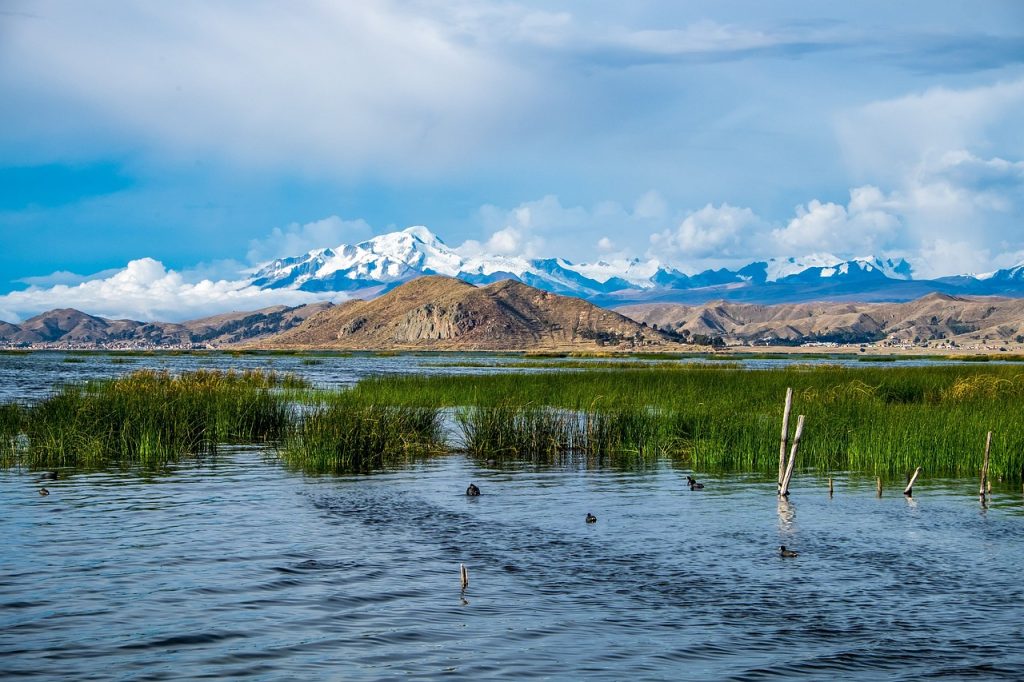
The Aymara homeland is the altiplano, a high plateau averaging around 3,800 meters above sea level, wedged between two ranges of the Andes. It is one of the largest high-altitude plateaus on Earth outside of Tibet, and it produces a landscape of extremes: intense sun, freezing nights, thin oxygen, and a horizon that seems to stretch forever under an enormous sky.
At the heart of this world sits Lake Titicaca, the highest large navigable lake on the planet, shared between Bolivia and Peru. Its waters moderate the surrounding climate just enough to support agriculture, and its shores have been continuously inhabited for thousands of years. For many Aymara communities, the lake is not just a resource but a living presence, referred to with the same respect given to a relative.
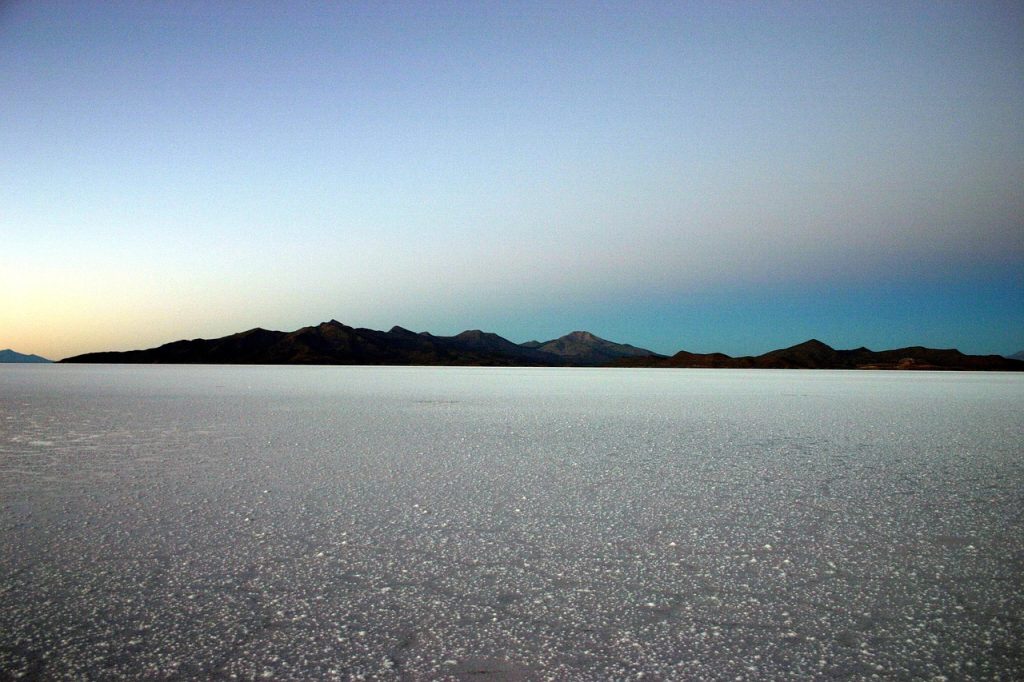
Further south and west, the altiplano gives way to salt flats, volcanic peaks, and high desert, including the enormous Salar de Uyuni, one of the most striking landscapes in South America. Aymara communities have long adapted to this variety, moving herds and crops between microclimates rather than treating the highlands as a single uniform environment.
This demanding terrain has shaped Aymara technology and knowledge for centuries, from raised agricultural fields that manage frost and moisture to elaborate systems of vertical land use that draw resources from several altitude zones at once. Living well at 4,000 meters is not a matter of endurance alone; it is a matter of accumulated, transmitted expertise.
Beyond Lake Titicaca, the Aymara homeland includes the Desaguadero River, which drains the lake southward toward another, saltier body of water called Lake Poopó, illustrating a delicate hydrological system that highland communities have long depended on and monitored closely. In recent years, the shrinking of Poopó due to drought and water diversion has become a source of serious concern for Aymara fishing communities who once relied on it for their livelihood.
ok sections 1-4The Old Rhythm of Herding and Farming
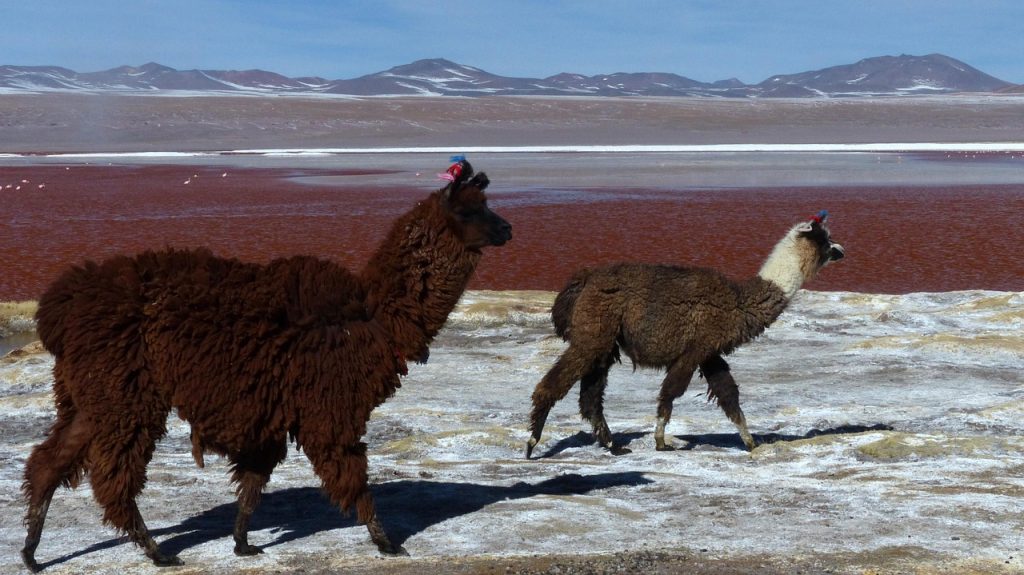
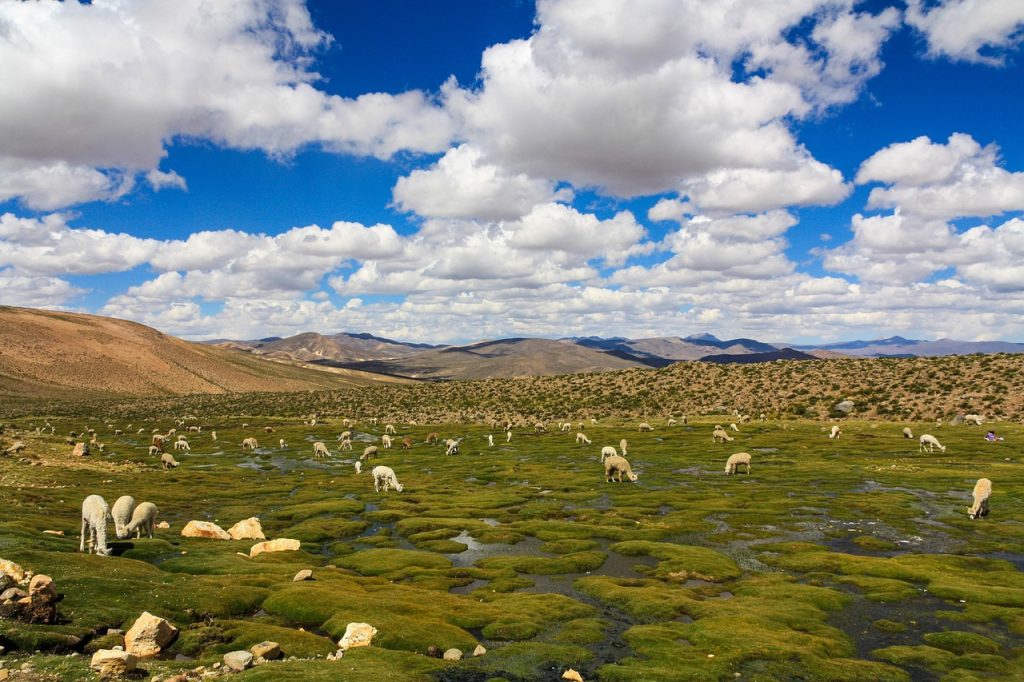
For generations, Aymara life revolved around a dual economy of herding and farming, carefully matched to the altitude. Llamas and alpacas grazed the higher, colder ground, providing wool, meat, and transport, while potatoes and other frost-hardy crops were grown on terraced or raised fields lower down.
Potatoes were not simply a crop but a technology in themselves. Aymara farmers developed hundreds of varieties suited to different soils and elevations, and they perfected chuño, a freeze-dried potato made by alternating nights of frost with days of sun and foot-pressing, a preservation method that could keep food edible for years, a crucial hedge against drought or crop failure.
Llama caravans once linked the altiplano to distant valleys and even the Pacific coast, exchanging wool and dried meat for maize, coca leaves, and other goods unavailable at high altitude. These trade routes, some of which predate the Inca by centuries, wove Aymara communities into a wider economic web across the region.
Much of this rhythm continues today, adapted rather than abandoned. Rural Aymara families still herd alpacas and llamas, still plant potatoes and quinoa by hand on terraced slopes, and still process chuño using techniques passed down largely unchanged, even as trucks and mobile phones have joined the llama caravan as tools of exchange.
Family, Community, and Ayllu
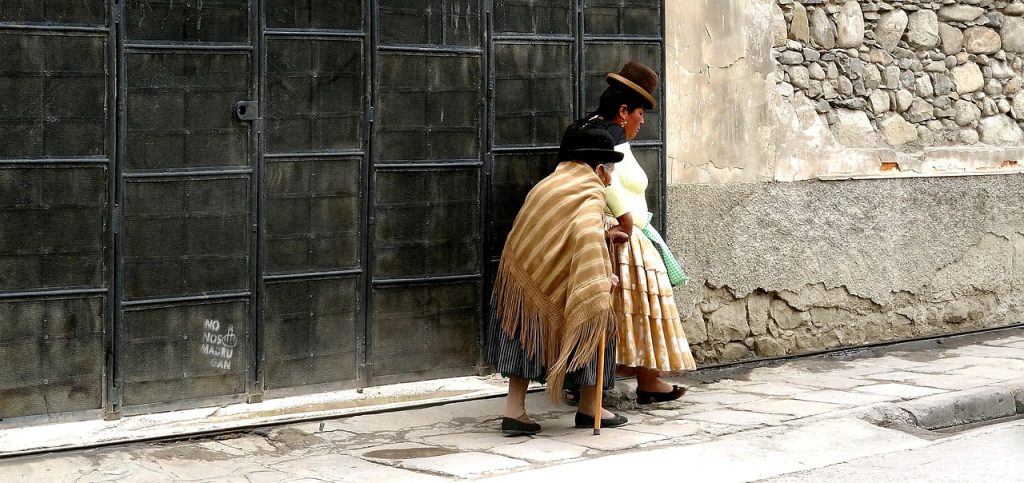
Traditional Aymara society is organized around the ayllu, a kinship-based community that manages land collectively and structures obligations between households. Membership in an ayllu is not just administrative; it carries responsibilities of labor exchange, mutual aid, and shared ritual life that bind families together across generations.
Central to ayllu life is ayni, a system of reciprocal labor in which neighbors help each other with planting, harvesting, building a roof, or hosting a festival, with the understanding that the favor will be returned in kind. This principle of balanced reciprocity extends beyond labor into how Aymara communities think about relationships with each other and with the natural world.
Leadership within an ayllu traditionally rotates through a system of cargos, or civic and religious duties, that community members take on for a set period, often at real financial cost to the household. Serving as a cargo holder brings prestige and responsibility, and passing successfully through these roles marks a person’s standing within the community.
Urban migration has changed but not erased these structures. Many Aymara who move to cities like La Paz or El Alto maintain active ties to their home ayllu, returning for festivals, land obligations, or family duties, keeping rural and urban Aymara life connected rather than separate.
Mountains, Spirits, and Pachamama
Aymara spirituality centers on Pachamama, the earth mother, who is thanked, fed, and asked for permission before planting, building, or undertaking any major task. Offerings of coca leaves, alcohol, or small ritual bundles called mesas are still buried or burned in her honor across the altiplano, in both rural communities and urban neighborhoods.
Mountains themselves are regarded as powerful beings, often called achachilas, ancestral spirits who protect specific communities and territories. Certain peaks are approached with particular reverence, and mountaintop shrines built centuries ago still receive offerings from people who consider these summits to be watchful relatives rather than inert rock.
Catholicism arrived with Spanish colonization and was never fully separated from these older beliefs. Instead, most Aymara communities practice a blended faith in which saints’ festivals, church processions, and Pachamama offerings coexist, often within the same celebration, without either tradition being treated as more authentic than the other.
This is not viewed by most Aymara as contradiction but as continuity. Pachamama rituals are performed alongside Mass, and priests in some highland parishes have come to accommodate or even participate in ceremonies honoring the earth, reflecting a spiritual landscape shaped by five centuries of coexistence rather than replacement.
Festivals, Cloth, and Everyday Ritual

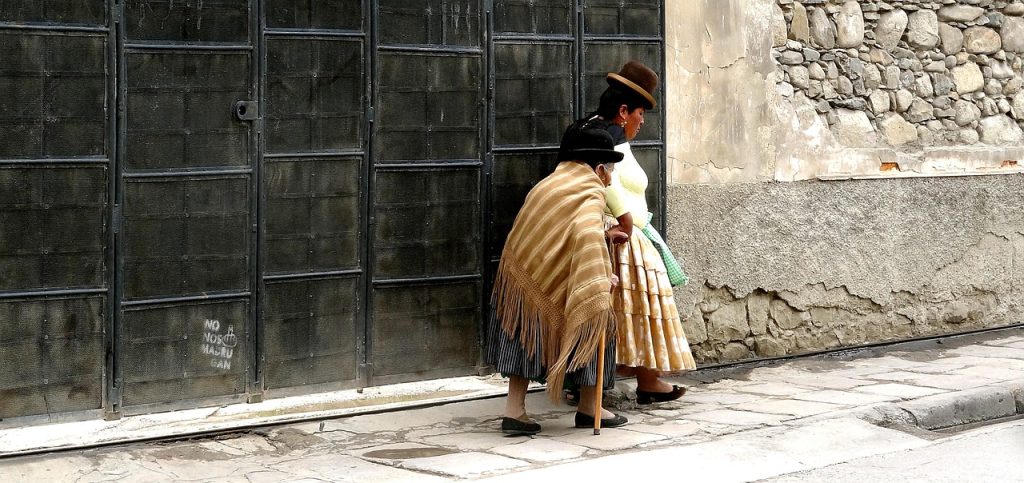
Aymara traditions are visible daily in dress, especially among women who wear the pollera, a full gathered skirt, paired with a bowler hat, a shawl, and long braids, an ensemble now recognized across Bolivia as a proud marker of Indigenous and highland identity rather than a relic of the past.
Ritual specialists known as yatiris play an important role in Aymara communities, reading coca leaves to offer guidance, conducting Pachamama ceremonies, and serving as a bridge between the everyday and the spiritual. Their knowledge, often inherited or learned over years of apprenticeship, remains actively sought after in both rural villages and the cities.
Music and dance accompany nearly every significant occasion, from harvests to weddings to religious feast days, performed with panpipes, flutes, and drums whose styles vary by region and season. Certain melodies are only played at specific times of the agricultural year, reinforcing the tight link between music, ritual, and the farming calendar.
Coca leaf chewing, called acullico, remains an ordinary part of daily and ceremonial life, used to combat fatigue and altitude sickness as well as to open social and spiritual exchanges. Sharing coca leaves is often the first gesture in any serious conversation, ritual, or negotiation among Aymara communities.
ok sections 5-8Weaving and Craft of the Highlands
Textiles are among the most sophisticated Aymara art forms, woven from alpaca and llama fiber on backstrap looms using techniques passed down through generations of women. Patterns are not decorative alone; specific motifs can indicate a weaver’s home community, marital status, or the particular occasion a garment is meant for.
The aguayo, a large multicolored cloth used to carry babies, goods, and market wares alike, is perhaps the most recognizable Aymara textile, folded and knotted with practiced efficiency across a woman’s back. A well-made aguayo can take weeks or months to complete and is treated as a valued possession, sometimes handed down or given as a significant gift.
Beyond textiles, Aymara artisans work in silver, wood, and ceramics, producing jewelry, ceremonial vessels, and carved items used in both daily life and ritual. Silver filigree work, in particular, has deep roots in the region and remains a valued craft in highland markets and workshops.
Today, cooperatives across Bolivia and Peru help Aymara weavers sell textiles to wider markets while working to prevent designs from being copied cheaply by outside manufacturers. These cooperatives frame weaving not as a fading folk craft but as a living, adaptable trade capable of supporting families in the present.
Weaving cooperatives run largely by women have also become spaces of economic independence, allowing artisans to set prices, train apprentices, and negotiate directly with buyers rather than relying solely on middlemen. Some cooperatives now document traditional patterns in written form for the first time, ensuring that specific regional designs are not lost as older weavers pass away.
Potatoes, Quinoa, and the Food of Altitude
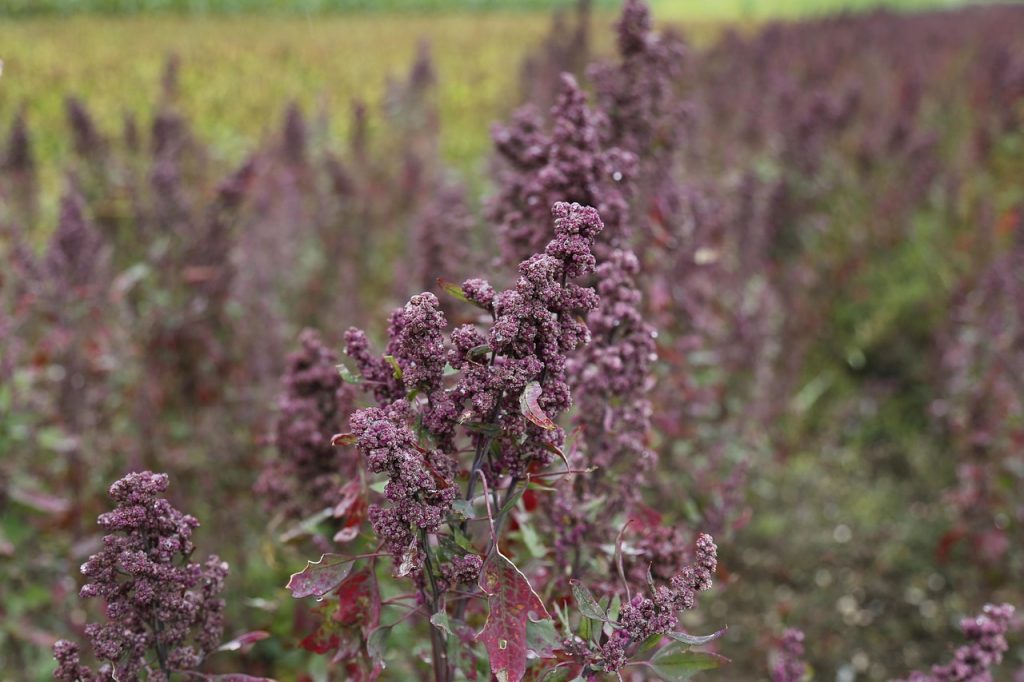
Aymara cuisine is built around crops that can survive frost, thin air, and poor soil, chief among them the potato, of which highland farmers cultivate an extraordinary range of varieties suited to different conditions. Quinoa, once a subsistence grain overlooked by outsiders, has become a global export while remaining a daily staple in Aymara kitchens, prepared as soup, porridge, or a side dish.
Chuño, the freeze-dried potato described earlier, remains a kitchen staple, rehydrated and added to stews, soups, and side dishes throughout the year. Its intense, slightly fermented flavor is considered a comfort food by many Aymara, evoking home in the way a familiar bread or broth might elsewhere.
Meat comes primarily from llama and alpaca, dried into charque or grilled fresh during celebrations, along with freshwater fish from Lake Titicaca such as trout and native species like the karachi. Soups thickened with grains and vegetables are common, designed to warm the body against the cold nights of the altiplano.
Markets in cities like El Alto and La Paz remain vital spaces where Aymara food culture is bought, sold, and passed on, with vendors selling everything from fresh quinoa to prepared street food, keeping highland recipes in daily circulation even as urban life reshapes how and where they are eaten.
Freshwater algae and small lake fish once supplemented the highland diet significantly, and some communities still gather muña, an aromatic Andean herb used both as a digestive tea and a seasoning, alongside other wild plants gathered seasonally from the puna grasslands. These foraged ingredients, though less central than potatoes or quinoa, add variety and medicinal value to a diet otherwise built around a narrow set of frost-resistant staples.
Carnival and the Calendar of Celebration
The Aymara festival calendar follows both the agricultural cycle and the Catholic liturgical year, producing celebrations that blend saints’ days with older seasonal observances. Carnival season, in particular, brings elaborate dances, costumes, and music to towns and cities across the altiplano, drawing participants and spectators from across the region.
The Great Power festival in La Paz has grown into one of Bolivia’s largest cultural events, featuring thousands of dancers in elaborate costume moving through the streets over the course of a single, exhausting, joyful day. Many dance groups rehearse for months, and participation is treated as a genuine act of devotion rather than simple performance.
Alasitas, a January festival centered on miniature objects believed to bring their full-sized equivalent into a person’s life over the coming year, reflects a distinctly Aymara blend of humor, hope, and ritual, with market stalls selling tiny houses, cars, diplomas, and money as symbolic wishes for the year ahead.
Agricultural festivals marking planting and harvest remain vital in rural communities, often coordinated with offerings to Pachamama and the achachilas described earlier. These events reinforce the calendar’s dual nature, at once Catholic and Indigenous, without treating the two as being in competition.
Beyond La Paz, smaller Aymara festivals persist in towns throughout the altiplano, often centered on a local patron saint but incorporating llama sacrifices, coca offerings, and brass bands playing huayno music long into the night. These town-level celebrations, less famous than Carnival or Alasitas, remain some of the most authentic windows into how Aymara communities balance devotion, community obligation, and simple enjoyment.
ok sections 9-11From Tiwanaku to Bolivia

After the fall of Tiwanaku and the rise of independent Aymara kingdoms, the Inca conquest of the fifteenth century brought the altiplano under a new imperial order, though Aymara elites often retained local influence as intermediaries. This arrangement collapsed with the Spanish invasion of the sixteenth century, which imposed forced labor systems, including the brutal mita draft that sent countless Aymara men into the silver mines of Potosí.
Colonial rule reorganized Aymara land and labor to serve Spanish extraction, yet uprisings punctuated the centuries that followed, most notably the eighteenth-century rebellion led by Tupac Katari, who laid siege to La Paz for months before his eventual execution. His memory endures as a symbol of Aymara resistance, invoked in political movements to this day.
Independence in the nineteenth century replaced Spanish colonizers with criollo elites who continued to marginalize Indigenous communities, stripping communal land through liberal reforms that favored large estates. Aymara communities resisted these losses through legal appeals, uprisings, and the quiet persistence of ayllu structures that outlasted hostile legislation.
The twentieth century brought Bolivia’s 1952 revolution, land reform, and eventually a new constitutional order in 2009 that formally recognized Bolivia as a plurinational state, explicitly naming the Aymara among its foundational nations. This shift followed decades of Aymara-led political organizing, culminating in a level of formal recognition unmatched in most of the region’s history.
The Aymara Today
Today more than two million Aymara live across Bolivia, Peru, Chile, and Argentina, with the largest concentration in Bolivia, where they make up a substantial share of the national population and hold real political influence. Evo Morales, Bolivia’s first Indigenous president, drew heavily on Aymara and broader Indigenous political movements during his time in office, reshaping the country’s relationship with its Indigenous majority.
Cities like El Alto, perched above La Paz, have become centers of Aymara urban life, blending highland traditions with modern commerce, media, and politics. Aymara business owners, radio hosts, architects, and academics move fluently between Indigenous heritage and contemporary urban life, refusing any suggestion that the two are incompatible.
Challenges remain, including climate change’s effect on glaciers and water supplies that highland farming depends on, ongoing rural-to-urban migration, and the steady pressure of Spanish-language media on younger generations’ fluency in Aymara. Communities and universities continue working to keep the language and its knowledge systems actively used rather than simply documented.
What stands out most about the Aymara today is not survival alone but visible, confident presence, in national politics, in city skylines shaped by distinctive Aymara-influenced architecture, in music and fashion, and in a language still spoken by grandparents and taught anew to grandchildren.
Aymara migration has also extended beyond Bolivia and Peru, with communities established in Arica and other northern Chilean cities, as well as smaller populations in Argentina’s Jujuy province, each adapting Aymara traditions to different national contexts while maintaining contact with family and ceremony back on the altiplano. This cross-border presence means that Aymara identity today is shaped as much by transnational movement as by any single fixed territory.
Further north along the Andes, in Paraguay’s lowlands, another resilient nation tells a very different story of adaptation: the Guarani.
More Nations, More Stories
The Aymara are one of many Indigenous nations across the Americas whose histories, languages, and daily lives continue to shape the continent. A few others worth exploring:
- The People Who Emerged Into This World, the Story of the Navajo
- The People Who Never Left the Mountains, the Story of the Quechua
- The People Who Never Vanished, the Story of the Maya
- The People of the Seven Council Fires, the Story of the Lakota
- The People of the Land Who Were Never Conquered, the Story of the Mapuche
- The People of Ice and Sea, the Story of the Inuit
- The Islands of the People, the Story of the Haida
- The Four Directions People, the Story of the Cree
- The Principal People, the Story of the Cherokee


5 thoughts on “Aymara: A People Whose Words Refuse to Die”