In the seasonally flooded plains of the Beni department in northern Bolivia live the Movima, a people whose homeland is defined by the yearly rise and fall of great tropical rivers. Their country lies at the western edge of the Amazon basin, a low land of savanna, wetland, and gallery forest that turns to shallow lake in the rains and dries to grassland in the months that follow. To live here is to live by the rhythm of the water, and the Movima have done so for a very long time.
The Movima are notable to linguists above all because their language stands entirely alone, a true isolate with no proven relatives anywhere. In a region of many small and vanishing tongues, this singular language marks the Movima as heirs to a history reaching far back beyond the reach of comparison. This article follows the Movima through their origins, their remarkable language, their watery homeland, and the way of life and struggles that define them today.
Contents
- Origins of the Movima People
- The Meaning of the Movima Name
- The Movima Language
- Homeland in the Beni Floodplains
- The Old Way of Life
- Society and Village Life
- Religion and the Spirit World
- Traditions and Oral Memory
- Crafts and Weaving
- Food and the Fishing Waters
- Festivals and Community Gatherings
- History and Contact
- The Movima Today
Origins of the Movima People
The Movima have lived in the Beni lowlands of northern Bolivia for a very long time, part of the ancient human presence in a region once home to remarkable earthwork-building societies. Their ancestors adapted to a landscape that floods and dries each year, developing a way of life suited to its shifting waters.
Archaeologists have found across the Beni the traces of raised fields, causeways, and mounds built by peoples who managed the floodplain on a grand scale in the centuries before European contact. Whether or not these are the direct work of Movima ancestors, they reveal a deep history of human ingenuity in this land.
The Movima themselves emerge into the written record with the coming of missionaries, but their roots in the region run far deeper. Their singular language, unrelated to any other, points to a long and separate development in the western reaches of the Amazon.
The Beni is famous among archaeologists for the extensive pre-Columbian earthworks that dot its plains, evidence that large populations once managed the floodplain with raised fields and canals. This deep record of human settlement forms the backdrop against which the Movima story unfolds.
Whatever the exact line of descent, the Movima belong to this long tradition of life adapted to the flooded lowlands, their culture shaped by the same waters that shaped those who came before them.
The scale of the ancient earthworks suggests that the Beni once supported far larger and more organized populations than the region holds today, a reminder that the lowlands have a rich and complex human past. The Movima are among the peoples who carry that history forward.

The Meaning of the Movima Name
The name Movima has been used for centuries to refer to this people and their language, appearing in colonial and mission records as the label for the communities of the central Beni. Its precise origin is not clearly known, a common situation for peoples first named in the records of outsiders.
Whatever its source, the name came to identify a distinct group set apart from their neighbors by their unique language. Among the many peoples of the Beni, the Movima stood out as speakers of a tongue that resembled none of the others around them.
Today the Movima carry the name as a marker of a distinct identity, one of the recognized indigenous peoples of lowland Bolivia. The word ties together the community, the language, and the homeland into a single sense of belonging.
Colonial and mission documents preserve the name across the centuries, applying it consistently to the communities of the central Beni whose speech set them apart. In this way the name became fixed as the marker of a distinct people.
For the community itself, the name carries a quiet pride, a way of asserting continuity with ancestors who spoke the same unique tongue and lived by the same flooded rivers.
The Movima Language
The Movima language is a genuine isolate, meaning that despite extensive study it has never been convincingly linked to any other language or family. It stands entirely alone, a survivor of a linguistic lineage whose relatives, if they ever existed, have long since vanished.
This isolation makes Movima precious to linguists, offering a rare and independent example of how a human language can be structured. Its grammar and sound system carry features found nowhere among its neighbors, a testament to its long separate history.
The language remains spoken, especially by older people, though Spanish has become dominant in schooling and public life, and the number of fluent speakers has declined. Documentation and teaching efforts aim to record and revive the tongue, aware that its loss would erase something irreplaceable.
The status of Movima as an isolate places it in a small and remarkable category of languages worldwide that have no known relatives. Each such language is a unique record of the human capacity for speech, and its loss would be irreplaceable.
Linguists who have studied Movima describe features of its grammar that are unusual and intricate, offering fresh insight into the range of ways human languages can work. This scientific value adds urgency to the effort to keep the language alive.
Because a single isolate can shed light on questions that comparison between related languages cannot answer, the preservation of Movima matters to the understanding of language in general. Scholars regard each isolate as a distinct and precious experiment in human expression.
Recordings of native speakers, dictionaries, and grammatical descriptions produced in recent years form a growing archive that may allow the language to be taught even where daily use has faded. This documentation is a race against time that the community and its allies are determined to win.
Homeland in the Beni Floodplains
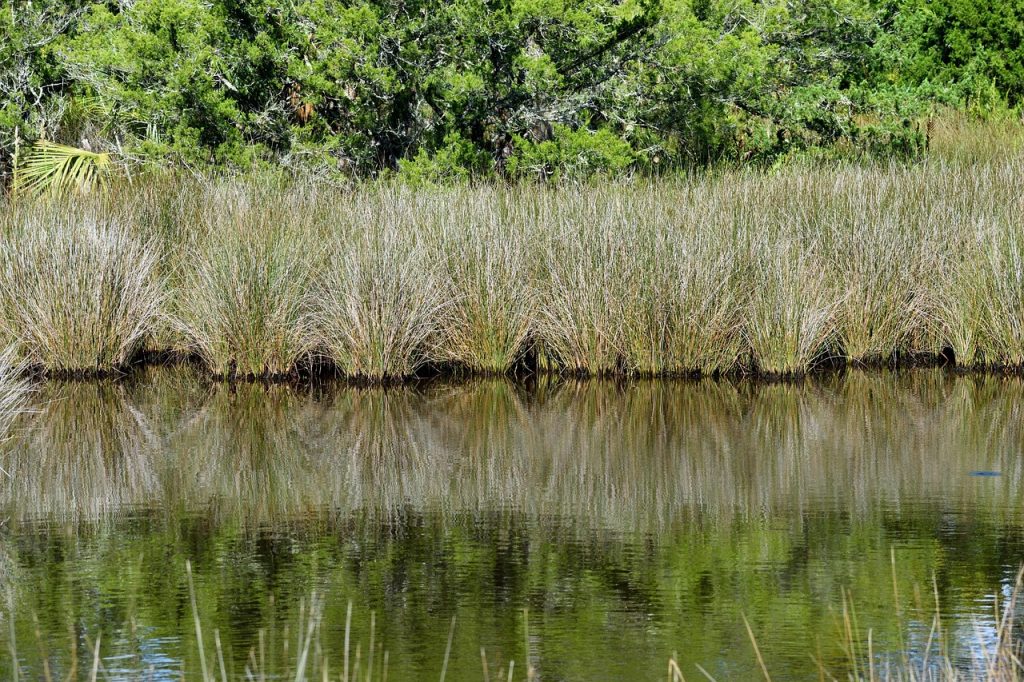
The Movima homeland lies in the central Beni, a vast lowland plain that floods each rainy season as the rivers overflow their banks and spread across the savanna. For months the land becomes a shallow inland sea dotted with islands of higher ground, then slowly drains as the dry season returns.
This yearly cycle governs everything, from where people can live and farm to when fish are abundant and when the savanna can be crossed on foot. The Movima built their lives around the higher ground that stays dry and the waters that bring both danger and plenty.
Gallery forests line the rivers, and the wetlands teem with fish, birds, and other wildlife, making the floodplain a rich if demanding home. The land itself, alternately flooded and dry, has shaped Movima culture as surely as any human influence.
When the floods come, travel across the Beni is by canoe, and the scattered patches of high ground become islands linked by water. As the dry season advances, the same routes turn to grassland that can be crossed on foot or horseback.
This dramatic seasonal transformation is the defining feature of the Movima homeland, demanding a flexibility and knowledge that few other environments require of their inhabitants.
The wetlands and gallery forests support a great variety of wildlife, from fish and caimans to birds and mammals, making the floodplain a place of biological richness. This abundance underpinned the traditional Movima economy of fishing, hunting, and gathering.
The rivers of the Beni, tributaries of the great Amazon system, are the arteries of the region, and Movima life has always followed their meanders and moods. To know the rivers is to know the homeland.
The Old Way of Life
The Movima traditionally lived by fishing, farming, and gathering, tuned closely to the flood cycle of their land. In the dry season they farmed the higher ground and hunted the savanna, and when the waters rose they turned to fishing the swollen rivers and flooded plains.
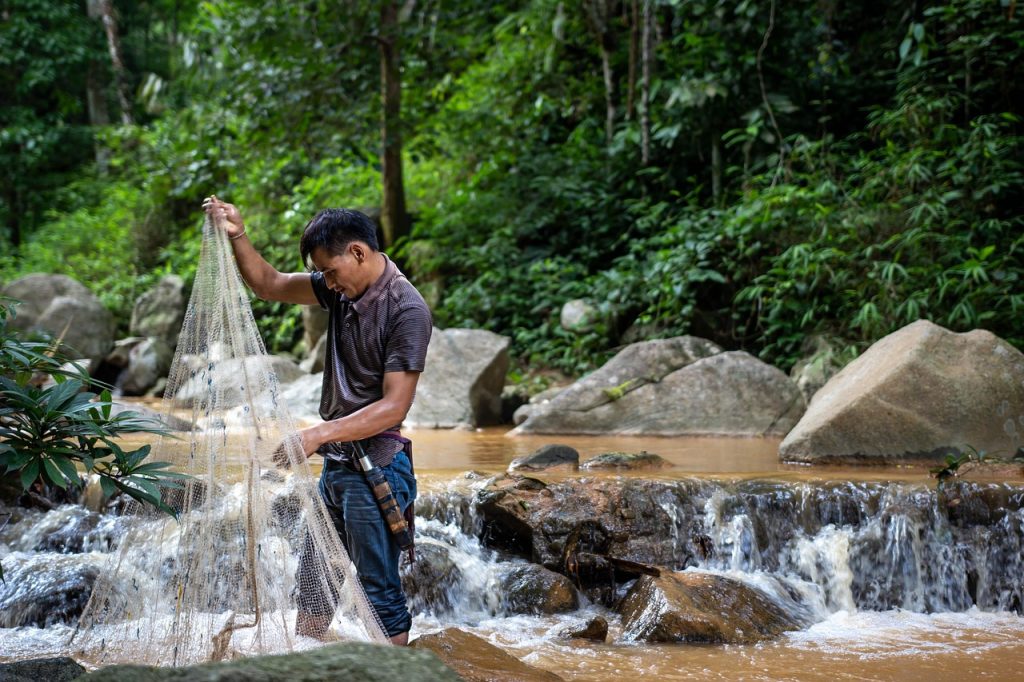
Fishing was central to life, and the abundance of the flood season provided a wealth of fish that could be caught, dried, and stored. The Movima developed the knowledge and tools to harvest this bounty, timing their movements to the rise and fall of the water.
Farming on the dry ground yielded manioc, maize, and other crops, while the forest and savanna added game, fruit, and useful materials. This combination of fishing, farming, and gathering, each in its season, sustained the community through the turning year.
The Movima learned to read the signs of the coming flood and the returning drought, timing their planting, fishing, and movement to the calendar of the water. This knowledge, built over generations, was the foundation of survival in a land of extremes.
Dried fish and stored crops carried the community through the lean stretches of the year, a practical wisdom born of life in a place of feast and scarcity by turns.
The alternation of flood and drought demanded a way of life that could shift with the seasons, and the Movima met this challenge with a flexible and knowledgeable use of their land. Their adaptation to the floodplain stands as a quiet achievement of human ingenuity.
Children absorbed the skills of fishing and farming by taking part from an early age, so that the knowledge of the flood cycle became second nature long before they reached adulthood.
Society and Village Life
Movima society centers on the village and the extended family, with communities set on the higher ground that escapes the annual flood. Kinship binds households together, and cooperation in fishing, farming, and building is woven into daily life.
The mission era, and later the growth of towns and ranches, reshaped settlement patterns, drawing many Movima toward established centers. Yet the ties of family and community endured, providing a framework of mutual support in a challenging environment.
Leadership traditionally rested with respected elders and heads of families, and today elected authorities and indigenous organizations also represent the community. Through these structures the Movima manage their affairs and press their collective interests.
Life on the higher ground concentrated communities in the places that stayed dry, and these became the anchors of Movima settlement. Around them the seasonal round of fishing and farming played out year after year.
The pull of towns and ranches in recent generations has drawn many Movima into wider networks of work and trade, yet the village and family remain the core of social life.
Cooperation was not merely a virtue but a necessity in a land where the flood could isolate communities and the dry season open the plains again, and mutual aid ran through the fabric of Movima life. The community depended on the willingness of its members to help one another.
Indigenous organizations now give the scattered communities a common voice, linking the villages of the plain into a wider effort to protect their shared interests.
Religion and the Spirit World
Movima religious life blends Catholicism, introduced during the mission period, with older beliefs about the spirits of the water, forest, and land. The rivers and wetlands that dominate the homeland are peopled in traditional belief with powerful beings who must be respected.
Specialists once mediated between the community and these spirits, curing illness and ensuring success in fishing and hunting through knowledge passed down over generations. Elements of these older practices persist alongside Christian devotion.
The result is a religious world in which the saints of the church and the spirits of the flooded land coexist, each with a claim on the attention of the living. For the Movima the sacred is inseparable from the waters that give and take away.
Beliefs about the master spirits of the fish and game, who must be respected if the waters are to yield their harvest, reflect a worldview in which humans are one part of a living and watchful landscape. Such ideas shaped the ethics of hunting and fishing.
The blending of these older beliefs with the devotions of the church produced a religious life that is distinctly Movima, rooted in the particular character of the flooded land.
Rituals of healing and protection, drawing on the knowledge of specialists, addressed the dangers of illness and the uncertainties of the harvest, weaving the spiritual and the practical into a single fabric of belief.

Traditions and Oral Memory
Much of Movima tradition lives in oral memory, in the stories, songs, and knowledge passed from elders to the young. These carry the history of the people, the lore of the flooded land, and the practical wisdom needed to live by the rhythm of the water.
Dance and music mark community celebrations, blending indigenous roots with influences absorbed over centuries of contact. Such performances are moments when the community gathers to affirm its shared identity and to enjoy one another’s company.
The transmission of these traditions has grown harder as Spanish spreads and young people move toward the towns, but they remain a vital thread of Movima identity. Efforts to record and teach them seek to ensure that the memory is not lost.
Elders hold a special place as the keepers of memory, and the passing of their knowledge to the young is understood as essential to the survival of the people. In their stories the history and identity of the Movima are preserved.
The challenge of transmission in an age of Spanish schooling and urban migration has made the deliberate teaching of tradition more important than ever.
Songs tied to fishing, to celebration, and to the passing of the seasons carry both entertainment and instruction, folding the knowledge of the land into forms that are easy to remember and share. In them the practical and the poetic meet.

Crafts and Weaving
Movima craft draws on the materials of the floodplain, above all the reeds, palms, and fibers that grow in the wetlands and forest. From these the people weave mats, baskets, and other everyday goods, shaping the resources of the land into useful and lasting forms.
Weaving is a skill passed within families, and the making of mats and containers ties practical need to inherited technique. Each object reflects a close knowledge of which plants serve which purpose, gathered across generations of life on the floodplain.
Alongside weaving, the Movima make tools, canoes, and household goods suited to a life lived by the water. In every case the craft expresses a deep familiarity with the particular gifts of their wetland home.
The wetlands supply reeds and fibers in abundance, and the skilled hands of Movima weavers turn these into the mats, baskets, and containers that furnish daily life. The craft embodies a practical mastery of the floodplain’s resources.
Canoe-making is another essential skill in a land where water is the highway for much of the year, and the making of a good canoe is a matter of both utility and pride.
The knowledge of which plants to gather, when, and how to prepare them is itself a form of inherited wealth, and the finished mats and baskets represent the meeting of natural material and human skill. Such crafts tie the people intimately to their environment.
The palm and reed used in weaving are gathered according to long-established practice, and the resulting mats serve as flooring, bedding, and dividers in the home. In such everyday objects the intimate bond between the Movima and their wetland is quietly expressed.

Food and the Fishing Waters
Fish is the heart of Movima food, drawn in abundance from the rivers and flooded plains during the wet season and dried for use through the leaner months. The flood brings a harvest of fish that has long been the mainstay of the community’s diet.
To this the Movima add the crops of the dry ground, manioc, maize, plantains, and rice among them, along with game and the fruit of the forest. The combination reflects the twin faces of the homeland, watery in one season and grassy in the other.
Food gathering follows the flood calendar closely, and the storing of dried fish and other foods bridges the times of scarcity. To eat well in the Beni is to know the rhythm of the water and to work with it rather than against it.
The great fish harvest of the flood season is a defining event, when the swollen waters bring an abundance that sustains the community through the year. Techniques of catching, drying, and storing fish are central to Movima food culture.
Shared meals and the exchange of food strengthen the ties of kinship and community, as they do among peoples the world over.
The contrast between the abundance of the flood and the relative scarcity of the deep dry season taught the Movima the value of foresight and storage, and their food culture reflects this careful management of plenty and want.

Festivals and Community Gatherings
Movima festivals are tied both to the Catholic calendar inherited from the missions and to the rhythms of community life in the floodplain. Feast days bring people together for music, dance, and shared food, filling the villages with celebration.
These gatherings are occasions of reunion, drawing together families and neighbors who may live scattered across the plain. In the shared festival the bonds of kinship and community are renewed and the identity of the people affirmed.
Music and dance carry the celebrations, blending old and new in performances that express the character of the Movima. Such festivals mark the high points of the year and the enduring vitality of community life.
The feast of a village’s patron saint is often the high point of the year, drawing the community together for days of celebration. Preparation for such an event can occupy a village well in advance.
In the music, dance, and shared food of these occasions the Movima express the vitality of a community that has endured despite the pressures of history.
Visitors and returning kin swell the villages at festival time, and the celebrations become a stage on which the community displays its music, its cooking, and its enduring sense of itself.

History and Contact
The Movima entered recorded history with the coming of missionaries to the Beni in the eighteenth century, who gathered communities into mission settlements as they did across lowland Bolivia. This contact brought Christianity, new crops, and profound disruption alike.
The following centuries brought the rubber boom, which drew harsh labor demands into the Amazon lowlands, and the steady expansion of cattle ranching across the Beni plains. Both pressed heavily on the Movima and their land, reducing and reshaping their communities.
Through disease, forced labor, and the loss of territory, the Movima endured as a distinct people, holding to their unique language and their knowledge of the flooded land. Their history is one of survival against long and heavy odds.
The rubber era in particular brought outsiders and their demands deep into the Beni, and many indigenous people, Movima among them, suffered under the labor regimes it imposed. The scars of that period marked the region for generations.
The advance of cattle ranching transformed the savanna and pressed on Movima land, adding a slow and grinding pressure to the more sudden shocks of boom and epidemic.
Yet through every wave of disruption the Movima held to the core of their identity, above all their singular language, refusing to let the pressures of the outside world dissolve what made them a distinct people. This resilience is the deep theme of their history.
The demarcation of indigenous territories in the Beni in recent decades marked a hopeful turn, giving legal weight to Movima claims to land their ancestors had always used, though the pressures of the frontier did not disappear.

The Movima Today
Today the Movima number in the thousands, living in the towns and villages of the central Beni, with the town of Santa Ana a notable center of their community. They combine fishing and farming with participation in the wider economy and political life of the region.
The Movima language, though endangered, has become a focus of documentation and revitalization, valued as a unique isolate that carries a history found nowhere else. Community members and linguists work together to record and teach it to the young.
Land and water remain central concerns, as ranching, deforestation, and the pressures of development affect the floodplain that has always been their home. Through their organizations the Movima press to protect their territory and to keep their distinctive way of life alive.
Santa Ana del Yacuma and other centers in the Beni serve as focal points for the Movima community, places where the language and traditions are still to be found. From these towns the community engages with the wider world.
Younger Movima increasingly take up the cause of their language and land, joining the broader indigenous movement in Bolivia and bringing new energy to the defense of their heritage.
The recognition of indigenous rights in Bolivia in recent decades has given the Movima new tools to defend their land and culture, and their organizations have taken up these instruments in the ongoing effort to secure their future.
The story of the Movima, a small people with a language like no other, is in the end a story of persistence, of holding fast to a distinct identity in a land shaped by water and by centuries of change.
Related Peoples of the Region
- Witoto and Bora Peoples of the Northwest Amazon and Their World of the Maloca
- Cofan People of the Ecuadorian Amazon and Their Fight to Save the Forest
- Nasa People of the Colombian Andes and Their Enduring Struggle for the Land
- Kamsa People of the Sibundoy Valley and Their Carnival of Forgiveness
- Bororo People of the Mato Grosso Savanna and Their Circle of the Dead
- Chiquitano People of the Bolivian Lowlands and Their Baroque Mission Legacy