Karaköy Palace has taken its place in our recent architectural history as an experiment carried out by Istanbul-born Levantine Guilio Mongeri, one of the leading architects of the period, in the late 1910s. Although it was initially planned that the building would have four floors, the condition of being used together by three separate organizations affected the design.
In a way, the unusual asymmetry perceived in the façade arrangement is a reflection of this fiction. The entrance in the middle is the ishani entrance. The entries on the right and left are probably the sections reserved for independent banking institutions. The entrance on the left is emphasized by a semicircular arch framed by porphyry panels. Similar arches are repeated on both doors and windows.
The upper part of the entrance on the left, extending to the roof, contains the most variable interpretation of the entire facade: The two-storey “baymba-erker” in the form of an arc just above the entrance turns into a balcony on the third floor. Small balconies on the same floor are placed above the windows of the two floors below, tending to save the two exaggerated moldings enriched with small stone consoles from superficial stability.
The window crowned with a broad arch between two towers with semicircular harpustas at roof level is the end of the left entrance’s structure, which makes the entire facade asymmetrical. The dense floral and geometric decorations, which are used in a balanced manner on the entire façade, and the interpretation of classical period Byzantine building elements are like Mongeri’s homage to Byzantine architecture, which he knew very well as a teacher, centuries later.
Mongeri designed and implemented the building with the same care and meticulousness as in all his buildings, and when it was completed, he moved his own workplace here. There are interesting buildings in Karaköy Square, most of which were built by foreign architects and used as workplaces in the last century. These are the first architectural examples that fit this style of working in the Ottoman society, which was trying to learn capitalist business relations along with westernization.
One of these is the Karaköy palas, the work of Italian Mongeri. Now some banks have branches here. This is a very stylish and ostentatious building. The architect’s signature can be seen next to one of the arched windows on the ground floor. On the opposite row, there was a small statue of Mary in a niche on the facade of the building that is now Al-baraka, but it is now gone. No one knows where that statue went. But maybe Al-Baraka officials know.
You May Like
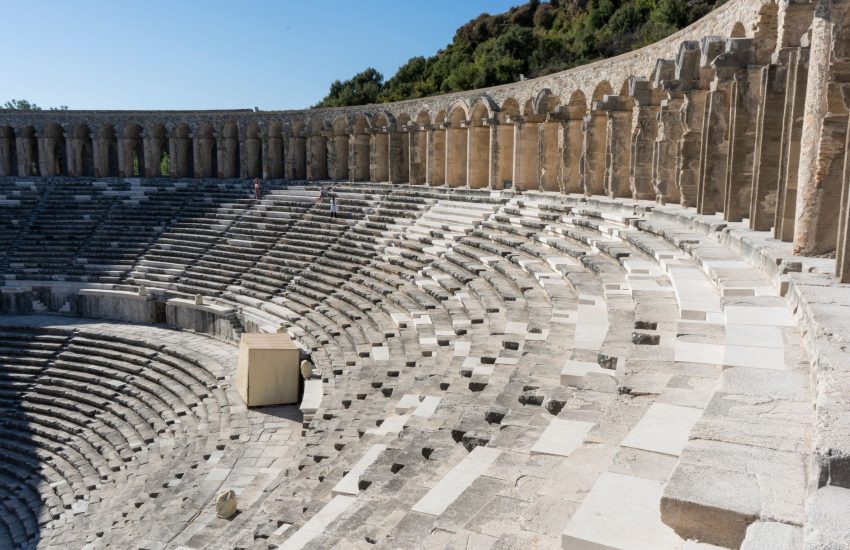
Aspendos Ancient Theater Travel Guide