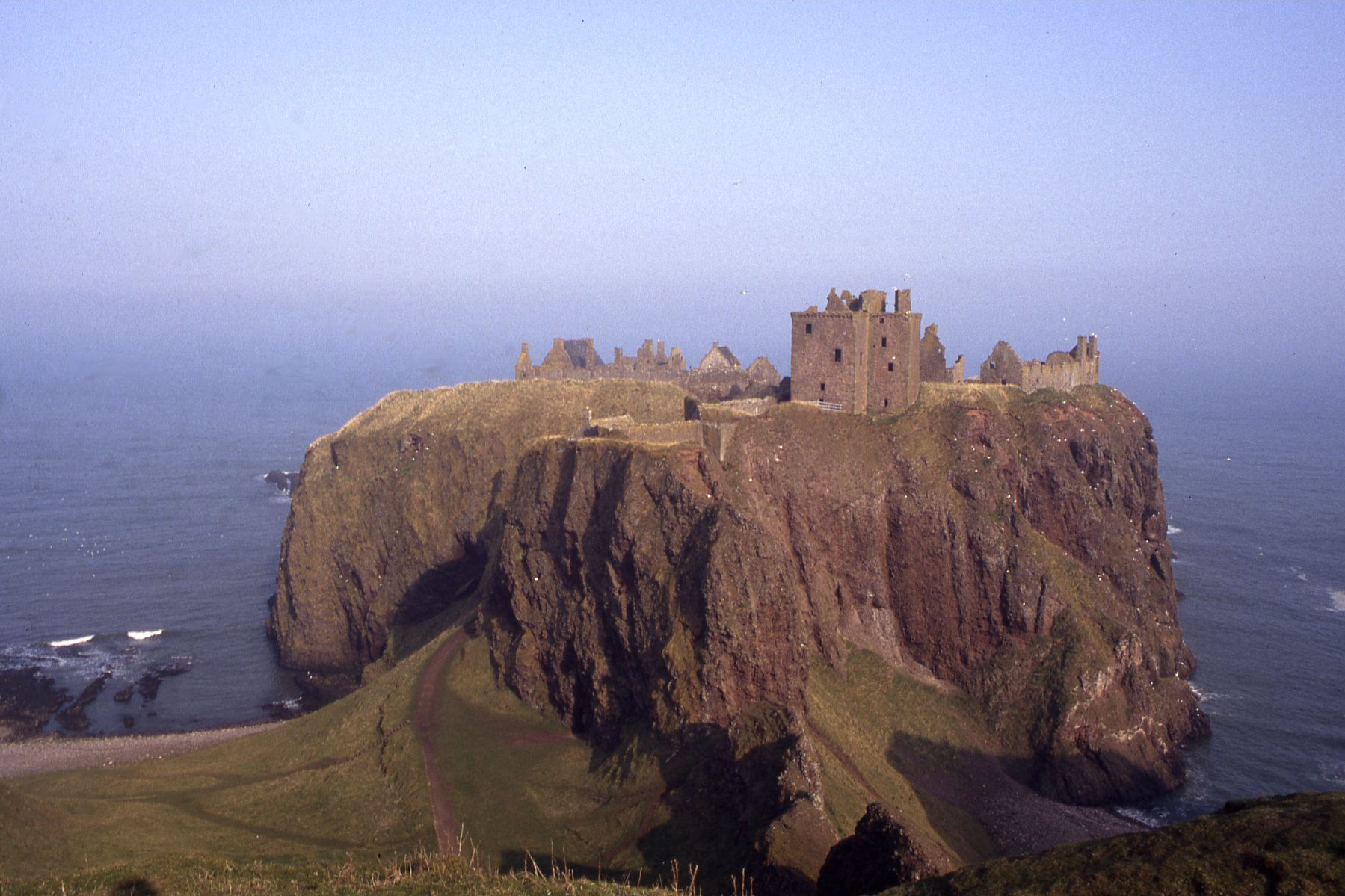
Some castles impress you. Dunnottar stops you in your tracks. Perched on the flat top of a great rock that juts out into the North Sea, all but severed from the Aberdeenshire coast by plunging cliffs on every side, it is one of the most spectacularly sited fortresses in the whole of Britain, perhaps in Europe. To reach it you must descend a steep path, cross a narrow neck of land, and climb again to the summit, and as you do the ruined buildings rise ahead of you like something from a dream, ringed by sea and sky, battered by wind and spray. It is the kind of place that, once seen, is genuinely never forgotten.
But Dunnottar is far more than a stunning view. Behind its almost impregnable position lies one of the richest and most dramatic histories of any castle in Scotland. This was the great stronghold of the Earls Marischal, among the most powerful nobles in the land; it was here that William Wallace won a fierce and bloody victory; and it was within these walls that the crown jewels of Scotland were famously hidden and saved from destruction during one of the darkest hours in the nation’s history. Its cliffs have witnessed sieges, imprisonment, cruelty, and courage on an epic scale.
So this is a castle where the drama of the setting is matched by the drama of the story. From ancient forts and a saint, through the wars of independence and the hiding of a nation’s crown, to the grim imprisonment of religious dissenters in a clifftop dungeon, Dunnottar has seen it all. Let’s make the descent, cross the neck of rock, and climb up into one of the most remarkable castles in Scotland.
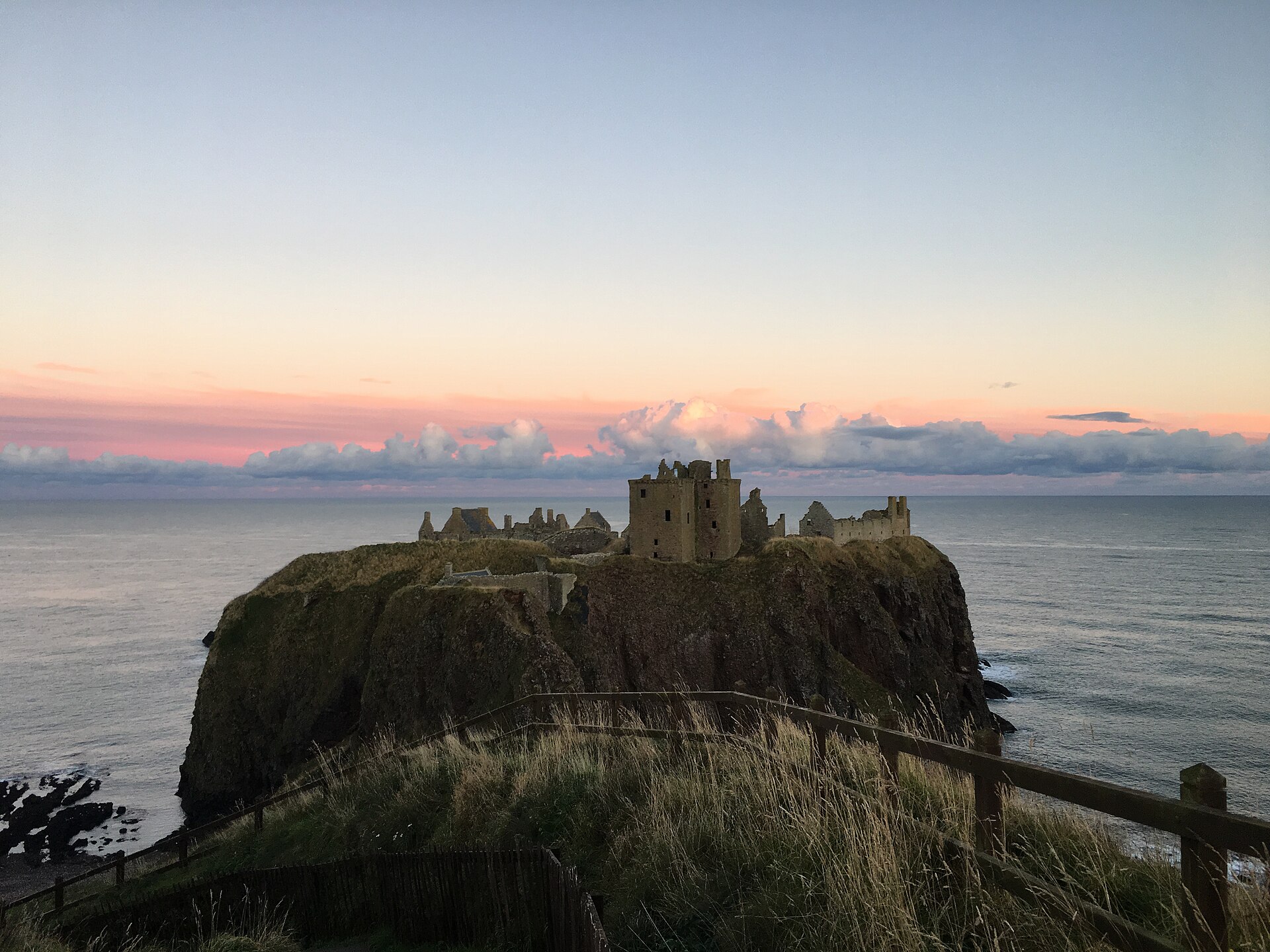
Table of Contents
- A Fortress the Sea Almost Made
- Saints and the Deep Past
- Wallace and a Terrible Victory
- The Great Earls Marischal
- Power on the North-East Coast
- Hiding the Crown of Scotland
- Eight Months Against Cromwell
- The Whigs’ Vault: A Grim Prison
- The Only Way Up
- A Complex on the Clifftop
- Decline, Forfeiture, and Ruin
- A Ruin That Draws the World
- Sea, Sky, and Changing Light
- Planning Your Visit
- Nearby Castles
- Why Dunnottar Is Never Forgotten
A Fortress the Sea Almost Made
Dunnottar owes its extraordinary strength to nature more than to any builder. The castle stands on a great flat-topped rock, a headland that thrusts out into the North Sea and is joined to the mainland only by a narrow, steep-sided neck. On almost every side the ground falls away in sheer cliffs, dozens of metres straight down to the crashing waves, so that the sea itself does most of the work of defence, leaving only a single, easily guarded approach.
It is hard to imagine a more naturally defensible site. An attacker could not surround the castle, could not bring up siege engines across the cliffs, and could not easily starve out a garrison supplied, when needed, from the sea. The only way in was up that narrow path and through a heavily fortified gateway, where a handful of determined defenders could hold off a far larger force. Nature had built a fortress here, and all that remained was for people to crown it with walls.
That is exactly what generations did. The flat summit of the rock, covering a substantial area, gave ample room for a whole complex of buildings, and over the centuries a great castle grew up there, with towers, halls, a chapel, storehouses, and lodgings, all protected by the cliffs and the sea. The result was one of the strongest fortresses in Scotland, a place that could defy almost any enemy.
So the story of Dunnottar begins with its rock. Everything that happened here, every siege withstood, every treasure hidden, every prisoner held, was shaped by the near-impregnable position that the sea and the cliffs had created. It is a castle that the landscape itself seemed to demand.
It is worth pausing on the psychological effect of such a place. To an approaching enemy, the sight of Dunnottar, riding its rock amid the waves, walls rising sheer above the cliffs, must have been deeply discouraging, a visible declaration that this was a fortress not worth the blood it would cost to take. Much of a great castle’s strength lay in exactly this power to intimidate, and few castles anywhere intimidate as effectively as Dunnottar.

Saints and the Deep Past
Like so many great Scottish strongholds, Dunnottar’s history reaches back far beyond the medieval castle. The rock was a place of importance in the early centuries of Scottish history, in the age of the Picts and the coming of Christianity. Its name and its early associations suggest that it was fortified in these distant times, a natural stronghold on a dangerous coast.
Tradition links the site to the early church, and it is said that a chapel was founded here in the very early days of Christianity in this part of Scotland, associated with an early saint. Long before the age of earls and crown jewels, then, the rock was already both a fortress and a holy place, a pattern seen at many ancient Scottish sites where defensive strength and spiritual significance went together.
The deep past of Dunnottar is shadowy, known more from tradition and scattered evidence than from full records, but it establishes the rock as a place of long significance. For as far back as we can see, this dramatic headland drew people to fortify it and to worship on it, a natural focus of power and faith on the north-east coast.
By the time the great medieval castle rose, then, Dunnottar already had centuries of history behind it. The stronghold whose ruins we admire today was the latest and grandest expression of a role the rock had played since the dawn of Scottish history, as a fortress against the dangers that came from land and sea alike.
This pattern, of a naturally strong headland serving as both fort and holy place, was common along the Scottish coast, where dramatic rocks and promontories often attracted both defenders and the early church. Dunnottar is among the finest examples, its sheer, sea-girt rock offering exactly the kind of set-apart, defensible site that appealed to Pictish warlords and early Christian missionaries alike, each drawn to it for their own reasons.

Wallace and a Terrible Victory
Dunnottar’s first great appearance in recorded drama comes during the Wars of Scottish Independence, and it is a grim one. In 1297, as Scotland rose against the occupying forces of Edward I of England, the patriot leader William Wallace is said to have attacked the castle, then held by an English garrison, in one of the fierce actions of that desperate struggle for freedom.
According to tradition, the English soldiers, when the castle fell, took refuge in the church within its walls, hoping for sanctuary. But this was a merciless war, and the story tells that Wallace’s men set fire to the church, burning the trapped garrison in a terrible act of vengeance. Whatever the exact truth of the tale, it captures the brutal reality of the wars of independence, in which quarter was often neither asked nor given.
The episode fixed Dunnottar in the story of Scotland’s fight for freedom, associating it with the most famous of all Scottish patriots. It is a dark and bloody chapter, but it speaks to the castle’s importance: a stronghold worth taking, worth fighting for, and worth remembering in the long national struggle against English domination.
That Dunnottar should have played a part in Wallace’s war is fitting, for the castle would go on to be bound up with Scotland’s independence and identity again and again, most famously in the saving of the nation’s crown jewels centuries later. From the very start, its history was entwined with the fate of Scotland itself.
The Great Earls Marischal
For much of its history, Dunnottar was the principal stronghold of one of the greatest noble families in Scotland: the Keiths, who held the ancient and prestigious office of Earl Marischal. This hereditary title made them responsible for the royal regalia and for the safety of the king’s person at gatherings of the estates, and it placed them among the very highest ranks of the Scottish nobility.
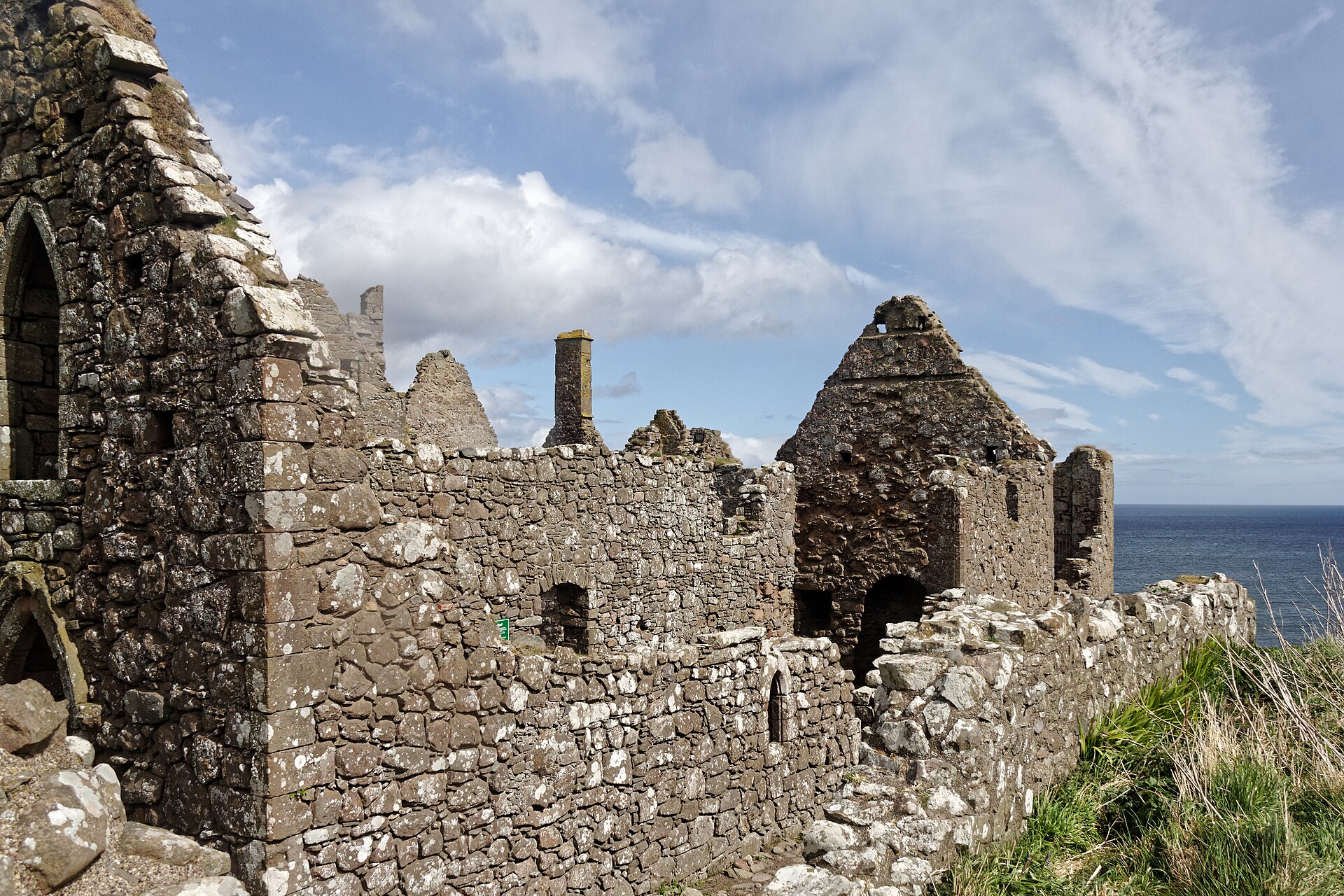
From their clifftop fortress, the Earls Marischal wielded enormous power and wealth, and they built Dunnottar into the grand complex whose ruins survive today, with a great tower house, a fine hall, lodgings, a chapel, and all the trappings of a mighty noble residence. The castle was both an impregnable stronghold and a statement of the family’s exalted status, a fitting seat for one of the premier earls of the realm.
The Keiths were players on the national stage, involved in the great events and struggles of Scottish history, and their fortunes rose and fell with the turbulent politics of the age. Through it all, Dunnottar remained the heart of their power, the great rock from which they surveyed their lands and their kingdom.
It was this association with the Earls Marischal, guardians of the royal regalia, that would place Dunnottar at the centre of one of the most famous episodes in all of Scottish history, when the very crown of Scotland was entrusted to its cliffs for safekeeping in the nation’s hour of need.
Power on the North-East Coast
To understand Dunnottar in its prime, it helps to picture the reach of the family who held it. The Earls Marischal were not merely local lords but figures of national importance, with lands, influence, and responsibilities that extended far beyond their clifftop seat. From Dunnottar they exercised power over a wide swathe of the north-east and played their part in the great affairs of the kingdom.
Their hereditary office, guardianship of the royal regalia and the safety of the sovereign at parliaments, placed them at the very heart of the Scottish state on its most solemn occasions. It was an ancient and honoured role, and it is no coincidence that when the crown jewels needed a refuge, it was to a castle of the Earl Marischal that they were entrusted.
The family’s wealth and status were reflected in the grandeur of Dunnottar, which they developed from a rugged stronghold into a residence fit for one of the premier noble houses of Scotland. The castle was both fortress and palace, a place of power and of display, from which the Keiths projected their authority across the region and the realm.
Their eventual fall, through their support for the losing Jacobite cause, was the fall of Dunnottar too, for castle and family were bound together. When the Earls Marischal lost everything, their great rock fortress lost its purpose, and the long story of Keith power on this coast came, at last, to an end.

Hiding the Crown of Scotland
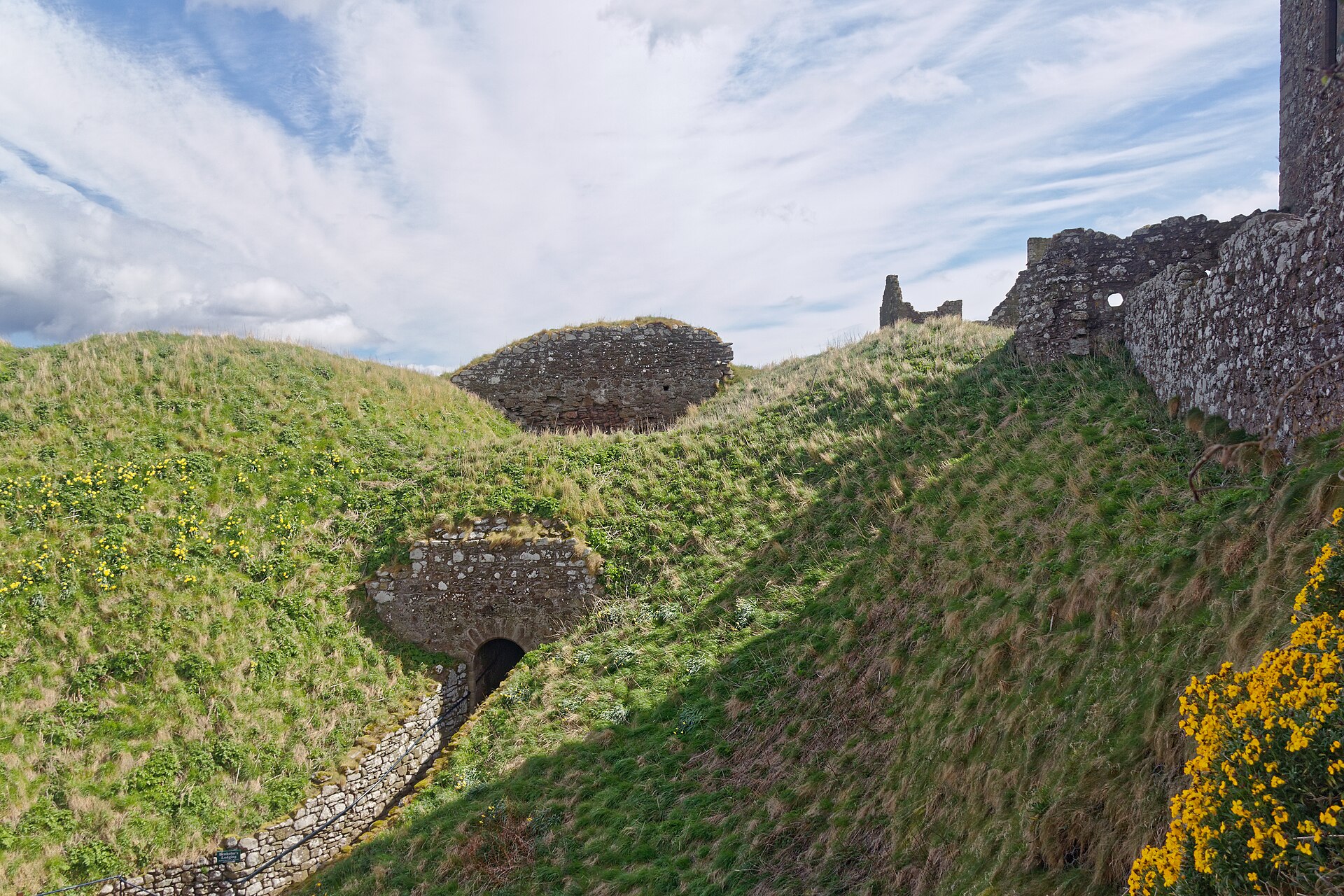
Dunnottar’s greatest claim to fame came in the middle of the seventeenth century, during one of the darkest periods in Scottish history. Oliver Cromwell, having overthrown and executed King Charles I, invaded Scotland, and his forces set about crushing all resistance. In danger of falling into Cromwell’s hands were the Honours of Scotland, the ancient crown, sceptre, and sword of state, the very symbols of Scottish nationhood, which Cromwell’s regime was determined to seize and destroy as it had destroyed the English regalia.
To keep them safe, the Honours were brought to Dunnottar, judged one of the strongest and most secure fortresses in the land, and there they were guarded as Cromwell’s army closed in. In time the castle itself was besieged, and for many months the small garrison held out on their clifftop rock while the enemy pressed the attack, the crown jewels of Scotland locked within.
As the siege wore on and surrender loomed, a daring plan was hatched to smuggle the Honours out before the castle could fall. In one version of the famous story, they were lowered down the cliffs to a woman who carried them away past the besiegers, and in another they were slipped out and taken to a nearby church, where they were buried beneath the floor and hidden for years until the monarchy was restored. Either way, the precious regalia escaped, and Dunnottar’s role in saving them became legendary.
When the castle finally surrendered, Cromwell’s men searched it in vain for the crown jewels, which by then were safely hidden away. The Honours survived, and they can be seen today in Edinburgh Castle, the oldest crown jewels in Britain, preserved thanks in no small part to the strength of Dunnottar and the courage of those who saved them. It is one of the great stories of Scottish history, and it belongs to this rock.
The rescue of the Honours has all the elements of a great adventure story, and it has been told and retold ever since, in histories, ballads, and popular legend. Different versions emphasise different heroes and different methods, but at the heart of them all is the same stirring truth: that in Scotland’s darkest hour, ordinary courage and a great fortress combined to save the nation’s most sacred symbols from the enemy. It is the kind of tale that becomes part of a country’s very sense of itself.
Eight Months Against Cromwell
The siege that saved the crown jewels deserves a closer look, for it was a remarkable feat of endurance. When Cromwell’s forces moved to seize the Honours of Scotland, Dunnottar’s strength made it the obvious refuge, and the small garrison that held it faced the full might of one of the most formidable armies in Europe, hardened veterans equipped with modern artillery.
For around eight months the defenders held out on their clifftop, far outnumbered and eventually cut off, while the crown, sceptre, and sword of Scotland lay hidden within the walls. The natural strength of the rock, the difficulty of the approach, and the sheer determination of the garrison allowed them to defy the besiegers far longer than anyone might have expected, buying the precious time needed to spirit the regalia away.
Only when the situation became truly hopeless, and after the Honours had been safely smuggled out, did the castle finally surrender. The garrison’s long resistance had achieved its real purpose, not merely to hold a fortress but to protect the very symbols of Scottish nationhood from destruction, and in that they succeeded completely.
It is this combination of a genuine military feat and a stirring national cause that has made the siege of Dunnottar one of the most celebrated episodes in Scottish history. The castle did not just survive a siege; it saved the crown of a nation, and that is a distinction few fortresses anywhere can claim.
The Whigs’ Vault: A Grim Prison
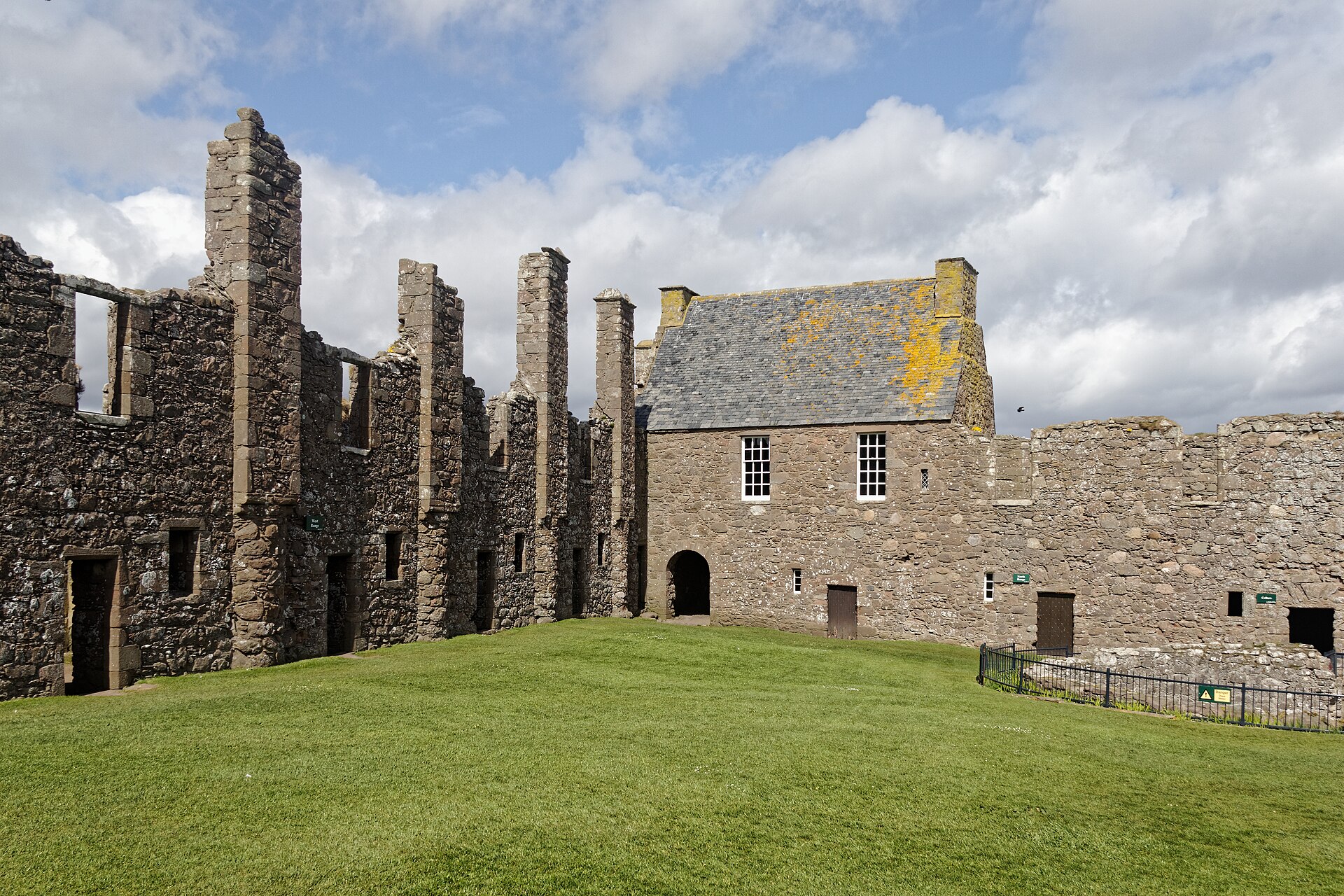
Not all of Dunnottar’s history is heroic; some of it is dark and cruel. In the later seventeenth century, during the bitter religious conflicts that convulsed Scotland, the castle became a place of terrible imprisonment. In 1685 a large group of Covenanters, members of a Presbyterian movement persecuted for refusing to accept the king’s authority over the church, were confined at Dunnottar in appalling conditions.
Around a hundred and sixty men and women were crammed into a single dark, damp vault within the castle, a grim clifftop dungeon now remembered as the Whigs’ Vault. With little food, foul air, and no proper sanitation, the conditions were horrific, and a number of the prisoners died. Some who tried to escape by climbing down the cliffs were recaptured and treated with great cruelty, and their suffering became a byword for the persecution of the Covenanters.
This dark episode is remembered still, and the vault where the prisoners were held can be seen among the ruins, a chilling counterpoint to the romance of the castle’s setting. It is a reminder that these beautiful old fortresses were often places of great suffering as well as grandeur, and that history holds cruelty alongside courage.
The story of the Covenanters at Dunnottar adds a sombre depth to any visit. Standing in that bleak vault, with the sea crashing far below, it is impossible not to feel the misery of those who were held here, and to remember that the castle’s history is not only one of earls and crown jewels but also of ordinary people caught up in the harsh conflicts of their age.
The persecution of the Covenanters is one of the grimmer chapters of Scottish history, a time when religious dissent was met with imprisonment, torture, and death. That Dunnottar, a castle otherwise celebrated for saving the crown of Scotland, should also have been the scene of such cruelty is a sobering reminder that these old fortresses served whoever held power, and that power was often used harshly. The vault stands today as a memorial to those who suffered for their beliefs.

The Only Way Up
To appreciate Dunnottar’s strength, you have to make the approach yourself. From the mainland, a path leads down to the narrow neck of land that links the headland to the coast, and then climbs steeply up to the castle gate. This single, tortuous route was the castle’s greatest defensive asset, for it could be blocked and defended with ease, funnelling any attacker into a killing ground beneath the walls.
The gateway itself was heavily fortified, with a strong entrance and defences designed to stop an enemy dead. Even if an attacking force fought its way down to the neck and up the path, they would face this formidable barrier, all the while exposed to the defenders above. It is easy to see why Dunnottar could be held by a small garrison against a much larger force, as it was during the great siege of the crown jewels.
Making the climb today, you experience the castle much as visitors and attackers have for centuries, the steep descent, the crossing of the neck, and the final ascent to the summit, with the sea roaring below and the ruins rising ahead. It is a genuinely dramatic approach, and it makes arriving at the castle feel like a real achievement.
This single point of entry is the key to understanding Dunnottar as a fortress. The cliffs made it nearly impregnable, and the narrow, defended approach made even that single weakness extremely hard to exploit. Nature and human ingenuity combined to create one of the most secure strongholds in Scotland.

A Complex on the Clifftop
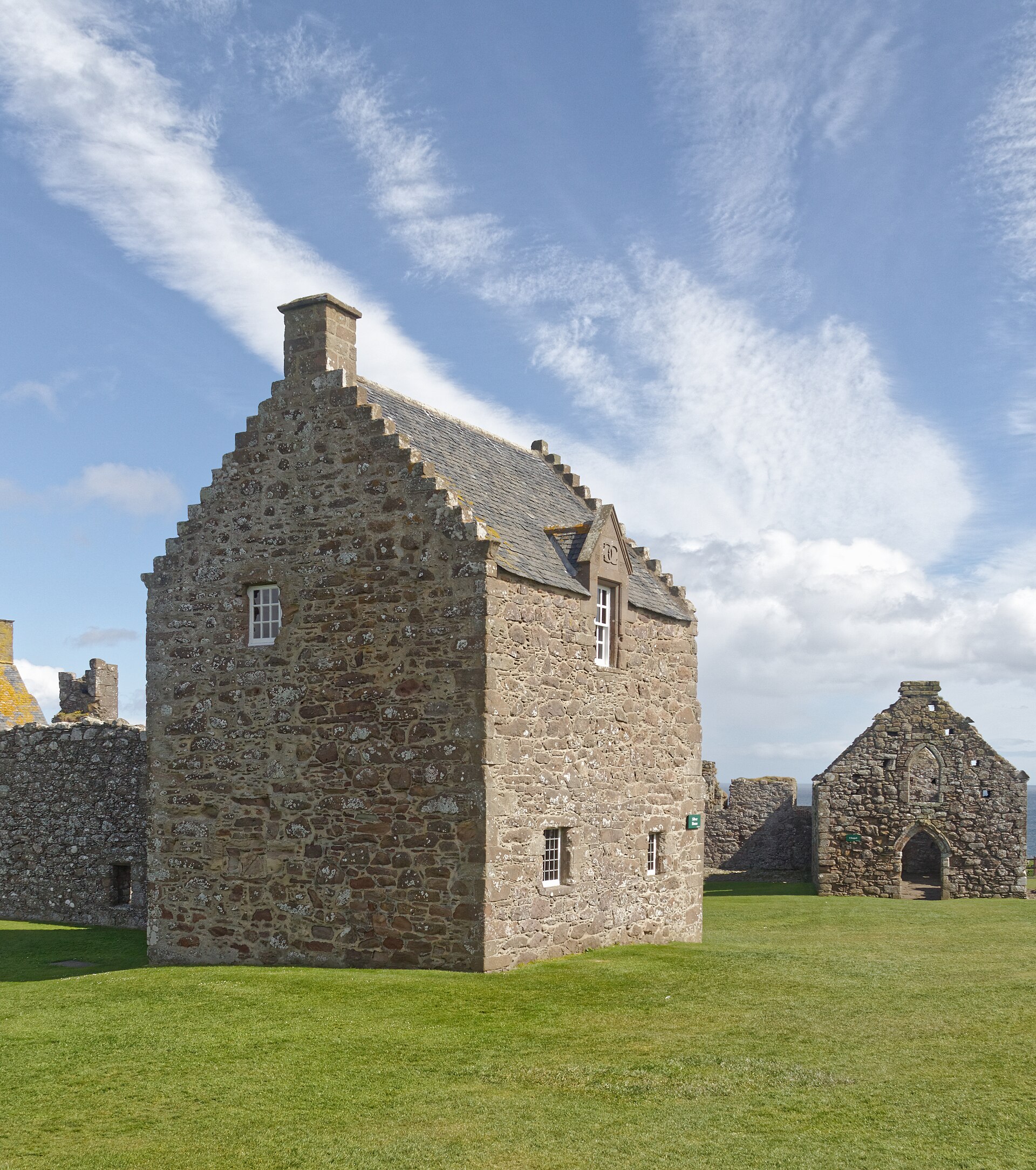
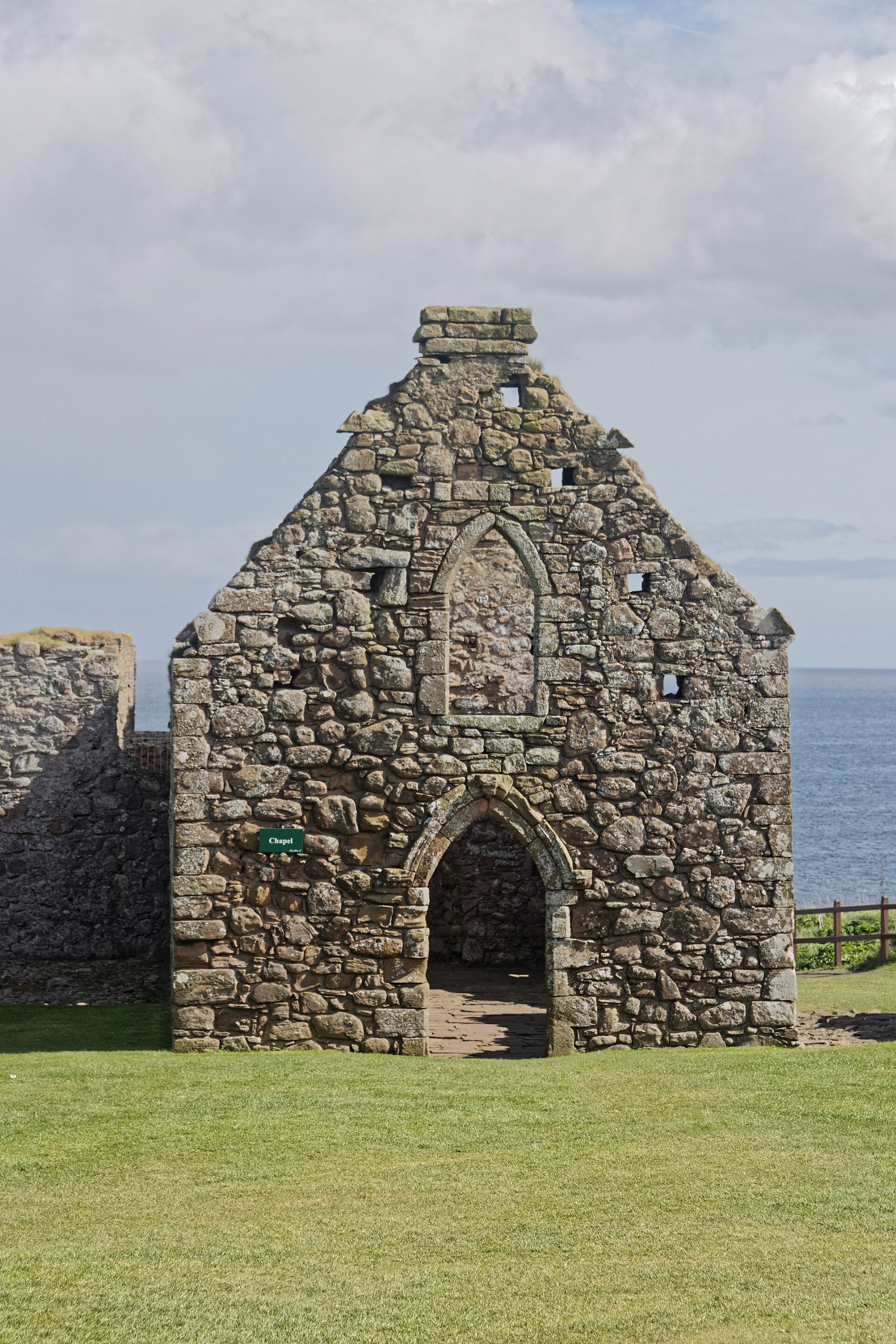
Reach the summit and you find not a single tower but a whole complex of buildings spread across the flat top of the rock. At its heart is the great tower house, the strong residence of the Earls Marischal, and around it lie the remains of halls, lodgings, a chapel, storehouses, stables, and other buildings, the whole forming a substantial fortified settlement high above the sea.
This was a self-contained world, capable of housing a large household and garrison and of withstanding a long siege. There were spaces for grand living and for humble work, for worship and for defence, all arranged across the clifftop within the protection of the natural defences and the walls. In its heyday, Dunnottar would have been a busy, bustling place, the seat of a great family and a centre of power.
Wandering the ruins today, you can trace the outlines of this lost world, moving from the tower house to the hall, from the chapel to the vault, with the sea always in view and the wind ever-present. The scattered buildings give a real sense of the scale and complexity of the castle, far more than a simple tower could convey.
The variety of the buildings also reflects the long history of the site, with structures from different periods and for different purposes all crowded onto the rock. Dunnottar was not built all at once but grew over centuries, and its ruins are a record of that long and layered development.
Among the buildings, the more comfortable lodgings added in later centuries show how the castle evolved from a purely military stronghold into a grand residence. As the age of constant warfare gave way, for a time, to something more settled, the Earls Marischal made their clifftop seat more livable and more splendid, adding fine chambers and domestic ranges, so that the ruins today reflect not one but several phases of building and of Scottish life.
Decline, Forfeiture, and Ruin
Dunnottar’s days as a great castle came to an end in the early eighteenth century, and, as so often in Scotland, the cause was the Jacobite risings. The Earl Marischal of the day supported the Jacobite attempt to restore the exiled Stuart dynasty, and when that rising failed, he was stripped of his titles and estates, and Dunnottar was forfeited to the crown.
With its great family gone and no longer needed as a stronghold, the castle was sold, and much of it was unroofed and dismantled, its materials sold off and its buildings left to decay. The mighty fortress that had guarded the crown jewels and defied Cromwell’s army slid into ruin, abandoned on its rock to the wind and the sea.
So Dunnottar, like Eilean Donan and Urquhart, was another casualty of the long struggle to break the power of the Jacobites and the old noble families of Scotland. Its fall from a great seat of power to a romantic ruin mirrors the wider transformation of Scotland in the eighteenth century, as the old order was swept away.
Yet in ruin, Dunnottar lost none of its power to move and impress. If anything, its dramatic decay, on that wild and beautiful rock, only added to its appeal, and it became one of the most admired and painted ruins in Scotland, drawing artists and travellers to marvel at its setting and its history.

A Ruin That Draws the World
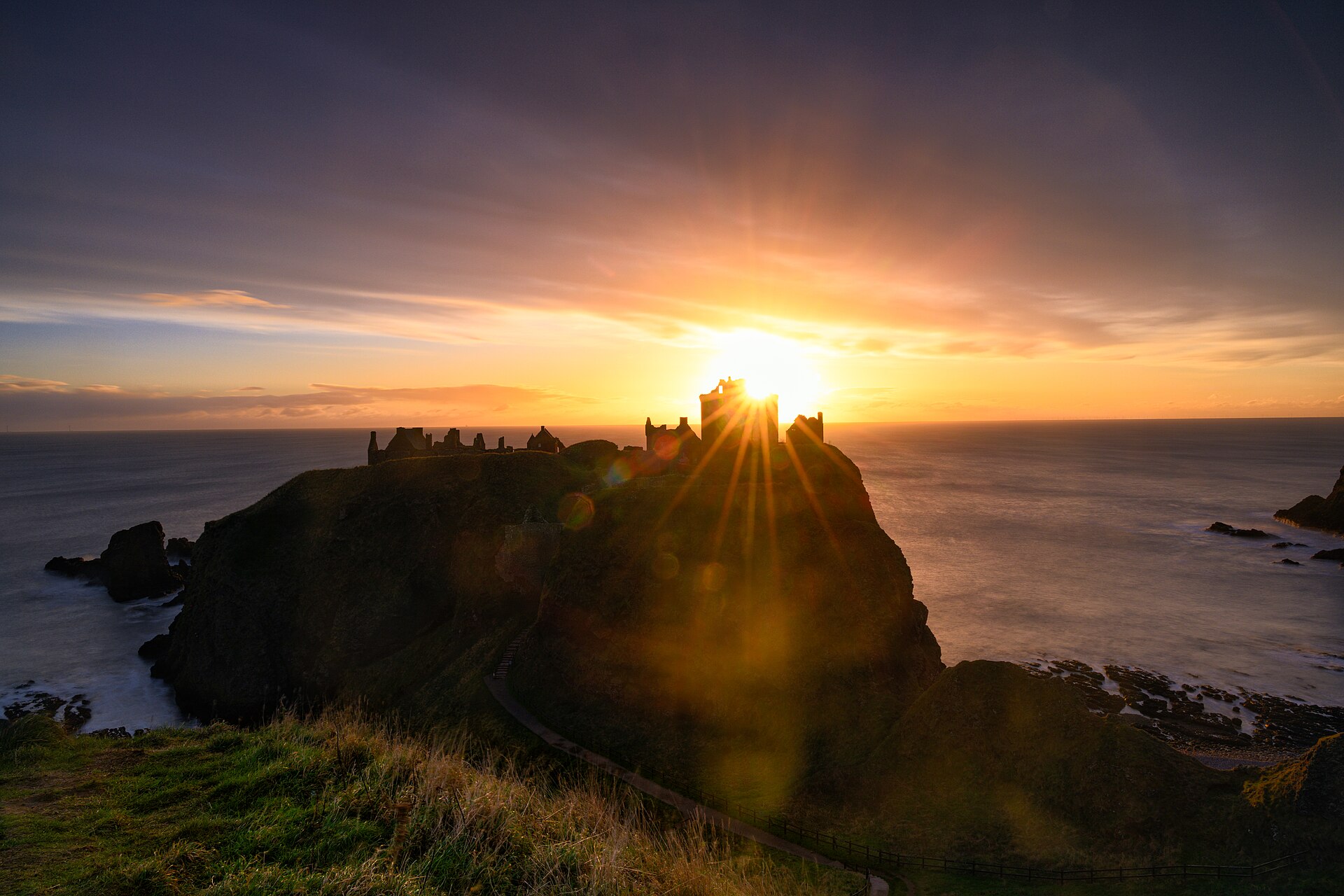
Today Dunnottar is one of the most celebrated and most visited castles in Scotland, and its fame rests above all on its incomparable setting. Photographers, in particular, adore it, and images of the ruined castle on its sea-girt rock, wreathed in mist or lit by a dramatic sunrise, have travelled around the world, making Dunnottar one of the defining images of romantic, wild Scotland.
The castle has also drawn film-makers, its dramatic silhouette providing an unforgettable backdrop, and it has appeared on screen and been cited as an inspiration for fictional castles in film and animation. This screen and photographic fame has brought ever more visitors to make the journey to the Aberdeenshire coast and the climb up to the ruins.
Cared for and open to the public, Dunnottar rewards the effort of a visit richly. Beyond the setting, there is the deep and dramatic history to absorb, from Wallace to the crown jewels to the Covenanters, and the sheer pleasure of exploring the scattered ruins high above the sea. It is a place that engages the imagination as few castles can.
For all its popularity, Dunnottar retains its wild and elemental character. On a stormy day, with the waves crashing against the cliffs and the mist rolling in off the sea, it is easy to feel the drama and the danger of its history, and to understand why this castle, once seen, is truly never forgotten.
Its fame has, if anything, grown in the age of social media, as travellers share their own images of the castle on its rock from every angle and in every light. Few Scottish castles are so instantly recognisable, and for many people around the world Dunnottar has become one of the defining pictures of Scotland itself, a symbol of the country’s wild beauty and its dramatic past.
Sea, Sky, and Changing Light
Part of what makes Dunnottar so unforgettable is the way its appearance changes with the weather and the light, for its exposed clifftop position places it fully at the mercy of the elements. On a clear, calm day the castle sits serene above a sparkling sea, its every detail sharp against the blue; on a stormy day it becomes a dark, brooding silhouette lashed by wind and spray, the very image of a fortress at the world’s edge.
The frequent sea mists of the north-east coast add another dimension, sometimes wrapping the castle in ghostly fog so that it appears and disappears like a vision, its towers looming out of the greyness. And at dawn, when the sun rises over the North Sea behind the ruins, the whole scene can be transformed into something of unearthly beauty, which is why so many photographers make the early climb.
This ever-changing character means that no two visits to Dunnottar are ever quite the same, and it is part of why the castle so rewards those who take the trouble to see it in different conditions. The rock, the ruins, the sea, and the sky combine and recombine into an endless series of dramatic and beautiful scenes.
It also connects the castle to the deep, elemental forces that have always shaped this coast. Dunnottar is not a castle set gently in tamed parkland but a fortress clinging to a wild headland, and its beauty is inseparable from the raw power of the sea and sky that surround it. That elemental quality is a large part of its enduring appeal.
Planning Your Visit
Dunnottar Castle stands on the north-east coast of Scotland, a short distance south of the town of Stonehaven, in Aberdeenshire, and not far from the city of Aberdeen. It is reached by road, with a car park near the top of the cliffs, from which a path leads down and then up to the castle. Be prepared for a steep walk with plenty of steps, and wear sturdy footwear, as the ground can be uneven and the weather changeable.
Allow a good hour or two to make the descent and climb, explore the extensive ruins, and take in the history and the views. The setting is exposed, so dress for the wind and possible rain, and check opening times before you go. For photographers, dawn and dusk offer the most dramatic light, and a misty or stormy day, while less comfortable, can produce the most atmospheric scenes of all. Dunnottar combines well with the coastal town of Stonehaven and a wider tour of the castles and coast of north-east Scotland, and it is, quite simply, one of the great castle experiences of the country.
The castle sits at roughly 56.9459, -2.1970. Punch that into Google Maps and it will take you straight to Dunnottar Castle near Stonehaven.
Nearby Castles
Why Dunnottar Is Never Forgotten
Dunnottar is a castle that fuses the drama of its setting with the drama of its story until the two become one. On its wild rock above the North Sea, all but cut off from the land, Scotland’s history has played out in some of its most vivid episodes: Wallace’s terrible victory, the earls in their clifftop power, the crown of the nation smuggled to safety past a besieging army, and the grim suffering of the Covenanters in a dark vault above the waves.
Stand on the summit as the mist rolls in and the sea thunders against the cliffs below, and you can feel all of it pressing in around you. Dunnottar is more than the most photogenic ruin in Scotland, though it is surely that. It is a place where the raw power of the landscape and the raw drama of history meet, and where the story of a nation was, more than once, decided. Once you have climbed to its clifftop and looked out to sea from its broken walls, you will understand exactly why they say Dunnottar, once seen, is never forgotten.
So make the climb, cross the wind-blown neck of rock, and stand among the ruins with the North Sea stretching to the horizon. In the tumbled walls around you lie the ashes of Wallace’s enemies, the footsteps of the great earls, the secret hiding place of a nation’s crown, and the misery of the Covenanters’ vault. Dunnottar gathers all of it onto one unforgettable rock, and hands it to you in a single breathtaking view. It is not just one of the great castles of Scotland; it is one of the great sights of Britain.
You May Like
Mafra, the Palace a King Built From a Vow