On the shore of the most famous stretch of water in Scotland, perhaps in the world, stand the broken walls of Urquhart Castle. Below them lie the deep, dark, cold waters of Loch Ness, home to the most enduring monster legend on earth, and the combination of the two, the romantic ruin and the mysterious loch, has made this one of the most visited and most photographed castles in all of Scotland. Coaches and cars pour in from morning to night, and the little promontory where the castle stands is rarely quiet.
But it would be a mistake to think of Urquhart as merely a scenic backdrop for monster-hunting. This was once one of the largest and most important castles in medieval Scotland, a great royal stronghold guarding the Great Glen, the vast natural fault line that slices clean across the Highlands from coast to coast. Whoever held Urquhart held a key to the heart of northern Scotland, and so the castle was fought over again and again, changing hands in the bloody wars between Scotland and England and in the endless feuds of the Highland clans.
Its story runs deep, back beyond the Middle Ages to the age of the Picts and of Saint Columba, and it ends, dramatically, with the castle deliberately blown up to keep it out of enemy hands. Today it survives as a magnificent ruin, its great tower still rising above the loch, telling a thousand years and more of Highland history. So let’s leave the crowds for a moment and walk into the real story of Urquhart Castle.

Table of Contents
- Guarding the Great Glen
- Saint Columba and the Ancient Past
- A Great Royal Stronghold
- Caught Between Two Kingdoms
- Raided by the Lords of the Isles
- The Grants and the Great Tower
- Blown Up and Abandoned
- The Gatehouse and the Landward Defences
- Climbing to the View
- A Ruin Made for Romance
- Loch Ness and Its Monster
- Life in a Highland Castle
- One of Scotland’s Most Visited Castles
- Planning Your Visit
- Nearby Castles
- A Ruin Worth Crossing the Highlands For
Guarding the Great Glen
To understand why Urquhart mattered so much, you have to understand the Great Glen. This is one of the most dramatic geographical features in Britain, a huge, dead-straight valley slashing right across the Scottish Highlands from the west coast to the east, following an ancient fault in the earth’s crust. Strung along its bottom is a chain of long, deep lochs, the greatest of them Loch Ness, and together they form a natural corridor through the otherwise almost impassable mountains.
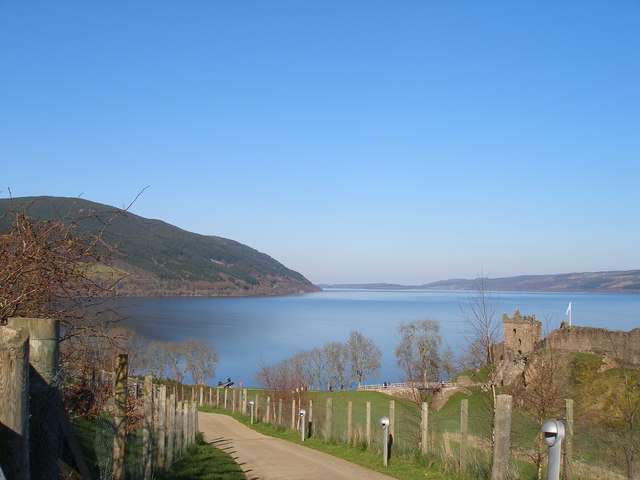
In an age when the Highlands were wild, roadless, and dangerous, the Great Glen was one of the few practical routes across the north of Scotland, and control of it was a matter of real strategic importance. Urquhart Castle stands on a rocky promontory jutting into Loch Ness at a commanding point along this corridor, perfectly placed to watch and control movement through the glen. Whoever held it could dominate a vital artery of the Highlands.
The site itself is superb for defence. The promontory is protected by the loch on one side and by ditches and walls on the landward side, and it commands long views up and down the water, so that no one could pass unseen. It is easy to see why people chose to fortify this spot, and why they went on doing so for well over a thousand years.
So Urquhart was never a mere local stronghold but a piece on the national chessboard, a castle that helped control the whole northern half of Scotland. That strategic weight is the reason it was fought over so fiercely, and the reason its ruins are so extensive and so important today.
Centuries later, the strategic logic of the Great Glen would be recognised again when the Caledonian Canal was cut along its length, linking its lochs into a continuous waterway across Scotland. That great feat of engineering, running right past Urquhart, was in a sense a modern echo of the same truth the castle’s builders had understood: that this cleft through the mountains was the natural highway of the north, and whoever controlled it controlled the Highlands.

Saint Columba and the Ancient Past
The story of this promontory reaches back far beyond the medieval castle, into the shadowy age of the Picts, the mysterious people who ruled much of northern Scotland before written history properly begins here. Archaeology has shown that the site was occupied and fortified long before the stone castle, and it seems to have been a place of importance in the early centuries after Rome.
It is even linked to one of the most famous figures of early Scottish history, Saint Columba, the Irish monk who brought Christianity to much of Scotland in the sixth century. According to an early account of his life, Columba travelled through the Great Glen and visited a Pictish nobleman near here, and it was on this journey, at the River Ness, that he is said to have encountered and rebuked a fearsome water beast, the earliest written hint, some say, of the legend of the Loch Ness Monster.
Whether or not that story has anything to do with the modern monster, it shows that this stretch of the loch has been a place of power and legend since the very dawn of Scottish history. Long before knights and cannon, the promontory was already significant, a fortified seat of the Picts and a place touched by the coming of Christianity.
This deep past gives Urquhart an unusual richness. Many castles begin with the Normans or the Middle Ages, but here the story runs back into the age of saints and Picts, layer upon layer of occupation on the same commanding rock above the loch. The medieval castle whose ruins we see was only the latest chapter in a very long tale.
Excavations on the promontory have turned up traces of this early occupation, including remains that point to a high-status site in the centuries after Rome, when the Picts held sway over northern Scotland. Fine metalwork and other finds suggest that important people lived here long before the medieval castle, confirming that this commanding rock above the loch had been a seat of power for a very long time indeed.
A Great Royal Stronghold
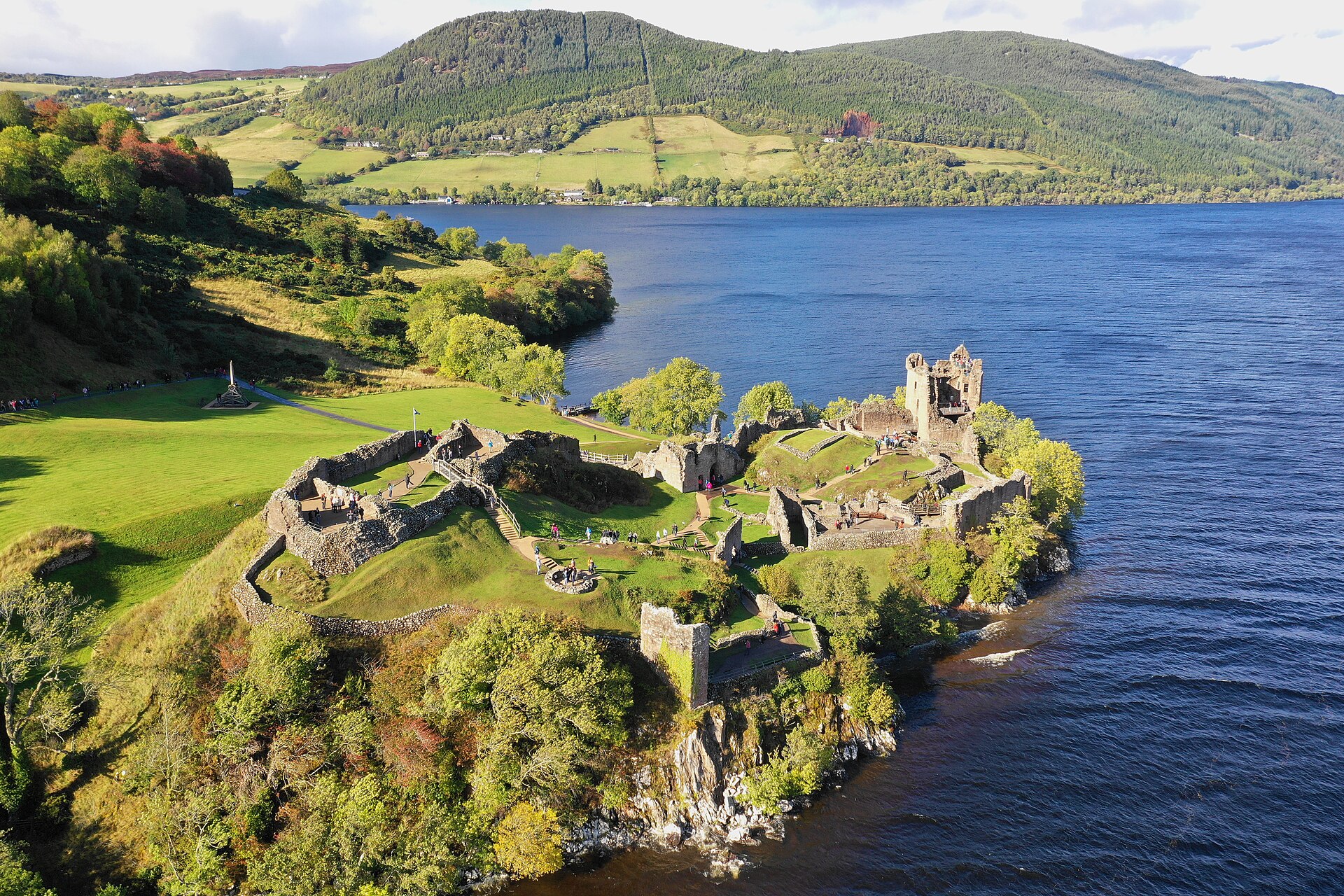
The castle whose remains survive today grew up mainly from the thirteenth century onward, and at its height it was one of the largest castles in all of medieval Scotland. Its buildings sprawled along the promontory in a series of enclosures, with a gatehouse guarding the landward approach, ranges of domestic buildings, a great hall, and, at the northern end, a mighty tower. This was no small border fort but a major stronghold, a place fit for kings and great lords.
For long periods Urquhart was a royal castle, held by or on behalf of the kings of Scots, a symbol and instrument of royal power in a region where that power was often hard to enforce. Controlling the Highlands was a perpetual challenge for the Scottish crown, and strongholds like Urquhart were essential to projecting authority into the wild and often rebellious north.
The scale of the castle reflected its importance. To maintain and defend such a large fortress required significant resources and a substantial garrison, and its very size made it a prize worth fighting for. Whoever held Urquhart made a statement about who ruled the Great Glen and, by extension, the northern Highlands.
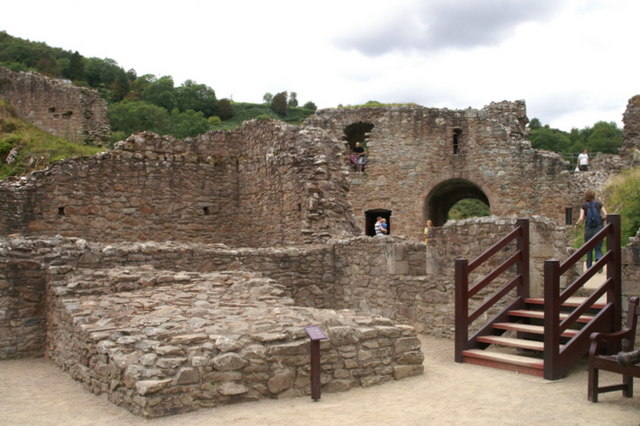
Walking among the ruins today, you can still trace the outlines of this great castle, the foundations of its halls and chambers, the line of its walls, and the remains of its gatehouse, spread across the promontory. Even in ruin, the sheer extent of the site testifies to how important Urquhart once was.
The castle also served, at times, as a centre of royal administration and justice in the region, a place from which the crown’s officials could try to impose order on a notoriously unruly part of the kingdom. In a land of powerful clans and weak central control, a great royal castle like Urquhart was as much a political statement as a military one, a visible assertion that the king’s authority reached even into the depths of the Highlands.
Caught Between Two Kingdoms
Urquhart’s size and strategic importance made it a target in the great conflict that dominated Scottish history around the turn of the fourteenth century: the Wars of Scottish Independence. As Scotland fought to free itself from the domination of Edward I of England and his successors, Urquhart, like so many Scottish castles, was caught in the middle, seized, garrisoned, and fought over as the tide of war swept back and forth across the country.
The castle changed hands more than once between the English and the Scots. Edward I, determined to bring Scotland under his control, took Urquhart and installed an English garrison, only for the Scots to fight to win it back. In the long, hard struggle that followed the rise of Robert the Bruce, the castle was contested as part of the wider effort to drive English power out of Scotland.
These were desperate, brutal years, and a great castle like Urquhart was both a shield and a prize. To hold it was to command the Great Glen; to lose it was to leave the northern Highlands open to the enemy. The walls of Urquhart saw sieges, assaults, and the constant tension of a fortress on the front line of a national struggle.
By the time the Wars of Independence finally secured Scotland’s freedom, Urquhart had earned its place in the story of that struggle. It had been a strongpoint of the contest for the nation itself, and its stones had witnessed some of the fiercest years in Scottish history.
One of the castle’s defenders during these wars became a minor legend of Scottish resistance, holding out against the English in the name of the patriot cause. Stories of stubborn defence and daring recapture cluster around Urquhart in this period, as they do around so many Scottish castles of the independence struggle, and they helped fix the castle in national memory as a place where Scotland’s freedom was contested and defended.
Raided by the Lords of the Isles
Even after the wars with England, Urquhart knew little peace, for it now faced a new and persistent threat from within the Highlands themselves: the mighty MacDonald Lords of the Isles. This great sea-kingdom of the west, ruled by the powerful MacDonald chiefs, repeatedly clashed with the Scottish crown, and Urquhart, as a royal stronghold in the Highlands, became a frequent target of their raids.
Again and again the castle was attacked, plundered, and sometimes seized by the MacDonalds and their allies, who swept in from the west to challenge royal authority and to enrich themselves. These raids were part of the long struggle between the crown and the semi-independent lords of the Highlands and Islands, a struggle in which Urquhart was repeatedly in the firing line.
The damage and disruption were considerable. A castle raided so often could not easily flourish, and the constant threat of attack shaped its history and its defences. Holding Urquhart against such determined and mobile enemies was a costly and difficult business, and the crown struggled at times to keep it secure.
These raids are a reminder that the Highlands were not simply a backdrop to conflicts between Scotland and England, but a world with its own fierce internal power struggles. Urquhart stood at the meeting point of these forces, a royal outpost amid the turbulent politics of the clans, and it paid the price in blood and fire.
The sheer frequency of these raids tells you how exposed a royal outpost in the Highlands really was. Far from the centres of royal power in the south, Urquhart sat deep in a region where the crown’s writ ran weakly and local lords wielded enormous power. Holding such a castle was less like garrisoning a peaceful shire than like maintaining a lonely outpost on a turbulent frontier, always watchful, always at risk.
The Grants and the Great Tower
In the later medieval period, Urquhart came into the hands of the Grant family, and it is closely associated with Clan Grant, who were charged with holding and maintaining the castle. It was under the Grants that the castle’s most striking surviving feature took its final form: the great tower house at the northern end of the site, known as the Grant Tower.
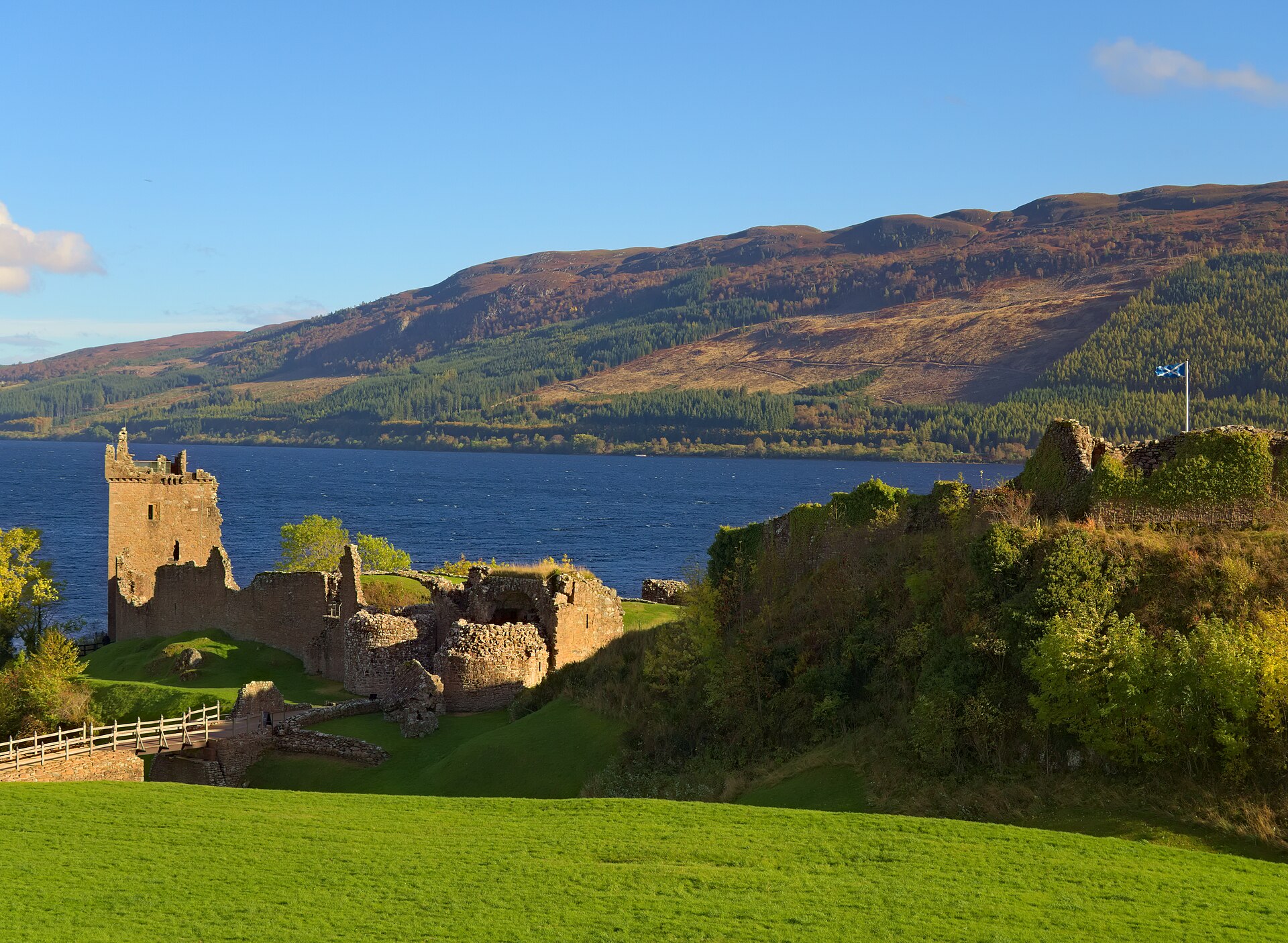
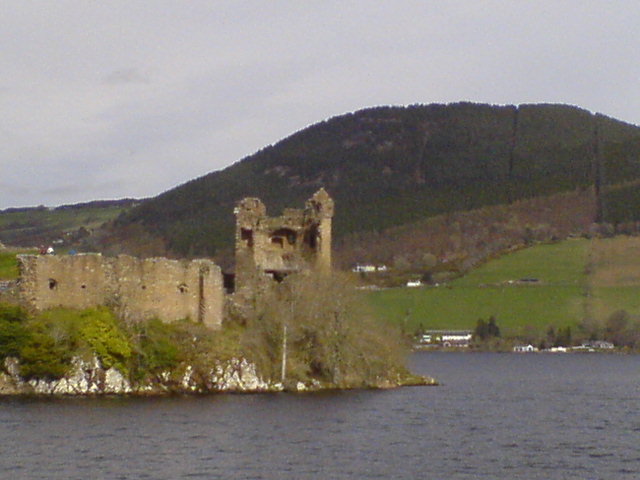
This imposing five-storey tower was the strongest and grandest part of the later castle, a residence and stronghold combined, rising high above the loch and dominating the whole promontory. Its thick walls and lofty height made it both a comfortable lordly dwelling and a formidable last refuge, and even today, though partly collapsed, it remains the most impressive and photographed part of the ruins.
The Grants faced the same challenges as earlier holders of the castle, above all the continuing raids of the MacDonalds and the general lawlessness of the Highlands. Maintaining and defending so exposed a stronghold was a heavy burden, and the castle’s fortunes rose and fell with the turbulent times.
Climbing what remains of the Grant Tower today is one of the highlights of a visit. From its upper levels the views over Loch Ness and the surrounding hills are magnificent, and you get a real sense of the commanding position that made Urquhart such a prize, and of the power and status of the lords who once lived here.
The tower’s partial collapse, far from spoiling it, has given it its distinctive and much-loved profile, one whole side sheared away to reveal the floors and fireplaces within, like a cross-section through the life of the castle. It is this dramatic, broken shape, rising above the loch, that appears on so many photographs and postcards, and that has made the Grant Tower the enduring emblem of Urquhart.

Blown Up and Abandoned
Urquhart’s long life as a working castle came to a dramatic end at the close of the seventeenth century, amid the political upheavals that followed the overthrow of the Stuart kings. To prevent the castle from being seized and used by Jacobite forces loyal to the exiled dynasty, the government garrison holding it deliberately destroyed it as they withdrew, blowing up its defences with gunpowder so that it could never again serve as a stronghold.
This deliberate slighting shattered much of the castle, and nature soon completed the work. Some years later, a great storm is said to have brought down part of the already weakened Grant Tower, adding to the ruin. Robbed of stone by local builders and left open to the Highland weather, the once-great castle steadily decayed into the picturesque ruin we see today.
So Urquhart, like Eilean Donan and so many other Highland castles, met its end not in a glorious last siege but as a casualty of the long effort to break the power of the Jacobites and pacify the Highlands. Its destruction was a small part of a much larger transformation that would sweep away the old world of the clans forever.
Yet the ruin that remained was so extensive and so beautifully sited that it never lost its power to impress. Even shattered and abandoned, Urquhart continued to dominate its stretch of Loch Ness, a haunting monument to the vanished age of Highland power.
It is one of the quiet ironies of Highland history that so many of its greatest castles were destroyed not by foreign invaders but by the British state itself, in its long campaign to break the power of the clans and the Jacobite cause. Urquhart, Eilean Donan, and others were casualties of the same policy, deliberately ruined so they could never again shelter rebellion. Their picturesque remains are, in a sense, monuments to the end of the old Highland world.
The Gatehouse and the Landward Defences
While the loch protected the castle on one side, the landward approach along the promontory was its weak point, and this was where the defences were concentrated. A strong gatehouse guarded the entrance, controlling who could pass into the castle and providing a formidable obstacle to any attacker. Ditches cut across the neck of the promontory added a further barrier, so that anyone approaching by land had to cross these defences under the eyes of the garrison.
The gatehouse was more than a mere door; it was a small fortress in its own right, with towers, a passage that could be blocked and defended, and provision for guards. In a castle so often raided and besieged, the security of the entrance was vital, and the remains of these defences show how carefully the vulnerable landward side was protected.
The layout of the castle, spread along the promontory behind these defences, made clever use of the natural site. The most important buildings, including the great tower, were placed at the far, most defensible end, so that even if attackers broke through the outer defences, there were further obstacles before they could reach the heart of the castle.
Tracing these defences among the ruins today, you can appreciate the military thinking that went into Urquhart. This was a serious fortress, designed by people who understood war and who had every reason to expect it, and its layout reflects centuries of hard experience defending this exposed and much-contested rock.

Climbing to the View
For most visitors, the great moment of a trip to Urquhart is climbing what remains of the Grant Tower and emerging at the top to the view. From up here, the whole scene opens out: the long, dark expanse of Loch Ness stretching away between the hills, the ruins of the castle spread across the promontory below, and the wide Highland sky arching over it all. It is one of the finest views from any castle in Scotland.
The tower itself, even in its ruined and partly collapsed state, gives a powerful sense of the strength and grandeur of the later castle. Its thick walls, its height, and the remains of its once-comfortable chambers speak of a stronghold that was both a formidable defence and a lordly home, the proud seat of the men who held the Great Glen.
Standing at the top, it is easy to imagine the watchmen of centuries past scanning the loch and the glen for the approach of enemies, whether English armies, MacDonald raiders, or Jacobite forces. The same view that delights visitors today was, for the castle’s defenders, a matter of life and death, a vital early warning of danger coming up the loch or along the glen.
This blend of beauty and history is the essence of Urquhart’s appeal. The view that takes your breath away is the very reason the castle was built here, and to stand where its lords and soldiers once stood, gazing out over the loch, is to feel the whole long story of the place come alive around you.

A Ruin Made for Romance
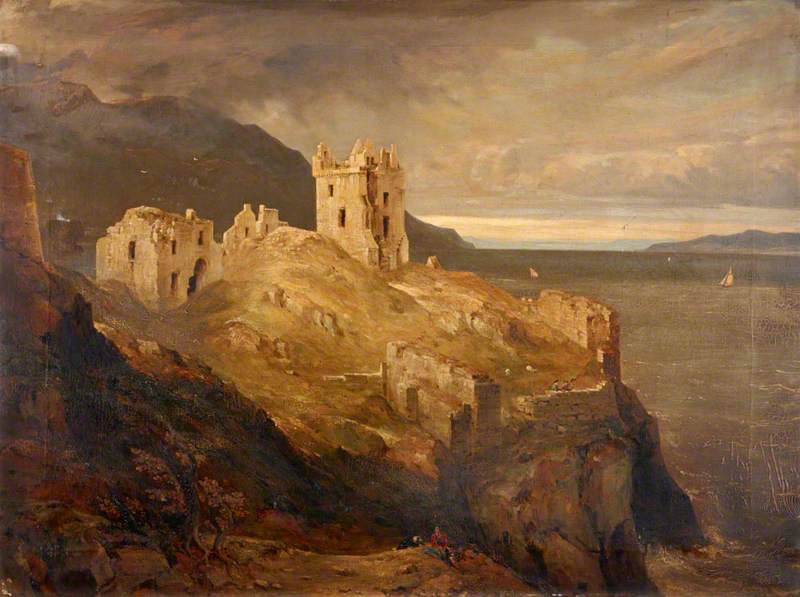
As the romantic age dawned in the eighteenth and nineteenth centuries, ruined castles in wild and beautiful settings became objects of fascination and delight, and few could match Urquhart. Perched above the mysterious waters of Loch Ness, framed by mountains, its broken walls and lonely tower seemed to embody everything the romantics loved: the melancholy of lost grandeur, the drama of the Highlands, and the pull of a legendary past.
Artists came to paint it, travellers to admire it, and writers to weave it into their visions of a wild and storied Scotland. The castle’s very ruin, far from diminishing it, added to its appeal, giving it an air of mystery and poignancy that a whole, intact fortress could never possess. Urquhart became one of the classic sights of the Highlands, admired precisely for its haunting incompleteness.
This romantic reputation laid the foundations for the castle’s modern fame. Long before mass tourism, Urquhart was already established in the imagination as one of the great picturesque ruins of Scotland, a place that captured the spirit of the Highlands in stone and water.
Today that romantic appeal endures, and it is easy to feel. Stand among the ruins as the light changes over the loch, with the hills reflected in the dark water and the old tower silhouetted against the sky, and you understand at once why generations of travellers have found Urquhart so captivating.
The castle even found its way into fiction, lending its atmosphere to tales of the Highlands and their mysteries. A ruin so evocative, in a setting so charged with legend, was irresistible to storytellers, and Urquhart’s brooding presence has coloured many a reader’s image of wild, romantic Scotland, whether or not they ever knew the castle’s name.
Loch Ness and Its Monster
It is impossible to talk about Urquhart without talking about the loch it overlooks, for Loch Ness is famous across the entire world, and not only for its beauty. This is one of the largest and deepest bodies of fresh water in Britain, a vast, dark, cold loch stretching for many miles along the Great Glen, and it is, of course, the reputed home of the Loch Ness Monster, affectionately known as Nessie.
Stories of a great creature in the loch stretch back, some say, to the time of Saint Columba, but the modern legend took off in the twentieth century, and it has since drawn monster-hunters, scientists, and curious visitors from every corner of the globe. Urquhart Castle, standing on the shore at one of the loch’s deepest points, has become the classic vantage point for those hoping to catch a glimpse of the elusive beast, and many famous supposed sightings have been made in its vicinity.
This association has, without doubt, hugely boosted the castle’s fame and popularity. Countless visitors come to Loch Ness in search of the monster and find themselves, almost inevitably, at Urquhart, scanning the water from its ruined walls. The castle and the legend have become inseparable, each adding to the allure of the other.
Whether or not you believe in Nessie, there is something undeniably atmospheric about gazing out over that deep, mysterious water from the ancient stones of Urquhart. The loch keeps its secrets, and the castle, brooding on its shore, seems a fitting guardian for one of the world’s most famous mysteries.
The loch’s sheer scale helps explain the enduring power of the legend. It holds a vast volume of water, more than all the lakes of England and Wales combined by some measures, and its depths are cold, dark, and peaty, so that visibility below the surface is very poor. It is exactly the kind of place where the imagination runs free, and where a mystery, once born, is very hard ever to lay to rest.

Life in a Highland Castle
Beneath the romance and the monster-hunting, it is worth remembering that Urquhart was, for centuries, a busy, living stronghold, home to lords, garrisons, servants, and craftsmen. Excavations have uncovered a wealth of everyday objects that bring this lost world to life, from tools and weapons to items of daily use, giving a vivid picture of how people actually lived and worked within these walls.
The castle had all the elements of a great medieval household: a hall for feasting and ceremony, a kitchen to feed the many mouths, private chambers for the lord and his family, stores, a chapel, and quarters for the soldiers who defended it. Life here combined the routines of a working estate with the constant readiness for war that the turbulent Highlands demanded.
Displays at the site help visitors imagine this vanished life, and a full-size replica of a medieval siege engine, a trebuchet, stands in the grounds as a reminder of the warfare the castle was built to withstand. Such touches help turn the bare ruins back into a place peopled by real lives, warriors and workers, lords and servants, all bound to this rock above the loch.
Understanding this human dimension deepens a visit enormously. The ruins are not just scenic stones but the remains of a real community that lived, worked, feasted, and fought here for centuries, in the shadow of the great tower and on the shore of the famous loch.

One of Scotland’s Most Visited Castles
Today Urquhart is one of the most popular historic attractions in the whole of Scotland, drawing very large numbers of visitors every year. Its combination of a dramatic ruined castle, a world-famous loch, and a legendary monster makes it almost irresistible, and it is a fixture on countless tours of the Highlands. A modern visitor centre, discreetly set into the hillside, provides displays, facilities, and information without intruding on the historic scene.
The castle is cared for as one of the nation’s great monuments, its ruins conserved and made accessible so that visitors can safely explore the site, climb the surviving tower, and take in the views. Boat trips on the loch often pass beneath its walls, offering a different and memorable perspective on the castle from the water.
This popularity, while it can make the site busy, is a testament to Urquhart’s enduring appeal. It speaks to something powerful in the human imagination, the meeting of history, landscape, and legend in one unforgettable place. Few castles anywhere can offer quite such a rich combination.
For all the crowds, it remains possible to find quiet moments at Urquhart, especially early or late in the day, and to feel the weight of its long history. Standing among the ruins as the sun sets over Loch Ness, with the tower dark against the sky, you can still sense the power and the romance that have drawn people to this promontory for well over a thousand years.

Planning Your Visit
Urquhart Castle lies on the western shore of Loch Ness, a short drive from the Highland capital of Inverness, and it is very easy to include in any tour of the area. The road along the loch is one of the classic Highland drives, and the castle is clearly signposted, with a visitor centre and car park. Many people also arrive by boat as part of a Loch Ness cruise, which offers a wonderful approach from the water.
Allow an hour or two to explore the ruins, climb the Grant Tower, see the trebuchet and the displays, and, of course, to gaze out over the loch in hope of a glimpse of its famous monster. The site can be very busy in the middle of the day in summer, so arriving early or late is well worth it, both to avoid the crowds and to enjoy the beautiful light. Combine Urquhart with a wider tour of Loch Ness and the Great Glen, and perhaps with Inverness and its own castle, for a memorable journey into the heart of the Highlands.
The castle sits at roughly 57.3243, -4.4426. Punch that into Google Maps and it will take you straight to Urquhart Castle on Loch Ness.
Nearby Castles
A Ruin Worth Crossing the Highlands For
Urquhart is a castle that gives you everything at once. It offers a thousand years and more of history, from Picts and saints through the Wars of Independence to the clan raids and the final, deliberate destruction; it offers one of the most dramatic settings of any castle in Britain, on a rocky promontory above the deep waters of Loch Ness; and it offers, thrown in for good measure, the pull of the world’s most famous monster legend. Little wonder it draws travellers from every corner of the earth.
But strip away the crowds and the monster-hunting, and what remains is a genuinely great castle, a mighty royal stronghold that guarded the heart of the Highlands and paid the price for its importance in siege after siege. Stand among its broken walls as the light fades over the loch, with the Grant Tower dark against the sky, and you are looking at the whole turbulent story of the Highlands written in stone and water. Urquhart is far more than a monster’s front porch; it is one of the great ruins of Scotland, and worth crossing the Highlands to see.
You May Like
Mafra, the Palace a King Built From a Vow