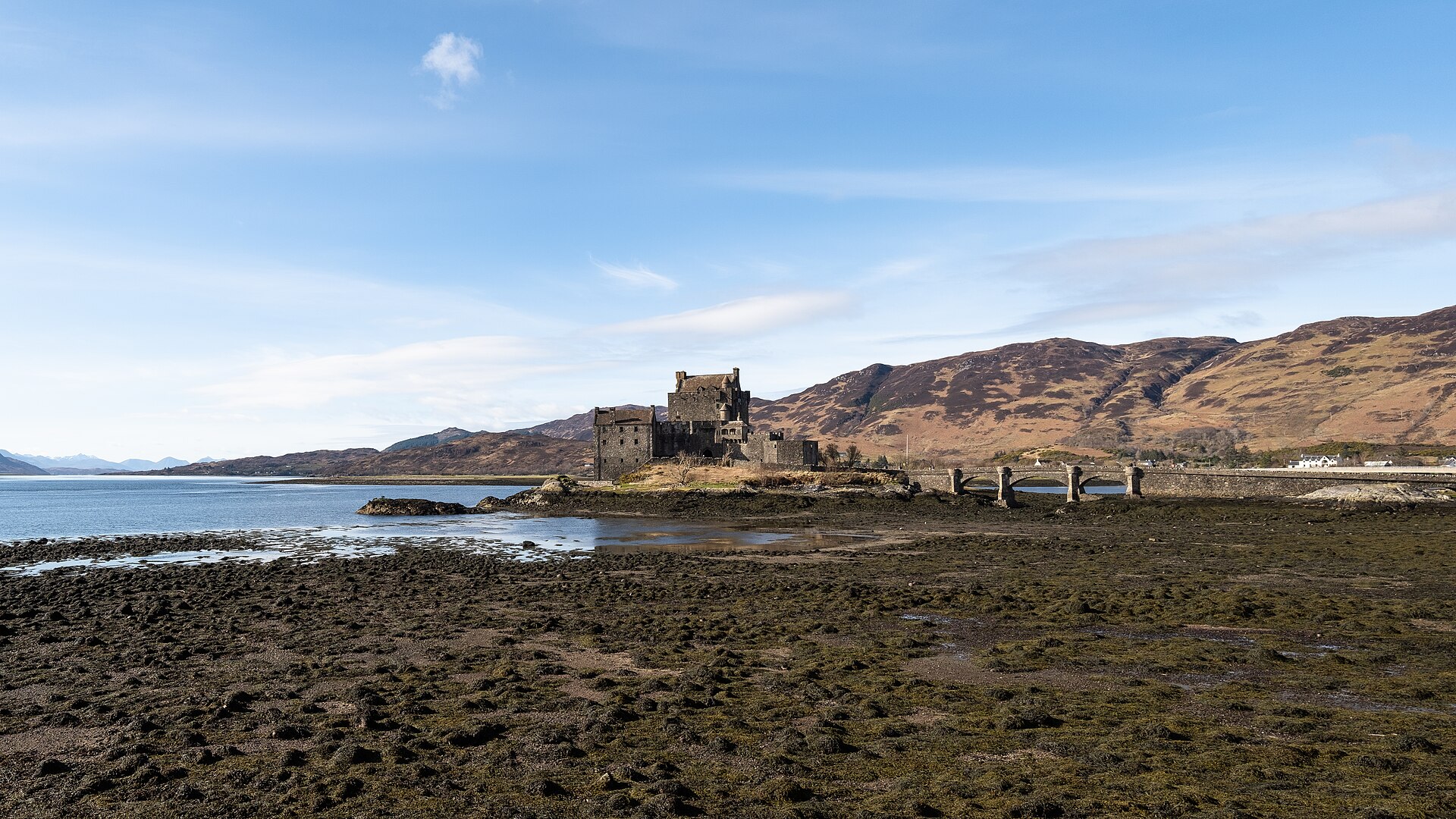
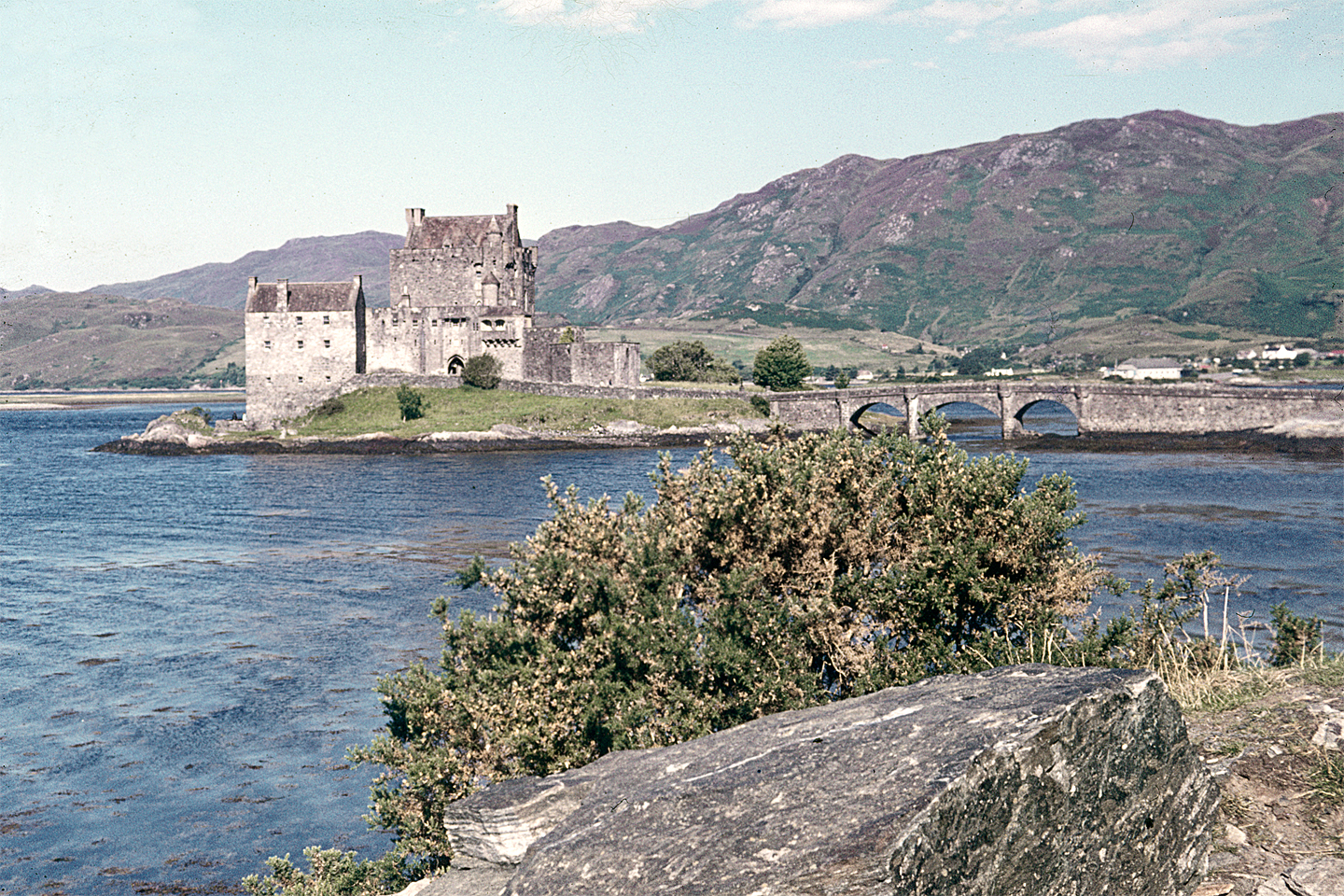
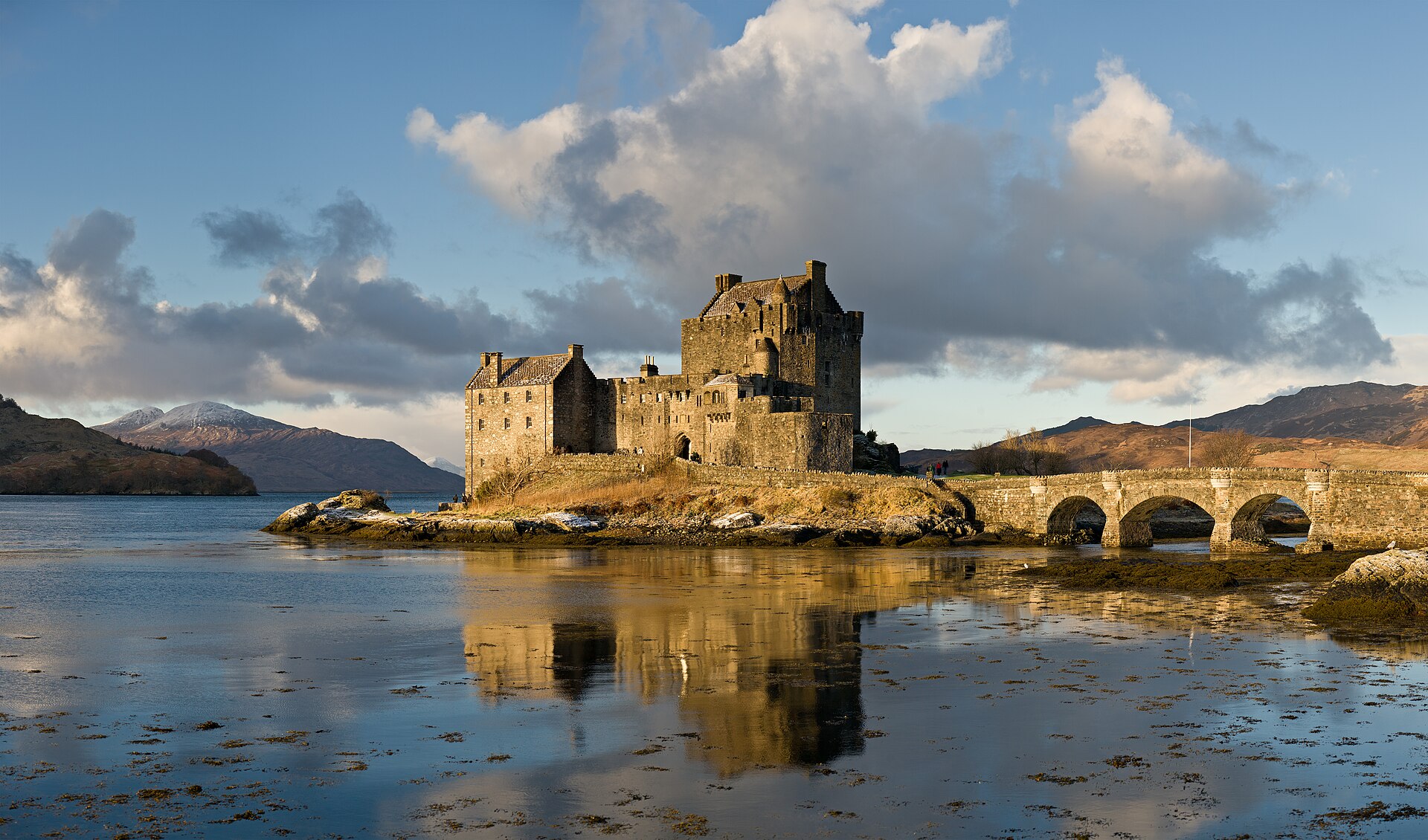
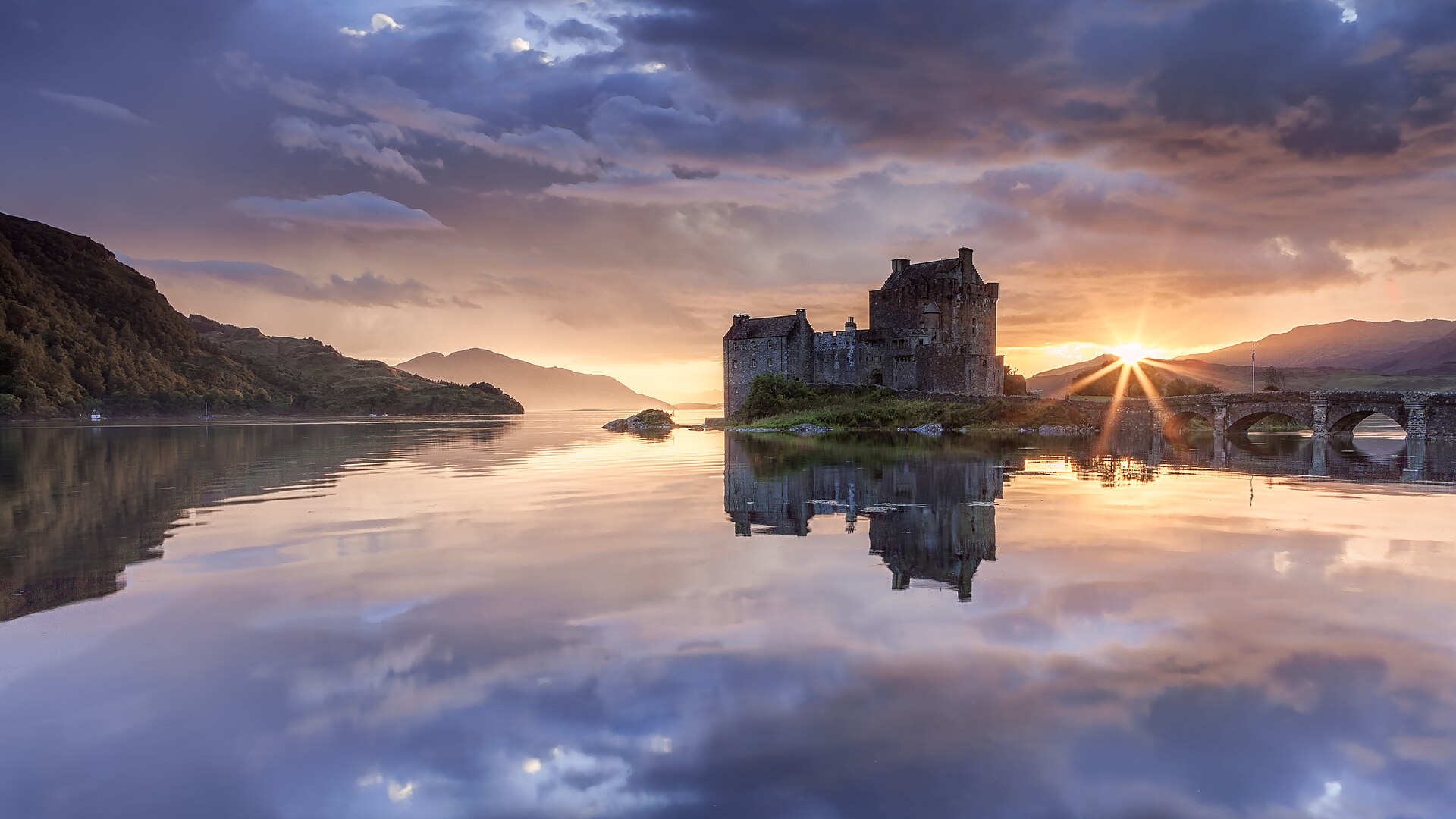
There is a fair chance that when you picture a Scottish castle, the image in your head is Eilean Donan, even if you have never heard the name. A small, stout stronghold sitting on its own little island where three great sea lochs meet, joined to the shore by a graceful arched stone bridge, ringed by the mountains of the western Highlands and doubled in the still water below, it is very possibly the most photographed castle in all of Scotland, and one of the most photographed in the world. It has appeared on countless postcards, calendars, shortbread tins, and cinema screens, and it has come to stand, more than almost any other building, for the whole romance of the Highlands.
And yet the castle you see today, for all that it looks as though it has stood unchanged for eight hundred years, is in a sense not old at all. The medieval fortress that once guarded this island was blown to pieces in the eighteenth century and lay in ruins for the best part of two hundred years, an abandoned heap of stones open to the wind and rain. The Eilean Donan that draws the crowds now is a twentieth-century reconstruction, lovingly raised from those ruins by one devoted man over twenty painstaking years. It is, in the happiest sense, a castle brought back from the dead.
That double story, of a genuinely ancient stronghold and a modern act of loving restoration, is what makes Eilean Donan so fascinating once you scratch beneath the picture-postcard surface. Behind the perfect view lie Viking raiders, a saint, feuding Highland clans, a doomed Jacobite plot involving Spanish soldiers, a three-day naval bombardment, and finally a labour of love that gave Scotland back one of its greatest treasures. So let’s cross the bridge onto the island and follow the whole remarkable tale.

Table of Contents
- An Island Where Three Lochs Meet
- Vikings, Saints, and the First Fortress
- Clan Mackenzie and Clan MacRae
- Walls Fourteen Feet Thick
- The Spanish Garrison and the Doomed Rising
- Three Days of Bombardment
- Two Centuries of Ruin
- One Man’s Twenty-Year Labour of Love
- Inside the Restored Castle
- A Star of the Silver Screen
- Feasting, Weapons, and the Life of the Clan
- A Living Link to Clan MacRae
- The Village, the Bridge, and the Road to Skye
- Planning Your Visit
- Nearby Castles
- Why Eilean Donan Stays With You
An Island Where Three Lochs Meet
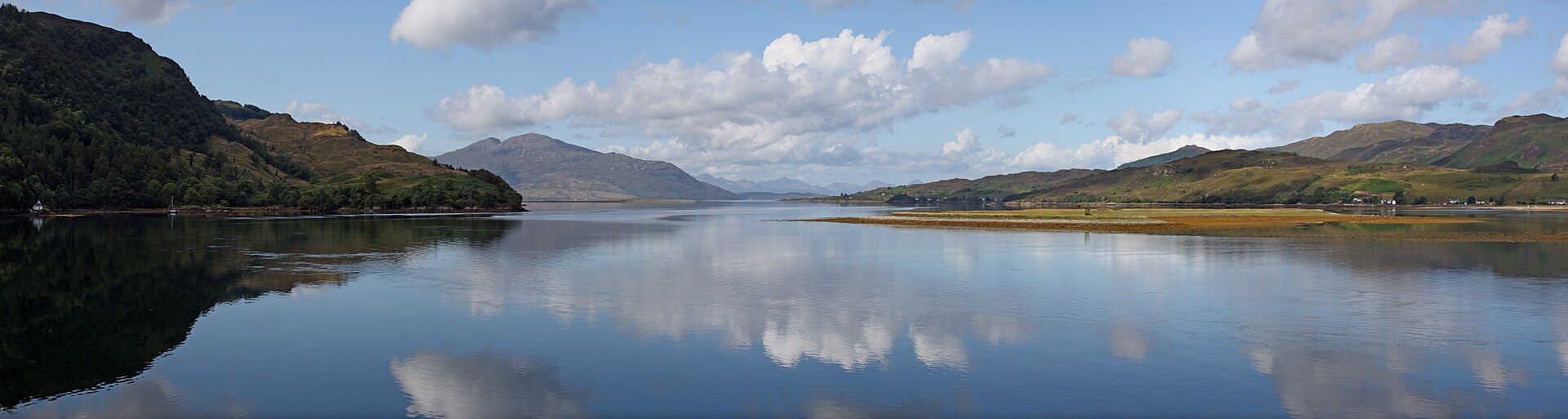
Everything about Eilean Donan begins with its extraordinary setting. The castle sits on a small tidal island in the western Highlands of Scotland, at the precise point where three sea lochs come together: Loch Duich, Loch Long, and Loch Alsh. In an age when the sea was the main highway and the mountainous land was all but impassable, a fortress commanding this meeting of the waters controlled the routes in every direction, toward the open sea, toward the Isle of Skye, and deep into the glens of the mainland.
The island itself is a natural stronghold. Small, rocky, and cut off by the water, it could be defended by a modest force and was hard for any enemy to approach unseen. Around it rise the steep hills of Kintail, and the whole scene has a wild, brooding beauty that no photograph quite captures, the dark water, the grey stone, and the ever-changing Highland sky combining into something that stops visitors in their tracks.
The castle’s name means, simply, the island of Donan, and it carries an echo of the very earliest days of Christianity in Scotland. It is thought to be named after Saint Donan, a sixth-century Irish monk who is said to have settled on the island and founded a small religious community here long before any castle was built. So even before it became a fortress, this little island was already a place set apart, a holy retreat in the wild western sea.
That combination of the sacred and the strategic set the island on its course. A place important enough to draw a saint, and defensible enough to guard the meeting of three lochs, was always going to become something more than an empty rock. In time it would become one of the great strongholds of the Highlands.
Vikings, Saints, and the First Fortress
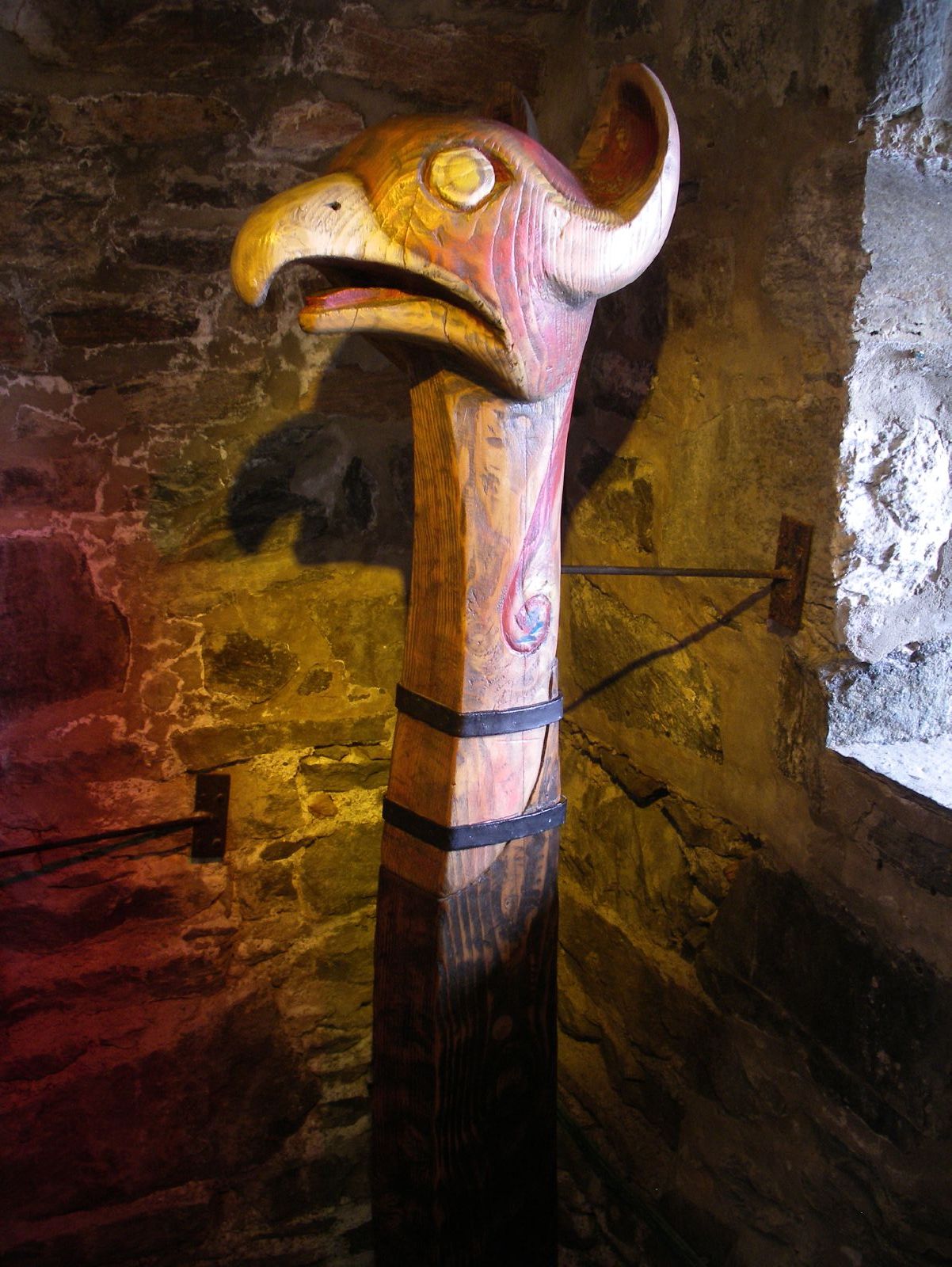
For centuries after Saint Donan, the western seaboard of Scotland was a dangerous and contested world. From around the ninth century, Norse raiders, the Vikings, came sweeping down these coasts in their longships, raiding, settling, and eventually controlling much of the north and west of Scotland and the Western Isles. For hundreds of years this was, in effect, a Norse-dominated sea, and the local people needed strongholds to protect themselves against the raiders who came out of it.
It was against this background that the first real fortress was raised on Eilean Donan, most likely in the early thirteenth century, as a defensive bastion protecting the lands of Kintail from Viking attack. The island’s position, guarding the sea routes and easily defended, made it the natural place to build. From its walls, watchers could scan the lochs for the tell-tale sails of raiders and rally the defence of the surrounding country.
This was the age of the so-called Sea Kingdom, the domain of the Lord of the Isles, a semi-independent realm in which the sea was the main road and a chieftain’s power was measured in the number of men and war-galleys, known as birlinns, he could command. In such a world, a castle like Eilean Donan, controlling a key junction of the waterways, was a piece of real strategic value, a base from which sea power could be projected across the region.
The medieval castle that grew here was, at its height, considerably larger than the compact fortress we see today, with towers and a curtain wall enclosing much of the island and a main keep on its highest point. Later, for reasons that are not entirely clear but probably tied to the number of men needed to defend it, the fortified area was dramatically reduced in size, concentrating the defences into a smaller, stronger core.
Clan Mackenzie and Clan MacRae
For most of its history, Eilean Donan was bound up with the great Highland clans, above all the Mackenzies and the MacRaes. The castle became a stronghold of Clan Mackenzie, one of the most powerful families of the northern Highlands, who held these lands and used Eilean Donan as a key seat of their power. Through the turbulent centuries of clan warfare, feud, and shifting alliances, the castle stood at the heart of Mackenzie country.
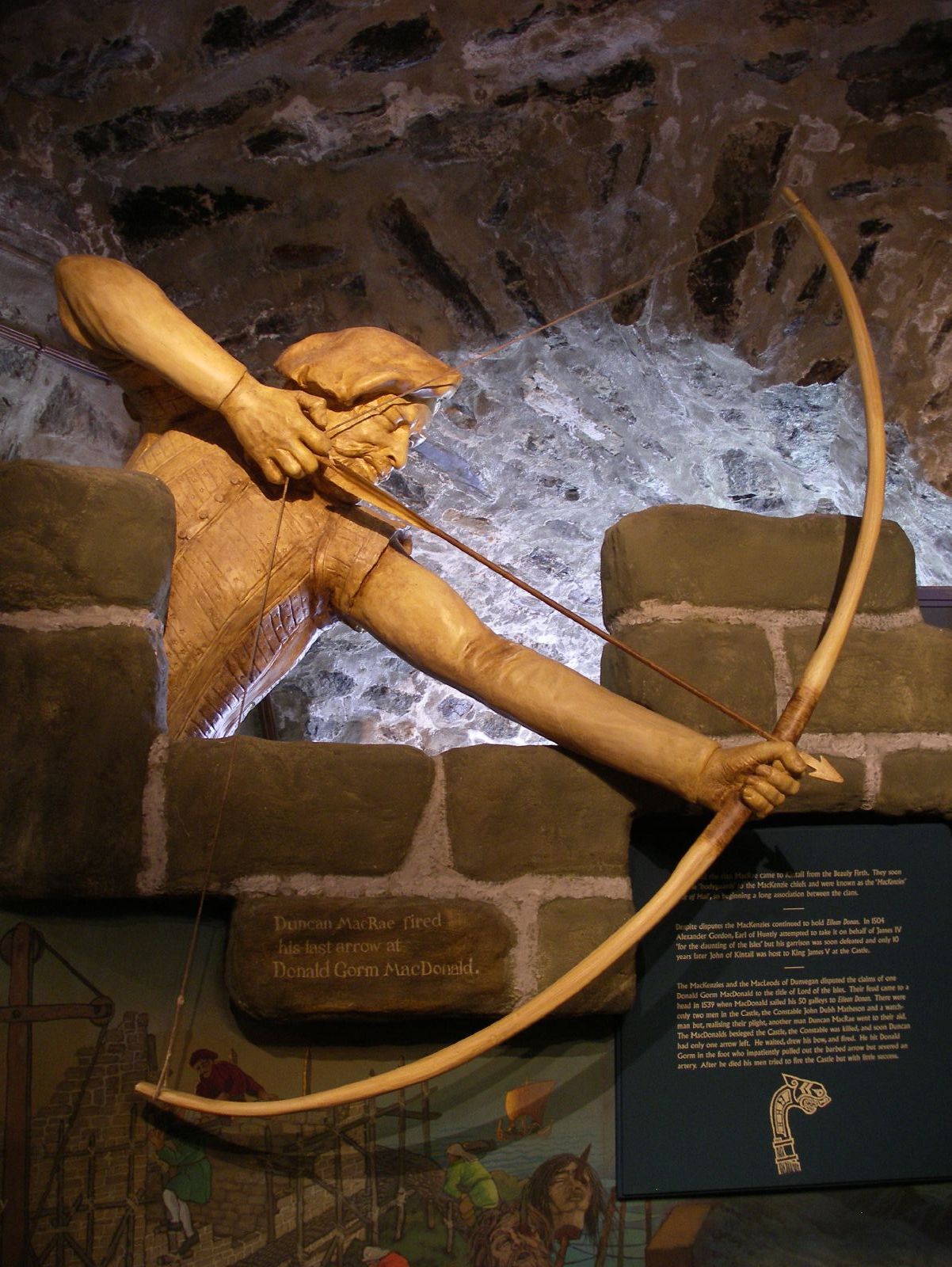
Closely tied to the Mackenzies were the MacRaes, who from the early sixteenth century served as the constables of Eilean Donan, the trusted keepers who held and defended the castle on the Mackenzies’ behalf. The MacRaes became so associated with the castle that they earned a nickname as the Mackenzies’ coat of mail, their loyal protectors and fighting men, and it is the MacRaes whose descendants are most closely linked with the castle to this day.
Life in a Highland castle like this was a world away from the elegant courts of the south. It was a place of clan loyalty and blood feud, of feasting in the hall and fighting on the galleys, of a warrior society in which honour, kinship, and the sword counted for everything. The walls of Eilean Donan witnessed the fierce, proud, and often violent life of the Highland clans at its height.
As firearms arrived, the castle kept pace, and by the sixteenth century a special firing platform, known as a hornwork, was added to the eastern wall to mount the newly introduced cannon. Even in its remote island fastness, Eilean Donan was keeping up with the changing technology of war, ready to defend the Mackenzies’ lands against whatever new threats the age might bring.
Walls Fourteen Feet Thick
The castle’s defences were formidable, and their sheer solidity would later prove astonishing even to those who tried to destroy them. In places the walls of Eilean Donan are enormously thick, up to some fourteen feet, or more than four metres, of solid stone. Combined with the natural protection of the island and the surrounding water, these massive walls made the castle a genuinely tough stronghold, able to shrug off all but the most determined assault.
The medieval fortress was designed for the realities of Highland warfare, with strong walls, a defensible keep, and later gun platforms, all arranged to make the most of the island’s natural strength. An attacker would have to cross the water under fire, then face those tremendous walls, a daunting prospect for any force without heavy artillery and the time to use it.
Inside, the castle provided the hall, chambers, and stores needed to sustain a clan garrison and their chief, a self-contained world capable of holding out for a long time if besieged. The thickness of the walls was not just for defence but also for permanence, and it is largely thanks to their sheer mass that so much survived, in ruined form, to guide the later reconstruction.
That strength would be tested to the absolute limit in the early eighteenth century, when Eilean Donan found itself caught up in one of the strangest and most dramatic episodes in its whole history, a doomed plot that would end in the castle’s violent destruction.
The Spanish Garrison and the Doomed Rising
In the early eighteenth century, Scotland was torn by the Jacobite risings, a series of attempts to restore the exiled Stuart dynasty to the thrones of Scotland and England. The Highlands, with their proud, independent clans, were a heartland of Jacobite support, and Eilean Donan, as a Mackenzie stronghold, was drawn into the intrigue. In 1719 the castle became the unlikely stage for a plot involving a foreign power: Spain.
That year, as part of a planned Jacobite uprising backed by Spain, a small force of Spanish soldiers, said to number around forty-six men, was landed and garrisoned within Eilean Donan. They established a store of gunpowder in the castle and settled in to await the delivery of weapons, cannon, and reinforcements from Spain, hoping to help spark a general rising across the Highlands. For a brief moment, this remote Scottish island held a Spanish garrison flying the flag of a doomed rebellion.
But the plot leaked. The British government caught wind of the intended uprising and moved swiftly to crush it before it could gather strength. Three heavily armed Royal Navy frigates, remembered by name as the Flamborough, the Worcester, and the Enterprise, were despatched to the west coast to deal with the threat at Eilean Donan. The little island castle was about to face the full firepower of the British navy.
It is a curious and rather poignant image: a handful of Spanish soldiers, far from home, holed up in an ancient Highland castle in the pouring western rain, waiting for help that would never come, while warships bore down on them out of the sea. The stage was set for the violent end of the medieval castle.
Three Days of Bombardment
When the frigates arrived, they opened fire, and the bombardment of Eilean Donan lasted three days. Cannonball after cannonball slammed into the castle, but here those tremendous walls did their work. So thick and solid was the medieval stonework that the naval guns, for all their fury, made only limited impression on it, and the Spanish garrison held out behind the battered but still-standing walls.
In the end, it was not the bombardment alone that decided the matter, but a landing party. The captain of the Enterprise sent his men ashore to storm the castle directly, and the small Spanish garrison, hopelessly outnumbered and with no relief in sight, was overwhelmed and forced to surrender. The doomed Jacobite plot at Eilean Donan was over, and the castle was in government hands.
Then came the destruction. When the government troops searched the castle, they discovered the Spanish store of gunpowder, said to amount to hundreds of barrels. Rather than leave the stubborn fortress standing, they decided to use that very gunpowder to finish the job the frigates had failed to complete. They packed the barrels against the walls and blew the castle apart, reducing the ancient stronghold to a shattered ruin in a single, thunderous act of demolition.
So the medieval Eilean Donan, which had guarded its island for some five hundred years, which had watched for Viking sails and stood at the heart of clan power, was destroyed not by a great siege but as the aftermath of a failed foreign plot, blown up with the rebels’ own gunpowder. It was a sudden and violent end, and it left the island in ruins for generations.
The destruction of Eilean Donan was part of a wider pattern of the age, in which the British state moved with increasing determination to break the military power of the Highland clans and stamp out the Jacobite threat. Slighting rebel strongholds, disarming the clans, and later building military roads and forts were all part of the same campaign, and the ruin of Eilean Donan was one small, dramatic chapter in that long, harsh process of bringing the Highlands to heel.

Two Centuries of Ruin
After the explosion of 1719, Eilean Donan was left as a stark, roofless ruin, and so it remained for the best part of two hundred years. Abandoned and neglected, open to the wind, the rain, and the salt sea air, the shattered walls slowly weathered on their island, home only to seabirds and the memories of the clans. The great stronghold had become a romantic wreck, a mournful silhouette against the Highland sky.
In one sense, this long ruin was in keeping with the fate of the Highlands themselves. The failure of the Jacobite cause, finally crushed at Culloden in 1746, was followed by the deliberate breaking of the old clan system, the disarming of the Highlands, and, later, the notorious Clearances that emptied many glens of their people. The ruined castle stood as a silent monument to a whole way of life that had been shattered along with its walls.
Yet even in ruin, Eilean Donan cast a spell. Its position was so beautiful, its silhouette so evocative, that travellers and artists of the romantic age were drawn to it, and it became one of the melancholy, picturesque sights of the Highlands, admired precisely for its air of lost grandeur. The very abandonment that had overtaken it made it, to romantic eyes, all the more poignant and beautiful.
But a ruin, however romantic, is still a ruin, and for two centuries it seemed that Eilean Donan’s days as a living castle were gone forever. It would take an extraordinary act of vision and devotion, in the twentieth century, to bring the stronghold back to life.
One Man’s Twenty-Year Labour of Love
The rescue of Eilean Donan is a story of remarkable personal dedication. In 1911 the island was bought by Lieutenant Colonel John MacRae-Gilstrap, a member of the very clan that had guarded the castle for centuries, and he resolved to do something few would have dared: to rebuild the ruined stronghold from the ground up and restore it to its former glory. It would become the great project of his life.
Together with his devoted Clerk of Works, Farquhar MacRae, the colonel spent the next twenty years painstakingly reconstructing the castle. The work was guided by the surviving ground plan of the earlier fortress, so that the rebuilt castle followed the footprint of what had stood before, rising on the old foundations and echoing the shape of the medieval stronghold. Stone by stone, over two decades, Eilean Donan was raised from its ruins.
There is a lovely tradition attached to the restoration: it is said that Farquhar MacRae was inspired by a dream in which he saw the castle as it had been, and that the reconstruction followed the vision of that dream, only for later research to suggest the rebuilt form was remarkably close to the historical reality. Whether or not the story is literally true, it captures the spirit of devotion and almost mystical dedication that drove the whole enormous effort.
The rebuilt castle was formally completed in July 1932, and Eilean Donan lived again. After two hundred years as a ruin, the stronghold once more stood whole on its island, its walls rebuilt, its rooms furnished, and its bridge linking it to the shore. It was, and remains, one of the great feats of castle restoration anywhere, an ancient fortress brought back to life by one family’s love.
The scale of what the colonel took on is easy to underestimate. He was not simply repairing a damaged building but raising a substantial castle almost from its foundations, on a remote island, using the building methods and transport of the early twentieth century. Materials had to be brought to the site, skilled craftsmen employed for years on end, and the whole vision sustained through two decades of painstaking work. It was the kind of project that could easily have faltered, and that it succeeded so completely is a tribute to one family’s extraordinary determination.
Inside the Restored Castle
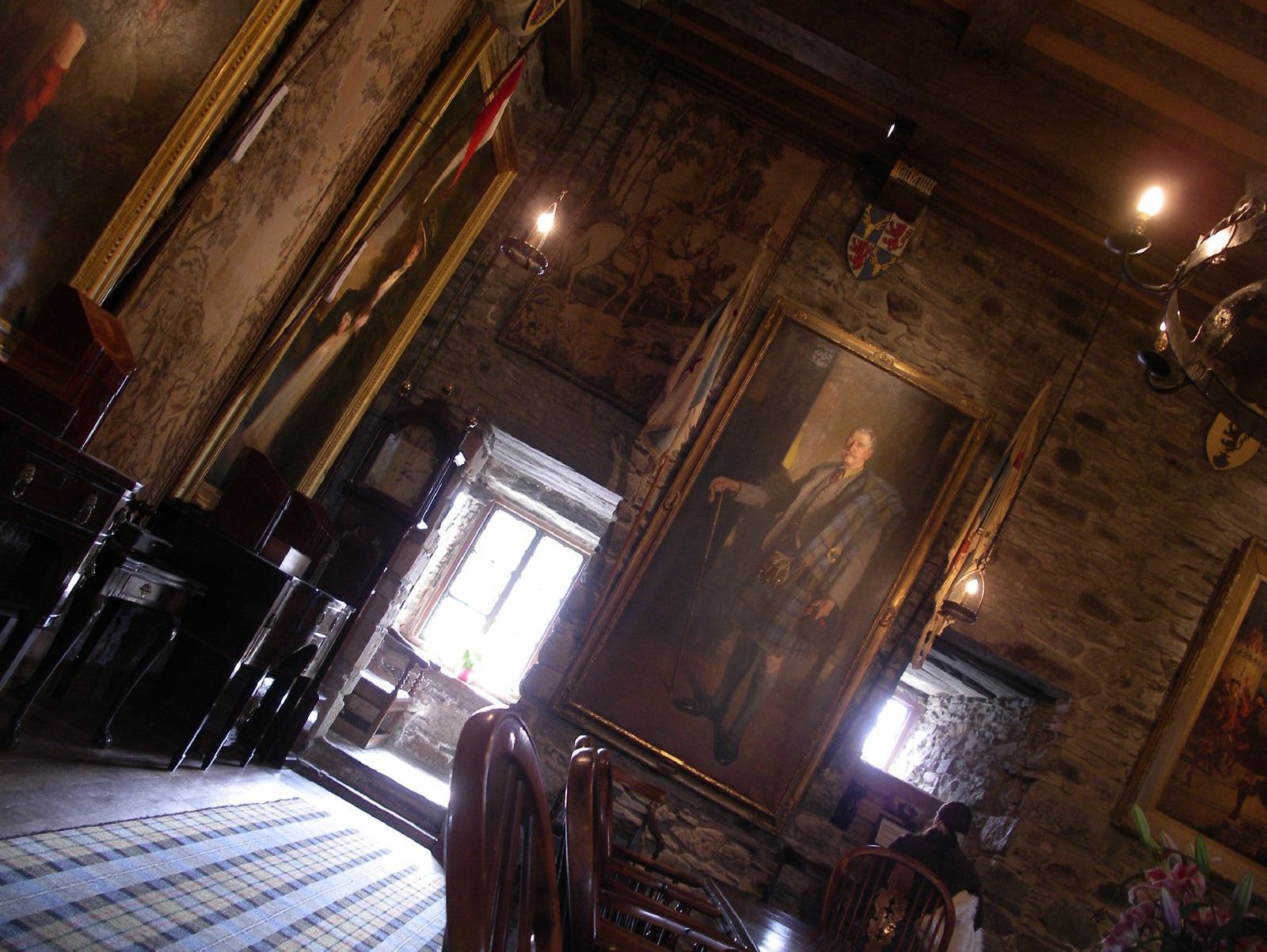
Step across the bridge and into the castle today, and you enter a place that feels both ancient and warmly lived-in. The interiors were fitted out during the restoration to evoke the home of a Highland clan, and they are richly furnished with period pieces, portraits, weapons, and clan memorabilia that bring the world of the Mackenzies and MacRaes vividly to life. This is no bare shell but a castle that feels like a home.
The centrepiece is the Banqueting Hall, a grand room with a fine timber ceiling, hung with weapons, banners, and portraits, where the atmosphere of a clan feast is easy to imagine. Around it are bedrooms, kitchens, and other chambers, furnished and arranged to show how the castle would have been lived in, complete with displays that tell the long and dramatic story of the island and its people.
Throughout the interior, the presence of Clan MacRae is strongly felt, in the memorabilia, the family connections, and the sense of a castle rescued and cherished by the descendants of those who once guarded it. The restoration was not just about rebuilding walls but about reconnecting the castle with its human story, and that warmth is a big part of what makes a visit so memorable.
From the windows and battlements, meanwhile, the views out over the lochs and hills are simply magnificent, a constant reminder of why this island was chosen in the first place. Inside and out, the restored Eilean Donan offers a rare chance to experience a Highland castle not as a cold ruin but as a living, breathing place.
A Star of the Silver Screen
Eilean Donan’s extraordinary beauty has made it a favourite of film-makers, and it has appeared on cinema and television screens around the world, further cementing its status as the very image of a romantic Scottish castle. Its dramatic island setting, its arched bridge, and its brooding Highland backdrop make it an irresistible location, instantly recognisable and impossibly photogenic.
The castle has featured in a string of well-known films, standing in as a Scottish stronghold in fantasy and adventure, appearing in a famous spy thriller as a headquarters, and turning up in numerous other productions, documentaries, and advertisements. For countless viewers, a glimpse of Eilean Donan on screen is their first encounter with the Highlands, and it has done as much as any tourist board to shape the world’s image of Scotland.
This screen fame has, in turn, drawn ever greater numbers of visitors, eager to see in person the castle they have admired in films and photographs. Eilean Donan has become one of the most visited castles in Scotland, its car park and bridge busy with travellers from every corner of the globe, all hoping to capture their own version of that perfect view.
There is a certain irony in it. A castle destroyed in a forgotten plot, ruined for two centuries, and rebuilt in the twentieth century has become, through the modern magic of photography and film, one of the most famous castles on earth. Eilean Donan’s second life has arguably made it more celebrated than it ever was in its warlike medieval prime.
Feasting, Weapons, and the Life of the Clan
To really understand Eilean Donan, it helps to imagine it full of life rather than as a quiet monument. In its heyday this was the working heart of a Highland clan, and its hall would have rung with the noise of feasting, music, and the business of a warrior society. The clan chief and his kinsmen gathered here, disputes were settled, alliances were made, and the fighting men who crewed the war-galleys were fed and rewarded.
The restored Banqueting Hall gives a vivid sense of that world. Hung with weapons, portraits, and clan relics, its long table and great fireplace conjure the image of a Highland feast, the chief at the head of the board, the pipes playing, and the loyalty of the clan bound tighter with every shared meal. In a society where kinship and honour counted for everything, such gatherings were not mere entertainment but the very glue that held the clan together.
Weapons were never far away, for this was a violent age. Broadswords, targes, dirks, and muskets were the everyday tools of a Highland gentleman, and the walls of the castle bristled with them, both as decoration and as a ready arsenal. The line between a feast and a fight could be thin, and a clan chief had to be ready at all times to defend his people and his honour.
All of this the restoration sought to recapture, so that visitors would not merely see empty rooms but sense the human life that once filled them. It is a reminder that a castle was above all a home, and Eilean Donan was the home of a proud and fierce people whose whole way of life has now vanished, surviving only in stone, song, and story.

A Living Link to Clan MacRae
One of the most touching things about Eilean Donan is that its rescue and its ongoing life are so bound up with a single clan. It was a MacRae who bought and rebuilt the ruin, guided by another MacRae as his clerk of works, and it is descendants of Clan MacRae who remain most closely associated with the castle today, even though it is now held in trust for the benefit of the public.
This gives the castle a warmth and a continuity that many restored monuments lack. Eilean Donan is not just an old building rescued by strangers but a stronghold reclaimed by the very family that guarded it for centuries, a homecoming as much as a restoration. For members of Clan MacRae scattered across the world, the castle is a powerful symbol of their heritage and a place of pilgrimage, a tangible link to their Highland roots.
Inside, the strong presence of the clan is felt everywhere, in the memorabilia, the family portraits, and the displays that tell the intertwined story of the MacRaes, the Mackenzies, and their island fortress. The castle wears its clan identity proudly, and part of what visitors respond to is this sense of a place that truly belongs to a family and a people, rather than to the anonymous past.
In that sense, the rebuilding of Eilean Donan was an act of remembrance as much as of restoration. It brought back not only a castle but a connection, reuniting a clan with its ancestral stronghold and ensuring that the long story of the island of Donan would continue into a new age, told and retold for the countless visitors who now cross its bridge.

The Village, the Bridge, and the Road to Skye
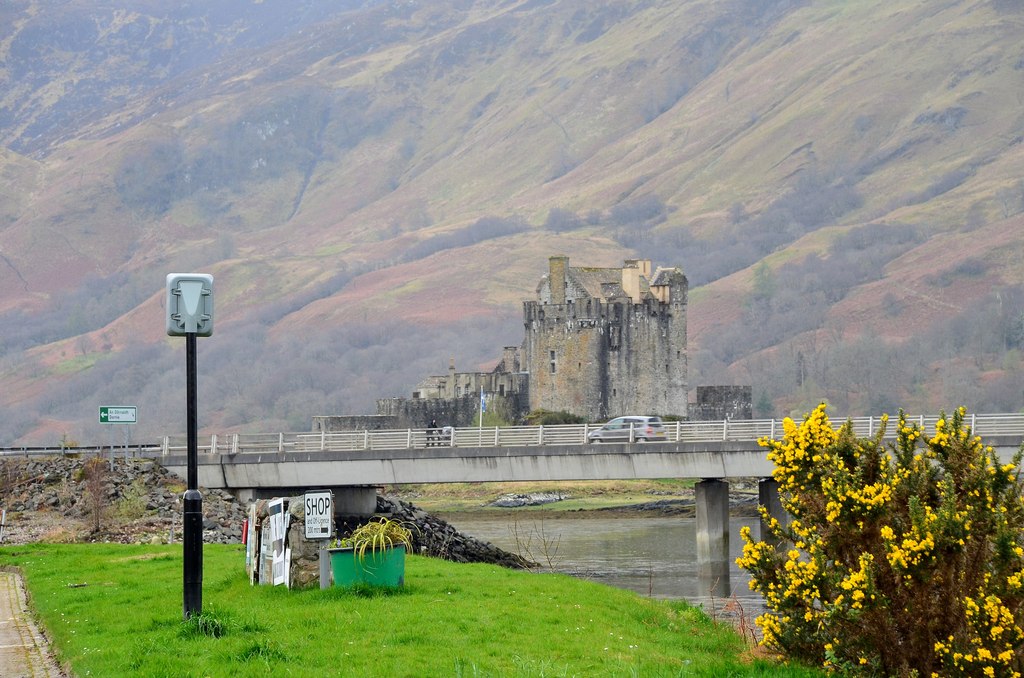
Eilean Donan does not stand entirely alone. Beside it lies the little village of Dornie, and the castle sits close to the main road that runs west toward the Kyle of Lochalsh and the bridge to the Isle of Skye. This position, on the great tourist route into the western Highlands and on to Skye, has helped make the castle so accessible and so much visited, a natural stopping point on one of the most beautiful journeys in Britain.
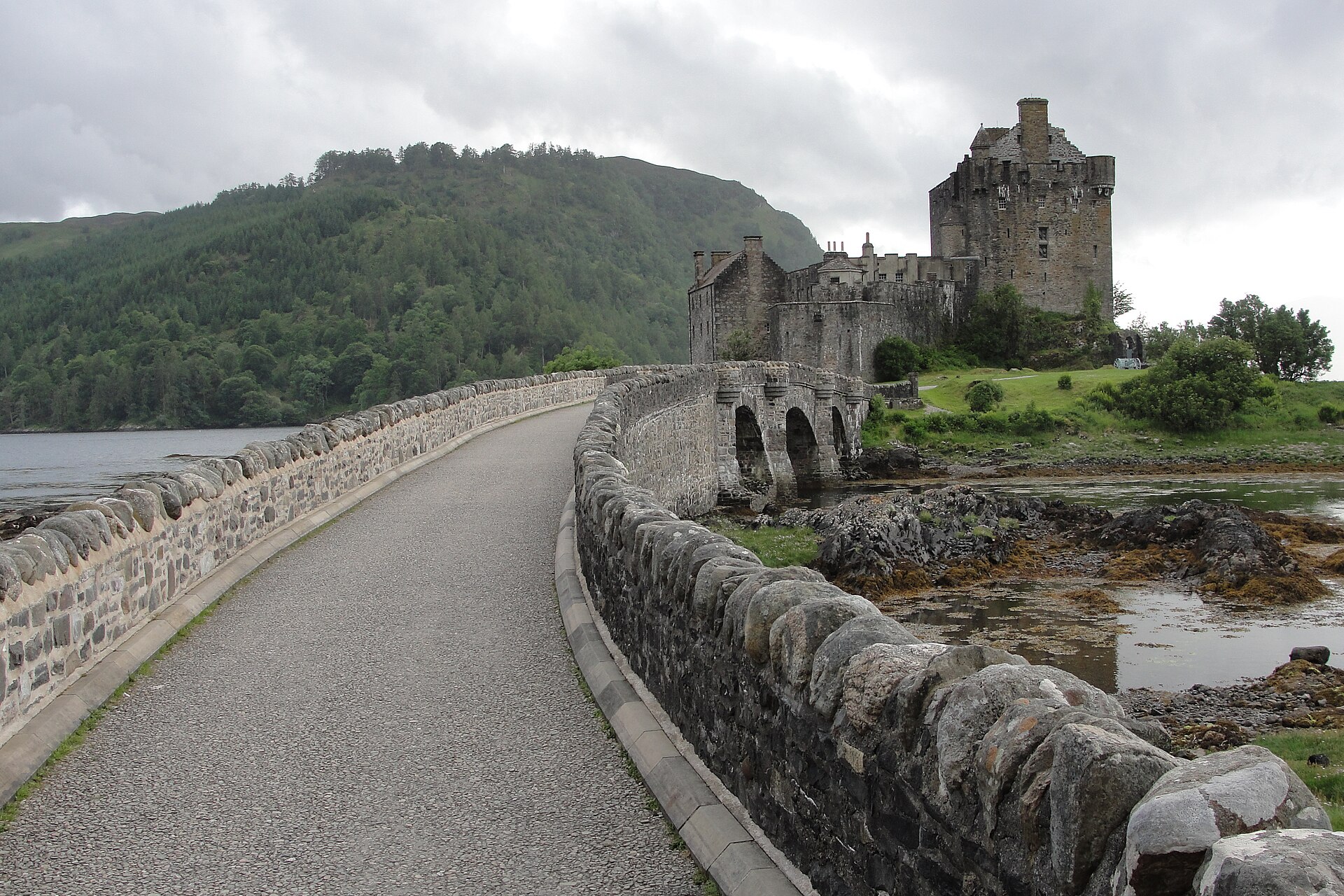
The arched stone bridge that links the castle to the mainland, one of its most photographed features, is itself a product of the twentieth-century restoration. Before it was built, the island could be reached only by boat or, at low tide, by stepping stones, which added to its air of romantic isolation. The bridge made the castle easy to visit while doing nothing to diminish its beauty, its graceful arches now an essential part of the classic view.
Around the castle, the scenery is among the finest in Scotland, a landscape of sea lochs, steep hills, and wide skies that changes with every shift of the weather. Sunshine, mist, storm, and the long golden light of a Highland evening each transform the scene, so that no two views of Eilean Donan are ever quite the same, and photographers return again and again in search of the perfect moment.
Together, the castle, the bridge, the village, and the lochs form one of the most complete and satisfying scenes in the whole of the Highlands, a place that seems almost designed to embody everything the word Scotland conjures in the imagination. It is little wonder that so many travellers make the journey to see it.
Planning Your Visit
Eilean Donan lies in the western Highlands of Scotland, near the village of Dornie, on the main road toward the Kyle of Lochalsh and the Isle of Skye. It is a fair drive from the main cities of Scotland, deep in the Highlands, but it sits on one of the classic touring routes to Skye, so it is easily included in any journey to the north-west. There is a visitor centre with parking, and the castle is open to the public for much of the year.
Allow an hour or two to cross the bridge, explore the restored interiors, and take in the displays that tell the castle’s dramatic story, from Saint Donan and the Vikings to the Spanish garrison and the great restoration. But leave plenty of time, too, simply to walk around and admire the castle from different angles, for the views are as much the point as the building itself. Early morning and evening, when the light is soft and the crowds are thinner, are especially magical, and a still day, when the castle is mirrored perfectly in the loch, offers the classic photograph that has made Eilean Donan famous the world over.
The castle sits at roughly 57.2740, -5.5163. Punch that into Google Maps and it will take you straight to Eilean Donan Castle.
Nearby Castles
Why Eilean Donan Stays With You
Eilean Donan is a castle with two lives, and both of them are extraordinary. In its first life it was a genuine Highland stronghold, born of the age of saints and Vikings, held by proud clans through centuries of feud and war, and finally blown to pieces in the wreckage of a doomed Jacobite plot, left to crumble on its island for two hundred years. In its second life it was raised from those very ruins by one man’s twenty-year labour of love, and reborn as the most beloved and most photographed castle in Scotland.
That is why it stays with everyone who sees it. Behind the perfect postcard view lies a story of loss and devotion, of a stronghold destroyed and then, against all odds, brought back to life. Stand on the bridge on a still evening, with the castle mirrored in the loch and the Highland hills darkening around you, and you are looking at more than a beautiful building. You are looking at the endurance of the Highlands themselves, ruined and rebuilt, and at the simple, powerful idea that even what is lost can, with enough love, be won back again.
So cross the little bridge, wander the rebuilt halls, and then step back to the far side of the loch for the view that has launched a million photographs. Somewhere in that perfect scene, the saint, the Vikings, the clans, the Spanish soldiers, and the devoted colonel are all still present, layered into the stone. Eilean Donan is not just Scotland’s prettiest castle; it is a small, stubborn miracle of survival, and that, more than any postcard, is why it stays with you long after you have gone.
You May Like
Mafra, the Palace a King Built From a Vow


One thought on “Eilean Donan: The Scottish Castle That Was Blown Up and Reborn”