Most castles are square, or round, or a sprawl of walls following the shape of a rock. Caerlaverock is a triangle. Rising from the flat, marshy land near the Solway Firth in south-west Scotland, its warm red sandstone walls form an almost perfect triangular plan, ringed by a broad water-filled moat, with a mighty twin-towered gatehouse standing guard at the apex. There is no other castle quite like it in Britain, and its unusual, striking shape, mirrored in the still water around it, makes it one of the most distinctive and memorable fortresses in the whole country.
But Caerlaverock is far more than an architectural curiosity. Guarding a vital point near the border between Scotland and England, it stood on one of the great fault lines of medieval British history, and it was fought over again and again in the long, bitter wars between the two nations. Its most famous moment came in 1300, when it was besieged by King Edward I of England in an assault so celebrated that a poet wrote a whole heraldic poem about it, listing the arms of the knights who came to take this one small Scottish castle.
For centuries it was the proud stronghold of the Maxwell family, one of the great powers of the Scottish borders, who defended it, lost it, rebuilt it, and finally adorned it with a magnificent Renaissance mansion tucked inside its medieval walls. So this is a castle of contradictions and surprises: a triangular fortress, a border battleground, and a nobleman’s showpiece, all in one. Let’s cross the moat and step inside one of Scotland’s most unusual castles.
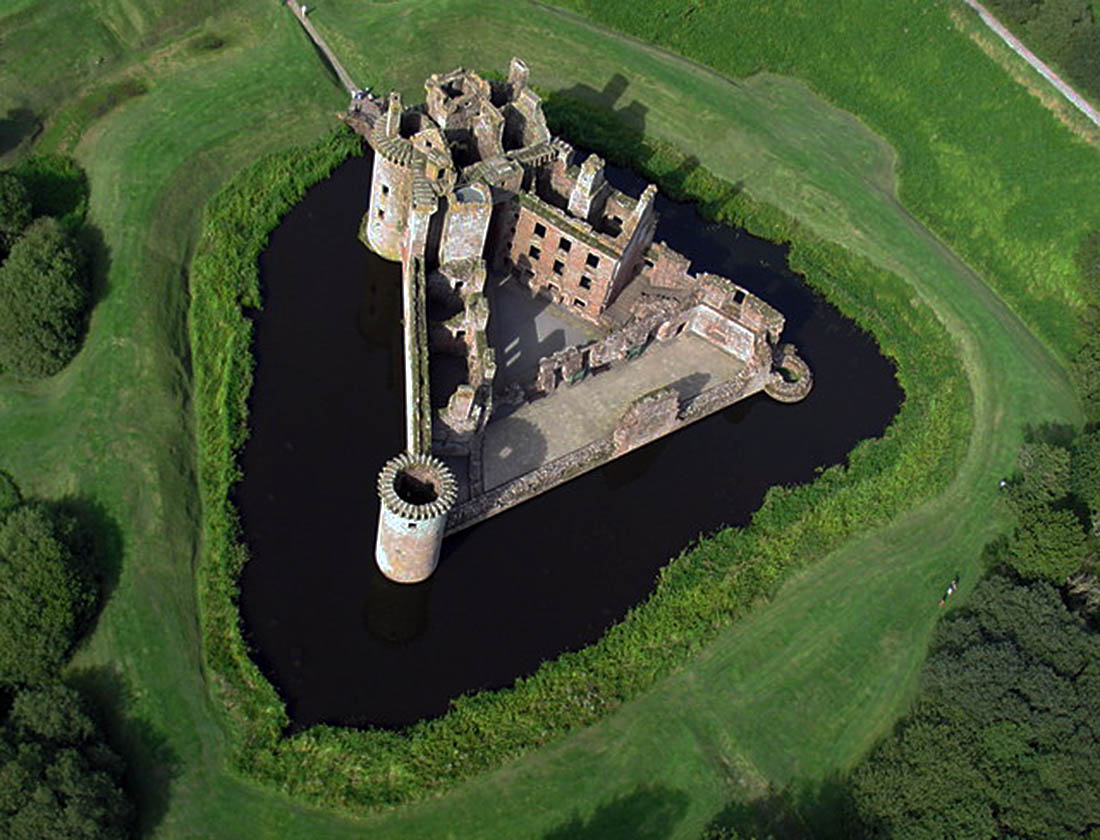
Table of Contents
- A Triangle in the Marshes
- An Older Castle Nearby
- Guarding the Western Border
- The Famous Siege of 1300
- The Poem That Made It Famous
- Changing Hands in the Wars
- The Mighty Maxwells
- A Renaissance Mansion in a Medieval Shell
- The Last Siege
- Within the Walls
- Red Sandstone and Water
- A Castle Among the Wildfowl
- Exploring the Ruins
- Planning Your Visit
- Nearby Castles
- A Castle Unlike Any Other
A Triangle in the Marshes
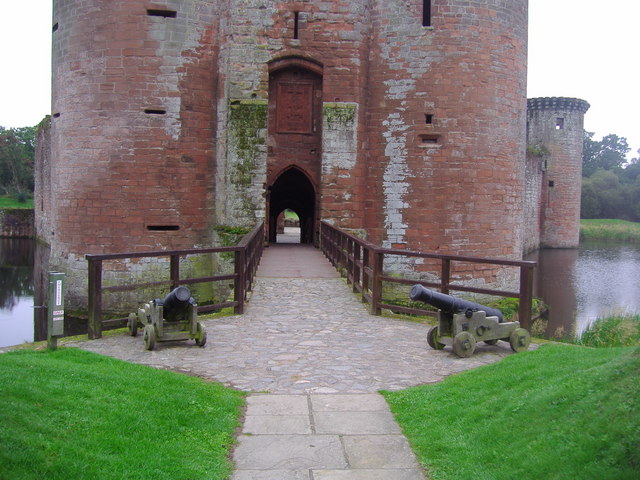
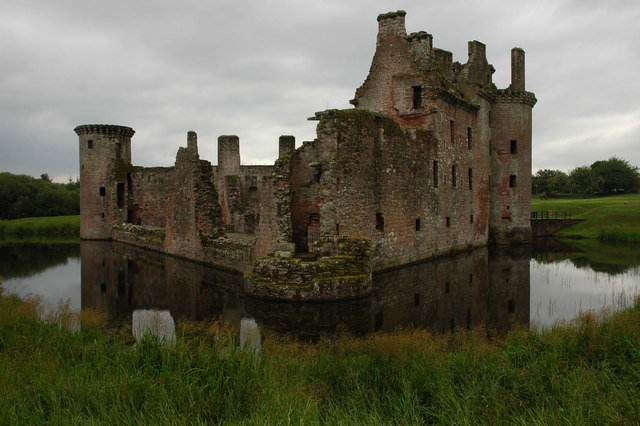
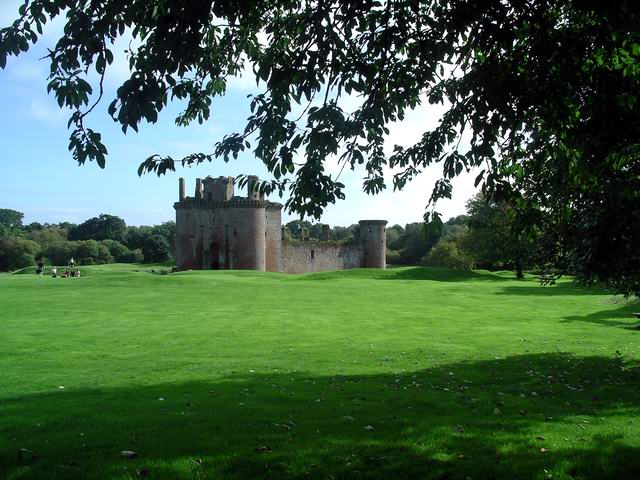
The first thing anyone notices about Caerlaverock is its shape. Almost uniquely among the castles of Britain, it is built to a triangular plan, with three sides meeting at three corners, the whole enclosed by a moat that follows the same distinctive outline. At one corner, the apex of the triangle pointing toward the approach, stands the great gatehouse; at the other two corners rise round towers, and strong walls run between them, so that the entire castle forms one neat, powerful, three-sided stronghold.
Why it was built this way is not entirely clear, and it may have been partly a response to the site, partly a matter of design. Whatever the reason, the triangular plan is remarkably effective and remarkably beautiful, giving the castle a compact, concentrated strength and an unforgettable appearance. Seen from the air, or reflected in its moat, Caerlaverock looks almost like a piece of geometry come to life.
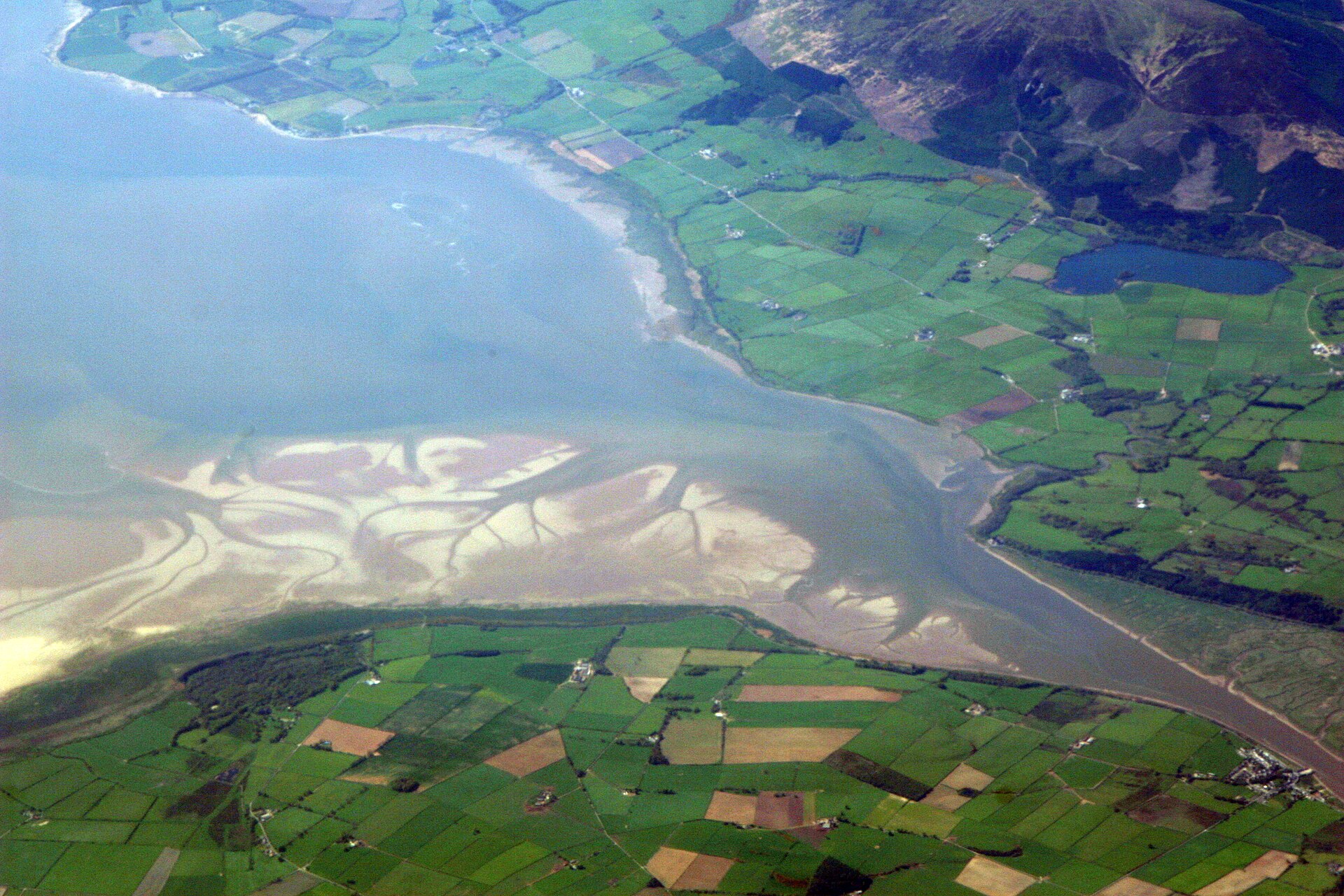
The setting adds to the effect. The castle sits on low, flat, marshy ground near the Solway Firth, the great inlet of the sea that forms part of the border between Scotland and England. This watery, low-lying landscape allowed the builders to surround the castle with its broad moat, and the water defences were central to its strength, keeping attackers at a distance and making assault difficult.
So Caerlaverock is a castle shaped as much by cleverness as by circumstance, a triangular jewel set in a ring of water on the edge of the sea. Its unusual form is not a mere quirk but a genuine and successful piece of medieval military design, and it is a large part of what makes the castle so special.
Architectural historians have long puzzled over why the builders chose a triangle, so rare a shape for a castle. Some think it was a bold and original design decision, others that it was dictated by the shape of the ground or by the line of an earlier defence. Whatever the reason, the result is a fortress of unusual efficiency, for the triangular plan concentrates the defences and allows the great gatehouse to command the single approach with maximum force, while the two rear towers cover the other corners.

An Older Castle Nearby
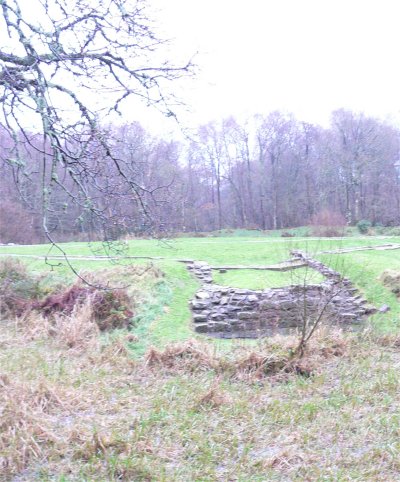
There is an intriguing detail in Caerlaverock’s early history: the triangular castle we see today was not quite the first on the spot. Archaeology has revealed the remains of an earlier castle nearby, built a little before the one that survives, on a slightly different site, and then abandoned in favour of the new triangular fortress. Why the builders moved is not entirely certain, but the marshy, shifting ground may have played a part.
This earlier castle is a reminder that the choice of site for a fortress was not always straightforward, and that builders sometimes experimented and changed their minds. The move to the triangular castle, on firmer or more suitable ground, gave us the remarkable building we admire today, and left the earlier attempt as a ghostly outline for archaeologists to trace.
It also underlines how long this stretch of the border was considered worth fortifying. Even before the great triangular castle rose, people were building strongholds here to guard the approaches from England, evidence of the enduring strategic importance of this corner of the south-west.
So Caerlaverock’s story, like that of many great castles, begins slightly before the surviving building, with an older fortress that paved the way. It is a small but fascinating footnote to the history of one of Scotland’s most unusual castles, and a reminder of the deep roots of fortification on this contested frontier.
Guarding the Western Border
Caerlaverock’s importance came from its position. It stood near the Solway Firth, guarding the western end of the border between Scotland and England, close to the routes by which armies could cross between the two kingdoms along the coast and the estuaries. In the long centuries of warfare between Scotland and England, this western march was a dangerous and contested frontier, and a strong castle here was of real strategic value.
Built in the later thirteenth century by the Maxwell family, powerful lords of the Scottish south-west, Caerlaverock was designed to command this vital border region. From it, the Maxwells could control the surrounding lands and the approaches from England, and it served as both a defence against invasion and a base from which to project their power across the borderlands.
The border was a world of its own, a lawless, war-torn frontier where raids, feuds, and full-scale invasions were facts of life, and where the great border families held sway. A castle like Caerlaverock was essential to survival and power in such a world, a strong point in a landscape where strength was everything.
This frontier position meant that Caerlaverock, for all its beauty, was a serious fighting fortress, built to face real and constant danger. Its walls, towers, and moat were not for show but for war, and they would be tested to the limit in the great conflict that soon engulfed the whole of Scotland.
The Solway Firth itself was both a barrier and a route, its treacherous tidal sands and channels difficult to cross but offering, at the right times and places, a way for armies and raiders to pass between the two kingdoms. Caerlaverock watched over this shifting frontier of sand and water, ready to respond to threats that might come by land or along the coast, a sentinel at the western end of one of the most fought-over borders in Europe.
The Famous Siege of 1300
Caerlaverock’s most celebrated moment came in the year 1300, during the Wars of Scottish Independence, when it was besieged by no less a figure than King Edward I of England himself. Edward, the formidable king who had conquered Wales and was determined to bring Scotland under his control, marched a great army to Caerlaverock and set about taking this Scottish stronghold on the border.
The siege was a major event, drawing a host of English knights and nobles, and it was famous enough that a poet in the king’s company wrote a long poem about it, known as the Roll of Caerlaverock. This remarkable work describes the siege and, crucially, lists the coats of arms of the many knights who took part, making it a priceless source for medieval heraldry and a unique record of a single castle siege. Few castles anywhere have their moment of glory preserved in such vivid poetic detail.
Despite being small, Caerlaverock put up a stout resistance, its defenders holding out behind the strong walls and moat against the might of the English army and its siege engines. In the end, though, the sheer weight of Edward’s forces told, and the castle was compelled to surrender, falling into English hands. The garrison, according to the poem, was small in number but had defied a great host, winning a certain grudging admiration for its courage.
The siege of 1300 fixed Caerlaverock forever in the story of Scotland’s struggle for independence, and the poem written about it has given the castle a fame out of all proportion to its size. It is one of the best-documented sieges of the entire medieval period, and it belongs to this triangular fortress on the Solway marshes.
The siege also reveals the scale of Edward I’s ambition and the seriousness with which he pursued the conquest of Scotland. That a king should bring so great a host, and so many noble knights, to take a single small border castle shows how determined he was to crush Scottish resistance and secure every strongpoint. Caerlaverock was a small piece in a vast and ruthless campaign, but its defence, and the poem it inspired, ensured it would be remembered long after grander sieges were forgotten.
The Poem That Made It Famous
It is worth dwelling on the extraordinary poem that has given Caerlaverock such a special place in history. The Roll of Caerlaverock, written in French by a herald or poet in the army of Edward I, is a work quite unlike any other, a verse account of the 1300 siege that lavishes attention on the knights who took part, describing their banners and coats of arms in loving detail.
For historians of the Middle Ages, and especially for students of heraldry, the poem is a treasure. It records the arms of scores of English nobles and knights, preserving a snapshot of the chivalric world at a single moment, gathered before the walls of one small Scottish castle. Few events of the period are documented in such vivid, colourful, and personal detail, and it is all thanks to the fame of this siege.
The poem also conveys something of the spirit of the age, its love of display, its obsession with honour and heraldry, and its glorification of war as a stage for chivalric glory. Reading it, one enters the mental world of the medieval knight, for whom a siege was not just a military operation but an occasion for the assertion of status and identity through the ancient language of arms.
That a modest border castle should be immortalised in such a work is a wonderful accident of history, and it has ensured that Caerlaverock is remembered far beyond what its size alone would warrant. The castle and the poem are forever linked, and the Roll of Caerlaverock remains one of the most remarkable literary legacies of any medieval siege.
Changing Hands in the Wars
The siege of 1300 was only one episode in Caerlaverock’s turbulent involvement in the Wars of Independence. Like so many border castles, it changed hands repeatedly as the long struggle between Scotland and England swept back and forth across the frontier, held now by the English, now by the Scots, as the fortunes of war shifted.
At one point, in the campaign led by Robert the Bruce to drive English power out of Scotland, Caerlaverock, like other captured strongholds, was deliberately damaged, or slighted, by the Scots to prevent it being used against them by the enemy. This policy of destroying castles rather than risk their falling into English hands was a hallmark of Bruce’s strategy, and it left many Scottish fortresses in ruins, Caerlaverock among them.
But Caerlaverock was too important and too valued to be left in ruins forever, and it was rebuilt, its defences restored, so that it could continue to guard the border and serve the Maxwells. This cycle of damage and repair, of loss and recovery, was typical of a border castle in these violent centuries, and Caerlaverock endured it more than once.
Through all these upheavals, the castle remained the stronghold of the Maxwells, who held on to it through the long wars and the shifting fortunes of the border. Their loyalty and their power were bound up with this fortress, and its story is, in large part, the story of their family.
The Mighty Maxwells
For most of its history, Caerlaverock was the great stronghold of Clan Maxwell, one of the most powerful families of the Scottish borders. The Maxwells rose to become Lords Maxwell and, later, Earls of Nithsdale, wielding enormous influence in the south-west of Scotland, and Caerlaverock was the heart of their power, the seat from which they dominated the region.
As a leading border family, the Maxwells were deeply involved in the endless conflicts and intrigues of the frontier, in the wars with England, in feuds with rival families, and in the wider politics of the Scottish kingdom. Their fortunes rose and fell with the turbulent times, and Caerlaverock shared in every twist of their story, defended, lost, and won back as the family’s fortunes dictated.
The Maxwells poured resources into their castle over the centuries, maintaining and improving its defences and, eventually, adding grand new buildings within its walls. Their long association with Caerlaverock gave the castle a continuity of ownership and purpose that helped shape its development, and their name is inseparable from its history.
Under the Maxwells, Caerlaverock was more than a fortress; it was a symbol of a great family’s power and status on the border. To hold this striking, triangular castle was to proclaim one’s importance in the south-west, and the Maxwells guarded that symbol jealously through centuries of war and change.
The Maxwells’ power did not go unchallenged, and their history is studded with feuds, especially a long and bloody rivalry with another great border family, the Johnstones. These clan feuds, fought with raids, ambushes, and pitched battles, were a defining feature of border life, and Caerlaverock stood at the centre of the Maxwells’ efforts to assert their dominance. The castle was thus a stronghold not only against the English but against the family’s many rivals within Scotland itself.
A Renaissance Mansion in a Medieval Shell
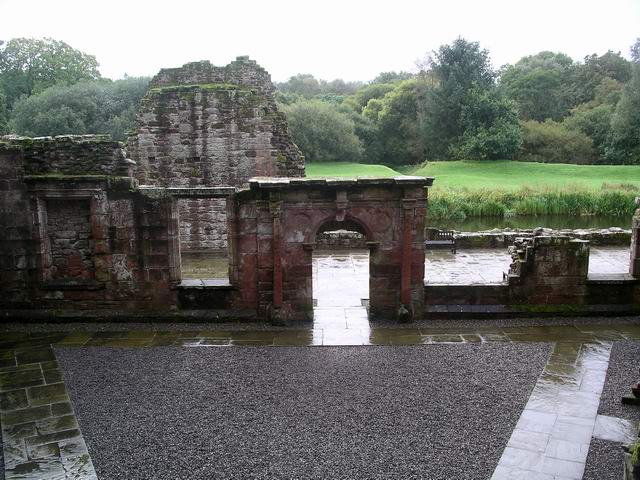
One of the most surprising and delightful things about Caerlaverock is what you find inside its stern medieval walls. In the early seventeenth century, the Maxwell earl of the day built a splendid new range of buildings within the castle, a grand and comfortable Renaissance mansion known as the Nithsdale Lodging, tucked against the inside of the ancient defences.
This lodging is a gem. Its facade is richly decorated with ornate carved stonework, with elaborate window pediments and heraldic and symbolic sculpture, a display of taste and status utterly unlike the grim military architecture around it. Here, within the triangle of medieval walls, a nobleman created a fashionable and elegant home, blending the security of a fortress with the comforts and splendour of a great house of the age.
The contrast is striking and rather wonderful. From outside, Caerlaverock is all defensive strength, a moated triangle bristling with towers; step within, and you find this graceful, ornamented residence, a reminder that even a border stronghold could be turned, in more settled times, into a place of beauty and refinement. The Nithsdale Lodging is one of the finest examples of its kind in Scotland.
It shows, too, how castles evolved over time. As the age of constant border warfare eased, the Maxwells sought to make their fortress a fitting home for a great family, and the result was this marriage of medieval defence and Renaissance elegance, one of the special pleasures of a visit to Caerlaverock.
The building of so fine a residence inside the old walls reflected a wider change across Scotland, as powerful families, in times of relative peace, sought to turn their grim medieval castles into comfortable and fashionable homes. The Nithsdale Lodging at Caerlaverock is one of the most complete and attractive expressions of this trend, and its survival, even in ruin, allows us to see how the tastes of a nobleman of the early seventeenth century transformed the interior of a centuries-old fortress.
The Last Siege
Caerlaverock’s long fighting life came to an end in the seventeenth century, in the midst of the religious and political conflicts that convulsed Scotland and Britain. During the wars between the king and the Covenanters, the Maxwell earl held Caerlaverock for the royalist cause, and in 1640 the castle was besieged by a Covenanter army determined to take it.
The garrison put up a determined defence, and the castle held out for around thirteen weeks before finally being forced to surrender. It was the last great siege in the castle’s history, and after its fall, Caerlaverock’s days as a working fortress were over. The castle was slighted and abandoned, left to decay, its long career as a stronghold of the border at an end.
So Caerlaverock, like so many Scottish castles, met its end amid the upheavals of the seventeenth century, a casualty of the wars that tore the country apart. The great triangular fortress that had defied Edward I and guarded the border for centuries was left a ruin, its walls open to the sky and its moat slowly silting.
Yet even in ruin, Caerlaverock retained its unique and striking character. Its distinctive shape, its red sandstone walls, and its water-filled moat ensured that it remained one of the most remarkable and beautiful ruins in Scotland, admired and visited long after its fighting days were done.
The earl who held Caerlaverock in 1640, Robert Maxwell, first Earl of Nithsdale, was a staunch royalist and Catholic, and his defence of the castle was part of the wider struggle that would soon engulf all of Britain in civil war. His surrender after thirteen weeks marked not only the end of the castle as a fortress but also the decline of the Maxwells’ fortunes, for the family’s loyalty to the losing side would cost them dearly in the decades that followed.

Within the Walls
Passing through the gatehouse and into the inner court, the visitor enters the domestic heart of the castle, the enclosed space within the triangle of walls where the life of the household went on. Here, over the centuries, stood the buildings that made Caerlaverock a home as well as a fortress, ranged around the courtyard and against the inner faces of the walls.
It was here that the great transformation of the seventeenth century took place, when the Nithsdale Lodging was built, bringing Renaissance elegance into the medieval enclosure. The inner court thus tells the story of the castle’s evolution, from a bare defensive space to the setting for a fine nobleman’s residence, all within the same ancient walls.
Standing in the court, ringed by the red walls and towers, you can appreciate the compactness and ingenuity of the triangular plan, and imagine the busy life that once filled this space, servants and soldiers, lords and ladies, all going about their business in the shadow of the great gatehouse. The court was the stage on which the daily drama of castle life played out.
Today it is a peaceful, grassy space, but the surrounding buildings and the carved facade of the lodging still speak of the many lives lived here across the centuries. The inner court is where the two faces of Caerlaverock, the fortress and the home, come together most clearly, and it repays quiet exploration.
Red Sandstone and Water
Much of Caerlaverock’s beauty comes from its materials and its setting. The castle is built of a warm, local red sandstone, which glows in the light and gives the ruins a rich, mellow colour quite different from the cold grey of many fortresses. This handsome stone, quarried nearby, was used throughout the castle, and it is a large part of what makes Caerlaverock so pleasing to the eye.
Then there is the water. The broad moat that rings the castle, fed by the wet, low-lying land around it, was central to its defences and is central to its beauty, mirroring the red walls and the twin towers of the gatehouse in its still surface. The reflection of the castle in its moat is one of the classic images of Caerlaverock, and it is easy to see why photographers love it.
Together, the red stone and the water create a scene of real charm, softening the castle’s military character and giving it an almost romantic quality. The combination is unusual and memorable, and it helps set Caerlaverock apart from the many grey, dry-moated castles elsewhere in Britain.
This marriage of colour and reflection, of warm stone and cool water, is part of what makes a visit to Caerlaverock so rewarding. The castle is not only historically fascinating and architecturally unique but genuinely beautiful, a place that delights the eye as much as it engages the imagination.
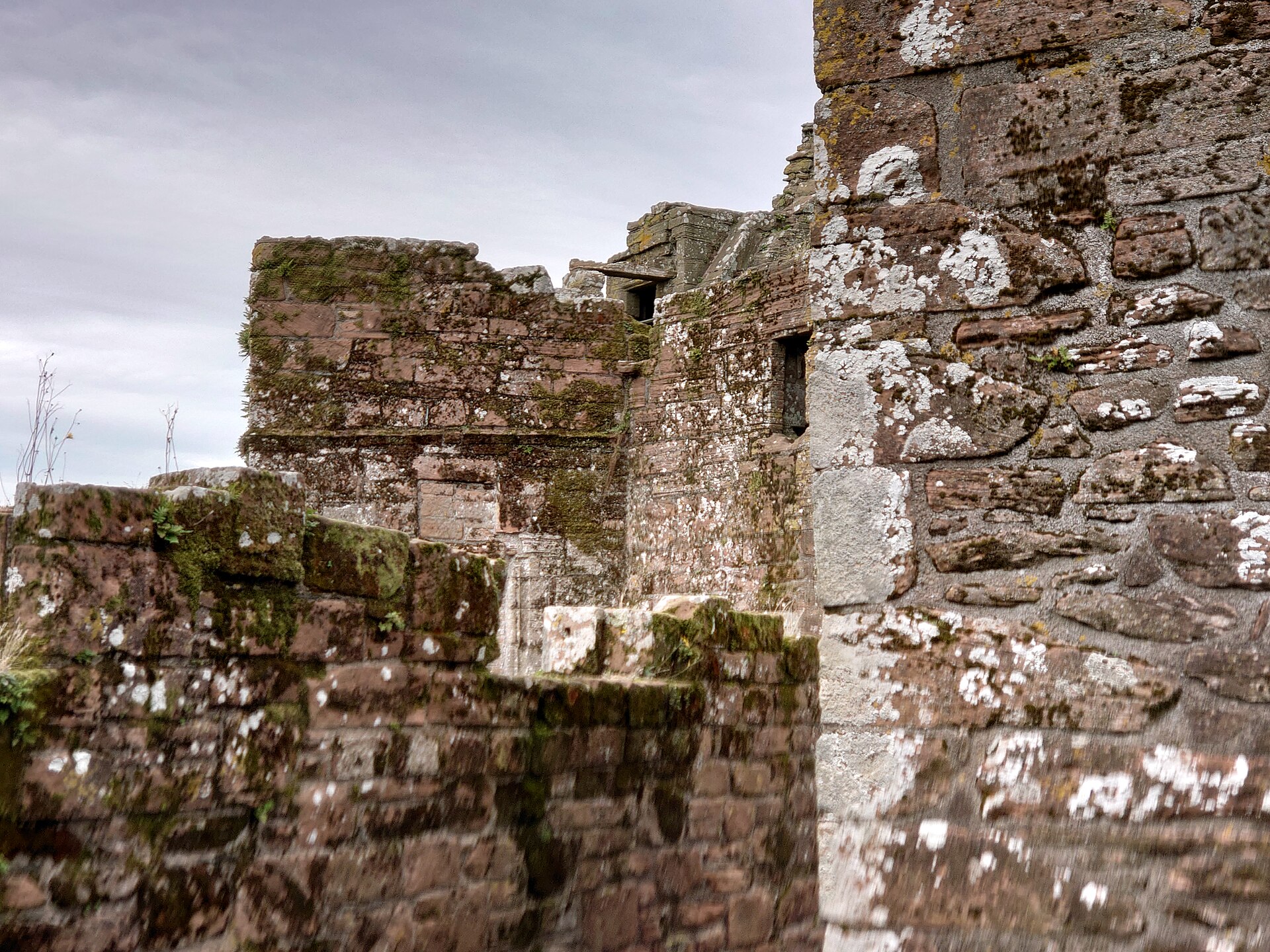
The same soft red sandstone that makes the castle so beautiful also made it vulnerable, for it weathers more readily than harder stone, and centuries of wind and rain have rounded and worn its carved details. Conservators work to protect and stabilise the ruins, balancing the need to preserve the fragile stone against the desire to keep the castle open and accessible, so that visitors can continue to enjoy its warm colour and its reflection in the moat for generations to come.

A Castle Among the Wildfowl
Caerlaverock’s marshy, coastal setting has given it, in modern times, an unexpected second life as a haven for wildlife. The wetlands and merse, or salt marsh, around the castle and along the shore of the Solway Firth are of great importance for birds, and the area is famous as a wintering ground for huge numbers of wildfowl, above all the spectacular flocks of barnacle geese that arrive each year from the Arctic.
A wildfowl and wetlands reserve near the castle draws nature lovers from far and wide, and the combination of the historic ruin and the rich birdlife makes this stretch of the Solway a special place for both history and nature. Visitors can explore the castle and then watch great skeins of geese wheeling over the marshes, two very different but complementary pleasures.
This natural richness adds another dimension to Caerlaverock. The same low, watery landscape that gave the castle its moat and its defensive strength also makes it a magnet for wildlife, so that the fortress now stands amid a thriving natural habitat, its ruins reflected in waters alive with birds.
It is a fitting modern chapter for a castle that has always been shaped by its watery surroundings. Where once the marshes and the moat kept enemies at bay, they now shelter one of Scotland’s great wildlife spectacles, and the old fortress presides over it all, as it has over so much else, from its triangle of red stone.
The barnacle geese are the great spectacle, arriving in their thousands from breeding grounds far to the north and filling the winter skies over the Solway with their calls and their wheeling flocks. To watch them from near the old castle, as the light fades over the marshes, is to experience a meeting of history and nature that few places can offer, the medieval ruin and the ancient rhythms of migration sharing the same wild, watery landscape.
Exploring the Ruins
For visitors today, Caerlaverock is a wonderful castle to explore. Its compact, triangular plan makes it easy to understand and to walk around, and its good state of preservation means there is much to see, from the great gatehouse and the round towers to the walls, the inner court, and the ornate Nithsdale Lodging. Displays help bring its history to life, from the famous siege of 1300 to the age of the Maxwells.
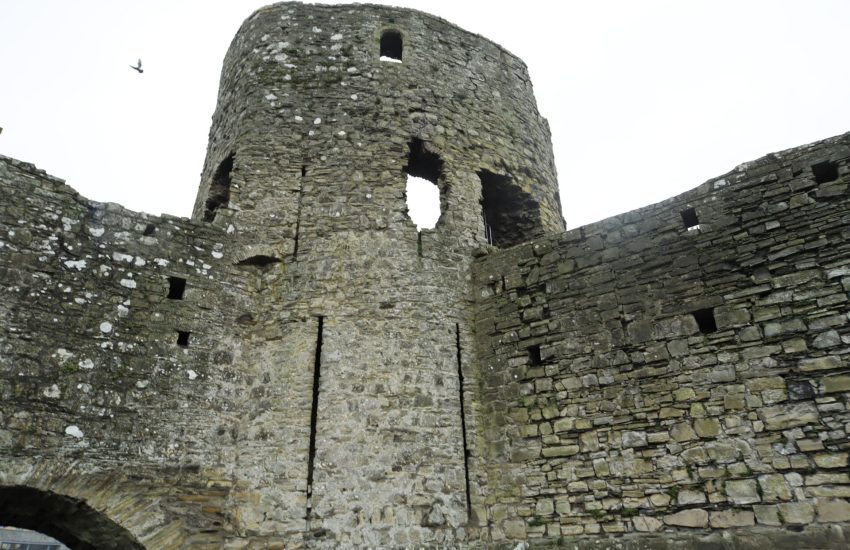
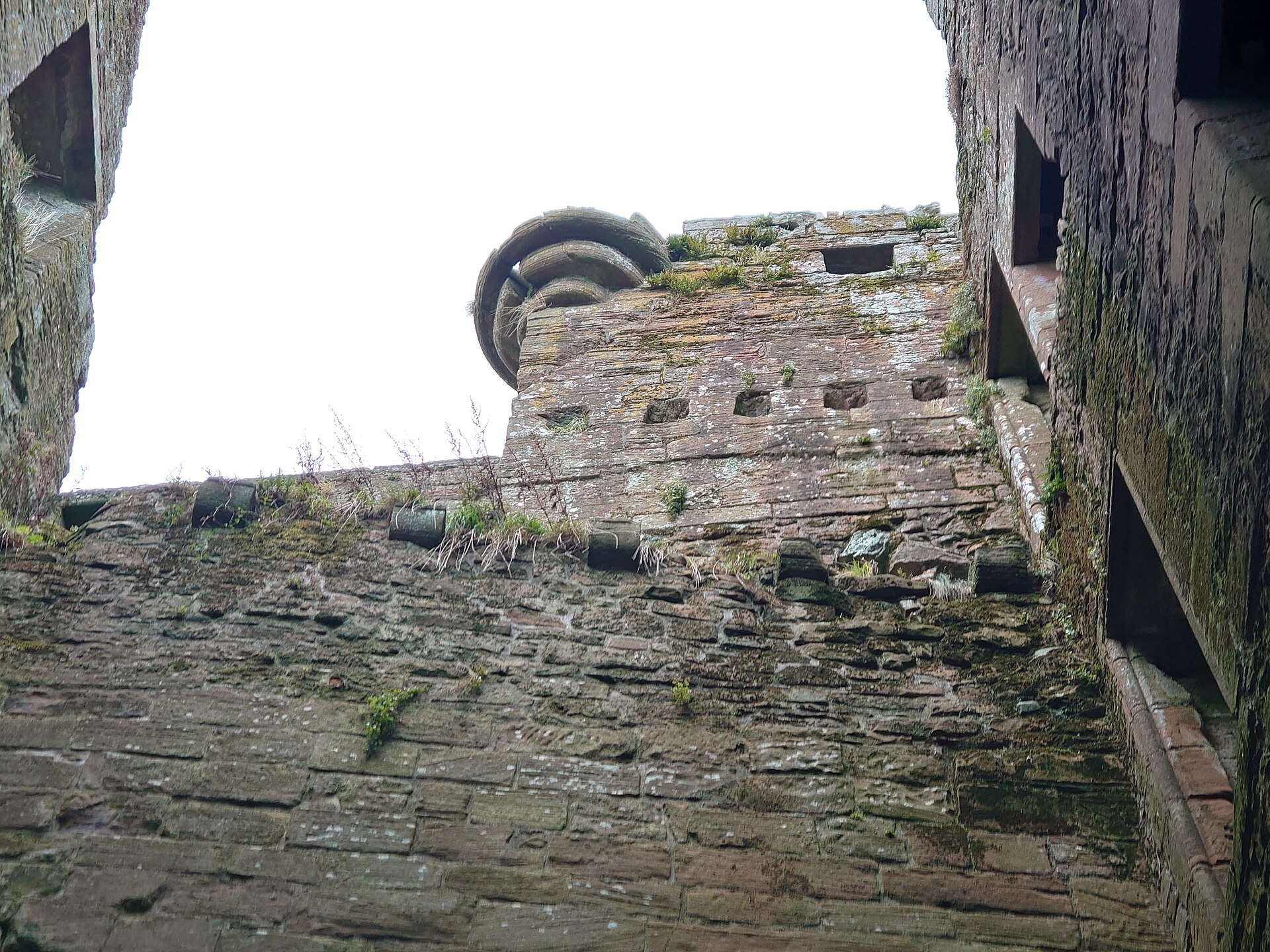
The gatehouse, in particular, repays close attention. This mighty twin-towered structure, standing at the apex of the triangle, was the strongest and most important part of the castle’s defences, and it remains an impressive and dominating feature, its two great drum towers rising above the moat. Climbing and exploring it gives a real sense of the castle’s strength.
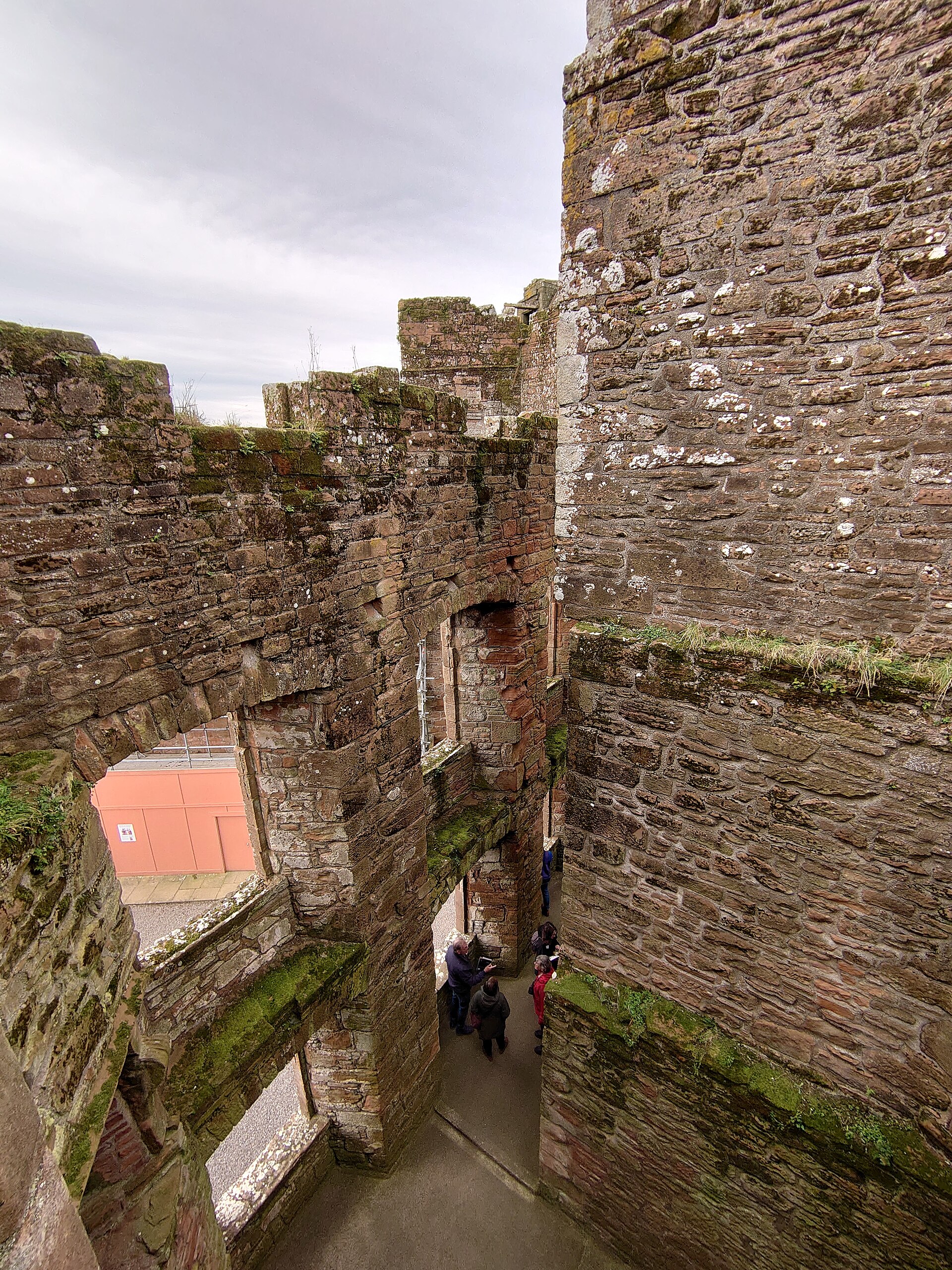
Within the walls, the contrast between the grim medieval defences and the elegant Renaissance lodging is one of the highlights, a vivid illustration of how the castle changed over the centuries from a pure fortress to a nobleman’s home. Wandering the inner court, you can appreciate both the military and the domestic sides of Caerlaverock’s long life.
All of this, set within the ring of the moat and the warm red walls, makes Caerlaverock one of the most satisfying and distinctive castles to visit in Scotland. It is a place where the unusual and the beautiful meet, and where the drama of the border wars and the elegance of a later age are found side by side.
Because the castle is so compact and its plan so clear, Caerlaverock is an excellent place to understand how a medieval castle actually worked. You can see at a glance how the gatehouse dominated the entrance, how the towers covered the corners, how the moat kept enemies at bay, and how, within, the domestic buildings provided for daily life. For anyone wanting to grasp the essentials of castle design, few sites make it as clear, or as beautiful, as this triangular fortress on the Solway.
Planning Your Visit
Caerlaverock Castle lies in the historic region of Dumfries and Galloway, in south-west Scotland, a short distance south of the town of Dumfries, near the shore of the Solway Firth. It is reached by road, and being close to the border, it makes an easy and rewarding stop for anyone travelling between England and Scotland along the western route, or exploring this often-overlooked corner of the country.
Allow an hour or two to explore the castle, take in its unusual shape and its history, and admire the gatehouse and the Nithsdale Lodging. The setting is low-lying and can be damp, so suitable footwear is wise, and the surrounding wetlands reward a longer stay for those interested in wildlife, especially in winter when the geese are present. Combine Caerlaverock with the nearby wildfowl reserve and a wider tour of the castles and coast of Dumfries and Galloway, and you will discover one of the most distinctive and beautiful castles in all of Scotland, a triangular jewel on the edge of the sea.
The castle sits at roughly 55.0053, -3.5267. Punch that into Google Maps and it will take you straight to Caerlaverock Castle near Dumfries.
Nearby Castles
A Castle Unlike Any Other
Caerlaverock is proof that a castle can be at once a serious fortress and a thing of real beauty. Its unique triangular plan, its warm red stone, and its ring of water make it one of the most distinctive and lovely castles anywhere in Britain, while its history, above all the famous siege of 1300 and the long saga of the mighty Maxwells, gives it a depth and drama to match its looks.
Cross the moat, pass beneath the great twin towers of the gatehouse, and you enter a place where the hard logic of border warfare and the elegance of a later age sit side by side, medieval defence and Renaissance grace within a single ring of walls. Add the geese wheeling over the marshes and the red walls glowing in the water, and you have a castle unlike any other, a triangular jewel on the edge of the Solway that rewards everyone who takes the trouble to seek it out.
You May Like

The Rock of Cashel: Ireland’s Fortress of Kings and Saints